State Champ Radio
 Touring
Page: 2

Chris Brown’s Breezy Bowl XX wrapped over a month ago, but is still generating new chart highlights. According to figures reported to Billboard Boxscore, its seven shows in October grossed $46.8 million and sold 286,000 tickets, scoring yet another month at No. 1 on Billboard’s Top Tours chart.
When Brown was No. 1 last month, he matched a Boxscore feat only previously achieved by Bad Bunny and Beyonce by linking two consecutive months with a reported gross of $90 million or more. Now, he joins them in another elite club, as the only acts to ever string together three consecutive months at No. 1 on Top Tours.
Related
In fact, Brown immediately follows Beyonce’s three-peat from May-July, capping a six-month stretch of only those two superstars atop the list. The streak ends here, as he had no concerts on the books for November.
Brown’s October routing mostly stuck to the American Southeast, selling out stadiums in Atlanta; Birmingham, Ala.; New Orleans; and Raleigh, N.C.. But his stop in Washington, D.C. was the biggest, playing to 121,000 fans over three nights (Oct. 5, 8-9), combining for $20.7 million.
Those shows at Nationals Park give Brown his first month at No. 1 on Top Boxscores. He’s the first artist in venue history to report an engagement with a gross of more than $10 million (let alone $20 million), attendance of more than 100,000, or a string of three shows.
Since launching in June, Breezy Bowl XX grossed $295.5 million and sold just under two million tickets (1.983 million) over its 49 shows in Europe and North America. It’s the highest-grossing and best-selling tour of Brown’s career, more than three times over.
Guns N’ Roses follows at No. 2 on Top Tours, with $35.2 million and 346,000 tickets from 11 shows in October. It’s the second highest gross of the month, but the hard rock legends sold more tickets than anyone else.
GNR stakes their claim with the Latin American leg of the Because What You Want & What You Get Are Two Completely Different Things Tour. The biggest one-night stop was the Oct. 25 performance at Sao Paulo’s Allianz Parque ($5.2 million; 47,600 tickets), but Buenos Aires in Argentina was the band’s ultimate winner, with $7.8 million and 73,300 tickets over two nights (Oct. 17-18) at Estadio Tomas Adolfo Duco.
The tour began on May 1 in South Korea, playing throughout Asia and Europe over the summer. Those 27 shows grossed $95.6 million and sold 823,000 tickets. The October and November shows push the tour’s total revenue well over the $100 million mark, with one show in Mexico City left to be reported.
Yesterday (Nov. 24), Guns N’ Roses announced its 2026 world tour with headline dates in Brazil, Europe, and North America. It will continue a consistent pattern of touring for the band since reuniting in 2016. Since then, it has grossed more than $980 million, surely surging beyond $1 billion with next year’s tour.
Brown and GNR’s totals are significantly down from top honors in September, marking the end of stadium season in North America and Europe. Still, the top 30 is strong, with a total gross of $568.7 million and attendance of 4.5 million. Those figures are up 7% and 6%, respectively, from October of last year.
Two rap acts follow in the top five, with Travis Scott and YoungBoy Never Broke Again at Nos. 3-4, respectively. It’s relatively rare for a rapper to be in the top five, but the one-two punch of Scott and YoungBoy lengthens a strong 2025 for the genre, marking the third month where two such artists (with significant history on the Top Rap Albums and Hot Rap Songs charts) have paired up simultaneously. Tyler, The Creator did it in February with Drake, and again in March with j-hope.
They took wildly different paths to the top five this month. YoungBoy played 18 arena shows in the U.S., stacking up to $32.8 million in the second month of his first headline tour. Scott played five stadiums in Asia and South Africa, pushing his sprawling Circus Maximus Tour to $265 million since launching in 2023.
Lady Gaga rounds out the top five with $31.9 million and 185,000 tickets sold while in Europe on The Mayhem Ball. It’s her fourth month in the top 10 this year, stretching back to May when she hit Singapore’s Indoor Stadium for four nights. Through her Paris shows (Nov. 17-18, 20, 22), Gaga has grossed more than $225 million and sold 1.1 million tickets in 2025.
Last month, Tate McRae and Benson Boone made their top 10 debuts on the monthly Top Tours listing. This month, McRae ranks even higher (at No. 6) as her $111 million Miss Possessive Tour came to a close. She passes the proverbial baton, as another young woman in pop hits the top 10 for the first time: Laufey is No. 10 with $19.2 million and 180,000 tickets sold.

Trending on Billboard
For touring professionals in the live music industry, healthcare has long been an elusive benefit. While local stagehands working in venues across the country have enjoyed employer-provided health insurance for decades through International Alliance of Theatrical Stage Employees (IATSE) contracts, their counterparts on the road — the audio engineers, lighting technicians, production coordinators, and other crew members who travel with touring shows — have been left to navigate the healthcare system on their own.
Now, IATSE is working to change that through an ambitious grassroots campaign to extend its National Benefit Fund to touring professionals, offering them access to the same healthcare and retirement benefits enjoyed by their venue-based colleagues.
Related
The disparity — what some stagehands call the tale of two crews — becomes starkly apparent when touring and local union members work side by side in the same venue.
“I’ll be in an arena for 20 plus hours working side by side with someone from the local IATSE, and we’re in the same situation, the same long hours, possibly a dangerous environment, yet they are covered,” says Ally Vatter, a production coordinator who has been touring for 21 years, currently with Nine Inch Nails. “They are insured. I pay out of pocket, but if I can’t afford that, then I won’t be insured.”
The consequences of this gap can be severe. In 2009, before the Affordable Care Act eliminated pre-existing condition exclusions, Vatter’s appendix burst while on tour. As an uninsurable 27-year-old, she was left with a $50,000 hospital bill and discharged from the hospital just a day and a half after surgery because she had no insurance. The artist she was working for organized an early crowdfunding effort that eventually paid off the debt, but the experience highlighted a systemic problem.
“We work so hard, and we work for millionaires, and we’re over here begging each other for help,” Vatter says, noting that crowdfunding campaigns for touring crew members facing medical crises remain common today.
Related
Nathan Honor, a sound engineer and member of IATSE Local 4 in Brooklyn and Local 100 on the East Coast, recalls his own pre-union touring days: “I broke my foot at one point and had to do an entire tour with a limp, with a bad foot, and never really dealt with it, and it had lasting repercussions.”
The irony, as Joseph Juntunen points out, is that a solution already exists. Juntunen, a special representative for IATSE who spent years touring with acts like Black 47 and Graham Parker before helping organize unions at Webster Hall and Brooklyn Steel, explains that the National Benefit Fund has been providing healthcare and retirement benefits to IATSE members across various entertainment sectors for decades.
“When an employer makes a contribution to that fund, that money belongs to the recipient. It belongs to the person that earns that money through their labor, and it goes with them wherever they go,” Juntunen says.
The fund currently serves the vast majority of IATSE’s more than 180,000 members who work in TV, film, Broadway, trade shows and venues. The touring initiative, which would extend access to an estimated 33,000 professionals working in the touring industry globally, is designed around the realities of touring work, which involves professionals potentially working for multiple employers throughout the year.
Related
Here’s how it would function: When an artist or management company agrees to participate, they make contributions to the National Benefit Fund on behalf of their touring crew members. These contributions then go into individual “cap accounts” that belong to the workers and accumulate across different tours and employers.
“If you do one tour for two months at the beginning of the year, that money goes into your cap account. If you do another tour three months later on the same plan, that money would go into that cap account,” Honor explains. “Every quarter, there is a qualifying period where you choose your level of coverage, and then money is deducted from that cap account to buy your health insurance.”
Critically, the money stays in the worker’s account even during gaps between tours. “Even if no employer makes a contribution for two years, that money stays in your cap account, and you can use it to buy health insurance,” Honor says.
The system offers flexible tiered coverage options, ranging from catastrophic coverage for younger, healthier workers to premium “Cadillac” plans for those with families or greater healthcare needs. Workers can also pay out of pocket to upgrade their coverage if their cap account contributions aren’t sufficient for their desired plan level.
Related
Healthcare is provided through Anthem Blue Cross Blue Shield, and the plan’s large membership base allows for competitive rates that individual touring professionals could never achieve on their own.
Unlike traditional union initiatives, the health plan is entirely voluntary — no employer or worker is mandated to participate. Instead, IATSE is building support through a grassroots campaign, encouraging touring professionals to have conversations with their employers about joining the program.
“The touring industry is very big and broad, but it’s also small in the way that there’s a big word-of-mouth system that happens,” Vatter says. “Word travels quickly.”
The campaign is targeting artists, managers and tour managers — the key decision makers who control touring budgets. A town hall for interested parties is planned, and committee members have been working to spread awareness across the industry.
“We’re not looking to start fights with the employers. We’re not looking to have adversarial relationships,” Juntunen emphasizes. “We’re looking to work together to build a more sustainable, healthy touring industry.”
Related
The ultimate vision is for healthcare contributions to become a standard line item in touring budgets, much like they already are for venue work. If major promoters like Live Nation or AEG were to adopt the program across their tours, it could rapidly become an industry standard.
“We think this is really an opportunity for artists and management to put their money where their mouth is and help the people who are making the show,” Honor says.
According to Juntunen, the response so far has been encouraging. “The conversation is expanding rapidly, and we are in active discussions with several teams right now for next year’s touring cycle,” he says.
For touring professionals who have spent their careers without the basic security that their venue-based counterparts take for granted, the initiative represents more than just healthcare — it’s recognition of their essential role in the industry.
“This is the first time that someone extended an olive branch to the touring industry and said, ‘Hey, we see you. We understand we’re working right there with you, and we really want to make sure that you guys are safe and covered and taking care of yourselves as well,’” Vatter says. “Because in the end, we have the same goal, right? It’s to get that show up and make it work.”
As Honor notes, touring is “a very high impact business” where veteran crew members often reach their 40s, 50s, and 60s with health problems they can’t afford to treat and no retirement savings. “Not a day goes by at work that you don’t meet somebody who’s been touring for 20, 30, 40 years, and they don’t have anything saved,” he says.

Trending on Billboard
Claire Rothman, a pioneering woman in the live entertainment industry whose positions included president and general manager of The Forum in Inglewood, Calif., died Saturday (Nov. 22) in Las Vegas. She was 97.
Rothman began her facilities career at the Spectrum in Philadelphia in 1967, when she was 39. In a 2018 Billboard roundtable with other women who broke barriers in live entertainment, she said, “It was the time when the National Hockey League expanded from six to 12 teams and a lot of new venues came up. The Spectrum was one. Two weeks after I took the job, it filed for bankruptcy. I was newly divorced, with one kid in college and one in high school. I thought, ‘Oh, God, what did I do?’ But in five years, we brought the Spectrum out of bankruptcy. We paid 100 cents on the dollar, and I wrote out every check. We formed one of the first partnerships with Electric Factory Concerts. We provided the building, they provided the acts.”
Related
Rothman was hired by then-Lakers owner Jack Kent Cooke to come to the Forum seven years later, in 1975, after stints at Wild Kingdom in Orlando, Fla., and the Cleveland Coliseum. She’s credited with introducing Cooke to Jerry Buss, who at that time owned a tennis franchise, the Los Angeles Strings, which she hoped to bring to the Forum, according to Men’s Health. In 1979, Buss bought the Lakers, which played at the Forum until 1999.
Buss’ daughter Jeanie, who is the controlling owner of the Lakers, paid tribute to Rothman Sunday night (Nov. 23), telling the Los Angeles Times, “Claire paved the way for women working in live entertainment. She was tenacious, creative and indomitable. My father always described her as the MVP who championed the Fabulous Forum as the West Coast concert rival to the legendary Madison Square Garden.”
Earlier today, the Lakers posted a photo of Rothman and Jeanie Buss on its Instagram with the caption, “Remembering an icon: Claire Rothman, the pioneering President of the Forum during the Showtime era.” The photo was taken in 2018, and Buss subsequently posted it on her social media, writing, “I was blessed with this amazing woman as my mentor, Claire Rothman. She has been there for me at every crossroads and hurdle placed before me. I don’t tell her enough of how grateful I am. Thank you Claire! I love you.”
Related
During her early tenure at the Forum, Rothman was the only woman managing a venue that included an NBA (the Los Angeles Lakers) and NHL (Los Angeles Kings) franchise while also juggling concerts, circuses and other entertainment.
“So I was a curiosity. Everybody remembered my name because I was the only one,” she told Billboard. “I was very fortunate to work for men who had good relationships with their mothers and their wives. They were sure of their masculinity. Every man I ever worked for pushed me [to succeed]. A psychologist friend of mine said the reason they were supportive was I never gave them the feeling that I wanted their jobs — because I didn’t. I had ambition, but I wanted to do it myself.”
Rothman helped oversee a golden time for the Lakers, known as the Showtime era, that started in 1979 as players like Magic Johnson and Kareem Abdul-Jabbar helped the team dominate and win five championships over 10 years. That period was captured in the 2022-2023 HBO drama Winning Time: The Rise of the Lakers Dynasty. Rothman was portrayed by Gaby Hoffman in the series.
Related
Rothman also heightened the Forum’s appeal as a must-stop for concerts, including by bringing Prince to the venue for a six-night run in 1985, and was bold and unrelenting when it came to pursuing talent. A 1985 Los Angeles Times profile on Rothman recounted her asking Barry Manilow to play the arena in front of rival promoters, the Nederlanders, who were also pursuing the singer. “When Manilow half-jokingly asked why she would make a pitch in front of the competition, Rothman replied, ‘I’m cuter,’” the Los Angeles Times reported.
Rothman left the Forum in 1995, moving to Ticketmaster, where she was executive vp until 1999. She also served on a number of boards, including City of Hope, the Music Center of Los Angeles County and the Reprise Theater Company, according to her LinkedIn page.
Survivors include a son, daughter, grandchildren and great-grandchildren, according to the Los Angeles Times.

Trending on Billboard Travis Scott wrapped up his Circus Maximus Tour on Nov. 19 and has broken the record for the highest grossing solo rap tour of all time, according to Live Nation. According to figures reported to Billboard Boxscore, Scott’s global trek grossed $265.1 million and sold 2.1 million tickets. Circus Maximus kicked off […]
Trending on Billboard
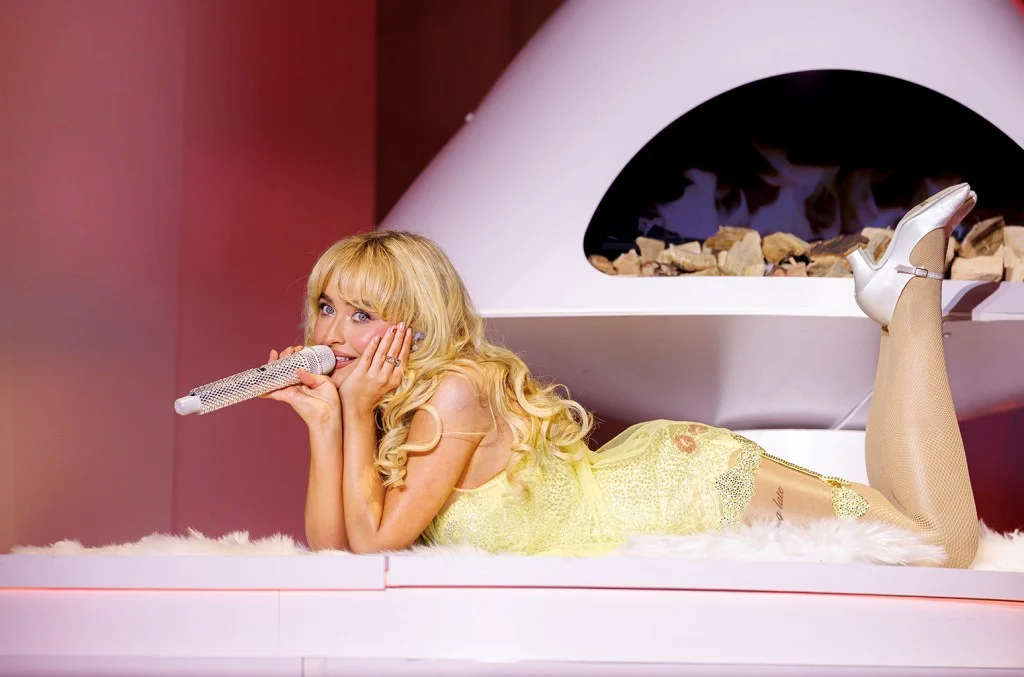
Sabrina Carpenter hit an appropriately cheeky milestone on Saturday during her fifth of six nights at Los Angeles’ Crypto.com Arena: Her 69th concert of the Short n’ Sweet Tour.
“My friends wanted me to inform you: This is our 69th show,” Carpenter announced while sitting on her heart-shaped stage, sending the crowd into wild cheers over the spicy stat.
It’s a fitting marker for the trek: Since its September 2024 kick-off, the Short n’ Sweet Tour has been known for its little suggestive moments, like Carpenter’s nightly “Juno” sex positions (“have you tried this one before?”), the voyeuristic “Bed Chem” video camera (“I bet the thermostat’s set at six-nine”), and the elevator that ticks up the floors until “SC” comes just after the 68th.
“We knew we’d get there eventually, and tonight’s the night,” Carpenter said of the 69th show. “And it’s Saturday, and we’re just like, we’re living!”
In one more nod to Night 69, Carpenter emerged for the final song, last year’s top five Billboard Hot 100 smash “Espresso,” in sparkly blue go-go boots and an oversize Los Angeles Dodgers jersey, with her last name emblazoned on the back and the jersey number of — you guessed it! — 69.
Another tongue-in-cheek nightly tradition is Carpenter arresting someone in the crowd for the crime of being “too hot,” and Saturday night’s offender was actress and Saturday Night Live legend Maya Rudolph, who Carpenter asked: “Whoa, whoa, whoa — what’s your name, gorgeous?” After Rudolph mouthed back “Maya,” Carpenter responded, “Maya, you’re stunning. Where are you from?” She mouthed “Los Angeles” and made her best attempt at throwing up an “L.A.” hand sign, but Carpenter didn’t think the crowd had a big enough reaction. “Scream louder — that’s here!”
Then she got down to business: “Maya, I don’t know the situation you’re in currently romantically, but I was sort of hoping that I could lock you down tonight, if possible.” (Let’s hope Rudolph’s partner of almost 25 years and the father of her four children, acclaimed filmmaker Paul Thomas Anderson, isn’t feeling threatened.) She then tossed some fuzzy pink handcuffs out into the crowd to officially lock Rudolph down.
Previous L.A. arrestees included SZA on Thursday night and actress sisters Dakota and Elle Fanning on Monday.
Carpenter returns to Crypto.com Arena on Sunday (Nov. 23) to play her sixth night in L.A. and the final night of her 70-date Short n’ Sweet Tour. Find the full setlist for Los Angeles Night 5, including the special “spin-the-bottle” surprise song and the newly added Man’s Best Friend additions, below.
“Taste”
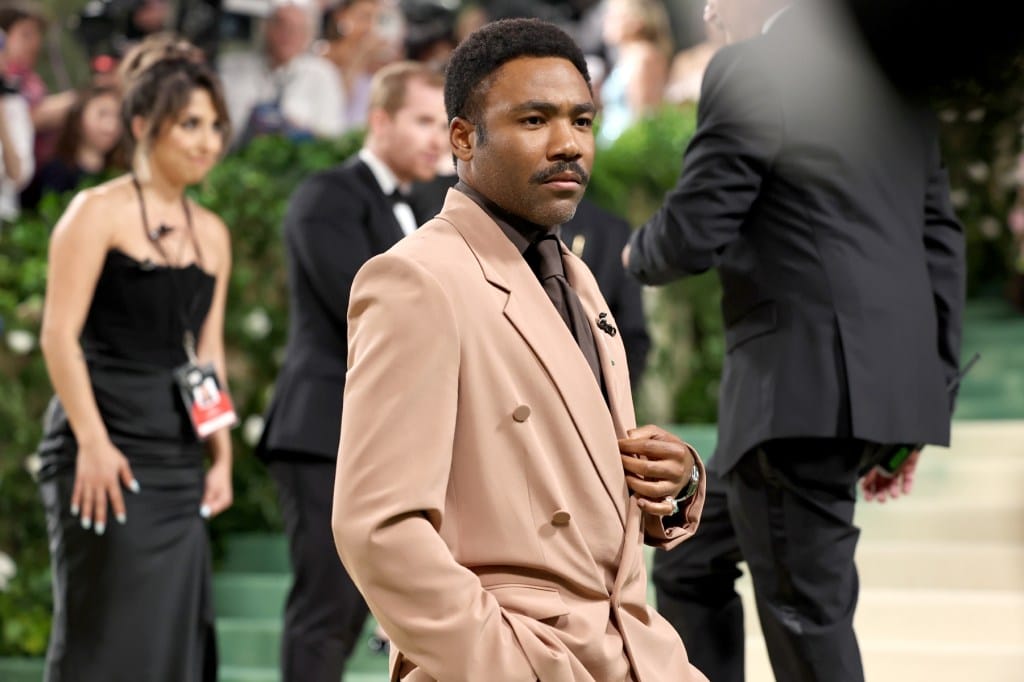
Trending on Billboard Donald Glover is opening up about a recent health scare that forced him to cancel his tour last year. At the time he described it as an “ailment,” but Glover said Saturday night (Nov. 22) at a performance that a doctor told him he’d had a stroke. Glover, who performs under the moniker Childish […]
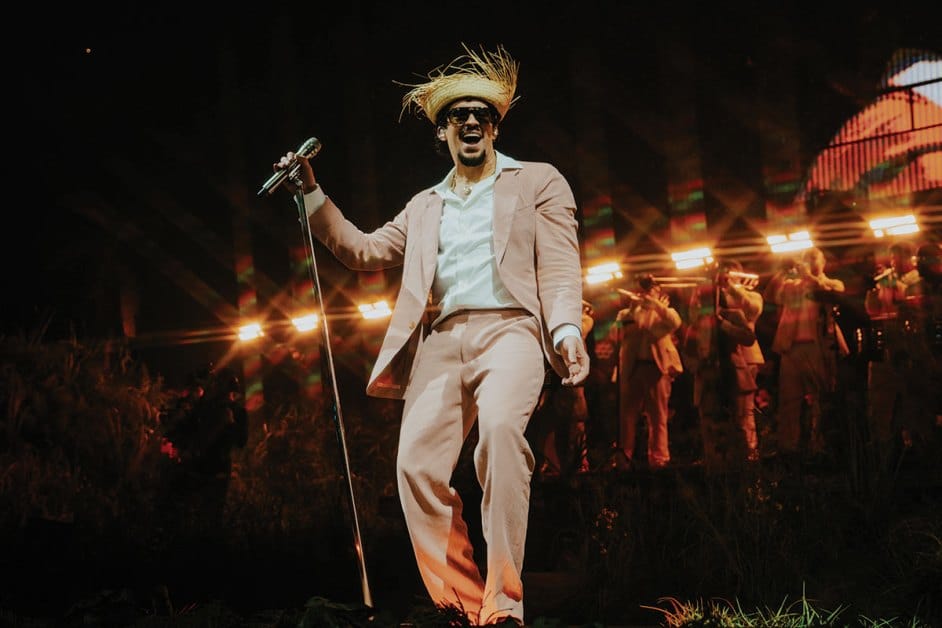
Puerto Rican band Chuwi opened the first of two nights at a sold-out Olympic Stadium on Bad Bunny’s world tour.
11/22/2025

Trending on Billboard
The U.K. government hopes to decrease the price of resale tickets by an average £37 per ticket ($48 USD), according to a new report released released Wednesday (Nov. 19) in which it outlined its plan to outlaw ticket resale above face value.
According to a memo outlining the new rules, “Music and sport fans will no longer be ripped off on the ticket resale market thanks to new measures which will destroy the operating model of ticket touts,” also known as scalpers. The memo, released by the country’s Department for Business and Trade and Department for Culture, Media and Sport, adds that Prime Minister Keir Starmer’s government will make it “illegal for tickets to concerts, theatre, comedy, sport and other live events to be resold for more than their original cost.” The news was first reported by multiple U.K. outlets on Monday (Nov. 17) prior to the memo’s release.
Related
The new rules effectively make ticket resale above face value — defined as “the original ticket price plus unavoidable fees, including service charges” — illegal. The law limits the service fees that resale sites can charge and requires platforms like StubHub and Viagogo “to monitor and enforce compliance with the price cap.” The law also bans fans and resellers from buying more tickets than they are legally entitled to purchase during an initial ticket sale.
The U.K. government’s website features supportive quotes from politicians, music managers and artists about the bill, including U.K. Business Secretary Peter Kyle, who said the legislation taking on scalpers was meant to “smash their model to pieces and make sure more fans can enjoy their favourite stars at a fair price.”
In her own statement, U.K. Culture Secretary Lisa Nandy compared ticket scalpers to “a shadow industry, acting without consequence” while Dan Smith of the band Bastille described the legislation as “a good step towards protecting music fans from being ripped off.”
The new rules apply to both ticket resale platforms and social media sites where fans buy and sell goods. Violating the new regulations, according to the government, could result in large financial penalties from the U.K.’s Competition and Markets Authority (CMA).
Related
“Government analysis suggests that these measures could save fans around £112 million annually [$146 million USD], with 900,000 more tickets bought directly from primary sellers each year,” the government’s website reads.
The law is meant to build on a development from September in which the Competition and Markets Authority secured commitments from Ticketmaster to give U.K. fans 24 hours’ notice if Ticketmaster plans to use tiered pricing and provide clearer information about how the company’s online queues work, among other measures.
“The CMA’s enforcement action in this case, and the measures agreed with Ticketmaster, send a clear message to all ticketing websites that fans must have access to clear and timely pricing information with accurate ticket descriptions, especially where there are different pricing models and queues in play,” the government’s website reads. “In the future, the CMA will be able to respond even more swiftly and robustly to breaches of consumer law.”
The new legislation drew both praise and condemnation from different corners of the music industry. U.S.-based pro-ticket resale group the National Association of Ticket Brokers warned in a statement that it does “not support efforts to thwart competition. We discourage laws that impose price caps that make it more difficult for ticketing companies to compete with one another.”
Related
Others were more supportive, with Chris Lipscomb, managing girector for AXS U.K., telling Billboard in a statement, “We strongly support the UK government’s efforts to strengthen safeguards around ticket resale, which align with AXS’s longstanding practices in support of fair fan access.”
Matt Kaplan, who heads up U.K. and EU operations for fan-to-fan exchange Tixel, said “the UK’s move to outlaw touting is a huge win for fans, artists and the wider industry, and we fully support this long-overdue reform. Tixel was built to tackle these exact problems, and after nearly a decade fighting for fair, transparent resale in multiple markets around the world, we’re proud to see a framework emerge that protects fans, restores trust and shuts out the bad actors.”
In a statement to Billboard, Nathaniel Marro with the National Independent Talent Organization (NITO) added, “We hope policymakers stateside are paying attention and that reining in predatory resellers is a global movement.” Also in a statement, Stephen Parker of the National Independent Venue Association (NIVA) called on “state lawmakers throughout the United States to follow the United Kingdom’s (UK) proposed ticket resale price cap.”

Trending on Billboard CTS Eventim, Europe’s largest concert promoter and ticketing service, posted revenue and earnings gains in the third quarter despite what it called “challenging economic conditions” in its home market, Germany. Companywide adjusted earnings before interest, taxes, depreciation and amortization (EBITDA) rose 13.8% to 137.3 million euros ($161 million) on revenue of 854.2 […]

Trending on Billboard
Ricardo Montaner trains as if he were preparing to run a marathon. In February, the iconic Argentine-Venezuelan singer-songwriter will embark on an ambitious tour that will take him across Latin America, the United States, and Europe — a feat that will demand physical and vocal resilience. At the same time, he plans to release of two albums for 2026, he shares exclusively with Billboard Español.
“This tour is not just a return; it’s a renewal of vows,” Montaner says about El Último Regreso World Tour, which kicks off on Feb. 21 in Buenos Aires, Argentina. The trek is named after his latest love song, released on Nov, 6 under his label Hecho A Mano Music.
Dressed in sportswear following a physical conditioning routine at his home in Miami, the 68-year-old artist explains that this tour will take around 18 months. “I just signed perhaps one of the longest tours of my career, with more than 120 performances,” he notes. For this reason, the words “rest” or “retirement” aren’t on his mind. “I’m just a boy,” he jokes.
El Último Regreso World Tour aims to celebrate the artist’s bond with his audience and revisit his career spanning over four decades. The performer of anthems like “Me Va a Extrañar” and “Tan Enamorados” plans to include a couple of 25-minute medley blocks in this new show, featuring iconic songs from different eras. “I want everyone who attends to feel like I sang their song and not leave disappointed because I didn’t perform one or the other,” he says.
The tour begins in Argentina, with shows in the cities of Buenos Aires and Cordoba, and continues in Uruguay, Paraguay, Costa Rica, Colombia, and much of Mexico, where he will perform more than ten shows between April and May. “Mexico is the country where I’ve worked the most, and to cover it, you need to perform more than 15 times,” Montaner explains. Later, he will visit Ecuador, Peru and Chile, before moving on to the U.S. and the Dominican Republic in August and September.
El Último Regreso World Tour will also include a European leg in countries like Spain, France, and Italy. Meanwhile, Montaner will continue adding new music to his discography. The artist reveals he is working on an album featuring pop ballads and other genres, including two singles released this year, “Lo Que Te Dé La Gana” and “Si Tuviera Que Elegir” — the latter featuring his daughter Evaluna and his son-in-law Camilo. In January, a new single will arrive.
“I think that by the time we meet again, people will have heard the latest music, the songs I’ve released over the past two years,” he says, noting that he is simultaneously working on another LP featuring duets of his greatest hits — “a collection of my most iconic songs alongside my most cherished colleagues.”
This album, he adds, will also serve as an introduction to his legacy for younger generations. “I love re-recording my early albums, being able to share with young people what was the foundation of my entire career.”
With a career spanning over 40 years and 25 studio albums, Montaner is one of the most recognized performers in the Latin music scene. He boasts multiple accolades, including a Latin Grammy Lifetime Achievement Award, which he received in 2016, and the Latin AMA Legacy Award in 2024. On the Billboard charts, he has placed dozens of hits on Hot Latin Songs, including the No. 1s “La Cima del Cielo,” “Quisiera,” “Piel Adentro,” and “Castillo Azul,” as well as 17 sets on Top Latin Albums, three of which landed in the top 10.
For more information on the tour, click here.
Ricardo Montaner
Alex Pazmiño