State Champ Radio
 Sphere
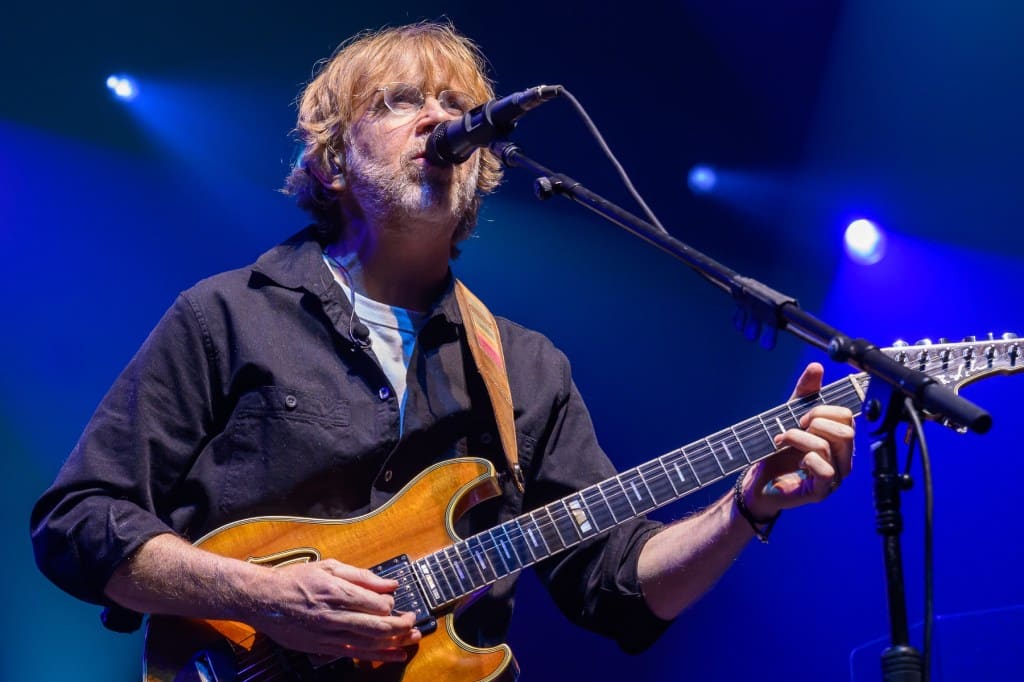
Trending on Billboard Phish is heading back to Las Vegas. The iconic jam-rock group will return to Sphere next spring for a nine-show residency, expanding on the four-night run that marked its acclaimed debut at the venue in 2024. The new dates — April 16–18, April 23–25 and April 30–May 2, 2026 — were announced […]

ASCAP has named media veteran Marc Zelanko as chief of staff, reporting directly to CEO Elizabeth Matthews. In this newly created role, Zelanko will help drive ASCAP’s mission to grow revenues and improve operational efficiency for its 1.1 million songwriters, composers, and music publishers.
Zelanko brings more than 20 years of experience in business operations and transformation within IP-driven media and entertainment companies. Most recently, he served as senior vice president at Paramount Global (formerly ViacomCBS), where he led strategic initiatives to strengthen operations and streamline processes across global teams. His wins include organizing CEO-level leadership forums, managing the COVID Task Force to maintain operations for 15,000-plus U.S. employees, reducing liabilities through HR process improvements and coordinating the Viacom Marketing Council.
Related
In the aughts, he spent five year at MTV Networks, where he rose to senior vp of business operations and notably helped scale Scratch, a creative consultancy launched by the network.
Earlier in his career, Zelanko worked in the Media & Entertainment Group at Booz Allen Hamilton. He holds a degree from Harvard University and an MBA from Harvard Business School.
Matthews praised Zelanko’s appointment, stating: “Marc is the perfect fit to help ASCAP deliver on our mission to grow revenues and drive efficiencies for the benefit of our more than 1.1 million songwriters, composers and music publishers. He brings a wealth of experience working cross-functionally to lead complex global initiatives, and we are excited to add him to our senior leadership team.”
Zelanko added: “ASCAP has a mindset of innovation and evolution to meet the changing needs of its members and licensees. I look forward to bringing my expertise to ASCAP’s mission in support of improving the future for its songwriters, composers and music publishers.”
This announcement follows ASCAP’s recent hire of John Pershing as Senior Vice President and Chief Technology Officer. Pershing, formerly with What If Media Group, brings extensive experience in IT, product development, and data engineering, further strengthening ASCAP’s leadership team.
Check out a full rundown of this week’s staffing news below.
Anne-Marie Pearce & Chris Barton (PPL)
Image Credit: Courtesy Photo
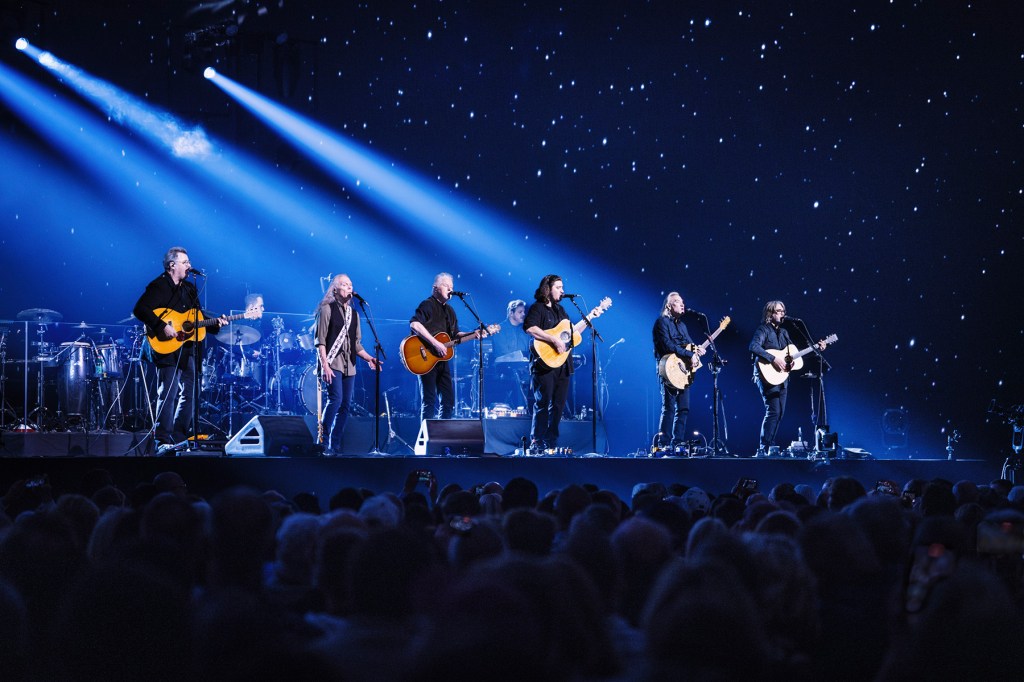
Trending on Billboard The Eagles have added more 2026 dates to their Sphere residency, extending their run as the artist with the most dates at the Las Vegas immersive venue to 56. The new shows will take place March 20-21 and March 27-28. The Rock & Roll Hall of Fame inductees had previously announced […]
Trending on Billboard
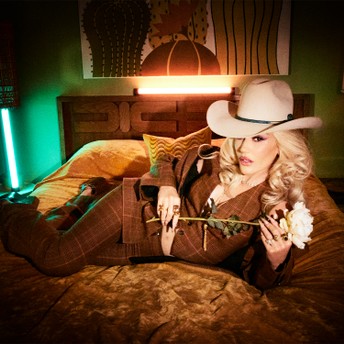
You just got half a dozen more chances to catch No Doubt at the Sphere. The Gwen Stefani-led ska pop group announced yet another extension of their anticipated 2026 residency at the eye-popping Las Vegas arena on Friday (Nov. 7), with the addition of what they said were the final six shows of the run.
Explore
See latest videos, charts and news
The newly added gigs for No Doubt Live at Sphere will take place on June 3, 5, 6, 10, 12 and 13. Tickets will go on sale first through the No Doubt artist pre-sale on Nov. 12 at 12 p.m. PT; fans have to sign up here by 10 p.m. PT on Monday (Nov. 10), with no codes needed. The remaining tickets will be available during a general on-sale starting Nov. 14 at 12 p.m. PT here.
The new six-pack of gigs came after the band added an additional half dozen shows last month for May 2026 to the original six-pack of concerts. No Doubt will be the first female-fronted act to headline the arena, which since its opening in 2023 has hosted U2, Phish, Dead & Company, the Eagles, Anyma, Kenny Chesney and the Backstreet Boys, among others.
“The opportunity to create a show at Sphere excites me in a new way,” Stefani said in a statement announcing the original run of gigs. “The venue is unique and modern, and it opens up a whole new visual palette for us to be creative. Doing it with No Doubt feels like going back in time to relive our history, while also creating something new in a way we never could have imagined.”
The full run of shows announced so far include:
May 6, 8, 9, 13, 15, 16, 21, 23, 24, 27, 29, 30
June 3, 5, 6, 10, 12, 13
Check out the poster for the new dates below.
Trending on Billboard
Hearing Judy Garland‘s 16-year-old voice singing the original “Over the Rainbow” a cappella — minus The Wizard of Oz orchestration — was not the intensely emotional experience you might predict for her daughter, Lorna Luft. As the singer and actress put it: “Well, I heard my mom sing it a lot.”
But this newly edited version of Garland’s signature song, which makes its debut on streaming services on Friday (Nov. 7), will blow most Oz fans’ minds. “It’s just so honest and so pure,” says Luft. “To be able to hear my mother’s vocal as if you’re in a room with her, and there is no piano, just her vocally — people have gotten so emotional when they hear this. It takes them back to where they were when they heard the song.”
Related
This stripped-down “Over the Rainbow” is part of a re-recorded The Wizard of Oz soundtrack that first aired only as part of The Wizard of Oz at Sphere, an immersive 4D version of the 1939 classic that opened at the Las Vegas venue in June. The uncluttered voice of Garland, who died in 1969, is the centerpiece of the new 42-track recording, which unites the original actors’ voices with a contemporary orchestra convened at the original MGM studio in Culver City, Calif. “You’re hearing things that you’ve never heard before — nuances and themes you didn’t catch onto — because you’re hearing it so clearly,” says Julianne Jordan, the production’s music supervisor.
To prepare Oz for its Sphere treatment, the production team separated the vocal stems from the music and the background noise from the original mono recordings. “I had an Oscar-winning friend, who will be unnamed at the moment, who did a test for me and took ‘Over the Rainbow’ and said, ‘I can help,’” says Ralph Winter, Sphere Studios’ head of production. “What he was able to do was separate out the music and the effects and the tracks and the noise and come up with just Dorothy’s vocals. It was so pure to hear what only maybe those studio executives and the director heard back in 1939.”
In August 2024, the Sphere team convened an 80-piece orchestra to re-record the tracks from the Oz score at the MGM scoring stage, now owned by Sony, in Culver City, Calif. Conducted by longtime film composer David Newman, the orchestra employed instruments used for Oz, like the ocarina, or hand flute, featured in the Scarecrow’s “If I Only Had a Brain.”
Related
To align the new orchestral recordings with the original vocals from Garland, Ray Bolger (who played the Scarecrow), Bert Lahr (the Cowardly Lion), Buddy Ebsen (the original Tin Man, who sang for the soundtrack but was replaced in the film) and the rest, Sphere Studios and Warner Bros. Post Production Creative Services teamed up to separate the tracks into stems. Thus, in spring 2024, Jordan was present when the Sphere team unveiled the a cappella “Over the Rainbow” on a Warner Bros. stage. “Not a dry eye,” she says. “Incredible. Really clean.”
The original “Over the Rainbow,” recorded in October 1938, was two Garland takes spliced together. “She got up [to] ‘somewhere over the rainbow, way up high’ — and she coughed, and she apologized, and they started again,” says John Fricke, a New York-based Oz historian who has written several books about Garland and the film. “They used the beginning of that take because they liked it more and married it with the almost-full take of the rest of the song.”
Luft shared the new a cappella version two weeks ago with Fricke, a longtime friend who first heard the original when he viewed The Wizard of Oz on TV in 1956. “My first reaction was, it’s amazing that this can get to me the way it does when I know every second of that track,” Fricke says. “The magic is that it’s still magical.”
Related
The original Oz score and soundtrack, created at the MGM studios in 1938, was created by a team of musicians that included songwriting duo Harold Arlen and E.Y. “Yip” Harburg, who wrote classics like “Over the Rainbow” and the vaudeville-influenced “If I Only Had a Brain” and “Follow the Yellow Brick Road.” Meanwhile, the studio’s music director, Herbert Sothart, composed most of the score, including the ghostly strings and brass in “The Haunted Forest.” According to Luft, the Garland estate, which includes her half-sister Liza Minnelli, owns Garland’s name and likeness rights and quickly signed off on the new “Over the Rainbow” release after Sphere inquired.
“I just want people to understand how important this movie is, and this song, and now to be able to hear my mother’s vocal as if you’re in a room with her,” Luft says. “It’s a song about finding a better place. That doesn’t mean physical. It means in your mind. It means there is hope.”
Trending on Billboard
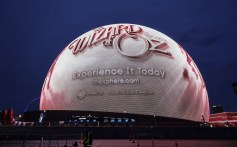
Sphere Entertainment Co. reported on Tuesday (Nov. 4) that the success of The Wizard of Oz and the Backstreet Boys residency at its state-of-the-art Las Vegas venue boosted revenue and operating income — though those gains couldn’t offset a nearly $130 million operating loss in the third quarter.
Sphere Entertainment generated revenue of $262.5 million, up 15% or $34.6 million, for the quarter ending Sept. 30, compared to the same period last year. Adjusted operating income, an indicator of how much of a company’s revenue will eventually become profit, rose to $36.4 million from negative $10.2 million a year ago. The company also reported an operating loss of $129.7 million, up $12.1 million from a year ago.
Related
Since opening in 2023, Sphere has become a destination for artist residencies, hosting acts including U2, Phish, the Eagles, electronic act Anyma and now the Backstreet Boys, who recently extended their Into the Millennium residency into February 2026. Upcoming acts include the DJ/producer Illenium, who’s slated for a residency in March and April, and No Doubt, which will play the venue beginning in May.
When Sphere isn’t occupied by a concert, the mega-venue also shows movies, including the U2 immersive concert film recording of its U2:UV Achtung Baby Live residency and The Wizard of Oz at Sphere. The company’s executive chairman and CEO, James Dolan, has said that recording, licensing and adapting these films costs significantly less than live performances and presents meaningful upside revenue.
The Wizard of Oz at Sphere — an immersive adaptation of the classic 1939 movie — has sold more than 1 million tickets and generated more than $130 million in sales since its Aug. 28 premiere, the company reported late last month.
Related
In a statement, Dolan called The Wizard of Oz “the best example to-date of experiential storytelling in this new medium.”
He added that the film “has been met with strong consumer demand. Looking ahead, we believe our Company is well positioned for long-term growth as we continue to execute on our global vision for Sphere.”
Quarterly revenue generated by the company’s Sphere segment rose 37% overall to $174.1 million in revenue over the same period last year, boosted by $28.3 million more in revenue coming from the venue’s film screenings, collectively known as The Sphere Experience.
The Sphere Experience posted higher per-show revenue from its 220 showings (up from 207 last year) of three movies: Postcard from Earth, the immersive U2 concert film and The Wizard of Oz at Sphere. An additional 16 concert residency shows compared to the prior year quarter also helped boost event-related revenue by $15 million, though that was offset by “lower average per-concert revenue due to the mix of concerts” and the absence of big sporting and corporate events in the quarter. Sponsorship and advertising on the outside of Sphere, along with suite licensing fees, rose $2.7 million from a year ago.
Related
But more movies and shows mean more expenses, and those associated with The Sphere Experience rose by about $10 million. Meanwhile, event expenses primarily from residency shows rose by nearly $4 million, contributing to an overall 26% increase in the Sphere segment’s operating expenses, which totaled $78.7 million for the third quarter.
Overall, the Sphere segment posted an operating loss of $84.4 million — a $40.6 million improvement from last year — and adjusted operating income of $17.1 million.
Elsewhere, MSG Networks revenue fell 12% to $88.4 million on a more than 13% decline in subscribers and a $12.7 million decrease in distribution revenue.
Trending on Billboard
Buoyed by news that The Wizard of Oz surpassed 1 million tickets sold and $130 million in sales since its Aug. 28 debut, Sphere Entertainment Co. shares rose 14.5% to a new all-time high closing price of $67.24. The film has helped send Sphere Entertainment’s stock price into a new stratosphere. Shares of the Las Vegas venue’s parent company are up 58.4% year to date and have gained 56.4% since Sphere debuted its revamped version of the classic film.
While some music stocks had big gains this week, the 19-company Billboard Global Music Index (BGMI) fell 1.4% to 2,845.60, marking its fifth consecutive losing week. Three music companies had stock gains over 10%, but they are relatively small compared to the index’s largest companies, Spotify and Live Nation, both of which lost ground this week. Foreign exchange rates also played a role in the BGMI’s poor performance despite numerous music stocks posting gains. In the last week, the euro fell about 0.3% against the U.S. dollar while the Korean won lost approximately 1.2%.
Related
Spotify had the week’s biggest loss after falling 3.8% to $645.78, bringing its five-week decline to 12.1%. Numerous analysts expect the company to raise U.S. subscription prices by early 2026, which would provide further margin improvement and help deliver streaming royalty growth to rights holders. Investors appear not to be taking a possible price increase into account yet, though. The Stockholm-based streaming company will announce third-quarter earnings on Nov. 4.
Live Nation shares slipped 1.5% to $152.86. Although the stock is up 18.0% in 2025, it has fallen 12.0% over the last six weeks. On Wednesday (Oct. 22), Deutsche Bank lowered its price target to $173 from $175. Then on Thursday (Oct. 23), Citi lowered its price target to $181 from $195.
LiveOne rose 23.3% to $5.55. The music streaming company announced on Monday (Oct. 20) that it plans to launch a subsidiary in Africa, LiveOneAfrica, in partnership with Virtuosity Music Group. “Through this partnership, we’ll connect LiveOne’s technology and artist ecosystem with one of the most vibrant creative markets in the world,” CEO Robert Ellin said in a statement.
Related
Anghami rose 0.4% to $2.85. On Wednesday (Oct. 22), the company announced it will issue 2.38 million shares of common stock to satisfy the convertible debt held by OSN Streaming Limited. Anghami’s share price fell 5% following the news but recovered on Thursday and Friday.
K-pop stocks were in the black this week. HYBE jumped 6.9%, JYP Entertainment rose 6.1% and SM Entertainment increased 1.5%. YG Entertainment rose just 0.6%.
Inflation data announced Friday showed a modest increase to 3%, leading to a jump in stock prices as investors anticipated a pending interest rate cut by the U.S. Federal Reserve. The economy hasn’t fallen apart despite reports of growing auto reposessions and a never-fail sign of tightening budgets: a surge in sales of Hamburger Helper.
In the U.S., the Nasdaq composite index rose 2.3% to 23,204.87 and the S&P 500 improved 1.9% to 6,791.69 — both record highs. The U.K.’s FTSE 100 gained 3.1% to 9,645.62. South Korea’s KOSPI composite index soared 5.1% to 3,941.59 and hit an all-time high on Friday. China’s Shanghai Composite Index rose 2.9% to 3,950.31.
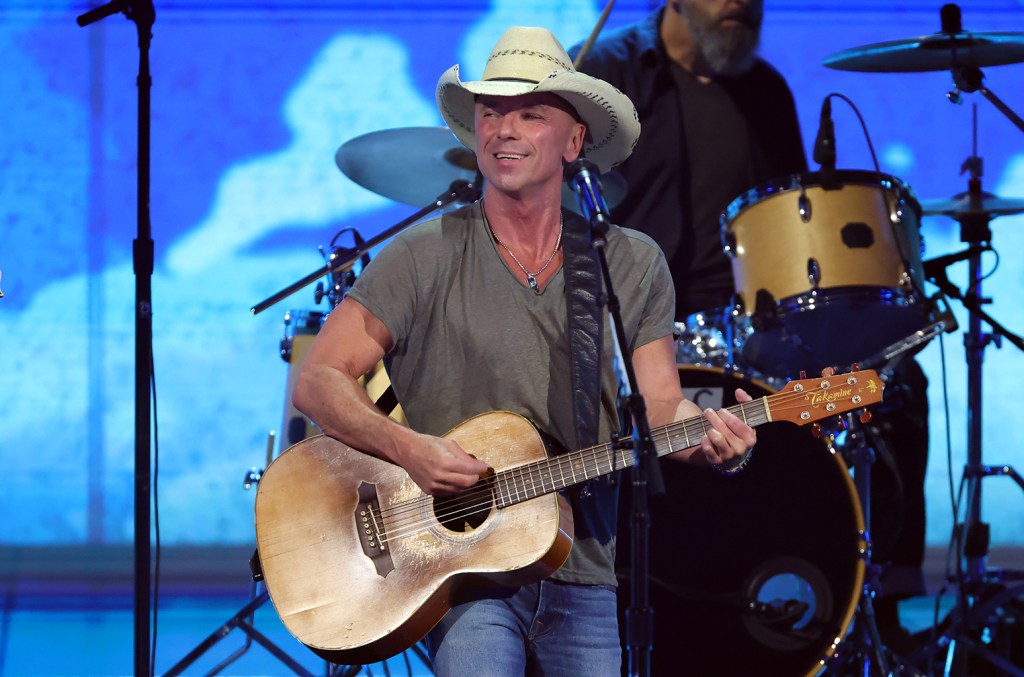
With 33 Country Airplay No. 1s to his name, Kenny Chesney could fill an entire concert—and then some—with only chart toppers. But Thursday night (May 22) at the opening night of his Sphere residency in Las Vegas, he dug deep into his nearly 30 year-catalog. Chesney’s reputation as a stellar live performer is well established: […]
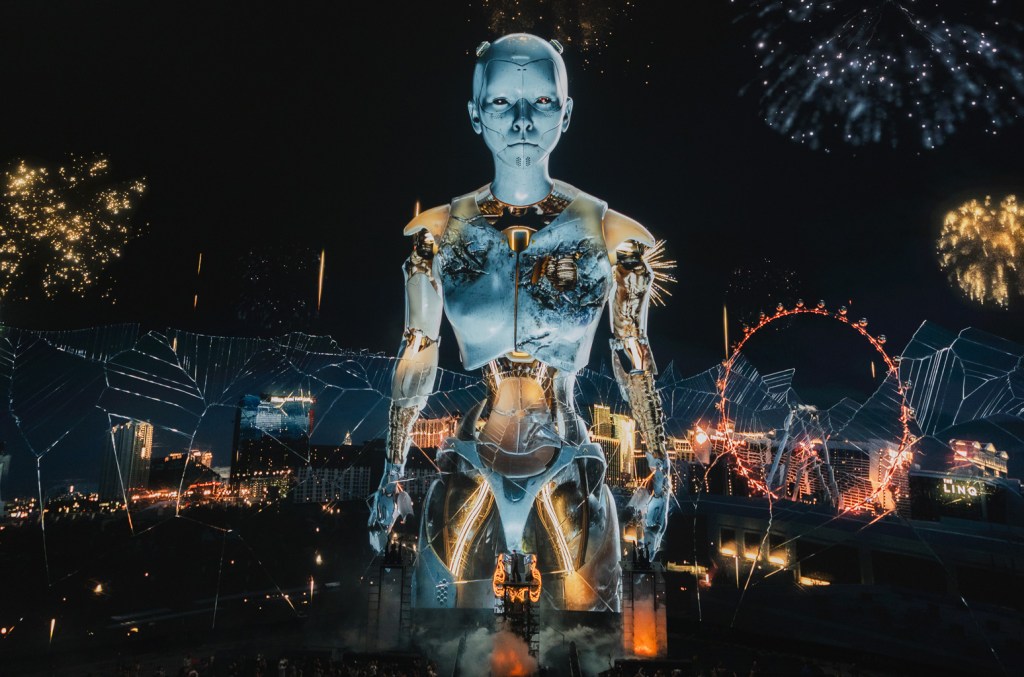
Assembling a show for the technological mecca that is Las Vegas’ Sphere is a head-spinning process for any artist and their team. But CAA agent Ferry Rais-Shaghaghi and Sphere Entertainment vp of live Erin Calhoun worked side by side to help create the buzzy, boundary-pushing run by melodic techno artist Anyma, who became the first electronic act to play the venue when he kicked off a residency there in late December that ran through early March.
Booking an electronic artist had been a priority, particularly given that the right artist would, Calhoun says, “be able to leverage all of Sphere’s experiential technologies in a new, compelling way.” Anyma (born Matteo Milleri) had been on the Sphere team’s radar for years, and over time, it became clear that his international appeal, futuristic music and strong preexisting visual identity made the Italian American artist the perfect choice.
Rais-Shaghaghi says that for him and the rest of Anyma’s team, Calhoun became “the point person for us to navigate everything.” In the year or so it took to produce the show — titled Afterlife Presents Anyma ‘The End of Genesys’ — Calhoun and Rais-Shaghaghi formed, he says, “an incredible business relationship that became a friendship with someone we trusted and felt comfortable going to and having the difficult conversations we needed to have.”
Trending on Billboard
Through these conversations, the team created huge and viral moments, like the scene where a character falls through space, creating a wild, lightly dizzying effect for the audience. They also made a pair of cello-playing robots that helped bring Anyma’s melodies to life. Calhoun says such elements “highlighted the way technology combines with artistry to make for an unforgettable experience.” Milleri developed the visual feast of a show himself alongside Anyma’s longtime visual creative director/lead computer graphics artist Alessio De Vecchi and head creative Alexander Wessely.
Rais-Shaghaghi and his team leveraged their network and hype around the residency to book support acts — “We looked at them more as guests,” he says — for the run that included Peggy Gou, John Summit, Solomun, Amelie Lens, Charlotte de Witte and Tiësto, giving each night a mini-festival feel.
And when issues inevitably arose during production, Rais-Shaghaghi says Calhoun “would always help us in navigating it within her ecosystem and [figuring out] how we could get to the finish line. Erin is firm, but she knows how to get the results she needs without burning bridges. She’s also really good at being a team player, understanding the artist’s creative process and direction and being the voice between the artist and the owner of [Madison Square Garden] in finding that middle ground.”
“We were completely aligned on the overall goal here: to blow everyone away with stunning visuals, next-level sound and an unparalleled live experience,” Calhoun adds. “Every move we made was side by side, which is how we approach every artist playing our venue. The vision is led by the artist, and we do everything we can to make it happen. Ferry is so passionate and was hands-on throughout the entirety of the run.”
This shared mission was ultimately a huge success, with the 12-night residency drawing more than 200,000 fans from around the world. The first eight dates alone sold 137,000 tickets and grossed $21 million, although Rais-Shaghaghi says money is ultimately beside the point.
“Obviously, as agents, we have to look at how we make our clients win financially,” he says, “but more so, it’s about how we can do things where the promoter wins, the fans win and the artists feel that they created an experience that had a high impact.”
This show is clearly one such instance. “From the performers onstage to the fans in the crowd,” Calhoun says, “everyone wanted more, more, more.”
This story appears in the May 17, 2025, issue of Billboard.

With tourism to the U.S. on shaky ground and consumer sentiment waning, Sphere Entertainment Co. CEO James Dolan says the Sphere venue in Las Vegas is on sound footing.
“There’s a little bit of Chicken Little going on in our economy,” Dolan said during the earnings call on Thursday (May 8), referring to the children’s fable about unfounded warnings that the sky is falling. “Maybe later we’ll see a more substantive reaction from the marketplace, but right now we’re not really seeing it.”
International guests account for 10% of guests to Sphere’s concerts and “a little over” 20% of visitors to Sphere Experience, the viewings of Sphere’s original content, according to Dolan. Even if Las Vegas experiences a decline in tourism, Dolan believes Sphere will be insulated by strong demand for its state-of-the-art performances. “When it comes to concerts,” he said, “demand exceeds capacity, so we have room to absorb any issues.”
Trending on Billboard
International relations and tariff concerns couldn’t be blamed for the decline in Sphere revenue in the company’s fiscal quarter ended March 31. Instead, it was an issue of fewer events that caused a 12.8% decline in revenue, to $157.5 million, the company’s parent, Sphere Entertainment Co., announced Thursday.
Sphere did show greater operational efficiency in the quarter. Selling, general and administrative expenses fell 12%, and adjusted operating income (AOI) was flat at $13.1 million despite the decline in revenue.
Investors reacted positively, sending shares of Sphere Entertainment Co. as high as $31.43, up 5.5%, on Thursday morning. The share price was up 5.2% to $31.33 in early afternoon trading.
With residencies by The Eagles, Dead & Company and Anyma, Sphere hosted 10 more concerts than the year-ago period. But the Sphere Experience had fewer showings of original content — Postcard From Earth and V-U2 An Immersive Concert Film — compared to the prior-year period. The quarter also had a difficult comparable because Las Vegas hosted the 2024 Super Bowl, which resulted in a record-setting week for Sphere’s advertising, CFO Robert Longer said. Those decreases were partially offset by increases in event-related revenues and the impact of Delta Air Lines’ corporate takeover of Sphere during CES in January.
Total Sphere Entertainment Co. revenue, which includes MSG Networks, fell 13% to $280.6 million. Consolidated AOI fell 25.6% to $36 million. MSG Networks revenue was $123.0 million, down 19% from the prior-year period, which reflects a nearly two-month absence of programming from Altice while the two parties renegotiated a multi-year renewal.
Dolan said he’s confident the company can drive growth this calendar year through “an array of concerts and third-party events,” sponsorships, and driving operational and cost efficiency. While he didn’t provide details on unannounced future residencies, Dolan said Sphere is having discussions with “multiple artists” and has more demand than availability of shows. “The pipeline is very full,” he assured.