State Champ Radio
 social media
Elsa / About This Account
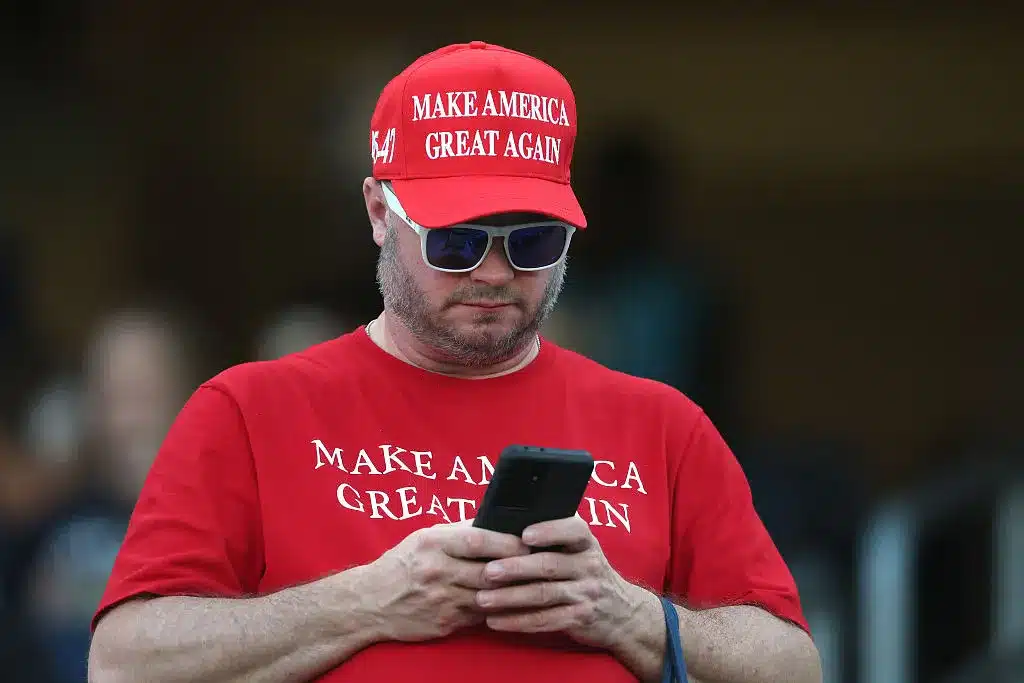
In news that shouldn’t surprise a soul, it turns out those MAGA troll accounts on X, formerly Twitter, are not even based in the United States.
Before Elon Musk reluctantly purchased Twitter and stupidly changed the name to X, it wasn’t a secret that the social media platform was a hotbed for foreign influence campaigns meddling in American politics.
Russian troll farms, for example, were the focus of numerous credible reports and targeted by the United States government.
After X rolled out a new feature called “About This Account,” it became even clearer that trolls are busier than ever on the platform and are probably making money from the political madness going on between Democrats and MAGA Republicans.
Per The Verge:
Love Hip-Hop Wired? Get more! Join the Hip-Hop Wired Newsletter
We care about your data. See our privacy policy.
Almost immediately after the feature launched, people started noticing that many rage-bait accounts focused on US politics appeared to be based outside of the US. Profiles with names like ULTRAMAGA🇺🇸TRUMP🇺🇸2028 were revealed to be based in Nigeria. A verified account posing as border czar Tom Homan was traced to Eastern Europe. And America_First0? Apparently from Bangladesh. An entire network of “Trump-supporting independent women” claiming to be from America was really located in Thailand.
Social Media Began Sniffing Out Sketchy Accounts
It didn’t take long for users on the platform to start sniffing out other pro-MAGA accounts and exposing them as foreign influencers.
Of course, the right-wing influencers are doing the same by pulling up left-leaning/progressive accounts as foreign agents. The back-and-forth is only adding to the political vitriol currently in this country.
Hilariously, as soon as X rolled out the feature, they promptly pulled it back, noting that locations could be inaccurate due to travel, VPNs, and proxies.
While that could be true, it’s also unlikely to be the case for so many accounts.
You can see more reactions to this eye-opening development below.
Trending on Billboard
For nearly 25 years, tech startups have tried to crack the code on a simple idea: Building a social network based on music. The timing wasn’t right for Napster, Imeem, MySpace Music, Lala, Apple’s Ping or Facebook’s Spotify integration, among others. “It’s like a math problem that goes unsolved for hundreds of years and one day a mathematician comes along and solves it,” says Matt Graves, a Marin County, Calif., communications consultant who was once an exec for music-streaming pioneer Rhapsody. “I’d like to think that brilliant young Turk exists.”
Gilles Poupardin, a San Francisco entrepreneur, believes he is that Turk (although he is French) — and believes that Airbuds, his app with 5 million monthly users and $10 million in venture capital, is that service. Airbuds allows friends to view what each other is listening to on Spotify, Apple Music and other music-streaming services in real time, and discuss the tracks or add emojis, “SLAY” stickers and cat gifs to now-playing pages. It’s all very Facebook-in-2009 or Snapchat-in-2015, only with music as the central focus and common user language.
Related
The timing is right, according to the Airbuds co-founder, some 15 years into the social-media and music-streaming eras. “Spotify is the access to the music. Airbuds is the social layer on top of it,” he says. “Gen Z, Gen Alpha, wants more than access. They want identity.”
The earlier music-plus-social services didn’t make it for several reasons. Some ran into technology-wary labels that, after winning battles against Napster and others over copyright infringement, were disinclined to license their content to startups. Others, like MySpace Music, lost out to more advanced tech models, like Facebook and Instagram, and wound up folding or selling out to bigger companies. Poupardin insists this won’t happen with his app. Airbuds connects to Spotify, Apple Music and others, so the company can piggyback on the music-streaming services’ content licenses and not have to worry about securing rights from labels and publishers.
Reps for all three major labels did not respond to requests for comment, but Seb Simone, Warner Music Group’s senior vp of global direct-to-fan services, is quoted in an Airbuds press release. “Airbuds isn’t just another app,” Simone said in part. “It’s a cult community of super-engaged fans expressing their love of music in a social, playful and creative way.”
Related
How does Airbuds make money? So far, mostly through venture capital investment — predominantly from Seven Seven Six, an investment firm run by Alexis Ohanian, a Reddit founder. In the future, Poupardin says, the app is working on a “one-stop shop for artist-superfan connection,” creating profiles for stars that will eventually enable merch and ticket sales. He adds that Airbuds is testing a subscription model that “unlocks customization features.” Also, he says, Airbuds “briefly experimented” with advertising before abandoning the plan.
After attending college in Paris, Poupardin helped create tech ventures, including DrinkEntrepeneurs and Whyd, a voice-controlled speaker that preceded Amazon’s Alexa. After building Capuccino, a social app for sharing audio clips with real-life friends, he and co-founder Gawen Arab hit on the Airbuds idea, launching in October 2022. “It took up slowly at first,” Poupardin says. “We started adding more features and it started growing way faster.”
Airbuds allows users to react to shared songs with stickers, badges and emojis — some of which are customized with artists’ images, including Pink Pantheress, Tame Impala and others. It also provides charts, Spotify Wrapped-style weekly recaps and, significantly, chat features. According to Poupardin, artists have picked up on fans sharing customized content on Airbuds and asked their managers and label reps to figure out how to work with the service.
“You could have built Airbuds a few years earlier, but it didn’t have the critical mass of folks on streaming. It didn’t have the AI-slop-infested Internet. So the culture wasn’t quite ready for it,” Ohanian says. “This is a way to share what you’re listening to with your actual friends. It’s fundamentally human.”

Trending on Billboard
Over her 20-plus-year career, Tracy Gardner has seen her fair share of technological disruptions in the music business. “I started right when illegal downloads took over,” she says of her entry into the industry as an intern at what was then Warner Bros. Records (now Warner Records).
As TikTok’s global head of music business development — a position she has held since February — Gardner is now running point for the biggest disruptor of the industry over the last five years. The Brooklyn Law graduate, whom ByteDance recruited in 2019 after six years in the legal affairs and business development departments at Warner Music Group, took over from Ole Obermann — whom she also worked with at WMG — when he departed for Apple Music.
Related
In her new role as the platform’s chief liaison with the music industry, Gardner oversees deals with labels, publishers and the TikTok commercial music library and works closely with the platform’s strategy, finance, artist services, product and ad sales teams.
Her promotion comes at a fitful moment for TikTok, as ByteDance and the Trump administration are reportedly finalizing a deal that would result in a consortium of U.S. investors acquiring a majority stake in the app. Gardner was not able to comment on that process or how it might affect her division. But in this interview — her first since assuming her current role — she asserts that nearly two years after Universal Music Group temporarily pulled its artists’ music from TikTok over a breakdown in licensing negotiations, and the social media platform shifted label licensing away from Merlin, which licenses digital companies on behalf of over 30,000 indie labels and distributors, “We’re in a great place with the music industry. It’s a dynamic partnership that, as TikTok evolves quickly, has an impact on how we’re looking at deals, how we work with partners and what they want to get from a partnership with us.”
At Warner, you were on the other side of the negotiating table with ByteDance. How did that experience affect how you conduct your job now?
Mainly, it was great to come from the perspective of being at a label and a rights holder. [TikTok] was still relatively new when I got there, and we had to build the infrastructure and collaborate with other teams at ByteDance. A lot of our music team came over from either other DSPs [digital service providers] or labels, so there was a very good base to help the product teams, who don’t have music experience, understand what these rights holders expect from tech partners and what their artists are looking for.
What did you learn from watching Ole Obermann?
Ole and I worked together at Warner. Often people in business development [at music companies] come from one of two paths: f inancial or legal backgrounds. I was fortunate that Ole came from a more numbers- based, financial background, whereas mine was legal. He forced me out of my comfort zone. I wanted to look at the term sheet, and he told me, “You have to focus on the numbers. The numbers don’t lie.” Then we both moved to TikTok, and he [built] a great infrastructure of how the team operates, how we present budgets and how we work with senior management.
Related
How have you tailored your current role to your perspective and experience?
Ole was overseeing both recorded music and publishing, while I was more in day-to-day operations on the recorded-music side working with artists. So when I took on this new job, I said, “Why don’t we apply the best practices we have for artists to songwriters?” One thing that we’re particularly proud of is the songwriter feature we launched earlier this year [enabling songwriters to tag songs they’ve written in the music tab of their account]. The songwriters are really enjoying being able to step out from behind the curtain and get the acknowledgment that they deserve. We plan to roll that out more broadly.
TikTok increasingly has prioritized e-commerce with the TikTok Shop. How is your team working with artists there?
We are working with the e-commerce teams at the labels as well as our own. One thing we’re seeing is old vinyl sells. Even though people don’t have record players, they view these albums as collectibles. We also see great success when an artist does a livestream. We did one with Lizzo that was quite successful and one with the Jonas Brothers.
TikTok has hosted a number of intimate pop-up events recently for artists’ top fans. Ones with Miley Cyrus and Ed Sheeran come to mind immediately. This is an interesting move to me because you are a social media platform. You want to engage fans online. Why did you want to take people off their phones and get them outside with artists?
Music discovery starts on TikTok — discovery, promotion and fandom grows here, and we view it as a flywheel. After discovering a song, we then help to promote it with some of the campaigns that we do, then we tie that to the “Add to Music App” function so that you can listen on your streaming service. We’re see that what we do moves the needle on streaming, which then leads to charts, which then leads to increased fandom.
We thought that there would be a great opportunity to bring this to real life, to invite the fans that have the greatest engagement with an artist on TikTok to come see the artist in person, even if it does mean going off the platform for a bit. What I thought was beautiful about the Miley event at Chateau Marmont, was that the people there were so impassioned that they started posting so much about it. Even though I wasn’t there, they made me feel like I’d actually experienced it. Right now, we’re finding a way to create joyful intimate moments and creating them in a way that encourages fans to film and to bring them back onto TikTok.
Related
After a song goes viral on TikTok, it often ends up doing really well on streaming services. For a while, TikTok was building its own streaming service, TikTok Music. Why was it shut down last year?
It was just a decision of priorities. We were trying to grow it for quite some time, and the decision was made: “You know what? Out of all the things we’re doing, this is not succeeding at the level we want. Let’s focus on other areas.” It was an awesome service and it really tied in all the great parts of TikTok, but it was just a decision by management.
TikTok recently let go about 15 people from the U.S. and Latin American music teams, and layoffs are forthcoming in the United Kingdom. Some are interpreting this as a sign that the company is backing away from its partnerships with the music business.
As so many other big companies have recently done — Amazon announced a big round of layoffs, for instance — organizational changes are due to changes in structural needs. Companies can grow very quickly and then must reassess what’s best for them. There is definitely no change in the priority around artist services and artist relations. For us, it’s business as usual.
How are you reassuring the music industry that you remain committed to the partnerships and plans you already made?
We’re telling them it’s business as usual, and our valued industry partners remain the highest priority. We just want to focus more on the core priorities for artists and songwriters to help drive the value on the platform.
How is TikTok ensuring artists have safeguards against artificial intelligence-generated deepfakes?
We ask that users tag anything that’s AI-created. Aside from that, I don’t think the industry has a quick solution right now to identify those and take them down. If someone notifies us, our trust and safety team will take them down if needed. But it is a very interesting time right now.
Related
AI-generated songs have appeared on the TikTok and Billboard charts. Are you pursuing any policies that would bar AI music on your platform and charts?
It’s uncharted territory. Even with U.S. Copyright Office guidance that works must have sufficient human contribution to be protected, what does that mean? There’s such a wide span from a song being totally created by AI to one that’s created by a human with just one or two AI contributions. How do we decide when it’s such a gray zone? So I don’t think we’ve made a decision on that yet, and I don’t think a lot of the DSPs have either.
If AI-generated music starts performing well on TikTok, could it diminish the leverage rights holders have in negotiations with you?
I don’t think it would have any impact. We’re all aware that AI music is out there, and some exceptions have risen on the charts, but it would not at all impact the value that we see in our partners and how our deals with them are structured.
What are some best practices for artists seeking to gain an audience on TikTok?
The beauty of it is that any song has a chance to go viral. It just depends on how the billions of people on the platform react to the song. Oftentimes, I’m asked, “Do you have to be really leaned in?” It depends. A great example is Connie Francis. Her song “Pretty Little Baby” blew up this year. She wasn’t on the platform at the time. Eventually she did get on, which was great, but this music resonated [on its own].
Source: Sean Rayford / Getty
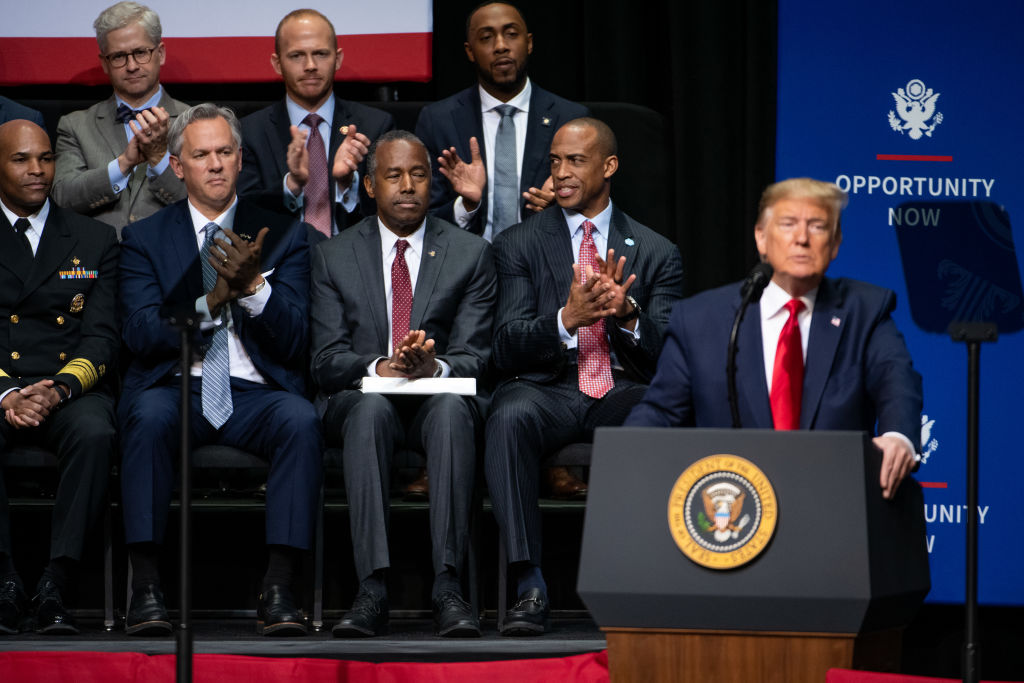
President Donald Trump’s complaint about federal holidays on Juneteenth prompted social media to show his past support for it while campaigning.
As the nation observed Juneteenth on Thursday (June 19), the most noticable action — or inaction — was in the federal government save for a Truth Social post by President Donald Trump. He stated that he would get rid of “non-working holidays”, complaining that “Soon we’ll end up having a holiday for every once working day of the year,” without acknowledging Juneteenth by name, concluding “It must change if we are going to, MAKE AMERICA GREAT AGAIN!”
Related Stories
Juneteenth observes June 19th, 1865, the day when those Black Americans enslaved in Galveston, Texas were informed by a Union Army general that the Civil War had ended and that they had been freed by President Abraham Lincoln’s signing of the Emancipation Proclamation two and a half years before. It was made a federal holiday by President Joe Biden in 2021, and it cannot be revoked without an act of Congress.
Trump’s stance was echoed by White House Press Secretary Karoline Leavitt during her press conference. After answering a question concerning a potential proclamation for Juneteenth, she replied: “I’m not tracking his signature on a proclamation today. I want to thank all of you for showing up to work. We are certainly here.” Trump had signed up to eleven proclamations in the past week alone for Father’s Day, Flag Day as well as the 250th anniversary of the U.S. Army, which are not among the 11 annual federal holidays.
According to reporting from The Guardian, Defense Secretary Pete Hegseth requested a “passive approach to Juneteenth messaging” in an email sent out earlier this week. The news comes after Hegseth has obeyed orders from Trump to carry out his elimination of diversity, equity and inclusion (DEI), seen in renaming military installations like Fort Bragg and warships such as one named after the slain Civil Rights leader Medgar Evers.
But Trump’s social media post was swiftly called out by many on social media who noted that during his presidential campaign in 2020, he promoted Juneteenth becoming a federal holiday as part of his “Platinum Plan” geared towards earning votes among the Black community. Former President Joe Biden spent the day on Galveston Island, attending the Juneteenth Emancipation March and Service held at Reedy Chapel AME, where he also paid homage to the late Texas Congresswoman Sheila Jackson Lee who worked to make Juneteenth a federal holiday.
HipHopWired Featured Video
CLOSE
Source: BRENDAN SMIALOWSKI / Getty
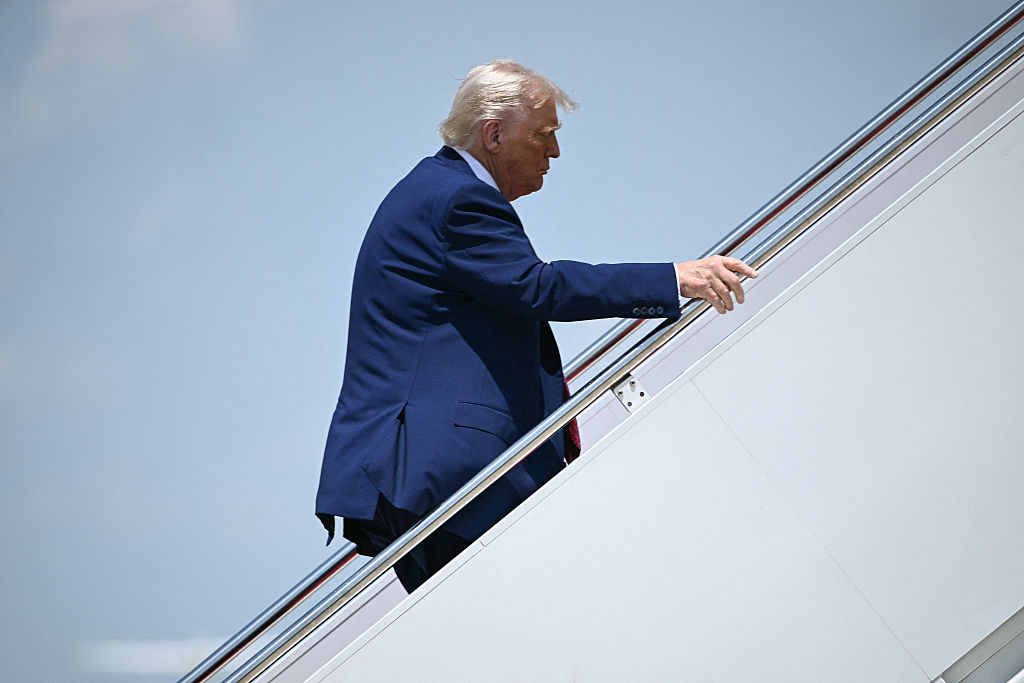
President Donald Trump was caught on video tripping on the stairs of Air Force One, prompting several social media jokes.
President Donald Trump nearly took a tumble on airplane steps, and social media called him out along with noting that it wasn’t getting as much coverage as opposed to what happened to former President Joe Biden. On Sunday (June 8), Trump was set to board Air Force One to head to Camp David in Maryland, purportedly to meet “a lot of people, including generals… and admirals.” He also fielded questions about the protests in Los Angeles against the actions of Immigration and Customs Enforcement (ICE) and his move to deploy National Guard troops.
He took more questions, with Secretary of State Marco Rubio at his side before exiting to take the stairs to enter Air Force One. As he climbed the stairs, he tripped and grabbed onto the railing with his right hand before collecting himself and resuming the climb into the airplane. The entire moment was caught on C-SPAN.
The moment immediately went viral online, including a close-up shot of Trump’s profile at the moment he tripped and caught himself. It also led many on social media to take their shots at Trump and Republicans who had consistently mocked former President Joe Biden for his moments of difficulty entering and exiting Air Force One. “Slipping on all them lies he’s saying about Los Angeles.” a TikTok user named MammaMia wrote.
Others also called out the hypocrisy they viewed within media outlets who might brush off Trump’s near-tumble but still obsess over how old former President Biden was. “Life has a funny way of showing you different prospectives after one has harshly judged another,” wrote TikTok user Emi333. Others also noted Rubio seeming to trip as he boarded the stairs for Air Force One, and commented that he might’ve been trying to dilute some of the potential barbs thrown at Trump. And a few social media users called out MAGA supporter Joey Mannarino’s odd defense of the stumble.
HipHopWired Featured Video
CLOSE
Source: Andrew Harnik / Getty
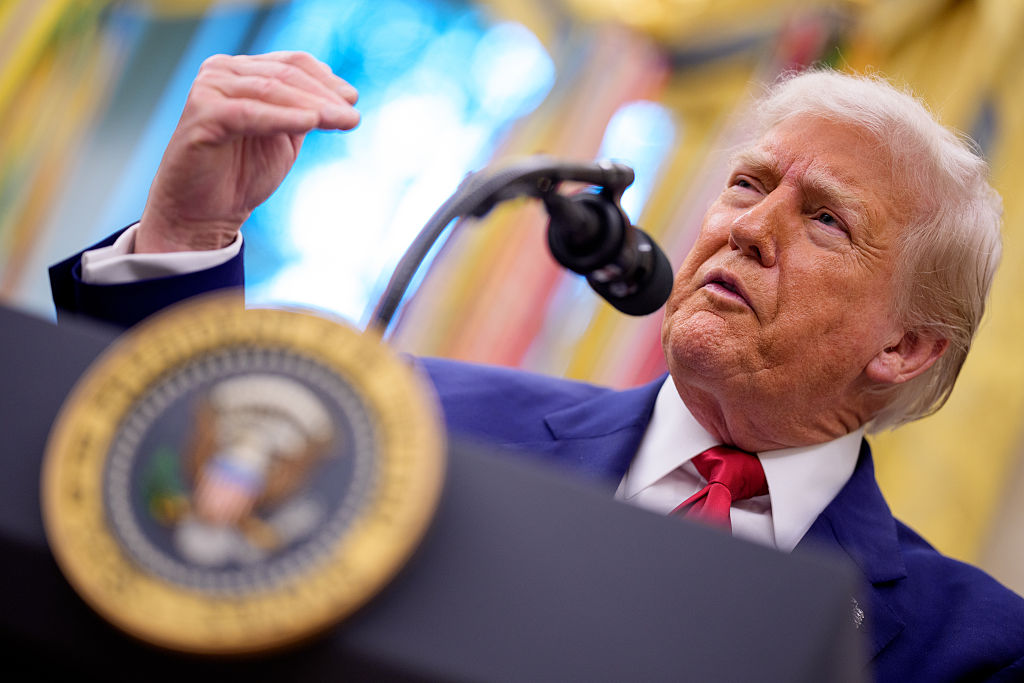
President Donald Trump’s angry response to a description of his erratic trade policies evoked a bevy of laughs from social media.
On Wednesday (May 28), President Donald Trump had sworn in former Fox News host Jeannine Pirro as the interim U.S. Attorney for Washington D.C. in the White House, and began to field questions from reporters. CNBC reporter Megan Casella asked, “Mr. President, Wall Street analysts have coined a new term called the TACO trade. They’re saying Trump always chickens out on your tariff threats and that’s why markets are higher this week. What’s your response to that?”
“I’ve never heard that,” Trump acknowledged, but swiftly got defensive. “You mean because I reduced China from 145%, that I set down to 100% and then down to another number, and I said, ‘You have to open up your whole country.’ And because, I gave the European Union a 50% tax tariff, and they called up, and they said, ‘Please, let’s meet right now. Please, let’s meet right now.’” He continued angrily, “after I did what I did, they said, ‘We’ll meet anytime you want.’” And we have an end date of July 9th. You call that chickening out?”
After attacking former President Joe Biden for not imposing high tariffs, he pointedly attacked Cassella. “We had a country people didn’t think it was gonna survive, and you ask a nasty question like that?” he retorted, saying “But don’t ever say what you said. That’s a nasty question. For me, that’s the nastiest question.”
The “TACO trade” term was coined by Financial Times columnist Robert Armstrong last month to describe how Trump scares global markets with tariff threats, forcing the market to plummet before backing off, which allows them to rebound again. “[T]he recent rally has a lot to do with markets realising that the US administration does not have a very high tolerance for market and economic pressure, and will be quick to back off when tariffs cause pain,” Armstrong wrote.
The meltdown didn’t go unnoticed on social media, as critics highlighted how badly the president took the news. “What’s hilarious about this whole thing is there has to be people in the admin who know about this stuff and everyone is afraid to tell him bad news,” wrote Democratic Party strategist Adam Parkhomenko in a post on X, formerly Twitter. “So we get to see him lose his s—t for the first time live on tv.”
HipHopWired Featured Video
CLOSE
Source: Dustin Bradford / Getty / Travis Hunter
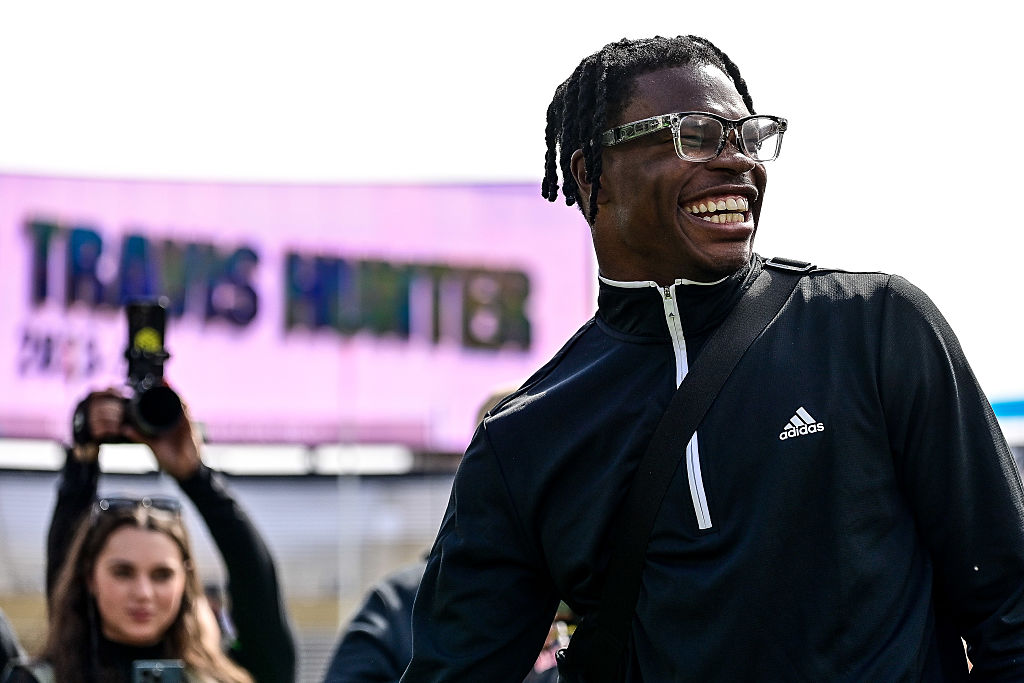
Travis Hunter is currently living his best life after being drafted by the Jacksonville Jaguars and marrying his fiancée, Leanna Del Fuente, but as expected, the haters had plenty to say.
Hunter, the Jaguars’ newly drafted offense/defence specialist, put a bow on what many would consider a fantastic month by tying the knot to his longtime girlfriend.
Hunter, 22, and De La Fuente, 23, began their love story when they met at Collins Hill High School in Suwanee, Georgia, and it continued throughout his 3-year college stint in Colorado. It didn’t take long for them to seal the deal after their engagement in February 2024.
Along with her very expensive rock on her finger, Hunter wasn’t done blessing his now wife with gifts. Videos of the wide receiver and cornerback unveiling a black Mercedes-Benz AMG G63 Brabus 800, worth more than $200,000, as a gift to his bride, went viral on X, formerly Twitter timelines.
Other clips show Hunter with his new wife celebrating their nuptials, and another of him dancing with his bride while flashing the biggest grin on the planet.
Haters Were Hating On Travis Hunter Getting Married
But with the bliss, of course, comes the unnecessary vitriol of the man just being happy to be married.
“travis hunter actually married that girl *laughing emojis,” one post on X read.
Another hating ass comment read, “Bag Secured. Look at that GRIN on him. #TravisHunter got the stripper a ring AND a G-Wagon just to show everyone he’s all in on her. What could possibly go wrong?”
Someone on Instagram went as far as to write Kanye West, also known as Ye, entire verse from “Gold Digger” under a post.
Some came to the defense of the newly married couple.
Exactly.
We’re sending our best wishes to Travis Hunter and De La Fuente.
You can see more reactions in the gallery below.
2. She’s winning though
3. Oh he’s big mad
HipHopWired Featured Video
CLOSE
Source: Google / Google
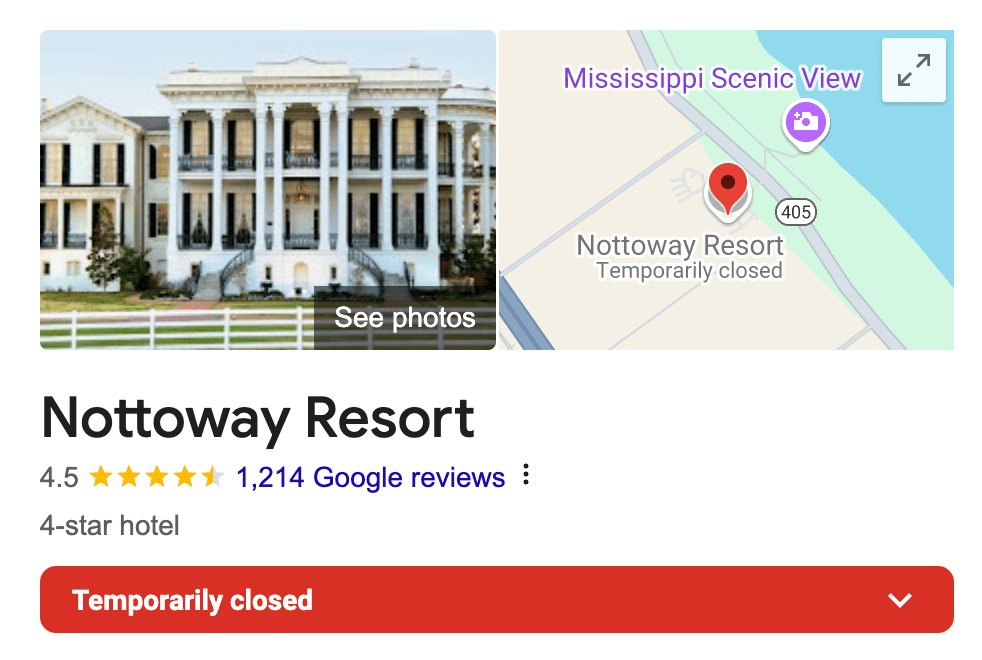
The Nottoway Plantation in Louisiana burned down, and social media users expressed a wide range of emotions in response.
The Nottoway Plantation in Louisiana, billed as “the South’s largest remaining antebellum mansion”, was devoured by a fire over the past weekend. The responses to the fire have been a mix of emotions ranging from jubilation over the destruction of a symbol rooted in the horrors of the enslavement of Black people, to some expressing sadness as it represented “the good old South” and their memories of weddings held there.
Located 65 miles northwest of New Orleans, the 53,000-square-foot mansion had been rebranded as the Nottoway Resort in recent years, featuring amenities such as 40 overnight rooms, a honeymoon suite, a lounge, fitness center, and an outdoor pool and cabana. According to the National Park Service, 155 enslaved people were recorded at Nottoway Plantation in 1860. The website for Nottoway doesn’t mention those people at all. And according to property owner Dan Dyess’ words in the New York Post, there is no intent to do so: “We are trying to make this a better place. We don’t have any interest in left wing radical stuff. We we need to move forward on a positive note here and we are not going to dwell on past racial injustice.”
That sentiment contrasts with how social media rejoiced in Nottoway burning down. One historian, Dr. Mia Crawford-Johnson, shared a selfie taken across from the site of the mansion burning down, which went viral. Others also shared videos celebrating the mansion’s destruction by fire as justice for those who were enslaved, with some using it as an Autonomous Sensory Meridian Response video and editing the video with background music choices like Usher’s “Let It Burn.”
Some historians have lamented the lost chance to preserve Nottoway as a site to illustrate the skill and ingenuity of Black enslaved people. “There are no perfect answers here,” writes noted author and chef Michael W. Twitty in an MSNBC article. “Nottoway could have gone the way of Whitney Plantation, also in Louisiana, which is a museum dedicated to helping visitors understand who the enslaved people were.” When contacted, Whitney Plantation Museum Executive Director Ashley Rogers felt that Nottoway’s chance to go that route was lost long before the blaze. “It was a resort,” Rogers said. “I don’t know that it being there or not being there has anything to do with how we preserve the history of slavery. They already weren’t.”
HipHopWired Featured Video
CLOSE

In recent years, social media platforms have become a key battleground for copyright infringement disputes, with music rights holders targeting brands that use copyrighted tracks in social media posts.
This development can be traced, in part, to increasingly sophisticated software that major music labels and publishers use to monitor infringing uses of their songs online — a reaction to the “whack-a-mole” frustration that rights holders feel when they consistently find their songs being used on the Internet without permission. And with the risk of potential statutory damage awards for copyright infringement ranging from $200 to $150,000 per infringed work, rights holders can hold significant leverage in any ensuing legal action. Thus, whether a brand is incorporating music into posts on its social media channels or partnering with influencers who do the same, using music on social media has never been riskier.
Below, we examine the rising tide of recent lawsuits and other legal action taken against brands by music rightsholders and outline key takeaways to help avoid infringing uses and ensure that artists are properly compensated for their work.
Trending on Billboard
The Vital Pharmaceuticals Case
In 2021, UMG Recordings sued Vital Pharmaceuticals, the parent company of Bang Energy, for direct, contributory, and vicarious copyright infringement, alleging that videos posted by Bang and its influencers on TikTok used UMG’s copyrighted songs without permission. UMG argued that Bang was “well aware” that its conduct constituted copyright infringement because UMG had informed Bang of its unauthorized uses before bringing suit. UMG also argued that Bang had control over and financially benefited from its influencers’ infringing videos, which the influencers submitted to Bang for approval before posting.
Bang denied any knowledge of infringement, arguing that TikTok’s standard music license covered Bang’s use of UMG’s music. The court disagreed and granted summary judgment on UMG’s claim for direct copyright infringement, holding that UMG did not authorize TikTok to permit end users, such as Bang, to use the music for commercial (as opposed to personal) purposes. The court reasoned that because direct liability for copyright infringement does not require proof of intent, Bang’s belief that TikTok gave it permission to use UMG’s music was, at most, relevant to the amount of damages Bang owed, not whether it was liable for copyright infringement in the first instance.
The court ruled against UMG, however, on its vicarious and contributory infringement theories related to Bang’s influencers, concluding that UMG failed to prove that Bang had input regarding the selection of music included in influencers’ videos and did not point to any evidence that Bang received a direct financial benefit from the influencers’ videos.
The Growing Litigation Trend
Since UMG v. Vital Pharmaceuticals, music rights holders have ramped up enforcement efforts against other brands. Sony Music Entertainment launched its own copyright infringement lawsuit against Bang (as did Warner Music Group) and also filed claims against brands such as Gymshark, OFRA Cosmetics, Marriott International and the University of Southern California. In each case, the brands, and/or the influencers they hired, allegedly used Sony-owned sound recordings in posts promoting the companies’ products or services.
Similar to UMG’s argument in Vital Pharmaceuticals, Sony argued that each of the companies knew that their content infringed Sony’s copyrights prior to the lawsuits, and thus that the infringement was “willful,” entitling Sony to statutory damages as high as $150,000 per infringed work. In the Gymshark case, as in Vital Pharmaceuticals, it was alleged that Gymshark knew that the music was unlicensed because Gymshark previously approached Sony to discuss music licensing and then proceeded to use Sony’s music without securing commercial licenses. OFRA allegedly failed to take down infringing content after Sony sent a cease-and-desist letter and then posted new infringing content after learning of Sony’s claims. And Marriott allegedly did not take down its posts upon Sony’s request, was previously sued in 2021 for similar copyright infringement issue, and generally knew how to enter into music licenses.
As in Vital Pharmaceuticals, Sony also brought claims against alleged infringers, such as Gymshark and OFRA, for contributory and vicarious liability based on their influencers’ infringing content. Most recently, Warner Music Group (WMG) sued Crumbl and Designer Brands Inc., the parent company of DSW Shoe Warehouse, under similar theories.
While a number of these cases were just recently filed, and others ultimately settled out of court or appear to be moving towards settlement, there is no question that they are part of a fast-growing trend, and provide a glimpse into the mindset, and tactics, of rights holders with respect to unauthorized music use on social media platforms.
Navigating Platform Music Licenses
So what can brands do to avoid this type of legal action and ensure from the outset that artists are properly compensated for their copyrighted works? The best way to avoid copyright infringement when using music owned by a third party is, of course, to license the music directly from the third-party rights holders. This approach is often impractical, however, given the speed and volume with which brands need to publish content on social media.
Instead, many brands use music from the social media platforms’ respective “commercial music libraries” or “CMLs,” which contain different music options than those available for “personal” accounts. The CMLs, such as Meta’s Sound Collection and TikTok’s Commercial Music Library, allow companies and individuals to use music on the platform specifically for commercial purposes, so long as the brand also adheres to the platform’s other license terms.
Using CMLs can pose challenges, however, especially with respect to registering “business” accounts within each platform. Even with the proper registration, it is not always clear which music within the different libraries’ business or commercial accounts can use, and the scope of those rights may (and do) change over time. There are, however, a number of strategies brands can use to help ensure they are using permitted music.
For example, before using a platform’s CML, brands should review the CML’s terms of service and related policies, including terms that specify which commercial purposes the music can be used for and whether the songs can be used in videos on other platforms. It is equally important for brands to actively track the platforms’ evolving license terms in order to remain compliant. And for some brands, it may make sense to use software or external vendors to monitor and flag their brand and influencer posts for potential copyright violations across social media platforms. Of course, every brand’s business needs will be different. The key is finding the right combination of internal and external resources to help minimize the risk of copyright infringement.
Conclusion
The rising chorus of lawsuits from music rights holders is nothing to tune out. Brands using music as part of their social media strategies (which, practically speaking, is almost every brand) must take proactive steps to mitigate legal risks, and they will also be protecting artists’ rights in the process. This includes complying with and staying informed about changes to platform-specific licensing terms, ensuring that their influencers stay within the bounds of such terms, and considering tools to monitor, flag, and remove potentially infringing content. Failing to take these precautions can lead to costly litigation, reputational damage, and the forced removal of content.
Sarah Moses is an entertainment litigation partner with Manatt, Phelps & Phillips, LLP and focuses her practice on a variety of complex litigation and commercial disputes. She represents media, entertainment and technology clients in copyright, trademark, right of publicity, First Amendment, blockchain and artificial intelligence (AI) matters, among others.
Monica Kulkarni is an advertising, marketing and media associate with Manatt, Phelps & Phillips, LLP. She represents clients across a variety of industries and provides multidisciplinary legal counseling on transactional, compliance and regulatory matters in advertising, entertainment and media.
Jacob Geskin is a law clerk with Manatt, Phelps & Phillips, LLP based in the Firm’s New York office where he works across music, intellectual property and media law.
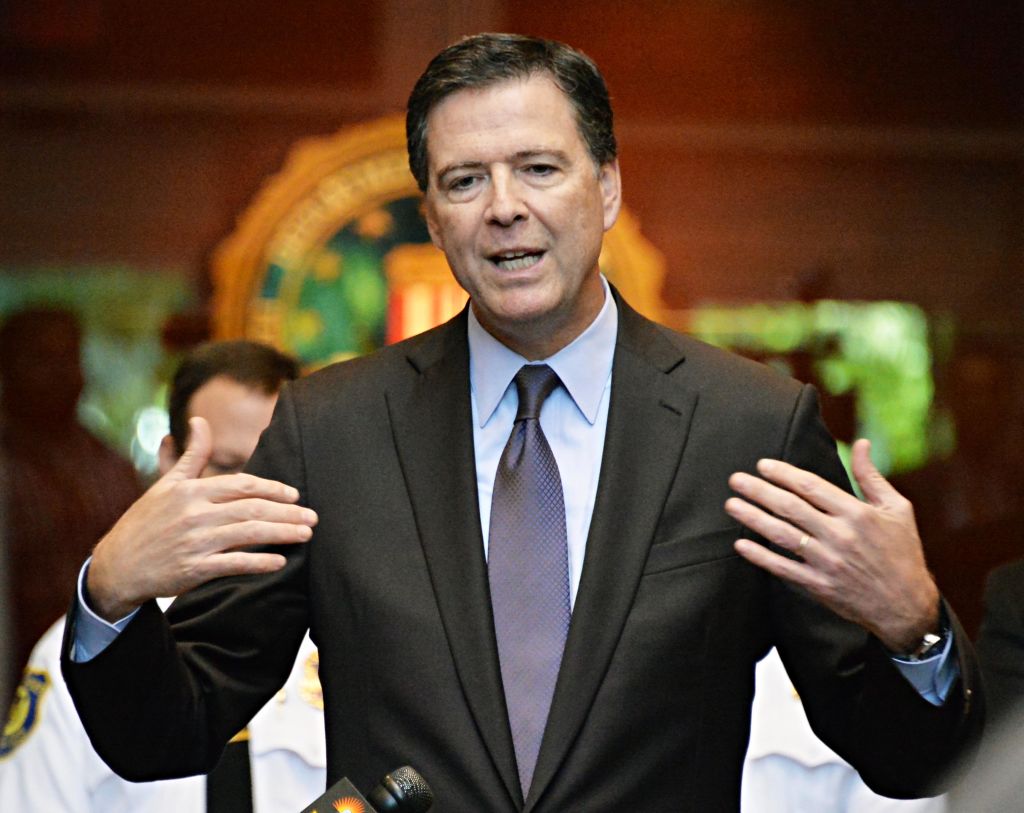
Source: Albany Times Union/Hearst Newspapers / Getty
A post by former FBI director James Comey is being spun as a threat against President Donald Trump, with social media disagreeing.
On Thursday (May 15), former FBI director James Comey posed a photo to his Instagram account. It showed shells on the beach arranged into a formation of numbers – “86 47”. The cryptic image was accompanied by the caption, “Cool shell formation on my beach walk.” In restaurant culture, to “86” something means to get rid of something or someone. In pairing it with “47”, it drew immediate assumptions that the photo was a call to violence from President Donald Trump and his staff.
Comey would delete the post shortly afterward, writing that he “didn’t realize some folks associate those numbers with violence.” In a follow-up post, he continued: “It never occurred to me but l oppose violence of any kind so I took the post down.” Department of Homeland Security Secretary Kristi Noem confirmed that the administration is now investigating Comey, stating that “D.H.S. and Secret Service is investigating this threat and will respond appropriately.”
Tulsi Gabbard, Trump’s director of national intelligence, called Comey out on Fox News’ Jesse Waters Primetime saying that Comey should be “held accountable” and “put behind bars” for allegedly “issuing a call to assassinate [Trump]”. Comey was fired by Trump during his first term. Trump also attacked Comey in another interview on Fox News. “He knew exactly what that meant. A child knows what that meant,” Trump said, adding: “If you’re the FBI director and you don’t know what that meant? That meant assassination. And it says it loud and clear. Now, he wasn’t very competent, but he was competent enough to know what that meant.”
But social media users called Trump and his supporters out for ramping things up too far, and recalled his own rhetoric against former President Joe Biden. In a post on X, formerly Twitter, user Drew Savicki wrote: “Nobody actually believes James Comey was threatening Trump. It’s all performative outrage.” In a segment with CNN’s Kaitlan Collins, legal analyst Elie Honig dismissed Gabbard’s claims. “This is not criminal,” he said. “This is not a criminally chargeable threat against the president. It’s political speech. It’s way too broad. It’s stupid, it’s reckless. It’s not criminal. That’s just hyperbole that you’re hearing from the Cabinet members there.”
HipHopWired Featured Video
CLOSE