State Champ Radio
 Rock
Page: 16
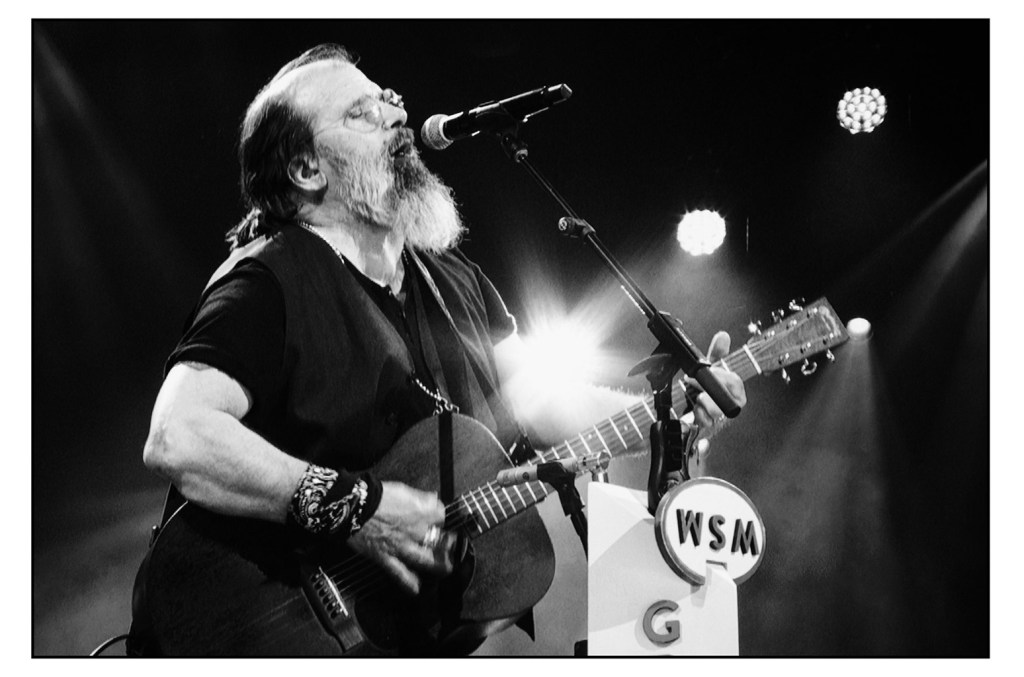
Steve Earle has a number of events he can point to in his life to mark 50th anniversaries, but he’s clear about what’s sending him on his Fifty Years of Songs and Stories tour that kicks off May 25 in Decatur, Ala.
“It’s the 50th anniversary of me signing my first publishing contract – me officially in the music business,” Earle tells Billboard. That was in Nashville when, after a good six years of tooling around in Texas – including playing in his songwriting hero Townes Van Zandt’s band – Earle was working by day and playing at night, including as part of Guy Clark’s group. The song publishing company Sunbury-Dunbar made him a staff writer, though Earle would subsequently head back to Texas and then return to Nashville, where he became an artist in his own right with the 1982 EP Pink & Black; his career really took off with 1986’s Guitar Town, which hit No. 1 on Billboard’s Top Country Albums chart.
Earle, 70, has been going ever since, with hits, misses and a brief incarceration during the mid-‘90s for cocaine and weapons possession. Others – including Joan Baez, Travis Tritt, Robert Earl Keen and Stacy Dean Campbell – have recorded his songs, but Earle has remained determinedly and defiantly his own man, winning three Grammy Awards along the way and delving into other projects such as production (for Baez and Lucinda Williams), acting (HBO’s Treme and The Wire, off-Broadway’s Samara ) and theater (the Drama Desk Award-nominated Coal Country). His social and political activism led to the National Coalition to Abolish the Death Penalty’s shining star of abolition award in 2010, and in 2020 he was inducted into the Nashville Songwriters Hall of Fame.
Clearly, there will be a lot of stories to go with the songs when Earle hits the road (his shows will be mostly solo, though he’s playing a few dates with the band Reckless Kelly). “It’s not strictly chronological; that’s the backbone of it, but some songs I play are based on memories, so something I wrote a little later may pop up earlier in the show,” Earle explains. “It’s sort of built around telling stories; I try not to talk too much, but I’m good at that thing. I started in coffee houses, so that’s basically the deal.”
Earle is hoping to finish work on his next musical, a stage adaptation of the hit 1983 film Tender Mercies, while he’s out on the road. “I want to finish at least three songs so I have a draft,” he says. “These things take years to (complete). I’m just trying to live long enough to get the f–kin’ thing up.” He also appears on Willie Nile’s upcoming new album The Great Yellow Light and has recorded a “cosmic country” song, “Dead or Gone to Dallas,” for a split single he’s doing with Reckless Kelly. “It would work on Guitar Town,” Earle notes. “I was talking to Miranda Lambert; my family’s from the same part of Texas as she’s from, and she asked me if I ever went up there. I said, ‘Everyone I know is dead or gone to Dallas.’ She said, ‘Don’t write that with anybody!’” Earle has also finished “a big chunk of” a memoir as well as “a little bit of” a novel.
“I really mean to finish them before I die,” he says, noting that after turning 70 “you think about it even more. You wouldn’t think one number would make a difference more than any other number. But my father was only 74 when he died and my grandfather only lived to be 63. One uncle was 80 but the other died younger than my dad. And you get to be a certain age and your friends start dying. On my radio show [Hard Core Troubadour on SiriusXM’s Outlaw Channel] I used to do tributes occasionally; now it’s more often than I’d like.”
As he gets ready to hit the road with his Fifty Years of Songs and Stories Tour, we thought we’d get Earle to tell us the stories behind five key songs in his career. Check out Earle’s tour dates here.
“L.A. Freeway” (Guy Clark, 1970; covered by Steve Earle in 2019)
Source: Mirrorpix / Getty
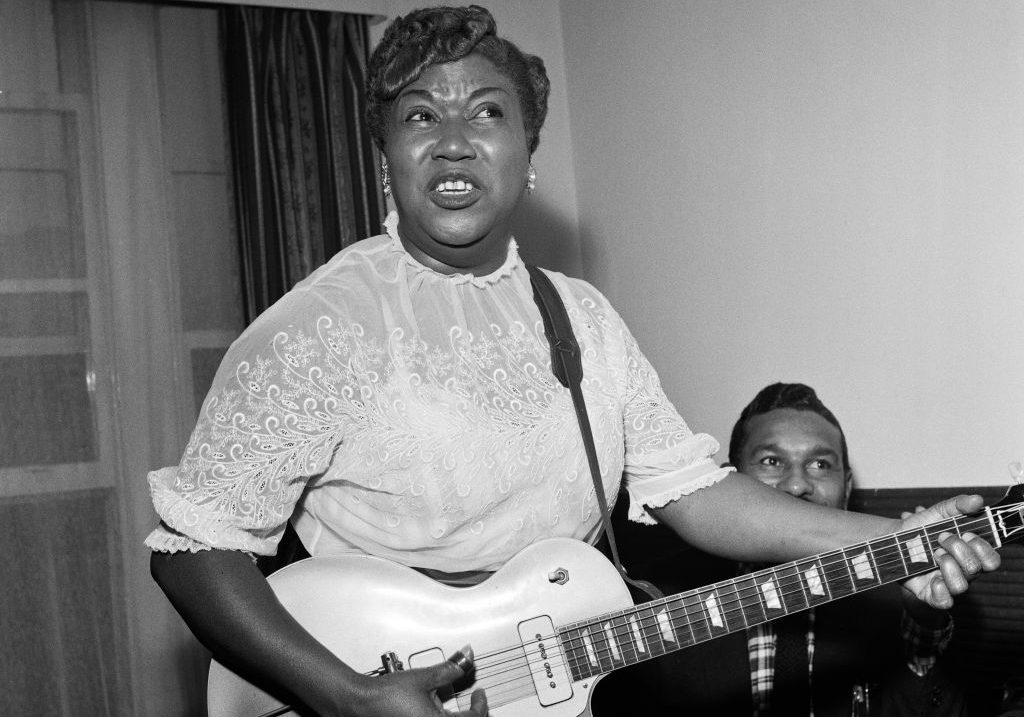
Rosetta Tharpe was a trailblazing Black musician who found fame early on as a gospel artist before shifting to rock and roll and inspiring several future legends. Aunjanue Ellis-Taylor has been tapped to pen a script for a biopic about Sister Rosetta Tharpe, with legendary rocker Mick Jagger serving as a producer.
Deadline reports that the Sister Rosetta Tharpe biopic was set in motion after Live Nation Productions reached out to Aunjanue Ellis-Taylor to piece together the script. Along with Jagger’s Jagged Films, the film is also being produced by Tribeca Studios and Inaudible Productions.
Sister Rosetta Tharpe emerged on the music scene first in the world of gospel, releasing her first recordings at the age of 23 in 1938. One of the singles, “Rock Me,” would become a hit and influenced the likes of Elvis Presley, Jerry Lee Lewis, and Little Richard, among others.
Tharpe would mix gospel lyrics with secular music, which angered some. She went on to perform her mix of gospel and rhythm and blues, all accented by her guitar playing. The image of a Black woman singing gospel music inside secular establishments, along with her chosen instrument, caused many to not support her musical endeavors despite her quietly influencing future musical superstars along the way.
In interviews, Thapre essentially framed rock and roll as rhythm and blues at a faster pace. Sister Rosetta Tharpe passed away in 1973, but was acknowledged by her peers as a pioneering voice for rock and roll.
Along with the biopic, there will be a documentary about Tharpe centering on her contributions to music and her lasting influence, most especially in the world of guitars. The film will also pull from author Gayle Wald’s Shout, Sister, Shout!: The Untold Story of Rock-and-Roll Trailblazer Sister Rosetta Tharpe biography.
—
Photo: Getty
HipHopWired Featured Video
Sam Ryder is, undoubtedly, one of the United Kingdom’s greatest Eurovision success stories in recent years. At 2022’s Song Contest, he finished in 2nd place (its highest finish since 1998) and used that to springboard to a No. 1 album (There’s Nothing But Space, Man!), and cement himself as one of the scene’s most electrifying performers. Soon he was collaborating with Queen’s Brian May, performing in front of the Royal Family at Queen Elizabeth’s Platinum Jubilee party, and bringing a puppyish enthusiasm to every booking.
Explore
Explore
See latest videos, charts and news
See latest videos, charts and news
But even so, things in this industry can change in a heartbeat. In 2023, a leadership change at Parlophone Records meant that the executives that Ryder had signed with were leaving the label, and Ryder was caught in the middle: He saw the benefits of remaining on a major label, but felt indebted to the people who backed him when few others did.
Trending on Billboard
Ryder was not an overnight success. Prior to his selection for Eurovision, he gigged hard for a decade in various rock bands, and held down jobs in construction and hospitality. His rise on TikTok during the pandemic in 2020 eventually helped him land the spot for Eurovision in 2022, and it came when Ryder had just entered his 30s. His was a late-blooming success story and hard-fought for; he understood how fragile the industry can be, and how quickly it can all change.
When it came to the next phase of his career following his debut album success, he prioritized the things that were important to him: respecting the music-making process, and staying loyal. His new run of music — including “OH OK”, out Friday (May 23), and “White Lies” — is earthier, country-flecked as opposed to the glam-rock stylings of his debut. He thought about the artist he wanted to be, and how he can be authentic to his craft. He signed with Artist Theory, the new label from Nick Burgess and Jack Melhuish, who he met at Parlophone and left the major label system with them.
It’s a move that now looks savvy. The material he’s releasing showcases a new depth to his songwriting, and sits alongside Hozier and Noah Kahan’s rugged productions, all while retaining his powerhouse vocals and inimitable charm. In June, Ryder will perform at Glastonbury Festival for the first time; in November, Wembley Arena in London beckons, a sign that everything continues to move in the right direction for the singer-songwriter.
As he releases his new single “Oh OK,” Ryder tells Billboard U.K. about having faith in himself, his move to Nashville and the next phase of his career.
How would you describe this new era?
I’d call it the ‘frontier soul’ era. Soul music – that goes without saying. I sang that for years when I was at weddings and love it. But when I say frontier, think about the grandeur of old Hollywood and the richness in that aesthetic. The music is very much inspired by the Westerns that me and my grandad used to watch together. There’s a real attention to how the score and sound is recorded; films like Alexander the Great where the credits would roll up on screen first with a massive orchestra score. There’s such a richness in all of that aesthetic for me that I really enjoy.
You made the decision to head on a new journey with your label for this next album. Talk us through that…
A door was presented, to be real. At the time I remember feeling sad about it, even though it’s a choice we made, it felt exciting to a degree but daunting also. Parlophone had been there for the entire first album stint, which was amazing. Every challenge we met and exceeded. Parlophone, at that time, was the small dog in the fight. They’d reopened the label and had something to prove and the reason I chose it was because it felt like me; I hadn’t been given a chance until so much later on in my life to reach my potential.
When that label got dissolved essentially, [my] album had just gone to No. 1 and I was turning up to play a sold-out Hammersmith Apollo in London. It shows no one is ever safe from that happening to their label – it wasn’t a situation of the label wanting to go in a different direction, but all these amazing people were getting fired. I didn’t want to move to another major label where you’re an artist inherited rather than believed in and journeyed with.
The executives you worked with left an impression. You must have had faith in them in their next venture?
It’s not just faith, you’ve actually seen them in action and what they can do. Faith can be misconstrued in any industry. Any time you go and see a different label or management – which I’ve been through in my career – everyone gives you their best on that first meeting. It’s almost impossible to make a decision on anything but a gut instinct and a proof of concept; you’ve seen the lengths they’ll go to to make something happen and seen how collaborative they are and how they manage situations. Those are really important attributes.
It must have given you a lot more freedom in the way you approached the writing and recording process. Is that fair?
Yeah, I mean the way that people write music in the current industrial age of recording, you’re in sessions most days of the week with different people. You just end up collecting songs. That’s what I did for the first album and what a lot of my peers are doing as well. You can collect in the region of 100 songs, which, on paper, sounds great right? You’ve got all these songs, and everyone you work with is a great writer and then you put an album together of the best 12 songs.
The problem with that is that you don’t get a concept for the journey of a record, because everything in isolation sounds great and a single song sounds amazing. But put that together and it feels like you’re eating Big Macs and profiteroles for an hour; it just doesn’t feel nutritious.
Your journey has not been a typical one. Success came for you at a different period of your life than a lot of acts. What would you say to the next wave of people coming through when they’re faced with important business decisions like you had to make?
For any new artist, I know how exciting it would feel to come from making music in your bedroom to getting an email from one of the big three labels. I mean, take the meeting, of course. I have so much to thank major labels for; the experience was really magical. It wasn’t without its challenges, but nothing worth fighting for is going to be easy.
But I would say that there’s a really exciting conversation happening in the indie space. The idea of the major label system is slightly outdated. That’s not to say that the people working in those industries are outdated. They love music as much as you and I do. But they’re working in the confines of a massive beast. It’s like working with any big corporation, things happen slowly as there’s so many moving parts; an indie label can be a bit more nimble. I believe [the major’s] intentions are right, but it’s going to take time for change… and I haven’t got the time, man. I need to move quickly!
Have you always dreamt of heading to Nashville?
For the last 13 years the goal has been to get to Nashville and I’m so stoked we’ve been able to do it. I’ve bought a log cabin in the trees which is so peaceful. The city has absolutely exploded in the best way, but it’s still kept its heart and soul.
What is that music community like, particularly for someone moving into the area?
With Nashville, if the evidence of other people’s success doesn’t psych you out everywhere you look, it can be a really good motivational place to be. It’s the same with actors in Hollywood, I imagine. Maybe they go to the Walk of Fame and see these examples of past and present success which aren’t yours yet. It’s kind of the same with Nashville… but I don’t get psyched out by seeing that. I love it. I think that if it’s possible for them, it’s possible for me. It makes me feel like things are happening there and you’re at the epicentre of something special. And I think serendipity and spontaneity are so crucial in music and all the arts. That’s where the good stuff happens.
Heading to Nashville, writing and recording there and on your own terms with the new label must have brought the best out of your creativity, right?
It was nice to have that more manageable pace with it. In the past you just didn’t have time to sit and consider what you’re doing. Your schedule fills up so fast and there’s just not much time. When I look back, making music felt like the side project to everything else that needed to be done. The schedule was so crazy with everything else like promo and TV, that sitting and making music almost felt like a luxury. You’d make music in a room, and then send it off for someone else to mix it and master it or whatever. You never spend time really feeling what you want from a song. And that’s how albums sound as opposed to singles.
You’ll be playing Wembley Arena later this year. Was that always a goal for you?
It was definitely a goal, but as life went on it felt more like a pipe dream. My career started a lot later than some others in my peer group. In some ways it’s a blessing because I have the thickest skin in the game. The amount of times I was certain it wasn’t going to happen but I had to carry on doing it because I had literally no idea what else I was going to do.
Are you glad it happened at this stage of your life where you can appreciate the journey a bit more?
Oh definitely. If I had hit Wembley at a younger stage in my career, I think it might have come from a place of ego and to show everyone at school, or whoever doubted me, “Look what I can do.” Whereas now it’s more of a peaceful feeling where I’m so grateful and I don’t want to let anyone down. I know I won’t because I’ll put my all into the show.

So does Mad!, the title of Sparks’ new and 26th studio album, refer to brothers Ron and Russell Mael’s current temperament? Or is it simply a reference to their legendarily idiosyncratic creative comportment that’s made the pair a cult darling for the past 54 years?
Explore
Explore
See latest videos, charts and news
See latest videos, charts and news
“Maybe a little of each,” Russell Mael tells Billboard as he travels from Philadelphia, where Sparks performed at NON-COMMvention the previous evening, to New York. “There’s the two general meanings of mad, being either angry or being crazy,” he says. “Just the overall ambience of the whole album seemed to lend itself to that title. But then you can exact from it, too, that it also is reflective of the general zeitgeist now, with what’s going on everywhere — in particular here (in the United States).”
The 12-song set, produced by the Maels and recorded with their regular touring band, comes as part of a particularly prolific period in Sparks’ career. It’s the group’s ninth studio album since the turn of the century and its third of the decade, directly following 2023’s The Girl is Crying in Her Latte. It also comes in the wake of Edgar Wright’s acclaimed 2021 documentary The Sparks Brothers and the 2021 release of the Maels’ long-gestating film musical Annette, which produced not only a soundtrack album but also last year’s Annette — An Opera by Sparks (The Original 2013 Recordings).
Trending on Billboard
All of that, along with touring, has kept Sparks’ profile high, and there’s an undeniably triumphant — as well as defiant — message conveyed as Sparks kicks into Mad! with the forceful opening track “Do Things My Own Way.”
“You don’t like to be heavy-handed with a message like that,” Russell explains, “but it is kind of that statement, in a way. It kind of applies to how we think — from day one, even when we did our first album [1971’s Halfnelson, also the band’s name at the time] with Todd Rundgren (producing). He always encouraged us to keep the eccentricities that we just naturally had and to not smooth over the edges, don’t lose your character and personality. Even on that first album, he thought we’d created our own universe he’d never heard before. He said it was something from somewhere else, which is a nice thing to say, especially with a band that was just a new group.”
Sparks was celebrated last year with an outstanding contribution to music honor at the AIM Independent Music Awards. And though the group has only intersected with the pop mainstream on rare occasions — “Cool Places” with Jane Wiedlin hit the Billboard Hot 100 in 1983, and “When Do I Get to Sing ‘My Way’” went top 10 on the Dance Club Songs chart in 1995 — the fact Sparks is still with us is proof that being a bit “weird” is not a bad thing.
“Things are on the upswing for Sparks,” Mael says. “I think there’s been this — especially in the last few years, since the Edgar Wright documentary, and since the Annette movie — whole new audience, some of whom didn’t even know the band at all but became aware of it through different channels than just us having our own album out. It’s not the typical career trajectory.”
Mad! was created in standard Sparks methodology, according to Mael, without a great deal of forethought — and, according to the vocalist, nothing held over from previous projects.
“Everything was done specifically for this album,” Mael says. “It’s a process where we’re pretty free to work however we want. Sometimes we’ll have a complete song that’s fully formed…or we come in with nothing at all planned and just sit down and see if something can come up from nothing. Having our own studio, you’re free to experiment in that way. We’ve been working together for so long now that we’re able to read what each other’s thoughts are regarding the songs or the recording process. That certainly makes it easier. It’s not starting off with any questions marks.”
The result on Mad! is unapologetically diverse — to its benefit. Musical and lyrical quirks about; “JanSport Backpack” is about just that, for instance, while “Running Up a Tab at the Hotel for the Fab” is a good-humored “mini-movie,” and “I-405 Rules” and “A Long Red Light” show the Maels are well attuned to traffic patterns in their native Los Angeles. The range of sounds, meanwhile, runs from the aggressive attack of “Hit Me, Baby” to the theatrical drama of “Don’t Dog It” to the string-fueled “I-405 Rules,” while a great deal of melodic pop floats through “A Little Bit of Light Banter,” “My Devotion,” “Drowned in a Sea of Tears” and the Mersey-meets-Bacharach majesty of “Lord Have Mercy.”
“I think we both have the same goal in mind… to try to come up with fresh approaches to the universe that Sparks has and has had since the very beginning and try to stretch that, or try to find new angles to be able to do in three-and-a-half-minute songs,” Mael says. “We both really like pop music, and we still feel there are ways to come up with stuff that will hopefully surprise a listener in this day and age. Pop music has been there a long time, so the trick is to see how you can take that form and still come up with something fresh — but not be weird just to be weird, or odd.”
Mad! also finds Sparks with a new label, Transgressive Records, after working with Island on The Girl is Crying in Her Latte. “Sometimes you just have to make moves,” Mael notes. “Transgressive heard the album; even referring back to ‘Do Things My Own Way,’ they told us they thought that was really a kind of manifesto of their label. They’ve all been huge Sparks fans for a long time. They really wanted to be involved not only ’cause they like us as a group, but they responded to this album and really felt a kinship to it. We’ve been lucky enough to work with people like Chris Blackwell at Island in the ‘70s, even Richard Branson at Virgin and of course Albert Grossman with Bearsville Records when we first started. It seems like in today’s musical climate there’s fewer and fewer of those visionary types. Transgressive shares that same kind of spirit, so it’s a good fit.”
Mad! will send Sparks back on the road, beginning June 8 in Japan and followed by an early summer trek through Europe before returning to North America starting Sept. 5 in Atlanta, with dates booked through Sept. 30 at the Greek Theatre in Los Angeles. Meanwhile, the Maels are also working on another movie musical that John Woo (Face/Off, Mission: Impossible 2, Silent Night) is on board to direct.
“We wanted to do another narrative project, ‘cause we really liked the whole process with Annette so much, really working and channeling our music in other ways,” says Mael, who describes the new piece as “really different in its approach than Annette.” The brothers read in an interview with Woo that he’s long wanted to make a musical and invited him to their studio to hear what they had.
“He said, ‘This is amazing, and I want to direct it,’ so we’ve been working with him to refine the story elements. He’s completely sold on the whole approach and all of the music. We have three really great producers now on the project; they’re out there trying to get all the financing together so we can start the production. We think it’s going to be something really amazing.”

Dead & Company have released new details about the Grateful Dead 60th-anniversary concerts at San Francisco’s Golden Gate Park from Aug. 1-3, including the announcement of special guests booked to play each show. Bluegrass phenom Billy Strings will open the Aug. 1 concert, while singer/songwriter Sturgill Simpson, performing as Johnny Blue Skies, will perform Aug. […]
A English hard rock band that performs in masks and cloaks is not the type of artist that regularly visits the top of the Billboard 200 — yet anyone who had been paying attention to Sleep Token’s rise over the past few months knew that their fourth studio album, Even in Arcadia, was going to have a strong debut.
Explore
Explore
See latest videos, charts and news
See latest videos, charts and news
After years of building a fan base, expanding their lore and inching onto the Billboard charts with increasingly higher peaks, the group kicked off the year by scoring their first career Hot 100 entries, as well as quickly selling out a slew of fall arena dates. When Even in Arcadia was released on May 9, its album tracks flooded streaming charts, a clear sign that the early enthusiasm around the album had coalesced upon its release.
Yet when the dust settled on its debut week, even the most bullish Sleep Token fan had to be pleasantly surprised: Even in Arcadia debuted at No. 1 on the Billboard 200 chart dated May 24 with 127,000 equivalent album units, according to Luminate — good enough to not only score Sleep Token’s biggest chart week ever, but the biggest total for a hard rock album in nearly two years, as well as the largest streaming week ever for a hard rock album. It’s the type of debut that blows away even the most hyped-up prognostications, and immediately makes Sleep Token one of the biggest stories in rock this year.
Trending on Billboard
The performance of this album cycle has “by far” surpassed expectations, RCA Records COO John Fleckenstein tells Billboard. Sleep Token — which debuted nearly a decade ago and has always remained under cover of anonymity, with band members never revealing their identities or speaking to the press — signed with RCA in early 2024 following the release of third album Take Me Back to Eden. That album became the band’s first to hit the Billboard 200, debuting at No. 16 in May 2023, and produced some of its first songs to hit the Hot Rock & Alternative Songs chart.
Yet when “Emergence” — the six-and-a-half minute, multi-part prog-metal epic that opened the Arcadia era in March — debuted at No. 57 on the Hot 100 in March, thanks in part to some mind-boggling streaming numbers (9.9 million official U.S. streams from March 14-20, according to Luminate), RCA had to adjust its forecast for the commercial prospects for its host album, says Fleckenstein.
“We knew they were great, and they were potent,” he says. “But when ‘Emergence’ came out, that’s when we saw the reality of where the numbers had gotten to.”
“Emergence” was followed by “Caramel” — a more radio-friendly (yet no less audacious) single that somehow pulls off a fusion of rhythmic pop, shuffling reggaeton and a shrieking metal breakdown — and “Damocles,” Sleep Token’s version of a power ballad with twinkling pianos that morph into thundering guitars. Both of those songs hit the Hot 100 as well, at Nos. 34 and 47, respectively — and the fact that the second and third songs released from Even in Arcadia peaked higher than the first on the Hot 100 indicated to RCA that the host album was going to be a monster.
“Everyday along the path into this album, we were more and more confident that this was a big deal,” says Fleckenstein. “We just don’t see that kind of fan behavior and consistency, in terms of new music coming out.”
When RCA signed Sleep Token last year, Fleckenstein says that the two biggest indicators of the band’s upward trajectory were its rapid growth as a live act — the group leapt from clubs to theaters, and now to arenas, with strong ticket demand for each live run — and the online dedication of its fan base. The London natives have crafted a complex backstory over the year, with Sleep Token leader Vessel speaking of a higher power called Sleep and causing fans to parse through lyrics and messages to unlock new mysteries from their world.
For the band’s new major-label partner, Sleep Token’s anonymity has felt “liberating” as a promotional tool, says Fleckenstein, particularly in an era of artists oversharing on social media platforms. “So much of it is about the art that the band makes,” he notes. “The world that’s being created is being driven by the fans, and as we were building [the rollout] with the band, the part that was so rewarding was that we could not get more clever than this fan base.”
Case in point: in February, before the album cycle had truly started, the band launched a teaser site full of jumbled numbers and letters, which fans quickly found out related to the geographic coordinates of an 18th century monument in England. “It all happened in a blink!” Fleckenstein says with a laugh. “It’s because you’ve got a fan base that is undyingly passionate about this band.”
Now that Even in Arcadia is here, fans’ attention will now turn to how the album will be presented live: Sleep Token will perform the new material for the first time next month at a handful of European festivals before their U.S. arena tour kicks off on Sept. 16. In the meantime, the noise of this album debut has already unlocked opportunities for Sleep Token that aren’t normally reserved for hard rock acts: Vessel was featured as the main image of Spotify’s New Music Friday playlist on release day, for instance, and all 10 of the album’s tracks have made the Hot 100 chart. Combined with Ghost’s new album Skeletá debuting atop the Billboard 200 two weeks prior to Arcadia, a brand of new-school hard rock with baked-in mystique and accessible hooks is experiencing a mainstream boom that’s been years in the making.
“The numbers here are basically in line with high-caliber pop artists, in terms of consumption level,” says Fleckenstein of Sleep Token. “Up until this point, the focus has been on the fan base, and that won’t change — they’re the reason why we’re here… But in a lot of ways, the story from here will probably be that this isn’t some niche thing. There’s definitely a broader awakening here among media and partners that are looking at this in a different kind of way.”
A similar effect is trickling down to pop fans, too. “There are people that haven’t discovered this band yet, because they haven’t been part of the lore and they perceive it as metal, which may not be their genre of choice,” Fleckenstein says. “But it’s great music. And I think that’s going to be the road ahead.”
Before this month, no hard rock act had topped the Billboard 200 albums chart in nearly a half-decade. Now, two have done it in three weeks.
Two weeks ago, Ghost nabbed the chart’s top spot with its Skeletá set, and this week (on the chart dated May 25), Sleep Token claims pole position for the first time with its new album Even in Arcadia. The album bows with 127,000 units, according to Luminate — with over 50,000 each in sales and streaming equivalent albums — while all 10 of its tracks appear on this week’s Billboard Hot 100, albeit in the chart’s lower half.
How did Sleep Token end up netting such explosive first-week numbers? And what does it mean for the mainstream embrace of hard rock in general? Billboard staffers answer these questions and more below.
Explore
Explore
See latest videos, charts and news
See latest videos, charts and news
1. Sleep Token’s Even in Arcadia debuts atop the Billboard 200 this week with 127,000 units – its first No. 1 on the chart. Is that performance better, worse or about what you would’ve expected from it?
Trending on Billboard
Eric Renner Brown: Frankly, any rock album – broadly defined – topping the Billboard 200 in 2025 surprises me; that Sleep Token managed to do 62% and 72% of Bad Bunny and Tate McRae’s respective first-week units from earlier this year is something the anonymous band should be proud of. But the fact that it was Sleep Token that slipped through in a somewhat quiet week on the chart tracks: This type of loud, rap-inflected rock music is what’s broken through to the mainstream most effectively in recent years.
Mackenzie Cummings-Grady: This is about what I would have expected from them. Their buzz was incredibly strong before they even began to roll out Arcadia. Their last album Take Me Back to Eden hit No. 16 on the Billboard 200 back in 2023, which was very surprising considering all eyes were on Hip-Hop for its 50th birthday. Not to mention, all three of Arcadia’s advance tracks hit the Hot 100 heading into its release. You throw in dozens TikTok conspiracy theories surrounding the band’s lore, and yep, I think fans were really eager to dive into this album.
Kyle Denis: Definitely better. My Billboard 200 expectations for non-legacy hard rock bands in the 2020s are basically in the basement.
Jason Lipshutz: Better. The performance of the singles leading up to Even in Arcadia, combined with upcoming sold-out arena dates and the band’s new partnership with RCA Records, suggested a career-best bow for Sleep Token — but a six-figure, No. 1 bow for a hard rock act is increasingly rare, especially for a band that’s not a decades-running brand name like Metallica or Tool. Even the most bullish Sleep Token fans couldn’t have foreseen a debut with 127,000 equivalent album units, considering that it’s a number without much recent precedent.
Andrew Unterberger: I’m surprised by how not surprised I am. Sleep Token is exactly the sort of cult rock act who sells well with its devoted fanbase, and now that it’s also become the sort of act who debuts on the Hot 100 with all three of your album’s advance tracks — and not just in the 80s or 90s, but as high as No. 34 (with “Caramel”) — clearly its streaming prowess is quite considerable as well. I might’ve guessed a little lower for its final first-week tally, but I would have guessed six digits. And that’s pretty wild for a rock band in 2025.
2. One of the more notable things about Arcadia’s first-week performance – particularly as far as rock albums go — is its relatively even split in terms of sales and streams: 73,500 in sales and 53,000 streaming equivalent album units. Which of those two numbers is more significant, do you think?
Eric Renner Brown: The streaming figure is more significant to me, because it demonstrates that the album’s popularity extends beyond diehards who might have already been committed to buying it. With such a high streaming number, Even In Arcadia was likely making its way to plenty of new Sleep Token listeners – and resonating enough with existing ones that they were returning to it after release.
Mackenzie Cummings-Grady: The sales number is definitely telling in regards to the chokehold Sleep Token lore has on the group’s supporters. Fans have been dissecting their lyrics and digging for easter eggs for months now, and it’s become less about trying to learn the band’s identity and more about engaging in the world Sleep Token is building. I think fans thought they’d learn more info if they bought physical copies of the record, which may or may not be true! Either way, it translates to a great sales week for them.
Kyle Denis: Arcadia pulling in 53,000 streaming equivalent album units during its first week is very impressive. Rock has had some difficulty finding its footing as the industry transitioned into the streaming era, and you really wouldn’t need more than two hands to count the amount of new rock bands that have broken through on a mainstream, Billboard chart-topping level in recent years. I think a hard rock band pulling these streaming figures – with just one career top 40 hit! — bodes well for not only their longevity, but also the general health of the genre in the streaming era.
Jason Lipshutz: The sales figure. Seeing multiple Arcadia tracks on daily streaming charts during the week following the album release was impressive, but the fact that the album moved that many copies right off the bat illustrates just how huge of a fan base Sleep Token has developed, and how hungry they were for another chapter in their story. Plenty of arena-level acts have struggled to get their fans invested in new material, but the Arcadia sales figure suggests that Sleep Token’s devoted listenership has not plateaued whatsoever.
Andrew Unterberger: The streams are certainly more newsworthy, but the sales are arguably more significant for the band itself. Once you become a band that can move physical units like that — and even without a single stream, Arcadia still would’ve sold enough for it to top the Billboard 200 this week — you’re basically golden; that fanbase investment is rock-solid enough that you’ll probably never be depending on living hit-to-hit again.
3. Also unusual for an album by a rock band: Arcadia notches all 10 of its tracks on the Hot 100 (though all in the chart’s bottom half). Do you think there’s a song that could endure as a lasting breakout hit, or is it mostly about the full album with Sleep Token?
Eric Renner Brown: Songs like “Look To Windward” and “Infinite Baths” are simply too long to have much crossover appeal on their own, outside of the album. But shorter tracks like “Past Self” are rhythmic earworms that call to mind Twenty One Pilots’ biggest hits – and could have similar breakout potential.
Mackenzie Cummings-Grady: A Sleep Token record as a whole is definitely more appealing to its core fans, but it’s clear this time around there are certain songs geared more heavily for general consumption. “Caramel,” “Past Self,” “Provider,” are all ready to conquer the algorithms, which is just what happens when you have a machine like RCA pushing your album. We’ll likely start to hear these songs outside more and more, but only time will tell if the general public goes for it.
Kyle Denis: I think it’s probably mostly about the full album, but I think both “Caramel” and “Damocles” could stick around longer than most expect. Both tracks offer fans who may traditionally fall outside of hard rock circles and easy entry point into Sleep Token’s genre-fusing world.
Jason Lipshutz: I loved how “Emergence” set the table for the rest of the album campaign as the first song released from Arcadia, but its follow-up, “Caramel,” is the single that has the best shot at enduring. Its summery beat and pop hooks are primed to reach a mainstream audience, and its twisting structure and intense second half make sure that the song doesn’t betray the band’s core appeal. Is a Sleep Token track really in the song of the summer race? You better believe it.
Andrew Unterberger: “Caramel” feels like the band’s greatest proof-of-concept single on the set, though it is interesting to me to see “Emergence” crack the top five on Rock & Alternative Airplay — it doesn’t strike me as a radio song, but neither does anything on this set, really. Still, that may say more about the popularity of the band overall rather than of the song itself.
4. A lot of people are probably hearing Sleep Token’s name for the first time and fumbling over the band’s now-undeniable popularity – in one sentence, how would you describe the root of its appeal/success to the uninitiated?
Eric Renner Brown: Rock might not be the mainstream cultural driver it once was, but there’s still a certain romance to heavy, high-concept rock music – and new generations want to find their own purveyors of that, rather than settling for the big arena-rock acts of yesteryear.
Mackenzie Cummings-Grady: They don’t have restrictions on what can and can’t be in metal, and that’s ultimately cool even if it doesn’t always work.
Kyle Denis: An English hard rock band that incorporates genres like reggaetón and pop and anonymizes themselves with different masks for each album rode a combination of natural momentum and social media virality to international stardom.
Jason Lipshutz: Sleep Token combines old-school metalcore theatrics, modern fantasy-world mythmaking and forward-thinking breakdowns that can be turned up in a car stereos or chopped up into TikTok clips.
Andrew Unterberger: As with the steadily growing popularity of Ghost, modern audiences love a metal band that can generate a little mystery and drama to its world-building — and as with the recent resurgence for the Deftones, those same audiences also love a metal band who seems tuned into the existence of other musical genres (and of sex).
5. Between Ghost and Sleep Token, hard rock albums have now claimed the No. 1 spot in two of the last three weeks – and neither from legacy acts, but rather from bands who are still ascending. Does this feel like a particularly important and significant moment for rock music on the Billboard charts, or is it more just a coincidence of timing?
Eric Renner Brown: Ghost and Sleep Token’s success on the chart ultimately feels like a coincidence, given the relative lull in major new releases – after all, since April, two Billboard 200 toppers have been deluxe reissues of previously released albums, and one (Bad Bunny) was a re-entry of an album that last topped the chart in early February. But at the same time, these albums indicate that hard rock is doing much better commercially than many give it credit for. Both bands are headed out on high-selling arena tours in the coming months, and hard-rock festivals like Ohio’s Sonic Temple and Florida’s Welcome To Rockville, which this year were headlined by the likes of Disturbed, Slipknot, Shinedown and Korn, are reliably huge affairs.
Mackenzie Cummings-Grady: A little of both. Both Ghost and Sleep Token emerged as No. 1’s on relatively slow weeks, and there’s no denying that the latter will be washed away from the charts next week now that Morgan Wallen’s back outside. Still, I think it shows overall a renewed appetite for theatrical rock music, especially among younger listeners. To call it a full blown “resurgence” I think is a stretch, but it is nice to see there remains an appetite for a genre that the mainstream public deemed to be “dead” years ago.
Kyle Denis: I think the release dates are probably a coincidence of timing, but the fact that 2025 has had two Billboard 200-topping hard rock albums before the year’s midpoint is definitely significant. Especially since these aren’t legacy acts and – at least in Sleep Token’s case – they’re also landing several songs on the Hot 100 pre- and post-album release. Maybe the success of these albums indicates a forthcoming reversal of the current trend of groups and bands disappearing from the Hot 100. Even if Arcadia doesn’t spin out a massive crossover hit, its streaming success is already indicative of a new era for hard rock on that consumption format – and that’s certainly a win.
Jason Lipshutz: The timing is coincidental, but the hard rock world has been starving for new superstars for years, and bands like Sleep Token and Ghost are filling the void. Both bands abide by long-held rules of the metal scene while also gesturing toward pop fans with their melodies; the mystique surrounding both groups has also gradually built, and invited new fans year after year. The respective performances of their new albums on the Billboard 200 showcases how these bands have real selling power, and should be taken more seriously as commercial entities moving forward.
Andrew Unterberger: Coincidental, but still meaningful. These two bands who happened to be releasing albums weeks apart might have been the only two bands who you’d expect to combine for such a moment in 2025 — but that’s still two more than you would’ve expected to be capable of it five years ago.
Ahead of their reunion tour slated for this fall, Minus The Bear will reissue their sophomore album, 2005’s Menos el Oso, to commemorate the album’s 20th anniversary. The beloved Seattle indie band unveiled the deluxe vinyl release, as well as the demo version of the track “Hooray,” on Tuesday (May 20), with the reissue scheduled […]
Guns N’ Roses are having a laugh at their own expense. On Monday (May 19), the band shared a tongue-in-cheek video compilation on Instagram titled “Guns N’ Roses Greatest Hits!”
Explore
Explore
See latest videos, charts and news
See latest videos, charts and news
Instead of featuring career-spanning songs, the clip highlights 14 onstage wipeouts from frontman Axl Rose. Set to their 1987 classic “Welcome to the Jungle,” the video includes archival footage of Rose slipping, tripping and toppling over onstage across the decades, concluding with a clip from Saturday’s (May 17) show in Mumbai, India, where the rocker stumbled on the stairs while performing “Sweet Child O’ Mine.”
The post arrives as Guns N’ Roses hit the road on their Because What You Want & What You Get Are Two Completely Different Things world tour, which kicked off May 1 in Incheon, South Korea. The stadium run will continue across Asia, the Middle East and Europe through the end of July, with support from Public Enemy, Rival Sons and Sex Pistols members on select dates.
Trending on Billboard
The band’s current lineup includes Rose, Slash, Duff McKagan, Dizzy Reed, Richard Fortus and Melissa Reese. This marks the first tour since longtime drummer Frank Ferrer announced his departure from the group in March. His final show was Nov. 5, 2023, in Mexico.
The group has since welcomed Isaac Carpenter as their new drummer for the 2025 tour.
Guns N’ Roses continue to be one of the most enduring acts in rock. Their 1987 debut album, Appetite for Destruction, remains one of the best-selling rock albums of all time. The band’s iconic single “Sweet Child O’ Mine” became their first Billboard Hot 100 No. 1 when it topped the chart dated Sept. 10, 1988.
Their Not in This Lifetime… reunion tour in 2019 grossed over $584 million, making it the third-highest-grossing tour of all time. The shows reunited Guns N’ Roses members Axl Rose, Slash and Duff McKagan, who, before reconvening in 2016, hadn’t played a show together since 1993.

Eddie Vedder paid tribute to Bruce Springsteen during Pearl Jam’s concert in Pittsburgh on Friday night (May 17), performing a solo acoustic rendition of “My City of Ruins” in what appeared to be a quiet but powerful response to Donald Trump’s recent public criticism of Springsteen.
Explore
See latest videos, charts and news
See latest videos, charts and news
Vedder did not reference Trump directly and did not mention Springsteen by name before performing the song. But the choice was likely intentional, as Springsteen has been performing the 2002 track during his tour alongside fiery speeches condemning what he describes as attacks on civil liberties by Trump and his allies.
Trending on Billboard
During the kickoff of his European tour on May 14, Springsteen told the audience, “In my home, the America I love, the America I’ve written about, and has been a beacon of hope and liberty for 250 years, is currently in the hands of a corrupt, incompetent, and treasonous administration.”
Trump responded on Truth Social on May 16, calling Springsteen “highly overrated,” “dumb as a rock,” and “a dried out prune of a rocker.” He also threatened to bar the musician from returning to the U.S. after his tour, writing, “Springsteen ought to keep his mouth shut until he gets back into the country. Then we’ll all see how it goes for him.”
Springsteen did not back down. “Things are happening right now that are altering the very nature of our country’s democracy, and they’re too important to ignore,” the rocker said to the crowd in a three-minute speech on Manchester’s Co-op Live stage on Saturday, as heard in a video posted by the L.A. Times.
“In my home, they’re persecuting people for their right to free speech and voicing their dissent. That’s happening now,” Springsteen said, echoing what he’d spoken about at his May 14 show. “In America, the richest men are taking satisfaction in abandoning the world’s poorest children to sickness and death. That’s happening now. In my country, they’re taking sadistic pleasure in the pain they inflict on loyal American workers.”
Springsteen continued, “They are removing residents off American streets without due process of law and deploying them to foreign detention centers as prisoners. That’s happening now…They have no concern or idea of what it means to be deeply American.”