State Champ Radio
 rob stringer
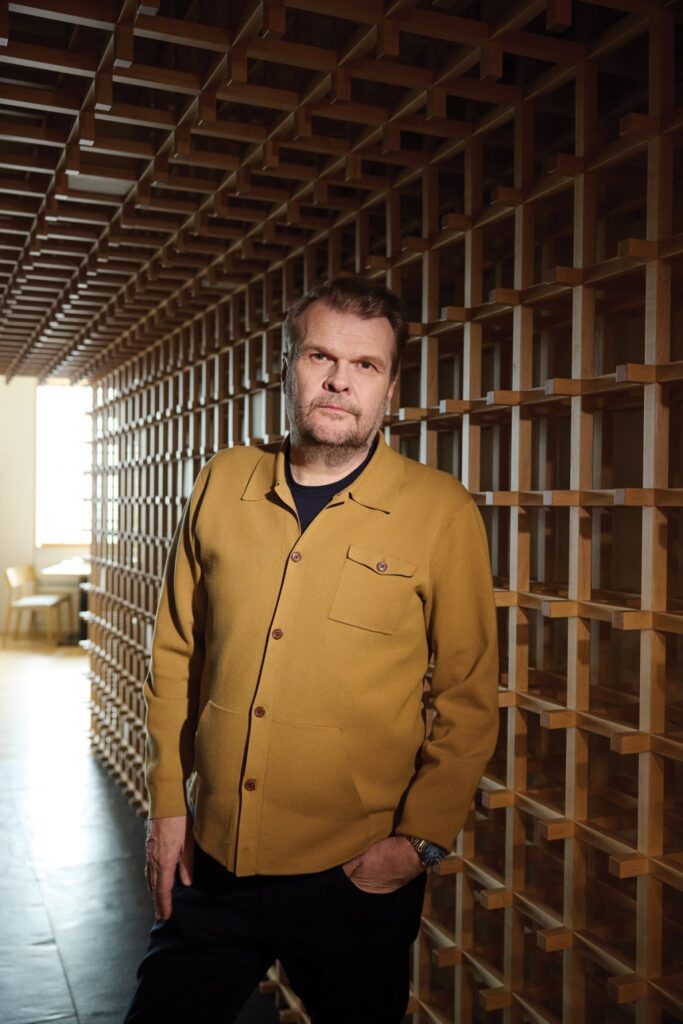
Sony Music CEO/chairman Rob Stringer spoke to investors on Friday (June 13) about his vision for how generative AI can be integrated into his business, stating that the company is “going to do deals for new music AI products this year with those that want to construct the future with us the right way.”
To date, Stringer says the major music company has “actively engaged with more than 800 companies on ethical product creation, content protection and detection, enhancing metadata and audio tuning and translation amongst many other shared strategies.” He went on to say that he believes “AI will be a powerful tool in creating exciting new music that will be innovative and futuristic. There is no doubt about this,” but later added: “So far, there is too little collaboration, with the exception of a handful of more ethically minded players.”
Stringer’s statements about the emerging tech, which he made at Sony Group’s 2025 Business Segment Presentation, arrived just a week after news broke that Sony — and its competitors Universal Music Group and Warner Music Group — were engaged in talks with generative AI music companies Suno and Udio about creating a music license for their models. Suno and Udio are currently using copyrighted material, including music from the three majors, to train their models without a license. This spurred the trio to file blockbuster lawsuits against Suno and Udio in June 2024, in which they alleged copyright infringement on an “almost unimaginable scale.”
Trending on Billboard
In his remarks on Friday, Stringer likened the current AI revolution to “the shift from ownership to streaming” just over a decade ago. “We will share all revenues with our artists and songwriters, whether from training or related to outputs, so they are appropriately compensated from day one of this new frontier,” he said.
“I do think that what AI is based on, which is learning models and training models based on existing content, means that those people who have paved the way for this technology do have to be fairly treated in terms of how they get recompense for that usage in the training model,” Stringer continued. “We have been pretty clear on this since day one that there is absolutely no backwards view as to what this technology will do. There will be artists, probably there will be young people sitting in bedrooms today, who will end up making the music of tomorrow through AI. But if they use existing content to blend something into something magical, then those original creators have to be fairly compensated. And I think that’s where we are at the moment.”
There are challenges ahead to figure out proper remuneration for musical artists from generative AI, as Billboard recently described in an analysis of the Suno and Udio licensing talks. While the AI license could borrow the streaming licensing model by having AI firms obtain blanket licenses for a company’s full musical catalog in exchange for payment, it remains to be seen how the payments would be divided up from there. On streaming services, it’s simple to determine how often any given song is consumed and to route money to songs based on their popularity. But for generative AI, the calculation would be far more complicated. To date, Suno and Udio do not offer guidance as to which tracks were used in the making of an output, and experts are divided on whether or not the technology needed to figure that out is ready yet.
Also on Friday, Stringer expressed a desire to come to agreements with AI companies in a free market, stating: “With deals being carried out, it will be clear to governments that a functioning marketplace does exist, so there is no need for them to listen to the lobbying from the tech companies so heavily.”
Today, many AI companies don’t believe they need to license music or other copyrights at all, citing a “fair use” defense. But in his statements, Stringer was optimistic that this would change, citing the recent position of the U.S. Copyright Office, which said that “making commercial use of vast troves of copyrighted works, especially where this is accomplished through illegal access, goes beyond established fair use boundaries.” One day after publishing this position about the value of copyrights in the AI age, however, the Register of Copyrights, Shira Perlmutter, was fired by President Donald Trump. (Perlmutter sued soon after, calling Trump’s move “unlawful and ineffective.”)
“We are between us and the AI tech platforms trying to find common ground,” Stringer continued. “And that common ground is not going to take a minute. It’s going to take a moment, and then it’s going to take the trial and error process, and we are in that era right now.”
Sony Music Group’s revenues are growing faster than the industry average, and it is the only major to grow its market share, CEO and chairman Rob Stringer said during an investor presentation on Friday.
For nine straight years, the major music company and subsidiary of the Japanese film, gaming and media conglomerate Sony, said it has achieved record-setting revenue, growing at an average compound annual growth rate (CAGR) of 14.7% over the past four years compared to the industry’s 11.3% CAGR, while streaming revenue grew at a 15.1% CAGR. And according to MIDiA Research, Stringer said Sony was alone among the three majors to increase its market share from 2020 to 2024, due to it’s “higher independent market share than any other label or distributor” as a result of owning the indie distributor The Orchard.
In the wide-ranging investor presentation, Stringer said Sony is benefitting from the commercial success of albums by superstar artists, including Beyonce, Bad Bunny, Chappell Roan, Tyler the Creator and Charli XCX, and the more than 60 acquisitions and investments worth over $2.5 billion dollars that it has entered into over the past year alone across global frontline, catalog, creative and service businesses.
Trending on Billboard
Stringer said Sony Music’s dominance of the independent market stems from The Orchard, Sony’s independent distribution organization, which has more than 26,000 label partners; AWAL which works with 20,000 artists, and the Alamo Records umbrella group, which includes Foundation distribution and Santa Anna’s incubator, and now works with nearly 3,000 artists.
“In an environment where nearly half the marketplace is made up of the independent music sector, sales flowing through our independent distribution businesses more than doubled the last four years,” Stringer said in a pre-recorded video presenation. Addressing the skepticism of some investors around Sony Music’s $1.27 billion acquisition of Queen’s recorded music, publishing and name, image and likeness rights — the highest amount ever paid for an artist’s catalog — Stringer said, “these acquisitions… are in no way based on random financial speculative tactics.”
Investments like these are made back by exploiting listeners’ growing demand for older catalog music, Stringer through merchandise sales, sync placements in films and synergies with the gaming industry.
“We see more of our catalog in the charts as every year passes,” Stringer said. “In 2020, 24 percent of the Top 200 tracks were catalog songs. In 2024, that percentage grew to about 50 percent. This trend is extremely beneficial to Sony Music given our rich, deep working content.”
Since Sony’s investment in merch company Ceremony of Roses in 2022, the company has grown revenue by seven times, and its neighboring rights division collected more than $65 million for its artists last year.
Stringer reiterated calls for price increases and new tiers across the digital streaming platforms, and called for flexible pricing structures in high growth and developing markets.
Stringer said Sony Music has worked with 800 technology companies “on ethical product creation, content protection, detection, enhancing metadata and audio tuning and translation,” and that they are going to do “deals for new music AI products this year with those that want to construct the future with us the right way,” creating and adhereing to a clear remuneration system.
“New subscription ideas with fair revenue sharing arrangements will be further additive … [and] will start to slowly and rapidly scale,” Stringer said. “We will share all revenues with our artists and songwriters whether from training or related to outputs, so they are appropriately compensated from day one of this new frontier.”
Stringer said he hopes the industry’s proof of concept will give government regulators the evidence they need to pass laws reinforcing that system.

Sony Music Group chairman Rob Stringer said on Tuesday (May 23) that the company is focused on the fight against low-quality content — which he called ”the lowest common denominator” — flooding top streaming platforms. “We have to look after the premium quality artists at the top of our business,” Stringer said during a company-wide […]
-
Pages