State Champ Radio
 politics
Page: 10
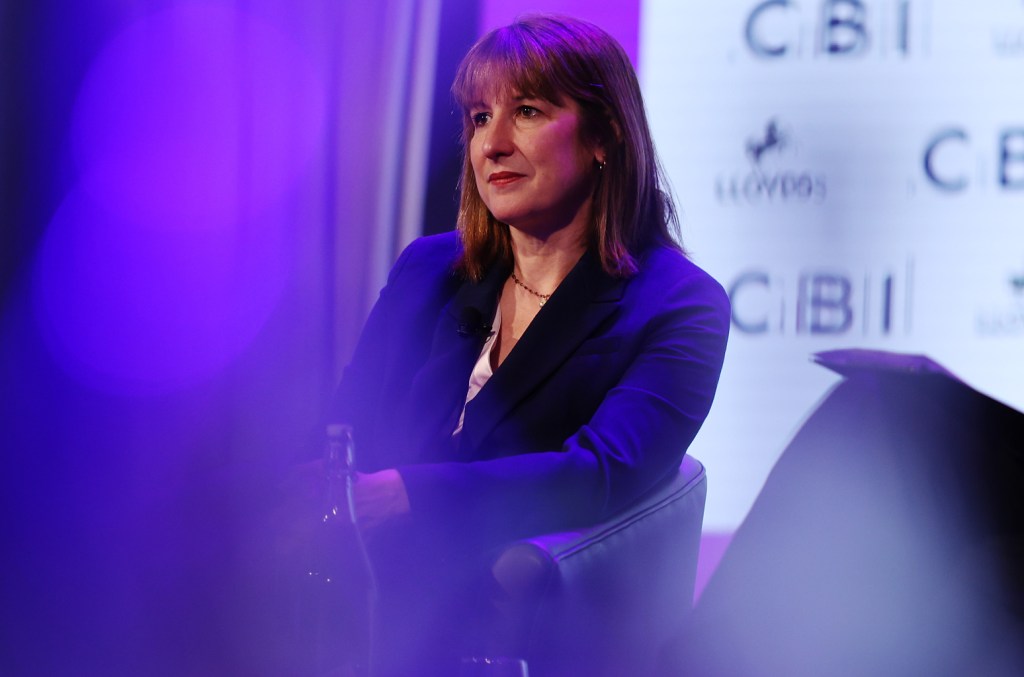
LONDON — The U.K. government shared its spending review on Wednesday (Jun. 11), Labour’s first since it won 2024’s parliamentary election. The U.K. music industry, however, has raised concerns that funds are not being prioritized for the sector and warned that “action is needed now” to ensure its stature on the global stage.
The review has been keenly anticipated as sectors look to Labour to stimulate the economic growth promised in its election manifesto. The last full spending review was issued by the previous Conservative government in 2021, but in July 2024 Reeves claimed the Conservative party had overspent by £21.9 billion ($29.6 billion) and that “a necessary and urgent decision” on budgets was required. The review sets out day-to-day budgets for government departments for the next three years, and details long-term investment plans until the end of the decade.
In the new review, chancellor Rachel Reeves shared spending plans for the NHS (National Health Service), and across housing, defense, transport and more. In recent months, the U.K.’s stakeholders have lobbied the Labour government for additional funds for the music industry, but their calls appear to have gone largely unheard.
Trending on Billboard
Last Thursday (May 29), an open letter from the PRS Foundation called on the government to pledge £10 million ($13.5 million) per year for music export and exchange, with the goal of promoting the U.K. music scene on a global stage. The letter was signed by over 350 figures in the industry, including Glastonbury boss Emily Eavis, Beggars Group founder and chairman Martin Mills and rock band Nova Twins. The signatories said the fund would “stimulate the long-term growth of the U.K. music industry” and pointed to South Korea and Australia as nations that had seen successful export programs in recent years.
Gee Davy, chief executive of AIM (Association of Independent Music), said in a statement to Billboard U.K.: “The U.K.’s music is a key element of our soft power, which creates jobs and value for the economy beyond some sectors receiving help in the government spending review. But a combination of economic shocks has hit our sector, with an amplified effect on grassroots and independent music.”
She added, “To regain our position on the global stage we urgently need the government to step in with an ambitious export strategy and commit to long-term investment, alongside incentives to boost music creation with a tax credit scheme similar to that in film. Action is needed now.”
There’s also concern about the Labour government’s commitment to alleviating the live music scene’s struggles in recent years. Recent data from the MVT (Music Venues Trust) indicates that two grassroots venues are closing every month in the U.K. and that the wider night time scene – including bars, clubs and suppliers – is suffering.
Michael Kill, chief executive of the NTIA (Night Time Industry Associations) says that while the government’s commitment to long-term energy infrastructure was a positive step, “venues are struggling to keep the lights on today” due to rising costs in operation. He outlined that the night time industry contributes £153 billion ($207 billion) to the U.K. economy every year, and employs 2.1 million people, but that businesses need “clarity” on what to expect in relation to business rates and potential tax hikes in the near future.
“We need a budget that understands our value, not one that inadvertently accelerates decline,” Kill said. “The government must work in partnership with us. The capital investment plans may look bold, but the devil is in the detail. We need immediate support, clear fiscal strategy, and genuine engagement ahead of the Autumn budget if we are to safeguard a safe, thriving, and sustainable night time economy.”
Music in education settings has also been a key area of focus in recent months with huge talent throwing their weight behind the cause. At the BRITs in March, rising star Myles Smith used his winners’ speech to call on the government to make music education more accessible in state schools. Ed Sheeran, meanwhile, led a campaign backed by Elton John, Harry Styles and Coldplay that called for additional funding for lessons and instruments.
Damian Morgan, employability and industry lead at dBs Manchester, says that the “U.K.’s global success in music is no accident – it’s the result of years of investment, opportunity and education. But right now, we’re at a critical tipping point.” The dBs institutes in Manchester, Bristol and Plymouth offer professional training for students with an interest in music technology, game design and the creative industries.
Morgan adds, “Without serious and sustained support, we risk leaving behind a generation of talent that simply can’t afford to access the opportunities others take for granted. We need the government to take this seriously: invest in music education, protect it in the curriculum, and ensure young people from all backgrounds can find their way into our world-leading music industry.”
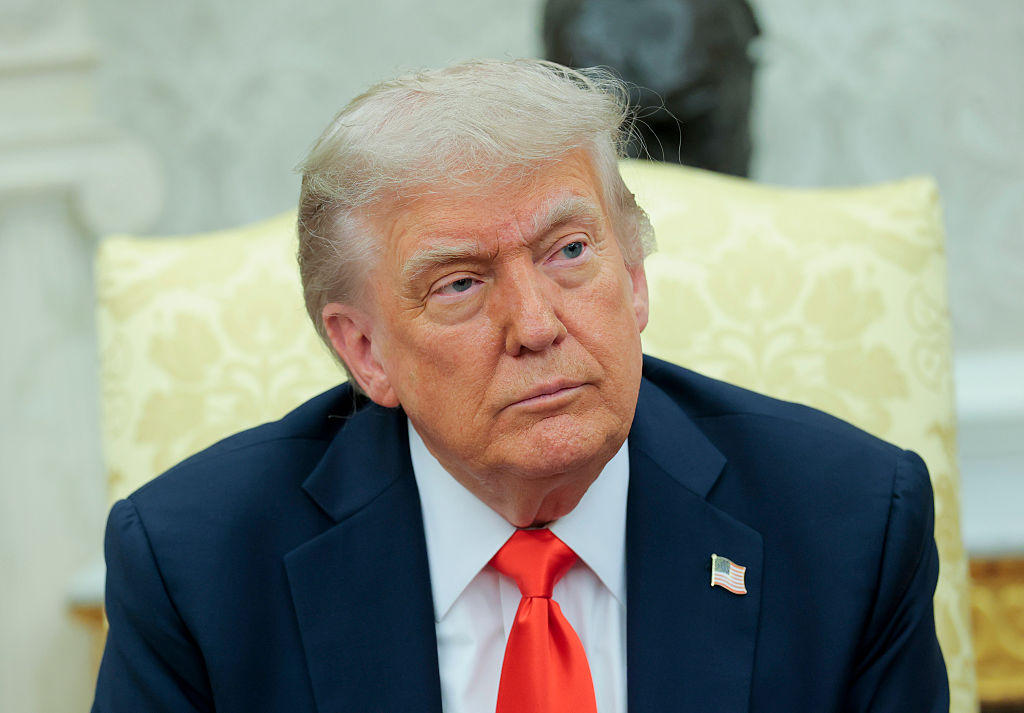
President Donald Trump ordered 4,000 National Guardsmen and 700 Marines to appear in Los Angeles to quell exaggerated reports of violence from those protesting the efforts of ICE agents i the city. During a meeting this week in the Oval Office, President Donald Trump floated the idea of sending the military to other major cities where ICE protests, many of which have been nonviolent, are occurring.
As reported by ABC News, President Donald Trump addressed the situation in Los Angeles amid conflicting reports of widespread violence from members of his administration, with their account drastically contrasting with those on the ground and seen on social media. President Trump, leaning heavily into his campaign promises of widespread deportation, appears to want to present a tougher image by employing armed forces to quell the protests.
“This is the first, perhaps, of many,” Trump said regarding future military deployments. “You know, if we didn’t attack this one very strongly, you’d have them all over the country, but I can inform the rest of the country, that when they do it, if they do it, they’re going to be met with equal or greater force.”
Gov. Gavin Newsom of California addressed Trump’s use of the military in an address to his constituents, stating that “democracy is under assault” as he dodged verbal attacks from House Speaker Mike Johnson and Border Czar Tom Homan, among others. Los Angeles Mayor Karen Bass has echoed similar sentiments, alongside over a dozen other Democratic Party governors.
Trump also suggested enacting the Insurrection Act, which would give him the authority to deploy military forces to suppress violence and assumed rebellion. It should be noted that President Trump did not enact the Insurrection Act during the Jan. 6 insurrection attempt at the U.S. Capitol.
—
Photo: Anna Moneymaker / Getty
HipHopWired Featured Video
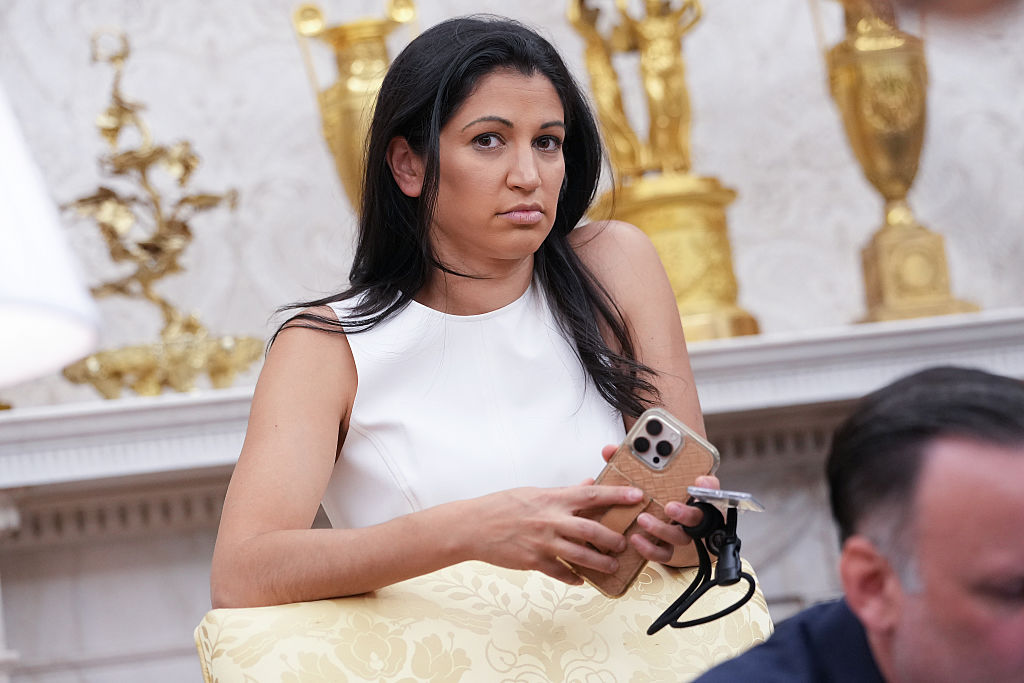
Kevin Dietsch / Katie Miller
Katie Miller, the wife of raging immigrant hater Stephen Miller, is in the news once again.
Stephen Miller’s wife became the talk of social media after reports surfaced that she was leaving her job at the White House to work with billionaire immigrant Elon Musk, which began to trend.
In addition to her joining Musk in the private sector, there were also wild rumors circulating that both Miller and his wife were in some kind of “throuple” relationship with the Tesla chief.
Now, reports of her having a lip tattoo that says “YOLO” (You Only Live Once), the phrase made popular by Drake on the hook of the track “The Motto” and the title of a subsequently shelved mixtape from the Canadian rapper, could explain her recent behavior.
Per Raw Report via WSJ:
“Those close to Miller describe the mother of three as hardworking, detail-oriented, combative and protective of her husband, whose fervent positions on immigration and other issues have made him a target of Democrats. In interactions with White House staff, she sometimes veered from charming to abrasive, current and former colleagues said, and seemed to have limitless energy,” the outlet reported.
“People who know Miller said she has a tattoo on the inside of her lip that says ‘YOLO,’ which stands for ‘You Only Live Once,’” the report states. “She has sometimes shifted her loyalties, and she has blurred ethical lines, working for clients lobbying the government while also working on government issues. Musk’s company is deeply dependent on government subsidies and contracts.”
This is not the first time the tattoo was the subject of discussion. It was also mentioned during a small Vanity Fair profile of the Millers in 2020.
Log this latest news into information we didn’t need to know.
HipHopWired Featured Video
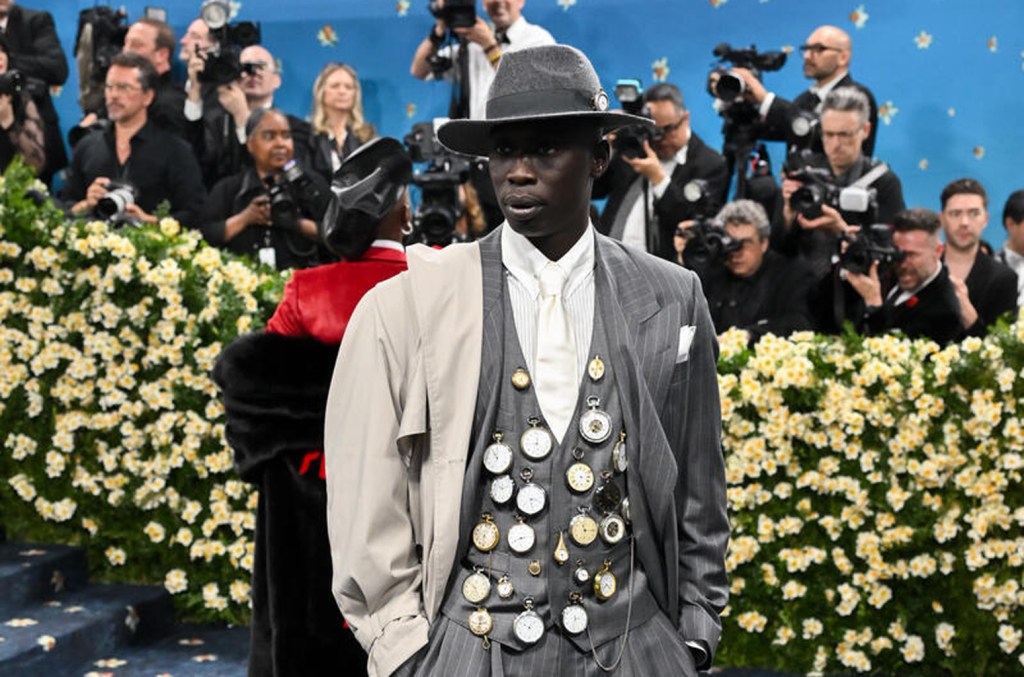
Social media star Khaby Lame was detained by the U.S. Immigration and Customs Enforcement after being apprehended by authorities on June 6. According to an ICE spokesperson, Lame was granted a “voluntary departure” and has left the United States. The viral TikTok sensation’s Instagram Story showed him in Brazil as of Monday (June 9). The […]

Henry Cárdenas was on his way to Texas from Chicago when he got the news: Julión Álvarez’s work visa was cancelled, which meant the música mexicana hitmaker couldn’t enter the United States in time for his sold-out show at the AT&T Stadium in Arlington, Texas on May 24. “We had everything set up already,” says Cárdenas, founder/CEO of the powerhouse Cárdenas Marketing Network, still perplexed by the situation. “The entire production, including labor and equipment, amounted to over $2 million dollars — it was all a complete loss because we had to postpone the event. It was unbelievable.”
Álvarez — who in April made his grand return to the U.S. with a historic run at L.A.’s SoFi Stadium after being sidelined for eight years over since-cleared issues with the U.S. Treasury — was traveling from Guadalajara to Texas the day before the show and was informed at the airport that he couldn’t board the plane because his visa was cancelled. “I’ve been in the business for 45 years and I had never seen this,” Cárdenas adds. “In the past, we’ve known of groups or bands that apply [for a non-immigrant visa] and are denied but at least we were informed ahead of time. The day before your sold-out stadium show with 50,000 people? No way. We immediately started calling our lawyers but unfortunately, we haven’t gotten to the bottom of it. If you ask me right now what the reason for the cancelled visa is, I don’t know. Nobody knows.”
In the past two months alone, at least a handful of regional Mexican acts — including Los Alegres del Barranco, Banda Cuisillos, Lorenzo de Monteclaro and, most recently, Grupo Firme — have shared a similar experience to that of Álvarez’s. Their work visas — it’s unclear if they are O-1 or P-1B visas — are either delayed in an “administrative processing” or outright revoked by the U.S. State Department, leading to postponed shows or cancelled festivals and performances. Such was the case for touring giant Firme, which was unable to perform at La Onda Fest in Napa Valley, Calif., on June 1. Chicago’s Michelada Fest, featuring Mexican music headliners Luis R Conriquez, Firme and Gabito Ballesteros, cancelled its two-day summer event over artist visa “uncertainty.”
In general, U.S. visa uncertainties under the Trump administration have upended multiple communities and groups of people. “Everything is taking longer under Trump,” says attorney Daniel Hanlon, who specializes in immigration law. “It’s a combination of a few things, including stricter vetting policies, which have resulted in delays in visa processing almost across the board. We’re seeing this with foreign students at universities and now these musicians, and no one knows how it’s being brought to the attention of those who are in the position to make these revocation decisions, or why they are deciding to do this now. It could be completely politically motivated.”
In an unprecedented move, Deputy Secretary of State Christopher Landau announced on X that the State Department had revoked Los Alegres del Barranco’s work visas after the group portrayed images “glorifying” drug kingpin “El Mencho” at a concert in Mexico in March. “In the Trump Administration, we take seriously our responsibility over foreigners’ access to our country. The last thing we need is a welcome mat for people who extol criminals and terrorists,” his post reads.
Julión Álvarez performing during a concert at Arena Monterrey on October 29, 2021 in Monterrey, Mexico.
Medios y Media/Getty Images
In Mexico bans on narcorridos have spread across the country, where now 10 states have implemented laws to control or limit the diffusion of corridos in public spaces. But the U.S. had yet to really take a stance on the lyrics, which can be compared to gangster rap. That quickly changed this year when a wave of regional Mexican acts began to be impacted by visa delays, going beyond those who sing narcocorridos. Grupo Firme and Julión Álvarez — two of the biggest touring acts in the genre’s history, breaking barriers for regional Mexican artists in the U.S. — are mainly known for norteño and banda ballads and party songs, not narcocorridos particularly.
“We don’t know what we are fighting against because we really don’t know the reason these visas are getting denied or revoked, and it seems like it’s no longer just because they sing narcocorridos, which is what they initially had said,” says Mariana Escamilla, vp at Promotores Unidos USA, a longstanding organization composed of promoters who specifically work the regional Mexican touring circuit. “People don’t have the confidence to buy tickets in advance anymore if the artist is coming from Mexico. That’s a huge problem because we rely on pre-sale to determine if an event is going to sell or not. Now, I think fans will wait until day-of to buy the ticket when they see that the artist has finally landed in the U.S.”
Non-immigrant visas like O-1 and P-1B, the ones artists typically apply for “extraordinary achievement or ability,” are short-term work permits that need to be renewed by the artists and their petitioners and must include an agenda listing performances scheduled and where they’re performing every single time they apply. But even after being approved, these visas can be revoked at any time. Once the visa gets delayed by the State Department, for reasons like “administrative processing,” there’s no timeline for resolution. “It’s a euphemism for basically more background checks,” adds Hanlon. “It is unknown to the applicant what they are looking at, where they are looking or what they are looking for. They use that as a blanket to delay the processing of visas. So, the visa is refused until that’s resolved and then it could be issued or approved later but often it goes into a black hole and there’s nothing much you can do about it.”
In a statement sent to Billboard, a spokesperson for the U.S. Embassy & Consulates in Mexico said, “Due to privacy and other considerations, and visa confidentiality, we generally do not comment on U.S. government actions with respect to specific cases. Continuous vetting and visa revocation actions are not limited to visa holders from any specific country or area in the world. All visa applicants and visa holders, no matter the visa type and where they are located, are continuously vetted.”
What could be interpreted as targeting Mexican music and culture aligns with the Trump administration’s “disdain for Mexicans,” says entertainment attorney Marjorie García, partner at King, Holmes, Paterno & Soriano. “Any indication that [artists] are singing about anything the government doesn’t like, just like they [want to cancel] funding for PBS and NPR, if you’re not saying the things they want you to say, there is a perception that you don’t get to be here.”
Whether intentional or not, the timing couldn’t have been worse. In the past few years alone, regional Mexican has exponentially grown in popularity and global exposure. In 2023, Billboard reported that regional Mexican music consumption in the United States had jumped 42.1% year over year, outpacing gains in the Latin genre overall, as well as country, dance/electronic, rock and pop, according to Luminate.
“The regional Mexican music movement can’t keep growing if its artists can’t tour the U.S.,” García says. “All aspects of our business will be impacted. Before, you could predict the length of time that you needed for the visa process; you had a window. But now, the visa is being pulled after it’s already given, and as you get closer to the show, and at that point, you either show up or pay. There’s no way you can plan for someone to cancel your visa. This is all going to have a chilling effect when artists voices are most needed and in demand.”
Visa delays or revocations will almost certainly not fall under a contract’s force majeure clause, meaning event cancellation insurance very likely won’t cover it. “It’s up to individual artists to apply for those visas and get their documentation together. If the U.S. government says no, that’s almost assuredly not going to be covered by event cancellation insurance,” says attorney Tim Epstein, partner at Duggan Bertsch, who represents most of the independent events and festivals in North America, including Sueños and Baja Beach Fest. “Maybe once a year you were dealing with artists having to cancel concerts or festival performances over visa issues, but having a whole festival canceled because of artist visa issues … I have never seen that before.”
The financial impact this will have on artists who can’t tour the U.S. will be long-lasting. “A group like Los Alegres del Barranco that has a large following in the United States and already had contracts signed there, it is devastating financially,” Luis Alvarado, spokesperson for Los Alegres del Barranco, tells Billboard. “It is obvious that there is some kind of movement against Los Alegres del Barranco, but also against musicians who play this genre of music (regional Mexican). We’re waiting first to clear the judicial process in Mexico and then begin a conversation with the U.S. government.”
The U.S. is the No. 1 market to tour in — it’s the “base for success,” says Cárdenas. “You get guys like Firme and Julión who gross $10 million in one night here. This is where you make the big money — you don’t make the money in Mexico, with all due respect.”
For now, Cárdenas is staying optimistic and working diligently to help resolve this issue. “There are thousands of people working at the stadium when a concert happens, from parking, to vendors, production staff, all kinds of occupations that didn’t make any money because the Julión show didn’t happen,” he says. “That weekend, we lost more than $2 million that we won’t recover. How many of these instances can we survive? If this was a small promoter, it would go out of business immediately. You can’t lose $2 million every weekend.
“Someone has to go see the guys in Washington and tell them, ‘Listen, we have to fix this,’” Cárdenas continues. “This is not $100 or $200, this is millions of dollars; we have 50,000 people in one stadium. They consume everything — food, water, beer, and people are working, trying to make a dollar. Now, we’re talking to the political sector, calling our local congressmen and senators, and they are aware of the situation, and I’m sure they will fix it. Otherwise, this will jeopardize the entire industry.”
Additional reporting by Tere Aguilera and Natalia Cano.
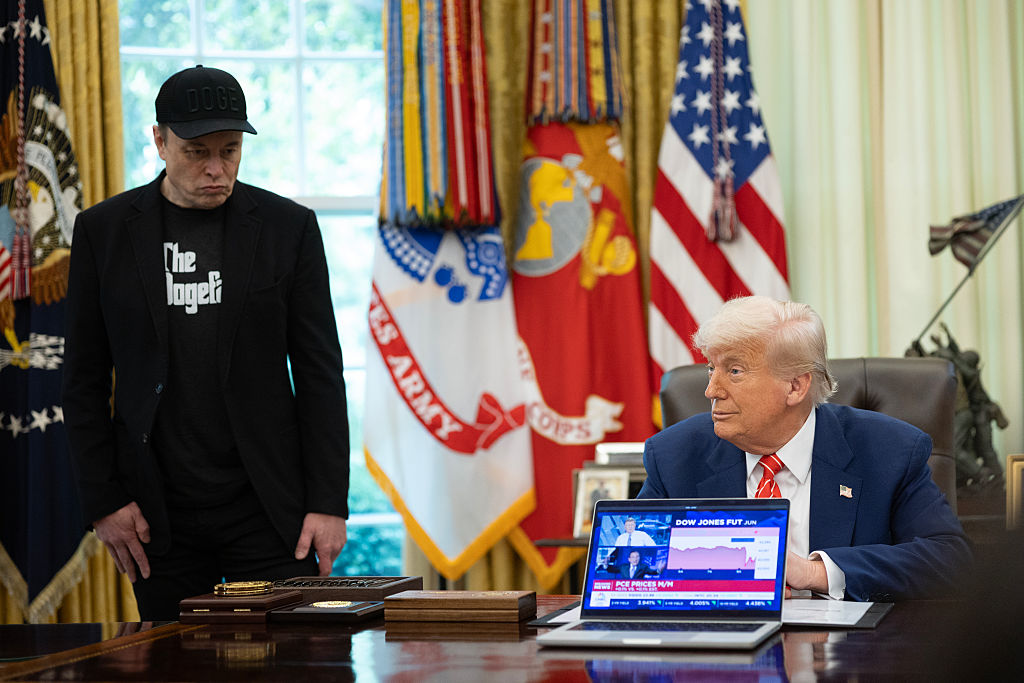
Source: The Washington Post / Getty / Elon Musk / Donald Trump
It should come as no surprise that the bromance between these two ego maniacs would have come to a fiery end.
We knew this day would come, but no one had Musk and Trump beefing with each other so soon on their bingo cards. The alleged ketamine abuser couldn’t keep his disdain for Trump’s “one big beautiful bill,” calling it a “disgusting abomination.”
Related Stories
“I’m sorry, but I just can’t stand it anymore,” Musk began. “This massive, outrageous, pork-filled Congressional spending bill is a disgusting abomination. Shame on those who voted for it: you know you did wrong. You know it.”
Trump was uncharacteristically quiet following Musk’s initial comments about his legislative centerpiece of his second presidency, the “one big beautiful bill.”
That all changed when Trump finally “clapped back” at Musk while taking questions during his meeting with German Chancellor Friedrich Merz.
Trump said he was “very surprised” and “disappointed” by his former financier’s comments about his stupid bill, claiming the Tesla chief saw the bill and understood its inner workings better than anybody, while suggesting that Musk was mad because of the removal of subsidies and mandates for electric vehicles.
Elon Musk Had Time For Donald Trump
Musk responded in real time via his “former platform,” X, formerly Twitter, with a flurry of posts on X accusing Trump of “ingratitude” and “Without me, Trump would have lost the election,” while refuting the orange menace’s claims.
“Keep the EV/solar incentive cuts in the bill, even though no oil & gas subsidies are touched (very unfair!!), but ditch the MOUNTAIN of DISGUSTING PORK in the bill,” Musk wrote.
Oh, and he wasn’t done. Musk then hit the president with a low blow, writing, “Time to drop the really big bomb: @realDonaldTrump is in the Epstein files. That is the real reason they have not been made public. Have a nice day, DJT!”
Donald Trump Claps Back
Trump finally fired back on his platform, Truth Social, by threatening to cut Musk’s government contracts. “The easiest way to save money in our Budget, Billions and Billions of Dollars, is to terminate Elon’s Governmental Subsidies and Contracts. I was always surprised that Biden didn’t do it.” Felon 47 wrote.
Musk replied by threatening to decommission SpaceX’s Dragon spacecraft, which could be detrimental to the International Space Station and NASA, as it is described as “the only spacecraft currently flying that is capable of returning significant amounts of cargo to Earth” and can seat seven passengers.
Musk also agreed with a post stating that Trump should be impeached and replaced by JD Vance.
Oh, this is getting spicy.
While all of this was going on, CNN reports that Tesla stocks took a hit and Musk’s net worth shrank.
Per CNN:
Tesla shares plummeted 15% this afternoon as Elon Musk’s battle with President Donald Trump intensified.
Trump threatened in a social media post to target Musk’s business empire.
“The easiest way to save money in our Budget, Billions of Dollars, is to terminate Elon’s Governmental Subsidies and Contracts,” Trump wrote on Truth Social.
The Tesla selloff has wiped off more than $150 billion off the market value of Telsa, which started the day worth nearly $1.1 trillion.
It has also erased a chunk off the net worth of Musk, the world’s richest person.
Social media has pulled up all the seats, grabbed some popcorn and are currently watching Musk go at with Trump and his supporters, you can see those reactions in the gallery below.
3. Wellllll, did he?
HipHopWired Featured Video
CLOSE
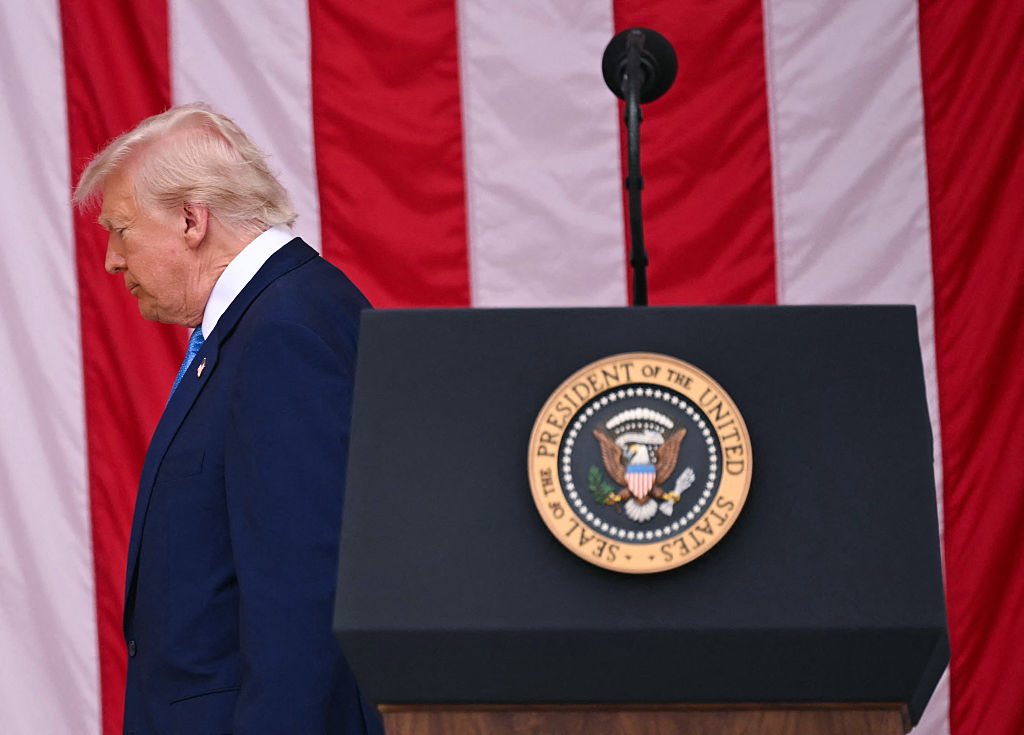
President Donald Trump unveiled a controversial travel ban against a small number of countries with majority Muslim populations, and revived the policy this week. On Wednesday (June 4), President Trump signed a proclamation that slapped a new travel ban against a dozen countries and partial restrictions on seven others.
The White House shared the proclamation on its website, which detailed the Trump administration’s plans to bar entry to the United States to individuals hailing from Afghanistan, Burma, Chad, the Republic of the Congo, Equatorial Guinea, Eritrea, Haiti, Iran, Libya, Somalia, Sudan, and Yemen.
In addition to the aforementioned countries, the proclamation placed partial travel restrictions on individuals from Burundi, Cuba, Laos, Sierra Leone, Togo, Turkmenistan, and Venezuela.
From the proclamation:
As President, I must act to protect the national security and national interest of the United States and its people. I remain committed to engaging with those countries willing to cooperate to improve information-sharing and identity-management procedures, and to address both terrorism-related and public-safety risks. Nationals of some countries also pose significant risks of overstaying their visas in the United States, which increases burdens on immigration and law enforcement components of the United States, and often exacerbates other risks related to national security and public safety.
The travel ban that was enacted in 2018 was wildly unpopular as it seemingly targeted countries that President Trump perceived to be enemies of the state. With the Republican Party holding majorities in both chambers, Trump and his administration have been emboldened to expand the travel ban to include mostly African and Muslim countries, and have the support of Republican members of Congress.
Sen. Chuck Grassley defended President Trump’s renewed travel ban, stating that it was in the best interest of national security, as reported by KCRG.
“I don’t know what the basis was for him making that decision, but I assume it’s come because of some terrorist attacks we’ve had in the United States,” Grassley said.
Amnesty International posted a response to the travel ban, which can be read here.
HipHopWired Featured Video
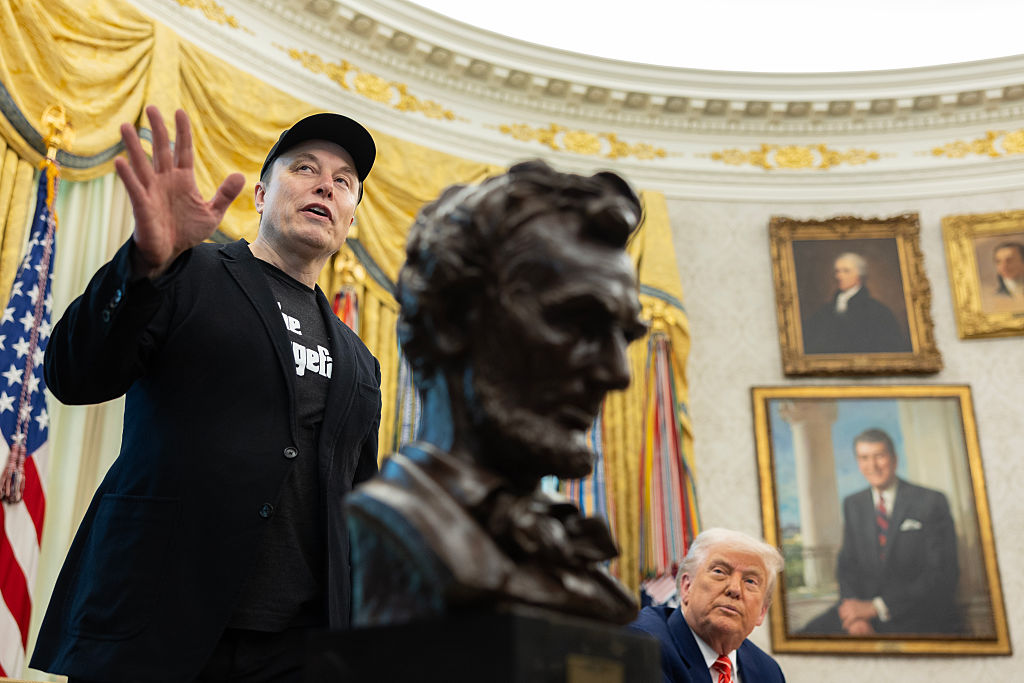
Elon Musk‘s alignment with President Donald Trump‘s administration is coming under scrutiny after the world’s richest man criticized a massive bill that could add trillions to the United States’ debt. Via his X social media platform, Elon Musk blasted Trump’s “big, beautiful bill” by labeling it a “disgusting abomination.”
On Tuesday (June 3), Elon Musk took to X and aimed his critique at the “One Big Beautiful Bill Act,” becoming the first Trump ally to decry the bill and its well-documented flaws publicly.
“I’m sorry, but I just can’t stand it anymore,” Musk began. “This massive, outrageous, pork-filled Congressional spending bill is a disgusting abomination. Shame on those who voted for it: you know you did wrong. You know it.”
What was curious about the South African businessman’s missive was that it was completely backed by the Republican Party members of the House, which is public knowledge. Some have pondered why Musk didn’t aim his vitriol towards those elected officials instead of painting his disdain for the budget bill with a wide brush.
Via Press Secretary Karoline Leavitt, the White House’s response to Musk’s jabs was succinct, and that Trump is all in on getting the bill through the Senate.
“This is one big, beautiful bill, and he’s sticking to it,” Leavitt said, responding to a reporter in the press room who asked if the president would be upset by Musk’s comments.
Musk has the support of some Republican Party officials such as Sen. Rand Paul, who wrote on X, “I want to see the tax cuts made permanent, but I also want to see the $5 trillion in new debt removed from the bill. At least 4 of us in the Senate feel this way,” which was retweeted by the Tesla founder. He also shared other supporting statements from others who feel similarly to him about the bill.
This isn’t the first time Musk, who reportedly exited DOGE and the White House last week, has railed against the One Big Beautiful Bill Act, doing so in a CBS News interview last month.
“I was disappointed to see the massive spending bill, frankly, which increases the budget deficit, not just decreases it, and undermines the work that the DOGE team is doing,” Musk said in May.
On X, the reactions to Elon Musk seemingly breaking with the Trump administration and Republican Party members of Congress were plentiful. We’ve got some listed below.
—
Photo: The Washington Post / Getty
HipHopWired Featured Video
CLOSE
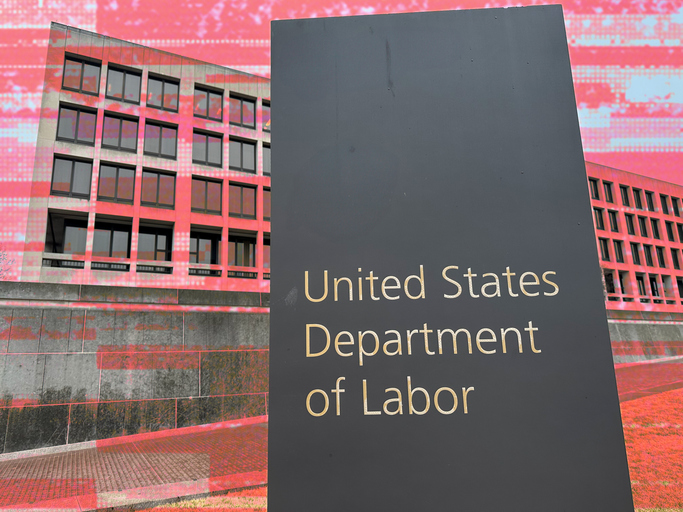
Source: Douglas Rissing / Getty
Last Thursday (May 30), the Department of Labor announced that they were beginning a “phased pause” of operations at all Job Corps locations nationwide, stating that it would be “an orderly transition for students, staff, and local communities.” In a statement, Labor Secretary Lori Chavez-DeReamer claimed that the program no longer produces “the intended outcomes that students deserve,” adding that “a startling number of serious incident reports and our in-depth fiscal analysis.” The announcement caused an immediate uproar, and has led some to wonder why the government wants to shut Job Corps down.Job Corps was created in 1964 as part of President Lyndon B. Johnson’s “War On Poverty”, specifically to combat the rising rate of youth unemployment in the nation with vocational training while improving their basic education skills. It was modeled after past programs such as the Civilian Conservation Corps during the era of the Great Depression. Participants are between the ages of 16 to 24 (or older depending on disability requirements), and from low-income backgrounds. Job Corps currently has 121 centers nationwide, with two in Puerto Rico with six regional offices in Atlanta, Boston, Chicago, Dallas, Philadelphia and San Francisco. According to a study done by Mathematica in 2008, they found that it was “the only federal training program… shown to increase earnings for this [disadvantaged youth] population.”
https://x.com/_The_Twell/status/1929638183945621897The program has come under fire in the past for being costly. President Richard Nixon sought to shrink the program during his time in office, and President Ronald Reagan sought to eliminate it during his years in the White House, but he faced bipartisan pushback in Congress. That same support was evident last week, as Senator Susan Collins (R-Maine) defended the program. “I urged Secretary Chavez-DeRemer to resume enrollment at Maine’s two Job Corps centers and to reverse the Department’s proposed elimination of the Job Corps program,” Collins said, adding that as chair of the Senate Appropriations Committee that she’ll “continue to work to support this valuable program.”Senator Tammy Baldwin (D-Wisconsin) also blasted the decision. “Congress appropriated funding for Job Corps, and the Trump Administration can’t just decide to not spend it because they want to make room for tax cuts for billionaires,” she said, noting the DOL’s remarks that their pause aligns with the current “big, beautiful bill” to create a new fiscal budget which aims to kick millions off of Medicaid as well as restrict federal judges’ oversight and rulings against the Trump administration.
HipHopWired Featured Video
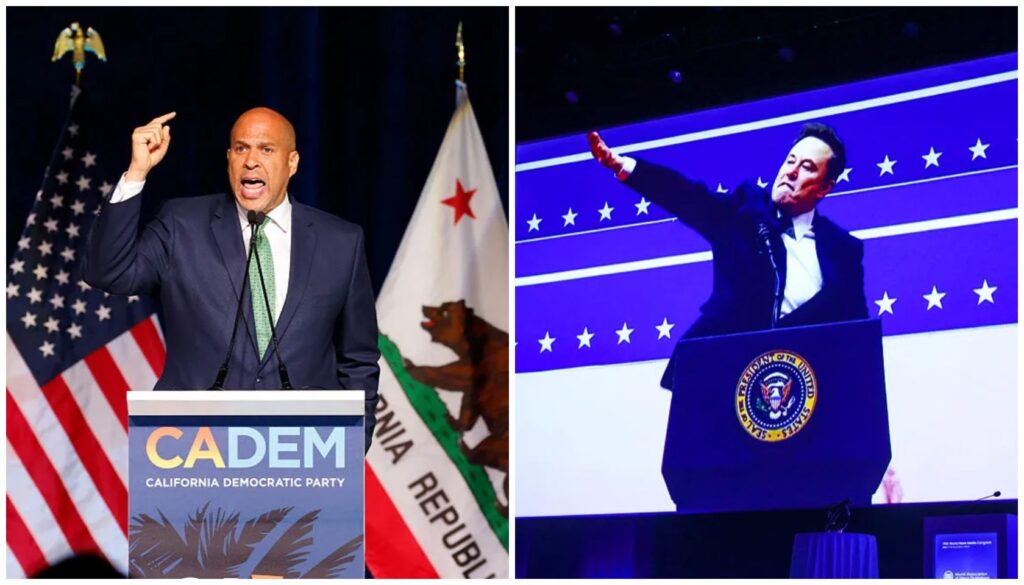
Source: Getty Images / Cory Booker / Elon Musk
Cory Booker is shutting down claims he was out here throwing up a Nazi salute.
MAGA Republicans and Elon Musk are losing their sh*t and doing their best to compare a moment where Cory Booker put his hand on his heart and waved goodbye to the crowd at the Democratic National Convention in California to when Musk clearly did a Nazi salute.
Through a spokesperson, Booker shut down those ridiculous claims.
“Cory Booker was obviously just waving to the crowd. Anyone who claims his wave is the same as Elon Musk‘s gesture is operating in bad faith,” Maya Krishna-Rogers, spokesperson for Booker, said to Newsweek in a statement sent via email on Sunday. “The differences between the two are obvious to anyone without an agenda.”
Musk also doubled down on his acceptance of th use of the word “retard” as an insult.
🤨 https://t.co/HP6RApoMju
— Elon Musk (@elonmusk) June 1, 2025
MAGA Republicans going hard trying to make something out of nothing about Cory Booker waving goodbye to the crowd, comes after Musk and Steve Bannon both were both accused doing nazi salutes during events.
Musk was accused of doing a Nazi salute during Trump rally during his second inauguration following his unfortunate election win.
Elon Musk has gone full mask off Nazi. He is actively promoting Nazism. Tesla is now a hate symbol. pic.twitter.com/gO2VFS0x1B
— James Jansson (@jamesjansson) January 20, 2025
Still despite Booker’s statement and the video evidence, you can’t tell these MAGA fools a damn thing as continue to take photos of other elected officials clearly waving bye, and using them as evidence of them doing Nazi salutes in order to vindicate the alleged ketamine abuser Elon Musk.
🤨 https://t.co/E7NzAWCuJB
— Elon Musk (@elonmusk) June 1, 2025
SMH.
You can see more stupid reactions in the gallery below.
3. Because it’s not a Nazi salute
Here’s a list of all the news networks who have not covered Cory Booker’s salute:- NYTimes- CNN- Washington Post- MSNBC- NPR- USA Today- Reuters- Axios- ABC NewsEvery single one of them wrote stories on Elon Musk’s salute.do you get it yet? pic.twitter.com/uIGJ5TfvQL— kekius tees (@kekmaximusk) June 1, 2025
6. Lol @ shaking
I’m literally shaking right now. Cory Booker is literally Hitler. I can’t wait for fake news to cover this as extensively as they did Elon when gave his heart out to everyone! pic.twitter.com/UBMwOOfWvY— Sara Rose 🇺🇸🌹 (@saras76) May 31, 2025
8.
Hello, @NewsHour — will you be making a post comparing Cory Booker’s apparent “fascist salute” to the “Sieg Heil?”Your post about Elon Musk making a very similar gesture amassed over 36M views.Since you assure US taxpayers that PBS is a non-partisan organization, and all. pic.twitter.com/OPcwtD1Cjv— Western Lensman (@WesternLensman) June 1, 2025
9. Piers Morgan is a loser
It’s most amusing to watch all the people who branded @elonmusk a Nazi now tying themselves in tortured knots trying to explain why Cory Booker isn’t… for doing the EXACT SAME THING. Of course, neither is.. but the hypocrisy stinks. https://t.co/4ozBbrBFSe— Piers Morgan (@piersmorgan) June 1, 2025
HipHopWired Featured Video
CLOSE