State Champ Radio
 nsfs
Page: 15

Sean “Diddy” Combs is about to go on trial over accusations of sexual abuse. But what exactly are the charges he’s facing? Is Cassie Ventura testifying against him? And what in the world are “freak offs”? Before the trial starts, let’s get you up to speed.
The once-all-powerful hip-hop mogul was arrested in September, charged by federal prosecutors with running a large-scale criminal operation aimed at his own “sexual gratification.” For decades, the feds say, Diddy “abused, threatened and coerced women” into giving him what he wanted, including participating in drug-fueled sex parties.
Combs, who has denied all of the allegations, will finally head to trial next week to face a jury of his peers. Before he does, here are answers to all your Diddy trial questions.
What are the charges against Diddy?
Prosecutors have built much of the case against Diddy under the Racketeer Influenced and Corrupt Organizations Act, the “RICO” law used against mobsters and drug cartels. RICO, which allows the feds to target an entire illicit organization over many individual crimes, was designed to target organized crime, where bosses often insulate themselves from actual illegal acts.
In Diddy’s case, prosecutors say the star served as his own kind of crime boss, exploiting the “employees, resources and the influence of his multi-faceted business empire” to carry out a decades-long campaign of sexual abuse. That operation included numerous sexual and physical assaults, the feds say, but also forced labor, kidnapping, arson, bribery, witness tampering, drug crimes and more.
Separately, Diddy is also charged with violating a federal sex trafficking statute, which makes it illegal to use force, fraud, or coercion to compel someone to engage in commercial sex acts. He’s also accused of violating the Mann Act, an older statute that made it illegal to transport people across state lines for the purposes of prostitution.
What’s a “freak off”?
At the very center of the case against Diddy are allegations about so-called “freak offs” — drug-fueled orgies in which victims were allegedly coerced into having sex with male sex workers while Combs looked on.
Prosecutors say these “elaborate and produced sex performances,” which Combs “masturbated during,” were a regular occurrence and “sometimes lasted multiple days.” The rapper and his associates allegedly plied victims with illegal drugs, which prosecutors say was designed in part to “keep the victims obedient and compliant.”
According to charging documents, freak offs were “often electronically recorded,” sometimes without the knowledge of those being filmed — and the footage was then later used as a form of “collateral” to keep victims from speaking out.
The events were so complex that they required substantial logistical efforts by Diddy’s associates to pull off, the feds say — including booking hotel rooms, arranging travel, delivering large sums of cash to pay sex workers, cleaning up to “mitigate room damage,” and providing supplies. Among those supplies were “more than 1000 bottles of baby oil” — a headline-grabbing allegation when it was included in September’s initial indictment.
Who are the alleged victims?
Diddy has been hit with civil lawsuits by dozens of alleged victims, but the criminal charges against him formally center on just four people, identified in court documents as Victim-1, Victim-2, Victim-3 and Victim-4.
While technically still anonymous in filings, Victim-1 is strongly believed to be Cassie Ventura, Combs’ longtime girlfriend whose civil rape lawsuit in November 2023 helped to spark the rapper’s downfall. Prosecutors have said Victim-1 will testify in the courtroom under her real name, setting the stage for a potentially blockbuster moment at the trial.
The identities of the other three victims remain unknown, and prosecutors have sought to keep it that way. In a motion last month, they cited recent cases against R. Kelly, Ghislaine Maxwell and others in which judges allowed alleged victims to remain anonymous to avoid “harassment from the media and others” amid a case that has received an “exceptional amount of media coverage.”
At a hearing last week, the judge ruled that the three other victims could testify without revealing their names.
Who are the key players in the courtroom?
Diddy’s trial will be overseen by U.S. District Judge Arun Subramanian, a relatively new federal judge nominated by President Joe Biden in 2022 after a long stint as a litigator at a prestigious New York law firm. Subramanian, confirmed to the post in March 2023, has an understandably short track record so far — though he is also currently handling the Justice Department’s high-profile antitrust lawsuit against Live Nation and Ticketmaster.
Diddy’s lead attorney is Marc Agnifilo, a veteran defense attorney with an extensive background in handling the kind of complex, high-profile charges that Combs now faces. After prosecuting RICO cases against mobsters in New Jersey, Agnifilo worked for years under legendary New York criminal lawyer Ben Brafman, where he represented Martin Shkreli, the so-called “Pharma Bro” convicted of securities fraud in 2017, and Keith Raniere, the leader of the upstate New York sex cult NXIVM.
Combs is also represented by Teny Geragos, another Brafman alum (and daughter of celebrity attorney Mark Geragos) who joined Agnifilo when he left to start his own firm last year; and Alexandra Shapiro, a well-known appellate law specialist. Brian Steel, a veteran Atlanta defense attorney who rose to fame last year by winning Young Thug’s release from jail on gang charges, joined the team at the last minute last month.
On the prosecution side, the charges against Combs were filed last year by Damian Williams, the top federal prosecutor for Manhattan, who is known for bringing cases against cryptocurrency entrepreneur Sam Bankman-Fried, former U.S. senator Bob Menendez and New York Mayor Eric Adams. Following November’s election, President Donald Trump has since appointed Jay Clayton, a longtime partner at the law firm Sullivan & Cromwell, to fill that post.
Unlike the case against Adams — which was controversially dropped in early April — there has been no indication that Trump or Clayton plan to back away from Combs. The same attorneys under Williams (Meredith Foster, Emily A. Johnson, Christy Slavik, Madison Reddick Smyser and Mitzi Steiner) are all still on board, and the district attorney’s office has since added Maurene Comey — one of the lead prosecutors in the sex trafficking case against Ghislaine Maxwell, a top accomplice of Jeffrey Epstein.
Go read Billboard’s full story on all the lawyers involved in the Diddy litigation.
When does the trial start and how long will it take?
The proceedings will kick off on Monday (May 5) with jury selection. Jurors will be pre-screened with a questionnaire about their backgrounds and beliefs; Combs’ lawyers said in earlier filings that they want to ask their opinions of “people with multiple sexual partners.” After a broader pool is established, the two sides will spar in court over how to pick 12 jurors who can impartially decide the case.
Once a jury is selected, the trial will really get under way on May 12, first with opening statements by both sides, then with witness testimony. The trial is widely expected to last at least eight weeks, though that’s only an estimate. Back in 2021, the trial of R. Kelly — another major musical artist facing RICO charges over allegations of sexual abuse — took six weeks to complete.
How will the prosecution make its case?
If R. Kelly’s trial is any guide, prosecutors are likely to offer jurors mountains of evidence and hours of witness testimony aimed at painting a vivid picture: of an all-powerful man abusing his role at the top of an organization to coerce women into sexual activity against their will.
That will likely include not just the alleged sexual assaults, but all that happened before and after them, including threats, isolation, financial dependence and blackmail. “These are the tools of coercive control,” Nadia Shihata, one of the prosecutors in the Kelly case, told Billboard last year. “In the R. Kelly case, we called it the ‘Predator’s Playbook’.”
In court documents filed early in the case, the feds said they had interviewed more than 50 witnesses during their investigation, “many of whom saw or experienced the defendant’s abuse.” They also said they had pulled evidence from over 120 cellphones, laptops and other electronic devices.
One explosive piece of evidence that jurors will definitely see is the infamous 2016 surveillance video of him assaulting his former girlfriend Cassie Ventura in the hallway of a Los Angeles hotel. Though he initially apologized, Diddy’s lawyers have fought hard to keep it out of the trial, arguing the clip would “unfairly confuse and mislead the jury.” But prosecutors called that a “desperate” attempt to avoid “crushing” evidence, and Subramanian ruled last week that it could be played at the trial.
How will Diddy’s lawyers defend him?
Since the earliest days of the case, Diddy’s lawyers have signaled that they plan to build their narrative around the idea of consent — that the star’s sexual encounters with the alleged victims, while perhaps weird and unseemly, were ultimately still consensual.
At a bail hearing days after Combs was arrested, Agnifilo hinted at that argument, telling the judge that the star and then-girlfriend Cassie had brought sex workers into their relationship because “that was the way these two adults chose to be intimate.” And at a hearing just days ago, Agnifilo suggested that Diddy was a “swinger.”“There’s a lifestyle called swingers, call it whatever you will, that he was in, that he might have thought was appropriate,” Agnifilo said, according to Reuters. “Part of the reason people think it’s appropriate is because it’s common.”
What happens if Diddy is found guilty?
Short answer: Lots of prison.
If Combs is convicted on the racketeering charge or either of the sex trafficking charges, he’s facing a potential life prison sentence; the trafficking charges alone have a mandatory minimum of 15 years, which would leave Diddy in federal prison until he was 70 years old. The Mann Act charges carry lesser penalties, with a maximum of 10 years in prison.
Recent RICO cases against alleged sex abusers don’t offer a rosy outlook for Diddy. In the R. Kelly case, the singer was sentenced to 31 years; Raniere, the NXIVM cult leader convicted of turning vulnerable women into sexual “slaves,” was sentenced to 120 years.
Even if acquitted on all charges — and court watchers aren’t optimistic — Combs is still facing a rough future. His reputation will be difficult to repair, and much of his once-formidable business empire is already crumbling. He’s also facing dozens of civil lawsuits, where he could still be held liable for monetary damages even if he’s cleared on the criminal charges.
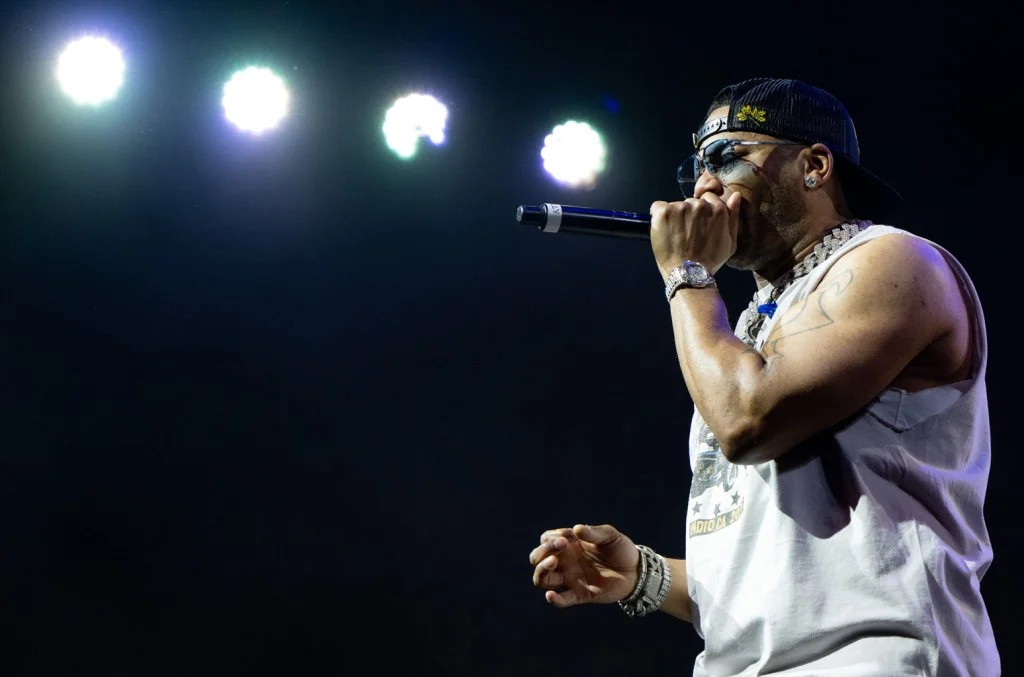
Nelly shared his thoughts on President Donald Trump’s first 100 days in office before stepping on stage for his Stagecoach performance. In a quick interview with Fox News Digital prior to his Stagecoach set on April 26, Nelly called himself a “glass half-full type of guy” when speaking on Trump’s first 100 days back in […]

Mike Peters, the lead singer of Welsh rock band The Alarm died on Tuesday (April 29) at age 66 following a decades-long battle with cancer. The death of the author of such strident 1980s alt rock anthems as “Blaze of Glory,” “Spirit of ’76,” “Sixty Eight Guns” and “The Stand” was confirmed in a statement from the group’s publicist titled “Totally Free.”
As the lone remaining original member of the punk-turned-rootsy rock group formed in Rhyl, Wales in 1977 (originally known as The Toilets) Peters continued to tour and release music during a three-decade battle with several forms of cancer, putting himself up as an indefatigable advocate for blood cancer patients.
Last April, before launching a 50-date U.S. tour, he was diagnosed with Richter’s Syndrome, an aggressive form of lymphoma. According to the release, even after extensive treatment at the Christie NHS Foundation Trust in Manchester, U.K., including experimental therapies, doctors could not halt the cancer’s progress.
Michael Leslie Peters was born in Wales on Feb. 25, 1959 and logged time in early Hairy Hippie and The Toilets, forming the latter after being inspired by a Sex Pistols show he attended in 1976. Teaming up with childhood friend and bassist Eddie McDonald, as well as drummer Nigel Twist and guitarist Dave Sharp — initially as Seventeen — the group gelled as The Alarm in 1981, when they were signed to Miles Copeland’s IRS Records, the early indie rock home of groups including R.E.M., The Go-Go’s, Fine Young Cannibals, Wall of Voodoo and many more.
They got a crucial break when U2’s agent saw them live and invited the band to open for the then-ascending Irish group in December 1981. Their sound — a mix of acoustic roots rock, new wave balladry and howling, uplifting anthems — began to gain traction as they supported U2 on that band’s 1983 War tour.
The hard road work paid off on the Alarm’s 1984 debut album, Declaration, which spotlighted Peters’ sensitive, heartfelt lyrics on tracks including the opening salvo, “Marching On.” The anthem for youth found him wailing, “These are the kids they’re powerless/ So you tell them so/ These are the kids they’re powerful/ Don’t say you haven’t been told.”
Setting the tone for the next two decades, the album also featured such fist-in-the-air shout-along hymns to fortitude and fight as “Where Were You Hiding When the Storm Broke?,” “We Are the Light,” “Blaze of Glory” (not to be confused with the Bon Jovi song of the same name) and one of the Alarm’s most beloved calls to arms: “Sixty Eight Guns.”
The song mixed a jaunty rockabilly-meets-mariachi horns sound with another one of Peters’ rallying cries for misunderstood youth, in this case inspired by a late1960sGlasgow street gang who went by the song’s title. “They’re after you with their promises/ Promises of love/ They’re after you to sign your life away,” Peters sings in his signature urgent, raspy yowl. “Sixty-eight guns will never die/ Sixty-eight guns our battle cry/ Sixty-eight guns,” he adds on the chorus.
The group expanded their sound on 1985’s sophomore effort, Strength, which added some churchy organs to the title track and added a handful of other classics to their live repertoire, including the synth-speckled “Knife Edge” and yet another heart-pumping call to arms, the harmonica and piano painted homage to the band’s early origins, “Spirit of ’76.”
They would release three more albums during their initial run, including 1987’s Eye of the Hurricane — featuring their signature ballad, “Rain in the Summertime” — as well as 1989’s Tony Visconti-produced Change, which got them their first and only Billboard Hot 100 top 50 hit with “Sold Me Down the River” (No. 50). That album also represented one of the group’s chart peaks in America, topping out at No. 75 on the Billboard 200 album chart; Strength hit No. 39 in February 1986 and Declaration ran up to No. 50 in April of 1984.
Among their other Hot 100 charting singles were “Strength” (No. 61), “Rain in the Summertime” (No. 71) and “Presence of Love” (No. 77).
After the release of their fifth, and final, LP by the original lineup, 1991’s Raw, the band split up and got back together just one more time, for an episode of VH1’s Bands Reunited, in October 2003. Peters continued his musical march with the Poets of Justice band featuring his wife, Jules Peters, on keyboards, as well as releasing his first solo album, Breathe, in 1994, one year before his first cancer diagnosis.
Peters was diagnosed with non Hodgkin’s lymphoma in 1995, battling that form of cancer, as well as later being twice diagnosed with lymphocytic leukemia in 2005 and 2015. Taking on the disease with the same vigor that fed his songs, Peters co-founded the music-driven charity Love Hope Strength with his wife Jules — who was diagnosed with breast cancer in 2016 — as a means to raise awareness around stem cell donation. The organization’s “Get on the List” campaign at his shows helped add more than 250,000 people to the global stem cell registry.
The singer also kept a sparkle in his eye amidst his health battles, releasing an album by his hoax teen group The Poppy Fields, in 2004, scoring a hit on British radio with the blitzing “45 R.P.M.” Though the song clearly featured Peters’ signature vocals, at the time he said the masked effort was an attempt to shake-up the media’s perception of the by-then 20-plus year old band by concealing their identities and enlisting a group of younger musicians in the band the Wayriders to pose as the veteran act.
In addition to solo singles and albums, Peters, who shared the stage with icons including Bruce Springsteen and Bob Dylan over the years, performed with the indie/new wave supergroup Dead Men Walking with members of The Mighty Wah!, The Damned and the Sex Pistols and briefly joined on as the lead singer of Scottish band Big Country in 2011 following the death of singer Stuart Adamson.
In addition to touring, Peters performed the “highest show ever” on Mt. Everest in 2007, where he was joined by some other 1980s new wave legends, including Cy Curnin and Jamie West of The Fixx, Glen Tillbrook of Squeeze and Slim Jim Phantom of the Stray Cats for a show to raise cancer awareness. A tireless advocate for cancer awareness, Peters shared his stories with his fans and encouraged them to join him on mountain-climbing treks to Mount Kilimanjaro and the Himalayas and released a documentary in 2018 on the BBC about Jules’ cancer battle, While We Still Have Time.
Peters posted from his hospital room in January, his signature shock of long blonde hair shaved down to a slim mohawk, as he shared a new song, “Chimera,” which he said celebrated his receipt of his CAR-T cell therapy on what he called his “new birthday.” Peters booked a series of shows in June of this year in Wales, dubbed “The Alarm Transformation Weekends,” in advance of the upcoming release of his final album, Transformation. He also completed the second volume of his memoirs, Volume 2 HOPE – 1991-2005.
Check out some of The Alarm’s most beloved hits below.
A video of Belfast hip-hop trio Kneecap allegedly calling for the death of British MPs (Members of Parliament) is being assessed by anti-terror police in the U.K. The clip from November 2023 appears to show one member of the band saying: “The only good Tory is a dead Tory. Kill your local MP.” At the time, the Conservative Party – also known as the Tories – were in government with a large majority.
Explore
Explore
See latest videos, charts and news
See latest videos, charts and news
This follows news last week that a historic video of the band expressing support for Hamas and Hezbollah – both of which are ascribed terror group status by the U.K. government – was being assessed by London’s Metropolitan Police. Under anti-terror laws, it is an offence to express support for such groups. A spokesperson for Kneecap did not respond to a request for comment.
On Sunday (April 27), a spokesperson for the Met said: “We were made aware of a video on 22 April, believed to be from an event in November 2024, and it has been referred to the Counter Terrorism Internet Referral Unit (CTIRU) for assessment and to determine whether any further police investigation may be required. We have also been made aware of another video believed to be from an event in November 2023.” The group are yet to be charged with any offence.
A U.K. government spokesman told the BBC: “We unequivocally condemn threatening remarks made towards any individual. Political intimidation and abuse must have no place in our society. We recognise the chilling effect that harassment and intimidation of elected representatives can have on our democracy. All reports of intimidation, harassment and threats are taken extremely seriously. We work with the police and Parliament to do everything in our power to crack down on threats to elected officials.”
The news comes in the wake of the fall-out following the band’s sets at Coachella earlier this month. During their performance, the band displayed a message stating, “Israel is committing genocide against the Palestinian people. It is being enabled by the U.S. government who arm and fund Israel despite their war crimes. F–k Israel; free Palestine.”
On Friday, news emerged that the group had split with their U.S. booking agent IAG, and there have been calls for the group’s U.S. work visas to be revoked. Sharon Osbourne, wife and manager of Ozzy, said, “This behavior raises concerns about the appropriateness of their participation in such a festival and further shows they are booked to play in the USA.” Kneecap are due to perform a headline tour in North America this October.
Kneecap have alleged on social media they have “faced a co-ordinated smear campaign,” saying their shows have previously “called out” the conflict in Gaza. They also suggested that they were considering legal action against the “malicious efforts.” Kneecap’s manager Daniel Lambert said the band had received “severe” death threats after Coachella.
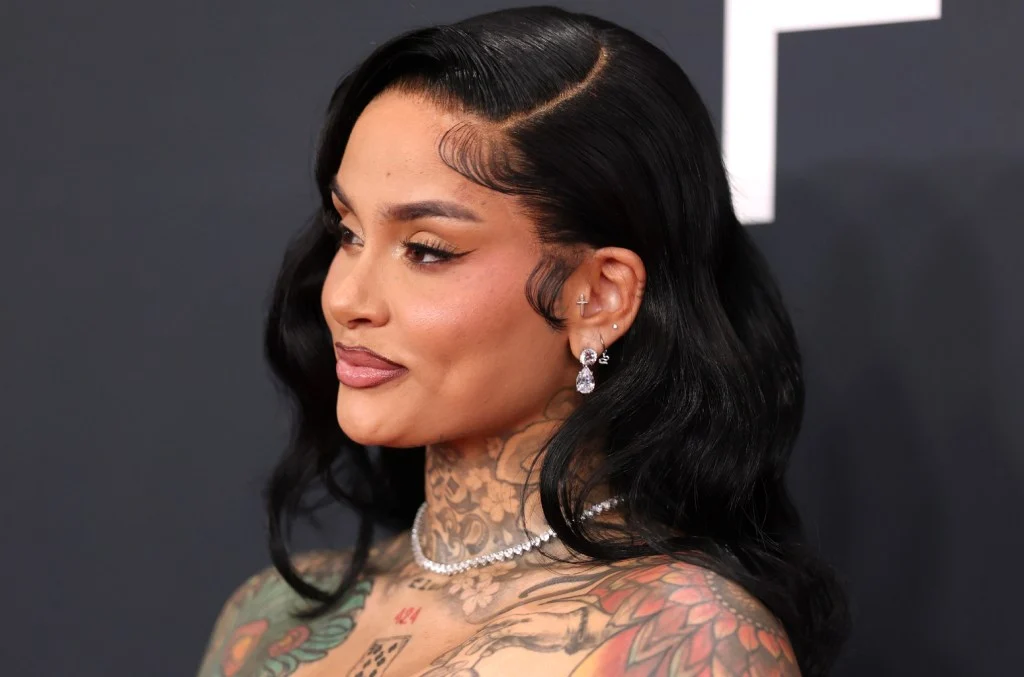
Kehlani got on camera to give a statement regarding the cancellation of their upcoming performance at Cornell after the university’s president said the singer “has espoused antisemitic, anti-Israel sentiments.”
Cornell had booked Kehlani to headline the school’s Slope Day, an annual celebration following the last day of classes, set for May 7 this year. Earlier this week, the invite was rescinded.
Kehlani’s performance was officially canceled on Wednesday, per an email Cornell president Michael I. Kotlikoff sent to students and faculty. According to a New York Times report, Kotlikoff wrote in the email that “the selection of Kehlani as this year’s headliner has injected division and discord … In the days since Kehlani was announced, I have heard grave concerns from our community that many are angry, hurt and confused that Slope Day would feature a performer who has espoused antisemitic, anti-Israel sentiments in performances, videos and on social media.”
“I am being asked and called to clarify and make a statement yet again, for the millionth time, that I am not antisemitic nor anti-Jew,” Kehlani said on Saturday (April 26) in a video uploaded on Instagram.
“I am anti-genocide, I am anti the actions of the Israeli government, I am anti an extermination of an entire people, I am anti the bombing of innocent children, men, women — that’s what I’m anti,” they spelled out.
Kehlani continued: “In fact, the very first Live that I did in the beginning of this genocide was with a really beautiful Jewish organization called Jewish Voices for Peace, and I still continue to learn from and work alongside really impactful Jewish organizers against this genocide.”
“I want to be very clear in stating that I do believe God has plans for me and that’s not gonna stop nothing that I have going on, but I’m asked to clarify because this keeps coming up as a means to silence me, as a means to stop things that happen in my career, as a means to change the course of my life, and I just don’t believe that,” said Kehlani, who also noted they were in the studio working on new music. “So here’s the clarification that you needed. I hope this is everything you needed. Straight from my mouth, not a written statement with a white background from my notes.”
“Back to my album,” they concluded. Kehlani’s next full-length release will be the follow-up to 2024’s Crash.
Kehlani has been transparent about their support for Palestine and criticism of Israel in the Israel-Hamas war. In the singer’s 2024 “Next 2 U” video, they wore kaffiyehs, had dancers waving Palestinian flags, and featured the phrase “Long Live the Intifada.” In 2023, the musician joined a coalition of musicians to sign the Artists Against Apartheid letter, which called for a ceasefire.
Watch Kehlani’s Instagram reel from this weekend below.
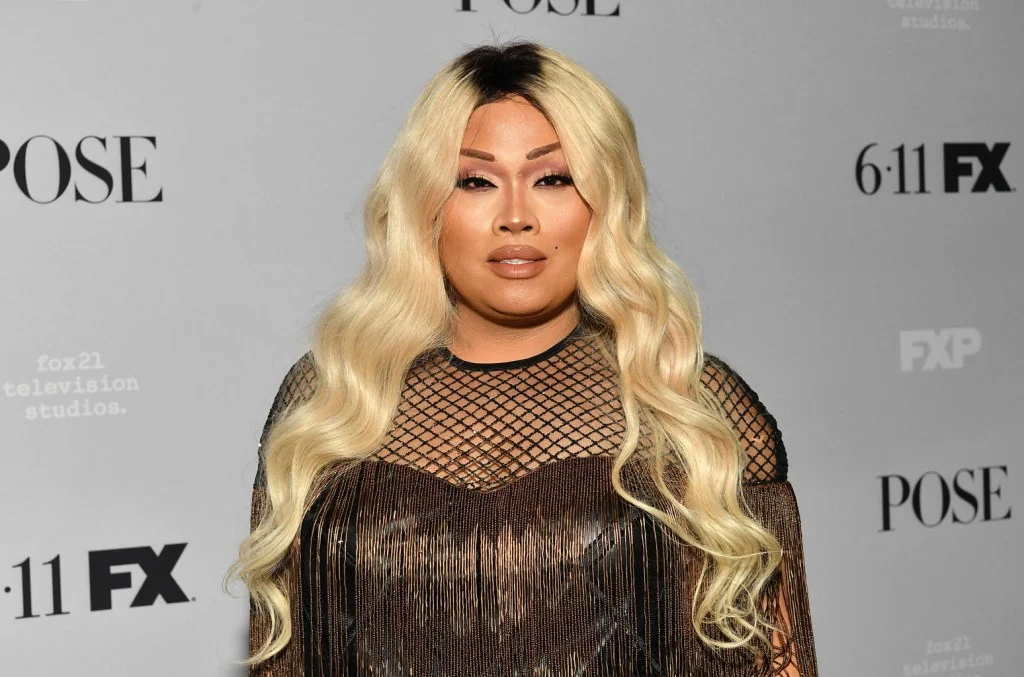
Jiggly Caliente, who rose to fame on season four of RuPaul’s Drag Race, has died at 44.
Caliente, whose real name was Bianca Castro, passed away on Sunday (April 27), just days after undergoing a leg amputation following a severe infection. Her family announced the sad news in a post on Instagram.
“It is with profound sorrow that we announce the passing of Bianca Castro-Arabejo, known to the world and cherished by many as Jiggly Caliente,” the statement read. “Bianca passed away peacefully on April 27, 2025, at 4:42 am, surrounded by her loving family and close friends.”
“A luminous presence in the worlds of entertainment and advocacy, Jiggly Caliente was celebrated for her infectious energy, fierce wit, and unwavering authenticity. She touched countless lives through her artistry, activism, and the genuine connection she fostered with fans around the world.”
The family continued, “Her legacy is one of love, courage, and light. Though her physical presence is gone, the joy she shared and the space she helped create for so many will remain forever. She will be deeply missed, always loved, and eternally remembered.”
News of her passing follows an earlier family update shared on April 24, in which they revealed that Caliente had suffered “a serious health setback” and had undergone the amputation of most of her right leg due to a “severe infection.”
At the time, they noted that she would be unable to participate in the upcoming season of Drag Race Philippines or any public engagements as her recovery was expected to be extensive.
“At this time, we kindly ask for privacy for Bianca and her family as they navigate this difficult journey together,” the earlier statement read. “While Jiggly concentrates on healing, we invite her friends, fans, and community to uplift her with messages of hope and love on her social media channels. Bianca’s family and drag house are deeply grateful for the continued outpouring of support, strength and prayers.”
Caliente first gained attention with her run on RuPaul’s Drag Race season four, where she finished in eighth place. She later returned to the franchise for All Stars season six and joined Drag Race Philippines as a recurring judge in 2022.
Caliente also portrayed Veronica Ferocity in FX’s hit series Pose, appearing in 12 episodes over the show’s three-season run.
Read her family’s full statement on Instagram below.
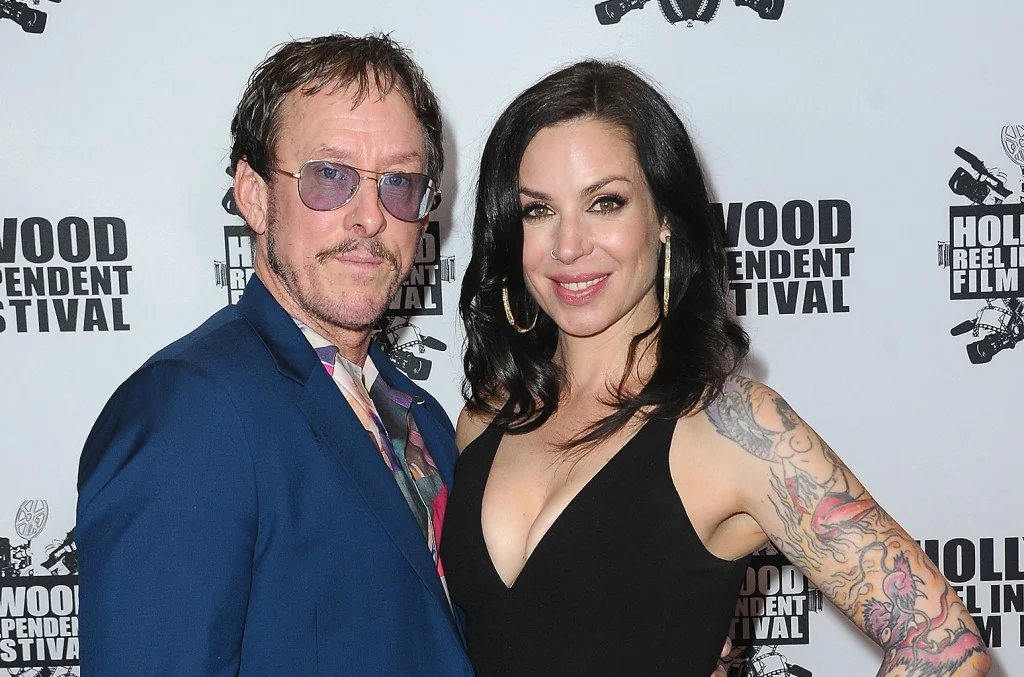
Los Angeles police have released video from the shooting of author Jillian Lauren, the wife of a Weezer band member, during a chaotic backyard confrontation that culminated in a volley of gunfire.
Lauren’s wounds were not life-threatening in the April 8 shooting in the northeast Los Angeles neighborhood of Eagle Rock, where the 51-year-old wife of Weezer bass player Scott Shriner emerged from her home with a gun as city police and the California Highway Patrol searched the area for three people who fled a car wreck.
Lauren — listed by police as Jillian Lauren Shriner — was released on a $1 million bond on suspicion of attempted murder pending further investigation. She is scheduled to appear in court April 30.
Police released the excerpts from body camera recordings, surveillance video and audio of 911 dispatch conversations on Friday (April 25). The video clips show officers peering over a high wooden fence into a yard and shouting over the noise of a surveillance helicopter at a woman to put down her gun or risk getting shot. The fence obscures from the cameras what is on the other side.
“Ma’am, we’re trying to help you. Put the gun down,” a voice says. “You’re going to get shot. It’s the police.”
An officer indicates that the woman has cocked a gun — “Oh, she racked it” — immediately before the sound of at least six shots rings out.
In a separate segment of silent surveillance video from Lauren’s backyard, she can be seen exiting the home barefoot and carrying a pistol in her right hand. Another segment shows Lauren from behind, apparently raising a gun that is briefly visible. Dirt kicks up near her feet, and she turns and walks toward a doorway to the house.
Further body camera video shows Lauren lying prone in the middle of a residential road as police place handcuffs behind her back, while noting that she has a wound on her arm.
Lauren’s published works include two bestselling memoirs, 2010’s Some Girls: My Life in a Harem and 2015’s Everything You Ever Wanted.
Weezer is a Los Angeles-based band, beloved especially for their 1994 record unofficially known as the “Blue Album,” with songs including “Say It Ain’t So.” Shriner joined the band in the early 2000s.

Justin Bieber is mourning the passing of his maternal grandfather, Bruce Dale.
On Saturday (April 26), the 31-year-old pop superstar shared a heartfelt tribute on social media honoring Dale, who died April 24 at the age of 80 at Rotary Hospice Stratford Perth, according to an obituary posted by W.G. Young Funeral Home in Stratford, Ontario.
“Papa , I always took all ur money lol,” Bieber wrote on Instagram alongside a throwback photo with his grandfather. “I remember u specifically telling me, gramma gave u an allowance of 20 dollars for the WEEK! I would always convince you to spend on snacks at the hockey game on Friday nights.”
Explore
Explore
See latest videos, charts and news
See latest videos, charts and news
The “Sorry” singer also fondly recalled their shared moments. “Reluctantly you always gave it to me. Corn nuts, skittles, gum balls, chuck a puck, slush puppies … Shout out to the jr b referees Beatty, Fagon, Flanagan lmfao,” he wrote.
Bieber went on to remember Dale’s spirited presence at hockey games, saying, “My grandpa wasn’t shy in letting them know that they were being pieces of sh-ts.”
“I can’t wait to see u again soon in heaven,” he continued. “Until then I know ur watching down probly still heckling Beatty or Fagon for missing that cross check call in the corner there lmfao.”
Bieber concluded his emotional tribute with, “I will miss u. I will ache. And I’ll sit and let myself remember all of the wonderful times we’ve had.”
Dale, father of Bieber’s mom, Pattie Mallette, was a longtime supporter of his grandson’s career. He appeared in Bieber’s 2011 documentary Never Say Never and shared memories during a 2018 interview at the Stratford Perth Museum, which featured an exhibit dedicated to the pop star.
In addition to Justin, Dale’s obituary also mentioned the singer’s wife, Hailey, their son Jack Blues, Dale’s other children, and his wife, Diane.
Bieber’s paternal grandfather, George Bieber, passed away in 2021.
You can see Bieber’s full tribute to his grandfather Bruce on Instagram here.

Prosecutors are firing back at efforts by Sean “Diddy” Combs to bar an infamous 2016 surveillance video from his upcoming sex trafficking trial, calling it a “desperate” attempt to avoid “crushing” evidence.
With his trial looming next month, Diddy’s attorneys argued last week that the clip — showing him assaulting his former girlfriend Cassie Ventura in the hallway of a Los Angeles hotel — has been deceptively edited and would “unfairly confuse and mislead the jury.”
But in a response filing Friday, prosecutors say those arguments are “overblown” and are merely a pretext to prevent jurors from seeing “some of the most damning evidence of his sex trafficking.”
“The defendant has been overwhelmingly concerned with the existence of the video surveillance since the assault occurred and has taken great measures to ensure it was not released,” prosecutors write. “Now facing trial, the defendant attempts to keep this devastating proof from the jury. His grasping arguments to preclude this crushing evidence should be quickly dismissed.”
Combs was indicted in September, charged with running a sprawling criminal operation that aimed to “fulfill his sexual desires.” The case centers on elaborate “freak off” parties in which Combs and others would allegedly ply victims with drugs and then coerce them into having sex, as well as on alleged acts of violence to keep victims silent.
Jury selection is currently set to start on May 5, with opening statements scheduled for May 12. If convicted on all of the charges, which include sex trafficking and racketeering, Combs faces a potential life prison sentence.
The Cassie video, which aired on CNN in May, showed him attacking her at the Intercontinental Hotel in March 2016. The clip drew far more public attention to the accusations against the star — who was then only facing civil lawsuits — and prompted an apology from Combs shortly after it aired.
“My behavior on that video is inexcusable,” Combs said at the time. “I take full responsibility for my actions in that video. I was disgusted then when I did it. I’m disgusted now. I went and I sought out professional help. I got into going to therapy, going to rehab. I had to ask God for his mercy and grace. I’m so sorry.”
In the lead up to the trial, Combs’ lawyers have repeatedly targeted the Cassie tape, accusing prosecutors of unfairly leaking it and alleging that CNN had unfairly edited it. Last week, they formally moved to ban it from the trial, calling it “inaccurate” and “unreliable” because of edits that were “specifically designed to inflame the passions” of viewers.
But in Friday’s response, the feds said those issues were quibbles that could easily be fixed at trial, not valid reasons to withhold the tape from jurors entirely. They pointed out that Combs himself had apologized over the clip and had not disputed its content; and they said that any problems with finding the original footage were caused by Diddy’s own efforts to destroy it.
“It is by the defendant’s own hand that the original version of this damning footage no longer exists: it was deleted and given to the defendant as part of a cover-up orchestrated by the defendant and his co-conspirators,” prosecutors write. “The Court must not reward the defendant for his actions by precluding the video that remains available despite the defendant’s obstructive efforts.”

Cornell University has canceled Kehlani’s upcoming performance, which the singer was slated to perform on campus at the university’s annual Slope Day on May 7. According to The New York Times, Cornell president Michael I. Kotlikoff emailed students and faculty on Wednesday (April 23) to make his decision to cancel Kehlani’s performance official. Explore Explore […]