State Champ Radio
 News
Page: 536
HipHopWired Featured Video
Source: Variety / Getty
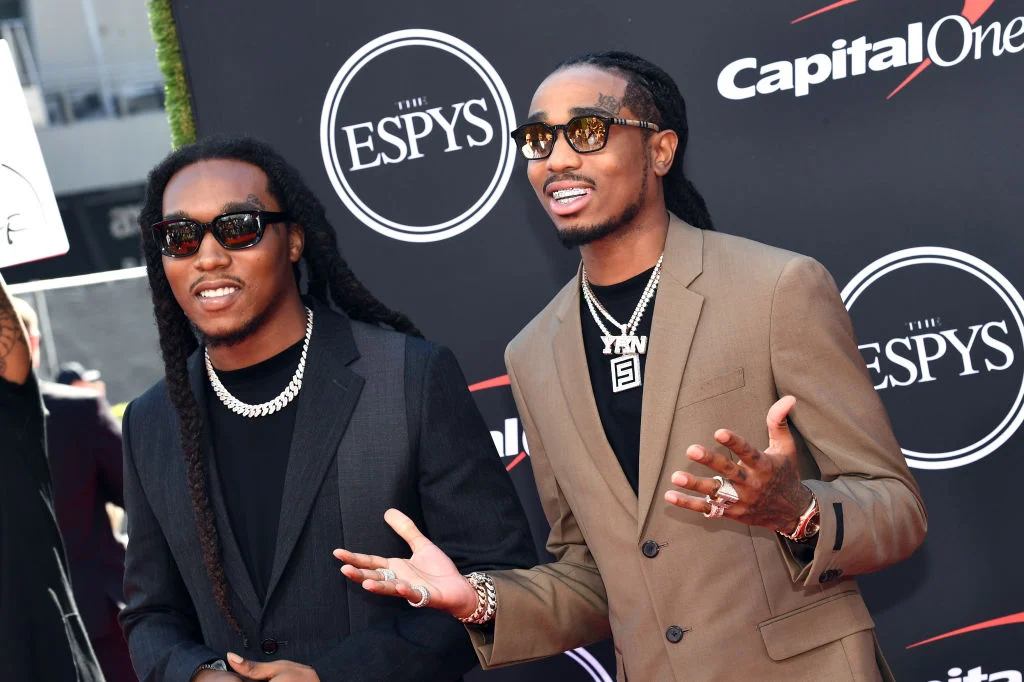
Quavo has officially announced the release of a posthumous collaboration with his late nephew and Migos groupmate, TakeOff.
The track, titled “Dope Boy Phone,” is set to drop on May 2 and marks an emotional moment for fans still mourning the tragic loss of TakeOff. A teaser clip shared online shows Quavo in the studio methodically placing several burner phones into a tray before wrapping them up—a symbolic gesture that doubles as the song’s official cover art.
TakeOff, whose real name was Kirshnik Ball, was killed in a shooting outside a bowling alley in Houston, Texas, on November 1, 2022. The incident occurred following a dice game that escalated into violence. At just 28 years old, TakeOff was pronounced dead at the scene. Quavo, who was present during the altercation, escaped physical harm, though two others sustained gunshot wounds and were transported to nearby hospitals.
“Dope Boy Phone” not only serves as a tribute to TakeOff’s legacy but also highlights Quavo’s continued efforts to honor his late nephew through music. The upcoming release is expected to blend their signature Atlanta sound with a deeper emotional resonance, reflecting both loss and loyalty. Fans of Migos and Hip-Hop alike are eagerly awaiting the track, which stands as another poignant reminder of TakeOff’s talent and the deep bond he shared with Quavo.
As anticipation builds, the single is likely to stir strong emotions and further cement TakeOff’s enduring influence on the genre.

Audio entertainment giant SiriusXM reported declines in first quarter revenue and net income on Thursday.
Revenue declined 4% to $2.07 billion and net income declined 15% to $204 million for the quarter ending March 31 compared to the year-ago period. Lower operating expenses from staff cuts and the reversal of Sirius’s streaming strategy partly offset the declines, and SiriusXM’s share price was trending downward, by about -3.4%, as of noon in New York.
It was the first full quarter of company earnings since SiriusXM moved away from its effort to develop a streaming audience and doubled down on its core listener base in vehicles, and it comes amid increased economic uncertainty.
Executives attempted to fend off investor concerns saying that macroeconomic jitters are not likely to negatively impact Sirius’s subscribers, its consumption in cars or marketing revenue.
Trending on Billboard
“Our strong, recurring revenue-driven business positions us well in this period of heightened volatility,” Tom Barry, SiriusXM chief financial officer, said in a statement. “We do not anticipate that tariff-related pressure on new car sales will have a material impact on our subscriber or financial performance this year. That said, like every business, we’ll continue to closely monitor ongoing developments and broader consumer health.”
The company reported adjusted earnings before interest, taxes, depreciation and amortization (EBITDA) declined 3% in the quarter to $629 million from $650 million a year ago. SiriusXM’s adjusted EBITDA margin held flat at 30%.
SiriusXM reported a 303,000 decline in subscribers to bring its total number of subscribers to roughly 33 million, which drove a 5% reduction in the business division’s subscriber revenue. Average revenue per user of $14.86, a 3% decline from the prior year.
The SiriusXM division reported gross profit declined 6% to $937 million resulting in a gross margin of 59%.
SiriusXM’s podcast business, which launched two new Alex Cooper channels in the quarter, reported 70 million monthly listeners and a 33%- year over year increase in podcast revenue for the quarter.
The division also said it signed a new agreement that will put SiriusXM’s super premium 360L in all new Mitsubishi vehicles from 2025 through 2030.
SiriusXM’s Pandora and off-platform business reported a 2% decline in total revenue of $487 million largely driven by weaker advertising performance. Ad revenue declined 2% to $355 million as softer digital ad revenue was partly offset by greater podcast revenue. Subscriber revenue for the division held flat at $132 million.
Subscriber acquisition costs for SiriusXM rose 11%, or $10 million, from the year ago period as a result of contractual changes with certain carmakers, the company said. This was partly offset by a nearly 20% decrease in sales and marketing expenses, in addition to significant decreases in product and technology costs and administrative expenses.
In case you haven’t been paying attention over the past few months, comedian John Mulaney is in the midst of one of the most bizarre late night comedy experiments since Conan O’Brien blew up the zone more than three decades ago with Late Night with Conan O’Brien.
The “wait, what?” meter hit a new high mark on Wednesday night (April 30) when Mulaney went over to his telescope for one of his usual neighborhood check-ins on his live Netflix series Everybody’s Live With John Mulaney. Whereas in past episodes his peek-in revealed murder most foul, this time the results were more mind-blowing then brain-smashing.
“It’s time to look through the old telescope!” Mulaney said mid-monologue on the episode whose theme was “Can Major Surgery Be Fun?” As he zeroed in, Mulaney focused on an apartment that looked just like the one from Seinfeld. Weird, but not nearly as weird as sidekick comedian Richard King pretending to be cranky KISS bassist Gene Simmons for a whole episode a few weeks ago.
Trending on Billboard
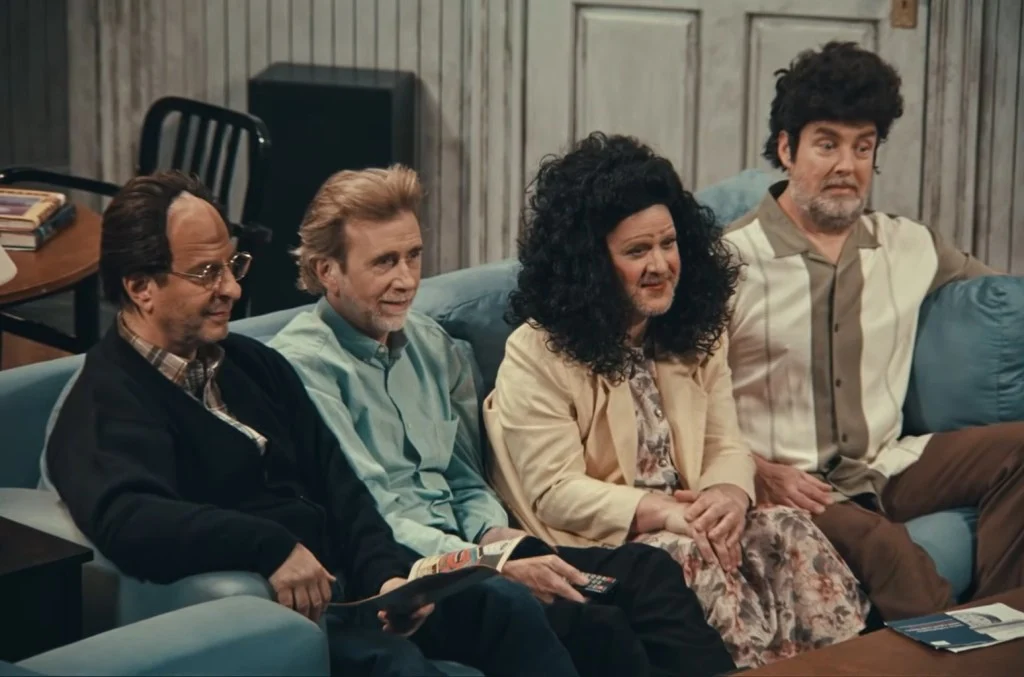
“Same couch, layout, there’s even a clunky landline,” Mulaney said. “Wait, is that Trey [Anastasio] from Phish? And that’s Mike Gordon from Phish.” Indeed, it was Anastasio dressed as Jerry Seinfeld and bassist Mike Gordon in a George Costanza wig. “Yeah, that’s definitely Trey! And, oh my God, it’s [drummer Jon] Fishman dressed as Elaine,” he added as Fishman walked through the iconic door in a long curly hair wig, flowery dress and lipstick.
“Oh, next you’re gonna tell me [keyboardist] Page [McConnell] is Kramer!” Kind shouted as McConnell burst through the door in a towering Kramer wig and signature striped bowling shirt. “Page is Kramer. What?” Mulaney exclaimed. “It’s all the guys from Phish wearing wigs, but Trey is not.” Kind implored his boss to “put it all together” and figure out what was going on.
“It’s Seinfeld, but it’s Phish,” Mulaney said, perplexed, as the sitcom’s bass-plucking theme song bubbled up along with the instantly recognizable red and yellow show logo, except this time it read “Phish.” After Kind wondered if it was too late to change that night’s theme, Mulaney dismissed the idea with a brusque, “Yeah, it is too late. Plus, we just saw it,” though in an extended video of the bit we actually see the band members acting out a perfectly on-brand Seinfeld bit about credit history as well as flubbing lines and entrances in a series of hilarious outtakes.
Why did they write this bit? As with so many gags on Mulaney’s show, comedy logic is not the point. But as the dedicated crew at Jambase noted, the appearance by the iconic jam band came 30 years after Phish made their late night TV debut on the Late Show With David Letterman in December 1994 alongside, you guessed it, Jerry Seinfeld.
Last month, Mulaney hosted Letterman — one of his absurdist late night heroes — on an episode focused on the lack of information men have about their height as part of a series-long gag about the phantom problem. A week later he invited on another comedy inspiration, O’Brien, to debate “Are Dinosaurs Put Together Correctly?” for an episode that explicitly paid homage to Conan’s legendarily bizarre late night antics.
Watch Phish as Seinfeld below.
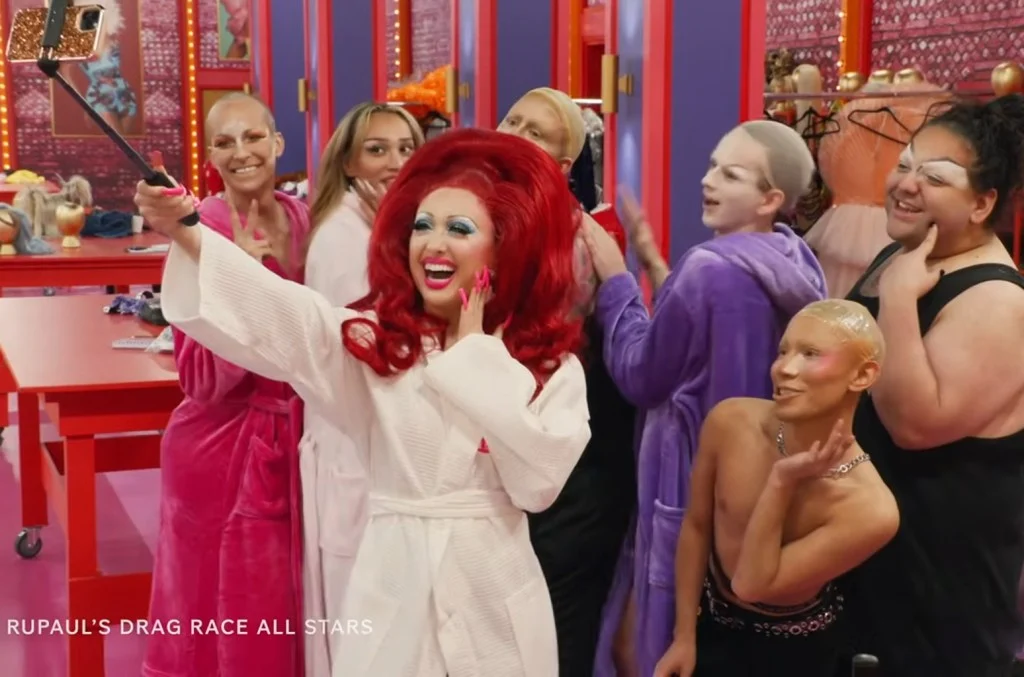
Will the new cast of queens on RuPaul’s Drag Race All Stars season 10 find themselves becoming more and more “Popular” on the new season? Will they need some “Good Luck, Babe” in order to take home the top prize? Maybe the new slate of guest judges can help them figure it out. On Wednesday […]

After working it out on the remix with Charli xcx, Lorde knew she had to work even harder on her own album to match the level of creative ingenuity her collaborator demonstrated on Brat.
In an interview with BBC Radio 1 posted shortly after the New Zealand native finally announced her fourth studio album, Virgin, on Wednesday (April 30), Lorde explained how the British pop star’s critically acclaimed 2024 project — for which the two teamed up on a remix of “Girl, So Confusing” — lit a fire under her when it came to finishing up her own LP. “Brat coming out really gave me a kick in a lot of ways,” Lorde began.
“It forced me to further define what I was doing, because Charli had so masterfully defined everything about Brat, and I knew that what I was doing was very distinct to that,” she continued, speaking to radio host Jack Saunders. “It’s an amazing thing when a peer throws the gauntlet down like that, you’re like, ‘OK, I’ve got to pick it up.’ I’ve spoken to a lot of peers who’ve all had the same feeling.”
Trending on Billboard
Released June 7, 2024, Brat was the album that finally propelled Charli into the mainstream. After the project debuted at No. 3 on the Billboard 200 — her highest position on the chart to date — the Essex-born artist kept the momentum going by dropping a companion remix album in October, featuring Lorde’s version of “Girl, So Confusing,” which the pair recently performed together during Charli’s Coachella set in April.
On the remix, the two artists candidly address a rift between them while making peace with their differences, a level of honesty that reaffirmed to the “Royals” singer how rewarding her own vulnerability on Virgin could be. “I had been trying to express in this very naked way, and then Brat came out, and she was kind of doing that from the other side of the coin,” Lorde told BBC Radio 1.
“Doing the remix together and meeting her in that place of rugged vulnerability and kind of cracking open the thing …,” she added. “[When] people responded really well to that, I was like, ‘OK, cool, this is a good thing to be doing.’”
The interview comes as fans are still processing the news about Virgin, which Lorde announced would be arriving June 27 while sharing its thought-provoking cover art on Wednesday. The project was preceded by lead single “What Was That,” which dropped April 24 alongside a music video filmed in New York City, featuring footage from the Kiwi star’s pop-up in Washington Square Park two days prior.
“THE COLOUR OF THE ALBUM IS CLEAR,” Lorde described Virgin in a statement at the time of the announcement. “LIKE BATHWATER, WINDOWS, ICE, SPIT. FULL TRANSPARENCY. THE LANGUAGE IS PLAIN AND UNSENTIMENTAL. THE SOUNDS ARE THE SAME WHEREVER POSSIBLE. I WAS TRYING TO SEE MYSELF, ALL THE WAY THROUGH. I WAS TRYING TO MAKE A DOCUMENT THAT REFLECTED MY FEMININITY: RAW, PRIMAL, INNOCENT, ELEGANT, OPENHEARTED, SPIRITUAL, MASC.”
Watch Lorde open up about feeling inspired by Charli below.
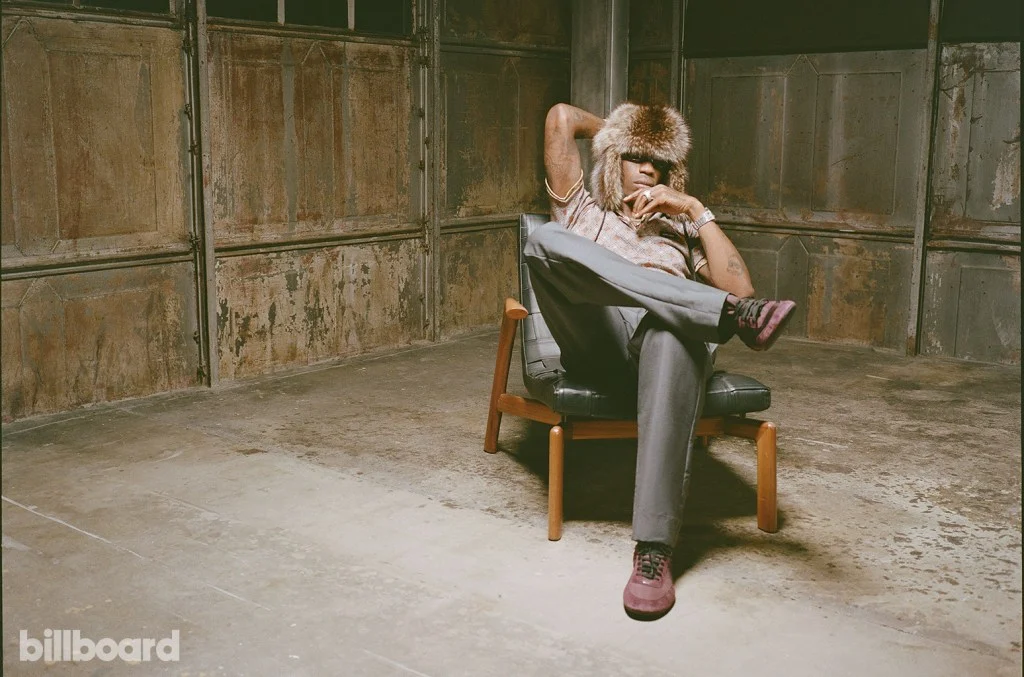
The countdown to Jackboys 2 is on. Travis Scott released a trailer for the Cactus Jack label compilation’s film on Wednesday night (April 30), featuring unreleased music from La Flame. Directed by Harmony Korine, the two-minute clip finds Scott heading to the countryside as he flexes his purple Lamborghini Aventador in the fields next to […]
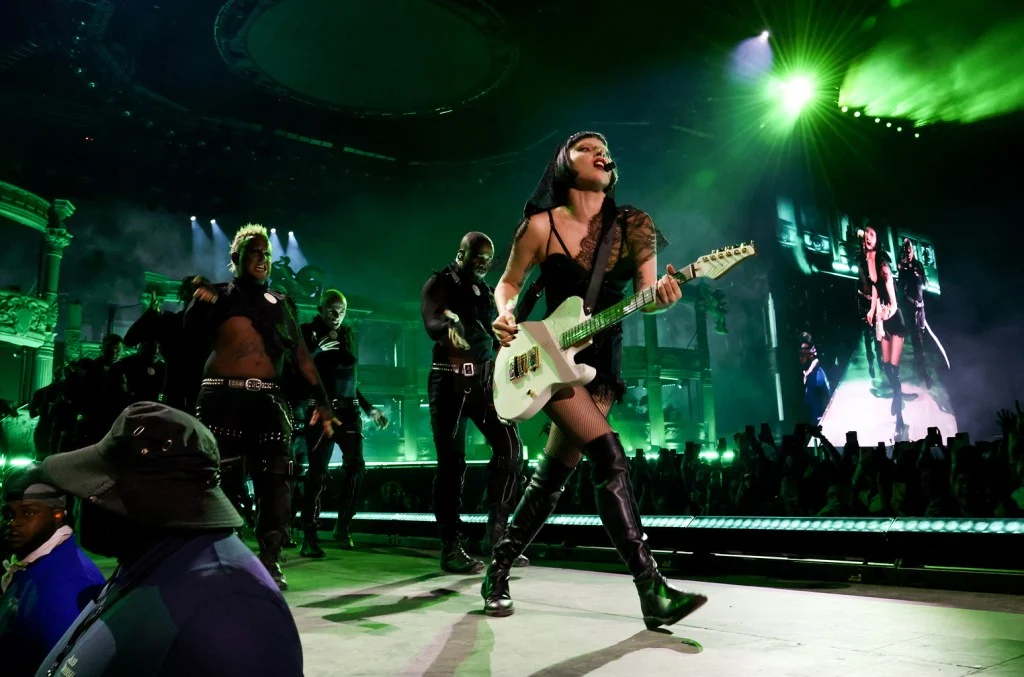
This April, the Billboard charts have been largely static — with a couple big exceptions, for which we are thankful — but pop music keeps moving. This was a month for big festivals, with two weekends of Coachella and one of Stagecoach all back to back out in Indio, Calif., and of just-as-big tour kickoffs, […]

This analysis is part of Billboard’s music technology newsletter Machine Learnings. Sign up for Machine Learnings, and other Billboard newsletters for free here.
Last week, I had a drink with a source who works in music marketing. They showed me their latest handiwork: a TikTok page where every post features their client’s song paired with an AI-generated video of a scenic landscape. I promised them anonymity, so I can’t share these videos, but rest assured — all of them were convincingly realistic.
My source has started paying a fan to post hundreds of these AI videos — generated in seconds using OpenAI’s video tool, Sora — to TikTok to promote their artist’s new single, with the hope that at least one of the videos will go viral. And they’re not the only ones experimenting with AI to automate digital marketing. I also recently met with RHEI, a company that claims its proprietary AI agents — AI systems that can make decisions and take actions — can generate lyric videos and populate fan pages for artists without anyone lifting a finger. Already, music companies like Symphonic, Lyrical Lemonade and MNRK use RHEI’s products. Though this technology is still in its infancy, using AI agents or video generators is clearly the super-charged next step for what’s known as “fan page marketing,” which is the promotional method du jour in 2025.
Trending on Billboard
Music marketers have complained for the last few years that social media, especially TikTok, is oversaturated with content and music, and that breaking through the noise is becoming harder. Their response to this, almost universally, has been to combat the noise by turning up the metaphorical volume even louder. Nowadays, asking artists to post “did I just make the song of the summer?” videos isn’t enough. Now, marketers are promoting artists by circulating thousands of repurposed interview and livestream clips, user-generated content remixes, memes, live videos and — increasingly — AI-generated videos on “fan pages” run or paid for by the artists’ team. Typically, this is all still coupled with classic influencer campaigns where various content creators are paid to make videos to a song, often without disclosing that these are paid advertisements.
More is also more in the world of streaming. In 2018, Luminate reported that about 45,000 songs were uploaded to Spotify daily. Five years later, in 2023, Luminate said that number had grown to 120,000. In some ways, it’s a beautiful thing — it’s easier to release a song than ever before, allowing countless DIY artists chances at success they never would have had otherwise. But it’s also led to what Lucian Grainge, chairman/CEO of Universal Music Group, has called a “content oversupply,” of which he said, “AI has already been a major contributor.”
Major-label artists have some part in this too. Taking advantage of streaming’s infinite shelf, top artists have started to release longer and longer albums. Migos’ 24-track Culture II (2018), Rae Sremmurd’s 27-track SR3MM (2018) and Drake’s 25-track Scorpion (2018), are all popular, early examples of this phenomenon which is now common to see across all genres. More recently, Morgan Wallen, Zach Bryan, The Kid LAROI and Taylor Swift have all released projects that span more than 30 tracks — something which rarely happened in the days of CDs and cassettes, given those formats’ physical limitations.
Major artists are also trying to capture attention in the age of “content oversupply” by releasing alternate versions of albums and songs, and more remixes than ever. Take Republic Records signee Ariana Grande. She released 12 versions and remixes of her single “yes, and?’ last year (including sped up, slowed down, a capella, extended, and instrumental variations), five versions of “we can’t be friends (wait for your love),” five versions of “the boy is mine” and six versions of the album those songs are on, eternal sunshine.
This strategy has bled over to vinyl, too. Over the last year, Swift, for example, released 36 different vinyl editions of varying colors and contents of The Tortured Poets Department to continue to engage fans and to further its monetary (and chart) success.
In the end, for artists and their teams, there’s no strong downside to any of these marketing strategies on social media, streaming services or physical products, and thus, they’re likely to persist and keep growing. The more songs on an album, the higher the likelihood that fans will stream them — and generate the significant royalties that come with it. And if a single’s a capella version doesn’t do well, that’s not a problem: it’s virtually free to silence the instrumentals on a track and put that result on streaming services. Why not try? Even a few curiosity listens from major fans make it worth it. On social media, the main result of a big fan page and creator campaign push is the appearance of a groundswell of support for the artist. The only danger is that this appearance is a facade.
It’s true that constant promotion can wear out fans. I’ve seen it from time to time, especially with excessive vinyl variants, but really, with fans’ attention being pulled in so many directions at every moment, how many of them will notice just how big all the promotion has become? And how many of them are even aware that some of the fan pages and influencer co-signs they see are part of that campaign anyway?
Streaming services have started to take the effects of saturation seriously — Spotify is now curbing mass uploads and SoundCloud is de-monetizing AI tracks — but that’s not enough to stop the flood, especially not as AI music and content creation surges. Deezer reported last week that 18% of its daily uploaded songs are now fully AI-generated, nearly double the count it reported in January. Sora, meanwhile, became so popular after its release in December that, a few days later, it had to pause users’ ability to make new accounts, citing extremely high demand.
Surely, there’s some limit to how hard the music business can push these pro-saturation tactics. But I also believe this might just be the new state of the internet, where the rise of AI tools are making it easier to flood online platforms with various forms of content. Will the “dead internet theory” — the idea that there’s so much AI slop and even human-made saturation that nothing can be found or trusted — come to pass, or will music marketers continue to break through the exponentially growing noise by fighting back with even more noise?
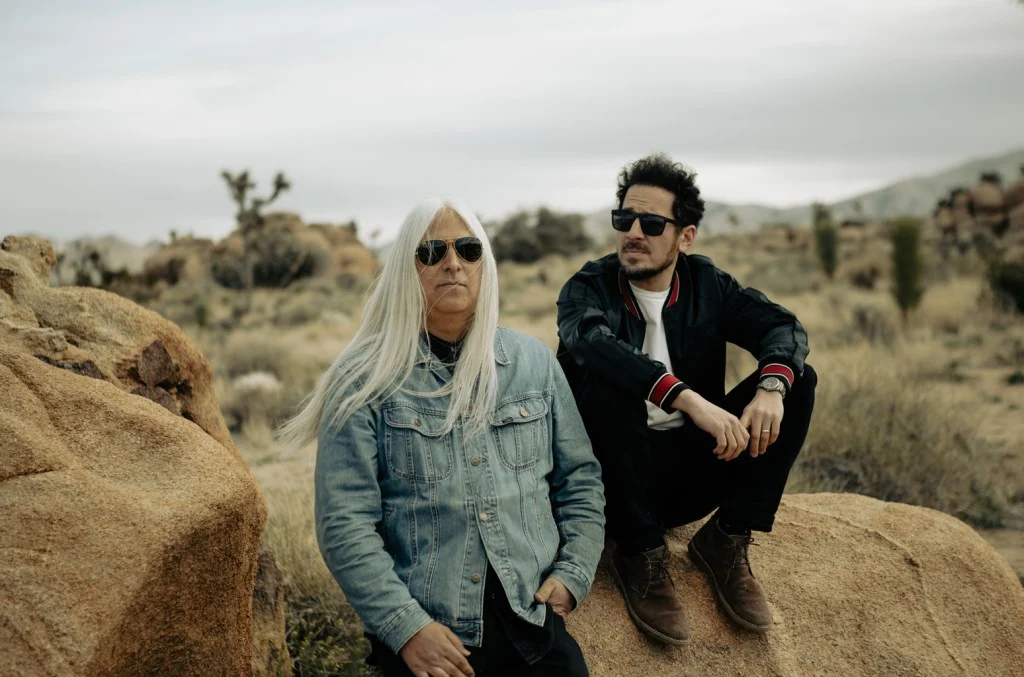
In March 2023, Young Gun Silver Fox played in Los Angeles for the first time, selling out a show at the Troubadour. Though the duo is U.K.-based, the pair have an uncanny mastery of the sound that gushed out of elite L.A. recording studios in the second half of the 1970s — polished, wistful, harmony-soaked, groove-based pop. After releasing three albums, earning the opportunity to perform in the birthplace of their beloved style felt momentous. “That was like taking the music back to its spiritual home,” says Shawn Lee, one of Young Gun Silver Fox’s co-founders. Several of the duo’s devoted followers felt similarly: “We had people coming out from Europe saying, ‘we wanted to see you play in L.A.’”
Young Gun Silver Fox will release its fifth album, Pleasure, on May 2. For listeners who see the West Coast ecosystem that incubated hits for Michael McDonald, George Benson, Christopher Cross and Michael Jackson as a pinnacle of pop, Young Gun Silver Fox represent “the modern day gold standard,” according to Greg Caz, an American DJ who specializes in rare groove, yacht rock, and Brazilian music.
Trending on Billboard
“The best Young Gun Silver Fox songs stand right next to anything that was done in L.A. circa 1978 and 1979,” Caz continues. “You could swap them in for an Ambrosia record or a Kenny Loggins record or a Pages album” — which Caz does in his sets.
In decades past, faithfulness to this source material might not have garnered high praise. “For a lot of critics back then, there was a whole view of this style of music as corporate, empty, too slick, too smooth,” Caz notes. “It just felt too good to people, too candy-sweet,” jokes Terry Cole, founder of the soul and funk label Colemine Records. Critics “didn’t feel nearly enough angst.” (Cole partnered with Young Gun Silver Fox to release 2020’s Canyons in North America through his Karma Chief subsidiary.)
That negative view persisted for decades, blending with the late 1970s disco backlash into a potent cocktail of rejection. “I fully expected to be totally forgotten by the end of the 1980s,” McDonald said in the recent movie Yacht Rock: A Dockumentary.
It’s not surprising, then, that when Young Gun Silver Fox started writing their debut album, 2015’s West End Coast, they felt that “there wasn’t a band that was reclaiming that music as their own,” Lee says. While that meant that Lee and his co-founder Andy Platts’ efforts were often overlooked, there are advantages to running your own race. “It felt wide open,” Lee continues. “We had the luxury of doing something that nobody else was doing at that time.”
In an about-face, though, music that was once derided as “dad rock” — or described glibly as “yacht rock” — has now been reappraised and embraced. Some listeners “come to it jokingly,” says one of the commenters in Yacht Rock: A Dockumentary. “But then you suddenly find yourself appreciating it sincerely.”
It remains to be seen if that newfound goodwill extends to modern purveyors of this classic sound. But if it does, few groups are better positioned to benefit than Young Gun Silver Fox.
“They’re gaining momentum now,” says Tom Nixon, co-host of the podcast Out of the Main, which focuses on “yacht rock, west coast AOR, and related sophisticated music.” “This stuff is extremely popular in pockets of Europe, specifically the Northern parts, and in Japan — more popular than it is in the United States. It’s still gaining in popularity here: When I joined the yacht rock Facebook group [six years ago] it had 5,000 members. Last time I looked there were 168,000.”
In conversation, Lee is grizzled and gregarious, quick to cackle, and prone to starry-eyed digressions about music’s overwhelming power and his partner’s formidable songwriting chops. Platts is more reserved — though not on record, where his voice is remarkably pliant, capable of head-turning, Jackson-indebted leaps (“Moonshine”) and meticulously soothing multi-part harmonies that reach for Crosby, Stills and Nash (“Sierra Nights”).
The duo typically write and record parts separately — while they’re both based in the U.K., they live about two hours apart, and also pursue other musical projects — and email them back and forth until they end up with a finished song. But this process stopped working when they began to craft the follow-up to 2023’s Shangri-La. “On the previous albums, when we started the first few tracks, you almost could smell what the record was going to be, see the blueprint for where it could go,” Platts says. This time around, though, he felt he “wasn’t getting there.”
So the pair tossed convention out of the window and agreed to meet for in-person writing sessions. This approach immediately proved fruitful — on day one, Lee and Platts knocked out the instrumentals for three tracks that made it onto Pleasure, including the first two singles.
With each of their past albums, Young Gun Silver Fox aimed to “change the palette,” as Platts puts it — clearing room for more horns on Canyons, injecting more acoustic guitar into Shangri-La. With Pleasure, they wanted to make sure the pace didn’t sag. “Downtempo stuff is really easy to relax into,” Lee explains. “You don’t want to be lazy and play a whole set of dirge classics.”
There’s nothing dirge-like about “Just for Pleasure,” which reaches for the heights of disco-era Heatwave with its beefy three-note bass and thwacking drums. And the second single, “Late Night Last Train,” hums at an unimpeachable frequency, propulsive but misty-eyed. Platts called this blissed-out territory “Fleetwood Mac meets Delegation” on Instagram.
“Every one of our albums has a song that lives in that world,” Lee says. “We know there’s gold in them thar hills,” he adds, cracking himself up.
Young Gun Silver Fox will follow Pleasure with another U.S. tour in the fall, playing in 500 – 700 capacity rooms. Hardcore fans love that they are “keeping the fire” for that glorious L.A. studio sound. (“Keeping the fire” in place of “carrying the torch,” according to Nixon, because it references a Loggins song.) But the duo are primarily focused on meeting their own high standards. “I just keep the field of vision to me and Shawn,” Platts says. “If this record is good, then everything else doesn’t really matter, as long as we got that right.”
With Pleasure, initially “we weren’t getting that right,” he adds. “We needed to switch it up for something to happen. And then once we did that, and we finished, it was like, ‘Ah! You have the thing again.’”
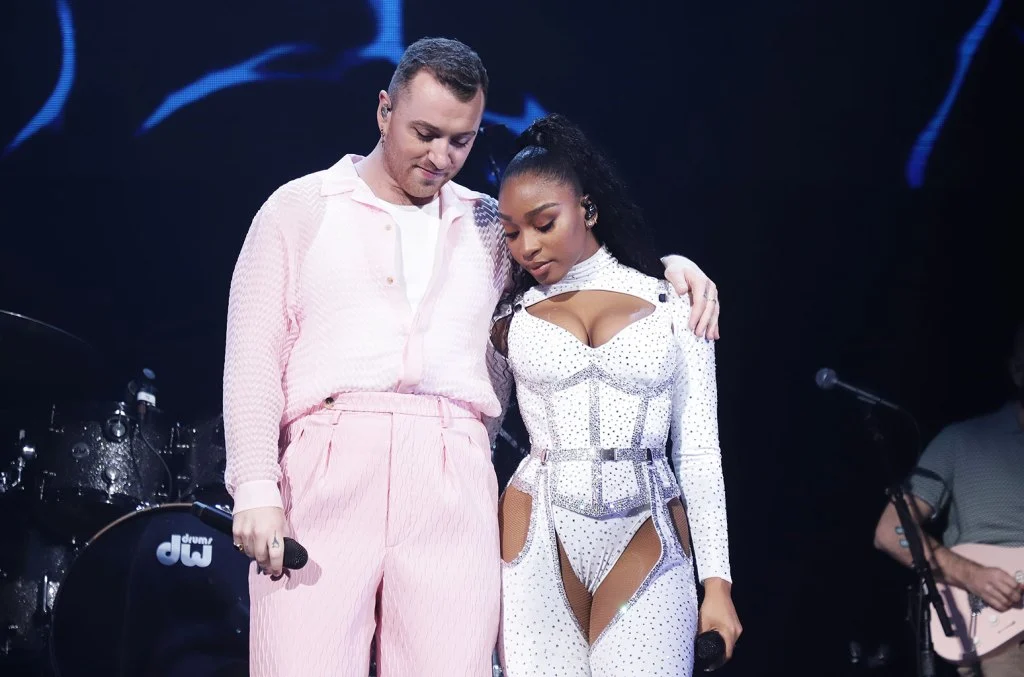
A federal appeals court has revived a lawsuit claiming Sam Smith and Normani stole key elements of their 2019 hit “Dancing With a Stranger” from an earlier track, ruling that the case was tossed out too soon and should have been decided by a jury trial.
The decision, by the U.S. Court of Appeals for the Ninth Circuit, reversed a 2023 ruling by a lower judge that had dismissed the case – a copyright lawsuit claiming Smith and Normani ripped off a little-known earlier song called “Dancing with Strangers.”
At the time, the trial judge said the two songs were simply not similar enough to constitute copyright infringement. But in a ruling Tuesday, the appeals court said a jury of their peers might have decided the case differently if they’d been given the chance.
Trending on Billboard
A “reasonable jury” could potentially decide that the hooks of the two tracks share the same combination of musical elements “in substantial amounts,” the appeals court wrote, including lyrics, “metric placement” and the same “melodic contour.”
Though the two songs also have key differences, the appeals court said a trial judge cannot simply pick a winner if there are conflicting reports from musical experts: “Under that approach, expert testimony would not be required at all.”
The ruling is a loss for Smith and Normani, but is also a worrying decision for any artist hit with a song-theft copyright lawsuit. If such cases must be litigated all the way to trial to be decided, they become dramatically more expensive for defendants, and give accusers more leverage to secure settlements from artists wary of protracted litigation.
Released in 2019, “Dancing with a Stranger” peaked at No. 7 on the Hot 100 chart, making it one of Smith’s biggest hits and Normani’s peak spot on the chart. The song, released on Smith’s third studio album Love Goes, ultimately spent 45 weeks on the chart.
In March 2022, the two artists were sued over the track by songwriters Jordan Vincent, Christopher Miranda and Rosco Banlaoi, who claimed that the 2019 hit song was “strikingly similar” to their own “Dancing” — and that it was “beyond any real doubt” that their song had been copied.
A year later, the case was dismissed by Judge Wesley L. Hsu, who ruled that the two songs were not “substantially similar” – the legal threshold for proving copyright infringement. He granted Smith and Normani summary judgment, meaning he ended the case without a trial because he believed a jury could not validly side with the plaintiffs.
But in Tuesday’s decision, the Ninth Circuit overturned that ruling, saying that so long as there is “sufficient disagreement” among the musicologists retained by each side, then case “must be submitted” to a jury.
The ruling will send the case back to Judge Hsu for more litigation, including a potential jury trial.