State Champ Radio

by DJ Frosty

Current track

Title

Artist

Current show

State Champ Radio Mix

12:00 am 12:00 pm

Current show

State Champ Radio Mix

12:00 am 12:00 pm


News

Page: 53

Trending on Billboard

This April, Maria Becerra underwent an emergency surgery for a second ectopic pregnancy that caused severe internal bleeding. For Becerra, it was “very difficult for me to do normal things,” like running, walking and even singing; however, it was this dark moment in her life that ultimately inspired her third studio album Quimera, out today (Nov. 20) under Warner Music Latina. 

Explore

See latest videos, charts and news

Home to 17 songs produced by Xross, including the previously released singles “Corazón Vacío,” “Ramen Para Dos” with Paulo Londra, and “JOJO,” Quimera represents the “rollercoaster of emotions” that the Argentine experienced during her hospitalization and recuperation. 

Inspired by the mythical creature, chimera, it also inspired four alter egos, each with a set of songs that best characterize them: Shanina, Gladys, Jojo, and Maite. 

“The concept started in April, but I had just gone through a very difficult health situation, a huge loss,” she tells Billboard in an exclusive interview. “I was in a very hopeless, sad, and empty emotional state…when you don’t understand that something inside you isn’t working. You don’t understand that something you long for suddenly doesn’t happen. It was a harsh dose of reality. I went through many phases. When I was at my peak of recovery, that was the Jojo moment — unconsciously, everything was connected to my recovery and my emotional states.”

Below, Becerra opens up about her ultra-personal and very vulnerable project:

Maria Becerra

@javifotoman

In QUIMERA you have songs dating back to 2023: How long ago did this creative process begin?

The creative process, conceptually speaking, began in April of this year, with the idea of ​​creating this new album. The truth is that songs like “Corazón Vacío,” “Romántica,” and “Slow it Down” are songs that have been around for a long time, songs that fascinate me, but I really didn’t want to force them onto an album where they didn’t fit. I’ve had “Slow it Down” for six years; it’s one of the first songs I ever wrote.

Why is the name of your album inspired by a creature from Greek mythology?

The Chimera is a monster made up of different animals: a goat, the wings of a dragon, the head of a lion—each animal represents a personality and a strength that contributes to this monster. There are precisely four animals, which are the alter egos that, in a way, act as Maria’s shield and together form this beautiful monster that is the Chimera. Each animal corresponds to a different alter ego.

Gladys is more grounded, more connected to reality; she is the goat. Shanina is the dragon, with Japanese culture, colors, and fantasy. Jojo is the lion, with that fiery personality. The Chimera has another beautiful meaning, which is what gave rise to this album—it’s a somewhat impossible dream to achieve, a distant dream that can’t be fulfilled. It had a lot of meaning for me, not only in music but also in my personal life.

How do you identify with these four alter egos?

All the alter egos are based on my personality. They’re like stages I’ve gone through that have marked me the most. I was Shanina at one point—very toxic, very jealous, very emotionally dependent. I was also Jojo with my excessive partying, my detachment from love, my antisocial nature. I was Gladys too, and Maite, very much so; I think she’s the one who has remained most present in my life—there’s an emotional and dramatic place that’s present in my songs.

In this album, you experiment a lot with tropical genres, including salsa and cumbia. Coming from the urban scene, was this a challenge?

Not at all! I’ve always made bachata from the beginning. Besides, these are genres I feel very connected to because I’m a huge fan of them—salsa, cumbia, bachata, I’ve always loved everything Latin. It was always played a lot at home, I’ve always had those influences, and honestly, I feel like that’s what helped me easily immerse myself in those genres and keep them so fresh in my ears.

You close the album with five songs like “Maria Becerra.” What makes these special?

Maria is the love story I have with my partner. “Slow it Down” is about those typical first encounters, where you feel a strong sexual connection with the person, very passionate, which is what happened in our first encounters with my partner, J Rei. We first connected through chat, through our thoughts and ideologies; that’s where we fell in love. “Slow it Down” represents everything I felt at that moment. “Pierdo la Cabeza” is about being on the verge of falling in love and not knowing how to explain what you’re feeling. In “Tatu,” I’m completely in love; it’s a real relationship. “Romántica” is about a relationship that has developed with a lot of love. And I close with “Mi Amor,” which is about something solid: trying to start a family, our engagement. It’s a song with him to share our experience.

There are 17 songs that convey different emotions: What was your mindset when you created this project?

My state of mind was a rollercoaster. The idea started in April, but I had just gone through a very complicated health situation, a huge loss. I was in a very hopeless, very sad, very empty emotional state. You don’t understand that something inside you isn’t working, you don’t understand that something you long for suddenly doesn’t happen. It was a reality check. I went through many states, the entire beginning of the album: April, May, June… in the months I spent recovering mentally and physically, it was all very sad, dark, very numb, and I don’t know at what point in my mind I associated all that pain with Shanina. She was the first alter ego where I channeled some of my pain with that madness, that cynicism, that darkness, like my thoughts.

As my condition and mood evolved, the other alter egos emerged — at the moment I felt empowered, I started to look good, to regain weight. It was very difficult for me to do normal things; running, walking, singing was incredibly hard after being intubated, regaining lung capacity. When I was at my peak recovery, that was the Jojo moment, unconsciously, everything was connected to my recovery and my emotional states.

Did you ever think about giving up music during your recovery?

It was the opposite. The first intrusive thought, more due to the physical aspect, was that I wouldn’t be able to tour. I was going to have to take a really long break—mental, vocal, and physical rest. It wasn’t throwing in the towel, but it was recognizing that I needed to take a break. And recognizing that I had to be away for months, but in terms of [quitting] music, I never even considered it.

On the contrary, although I did have my dark moments creatively, very sad and dark songs would come out, and I couldn’t get out of that place. That moment alarmed me, and well, being the anxious person I am — I was very vulnerable — I had a creative block, but I never thought about giving up music. The important thing is to let grief flow. I listened to myself a lot, I was very patient with myself, and I went with the flow.


Trending on Billboard Everything is ready for the 2025 edition of Billboard Italia Women in Music. After its debut in 2024, the event that honors the most influential women in the Italian music industry returns with a whole new format. The second edition will take place at UFO, Milan’s new cultural hub that houses Billboard […]

Trending on Billboard

Fugees rapper Pras Michel was sentenced Thursday (Nov. 20) to 14 years in prison following his conviction on illegal foreign lobbying and conspiracy charges.

The rapper, who rose to fame alongside his bandmates Lauryn Hill and Wyclef Jean, was found guilty in 2023 on federal accusations that he orchestrated a “foreign influence campaign” to get the U.S. to drop an investigation into fugitive Malaysian financier Jho Low.

Related

At a hearing Thursday in D.C. federal court, Judge Colleen Kollar-Kotelly sentenced Michel to 14 years in prison, followed by three years’ probation. He was already ordered last month to forfeit a whopping $64 million allegedly linked to the scheme.

In an exclusive statement to Billboard, Michel’s spokeswoman Erica Dumas said: “Pras has spent his career breaking barriers and defying expectations. While today marks a difficult moment, it is not the end of his story or his legacy. He is profoundly grateful for the continued support of those who believe in him as he prepares for what lies ahead.”

Prosecutors had sought a “severe” sentence for a man who they said had “betrayed his country for money.” In court filings, they said that an average sentence for others convicted of a similar-sized financial scheme had been more than two decades: “The Court’s sentence should reflect the seriousness of Michel’s offenses,” they said.

Michel’s attorneys, on the other hand, had called for a far lighter sentence of only 36 months. They said the government was seeking a type of sentence “typically reserved for terrorists who murder innocents and the heads of the largest Mexican drug cartels.”

Related

Michel will surrender to authorities on Jan. 27.

Composed of Hill, Jean and Michel, the Fugees rose to fame in the 1990s with hits like “Killing Me Softly,” “Ready or Not” and “Fu-Gee-La.” After splitting up in 1998, the three each had successful solo careers and mostly stayed separate until recent years, during which they’ve attempted multiple reunion tours.

In 2019, Michel was hit with sweeping federal criminal charges over accusations that he funneled money from Low, the mastermind of the billion-dollar 1MDB embezzlement scheme, to a lobbying campaign aimed at getting the first Trump administration to drop its investigation into the disgraced financier. He was also accused of secretly funneling Low’s money to Barack Obama’s 2012 presidential campaign, and of later trying to influence an extradition case on behalf of China.

In April 2023, following a trial that included testimony from actor Leonardo DiCaprio and former U.S. Attorney General Jeff Sessions, Michel was convicted on 10 counts, including conspiracy to defraud the U.S. government.

Michel later sought a re-trial on the grounds that his ex-lawyer, David Kenner, botched his defense by using an unproven artificial intelligence (AI) tool to craft closing arguments. That motion was later denied, though Kenner eventually pleaded guilty to a criminal contempt charge over allegations that he leaked grand jury materials to reporters ahead of the trial.

Michel’s attorneys will now launch his appeal of both the sentence and the underlying convictions; such appeals can take months or years, and typically face an uphill climb to reverse a conviction.

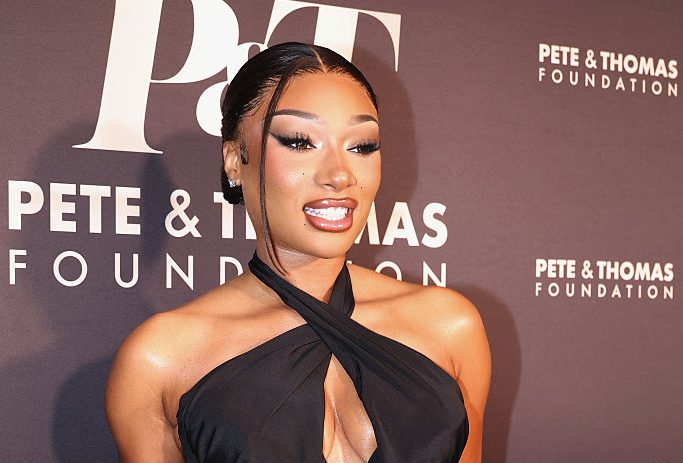
Johnny Nunez / Megan Thee Stallion

Recent testimony from Megan Thee Stallion’s defamation trial revealed the rapper needed therapy after blogger Milagro Gramz shared a deepfake porn video featuring the rapper.

During day 3 of Megan Thee Stallion’s defamation lawsuit against Milagro Gramz, born Milagro Cooper, Thee Stallion’s friend and manager, Travis Farris, took the stand and testified in support of the rapper. 
During his testimony, Farris revealed that Thee Stallion went to a treatment center that cost $240,000 monthly after the blogger shared a deepfake porn video of Thee Stallion. 
Everyone’s favorite legal reporter, Meghann Cuniff, was at the courthouse in Miami, Florida, and has been sharing updates on X (formerly Twitter). 
“We are finally on the lunch break after testimony from Megan’s friend and manager, Travis Farris, who talked about how social media vitriol hurts Megan. He testified he got her into a treatment center that cost $240,000 a month,” Cuniff tweeted. 
According to celebrity gossip site TMZ, Thee Stallion checked into the treatment center to deal with the emotional distress caused by Gramz sharing the video.
Megan Thee Stallion Lost Out on Brand Opportunities 
In another post, Cuniff shared testimony from Roc Nation Senior VP, Branding & Strategic Partnerships, Daniel Kinney, who revealed that Megan Thee Stallion lost out on multiple brand opportunities, including Call of Duty, due to the emotional distress she was dealing with. 

“Daniel Kinney of Roc Nation testified about brand opportunities for Megan that fell apart: Activision/Call of Duty, Google Pixel, Just Eats Takeaway and U.S. Women’s Soccer Federation. Megan ditched Call of Duty when she learned she would be a shootable character in the game,” Kinney said.

In the suit, Megan Thee Stallion is accusing Gramz of causing her emotional distress by cyberstalking after sharing the deepfake porn video and questioning if Tory Lanez shot the rapper.

Speaking of Lanez, he isn’t getting out of jail anytime soon after his appeal was denied. He was also ordered to pay a $20,000 fine for obstructing the deposition in the Milagro Gramz deposition case.

You can see reactions below.

All products and services featured are independently chosen by editors. However, Billboard may receive a commission on orders placed through its retail links, and the retailer may receive certain auditable data for accounting purposes.

Trending on Billboard

Owala is always at the scene of a viral moment. The brand’s bottles are a hot product, especially as we get into the holiday gifting season.

The brand is just one of many popular drinkware brands capitalizing off of viral marketing and TikTok fame from Stanley and Hydro Flask to Bink. Owala boasts a ton of fans on TikTok including a few famous musicians like Hilary Duff and even BLACKPINK’s Rose.

Owala’s most popular silhouettes are the FreeSip, an insulated bottle with a straw and a chug lid design that allows users to either sip through the straw or take a larger drink directly from the spout. While the design is a popular draw, the brand finds its most success through its offered colorways, of which there are a ton.

Explore

See latest videos, charts and news

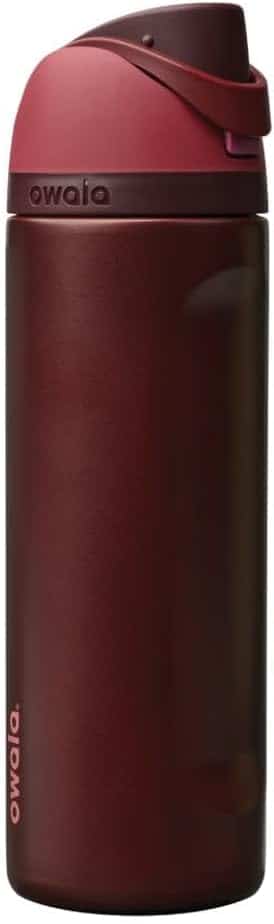
The most popular of the bunch as of late? Black Cherry colorway, a deep, rich red that resembles a juicy cherry just plucked from a bushel. The colorway, in their popular FreeSip Twist model, is available on Amazon and the best part? It’s currently on sale for just $23.99, so you won’t have to spend a pretty penny to snag the on-trend bottle.

Owala FreeSip Twist Insulated Stainless Steel Water Bottle with Straw

$23.99

$29.99

20% off

A cherry red Owala FreeSip Twist water bottle.

If you don’t think the hype for this colorway is real, just look at TikTok. The search for “Black Cherry Owala” on the app has thousands of videos being posted every day. One user commented, “Okay, this convinced me…I think black cherry needs to be my first Owala,” while another raved, “I’ve never been a Stanley or Owala girly, I just drink water bottles lol but I HAD to buy this one. LOVE the color.”

While the color is cute, Owala bottles are also raved about for their durability and insulation properties that keep 24oz of cold drinks cool and hot drinks hot for hours at a time. The FreeSip is also leak-proof, so it can withstand a tumble without spilling a single drop. Great to take on the go or use at home, this bottle is definitely one you’ll be seeing on Christmas lists this year. If you’re not a fan of the Twist model, the brand’s Amazon storefront also carries the regular FreeSip model in Black Cherry as well for $29.94.

Owala FreeSip Insulated Stainless Steel Water Bottle with Straw, BPA-Free Sports Water Bottle, Great for Travel, 24 Oz, Black Cherry

A FreeSip Owala in Black Cherry.

The FreeSip is in high-demand, especially as people go searching for it to gift to that special someone this holiday season. The price on the best-seller is usually $30 and sometimes even more if it’s an in-demand colorway. You’ll want to snag the bottle at this price while it lasts, because it’ll be gone if you wait too long. Just trust us.

‘Wicked’ FreeSip Insulated Stainless Steel Water Bottle with Straw 32oz

A Wicked-themed Owala FreeSip bottle.

If you really want to get into the Owala mania, the brand just launched a Wicked: For Good collaboration in pink and green, naturally. Both themed bottles are available for preorder now on Owala’s Amazon storefront and retail for $39.99.

From the national anthem to the halftime show, the Super Bowl – held this year in San Francisco 49ers’ home stadium in California – always features several musical performances. Bad Bunny will take the field as this year’s headliner at the half, but no performers have been announced for the national anthem (vote here for […]

Trending on Billboard CTS Eventim, Europe’s largest concert promoter and ticketing service, posted revenue and earnings gains in the third quarter despite what it called “challenging economic conditions” in its home market, Germany. Companywide adjusted earnings before interest, taxes, depreciation and amortization (EBITDA) rose 13.8% to 137.3 million euros ($161 million) on revenue of 854.2 […]

Trending on Billboard

From lawyer to Latin Grammy winner, Mexican singer and songwriter Paloma Morphy shares what it feels like to be the “new girl in class,” and how her law studies inspired her new single “La Mexicana.”

Paloma Morphy: I studied law and left my job as a criminal defense attorney to give music a chance, which had always been my childhood dream. This was a big step for me, and I felt like the new girl in class, stepping into a world I’d only watched from afar.

Seeing all these artists in real life, after years of seeing them on a screen, was shocking, surreal and exciting. It filled me with mixed emotions, happiness, nervousness, excitement and, of course, a bit of impostor syndrome. I often found myself asking, “What am I doing here?” But deep down, I knew it was a dream come true.

When I learned I was nominated for best new artist, I was initially scared, assuming it would be a competitive atmosphere where people might side-eye me. However, to my surprise, everyone was incredibly supportive. It was a shared, natural experience. We were all in the same boat — nervous, excited and trying to put our best face forward. Many of us were experiencing this for the first time, which created a sense of camaraderie. We didn’t know what to expect from the week, but we supported one another and enjoyed meeting each other. It was genuinely a cool experience, and, honestly, I liked them all.

Recently, I released a song with a message for Mexico titled “La Mexicana.” It came out a few days ago, though I had written it some time back.

Reflecting on my journey, I had studied law and worked as a criminal lawyer before deciding to pursue music. I gave myself two years to see where this dream would take me. While working in prosecutor’s offices, I witnessed firsthand the systemic failure of addressing gender violence, how many complaints never even reached the investigation stage. This experience compelled me to write “La Mexicana,” a song inspired by what I saw and felt during that time.

Keep watching for more!

Trending on Billboard

An appeal filed by Making the Band contestant Sara Rivers aimed at reviving her $60 million sexual assault lawsuit against Sean “Diddy” Combs has been abruptly dismissed — a move that came after her lawyers failed to file basic court forms.

Rivers sued Combs earlier this year over claims that he harassed and groped her during the filming of the 2000s MTV reality show, but a federal judge ruled this summer that she’d waited far too long to sue. After that ruling, she quickly filed an appeal aimed at overturning it.

Related

But last month, according to court records reviewed by Billboard, the appeals court dismissed Rivers’ case. The reason? Her attorneys failed to meet a required deadline to file basic procedural forms that are filed at the start of any appeal.

That failure means that the earlier ruling dismissing Rivers’ case is now final, and most of her case is now closed. A small element of the case has not yet been fully dismissed, but the majority of her case was dismissed permanently.

Ariel Mitchell, the attorney who represents Rivers and failed to make the required filings, did not immediately return a request for comment on Thursday (Nov. 20). Reps for Combs also did not return a request for comment.

Rivers, who became a member of hip-hop group Da Band, sued Combs in February, claiming he had cornered her in a recording studio and “ran his left hand across her breasts.” She also claimed that he later blackballed her in the music industry in retaliation for rebuffing his advances.

Related

The case was one of dozens of civil lawsuits filed against Combs over the past two years alongside his blockbuster federal criminal case. Following a two-month trial, Combs was acquitted last month on the most serious charges of racketeering (RICO) and sex-trafficking in that case, though he was found guilty on two lesser counts of interstate prostitution. Last month, he was sentenced to four years in prison.

In August, Judge Jed Rakoff ruled that Rivers had filed her case far too late. He said allegations centered in the 2000s were clearly filed years after the statutes of limitations had expired.

“It is important to remember the many positive purposes served by statutes of limitations,” the judge wrote. “They promote justice by preventing surprises through plaintiffs’ revival of claims that have been allowed to slumber until evidence has been lost, memories have faded, and witnesses have disappeared.”

Judge Rakoff said Rivers had invoked a “hodgepodge” of arguments for why the time limits should be lifted in her case, including that she was afraid of retaliation from Combs and his business empire. But the judge said that wasn’t enough.

Related

“While Rivers does allege that she experienced a general fear of retaliation preventing her from speaking out against Combs, general claims of psychological stress cannot give rise to duress tolling,” the judge said, referring to the technical term for such a delay.

Rivers quickly appealed, setting the stage for a lengthy battle before the U.S. Court of Appeals for the Second Circuit. But after making her initial case filings, Mitchell never filed another document in the case — even after being warned to do so.

In early October, the court warned her that failure to submit Form C and Form D (a basic case synopsis and disclosure regarding transcripts, respectively) would result in the case being dismissed in two weeks. Mitchell never filed those forms, and the case was duly dismissed on Oct. 17.

Mitchell is the same attorney that Combs is currently suing for defamation over allegations raised by Courtney Burgess, another one of her clients. In TV interviews, Burgess claimed to have videos showing Combs in sexual encounters with celebrities — a claim Mitchell later echoed. Combs says such videos don’t exist and that he was defamed by Mitchell and Burgess’ “outlandish claims.” That case is pending.

Trending on Billboard

In an impressive year for Caribbean music, Jamaican-born, New York-based rising star Cjthechemist is one of the few artists who can say they produced the riddim for their own hit song. 

“Me like good girls, weh love badness/ Me like independent bad b—h/ Drive-by any time, love e madness/ Me like f—k inna e party, me toxic,” goes the seductive intro of Cjthechemist’s Chronic Law-assisted runaway dancehall hit, “NY Girls.” 

Built on a trap-dancehall foundation and laced with finger-picked guitar and solemn brass, “NY Girls” is an ode to the Big Apple’s finest women. But Law’s sultry vocal and the pair’s hyperspecific, borough-name-checking lyrics are what encouraged the ladies of NYC’s Caribbean diaspora to embrace the track as their latest anthem. Originally released on May 9, “NY Girls” quickly became one of the hottest songs in its namesake city, prompting other dancehall stars to put their own spin on the riddim. 

Now that Armanii (“Link Up”), Valiant (“All Ova”), Kkrytical (“Bring It”), Yaksta (“Hooked on You”), Shaneil Muir (“Hurt”), Kraff Gad (“Maniac”) and Bayka (“Baddie”) have graced the “NY Girls” riddim, The Chemist has recruited Grammy-nominated rap superstar French Montana for the latest remix. After appearing on Masicka’s “Whites” remix earlier this year, French is a smart addition to “NY Girls.” His cadence pairs well with the foreboding nature of trap-dancehall production, and his Bronx roots only bolster the song’s claim to the title of new-age NYC anthem. On Friday (Nov. 21), The Chemist will unveil an NY Girls Riddim album, compiling 15 different spins on the hit riddim, including new tracks from Pablo YG, Dre Island and Dejor. 

“He’s the OG,” Cjthechemist tells Billboard a few days after shooting the music video for the remix. “I wanted somebody from New York. He reached out, and I accepted. It’s a big move.” 

After exploding onto the scene in 2021 with the smash “1Matik” riddim and his debut album, The Formula, Vol. 1, Cjthechemist has spent the past two years cementing his status as one of the most consistent producers in the dancehall game. At August’s Caribbean Music Awards, “Higher Life,” which he produced for Kranium and Chronic Law, earned three nominations, including dancehall song of the year. 

Below, the multi-hyphenate speaks with Billboard about producing the “NY Girls” riddim, the contemporary Caribbean music that excites him most right now, and the new songs he has on the way with Dexta Daps.

What’s the first song you remember getting stuck in your head as a kid? 

It was at DF Kelly Production. [1998’s] “Bashment Party” by Rayvon and Red Fox. That’s from primary school. I could visualize everything he was saying, so that song really stuck with me. 

What are some of your earliest musical memories? 

When I was around 14, I put out my first official track with an artist called “New York, New York.” I wasn’t even producing at the time, just making beats. I remember seeing my name on the CD, and it was mind-blowing — even though mi neva mek a dollar because I didn’t know the mechanics behind it. But that was the first time I was like, “Yo, I really want to do music.” 

Do you remember when you started DJing? 

I was a DJ before a composer. I was originally named DJ Frax, and I used to make mixes on an Atomix MP3 player. Once I found out how to record the mixes, I started selling them to my friends, which brought me to FruityLoops. And I just started making beats from there.  

Which producers inspired you? 

The first producer whose beats I really analyzed was Tony Kelly and his [1998] “Bookshelf” riddim. My father had the instrumental on the computer, and I would listen to it over and over — not to add to it, but to deconstruct it. And it was so simple. I knew immediately that it was the sound I wanted to go with. 

Where did you first get the idea for the “NY Girls” riddim? 

Well, just like KFC, mi nuh give out di full recipe. [Laughs.] I was talking to my friend RJ about what records work for him more; he said the uptempo stuff works better, but people still like to hear him talk slow. I thought I could meet him in the middle, so I found the right tempo for the beat, but didn’t know what to sing about. For him, “gyal songs” are not one of his biggest strengths, so I told him to sing about girls in his own way. 

It was like a raffle: Dexta Daps was on the riddim, then Kranium, then Chronic Law. A bunch of us were in the studio together, and I was [playing] different beats. The first time [“NY Girls”] played, Dexta was like, “What is that?” and Chronic Law was like, “It’s mine!” It was like a tango. I played a different beat, and Dexta took that one, so Law came back the next day and started writing “NY Girls” on his phone. That was the first time I’d ever seen him write lyrics on his phone. He asked me to help him with the second part of the song, and the rest is history. 

When did you realize the song was gaining traction? 

From the day I put it out. But I didn’t think it was going to go outside of the New York diaspora. Chronic Law had a priority record called “ATL” that was a similar vibe, but more about gangsters, so the art of this was incorporating the ladies into it. Soon enough, people from England and Italy and all over started using the song and tagging us, so I knew it was bigger than New York. 

Why do you think people are connecting to the song so much? 

The intro alone is crazy. Then, Law used the word “independent.” He gave the ladies something to hold onto and talk about. Even if you’re not from Brooklyn, you’re still a bad b—h, and you’re still independent. 

Why did Chronic Law deserve to get that first spot on this riddim? 

It’s just the closeness of me and him, and the chemistry that we create. It’s good when you have a friend and a music partner you can make a promise to. We’re just trying to give each other hits, so we meet at a common ground. I grew respect for him. He’s a fun, phenomenal artist. He’s very quick, and he challenges himself and me as a producer. 

Did you feel any pressure to follow the “1Matik” riddim? 

Yes. I had the “1Rifle” riddim, and I wouldn’t call it a flop, but it wasn’t as successful as the “1Matik” riddim. You’re only good as your next thing. I don’t really try to “follow” success because it’s a high; if you try to follow it, you’re a crackhead. So, I just do me, my way. I only do music with people around me. I reach out to people, don’t get me wrong, but I prefer to cater to those in my immediate space.  

Last year, you also produced Higher Life, which earned three nominations at the 2025 Caribbean Music Awards. How did that song come together? 

Me and Kranium go way back; I’m one of these personal engineers. He called me one Sunday morning, saying, “Come give me a hit song.” Those were his exact words. I said, “Aight, cool, mi dere!” I played him the “Higher Life” beat, and it wasn’t his first pick.  We started working on a song, and I was like, “I have something else mi wan yuh fi listen to.” 

I played it, and Kranium started humming, so I called my friend Ajji to slide through, and we finished the song. Then, Kranium asked me if I thought Chronic Law would cut a verse, and I was like, “Consider it done.” The song was really good without Law, but he completed it. 

When you think of dancehall right now, what three words come to mind and why? 

“It’s something new.” The music has changed, but I think we’re going back to the authentic-ness of the sound. We have room for improvement on a lot of things, but I think we’re going in the right direction. Now is the time when we’re separating the boys from the men, especially now that Vybz Kartel is back. It’s a level ball game. Nobody’s above nobody right now. 

You said that “nobody’s above anybody,” but, in your opinion, who’s running the place right now? 

I run di place. Dem try and keep up, but it’s hard! 

We haven’t gotten an album from you since 2021. When can we expect the next one? 

Soon. We’ll have a series of albums. I’m working on something called Chemist Presents to show Chemist as an artist, Chemist as a producer, etc. And we’re going to have a part two of the last album [2021’s The Formula, Vol. 1]. We’ll also put all of these tracks on a compilation and feed it back to the people. 

What else do you have planned for the rest of this year? 

I have a song with Dexta coming called “Rose,” and another one called “Champagne.” 

What sounds across the Caribbean are most exciting to you right now? 

I like Yung Bredda’s record, “The Greatest Bend Over.” Lady Lava is really fresh, too; she has that dancehall energy even if she sings soca. She will be accepted in any room. 

What do you want to see from dancehall next year? 

More and more records breaking through. I think we need that back in the space. I think we’re equipped now, and we have the knowledge now to go about it the right way.