State Champ Radio
 News
Page: 311
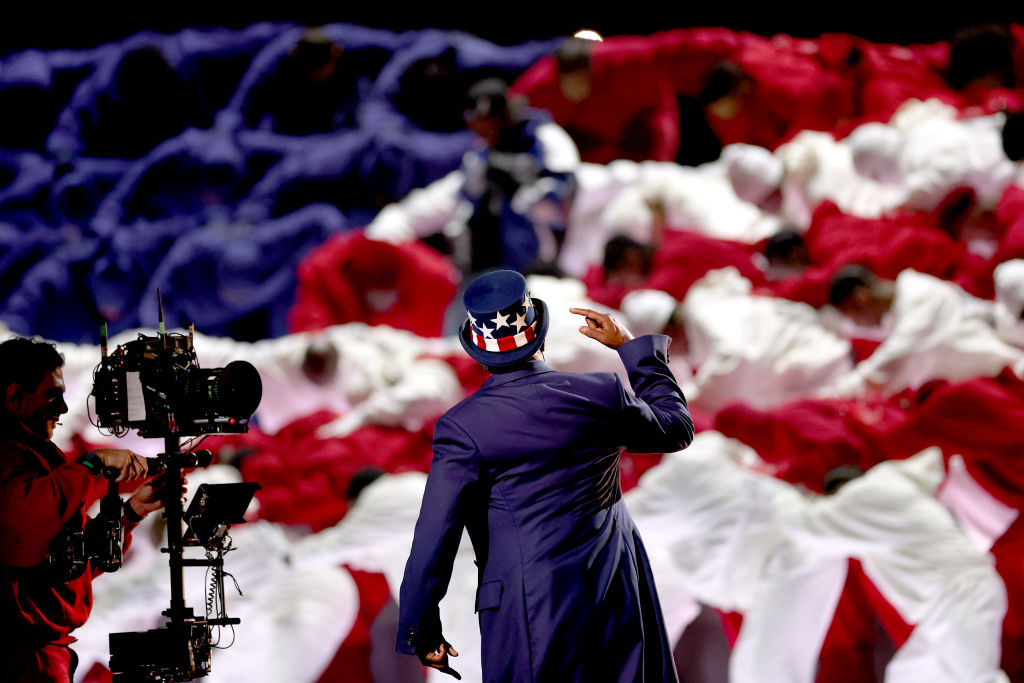
Source: Gregory Shamus / Getty
Samuel L. Jackson didn’t realize how deep Kendrick Lamar’s Super Bowl halftime show was until the final rehearsal, and it blew his mind.
In a recent podcast interview, Jackson talked about how he had no clue what the performance was really about at first. He showed up, said his lines, and wore his costume, not thinking much of it.
It wasn’t until dress rehearsal, when everything came together with lights, outfits, and full staging, that he looked around and realized, “Wait a minute… this is a statement.”Jackson played “Uncle Sam,” dressed in full red, white, and blue. The show used powerful images to talk about being Black in America and how Hip-Hop fits into that story. The legendary actor said he didn’t connect the dots until he saw the flag-like setup on stage and felt the energy during rehearsal.
Jackson admitted he wasn’t really paying attention at first. Once he saw the full picture, he realized the performance wasn’t just music, it was about making people think, “I’ve been in a lot of moments like this in my life, where I end up being part of something bigger than me, even if I didn’t plan it. I guess I’m meant to be that sometimes. An agent of change.”
What a time to make such a powerful statement, as Kendrick Lamar’s halftime show broke records. More people watched his performance than even watched the game, over 133 million viewers. That’s more than Michael Jackson’s famous halftime show. Kendrick brought out stars like Samuel L. Jackson and Serena Williams, and mixed music with a message that made history
HipHopWired Featured Video
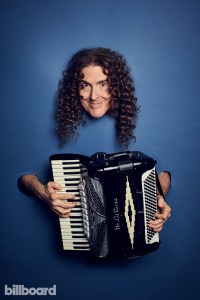
Am I the first person to feel strange calling you ‘weird’?”
John Mayer — bespectacled, grinning goofily, very much nerding out — is sitting across from “Weird Al” Yankovic, interviewing the Hawaiian shirt-clad parody music king, who is sitting across from him for his SiriusXM show, How’s Life With John Mayer.
“You can call me Al, like Paul Simon says,” Yankovic says with smile, before adding that the most normal thing about him is, probably, his pancreas.
It’s a funny quip, but also an understatement. Let’s just get this out of the way: “Weird Al” Yankovic is, beneath his accordion-playing, polka-loving surface, exceedingly normal. He likes long evening walks to get his steps in. He enjoys seeing movies and trying out new restaurants with his wife and daughter, who just graduated college. He grumbles good-naturedly about the ongoing renovation of his home in the Hollywood Hills. (“It’s going to look almost exactly the same as it did before, except it cost a fortune!”) The 65-year-old artist’s one attempt at rock star behavior, back in his early-’80s heyday, was comically un-vain: On a touring rider, he requested, in the spirit of Van Halen’s famed ban on brown M&M’S, “one really horrible Hawaiian shirt for every show I did.” (On that run, he did 200, and a collection that now extends to a storage unit somewhere in greater L.A. began.)
Trending on Billboard
Still, if not precisely weird, Yankovic is truly singular. His catalog can be divided into two types of songs: intricately crafted, meticulously arranged, hilarious yet never mean-spirited parodies of hits by acts ranging from Michael Jackson to Coolio to Nirvana to Lady Gaga, and original pastiches, for which he deep dives into artists’ catalogs to create songs that, with eerie accuracy, mimic the sounds and idiosyncrasies of those genre-spanning artists.
Between the two, he has accomplished feats usually reserved for the very artists he parodies. During each of the first four decades of his career, he has had entries on the Billboard Hot 100, and eight of his albums have reached the top 20 on the Billboard 200 — including his most recent studio release, 2014’s Mandatory Fun, which became his first No. 1 on the chart. He has won five Grammy Awards and an Emmy. Billboard estimates he has sold 12 million albums in the United States (based on RIAA certifications pre-1991 and Luminate data from 1991 on).
Incredibly, he’s done all this without ever changing his essential “Weird Al”-ness. “From day one, there was never even a discussion that would not be about following his singular vision,” says Jay Levey, Yankovic’s manager of 43 years and sometime creative collaborator (notably, they co-wrote the now nerd canon comedy UHF, which Levey also directed). “It’s hard to find any career where there’s literally no compromise, but we might be able to count on one hand the number of compromises he’s made in his career.”
Joe Pugliese
Sometimes, that’s meant turning down lucrative deals, like the $5 million beer endorsement that Yankovic passed on in 1990 because, he feared, the brand was “trying to make me into Joe Camel.” Many times, it’s meant standing up to record-label executives, like when, amid his “draconian” first album contract with Scotti Brothers (an indie then distributed by CBS), he was asked to shoot 10 music videos on a $30,000 budget simply because he’d proved he could do one for $3,000. (“I’m like, ‘No. No, I can’t!’ ”)
But just as often, it’s meant embracing an open-to-anything spirit that seems to almost always work out in his favor. Yankovic decided very early in his career to ask permission of any artist he parodied — not because the law required it (it doesn’t) but because he simply had no interest in making enemies. With very few exceptions, it turned out, the artists said yes, even supposedly impossible-to-convince ones like “American Pie” scribe Don McLean, who OK’d “The Saga Begins,” Yankovic’s 1999 parody that essentially summarizes the plot of Star Wars: Episode I — The Phantom Menace. “When I heard his version, I thought it was better than the original. The sound quality was superb,” says McLean, who calls Yankovic a “straight-ahead good boy” who “could be on Leave It to Beaver.”
Thanks to that combination of earnest good intentions, work ethic, backbone and obsession with quality, Yankovic finds himself in an unusual position today: He’s no novelty relic of the ’80s, but a truly cross-generational artist. In the past six years alone, he’s portrayed Rivers Cuomo in Weezer’s “Africa” music video, played accordion (and appeared in the video) for teen rock band The Linda Lindas’ 2024 single “Yo Me Estreso” and lip-synced dramatically in a tux in Clairo’s “Terrapin” video. “Growing up with his videos was a massive thing in my generation,” says Clairo, 26. “Back when YouTube was really simple, it really hit home for us in middle school to watch his parodies. He always knew how to draw people in.”
He and his team will prove just how true that still is when Yankovic heads out on the Bigger and Weirder Tour this summer. It’s his fastest-selling, biggest-grossing tour yet, according to his agent, Wasserman Music’s Brad Goodman, and his biggest by other metrics, too: an eight-piece band (his largest yet) onstage; first-time venues bigger than any he’s played before, including New York’s Madison Square Garden and L.A.’s Kia Forum; a mini-Las Vegas residency (the tour will open June 13 with six sold-out nights at The Venetian); and stops both expected (Red Rocks Amphitheatre) and less so (Riot Fest) on the route. And the concert itself is a trademark Weird Al spectacle: part rock show, part revival tent, part Broadway musical, all “joy bomb,” as actor and longtime fan Andy Samberg puts it.
Whether it becomes a springboard for the next Weird Al era is anyone’s guess — including Yankovic himself. Right now, he has no further plans to release albums; and since Mandatory Fun arrived over a decade ago, he’s only sporadically released new music, most recently the 2024 “Polkamania!” single (the latest in his long-running series of madcap polka medleys, this one recapping the past decade’s pop highlights, all sung in Yankovic’s manic tenor). Around that time, his contract of roughly 20 years with Sony ended, and he decided not to renew with the label, or sign with anyone else.
“Nobody owns any piece of me,” he says, exhaling. “I’m at a point in my life where if something isn’t going to be fun or a pleasant experience, I have no problem saying no, even if it’s a lot of money or a lot of eyeballs. I can do literally whatever I feel like doing.”
Then again, for Yankovic, that’s always been true.
“When I was a kid, I used to fantasize about being the next Weird Al, like it’s a position he applied for and got,” says Lin-Manuel Miranda, a lifelong fan who’s now also friends with Yankovic. “And then you grow up and realize, ‘Oh, there’s only one of that guy.’ We’re not going to see another Weird Al.”
On an overcast April afternoon a few days after the Mayer taping, Yankovic meets me for lunch at Crossroads, a vegan spot in West Hollywood where, years ago, he ate his first Impossible Burger. He’s quick to jokingly note that he is not a member of the city’s “vegan elite” — still, as he walks in, a man walking a golden retriever stops his phone conversation to stare and declare, “It’s that Al Yanko-vich guy!”
Despite his talent for writing songs about junk food (“My Bologna,” “The White Stuff”) and the fact that he once consumed the world’s most ungodly snack, a Twinkie Dog, in UHF (watch and barf a little), he’s been vegan since the early ’90s.
Chalk it up to veganism, staying out of the sun (“I melt in direct sunlight”) or following the directions of his longtime hair stylist, Sean James, very well (he never blow-dries those famous ringlets, hence their eternally bouncy and well-defined nature), but Yankovic has an ageless quality that lends many of his fans to liken him to mythological figures. “He’s Santa Claus for nerds of a certain stripe,” Miranda says, a comparison Mayer had also made (as well as to Forrest Gump). His curls may be a little grayer, but his ultra-expressive face — acrobatic eyebrows in particular — reflects his eternal curiosity and up-for-anything-ness.
As we settle in for almond ricotta-stuffed zucchini blossoms and meatless bolognese, Yankovic is particularly animated recounting his previous weekend, when he made his latest surprise appearance: his Coachella debut. To close out its surreal set, the crew from the cult-favorite kids show Yo Gabba Gabba! brought out a cast of characters both human (Thundercat, Portugal. The Man’s John Gourley) and not so much (cartoon mascots like Sleestak, PuffnStuf and Duo the Duolingo owl) to sing “The Rainbow Connection” with its composer, Paul Williams — and, on lead vocals, Yankovic.
“I’ve had a pretty bizarre life, so it wasn’t like, so unusual,” Yankovic reflects. “But it was definitely a little bit of an out-of-body experience.” He admits that the “hey kids, let’s put on a show” energy was fun and that the invite wasn’t a total shock (having appeared on a season-three episode as an accordion-playing circus ringmaster, he’s tight with the Gabba group). Still, he speaks of such invites with a kind of humble awe.
“Nothing I’ve ever done was me thinking, ‘Boy, I hope kids discover this 40 years from now,’ ” he says. Starting in the ’80s, he released an album almost every year “because I was afraid I would be quickly forgotten. It was drilled into me: ‘You’re a comedy artist, you’re a novelty artist, you’re lucky if you’re a one hit-wonder — you’re not destined to have a long career.’ I wanted to grab that brass ring every time I went around.”
Joe Pugliese
Coming up concurrently with the birth of MTV, and savvily taking advantage of it, helped Yankovic snatch that ring. He had a keen ear for (and good taste in) hits at a time when, thanks to both MTV and top 40 radio’s prevalence, a monoculture reigned — and perhaps even more importantly, he knew the power of a viral video before such a thing existed.
Tweaking hits like Jackson’s “Beat It” (“Eat It”) and Madonna’s “Like a Virgin” (“Like a Surgeon”), Yankovic created new songs that, thanks to his painstaking re-creations of their arrangements, were immediately recognizable but rewarded repeated consumption — as did their accompanying videos, in which Yankovic demonstrated his incredible eye for detail and formidable acting chops. “MTV was on like video wallpaper in the background 24 hours a day,” he says of that time. “They were hungry for content, and I was anxious to give them content.”
Since then, Yankovic’s understanding of the promotional power of visuals has remained prescient — take when, leading up to Mandatory Fun’s arrival, he insisted on releasing a music video on YouTube each day (not all at once, as some advised) to whet fans’ appetites for the album. And his genre-agnostic approach to making music has proved ahead of its time, too. Before hip-hop was widely accepted as pop, he was especially drawn to rap. “A lot of pop songs are very repetitive,” he says. “How can I be funny in seven syllables, you know? But rap songs, I mean, it’s nothing but words, and it’s easy to craft jokes that way.”
Parodies like “Amish Paradise” (Coolio’s “Gangsta’s Paradise”) and “White and Nerdy” (Chamillionaire’s “Ridin’ Dirty”) are among his most streamed — though he’s been equally adept at literally any microgenre he takes on, from just-electrified Bob Dylan (“Bob,” entirely comprising palindromes) to arty new wave (the Devo pastiche “Dare To Be Stupid”) to crunchy Detroit garage rock (“CNR,” a tribute to Charles Nelson Reilly through the lens of The White Stripes).
“The more you listen to him, the more you get access to making [any genre of parody] sound legitimate,” says Samberg, who calls Yankovic the biggest influence on his own comedic music group, The Lonely Island. “The nature of what he does is incredibly populist. He’s not snooty about it; he’s like, ‘This is what the kids like, and as long as I have a good angle comedically, I’m going to do it.’ And because of that, it’s always appealing to young people.”
Growing up in Compton-adjacent Lynwood, Calif., Yankovic listened to rock radio, but as a teenager found playing the accordion a bit solitary. (His friends’ rock bands weren’t really interested in an accordionist joining up.) “When you take accordion lessons, I think the high-water mark is ‘Maybe someday I’ll play in an Italian restaurant or at a wedding,’ ” he says with a laugh. “I guess I was shameless. I grew up a complete nerd in high school. And when you’re not somebody that’s socially acceptable, you kind of have nothing to lose. I kind of held on to that mentality: Like, you know, ‘Who cares?’ ”
“Weird Al” Yankovic photographed April 17, 2025 at Dust Studios in Los Angeles.
Joe Pugliese
He didn’t look to any particular musician’s career trajectory as one he could follow. “It was more cautionary tales” — and one was especially haunting. One of his idols was Allan Sherman, the satirical singer best known for his 1963 summer camp send-up, “Hello Muddah Hello Fadduh!” “He was the last person to have a No. 1 comedy album before me,” Yankovic continues. “He had three No. 1 albums on, like, the pop charts — incredible! But within a few years, he completely burned out. He made some terrible choices in his personal and professional life and just went off into obscurity and sadly died a few years later. So I was always more concerned about, ‘Don’t mess it up. Keep doing what you’re doing and just try not to make bad choices.’ ”
“In a way, we’re almost always looking over our shoulders at that,” his manager Levey says. He cautiously admits that he and Yankovic have finally reached a level in his career where they’re “no longer at the point where every year [of continued success] is a surprise,” then adds, “I don’t actually even like saying that out loud because it sounds like you’re taking something for granted.”
But if Sherman was a rocket that blasted off only to burst into flames, Yankovic has been the opposite: one that, as Levey puts it, has kept steadily traveling through space — maybe sometimes at a slower speed than others, but never plummeting back down to Earth, buffeted by the most unexpected boosters. Like, say, Weird: The Al Yankovic Story, the 2022 parody of a music biopic that Yankovic co-wrote, starring Daniel Radcliffe in the titular role. Despite at first airing only on the Roku Channel, it won almost universal acclaim and a prime-time Emmy, while expanding Yankovic’s universe yet again.
“His longevity is a testament to his ability to be himself and stick to what his taste is, because it’s so specific,” Radcliffe says. (“Bob” is his favorite Yankovic track, and he took the opportunity on set to ask his hero how he came up with all the palindromes.) “He threads a really hard-to-thread needle between wholesome fun and something … genuinely deranged and very, very strange. And in a way that is not affected.” At a time when the culture values authenticity above all else, Yankovic is a walking example of it — never not himself.
Unwittingly proving the point, Yankovic gasps in glee as our lunch ends. “Mochi doughnuts!” He shows me a photo his wife has just texted him: a box of the treats for dessert later. Somewhat sheepishly, he explains the occasion: “Eric Idle is coming over for dinner tonight. That’s my big flex for today.”
Later that afternoon, Yankovic meets me in a park near Coldwater Canyon called Tree People. He looks a little like a more aged version of his faux-Indiana Jones in UHF: Hawaiian shirt (a Goodwill buy), sensible shoes, safari hat shielding the waning sun.
“I’m gearing up for a big tour, so I’m mostly just making sure I don’t have a heart attack onstage or pass out or something,” he says of the walks he takes in spots like this. “I think I’ve lost 20 pounds in the past couple months just because I’m not, like, eating junk food at midnight anymore.”
Yankovic’s last tour outing didn’t require much of a physical regimen. In 2022 and 2023, he took to smaller venues for The Unfortunate Return of the Ridiculously Self-Indulgent, Ill-Advised Vanity Tour, a follow-up to the first Vanity Tour in 2018. The idea, he recalls, occurred to him when “I was putting on my ‘Fat’ suit for the thousandth time and I thought, ‘Wouldn’t it just be nice to like, go out onstage and play the songs, sit on a stool and have an intimate evening with fans?’ ”
Joe Pugliese
So Yankovic eschewed the usual production level of his tours — costumes, wigs, the parody hits — for a concept, his agent Goodman says, that the musician himself wasn’t entirely convinced would work. Instead, it allowed him to visit new, smaller major-market venues (Carnegie Hall, Tennessee’s The Caverns) and strengthen his presence in off-the-beaten-path markets (like, say, Huntsville, Ala.) while superserving his ride-or-die fans. When the concept returned in 2022, he played 162 Vanity shows globally (extending into the next year).
“I loved it, the band loved it, the people who showed up loved it, and it definitely scratched that itch,” Yankovic says. “And now,” with the Bigger and Weirder Tour, he’s back to “doing a show for everybody.”
For Bigger and Weirder, Yankovic is in self-described “overpreparer” mode, the hyper-organized creative core of his team. “I came up with the setlist a year ago. I gave the band” — three of whom, as of our meeting, he has yet to meet — “their marching orders and said, ‘Here’s the setlist, here’s your charts, here’s the demos, here are the rehearsal days.’ ” He personally chooses and edits all the show’s video content — clips of Weird Al in Pop Culture (say, on The Simpsons or 30 Rock) over the years that will play between songs and give him and the band time for the most frantic element of the show, which the audience never sees.
“We have stage props, wigs, a lot of costume changes, and a big portion of what we need is a quick-change area behind the scenes onstage, usually 40 by 20 feet,” says Melissa King, his tour manager of nearly 20 years. On Bigger and Weirder, Yankovic will do 20 costume changes, give or take a jacket or hat; his band members will do nine; and all will occur in 45 seconds maximum.
That backstage planning ensures that in front of the audience, the man who has spent his career parodying rock and pop stars is free to embody one himself. “When I speak to [talent] buyers and say, ‘Have you seen the show?,’ if there’s a pause, for sure I know the answer is no,” Goodman says. “Because if you’ve seen the show, it’s just an immediate ‘Yeah, of course, it’s incredible.’ ”
Onstage, Yankovic isn’t just physically “working his ass off,” as Samberg says. “As a vocalist, he’s f–king incredible,” Radcliffe marvels. “He has this amazing, clear tone. His range is so impressive — he does things to his voice that, as somebody who sings a bit in musicals sometimes, if I tried that I’d hurt myself.”
Joe Pugliese
Despite the “bigger” aspects of this tour — like how it will use three trucks instead of the usual one — King is still one of just 11 people comprising the crew. “It’s very lean, but it works because we all work together,” she says. “Al’s a genuine, kind person, and because he is, that’s the way everyone in our camp is.” That ethos extends to both the fans who’ll attend (“There aren’t many arseholes who are Weird Al fans,” Radcliffe observes) and how Yankovic treats them: According to Goodman, he’s kept maximum ticket prices for Bigger and Weirder to $179.50 and has always refused to engage with platinum ticketing.
Right now, the tour is Yankovic’s focus. When he decided against renewing his Sony contract, Levey says, they tested the waters with “very limited outreach” to a mix of indie and major labels. “And we got great offers and I brought those offers to him, and he thought about it and said, ‘I’m really loving this feeling of not being under contract to anybody … Please tell these people how appreciative I am of their generous offers and we’re just not going to accept any of them.’ ”
He’s now independent in the truest sense: He has an imprint, Way Moby, that’s technically now his label, but he describes it more as existing for theoretical recording purposes. He figures he’ll put out a single here and there, contribute to soundtracks if he’s asked and, as always, remain open to what may come — like making a surprise appearance last November to duet with Will Forte on Chappell Roan’s “Hot To Go!” at a charity event or developing a Broadway Weird Al jukebox musical that he says is in the very earliest creative stages, a “bucket list” project.
“When [he had] the No. 1 album in the country, that was such a triumphant moment. I remember us celebrating,” Samberg recalls. “It just shows you — I don’t think anyone else will really touch that space. It’s his space. No one is going to say, ‘I’m going to do what Al does,’ ’cause good luck. He owns that until he doesn’t want to do it anymore.”
The world, Yankovic knows, is also not the same as when he first became famous. “I got a record deal, I got on MTV, and I kind of had the market to myself,” he reflects. “Now the playing field has been so leveled that anybody can upload their material to YouTube or various portals like that. And if the stuff is good, chances are people will eventually see it. I’d like to think that if I was coming up now, I’d still do OK, but it would just be more of a challenge.”
It’s a generous sentiment, a reminder that, as Miranda puts it, one of Yankovic’s many talents is also “reading the room.” But in its humility, it’s also a reminder that, flooded as the market may now be with funny people on the internet, none of them, still, are doing it like Weird Al: the 65-year-old who once thought he’d play accordion at weddings and Italian restaurants, who’s about to make his Madison Square Garden debut.
This story appears in the June 7, 2025, of Billboard.
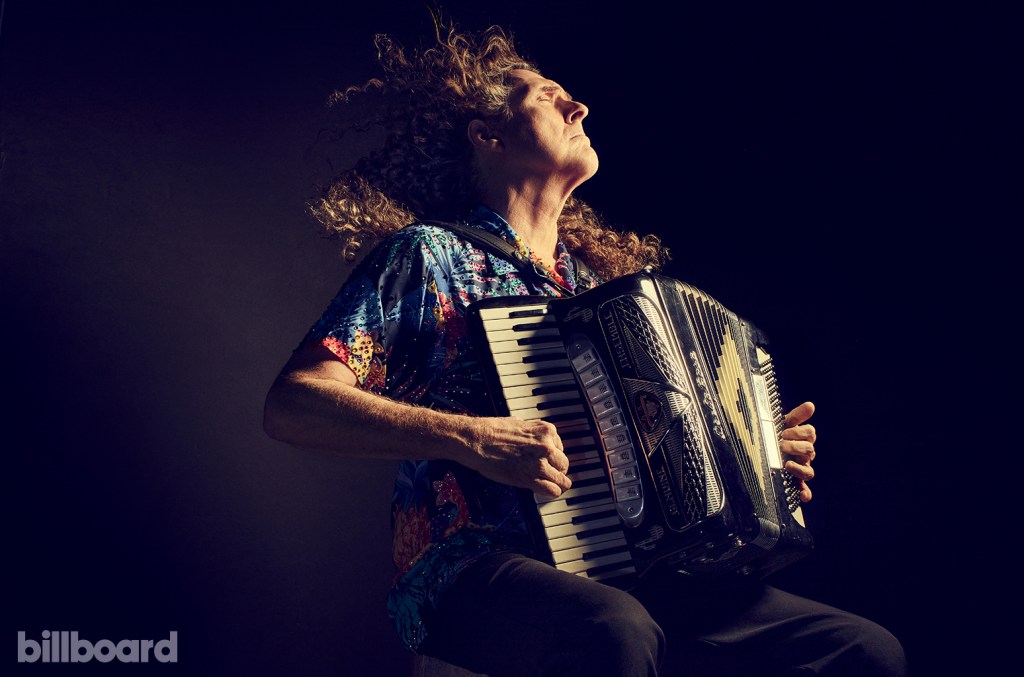
“Am I the first person to feel strange calling you ‘weird’?” John Mayer — bespectacled, grinning goofily, very much nerding out — is sitting across from “Weird Al” Yankovic, interviewing the Hawaiian shirt-clad parody music king, who is sitting across from him for his SiriusXM show, How’s Life With John Mayer. “You can call me […]

Billboard cover star “Weird Al” Yankovic takes us through a day in his life and shares how his versatility has allowed him to perform on iconic stages like Coachella and beyond. The legendary parody artist opens up about his chart-topping hits on the Billboard Hot 100, teases an exciting Broadway musical in development, discusses how he prepares for tours, his collaboration with Dave Way on his polkas, the creative process behind his parody of Robin Thicke’s “Blurred Lines,” why he’s stepped back from creating parodies and more.
“Weird Al” Yankovic:
Hey, Billboard, how are you doing? I’m “Weird Al” Yankovic, and you’ll be spending the entire day with me, but first, let’s have lunch at Crossroads Kitchen.
Rebecca Milzoff:
We’re at Crossroads in LA. This is a place you’ve been coming to for a long time, right?
Yeah. I mean, this is my favorite upscale vegetarian restaurant in Los Angeles. And I just remember when Impossible burgers weren’t a thing. There were only three restaurants in all of America that had Impossible burgers, and this was one of them. And I was very, very excited to have an Impossible burger here. And literally, within six months, they’re selling them at White Castle.
Well, it’s funny to be sitting at a vegan restaurant with the king of singing about junk food. It’s interesting that food has been such a continuous theme in your canon, as it were. Is that something that, along the way of songwriting, you realized it was just fruitful material and it always proved to be funny? Or why did you keep coming back to it as a theme?
It’s just something that doesn’t get covered in pop music that much. I mean, most songs are about love and relationships and things like that. And nobody writes that many songs about tacos. So I just figured somebody had to, like, you know, fill that vacuum. And I just thought of it in a business way, that if I wrote a lot of songs about food, then I could write off my grocery bill on my taxes because it’s all, you know, it’s all inspiration.
Keep watching for more!
With Primetime Emmy nomination voting beginning on June 12 (and running through June 23) and for your consideration ad campaigns are ramping up, the comedy business buzz is that Iliza Schlesinger’s Amazon Prime Video stand-up special, A Different Animal, has a good shot at getting a nod for the Outstanding Variety Special (Pre-Recorded) category.
Explore
Explore
See latest videos, charts and news
See latest videos, charts and news
A Different Animal showcases the veteran Los Angeles comic, who has been headlining shows for almost 20 years, at the top of her game. Among her comedy calling cards: millennials vs. Gen Z (she is the former) and in her words, “digestible feminism” — humor that validates and celebrates women, warts and all, while making men laugh as well, even when it’s at their expense. It’s a tightrope walk of an act — Schlesinger, 42, and the mother of two children, says her aim is to never pander but also to not alienate her audiences — and in A Different Animal she makes it look effortless, while wearing a pair of revealing pants that caused a viral sensation when the special debuted in March.
Trending on Billboard
Before heading to one of her frequent stand-up shows, Schlesinger spoke to Billboard about her comedic process, a new film she has written, and yes, those pants.
Hi, Iliza.
You’re catching me right before I get in the car to drive to Huntington Beach to do a random Friday night gig on the beach.
I was looking at your tour and after Huntington Beach you’re going to Estonia, Poland, Croatia, Slovenia, Bulgaria, Romania and Greece.
All the big comedy hits.
Why those cities?
I’m very lucky to have fans all over the world, so I always get to do Europe. I was in Finland, which is an incredible comedy market, and these girls came to my meet-and-greet. My fans make me a lot of artwork and stuff, and they made me this really cool card. These girls kind of looked like me, and they were like, you should come to Estonia. I’ve never thought about A, Estonia, and B, that there would be cool girls there like that. So, we’ve been working on routing this tour for a few years, and it was inspired by meeting these really cool girls. I hope they’re still my fans because I’m coming.
Do you have to adjust your set when you’re performing overseas?
You should always be mindful of where you are, and what your audience is. Outside of America certain references will land because of our pop culture, but I think it’s always good to cater to and never pander. And after six Netflix specials and this Amazon Prime Video special, when you’re coming to see me it’s not a flier. You know what you’re getting. A couple local jokes is great, but the point of view stays the same.
Speaking of your Amazon special, A Different Animal, it’s being talked about as a contender for this year’s Emmy nominations. Do you think it’s because of the pants?
If it were just the pants, a lot of models would be up for comedy for best outstanding variety special. I think it is despite the pants. Only women get their outfits weaponized against them. I talk the talk, and I walk the walk — and that is you should be able to wear what you want to wear. As distracted as people claim the pants are, I do believe the comedy and the substance speaks for itself. And they made me feel good. I thought they’d be really fun. I did not think they would be as divisive as they were. I thought people would just think like oh, cool pants. She works out. But not only am I proud that I wore them, I would wear them again. Just in a different color.
They could end up being your lucky pants.
They could be my lucky pants. I’m going to have to get them dry cleaned though for sure. For what it’s worth, this is the closest I’ve ever come to anything in the realm of an award, and I’m really enjoying this FYC [for your consideration] season. It’s been incredibly validating as an artist to have Amazon support me.
I was blown away when I learned that you don’t write out your jokes, except for a few key words. Have you always had that ability?
I guess so, and moreover, I never questioned it or even thought about it. It’s only in the last few years that I’ve even been asked about it. I just figured everybody had a little list of little words. I know people like Joan Rivers had a whole card catalog, but what I do is ephemeral. I’m only using that material for about a year, and anything that I don’t use gets jotted down as a word or a sentence or two. I don’t have a library, and maybe that’s stupid. Maybe I forget punchlines that I could have used. I have a famous bit amongst my friends and it’s about Las Vegas. I did it on the road for a year, and I never wrote it down. To this day my husband is like, “Why don’t you do your Vegas bit?” I’m like, I can’t remember it. So, I have to rely on random friends and my husband to remind me, what was that I said about curling irons by the pool? Also, I write so much material, and I believe the good things stick when I’m creating that hour. To me that’s the litmus test. It’s also a great way to fight off Alzheimer’s.
In A Different Animal, you talk about how after childbirth part of a woman’s brain shrinks to make room for the growth of the part of the brain that gives her parental instincts. Has that affected your ability to remember your set, or is that just me asking a stupid question.
Motherhood comes for all of your brain. I think that because the stand-up part of my brain is the part that I work out the most, my joke recall is fairly intact. Also, it’s normal to do a joke 2,000 times and then on the 2,001st time you’re like, what was that punchline? But, for me, that’s where the craft and practice come in. I go up a lot, and I love doing it, and I’m always running and rerunning and fine-tuning. Because when I do my special, or when I go on the road and people spend a lot of money to see me, I want to give them a polished product — not me sifting through a notebook or being drunk onstage. This is art, and the people who come to my shows deserve a polished piece of art.
That extends to your production values. They are polished and sophisticated.
I appreciate that. Call me old school. I like a shiny floor. I like a high production value. Lo-fi production, for sure, has its place, and we live in a world where people are getting famous off of a TikTok clip from the Giggle Hut. But there’s something special about getting to create a special. It’s a moment to be as big as you wish in a business that is so difficult and does not always reward you. I like the show business of it all. I want people to feel like they’re watching something of quality, and I believe that what I create is of quality.
You have used the phrase “digestible feminism” to describe part of your act. For the uninitiated, could you elaborate on that concept?
Feminism has become such a divisive word, and it wasn’t even a word I used until I realized women are totally misunderstood. Digestible feminism is about getting your point across without aiming to exclude anyone. You can stand up for women without bashing men, because feminism, by definition, is about uplifting everyone. And so I try to be skillful at getting the point across about the way women are represented, and the way women feel — our point of view — while including the men in the audience. The men who love us, who date us, who reject us, who brought us there, who we’re friends with, who we’re related to. Because if you don’t get the other half on your side, whatever the debate, is you’re going to lose. Nobody wants to spend money to see a performance and leave feeling bad. I’m a big believer in being fair — taking shots at everyone and always, even if I hurt your feelings, bringing you back in.
You did a video interview with the Los Angeles Times in which you talked about the pitfalls of women comics talking about their kids. You observed that men can do it, but with women, the response tends to be, “Eww, she’s unf—kable now.” How big of a factor is the perception of being, quote, unquote, fuckable in comedy?
I don’t care about that perception in stand-up comedy, but it is something that gets put on women anyway. I show up with my jokes ready to do the work, and then the comment is always about being at an attractive level or being hot. That’s not to say that women don’t want to be attractive, but you’re factoring in these variables that you have to reckon with whether you wanted to or not. And that applies to the way that we dress. Is it tight? Are you attractive? Are they distracted? These are just micro hurdles that are not insurmountable, but it takes a lot of practice to be like, well, I’m wearing this and I’m talking about this, get on board. And people always do. In terms of the motherhood of it all, I think the overarching seam is people and appearances. Now that I am a mother, people are unkind to mothers. There’s a big battle, and you’re always having to prove, as a woman, why you are good or worthy of attention or love, or anything like that. As a comic, I’ve always talked about what it is I’m going through. And you can believe that even if you are not going through what I’m going through, I am an expert at making it relatable. That’s what we do. We talk about our lives that are not always like yours, and we make it funny, and we make you see yourself in us.
A chunk of A Different Animal is about exactly that.
I never want a guy to feel bad. I mean, a huge part of my audience is men, but I always want to remind women hey, you’re not crazy. You’re not wrong. We can laugh at this together. And whether you decide to have kids or you don’t, or you can’t, you’re going to always have to account for those circumstances — a lot of times in a way that men don’t have to. So, I have to wrap my mind fully around what I’m going through because for me it’s seldom the actual thing I’m going through and more the commentary on it. I’m never going to get up there and tell a story about something my 3-year-old daughter said. That’s just not me. But I will get up there and make fun of something that someone made fun of once when they heard a kid tell a story.
You became a headliner at 25, and you have said that you were thrown into the deep end without any swimming lessons. Do you have any pro tips for up-and-coming women comics?
I have pro tips for comics, male and female This is an art, and there’s an alchemy to it. And that means there don’t have to be any rules. You don’t need to ask for permission. A lot of times, comics ask, “Do you have any tips?” And I’m like, in the time that you’re using to ask me about this, you could be setting up a show. You could be writing. We don’t ask for permission to do our art. We do it because we have to do it. So, my tip would be, if you are struggling, just go and do it. Find that bar and ask, what is the slowest night you have? Can I run a show here? And you get up with the five minutes you have, you take your punches and keep doing it because you love it so much. And you have to do it because you can’t live without it.
As a Millennial what’s your take on Gen Z’s excessive use of exclamation points?
Oh, is that a thing?
I’m reading restaurateur Keith McNally’s memoir, I Regret Almost Everything, and there’s a passage about his irritation with young people overusing exclamation points.
Well, he has never read a work email from my millennial team leader because I can tell you Millennial women are the first ones to be like, “I hope no one is mad at me Have a great weekend! Circle back! Emoji, emoji, emoji. So, once again Gen Z taking everything from us and leaving no crumbs.
You’ve written books, a movie, you’ve acted in movies and television. Any future projects you can talk about?
Yes. I am actually filming a movie. There will be an announcement at the end of this summer. It’s an indie film that I wrote, and we have an incredible director attached. I worked on it for a long time. I’m a big believer in creating the roles for yourself because it’s such a hard industry. It’s kind of its own genre, but it’s a comedy. I would put it in the category of movies themed around coming back home and how frustrated we all get when you have to return home for whatever reason We’re going to be casting it over the next few weeks, and my stomach is in knots as I read with actors who are better than me.
For proof that comedy can be as globally popular as music, Indian stand-up comic superstar Zakir Khan will make his debut at New York’s Madison Square Garden on Aug. 17 with a set performed exclusively in Hindi.
Explore
Explore
See latest videos, charts and news
See latest videos, charts and news
Khan, 37, who has more than 8.2 million YouTube subscribers and, according to his reps, has sold more than 200,000 tickets globally over the last three years, will play the storied venue as part of an international tour promoted by Outback Presents that will also take him to Detroit, Chicago, Atlanta, Lauderhill, Fla., and Phoenix, as well as such Canadian cities Montreal and Toronto.
“Madison Square Garden was never part of the plan — it always felt like a place for movie scenes and big stars, not for boys from towns like mine. But sometimes, life takes you further than your dreams ever did,” says Khan, who hails from Indore in central India. “This show isn’t about making it big — it’s just a reminder that if you stay true to your journey, even a quiet voice can find its place on the loudest stage. The opportunity to represent India at a global stage like this and bring comedy from our point of view to this side of the world, the burden is fulfilling but also a humongous one, a dream I cannot wait to live.”
Trending on Billboard
After dropping out of college in Indore, Khan initially pursued a career as a radio DJ but found his calling in comedy. In 2012, he won Comedy Central India’s “India’s Best Stand-Up” contest and has gone on to headline some of the world’s biggest stages. In 2023, he became the first Asian comic to play the Royal Albert Hall solo. His podcast Umeed is one of of the highest streamed in India, and English-speakers can also check out his comedy on five Amazon Prime Video specials, including Haq Se Single and this year’s Delulu Express.
The announcement of his MSG appearance describes Khan’s comedy as capturing “the emotions, struggles, and dreams of Indian households and the youth chasing success in modern India.” He has said that he used humor as a shield against the bullying he experienced as a child and his anecdotal style is often punctuated with catchphrases, such as “Sakht Launda,” which translates to “tough guy.”
Last month, Billboard Boxscore revealed its midyear touring recap, dominated by Coldplay, K-pop and Las Vegas’ Sphere. With the launch of Billboard’s comedy hub, we’re taking a closer look at the top-grossing comedy acts at the midyear mark. The 2025 midyear recap provides a switch-up at the top of the list. Kevin Hart led the […]

The Oasis drum seat has been filled by a number of time keepers, from original drummer Tony McCaroll, to longtime member Alan “Whitey” White, Steve White, Zak Starkey and Chris Sharrock. But when the reunited group finally hits the stage on July 4 for the first show on their anticipated Oasis Live ’25 tour, none of those men will be holding down the rhythm.
This time around the seat will be filled by veteran drummer Joey Waronker, who has worked with everyone from Beck to R.E.M., Elliott Smith and Thom Yorke’s Atoms For Peace side project. Singer Liam Gallagher seemed chuffed by the addition to the group after a fan asked last week what he thought about the musician and if he is “appropriate for the Oasis sound?”
Liam was unequivocal in his praise, responding, “He’s the best and we’re lucky to have him I’ve enjoyed all our drummers but this guy is special.” Waronker will join Liam and brother/songwriter and occasional vocalist Noel Gallagher, as well as bassist Andy Bell and, reportedly, guitarists Paul “Bonehead” Arthurs and Gem Archer.
Trending on Billboard
Anticipation has been building for the group’s first shows in 16 years, with Liam forced to apologize to fans on Monday morning (June 9) after raising anticipation for more major news with an X post that read, “BIG ANNOUNCEMENT 6.30 am.” The wild speculation quickly unfurled, with fans guessing that Gallagher may have been hinting at warm-up gigs or additional dates.
When Gallagher responded a short time later with “I WORK OUT,” the fury went up 10 notches, with one fan complaining, “you played with our feelings,” as another raged, “I F–KING HATE YOU,” to which Gallagher quipped, “Hate is such a strong word.”
Soon enough the singer appeared to genuinely regret the wind-up, writing, “Gotta admit that was good craic gotta you all riled up to ras,” then sincerely apologizing for the false alarm. “If I caused any distress and upset anyone this morning I’m deeply sorry that wasn’t my intention I thought it was a bit of fun I got it wrong please forgive me,” he wrote. Oasis will criss-cross the U.K. in July before heading to North America in August for shows in Toronto, Chicago, New Jersey, Pasadena and Mexico City, then moving on to Asia and Australia in the fall and Argentina, Chile and Brazil in November.

Given the ramp-up to tonight’s BET Awards — Kendrick Lamar leading the charge with 10 nominations; Lil Wayne, GloRilla, Playboi Carti and Leon Thomas performing; a salute to video countdown show 106 & Park and not one but four Ultimate Icon Award honorees: Mariah Carey, Jamie Foxx, Snoop Dogg and Kirk Franklin — no doubt more than a few people will be tuning in as “Culture’s Biggest Night” celebrates its 25th anniversary.
And that should come as no surprise. Because in the last 25 years, the BET Awards show has lived up to that lofty tag line while, in turn, cementing the show’s venerable legacy.
Trending on Billboard
As Connie Orlando, BET’s executive vp of specials, music programming and music strategy, noted in a 2021 Billboard interview, “If you look at the BET Awards — ‘culture’s biggest night’ — it’s big. It’s Black excellence. It’s the best of the best. We want to thunder home a message about music, culture and everything.”
The show had accomplished just that the year before Orlando’s above-referenced comments when it went virtual in June 2020 — exceeding expectations and garnering fans’ and critics’ praise despite the challenges presented by COVID-19. In setting the show’s culturally empowering tone, host/actress Amanda Seales delivered a searing monologue about the deaths of George Floyd and Breonna Taylor while questioning renewed white fervor for civil rights in the wake of Juneteenth being designated as a national holiday: “…Y’all don’t let them Cinco de Mayo our day. If we ain’t watchful, every June 19th, folks going to be at the bar wearing Frederick Douglass wig hats, ordering ‘Harriettinis’ off the drink special.”
But that wasn’t the only reason that 3.7 million viewers tuned in that evening. The riveting performances and special awards were just as memorable. There was Megan Thee Stallion revving up an ATV in the desert — along with her formidable twerking prowess — for “Girls in the Hood” and “Savage (Remix),” riveting tributes to late pioneers Little Richard and Kobe Bryant and former First Lady Michelle Obama presenting that year’s Humanitarian Award to Beyoncé in recognition of the star’s charitable endeavors and fight against sexism and racism.
Other social media and water-cooler moments spring to mind as well. Like Michael Jackson trading fancy footwork (to rabid audience screams) with his idol James Brown before presenting the Godfather of Soul with BET’s Lifetime Achievement Award in 2003. Or Will Smith and wife Jada Pinkett being the first married couple to host the show in 2005. Then 19 years later Smith returned to the BET Awards stage last year for his first solo performance on a major awards show since his infamous Oscar slap in 2022 that got him banned from Academy Award events for 10 years.
Let’s not forget Jamie Foxx’s compassionate yet joyous turn as host for the 2009 ceremony, just days after Jackson’s untimely death. In a rousing tribute to the singer-songwriter, the Oscar winner donned a red jacket and one jeweled glove to perform “Beat It” before being joined onstage by an emotional Janet Jackson. “We’re going to celebrate this Black man,” Foxx declared at one point during what became one of the highest-rated BET Awards shows ever with more than 10 million viewers. “He belongs to us, and we shared him with everybody else.”
And the list goes on. Beyoncé and Kendrick Lamar opening the show in 2016 with an astonishing, splashy performance of “Freedom.” Prince hoisting one of Patti LaBelle’s high-heeled shoes in the air after her stirring interpretation of “Purple Rain” during his 2010 lifetime achievement induction. Charlie Wilson’s own bar-raising lifetime award presentation featuring Snoop Dogg, Pharrell and Justin Timberlake in 2013. Chris Brown’s electrifying dance moves in tribute to Jackson in 2010 and again in 2011 before taking home four statuettes as that year’s top winner. Not to mention illuminating performances in salute to lifetime achievement queens Chaka Khan and Mary J. Blige in 2006 and 2019. Not to mention surprise reunions over the years like New Edition and En Vogue.
Such memorable moments haven’t been limited to artist performances or the colorful cast of hosts along the way, including Taraji P. Henson, Kevin Hart (marking his second time as emcee tonight) and Anthony Anderson and Tracee Ellis Ross. Actor Samuel L. Jackson was at the helm in 2016 when Grey’s Anatomy star and activist Jesse Williams’ impassioned speech after accepting BET’s Humanitarian Award literally stole the show. “We’re done watching and waiting while this invention called whiteness uses and abuses us,” Williams declared in part, “burying Black people out of sight and out of mind while extracting our culture, our dollars, our entertainment like oil — Black gold! — ghettoizing and demeaning our creations and stealing them, gentrifying our genius and then trying us on like costumes before discarding our bodies like rinds of strange fruit.”
Like other award ceremonies, BET has also endured its share of bumps and bruises in the ongoing tug of war between captivating audiences in a 24/7 media world and lower ratings. In 2022, Lil Nas X tweeted his dismay (“Thank you bet awards. an outstanding zero nominations again”) and even released a song, “Late to Da Party,” about the matter. In a statement, BET cited his 2020 nomination and performances on the show in 2019 and 2021 and added in part, “We love Lil Nas X … At BET, we are passionate advocates for the wonderful diversity that exists within our community.”
Speaking of ratings, the 2024 BET Awards claimed bragging rights as the No. 1 cable awards show, drawing more than 3 million viewers, according to Nielsen — and its highest viewership in the coveted 18-49 demographic in five years. In addition to Usher receiving the lifetime achievement award, the boost was further propelled by Will Smith’s first performance on the BET stage and country artists being spotlighted for the first time as well with performances by Shaboozey and Tanner Adell. “This groundbreaking inclusion of country music highlighted Black music’s rich history, diversity and landscape” and “celebrated the fullness of Black music,” BET said in a statement.
Ultimately, it’s the cultural impact that stands at the heart of the BET Awards’ legacy, not ratings. As BET itself marks its 45th anniversary at a time when diversity, equity and inclusion initiatives are being erased, books are being banned and revisionist history is becoming a popular pastime, it’s imperative that Black voices not be silenced but celebrated and chronicled.
“For 25 years, the BET Awards has stood as the most coveted and authentic stage for celebrating Black culture; not just in music but in all its dynamic expressions,” Orlando tells Billboard ahead of tonight’s show. “No other award show carries the same responsibility, resonance or expectation. [The audience] comes for joy, for protest, for healing; to see Black Excellence in all its complexity, creativity and power. That’s what makes the BET Awards unlike anything else — and why it continues to matter so deeply.”
So stay tuned for what “Culture’s Biggest Night” has in store this time around.
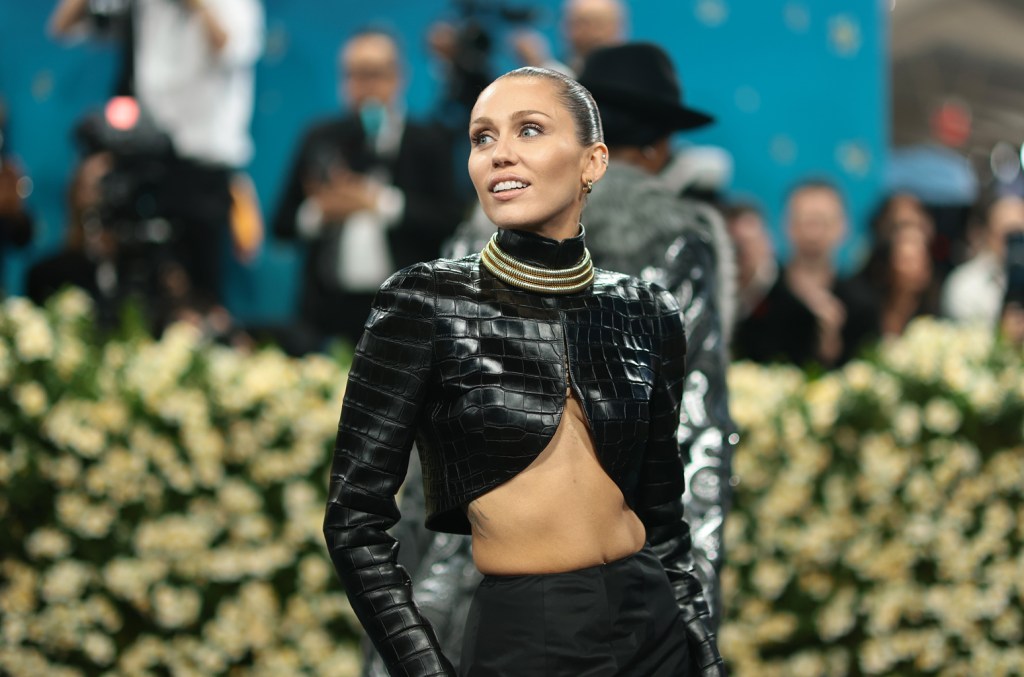
Some Miley Cyrus fans who paid top dollar to attend the Tribeca Festival debut of the singer’s new visual album, Something Beautiful, appeared to be under the impression that a post-screening Q&A would include a concert. When Cyrus sat down with the film’s co-directors, Brendan Walter and Jacob Bixenman, and producer Pano Cosmatos to discuss […]