State Champ Radio
 News
Page: 310

In a stylish, cozy office in the Echo Park neighborhood of Los Angeles, a dozen or so Ninja Tune employees sit around a conference table, everyone locked in on their laptops.
There’s a quiet hum of productivity as staffers work on the daily tasks that add up to the label’s prolific output — work that has helped define and expand electronic and indie music culture since Ninja Tune’s creation 35 years ago.
Founded in London by Matt Black and Jonathan More, who together made music as Coldcut, Ninja Tune now employs a staff of roughly 100 that primarily works in London and L.A. Given that geographic reach, Marie Clausen, Ninja Tune’s managing director of North America since 2022, calls 7:30 a.m. PT — which is 3:30 p.m. in London — the hallowed “golden hour” of each day.
“That’s the time for us to connect,” Clausen says while sitting in the office’s upstairs lounge area, where the walls are hung with album covers from Bonobo, Thundercat, Bicep, ODESZA and many of the other acts who’ve helped define the label’s roster and creative ethos since 1990.
Trending on Billboard
Originally from northern Germany, Clausen cut her teeth in the Berlin rave scene before eventually relocating to L.A. She now oversees an operation that includes the label, publishing company Just Isn’t Music and Ninja Tune Production Music, a library of stock music whose year-over-year revenue recently rose by 20%.
These latter two entities help subsidize the still fully independent Ninja Tune label. Recent synchs include music by the rising Brooklyn electronic outfit Fcukers featured in an Apple Keynote presentation; label artists TSHA, Logic1000, Machinedrum and many more having their music placed in projects spanning video games, film and TV; and a recent contract that secured the largest individual synch deal in the company’s history. While the track and brand are confidential, the campaign generated over $1 million — highlighting, Clausen says, “the scale and potential of our synch business.”
Ninja Tune also encompasses a collection of sublabels and partners including Flying Lotus’ influential Brainfeeder imprint, ODESZA’s Foreign Family Collective, Counter Records and Big Dada, with the team thus altogether touching a wide swath of artists and genres.
“Music and culture are the fires that keep us all going,” Clausen says. “That’s the real essence; that’s the texture; that’s what sticks, and then you build the business around it to amplify it.”
As Ninja Tune marks its 35th anniversary, Clausen reflects on the label’s recent successes, competing with the majors and more.
What are some of Ninja Tune’s biggest successes from the last few years?
One of the biggest milestones is continuing to work with team ODESZA on everything we’ve achieved over the years. I started working with them about 10 years ago, and obviously, we landed a No. 3 Billboard 200 album [with A Moment Apart in 2017]. Last year, they sold out three Madison Square Garden shows, which was an amazing milestone for them. Then we had several Grammy Award [nominations] and several gold and platinum records. [In 2021], we also brought their label, Foreign Family Collective, into Ninja Tune. That whole relationship just continues to be really strong, and it’s an amazing team. They’re very ambitious, very forward-thinking and very fan-first.
Then during COVID, we released Thundercat’s It Is What It Is album on Brainfeeder. That was another massive milestone. The record came out in April 2020 during the height of COVID, and we had to pivot many, many times throughout the campaign. He’s an incredible artist to work with — very, very talented. Ultimately, it also led to a lot of great chart success and a [best progressive R&B album] Grammy win for Thundercat.
What about on the broader business side?
Over the last couple of years, we’ve seen continued growth across the business, specifically in streaming. We went from the streaming revolution to the social media revolution, and now we head on into AI [artificial intelligence]. With Ninja Tune, we’re always trying to face this with a really open mind and keep an eye on where consumption is going and lead the business into that.
How does this approach extend the ethos of the label’s earlier days?
Back in the day, Matt Black and Jonathan More already had a very innovative, forward-thinking approach. They played with CD-ROMs, they had video mashups. They did something called Pirate TV, which is like what Instagram Live is now. It’s ingrained in the DNA of the company to really lean into new technologies and innovation.
Marie Clausen
Sarah Golonka
Tell me about the current state of your roster.
We have a very stylistic, diverse roster. We already talked about ODESZA and Thundercat, who are incredible and who we continue to work with. Black Country, New Road just released a new album called Forever Howlong that reached top three in the U.K. and sold [11,000] physical copies in the U.S. in its first week alone, after we set up over 150 listening parties and had a very bespoke campaign and an artist who really leaned in.
Then there’s Barry Can’t Swim. He’s amazing. He’s releasing his sophomore album, Loner, this summer, and his career has exploded since he launched his artist career three years ago. He had record attendance at Glastonbury last year and already received a Mercury Prize and a BRIT Award nomination. Here in Los Angeles, in April of last year, he played the El Rey, which is just under 1,000 capacity. Then last weekend, he sold out two shows at the Shrine with a combined 10,000 capacity.
It’s a wonderful team to work with, really forward-thinking, and the sound is incredibly warm and also very clubby and really sticks. There’s also amazing art that goes with it, and he’s an artist that has a fantastic sense of humor and keeps it fresh.
An artist like Barry Can’t Swim could presumably sign with a lot of different labels. What brings him to Ninja Tune?
We have a very ambitious team that, if they get a no, [they] turn it into a yes. We’re really dedicatedto building artist careers. We also handle every campaign and every artist we work with [gets] a very bespoke, white-glove treatment.
Someone like Barry is receiving full attention from the team. We have several offices across the world. There are just under 100 worldwide Ninja Tune employees. We are experts in physical and digital marketing. We know how to run e-commerce. We are really good at [customer relationship management] strategies.
We also know how to market toward different niches and then bring [those niches] into the mainstream. That’s one of the areas we’ve been successful in over the last couple of years.
Whether you look at Maribou State or some of the other artists we work with, it’s not necessarily music you would say is made for the mainstream, but [we can help guide] its way into the mainstream. Having that sort of superpower to know how to drive that forward and drive artist careers is one of our strongest selling points.
Your artist nimino had a big moment last year when his track “I Only Smoke When I Drink” went viral. As a label, how do you capitalize on that virality and harness it into something long-lasting?
We were really able to break him in the sense that when his single started going viral on TikTok, nobody really knew of him yet. We worked very closely with his management team and really leaned in on all the different aspects of the marketing campaign and were very ambitious in all areas.
[The result] has been just incredible to see. He played Coachella this year. His profile on Spotify went from roughly 500,000 monthly plays to 5 million within something like 50 days. It was really fun to work with a moment like that and then lean in and drive it forward.
What competitive advantage does being independent give you?
We’re quick to adapt. In some ways, we’re like the mailman; we are delivering one record after the next, but technology is changing so fast that we need to continue to rethink all the time. We have this very fresh, innovative mindset, and that allows us to pivot really quickly.
Do you feel you’re competing with the majors?
One hundred percent we are competing with the majors. It’s not our goal to compete with the majors. Our goal is to just be the best service to our artists and drive the company forward, but obviously, if you’re working at the forefront of the market, then you are competing. There are always majors around that are equally trying to sign our records, but that’s great. It keeps us on our toes, and it means we can deliver really good results. We’re challenged by that and that’s wonderful.
What are the keys to building a strong team?
It sounds cheesy, but I feel very blessed to work with the team that I do. I find that I’m learning a lot from everyone all the time, especially the younger generations, because they have such different views. The key is nurturing really talented people. We have some [employees] that were coming out of college that now have thriving careers. We’re empowering them, and there’s so much we can learn from them.
It’s also about being fluid while also offering structure. To increase our productivity, we set a rule that meetings are ideally not longer than 15 minutes. We call those micro meetings, and it really has changed the way we work. It helps everyone to really stay on track while we are also supporting hybrid work and all the different things it takes to work together in 2025.
In 2025, is there one thing that’s moving the needle for artists more than any other?
Obviously, we are working in an environment that’s very oversaturated. We see a massive amount of content. One challenge we have is the stickiness of content because there’s so much that’s competing.
One of the main things we see that works really well is to have a proper superfan strategy and to make sure that every time a music lover comes across your music one way or the other, whether it’s via TikTok or a streaming platform, Bandcamp, whatever it is, there is a strategy to get that fan or potential fan into your funnel.
Then it’s being very original with your art and your creativity and being easily identifiable for what you stand for and giving the fan a reason to fall in love with you and put your poster up on the wall. From that superfan strategy, the key points are to then look at [having] great social media, great live shows and great art that ideally is non AI-able.
This story originally appeared in the June 7 issue of Billboard magazine.
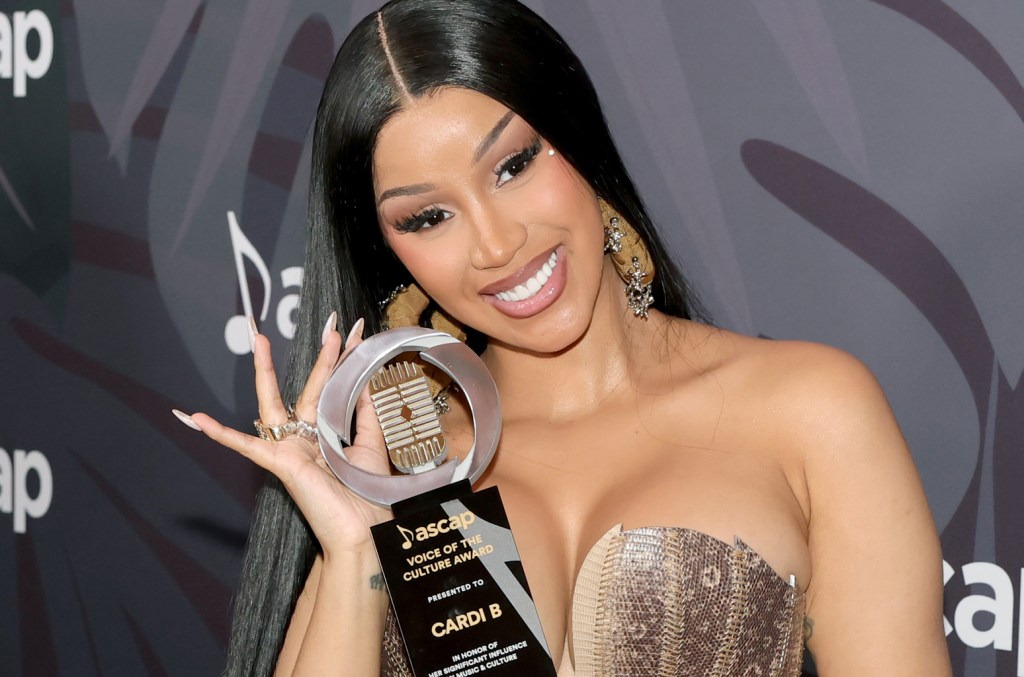
Just one day before the 2025 BET Awards are set to take over Los Angeles’ Peacock Theater on Monday night (June 9), a slew of the most prolific songwriters and producers across R&B and hip-hop convened at the Beverly Hills Four Seasons for the 2025 ASCAP Rhythm & Soul Awards on Sunday (June 8).
Decked out in a floor-length, figure-hugging brown dress, Cardi B graciously accepted the Voice of the Culture Award as her fellow songwriters and artists looked on.
“My voice has always been a reflection of what I live and what I’m living, which I feel is a true reflection of the people, the culture, my friends, my family, and the environment that I grew up in,” the Grammy-winning rapper said while accepting her “big girl” award from ASCAP executive vice president & head of creative membership, Nicole George-Middleton. “I like to put that in my music — my joys, my pains, my drama, everything.”
Trending on Billboard
With Billboard Hot 100 chart-toppers like “Bodak Yellow,” “I Like It,” “WAP” and “Up,” to her name, Cardi B has helped keep female rap at the top of the Billboard charts ever since she first broke through in 2017. Her resounding commercial success and cultural impact make her a natural successor to Usher, who received the same award last year. The Voice of the Culture Award is presented to ASCAP members who have had a major influence on music and culture, recognizing their success as creators and changemakers. Additional past recipients of the award include Timbaland, Swizz Beatz, D-Nice and T.I.
“I hate the idea that if you don’t write every line on your own, it makes what you have to say not real. Music is a collaboration, it has always been. The biggest hits [and] the greatest records come from teamwork,” Cardi continued. “They come from sharing experiences, energy, pain and joy. It’s not about ego, it’s about impact. I write, I co-write, I rewrite. I speak to what’s true to me. My pen, my mind and my feelings are in every verse and in every hook. I respect every writer who brings their magic to the table. This award is not just for me, it’s for the culture.”
Cardi, who also picked up an ASCAP Rhythm & Soul Award for her 2024 Hot 100 top 10 hit “Enough (Miami),” made history in 2020 as the first woman to receive the esteemed ASCAP Rhythm & Soul Songwriter of the Year Award two years in a row. She has earned eight ASCAP Pop Music Awards and 23 ASCAP Rhythm & Soul Music Awards. At Monday night’s BET Awards, Cardi will be vying for her third consecutive win for best female hip-hop artist, which would mark her first victory in that category this decade. Last week, the rapper dominated headlines after making her relationship with New England Patriots wide receiver Stefon Diggs Instagram-official.
Kendrick Lamar’s cultural juggernaut “Not Like Us” was named ASCAP R&B/Hip-Hop and Rap Song of the Year. Co-written by Mustard, the searing Drake diss spent three weeks at No. 1 on the Hot 100, swept all five of its Grammy nominations, and became the first-ever rap song to spend 52 consecutive weeks on Billboard’s marquee singles chart.
Lamar leads this year’s BET Awards with 10 nominations, including album of the year (GNX), video of the year (“Not Like Us”) and best male hip-hop artist.
Swiss songwriter OZ earned this year’s ASCAP Rhythm & Soul Songwriter of the Year honor, commemorating his contributions to hits like Drake and J. Cole’s “First Person Shooter,” Jack Harlow’s “Lovin On Me” and Travis Scott’s “I Know?” Cece Winans’ “That’s My King,” co-written by Taylor Agan and Kellie Besch, earned the ASCAP Rhythm & Soul Gospel Song of the Year title, and Sony Music Publishing was named ASCAP Rhythm & Soul Publisher of the Year.
Some of Sony’s biggest 2024 hits included Hot 100 chart-toppers like Beyoncé’s “Texas Hold ‘Em” and Shaboozey’s “A Bar Song (Tipsy),” as well as year-defining tracks like Tommy Richman’s “Million Dollar Baby,” SZA’s “Saturn,” Sexyy Red’s “Get It Sexyy,” Muni Long’s “Made for Me,” Chris Brown’s “Residuals” and “Sensational,” Lil Baby and Central Cee’s “Band4Band,” Cardi B’s “Enough” and GloRilla’s “Yeah Glo!”
Additional 2025 ASCAP Rhythm & Soul Award-winning songwriters include 21 Savage (“Prove It,” “Redrum,” “Surround Sound”), Offset (“Worth It”), Lil Uzi Vert (“Everybody”), Tee Grizzley (“IDGAF”), Playboi Carti (“Carnival,” “FE!N,” “Timeless”), Tasha Cobbs Leonard (“In the Room”), and Tye Tribbett (“Only One Night Tho”).
The ASCAP Rhythm & Soul Music Awards recognize the songwriters and publishers of the most-performed songs of the past year based on Luminate data for terrestrial and satellite radio and streaming services, as specified by the ASCAP Rhythm & Soul Music Awards rules.
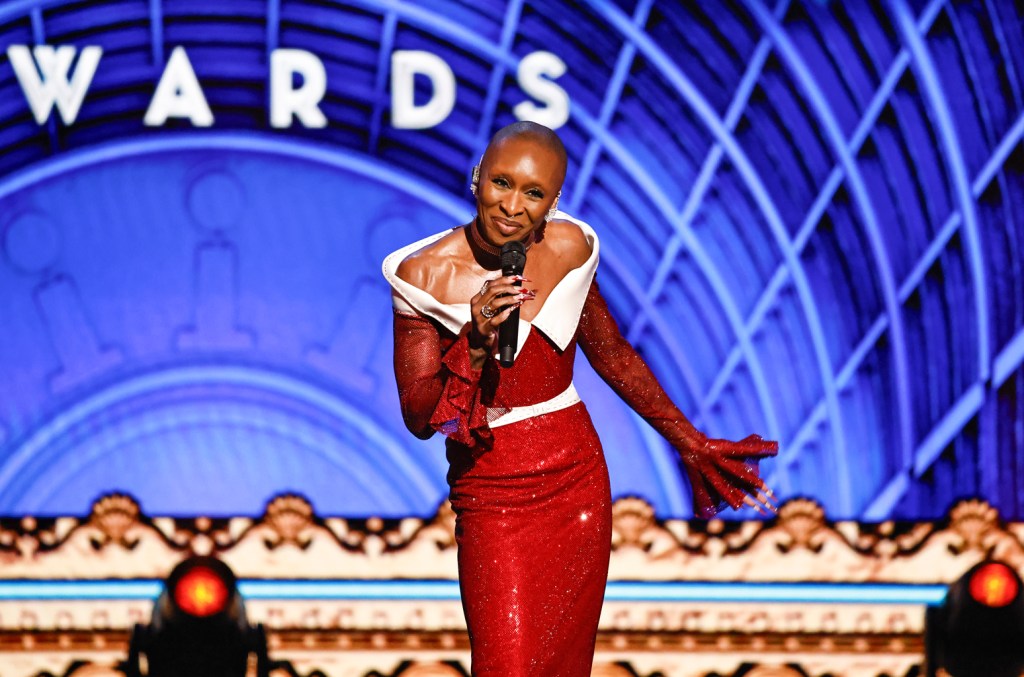
Sometimes all you need is a song — but a little support from Oprah Winfrey and Adam Lambert doesn’t hurt, either. Cynthia Erivo opened the 2025 Tony Awards on Sunday night (June 8) with a show-stopping number featuring epic cameos from both the talk show legend and American Idol alum. Just before taking the stage […]

The 2025 CMA Fest concluded Sunday night (June 8), and after four days of festing, tens of thousands of country music fans kept the energy going strong as they filled Nashville’s Nissan Stadium for one final evening. Throughout much of this year’s CMA Fest, which ran from June 5 to 8, rainclouds hovered over Nashville, […]
Silvestre Dangond and Emilia’s “Vestido Rojo” slides into an 8-1 climb, to rule Billboard’s Latin Airplay chart dated June 14. The coronation on the overall Latin radio tally follows a 39% surge in audience impressions in the United States, which translates to 8.3 million, during the May 29-June 5 tracking week, according to Luminate. It’s the third No. 1 for Dangond and second for Emilia.
Explore
See latest videos, charts and news
See latest videos, charts and news
“Vestido Rojo” was released Feb. 6 on Sony Music Latin. It lands at the summit in its eighth week on the chart, and after three weeks in the top 10. Three Univision radio stations become the single’s main supporters. San Jose, Calif’s KVVF-FM registered the biggest gain in the period, with Phoenix’s KQMR-FM and Houston’s KAMA-FM landing in second and third place, respectively.
Trending on Billboard
Thanks to the 8.3 million radio haul, “Vestido Rojo” marks Dangond’s return to the top of the ranking in over six years. He last secured a No. 1 through another female team-up: “Justicia,” with Natti Natasha, ruled for one week in November 2018. Among other placements, his first No. 1, “Cásate Conmigo,” with Nicky Jam, reached No. 1 that same year, in February 2018.
For Emilia, before ‘Vestido Rojo” unlocked the penthouse, the Argentinian singer earned her first chart-topper on Latin Airplay with “Perdonarte Para Qué?” with Los Ángeles Azules, in July 2024. The song earned the family group its first coronation after nine top 10s.
“Vestido Rojo” also dresses up the top spot on Tropical Airplay, where Emilia achieves her first No. 1 through her first chart appearance on the list. Dangond, meanwhile, secures his third chart-topper onnTropical Airplay, likewise, his first since 2018, when “Cásate Conmigo,” with Nicky Jam, monopolized the top slot for eight consecutive weeks.
Beyond its Latin Airplay and Tropical Airplay coronations, “Vestido Rojo” rises to a new peak on the multi-metric Hot Tropical Songs chart, climbing 9-4.
All charts (dated June 14, 2025) will update on Billboard.com tomorrow, June 10. For all chart news, you can follow @billboard and @billboardcharts on both X, formerly known as Twitter, and Instagram.
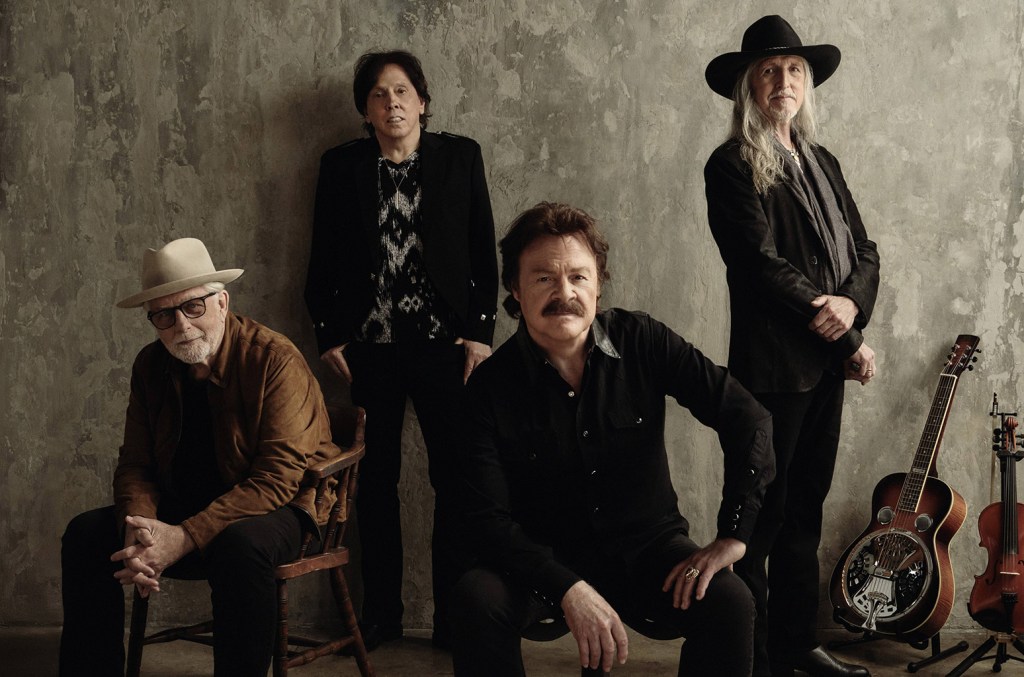
Over two distinct sonic eras, The Doobie Brothers — led by singer-guitarist Tom Johnston and singer-pianist Michael McDonald — have sustained a genre-agnostic, commercially viable career since the early 1970s. That includes nine top 10 albums on the Billboard 200 and 10 top 20 entries on the Billboard Hot 100, as well as hits spanning the rock, adult contemporary, R&B and country charts.
But what truly defines the band is that “it’s a democracy,” according to Karim Karmi, its comanager of a decade alongside Irving Azoff.
Trending on Billboard
Now, 50 years in, the Doobies are proving just that with Walk This Road, their first album to feature significant contributions from all three principal songwriters (Johnston, McDonald and Pat Simmons). Produced by pop-rock stalwart John Shanks, the project is McDonald’s first appearance on a Doobies album in 20 years and will arrive a week before he, Johnston and Simmons are inducted into the Songwriters Hall of Fame (alongside George Clinton, Rodney “Darkchild” Jerkins, Ashley Gorley, Mike Love and Tony Macaulay) on June 12. After which, McDonald teases, the Doobies “might even do another” album.
How did working with John Shanks affect your songwriting process for Walk This Road?
Michael McDonald: We found ourselves revisiting old ideas that might have never gotten recorded — in my case, songs that I might have demoed, gosh, 10 years ago, that I would every once in a while run across in my phone. And then some of the stuff was more immediate, where we just sat down with John and came up with a song in a moment.
Tom Johnston: John’s a hell of a guitar player, and he has good ideas on sound. He’s got a place up in the Hollywood Hills overlooking part of the San Fernando Valley and he’s got a lot of toys, so you can try pretty much anything you want to try and that’s liberating.
McDonald: It’s every musician’s fantasy man cave — literally every kind of keyboard, keyboards I never even knew existed.
A sense of social conscience is central to the band’s music, especially on this album’s title track with Mavis Staples. Do you feel a responsibility to address current times in your writing?
Johnston: The civic duty bit that you express when writing, that’s something that you just feel — it’s an organic thing.
McDonald: With “Walk This Road,” I think John had the original idea for the title — of us getting back together, here we are still trudging the same road all these years later. But it immediately took on a bigger meaning, and I think bringing Mavis onto the track cemented that idea because she is an ambassador of the gospel of humanity. The sound of her voice and her intent made it clear what we might be talking about in the bigger sense, which is, we’re all here together. As a band, we hope to appeal to the collective better nature of people.
You have a long track record on the Billboard charts. What does it take to write a hit?
Johnston: When you’re writing a song, you’re not thinking about that; you’re just trying to put into it what you feel at that moment. The only time I ever even thought [about] that was on “Listen to the Music.” You just want to do the best you can.
McDonald: We came up in the middle of the ’60s and the ’70s, when recording artists were starting to exercise a lot more latitude in terms of style and genre, and the Doobies were always a very eclectic band; we were free to do what we wanted or whatever we thought we could be sincere at portraying musically. I always felt fortunate that we came up in a time when there were a lot less limitations set on artists to stay in their lane.
HBO’s Yacht Rock: A Dockumentary highlights that aspect of you and your contemporaries — as well as your habit of turning up in unexpected places, Mike, both in the Doobies and as a solo artist. What’s the most unexpected place or collaborator you’ve found yourself around recently?
McDonald: I wrote a couple songs recently with a kid named Charlie Puth, who’s a really talented musician. And I find that I’m being taken more places than I would ever have gone on my own. I’ve been trying to co-write with people, which I always do with a little bit of mixed feelings. I never really know if what I’m writing is good or not. You start to compare yourself to everything else, and it gets a little scary sometimes. But I do like co-writing because it gets me out of the house and it makes me do something rather than watch another episode of HGTV. (Laughs.)
This story appears in the June 7, 2025, issue of Billboard.
Henry Cárdenas was on his way to Texas from Chicago when he got the news: Julión Álvarez’s work visa was cancelled, which meant the música mexicana hitmaker couldn’t enter the United States in time for his sold-out show at the AT&T Stadium in Arlington, Texas on May 24. “We had everything set up already,” says Cárdenas, founder/CEO of the powerhouse Cárdenas Marketing Network, still perplexed by the situation. “The entire production, including labor and equipment, amounted to over $2 million dollars — it was all a complete loss because we had to postpone the event. It was unbelievable.”
Álvarez — who in April made his grand return to the U.S. with a historic run at L.A.’s SoFi Stadium after being sidelined for eight years over since-cleared issues with the U.S. Treasury — was traveling from Guadalajara to Texas the day before the show and was informed at the airport that he couldn’t board the plane because his visa was cancelled. “I’ve been in the business for 45 years and I had never seen this,” Cárdenas adds. “In the past, we’ve known of groups or bands that apply [for a non-immigrant visa] and are denied but at least we were informed ahead of time. The day before your sold-out stadium show with 50,000 people? No way. We immediately started calling our lawyers but unfortunately, we haven’t gotten to the bottom of it. If you ask me right now what the reason for the cancelled visa is, I don’t know. Nobody knows.”
In the past two months alone, at least a handful of regional Mexican acts — including Los Alegres del Barranco, Banda Cuisillos, Lorenzo de Monteclaro and, most recently, Grupo Firme — have shared a similar experience to that of Álvarez’s. Their work visas — it’s unclear if they are O-1 or P-1B visas — are either delayed in an “administrative processing” or outright revoked by the U.S. State Department, leading to postponed shows or cancelled festivals and performances. Such was the case for touring giant Firme, which was unable to perform at La Onda Fest in Napa Valley, Calif., on June 1. Chicago’s Michelada Fest, featuring Mexican music headliners Luis R Conriquez, Firme and Gabito Ballesteros, cancelled its two-day summer event over artist visa “uncertainty.”
In general, U.S. visa uncertainties under the Trump administration have upended multiple communities and groups of people. “Everything is taking longer under Trump,” says attorney Daniel Hanlon, who specializes in immigration law. “It’s a combination of a few things, including stricter vetting policies, which have resulted in delays in visa processing almost across the board. We’re seeing this with foreign students at universities and now these musicians, and no one knows how it’s being brought to the attention of those who are in the position to make these revocation decisions, or why they are deciding to do this now. It could be completely politically motivated.”
In an unprecedented move, Deputy Secretary of State Christopher Landau announced on X that the State Department had revoked Los Alegres del Barranco’s work visas after the group portrayed images “glorifying” drug kingpin “El Mencho” at a concert in Mexico in March. “In the Trump Administration, we take seriously our responsibility over foreigners’ access to our country. The last thing we need is a welcome mat for people who extol criminals and terrorists,” his post reads.
Julión Álvarez performing during a concert at Arena Monterrey on October 29, 2021 in Monterrey, Mexico.
Medios y Media/Getty Images
In Mexico bans on narcorridos have spread across the country, where now 10 states have implemented laws to control or limit the diffusion of corridos in public spaces. But the U.S. had yet to really take a stance on the lyrics, which can be compared to gangster rap. That quickly changed this year when a wave of regional Mexican acts began to be impacted by visa delays, going beyond those who sing narcocorridos. Grupo Firme and Julión Álvarez — two of the biggest touring acts in the genre’s history, breaking barriers for regional Mexican artists in the U.S. — are mainly known for norteño and banda ballads and party songs, not narcocorridos particularly.
“We don’t know what we are fighting against because we really don’t know the reason these visas are getting denied or revoked, and it seems like it’s no longer just because they sing narcocorridos, which is what they initially had said,” says Mariana Escamilla, vp at Promotores Unidos USA, a longstanding organization composed of promoters who specifically work the regional Mexican touring circuit. “People don’t have the confidence to buy tickets in advance anymore if the artist is coming from Mexico. That’s a huge problem because we rely on pre-sale to determine if an event is going to sell or not. Now, I think fans will wait until day-of to buy the ticket when they see that the artist has finally landed in the U.S.”
Non-immigrant visas like O-1 and P-1B, the ones artists typically apply for “extraordinary achievement or ability,” are short-term work permits that need to be renewed by the artists and their petitioners and must include an agenda listing performances scheduled and where they’re performing every single time they apply. But even after being approved, these visas can be revoked at any time. Once the visa gets delayed by the State Department, for reasons like “administrative processing,” there’s no timeline for resolution. “It’s a euphemism for basically more background checks,” adds Hanlon. “It is unknown to the applicant what they are looking at, where they are looking or what they are looking for. They use that as a blanket to delay the processing of visas. So, the visa is refused until that’s resolved and then it could be issued or approved later but often it goes into a black hole and there’s nothing much you can do about it.”
In a statement sent to Billboard, a spokesperson for the U.S. Embassy & Consulates in Mexico said, “Due to privacy and other considerations, and visa confidentiality, we generally do not comment on U.S. government actions with respect to specific cases. Continuous vetting and visa revocation actions are not limited to visa holders from any specific country or area in the world. All visa applicants and visa holders, no matter the visa type and where they are located, are continuously vetted.”
What could be interpreted as targeting Mexican music and culture aligns with the Trump administration’s “disdain for Mexicans,” says entertainment attorney Marjorie García, partner at King, Holmes, Paterno & Soriano. “Any indication that [artists] are singing about anything the government doesn’t like, just like they [want to cancel] funding for PBS and NPR, if you’re not saying the things they want you to say, there is a perception that you don’t get to be here.”
Whether intentional or not, the timing couldn’t have been worse. In the past few years alone, regional Mexican has exponentially grown in popularity and global exposure. In 2023, Billboard reported that regional Mexican music consumption in the United States had jumped 42.1% year over year, outpacing gains in the Latin genre overall, as well as country, dance/electronic, rock and pop, according to Luminate.
“The regional Mexican music movement can’t keep growing if its artists can’t tour the U.S.,” García says. “All aspects of our business will be impacted. Before, you could predict the length of time that you needed for the visa process; you had a window. But now, the visa is being pulled after it’s already given, and as you get closer to the show, and at that point, you either show up or pay. There’s no way you can plan for someone to cancel your visa. This is all going to have a chilling effect when artists voices are most needed and in demand.”
Visa delays or revocations will almost certainly not fall under a contract’s force majeure clause, meaning event cancellation insurance very likely won’t cover it. “It’s up to individual artists to apply for those visas and get their documentation together. If the U.S. government says no, that’s almost assuredly not going to be covered by event cancellation insurance,” says attorney Tim Epstein, partner at Duggan Bertsch, who represents most of the independent events and festivals in North America, including Sueños and Baja Beach Fest. “Maybe once a year you were dealing with artists having to cancel concerts or festival performances over visa issues, but having a whole festival canceled because of artist visa issues … I have never seen that before.”
The financial impact this will have on artists who can’t tour the U.S. will be long-lasting. “A group like Los Alegres del Barranco that has a large following in the United States and already had contracts signed there, it is devastating financially,” Luis Alvarado, spokesperson for Los Alegres del Barranco, tells Billboard. “It is obvious that there is some kind of movement against Los Alegres del Barranco, but also against musicians who play this genre of music (regional Mexican). We’re waiting first to clear the judicial process in Mexico and then begin a conversation with the U.S. government.”
The U.S. is the No. 1 market to tour in — it’s the “base for success,” says Cárdenas. “You get guys like Firme and Julión who gross $10 million in one night here. This is where you make the big money — you don’t make the money in Mexico, with all due respect.”
For now, Cárdenas is staying optimistic and working diligently to help resolve this issue. “There are thousands of people working at the stadium when a concert happens, from parking, to vendors, production staff, all kinds of occupations that didn’t make any money because the Julión show didn’t happen,” he says. “That weekend, we lost more than $2 million that we won’t recover. How many of these instances can we survive? If this was a small promoter, it would go out of business immediately. You can’t lose $2 million every weekend.
“Someone has to go see the guys in Washington and tell them, ‘Listen, we have to fix this,’” Cárdenas continues. “This is not $100 or $200, this is millions of dollars; we have 50,000 people in one stadium. They consume everything — food, water, beer, and people are working, trying to make a dollar. Now, we’re talking to the political sector, calling our local congressmen and senators, and they are aware of the situation, and I’m sure they will fix it. Otherwise, this will jeopardize the entire industry.”
Additional reporting by Tere Aguilera and Natalia Cano.
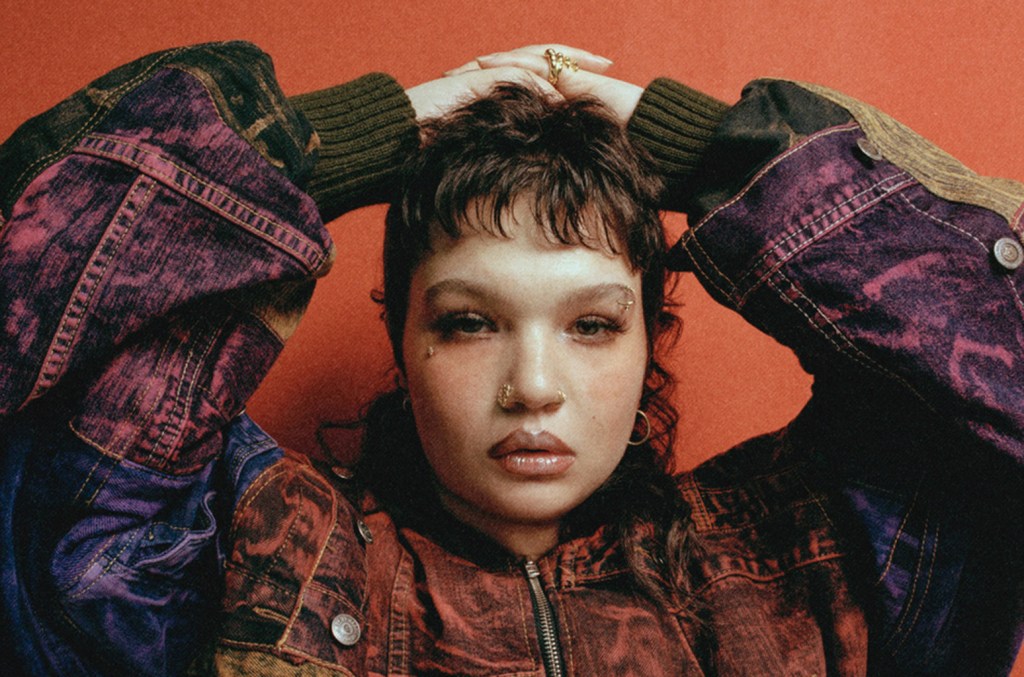
Lola Young and Simply Red’s Mick Hucknall will collect prestigious awards from ASCAP at a ceremony in London next Tuesday (June 17).
The “Messy” hitmaker will be awarded the Vanguard Award which recognises an artist whose “innovative work is helping to shape the future of music,” and follows Young’s success at the Ivor Novello Awards in May in the Rising Star Category.
First released in May 2024, “Messy” enjoyed a month-long stay at No. 1 on the U.K.’s Official Singles Chart earlier this year, and peaked at No. 14 on the Billboard Hot 100. The song also topped the Pop Airplay and the Rock & Alternative Airplay charts. Later this month, Young will perform at Glastonbury Festival.
Simply Red’s Hucknall will also be celebrated at the ASCAP London Music Awards with the Golden Note Award which recognizes his songwriting catalog over the past 40 years as the lead singer and songwriter in Simply Red as well as in his solo career.
Trending on Billboard
The group released their debut LP, Picture Book, in 1985 and the band boasts five U.K. No. 1 LPs, and two of their songs – “Holding Back the Years” (1986) and “If You Don’t Know Me by Now” (1989) – hit No. 1 on the Billboard Hot 100. In 2025, Simply Red embarked on a 40th anniversary tour through the U.K., Europe and South America.
”Mick Hucknall has made an indelible mark on a generation with his impassioned vocals and classic songwriting,” said songwriting great and ASCAP chairman of the board and president Paul Williams. “His singular mix of soul, funk and pop sounds made him a master of blue-eyed soul. We are thrilled to present him with the ASCAP Golden Note Award.”
The Golden Note Award has not been handed out since 2016 when Duran Duran were chosen for the prize. Other previous recipients include George Michael, Elton John, Blondie, Usher, Lionel Richie, Jay-Z and Stevie Wonder.
ASCAP will celebrate both Young and Hucknall at a private event in London on June 17, with U.K. songwriters honored in categories such as song of the year, top streaming song, top hot dance/ electronic song and more.
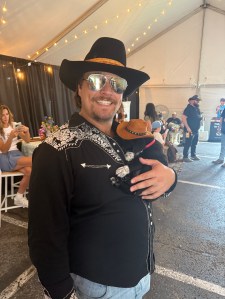
While riggers hung massive lights and construction workers assembled the stage on a grueling day before Tyler Childers‘ June 2024 concert at the United Center, three young locals showed up: Cheryl, Larry and Ted. And Cheryl gave Kyle Crownover, Childers’ tour manager, a look.
“I was like, ‘I think that’s the one,’” he tells Billboard.
Cheryl, a small terrier-chihauhua mix who tends to “collapse in people’s arms and just look at them,” as Crownover puts it, was a delivery from Chicago’s One Tail at a Time, an animal-rescue group that admitted 1,126 dogs in 2022 and found homes for 1,066, a 97% save rate. Over the past few years, Chappell Roan, Sabrina Carpenter, Kelsea Ballerini, Ed Sheeran, Green Day, Pearl Jam, Blink-182, Maggie Rogers and many others have been beneficiaries of adorable furry deliveries to cheer up artists and crews.
“We’re usually on the road three weeks at a time, so that’s three weeks away from your family. We’re close with the crew, but, on a show day, there’s not time to go meet your friends in the city, so we’re confined to whatever spot we’re playing,” Crownover says. “To bring that in” — the puppies, and occasionally kittens — “and instantly see everyone’s mood change, it’s hard to be stressed.”
Trending on Billboard
The trend of bringing adoptable pets backstage kicked in about a decade ago, when members of Slayer, Testament and Carcass posed for adorable photos in which they were cuddling with rescued animals before a Seattle show in 2016. But it took off after the pandemic. Returning to work and dealing with strict COVID-19 protocols, inflation and supply-chain issues, crews could be glum.
In some cases, artists — especially those involved in their own animal-rescue charities, such as Miranda Lambert’s Mutt Nation — request the perk in advance. In others, venue managers emphasized “taking care of crew and making sure that the backstage is more of a place where they feel welcome and more at home,” says Amy Tavares, a Nashville-based Live Nation backstage experience manager who has worked with Wags & Walks and other groups to bring in puppies, kittens, goats and pigs to arena and stadium concerts over the last few years.
“It absolutely could be therapeutic. The road can be isolating for everybody, and it makes sense to me that these animals who are offering love and connection are highlighting a deep need for that,” Lucy Kozak Cesnik, a Nashville psychotherapist who used to work as a CAA music agent, tells Billboard. “Animals can lead the way to access being seen and heard, with people who’ve had trauma in their relationships, without their defenses up. Healing can’t just happen in the therapy office.”
Adds Marika Anthony-Shaw, a former Arcade Fire violinist who is founder and CEO of Plus1, a philanthropy group that partners with Carpenter: “You go from bus to backstage and bus to backstage, maybe a couple hotels and maybe a couple flights. There’s a sense of Groundhog Day. The mental-health benefits of interacting with animals reduces stress. There’s a mood boost.”
Working with managers and concert venues, the local rescue groups identify three or four young animals — usually pups — who are more likely to be friendly to people because they haven’t yet learned to be scared of them, then cart them in carriers to the show. They bring playpens, food and treats, and the venues provide a backstage room and bowls of water. So far, no dogs have been reported to have escaped and roamed the stage, disrupting shows, This Is Spinal Tap-style.
“They did not do that!” says Greta Palmer, chief communications and brand officer for Best Friends Animal Society — a Utah-based animal sanctuary with programs in New York, Los Angeles and elsewhere — which provided three puppies and three kittens at a Carpenter show last year, and six kittens as part of a “cuddle lounge” for a 2023 Kesha concert in Atlanta. “We have a bunch of staff that go, and we’ll set up an area with a gate, and people can come in and hang with them, play with them, love on them [and] ideally adopt them.” (Best Friends did not do on-site adoptions for the Kesha show, and none of the animals were adopted at the Carpenter event.)
The strategy worked for Crownover and Cheryl, whom the tour manager adopted shortly after Childers’ Chicago concert. Cheryl has been on the road with the crew ever since, meeting 100 new people a day and greeting visiting foster puppies in various cities. (Crew members on the Childers tour also adopted Larry and Ted after meeting them at the United Center.)
“The main reason we do it is to promote the dogs and promote adoption,” says Alli Rooney, One Tail at a Time’s marketing manager. “And everyone needs a bit more lightness in the world right now.”
The animal visits are pure good-vibes publicity too. When Motley Zoo Animal Rescue brought dogs to the 2016 Slayer-Testament-Carcass show in Seattle, the most tattooed and scowling of metal stars melted in photos with adorable puppies; when Brighter Days Dog Rescue brought dogs to Billie Eilish’s Denver show in November, the organization’s social media post showed the singer-songwriter cheek to cheek with puppies and said they were “showered with love” by the star; and Sheeran has posed with tiny backstage-delivery kittens multiple times, including in 2017, when the SPCA of Wake County surprised him before a Raleigh, N.C., show with animals rescued from a nearby horse farm. At CMA Fest’s kickoff in Nashville June 5, Wags & Walks provided adoptable puppies at an “artist oasis” area, luring country performers such as Gavin Adcock, Ashley Cooke, Meghan Patrick and Kaylee Rose.
Gavin Adcock
Wags & Walks
Some venues, according to Mallory Kerlie, marketing director of Muddy Paws, a New York dog-rescue group, have restrictions on both dogs and cats, many relating to the potential for rabies or injuries. And some rules disallow pit bulls or dogs heavier than 25 pounds. “Here in New York, that’s a particular challenge,” she says. But Muddy Paws accompanies the puppies with trained staff and reliable carriers, and navigates public transportation in case parking is an issue. At the venues, she adds, “It’s a small room with doors. That’s usually the best way to keep them safe.”
Kittens are slightly easier to haul into concerts than dogs, notes Best Friends’ Palmer. She explains: “We can just set up an X-pen and they tend to stay pretty contained.”
Wags & Walks has provided puppies, kittens and even baby goats and pigs for Nashville arenas and stadiums. The non-profit animal rescue group placed the dogs in a soundproof room during Rufus Du Soul’s Ascend Amphitheater soundcheck in May (“So they wouldn’t get scared,” explains Taveras), and also surprised Kelsea Ballerini at Crypto.com Arena in Los Angeles by presenting her with three small sibling puppies for a photo op.
Neither Ballerini nor her team was available for a post-pup interview, but Lesley Brog, founder of Wags & Walks, knew the country superstar’s own dog, Dibs, was going through cancer treatment. “She’s a huge dog lover, and they thought it would make sense,” she says.
Shortly after the puppies arrived before Ballerini’s show, Wags & Walks set them up in a conference room near the office of Cara Vanderhook, the arena’s vp of marketing and communications. The exec mentioned them in a staff chat, and within half an hour, Vanderhook tells Billboard, “I’m not joking, I probably had 30 people in the conference room playing with these puppies. It gave everybody a moment to take a breath when they needed it.”
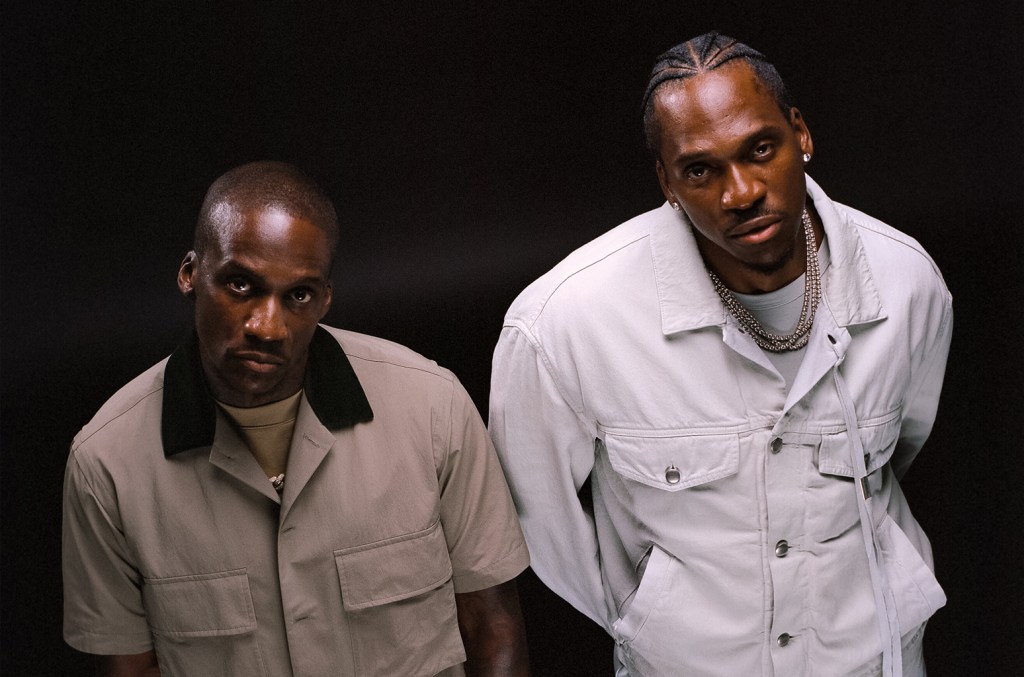
The Clipse are hitting the road. In support of their eagerly anticipated fourth studio album, Let God Sort Em Out, duo Pusha T and No Malice announced the dates for their first U.S. tour in 15 years on Monday morning (June 9). The Let God Sort Em Out tour is slated to launch on Aug. […]