State Champ Radio
 News
Page: 248
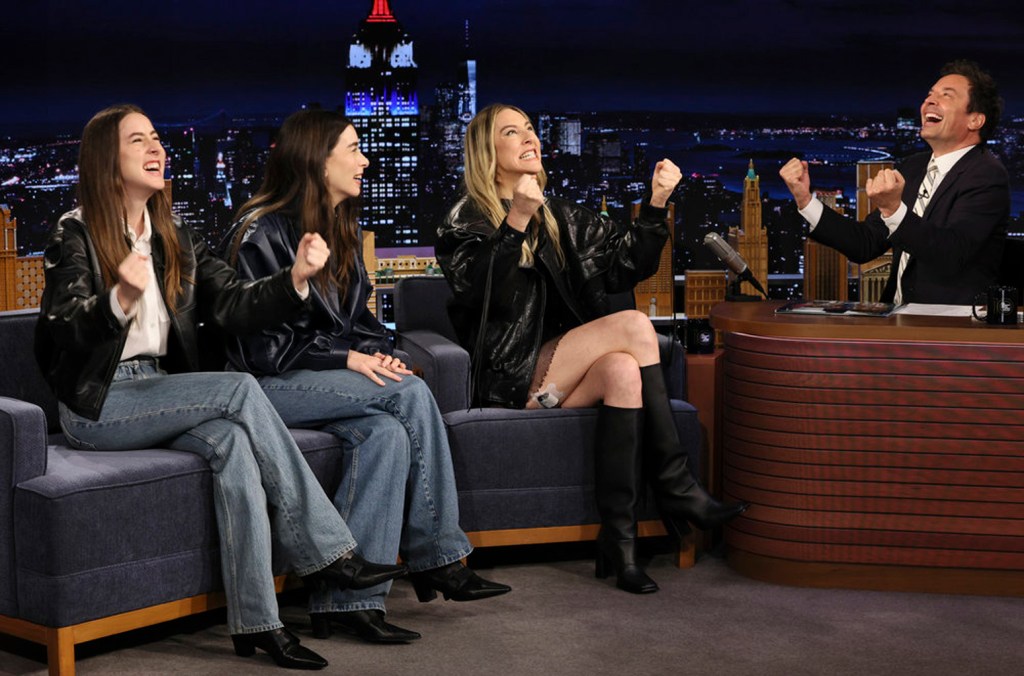
Haim have performed on The Tonight Show before. But Alana, Este and Danielle have never taken a trip to the couch to chat with host Jimmy Fallon, so on Tuesday night (June 17) the sibling trio made the most of their maiden voyage by doing all the things.
In addition to performing their single “Down to Be Wrong” with a full band from their forthcoming album I Quit (June 20), the trio popped in for the episode’s cold open to teach Fallon how to speak in perfect Haim-style harmony. Hanging out in their green room, the sisters answered everything Fallon said in a perfectly calibrated single voice. “I know you sing like this, but do you actually talk like this?” Fallon asked nervously.
“Yeah, we do Jimmy,” they said in a sing-song, robotic fashion. “It’s kind of like a special thing we do, Jimmy.” They invited Fallon to join them and when the beat kicked in they did a call-and-response until Este stopped the song to ask, for real, if there were any more snacks available.
Trending on Billboard
A short time later they were on the couch, describing to Fallon how the moody cover of their album was shot by longtime collaborator and friend director Paul Thomas Anderson, with Este lamenting how her sisters are both in perfect focus, while she is a blurry figure in the foreground. “We’re lucky enough that he’s done 10 of our music videos, he did [the cover] of our last record, Women in Music, Part III,” she said.
What Fallon really wanted to know, though, was what inspired the title of their fourth album. Este explained that as children they were obsessed with the 1996 Tom Hanks musical comedy That Thing You Do!, the Oscar-winning actor’s writing and directorial debut and homage to the fictional Beatles-wannabe one-hit wonder band the Oneders.
“We watched it as kids like every weekend on VH1,” she said as the trio flawlessly broke into an impromptu round of the movie’s signature earworm title track. “So we loved that movie and there’s this pivotal moment in the movie at the end of the movie the lead singer is like, ‘Okay we have to do our second record,” and he wanted to do this really, like brooding, emotional song,” Este explained.
“And he comes up to the mic and he’s basically like, ‘Okay, I’m ready to record.’ And then Tom Hanks, the manager, is like, ‘Listen Jimmy, I want something peppy, something snappy.’ And then Jimmy goes [clears throat], ‘I quit, I quit, I quit,’” she sang as her sisters snapped along. So, she said, whenever they would do mic checks they would do so with a round of “I quit, I quit.” They did so during sessions for their fourth album as well, and after using the phrase as a placeholder to organize their musical files they decided to just keep it as the title for the album about breakups and romantic spin-outs.
“It stuck and we also realized that a lot of our songs are kind of about, like, quitting,” Este said. “Quitting the things that aren’t good for us anymore.” For the record, they are not quitting music. In fact, they proved how much they’re not quitting by revealing that as kids they were also constantly drumming on each other and everything in sight.
So when Fallon gave them a series of random objects, Este snagged a trash can for Danielle to bang on and some paper for Alana to tear while the host shook a box of Altoids and she tapped on a coffee mug for an impromptu, stripped-down version of their I Quit single “Relationships.”
Check out Haim on The Tonight Show below.
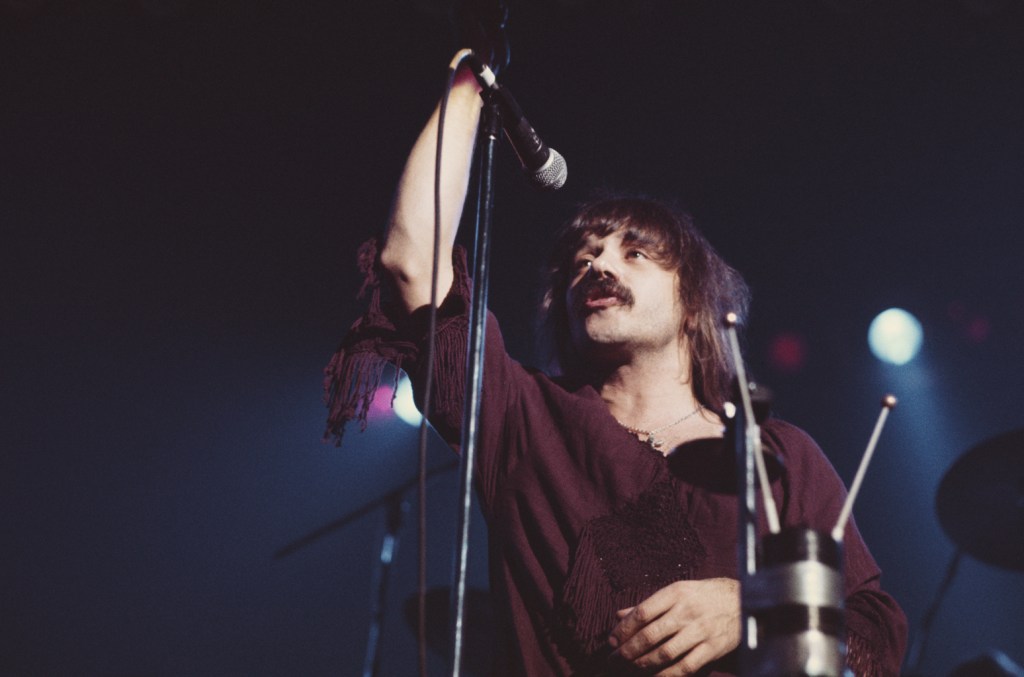
Terry Luttrell has been injured after getting into a car accident, which occurred after the REO Speedwagon singer fell asleep at the wheel.
The 78-year-old musician was candid about the incident while speaking to the News-Gazette Tuesday (June 17), explaining that he’d been driving to St. Louis for business reasons when he crashed on Interstate 57. He says that he’d been up until about 4:30 a.m. the night prior following a Speedwagon concert at State Farm Center in Champaign, Ill., staying up late to attend an afterparty and sign autographs for fans.
“It just happened,” Luttrell told the publication. “I nodded off. I rolled the car over, and I woke up, and I was in a cocoon. Unfortunately, it totaled the car.”
By “cocoon,” the rock star was referring to his car’s airbags, which deployed on impact and cracked his sternum. He is now recovering from his injuries at Carle Foundation Hospital in Urbana, where he expects to stay for the next few days.
Trending on Billboard
“I was able to get up and get out of the car,” Luttrell recalled. “I have a little back pain and neck pain. It’s nothing that can’t be overcome.”
Upon being transported to the hospital, Luttrell learned that some of the nurses were fans who had attended the concert the night prior. The performance at State Farm Arena in the band’s home city marked a special one-off reunionshow punctuating REO Speedwagon’s decision to cease touring after 2024 due to “irreconcilable differences” between members. Luttrell — who left the group and was replaced by Kevin Cronin in 1972 — stepped back into his former role as frontman only for the night.
“It was exactly what we thought it was going to be,” he told the Gazette. “It was a one-off concert that will never happen again. To say that you were there was a pretty big thing.”
Luttrell joined Speedwagon in 1968, departing after four years with the band reportedly due to personal issues with guitarist Gary Richrath. Cronin was then brought in to fill his shoes, and — after being briefly replaced with Mike Murphy — helped the group score some of its biggest hits, including Billboard Hot 100 No. 1 singles “Keep On Loving You” and “Can’t Fight This Feeling.”
Despite his success with the group, Cronin was not at the reunion show Saturday (June 14). On Facebook, he recently said that he would have wanted to attend, but that organizers chose “a date where it was public knowledge” that he had prior engagements with his own Kevin Cronin Band in Oregon.
Cronin was also the only remaining REO bandmate who wanted to continue touring, but he says he was outvoted by bassist Bruce Hall and keyboardist Neal Doughty when it came to calling it quits. The men announced last September that they would stop touring by the end of the year and dissolve the band due to conflicts between Hall and Cronin.
Source: YouTube / Youtube
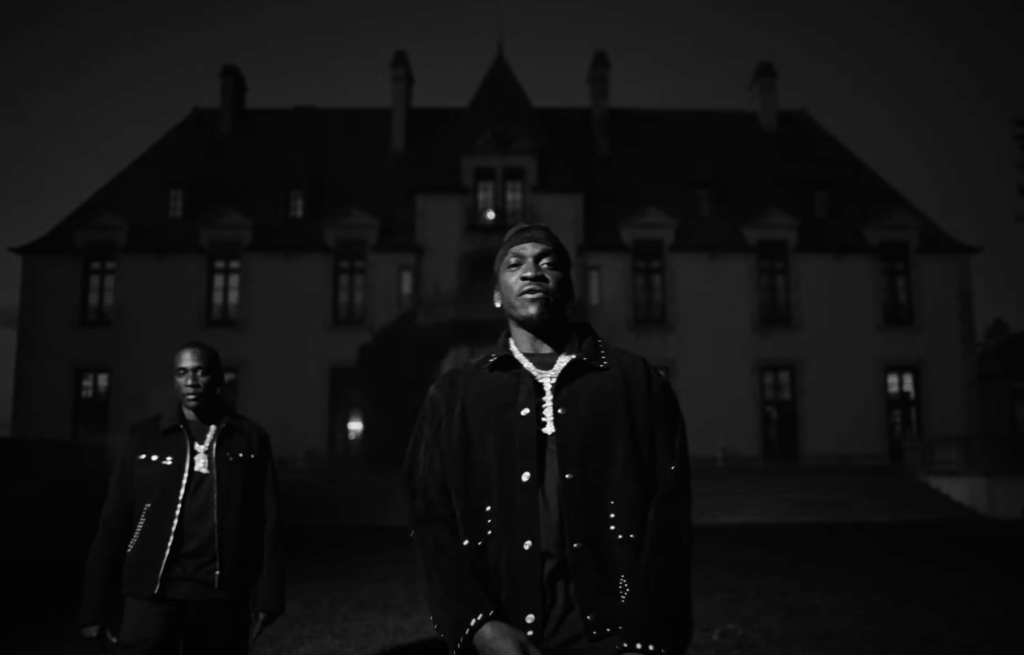
Another year and another rapper that Pusha T feels he has to put in his place as the cussin’ half of Clipse (Malice is still keeping it PG with the bars) has taken aim at one of the game’s most popular artists. Travis Scott gets called out on Clipse’s latest cut, “So Be It.”
In a shot that came straight out of left field, Pusha T turned many heads when he spit, “You cried in front of me, died in front of me/Calabasas took your b*tch and your pride in front of me/Heard Utopia had moved right up the street/And her lip gloss was popping, she ain’t need you to eat.”
While many automatically knew that Pusha was sending straight shots to Travis Scott, many were left scratching their heads as to where the sudden animosity towards “The Highest In The Room” rapper came from. Well, Push answered that question in a new interview with GQ in which he explained that his beef with Scott began years ago when Scott crashed a recording session between Clipse and Pharrell while the three were in Paris.
Per GQ:
He interrupted a session,” Pusha recalled. “He sees me and Malice there. He’s like, ‘Oh, man, everybody’s here,’ he’s smiling, laughing, jumping around, doing his fucking monkey dance. We weren’t into the music, but he wanted to play it, wanted to film [us and Pharrell listening to it]. And then a week later you hear ‘Meltdown,’ which he didn’t play. He played the song, but not [Drake’s verse].”
While this rubbed Pusha the wrong way, he says this is common practice for Scott and that’s what ultimately led him to just air out his grievances on the new Clipse record.
“He’s done this a lot. He has no picks. He’ll do this with anybody. He did it with ‘Sicko Mode’”— on which Drake seems to diss Kanye, despite Travis’s close ties to him. Push then referenced last spring when Travis joined Future and Metro on stage and excitedly asked them to tease “Like That,” the song whose incendiary Kendrick Lamar verse ignited Kendrick’s beef with Drake: “He was on the [Rolling Loud] stage like, ‘Play that, play that!’ He don’t have no picks, no loyalty to nobody. He’ll jump around whatever he feels is hot or cling onto whatever he feels is hot. But you can play those games with those people…We’re not in your mix. Keep your mix over there.”
Added push, “He’s a whore.”
While Pusha seems ready and willing to engage in a lyrical showdown with a new opponent, it should be worth noting that Travis Scott himself isn’t exactly known for spitting battle rap bars and probably won’t respond with a diss record so much as he may reference it in some kind of way. Then again, he may surprise us and drop his first-ever diss record and let the world judge who got the better cut in the unforeseen battle.
Still, Travis did apparently decide to troll Pusha T on his IG stories with a reference to the 2023 bot overload of pics insinuating that Pusha once had sex with his pet lizard.
We completely forgot about this…
Check out the video for “So Be It” below, and let us know your thoughts on Pusha T calling out Travis Scott in the comments section below.
HipHopWired Featured Video
Source: YouTube / Youtube
Another year and another rapper that Pusha T feels he has to put in his place as the cussin’ half of Clipse (Malice is still keeping it PG with the bars) has taken aim at one of the game’s most popular artists. Travis Scott gets called out on Clipse’s latest cut, “So Be It.”
In a shot that came straight out of left field, Pusha T turned many heads when he spit, “You cried in front of me, died in front of me/Calabasas took your b*tch and your pride in front of me/Heard Utopia had moved right up the street/And her lip gloss was popping, she ain’t need you to eat.”
While many automatically knew that Pusha was sending straight shots to Travis Scott, many were left scratching their heads as to where the sudden animosity towards “The Highest In The Room” rapper came from. Well, Push answered that question in a new interview with GQ in which he explained that his beef with Scott began years ago when Scott crashed a recording session between Clipse and Pharrell while the three were in Paris.
Per GQ:
He interrupted a session,” Pusha recalled. “He sees me and Malice there. He’s like, ‘Oh, man, everybody’s here,’ he’s smiling, laughing, jumping around, doing his fucking monkey dance. We weren’t into the music, but he wanted to play it, wanted to film [us and Pharrell listening to it]. And then a week later you hear ‘Meltdown,’ which he didn’t play. He played the song, but not [Drake’s verse].”
While this rubbed Pusha the wrong way, he says this is common practice for Scott and that’s what ultimately led him to just air out his grievances on the new Clipse record.
“He’s done this a lot. He has no picks. He’ll do this with anybody. He did it with ‘Sicko Mode’”— on which Drake seems to diss Kanye, despite Travis’s close ties to him. Push then referenced last spring when Travis joined Future and Metro on stage and excitedly asked them to tease “Like That,” the song whose incendiary Kendrick Lamar verse ignited Kendrick’s beef with Drake: “He was on the [Rolling Loud] stage like, ‘Play that, play that!’ He don’t have no picks, no loyalty to nobody. He’ll jump around whatever he feels is hot or cling onto whatever he feels is hot. But you can play those games with those people…We’re not in your mix. Keep your mix over there.”
Added push, “He’s a whore.”
While Pusha seems ready and willing to engage in a lyrical showdown with a new opponent, it should be worth noting that Travis Scott himself isn’t exactly known for spitting battle rap bars and probably won’t respond with a diss record so much as he may reference it in some kind of way. Then again, he may surprise us and drop his first-ever diss record and let the world judge who got the better cut in the unforeseen battle.
Still, Travis did apparently decide to troll Pusha T on his IG stories with a reference to the 2023 bot overload of pics insinuating that Pusha once had sex with his pet lizard.
We completely forgot about this…
Check out the video for “So Be It” below, and let us know your thoughts on Pusha T calling out Travis Scott in the comments section below.
HipHopWired Featured Video
Source: YouTube / Youtube
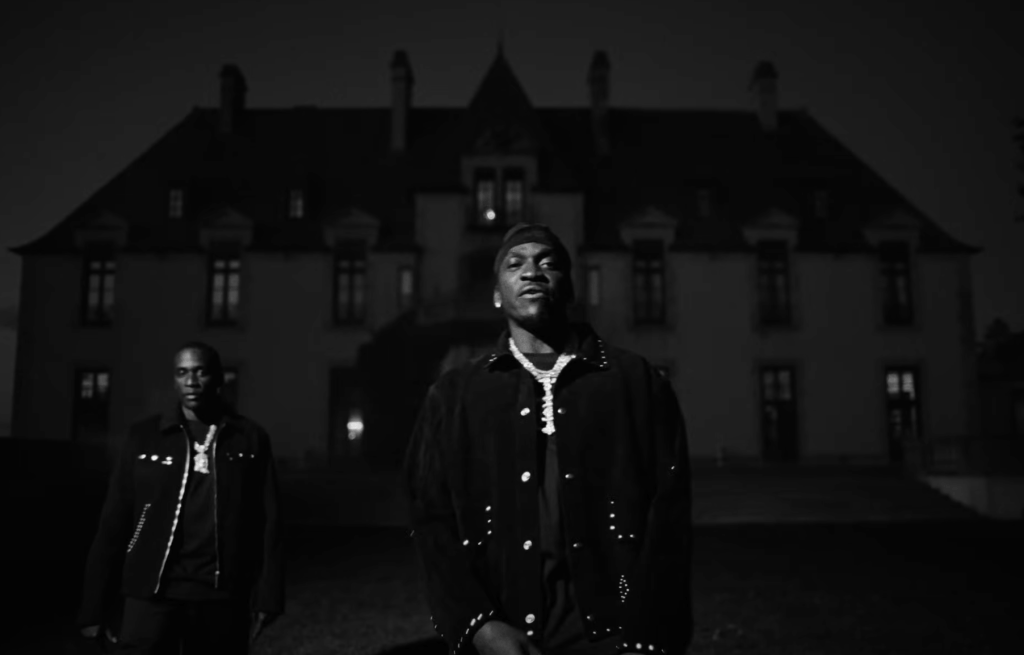
Another year and another rapper that Pusha T feels he has to put in his place as the cussin’ half of Clipse (Malice is still keeping it PG with the bars) has taken aim at one of the game’s most popular artists. Travis Scott gets called out on Clipse’s latest cut, “So Be It.”
In a shot that came straight out of left field, Pusha T turned many heads when he spit, “You cried in front of me, died in front of me/Calabasas took your b*tch and your pride in front of me/Heard Utopia had moved right up the street/And her lip gloss was popping, she ain’t need you to eat.”
While many automatically knew that Pusha was sending straight shots to Travis Scott, many were left scratching their heads as to where the sudden animosity towards “The Highest In The Room” rapper came from. Well, Push answered that question in a new interview with GQ in which he explained that his beef with Scott began years ago when Scott crashed a recording session between Clipse and Pharrell while the three were in Paris.
Per GQ:
He interrupted a session,” Pusha recalled. “He sees me and Malice there. He’s like, ‘Oh, man, everybody’s here,’ he’s smiling, laughing, jumping around, doing his fucking monkey dance. We weren’t into the music, but he wanted to play it, wanted to film [us and Pharrell listening to it]. And then a week later you hear ‘Meltdown,’ which he didn’t play. He played the song, but not [Drake’s verse].”
While this rubbed Pusha the wrong way, he says this is common practice for Scott and that’s what ultimately led him to just air out his grievances on the new Clipse record.
“He’s done this a lot. He has no picks. He’ll do this with anybody. He did it with ‘Sicko Mode’”— on which Drake seems to diss Kanye, despite Travis’s close ties to him. Push then referenced last spring when Travis joined Future and Metro on stage and excitedly asked them to tease “Like That,” the song whose incendiary Kendrick Lamar verse ignited Kendrick’s beef with Drake: “He was on the [Rolling Loud] stage like, ‘Play that, play that!’ He don’t have no picks, no loyalty to nobody. He’ll jump around whatever he feels is hot or cling onto whatever he feels is hot. But you can play those games with those people…We’re not in your mix. Keep your mix over there.”
Added push, “He’s a whore.”
While Pusha seems ready and willing to engage in a lyrical showdown with a new opponent, it should be worth noting that Travis Scott himself isn’t exactly known for spitting battle rap bars and probably won’t respond with a diss record so much as he may reference it in some kind of way. Then again, he may surprise us and drop his first-ever diss record and let the world judge who got the better cut in the unforeseen battle.
Still, Travis did apparently decide to troll Pusha T on his IG stories with a reference to the 2023 bot overload of pics insinuating that Pusha once had sex with his pet lizard.
We completely forgot about this…
Check out the video for “So Be It” below, and let us know your thoughts on Pusha T calling out Travis Scott in the comments section below.
HipHopWired Featured Video
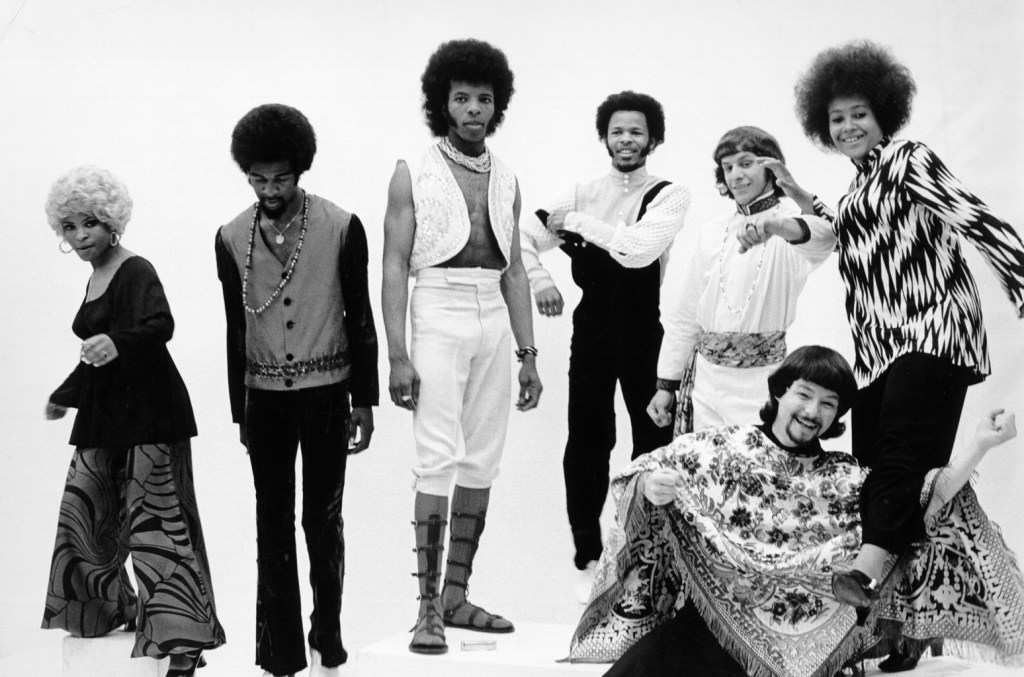
All of Sly & The Family Stone’s top 10 hits on the Billboard Hot 100 songs chart return to Billboard’s rankings following the death of the group’s leader, Sly Stone, on June 9. The act logged five top 10s between 1968-1971.
On the R&B Digital Song Sales chart (dated June 21), “Everyday People” reenters at No. 2, while “Dance to the Music,” “Hot Fun in the Summertime,” “Thank You (Falletinme Be Mice Elf Agin)” and “Family Affair” debut at Nos. 4, 5, 7 and 10, respectively. (The chart ranks the top-selling digital songs of the R&B genre in the United States in the tracking week ending June 12, according to Luminate.)
Stone died after “a prolonged battle with COPD (chronic obstructive pulmonary disease) and other underlying health issues,” according to a statement from his family. Sly & The Family Stone released their first album in 1967 and charted hits through 1980, but had largely disbanded by 1975. This century, the group has expanded its chart history with multiple best-of collections on Top R&B/Hip-Hop Albums and other surveys.
“Dance to the Music” was the group’s first top 10-charting hit on the all-genre Hot 100, peaking at No. 8 on the April 20, 1968-dated list. “Everyday People” was the act’s next top 10, and first No. 1, topping the list for four weeks beginning on Feb. 15, 1969. “Hot Fun In the Summertime” (No. 2, Oct. 18, 1969), “Thank You (Falletinme Be Mice Elf Agin)” (the A-Side of the double-sided No. 1 with “Everybody Is a Star;” it spent two weeks at the top, beginning on Feb. 14, 1970) and “Family Affair” (No. 1 for three weeks, beginning on Dec. 4, 1971).
All five of those songs also, unsurprisingly, rank among the act’s biggest Billboard hits.
In total, Sly & The Family Stone’s catalog of songs sold 10,000 downloads in the U.S. in the week ending June 12 — a surge of 1,977 % compared to the previous week. The group’s catalog of tracks was also streamed 5.78 million times — a gain of 277%. Its most-streamed song of the week was “Everyday People,” with 971,000 streams (up 94%).
In terms of album activity, the band’s catalog earned 8,000 equivalent album units in the week ending June 12 — up 389%. (Units comprise album sales, track equivalent albums [TEA] and streaming equivalent albums [SEA]. Each unit equals one album sale, or 10 individual tracks sold from an album, or 3,750 ad-supported or 1,250 paid/subscription on-demand official audio and video streams generated by songs from an album.)
Album sales for the band totaled 3,000 for the week (up 527%).

SG Lewis will release his third studio album this fall.
Titled Anemoia, the project is out Sept. 5 on the British producer’s own Forever Days label. The project will be his first full length since 2023’s AudioLust & HigherLove, which was a follow-up to his lauded 2021 debut, Times. These two albums reached No. 13 and No. 11 on the Top Dance Albums chart, respectively. In 2024 the producer also worked on the collaborate Heat EP alongside Tove Lo.
Lewis’ most recent release, May’s “Back of My Mind,” is the lead single from Anemoia, a word defined as “nostalgia for a time you’ve never known.”
“When I discovered the word ‘anemoia,’ it articulated a feeling I’d struggled to describe for so long — a nostalgia for times I never lived through,” Lewis says in a statement. “Throughout my career, I’ve often referenced past eras of music, studying them inside out to understand their cultural and technical history. In doing so, I started to question my emotional connection to those times, and why they left such a mark on me.
Trending on Billboard
“This album is rooted in the dancefloor, and even its quieter moments are shaped by Balearic sounds that are influenced from spending a lot of time in Ibiza last summer. I think a lot of the music carries an undertone of melancholy, even when it feels high in energy. More than anything, I want Anemoia to be a soundtrack to living in the present — to creating the kind of moments that others might one day feel nostalgic for.”
In tandem with the new album, Lewis is announcing a 14-date North American tour that will begin on the same day of the album release and features support from Peruvian producer Sofia Kourtesis. See the dates and the album’s surrealist cover art below.
Tour Dates:Sept. 5 – Austin – ACL LiveSept. 6 – Dallas – House of BluesSept. 11 – Toronto, Ontario, Canada – HISTORYSept. 12 – Washington, D.C. – EchostageSept. 13 – Boston – Royale FridaySept. 19 – Queens, N.Y. – Knockdown CenterSept. 20 – Queens, N.Y. – Knockdown CenterSept. 26 – Detroit – The Majestic TheatreSept. 27 – Chicago – RADIUSOct. 2 – Seattle – Showbox SoDoOct. 4 – Vancouver, B.C. – Vogue TheatreOct. 10 – Los Angeles – Shrine Expo HallOct. 17 – San Francisco – Bill Graham Civic AuditoriumOct. 18 – Denver – Mission Ballroom
SG Lewis
Courtesy Photo
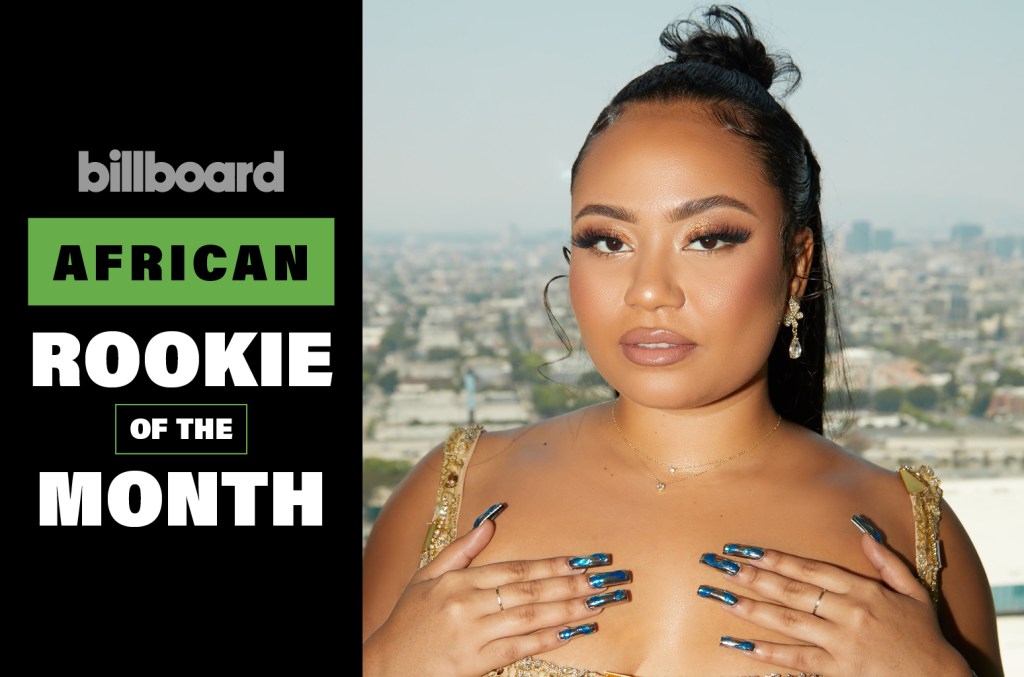
MOLIY was working at a Victoria’s Secret in Orlando, Fla. after dropping out of college at 19 when her back started hurting from all the restocking. One day, “they were calling me in for work. I just muted my phone and never went back,” she tells Billboard with a chuckle.
She moved back home to Accra, Ghana soon after and decided to pursue music full time after her friends connected her to local creatives, and she constantly found herself in the studio. MOLIY grew up around all kinds of music: Her mother owned a restaurant/bar called The Gomeries right next to their house that played Céline Dion, Michael Jackson and Whitney Houston all night long. Meanwhile at the crib, MOLIY listened to Rihanna, Beyoncé, Missy Elliott and Keri Hilson as well as Ghanaian acts like Eazzy, Itz Tiffany, Sister Deborah and MzBel. Her eclectic music taste, paired with the rise of Nigeria’s subcultural alté scene that has also influenced some Ghanaian artists, “opened my mind to thinking even though I may not sound like the ideal Ghanaian artist, I could create a space for myself,” she says. “That just kept me going.”
Months after dropping her introspective, Afro-fusion debut EP Wondergirl, MOLIY garnered buzz in 2020 when she appeared on fellow Ghanaian artist Amaarae’s Afropop bop “Sad Girlz Luv Money.” The remix, featuring Kali Uchis, reached No. 80 on the Billboard Hot 100 the following year, and it hit No. 28 on Rhythmic Airplay.
Trending on Billboard
Then at the end of last year – after months of teasing it with a now-viral dance of her whining her waist while covering her face with her hands – MOLIY released “Shake It To The Max (FLY),” an Afro-dancehall club banger that’s bound to make any listener “bend your back,” “bend your knees” and buss it down once the bass-bumping production and scratching hits. Jamaican stars Shenseea and Skillibeng – the latter of whom assisted another African darling, Tyla, on last year’s “Jump” – enhanced the dancehall vibes when they hopped on the remix. And Davido, Victoria Monét, Ciara, J-Hope, Spice and many more have been shaking it to the max all over the internet.
With the help of the remix, “Shake It To The Max” has spent six weeks (and counting) at No. 1 on U.S. Afrobeats Songs and is in the top 10 of the Billboard Global 200 and Billboard Global Excl. US. Four years after her feature on “Sad Girlz Luv Money,” MOLIY has returned to the Hot 100, as “Shake It to the Max” has reached No. 55 (chart dated June 21), and she’s back at radio with the song reaching No. 18 on R&B/Hip-Hop Airplay. “Shake It to the Max” has registered 47 million official on-demand U.S. streams and 289.3 million official on-demand global streams (through June 12), according to Luminate.
Billboard spoke with June’s African Rookie of the Month about reflecting on the success of “Sad Girlz Luv Money,” creating a more “upbeat and energetic” vibe with “Shake It to the Max,” officially meeting Vybz Kartel after performing with him at his first U.S. show in 20 years, and anticipating the remix with him and Stefflon Don.
How did your upbringing impact the music you listen to and the music you make?
Although we have our own local music heavy on rotation, we’re also very in touch with worldwide music. There’s a lot of music that tends to cross over especially from major acts, like Céline Dion, MJ, Whitney Houston, Chris Brown. I went to an international high school, so [I was] around students from different cultures who would play stuff. I was lucky enough to have heard lots of different styles that I was drawn to, like hip-hop, R&B, dancehall, Afrobeats, highlife, hiplife.
And what kind of music do you listen to now?
I’m listening to Brazilian funk, Caribbean music, soca, EDM-infused Caribbean music as well like Major Lazer. I’m trying to create a sound that’s in that realm, so that’s all I listen to right now.
While you were in Florida, you started studying business administration in college but eventually dropped out. What made you decide to move back to Ghana?
My brother and sister were able to figure out [work and school] a lot better. I don’t know why I didn’t feel like it was working. I don’t think I was making friends that much, and the whole job thing was not what I expected when I was moving to the U.S. There’s a certain fantasy of how people assume leaving Ghana and going to live outside is. For more fortunate people with heavy bank accounts, it’s probably easier to adjust. But when you’re trying to hustle and figure it out by yourself, and you’re young, it’s difficult. I gave up. I wasn’t down for that, so I went back to my mom. I’m like, “Mom, I’m home!” [Laughs.]
How did you transition into making music full time in Ghana?
It started with me listening to YouTube beats and trying to write music. I would pour myself a glass of wine in the middle of the night and just be vibing, freestyling melodies and writing. I was also observing the music industry in Ghana and Africa, especially in Nigeria, because Nigeria has this whole scene of alternative music, and people were coming out with some crazy sounds — sounds you wouldn’t expect to hear from an African. It opened my mind to thinking even though I may not sound like the ideal Ghanaian artist, I could create a space for myself. That just kept me going.
What kind of sounds and styles does your music encompass? How would you describe your music in your own words?
It’s very worldwide. I sing in English even though I could try to tap into some of the Ghanaian dialects like Twi. Sometimes people ask me, “Why don’t you make music in this language?” That’s because I feel English is the most universal language. My sound is worldwide, but it’s Afro-fusion because you can hear it in my accent, in my wordplay and even in some of things I speak about. It’s very influenced by hip-hop, dancehall and a lot of the music I grew up listening to.
I remember early stages of being obsessed with music. The first stage was pop, which is Michael. And then the second stage was hip-hop. Oh my God, did I love Eminem! I would just listen to an entire song, especially “Mockingbird,” and write down all the lyrics and try to sing it in the same way. Then after hip-hop, I graduated to dancehall. From dancehall is when I started listening to Afrobeats because at that stage, the sound was growing globally. I was being introduced to Wizkid, Davido and Burna Boy. I went through all these stages of loving these genres so much that now [my music] is a combination.
Prior to the success of “Shake It to the Max (FLY),” you debuted on the Hot 100 in 2021 with the Kali Uchis remix of Amaarae’s “Sad Girlz Luv Money.” Four years later, what does the success of that song mean to you and your career?
When that happened, it made me a big believer in what I was doing. You can have success at home, but once it’s crossing over to the U.S. and the rest of the world, it grew my faith a lot more. It’s a reassuring feeling because I’m living in my purpose when I’m making my music. When something like that happens, it’s a big pat on the shoulder like, “OK, babes, you’re on the right track. Keep going.”
Outside of “Sad Girlz Luv Money,” you appear on another song on Amaarae’s THE ANGEL YOU DON’T KNOW album: “Feel a Way,” alongside your sister Mellissa. You and Mellissa are also both featured on Boj’s “In a Loop” in 2022. Were those merely coincidences, or did you two purposefully hop on those songs together?
Most of the time, we’re together. When I’m going into a session, I need her moral support. At the time, I felt like I would be more comfortable if she was there. She’s also super creative and talented, so if I needed help, she could tap in. Boj requested the both of us to pull up. But with Amaarae, she came with me to support me, but while she was there, she’s like, “Wait, I have this idea.” And then Amaarae is like, “Well, do it.” [Laughs.] That’s how that happened.
At the 2025 Telecel Ghana Music Awards, Stonebwoy shouted you out during his acceptance speech when he won best reggae/dancehall song of the year, saying that he “respected” how you’ve been “taking [dancehall] where nobody expected it to go within a very short while.” Why have you gravitated toward dancehall so much?
I wouldn’t say my initial decision was to just make dancehall music. I knew I wanted to make something that was upbeat and energetic, something people could dance to. Most of my previous music people would say is chill, sexy and vibey. I would hear comments like, “I love to hear your music when I’m taking a drive” or “I love to hear your music when I’m in my room chilling with my girl.” But I want to be heard in different places. I want to be heard in the club. I want to be heard at the festivals. When I met [producers Silent Addy and Disco Neil], it was a combination of me knowing I wanted to create a certain vibe and knowing that these guys make dancehall, we merged these two ideas and went from there.
Prior to “Shake It to the Max,” “Shake It” was featured on your 2022 EP Mahogany St. Is there any relationship between the two songs?
No, not at all. [Laughs.] It’s so funny because when I was teasing “Shake It to the Max” and it wasn’t out yet, I could see the streaming numbers for that song going up because people thought they were searching for it and they were gonna find it there.
Take me back through the making of “Shake It to the Max.”
I was in Orlando and I was speaking to this producer Tejiri, he worked with Tems on “Wait For U.” I found him on Instagram and I’m like, “Hey, let’s work.” We were trying to find ways to make it happen. I went to LA specifically to work with him, and then the second time, he was like, “I’m coming to Miami and I’m going to be working with a whole bunch of different people. You should pull up.” So we linked up. I met a couple different producers: Mr. NaisGai (he works with Rauw Alejandro), Silent Addy and Disco Neil. Tejiri was trying to work on something with them for their artists’ projects. At the time, we were thinking, “OK, MOLIY is here, maybe we can create something for her to collab on the projects, or we could just make some records.” Some of the work we did was a collaboration between Tejiri and Silent Addy and Disco Neil.
A year later, we had had three separate sessions together. The last session was in August, and we created three or four songs. The last one was “Shake It to the Max.” Earlier in 2024, I hadn’t dropped any music by myself. [My manager Therese Jones and I] were trying to figure out how we can take things to the next level for me. She was like, “You know what, MOLIY? Why don’t you tease some music?” I teased about three or four songs in one Instagram post. When I added “Shake It to the Max,” I was like, “Hmm, this song is actually a vibe.” After that post, I wouldn’t say anyone particularly screamed out, “Oh my God, we love that one!” I just kept doing videos to this one song on TikTok and that’s when I started trying to be creative with what I do and how I’m posting it.
Why were Shenseea and Skillibeng the right artists for the remix?
In my opinion, they’re the top of the top of the top, top, top of the top in Jamaica. I genuinely love each of their music, and I wouldn’t have had it any other way. I would not change anything with how that remix happened. They loved the song. The original song was No. 1 in Jamaica, and it was great leverage to make them feel like it was a good idea. I didn’t make it happen, however. It was Silent Addy and Disco Neil. The producers made the conversations happen.
Since that remix has blown up, you’ve released more with other artists like Major Lazer, Gladdest and Kalash and Maureen. What inspired that strategy?
With the Kalash and Maureen one, that was also the producers. They’re very hands-on with how these remixes came about. Even with Major Lazer, it was them as well. They have relationships with these people already [because of] the dancehall industry. The first time I came across Gladdest was [when] she was doing the dance challenge in the middle of NYC. The next time I came across her, she did a freestyle to it on her TikTok. It was [getting] a lot of positive reactions. The same way I was posting practically every day to promote the “Shake It to the Max” remix, she was posting every day to promote her freestyle. She was super passionate about it, and there was no way we were not going to put out the record with her as well. What I love most about all of this is the people that we’ve worked with genuinely wanted to be part of the moment. They’re supported it, they’ve promoted it, and it feels so organic and amazing.
When can fans expect the Stefflon Don and Vybz Kartel remix?
I honestly don’t know. I want it to come out. She wants it to come out. Vybz is also excited for it to come out. We’re working on it with our teams. There were some [Vybz] verses going around TikTok. I remember people asking me, “Why are you not putting out the Vybz version?” I’m like, “Guys, it’s not official.” Some DJ probably put one of his old verses on the song and it was making rounds on TikTok. And then Steff comes along and was like, “Babe, I got Vybz.” [Laughs.] It’s really dope, and I’m excited for it to come out.
Vybz brought you out as one of his special guests during his one of his two historic sold-out shows at Brooklyn’s Barclays Center in April. How did the opportunity come about? Considering dancehall is a crucial element in your music’s DNA, what was it like to share the stage with the King of Dancehall himself?
It’s insane. Everything happens so fast, you don’t get a moment to soak it all in. But every moment of that was super exciting. Prior to being on stage, I actually hadn’t met him yet. So afterwards, I got to meet him, and he was just so nice and so cool. The aura was there. Gamma made that happen. They spoke to him about it, and they also got Skilli and Shen to pull up.
Would you say that’s the biggest “pinch me” moment of your career so far, or does another moment come to mind?
It’s definitely one of the first “pinch me” moments during this entire process. No, the first one would be hearing Shen and Skilli on the song officially. People were dropping freestyles, and they posted their verses as freestyles. But me knowing that the song is actually coming out with them was the first “pinch me” moment because I wouldn’t have wanted anyone else for the first remix.
The second would be this Billboard Hot 100 second moment. When you’re an artist and people see you doing something great, it’s like, “Wow, amazing! But can you do it again?” Throughout this process, there are so many highs and lows and so many moments I’ve had to remind myself to be positive and be hopeful. It’s crazy to see when something amazing does happen. It’s not all for nothing.
Who would you love to collaborate with this year?
Me and Drake would be fire. Me and Wizkid would be fire. Doja Cat would be amazing. I also really like Ice Spice. That would be so, so, so cute. Cash Cobain would be dope.
What’s next for MOLIY in 2025?
There should be a project, I wouldn’t say an album, but there should be a project coming out. I would hope it would be more like I’m dropping singles and then at the end of it, there ends up being a project. I’m also on the road right now. We’re doing MOLIY on the road and I have so many shows lined up, just trying to spread the gospel of “Shake It to the Max.”

Ángela Aguilar takes a walk through Placita Olvera to visit her grandfather Antonio Aguilar’s statue and shares how he was able to achieve his American dream.
Ángela Aguilar: I feel like this looks like Mexico.
Griselda Flores: Yes, it does look like Mexico!
From here, look at the chapel. The same colors that they put, literally.
Down there everyone eats so well.
Yeah, right?
My mom lives down there for six months out of the year.
How cool!
Yes, because my grandpa is still there. My grandpa, obviously, studied there many years ago, but he was also an extra in … Well your grandpa was filming.
I know, it was super cool. They told me that what my grandpa would do was talk to them through the radio like the whole world saying, “We need four men who know how to do this.” And with that, they would go. That’s what I saw.
My grandpa showed up there just as an extra.
What’s happened to me too, now that I’m an adult, people tell me, “I was Boy No. 1 in this movie.” And I’m just like, “That’s so cool.” So we’re here in front of Union Station.
Yes.
There was a restaurant and the owner was an opera singer. My grandpa would go to the restaurant and he told him, “I’ll be your waiter, I won’t charge you anything, but give me singing classes.” That’s why he slept here, he went over there, the owner would give him classes and he would come back. My grandpa was deported, like, four or five times.
Keep watching for more!
Like any good Swifties, Emily and Jamie Dryburgh keep finding connections between themselves and the biggest pop star in the world. As the twin sisters chat with Billboard over Zoom from their Nashville office, they rattle off a list of things they have in common with Taylor Swift: They are the same age, they’re enterprising professionals in the music industry, and their office in Nashville’s Midtown happens to be right across the street from Swift’s apartment.
That literal proximity to Swift is fitting, the 34-year-olds say, considering how she helped inspire them to pursue their careers. “The first time I heard a Taylor Swift song — as obvious and cliché as it is — I realized that she was not only writing her own songs but that she was a businesswoman,” Jamie recalls. “We were like, ‘There’s this girl out there who is our age, who feels like someone [we] would hang out with, and she’s doing it.’ It feels like she opened all these doors and all these opportunities for us.”
As the co-founders and co-CEOs of Young Music City, the leading Nashville media and lifestyle LLC focused on the LGBTQ+ community, the Dryburghs, much like Swift herself, also believe in doing work with a centralized purpose. What started as a music blog in 2016 has blossomed into a coterie of entertainment brands — including the RNBW Queer Music Collective, Country Proud and Girlcrush — advocating for greater representation of and visibility for LGBTQ+ members of Nashville’s music scene by promoting events and curating stages exclusively by and for queer people.
Trending on Billboard
The pair’s efforts have worked wonders for queer singer-songwriters like Adam Mac, who attended some of Young Music City’s earliest showcases as an aspiring country artist. “When I first moved here, the only visual I had of a path that a queer person could have in country music was Shane McAnally,” Mac says of the acclaimed songwriter. “I think Emily and Jamie really did lay the groundwork for feeding my confidence to say, ‘No, you can keep going.’ ”
Born and raised in the upstate New York city of Elmira, the Dryburgh sisters say they dreamed of moving out of the frigid Northeast to find their passion in the warmer Southern states. Applying to colleges in the South “behind our mom’s back,” they ended up moving to South Carolina to attend Coastal Carolina University in 2009. Once there, they started traveling all around the South, attending concerts and festivals across genres and falling even more in love with music.
Where other fans might try and meet the headliners before their festival sets, the Dryburghs instead chatted up tour managers and assistants, learning how the industry worked in the process. “We’d hang out with them and hear their stories, and they would be like, ‘Hey, you guys need to go be in the music industry,’ ” Emily recalls.
Jamie Dryburgh
Emily Dorio
The duo took their advice, moving to Nashville and transferring to Belmont University’s music business program in 2011. Upon graduating in 2013 — “on Taylor Swift’s birthday,” Jamie points out — they began working in as many different sectors of the industry as they could. Whether interning at small, independent record labels, directing A&R for boutique publishing houses or managing artists nominated by the Country Music Association (CMA) like Joshua Scott Jones, the Dryburghs sought to learn as much as possible through hands-on experience.
Along with that experience came some big personal realizations. Shortly after graduating from Belmont, Emily and Jamie both came out — and, in short order, noticed they identified with few others in the Nashville music scene.
Emily remembers a conversation with her boss at the now-closed publishing house Anchor Down Entertainment, where she worked as an intern shortly after graduating from Belmont. “I was like, ‘I have to tell you something and you might fire me, but I just need to let you know that I’m gay,’ ” she says. “[My boss] was super supportive and just started naming people: Shane McAnally, Brandy Clark, all these high-level people that were queer. We had no clue because there were no spaces for us.”
The longer the Dryburghs spent in Nashville, the more they saw how few opportunities queer artists had. So they took action. In 2016, the two transformed their old blog, Twin Love (“It’s so embarrassing,” Jamie says with a laugh, “it was the sh-ttiest blog”), into Young Music City, a fledgling media organization complete with a YouTube channel and Spotify playlist intended to give bubbling-under artists — many of whom identified as queer — a platform to share their music with a wider audience. “We had newsletters, we had filmed performances, we had all this stuff. We were just covering these bases before things like TikTok happened,” Emily says.
But the Dryburghs found their biggest success with the first subsidiary they launched from Young Music City, the RNBW Queer Music Collective. When they saw a friend perform at an open-mic event titled Big Gay Showcase, they were surprised by the sheer number of people who attended. So Emily and Jamie decided to try their hand at creating communal spaces for queer artists, scheduling monthly RNBW showcases at Tribe, a well-known Nashville gay bar.
“We’d pack the house, but there were only about 15 active, out artists who would come and perform,” Jamie says. After three years of staging their events, the pandemic hit. The sisters figured that their monthly showcase was over for good.
Emily Dryburgh
Emily Dorio
As they tell it, the opposite turned out to be true. During the course of the pandemic, as the Dryburghs scheduled livestreamed showcases for queer artists, they watched their online following grow as more talent started submitting themselves to be featured on the platform. The community that they had been seeking finally materialized. Once public-gathering restrictions were lifted in May 2021, the Dryburghs started booking weekly RNBW showcases at The Lipstick Lounge in Nashville’s East End with smashing success.
“Post-pandemic, a lot of people found themselves, came to Nashville, and there is now this huge world there that was not there before. We [are] easily booking six different artists for every show,” Emily says. “At this point, we’ve had almost 3,000 queer artists come through. It’s been amazing.”
Mac, who befriended the Dryburghs when he first moved to Nashville in 2012, says he has witnessed a shift in the city’s queer music scene — one he attributes, at least in part, to the work that the sisters put into creating a welcoming space. “Before RNBW, there was no place [in Nashville] for creative queers to come together and have a space to share,” he says. “It was so crucial for all of us.”
Having created their own community, the Dryburghs then set out to enlarge that space. As they built relationships around town with LGBTQ+ organizations like Nashville Pride and set up bigger stages for holding their events, they saw an opportunity. When the now-closed entertainment site Nash News approached them about putting on a country-focused concert in summer 2022, they realized that the proposed dates fell during the four days of CMA Fest. The festival was already announced and only two weeks away, but the Dryburghs took their shot, emailing their CMA and CMT contacts to see what was possible.
“We heard back from both of them within the day,” Jamie recalls. Soon, the Dryburghs were hopping on Zoom calls with executives from both organizations, pitching them on CMA Fest’s first Pride-themed stage. When asked whom they could feature there with such little lead time, they pointed to the now-vast catalog of artists they’d worked with through RNBW.
Within a few meetings, they had successfully created Country Proud, the first-ever queer-focused event at a U.S. country music festival. “The audience response was massive — a lot of people who didn’t know what [Country Proud] was still came through because we were able to bring in such great talent,” Emily says.
The show’s debut in 2022 was such a success that, in subsequent years, CMA Fest promoted Country Proud from a sponsored activation to its own main stages, bringing in artists like Brooke Eden, Angie K, Shelly Fairchild and Mac, who remembers going from local showcases to his first crowd of thousands thanks to Emily and Jamie’s advocacy. “They got me my first major stage at CMA Fest,” he says. “To see where all of this started to where it’s at now has been a privilege.”
Emily (left) and Jamie Dryburgh photographed on May 28, 2025 at The Fallyn in Nashville.
Emily Dorio
But 2025 marks the first year since the Dryburghs helped make history with Country Proud that CMA Fest won’t feature the event they created — a fact that they attribute, in part, to political pressures to reduce inclusive programming like Country Proud. “We anticipated it might be weird this year,” Emily says with a sigh.
But the sisters are taking this difficult news in stride. After all, they point out, Young Music City started with grassroots organizing. “When these partners can’t come in and when there’s things that are against their control, that’s where our work comes back in,” Emily says. “If no one else is going to do it, then it has to be us. We can put on a show with our eyes closed at this point, so when organizations back out, it’s important to say, ‘OK, we’re stepping in.’ ”
Jamie also says the music industry should take note of what has happened when major businesses have cut their diversity programs. As an example, she cites Target: After the retailer faced heavy criticism from right-wing activists over its 2023 Pride collection, the store rolled back many of its products supporting LGBTQ+ inclusivity for Pride Month 2024. Four days after Donald Trump’s second inauguration, the company announced it was ending its diversity, equity and inclusion programs; in the following months, its foot traffic and sales plummeted.
“It’s a losing strategy,” Jamie says of anti-DEI efforts. “A large part of the population is somewhere in the queer community, and leaving them out doesn’t serve your business.” What might the music industry learn from these cautionary tales? “Think bigger than just today or tomorrow. Think about years down the road,” she suggests. “This is a much bigger conversation than just your bottom line.”
After growing Young Music City from a small online blog into one of the most active LGBTQ+ music organizations in Nashville, the Dryburghs are now looking at how to take their talents national. Emily lists just a few of their long-term goals, like opening an inclusive venue in Nashville or organizing a RNBW Queer Music Collective national tour.
And all the while, they will remain committed to creating connections for queer artists in need of support. “We’ve had artists like Kelsea Ballerini and JoJo and Julien Baker in the audience at RNBW shows,” Emily says. “Our artists have met co-writers through these shows, met their spouses through these shows, and they keep coming because they know that this is a place where they can come and it’s safe.”
The sisters smile at each other. “That’s the ultimate goal,” Jamie says. “Just making our home a safer place.”
This story appears in the June 21, 2025, issue of Billboard.