State Champ Radio
 News
Page: 183

Trending on Billboard
Kevin Lyman remembers the strong pushback he got in the 1980s from local politicians when he would attempt to host punk shows in Long Beach, Calif., which then (like now) drew mischievous teens and young adults from all around Southern California with its notorious skate and punk culture. So naturally, over 40 years later, Lyman chose the beachside city as one of three sites to host the 30th-anniversary edition of his Vans Warped Tour — the famed touring punk rock festival he founded — this year.
“We outlasted them all,” Lyman says two months after the two-day Long Beach festival sold out 80,000 tickets with performances from Pennywise, Less Than Jake, The Vandals and the city’s own Sublime.
Kevin Lyman will participate in a panel at Billboard‘s Live Music Summit, held Nov. 3 in Los Angeles. For tickets and more information, click here.
Related
Today, Warped has the local buy-in it once lacked. In June, Long Beach Mayor Rex Richardson celebrated Warped’s return at an event honoring a new street named Sublime Way. “He goes, ‘I’m so excited to bring you the biggest punk rock show ever to Long Beach,’ ” Lyman recalls. “I was with Joe [Escalante] from The Vandals and a few other band people, and we all looked at each other. I go, ‘Remember when the politicians used to run on how they were going to get rid of punk in Long Beach?’ ”
Alongside Long Beach, Washington, D.C., and Orlando, Fla., were named as host cities for the anniversary events, which according to Warped sold a combined 240,000 tickets — making Warped one of the most successful festival runs of the year. (After summer plays in D.C. and Long Beach, the fest will stage its Orlando shows on Nov. 15 and 16.) And Warped, which took a break between 2019 and 2025, already has tickets on sale for its 2026 editions in D.C. and Long Beach, with Lyman hinting that international dates are also in the works. According to him, roughly 80% of next year’s acts have already been booked.
Avril Lavigne performs at Warped Tour on June 15, 2025 in Washington, D.C.
Courtesy of Vans Warped Tour
Warped launched in 1995 and grew to roughly 35 dates a summer in the United States and Canada, adding international stops in Australia and the United Kingdom throughout the years. The punk gathering was part of a spate of touring festivals that emerged in the 1990s, including Lollapalooza, H.O.R.D.E. and Lilith Fair. H.O.R.D.E. and Lilith Fair called it quits before the new millennium, while Lollapalooza eventually settled down to one main location in Chicago with frequent international editions. But Warped had impressive longevity. After being held annually for more than 20 years, it executed its final cross-country trek in 2018 and marked its 25th anniversary with three shows in 2019.
By then, Lyman was burned out — and felt fans and the industry were taking Warped for granted. He continued to work on other live events and philanthropic endeavors while pivoting to teaching full time at the University of Southern California’s Thornton School of Music. Post-pandemic, he noticed his students were struggling to connect with one another and decided a new generation could use Warped.
Young people “were so isolated from each other. We’re in a society where we’re bombarded with negativity,” he says. “If you could create that atmosphere of positivity within a parking lot, they start to come together and you can affect people.”
Warped’s return coincided with a renewed interest in the punk and emo genres. Early Warped bookings such as blink-182, Green Day, Weezer and Fall Out Boy have recently sold out stadiums, while the Las Vegas package festival When We Were Young — which featured a slew of Warped alums including Alkaline Trio, Dashboard Confessional and Good Charlotte — became a post-pandemic hit.
For Warped’s 30th anniversary, Lyman teamed with the Live Nation-owned Insomniac (producers of EDM festivals such as Electric Daisy Carnival and Beyond Wonderland) for the event’s biggest dates yet. The shows featured larger stages, merchandise tables for every band, an on-site Warped Tour Museum and a Charity Circle with 25 nonprofit organizations. But in keeping with its original ethos, two-day general admission tickets started at $149 to keep the festival accessible, and, in old Warped style, set times for the lineups of more than 90 bands were not announced ahead of time. In Long Beach, gates opened at 9 a.m., two hours earlier than planned, to accommodate the mass of fans who had arrived early. By 11 a.m., more than 30,000 attendees were inside, providing uncharacteristically large audiences for early acts.
“There’s a whole new energy of bands out there that Warped can be a part of the puzzle of their development,” Lyman says, pointing to standout performances from rising artists on 2025’s lineup like LØLØ, Honey Revenge and Magnolia Park. “I did not want to create a legacy show. I didn’t want to create nostalgia. You’re, of course, going to have that. You’re going to tap into your history. But for me, I was looking forward to the future of bands and community.”
Crowd at Warped Tour on July 26, 2025 in Long Beach, California.
Quinn Tucker for Vans Warped Tour
Over the 30 years of Warped, Lyman has seen bands grow from opening acts to headliners — bands that the festival booked early in their careers include My Chemical Romance, No Doubt, Paramore and Panic! at the Disco — and he has witnessed kids transition from waiting hours at the gates to producing the tours themselves. The tour has also been a critical mechanism for educating a generation (or two) of young people about punk music and culture. “You become a very large classroom. That’s what we used to do across the country,” he says. “We’re never going to go across the country with 35 shows again. Physically, I couldn’t do it, and physically, I would insist on being there. I’d have a shallow grave somewhere in a parking lot in America at this point, but we’ll keep doing what we can.”
Lyman’s grateful to have built a career on bringing people together over great music. (He even did his own autograph signings at the most recent Warped dates.) And as the 64-year-old steward of the event ages, he tries to instill one motto in the youth he encounters: “You can do good business and do good with your business.”
This story appears in the Oct. 25, 2025, issue of Billboard.
Trending on Billboard
As tens of thousands of fans arrived at Toronto’s Rogers Stadium on Aug. 24, their bucket hats — worn in homage to the night’s headliner, Oasis — protected them from the sun that hung above in the azure sky. The atmosphere at this, the band’s first North American show of its zeitgeist-shaking reunion tour, was convivial, communal, basically euphoric.
But inside the venue, Arthur Fogel sat in front of a weather radar and watched as a storm approached. The meteorologists gathered around him offered guidance: “It’s moving at this speed. It has lightning in it. If it gets this close to the stadium, everyone inside has to go.”
“So you’re sitting there and you’re stressing,” Fogel says. “Like, ‘Aw, f–k. They’re saying it’s going to come right over the top of the place.’ ”
Navigating dilemmas — at times as uncontrollable as the weather — has been part of Fogel’s repertoire for roughly four decades, as he has helped guide some of the biggest musical superstars in history through major, and majorly lucrative, world tours.
Arthur Fogel will be recognized as Touring Executive of the Year at Billboard‘s Live Music Summit, held Nov. 3 in Los Angeles. For tickets and more information, click here.
Related
On a September afternoon in his sprawling corner office at the Live Nation headquarters in Beverly Hills, his success is tangible. There’s a yet-to-be-hung plaque celebrating Beyoncé’s six sold-out shows at the United Kingdom’s Tottenham Hotspur Stadium, a June run that earned $61.6 million and sold 275,000 tickets, according to Billboard Boxscore. There are plaques for similarly massive achievements by Coldplay, U2, Madonna. An image of David Bowie commanding a stage during his 1990 Sound+Vision Tour hangs over the room’s sitting area, where Fogel sinks into the couch in his office attire of black cargo pants and a black hoodie.
As Live Nation’s chairman of global music/president of global touring, Fogel has helped these and other greats tour the world in a global market he has seen quadruple in size during his decades in the business. This year, Oasis, Lady Gaga and Beyoncé worked with Fogel to put on, respectively, the aforementioned reunion tour, the opera-themed Mayhem Ball and the country-centric Cowboy Carter spectacular — runs that collectively tallied 160 shows in 19 countries. Coldplay just performed 10 shows at Wembley Stadium, the longest consecutive run ever by an act at the venue, while 1.6 million people gathered on the beach in Rio de Janeiro to see Madonna play a free show in May 2024, a site Lady Gaga drew 2.5 million fans to a year later.
Successfully executing such epic concert endeavors has earned Fogel the trust of icons, a place in the Canadian Music History Hall of Fame and even his own documentary, 2013’s Who the F**k Is Arthur Fogel?, in which his client and friend Bono helps answer the titular question by explaining that artists like Fogel because “he’s calm.” It’s the kind of even temper that, for example, might help one navigate something like a freak thunderstorm hurtling toward a stadium full of rock fans.
“Even though inside I might be tied in knots, I think part of how you lead is to stay calm,” Fogel says. “Being calm is part of what people look to you for in tough situations.”
Today in his office, Fogel is soft-spoken but talkative, and one gets a sense of the steady presence that has helped him develop professional relationships that also transcend business, a goal since his early days in the Toronto rock scene. “The live business is very transactional, but in those early years as a musician and then working with artists as a tour manager, I knew I was looking for a different sort of relationship,” he says.
He instead sought “the anti-transactional. It was like, ‘How do I develop long-term relationships where I’m providing a service and an understanding, and I’m able to converse with artists about different aspects of their career, and certainly about touring, on a global basis?’ That became my fixation because it was, and to some degree still is, the great differentiator in my career — that global perspective.”
Arthur Fogel
Joel Barhamand
To go global, however, one must still start local. Born and raised in Ottawa, Ontario, Fogel relocated to Toronto as a young adult and began playing drums in various bands before realizing, he says with a chuckle, “that if I wanted to get to a certain place in life, it wasn’t going to be as a musician.” He became the night manager of Toronto club The Edge, then started tour-managing a band that played there, Martha and the Muffins. Fogel was then hired at Concert Productions International by Michael Cohl, the touring impresario and eventual chairman of Live Nation. He was named president of the concert division of Cohl’s Toronto-based company in 1986.
“Michael Cohl had the same view on global business,” says Fogel, who worked with Cohl to book The Rolling Stones’ 1989 Steel Wheels tour, a gargantuan 115-show, 19-country run “that really helped develop my understanding and expertise of putting together a major tour on a broad basis.” Bowie’s 1990 Sound+Vision Tour followed as Fogel settled into a long tenure at CPI. As the live sector consolidated in the late ’90s and early 2000s, Fogel and Cohl’s subsequent company, The Next Adventure, was acquired by SFX, where Fogel stayed as it merged with Clear Channel Entertainment and that company eventually spun off its concerts division as Live Nation in 2005. Fogel, who started working with U2 in 1997, Madonna in 2001 and Sting in 2004, became Live Nation’s president of global touring in 2005. Beyoncé became a client in 2012; she and the rest of these icons — apart from Bowie, who stopped touring in 2004 and died in 2016 — remain Fogel’s clients to this day.
“Arthur has always been a visionary, and we value his expertise in touring,” U2’s The Edge says. “Over many years working with him, we have come to depend on his great counsel. Our tours would not have been the same without him. Beyond that, he’s a fantastic person and he has become a dear friend as well.”
When Fogel started out, he says there were roughly 20 countries artists could tour. Now “there’s probably 70 or 80. Over the last 20 years, globalization has expanded pretty much everywhere, except maybe the heart of Africa.” This quadrupling of the market is “probably the most significant shift in the last 20 years… Artists are able to touch their fans everywhere in the world and generate an income everywhere in the world.” The success of Bad Bunny, he adds, demonstrates how touring has not only opened geographically, but genrewise. “I find that particularly gratifying,” Fogel says.
Certainly, the kind of shows he tends to put on — Beyoncé flying through the air on a mechanical horse, Gaga in a chessboard dance-off with her past self, U2 playing under the cosmic glow of Las Vegas’ Sphere when it performed the venue’s opening residency in 2023 — help foster this global fascination. While putting a band onstage with a few lights “can and certainly does” work, Fogel says, “I like big; I like wow; I like the spectacle.”
He has had no shortage of wow this year. Gaga’s tour behind her new album, MAYHEM, started in April at Coachella, where Fogel was in the audience for the show’s stunning debut. (While he “sort of had a sense of what was coming together, you never really know until you see and hear it, and it was awesome.”) Fogel and Gaga, who’ve worked together since the early days of her career, debated putting the Mayhem Ball in arenas versus stadiums, ultimately deciding that its 87 dates would primarily be held in arenas.
“The last tour, for [2020’s] Chromatica, was in stadiums, and my feeling was that she should go back into arenas for multiple nights everywhere to reconnect with her fans in a different way,” Fogel says. “This show is unbelievable in arenas; it’s so powerful and so well done. She’s an amazing talent, really is.”
“Arthur has been by my side through some of the most defining moments of my touring career,” Gaga says. “His vision, dedication and heart for the live experience have inspired me endlessly. I wouldn’t be the artist I am today without his partnership.”
Arthur Fogel
Joel Barhamand
Meanwhile, Oasis and its team “were quite convinced that stadiums were the way to go” for the band’s first tour in 16 years, Fogel says. “I don’t think there was ever any doubt, certainly in the U.K., about their strength and their ability to sell out stadiums… My gut said it was going to work, but I think everybody was a bit surprised at how big it was.” He notes that the most significant challenge in bringing the reunion to market was simply keeping it a secret for six months before it was announced.
“You’d wake up every day going, ‘Oh, f–k. Did somebody spill the beans?’ Because it was very important to them that it not enter the rumor mill in a serious way.”
Fogel and Beyoncé, meanwhile, decided on a residency structure for Cowboy Carter, where she played multiple nights in nine cities across the United States and Europe. Fogel says he and his clients make such decisions based on how much time a given artist wants to tour and how much of the world they want to reach. “Doing multiple shows in less cities is a model that’s more prevalent now than ever,” he says, “but the flip side is that if you don’t go wide and touch your fans, eventually they kind of move on. You have to find that balance… I don’t think the residency model serves the long-term strategy very well.”
While these particular superstars can reliably play stadiums whenever they want, Fogel says a major development in the business is how stadium dates have opened to artists in earlier stages of their career. In previous eras, “playing stadiums was very rarefied air,” he says. “In the last few years, the volume of stadium shows has continued to increase dramatically, and I don’t see it really slowing down.”
He attributes this development to the sense of community people feel when they’re part of such a major event and to acts being “bigger than ever. The noise about artists and their music [and the culture around it] is so overpowering and motivating to people to want to be a part of it. It’s pretty extraordinary.”
As 2025 draws to a close, Fogel reports that from where he’s sitting — which is, in this moment, still the couch, although he later relocates to his standing desk — “the business is in a great place.”
Still, when your clients are simultaneously putting on several of the world’s biggest tours, things can, and do, get thorny. “There was a period during the summer where Beyoncé was rolling, Oasis started, Gaga was out there, Sting was out there,” Fogel says. “There was a lot of bouncing around, and it was a tough year just physically and mentally with travel. But the flip side is that that’s a one-percenter problem, so you can’t get too dramatic about it.”
This is the even keel that artists love about Fogel, who ultimately watched the Toronto thunderstorm veer south of the stadium, taking the lightning with it and leaving some 39,000 fans joyfully singing “Don’t Look Back in Anger” in a downpour.
“Stuff like that happens. I can give you a million stories where it’s like, ‘What the f–k? How is that happening?’ But it’s part of the game, part of what we do.”
Fogel’s trick is not just staying calm during challenges, but sometimes even enjoying them. “The rain,” he says, “actually added to the vibe of the show.”
This story appears in the Oct. 25, 2025, issue of Billboard.

Trending on Billboard The singers behind Kpop Demon Hunters girl group HUNTR/X are used to slaying both vocals and demons, and in a new video for Instagram’s Close Friends Only: Speed Round series, EJAE, Audrey Nuna and Rei Ami shared their best advice for the latter. In the clip posted Wednesday (Oct. 29), the trio […]
Trending on Billboard
For rising British pop star Artemas, Lovercore – the title of his new mixtape – encompasses entirely how he presents his music to the world. “I’m kind of coining my genre – if I have one – and deciding what the wave is with this mixtape,” he tells Billboard U.K.
Explore
See latest videos, charts and news
That genre, or vibe, is one of serious intensity, in-your-face production and the 26-year-old taking big swings with his emotional, impulsive lyricism. It’s informed by his love of The Weeknd (an all-time hero) but also a number of synth-pop and electronic icons; Lovercore shares the same bleak shades of Depeche Mode’s 1986 monster Black Celebration. “Superstar” and “Southbound” both reflect on intoxicating relationships, set to Nine Inch Nails-sized beats: “Choke me to the point where I can barely breathe, my love/ You’ve got me in the palm of your hands,” he sighs in the former.
“I don’t like writing about mundane or overly-sentimental stuff, all my lyrics are big and instinctive,” Artemas Diamandis says. “Like when you meet someone and you become f–king obsessed with them or when someone breaks up with you and you just f–king hate them. That’s what I like to sing about.”
Lovercore is the British musician’s first mixtape since his explosive breakout year. In late 2023, his self-released single “If You Think I’m Pretty” started rising up streaming charts, and March 2024’s follow-up “I Like the Way You Kiss Me” topped numerous charts in Europe, peaked at No. 12 on the Billboard Hot 100 and has since racked up 1.4 billion streams on Spotify alone. He became a rare British breakout story in an otherwise slow year, and proved that strong creative convictions over following standard music industry checkmarks could pay dividends.
Artemas began self-releasing music in 2020 with material that bordered on softer indie-pop. By 2023, he’d grown disillusioned with the advice he was receiving from industry advisors and decided to be true to his own sound. “If You Think I’m Pretty” was worlds away from the approachability of his earliest singles, favouring distorted vocals and drums, and a menacing air of intrigue. “I Like the Way You Kiss Me” was even more enthralling and stuffed with hooks atop an electro beat. “You have to be a little bit fearless and OK with being judged,” he says of upending his sound and reaping the rewards.
The success of the songs and his two 2024 mixtapes Pretty and yustyana sent him on tour around the world, including packed shows at festivals such as Coachella. He’s met famous fans such as Finneas O’Connell, brother and producer of Billie Eilish (“that first album f–ked me up so bad,” Artemas says), and is collaborating with his heroes like Illangelo, producer of The Weeknd’s 2011 Trilogy collection – Artemas’ creative north star. “Illangelo reached out ages ago, but I’ve been too scared to do the session, because he’s like my favourite producer ever,” he laughs.
As he releases Lovercore and gears up for a fruitful new era of music and performances, he tells Billboard U.K. how staying true to his vision helped him build an army of fans – and create his strongest music yet.
There’s a Depeche Mode feel to this mixtape. Is that a fair comparison?
Yeah I think so. I grew up on ‘90s alt music like Nirvana and Radiohead. Then I put out “I Like the Way You Kiss Me” and I knew I was doing a fake shitty Robert Smith [The Cure] impression, but then I got all of these comments like, “This is like the new romantics in the ’80s.” My mum used to play a bit of Tears for Fears, but I never really properly dived into it, and then I got obsessed with Depeche Mode and all of this ’80s synth pop.
The main purpose of this record is to just get that s–t out of my system. Every time I’d sit down and write a song I’d just start playing synths. I’m obsessed with this stuff, but I just know there’s a whole other side to my artistry that I’ve been neglecting, so I’m gonna put this out and then we can move on a bit.
How’s 2025 been for you geberally?
It’s been good. I would say that I definitely felt myself getting quite tired being on the road. I didn’t realize that as soon as you have an audience, they just put you in a van and send you around the world, so I feel like I’ve had barely any time to make music but I’ve had a great 2025.
Coachella was a highlight – that was pretty wild. I had such a great time and the show was packed. I also got snubbed for Glastonbury — and I’m not being salty because I didn’t get chosen, if I had to pick I’d have genuinely chosen Coachella anyway! It feels a lot more on brand for me.
What have you learned about yourself as a performer through these shows?
I was so worried when I was told that I had to start performing. I’d traditionally been in a band set-up and it was all soft indie-pop and it was all very live. The stuff I’m singing now is actually really difficult to perform live, and I was worried it would sound bad. But I’ve got better at controlling the audience and being more confident with that.
Artemas
@eleonoramur
What felt different about making Lovercore compared to your previous work?
I handed this project in two months ago, which is a first for me. With “I Like the Way You Kiss Me,” I made it, posted it four days later, and a week later it was the most viral track on TikTok – and the most-listened to song in the world. From there, I’ve just put music out and been quite impulsive and instinctive when it comes to releasing, but this was the first time that I decided I was going to make songs and hand them in and let them breathe.
Did you enjoy that more traditional A&R process and release strategy?
The problem I was having before was that I was kind of spoiling the songs for myself. It’s nice to have the song and hold onto them for a bit longer. Your relationship to a song is naturally going to be different once other people hear it. I’ve enjoyed having these songs for longer – they mean a lot to me. Sometimes you put a song out that you’ve made a week ago, and it almost feels like a violation of your own privacy. Inevitably when you put them out, you do go off them a bit.
I can imagine that period of writing a song and it hitting straight away being a bit of a whirlwind…
It was extremely surreal. It kind of felt like a joke. [“I Like the Way You Kiss Me”] just wouldn’t stop rising. I think my brain got a bit fried by how quickly everything moved last year, and how suddenly I was an artist with a massive streaming audience. That came out of being obsessed with making songs and not really thinking about an audience. Lovercore is the first time I’ve made music with an audience waiting for it, and I’ve kind of been trying to go back to my old mindset and not caring and making a project for me.
That must be nice to have people respond, though, especially when you’ve been through the grind…
That side of it is so nice. I had three or four years of putting music out and no one listening to it – which is something that every artist has to go through – but it’s not a nice place. So I’m very grateful to have what I have going on. But you’re also not making stuff with that innocence, and where there’s no judgement and if it fails, f–k it, who cares?
Up to that moment it’s like everyone is just rooting for you. I never read a single negative comment in that whole time, and it was just a lot of positivity. But as soon as you have a song that people can’t escape off their feed, that’s when you start getting pushback, and that was a wild thing to deal with. It was surreal and scary as f–k, but also the best thing in the world. Like, everyone knows that song now, and I can be sure that at a festival set that I have a moment where the crowd is going crazy.
Did it change the way the industry was looking at you? You’d been releasing material for years but hadn’t made much progress.
I’d been listening to every piece of advice from people in the industry for years. I would sign these distribution deals and make these EPs and music videos. I was doing all this bollocks and it wasn’t working.
And then I had this epiphany/breakdown moment where I was like, ‘F–k it, no one in this industry knows what they’re talking about, this traditional s-–t doesn’t work’. So I just put out a song every single month and posted every single day on TikTok, and just started to make the s–t that I love.
I completely changed what I was releasing, too. The music that is now Artemas, these dark R&B songs, I was just making on the side for myself. I’d play them to friends and they’d say this s–t was way harder than what I was releasing. I started putting this stuff out and ignored everything the industry was saying that I had to do… and it pretty instantly started working.
Artemas
@nicolemasri
How does Lovercore fit into your long-term plans?
In the short-term it’s about putting this mixtape out, another one at the top of next year, another one in May and then put them together and inspired by The Weeknd’s Trilogy as my first official album-type release. Beyond that, it’s hard to say. It’s like a ouija board, I just let the world come back to me with messages; I don’t like being too prescriptive with long-term goals and plans.
And how are you dealing with the creative process alongside the increased attention?
Staying focused on all the right things can be difficult when you’re constantly traveling the world. There’s naturally a lot of other stuff that has come my way that I wasn’t having to think about before. Previously I wasn’t having to tour and manage an audience, I was just making music and thinking about what’s the next chapter and how to keep pushing myself there. Now, it’s about making sure the music-making process doesn’t get affected by all the other stuff.
I just want to make the most undeniable music that I can – I don’t think I have many more aspirations. I don’t feel like I’m part of a scene; I exist on my own. I don’t think my songs are obvious smashes, they just became them. I would never want to be writing songs with the intention of making a massive song, I want it to be a crossover from my own world.
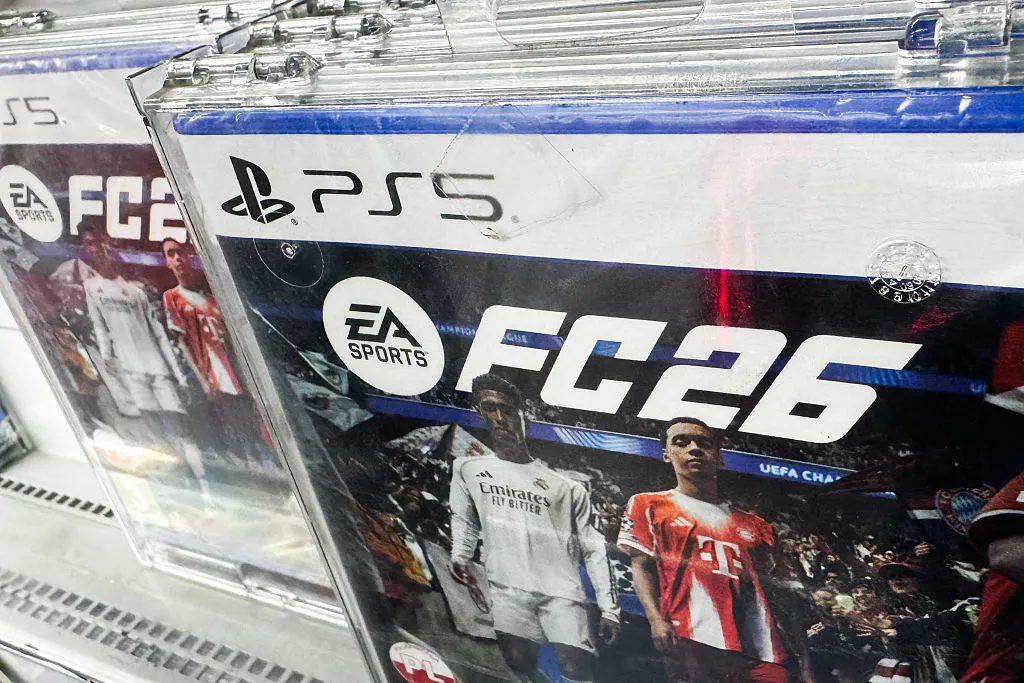
NurPhoto / Electronic Arts
After being acquired and on the verge of going private, Electronic Arts saw its sales fall 13% year over year in the July-September quarter, according to its latest earnings report.
The company announced it will also stop holding quarterly Q&A calls between analysts and EA leadership, something it has done for years, and will no longer share forward-looking financial guidance.
Variety reports the company’s decisions could be tied to the $55 billion acquisition deal that will see the Saudis and Jared Kushner’s Affinity Partners and Silver Lake Group take control of the video game developer.
The Sept. 29 acquisition hasn’t been completed yet, but is on track to be completed by next spring.
Per Variety:
Love Games? Get more! Join the Hip-Hop Wired Newsletter
We care about your data. See our privacy policy.
Wall Street forecast earnings per share (EPS) of 35 cents on $1.87 billion in revenue for the quarter, according to analyst consensus data provided by LSEG. EA reported non-GAAP diluted EPS of 54 cents on $1.82 billion in net bookings ($1.84 billion in revenue).
That net bookings figure was down 13% from the $2.1 billion in net bookings EA posted from July-September 2024, which EA attributes to especially strong sales for “College Football 25” at that time.
Despite sales falling, EA CEO Andrew Wilson expressed optimism in a letter sent to shareholders.
“Across our broad portfolio — from ‘EA Sports’ to ‘Battlefield,’ ‘The Sims,’ and ‘skate.’ — our teams continue to create high-quality experiences that connect and inspire players around the world,” Wilson said. “The creativity, passion, and innovation of our teams are at the heart of everything we do.”
We shall see if that optimism remains if the sales numbers don’t improve.

NurPhoto / Electronic Arts
After being acquired and on the verge of going private, Electronic Arts saw its sales fall 13% year over year in the July-September quarter, according to its latest earnings report.
The company announced it will also stop holding quarterly Q&A calls between analysts and EA leadership, something it has done for years, and will no longer share forward-looking financial guidance.
Variety reports the company’s decisions could be tied to the $55 billion acquisition deal that will see the Saudis and Jared Kushner’s Affinity Partners and Silver Lake Group take control of the video game developer.
The Sept. 29 acquisition hasn’t been completed yet, but is on track to be completed by next spring.
Per Variety:
Love Games? Get more! Join the Hip-Hop Wired Newsletter
We care about your data. See our privacy policy.
Wall Street forecast earnings per share (EPS) of 35 cents on $1.87 billion in revenue for the quarter, according to analyst consensus data provided by LSEG. EA reported non-GAAP diluted EPS of 54 cents on $1.82 billion in net bookings ($1.84 billion in revenue).
That net bookings figure was down 13% from the $2.1 billion in net bookings EA posted from July-September 2024, which EA attributes to especially strong sales for “College Football 25” at that time.
Despite sales falling, EA CEO Andrew Wilson expressed optimism in a letter sent to shareholders.
“Across our broad portfolio — from ‘EA Sports’ to ‘Battlefield,’ ‘The Sims,’ and ‘skate.’ — our teams continue to create high-quality experiences that connect and inspire players around the world,” Wilson said. “The creativity, passion, and innovation of our teams are at the heart of everything we do.”
We shall see if that optimism remains if the sales numbers don’t improve.
Trending on Billboard
When T-Pain and Clinton Sparks call in to Billboard, Pain is on his tour bus, and Clinton is in his car on his way to meet Howie Mandel. Yes, Howie Mandel — the former Deal or No Deal host and current America’s Got Talent judge. According to Sparks, Mandel is secretly an avid gamer and was interested in talking about the Global Gaming League — T-Pain, Ne-Yo, Sparks’ and Jeff Hoffmann’s new e-sports community.
Explore
See latest videos, charts and news
The idea was simple: Competitive e-sports teams have long been reserved for elite, top-tier gamers, but what if there was a league comprised of just average people who love video games — and a random celebrity?
“I mean, everybody games, from the Jonas Brothers to Terry Crews to Snoop Dogg,” Sparks says. “None of those people are gonna stop what they’re doing and be hardcore e-sports players. They’re not quitting their day jobs to compete for years, but they all game! There was nothing built for them to be a part of.”
On Wednesday (Oct. 29), Mandel was announced as another celebrity team owner, along with Million Dollaz Worth of Game hosts Gillie and Wallo267. Mandel’s “Howie Do It” team will face off against “Million Dollaz Gaming” in Las Vegas on Nov. 18. However, neither of these teams are comprised entirely of celebrities; in fact, most of the players will be just average gamers from around the world.
“There could be a team where it’s T-Pain, a 12-year-old from Madagascar, and a 41-year-old from Cleveland,” Pain explains. “Everybody games, it’s for everybody, and I’m trying to make it where everybody can get to this.”
This communal approach to gaming also doesn’t mean corners need to be cut regarding fanfare. The Global Gaming League hosted its first event in Las Vegas earlier this month, and it was as high-budget a celebration as any other gaming event. As T-Pain’s Nappy Boy Grizzlies faced off against Ne-Yo’s Gentlemen’s Gaming Team with back-to-back rounds of Call of Duty, Tetris and Tony Hawk’s Pro Skater 3 + 4, Rich the Kid popped out for a halftime show, and Flava Flav, who is also a team owner, even stopped by to hype up the crowd.
Even without all the celebrity glamour, the event itself was incredibly high stakes. Ne-Yo and T-Pain were forced to face off in the event’s closing moments for a tiebreaker. Unfortunately for T-Pain, the game of choice was Tekken, which Ne-Yo is apparently unbelievable at playing. Pain never stood a chance.
“Being part of the Global Gaming League as a team owner has been incredible,” Ne-Yo says in a statement. Billboard could not reach him for an interview due to his hectic tour schedule. “I’ve always had a passion for gaming, but this league is really taking the competition to another level while bridging the intersection between gaming and entertainment in a creative way. The championship match is going to be a special one, but I really believe this league has the potential to shift the entertainment landscape and open new doors for gamers worldwide.”
Below, T-Pain and Clinton Sparks talk about how the Global Gaming League came together, what it means to bring celebrity culture and gaming under one roof — and why Pain lost so badly to Ne-Yo.
Tell me about how the idea of Global Gaming League came together, and why did you guys feel so enthusiastic about committing to this program in such a big way?
T-Pain: [Clinton], you can give him the interview version.
Clinton Sparks: [Laughs.] God d–n it, Pain. Alright, here comes the AI version. We both are in the entertainment space, we both care about people. We both enjoy bringing opportunities and people together, so nothing really does that quite like gaming does. As you know, Pain’s been a gamer for a long, long time. I had experience building gaming companies from FaZe Clan to other organizations, and when I was building those I recognized that as big as gaming is, it’s still disconnected form mainstream pop culture and definitely the streets.
How is it so big and we’re all connected to it one way or another, and there isn’t anything set up that we can have an authentic footprint within it in a more communal way, that’s not just in our own streaming set up? How do we create something where [everyone] can participate and be a part of it just like any other sports, where you start in football and go to high school and go to college and hopefully make it to the NFL? There isn’t anything like that [for gaming].
So what’s the non-interview version, Pain?
TP: The non-interview version is: We saw e-sports and we were like, “Bro, why the f—k aren’t we doing that with the homies?” We saw a part that just was missing. E-sports seemed so unattainable. You have to be a pro, you have to be amazing at this s—t, but what about the guys that are just there? That just play all the time because they want to?
Once I got into this part of my career where I became independent, like — no shade to where you work at — but I was like, ‘Oh, I don’t have to chase Billboard No. 1s anymore.’ I can actually just f—kin’ do this s—t because I like doin’ it and still be in the ranks with the people that are hitting No. 1 on Billboard. I can still be around them and do s—t with them. So I was taking that approach back to gaming, something we all love and when we think about music and are really good at it, We do this s—t for free. But how cool would it be to get paid for it?
What are the kind of conversations you want to see the music industry having?
TP: When you bring this conversation of e-sports to celebrities, the first thing they say is: “How do I make money off of this?” When we bring them the Global Gaming League they say, “Oh, s—t, sounds fun, we outside!” It’s such a casual thing that we don’t even care if we make money. We’re going to, but it’s such a turn-key thing. We want the conversation to turn away from, “How do I make money from video games?” into “How do I make this bigger than what it is right now and still get the bonus of making money?”
Like I lived with an e-sports team for two days for a journalistic piece, and I got out of there immediately. It was supposed to be five days and I was like, “All right, that’s enough of that.” They gotta wake up at 7:00 a.m., work out, work on their hand-eye coordination, it’s crazy bro. I was like, “Yeah, I only brought leather pants with me, I’m not doin’ this s—t.”
CS: You’re here for the fun. We know the business of it is gonna happen. Dope doesn’t chase money, money chases dope. We’re building dope and bringing other dope friends along with us so that not only is it giving them an outlet to do something they’re passionate about and excited about. For the universal community that have been waiting for an opportunity to compete, to make money, to build business, that’s what we’re creating with our entire league system.
How did you guys make that model sound appealing to celebrities though?
TP: It seems unbelievable, you know what I mean? Because when people come to celebrities like that they’re like, “Alright, how many f—kin’ days do I have to show up in this. How much money do you want me to invest?” So when you do that initial pitch you have to let these people know they don’t have to spend any money, and they get to own part of the company. We’re not looking for any money, we’re looking for you to come have fun. That’s it, you know what I’m sayin’? It’s honestly unbelievable because the gaming industry has gone so deep into, “How do we make money off of this?”
CS: From a celebrity standpoint, I totally agree. From an investors stand point, it’s educating them and making them understand it’s the biggest entertainment platform in the entire world that makes more money than music, movies and television combined.
TP: That’s even harder! Cause when you get the celebrities and say we don’t want your money, then go to investors and say we got a team with T-Pain, Snoop Dogg and Kevin Hart, the first thing they say is, “Why the f—k didn’t you take their money?” Bringing those two parts together was the worst.
T-Pain, you’re no stranger to streaming or gaming at this point. How has utilizing these new age entertainment platforms changed your life and your career?
TP: I mean, I’ve been on Twitch since 2014, and I’ve been streaming since then. From 2014 to 2019 I was streaming to like 20 to 200 people. Nobody knew I was doing it, nobody understood. Then when the pandemic hit and I got to make my production value real dope, I started getting interviews about being on Twitch. I’m like, “Man, it’s six years I’ve been sitting here doing nothing…”
But I was already in it, I was already taking my PlayStation and Xbox everywhere. I was already playing games in my hotel rooms, and I would talk to myself. I would be screaming at my screen, raging out in my hotel room, security is getting called. Then when I went and did an interview with PlayStation, while we were doing the interview we were playing a game and also streaming on Twitch. I was like, “Well, what is that now? How can they see what I’m sayin’?”
But the thing that caught me is that [on Twitch], they’re like minded people. A community of people who actually like the s—t you’re doing. It kinda gave me an out, it gave me more expression. It gave me a way to let out this side that my managers at the time thought was the corniest f—kin’ thing in the world. If I pulled out a PlayStation or a handheld gaming thing in the studio, I would literally get reprimanded like, “You’re supposed to be making music! Put that s—t down, you’re supposed to be making us money. These video games are gonna kill your f—kin’ career.” Once I got rid of my managers all of my gaming s—t has been this whole other side of me.
What were some of the most influential games from your childhood?
TP: 007 GoldenEye. That was the first one. When we got that game I never got to play it cause my brother, it was his game. He wasn’t about to let his little brother play the new s—t. But then, he had to get a job. So every time he went to work I finally got to load that thing up. Ah man, that s—t… [and] SEGA’s Lion King, that was the f—kin’ Elden Ring of the SEGA days. That was the toughest game in the world.
CS: Mine ranges a lot, ’cause I’ve been gaming since the ’80s. I remember getting my first Atari and just being hooked on Pac-Man and Donkey Kong. Frogger, Pitfall! Then moving into the Nintendo days we see Super Mario, Street Fighter, and honestly I still play Tetris every day. I could be on the toilet, and I’m playin’ Tetris.
TP: That’s why Clinton’s so big on the business side, ’cause all the games he play actually help your brain.
As 2025 comes to a close, what is your game of the year pick so far, and what game were you surprisingly disappointed by this year?
TP: Black Myth: Wukong was bats—t. I think that changed my blood pressure medication, in sort of an Elden Ring way. I wasn’t big into Souls-type games, so it wasn’t really on my radar, but man the sound design, presentation, everything that went into it I was hooked.
As for disappointed? I think I wanna get further into Borderlands 4 before I start talking s—t. But Borderlands 4 is teetering that f—king line right now with me.
CS: I’ve been so busy building this thing, but I will say Tony Hawk’s Pro Skater 3 + 4, Mario Kart World—
TP: Yeah, Clinton’s more of a cozy guy.
After watching you and Ne-Yo face off on Episode 1, I gotta ask — what happened man? Were you surprised at all by Ne-Yo’s gameplay?
TP: Honestly, not at all. I’ve watched Ne-Yo stream and I was hoping we wouldn’t have to play each other. When it came to the tie and we actually did, I was like, “Oh, we lost guys, it’s over.” Before we even picked up the sticks [I knew]. Ne-Yo is cracked at Tekken, bro. I was really hoping that part of the show wasn’t gonna happen.
Well, either way, episode 1 was a wild spectacle. You guys pulled out all the stops. I’m excited to see what you guys got in store for episode 2.
CS: Look, if you invite someone to a party, the first thing they’re gonna ask is: “Who’s gonna be there?” It’s not just about the party! So we wanted to converge music with fashion, sports, celebrity, competition, culture. We may have a rocker, rapper, influencer, do a halftime show, because when you bring in an audience to a “gaming event,” you’ve already limited that and made a lot of people say, “I ain’t goin’ to that s—t.” But maybe they’re coming cause some girl is a fan of Bryce Hall, or they’re a fan of the halftime performer, or a fan of someone playing on the teams. Gaming is here to bring communities together.
So Pain, will fans see you bust a move at Ne-Yo’s next show now that you lost the bet?
TP: Yep, I gotta do it, but joke’s on him I woulda done it without the bet. I was ready to go, but I’ve been on tour with Ne-Yo four times already and I’ve kept telling him, “I’m comin’ up there one day bro!”
CS: We gotta set that s—t up man!
TP: It’s gotta happen.
Trending on Billboard
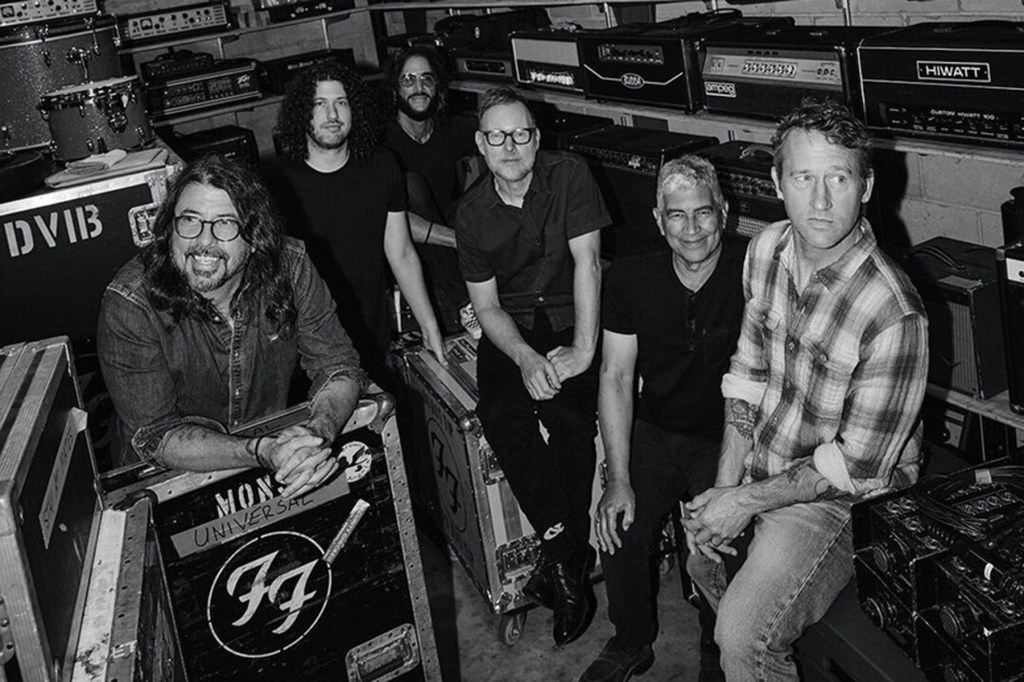
What’s better than weekly ? A TNF football game followed by exclusive live music performances, this time, with the Foo Fighters.
Amazon Music Live is back for a fourth season and the performances are hot. First up we had a barn-busting Shaboozey performance Oct. 23. This week, legendary band Foo Fighters will take the stage on Oct. 30 9pm PST, while the livestream will be available for our east coast folks on Oct. 31 at 12am EST. From their greatest hits to latest tracks, this is your chance to gain a front-row seat to one of rock’s most electrifying bands all from the comfort of your home. You can watch the act perform live on Prime Video, along with the Amazon Music Twitch channel.
Foo Fighters will honor Amazon Music’s “Alternative Hits” playlist, delivering a smattering of the iconic songs that have made them one of the most-streamed rock artists on the service. The performance will also be a key moment for the band’s newest member, former Nine Inch Nails drummer Ilan Rubin, who joined Foo Fighters after the devastating 2022 death of Taylor Hawkins. The band has had 10 songs hit Billboard’s charts, the highest of them being “Best Of You,” a 2005 track from their album In Your Honor.
To stream the show on Amazon Prime Video, you’ll need a Prime subscription. If you don’t have one already, a membership to the service will run you $14.99 per month, or $139 a year. With a subscription to Prime, you’ll have access to Amazon Music, which includes their livestreams, along with a slew of blockbuster TV and film titles via Prime Video. Of course, you’ll also have access to Prime perks, including savings on groceries and fast, free delivery on eligible items.
Followed by the Foo Fighters performance, Mexican-American band Fuerza Regida will grace the stage with a medley of their Billboard chart-topping hits across a slew of genres, all grounded by their signature approach to regional Mexican music.
Finally, Aespa will close out the season with a Nov. 13 finale featuring the tracks that have made them mainstays on the service’s “K-Pop Now” playlist. At the top of 2025, aespa earned group of the year honors at Billboard Women in Music, marking the second year in a row that a K-pop group took home that award.
“[Shaboozey, Foo Fighters, Fuerza Regida, and aespa are] crafting a unique, unforgettable set that showcases why live music remains such a powerful force,” notes global head of content at Amazon Music Kirdis Postelle. “By uniting sports and music after Thursday Night Football, we’re creating an experience that puts fans at the center of culture.”
Actress and entertainer Liza Koshy, who presented at the 2022 Billboard Music Awards, is also set to reprise her role as the official Amazon Music Live social host, bringing fans exclusive behind-the-scenes content with each week’s performer.
Past Amazon Music Live seasons have included performances by Post Malone, A$AP Rocky, Ed Sheeran, GloRilla, Keith Urban, Feid, Machine Gun Kelly and Offset. Fans can catch the season four premiere via Prime Video and the Amazon Music Twitch channel, immediately following Thursday Night Football.
Trending on Billboard
Once upon a time, NBA Hall of Famer Allen Iverson attempted to try his hand as a rapper in the early 2000s, but he eventually scrapped plans for his debut album amid backlash, and couldn’t help but feel embarrassed when looking back on his brief time rapping.
Explore
See latest videos, charts and news
AI joined Joe & Jada earlier this week, where he recalled feeling humiliated when meeting the late NBA commissioner David Stern, who read explicit lyrics aloud from Iverson’s “40 Bars” single.
“When I did that bulls—t-a— rap album,” he began. “I was so embarrassed when I hear that s—t now. But we don’t spend no time on that. The most embarrassing s—t was when I did the album, I had to come here to meet with [David Stern].”
For context, Iverson rapped under the alias Jewelz, and sparked controversy with his “40 Bars” single in 2000, which some believed contained sexist and homophobic lyrics.
The Philadelphia 76ers icon met with Stern to discuss his budding rap career and the backlash surrounding his upcoming Misunderstood album, which was originally titled Non-Fiction and was scrapped by late 2001.
“I’m sitting there looking like, ‘Yo, f—k is he doing?’ The man start reading the lyrics,” AI recounted. “Man, I wanted to crawl up under the table. I was so embarrassed, man. The curse words, everything. That s—t was so embarrassing.”
As if the weight of the 76ers franchise and city of Philly wasn’t enough, Iverson was often butting heads with Stern. The NBA even implemented an official dress code in 2005, which was seemingly instituted to put an end to Iverson’s streetwear style.
While his rap career is in the rear-view, Iverson has done plenty of reminiscing in October. The NBA legend released his Misunderstood memoir and Allen Iv3rson documentary on Amazon Prime Video earlier this month.
Watch a clip from the interview below:
Trending on Billboard
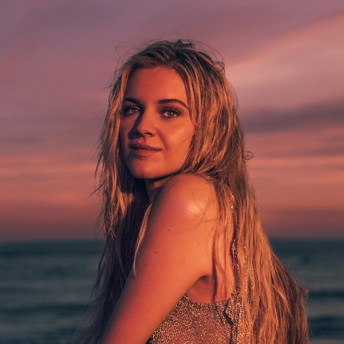
Kelsea Ballerini posted one of her epic photo dump updates on Tuesday (Oct. 28), in one of her first personal posts since announcing that she’d broken up with Outer Banks actor Chase Stokes in early September.
Explore
See latest videos, charts and news
Though the Instagram photo reel didn’t make any reference to the split or Stokes, it provided fans an inside track on what the “Cowboys Cry Too” singer has been up to lately. “brought to you by hot dogs, porch painting, bed by 9pm, friendship, parks, kenny chesney, and lexapro,” she wrote in the caption that opened with an image of her face obscured by a Polo baseball hat as she listened to music on wired headphones.
The next slide provided the “hot dog” portion of the caption via a picnic pic of a trio of women in jeans enjoying a dog, chicken wings and fries, followed by the “porch painting” bit where she is taking a nap on a sun-flooded outdoor space with a paintbrush and palette sitting on the table.
There were also snaps of Kelsea in a white terry cloth top and matching bottoms wearing an opaque silicone sheet mask, a pic of a pumpkin painted with a tree, her seemingly hugging a black cowboy hat-wearing Chensey from on stage during a show and some snuggle time with her beloved goldendoodle Dibs.
Ballerini and Stokes began dating in 2023 and a rep confirmed to Billboard that they broke up in early September. “They’re two adults who gave it their all and tried to do everything they could to make it work, but ultimately couldn’t. It happens,” sources close to Ballerini and Stokes told People at the time.
Fans were seemingly caught off guard by the Sept. 15 news since just three days earlier, Stokes celebrated Ballerini’s 32nd birthday with a celebratory Instagram post that included several photos and videos of the couple’s private life. Stokes captioned the post, “Although you keep saying you’re not excited for 32, id say I’m lookin forward to more of this. happy birthday my love.”
The new post from Ballerini also featured a snap of her and friends painting their pumpkins at night and saying hello to a horse and ended with a silly clip of the singer emerging from the mouth of a blue hippo see-saw on a playground.