State Champ Radio
 News
Page: 151

Warner Bros. TV / Megan Thee Stallion
Hip-Hop’s drought on Billboard’s Hot 100 has come to an end thanks to Megan Thee Stallion.
Megan Thee Stallion’s ode to her man, her man, her man, her baby, “Lover Girl,” has brought Hip-Hop back on the Hot 100 chart.
The infectious new single made its debut at No. 8 for the November 8 Hot 100 chart, ending the 2-week period where no Hip-Hop singles appeared on the Top 40, the first time since February 3, 1990.
Billboard states that “Lover Girl” is the first rap song eligible for ranking on their Hot Rap Songs listing to land on the Top 40 since Kendrick Lamar’s single “Luther” featuring SZA.
Love Hip-Hop Wired? Get more! Join the Hip-Hop Wired Newsletter
We care about your data. See our privacy policy.
Thanks to its 8.5 million official U.S. streams, 1.5 million in radio airplay audience, and 5,000 sold in the week ending October 30, “Lover Girl” earned its No. 8 position on the chart.
The song will be the Houston rappers’ 21st top 40 entry on the Hot 100. Her last entry on the chart was on September 21, 2024, with her RM-assisted track, “Neva Play,” debuting at No. 36.
“Wannabe,” featuring GloRilla, whom she is now allegedly beefing with, hit No. 40 after peaking at No. 11.
Thee Stallion also reached the top of the charts with “Savage Remix” featuring Beyoncé and “WAP” with Cardi B in 2020, and “Hiss” in 2024.
She wasn’t alone; NBA Youngboy’s “Shot Callin” and BigXthaPlug’s “Hell at Night” also landed on the Hot 100.
Gunna’s “wgft” and Cardi B’s “Safe” featuring Kehlani are slowly picking up steam and can also land on the chart at some point.
We hope this moment keeps going; we don’t want to see any more droughts.
Trending on Billboard
When OsamaSon sent me a physical copy of his new album Psykotic back in October, he included with it a new Walkman CD player. I loaded the disc in, put the black corded earbuds into my ears, and pressed play. Within seconds, the explosive jolt of “Habits” convinced me that the Walkman was broken. I began tinkering with the headphone cord, twisting it around in the hopes that it would clean up the song’s warped, distorted crunch.
Explore
See latest videos, charts and news
Once Psykotic hit streaming a few weeks later, it became clear that the album’s gnarled, crackling gut punches were completely intentional. To the untrained ear, songs like “Inferno” and “In It” can be a nauseating, all-consuming nightmare. But OsamaSon takes a lot of time crafting his seismic sound. Dialing everything up to 11 is a very serious job, and the 22-year-old rapper knows the difference between what’s just noise and what’s a certified hit.
His fans do too. The album hit No. 81 on the Billboard 200, and that mutual understanding has led to an unbelievably ravenous — and at times incredibly toxic — fanbase that OsamaSon loves, but is often frustrated by. It also explains why early album copies were sent out via Walkman.
The rapper’s previous tape, Jump Out, was almost completely derailed by leakers and hackers before it dropped in January. Hundreds of songs, both old and new, continuously found their way online, and the situation became so dire that Osama’s own team allegedly released a 10-track tape called Leaks Tape to help keep fans engaged. Osama notes that even though Psykotic’s rollout was much cleaner, the leaking issue persist to this day — and that it’s not just his music being posted online anymore.
Below, Billboard chats with OsamaSon before his show at Brooklyn Paramount to talk about his new album and how he’s overcome the leakers, haters, and controversies that surround his art.
Now that Psykotic is out in the world, how are you feeling about this project versus Jump Out?
I feel way better about this project than the Jump Out project. When I dropped Jump Out, there were a lot of mixed opinions. I don’t feel like they understood it. I’m seeing more positive opinions on Psykotic. I feel like they received it a lot better.
Take me through the earliest stages of Psykotic, and how you found your sound. It seems like you really knew what you wanted the album to sound like.
Just experimenting and trying s—t that I like personally, and not trying to be too inspired by other people. It’s just me going to the studio, me recording myself, recording, and recording, and recording. I got so many songs, and people might think the songs I put out are just what I’m making right then and there. How many songs are on Psykotic? 17? Out of those 17, I had to pick from like 1,000 I made this year.
How do you narrow it down?
It depends on the feeling I’m going for. So Psykotic was supposed to be psychotic, obviously. I’m trying to go for the loud noise, super good mix, but still crazy where you’re either gonna be surprised by the lyrics or the beat. I don’t ever go off of, “Yo, this snippet is goin’ viral; I gotta drop it.” That adds into it, but if I don’t personally like it, I’m not gonna drop it.
Your sound is definitely unique to you, but at the same time, I can hear the XXXTENTACION, Lil Uzi Vert influence on your music. Do you intentionally pull from them, or is their impact more through osmosis?
Being humans in general, I feel like we do a lot of s—t unintentionally all the time without even knowing. Sometimes I be makin’ a song, and I’m like, “This is the craziest song; I don’t think I’ve ever heard anything like this.” Then I end up going back to some old, old music, and I hear Uzi say a bar that I happened to say in a new song. I didn’t do that on purpose — that happens all the time. I feel like that’s just being an artist.
You seem intent on pushing outside your creative comfort zone. How do you feel about the term “rage rap” to describe your music? Does that term ever make you feel boxed in?
Not really, ’cause they label me something new all the time. First it’s underground rap, then it’s dark plug, and now it’s rage rap. I feel like it’s always gonna change, so I don’t really try to dwell too much on that aspect of it. It’s based on your opinion. Some say I might make music for the ladies, some might say I make music for the mosh pits. I might say I make music for myself.
Tell me about how that fueled your approach to the album’s cover art. That started quite a bit of controversy online.
It’s a fire cover art, man! It’s not even nothin’ to get — like if you want me to keep it 100% with you, bro — it wasn’t nothin’ crazy. Like we wasn’t tryin’ to be on some blasphemous s—t—Man, you know what?—We were. Yeah, we were trying to disrespect all the religions! F—k ’em, f—k everybody. F–k how everybody feels. That’s what the cover is, man: F—k you. I sent this s—t to my mom and everything, and she was like, “This is perfect.”
I saw something on Reddit about how you should have instead leaned into some Osama Bin Laden terrorism vibes because of your name. It left me thinking, “That can’t possibly be a more preferred branding.”
Yeah! Like should I be a terrorist or a devil worshipper? I’d rather be a devil worshipper.
Do you feel in those moments you’re kinda taking the power back from your haters in a way?
Yeah, and at first I didn’t really realize it. I wasn’t using my power how I was supposed to, bro. I cared about what people thought, and I’m at the point where I don’t give a single f—k about what anybody thinks, because it doesn’t matter! The only opinion that matters to me is my mom’s. I don’t give a f—k about anybody else’s opinion.
Regardless, it also seems like this was your first leak-free rollout of an album.
I mean, I feel like my fans just accepted that it comes with the s—t. I feel like they accepted the leaks, the crazy s—t that happens behind my name—I don’t know. I feel like people are more used to what’s going on now. When it first started happening, I’m not gonna say I was the first to go through it, but the rate I was goin’ through it…
It was unbelievable how often your music was getting leaked out.
Yeah! Even for myself, I understand this way more. I just feel like it’s my life.
How did the leaks influence your approach to making this album and the subsequent rollout? I imagine it must have made you pretty paranoid about sharing music.
It was hard. I had to learn how to not feel some type of way about every leak. I used to just be in my feelings a lot, bro. I feel like the music I was making was super hard. And even if I didn’t put it out at that time, with [leakers] putting it out for me, it was kinda like… like, you see all the reactions to it, the feedback, and you’re just like, “I coulda dropped this on my own.” Like, I just — hm, I just gotta — It’s hard, bro. It’s my life too, so it’s like, I don’t know. I just don’t feel like I’m ever gonna get away from it.
From your perspective, what happened, and why have the leaks been so persistent?
Honestly, the attention the leakers were getting from it — with me being an up-and-coming artist and not a lot of people going through the same thing that I went through — it was kinda like that shock factor. You see [the leakers] are getting so lit, and that’s what it is, bro. These leakers are getting lit behind it. It gives them a name. They don’t have to show their face or post selfies. They just leak my music and get 2,000, 3,000 followers. For me to get 3,000 followers, I had to post like five trailers. I had to really work for it. All they gotta do is post my leak. It’s been kinda weird, man; it’s fried.
I genuinely don’t understand. I don’t think I’ll ever have a firm answer on it because it’s always different. Sometimes the leakers will be like, “Yo, f—k you and your whole family. I’m gonna leak everything.”
They’ve messaged you and said that to you?
Yeah, they leaked the address to my mom’s house! They got my mom’s house raided. Then the week after that, they’ll text me and be like, “Yo, my bad bro. I was tweakin’. I’m sorry, I really love you to death.”
That’s so crazy.
Yeah, it’s pretty weird, and I’ll never fully, genuinely understand it. I just gotta deal with it. But you kinda learn how to avoid it in certain ways—not send your music out to people, put music on hard drives, s—t like that. But you can’t 100% avoid it. Some people be like, “Yo, just don’t send your music to nobody.” You can’t not send your music to nobody! You got engineers, you got creatives that can’t f—kin’ create unless they’re hearing the music.
You want them to create on a blank canvas, somethin’ that doesn’t match the music at all? My manager has to hear the music, my producer has to hear the music. Maybe they wanna switch somethin’ up. It’s kinda impossible not to send s—t out to get worked on. If I don’t send it out, it’s never gonna drop.
It’s true, it’s not like you can wait for all these people to get in a room with you.
You feel me? Then if I do send it out, leakers somehow have been able to get their hands on this, or they hack my phone, or they just happen to hack this phone.
So is that how the idea of sending the album out with a Walkman came about?
What’s the Walkman?
The CD player!
Oh, that was [my team’s] idea. It was a cool idea. It was pretty fire.
How much did that help?
There were some songs that leaked out, but from [the CD copy], zero leaks, for sure. I think it was from me sending songs to my producer some months ago. I wasn’t even mad about it. It’s better than the f—kin’ last project. That whole s—t leaked before it came out.
I’m not gonna lie; I listened to the album on that Walkman, and I thought that my headphones were distorted or blown out. Then I realized that’s just your vibe.
Yeah, a lot of people were sayin’ that. It was probably just the mix, not gonna lie. We were mixing and mastering it till that s—t came out.
Did the leaks hinder your creative approach to making music?
Sometimes. It depends on how I feel about that song specifically. They was leakin’ bulls—t that I knew I was never going to drop, and I was like, f—k it; y’all can have it. But there have been times where we’re like planning on dropping s—t, like we shot videos, trailers, and somehow, as soon as we start working on the actual song, they leak it. Like, are they tapped into my phone? There’s been times where I’ve been having conversations on the phone, saying, “Alright, let’s shoot this video tomorrow.” I’ll wake up, and [my team] is like, “Yo, you’re never gonna believe what just happened.”
Have you met any other rappers at your age who are experiencing this?
No, I try to ask my peers all the time. I mean, I know Che went through it a little bit. There was this app called Untitled, and some leakers run the app. Whenever you log into it, they can go through every single person who’s ever made an account. It’s supposed to be a private place to upload your music, but that’s how a lot of people got hit. And just SoundCloud having horrible protection. Bro, you can hack SoundCloud with a link, and you can literally start typing in random letters to get into people’s accounts. It’s super easy. But yeah, I tried to ask my peers, but I don’t know. Some people’s music is just not wanted that bad, you know what I mean? Or some people just put out a lot of music to where their fans are satisfied. [My fans] just aren’t satisfied. I’m pretty sure they’re just anxious and wanna be the first people to know what we’re doin’ next.
Yeah, it’s not just the leakers, but your fans are unbelievably hungry for OsamaSon music. In a way, it’s flattering.
It’s flattering and frustrating, not gonna lie. It’s a lot more flattering. I used to work a 9-to-5, bro. People used to judge me. I used to check people into hotels.
Has that level of fan engagement this early on in your career been overwhelming at all?
Nah, I’m not gonna say I feel like I deserve it, but I always felt like I was meant for this life. I didn’t have plans on doing anything else. Like, it’s fire, man. This is exactly what I want, even with the leaks and stuff. When I was a kid, seeing [Playboi Carti] get leaked, or Uzi get leaked and s—t — those are the greatest of our generation. Literally the greatest, you feel me?
So that s—t was inspiring! Like, “Yo, everybody wants to hear his s—t. Like, this is crazy! When they gonna start leaking my music? That’s when I know I’m up!” Then it started happening, and I was like… did I really want that? But I kinda did, when I was a kid! The little me is looking at me right now like, “Yo, you wylin’, bro!”
Trending on Billboard
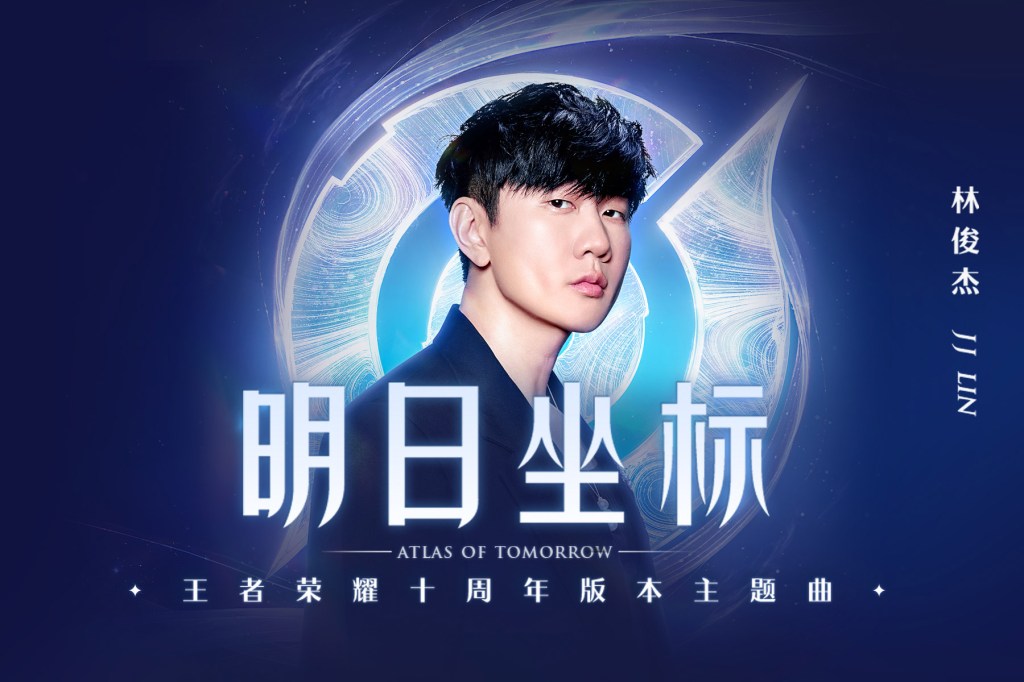
Global gaming powerhouse Honor of Kings has dropped its 10th-anniversary theme song “Atlas of Tomorrow,” now streaming across major platforms including Tencent Music Entertainment’s QQ Music, Kugou and Kuwo, alongside Apple Music, Spotify and KKBOX. The track shot to No. 1 across multiple charts upon release, cementing itself as the latest blockbuster crossover between Mandopop and globally influential game IPs.
“Atlas of Tomorrow” boasts composition and vocals by JJ Lin, brand ambassador of Honor of Kings, Mandopop heavyweight and two-time Golden Melody Awards winner for best male singer, and lyrics by Kevin Yi, hitmaker and senior music planner. JJ Lin describes the track as “dedicated to every dreamer still writing their future chapters, letting music guide you to the stories we’re meant to live.” The track shot to No. 1 on QQ Music, Kugou and other major Chinese streaming charts upon its release. As of publication, it has racked up more than 2 million saves across platforms, generated 70-plus trending topics on social media, and amassed more than 600 million views, shattering multiple records for gaming music.
Notably, the impact of “Atlas of Tomorrow” has expanded from the realms of music and gaming into an online cultural co-creation movement spanning multiple regions. Over 280 tourism boards across mainland China, from Beijing to Guizhou to Zhejiang, have spontaneously paired the track as a soundtrack with local landmarks and cityscapes for videos, triggering a viral relay across short-video platforms.
“Atlas of Tomorrow” centers on the theme of “Gathering for Journey.” The profound resonance of its melody and lyrics stems from its ability to encapsulate a decade’s worth of emotional memories and energy accumulated within Honor of Kings, a beloved national IP. Therefore, the work transcends mere melody, becoming players’ response to their youth and stories. The track’s overwhelming reception among gamers and music fans worldwide following its release reflects both the song’s exceptional craftsmanship and emotional depth, as well as the formidable cultural influence and crossover appeal that Honor of Kings commands.
Through this partnership, TME empowers the gaming IP to achieve multidimensional expression across visuals, gameplay and audio via content co-creation and integrated campaigns. The collaboration underscores music’s expanding cultural role and reach within gaming ecosystems. Moving forward, TME remains committed to deepening strategic alliances with globally influential cultural IPs, promoting music’s unique power across diverse cultural content ecosystems and helping high-quality original voices reach a wider international audience.
Trending on Billboard
The Oasis Live ‘25 Tour kicked off its Australian leg last week (Oct. 31), and it continues to dominate music headlines as the shows roll along.
In a landmark move for Australia’s live music sector, Victoria’s government shut down bulk ticket scalping for Oasis’ recent Melbourne shows (Oct. 31, Nov. 1-4) at the Marvel Stadium by designating them under the Major Events Act 2009. The act allows the Minister for Tourism, Sport and Major Events to formally declare events that then become subject to anti-scalping protections.Under this special declaration, it became illegal to advertise or resell tickets on platforms such as Viagogo and StubHub for more than 10% above the original face value; if they flouted these restrictions, scalpers could be fined between $908 and $545,000 (AUD). A subsequent report from the Herald Sun states that 180,000 tickets for the sold-out shows went to fans as a result of the government effectively shutting out scalpers.
Related
Oasis’ management applauded the news, saying it could set a new benchmark for fairness in the live music market. “It’s great to see Victoria’s Major Events Declaration doing exactly what it’s meant to — Viagogo can’t list our Melbourne shows — and that’s a huge win for real fans,” they told the Herald Sun.
“When the government and the live industry work together, we can stop large-scale scalping in its tracks,” they added. “We’d love to see other states follow Victoria’s lead so fans everywhere get a fair go.”
Before last week, Oasis had not performed in Australia in nearly two decades. After tonight’s (Nov. 4) final Melbourne gig, they’ll head to Sydney (Nov. 7 and 8), before performing across Argentina, Chile and Brazil, wrapping up proceedings in São Paulo on Nov. 23.
Earlier this month in the U.K., the country’s culture minister, Ian Murray, confirmed that the current Labour government will press ahead with plans for a price cap on resale tickets.
Related
An industry consultation that took place in January invited views from venues, promoters, fans and other parties on the proposed price, which ranged from no profit being permitted on any ticket to a mark-up of up to 30% of face value.
Writing in the Daily Record last month (Oct. 5), Murray said: “We asked a direct question — should the UK follow countries like Ireland, where resale profiteering is capped in law? The response from fans could not have been a clearer — ‘yes.’”
“So let me tell you what we’re doing,” Murray continued. “First, we will cap resale prices. No more outrageous mark-ups of 500% or 1,000%. We are examining a range of options, from face value to a reasonable uplift.”
UK Finance, which represents 300 financial services outfits including Lloyds, NatWest, HSBC and Barclay, has lobbied against the decision for fear of customers losing out in an unregulated market. Adam Webb of the Fan Fair Alliance, however, disputed these claims in an interview with The Times. “I would advise UK Finance actually speak to experts in those countries, rather than rely on the self-interested research of unregulated offshore websites who promote industrial-scale ticket touting and exploit British audiences,” he said.

Trending on Billboard
Cardi B punches her ticket into the double-digit No. 1 club on Billboard’s Rhythmic Airplay chart as “Safe,” featuring Kehlani, becomes her 10th leader. The track climbs from the runner-up spot to rule the list dated Nov. 8. Thanks to its victory, “Safe” outdoes the peak of Cardi B and Kehlani’s previous collaboration, “Ring,” which achieved a No. 2 best in November 2018.
“Safe,” released on Atlantic Records, was the most-played song on panel-contributing rhythmic radio stations in the United States for the tracking week of Oct. 24-30, according to Luminate, and improved 17% in plays compared with the prior week. Due to its surge, the collaboration wins the Greatest Gainer honor, awarded weekly to the song with the largest increase in plays.
With the new champ, Cardi B adds her 10th No. 1 on Rhythmic Airplay and is the 13th artist to reach the milestone since the radio ranking’s launch in October 1992. Drake leads all acts, with 43 champs, while Rihanna, at 17, places second overall and claims the best total among women.
Here’s a recap of the Cardi’s B No. 1s on Rhythmic Airplay:
Song Title, Artist (if other than Cardi B), Weeks at No. 1, Date Reached No. 1“Bodak Yellow (Money Moves),” four, Oct. 7, 2017“No Limit,” G-Eazy feat. A$AP Rocky & Cardi B, two, Dec. 16, 2017“Finesse,” with Bruno Mars, two, Feb. 17, 2018“Be Careful,” one, July 7, 2018“I Like It,” with Bad Bunny and J Balvin, four, July 14, 2018“Please Me,” with Bruno Mars, one, April 13, 2019“WAP,” feat. Megan Thee Stallion, one, Sept. 26, 2020“Up,” three, March 20, 2021“Outside,” one, Aug. 16, 2025“Safe,” feat. Kehlani, one (to date), Nov. 8, 2025
Featured artist Kehlani captures a second Rhythmic Airplay No. 1, just a month after “Folded” topped the chart for one week. “Folded” continues to break personal milestones, becoming the singer-songwriter’s first No. 1 on the Hot R&B/Hip-Hop Songs chart and top 10 entry on the Billboard Hot 100 this week.
[embedded content]
Elsewhere, “Safe” wins a third term atop the Rap Airplay chart, where it improved 19% in week-over-week audience and pushes 8-6 on the R&B/Hip-Hop Airplay chart through a 22% gain to 13.5 million in audience at the format for the tracking week. Gains from various sectors help the single rise 22-21 on the Radio Songs chart, reaching 24.2 million (up 20%) across all radio formats during the latest tracking week.
Trending on Billboard
Anuel AA returns to the No. 1 spot on Billboard’s Latin Airplay chart with “Pórtate Bonito,” his first team-up with Blessd. The track flies 9-1 on the Nov. 8-dated list, Anuel’s first champ in over three years.
Released August 21 on Real Hasta La Muerte, “Pórtate Bonito” was initially announced on Anuel’s Instagram account on August 6, alongside news that Blessd would join him on his RHLM 2 tour.
The collab, produced by Ovy on The Drums, surges 9-1 in its seventh week on the chart with the Greatest Gainer weekly honors, after a 32% boost in audience impressions, to 7.6 million, logged during the Oct. 24-30 tracking week, as reported by Luminate.
The new win marks Anuel’s first No. 1 in over three years, since “Ley Seca,” with Jhayco, ruled for one week in February 2022. In sum, he’s placed 11 rulers, here’s a recap of those since “Ella Quiere Beber,” with Romeo Santos, in 2019:
Title, Artist, Peak, Weeks at No. 1“Ella Quiere Beber,” with Santos, Feb. 2, 2019, one“Secreto,” with Karol G, May 4, 2019, one“Baila Baila Baila,” with Ozuna, Daddy Yankee, J Balvin & Farruko, May 11, 2019, one“Otro Trago,” with Sech, Darell, Nicky Jam, & Ozuna, Aug. 31, 2019, one“China,” with Daddy Yankee, Karol G, Ozuna & J Balvin, Sept. 21, 2019, two“Aventura,” with Lunay & Ozuna, Nov. 9, 2019, one“Keii,” May 2, 2020, one“Fútbol & Rumba,” with Enrique Iglesias, Aug. 8, 2020, one“Location,” with Karol G & J Balvin, April 10, 2021, one“Ley Seca,” with Jhay Cortez, Feb. 5, 2022, one“Pórtate Bonito”” with Blessd, Nov. 8, 2025, one
Colombian star Blessd adds his third No. 1 on the overall Latin radio ranking. “Medallo,” with Justin Quiles and Lenny Tavarez, and “Si Sabe Ferxxo,” with Feid, each led for one week in 2022 and 2024, respectively.
Beyond its Latin Airplay coronation, “Pórtate Bonito” ascends 3-1 on the Latin Rhythm Airplay chart. Plus, it gains traction on the Hot Latin Rhythm Songs chart, where it narrowly misses the top 10 with an 18-11 leap.
Trending on Billboard
We’re just days away from the announcement of the nominations for the 68th annual Grammy Awards. The big reveal is set for Friday Nov. 7 at 11 a.m. ET/ 8 a.m. PT. In recent days, we’ve predicted the eight most likely nominees for best new artist and album of the year. Today, we turn our attention to record of the year, where we could see some history-making nominations.
HUNTR/X and ROSÉ could become the first K-pop artists to receive record of the year nods. HUNTR/X is competing with “Golden,” the globe-conquering hit from KPop Demon Hunters; ROSÉ with “APT.,” her smash collab with Bruno Mars.
Kendrick Lamar and SZA are vying to become the first occasional duet partners to receive two record of the year nominations. They were nominated seven years ago for “All the Stars” and are strong contenders this year for “Luther.”
Doechii’s “Anxiety” could become the first single that prominently samples a previous record of the year winner to be nominated in the category. Doechii’s hit samples “Somebody That I Used to Know” by Gotye featuring Kimbra, which won the prize in 2013.
Leon Thomas’ “Mutt (Live From NPR’s Tiny Desk)” and Myles Smith’ “Stargazing (Live at Eventim Apollo)” could become the first alternative versions of hits to receive record of the year nominations. (The original versions of those hits were released in the previous eligibility year and weren’t eligible.)
To be sure, all of these things are not likely to happen. Some voters may dock “Anxiety” for leaning so heavily on a very well-known hit from the recent past.
And voters tend to bypass alternative versions of songs in this category. If the studio version of “Mutt” had been eligible, it would almost certainly be nominated. Silk Sonic’s “Leave the Door Open” won in this category (as well as song of the year) in 2022, showing the love many Grammy voters have for hits that evoke the glory of 1970s R&B. But many voters probably haven’t heard the live version of “Mutt,” and they may be reluctant to vote for something for record of the year that they haven’t even heard.
(Lola Young’s “Messy” and Gigi Perez’s “Sailor Song” were also released in the previous eligibility year, yet those original studio versions are entered for record of the year.)
Billie Eilish may very well return to the finals with “Wildflower.” It would be her sixth nod in this category in the past seven years. Like Eilish’s previous single, “Birds of a Feather,” “Wildflower” was a fixture on the Hot 100 for more than a year. But “Wildflower” had a hard time emerging from the shadow of “Birds of a Feather,” which was nominated for record and song of the year and which Eilish and her brother/collaborator FINNEAS performed on the Grammys in February.
sombr is entered with “Back to Friends.” The 20-year-old is the sole writer and producer on this song, one of two concurrent hits from his debut album, I Barely Know Her. Such pros as Taylor Swift and Ryan Tedder have proclaimed that they are sombr fans.
Tyla’s “Push 2 Start” is entered for both record of the year and best African music performance, a category she in which the South African singer won two years ago with “Water.”
All eight likely album of the year nominees will get a close look in this category. Sabrina Carpenter, Lady Gaga and Lamar (with SZA) are also expected to be nominated for record of the year. The other five likely album of the year nominees may fall short in record of the year – Elton John & Brandi Carlile for “Who Believes in Angels?,” Tyler the Creator for “Sticky” (featuring GloRilla, Sexyy Red & Lil Wayne); Clipse, Pusha T, Malice for “Birds Don’t Sing” (featuring John Legend and Voices of Fire); The Weeknd for “Timeless” (featuring Playboi Carti); and Bad Bunny for either “Baile Inolvidable” or “DtMF.” (The fact that two Bunny records are entered for record of the year may mean Bunny will split his votes here. C’mon, Team Bunny, that’s Grammy 101 – Don’t Compete With Yourself.)
Other singles, not already mentioned, that are strong record of the year contenders include Gracie Abrams‘ “That’s So True,” Chappell Roan‘s “The Subway,” Alex Warren‘s “Ordinary,” Tate McRae’s “Sports Car,” Justin Bieber’s “Daisies,” Ariana Grande’s “twilight zone,” Conan Gray’s “Vodka Cranberry,” Laufey’s “Lover Girl,” Jessie Murph’s “Blue Strips,” Shaboozey’s “Good News” and Teddy Swims’ “Bad Dreams.”
Here are the eight singles most likely to be nominated for record of the year. They are listed in alphabetical order by artist, as they will appear on the official Grammy nominations list. We show you how many record of the year nominations the artist has previously received and how high this record placed on the Billboard Hot 100.
Gracie Abrams, “That’s So True”
Image Credit: Heather Hazzan
Trending on Billboard
Throughout much of Tame Impala‘s career, the Australian psych-rock group has been a critical darling as its following and stages have both increased in size. Yet, even as the act has littered Billboard‘s rock- and alternative-focused charts, it never reached the all-genre Billboard Hot 100 — until last month.
With the pop-leaning single “Dracula,” Tame Impala has officially sunk its teeth into the chart: Following a debut at No. 55 on the Oct. 11-dated list, it has lurked well beyond the shadows and scaled to a No. 33 high. Plus, the breakthrough may have opened the floodgates, as two other songs from the group’s recent album Deadbeat — released through Columbia Records on Oct. 17 — have since reached the Hot 100 (album opener “My Old Ways” and second single “Loser”).
It’s hard to point to one thing in particular as the spark for the act’s now-exploding mainstream appeal — frontman Kevin Parker’s extensive work on Dua Lipa’s Radical Optimism likely didn’t hurt in bringing in an extended fan base, but it’s just as plausible that his characteristic warble and high-level production finally reached the masses at multiple formats (including TikTok) in a capacity that was long overdue.
Whatever the reason may be, coming to a finished product for “Dracula” was a years-long process, according to co-writer Sarah Aarons. The 31-year-old Melbourne native recalls that the two were tinkering away endlessly to get everything just right, still making fixes to the lyrics two hours after the mixes were due. “There was just something about it that bothered him,” Aarons says. “That crunch-time moment made us be like, ‘Alright, what is it? What are the lyrics? What’s the structure? Go.’ ”
She also lent writing assistance to fellow Deadbeat tracks “Oblivion” and “Afterthought” and is notably the only person outside of Parker credited as a writer or producer anywhere on the album. Aarons notes that the two would spend hours on end in the studio and on phone calls throughout the creation process for the album, growing a close friendship along the way — so much so in fact, that Parker even helped DJ her wedding earlier this year.
Below, Aarons reflects on creating “Dracula,” what makes Parker such a talent to work with in the studio and more.
How did you first connect with Parker?
He was in Australia, and I was in L.A., and there was something he was working on that I don’t think even ended up happening. Someone put us in touch and we had a FaceTime call, and I don’t think we even talked about whatever the thing we were supposed to do was. We just talked s–t. Then the next time he came to L.A. three or four years ago, we hung out and we had this thing where I was like, “I just got a puppy, do you mind if I bring my puppy to your studio? My puppy’s name is Peach.” And he was like, “My daughter’s name is Peach!” And they were both like three months old. It was a weird bonding moment.
Were you already working on “Dracula” or anything else from Deadbeat that long ago?
No. He knew he had to start something. I remember him being like, “Yeah, I should probably figure that out.” It was always like a joke that we all made — me and my wife are quite close with him and his wife. So when they’re in L.A., we would always bring it up and he’d be like, “Yeah, I’m going to have it done in three months.” And we’d all have an argument whether he’d do that. But I think that’s what makes his stuff so good. He really does take his time, and he’s really intentional about what it all sounds like.
“Dracula” took a long time, in the way that there are so many iterations of what it was. There was this one song that was what the chorus is — I call it the chorus, he calls it the pre-chorus — [sings] “In the end, I hope it’s you and me.” We’d worked on that a couple years ago. Then there was this song that we’d written called “Dracula” that his wife loved. One day he just sent me a thing, he was like, “I put the line from ‘Dracula’ into this other idea.” It was the [sings] “Run from the sun like Dracula.” He mashed that into that one line from this other idea, and I was like, “Oh damn, that’s kind of sick.”
It was a really long process in that way. Piece by piece, he’d be like, “Actually, now I think the song’s about this.” Sometimes he’d call me, and I’d be in London and it would be 11 p.m. for me and 9 a.m. for him. We just had so many moments where he’d be like, “The verse is bothering me.” And I’d be like, “Okay cool, let’s get into it.” But it’s funny because we wrote “Afterthought” two hours after the mixes were due. He just called me and he was like, “I have this beat and I feel like the album needs one more song.” And it literally ended up being called “Afterthought,” which is really funny.
“Afterthought” started two hours after the mixes were due?
Yeah. He had called me to finish “Dracula” — I was in London, he was in Australia. “Dracula” was the only song that wasn’t finished. He was mixing everything else and he sent me a picture of a whiteboard that had ticks on it of what he’s done and what he hadn’t — everything else was all ticked and then “Dracula” had no ticks. The beat was always the same, but it was more the lyrics and the structure [that changed].
How much does it impact the writing process to work with someone so well-versed on the production side of things as well?
Oh, it’s so much easier. Everything is him; it sounds so much like him. For me, it’s not easy to get a lyric past him. You can’t just say a lyric, and he’s like, “Cool, I’ll put that in there.” He has to feel the thing or it will not go in the song, whether it’s production, lyrics, melodies — anything. I love that because I’m like, “Oh cool, you’re making me have to really think what is best for you.” It’s not a song for everyone. It’s a song for [Tame Impala]. He’s expressing himself in so many aspects of the songs. When you’re with an artist and it’s like, “Oh, let’s get the producer to do (mimics the sound of a beat),” it’s so many cooks. With him, he’s just doing his thing.
How did the two of you finally come to terms with the final lyrics for “Dracula” given all of the changes over what sounds like a yearslong process?
It’s really interesting, because I’m a person that can keep writing. Like, “Cool, you want a different thing, let’s go!” I’ll do a different one. It’s really up to the artist, because for one person it might be one thing, and for one person, it might be another. There are certain things I might fight for — there were certain lyrics where the melody changed, and I was like, “Bro, you better keep that or I’m going to have something to say about it.” But other than that, he’s gotta hear it and go, “This is mine.”
I think it was the crunch time. It was like, “Cool, this mix is due in 45 minutes.” When you know you have a deadline, your brain just goes, “This is the right thing.” He called me and he went, “What about this melody?” And I was like, “Yeah! How did we not do that melody already? It totally fits the song.” We’d written lyrics so many times, we already had so many lyrics floating around our brains. We had so much of what we knew the song was that it kind of clicked.
You also co-wrote “Oblivion” and “Afterthought” on this album. As a writer, is it easier to work on several songs from the same project versus a one-off in terms of sculpting a cohesive voice or theme that an artist is looking for?
I totally feel that way. Every once in a while, you get one day with someone, and it’s just so hard. You’re just not built to be like that collaboratively, to me. I think the multiple songs is more just a result of the fact that we had fun making s–t. If he ever got stuck, he’d just be like, “F–k it, I’m calling Sarah.” I also heard everything else [on Deadbeat], because we would just chill in the studio and play stuff. That for me was super helpful. Also, knowing the person really well: I found that all my biggest songs the last few years have been people I’m super close with. That’s such a common thread for me at the moment. Music’s supposed to be fun. There’s a reason I’m not an accountant. I’d be bad at it.
As far as I can tell, you’re the only credited songwriter on this album, which is also produced in its entirety by Parker. Does that hold any special meaning to you?
I’m grateful that he called me for help. I’m super flattered. It all happened so naturally in such a friendly way — that’s my favorite thing. It’s funny how you can try as a songwriter so hard [and say], “Oh I want to work with this person and this person.” You can write a list of who you want to work with, but that’s not what gets you there. The universe has to put you where you need to go to make music with the people you should make it with.
A version of this story appears in the Oct. 25, 2025, issue of Billboard.

Trending on Billboard
THE BIG NEWS: Universal Music Group and artificial intelligence music service Udio reached a landmark agreement last week to end their lawsuit – the first major settlement in the battle over the future of AI music. Here’s everything you need to know.
The deal, announced Wednesday, will end UMG’s allegations that Udio broke the law by training its AI models on vast troves of copyrighted songs — an accusation made in dozens of other lawsuits filed against booming AI firms by book authors, news outlets, movie studios and visual artists. The agreement involves both a “compensatory” settlement for past sins and an ongoing partnership for a new, more limited subscription AI service that pays fees to UMG and its artists.
Related
-The agreement is much more than a legal settlement, Udio CEO Andrew Sanchez told Billboard’s Kristin Robinson in a detailed question-and-answer session just hours after the news broke: “We’re making a new market here, which we think is an enormous one.”
-The deal between UMG and Udio will resolve their legal battle, but broader litigation involving rival AI firm Suno and both Sony Music and Warner Music is still very much pending. Are more settlements coming? Does the deal impact the case? Go read my look-ahead analysis of the ongoing court battle.
-Will AI do more harm than good for the music business? That’s the question Billboard’s Glenn Peoples is asking – and financial analysts don’t have a clear answer. Some believe AI’s negatives outweigh its positives, while others see mostly upside. Maybe it’s just too early to know, Glenn says: “In the near term, expect more deals like UMG’s partnership with Udio. Over the long term, expect to be surprised.”
-Artist advocates are already demanding answers about how exactly this whole thing will work. According to the Music Artists Coalition, talk of “partnership” and “consent” are all well and good, but details are what matter: “We have to make sure it doesn’t come at the expense of the people who actually create the music,” MAC founder Irving Azoff said.
Related
-To put it lightly, Udio subscribers were not big fans of the settlement, which saw the company immediately disable downloads – even for songs that users created long before the deal was reached. After two days of outrage and threats of legal action, Udio said it would open a 48-hour window for users to download their songs. But with wholesale changes to the platform coming soon, will that be enough to satisfy them?
You’re reading The Legal Beat, a weekly newsletter about music law from Billboard Pro, offering you a one-stop cheat sheet of big new cases, important rulings and all the fun stuff in between. To get the newsletter in your inbox every Tuesday, go subscribe here.
Other top stories this week…
AINT OVER YET – Drake is now formally appealing last month’s court ruling that dismissed his defamation lawsuit against Universal Music Group (UMG) over Kendrick Lamar’s diss track “Not Like Us,” prolonging a messy legal drama that has captivated the music industry and, at times, drawn ridicule in the hip-hop world.
DIDDY APPEAL – Sean “Diddy” Combs is appealing too – and he’ll get a fast-track process to do it. With such cases sometimes lasting years, his lawyers argued that he could be nearly finished with his three-ish year prison sentence by the time an appellate court rules on his prostitution convictions.
Related
POT SHOTS – Offset is facing a new civil assault lawsuit claiming he punched a security guard in the face at a cannabis dispensary in Los Angeles after being asked to show his I.D., sending the staffer to the emergency room.
MASSIVE FINE – Fugees rapper Pras Michel must forfeit a whopping $64 million to the government following his conviction on illegal foreign lobbying and conspiracy charges, a federal judge says, overruling his protests that it’s “grossly disproportionate.”
DRAKE SUED – Drake and internet personality Adin Ross are facing a class action accusing them of using “deceptive, fraudulent and unfair” practices to promote online sweepstake casino Stake and “encourage impressionable users to gamble,” including using house money to do it.
DRAKE NOT SUED – Another class action, this one against Spotify, claims that the platform has turned a “blind eye” to streaming fraud and allowed billions of fake plays. It alleges that Drake is one of the most-boosted artists, but the rapper is not named as a defendant nor accused of wrongdoing.
Related
FAIR TRADE? Cam’ron is suing J. Cole over allegations he reneged on a deal to swap featured credits – claiming he provided a verse for Cole’s “Ready ’24” but that Cole repeatedly declined to do the same, or even appear on Killa Cam’s podcast.
CUSTODY TRUCE – Halle Bailey and DDG temporarily agreed to share custody of their son and drop domestic violence claims against each other, putting a halt to the musicians’ messy legal battle after months of back and forth.
NEWJEANS, SAME LABEL – A Korean court issued a ruling rejecting NewJeans’ attempt to break away from its label ADOR, dealing a major victory to the HYBE subsidiary in its closely-watched legal battle with the chart-topping K-pop group.
DEPOSITION DRAMA – A judge says Tory Lanez must sit for a deposition in litigation stemming from his alleged shooting of Megan Thee Stallion in 2020. The case was filed by Megan against gossip blogger Milagro Gramz, who she claims spread falsehoods about the shooting.
NOT VERY CASH MONEY – Former Hot Boys member Turk is being sued by a concert promoter over online threats that supposedly threatened to derail a Cash Money Records reunion tour featuring Birdman and Juvenile
UGLY DIVORCE – Sia and her estranged husband are fighting over custody of their child amid divorce proceedings — and the crossfire is getting ugly. Among other claims, he says the pop star is a drug addict who can’t care for a baby, and she says he was investigated over child pornography.

Trending on Billboard
Most rock biopics end with a triumphant performance — a symbolic onstage conquering of demons, whether at Folsom Prison (by Johnny Cash in Walk the Line), Live Aid (Queen, Bohemian Rhapsody) or the 1965 Newport Folk Festival (Dylan, A Complete Unknown). It’s the obvious emotional payoff: Performers are at their best while performing, and the energy of an onscreen audience can raise that of the one in the theatre.
Related
The new Bruce Springsteen film, Springsteen: Deliver Me From Nowhere, doesn’t end like that, though. It ends with Springsteen breaking down in a psychiatrist’s office. And the closest it gets to a concert finale is a “10 months later” epilogue, set backstage after a show, when an adult Springsteen sits on his father’s knee as they begin to come to terms with the fractures in their relationship.
In other words, Deliver Me From Nowhere, which opened Oct. 24, is a very small story about a very big rock star. It takes place in less than a year, at a turning point in Springsteen’s career when he was already playing arenas but before Born in the U.S.A. made him a global superstar. Most of the story unfolds in and around a house Springsteen rented in Colts Neck, New Jersey, and on the surface it’s the story of how he made the downcast, acoustic album Nebraska. But it’s really about a man struggling to come to terms with his past — especially his relationship with his troubled father — in a way that will help him navigate his future. Rolling Stone columnist Rob Sheffield describes the film as “a whole movie of men talking about Bruce Springsteen’s problems, one of whom is Bruce.”
I’m a big Springsteen fan, and I loved the movie. If you’re a fan, it tells the story of an interesting time: Springsteen finished the tour for The River in fall 1981, released an acoustic album that sounded different from anything else he had done a year later, and reemerged in spring 1984 as a buff megastar with what would become one of the best-selling albums of the 1980s. The best source of information about this time is Warren Zanes’ compelling 2023 book Deliver Me From Nowhere: The Making of Bruce Springsteen’s Nebraska, on which the movie is based. By rock biopic standards, Deliver Me From Nowhere is extremely accurate — and the only composite character seems to be a single mom that Springsteen dates.
Related
Deliver Me From Nowhere is the movie Nebraska deserves, maybe even the one it demands, which is to say nuanced and a bit uncommercial. Recorded at home on a four-track machine and barely produced, Nebraska sounded like nothing else out there in 1982 — the closest sonic comparisons would have been old folk recordings or the lo-fi indie rock that was to come. Deliver Me From Nowhere is the only movie this year that nods to Flannery O’Connor’s stories and Terrence Malick’s Badlands — and perhaps the only movie ever to include Suicide’s “Frankie Teardrop,” a song so abrasive that in the movie it takes recording engineer Mike Batlan aback.
This makes Deliver Me From Nowhere a very different kind of film from a business perspective. Part of the point of most rock movies is to boost streaming, which worked incredibly well for the Queen and Dylan catalogs. (Deliver Me From Nowhere is accompanied by a deluxe reissue of Nebraska, and it will boost streaming as well.) But those movies made an implicit argument for the importance of those acts by showing them at their biggest and best.
Deliver Me From Nowhere includes songs that people who aren’t Springsteen fans wouldn’t know, in a style that the artist isn’t widely known for. Springsteen is at his best onstage, and he has an appealing, self-deprecating sense of humor. But the movie doesn’t really show him performing, and the emotional crisis he’s suffering saps his sense of humor. That may have made the film a harder sell. After two weeks in theaters, it has grossed $16 million in the United States and $30 million worldwide, which is very respectable but less than predicted.
Related
Deliver Me From Nowhere works for the same reason Nebraska does — it’s raw and real. There were easy ways to make this simpler and more accessible, from ending with the release of Born in the U.S.A. to making the record executives the bad guys. (They were generally skeptical but supportive.) To its credit, though, the movie doesn’t go there, which was the right decision.
By the early ’90s, Nebraska had emerged as the Springsteen album for alt-rock fans who thought they were too cool for Born in the U.S.A., and Zanes points out in his book how influential it was on indie rock. Deliver Me From Nowhere will last for the same reasons — moreso if actors Jeremy Allen White (Springsteen) or Jeremy Strong (manager Jon Landau) are nominated for acting awards — and it shows that rock movies can work on a character-driven scale. If you care about Springsteen, though, see it now.