State Champ Radio
 News
Page: 145

Detroit City Council President Mary Sheffield made history in Detroit on Tuesday (November) after she was elected as the first woman mayor of the Michigan city. Mayor-elect Mary Sheffield will utilize her political expertise to shed light on the needs of Detroit residents, promising equity and inclusion during her victory speech.
Mary Sheffield, 38, earned a commanding win over her challenger, Triumph Church Pastor Solomon Kinloch, Jr., to the tune of 77 to 23 percent of the vote, as reported by the Detroit Free Press.
“I am told it was the largest margin (of victory) in the history of the city of Detroit,” Sheffield said to a group of reporters before her speech. “I feel like today was a mandate by our city. Everyone is going to have a seat at the table with this administration.”
During a spirited victory speech, Sheffield noted the historic significance of her win and thanked the city for backing her vision.
“Tonight, our city adds another chapter to its great history. Throughout Detroit’s 324-year history, 75 mayors have led this city. Not one has been a woman. But tonight, Detroit, we know that changes. And you changed it, Detroit,” Sheffield said from Detroit’s MGM Grand.
Mary Sheffield previously served 12 years as a member of the city council ahead of announcing her mayoral bid in 2023.
—
Photo: Getty

Randy Madden, a singer who competed on season eight of American Idol, was arrested in Ventura County, Calif., and is facing multiple felony charges.
According to court documents viewed by Billboard, the 45-year-old musician faces six felony charges, including unlawful sexual intercourse with a person under the age of 18, as well as sending harmful matter, luring and dissuading a witness from reporting a crime. He has pleaded not guilty to all the charges. Public online records show that the date of violation was July 21, and he was taken into custody on Oct. 30 before being released on bail early Tuesday (Nov. 4) morning after paying a $100,000 bond. A criminal protective order has been filed for the victim, according to court records.
Madden’s next hearing for the case will take place on Nov. 13, with a second hearing set for Nov. 17.
Billboard has reached out to the Ventura County Police Department, the district attorney’s office and Madden.
The aspiring rock star tried out for Idol in 2008, back when the program still had its original lineup of judges Simon Cowell, Paula Abdul and Randy Jackson. He never made it past his first audition, earning unanimous “No” votes from the trio after performing Bon Jovi’s “Livin’ on a Prayer.” Cowell was especially tough on him, calling Madden — who had started to cry — “cliche” and a “drama queen.”
Kris Allen would go on to win the season.
Before his brief time on Idol, Madden played in a band called Sexual Harassment. In August 2024, he started a GoFundMe to help cover his living expenses and medical costs after suffering severe complications from a ligament replacement surgery he’d had on his left leg in May of that year. He was still seeking donations this past June, at which time he shared that he still couldn’t walk without crutches or a cane and anticipated needing at least two more procedures to treat the issue.
American Idol is now on its 24th season, which will premiere in January next year with judges Lionel Richie, Carrie Underwood and Luke Bryan.
If you or anyone you know has been sexually assaulted or abused, contact RAINN’s National Sexual Assault Hotline for 24/7 support and resources at 800-656-HOPE or via the website.
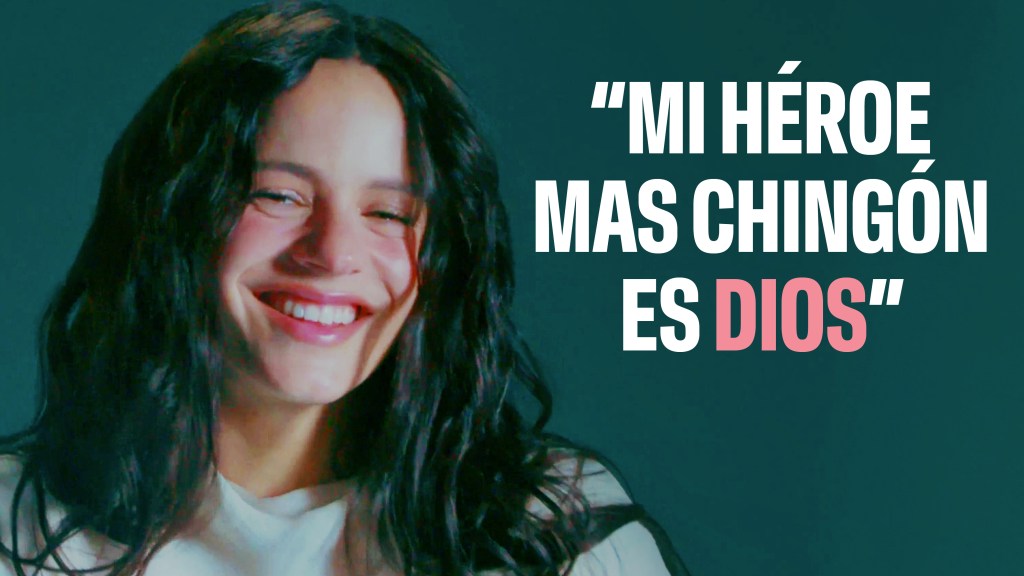
Trending on Billboard Rosalía speaks with Billboard about the confidence that divine inspiration brought her for her new album ‘LUX’ and explains how JUSTICE taught her the correct pronunciation of Sauvignon Blanc. How will fans be surprised by this album? Rosalía: I think they will be surprised. I hope they will be, but you never […]
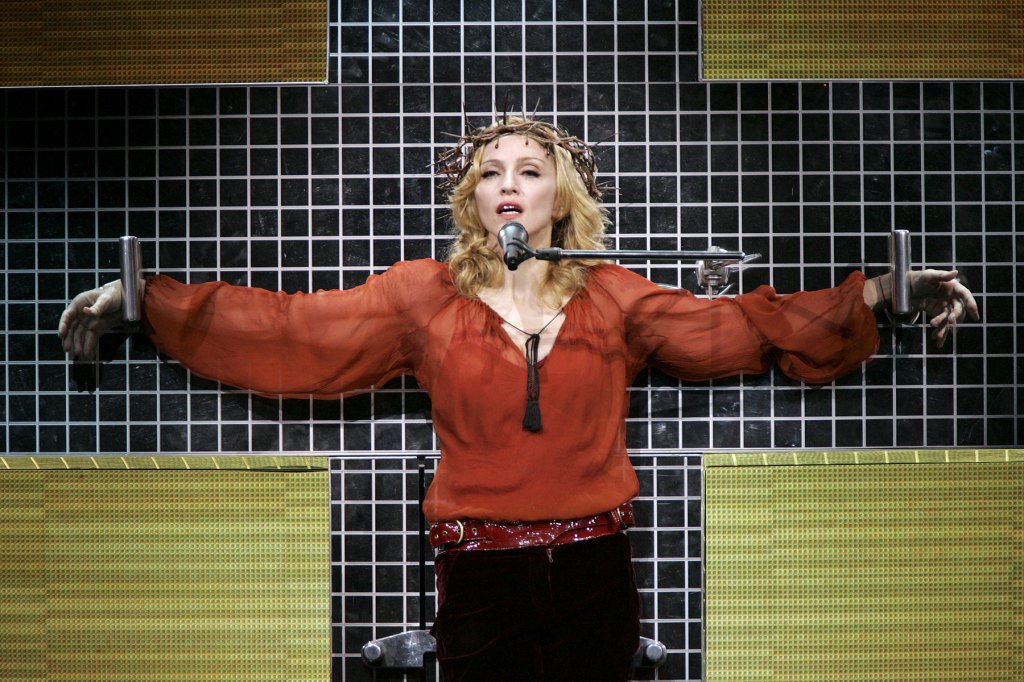
Trending on Billboard “[American Life was] the worst-selling album of my career, but one of my favorite records ever,” Madonna told CBS’s Harry Smith on The Early Show in late 2005. “But what I’m grateful for is the ability to just keep — keep doing what I do. And … OK, people weren’t, you know, […]
Trending on Billboard
For the last 30 years, Lance Bass has been inexorably famous, known to the general public as one of the five founding members of boundary-breaking boy band *NSYNC. Yet amongst his family, he’s still considered the second-most famous member.
Explore
See latest videos, charts and news
That No. 1 spot among the Bass clan continues to belong to his paternal grandfather Jimmy, an icon in his hometown of Laurel, Miss., thanks to his years of military service during World War II. “He’s so proud of his service, so proud of his family, and so proud of his town,” Bass tells Billboard of his grandfather over a video call. “He’s the famous one in our family, not me. I’m just a little side note.”
Yet while Bass grew up hearing his grandfather’s stories from the front he says it wasn’t until very recently that he got to learn much more about Jimmy Bass’ service in WWII. In his latest partnership with Ancestry as part of the organization’s Thank You for Your Service campaign, Bass got to learn even more about both of his grandfathers’ service in the war.
The new campaign from the genealogy company is designed to celebrate the 80th anniversary of the end of the war, providing users with free access to over 200 million documents from WWII from Nov. 10 to 12, in honor of Veteran’s Day in the U.S.
For Bass, that access allowed him and his family members to find even more information about both of his’ military history, including enlistment cards, photos, and even documentation that his maternal grandfather Elza was a dance hall manager, a fact that he’d never learned before his death in 2019.
“It made so much sense, because he loved to square dance — so it was just kind of fun to take that picture I saw of him and put him in this dance hall and see him in that element of knowing that he just loved that,” Bass says.
Bass’ new work with Ancestry comes at a critical time, he says. With misinformation spreading rampantly across the internet — in some cases at the behest of Donald Trump’s administration in the U.S. — Bass hopes that access to these records reminds people the importance of preserving history so we don’t make the same mistakes of the past.
“We know history repeats itself. We’ve been told that over and over and over again — but as you can see, it’s happening again,” he says. “I feel like no one’s really paying attention to that and honoring what they fought for, because I feel like we’re just going backwards right now. It’s an insult to what these brave men and women went through.”
Specifically, Bass points to the administration’s orders to scrub government websites of certain words, photos and historical references — oftentimes related to the LGBTQ+ community, anti-racism efforts and the civil rights movements of the past — as an attempt to alter our perception of reality.
“It is important that we tell these stories of the past in a truthful way, because so easily you can rewrite history,” he says. “We see it happening right now, in front of our eyes, they’re physically rewriting history on websites of our official government documents. It’s insane. What is this Twilight Zone that we’re living in?”
Bass takes it a step further and points out many of those same politicians use their ties to the military to redefine what is and is not patriotic — which, he says, is not what his grandparents fought for. “It’s sad to see people using veterans and military service and their patriotism … they’ve changed what patriotism is,” he says.
It’s why Bass calls it an “honor” to learn more about his own family’s history of service. “It makes you proud. You’re honored to be attached to that past, and you get to learn from the past,” he says.
Even when looking at his own history, Bass says he sees the influence of both of his grandfathers imbued in him. After *NSYNC celebrated their 30th anniversary earlier this year — “it’s insane that that went so quickly,” Bass quips — the singer found himself thinking about the ways his grandfather Jimmy helped mold his own outlook on his work.
“Everything correlates to how he is as a person. It really was the biggest influence in my life,” he says with a smile. “I was always raised with this man that everyone loved, especially the way that he just brought this positivity with all the stories he would tell, and the way he treated people. I think he really rubbed off on me, and my personality really comes out because of him.”
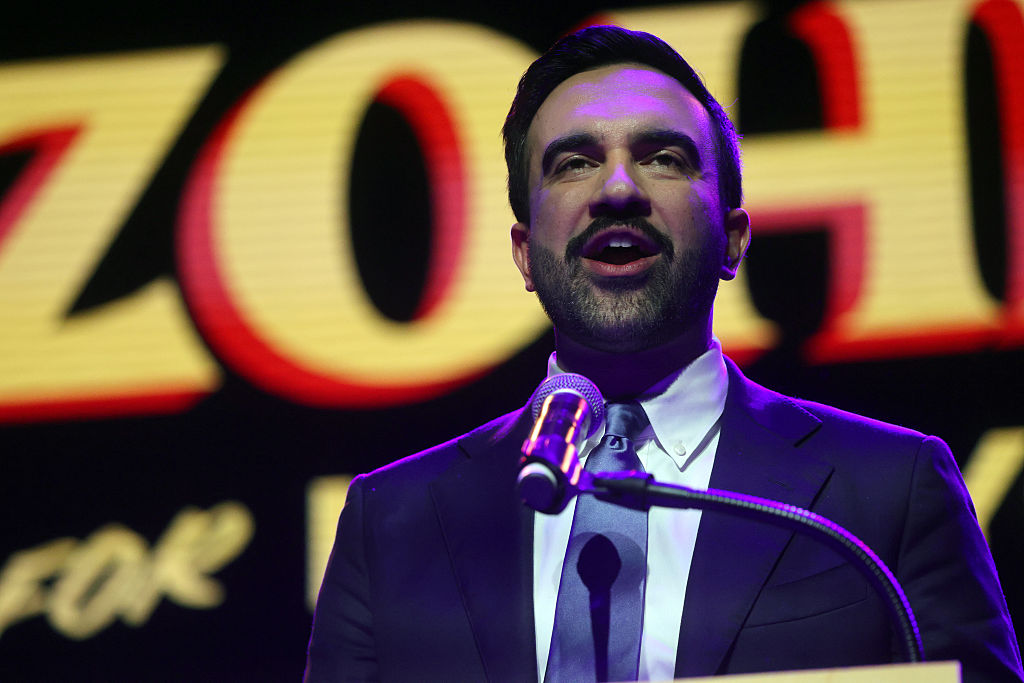
Source: Spencer Platt / Getty
The highly anticipated outcome of the race to become New York City’s mayor concluded Tuesday (Nov. 4) with Democratic candidate Zohran Mamdani winning decisively. As he walked out to greet the crowd at his victory party, the song chosen for the moment was Ja Rule’s “New York,” a standout song featuring Fat Joe and Jadakiss from the Queens, New York, native’s 2004 album R.U.L.E.
The song choice didn’t sit well with another Queens rapper and Ja Rule’s rival, 50 Cent. In a now deleted post quoting a post by MSNBC host Ari Melber on X, formerly Twitter, he commented, “of course he would walk out to that fool.” The entertainment mogul didn’t stop there, as he also posted a key clip from Mamdani’s victory speech where the mayor-elect directly challenged President Donald Trump, who has constantly attacked him. In the caption of that post, 50 Cent wrote, “3 words..no funding coming…NYC finished,” with a facepalm emoji.
50 Cent has been a constant critic of Mamdani on social media, particularly because of the progressive politician’s plans to tax the rich. “Where did he come from? Whose friend is this? I’m not feeling this plan. No. I will give him $258,750 and a first class one-way ticket away from NY,” the artist wrote in another Instagram post from June.
Mamdani addressed those critiques during an interview with Melber on his MSNBC show, The Beat, before the election was decided. “What I would say to you, 50, if you are indeed watching or anyone else is watching…I continue to think that having the top 1% of New York City or making more than a million dollars a year, having them pay 2% more for an economic agenda that would transform every New Yorker’s life, including their own,” he said.The 34-year-old followed up by further detailing his platform of providing more affordability to New Yorkers, and made it clear that he is still a fan of 50 Cent despite their differing stances. “And I do have to say, even though we have a disagreement on tax policy, every time I get a death threat, I still listen to ‘Many Men,’” Mamdani said with a laugh, referencing the hit from 50 Cent’s debut album Get Rich or Die Tryin’.
Trending on Billboard
A former manager of Guns N’ Roses claims in a new lawsuit that the band has unfairly blocked the release of his autobiography by threatening to sue him and his publisher as he tries to “tell his story.”
Alan Niven, who managed the iconic rock band during its late 80s heyday, claims that GNR has wrongfully invoked a confidentiality clause in his 1991 termination contract and made “repeated threats” of legal action over the memoir, Sound N’ Fury: Rock N’ Roll Stories.
“Due to GNR’s threats, Sound N’ Fury languishes in a warehouse,” Niven’s attorneys write in the lawsuit, which was obtained by Billboard. “Thousands of copies of Sound N’ Fury have been printed and continue to incur storage expenses.”
Related
Niven says his book “includes stories involving the members” of the band like Axl Rose and Slash, but that the contract is clearly unenforceable. He says that GNR members have also repeatedly discussed his role in the band’s history – meaning he’s allowed to speak about it too as a matter of free speech.
“These public disclosures by defendant’s members and agents have collectively placed the relevant facts of the band’s relationship with plaintiff into the public domain and made them matters of public interest,” Niven’s lawyers write. “Enforcement of the confidentiality provision would be illegal and in violation of the Constitutional protection of free expression.”
A rep for Guns N’ Roses did not immediately return a request for comment on Wednesday.
Niven started managing Guns N’ Roses in 1985, shortly after the band solidified its best-known lineup: Rose, Slash, Izzy Stradlin, Duff McKagan and Steven Adler. And he was there for GNR’s rise to stardom with the chart-topping Appetite for Destruction, which featured smash hit singles like “Welcome to the Jungle,” “Paradise City,” and “Sweet Child o’ Mine.” Niven was fired in 1991 by Rose, who reportedly refused to release the band’s next album until Niven was gone.
As Niven tells it in his lawsuit, he was instrumental in the band’s success: “Niven’s work with GNR is the stuff of legends, as he took them from nowhere to headlining Wembley Stadium in less than six years.”
Related
After he was “betrayed” and fired by the band, Niven admits that he signed a “buy out” agreement covering the terms of his exit. He says it contained a “privacy/confidentiality” provision that required both sides to avoid sharing information about the other learned during their long partnership.
But Niven says that in the years since, GNR members have made “many references” to him, including “inflammatory or even defamatory” ones. He specifically cites several examples, including a 2008 magazine interview in which Rose suggested that Niven was “always tryin’ to convince someone they should fire me” and was seeking a “a personal pay day” from their record label.
“Members of GNR have mentioned Niven, sometimes in a derogatory [way], starting at least as far back 1991,” his lawyers write. “Niven’s comments about the band are thus justified by the agreement, which allows him to comment on matters raised by the band first.”
He also claims the agreement is void for an even simpler reason: That Hudson, McKagan and Stradlin signed the deal, but that Axl himself never did so: “It is unclear who is attempting to enforce the agreement now, and whether they have standing to do so,” his attorneys say. “Rose did not sign the agreement, and one signatory (Stradlin) has remained silent.”
In technical terms, Niven is seeking a “declaratory judgment” that the 1991 contract is unenforceable, or that he is not violating the terms of it by releasing his book. He is also suing the band for damages over accusations that it “intimidated” his publisher into delaying the books release.
“Defendants’ interference has resulted in damages to Niven from lost sales and lost reputation in the market for his book and life story, only a fraction of which has anything to do with Defendants’ rock group,” he says. “Individual advance orders have been cancelled. The books have incurred storage fees. Niven’s momentum in the press has been destroyed.”
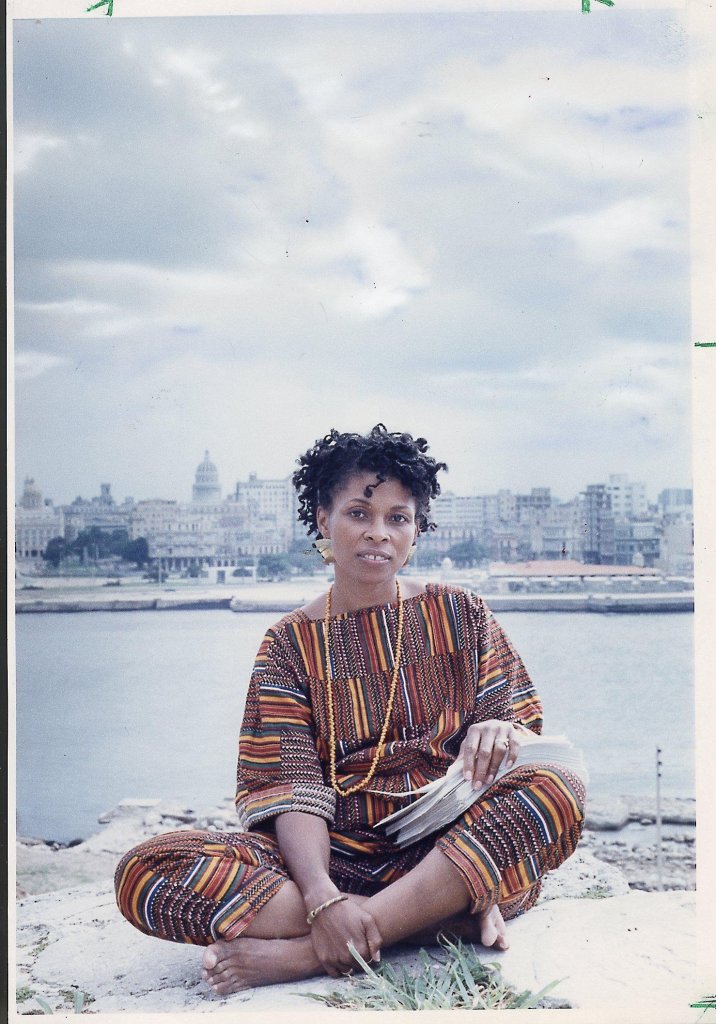
A documentary and scripted series about the life and legacy of the late Assata Shakur are reportedly in development. Assata Shakur, who was living in Cuba, died this past September.
In an exclusive report from Variety, siblings Giselle and Stephen Bailey are developing the documentary and scripted series centered on the life of the activist, who remained on the run from American authorities for 45 years.
“Assata’s story is important to all Americans as it reveals the powers that divide us and our capacity to heal,” Giselle and Stephen Bailey shared in a statement. The pair also brought HBO’s Seen & Heard: The History of Black Television. Shakur’s daughter, Kakuya Shakur, has given her blessing for the development of the projects, which will be produced by the Baileys’ Indigo Films.
Shakur was born Joanne Byron on July 16, 1947, and became a political activist before joining the Black Panther Party and later the Black Liberation Party. In the early 1970s, Shakur and other members of the BLA were involved in a shootout with New Jersey state troopers, killing one of the officers. In 1979, Shakur escaped prison with the assistance of the BLA and lived in Cuba from that point on.
Professor and activist Angela Davis is one of the executive producers of the documentary, with civil rights lawyer Lennox Hinds providing support to help round out the development of the project.
—
Photo: Getty
Trending on Billboard
Gwen Stefani is in a joyous holiday mood, but she definitely has some notes for old St. Nick. The solo star and No Doubt frontwoman dropped a new Christmas classic on Wednesday (Nov. 5) morning, “Shake the Snow Globe,” as part of Amazon Music’s new clutch of holiday exclusives from artists including Marc Anthony, Mariah the Scientist, Vanessa Mai and others.
Explore
See latest videos, charts and news
“Oh this season’s got me thinking ’bout Mrs. Claus/ Why does Kris get the credit?/ Can we take a second and give her a round of applause?,” Stefani sings over the bouncy, horn-spike arrangement of the original song that is part of Amazon MGM’s upcoming star-studded holiday film Oh. What Fun. The movie, directed by Michael Showalter (The Big Sick, The Idea of You) stars Michelle Pfeiffer, Dennis Leary and Chloë Grace Moretz and will debut on Dec. 3.
Gwen Stefani
Courtesy
“This is the first time I’ve ever been asked to write a song for a specific moment in a film,” Stefani said in a statement. “It made me nervous, excited, and inspired to take on the challenge of creating a Christmas song that feels up tempo, nostalgic and reflects the sentiment of the movie, Oh.What.Fun.” The singer also previewed the snow-flaked, technicolor video for “Shake the Snow Globe” on her Instagram on Wednesday morning, writing, “the Holidays are so magical and i wanted this video to capture the sparkle + joy of the szn.”
In addition to Stefani’s ray of sunshine track, other artists contributing to the Amazon Music holiday celebration include Anthony, with a cover of José Feliciano’s Christmas classic “Feliz Navidad/ I Wanna Wish You a Merry Christmas,” Mariah the Scientist’s take on Eartha Kitt’s “Santa Baby” and Mai’s new original, “Christmas in the Room.”
Other Amazon Music Originals holiday songs from the international lineup of artists include: composer/pianist Kris Bowers’ new composition “Someplace Like Here,” France’s Amir covering F.R. David’s “Words,” Canadian singer Jamie Fine taking on Justin Bieber’s “Mistletoe,” Australian indie act Spacey Jane covering the Eagles’ “Please Come Home For Christmas,” Italian singer Marco Mengoni’s first English-language release, the original “Coming Home,” a medley of carols from Las Migas titled “Navidad con Las Migas (Medley)” and Canadian singer-songwriter Eli Rose’s dance-y cover of Beau Dommage’s “23 Décembre.”
“The holidays are about cherishing traditions while making space for new ones, and that’s exactly what we’re doing with our Amazon Music Original holiday songs and programming throughout our service,” said Amazon Music’s U.S. head of music Stephen Brower in a statement. “We’re privileged to work with both legendary and emerging artists to create fresh holiday music that resonates with fans and becomes part of their seasonal traditions. The incredible success of our Original holiday tracks shows how contemporary holiday music can bridge the gap between nostalgia and discovery, creating new classics that families will enjoy for years to come.”
Past Amazon Music Originals holiday hits include Taylor Swift’s “Christmas Tree Farm (Old Timey Version), as well as Katy Perry’s “Cozy Little Christmas” and Carrie Underwood’s “Favorite Time of Year.”
Amazon Music is also launching limited edition vinyl and merch collections from artists around the world to celebrate the holidays, including Mariah Carey’s new Christmastime Holiday Collection with cozy apparel, holiday décor and kitchen accessories, Mai’s collection of T-shirts, sweaters and custom-designed phone cases and Mengoni’s exclusive limited-edition vinyl of “Coming Home,” which will be available beginning on Nov. 14.
Trending on Billboard
Plenty of drag queens can sing, and plenty of drag queens who can’t sing have released songs anyway. So when an alumnus of RuPaul’s Drag Race makes a foray into the world of recorded music, you can be forgiven for greeting it with a shrug.
Explore
See latest videos, charts and news
Which is part of the reason why season 16 breakout Plasma is making her debut a live album. She wants you to know that when she’s teasing out those melancholic money notes or whizzing through a difficult-to-untangle patter song, there’s no studio trickery and it isn’t the tenth take — it’s just her honest-to-goddess voice doing what it does best.
As Drag Race viewers know, Plasma is a Broadway baby through and through, a Gay White Way devotee whose humor and style draws on legends like Barbra Streisand and Bernadette Peters. While Plasma’s decision to make her debut LP a live record is an impressively risky one, the fact that it consists mainly of Broadway faves isn’t a shock — but smartly, the 26-year-old from Texas has peppered in a few surprises.
When I attended the Joe’s Pub show where Is Miss Thing On? (Live from Joe’s Pub) was recorded on July 28, there were two tunes I didn’t recognize: “A Schloon for the Gumpert” and “80 or Above.” The former is a song Streisand trotted out at her famous A Happening in Central Park show in 1968 but wasn’t included on the live album’s track list; the latter, however, is neither a Broadway classic nor an obscurity — it’s a new tune written by Plasma herself. But damned if it doesn’t sound like it could be a long-lost gem from some old musical forgotten over the decades.
Ahead of its release on Friday (Nov. 7) via Joy Machine Records, Plasma hopped on a Zoom with Billboard to talk about the advice from her family (both biological and drag) that influenced this album, how she landed Tony and Grammy winner J. Harrison Ghee for a duet, and which post-Covid Broadway show gave us “one of the most pivotal performances in American theater history.”
Why did you decide to make your debut album a live album, as opposed to a studio LP where you can do multiple takes and fix mistakes?
The primary inspiration was from my dad, actually. He raised me listening to Michael Bublé Meets Madison Square Garden and Adele’s Live From SoHo sessions, and all the greats who recorded live in the mid-century up until now.
When it came up that I wanted to record a debut album, my dad said, “Well, you could do it in the studio and feel perfect about it — but as we’ve always taught you, perfect is the enemy of great, and you are great in front of a live audience, because you are always better when you are performing, instead of sitting in a silent room worrying about the way you sound. So do it, don’t leave anything out. Don’t leave any stone unturned. Do it live, do it bold. Do it bravely, and don’t look back.” My dad’s very wise.
That’s great advice. Another marvelous live album you mentioned during your Joe’s Pub show is Barbra Streisand’s Live at the Bon Soir, which she recorded in 1962 but didn’t release until 2022. It’s so good, I can’t believe she didn’t release that back in the day.
I can’t either. And I found out very recently that the day after she recorded her last session at the Bon Soir, she did a cabaret series at the bar in the West Village called the Duplex in their upstairs cabaret space. That is genuinely, literally, the first bar in New York City that gave me a weekly show and it was in the upstairs space. So the Barbra connection deepens and deepens. That is the album that truly inspired this live album.
How did you pick the songs? Obviously there are Broadway faves, but there’s also some random, obscure stuff, even one I wasn’t familiar with.
Good! That is the goal. I’m actually wearing a t-shirt from an off-Broadway show called The Big Gay Jamboree, which is a very niche hit. I realized in my adult homosexual life that an obscure, niche reference gets me a lot of street cred with a tiny group of people that I respect, so the niche reference really guides my hand a lot in my work. I had a live show last year, right on the heels of my run on Drag Race, called All That Plazz. It was a diaristic approach of my life as it stood a year and a half-ish ago. I took that as a blueprint, and I whittled out the kinks or the things that didn’t really feel relevant anymore, or the things I didn’t identify with as personally, and I filled them in with things that felt really personal.
“Cry Me a River” [ed. note: the Arthur Hamilton song from the ‘50s, not the Justin Timberlake single] has always been one of my favorite songs. I’m also a Scorpio, so “Cry Me a River” is a bit of a vengeance anthem, which I love. “More” from Dick Tracy — I never sung that live until Joe’s Pub, but that was one of the first songs I lip synced to when I started doing drag in New York. I like to lure people in with songs that they will know, and then keep them sat with niche references that they’ve either forgotten about or they’ve never known existed. Uncovering that is how I fell in love with mid-century music, as well as people introducing me to music that no one hears anymore.
I love that you did “More.” It’s a fantastic song that kind of disappeared, because it’s on a Madonna album, I’m Breathless, that most people don’t return to.
I actually didn’t even know what it was from, or that Madonna had done it, for years — because I was obsessed with Ruthie Henshall’s version from Putting It Together, the Sondheim review on Broadway with Carol Burnett. That’s the one I lip synced to, and she’s just a powerhouse. Then when I learned that it was a Madonna song, I was like, “Well, I’ve already heard it sung correctly, so I don’t need to go back now.”
Look, I love Madonna, and her version is great, but I get that it’s certainly not like doing a Barbra song where you’re thinking, “How am I ever gonna match that range?”
Oh, my God, yeah. She has a cup of hot tea on the stage because she wants one. I have a cup of hot tea on stage because I have to do it. I have to treat my voice correctly if I’m gonna sing Barbra’s stuff.
That leads to one of the things I wanted to ask. Of the songs in that setlist, what’s the easiest one to sing for you, and what is the most challenging one?
God, that night, “More” was my biggest challenge. I went into it new, and I love the song, and I’ve known the song, but it is literally a key change minefield. Thank you, Stephen Sondheim. It’s also fast and it’s patter-y and it has some particular vocabulary that you have to really enunciate because it’s theatrical, so you want to make sure everyone is hearing the words. Whereas on something like “Misty” or “Cry Me a River,” you’re gooey, floaty, lovely.
“Cry Me a River” is one of those songs that I could sing if I had just gotten vocal fold surgery. For some reason, the older I get, the more I can put that song on vocal autopilot and listen to the words again and find new meaning in them. It just falls out of my mouth, and then by the end, I’m screaming, and I realize, “Oh, sorry that was really loud.” That one is the easiest, just because it comes naturally. I’m having an organic artistic response. [Laughs.] God, how pretentious.
You open with “Let Me Entertain You” from Gypsy. Did you see the latest Broadway staging of it with Audra McDonald, and what did you think of it?
I adored it. In the album, I talk about how jazz and mid-century music is largely accredited to, or it should be more accredited to, people of color. Because jazz, of course, has its roots in New Orleans and in the Black community. I think we think of jazz and we think of Ella Fitzgerald and Louis Armstrong, but we don’t think about Eartha Kitt and we don’t think about Carmen McRae or Sarah Vaughan or this plethora of Black artists who gave us the gift that, in my world, keeps on giving.
Seeing a production like Gypsy, which is written in a time of oppression but always talking about the white plight of show business, and then having it come under new direction and new vision from George C. Wolfe about Black people fighting even just for minimal visibility, and then still being robbed of it. And then, of course, the spiritual connection of Audra losing the Tony after one of the most pivotal performances in American theater history on the Tonys. Seriously, it feels like we’ve seen one of the first post-Covid truly monumental theater-making attempts with Audra’s Gypsy. And, of course, Joy Woods is a sensation.
Speaking of Tonys, you had J. Harrison Ghee come up for a duet during the show, which was beautiful. How did that come about?
Like all great queer connections, we met at a bar. I met J. a couple times, but the one that really stuck was we met at my friend Blacc Cherry’s Drag Race viewing party at Dive 106 earlier this spring. After that, we ran into each other at the Smash Broadway opening night red carpet. I grew up idolizing Tony Award winners and the Broadway theater excellence that implies. And when I met J., I still felt very much at home and very friendly and very communicative and also sisterly. There’s a lot of kiki energy, there’s a lot of “yes and” energy that you couldn’t quantify in a theater improv class. You could only quantify it by being human adults who have lived a little bit of the queer experience in New York City.
I asked them out of the blue. I was like, “How can I, as a white cisgender man, a twink, celebrate Black artistry through a jazz medium and also not invite a true, gifted informant of Black artistry–Black queer, non-binary artistry—into the room with me?” J. is also so generous. They have their Tony and their Grammy, and then cut to them gluing down my lace on the back of my neck that I didn’t know was there.
That’s a pro.
That’s a pro, that’s an empath. That’s generous. That’s someone who you want in the room with you.
During the show, you performed one song you had written, “80 or Above.” I don’t mean to sound backhanded, but it was surprisingly good. Usually when someone is singing a bunch of classics and then is like, “Here’s one I wrote myself,” you’re thinking, “OK, here we go,” but I was impressed. I could even imagine other singers singing it. What’s your songwriting process like?
Thank you so much. First of all, that’s very flattering. I will also tell you that I had reservations about writing music, because I’ve also sat in rooms where people will say, “You guys, the next song is a song that I wrote,” and it’s just like, oh my god, clench your napkin in your fist — because you’re gonna have to get through three minutes of someone’s passion project. And I will not name names.
I don’t even know what my songwriting process is. I read a lot of poetry in high school. I started back when I had a more regular journaling practice. I find myself writing in rhyme structure — maybe it’s just because I’m dramatic as hell and I’m a secret Shakespearean-hearted dramatic goon. I was feeling silly one day and started writing things out. And I was like, “what if I wrote this little song, and what if I came up with a melody that sounds like it came out of the Anita O’Day songbook?” And did something funny and kitschy and campy, but also poignant? As long as I came up with a melody that wasn’t irritating or TikTok, AI-generated, then I could be comfortable putting it out there, as long as it didn’t interrupt the flow of my grander show.
The fact that you can hear other people sing it means a great deal to me. I really am proud of it, and I’d like to write more. I ever were to record more music, I’d want to do a studio album, because I’ve done the live album, toss, toss [fake tosses hair]. I’d like to do something that’s half-original, half-niche covers, so that the line between things you know I wrote and things you don’t know at all is blurred.
What are your hopes for this album when it comes out? What do you want to do next?
I’d love for every Broadway producer in town to listen to it. It’s a great, big audition for something else. In the theater world, we say every audition is an audition for something else, or every interaction is an audition. At the same time, I am trying to identify myself post-reality TV as a real human with autonomous thoughts and control over my own narrative. I’m trying to position myself for opportunities that come beyond reality TV, for people who are equipped to take on narrative roles and theatrical roles and musical roles.
I would love to collaborate with other jazz artists. I’d love to be on Broadway. I’d love to sing live more. I’d love to blur the line between Plasma and Taylor, which is my legal name. I want to have the full breadth of what is possible for a queer person in 2025 available to me. The whole reason why you listen to a live album is because it doesn’t sound like the studio album, because someone is trying something in real time that is dangerous. If you mess up, everyone will see it, and that’s vulnerable, and it’s scary.
One of my dear friends is Privilege, a drag artist in Brooklyn. The night before I left for Drag Race, they gave me a little totem to take with me and they said, “I just want to encourage you to feel whatever fear you feel, and then do it scared.”
More great advice!
I don’t know a single queer person who’s not scared right now. I’d rather do something scared than rest on technological improvement or the gloss of legitimacy helping me out. I am who I am, and I rest on the laurels that I can present to you in real time and nothing else. And so that’s my priority, to live as authentically and unashamedly as possible.
Anything else you want to add, about the album or your life?
[Jokingly] Well, I’m still single and I’m still drinking too much, so that original song has never hit harder. No, I would encourage Drag Race fans to broaden the scope of what they perceive as possible from a Drag Race alumnus. I would also encourage music fans and theater fans to broaden their perspectives beyond Kinky Boots and La Cage aux Folles into what queer artists are capable of telling.