State Champ Radio
 News
Page: 143
Trending on Billboard
The Killers, Guns N’ Roses, Tyler, The Creator, and Deftones are set to headline the 14th edition of the Pa’l Norte festival, the massive musical celebration held annually in Monterrey, Mexico. The 2026 lineup, announced on Wednesday (Nov. 5), features other major international acts such as Kygo, Interpol, Halsey, Jackson Wang, Zoé and Grupo Frontera.
Explore
See latest videos, charts and news
The acclaimed festival, founded by Apodaca Group, will take place March 27-29 at Parque Fundidora. Other performers include Los Fabulosos Cadillacs, The Lumineers, Morat, Turnstile, Cuco, 31 Minutos and Omar Courtz, as well as Myke Towers, Simple Plan, Judeline, DJO, The Blaze (DJ Set), Cypress Hill, Purple Disco Machine and Molotov, among many others.
In a statement, organizers announced that ticket sales will begin on Nov. 11 at 2 p.m. local time through Ticketmaster.
In partnership with promoter Ocesa, acquired by Live Nation in 2021, Tecate Pa’l Norte has become one of the largest and most diverse festivals in Mexico. The 2026 edition will feature more than 100 musical acts across eight stages, according to organizers.
The three-day event gathers around 100,000 attendees per day, a few thousand more than the electronic music-focused EDC, one of the most crowded festivals in Mexico. It annually attracts fans from all over the world, with attendance exceeding other major festivals in Mexico City such as Vive Latino and Corona Capital, which gather around 80,000 people per day, according to their organizers.
The festival lineup celebrates a rich fusion of genres ranging from rock and indie to Mexican regional music, reggaeton and electronic music, showcasing some of the biggest international stars. Over the years, Pa’l Norte has established itself as the “most important musical entertainment event in northern Mexico,” according to the Ministry of Tourism of Nuevo León.
Previous editions of the festival have featured acts such as Billie Eilish, Foo Fighters, Muse, Tame Impala, The Killers, Maná, Caifanes, Los Fabulosos Cadillacs and 50 Cent. This year it was headlined by pop superstars Olivia Rodrigo and Justin Timberlake, Charli xcx and Green Day.
Check out the full 2026 Tecate Pa’l Norte lineup below:
Trending on Billboard
Harlem has itself another rap star.
Liim seemingly came out of nowhere and dropped a critically acclaimed project in Liim Lasalle Loves You, a coming-of-age, genre-bending debut that has caught the attention of the likes of Tyler, The Creator. Signed to veteran record exec Sickamore’s three times LOUDER (IIIXL) label, Liim’s rise has been fast.
The Harlem rapper grew up in a strict Muslim household where secular music wasn’t allowed to be played. This made him curious which then led to him discovering his natural calling. He’s been putting out music since about 2022, with the release of his single “Pupils,” while also doubling as a model for Supreme — and was noticed in 2023 by an IIIXL A&R in one of the skate brand’s ads. “I don’t know,” he answers, after being asked what made the upstart label sign him. “But I know one of the A&R’s, Ezana [Atakli], said he seen me in a Supreme thing, and then he clicked on my s—t and heard my music. I had a song called ‘Mary J’ at the time.”
Explore
See latest videos, charts and news
And while he’s been actively putting out records for the better part of three years, it wasn’t until he began making this particular project that he found his sound. Producer Shamshawan DM’d Liim wanting to work and the two hit it off immediately. “From there, I started recording everyday,” he said. “It was crazy, because I never been in that type of mentality with music. I wasn’t struggling at all. I didn’t have to write nothing. I was just spitting. It was just working out for me.” He’s now found himself among the new rising talent here in the city that started this rap thing, alongside the likes of his labelmate Laila! and sexy drill aficionado Cash Cobain.
Liim stopped by the Billboard office in New York City with his management to talk about his influences, the crafting of his debut album, and growing up in a city full of opportunity for a kid like him.
Check out our convo below.
I peeped that Tyler co-signed you — and let me know if I’m buggin’, but I hear his influence in this album. Is that true?
How do you feel like you hear the influence?
Just some of the melodies, like “Why Why” reminds me of some of his R&B stuff.
I feel like what it is — [from what] I’ve seen from Tyler’s interviews or whatever — when he talks about his influences in music, we got pretty similar ones. And if not me and him having similar ones, him and my producer, Shamshawan, they both love the Neptunes and s—t. So the production is kind of in that world. I f—k with a lot of bossa nova music and s—t like that, so the first track is kind of bossa nova, then it goes into a kind of Pharrell-y vibe. I don’t think I take direct inspiration from him.
Well, I mean some of the tracks just reminded me of some of his. You’re also into Max B, so it’s a mix of all these influences that you have. And what’s interesting is that you say you grew up not being able to play certain music in your house because your mother is Muslim. Can you talk about that?
No music. All you heard was the Quran playing in the crib.
Did that make you more curious about music?
Facts.
So, how does she feel about you career choice?
She’s proud of me. As I got older, I was like, “That don’t make no sense.” And my mom is on her Dīn and whatnot, but she’ll listen to my music just to support.
You had told Kid Mero that Max B reminded you of your late father because he was a Harlem dude. How did you get put on to Max?
It’s funny, even though growing up in Harlem and s—t, I never really heard kids my age listen to Max B ever. But when I started skateboarding, it was them n—as — the older skaters were fans, and always had Max B playing.
Skaters are an underrated subculture within rap music. A lot of them have good taste when it comes to music and style. I also noticed that you use a camcorder aesthetic in some of your videos. You used to run around with a camcorder?
I used to film skateboarders sometimes before I was making music. I just know how to use that camera. A lot of my earlier videos I shot by myself type s—t, or I would tell my homie to hold the camera like this. My goal is to do high-budget videos, but the camera’s mad cheap.
You must be a fan of that era because you’re hella young and dress like you could be in Dipset, and even though you’re not making “traditional” New York music, I can still tell that you’re from the city.
I don’t know. I feel like the music that was coming out as I was getting older, like the drill and all that s—t… I’ve made a few drill songs and s—t like that, but I was like, this s—t is kind of ass, bro. Everybody’s saying the exact same thing. And then I was thinking about it, and all my music really changed. I don’t know how n—s want to call it? Woke? I don’t know, just conscious of my people, Black people and s—t like murder music, and where that came from. We didn’t make murder music. That’s lowkey some s—t white people say, and that’s not really us. We had Marvin Gaye. We had Stevie [Wonder], all these n—as that sing about love. I feel like I’m trying to bring love back into music.
Oh, okay, so you’re a lover boy?
Most definitely. I’m going on a date tonight.
How would you describe your sound? How did you land on this for this specific album? How did it come together?
If I’m being real, I kind of just let the beats dictate what I was saying. I freestyled most of the song and whatever came out came out. I wasn’t thinking too hard about it. I wasn’t listening to any music similar. The whole time this album was being made, I was listening to Saaheem, SahBabii’s album. I was listening to that just now before I came in here. I feel like I wouldn’t know how to really describe my song. I just feel like, I don’t know, It’s kind of like introspective, coming of age music.
How involved was Sicamore, in terms of helping you put this together?
The way Sic works…I feel like he’s not the most hands on, like, “Yo, you should do this, you should do that.” He’ll drop in suggestions, but he’s mostly a supportive n—a. He’ll be like, “Yo, you about to be a star.”
He lets you do your thing.
Yeah, because he’s trying to help you build the trust in yourself, that you don’t need too much help. He helps when I gotta figure out how I’m gonna shoot this video or get my music to people.
How old were you when you decided that you wanted to be a rapper?
Honestly, bro, like young. I always had a desire for music because I didn’t have it around type s—t. I could show you a video right now of when I was a little n—a freestyling. There was this challenge on YouTube called #The10ToesDownChallenge.
I wanted to ask you about that. You mentioned the video in the Mero interview. How old are you there? Like f—kin’ 14?
Younger than that. Probably like 11. You already had that bug in you. Exactly. You can’t really hear what I’m saying because I’m recording off the ‘droid and for YouTube at the same time. [Laughs.]
So, how long did it take you to make this project?
It’s funny because when I signed in 2023, I made an album with concepts and all this s—t, and I scrapped the entire thing. There were like 20 songs and I was like, “D–n, what am I gonna do now?”
Why did you scrap it?
I just didn’t like it. It was ass, bro. It just sounded basic. I don’t even know if I even have any of the songs.
I’m assuming it sounded way different from your most recent project. Were there any remnants of this project in there?
None. It was completely different. I just didn’t know what I wanted it to sound like. It wasn’t too far from my sound but it was kinda boring, you know? I felt like it wouldn’t change anybody’s life or anybody’s perspective. I was working on music for a long ass time, maybe about a year just working on random s—t. I was out of the studio for a while, I had gotten a job managing a warehouse, bro, like a real job [Laughs.]
When was this?
I quit in August of last summer and and after I quit, I started going back to stu again, then I met up this n—a Sham who produced most of the album. He DM’d me about getting in the studio and for some reason all the beats he sent me just hit. I had an idea for everything. I was roughly done with the songs in maybe six months? The mixing process took mad long. So, in terms of recording, it took like six months to make the album and in terms of it being ready to be released, it took a full year.
I peeped that you mentioned that your studio is aesthetically pleasing. Walk us through that. What does that mean? What’s in the studio?
Got the nice warm light. I’m into my spaces. I don’t f—k with the studios that have the f—king LED lights and all that bulls—t. Some suave s—t.
What do you want to get out of your career?
I just want to make an impact, bro. That’s really it. I just want to make an impact in the youth to where they make music that’s not bulls—t. I want to make passionate music. Another artist I feel like I see doing that is Nourished by Time. He makes like ’80s-influenced R&B. You should check him out.
The name of the album was inspired by Stevie Wonder?
Yeah, facts. “Steve Wonder Loves You.” I saw a shirt he had that said, “Stevie Wonder Loves You.” I was like, “I want to do that for my merch.” And then it went from a merch idea to being the name of the album.
Are you already plotting out your next project?
Yeah, facts. I got the name already, bro. I got concepts down. Has the response to this tape inspire you to to keep working? I mean, definitely, but I was already working on this s—t before this. I’m grateful. I’m just glad n—s like it, but I really made it for myself at the end of the day. I’m just happy with the music. I can actually listen to it and be like, “Oh, this hard.”
Liim is heading out across the pond for a “European Excursion.” You can find tickets here and can check out the dates below.
Friday, Nov. 7 – Jumbi – Terrace, LondonTuesday, Nov. 11 – Paradiso – Basement, AmsterdamThursday, Nov. 13 – Fifty Lab Festival, BrusselsFriday, Nov. 14 – Jah Jah, Paris & Soho House, Paris
Trending on Billboard
Spotify is facing a class action lawsuit claiming its Discovery Mode and editorial playlists are a “modern form of payola” that allow record labels and artists to secretly pay to promote their music.
The lawsuit, filed on Wednesday (Nov. 5) in New York, alleges that Spotify’s recommendation tools are a “deceptive pay-for-play” program, but that the streamer misleads consumers into trusting that they are neutral and based on personal musical tastes.
Related
“Spotify exploits that trust by marketing itself as a platform that offers organic music recommendations — whether through its algorithmic or curated playlists — only to secretly sell those recommendations to the highest bidder,” reads the lawsuit, obtained by Billboard.
The case was filed by a Spotify subscriber named Genevieve Capolongo, who seeks to represent “millions” of other users who were allegedly misled by Spotify’s offerings. Her lawyers say she used the platform’s personalization features for years, but “kept hearing the same major-label tracks” that “bore little resemblance to her listening habits.”
In a statement to Billboard, a spokesperson for Spotify called the accusations “nonsense” and pointed to its detailed explanation of the program.
“Not only do they misrepresent what Discovery Mode is and how it works, but they are riddled with misunderstandings and inaccuracies,” the company said. “Discovery Mode is a feature artists can use to flag priority tracks for algorithmic consideration in limited contexts: Radio, Autoplay, and certain Mixes. It doesn’t buy plays, it doesn’t affect editorial playlists, and it’s clearly disclosed in the app and on our website.”
Related
The new case is the latest to claim that major labels are buying placement on Spotify to boost their artists. The high-profile lawsuit filed by Drake over Kendrick Lamar’s “Not Like Us” included accusations that Universal Music Group used bots and payments to juice the song’s popularity on many platforms, including Spotify. Another case, filed earlier this week, claims that Spotify “turned a blind eye” to bots and other forms of fraudulent streams designed to inflate certain artists.
First unveiled in 2020, Discovery Mode allows artists and labels to get boosted on Spotify in return for accepting reduced royalties. It was initially met with scrutiny, including a Congressional investigation, over its similarities to payola, or the practice of secretly paying radio stations for airplay. But it has become a popular industry marketing tool around the release of new music.
Much of Wednesday’s lawsuit is focused on the extent to which Spotify discloses the exact parameters of Discovery Mode to its users. Though listeners are offered a link to an “About Recommendations” explainer when using it, Capolongo’s attorneys say that isn’t enough.
“Telling users that ‘commercial considerations may influence’ recommendations does not reveal which songs are being promoted commercially and which are being recommended organically,” her lawyers write. “Without that specificity, users cannot distinguish between genuine personalization and covert advertising.”
Related
The lawsuit also claims that Spotify’s editorial playlists, like the hugely influential Today’s Top Hits and RapCaviar, are also subject to pay-for-play. But it fails to offer any concrete examples of such payments, citing only unnamed “industry insiders” confirming that it happens and circumstantial evidence about the “disproportionate” rates of major-label music on such playlists.
In technical terms, the lawsuit claims Spotify’s conduct violated New York state law with deceptive practices and false advertising. It also claims Capolongo was fraudulently induced to subscribe and that Spotify was unjustly enriched by its behavior.
In more straightforward language, Capolongo says she simply wouldn’t have paid for Spotify if she had “known the truth” about the service: “That Spotify’s playlists and recommendations are shaped by undisclosed pay-for-play arrangements and hidden commercial incentives, not by her listening history alone.”
Trending on Billboard
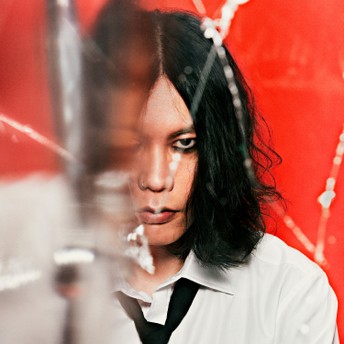
Kenshi Yonezu’s “IRIS OUT” continues to dominate the Billboard Japan Hot 100 for the seventh consecutive week, on the chart released Nov. 5.
While overall chart points for the Chainsaw Man – The Movie: Reze Arc theme dipped slightly compared to last week, karaoke performance increased to 116%. The track sits at No. 1 for streaming, video views, and karaoke, while hitting No. 3 for downloads, No. 9 for CD sales, and No. 13 for radio airplay, extending the hitmaker’s longest-running stay atop the Japan Hot 100.
At No. 2 is Sakurazaka46’s “Unhappy birthday Koubun,” which jumps from No. 15. The girl group’s 13th single sold 614,231 copies to take No. 1 for sales, and comes in at No. 10 for downloads, No. 9 for streaming, No. 70 for radio, and No. 61 for video.
Explore
See latest videos, charts and news
Three songs debut in the top 10 this week. LE SSERAFIM’s “SPAGHETTI (feat. j-hope of BTS)” sold 92,621 copies to arrive at No. 3, BE:FIRST’s “I Want You Back” rules radio to bow at No. 4, and Travis Japan’s “Disco Baby” lands at No. 7 after topping downloads.
In other chart moves, several songs by veteran band back number see renewed momentum. “Blue Amber” rises 35-32, “Takaneno Hanakosan” 72-56, “Suiheisen” 79-77, while “Koi” returns at No. 87.
The Billboard Japan Hot 100 combines physical and digital sales, audio streams, radio airplay, video views and karaoke data.
See the full Billboard Japan Hot 100 chart, tallying the week from Oct. 27 to Nov. 2, here. For more on Japanese music and charts, visit Billboard Japan’s English X account.
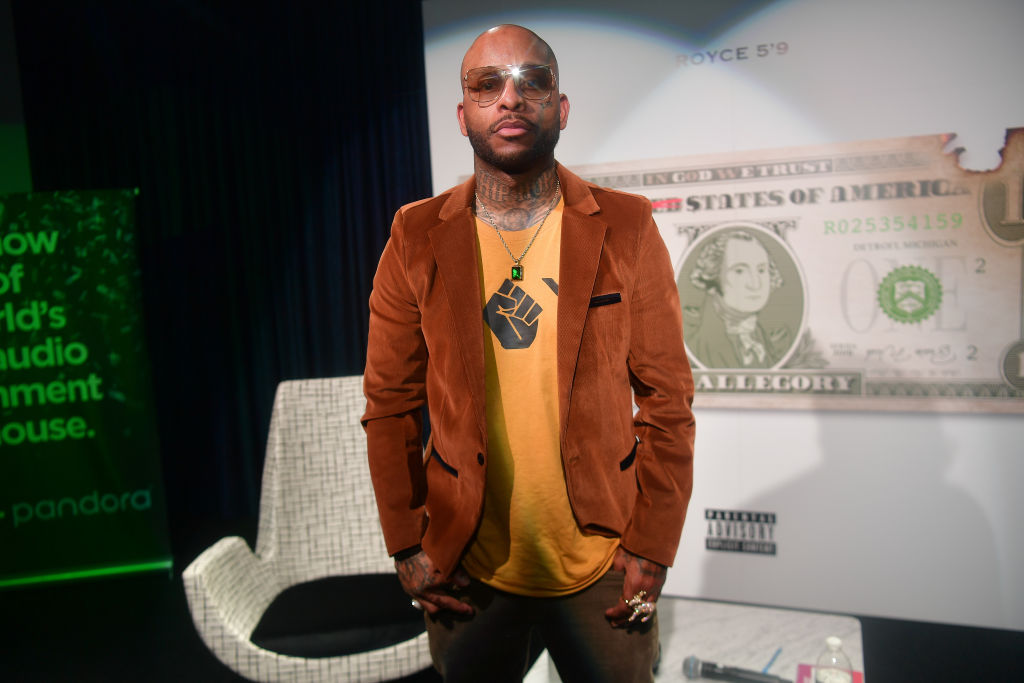
Royce Da 5’9 might be known as one of Detroit’s most formidable lyricists, but he’s also a mastermind when it comes to ghostwriting, song production, and music development. In a new interview discussing his role on Big L’s posthumous Harlem’s Finest: Return of the King album, Royce Da 5’9 revealed a medical condition that prevented […]

Trending on Billboard
From having the country “talm ‘bout innit” to getting name-checked on “Whim Whammie,” one of the year’s buzziest breakthrough rap hits, BunnaB, 22, has emerged as one of the most resonant voices in a new class of Atlanta-bred female rappers.
Blending the raucous debauchery of mixtape-era Gucci Mane and the Futuristic Era sounds that dominated their childhoods, this new class of female MCs prioritizes party music that speaks to the specific realities and intricacies of female relationships in the social media-stained 2020s. For her part, BunnaB, beloved for her infectious, near-constant laughs, has separated herself from this ascendant pack by infusing her bubbly disposition, girl’s girl attitude, unfettered authenticity — and the unmistakable gravity of earning a second shot.
Out Wednesday (Nov. 5) via Artist Partner Group, Bunna’s new Sweet Lick mixtape doubles down on the sing-songy melodies and positive vibes that she rode to the zenith of Gen Z culture with June’s Ice Cream Summer Deluxe mixtape. “I didn’t want to go in a specific direction,” she explains to Billboard. “Maybe I can do it for my album.” When “Bunna Summa” first started gaining traction on TikTok and Instagram Reels this spring, the Edgewood-born rapper had just relaunched her music career with January’s “No Drought” (the song YKNiece and PLUTO nod to on “Whim Whammie”). She initially caught some steam with 2023’s “My Man,” which resulted in a deal with Atlantic Records; creative differences sank the pair’s relationship, ending in the label shelving Bunna and the rapper signing with APG in March.
With “No Drought” reviving her momentum, “Bunna Summa” reached No. 27 on R&B/Hip-Hop Songs, and follow-up tracks “Fine Shyt,” “Innit” and “Mad Again” kept her in the forefront of the conversation. In August, Metro Boomin recruited Bunna for A Futuristic Summa standout “My Lil S—t,” and legendary producer Jermaine Dupri called her the following month for “Magic City Money,” a track from his compilation album tributing the famed ATL strip club. Both collaborations proved that even her city’s leading voices recognized Bunna as not just one of the most obvious new stars of her class, but also as a bridge between today and the city’s late ‘00s and early ‘10s Futuristic Era.
Though she enraptured TikTok all over again with her hysterical outbursts during a viral stream with Plaqueboymax and Rakai, Bunna isn’t all giggles. In October, her Ice Cream Girl Road Trip tour of HBCU homecomings brought her to Spelman and Morehouse Colleges in her hometown. Social media clips captured students groaning and booing in response to Bunna’s performance announcement, so she treated them with an uncharacteristically reserved performance, plainly saying, “If y’all don’t f—k with me, I don’t f—k with you… I want to save my energy for the people [who] want to see it.” Incredibly, that level of authenticity won over the oft-unmovable TikTok comment section, proving that, in just a few months, Bunna has built a fanbase intimately in-tune with both her artistry and her personhood.
Below, BunnaB speaks with Billboard about Sweet Lick, what makes this new class of ATL female MCs special and how meet-and-greets inspire her songwriting.
How’s it been like walking around your hometown after the year you’ve had?
It’s been good, but people ask for pictures and stuff. I’m really surprised. I ain’t really took it in yet.
What’s been your biggest pinch-me moment so far?
When I had a show at UCLA. It was a couple weeks ago. I just seen so many lights. I’ve never seen that many phones before, and everybody’s screaming the song.
Where did you even find the time to record this new mixtape?
In between the days when I ain’t got to go out of town and do something. I was focused on myself with this mixtape.
“D.P.W.M.F.” goes hard. When’s the last time you really had to arrive from one of your homegirls like that?
It was some time ago because I really tried to mature when it comes to my friends. But I don’t like people hurting people who I love. I can’t tell you what I did, but I be having my friends back though.
“Just a Girl” is a nice, softer parallel to “D.P.W.M.F.” Would you consider a remix for that one?
I’m not sure about a remix. I wanted to put that song out there because some girls really need to hear it. All the conversations I have in my meet-and-greets made me go home like, “Let me make a song for them.” [My fans] really come to me in tears and tell me what they’re going through, and I cry too. I can’t control my emotions when I’m talking to these people.
What are some things that you learned from working with icons like Jermaine Dupri and Metro Boomin?
Working with them helped me meet different people and helped me learn better. It gave me a bigger opportunity for people to see me.
What do you hope to bring from the Futuristic Era to your audience?
I don’t be trying to give futuristic, it just comes because it’s our culture. When I’m in the studio, it just pops out.
What made you want to incorporate your humor into your brand with your songs like “LMAO?”
[Laughs.] I didn’t know people would gravitate to it so much. Once I seen people keep talking about the way I smile, I was like, “Let me make a song about it.”
Were you a happy baby?
Yeah, always.
Do you prefer freestyling or writing?
Writing. Because you kind of know what you’re going to go in there and say, instead of just coming off the head.
What inspired “DeadBeat BabyMama?”
If I’m having a conversation and I feel like somebody’s speaking on a good topic, I put it in my notes and I write to it later. I was speaking with my sisters, and they were talking about somebody being a deadbeat, and I was like, “This would be a good song somebody could relate to.” I done had this song for a minute now.
What’s been your favorite performance of the year so far outside of UCLA? What have you learned from being on the road this year?
My favorite performance was probably when I stopped in Dallas on my [Ice Cream Girl] Road Trip. Maybe it was because it was my first stop, but I feel like they gave me all the energy that they had. I couldn’t believe I was headlining my own show and people was buying tickets to see me. The college people love me, so when I go to homecomings, it’s cool to step out there and know that people been waiting on you.
What have been some of your biggest takeaways on the business side this year?
I learned I am the business. I got to move like a business. My body is my brand, so I got to take care of myself.
When you look back on 2025, what are you most proud of and what are you most surprised by?
I’m proud of me just elevating and putting out more music and trying to learn my sound. And I’m most shocked by people really loving me. Still can’t believe it, but they love me. Some artists got diehard fans who ride for them, and I feel like I got the same.
Do you have any more videos on the way?
Yes, I got videos for “DeadBeat BabyMama,” “LMAO,” “Hoe Is You Cool,” and maybe one more for “To the Left.” I really wanted to put out 4 videos, but it’s been hard for me to move around and pick a day.
What excites you most about this new class of female rappers, especially the ones that are coming out of Atlanta?
It’s really us girls right now! And it’s not like we’re just making the music, we doing something with it. We elevating and building fan bases. It ain’t just rap. I feel like it’s bigger than rap.
What do you most hope to accomplish by the end of next year?
I want to drop my debut album, go on my first headlining tour, and connect with my fans in real life.
Trending on Billboard
“Nice guys finish last.”
Baseball manager Leo Durocher first said a version of that now-legendary phrase in 1946, and nearly 80 years later, bending, breaking and ignoring the rules is commonplace in public life.
Deceit is so mainstream that a number of merchandisers have developed “Make Lying Wrong Again” ballcaps and T-shirts.
Explore
See latest videos, charts and news
But Drew Baldridge counters the idea that nice guys are losers. He went all the way to No. 3 on Billboard’s Country Airplay chart in 2024 with “She’s Somebody’s Daughter (Reimagined),” a song with a protective veneer that he released on his own Patoka Sounds label. Follow-up “Tough People,” an affirmation of regular Joe resilience, peaked at No. 13 in June 2025.
His latest single — “Rebel,” which Stoney Creek released to country radio via PlayMPE on Oct. 30 — takes on the good-guy stereotype, imbuing it with notable power.
“Sometimes in our society, the wrong things get glorified,” Baldridge notes. “It’s hard sometimes when you’re trying to stand up for good things and you see [the] wrong things get glorified.”
Around March 2024, he reached out to one of his “Tough People” co-writers — fellow artist Adam Sanders, currently a competitor on the CBS series The Road — with a request to help him write a song that would flip the narrative on decency, casting someone who does the right thing as an against-the-grain character.
Sanders was in. They met at Sony Music Publishing on Music Row and worked first at developing a setup line, which proved challenging. They finally found an appropriate rhyme for the title: “If the whole wide world wants to dance with the devil/I guess you could call me a rebel.”
Knowing where they were headed, they dug in on the opening verse, both of them writing on acoustic guitars and logging the lyrics on their phones. Sanders tuned his guitar a full step down to meet the mood.
“It gives it more of a bottom end, a droning kind of feel,” Sanders suggests.
The first verse seems to almost mimic the TV show Cops to build its bad-guy images: a mug shot, a DUI and “cussin’ out a cop.” Baldridge and Sanders were conscientious about avoiding politics, though 20 months after they wrote “Rebel,” that last item may sound like a loaded phrase to listeners who hear the “cop” reference without paying close attention to the rest of the verse. Immigration and Customs Enforcement has angered many Americans by wearing masks while on duty, attacking peaceful protesters and arresting mostly people with no criminal record. Many would consider cussing those law enforcement officers an act of rebellious patriotism.
“I could be wrong, but I feel like ICE is very different than a cop protecting his city,” Baldridge says. “In my head, I don’t view them as the same people.”
They made the chorus anthemic, pledging to “stand my ground” and protect the family name. They also inserted the word “integrity” — uncommon for a country song — at the end of a line, giving it a figurative spotlight.
“It is not an easy word to put in a song,” Baldridge notes. “It’s hard to sing and hard to rhyme with. I remember being in there with Adam, and I was like, ‘Look, we have to say this word like it is.’ Standing up for integrity right now is such a big thing.”
Once they had a verse and chorus, they decided to stop.
“We could have easily, probably, in that first writing session, finished the song, but would it have been the best the song it could be?” Sanders asks rhetorically. “We both agreed that we wanted to live with where we got the song to and come back with fresh brains.”
When they reconvened, verse two emphasized family loyalty and setting an example for the next generation. They also fashioned a bridge by repeating a key line from the opening stanza: “When did wrong become right/And right become wrong become so cool?”
“I felt like those two lines were the most important,” Baldridge says. “When I wrote in my notes, I had ‘Rebel’ at the top, and I had ‘right is wrong and wrong is right’ underneath it. And so I wanted to iterate that again.”
Sanders enlisted steel guitarist Andy Ellison to produce a demo, and Baldridge’s team got excited about “Rebel” once they heard it. His usual producer, Nick Schwarz, took the first crack at it and cut a version that hit hard. Stoney Creek thought it could use a lighter touch and brought in Zach Crowell (Sam Hunt, Dustin Lynch), who rerecorded it at Nashville’s Saxman Studios with programmed claps and Nathan Keeterle’s subtle banjo.
“Lyrically, it’s an intense song,” Crowell says. “It can be heavy. It can really make you think about your life, so any little commercial, acoustic, clappy thing we can put in there, it’s like, ‘Let’s do that.’ ”
“Rebel” was so intense that Baldridge needed rest after about five takes while cutting his part.
“We definitely made a conscious choice of how intense his vocal is, like ‘How gravelly is his vocal? How much is he screaming? How pulled-back is he?’ ” Crowell recalls. “I remember when he was singing a time or two, he’s like, ‘Hey, should I be singing harder? Or not as hard?’ We were like, ‘Hey, calm down just a little bit.’ ”
The label wanted some changes, but Crowell moved to a new home shortly after turning in “Rebel,” and his studio would not be ready for a month. He suggested they have Schwarz finish the production. Crowell’s version peaked in intensity at the bridge and then dropped in volume by the end; Schwarz beefed up the back end, keeping the energy at peak volume to the very finish. He played several parts himself and hired guitarists Justin Ostrader and Mike Payne for overdubs. Schwarz also resurrected the drums and a slide solo from the middle of the original production and repurposed them in the final minute of the new version.
“It’s the same tempo, same key,” Schwarz says. “May as well use it.” In the end, the story and the conviction in the performance suited Baldridge well. “It’s perfect for Drew because Drew is a tough guy, but he’s also a very reliable and loyal, dependable guy,” Schwarz says. “The rebel that he’s talking about is Drew.”
“Rebel” seemed destined to become a single, almost from the minute they turned it in. “I’ve had people from both sides of the aisle tell me we need this,” Baldridge says. “I don’t have anybody coming up and saying, ‘This is political.’ They’re all coming up and saying, ‘I’m glad somebody is standing up for honesty and truth and love. We all need this message.’ And that is what excites me.”
Trending on Billboard
David Israelite’s guest column on October 23, 2025 explained how little music creators get paid across different streaming services. I just want to lay out the facts and be clear: YouTube pays the least for music, full stop. They always have and always will unless someone stands up to them. They’ll throw up smoke screens and tempt you to look the other way, but let’s not be fooled.
YouTube recently touted that it paid artists $8 billion over the past year. This sounds impressive, but it’s not. During the same period, Spotify generated roughly $18 billion in revenue and paid about $12 billion to music rights holders — nearly 67% of its revenue. By contrast, YouTube generated $60 billion in revenue and paid only $8 billion to rights holders — about 13%. YouTube will say they’re not just a music service. But I would argue that YouTube never would have become such a successful platform without music, and even if only one-third of their revenue comes from music (and it’s likely higher), they certainly should be paying more than Spotify, not 50% less.
Related
How does YouTube pay less than their competitors? They are a behemoth bully. They have 2.7 billion monthly active users and more than $60 billion in annual revenue. It’s the dominant video platform, with more hours streamed than Netflix. It’s the largest music service, with more users than Spotify. And in the “traditional” TV space, it’s on track to surpass Comcast as the largest U.S. cable provider. This company now owns audience and content delivery in a way the world has never seen before.
Their tyranny isn’t just limited to music. If you read the headlines, you will see a pattern of coercion: YouTube vs. Televisa/Univision. YouTube vs. NBCUniversal. YouTube vs. Fox. YouTube vs. Paramount. And now YouTube vs. Disney. The playbook is always the same: if you refuse to accept YouTube’s below-market terms, YouTube threatens to go dark until you capitulate. They then shift the blame and spin the story — when in reality, YouTube just wants to pay less.
And now they’re trying to dictate terms to consumers too. If you’re a YouTube TV subscriber, you received an email saying “if Disney’s content is unavailable for an extended period of time,” YouTube will give you a paltry $20 credit. So, YouTube gets to unilaterally decide for consumers how long is too long and how much ESPN is worth to them? They bully the people creating the content and then they bully the consumers who want access to it.
Related
Disney understands that “content is king,” but at YouTube, content is just a pawn in their game. And the game at YouTube is clearly about aggregating services and market power (across Google and YouTube) and using that market power to strong-arm everyone in the ecosystem — rights holders, content creators, advertisers, everyone — for their own financial gain. YouTube is showing us what happens when unchecked power and greed collide.
Thankfully, Disney is standing up to YouTube, and we all need to support Disney because enough is enough. As artists, consumers, and companies, let’s voice our support for Disney in this battle with YouTube. And in parallel, Washington needs to take a good hard look at YouTube’s abuse of market power and explore whether it’s time to break up Google so that YouTube, YouTube Music, and YouTube TV are separate businesses that finally have to compete on a level playing field.
YouTube: without the artists, athletes, and actors, there is no business.
Irving Azoff holds the title of chairman and CEO of The Azoff Company and is the personal manager of the legendary Eagles, Jon Bon Jovi, U2, John Mayer, Van Halen, Gwen Stefani, Steely Dan, Maroon 5, and many others. The Azoff Company is a privately held media and entertainment company dedicated to investing in positively disruptive businesses that put artists and fans first. Azoff was inducted into the Rock and Roll Hall of Fame in 2020.
Trending on Billboard
Alix Earle’s performance on the latest episode of Dancing With the Stars may have been a nine on Flavor Flav‘s scorecard, but in his heart, it was a 10.
In a couple of Wednesday (Nov. 5) posts on X, the Public Enemy rapper — who served as a guest judge on the program’s broadcast the night prior — explained that he had intended to give the influencer and pro dance partner Val Chmerkovskiy a perfect score for their routine set to Bon Jovi’s “Livin’ on a Prayer.” Instead, Flav says he plugged in the number nine by mistake.
“As a judge on #DWTS,,, you hit your score on a computer first,,, then hold up the sign,” he wrote. “I accidentally hit 9 for someone and told the crew I meant to hit 10,,, and they said they can’t change it and there’s nothing I can do. That girl deserved perfect 10s.”
In a second post, Flav went on to point out that the snafu was why he’d been captured on camera “looking down at the computer confused” after punching in his score.
“Couldn’t get the words out because I was watching the computer and then couldn’t find the other paddle cuz I was ready to go with my 10,” he added. “I found [Earle] afterwards and apologized and let her know what happen , she was cool.”
If the rapper had given Earle the score he’d intended, she and Chmerkovskiy would have received perfect numbers across the board for the first time this season. They’d also come close to the feat on last week’s episode, earning 39/40 for a performance set to Billie Eilish’s “Bury a Friend.”
Flav also spoke about the situation while still on the DWTS set, telling People, “I gave them a nine which was an accident. I really wanted to give them a 10, but they wouldn’t let me change it.”
Billboard has reached out to the TV show for comment.
Despite not getting the best possible score, Earle can still celebrate knowing that she’s advancing to the next round. This week’s episode — which had a Rock & Roll Hall of Fame theme — resulted in Danielle Fishel getting sent home, while Jen Affleck and former Taylor Swift backup dancer Jan Ravnik were eliminated the week before that.
Also still in the game are Dylan Efron, Andy Richter, Whitney Leavitt, Elaine Hendrix, Jordan Chiles and Robert Irwin. The next episode will air on Nov. 11 and celebrates the 20th anniversary of DWTS.
Trending on Billboard
Katy Perry has long made being a charming klutz part of her brand. The singer leans all the way into that part of her personality in the brand new preview of her upcoming single, “Bandaids.” After teasing what fans assume is her next single on Tuesday (Nov. 4) with a picture of her somber face all cut up and bruised, Perry offered up a brief video preview of the song that is due out at 7 p.m. ET on Thursday (Nov. 6).
Spoiler: things get way, way worse.
Though it does not contain any actual music, the eight-second sneak peek at what appears to be the visual for the track finds Perry perishing in all the worst ways. It opens with the 41-year-old pop star sticking her hand into a garbage disposal, which she seems shocked to learn will set off a blood geyser as her unseen fingers are chewed up, blasting the white sink with gore.
For her next trick, Perry sits on the wrong end of a giant tree branch and saws away at it until the bit she’s resting on comes crashing down, followed by KP suffering a major face plant as she trips at the top of an escalator at a mall, leading to her getting seriously electrocuted while walking through a puddle at a gas station.
And sorry Katy Kats, but it does not get better. While enjoying a coffee at the Crumb Café, Perry is blasted with shards of glass from an unseen explosion, then forced to dodge gigantic tree trunks falling off an 18-wheeler on the highway and, finally, covered in dirt, bruises, scratch and bandages, Katy is blown to bits after lighting a cigarette, resulting in a massive, fiery blast.
What does it all mean? You’ll have to wait one more day to find out.
At press time, a spokesperson for Perry had not returned Billboard‘s request for additional information on whether the song is a one-off single or attached to a new album. Perry released her uptempo seventh studio album, 143, last September, which debuted at No. 6 on the Billboard 200 album chart. The LP, written and produced by controversial producer Dr. Luke, as well as pop savants Max Martin and Stargate, was fronted by the single “Woman’s World — which peaked at No. 63 on the Billboard Hot 100 singles chart — followed by the songs “Lifetimes” and “I’m His, He’s Mine” featuring Doechii.