State Champ Radio
 News
Page: 137

Trending on Billboard
5 Seconds of Summer pulls up to Barney’s Beanery in L.A. to talk about the group’s new album, Everyone’s a Star!, over drinks, food and a game of pool. The members share why they made a complete 180 with the new album, what their recording sessions looked like, how they’re tackling the stigma of being a boy band, their Billboard chart history, who they would include in a super boy band, their touring experiences and more!
5 Seconds of Summer: Like the apple baby. That’s going to be a tight squeeze.
Tetris Kelly: 5 Seconds of Summer, what!
5 Seconds of Summer: Tetris looks very confused. I like this. Sup, Billboard.
Ashton: Nice. Welcome to Barney’s Beanery.
Yo, fellas, this is sick.
Ashton: We’re here, man.
Yeah, come on in, guys, let’s get some food. I mean, not every day you get to kick it at Barney’s Beanery with 5SOS. Wait, do y’all hate when people do that? 5SOS? Do you care?
Michael: That’s what it’s meant to be.
I’m just saying.
Michael: 5 SOS is wrong.
Does anybody ever walk up to you and say, “Hey, 5 SOS.”
Calum: Instantly shunned.
They’re not allowed at the table.
Michael: They wouldn’t be invited to lunch at Barney’s Beanery.
Luke: No, 100%.
And like, what’s the story behind Barney’s Beanery? Like, you guys come here often? Like, why did we pick here to hang out today?
Ashton: Oh, because Outback Steakhouse said no. I thought you guys already knew that.
Luke: Which is some bulls–t, honestly because you know what? Outback Steakhouse started by a Floridian guy.
Calum: Yes, he’s not even Australian.
Luke: And we go, “Oh, we’re the biggest band from Australia.”
Ashton: And he has the hide to say, “No thanks.”
Luke: He says, “No.” You dropped- I don’t know which camera to go to. I’m gonna go to all of them. Applebees saying no? Fumbled the bag. Chili’s saying no like that’s fair, but Outback, like, come on. I thought, I thought we were cool.
Ashton: At the end of the day, we have to thank the Beanery. Thank you for having us. It’s our sweet sanctuary. You were our fourth choice.
Keep watching for more!

Trending on Billboard
Drake is appealing after a judge dismissed his defamation lawsuit against Universal Music Group (UMG) over Kendrick Lamar’s diss track “Not Like Us” — and some legal experts think it could be a closer case than one might expect.
Related
The appeal, filed last week, will seek to revive Drake’s case, which claimed that UMG defamed him by releasing lyrics that called him a “certified pedophile.” A judge tossed the case out last month, ruling that listeners would think Lamar was just lobbing hyperbolic opinions, not hard facts.
For many casual observers, the reaction to Drake’s decision to appeal was some version of the law of holes: If find yourself in one, stop digging. After taking a reputational hit from filing a lawsuit during a rap beef, and then quickly losing that case in court, why drag it out any further?
Because, some legal experts say, a court of appeal might be more open to siding with Drake than the court of public opinion. “I think there’s actually a good argument that ‘pedophile’ wasn’t meant metaphorically here,” says Benjamin C. Zipursky, a professor at Fordham Law School and an expert in defamation law.
Much of Judge Jeannette A. Vargas‘ ruling against Drake turned on context — that Kendrick’s lyrics came amid a “war of words” in which fans had seen repeated “inflammatory insults” from each side. In that setting, and within the art form of battle rap more generally, the judge said listeners would likely view the pedophile line as just one more “hyperbolic vituperation” rather than the kind of “sober facts” that could be proven true or false.
On appeal, Drake’s lawyers are likely to argue that Vargas got lost in that context-heavy approach and missed the actual reality of the case: That even if it came during a diss track, Kendrick accused Drake of a very specific type of wrongdoing. And some experts say that might gain traction at an appeals court.
“Is that a verifiable statement? Of course it is,” Zipursky says. “As opposed to calling somebody a ‘fascist’ or a ‘sh-thead’ or claiming they don’t love their family, the statement that ‘X is a pedophile’ falls more on the verifiable, falsifiable side. And that’s clearly what Drake’s lawyers are going to push.”
Zipursky stresses that Vargas had done an “artful” job crafting her ruling, taking into account layers of legal precedent and serious concerns about a chilling effect on free expression from letting a rich celebrity sue over art. But when dealing with the almost metaphysical complexity of speech law, he says an appeals court might still see things differently.
Related
“If I were Drake’s lawyers, I would absolutely try to pull apart some of these context issues,” Zipursky says. “I’d ask why it’s fine for rap musicians to tell lies about each other’s criminality when there’s nothing in New York law that says that.”
Another way for Drake’s lawyers to frame those issues could be to argue the case was simply tossed too soon. Judge Vargas dismissed the case on a so-called motion to dismiss — meaning at the earliest possible stage of a case. Under that rule, she said that even if Drake proved all his lawsuit’s defamation allegations were factually true, he still couldn’t win the case because the law itself was against him.
For Marina V. Bogorad, a veteran entertainment litigator at Munck Wilson Mandala LLP, that ruling smacks of blanket immunity for any statement made in the context of a diss track, even an accusation of heinous conduct that would obviously be defamatory if false.
“The statement on its face accuses Drake of a serious crime,” Bogorad says. “To find that you can lace rap songs with facially libelous statements with impunity as a matter of law is quite a holding.”
Of course, none of this means Drake’s appeal is a slam dunk. Other legal experts had predicted to Billboard that the case would be dismissed for exactly the reasons later cited by Judge Vargas. And scholars versed in hip hop also came out against the case, arguing that Drake’s effort to treat rap lyrics literally was both legally faulty and potentially dangerous.
Related
But reasonable legal minds can differ on something as complicated and nuanced as free speech and defamation — and Bogorad says the appeals courts might think Judge Vargas should have waited and allowed more discovery into the facts of the case, including into the falsity of the claim or how actual listeners understood Kendrick’s lyrics.
“Whether or not someone is a ‘certified pedophile’ is certainly a fact capable of being disproved,” Bogorad says. “It remains a question for the [appeals court] whether rappers have an instant immunity from these kinds of inquiries.”
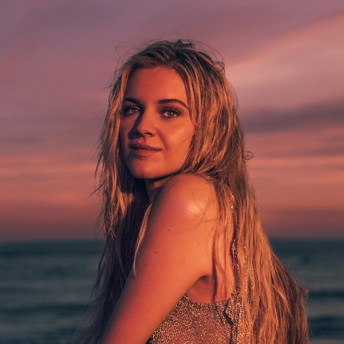
Trending on Billboard Kelsea Ballerini is set to release her latest project, the six-song EP Mount Pleasant, on Nov. 14. Ballerini will preview the set via the release of her new song, “I Sit In Parks,” on Friday (Nov. 7). In the process, the singer-songwriter is ushering in her new creative era. Explore See latest […]

Trending on Billboard
Over the last 12 years, Greg Harris has quietly, methodically steered the Rock & Roll Hall of Fame to massive financial growth despite a swamp of issues — from its lack of female inductees to Rolling Stone founder Jann S. Wenner’s abrupt 2020 departure as foundation chairman to Dolly Parton’s (temporary) refusal to accept her nomination. According to ProPublica, the Cleveland-based hall and museum’s revenue increased from $19.2 million in Harris’ first year as president and CEO in 2012 to $54.8 million in 2023, while its annual visitors recently hit 1.5 million. “We worked to grow the business so that we’d be more stable,” says Harris. “And we have an incredible group of donors.”
Talking to Billboard by phone from the museum’s I.M. Pei-designed pyramid — before he visited the construction site of its $135 million, 50,000-square-foot expansion — Harris previewed the 2025 Rock & Roll Hall of Fame ceremony to induct Outkast, Cyndi Lauper, Joe Cocker, The White Stripes and others. (The show, this Saturday Nov. 8, will be livestreamed on Disney+.) He also discussed the Hall of Fame’s six new board members, plus Chris Kelly, a partner at Cleveland law firm Jones Day, who became board chair in July. A former Philadelphia record-store owner, folklorist and top National Baseball Hall of Fame exec, Harris spoke of the common “emotional impact” of sports, music and folklore during the conversation, which you can read in full below.
Related
What accounts for the revenue growth since you’ve been president?
Harris: We’ve greatly increased our visitation in those years. We made the museum more experiential. Odds are, in the summer, there’s a live band onstage. You can play guitars and drums and things in new spaces that we’ve built and jam with other visitors. We’ve made a lot of investments in improving the visitor experience, and they’ve paid off.
What’s the greatest percentage of revenue? Is it the paid visitors, or something else?
Visitors, ticket sales and retail sales are incredibly important, and we have a lot of events and groups that do events. Our fundraising is what’s enabled us to do this massive expansion project.
It strikes me that the iconic names from the ’50s and ’60s have mostly been inducted, so the Hall of Fame has to update it with new generations. Is that difficult? Fun? Both?
It’s a healthy project to continue to look at different eras. And maybe going against your hypothesis is that Chubby Checker and Joe Cocker are going in, and you could extend that up to the ’70s and ’80s and ’90s with Warren Zevon.
Related
Do you get as many, “That’s not rock ‘n’ roll, that’s Dolly Parton, or [fill in the blank],” as much as you used to?
I believe that’s died down. This big tent of rock ‘n’ roll, that all these different genres and sounds and eras fit into it, has become much more widely accepted. It’s fun to tell these stories about how it all fits together rather than defend a decision here or there. It’s all rock ‘n’ roll. It all fits.
Everybody has a hot take on who should be in and who shouldn’t. What’s yours?
When I came over here, you would think about a certain artist, and most of them have gotten in. Back then, I thought Tom Waits should be in, of course — now he’s in. Stevie Ray [Vaughan] — now he’s in. Hall and Oates — now they’re in. That’s the debate we get to have all year long. At this moment, let’s celebrate this year’s inductees.
The new trustees have business backgrounds, not music backgrounds. Why is that the right criteria to lead the Hall of Fame?
What we look for is good trustees that will help advise us, help us think bigger and help us grow. Because the museum has such an economic impact in northeast Ohio, we do have quite a few of them from northeast Ohio, and they’re here to make sure this entity is terrific for this region while still being terrific for the world.
Related
Chris Kelly, the new board chair, was head of the Republican National Convention host committee in 2016. Did that come up in the process of choosing him for the Hall of Fame, since so many people involved in the organization are politically progressive?
The host committee is what every city has when they try to attract a political convention. That convention was in Cleveland in 2016, but the reason why cities want them is because they’re a massive economic boon to the local economy. It’s not a political statement. It’s about attracting these things, like attracting the Olympics to your town.
Early in your career, you went from founding the Philadelphia Record Exchange to studying folklore in Cooperstown, N.Y., which led you to the Baseball Hall of Fame, then here. What was that transition like?
When I discovered there were these people called folklorists who do oral history, they make documentary films, they produce records, I thought, “What a career, that’s me.” After the Record Exchange, I road-managed some bands. I went back to college and thought I’d go to law school and worked for a law firm, and it just wasn’t for me. That’s when I went heavy on the folklore and museum studies. The great thing is, it’s a history of everyday people, and in many ways that’s what rock ‘n’ roll is all about.
Anything I’ve missed?
One thing is to make sure fans tune in. Go online and watch the streams of the induction. Visit us in Cleveland. We’re open 363 days a year. We have an exhibit right now on Saturday Night Live, 50 years of music that contains every performance. You can watch all of them.
[Harris calls back 30 seconds after the interview.]
What I should’ve ended with was, I love all museums, but this is the greatest museum in the world, and the one place where every visitor has a memory tied to the songs. People come through, they hear a certain song or they remember something they heard in college, the greatest road trip of their life … all that is tied to the music we get to honor every single day at the museum.
Trending on Billboard
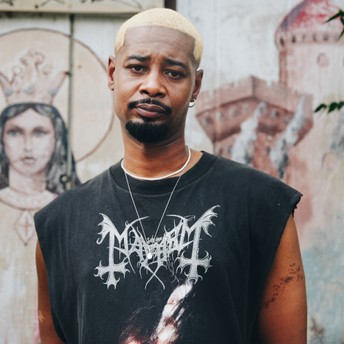
Sitting with Danny Brown in a cornered-off workspace in Brooklyn, the veteran rapper tells me he’s still surprised by how surprised people are when he pushes some boundaries with his music.
Explore
See latest videos, charts and news
In a few hours, the venue we’re at, The Lighthouse, will be filled with rabid supporters eager to hear his new album Stardust — a non-stop sonic blast of high-octane hyperpop and rap fusion. The explosive electronic backdrops — crafted by a bevy of the subgenre’s most potent stars, including Frost Children, 8485, Underscores and Jane Remover — fit Danny Brown’s rambunctious and maximalist flow like a glove. His voice somehow towers above the chaos of “Starburst” and “1L0v3myL1f3!.” But as he takes a hit of his weed pen, he says even at this point in his decade-plus career, he’s nervous about how people will handle the change of pace.
“To be honest, I’ve been doing everything I possibly can to ignore it,” Brown says of his new album, which drops on Friday (Nov. 7). “But today was the first day where I had that anxiety attack of, ‘Oh s—t, it’s time.’ When you work so much on something, and after being creative for such a long period of time, you just want it to be appreciated the right way. I just want them to respect the work.”
While that anxiety may be palpable in the room, it’s nowhere to be found on Stardust. The 14-track offering is stuffed to the brim with joy and hope, inspired by Brown’s much-discussed journey to sobriety. “Well, I’m smoking weed now,” Brown clarifies as he sits back on the couch, playfully wiggling the vape in his hand, “but no drinking.”
Brown entered rehab in 2023, a life-changing choice that seemed destined to forever shelve the rap character he’d played for over 10 years — one of a drug-devouring, sex-crazed lunatic who rocked missing teeth, unkempt hair and made songs like “Adderall Admiral” and “Dope Fiend Rental.” As he worked the program, Brown had access to his phone for a mere 30 minutes a day, where he smoked cigarettes and became obsessed with 100 Gecs. “I was like, ‘Oh, I could rap on that s—t. That s—t is fire,’” Brown says.
A deep appreciation for hyperpop and all its lore soon followed, and after clearing his throat with the emotional catharsis of 2023’s Quaranta, Brown became hellbent on having the time of his life with whatever came next.
Below, Danny Brown talks about his creative rejuvenation, his thoughts on the state of hip-hop, and whether he and JPEGMafia will ever make Scaring the Hoes 2.
First off, tell me about the title Stardust.
It literally means nothing, I swear to God. I went to see U2 at The Sphere with my girl in Vegas, and we were driving on the freeway and they got that Stardust [billboard]. I took a picture of it, and I would go through my phone pictures sometimes and one day I was looking at it. But then I Googled it and Bowie got a Stardust, Yung Lean got an album called Stardust, and I was like, “Eh, I can’t do that.”
What changed your mind?
That was another story, in the sense of that I wanted to work with SOPHIE — but then I saw Vince Staples had already worked with her on [2017’s Big Fish Theory]. And I was like, “I can’t do it now” — ‘coz, you know, hip-hop originality! I’m bitin’ now. But now I’m over that. I wish I had just worked with SOPHIE. So that made me think about that, and based off that, I was like, “The name of the album is Stardust.” Someone told me Stardust means cocaine, and I was like, “I didn’t know that, and that is not what I’m sayin’!” So I hope people don’t think that!
What was it like getting back into music after rehab? I imagine creatively it must have been hard to tap back in without substances.
For this album, I started reading a book called The Artist’s Way by Julian Cameron.
I know it well, my wife worked through it during COVID lockdown.
Yeah! I started doing all the f—king things. When you read the book, you find out that she wrote it from the perspective of being an alcoholic and came from her getting sober. So I was doing all the exercises, going on artist dates and doing all this s—t. Eventually, I started looking at it as: No matter what, I gotta go in from nine to five. No matter what. Like a normal job type s—t.
When did you begin roping in hyperpop acts to help out with the album?
I mean, I started off working on [the music] first, before I started reaching out to work with other people. I wanted to have a bulk of music to play for them, to show them where I can go with it. To show ’em that it works! Because I could tell a lot of ’em weren’t too hip on my music. I’m 20 years older than a lot of them.
Was there any hesitation or gate-keeping when you brought up the idea of a hyperpop rap album?
I can’t say hesitant, because I met Jesse [Taconelli] from deadAir [Records], and he introduced me to everybody. Jesse’s like an OG to everybody, so he was co-signing me, plugging me in, connecting me with everybody. We was doing group chats and s—t. If they weren’t open to it, once they heard the music that I had, they was like, “All right I gotta get in on this.” Every time someone would come [to the studio], I would play them everything I had and just be like, “Yo, what do you wanna do? What do you think? What is this song for you?”
It seems like a natural place for you all to co-exist in, especially with you coming off of Scaring the Hoes.
And it was pulling from there! Cause [Scaring the Hoes] was the first time I heard [Leroy’s] Dariacore. I didn’t even know that was Jane Remover for a long time. Jane was the only one working on the album almost the entire time with me… But a lot of ’em felt like, you know, it didn’t matter what type of music they made, just the fact that they were trans people, they was calling it hyperpop. So a lot of ’em was doing their best to get away from that label.
How do you feel about the label hyperpop?
I mean, I do feel like I understand why that label exists for it, but to me it’s just experimental pop. Man, to be honest, I don’t even know where the pop come from — besides the fact that they started off with, like, those bubble gum songs. Like if you look at a song like Uffie’s “Pop The Glock,” that’s f—king hyperpop, and that was way before there was a term for it.
I feel like allowing these acts such creative freedom on your album is a testament to where you’re at in your career. You don’t feel super precious about what is and isn’t a Danny Brown album at this point.
Because I feel like when you’re younger, you have more time on your hands. You just listen to music and have fun — and like, me living at home, that’s a job in itself, just taking care of the house! I can’t sit on f—king Spotify all day looking for s—t.
When you’re working with people that young, they’re still — I don’t wanna call ’em green, but they got that youthful, ready-to-take-over-the-world type s—t. When you’re at my age, you’re like, “Man, I know I can’t take over the world. I’m defeated with that mission statement. But I can coexist!” I’ve also been making music way before all this dog s—t was like this, where you got all these plug-ins. All the s—t they got now that you can make beats with, it’s seems like it makes it so f—king easy — compared to when we were using drum machines and s—t like that.
It was more limiting.
And I do believe that limitations breed creativity! But with them, it’s like they got the world in their hands. You can’t tell them no. They’re gonna figure it out, they got that, “I can do anything!” Where me and music sometimes are like, “Eh, I can’t find that other part. Just keep it, just loop it.”
And they do put a lot of work in. I feel like people look down on electronic music because it’s not song-written lyrics, but the work they put in? The beats they make in one day? They’re doing post-s—t on those for months before you hear it. I’ve seen it with my own eyes. That song “All4U” I did with Jane, I’ve seen that song change 20 times before it came out. The beat I rapped to was not [what’s on the album].
In full transparency, what has the reception been like to your latest pivot on Stardust?
I mean, with every album I put out, I know there’s gonna be a certain group that’s not going to like it. But I feel like that’s the fake hip-hop fan, in some sense, the person that only listens to one style of rap. It doesn’t even matter if the rapper is good, just as long as it’s in that world that tickles their funny bone that’s all they want, they don’t wanna go outside.
To me, hip-hop, the tradition of it is rooted in originality. So if we’re looking at what the foundation of hip-hop is supposed to be, this is what it’s supposed to be. I feel like If I were to cosplay East Coast, ’90s rap, I can’t take over the world with that — cause it’s already been taken over. All I can do instead is get influence from it, and put a spin on it that’s never been done before.
On that note, Billboard reported recently that there wasn’t a hip-hop hit in the top 40 for the first time since 1990. It got the internet pretty riled up about hip-hop being dead. What are your thoughts on it?
Hip-hop don’t belong there anyway! The dopest s—t was never on the charts, so that means that there’s a lot of dope s—t around. To me that sounds like a reset is happening, sounds like a cleansing.
So how do you feel about the state of rap at this point?
There’s people doing cold s—t everywhere, like somebody like a Skrilla, what he’s doing is fire. I mean, I hate that damn “6 7” thing, but he’s creative! It’s rooted in him talking about religion and s—t. He humanizes addiction in some sense too, cause you see some of these drug dealer raps and they kinda s—t on the fiends. There’s a video of him giving a fiend NARCAN! I’m rooting for that guy, man. I hate that “6-7” s—t though, man.
Not a fan of the kids’ latest trend?
I love that song, but I hate what it’s become. The fact it’s been on South Park is too far. Cause to be honest, that’s not even the main part of the song! It started as, “Baby shark, doo-doo-doo-doo.” That’s the song that made it blew it up for us! It wasn’t no “6-7,” it was that Baby Shark bar.
I’m curious about your relationship to podcasting and streaming at this point now that you’re sober. Do you look at the Danny Brown Show in a different light now that you’re on this health journey?
Nah, I was having fun. It definitely gave me a lot more respect for what y’all do. I mean to be honest, I don’t expect anything from it, it’s just fun. I liked meeting different people that I would have never been able to meet outside of that context. Like I was kicking it with [comedian] Tom Arnold, and I was like, “Man, Tom Arnold kinda cool!” I never would have thought that. Then there was a couple people that was sent to me where I was like, “Man, I hate this motherf—ker.” It’s definitely a great way for me to meet other creatives on the other side of the spectrum.
You and JPEGMAFIA just dropped off SCARING THE HOES: DIRECTORS CUT. Are we ever gonna get a Scaring the Hoes 2?
It’s up to Peggy! I’ve been ready. I call him all the time, tell him, “Let’s do it.” He tells me, “I’m comin’, I’ll be there on this day.” That day comes, he don’t come. That’s been the process for a while.
So what’s the future of Danny Brown look like now?
With music, I just feel like you’re never done. There’s not a belt. I wish I was a black belt! So I’m on this never-ending quest and journey, even like Bowie with Blackstar, I’m on a quest for that. Doing it till it’s over.
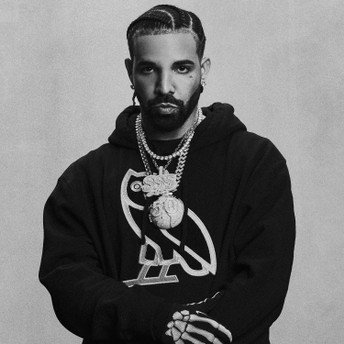
Trending on Billboard Drake is set to briefly revive his acting career with a guest appearance in the upcoming second season of The Office Movers. The 6 God is a longtime friend of the show’s creators, Jermaine “Jae” and Trevaunn “Trey” Richards, and a frustrated Drizzy makes a brief cameo in the series trailer ahead […]

By providing your information, you agree to our Terms of Use and our Privacy Policy.
We use vendors that may also process your information to help provide our services. // This site is protected by reCAPTCHA Enterprise and the Google Privacy Policy and Terms of Service apply.

Trending on Billboard
Avicii‘s second album Stories was released on Oct. 2, 2015, generating hits like “The Nights” and “Waiting For Love” and reaching No. 17 on the Billboard 200, where it spent five weeks.
Now, a new documentary mini-series is taking fans into the heart of the LP’s creation process. Stories on Stories, a three-part series screening on YouTube, presents never-before-shared archival footage of the 2014 and 2015 studio sessions that generated some of the music on Stories.
Out today (Nov. 6), the lead episode shows the Swedish producer in a pair of studio sessions with Alex Ebert, the songwriter and musician widely known as the lead singer of Edward Sharp and the Magnetic Zeros, as the pair work on the instrumentation, melody and lyrics that would ultimately form “For a Better Day.” (This song spent 17 weeks on Hot Dance/Electronic Songs beginning in September of 2015.)
The clips find a relaxed atmosphere in the studio as the pair hash out music and share some laughs in the process. “What I loved about Tim and was the first thing I really got to understand about him is how meticulous he is about the specifics of a melody,” Ebert says in the doc. “It’s almost like he was really in tune with the harmonics of the universe, where a melody should go, where a melody wants to go.” Watch an exclusive clip from the episode below.
The episode is careful to include an archival clip of Avicii himself saying that “I have every session filmed, we’re going to do something with that so people can see what actually goes on the studio. Maybe like a YouTube series.” The episode also states that since 2019, the family of the late producer born Tim Bergling has been archiving material from his laptop and drives to preserve moments from his life and career as Avicii.”
The other two Stories On Stories episodes will feature artists and producers including Gavin DeGraw, Rami Yacoub and Wyclef Jean, altogether exploring the origins of of songs like “Sunset Jesus” and more. The second and third episodes will premier on Dec. 4 and Jan. 1, respectively.
Bergling died by suicide on April 20, 2018. The seven years following his death have seen a wake of commemorative projects including a 2019 posthumous album, a biography, a photo book, a new track released in May and the Avicii Experience museum in the artist’s hometown of Stockholm.
Stories On Stories is presented by the Avicii Estate and Pophouse, the Swedish entertainment company that acquired 75% of Avicii’s recordings and publishing catalog in 2022.

Trending on Billboard
This is partner content.
Normani teaches Olympic gymnast, Jordan Chiles her dance routine and what it takes for her to be a star on stage.
Normani
So today I’m swapping spaces. I have a special guest.
Dondraico Johnson
Can they dance though?
Normani
Absolutely.
Jordan Chiles
I mean, the entrance might have seemed I was really hype, but I’m actually really nervous
Normani
Okay I mean, nervous is okay.
Jordan Chiles
Yeah, yeah, I guess.
Dondraico Johnson
You’re in a safe space this is the best place.
Jordan Chiles
I feel. I feel it. I feel the energy.
Normani
And you have a dance background.
Jordan Chiles
I do. I do. I was dancing until I was about five years old, tap, hip hop and ballet, believe it. Then gymnastics took over so.
Normani
Great foundation.
Dondraico Johnson
See the greats across the board. We good. You got this.
Jordan Chiles
Are you sure? I ain’t trying to embarrass myself?
Dondraico Johnson
Trust me
Normani
And you won’t, we wouldn’t have you go out there like that.
Jordan Chiles
Yeah, I do. I do. I did put you on a beam today.
Normani
She did. Had me doing aerials and cartwheels.
Jordan Chiles
So I guess, since I’m in her space, she was in mine.
Dondraico Johnson
You trying to kill my friend?
Jordan Chiles
I didn’t mean too.
Normani
We’re gonna get even.
Jordan Chiles
This is her getting even.
Normani
Let’s do it.
Jordan Chiles
Let’s do it. Let’s go.
Normani
Okay, so I’m gonna call my vocal coach, because we got to get warm vocally to make sure that that aligns with what we’re doing in terms of the movement, okay, okay, okay.
Jordan Chiles
See ya. Thanks. Bye. Don’t leave me, but thanks.
Watch the full video above!

Trending on Billboard
Outernet London is set to elevate the stories of transgender people from across the U.K. with a new photography exhibition.
“Trans Is Human,” created by trans-rights activists Jake and Hannah Graf MBE, will take over the venue’s large-scale screens on Nov. 17. The free installation will be soundtracked by Yungblud’s “Hello, Heaven, Hello” from the rocker’s recent U.K. chart-topping LP Idols.
The exhibition features portraits of 13 trans people from across the U.K., photographed by Mariano Vivanco. Each image will be accompanied by personal stories exploring themes of identity and resilience.
Explore
See latest videos, charts and news
Among those highlighted will be Amanda, a refugee and the first Miss Trans Global Uganda; Sarah, who overcame sight loss to support LGBTQ+ people with disabilities while running marathons; and Leo, a speaker and life coach with dyskinetic cerebral palsy.
“The idea for ‘Trans Is Human’ came about following years and years of misinformation and the demonization of the U.K.’s trans community that left us almost entirely dehumanized,” said Jake and Hannah in a press release. “Working with Mariano to allow these very human people to soar was an absolute pleasure and thrill.”
They continued: “Now, at such a pivotal moment for the U.K. trans community, as we face the possible loss of many of our most basic human rights, ‘Trans Is Human’ is more vital than ever. We are supremely grateful to the Outernet team and Yungblud for elevating the campaign and helping to remind the world that trans people are human too.”
Yungblud added: “I’m honored that ‘Hello Heaven, Hello’ will be a part of this exhibition. ‘Trans Is Human’ is all about celebrating truth, identity and the beauty of being yourself, unapologetically. That’s something I’ve always tried to celebrate in everything I do. I’m buzzing to play even a small part in telling these powerful stories.”
Outernet London opened in late 2022, and the following year, was ranked the capital’s most visited attraction by Association of Leading Visitor Attractions, bringing in 6.25 million visitors before hitting its first anniversary. Located near Tottenham Court Road station, its four-story, 360-degree screen surface is the first of its kind in the U.K., while Outernet is also home to two live music venues: The Lower Third and HERE.
Scott Neal, Outernet Creative Director, Culture and Lifestyle said in a statement: “The work being done around trans and broader LGBTQ+ equality is far from over. A recent YouGov poll showed 84% of trans people in Britain feel unsafe in public spaces. ‘Trans Is Human’ showcases the humanity behind individual trans stories to highlight that gender identity is just a part of a person’s story.
“At Outernet, equality, fairness and safety are values we live by every single day,” he concluded. “We thank Hannah and Jake for creating this piece and we’re proud to display it for everyone.”