State Champ Radio
 Music
Page: 535

The 2025 Academy Awards are just around the corner, which means a new track will receive the Oscar for best original song. Emilia Pérez notched two nominations in the category with “El Mal” and “Mi Camino.” Both songs’ music and lyrics were written by Clément Ducol and Camille, with a lyrical assist from Jacques Audiard […]
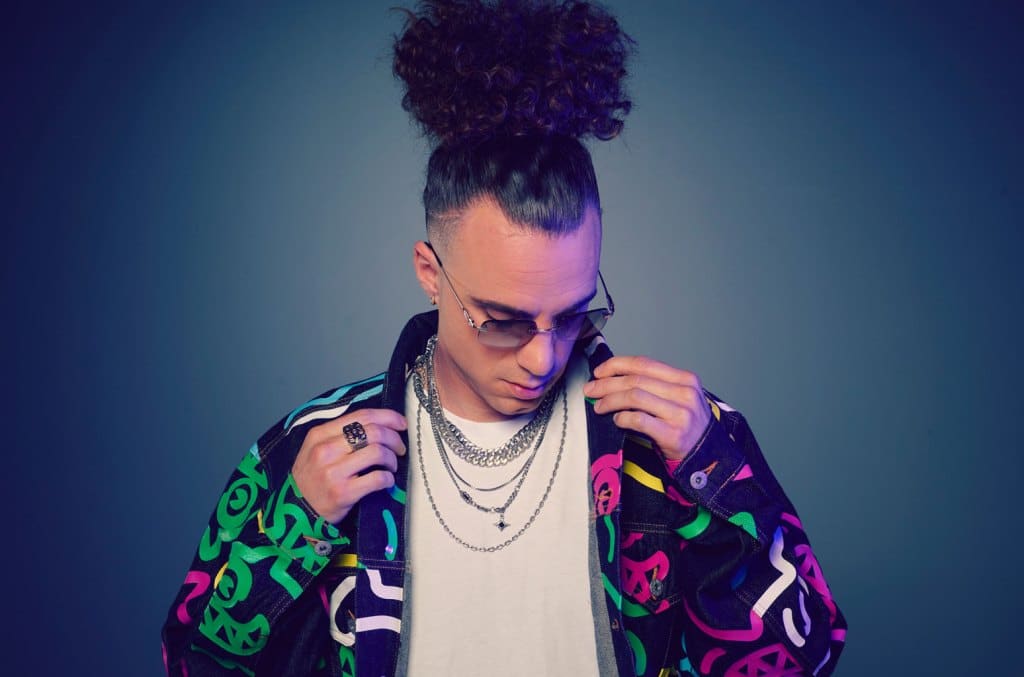
If your TikTok FYP frequently feeds you clips of semi-professional dancers, you’ve probably heard a snippet of Blaiz Fayah and Maureen’s intoxicating “Money Pull Up.” “Money pull up/ Action we ah turn it up/ Shatta run di place and guess/ Who ah bring it up?” the French dancehall artist chants over an infectious, percussive beat.
Hailing from Paris, France, Blaiz Fayah turned his childhood experiences of following his saxophonist father around to zouk gigs in Guadeloupe and Martinique into a bustling dancehall career that’s now birthing international viral hits. According to Luminate, “Money Pull Up” has collected over 1.7 million official on-demand U.S. streams, an impressive number for a song from two rising international stars operating in a relatively niche genre. On TikTok, the official “Money Pull Up” sound plays in over 231,000 posts, including multiple clips from TikTok-Broadway star Charli D’Amelio; the official sound also boasts nearly 30,000 Instagram Reels.
The track – which infuses its dancehall foundation with Martinican shatta (a subgenre of dancehall pioneered in the French Caribbean)– appears on Fayah’s new album Shatta Ting, his first full-length offering since the conclusion of his Mad Ting trilogy. The new record features several collaborators, including Italian-born basshall artist Kybba and producer Mafio House, who helmed several songs, including “Money Pull Up.” His most collaborative project yet, Shatta Ting also gifted Fayah with the opportunity to play his new music for his biggest dancehall heroes in Jamaica.
Trending on Billboard
“When I listen to Shatta Ting, I’m happy. It was important for me to see all these Jamaican artists and producers and engineers embrace the music when I played it for them out there,” he tells Billboard between rehearsals for his forthcoming tour in support of the new album. “For me, going to Jamaica is like when Muslims go to Mecca. I was a bit shy playing the music at first because these guys have been doing this for over 30 years, so when they hear a song, they don’t have a [physical reaction]. But when they said, ‘Bro, you’re a mad artist,’ I felt at ease.”
Blaiz Fayah’s latest tour kicks off on Feb. 27 in Toulon, France, and will visit concert halls in Nice, Lyon and Luxembourg before concluding on March 29 in Dortmund, Germany. In an illuminating conversation with Billboard, Blaiz Fayah talks about his new Shatta Ting album, the French Caribbean music scene and the merits of TikTok for dancehall’s present and future.
Where are you right now?
I’m actually in a rehearsal studio in Paris making small details before the first show of the tour. It’s a new show for the new album, so I have to [revamp] everything. On the last tour, we mostly used the same show with a few new songs sometimes. By the end, it was a bit too easy because it was so automatic. I was a bit lazy by the end of the tour. I like a challenge, so for the next tour, I have some pressure on me to remember my blocking and everything.
Where are you and your family from? What’s your relationship with dancehall?
I was born in Paris, and we have the French Caribbean as well with Martinique, Guadeloupe, etc. My father was the saxophonist of Kassav’, a big zouk group from the French Caribbean. When I was really young, I used to go to Guadeloupe and Martinique and go to some studio sessions with him. When I grew up, I was assisting in the studio as well. I’ve always been around this culture, listening to reggae and dancehall. I used to listen to Sizzla, Buju Banton, Richie Spice, and all these roots reggae artists. I was digging deep and understanding the story and evolution of the music. I’ve always been like a magnet to this music, not the Jamaican culture.
I don’t act like I’m a Jamaican, and it’s really important to say that… I remember one time I was writing in Jamaica, and someone told me to say “likkle” instead of “little.” I said, “Bro, I’m not Jamaican!” It’s really important for me to stay myself. I’m not saying “bomboclaat” every two sentences. I really like the energy of the music. I never felt this free listening to anything else; there is no other music that brings me this kind of madness.
How would you describe shatta?
Shatta comes from Martinique. It’s a type of riddim with big bass, snares, minimal hi-hats, and, sometimes, no chords. Remixes of Vybz Kartel‘s [vocals] on shatta riddims used to go crazy at every party, same with Aidonia’s voice or Buju’s voice. Martinique still has a thriving dancehall scene and people wanna dance. The shatta riddim makes the people dance. When I play shatta riddims for other artists like Busy Signal and they think it’s fresh, I have to give them their flowers. They started all of this; we’re the result of their influence.
When you hear [Kartel’s] “Benz Punany,” there is no kick drum, only bassline, that’s a choice to make the music stronger. When you hear [Charly Black and J Capri’s] “Wine & Kotch,” it’s the same thing. Jamaica has been doing this for 10-15 years; Martinique just put their own vibe on it. We don’t go as hard lyrically as some Jamaican dancehall artists because it’s not the same culture, but it’s still party music.
How did “Money Pull Up” come together? When did you start to realize that it was growing into a big hit?
I was in Martinique with Mafio House, who wrote the arrangement for the song, listening to “Benz Punany” again. I wanted to combine Gaza-type strings [in reference to Kartel’s Gaza production camp] with a shatta bassline and percussion. 15 minutes later, the first version of the riddim was done. Initially, I wanted Boy Boy on the track because it had a bit of a Trinidadian vibe, but [plans fell through].
I ended up being in the studio in Paris with Maureen, played her the riddim, and she loved it. We wrote and recorded the song immediately, and I sent the track to one producer to clean it up and make it feel less like a demo. But after four weeks, I still had nothing, so I gave the track to Mafio. Three hours later, we had a finished cut of the song.
The label liked the song, but they wanted something easier for people to latch onto. I was like, “If we do what is working now, then we’re not leading our thing. It’s too easy.” Sometimes, I make choices, and the stars are not on the same line at that moment, but I’m not ashamed about it. They agreed to put some money into the video, and within one month, Spotify streams started hitting 500,000 per day. I’m so happy, because I believed in the song ever since I heard the first note of the riddim. And I’m happy, I followed the Gaza influence and made a real collaboration [with Maureen].
How has TikTok and the dance community helped dancehall’s global presence?
TikTok is a really, really good thing because I can see the impact. But it’s a really, really bad thing because a lot of people make songs for TikTok. I think that’s a trap. “Money Pull Up” is my biggest hit [so far], and I never expected it to be big on TikTok. If you make songs for TikTok, you’re on the wrong path for hits.
TikTok can also be kind of unfair to dancers because phones do so much of the work, and onstage, they look completely different. I see some of these TikTok dancers, and there is no attitude. The result on the app is crazy, but they move too small for the stage. Even the crowds know when a dancer is there because she’s sexy and beautiful, over the dancers who working and taking lessons every day of the week. TikTok can be a good thing because everybody can be a star or go viral quickly — but you have to be careful of the way TikTok influences how you create.
This is your first album since the Mad Ting trilogy ended. Where did you want to go musically and conceptually after the trilogy?
I started working on Shatta Ting about a year and a half ago. I had a writing camp in Martinique and kept half of the songs we wrote there. It was the first time I recorded songs like that. I really enjoyed creating [in collaboration], and I took some risks on some of those songs – but those aren’t on Shatta Ting because I wanted something easier for people to listen to.
I also feel that it’s time to put the “shatta” name in people’s heads; that’s why there are more proper shatta riddims on this project. There is less risk, but nobody listens to me for slow songs or songs about the world. When people listen to me, they just want to have fun.
Did the writing camp approach change anything else about how you normally make albums?
This was the first time I made a bunch of songs and then chose a few from the pack for the album. I’m not an artist who records a bunch of songs for an album and throws half of them away. I like quality over quantity. I have 8-10 songs from those sessions that I’ve put to the side. The BPM is also a bit higher on Shatta Ting than my other projects, so the tour will be more dynamic.
What else do you have planned this year?
We have a big tour for Shatta Ting, of course. I have another writing camp with Kybba in April, and we’re going to make a joint project. After that, I’ve just re-signed for two other albums. I have a better deal now because I’ve created my own label. Shatta Ting is a co-production with my label, Mad Ting Records, and Creepy Music, which works with X-Ray Productions. Now, I own 50% of my publishing. That kind of thing can happen when you have some strings, and the strings come from songs like “Money Pull Up.” When you have good numbers, then you can negotiate these things.
Companies like Universal and Sony approached me, but nowadays, we don’t really need them. They’re more like a bank. I prefer a small label with money; I really feel better than when I call someone, and a person [at the label] answers. It’s important to feel like we’re working on the same wavelength. We’re not here only for money. Another big thing is that I can do what I want creatively. The label tells me nothing. I have some parts of the deal that I must respect, but I’m free in the creation, so I’m really happy.
Kim Kardashian is healing through her relationship with her 11-year-old daughter North following her divorce from Kanye West.
In the newest episode of Hulu’s The Kardashians on Thursday (Feb. 27), Kim reveals a positive development to her sister, Kourtney Kardashian Barker. “The craziest thing happened. Tell me if this happened with Mason,” Kim says, referring to Kourtney’s 15-year-old son. “North is like obsessed with me now. And calls me with her friends like, ‘Mom I love you, you’re the best mom. I love you so much.’”
“Do you think you’ve changed?” Kourtney asks Kim, and the SKIMS founder replies, “I mean possibly. It was a year of like mad at me.”
Explore
Explore
See latest videos, charts and news
See latest videos, charts and news
“Well also you guys were getting a divorce,” Kourtney notes, and Kim agrees. “I think it was all the divorce. It’s insane the turnaround,” she says.
Trending on Billboard
Kardashian filed for divorce from West in February 2021 after six years of marriage. Both sides initially said that the split would be amicable, but the relationship between the two superstars has turned increasingly tense in the two years since.
Ye has also been especially controversial. Back in October 2022, Ye fired off a series of antisemitic rants, including the “Death Con 3” tweet, which led to companies such as Adidas, Def Jam, Balenciaga, Gap and more cutting ties with the rapper.
Earlier this year, the rapper went on a hate-filled X spree, in which he once again praised Nazis and Adolf Hitler, while insulting the LGBTQ community and people with disabilities with phrases such as “f–k ret-rds.”
“After further reflection I’ve come to the realization that I’m not a Nazi,” he later wrote, backtracking on his highly criticized comments.
Kardashian has previously opened up about navigating the divorce with her four children — in addition to North, she also shares Saint, Chicago and Psalm with Ye. “Ultimately, what matters is that kids feel loved and heard,” she said in a GQ cover feature. “You want to be sensitive because they’re just kids, and it’s hard to go through no matter what age. You have to make sure that you only go to a level that they can understand. It’s okay to show a vulnerable side. You never go to a negative side.”
“Just because I know how to manage my stress well doesn’t mean that I don’t feel the emotions. If I’m sad, of course I will cry and feel it,” she added.
Ray J regrets his infamous rant aimed at Fabolous from 2011 when he called into The Breakfast Club and threatened the Brooklyn rapper after Fab made fun of Ray J playing his song “One Wish” on the piano for Floyd Mayweather on an episode of HBO Sports docuseries 24/7. Explore See latest videos, charts and […]
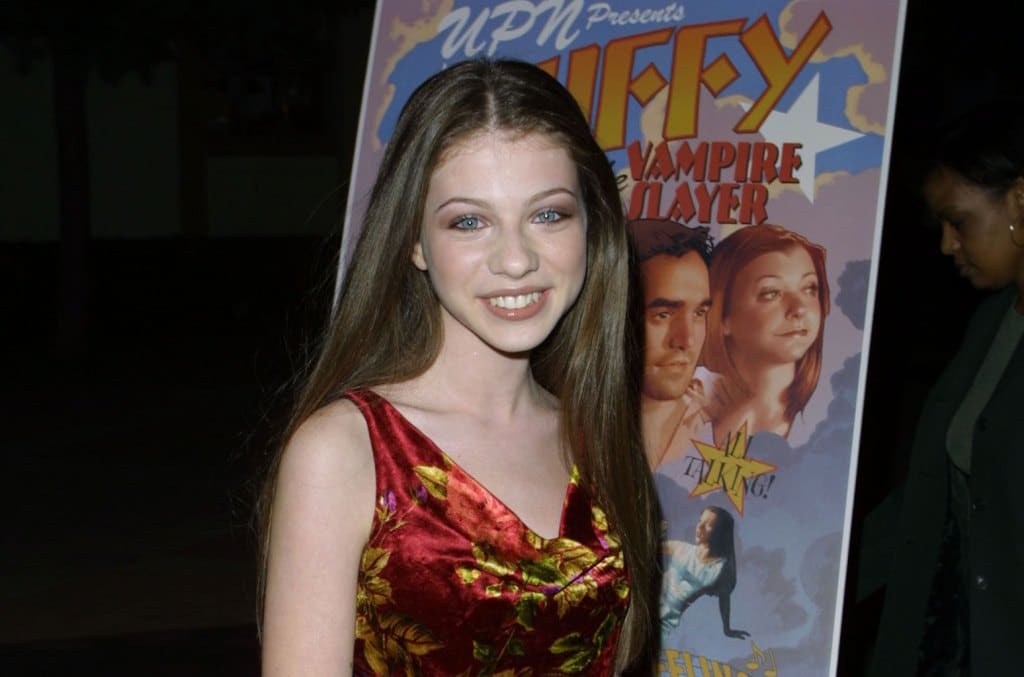
While known mostly for her numerous and diverse acting roles, Michelle Trachtenberg also made a notable impact on Billboard’s music charts.
As reported Wednesday (Feb. 26), Trachtenberg passed away at age 39.
The New York native broke through with, among other early roles, her starring turn in the film Harriet the Spy in 1996, released when she was just 10. By then, she had also made multiple appearances on ABC’s All My Children — working with Sarah Michelle Gellar. That connection led to Trachtenberg joining Gellar on Buffy the Vampire Slayer from 2000 through its 2003 finale. (A reboot is currently in the works.)
When the series shifted from the WB to UPN for its sixth season, fans were treated to one of its most innovative episodes: the musical Once More With Feeling. Most prominently for Trachtenberg, whose ballet talents were showcased that week, she opens the episode’s coda, “Where Do We Go From Here?,” singing the opening title line a cappella.
The 23-song Once More With Feeling soundtrack was subsequently released (on Mutant Enemy/Twentieth Century Fox/Rounder Records). Mirroring the show’s trademark witty dialog (one lyric features singing-averse Alyson Hannigan admitting, “I think this line’s mostly filler”), the set slayed Billboard’s charts, most notably debuting at its No. 3 best on the Soundtracks chart — a year after the episode aired. It also hit the Billboard 200 and Independent Albums charts.
To date, the album has drawn 23.6 million streams in the U.S., according to Luminate.
Trending on Billboard
In 2016, upon the 15th anniversary of Once More With Feeling’s premiere, the series’ Anthony Head — aka Buffy’s slayer sage, Giles — mused about the idea to give the cast something to sing about. “I’d done Chess, Godspell and Rocky Horror before I joined Buffy, and, on the pilot, [creator Joss Whedon], Sarah Michelle and I were waiting in the back of the library set and [Whedon] said he had a huge fondness for musicals,” Head recalled to Billboard at the time. “We said then, ‘If the show ever gets picked up, wouldn’t it be fun to do a musical episode?’ Pretty much every season, for three or four seasons, I said, ‘Are we going to do the musical episode this year?!’”
Head said that Whedon wanted to wait until it felt “organic,” and by the sixth season, after the cast’s vocal chops had been discovered and honed through singalongs at Whedon’s house, and the show’s storylines had been furthered, the timing seemed right. Before the season, Head received a demo of songs from Whedon, who realized at last, per Head, “’We’ve got a musical!’
“It was just remarkable,” Head marveled. “Even in that home-demo stage … the melodies were so strong. It was a great, eclectic compilation of songs. From that moment on, I was like, ‘What can I do? What can I do?!’”

PARTYNEXTDOOR has walked back his Tory Lanez diss.
PND previewed a snippet on his Instagram Live of a song on Wednesday (Feb. 26), where he’s throwing shot at fellow Toronto artist Tory Lanez. “I’m not y’all n—as friend. What are you talkin’ about bro? Stop saying my name,” he could be heard saying before playing the track.
“F—k what Tory Lanez say, he knows the B, I’m runnin’ it,” Party says in his signature flow. “I did everything he did he’s just a running man … drama man … I’m the daddy let me slap you OK.”
Explore
See latest videos, charts and news
See latest videos, charts and news
He later sings about Tory sounding like him and seems to refer to his guilty verdict in the Megan Thee Stallion case: “You said I sound like Young Thug, you know you sound like me,” he says. “Life is short, the lawyer’s cheap/ The people that love me, they love me/ Would’ve been back in the streets by Monday.”
Trending on Billboard
However, a few hours later, Party admitted that recording and teasing the song was a mistake. “I was told about what you said without hearing your video for myself,” he wrote in his Instagram Story. “You didn’t say anything that I wouldn’t say myself, now that I seen it I was wrong. City is stronger together.”
The video he’s referring to is the one that was posted to Tory Lanez’s Instagram on Feb. 19, where the currently incarcerated artist mentioned in a phone call from behind bars that Party, Drake, and The Weeknd‘s latest efforts have inspired him to record an album this year. “PARTYNEXTDOOR showed his best work of 2025, Drake showed his best work of 2025,” Lanez said. “The Weeknd showed his best work of 2025, now it’s time for me to come out.”
Many fans were confused by Party’s shots because Drake has shown support for Lanez a few times, most recently calling for his freedom during a Christmas giveaway on a stream with Adin Ross.

Tate McRae has ticked a lot of career dreams off her vision board over the past few years. But that doesn’t mean the “Sports Car” singer is done searching for new challenges. In an interview with Pride about her deep connection to her LGBTQ+ day one fans and the star’s upcoming Miss Possessive tour in support of her So Close to What album, McRae didn’t hesitate when asked which one of her idols she’d like to hit the studio with.
Explore
Explore
See latest videos, charts and news
See latest videos, charts and news
“My dream is to write with SZA. She’s one of the coolest and best writers ever,” McRae said of the “Luther” star who is gearing to to hit the road with her Super Bowl LIX halftime show compatriot Kendrick Lamar in April. “I love her. I think it’d be a mix of pop and R&B. I’d let her take the charge! I just want to always keep pushing my comfort zone. I never want to recycle and do the same things. As an artist, I want to be uncomfortable and shock myself sometimes.”
Trending on Billboard
While she’s manifesting things, the goal-driven McRae also said she “would die” to perform at the MTV VMAs. “That’s something I’ve watched all my idols do for so many years,” she said of the show that has been a launching pad and showcase for some of her obvious influences in the past, from Madonna to Britney Spears. “From some reason, that specific performances is something I’ve always wanted.”
She also had to give it up for her day-one queer fans, saying that they are her absolute “favorite. No one beats them. Nobody is better than them. My whole team is gay! That’s the only opinion I really want when I’m releasing music. I feel lucky that I have their opinion. We want to do the most and push the boundaries, but it’s also the most brutally honest advice.”
As an example, the 21-year-old noted her 2023 performance at the G-A-Y & Heaven Nightclub in London, which she called one of her all-time high points. “I ditched the mic and just started dancing,” she said. “There was only like 150 people in the room and it was some of the craziest, loudest energy I’ve ever felt. I just wanted to whip my hair, do a kick, and leave! That’s all I wanted to do.”
In a final shout-out to the audience that has always had her back, McRae added, “I love you guys so much. Y’all are my number ones. You know that as much as you guys ride for me, I ride for you. I feel very grateful to have you guys in my life and surrounding me.”
As she awaits the March 18 kick-off of her tour in Mexico City’s Pepsi Center WTC, McRae will appear as the musical guest on Saturday Night Live this weekend alongside host comedian Shane Gillis.
HipHopWired Featured Video
CLOSE
Hot 107.9’s Birthday Bash has seen its fair share of memorable moments, from surprise guests to on-stage shenanigans. We have pretty much seen it all over the past 29 shows, and yet, each year becomes hotter than the last!
We take a look back at 20 of the biggest moments in Birthday Bash history! Consider it a warm-up for this year’s Birthday Bash!
Scroll Down and Tune In FRIDAY @ 5 pm For A MAJOR BIRTHDAY BASH ANNOUNCEMENT!
20 Memorable “Birthday Bash” Moments
was originally published on
hotspotatl.com
1. Latto Brings Out Usher For Birthday Bash
2. NLE Choppa & Sexyy Red Get Frisky On Stage
3. Megan Thee Stallion Performs “Realer”
4. Lil Baby Brings Out Lil Durk
5. 21 Savage Brings Out Latto & Cardi B
6. Lil Baby & His Son Having a Ball
7. Migos Hits The Birthday Bash Stage For The Last Time
8. Gucci Mane Brings Out Rick Ross
9. Fabo From D4L Performs “Laffy Taffy”
10. BeatKing’s Final Birthday Bash Performance
11. Gloss Up Shares The Stage With Her Son
12. DaBaby Hops In The Crowd & Turns Up
13. 21 Savage & J Cole Light Up The Stage
14. Ludacris & Mystikal On Stage
15. Killer Mike Awarded The Inaugural Rico Wade Game Changer Award
16. T.I. Shouts Out Young Thug
17. Pastor Troy Performs “No Mo Play in GA”
18. Latto Gets Freaky On The Mic
19. Yung Miami Twerks On Stage
20. Gucci Mane Brings Out Lil Wayne
Forever No. 1 is a Billboard series that pays special tribute to the recently deceased artists who achieved the highest honor our charts have to offer — a Billboard Hot 100 No. 1 single — by taking an extended look back at the chart-topping songs that made them part of this exclusive club. Here, we honor the late Robert John with a look at his lone No. 1: The sweetly insensitive 1979 throwback smash “Sad Eyes.”
Explore
Explore
See latest videos, charts and news
See latest videos, charts and news
Perhaps it made counterintuitive sense that Robert John would finally score his career-making solo ballad at one of the most inhospitable times for downtempo pop music in the history of top 40. The year 1979 was defined first and foremost by disco: the thumping dance music that not only made stars out of the Bee Gees, Chic and Donna Summer but also convinced artists as far-flung as Herb Alpert, Rod Stewart and Blondie to get on the floor. All six of those artists topped the Hot 100 with disco (or at least disco-influenced) songs in 1979, and the charts’ biggest exception to disco’s dominance — power-poppers The Knack, who ended up with the chart’s year-end No. 1 with the irresistible “My Sharona” — was still just as propulsive and beat-driven. The Hot 100 certainly should not have had room at its apex in 1979 for a song as slow-paced, winsome and unapologetically retro as “Sad Eyes.”
Trending on Billboard
But Robert John’s path on the charts had never exactly been a logical one. His career arc was atypically jagged and erratic for a pop singer, starting at an unnaturally young age and continuing for decades, but rarely for more than a hit song at a time, and often with many fallow years coming in between them. By 1979, John had technically been a hitmaker for over 20 years, but he also hadn’t reached the Hot 100 since 1972, and he had even given up on making music altogether for a stretch in the mid-decade. For him to return to recording and immediately top the Hot 100 for the first and only time in his career, with a song at about half the BPM of most of the hits surrounding it on top 40 at the time? Sure, why not.
In truth, it wasn’t like “Sad Eyes” was the only slow song making it on the radio in the late ’70s. There were still plenty of nuggets of AM gold to be found among the silver disco balls littering that era’s charts, sweetly harmonized gems like Walter Egan’s “Magnet and Steel,” Olivia Newton-John’s “Hopelessly Devoted to You” and Barry Manilow’s “Can’t Smile Without You.” Even disco stalwarts the Bee Gees kicked the year off with “Too Much Heaven,” one of the group’s most sentimental ballads, topping the Hot 100. Another such hit from the time that had just missed the top 10 in 1978, Toby Beau’s “My Angel Baby,” caught the ear of producer George Tobin, who felt a song like that would be a good fit for Robert John.
John would take some convincing. He was essentially retired from music at the time, and was working construction in New Jersey. John had become frustrated with the industry after 15 years of recording — dating back to the minor 1958 hit “White Bucks and Saddle Shoes,” which he recorded as Bobby Pedrick, Jr. when he was just 12 years old — which had failed to result in a consistently sustainable career for him. The final straw came following the success of his 1971 version of The Tokens’ Hot 100-topping 1961 smash “The Lion Sleeps Tonight,” which went to No. 3 on the chart and sold over a million copies — but still didn’t inspire much belief in him from his then-label, Atlantic Records. “The company didn’t have enough faith to let me do an album,” he told Rolling Stone. “I decided that if that’s what happens after [such a big hit] then I just wasn’t going to sing anymore.”
Tobin invited John to live with him as they worked on the song that would become his comeback single. They eventually came up with “Sad Eyes,” a breakup ballad built on a plush water bed of aqueous electric piano, twinkling glockenspiel, loping bass, buoyant guitar and a crisp drum shuffle. The production was lovely without being overwhelmingly lush, and John’s mostly falsetto vocal was its perfect match — particularly towards the song’s end, when the song modulates up and John uses his doo-wop background to hit some unreal upper-register ad libs as the chorus repeats to fade.
In fact, the song was so sweet that it was easy to miss just what a cad John was playing in its lyrics. The “Sad Eyes” in question belong to a lover who John is breaking it off with, presumably because his main squeeze is returning from afar: “Looks like it’s over, you knew I couldn’t stay/ She’s comin’ home today,” he explains in the opening lines. The song’s patronizing attempts to comfort the soon-to-be-ex on the verses (“Try to remember the magic that we shared/ In time your broken heart will mend”) turn to outright selfishness on the chorus (“Turn the other way… I don’t want to see you cry”) — but they never quite feel mean-spirited enough to the point of distracting from the song’s intoxicating sway.
After a false start with Arista, Tobin and John eventually caught the interest of EMI America, launched just the year before, which released the record in April 1979. The song debuted at No. 85 on the Hot 100 dated May 19, though it didn’t top the chart until 20 weeks later — tying a Hot 100 record to that point, set the year before by Nick Gilder’s “Hot Child in the City” for longest trek to No. 1 — when it finally knocked The Knack out of the top spot after its six-week reign with “My Sharona.” (John also set a record with the longest time in between his first Hot 100 entry and his first No. 1, dating back 21 years to his “White Bucks and Saddle Shoes” debut in 1958, though Tina Turner would take that mark over a half-decade later with her “What’s Love Got to Do With It.”) “Sad Eyes” lasted just one week atop the listing, before the disco order was once again restored — as the song was unseated by Michael Jackson’s all-timer Off the Wall lead single, “Don’t Stop ‘Til You Get Enough.”
Billboard
This time, Robert John at least would get to make a full album: a self-titled LP, also released on EMI in 1979, which peaked at No. 68 on the Billboard 200 that October. But the album failed to spawn another top 40 hit — the groovier “Lonely Eyes” peaked just outside the region in early 1980 — and John would only make the chart subsequently with a trio of covers, faring the best with his No. 31-peaking take on Eddie Holman’s “Hey There Lonely Girl,” from 1980’s Back on the Street. That album would prove to be his last, and John mostly retired from recording and performing again after that.
Robert John might never have gotten the sustained success or career stability he hoped for as a singer, but he did have hits in four separate decades, he did get his name multiple times in the Billboard record books, and he can claim to be one of just a few artists in the world to rule the age of disco with a not-even-remotely-disco record. Even he eventually turned the other way, that’s nothing to be sad about.
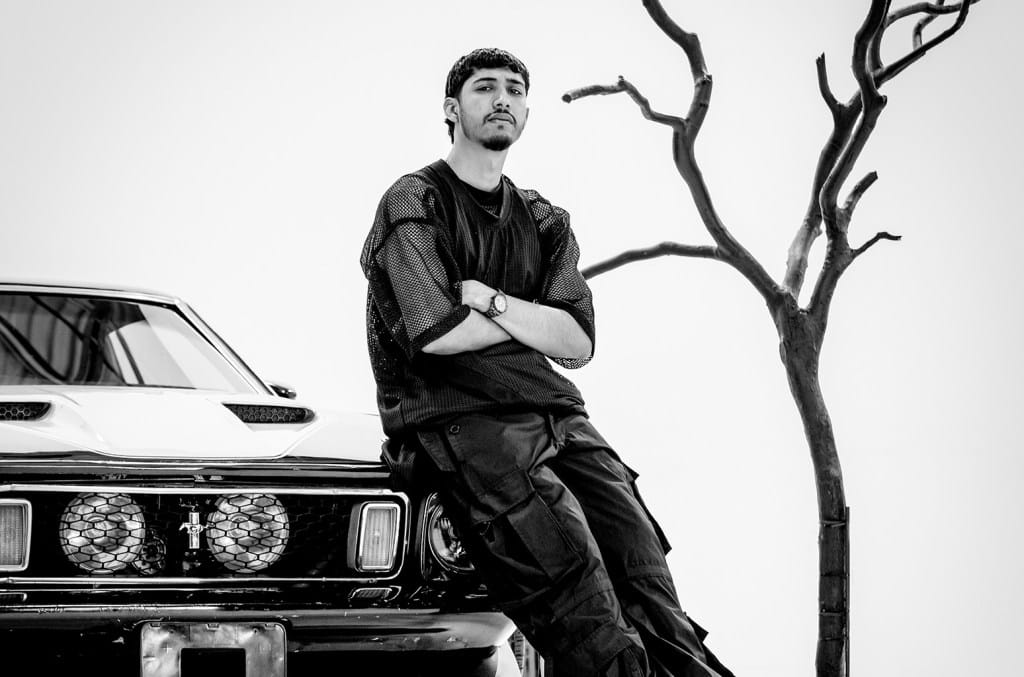
Netón Vega seems to be suddenly everywhere nowadays, but he’s hardly an overnight success. Born in La Paz, Baja California, Mexico, the 22-year-old artist is best known for co-writing countless hits, including Peso Pluma’s “Rubicon” and “La People.” After cementing himself as a go-to songwriter, Vega’s journey as a singer is just taking off — most recently, his reggaetón anthem “Loco” earned him his fourth top 10 entry on Billboard‘s Hot Latin Songs chart — and that’s exactly how he planned for it to be.
“Writing songs was the best first step because you start making points, and when you get hits from those songs you’re writing — well, that really gets your name out there,” Vega, this month’s Billboard Latin Artist on the Rise, explains. “Other artists start to know that you can write well and then eventually find out you can also sing. That opens doors for you. It’s what happened to me. The songs I wrote really took off. It was hit after hit, and everything after that just happened so fast.”
Trending on Billboard
Vega fell in love with music at a young age. By age 9, he was singing at school concerts and, five years later, he created his own band in Culiacán — where he grew up — with him as lead singer. What started off as a hobby quickly turned into a money-making business. The band was composed by fellow classmates and a neighbor who they recruited while eating burgers. “We were so busy playing at parties, it was crazy,” Vega remembers. “At the beginning, we actually didn’t know much to charge. We were getting like 500 to 1000 pesos per event, but we worked long hours and like five days a week. I would go to school defeated, but with money in my pocket.”
Like many kids who grow up in the state of Sinaloa, Vega listened to regional Mexican music, especially corridos, and then started writing his own. His parents — who encouraged Vega’s love for music — also consumed música Mexicana, but also the more traditional stuff, including norteña. “My parents were never opposed to me playing at events — sometimes they would go with me,” he says.
Two years ago, Vega met Jesús Josafat Chávez Angulo, who was part of the local music scene in Culiacán, and was the unofficial manager of a few groups in town. “It’s a small community and everyone knows everyone,” says Vega. “I was invited to his house and that’s where I met him. We got along really well and I started working with him.” Today, Chávez Angulo is Vega’s manager, and founder of Josa Records, the indie label home to Vega. “The support I needed then was being able to go record in a studio and be able to make music videos. It’s really what I needed to get my name out there.”
The opportunities started coming quickly through social media. People in Culiacán started discovering him, and one day, a friend and fellow musician told him that Peso Pluma wanted to record one of his songs. “I wrote ‘Rubicon’ and that was a before and after in my career,” he recalls. “I remember that person came up to me and told me that Hassan (Peso’s real name) liked the song, and wanted to record it. I was like, ‘Great, he can record it.’” The track peaked at No. 12 on Hot Latin Songs.
Vega’s big break as a singer came last year through a collaboration with Luis R Conriquez. The corridos bélicos pioneer reached out to Vega via Instagram. “He sent me a video saying he had a corrido, and he wanted to sing it with me. He came to Guadalajara and we recorded the song and video here.” The collaborative effort peaked at No. 2 on Hot Latin Songs in June, followed by “La Patrulla” with Peso, which also peaked at No. 2 on the tally in September.
Vega, who now spends most of his time in Guadalajara wrapped 2024 with the success of “Loco,” a reggaetón smash hit that showcased his versatility, and the rise of Mexican reggaetón. “I’m more comfortable maybe in Mexican music but I feel good in both genres. I don’t ever want to regret not doing a style. Having a song like ‘Loco,’ and for it to explode, it means a lot. People are discovering my music with this song. That’s always a good thing and I want to continue to do that with my music, without ever losing my essence, of course.”
Most recently, Vega released Mi Vida Mi Muerte, his debut album, which has further fueled his momentum. The set is stacked with heavy-hitters in the genre, including Óscar Maydon, Tito Double P and Gabito Ballesteros. In a nod to his growing popularity, Vega will headline the inaugural Michelada Fest in El Paso, Texas on May 3, along with Chino Pacas, marking his first U.S. performance.
Read more about our February Latin Artist on the Rise below.
Name: Luis Ernesto Vega Carvajal
Age: 22
Recommended Song: “I would actually want them to listen to my new album, from beginning to end. You can really get an idea of what type of artist I am and how much I enjoy making all kinds of music.”
Major Accomplishment: “Being nominated for Mexican music new artist and Mexican music collaboration of the year at Premio Lo Nuestro.”
What’s Next? “I really want to start performing in the U.S. I want to see how people will react to my songs.”