State Champ Radio
 Music
Page: 412
It has come to our attention that individuals are fraudulently using the Billboard name and trademark to run what seems to be a cryptocurrency scam operation. This is not legitimate and not in any way affiliated with Billboard. If you have fallen victim to such a scam operation, it is suggested that you contact the […]

On Wednesday night (Apr. 2), Fake Shore Drive‘s Andrew Barber tweeted out a leaked song titled “Take the Soul” and claimed that the track was “Playboi Carti and A$AP Nast over Alchemist production.” Explore See latest videos, charts and news See latest videos, charts and news Naturally, fans went into a frenzy on X, with […]
In an increasingly global music world, stars are popping up from every corner of the planet. But rising Colombian star Venesti may be the first to come from Guapi, a small, remote town near Colombia’s Pacific coast where there is nothing resembling a music industry.
Explore
Explore
See latest videos, charts and news
See latest videos, charts and news
“This is a place with maybe 25,000 people or less. People who come from a place like Guapi, don’t think they can be successful at this level,” says Venesti, who at 14 years old move to nearby Cali, known as a capital of salsa and a breeding ground for new rhythms.
Venesti, real name Faiber Stiven Caicedo Castro, carved out the artistic name Venesti from a play on words on his middle names, and began to do a mix of tropical and pop informed by the Afrobeats of his hometown. Last year, he won his first Billboard Latin Music Award, for Best Latin pop song for “No Es Normal,” alongside Nacho and Maffio.
Trending on Billboard
Building on the song’s mix of pop beats with Afro roots and sensibility, Venesti released his sophomore album Origen on March 28 — a 12-track set that incorporates traditional Afro Caribbean rhythms with Afrobeats, reggaetón and ultimately pop for broad appeal.
“I wanted to find my roots, my culture,” says Venesti. “This is an evolution of my sound. I’ve gone through salsa, bachata, and I’ve rescued many sounds from each genre, I’ve encountered a lot of folklore, fused with Afro culture.”
The album features many collaborators, from known names like Guaynaa and Nacho to rising Colombian DJs and artists. Some may not be as known to mainstream Latin audiences but they’re part of Venesti’s journey from small town boy with big dreams to his arrival in Cali, and later, Bogotá, Medellín and Cartagena, all places whose music informs this album.
Below, Venesti gives us his picks of five tracks to begin his journey with.
“Taca Tu Tacu”
This came from a session with Gangsta, who is one of the most incredible producers today. We’d been talking forever and finally met in Miami. We chatted at home and set it up. I told I wanted to create a fusion of ancestral sounds, and he brought up currulao, a genre from the Pacific coast that’s set in five beats, and we put it inside the chorus. There’s like a currulao in the Afrobeat, and it may be my favorite song. [In terms of the lyrics] I began my career writing poetry, but I wanted a chorus here that you could feel rather than sing. The “Taca Tu Tacu” is the beat of my heart. The poem is recited by my heart.
“Tamo Ahí” (with DJ Pope)
This is the song that has that danceable rhythm, but the song is all about courtship, and you’re there, almost there. DJ Pope is Balvin’s longtime DJ and he’s also someone who’s come up to me and congratulated me for getting to where I am coming from a place like Guapi.
“Felina” (with Nacho)
I worked with Nacho in “No es normal” and I had that personal goa lof having him sing Afro. We agreed to do something else after “No es normal” and he had wanted to do another merengue. I said, bro, if you allow me, let me show you this other rhythm. And he fell in love. We did several songs, but in the end, we stayed with “Felina.”
“Me vas a extrañar” (with Jeivy Dance & Andy Alaska)
This is a heartbreak song. It’s sad to remember happy moments that are over, but it’s also about realizing it’s time to let go of the people who’ve hurt you. It’s about putting it all out there. I worked on this one with Jeivy Dance, this huge talent from Cartagena, and Andy Alaska, a DJ who’s going through a great moment. I hadn’t realized that Afro was being done like this in other parts of Colombia and the Pacific. The four DJs that are in this album are here based purely on friendship.
“Number 1”
This is the guy who is winning over the girl every day with little gestures. And when I say “gestures,” I don’t mean gifts; I mean a look, a call, those little things that matter, that are subtle. It’s a very romantic song and I think people will really connect with it.
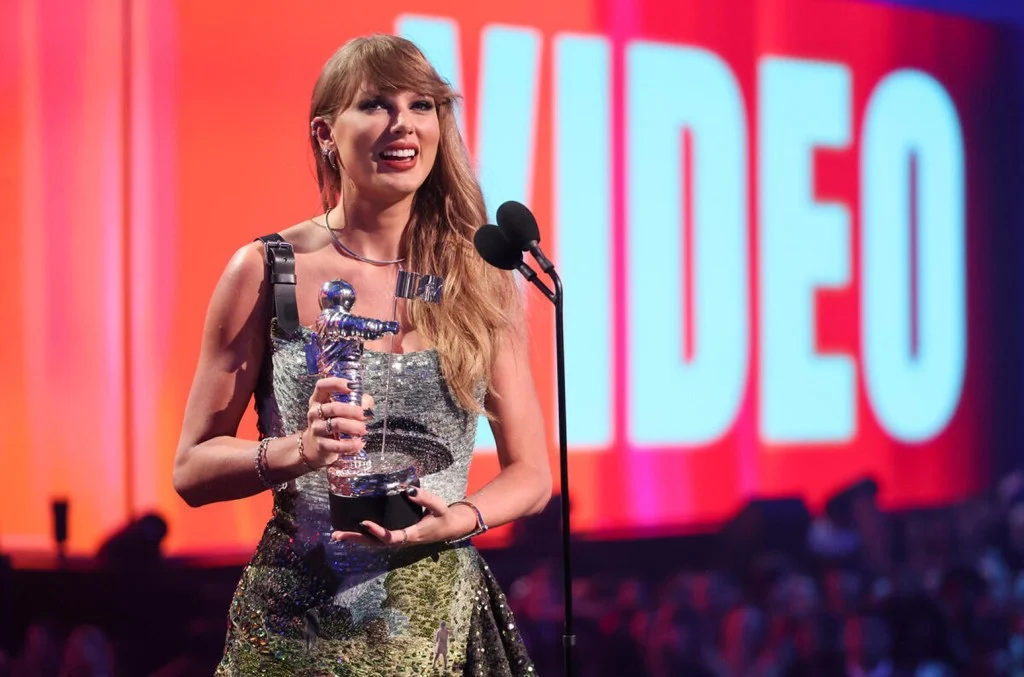
CBS is set to present the MTV Video Music Awards (VMAs) for the first time this year. The three-hour broadcast will also simulcast on MTV, which launched the show in 1984. A one-hour live pre-show will air across Paramount Media Networks. This year’s show is set to air live on Sunday, Sept. 7 starting at […]

As springtime settles into its groove, Chicago-bred R&B darling Ravyn Lenae is on the precipice of a moment thousands of fans have dreamed of for nearly ten years. At press time, “Love Me Not,” the jaunty lead single from 2024’s acclaimed Bird’s Eye LP, sits at No. 5 on the Billboard Bubbling Under Hot 100 — just a heartbeat away from becoming her first Billboard Hot 100 entry.
For most Lenae fans, 2017 was when she first captivated their attention. After signing to Atlantic Records the year prior, Lenae churned out a beloved feature on Smino‘s “Glass Flows,” opened for SZA‘s Ctrl Tour, and released “Sticky” — a single from her 2018 Crush EP, which helped streamline the aesthetics of her first two EPs into a swirling mixture of funky, Steve Lacy-blessed guitar, Dilla-esque beats, and a devastatingly vast vocal range whose uppermost parts echo Solange‘s fluttery falsetto. Eight years later, Lenae gave “Sticky” its crowning moment midway through her fourth and final sold-out show at New York’s legendary Blue Note Jazz Club on Wednesday night (April 2).
Built around her majestic sophomore album, Bird’s Eye, which Billboard‘s editorial staff named the No. 3 best R&B album of 2024, Lenae’s Blue Note set focused on her most recent album, weaving in selected older tracks to underscore her message of maturation and coming home to yourself while navigating your twenty-somethings.
Trending on Billboard
Beginning with “Sattelites” — a cut from Hypnos, her 2022 debut album — Lenae quickly constructed the live world of Bird’s Eye with “1 of 1” and vinyl-exclusive bonus track “Goodbye 2 You.” Backed by just a drummer and a six-string bassist (who deftly transferred his skills to acoustic guitar when necessary), Lenae slinked around the stage like a forest nymph; her fiery deep-red tresses flowed behind her like a carefully contained flame, adding a striking flourish to the pose she hit at the end of each song.
Although she didn’t hit high-octane combinations — after all, the Blue Note is a dinner club! — she refused to remain stationed behind the microphone stand. Whether she was accentuating each snare hit with a funky shoulder pop, recalling early Motown-era Diana Ross with her animated facial expressions and neck movements, or ethereally painting the space with her oft-outstretched arms — Lenae left no doubt that not only does she know how to work a stage, but she also is more comfortable than ever both in the booth and onstage.
Lenae got so comfortable that she choked herself up — and moved several audience members to silent tears — with her heartbreaking true-to-life anecdotes. In one particularly beautiful moment in which time seemed to stop, Lenae recounted the incredibly painful memory that inspired her Childish Gambino-assisted “One Wish.” Before she dove into a breathtaking rendition of the Bird’s Eye single — her vocals were virtually flawless the entire night, and she frequently hit new (and even more impressive) riffs and harmonies — Lenae explained, as she has in previous shows, that “One Wish” was born out of her father ghosting her after promising to show up to her 10th birthday party. She sucked all the air of the club with that story, and breathed it right back into the space with her stunning performance.
A similar moment happened before she launched into “Pilot,” the reflective, penultimate track on Bird’s Eye. Through recounting her own 20s journey, Lenae, 26, urged the audience to “talk to their moms and grandmas” to help remember “what made [them] excited to wake up in the morning when they were 15.” Near the end of the song, she switched the “I just know I’m twenty-four/ Small to the world I’m in” to different ages, underscoring the song’s universality.
By the time the show came to a close, Lenae played every song on the standard version of Bird’s Eye (barring “Bad Idea”), as well as fan-favorites like “Xtasy,” “Venom” and “The Night Song.” To send her final Blue Note crowd back to the streets of Greenwich Village, Lenae blazed through “Love Me Not,” leading the crowd a sing-along that truly underscored the weight of the moment. Surrounded by a crop of listeners clearly comprised of mostly longtime fans, Lenae got to bask in the chords of her current breakthrough hit just before midnight struck in one of NYC’s most iconic venues.
Ahead of her stint as an opener for the final leg of Sabrina Carpenter‘s sprawling Short n’ Sweet tour later this year, Ravyn Lenae delivered an outstanding show that somehow improved on an already-terrific sophomore LP.
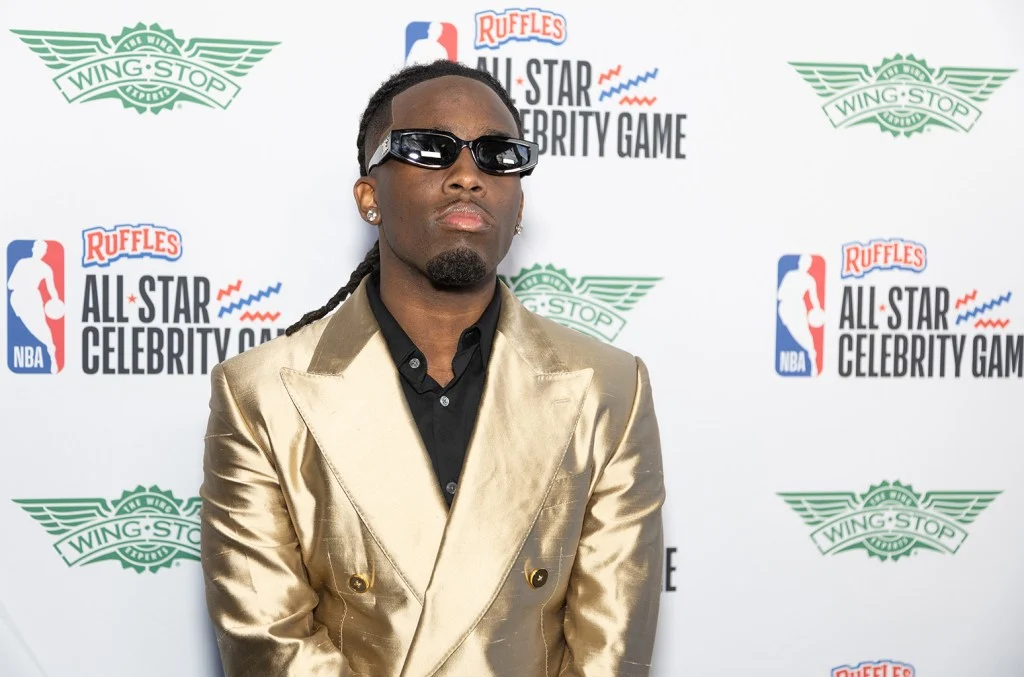
Drake‘s highly anticipated video for $ome $exy $ongs 4 U standout “Nokia” finally dropped earlier this week and it’s been getting some mixed reviews. One notable person who was underwhelmed by the Toronto rapper’s visuals was popular streamer Kai Cenat, who reviewed the video on his stream recently. Trending on Billboard “Music video? Not a […]

“You will still be there at the end of the ball.”
This opening line from Liu Lian’s 2021 birthday song, “Be Present,” beautifully captures her journey. At 27, Liu Lian began writing birthday songs as a way to affirm her existence and address her anxieties about self-worth and presence.
At that time, she wished for a ‘you’ who would still be around when the party was over. As time went on, Liu Lian, who once longed for forever because of ‘you,’ grew and developed her own perspective, eventually becoming an observer at the party.
Explore
Explore
See latest videos, charts and news
See latest videos, charts and news
When asked which soundbite she would choose to represent herself, Liu Lian responded immediately: “I have a lyric that says, ‘you will still be there at the end of the ball.’ But now, I’d like to change ‘you’ to ‘I.’”
Billboard China’s exclusive series, HER VOICE, invites female musicians to share their views on the world and how they express their inner thoughts through music.
Trending on Billboard
Have there been moments in your life when you thought, “It’s really wonderful to be a woman”? If so, which moment stands out?
I feel that way most of the time. It’s difficult to pinpoint a specific moment because it feels like a continuous feeling.
If you could talk to any female musician from history, who would you choose? What would you want to discuss with her?
Shiina Ringo. Honestly, though, I’m not sure what I’d say—meeting someone you deeply admire can leave you speechless. When I interviewed Linkin Park, I felt the same way; without prepared questions, I might have struggled to find the right words.
I’m really interested in her creative process, even though I understand that some aspects can’t be fully conveyed through conversation. I’d also love to learn about the challenges she’s encountered, how she’s tackled creative blocks, and how she’s kept her artistic energy alive over the years.
Additionally, I’d love to get a glimpse into her everyday life—what she does in her free time, what topics she enjoys discussing with friends—so I can see her as an ordinary person.
Recommend a song or short film from your new album to your fans. Why do you like that one the most?
There are so many choices, but if I had to pick one, I’d recommend the song and short film Split. It tells a touching story about a blind woman who, years later, confronts the man who trafficked her—her own father. The narrative is complete and deeply moving. This song is rooted in personal experience, illustrating how someone familiar with self-doubt and failure can rise again, blooming even in adversity. It’s perfect for those moments when you need a dose of motivation and strength.
Liu Lian
Courtesy of Liu Lian/Billboard China

Godsmack announced the departure of longtime guitarist Tony Rombola and drummer Shannon Larkin. The news was shared on Wednesday (April 2) in a lengthy statement revealing that both men had decided to retire from the band after nearly three decades of service.
Explore
Explore
See latest videos, charts and news
See latest videos, charts and news
“We send this message to all of you to share some bittersweet news with you regarding a significant change in our journey together,” read the letter signed by founding singer Sully Erna and bassist Robbie Merrill and their two former bandmates. “After almost 3 incredible decades, two of our most cherished members, Tony Rombola and Shannon Larkin have decided to retire from the band permanently, on good terms, but for no other reason than to fulfill their desire to live a more simple and quiet life away from touring.”
Rombola joined the hard rock group a year after it was founded, replacing original guitarist Lee Richards in 1996 and Larkin signed on in 2002, replacing founding drummer Tommy Stewart.
Trending on Billboard
“This decision was not made lightly. Tony and Shannon have been such a big part of our history, bringing their unique talents, creativity, and passion that have shaped our music and our message,” the statement continued. “Together, we have experienced countless, unforgettable moments and heartfelt interactions with fans like you around the world. We are immensely grateful for every memory we’ve created together.”
According to Blabbermouth, in a since-deleted Facebook video, Larkin, 58, and Rombola, 60, confirmed they are doing okay, but that after many discussions with Erna and Merrill “we did quit the band last year… they understood that we didn’t want to tour anymore — that’s the reason — and we understood that they wanted to tour. And so we understood each other. And in the end, Godsmack’s out there touring and we are happily here living our lives.”
Erna said he and Merrill are excited to “explore new directions,” though they said they’ve not yet made any permanent decisions about the mens’ replacements. “We will be continuing this journey together, and we look forward to sharing the decisions we make with all of you as they happen,” the remaining duo said. In the meantime, Evanescence drummer Will Hunt and Dorothy guitarist Sam Doltun have been filling in on Godsmack’s ongoing 2025 world tour with P.O.D. and Drowning Pool, which will is slated to hit Berlin on Friday (April 4).
Check out Godsmack’s announcement below.

Janis Ian: Breaking Silence — a career-spanning documentary about groundbreaking singer-songwriter Janis Ian, in theaters now – began with a simple, polite message to the artist’s official website.
“I said, ‘Hi, my name is Varda Bar-Kar, I’m a filmmaker and I’d like to make a film about you,’” the London-born director tells Billboard. “And I said ‘no,’” interjects Ian with a mischievous smile. “That was my kneejerk response.”
The film’s journey might have ended right there had it not been for Bar-Kar’s gentle persistence and a few helpful coincidences. Despite the dismissive greeting, the director kept in touch, sharing links to a few of her other documentaries, Big Voice and What Kind of Planet Are We On?; additional correspondence between the two revealed mutual acquaintances, similar experiences and a shared interest in Zen Buddhism.
Trending on Billboard
“I had just walked away from a potentially lucrative [movie] deal with another entity,” Ian says of her reticence to participate. “I firmly did not want a puff piece.” But after viewing a 20-minute proof of concept from Bar-Kar, the Grammy-winning singer of “At Seventeen” felt like she could trust the director with her time and story.
“I wanted something that reflected the times,” Ian says of her dream for the project — and Bar-Kar’s engrossing, informative documentary does that superbly. Watching the film, one gets as much of a sense of America’s complicated, shifting identity over the decades as one does Ian’s own life and personal evolution. We watch the turmoil of the Civil Rights era inspire Ian, a 14-year-old girl from a farm town in New Jersey, to write “Society’s Child,” a song about an interracial romance smothered by external prejudices. Then, we see how American audiences – with all their contradictions and confusions – reacted: Some hailed her as an astonishing, bold voice, pushing the single to No. 14 on the Billboard Hot 100 in 1967; others hurled racial slurs at her during concerts, reducing the teenage singer to tears for daring to suggest love could go beyond racial boundaries.
That song wouldn’t be the last time that Ian – who publicly came out as a lesbian in 1993 – would find herself alternately celebrated and pilloried by audiences and industry players. Named after the album that came out when she did, the film uses Ian’s unusually insightful music, her memories and fresh interviews with Joan Baez, Arlo Guthrie, Lily Tomlin, Laurie Metcalf, Jean Smart, the late Brooks Arthur and others to tell the story of her impact and importance.
Ian and Bar-Kar sat down with Billboard one morning in Manhattan to discuss making the film, frustrations with music licensing, why the former’s performance on the first-ever episode of Saturday Night Live isn’t included in this doc and plenty more. Janis Ian: Breaking Silence is in select theaters now, and hits streaming on April 29.
As we see in the documentary, Janis, you were a guest on Leonard Bernstein’s TV program at the age of 14. I know he did the Young People’s Concerts series – were you aware of him and how big of a deal that was at the time?
Ian: It didn’t even occur to me. The Bernstein thing didn’t compute that it would be any big deal. My parents and grandparents were freaking out, but for me, I had to get my Spanish homework done. Felicia Bernstein [Leonard Bernstein’s wife] helped me with that homework. (My parents) had wanted the second-generation immigrant dream (for me). I was clearly musically talented, so they wanted me to be a classical pianist. But if you look at my hands, the only thing I could’ve played was Mozart or Bach. And I wasn’t interested: the minute I discovered boogie-woogie and rock n’ roll, that was it. Either that or (they wanted me to be) a doctor, and I had zero interest in being a doctor. When I said I was going to be a singer-songwriter, nobody was thrilled. They were supportive, but they weren’t thrilled. Bernstein was like, as someone says in the film, the mark of God. He was hellbent on convincing the old guard that believed the only real culture was European that America had its own culture. He fought that battle his entire life…. “Society’s Child” aligned with his whole community service: the concept of the artist as someone of service to the community.
In the film, you talk about starting out by imitating Odetta and Joan Baez and taking a moment to find your own voice. Even so, you found it fairly quickly. Do you have any advice for young artists who are already making music but still searching to lock in on their own voice?
Ian: I think my generation in some ways was much luckier than this one. Lyrics were not usually with albums, so you would sit down with the new whoever album and copy out the lyrics. Any artist knows that when you imitate and copy, it’s just like a computer – if you put garbage in, you get garbage out. So by copying Bob Dylan, Dylan Thomas, Odetta as a vocalist or people like Joan Baez and Billie Holiday, I was really putting the best into myself. I encourage people to imitate other people, because it lets you know what you’re not good at. But the next step for me was that I realized I was not hearing the voice on tape that I heard in my head. So I apprenticed at (a studio) when I lived in Philadelphia for nothing. I swept floors, I did patching and I learned about cables, and in return they would let me work with the second or third-tier assistant engineer for an hour a night. Working with a really good Neumann microphone watching the meter, I learned how to sing without a limiter, which gave me this vocal control. Even now with my vocal scarring, my (doctor) told me I still have better breath control than most people. It took three years to get the voice in my head to come out on tape. Now, for better or worse, you don’t have the gatekeepers. You don’t have the time you had – or were forced into – to create yourself, because ultimately artists end up creating themselves. It’s difficult when you can put out music every three months, because the temptation is to believe whatever you’ve done most recently is the best. And a year later you’re looking at it thinking, “Oh, my God.”
Varda, this film includes a lot of vintage clips and music – all of which effectively puts you into each era, but it must have been a beast to license.
Ian: (laughs)
Bar-Kar: Finding them was fun. It was like a treasure hunt. The film took a number of years, I did a lot of research. I even read a whole book about the summer camps (Ian attended as a kid).
Ian: The commie-pinko camps (laughs). I sent her everything that I had digitized.
Bar-Kar: I went through all of that. My daughter, Paloma Bennett, was the archive producer and she has an incredible capacity for taking in a lot of material. And there’s a lot of music in there as well. With regards to the licensing…
Ian: It was a nightmare. She’s never going to use music in a film again and I told her I’ll make it up to her: she can use anything I own.
Bar-Kay: (laughs) I stuck it through, though.
Ian: We started off with almost 50 songs, and I don’t own all of them.
Bar-Kar: It was fun to research, but the music licensing part was very difficult.
Janis, you sang “At Seventeen” on the first episode of SNL, which is not featured in the movie. Was that a licensing issue with the footage?
Ian: I think we decided it was irrelevant. It was a blip.
Bar-Kar: Actually, it turned out to be very fortuitous.
Right, all the SNL 50 celebrations and movies.
Ian: They did our publicity for us.
Bar-Kar: Fate is amazing sometimes. We already had the Johnny Carson performance of “At Seventeen.” It’s one of those things where if you have too much, it diminishes it, it doesn’t add to it. It was smushing too much together.
Ian: And looking back now, people go, “Oh that was a landmark thing.” But then, it was very much not – nobody cared. The show didn’t have legs until the second episode when Paul Simon was on. But NBC has done a brilliant job of making a lot out of it.
Bar-Kar: It’s almost like a trilogy now: there’s the Bob Dylan film (A Complete Unknown), SNL 50 and now our film. They fill in the different gaps.
Ian: I thought the Queen film that came out before was one of the best biopics I’ve ever seen. That’s the only film I’ve ever seen where walking on stage in a huge amphitheater is actually accurate. Everybody thinks there’s all these people making a gangway for you, waving you on. No. There’s equipment flying past you, there’s people shoving you. They don’t care if you’re making 10 million dollars that night: they just don’t want you getting hit by the Anvil case.
Bruce Springsteen, Ed Sciaky, Billy Joel and Janis Ian in ‘JANIS IAN: BREAKING SILENCE.’
Peter Cunningham/Courtesy of Greenwich Entertainment.
In 2022, Janis, you had to cancel your farewell tour due to scarring on your vocal cords. In the film, you talk about feeling deprived of a sense of resolution that farewell tour may have provided. Does this film, in some sense, give you that resolution?
Ian: No, there’s really no resolution for it. It’s difficult to know how to respond because I don’t know how I feel about it still. I think if I had been in my forties or fifties, I might have tried some of the surgeries, even though 90% (odds) it would just come back worse. But having talked to specialists, I know I’m really lucky I retained anything. It is what it is. My ENT [ears, nose and throat] guy, who I really trust said, “Look, you had a 60-year career full tilt. You made, what, 25 albums, toured nine months a year? That’s an unbelievable amount of vocal use. And the instrument is just not made for that.” I’m really grateful. I think as an artist, you live with a monkey on your back, and the monkey keeps saying, “you’re not doing enough, why aren’t you better? Why aren’t you more? Why aren’t you perfect?” And there is no perfect. This last album I made (2022’s The Light at the End of the Line) was the first time in my entire life I felt I had actually lived up to my talent. So to live long enough, to do that as a writer and a singer, that’s a resolution in and of itself.
It must have helped with that album that you were able to take your time – unlike, as you talk about in the movie, your Aftertones album, which you felt rushed into releasing after “At Seventeen” hit big.
Ian: Yes, Aftertones, bane of my existence. And the fact that (The Light at the End of the Line) got nominated for a Grammy [for best folk album] – I wasn’t even politicking at all – was astonishing. That gave me my tenth nomination. If I look at it that way, it’s an amazing career. And it still is.
And unlike some singer-songwriters who are decidedly more the latter, you truly used your voice to its full power.
Bar-Kar: [to Ian] I love your singing voice.
Ian: I can get away with a half a verse, maybe, but I don’t know what would happen if I tried to sing a full song.
Your song “Stars” has been covered by a lot of artists, including Nina Simone, which is a huge compliment. Did you ever get to spend time with her?
Ian: Old friends. Some people are hard to be friends with. Nina was not easy to be friends with. But worth every second. At the Village Gate she did a 10-minute show, and somebody said to me, “Why do you keep coming to see her?” I said, “I learn more in 10 minutes than 10 hours from anybody else.” That’s how amazing she was. That was the same night she came backstage complaining she missed her mother so much, and my mom was backstage with me, so I blithely said, “Why don’t you come for lunch tomorrow?” My mother said (whispers) “shut up, shut up.” She said, “You got us into this, you’re doing the shopping and you’re hosting.” (Simone) showed up with James Baldwin and they both proceeded to get seriously potted. My ex-husband had to carry Nina to the cab.
Bar-Kar: I highly recommend her autobiography. There’s so much more to her story than what’s in the film.
Ian: It’s out of print right now, but Random House gave me my rights back two weeks ago.
Bar-Kar: Wait two months and buy it.
Ian: You can still download it or download the Grammy-winning audiobook (smiles). I know a lot about song licensing because of (singing and narrating my audiobook). … I just went through a thing. Sony has my admin right now — just because I really like the person in L.A., that’s the only reason (I’m with) Sony, it’s a corporation. The royal British something-or-other wanted to use a song of mine in a textbook. To me, that’s a great compliment. It’s been eight months and they haven’t been able to get an answer. It becomes a ridiculous nightmare. There are a lot of people at corporations who should have nothing to do with music.
Bar-Kar: I heard it used to be different, that it was people who loved music and now it’s more of a business.
Ian: Failed musicians would go into the music industry. And then the suits came in the early ‘80s, late ‘70s, that was the first generation of Harvard Business School graduates. That was why I left CBS in ’83. I looked around and I thought, “This is all lawyers.” And I don’t have a problem with lawyers, but I do have a problem when you start phasing out everybody who cares about music. They made it impossible for the remaining people. They’re so big but they’re so understaffed because they wasted so much money – all that coke that went up the executives’ noses, I think. They always said the singers did it, but it wasn’t the singers as much (as them). We could do an entire Billboard magazine about that.

Weezy season has returned. Lil Wayne made his Tha Carter VI release date official with the release of a clip on Tuesday (April 1) featuring some throwback footage of the New Orleans rap legend. Explore Explore See latest videos, charts and news See latest videos, charts and news Tha Carter VI will arrive on June […]