State Champ Radio
 Music
Page: 361
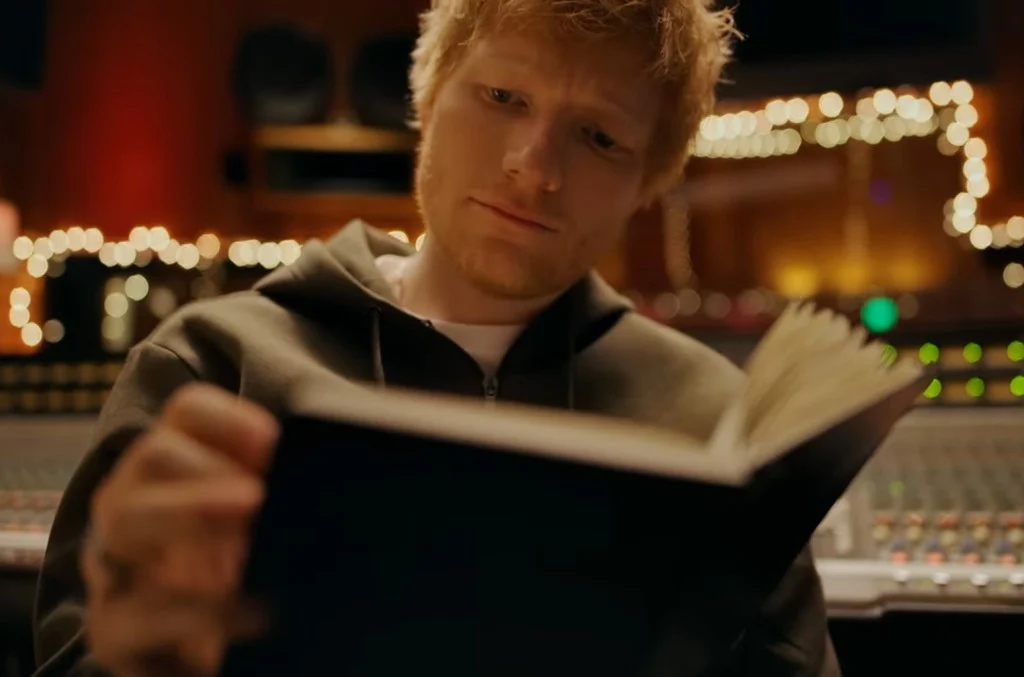
Ed Sheeran immersed himself in Persian culture for his “Azizam” single, and there’s no better way to visually represent that culture than a Persian wedding, which takes center stage as the theme of the track’s just-released video.
In the video released Thursday (April 17) and directed by Saman Kesh, Sheeran is seen frustrated while going through writer’s block with his producer, Ilya Salmanzadeh, in the studio.
The Grammy-winning singer/songwriter is thrust into the chaos of preparing for a Persian wedding. Sheeran gets a loaded crash coarse on all things related to the extravagant ceremony as he samples different cuisine, fashion, dancing and more to get him ready for the day.
Trending on Billboard
“When we had all finished ‘Azizam’ in the studio, I asked @ilya_music what we should do for a music video, and he said ‘you gotta do it as a Persian wedding, thats the best way to showcase all of the culture in a video,’” Sheeran wrote to IG. “I contacted @saman_kesh, who I have worked with before, who is also Persian, and asked him to basically make a video which is me going on a crash course Persian wedding. He wanted to make it like other non Persians would experience a wedding for the first time, and how full on, but fun it is.”
He continued: “I found it was so similar in ways to the Irish weddings I grew up going to, but obviously so different in other ways. Much like the rhythms and instrumentation of the song, I find our two cultures have so much intertwined similarities. But underneath it all is love and pride. I loved the day shooting, I learnt so many new things, got to experience all of it with my dad, and work with amazing people.”
The celebratory clip comes to a close with Sheeran returning from the wedding feeling inspired and ready to make another hit song, which the pop star has done plenty of in the past.
“Azizam,” which translates to “my dear” or “my beloved” from Arabic to English, is set to appear on Sheeran’s upcoming Play album. “Azizam” serves as Sheeran’s first single of 2025 jetsetting into the LP.
Like his mathematical symbol album series, Play will follow a similar pattern, including other albums coming down the pipeline like Fast-Forward, Rewind and Stop.
Sheeran stopped by The Tonight Show last month, where he premiered an unreleased single titled “Old Phone,” while “Azizam” was released earlier in April to officially kick off his new era.
Look for Play to arrive later this year and watch the “Azizam” video below.
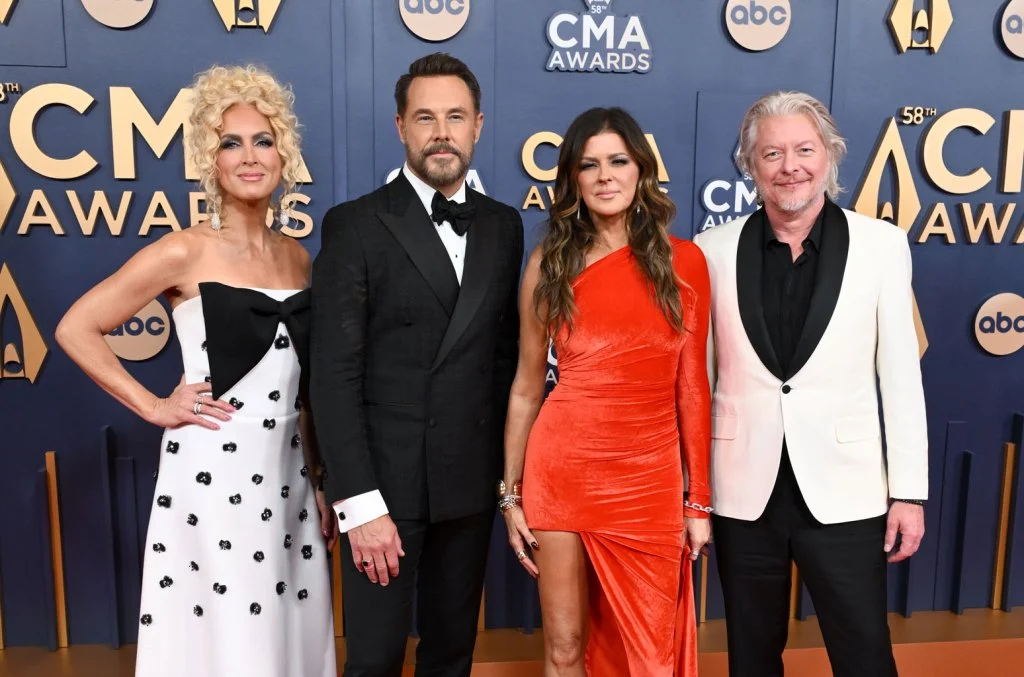
Little Big Town is set to perform at The Women’s Cancer Research Fund’s “An Unforgettable Evening” gala, taking place Monday, April 28, at the Beverly Hilton Hotel in Beverly Hills, California. Comedian, actor and writer Whitney Cummings will host the event. Actress and activist Olivia Munn will receive the Courage Award. Little Big Town, consisting […]

Boosie BadAzz is blaming Atlanta hospitals for some health issues he’s experienced since being involved in a nasty car crash earlier this month. On Wednesday, Boosie hopped on Instagram to explain how he’s been having chest pains since the accident, and blamed Atlanta hospitals for not taking his injuries seriously. “I keep going to the […]
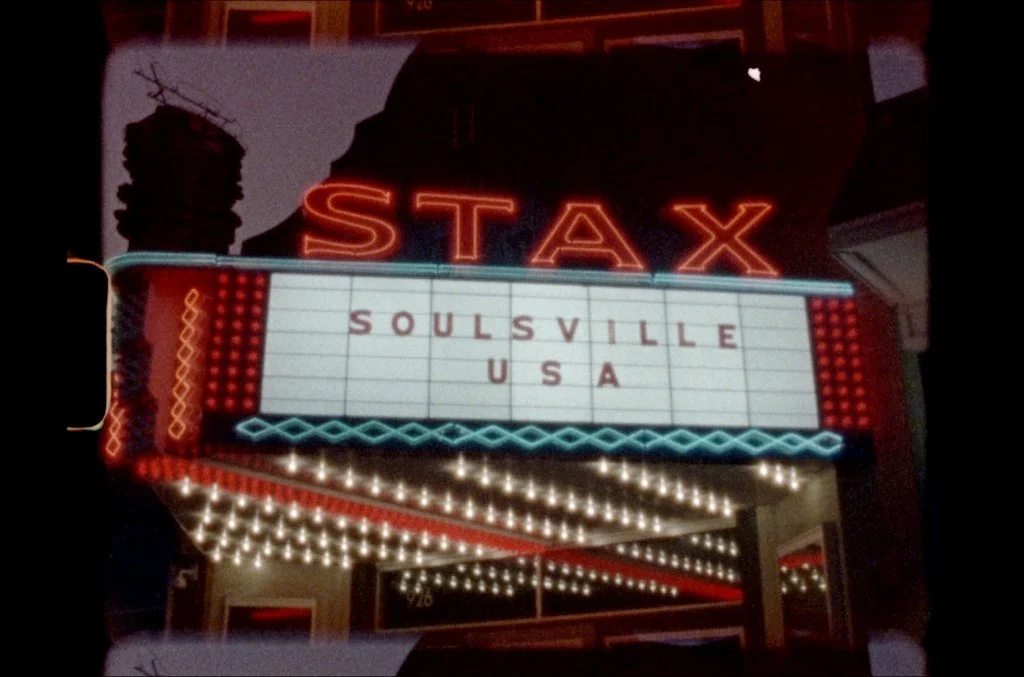
Stax: Soulsville U.S.A., Will and Harper, Super Man: The Christopher Reeve Story, Shōgun, Hacks and comedy specials starring Alex Edelman and Ramy Youssef are among music, comedy and entertainment-related programs that have been nominated for 2025 Peabody Awards.
Stax: Soulsville U.S.A. tells the story of the fabled label that rose out of Memphis, Tennessee, to become one of the most successful R&B labels in music history. The label was founded by two siblings, business partners Jim Stewart and Estelle Axton (whose last names formed the basis of the label’s name). Booker T. & the M.G.’s served as the label’s house band. Other artists signed to the label in its glory years include Rufus Thomas, Carla Thomas, Otis Redding, Sam & Dave, Eddie Floyd and Isaac Hayes.
Other nominated programs or films with a strong music tie-in are Any Other Way: The Jackie Shane Story, about a Black trans soul singer, and We Are Lady Parts, a comedy about an all-female Muslim punk band.
Trending on Billboard
Alex Edelman won a Primetime Emmy in September for outstanding writing for a variety special for his HBO special Alex Edelman: Just for Us. The comedian won a special Tony three months before that for the Broadway show which was the basis for the special.
Nominees in the Arts, Children’s/Youth, Entertainment, and Interactive & Immersive categories were announced on Thursday (April 17). Nominees in Documentary, News, Public Service, and Radio/Podcast categories were announced on April 15.
Winners of the 85th Annual Peabody Awards will be announced on May 1, and celebrated on Sunday, June 1, at the Beverly Wilshire Hotel in Beverly Hills, Calif. The ceremony will be hosted by Roy Wood Jr. Longtime NBC News correspondent Andrea Mitchell will receive the Career Achievement Award and landmark NBC sketch-comedy series Saturday Night Live will be honored with the Institutional Award.
Here are 2025 Peabody Award nominees that have a connection to music, comedy or entertainment. The capsule descriptions of each show are provided by the Peabody organization.
DOCUMENTARY
Any Other Way: The Jackie Shane Story (Crave; Bangers Films and the National Film Board of Canada)
“This film brings to life the powerful voice and legacy of Jackie Shane, a Black trans soul singer who vanished at the height of fame and now tells her story in her own works. Blending rare audio recordings, animated visuals, and family revelations, the film honors Shane’s trailblazing journey, celebrating her impact as an icon who lived authentically long before the world was ready.”
Queendom (A Galdanova Film Production in association with Sundance Institute Documentary Film Program, International Documentary Association, InMaat Productions, Doc Society and Sopka Films)
“Jenna, a 21-year-old queer artist from a remote Russian town, uses haunting, otherworldly performances in the streets of Moscow to protest LGBTQ+ oppression and challenge societal norms around beauty and identity. Documenting Jenna’s bold art and activism, this film offers a powerful, intimate look at resilience under repression.”
Stax: Soulsville U.S.A. (HBO | Max; HBO Documentary Films presents in association with Concord Originals, Polygram Entertainment, Warner Music Entertainment; A Laylow Pictures production; A White Horse Pictures production)
“This four-part documentary series traces the rise and fall of Stax Records, the groundbreaking Memphis-based, interracial, soul label that launched the careers of icons such as Otis Redding and Isaac Hayes. Through rare archival footage, intimate interviews, and an immersive sonic experience, the series offers an unflinching, deeply human portrait of artistic innovation, community resilience, and the enduring struggle for Black empowerment in America.”
Super/Man: The Christopher Reeve Story (HBO | Max; DC Studios / HBO Documentary Films / CNN Films)
“After a devastating accident left him paralyzed, Christopher Reeve became a powerful symbol of resilience, using his platform to inspire hope and advocate for disability rights. Throughout it all, he remained a passionate actor, filmmaker, and devoted family man, with his wife Dana as his unwavering support.”
Will & Harper (Netflix; A Netflix Documentary / A Wayfarer Studios Film / A Delirio Films Production / A Gloria Sanchez Production)
“Actor Will Ferrell and his longtime collaborator and friend Harper Steele take a road trip across America together, getting reacquainted after Harper’s midlife gender transition. They experience mixed reactions at different stops along the way as Will asks occasionally awkward questions and realizes the limits of his fame to combat prejudice, painting a realistically complex portrait of allyship.”
RADIO/PODCAST
The Good Whale (Serial Productions and The New York Times)
“Serial Productions and The New York Times tell the story of efforts to free the orca who played the title role in the film Free Willy from an amusement park in Mexico City. The epic experiment takes a number of unexpected turns, calling into question the practice of keeping animals in captivity—even, and maybe especially, celebrity animals.”
Pulse: The Untold Story (Trevor Aaronson, Western Sound, and Audible)
“In this Audible production, host Trevor Aaronson challenges the established narrative surrounding the Pulse nightclub shooting, revealing that it was not a premeditated anti-LGBTQIA+ hate crime, but rather an opportunistic act by shooter Omar Mateen—a shocking revelation that has received little coverage.”
CHILDREN/YOUTH
Out of My Mind (Disney+)
“This coming-of-age film, based on a 2010 novel by Sharon M. Draper, stars Phoebe-Ray Taylor as a sixth-grader with cerebral palsy facing the challenges of being in a mainstream class for the first time. Her thoughts are voiced by Jennifer Aniston, the non-verbal character’s favorite actress from Friends, and her family is played by Rosemarie DeWitt, Luke Kirby, and Judith Light.” (Big Beach, Participant, EveryWhere Studios LLC, and Disney Branded Television)
ENTERTAINMENT
Alex Edelman: Just For Us (HBO | Max)
“Comedian Alex Edelman presents his deeply personal solo show about identity, assimilation, and empathy, centered around his real-life experience attending a meeting of White Nationalists as a Jewish man. Over seven years, the show evolved through conversation, revision, and audience engagement, ultimately becoming a celebrated HBO special that resonated profoundly in a time of rising antisemitism and ideological division.” (HBO in association with Enfield Tennis Academy, Above Average, and Seaview Productions)
Baby Reindeer (Netflix)
“Baby Reindeer follows Donny, a troubled comedian entangled in a toxic relationship with a stalker, as he gradually unravels how his past has shaped his self-destructive behavior and relationships. At its core, the series explores how unaddressed trauma perpetuates cycles of harm, ultimately becoming a powerful and resonant meditation on healing, empathy, and the enduring impact of abuse.” (A Netflix Series / A Clerkenwell Films Production)
Clipped (FX/Hulu)
“This sports docudrama, created by Gina Welch, based on the ESPN 30 for 30 podcast The Sterling Affairs, tells the story of Los Angeles Clippers owner Donald Sterling’s downfall after his recorded racist remarks were publicized.” (FX Productions)
Fantasmas (HBO | Max)
“Created by and starring Julio Torres, Fantasmas is a surreal, genre-defying HBO comedy series that blends narrative and sketch to explore themes of alienation, queerness, and identity through a whimsical quest for a lost oyster earring in a dreamlike version of New York City. With its bold visual style, diverse cast, and deeply personal storytelling, the show stands as a singular testament to the value of unconventional, imaginative voices.” (HBO in association with Irony Point, Fruit Tree, 3 Arts Entertainment, and Space Prince Inc.)
Hacks (HBO | Max)
“Season 3 of Hacks explores the renewed dynamic between comedy legend Deborah Vance and young writer Ava Daniels as they reunite after a year apart, reigniting their creative spark just in time for Deborah’s shot at hosting Late Night. As Deborah fights to claim a long-denied dream and Ava learns to advocate for herself, the season becomes a powerful reflection on ambition, legacy, and the courage it takes—especially for women—to boldly ask for what they want.” (Universal Television, a division of Universal Studio Group, in association with Paulilu, First Thought Productions, Fremulon Productions, 3 Arts Entertainment)
Mr Bates vs The Post Office (PBS/MASTERPIECE)
“This four-part drama is based on the true story of U.K. sub-postmasters who were falsely accused of theft due to a faulty computer system, revealing one of the worst miscarriages of justice in British history. The series sparked nationwide outrage, led to real-world legal reform, and highlighted the extraordinary courage of ordinary people fighting back against institutional abuse.” (A Co-Production of ITV Studios, Little Gem, and MASTERPIECE for ITV)
One Hundred Years of Solitude (Netflix)
“One Hundred Years of Solitude follows José Arcadio Buendía and Úrsula Iguarán as they flee their village and found the mythical town of Macondo, where generations of their family grapple with love, madness, war, and a haunting curse in this stunning adaptation of Gabriel García Márquez’s 1967 masterpiece.” (Netflix / Dynamo)
Ramy Youssef: More Feelings (HBO | Max)
“In Ramy Youssef: More Feelings, the comedian reflects on the complexities of being a Muslim public figure in America, confronting issues of representation, Islamophobia, and the emotional toll of being expected to respond to global crises.” (HBO presents a Cairo Cowboy and A24 production)
Ripley (Netflix)
“Ripley follows a cunning grifter in 1960s New York who is hired to retrieve a wealthy man’s son from Italy, setting off a dark journey into deception, fraud, and murder. Based on Patricia Highsmith’s acclaimed novels, the limited series explores the chilling transformation of Tom Ripley as he manipulates his way through a life built on lies.” (Showtime and Endemol Shine North America in association with Entertainment 360 and Filmrights for Netflix)
Say Nothing (FX/Hulu)
“This FX limited series, adapted from Patrick Radden Keefe’s nonfiction book, traces the unsolved murder of Jean McConville and the brutal complexities of The Troubles in Northern Ireland. Through deeply human storytelling, the series transcends its historical setting to explore universal themes of violence, trauma, idealism, and the moral ambiguities of political conflict.” (FX Productions)
Shōgun (FX/Hulu)
“Creators Rachel Kondo and Justin Marks reimagine James Clavell’s classic tale through a modern lens, exploring what it means for two cultures to collide and transform one another with empathy and authenticity. By involving Japanese collaborators in every facet of production, they move beyond the “stranger in a strange land” trope to create a more inclusive, respectful, and culturally rich storytelling process that could serve as a new standard for global filmmaking.” (FX Productions)
We Are Lady Parts (Peacock)
“We Are Lady Parts is a bold, joyful comedy about an all-female Muslim punk band navigating identity, ambition, and sisterhood, blending sharp humor with themes of inclusivity and representation. In its second season, the series elevates its complexity, challenging cultural stereotypes with heart, humor, and killer music as the band experiences the pressures of success and navigates how to remain true to themselves while monetizing their art.” (Working Title Television, a part of Universal International Studios, a division of Universal Studio Group)

In 2024, several young pop stars experienced eye-popping career explosions over the course of just a few months — but one of them, Gracie Abrams, thinks that the combined star power of two of her peers allowed her to climb the ranks without as many people realizing.
In her Billboard cover story published Thursday (April 17), the “That’s So True” singer reflected on how she, Sabrina Carpenter and Chappell Roan all quickly rose to superstar status in 2024, with Abrams emphasizing how she thinks her own arc has differed from theirs. “When I think about both of their rises, it’s like, boom,” she told staff writer Hannah Dailey.
“I feel like I’ve almost slipped under the radar a little bit [in comparison],” she added.
Trending on Billboard
As captured in the video interview, Abrams went on to gush about her admiration for both the “Espresso” singer and “Pink Pony Club” artist. “In pop culture, the impact that both Sabrina and Chappell have had on the industry has been so exciting to watch,” she said. “Forget being an artist and somebody that puts music out as well. I think as a young person, there’s something so liberating about both their catalogs of music and the way that they’re choosing to run their businesses.
“It’s so obviously them through and through,” Abrams added. “I find that to be deeply inspiring. I’m a mega fan of both of theirs, and, yeah, just constantly kind of screaming my head off for them.”
Even so, the “Risk” artist’s ascent has been something to behold. Following the release of her Billboard 200 No. 2 sophomore album The Secret of Us in June, Abrams’ fanbase has grown exponentially, and since the fall, she’s gone from playing theater-size venues to booking arenas on her ongoing international run of Secret of Us Tour dates.
As her star has risen, Abrams also told Billboard that another leading lady in pop has helped her stay grounded: Lorde. “She’s like 800 years old inside,” she said of the “Green Light” musician. “Whenever we’re together, I feel my nervous system regulate differently.”
There’s also two other women musicians Abrams has been loving right now: Doechii, whose music she says she’s currently “quite addicted to,” and Lady Gaga. “When I think about songwriter greats, she has been top of mind recently,” Abrams told Billboard of Mother Monster.
See Abrams on the cover of Billboard — plus photos from the shoot — below.

Snoop Dogg says he only works with brands and companies that support his community. In an interview with Time published on Wednesday as part of the magazine’s 100 most influential people of 2025, Snoop was asked about how he successfully dabbles in multiple brands. He said he approaches each of his collaborations with a philanthropic […]
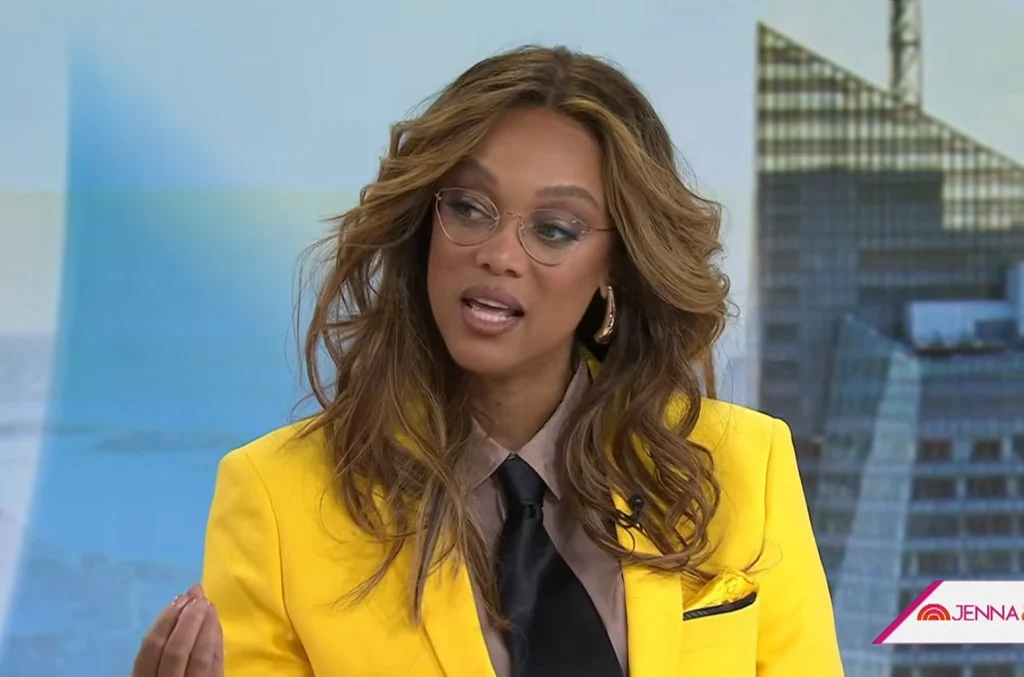
More than three decades after The Bodyguard cemented Whitney Houston as a movie star, a remake is in the works — and Tyra Banks thinks Taylor Swift is the modern-day pop star who can fill the icon’s shoes this time around.
While guest-hosting a recent episode of Today With Jenna & Friends, the supermodel revealed that — as a big fan of the original movie — she’d love to see the Eras Tour headliner take over Houston’s role as famous musician Rachel Marron in the new film. “I’m so beyond excited,” Banks began of the announcement earlier this month that Warner Bros. is developing a revamped Bodyguard. “That movie is everything.”
When co-host Jenna Bush Hager asked her who should star in the flick, Banks replied, “I think Taylor Swift, because business, commerce, art.”
Trending on Billboard
And? “She would freaking sell like crazy,” the America’s Next Top Model host added.
As for who should step into Kevin Costner’s shoes as the leading lady’s titular protector, Banks thinks a certain British actor could balance out an onscreen duo with the “Fortnight” singer. “Okay, I’m just gonna be real. I’m a Black girl,” she said. “It was Whitney Houston as a Black girl and Kevin Costner as a white man. What if we flipped it, and it was Taylor Swift and Idris Elba?”
Of her idea for the pairing, Banks excitedly added that Swift and the Beast star would be “hot!”
Directed by Mick Jackson and released in 1992, The Bodyguard marked Houston’s first starring role in a film after she’d already scaled to the top of the charts as a pop star. Its corresponding album remains one of the best-selling soundtracks of all time, spending 20 weeks at No. 1 on the Billboard 200 and spawning Houston’s timeless, Billboard Hot 100-topping rendition of Dolly Parton’s “I Will Always Love You.”
And though casting details for the upcoming remake remain unknown, Swift — who’s previously acted in films such as The Giver (2014), Cats (2019) and Amsterdam (2022) — does already have a connection to the project. Sam Wrench, who directed her blockbuster Eras Tour concert film, will be helming the new Bodyguard, as reported by Deadline on April 11.
Watch Banks share her thoughts on the upcoming Bodyguard remake above.

Sean Ono Lennon is confident that the One to One: John & Yoko documentary “is going to be very revelatory for everybody who sees it. For sure.”
Present company excepted, however. “I do think I know my parents pretty well,” says Ono Lennon, who co-executive produced the film (along with Brad Pitt and others) and served as its music producer. “I knew about that time. It was only a couple years before I was born. My mother spoke about it a lot. I know a lot about their story, including (this time period), so I would not frame it that I learned something necessarily.”
Other viewers, however, will get a thorough look into one of the most dramatic 18-month periods in the couple’s lives — which, for anybody who knows about them, is saying something — from their move to New York City’s Greenwich Village in 1971 to the One to One benefit concert at Madison Square Garden on Aug. 30, 1972, Lennon’s only full-length performances after the Beatles’ 1970 split. One to One premiered at the Venice Film Festival last August, also showing at the Telluride Film Festival and Sundance Film Festival before its IMAX rollout on April 11. One to One opens wide in theaters starting April 18 and will stream on Max later this year.
Explore
See latest videos, charts and news
See latest videos, charts and news
Directed by Kevin Macdonald and distributed by Magnolia Pictures, One to One employs a montage-style collection of footage and sound recordings (some provided by the John Lennon Estate) to present Lennon and Ono primarily in their own words, without third-party narration. “Certainly Kevin and myself were sitting around in a room for quite a few weeks, scratching our heads — not in a bad way — deciding what direction we wanted to go in,” says co-director and editor Sam Rice-Edwards. “We didn’t want to make just another Beatles or Lennon documentary; there’s plenty out there, and this needed to be original and fresh.
Trending on Billboard
“Kevin came up with the concept of presenting the world as John and Yoko would have seen it in 1972; we felt if you did that, and we also spent time with them, in a way, that was really what people hadn’t done before. We found moments where we felt like the camera wasn’t on them…which gave us a fresh look at John and Yoko and allowed (the viewer) to be with them in a way you hadn’t before.”
Ono Lennon — who acknowledges that left to his own devices “I probably would’ve made a live concert film” — felt the approach was “really effective in telling their story. It’s not easy to maintain such a complex story, but (One to One) does it very beautifully. If it was narrated it would’ve been more of an op-ed. This is a true documentary in that it allows the subjects to tell their own story.”
Using other period footage — snippets of TV shows, commercials, news footage, etc. — to provide a context for the time, One to One finds Lennon and Ono embroiled in strident political activism, including an association with Jerry Rubin, that made them targets for FBI surveillance and, ultimately, attempts to deport Lennon by the administration of then-President Richard Nixon. “It’s really a beautiful story because you realize they were willing to risk everything, their careers and even their personal safety, to fight for their political and moral beliefs,” Ono Lennon says. But, he adds, only to a point.
“I think an important message to glean from the film has to do with the way my parents reacted to the more extreme elements of the radical activists they were working with at the time,” he explains. “At a certain point they realized the people they we working with, or some of them — Jerry Rubin specifically — were proposing to do things that were not necessarily aligned with my parents’ philosophy of pacifism and peace and love. You witness the trajectory of my parents experimenting with the radical groups and then realizing that they’d sort of gone too far, and they had to pull back — not just because it became dangerous for them but because people who were arguing for potentially violent activism were basically becoming as bad as the people they were fighting, which is really an important message for today, too.”
Ono Lennon says that as a youth his mother spoke frequently about that particular time, including being “freaked out” about the FBI wiretaps on the couple’s phones. “My early childhood was chaotic, obviously, and a lot of stuff that was happening in the film, the echoes were still resounding throughout my childhood,” he recalls — which includes the FBI planting an agent with the family after Lennon’s assassination in 1980. He adds that Ono “never believed activism was worth losing your life over. She always felt like it’s important to protect yourself so you can keep on doing good. If you’re not alive, what’s the point? Some people glamorized certain revolutionary kinds of characters willing to resort to violence. She never admired those people, and I don’t, either.”
The grail find for the One To One documentarians was an unlabeled box of reel-to-reel tapes that held recordings of Lennon and Ono’s phone calls, which they began making when they discovered their lines were bugged. The conversations, with manager Allen Klein as well as a variety of employees and friends, were discovered by Simon Hilton, vice president of Multimedia Projects for the Lennon Estate, amidst the Lennon archives in New York. Rice-Edwards recalls that “we knew pretty quickly this was really important. Listening to John and Yoko, or the people around them, when they thought they weren’t being listened to was extremely revealing about who they were. And a lot of what they were talking about in the phone calls was relevant to events we were covering in the film.” Ono Lennon, meanwhile, considers the tapes “a pot of gold,” for the film as well as for himself.
The One to One concert materials have been released before, but Ono Lennon and the filmmakers went to great pains to correct shortcomings from the original source material, which was initially released as a TV special directed by Steve Gebhardt and featured appearances by some of the other acts, including Stevie Wonder, Roberta Flack and Sha Na Na. “There was some really crazy camera work,” Rice-Edwards says. “A lot of people working on the film, the camera people, were really high, so we had to work with that. But there was some really great stuff as well. That fact it was shot on film originally — in lovely 35mm — helped, and it was certainly good. We just treated it in the right way and made it the best we could.”
On the audio side, Ono Lennon found that “the recordings themselves were quite chaotic…. There were mics that were misplaced, and a lot of mics were moved between the matinee and evening shows. It seems like things were done in an improvised and last-minute manner. But we didn’t mind because it was more fun to have the challenge. I don’t want to give away too many of the tricks. I think there’s a reasonable amount of movie magic in there, let’s put it that way; it was a great time, technologically speaking, for us to reinvestigate the mixes. We have more tools than ever to bring out the best and turn down what’s undesirable. It did take a lot of work to get it where it is now, but that was part of the joy of doing it.”
He did come away with favorites among the performances, including sharpening the mixes of “Cold Turkey” and “Come Together” and hearing his father’s performances of the song “Mother.” “To see him sing that song, which is a very different style from Beatles music…His voice is so incredible and so moving,” Ono Lennon says. “It’s kind of shocking, honestly, and it’s very sweet as well…very vulnerable, but also powerful at the same time.”
His mother’s aggressive rendition of “Don’t Worry Kyoko” also resonated with him. “She had several styles (of music), but ‘Don’t Worry Kyoko’ is the more challenging, punk rock stuff…there wasn’t even (punk rock) yet. Some people might not have liked listening to it on the stereo, but when you see the show and see the audience live, it really does translate. It’s all about the energy, and the groove is there. It’s undeniably rockin’.” He adds that Ono, retired at 92, was not deeply involved with One to One but is “not unhappy with anything” about the film.
ONE TO ONE: JOHN & YOKO
Courtesy of Magnolia Pictures
Ono Lennon has finished work on a One to One soundtrack release slated for Oct. 9 in several formats and packages. The full two concerts will definitely be part of it, while additional performance content from the period — such as songs from Lennon and Ono’s stint on The Dick Cavett Show during September 1971 — is currently being discussed and licensed.
“Whatever we can put on we’re putting on,” says Ono Lennon, who’s also finishing work on a new album of his own. “I think we’ll put on basically everything that would make sense to put on it…to satisfy the hardcore fans.”

The ban on narcocorridos in certain Mexican states have most recently caused chaos at a Luis R Conriquez show in Texcoco, a city in the State of Mexico just 15 miles outside Mexico City.
“There are no corridos. What do we do? Should I just go home instead?” Conriquez, who pioneered the regional Mexican subgenre corridos bélicos, told the rowdy crowd that protested his firm stance on not performing corridos that night. He was following the rules and regulations established by Texcoco, a municipality that, since April 9, prohibited expressions that glorify violence following the implementation of a law targeting mass events.
“It feels awful not to be able to sing what people want to hear, but we join the cause of zero corridos,” the Sonora-born artist added, stirring up a strong reaction by the audience who booed him, threw punches and caused significant damage to the venue, ending the show abruptly. (Read Conriquez’s exclusive interview with Billboard detailing exactly what happened that night.)
Corridos are a style that dates back to the Mexican Revolution in the early 20th century. Over the past few decades, the subgenre has birthed various iterations, including corridos bélicos, corridos alterados, corridos verdes, corridos tumbados and narcocorridos, to name a few.
While Conriquez’s situation has sparked mass media attention, the ban on narcocorridos, songs that often name-check Mexican drug kingpins or cartel figures, goes way back to the 1970s, when Los Tigres del Norte ushered a new era for corridos. Since, calls for censorship of this popular style of music — which has only gone global over the past few years thanks to a new generation of hitmakers, including Gerardo Ortiz, Peso Pluma, Natanael Cano and Conriquez — have only intensified.
Sinaloa was among the first states in Mexico to call for a ban on narcocorridos in the 1980s. Other states followed in efforts to regulate or control the diffusion of narcocorridos. Today, 10 (out of 32) states in Mexico have implemented bans and limitations on the broadcasting of corridos in public spaces, including Baja California, Chihuahua, Guanajuato, Quintana Roo, Nayarit, Jalisco, Michoacán, Aguascalientes, Querétaro and Estado de México. Without a federal law, the local government would apply penalties that range from fines or up to one year in prison to those who play music that advocates violence.
“This censorship has followed regional Mexican music for many years but in reality, it reflects what happens every day in our environment,” Rafael Valle, programming director of Guadalajara radio station La Ke Buena, previously told Billboard. “If the song says some word that is not allowed on the radio, obviously we modify the song, but we don’t censor it because that would mean not playing songs that people are constantly requesting.”
States have gone so far as to banning actual artists from performing in certain cities. In 2012, Los Tigres were “indefinitely banned” from Chihuahua after the norteño band sang narcocorridos during a weekend concert there. “We ask concert organizers and the artists themselves to think about the difficult situation the country is in,” government officials said then. Murders and drug-related violence linked to organized crime in Mexico continues to engulf the country today.
This year alone, a number of new bans have taken into effect in Mexico and have even expanded into the U.S. In an unprecedented move, the U.S. State Department canceled work and tourist visas of Mexican corrido group Los Alegres del Barranco after they displayed images of the leader of the Jalisco New Generation Cartel (CJNG), Nemesio Oseguera Cervantes, also known as “El Mencho,” during a concert on Saturday (March 29) at an auditorium at the University of Guadalajara.
Below, see Billboard‘s updating timeline on state and federal actions against narcocorridos implemented this year in Mexico, and their impact on Mexican artists.
January 5, 2025

This week, Billboard is publishing a series of lists and articles celebrating the music of 20 years ago. Our 2005 Week continues here with a conversation with veteran film star Eric Roberts about starring in three of the biggest videos of 2005 — including the clips for two of our editorial staff’s top three songs of the year.
Twenty years ago, Eric Roberts was a three-time Golden Globe-nominated actor who was starring on an ABC sitcom (Less Than Perfect) and frequently linked to his Oscar-winning little sister, fellow film star Julia Roberts. But 2005 marked a turning point in his career, when he starred in a trio of music videos that would introduce the prolific actor to a whole new generation: The Killers’ “Mr. Brightside,” and Mariah Carey’s two-part “It’s Like That” and “We Belong Together.”
Trending on Billboard
In all the videos, he portrayed a shady character who stood in the way of the true love stories at the heart of the storylines. For The Killers, he was the handsome, leering stranger who was keeping frontman Brandon Flowers from a burlesque dancer played by actress Izabella Miko. For Carey, he was a controlling record-exec beau (hint, hint) who was keeping Mimi from the impeccable buzzcut of Prison Break star Wentworth Miller.
He made the absolute most of his limited screen time – memorably taunting Flowers during a contentious game of checkers in the Sophie Muller-directed “Mr. Brightside” and wearing abject heartbreak across his face as Carey left him at the altar in the Brett Ratner-helmed “We Belong Together.”
The Killers “Mr. Brightside”
Courtesy Photo
In honor of 2005 Week, Billboard caught up with Roberts (with a cameo from his actress wife Eliza Roberts for some extra context) to chat about starring in the videos for our No. 1 and No. 3 picks for the staff’s 100 Best Songs of 2005 list and what he remembers about that surreal time — and about the new video he just shot with a star artist of today.
Let’s rewind back to 2005 for a minute. What do you remember about being asked to do The Killers’ “Mr. Brightside” video?
Eric: Well, I turned it down at first, because I don’t do videos. I didn’t know anything about them, so I just said no — just kind of a knee-jerk response. And then all my kids called me and said, “What are you doing? You can’t do that! It’s The Killers!” So they told me to call them back and to say I’m available. So I did, and [director] Sophie Muller took me.
Smart kids. What do you remember about that set and about filming with the band?
Eric: It was kind of insane. It was kind of nutty and all over the place, and I never really knew what I was doing or what I was playing, and I just let Sophie boss me around.
Was there a script or a storyboard, or was it very much like, you get into this world and on this set and kind of react in real time?
Eric: I don’t remember ever seeing a script or ever seeing a storyboard, so I don’t know.
Eliza: Yes, there was a storyboard, and it was pretty elaborate, because remember: Sophie had to wrangle these dancers and performers, singers and artists, and an actor who’s used to linear material, scripted, and she had a vision in her head. But within that, she allowed a lot of freedom. She had a lot of respect for what was going on. It’s true that there was never really an explanation, because when people talk about the story of a song, it’s very different from talking about the story of a book or a movie.
What do you remember about filming?
Eric: It was a great big, huge set, and it was cool. It was like a bar.
Eliza: Everyone wanted to come with us. It was so funny, because going from clueless to kind of realizing, like, “Oh, this is really something, it’s like a tipping-point thing.” Eric was doing a series with Zachary Levi at the time [the four-season ABC sitcom Less Than Perfect], and when Zach heard they wanted Eric in [The Killers’ video], Zach literally followed us to set just to see. Everybody showed up. And then we realized, “Oh, I guess we’re really lucky to be here.” But there was a vibe, definitely. I mean, Sophie creates a vibe, and what you saw on the screen was even more in in person.
In 2005, you also had a pair of videos with Mariah Carey. The “It’s Like That” video, which was released first, ends with a “To Be Continued” message, leading to “We Belong Together.” Were those filmed at one time?
Eric: Yeah, those were done at the same time.
What do you remember about that set and working with Mariah?
Eric: I remember her being a queen, just an absolute queen. How she looked, how she acted, her humor — she was a cool chick.
Eliza: She had this incredible two-story trailer, and everyone really wanted to be careful. They had parasols and they didn’t want to call her to set until the moment they needed her. And she was nothing like that! She didn’t require it at all. She kept making fun of everybody for that. She’s like, “What are you doing?” And totally accessible. It was just a fun, amazing set. It was kind of like two parts or two episodes of a series, but shot right at the same time.
Eric, you had initially said no to The Killers, and then obviously that was such a huge success. Did that lead to an easy yes when Brett Ratner came calling for the Mariah videos?
Eric: Why I ended up saying yes to everything is because of her [points to Eliza].
So Eliza and the kids basically talked you into all these music videos?
Eric: Yup, and I go, “OK.”
Eliza: First of all, Brett — we love Brett, and he’s a friend. We always say yes to him. He’s brilliant. But it was the same record label [The Killers and Carey’s songs were both released by Island]. So first Eric said, “Do you really want me to do another one of your artists so soon? I think you’re mistaken. You can’t possibly want that.” And I’m like, “Nope, that’s what they want.” And of course we’re not going to let him not do Mariah Carey. Plus he’s always been secretly in love with her a little bit.
Wait, Eric – can you confirm that part of the story?
[Eric shrugs]
Eliza: I’m outing him! I mean, she’s phenomenal. And he was like, “She’s so beautiful. I think I have a little crush on her.” And he doesn’t do many crushes. And then when we hired [Eliza’s son] Keaton’s then-girlfriend, who’s a makeup artist, [to work on the video] Eric’s like, “You don’t have to have Christina keeping an eye on me with Mariah!” [Laughs]
The Killers’ and Mariah’s videos were very different, but can you compare Sophie and Brett’s directorial styles at all?
Eric: They had something in common: Their sets are kind of mad. They’re kind of insane. They’re typically explosive. They’re fun sets to be on.
Eric, you also presented at the 2005 MTV Video Music Awards, the year “Mr. Brightside” won for best new artist in a video. Do you remember how you were feeling that night?
Eric: Vaguely, yeah. I remember being there. God, that was a generation ago, so it’s a little tough, but I was there. I don’t really remember having a feeling, I just remember being there.
And during your speech, you slipped in a shout-out to your stepson Keaton, who’s a musician…
Eliza: They kind of forgot to give us any copy or anything, because there was a lot of distraction. So that’s when we kind of put together our own and gave a shout-out to Keaton. I got a million texts suddenly from all kinds of people, some of them being like, “Oh, that took such chutzpah! What balls Eric has!” Like, everyone’s here to promote. Let’s not pretend that’s not the case, right? That’s what this is about, right? So might as well promote someone who’s up and coming, and not just people who don’t need promotion. I mean, come on, guys.
I think they struck it from the from the broadcast later… In the live show, it aired, but then in the repeat, they cut it.
You ended up introducing R. Kelly that night, who put on a wild “Trapped in the Closet” performance. Do you remember much about the performance that followed?
Eric: All went over my head.
Did you notice any big changes to your career or to your public image after appearing in these music videos?
Eric: The only really big change was kids knew who I was, and they never knew who I was before. I’d be in movie theaters, and these eight-year-old kids would say, “Hey, it’s you!” And I’d go, “Yeah, it’s me!” And it was shocking. Everywhere I went, little kids were following me. Yeah, it was fun.
I wondered which video you would get recognized for more.
Eric: Long-term, it was The Killers. But in the immediate, it was Mariah.
You know, in Billboard’s staff list of the 100 best songs of 2005, “We Belong Together” is at No. 3 and “Mr. Brightside” is at No. 1. How does it feel to be a big part of these songs that continue to have this legacy 20 years later?
Eric: Lucky, lucky, lucky. Fun to be a part of it.
You worked with The Killers again on the “Miss Atomic Bomb” video in 2012. What was it like reuniting with them?
Eric: What was funny about that was we were not in the same state as each other. When we shot that video, we were in different places. Crazy. [Eliza] arranged it all. In fact, it’s because of my wife that “Miss Atomic Bomb” got made, because it was not supposed to. Everything was against it. It wasn’t going to work. And she said, “I have an idea.” And she made it work.
Eliza: Eric was shooting in Detroit and I get a call from somebody, a producer, and he’s like, “Hey, we’re going to be doing a prequel to ‘Mr. Brightside.’ We want to know if Eric is available.” And I was like, “Of course he’ll do that! When?” And they’re like, “Day after tomorrow.”
Eric: I was like, what?
Eliza: Then he sends me the storyboard – without Eric, it can’t be done, right? What were you gonna do if I said no? Also, [original “Brightside” star] Izabella [Miko] was dancing in it and leaving for Europe the next day, so basically it had to be that day. So I was like, “Yes, he’ll do it. He’s not in town. Let’s figure this out.” And that director was an animator, and he’s amazing. So I asked his production, “I know you’re doing some green-screen work. I’m going to ship some clothes to you. I’m going to find someone to double Eric there.” I literally looked in the Yellow Pages.
Eric: She found a green-screener. Nicest guy in the world.
Eliza: A little guy who had a green screen [in Michigan], and after the film wrapped, Eric went there. He had no idea what he was doing. He put on his own white suit that I shipped there and smoked a cigarette and did his thing. So you see [Eric’s body double] reach for Izabella, and then she takes his hand and they do a little twirl, and they cut to Eric.
I hear that you just filmed a new video with Summer Walker as well, so your music video journey continues. What can you tell us about that one?
Eric: Summer Walker was the coolest. We had a lot of fun together, and it’s going to be a really good video. It’s going to shock you.
What does it take for you to say yes to a video now?
Eric: I just have to like the song and/or like the artist, and I’m in.
Speaking of which, what music are you into right now?
Eric: Well, you know, I’m a little bit biased, but I’m also very honest: Keaton Simons is my favorite singer/songwriter. He’s also my favorite guitar player. And it’s not because he’s him and I’m me. It’s because of his brilliant talent. You should listen to him; it’ll blow your mind. He’s mind-blowing, and I live for him musically. He toured for a year with Eric Clapton and now he’s with Brett Young.
And what’s next for you?
Eric: There’s a great movie out called Hippo, and it’s got three devastating performances in it. One of them is one of my favorite actors, and that’s my wife. It’s a miraculous movie. It’s not a picnic movie, but it is good.