State Champ Radio
 Music
Page: 175

The 2025 CMA Fest concluded Sunday night (June 8), and after four days of festing, tens of thousands of country music fans kept the energy going strong as they filled Nashville’s Nissan Stadium for one final evening. Throughout much of this year’s CMA Fest, which ran from June 5 to 8, rainclouds hovered over Nashville, […]
Silvestre Dangond and Emilia’s “Vestido Rojo” slides into an 8-1 climb, to rule Billboard’s Latin Airplay chart dated June 14. The coronation on the overall Latin radio tally follows a 39% surge in audience impressions in the United States, which translates to 8.3 million, during the May 29-June 5 tracking week, according to Luminate. It’s the third No. 1 for Dangond and second for Emilia.
Explore
See latest videos, charts and news
See latest videos, charts and news
“Vestido Rojo” was released Feb. 6 on Sony Music Latin. It lands at the summit in its eighth week on the chart, and after three weeks in the top 10. Three Univision radio stations become the single’s main supporters. San Jose, Calif’s KVVF-FM registered the biggest gain in the period, with Phoenix’s KQMR-FM and Houston’s KAMA-FM landing in second and third place, respectively.
Trending on Billboard
Thanks to the 8.3 million radio haul, “Vestido Rojo” marks Dangond’s return to the top of the ranking in over six years. He last secured a No. 1 through another female team-up: “Justicia,” with Natti Natasha, ruled for one week in November 2018. Among other placements, his first No. 1, “Cásate Conmigo,” with Nicky Jam, reached No. 1 that same year, in February 2018.
For Emilia, before ‘Vestido Rojo” unlocked the penthouse, the Argentinian singer earned her first chart-topper on Latin Airplay with “Perdonarte Para Qué?” with Los Ángeles Azules, in July 2024. The song earned the family group its first coronation after nine top 10s.
“Vestido Rojo” also dresses up the top spot on Tropical Airplay, where Emilia achieves her first No. 1 through her first chart appearance on the list. Dangond, meanwhile, secures his third chart-topper onnTropical Airplay, likewise, his first since 2018, when “Cásate Conmigo,” with Nicky Jam, monopolized the top slot for eight consecutive weeks.
Beyond its Latin Airplay and Tropical Airplay coronations, “Vestido Rojo” rises to a new peak on the multi-metric Hot Tropical Songs chart, climbing 9-4.
All charts (dated June 14, 2025) will update on Billboard.com tomorrow, June 10. For all chart news, you can follow @billboard and @billboardcharts on both X, formerly known as Twitter, and Instagram.
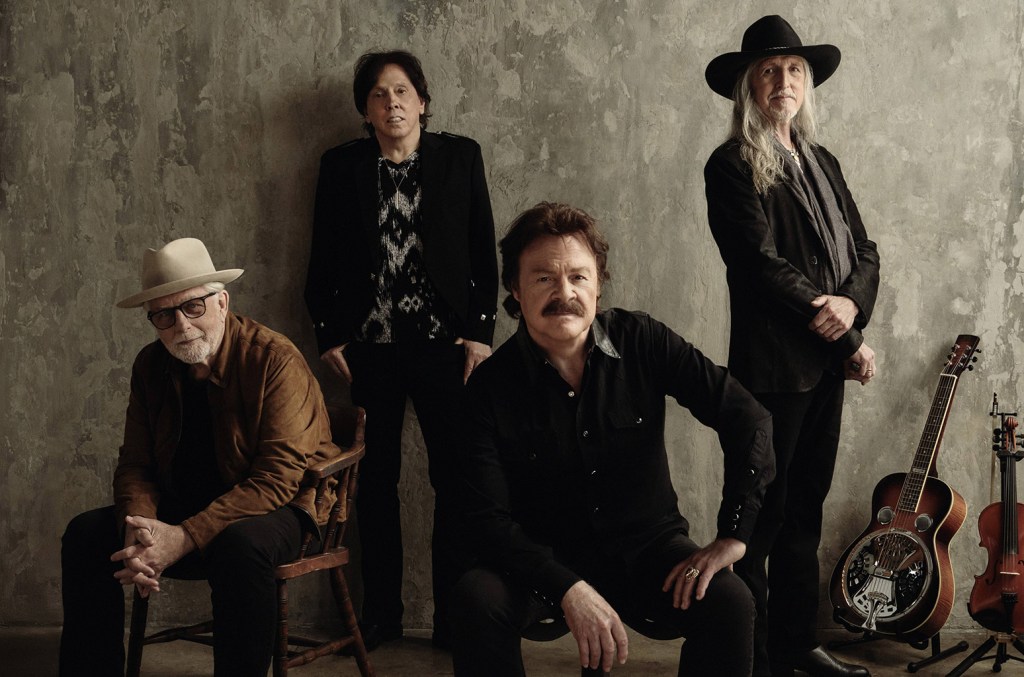
Over two distinct sonic eras, The Doobie Brothers — led by singer-guitarist Tom Johnston and singer-pianist Michael McDonald — have sustained a genre-agnostic, commercially viable career since the early 1970s. That includes nine top 10 albums on the Billboard 200 and 10 top 20 entries on the Billboard Hot 100, as well as hits spanning the rock, adult contemporary, R&B and country charts.
But what truly defines the band is that “it’s a democracy,” according to Karim Karmi, its comanager of a decade alongside Irving Azoff.
Trending on Billboard
Now, 50 years in, the Doobies are proving just that with Walk This Road, their first album to feature significant contributions from all three principal songwriters (Johnston, McDonald and Pat Simmons). Produced by pop-rock stalwart John Shanks, the project is McDonald’s first appearance on a Doobies album in 20 years and will arrive a week before he, Johnston and Simmons are inducted into the Songwriters Hall of Fame (alongside George Clinton, Rodney “Darkchild” Jerkins, Ashley Gorley, Mike Love and Tony Macaulay) on June 12. After which, McDonald teases, the Doobies “might even do another” album.
How did working with John Shanks affect your songwriting process for Walk This Road?
Michael McDonald: We found ourselves revisiting old ideas that might have never gotten recorded — in my case, songs that I might have demoed, gosh, 10 years ago, that I would every once in a while run across in my phone. And then some of the stuff was more immediate, where we just sat down with John and came up with a song in a moment.
Tom Johnston: John’s a hell of a guitar player, and he has good ideas on sound. He’s got a place up in the Hollywood Hills overlooking part of the San Fernando Valley and he’s got a lot of toys, so you can try pretty much anything you want to try and that’s liberating.
McDonald: It’s every musician’s fantasy man cave — literally every kind of keyboard, keyboards I never even knew existed.
A sense of social conscience is central to the band’s music, especially on this album’s title track with Mavis Staples. Do you feel a responsibility to address current times in your writing?
Johnston: The civic duty bit that you express when writing, that’s something that you just feel — it’s an organic thing.
McDonald: With “Walk This Road,” I think John had the original idea for the title — of us getting back together, here we are still trudging the same road all these years later. But it immediately took on a bigger meaning, and I think bringing Mavis onto the track cemented that idea because she is an ambassador of the gospel of humanity. The sound of her voice and her intent made it clear what we might be talking about in the bigger sense, which is, we’re all here together. As a band, we hope to appeal to the collective better nature of people.
You have a long track record on the Billboard charts. What does it take to write a hit?
Johnston: When you’re writing a song, you’re not thinking about that; you’re just trying to put into it what you feel at that moment. The only time I ever even thought [about] that was on “Listen to the Music.” You just want to do the best you can.
McDonald: We came up in the middle of the ’60s and the ’70s, when recording artists were starting to exercise a lot more latitude in terms of style and genre, and the Doobies were always a very eclectic band; we were free to do what we wanted or whatever we thought we could be sincere at portraying musically. I always felt fortunate that we came up in a time when there were a lot less limitations set on artists to stay in their lane.
HBO’s Yacht Rock: A Dockumentary highlights that aspect of you and your contemporaries — as well as your habit of turning up in unexpected places, Mike, both in the Doobies and as a solo artist. What’s the most unexpected place or collaborator you’ve found yourself around recently?
McDonald: I wrote a couple songs recently with a kid named Charlie Puth, who’s a really talented musician. And I find that I’m being taken more places than I would ever have gone on my own. I’ve been trying to co-write with people, which I always do with a little bit of mixed feelings. I never really know if what I’m writing is good or not. You start to compare yourself to everything else, and it gets a little scary sometimes. But I do like co-writing because it gets me out of the house and it makes me do something rather than watch another episode of HGTV. (Laughs.)
This story appears in the June 7, 2025, issue of Billboard.
Henry Cárdenas was on his way to Texas from Chicago when he got the news: Julión Álvarez’s work visa was cancelled, which meant the música mexicana hitmaker couldn’t enter the United States in time for his sold-out show at the AT&T Stadium in Arlington, Texas on May 24. “We had everything set up already,” says Cárdenas, founder/CEO of the powerhouse Cárdenas Marketing Network, still perplexed by the situation. “The entire production, including labor and equipment, amounted to over $2 million dollars — it was all a complete loss because we had to postpone the event. It was unbelievable.”
Álvarez — who in April made his grand return to the U.S. with a historic run at L.A.’s SoFi Stadium after being sidelined for eight years over since-cleared issues with the U.S. Treasury — was traveling from Guadalajara to Texas the day before the show and was informed at the airport that he couldn’t board the plane because his visa was cancelled. “I’ve been in the business for 45 years and I had never seen this,” Cárdenas adds. “In the past, we’ve known of groups or bands that apply [for a non-immigrant visa] and are denied but at least we were informed ahead of time. The day before your sold-out stadium show with 50,000 people? No way. We immediately started calling our lawyers but unfortunately, we haven’t gotten to the bottom of it. If you ask me right now what the reason for the cancelled visa is, I don’t know. Nobody knows.”
In the past two months alone, at least a handful of regional Mexican acts — including Los Alegres del Barranco, Banda Cuisillos, Lorenzo de Monteclaro and, most recently, Grupo Firme — have shared a similar experience to that of Álvarez’s. Their work visas — it’s unclear if they are O-1 or P-1B visas — are either delayed in an “administrative processing” or outright revoked by the U.S. State Department, leading to postponed shows or cancelled festivals and performances. Such was the case for touring giant Firme, which was unable to perform at La Onda Fest in Napa Valley, Calif., on June 1. Chicago’s Michelada Fest, featuring Mexican music headliners Luis R Conriquez, Firme and Gabito Ballesteros, cancelled its two-day summer event over artist visa “uncertainty.”
In general, U.S. visa uncertainties under the Trump administration have upended multiple communities and groups of people. “Everything is taking longer under Trump,” says attorney Daniel Hanlon, who specializes in immigration law. “It’s a combination of a few things, including stricter vetting policies, which have resulted in delays in visa processing almost across the board. We’re seeing this with foreign students at universities and now these musicians, and no one knows how it’s being brought to the attention of those who are in the position to make these revocation decisions, or why they are deciding to do this now. It could be completely politically motivated.”
In an unprecedented move, Deputy Secretary of State Christopher Landau announced on X that the State Department had revoked Los Alegres del Barranco’s work visas after the group portrayed images “glorifying” drug kingpin “El Mencho” at a concert in Mexico in March. “In the Trump Administration, we take seriously our responsibility over foreigners’ access to our country. The last thing we need is a welcome mat for people who extol criminals and terrorists,” his post reads.
Julión Álvarez performing during a concert at Arena Monterrey on October 29, 2021 in Monterrey, Mexico.
Medios y Media/Getty Images
In Mexico bans on narcorridos have spread across the country, where now 10 states have implemented laws to control or limit the diffusion of corridos in public spaces. But the U.S. had yet to really take a stance on the lyrics, which can be compared to gangster rap. That quickly changed this year when a wave of regional Mexican acts began to be impacted by visa delays, going beyond those who sing narcocorridos. Grupo Firme and Julión Álvarez — two of the biggest touring acts in the genre’s history, breaking barriers for regional Mexican artists in the U.S. — are mainly known for norteño and banda ballads and party songs, not narcocorridos particularly.
“We don’t know what we are fighting against because we really don’t know the reason these visas are getting denied or revoked, and it seems like it’s no longer just because they sing narcocorridos, which is what they initially had said,” says Mariana Escamilla, vp at Promotores Unidos USA, a longstanding organization composed of promoters who specifically work the regional Mexican touring circuit. “People don’t have the confidence to buy tickets in advance anymore if the artist is coming from Mexico. That’s a huge problem because we rely on pre-sale to determine if an event is going to sell or not. Now, I think fans will wait until day-of to buy the ticket when they see that the artist has finally landed in the U.S.”
Non-immigrant visas like O-1 and P-1B, the ones artists typically apply for “extraordinary achievement or ability,” are short-term work permits that need to be renewed by the artists and their petitioners and must include an agenda listing performances scheduled and where they’re performing every single time they apply. But even after being approved, these visas can be revoked at any time. Once the visa gets delayed by the State Department, for reasons like “administrative processing,” there’s no timeline for resolution. “It’s a euphemism for basically more background checks,” adds Hanlon. “It is unknown to the applicant what they are looking at, where they are looking or what they are looking for. They use that as a blanket to delay the processing of visas. So, the visa is refused until that’s resolved and then it could be issued or approved later but often it goes into a black hole and there’s nothing much you can do about it.”
In a statement sent to Billboard, a spokesperson for the U.S. Embassy & Consulates in Mexico said, “Due to privacy and other considerations, and visa confidentiality, we generally do not comment on U.S. government actions with respect to specific cases. Continuous vetting and visa revocation actions are not limited to visa holders from any specific country or area in the world. All visa applicants and visa holders, no matter the visa type and where they are located, are continuously vetted.”
What could be interpreted as targeting Mexican music and culture aligns with the Trump administration’s “disdain for Mexicans,” says entertainment attorney Marjorie García, partner at King, Holmes, Paterno & Soriano. “Any indication that [artists] are singing about anything the government doesn’t like, just like they [want to cancel] funding for PBS and NPR, if you’re not saying the things they want you to say, there is a perception that you don’t get to be here.”
Whether intentional or not, the timing couldn’t have been worse. In the past few years alone, regional Mexican has exponentially grown in popularity and global exposure. In 2023, Billboard reported that regional Mexican music consumption in the United States had jumped 42.1% year over year, outpacing gains in the Latin genre overall, as well as country, dance/electronic, rock and pop, according to Luminate.
“The regional Mexican music movement can’t keep growing if its artists can’t tour the U.S.,” García says. “All aspects of our business will be impacted. Before, you could predict the length of time that you needed for the visa process; you had a window. But now, the visa is being pulled after it’s already given, and as you get closer to the show, and at that point, you either show up or pay. There’s no way you can plan for someone to cancel your visa. This is all going to have a chilling effect when artists voices are most needed and in demand.”
Visa delays or revocations will almost certainly not fall under a contract’s force majeure clause, meaning event cancellation insurance very likely won’t cover it. “It’s up to individual artists to apply for those visas and get their documentation together. If the U.S. government says no, that’s almost assuredly not going to be covered by event cancellation insurance,” says attorney Tim Epstein, partner at Duggan Bertsch, who represents most of the independent events and festivals in North America, including Sueños and Baja Beach Fest. “Maybe once a year you were dealing with artists having to cancel concerts or festival performances over visa issues, but having a whole festival canceled because of artist visa issues … I have never seen that before.”
The financial impact this will have on artists who can’t tour the U.S. will be long-lasting. “A group like Los Alegres del Barranco that has a large following in the United States and already had contracts signed there, it is devastating financially,” Luis Alvarado, spokesperson for Los Alegres del Barranco, tells Billboard. “It is obvious that there is some kind of movement against Los Alegres del Barranco, but also against musicians who play this genre of music (regional Mexican). We’re waiting first to clear the judicial process in Mexico and then begin a conversation with the U.S. government.”
The U.S. is the No. 1 market to tour in — it’s the “base for success,” says Cárdenas. “You get guys like Firme and Julión who gross $10 million in one night here. This is where you make the big money — you don’t make the money in Mexico, with all due respect.”
For now, Cárdenas is staying optimistic and working diligently to help resolve this issue. “There are thousands of people working at the stadium when a concert happens, from parking, to vendors, production staff, all kinds of occupations that didn’t make any money because the Julión show didn’t happen,” he says. “That weekend, we lost more than $2 million that we won’t recover. How many of these instances can we survive? If this was a small promoter, it would go out of business immediately. You can’t lose $2 million every weekend.
“Someone has to go see the guys in Washington and tell them, ‘Listen, we have to fix this,’” Cárdenas continues. “This is not $100 or $200, this is millions of dollars; we have 50,000 people in one stadium. They consume everything — food, water, beer, and people are working, trying to make a dollar. Now, we’re talking to the political sector, calling our local congressmen and senators, and they are aware of the situation, and I’m sure they will fix it. Otherwise, this will jeopardize the entire industry.”
Additional reporting by Tere Aguilera and Natalia Cano.
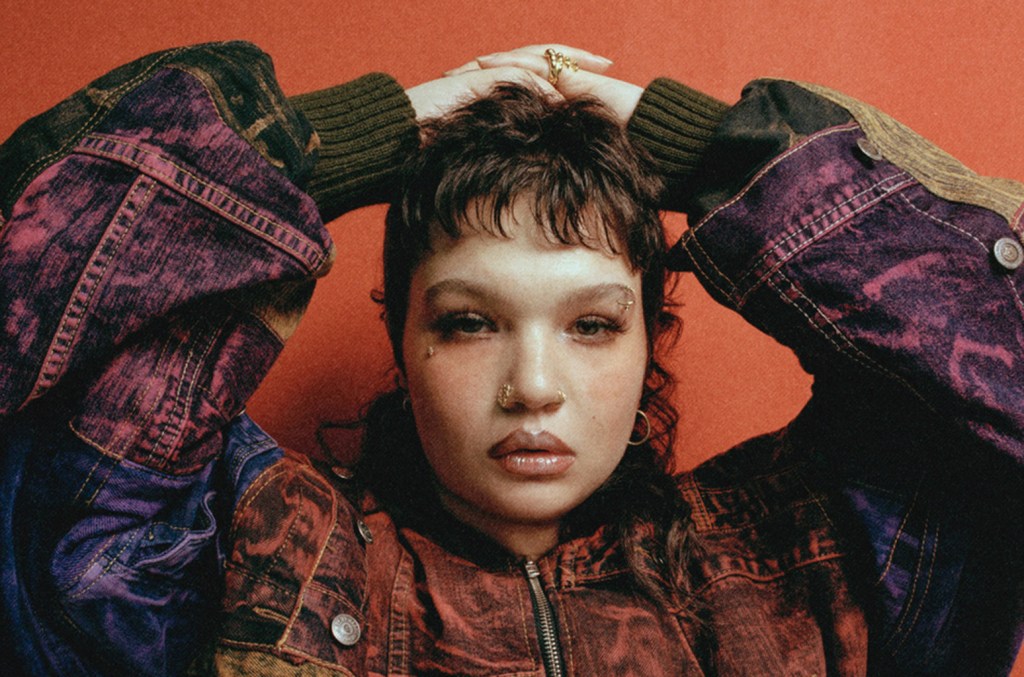
Lola Young and Simply Red’s Mick Hucknall will collect prestigious awards from ASCAP at a ceremony in London next Tuesday (June 17).
The “Messy” hitmaker will be awarded the Vanguard Award which recognises an artist whose “innovative work is helping to shape the future of music,” and follows Young’s success at the Ivor Novello Awards in May in the Rising Star Category.
First released in May 2024, “Messy” enjoyed a month-long stay at No. 1 on the U.K.’s Official Singles Chart earlier this year, and peaked at No. 14 on the Billboard Hot 100. The song also topped the Pop Airplay and the Rock & Alternative Airplay charts. Later this month, Young will perform at Glastonbury Festival.
Simply Red’s Hucknall will also be celebrated at the ASCAP London Music Awards with the Golden Note Award which recognizes his songwriting catalog over the past 40 years as the lead singer and songwriter in Simply Red as well as in his solo career.
Trending on Billboard
The group released their debut LP, Picture Book, in 1985 and the band boasts five U.K. No. 1 LPs, and two of their songs – “Holding Back the Years” (1986) and “If You Don’t Know Me by Now” (1989) – hit No. 1 on the Billboard Hot 100. In 2025, Simply Red embarked on a 40th anniversary tour through the U.K., Europe and South America.
”Mick Hucknall has made an indelible mark on a generation with his impassioned vocals and classic songwriting,” said songwriting great and ASCAP chairman of the board and president Paul Williams. “His singular mix of soul, funk and pop sounds made him a master of blue-eyed soul. We are thrilled to present him with the ASCAP Golden Note Award.”
The Golden Note Award has not been handed out since 2016 when Duran Duran were chosen for the prize. Other previous recipients include George Michael, Elton John, Blondie, Usher, Lionel Richie, Jay-Z and Stevie Wonder.
ASCAP will celebrate both Young and Hucknall at a private event in London on June 17, with U.K. songwriters honored in categories such as song of the year, top streaming song, top hot dance/ electronic song and more.
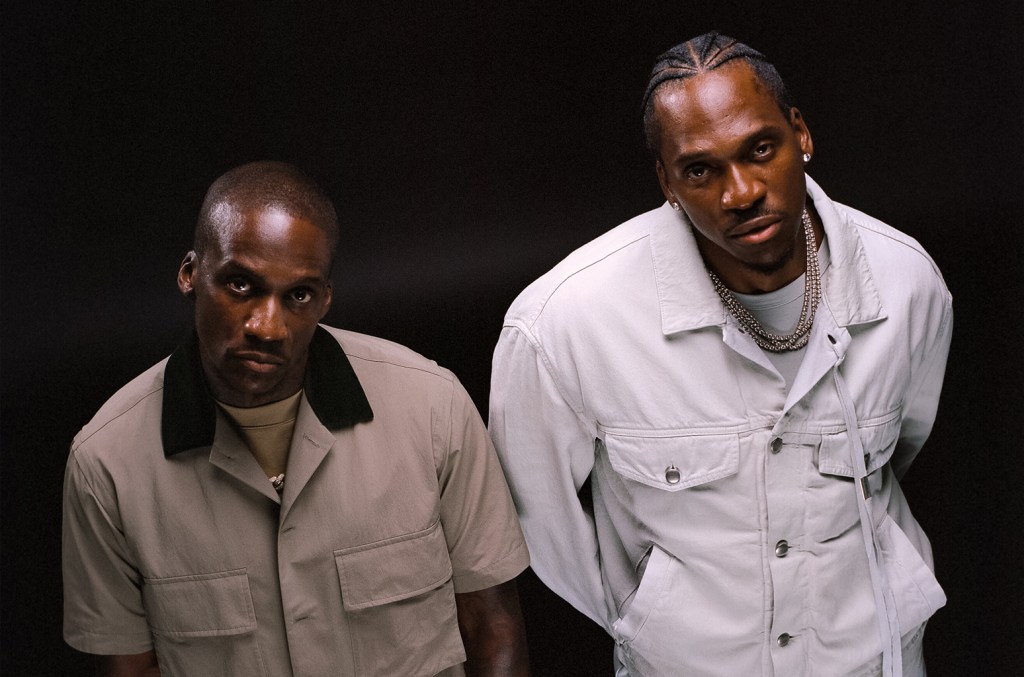
The Clipse are hitting the road. In support of their eagerly anticipated fourth studio album, Let God Sort Em Out, duo Pusha T and No Malice announced the dates for their first U.S. tour in 15 years on Monday morning (June 9). The Let God Sort Em Out tour is slated to launch on Aug. […]
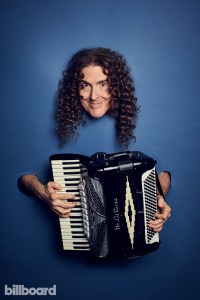
Am I the first person to feel strange calling you ‘weird’?”
John Mayer — bespectacled, grinning goofily, very much nerding out — is sitting across from “Weird Al” Yankovic, interviewing the Hawaiian shirt-clad parody music king, who is sitting across from him for his SiriusXM show, How’s Life With John Mayer.
“You can call me Al, like Paul Simon says,” Yankovic says with smile, before adding that the most normal thing about him is, probably, his pancreas.
It’s a funny quip, but also an understatement. Let’s just get this out of the way: “Weird Al” Yankovic is, beneath his accordion-playing, polka-loving surface, exceedingly normal. He likes long evening walks to get his steps in. He enjoys seeing movies and trying out new restaurants with his wife and daughter, who just graduated college. He grumbles good-naturedly about the ongoing renovation of his home in the Hollywood Hills. (“It’s going to look almost exactly the same as it did before, except it cost a fortune!”) The 65-year-old artist’s one attempt at rock star behavior, back in his early-’80s heyday, was comically un-vain: On a touring rider, he requested, in the spirit of Van Halen’s famed ban on brown M&M’S, “one really horrible Hawaiian shirt for every show I did.” (On that run, he did 200, and a collection that now extends to a storage unit somewhere in greater L.A. began.)
Trending on Billboard
Still, if not precisely weird, Yankovic is truly singular. His catalog can be divided into two types of songs: intricately crafted, meticulously arranged, hilarious yet never mean-spirited parodies of hits by acts ranging from Michael Jackson to Coolio to Nirvana to Lady Gaga, and original pastiches, for which he deep dives into artists’ catalogs to create songs that, with eerie accuracy, mimic the sounds and idiosyncrasies of those genre-spanning artists.
Between the two, he has accomplished feats usually reserved for the very artists he parodies. During each of the first four decades of his career, he has had entries on the Billboard Hot 100, and eight of his albums have reached the top 20 on the Billboard 200 — including his most recent studio release, 2014’s Mandatory Fun, which became his first No. 1 on the chart. He has won five Grammy Awards and an Emmy. Billboard estimates he has sold 12 million albums in the United States (based on RIAA certifications pre-1991 and Luminate data from 1991 on).
Incredibly, he’s done all this without ever changing his essential “Weird Al”-ness. “From day one, there was never even a discussion that would not be about following his singular vision,” says Jay Levey, Yankovic’s manager of 43 years and sometime creative collaborator (notably, they co-wrote the now nerd canon comedy UHF, which Levey also directed). “It’s hard to find any career where there’s literally no compromise, but we might be able to count on one hand the number of compromises he’s made in his career.”
Joe Pugliese
Sometimes, that’s meant turning down lucrative deals, like the $5 million beer endorsement that Yankovic passed on in 1990 because, he feared, the brand was “trying to make me into Joe Camel.” Many times, it’s meant standing up to record-label executives, like when, amid his “draconian” first album contract with Scotti Brothers (an indie then distributed by CBS), he was asked to shoot 10 music videos on a $30,000 budget simply because he’d proved he could do one for $3,000. (“I’m like, ‘No. No, I can’t!’ ”)
But just as often, it’s meant embracing an open-to-anything spirit that seems to almost always work out in his favor. Yankovic decided very early in his career to ask permission of any artist he parodied — not because the law required it (it doesn’t) but because he simply had no interest in making enemies. With very few exceptions, it turned out, the artists said yes, even supposedly impossible-to-convince ones like “American Pie” scribe Don McLean, who OK’d “The Saga Begins,” Yankovic’s 1999 parody that essentially summarizes the plot of Star Wars: Episode I — The Phantom Menace. “When I heard his version, I thought it was better than the original. The sound quality was superb,” says McLean, who calls Yankovic a “straight-ahead good boy” who “could be on Leave It to Beaver.”
Thanks to that combination of earnest good intentions, work ethic, backbone and obsession with quality, Yankovic finds himself in an unusual position today: He’s no novelty relic of the ’80s, but a truly cross-generational artist. In the past six years alone, he’s portrayed Rivers Cuomo in Weezer’s “Africa” music video, played accordion (and appeared in the video) for teen rock band The Linda Lindas’ 2024 single “Yo Me Estreso” and lip-synced dramatically in a tux in Clairo’s “Terrapin” video. “Growing up with his videos was a massive thing in my generation,” says Clairo, 26. “Back when YouTube was really simple, it really hit home for us in middle school to watch his parodies. He always knew how to draw people in.”
He and his team will prove just how true that still is when Yankovic heads out on the Bigger and Weirder Tour this summer. It’s his fastest-selling, biggest-grossing tour yet, according to his agent, Wasserman Music’s Brad Goodman, and his biggest by other metrics, too: an eight-piece band (his largest yet) onstage; first-time venues bigger than any he’s played before, including New York’s Madison Square Garden and L.A.’s Kia Forum; a mini-Las Vegas residency (the tour will open June 13 with six sold-out nights at The Venetian); and stops both expected (Red Rocks Amphitheatre) and less so (Riot Fest) on the route. And the concert itself is a trademark Weird Al spectacle: part rock show, part revival tent, part Broadway musical, all “joy bomb,” as actor and longtime fan Andy Samberg puts it.
Whether it becomes a springboard for the next Weird Al era is anyone’s guess — including Yankovic himself. Right now, he has no further plans to release albums; and since Mandatory Fun arrived over a decade ago, he’s only sporadically released new music, most recently the 2024 “Polkamania!” single (the latest in his long-running series of madcap polka medleys, this one recapping the past decade’s pop highlights, all sung in Yankovic’s manic tenor). Around that time, his contract of roughly 20 years with Sony ended, and he decided not to renew with the label, or sign with anyone else.
“Nobody owns any piece of me,” he says, exhaling. “I’m at a point in my life where if something isn’t going to be fun or a pleasant experience, I have no problem saying no, even if it’s a lot of money or a lot of eyeballs. I can do literally whatever I feel like doing.”
Then again, for Yankovic, that’s always been true.
“When I was a kid, I used to fantasize about being the next Weird Al, like it’s a position he applied for and got,” says Lin-Manuel Miranda, a lifelong fan who’s now also friends with Yankovic. “And then you grow up and realize, ‘Oh, there’s only one of that guy.’ We’re not going to see another Weird Al.”
On an overcast April afternoon a few days after the Mayer taping, Yankovic meets me for lunch at Crossroads, a vegan spot in West Hollywood where, years ago, he ate his first Impossible Burger. He’s quick to jokingly note that he is not a member of the city’s “vegan elite” — still, as he walks in, a man walking a golden retriever stops his phone conversation to stare and declare, “It’s that Al Yanko-vich guy!”
Despite his talent for writing songs about junk food (“My Bologna,” “The White Stuff”) and the fact that he once consumed the world’s most ungodly snack, a Twinkie Dog, in UHF (watch and barf a little), he’s been vegan since the early ’90s.
Chalk it up to veganism, staying out of the sun (“I melt in direct sunlight”) or following the directions of his longtime hair stylist, Sean James, very well (he never blow-dries those famous ringlets, hence their eternally bouncy and well-defined nature), but Yankovic has an ageless quality that lends many of his fans to liken him to mythological figures. “He’s Santa Claus for nerds of a certain stripe,” Miranda says, a comparison Mayer had also made (as well as to Forrest Gump). His curls may be a little grayer, but his ultra-expressive face — acrobatic eyebrows in particular — reflects his eternal curiosity and up-for-anything-ness.
As we settle in for almond ricotta-stuffed zucchini blossoms and meatless bolognese, Yankovic is particularly animated recounting his previous weekend, when he made his latest surprise appearance: his Coachella debut. To close out its surreal set, the crew from the cult-favorite kids show Yo Gabba Gabba! brought out a cast of characters both human (Thundercat, Portugal. The Man’s John Gourley) and not so much (cartoon mascots like Sleestak, PuffnStuf and Duo the Duolingo owl) to sing “The Rainbow Connection” with its composer, Paul Williams — and, on lead vocals, Yankovic.
“I’ve had a pretty bizarre life, so it wasn’t like, so unusual,” Yankovic reflects. “But it was definitely a little bit of an out-of-body experience.” He admits that the “hey kids, let’s put on a show” energy was fun and that the invite wasn’t a total shock (having appeared on a season-three episode as an accordion-playing circus ringmaster, he’s tight with the Gabba group). Still, he speaks of such invites with a kind of humble awe.
“Nothing I’ve ever done was me thinking, ‘Boy, I hope kids discover this 40 years from now,’ ” he says. Starting in the ’80s, he released an album almost every year “because I was afraid I would be quickly forgotten. It was drilled into me: ‘You’re a comedy artist, you’re a novelty artist, you’re lucky if you’re a one hit-wonder — you’re not destined to have a long career.’ I wanted to grab that brass ring every time I went around.”
Joe Pugliese
Coming up concurrently with the birth of MTV, and savvily taking advantage of it, helped Yankovic snatch that ring. He had a keen ear for (and good taste in) hits at a time when, thanks to both MTV and top 40 radio’s prevalence, a monoculture reigned — and perhaps even more importantly, he knew the power of a viral video before such a thing existed.
Tweaking hits like Jackson’s “Beat It” (“Eat It”) and Madonna’s “Like a Virgin” (“Like a Surgeon”), Yankovic created new songs that, thanks to his painstaking re-creations of their arrangements, were immediately recognizable but rewarded repeated consumption — as did their accompanying videos, in which Yankovic demonstrated his incredible eye for detail and formidable acting chops. “MTV was on like video wallpaper in the background 24 hours a day,” he says of that time. “They were hungry for content, and I was anxious to give them content.”
Since then, Yankovic’s understanding of the promotional power of visuals has remained prescient — take when, leading up to Mandatory Fun’s arrival, he insisted on releasing a music video on YouTube each day (not all at once, as some advised) to whet fans’ appetites for the album. And his genre-agnostic approach to making music has proved ahead of its time, too. Before hip-hop was widely accepted as pop, he was especially drawn to rap. “A lot of pop songs are very repetitive,” he says. “How can I be funny in seven syllables, you know? But rap songs, I mean, it’s nothing but words, and it’s easy to craft jokes that way.”
Parodies like “Amish Paradise” (Coolio’s “Gangsta’s Paradise”) and “White and Nerdy” (Chamillionaire’s “Ridin’ Dirty”) are among his most streamed — though he’s been equally adept at literally any microgenre he takes on, from just-electrified Bob Dylan (“Bob,” entirely comprising palindromes) to arty new wave (the Devo pastiche “Dare To Be Stupid”) to crunchy Detroit garage rock (“CNR,” a tribute to Charles Nelson Reilly through the lens of The White Stripes).
“The more you listen to him, the more you get access to making [any genre of parody] sound legitimate,” says Samberg, who calls Yankovic the biggest influence on his own comedic music group, The Lonely Island. “The nature of what he does is incredibly populist. He’s not snooty about it; he’s like, ‘This is what the kids like, and as long as I have a good angle comedically, I’m going to do it.’ And because of that, it’s always appealing to young people.”
Growing up in Compton-adjacent Lynwood, Calif., Yankovic listened to rock radio, but as a teenager found playing the accordion a bit solitary. (His friends’ rock bands weren’t really interested in an accordionist joining up.) “When you take accordion lessons, I think the high-water mark is ‘Maybe someday I’ll play in an Italian restaurant or at a wedding,’ ” he says with a laugh. “I guess I was shameless. I grew up a complete nerd in high school. And when you’re not somebody that’s socially acceptable, you kind of have nothing to lose. I kind of held on to that mentality: Like, you know, ‘Who cares?’ ”
“Weird Al” Yankovic photographed April 17, 2025 at Dust Studios in Los Angeles.
Joe Pugliese
He didn’t look to any particular musician’s career trajectory as one he could follow. “It was more cautionary tales” — and one was especially haunting. One of his idols was Allan Sherman, the satirical singer best known for his 1963 summer camp send-up, “Hello Muddah Hello Fadduh!” “He was the last person to have a No. 1 comedy album before me,” Yankovic continues. “He had three No. 1 albums on, like, the pop charts — incredible! But within a few years, he completely burned out. He made some terrible choices in his personal and professional life and just went off into obscurity and sadly died a few years later. So I was always more concerned about, ‘Don’t mess it up. Keep doing what you’re doing and just try not to make bad choices.’ ”
“In a way, we’re almost always looking over our shoulders at that,” his manager Levey says. He cautiously admits that he and Yankovic have finally reached a level in his career where they’re “no longer at the point where every year [of continued success] is a surprise,” then adds, “I don’t actually even like saying that out loud because it sounds like you’re taking something for granted.”
But if Sherman was a rocket that blasted off only to burst into flames, Yankovic has been the opposite: one that, as Levey puts it, has kept steadily traveling through space — maybe sometimes at a slower speed than others, but never plummeting back down to Earth, buffeted by the most unexpected boosters. Like, say, Weird: The Al Yankovic Story, the 2022 parody of a music biopic that Yankovic co-wrote, starring Daniel Radcliffe in the titular role. Despite at first airing only on the Roku Channel, it won almost universal acclaim and a prime-time Emmy, while expanding Yankovic’s universe yet again.
“His longevity is a testament to his ability to be himself and stick to what his taste is, because it’s so specific,” Radcliffe says. (“Bob” is his favorite Yankovic track, and he took the opportunity on set to ask his hero how he came up with all the palindromes.) “He threads a really hard-to-thread needle between wholesome fun and something … genuinely deranged and very, very strange. And in a way that is not affected.” At a time when the culture values authenticity above all else, Yankovic is a walking example of it — never not himself.
Unwittingly proving the point, Yankovic gasps in glee as our lunch ends. “Mochi doughnuts!” He shows me a photo his wife has just texted him: a box of the treats for dessert later. Somewhat sheepishly, he explains the occasion: “Eric Idle is coming over for dinner tonight. That’s my big flex for today.”
Later that afternoon, Yankovic meets me in a park near Coldwater Canyon called Tree People. He looks a little like a more aged version of his faux-Indiana Jones in UHF: Hawaiian shirt (a Goodwill buy), sensible shoes, safari hat shielding the waning sun.
“I’m gearing up for a big tour, so I’m mostly just making sure I don’t have a heart attack onstage or pass out or something,” he says of the walks he takes in spots like this. “I think I’ve lost 20 pounds in the past couple months just because I’m not, like, eating junk food at midnight anymore.”
Yankovic’s last tour outing didn’t require much of a physical regimen. In 2022 and 2023, he took to smaller venues for The Unfortunate Return of the Ridiculously Self-Indulgent, Ill-Advised Vanity Tour, a follow-up to the first Vanity Tour in 2018. The idea, he recalls, occurred to him when “I was putting on my ‘Fat’ suit for the thousandth time and I thought, ‘Wouldn’t it just be nice to like, go out onstage and play the songs, sit on a stool and have an intimate evening with fans?’ ”
Joe Pugliese
So Yankovic eschewed the usual production level of his tours — costumes, wigs, the parody hits — for a concept, his agent Goodman says, that the musician himself wasn’t entirely convinced would work. Instead, it allowed him to visit new, smaller major-market venues (Carnegie Hall, Tennessee’s The Caverns) and strengthen his presence in off-the-beaten-path markets (like, say, Huntsville, Ala.) while superserving his ride-or-die fans. When the concept returned in 2022, he played 162 Vanity shows globally (extending into the next year).
“I loved it, the band loved it, the people who showed up loved it, and it definitely scratched that itch,” Yankovic says. “And now,” with the Bigger and Weirder Tour, he’s back to “doing a show for everybody.”
For Bigger and Weirder, Yankovic is in self-described “overpreparer” mode, the hyper-organized creative core of his team. “I came up with the setlist a year ago. I gave the band” — three of whom, as of our meeting, he has yet to meet — “their marching orders and said, ‘Here’s the setlist, here’s your charts, here’s the demos, here are the rehearsal days.’ ” He personally chooses and edits all the show’s video content — clips of Weird Al in Pop Culture (say, on The Simpsons or 30 Rock) over the years that will play between songs and give him and the band time for the most frantic element of the show, which the audience never sees.
“We have stage props, wigs, a lot of costume changes, and a big portion of what we need is a quick-change area behind the scenes onstage, usually 40 by 20 feet,” says Melissa King, his tour manager of nearly 20 years. On Bigger and Weirder, Yankovic will do 20 costume changes, give or take a jacket or hat; his band members will do nine; and all will occur in 45 seconds maximum.
That backstage planning ensures that in front of the audience, the man who has spent his career parodying rock and pop stars is free to embody one himself. “When I speak to [talent] buyers and say, ‘Have you seen the show?,’ if there’s a pause, for sure I know the answer is no,” Goodman says. “Because if you’ve seen the show, it’s just an immediate ‘Yeah, of course, it’s incredible.’ ”
Onstage, Yankovic isn’t just physically “working his ass off,” as Samberg says. “As a vocalist, he’s f–king incredible,” Radcliffe marvels. “He has this amazing, clear tone. His range is so impressive — he does things to his voice that, as somebody who sings a bit in musicals sometimes, if I tried that I’d hurt myself.”
Joe Pugliese
Despite the “bigger” aspects of this tour — like how it will use three trucks instead of the usual one — King is still one of just 11 people comprising the crew. “It’s very lean, but it works because we all work together,” she says. “Al’s a genuine, kind person, and because he is, that’s the way everyone in our camp is.” That ethos extends to both the fans who’ll attend (“There aren’t many arseholes who are Weird Al fans,” Radcliffe observes) and how Yankovic treats them: According to Goodman, he’s kept maximum ticket prices for Bigger and Weirder to $179.50 and has always refused to engage with platinum ticketing.
Right now, the tour is Yankovic’s focus. When he decided against renewing his Sony contract, Levey says, they tested the waters with “very limited outreach” to a mix of indie and major labels. “And we got great offers and I brought those offers to him, and he thought about it and said, ‘I’m really loving this feeling of not being under contract to anybody … Please tell these people how appreciative I am of their generous offers and we’re just not going to accept any of them.’ ”
He’s now independent in the truest sense: He has an imprint, Way Moby, that’s technically now his label, but he describes it more as existing for theoretical recording purposes. He figures he’ll put out a single here and there, contribute to soundtracks if he’s asked and, as always, remain open to what may come — like making a surprise appearance last November to duet with Will Forte on Chappell Roan’s “Hot To Go!” at a charity event or developing a Broadway Weird Al jukebox musical that he says is in the very earliest creative stages, a “bucket list” project.
“When [he had] the No. 1 album in the country, that was such a triumphant moment. I remember us celebrating,” Samberg recalls. “It just shows you — I don’t think anyone else will really touch that space. It’s his space. No one is going to say, ‘I’m going to do what Al does,’ ’cause good luck. He owns that until he doesn’t want to do it anymore.”
The world, Yankovic knows, is also not the same as when he first became famous. “I got a record deal, I got on MTV, and I kind of had the market to myself,” he reflects. “Now the playing field has been so leveled that anybody can upload their material to YouTube or various portals like that. And if the stuff is good, chances are people will eventually see it. I’d like to think that if I was coming up now, I’d still do OK, but it would just be more of a challenge.”
It’s a generous sentiment, a reminder that, as Miranda puts it, one of Yankovic’s many talents is also “reading the room.” But in its humility, it’s also a reminder that, flooded as the market may now be with funny people on the internet, none of them, still, are doing it like Weird Al: the 65-year-old who once thought he’d play accordion at weddings and Italian restaurants, who’s about to make his Madison Square Garden debut.
This story appears in the June 7, 2025, of Billboard.
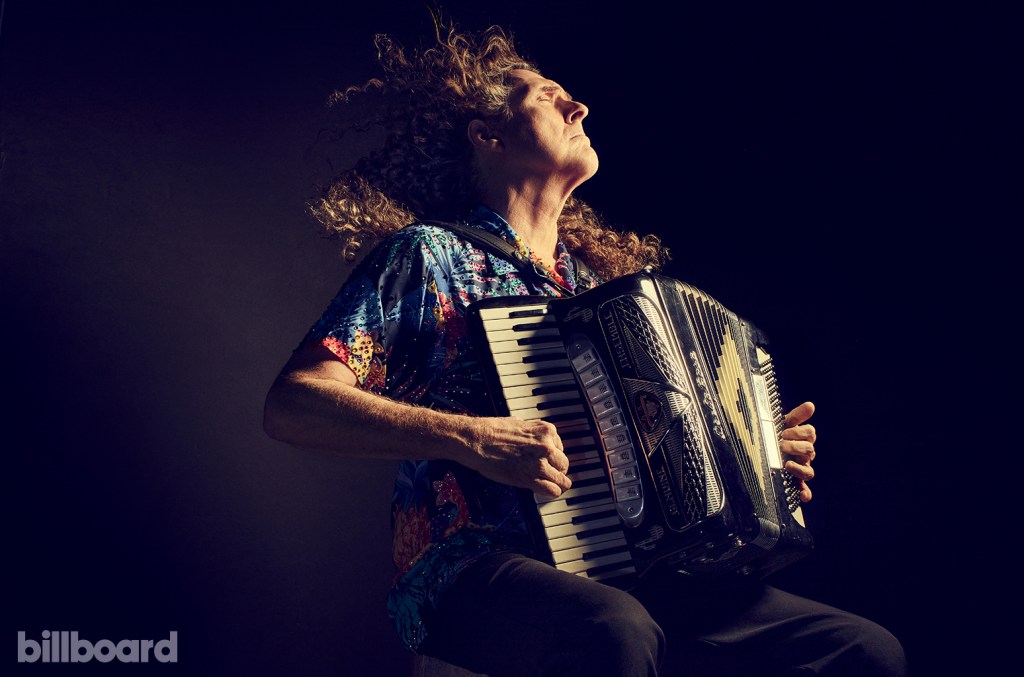
“Am I the first person to feel strange calling you ‘weird’?” John Mayer — bespectacled, grinning goofily, very much nerding out — is sitting across from “Weird Al” Yankovic, interviewing the Hawaiian shirt-clad parody music king, who is sitting across from him for his SiriusXM show, How’s Life With John Mayer. “You can call me […]
Last month, Billboard Boxscore revealed its midyear touring recap, dominated by Coldplay, K-pop and Las Vegas’ Sphere. With the launch of Billboard’s comedy hub, we’re taking a closer look at the top-grossing comedy acts at the midyear mark. The 2025 midyear recap provides a switch-up at the top of the list. Kevin Hart led the […]

The Oasis drum seat has been filled by a number of time keepers, from original drummer Tony McCaroll, to longtime member Alan “Whitey” White, Steve White, Zak Starkey and Chris Sharrock. But when the reunited group finally hits the stage on July 4 for the first show on their anticipated Oasis Live ’25 tour, none of those men will be holding down the rhythm.
This time around the seat will be filled by veteran drummer Joey Waronker, who has worked with everyone from Beck to R.E.M., Elliott Smith and Thom Yorke’s Atoms For Peace side project. Singer Liam Gallagher seemed chuffed by the addition to the group after a fan asked last week what he thought about the musician and if he is “appropriate for the Oasis sound?”
Liam was unequivocal in his praise, responding, “He’s the best and we’re lucky to have him I’ve enjoyed all our drummers but this guy is special.” Waronker will join Liam and brother/songwriter and occasional vocalist Noel Gallagher, as well as bassist Andy Bell and, reportedly, guitarists Paul “Bonehead” Arthurs and Gem Archer.
Trending on Billboard
Anticipation has been building for the group’s first shows in 16 years, with Liam forced to apologize to fans on Monday morning (June 9) after raising anticipation for more major news with an X post that read, “BIG ANNOUNCEMENT 6.30 am.” The wild speculation quickly unfurled, with fans guessing that Gallagher may have been hinting at warm-up gigs or additional dates.
When Gallagher responded a short time later with “I WORK OUT,” the fury went up 10 notches, with one fan complaining, “you played with our feelings,” as another raged, “I F–KING HATE YOU,” to which Gallagher quipped, “Hate is such a strong word.”
Soon enough the singer appeared to genuinely regret the wind-up, writing, “Gotta admit that was good craic gotta you all riled up to ras,” then sincerely apologizing for the false alarm. “If I caused any distress and upset anyone this morning I’m deeply sorry that wasn’t my intention I thought it was a bit of fun I got it wrong please forgive me,” he wrote. Oasis will criss-cross the U.K. in July before heading to North America in August for shows in Toronto, Chicago, New Jersey, Pasadena and Mexico City, then moving on to Asia and Australia in the fall and Argentina, Chile and Brazil in November.