State Champ Radio
 Music
Page: 150
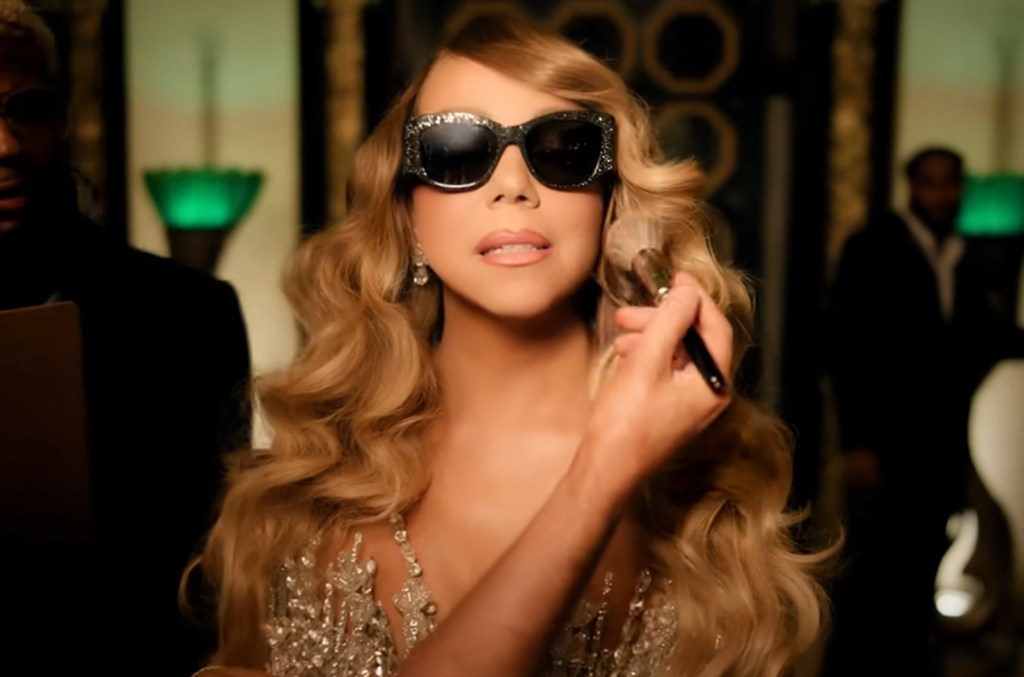
Mariah Carey achieves her landmark 50th career hit on the Billboard Hot 100, as her new single, “Type Dangerous,” debuts at No. 95 on the chart dated June 21, 2025.
Released June 6, the song starts with 2.5 million official streams, 14.7 million in radio airplay audience and 5,000 sold in the United States in the week ending June 12, according to data tracker Luminate.
Boosting its profile, Carey performed “Type Dangerous” on the 2025 BET Awards on June 9, when she was also honored with the Ultimate Icon Award.
Trending on Billboard
The track, which Carey co-wrote and co-produced, previews her 16th studio album, her first since Caution in 2018. The song’s official video premiered Saturday (June 14).
Carey debuts her first new title on the Hot 100 since “Oh Santa!,” featuring Ariana Grande and Jennifer Hudson, spent a week on the chart dated Dec. 19, 2020. “Type Dangerous” is her first nonseasonal song to reach the ranking since “I Don’t,” featuring YG, logged a week on the list dated Feb. 25, 2017. “Type Dangerous” is her first non-holiday entry without any billed artists since “Infinity,” on the May 16, 2015, chart.
Beginning in December 2019, through this past holiday season, Carey has decorated the top of the Hot 100 for 18 weeks with her evergreen (and red) 1994 classic, “All I Want for Christmas Is You.” The carol became her 19th No. 1 – the most among soloists and second overall only to the Beatles’ 20.
(Carey is also heard on two Hot 100 top 10s in recent years that don’t contribute to her chart history: Drake’s “Emotionless,” which hit No. 8 in July 2018, samples her 1991 leader “Emotions,” while Carey joined for a remix of Latto’s “Big Energy,” which nods to Carey’s 1995 Hot 100-topper “Fantasy” and reached No. 3 in April 2022.)
Carey made her Hot 100 debut with “Vision of Love” on the chart dated June 2, 1990. It became her first leader that August.
Beyond the Hot 100, “Type Dangerous,” Carey’s first single on gamma., as well as on an independent label (and the latest on her MARIAH imprint), begins at No. 4 on the Digital Song Sales chart, marking her 10th top 10.
On the all-format Radio Songs chart, “Type Dangerous” debuts at No. 47. It’s her first new song to make the survey since the Miguel-featuring “#Beautiful,” which hit No. 17 in June 2013. “Type Dangerous” opens on R&B/Hip-Hop Airplay at No. 7, Adult R&B Airplay at No. 15, Mainstream R&B/Hip-Hop Airplay at No. 24, Adult Pop Airplay at No. 30, Rhythmic Airplay at No. 31 and Pop Airplay at No. 38. On R&B/Hip-Hop Airplay, the single scores the highest entrance for a song in nearly 30 years, since Whitney Houston’s “Exhale (Shoop Shoop)” started at No. 6 in November 1995.
“Type Dangerous” concurrently soars in at No. 7 on Hot R&B Songs and No. 24 on Hot R&B/Hip-Hop Songs, which use the same multimetric methodology as the Hot 100.
All charts dated June 21 will update tomorrow, June 17, on Billboard.com.
06/16/2025
Listen to new must-hear songs from emerging R&B/hip-hop artists like Aaron Page and Nemzzz.
06/16/2025
Two of the most beloved new wave bands of all time are hitting the road together this fall for their first-ever joint tour. The 11-date co-headlining Cosmic De-Evolution tour will feature DEVO and the B-52s hitting the road together starting on Sept. 24 in Toronto at the Budweiser Stage, followed by shows in Michigan, Massachusetts, New Jersey, New York, California, North Carolina and Georgia before winding down on Nov. 12 at the Cynthia Woods Mitchell Pavilion Sponsored by Huntsman in Houston, TX.
Explore
Explore
See latest videos, charts and news
See latest videos, charts and news
The continuation of both bands’ ongoing farewell tours will feature avant garde pop singer Lene Lovich opening the shows. Tickets will go on sale first with Citi and Amex pre-sales. The Citi pre-sale begins today (June 16) at 12 p.m. local time through Thursday (June 19) at 10 p.m. local time here. Amex cardmembers can purchase tickets to the Oct. 18 L.A. before the general public now through 10 p.m. local time on Thursday.
Trending on Billboard
“In 2022, I swore I’d never get on a tour bus again” said B-52s singer Fred Schneider in a statement. “But we were careful to say to our fans that we would still perform in special situations that don’t require all of the awful tour travel. Our Vegas residency is going great, and when we were offered the chance to do a small run of shows with Devo, we all said this is an extraordinary opportunity we couldn’t say no to.”
Devo co-rounder Mark Mothersbaugh added, “The B-52s had one of the best sounds of any of the bands out there in the late 70’s early 80’s – ‘Rock Lobster’ is one of my favorite songs – DEVO used to sing it to Booji Boy after DEVO shows. It was either fate or luck or the SNL anniversary that brought us all together to create this amazing chance to go out on tour. All I can say is Cosmic Devolution is REAL!”
Both bands performed on February’s sprawling, three-hour SNL 50: The Homecoming Concert, during which they took the stage alongside a galaxy of stars that also included Miley Cyrus, Bad Bunny, Eddie Vedder, the Backstreet Boys, Lady Gaga, Lauryn Hill, Jelly Roll, Brandi Carlile, the living members of Nirvana with Post Malone and Cher, among others.
B-52 singer Kate Pierson said in the statement, “When we first came from Athens [GA] to New York City to perform, punk was in full force… and New Wave was right on its tail! We loved all the New Wave groups, including Patti Smith, Talking Heads, Blondie and the Ramones. We also really dug the far-out weirdness of Devo, which seemed very in tuned to our sensibilities. We remember one of our first shows — amazed that David Bowie, Brian Eno, Frank Zappa, Allen Ginsberg, Talking Heads and Blondie all came to see us! When we opened the Mudd Club, we partied with Devo and really hit it off on the dance floor. Later, Brian Eno went onto to produce Devo’s incredible first album… and now we will align again ! So put on your wig hats and Devo bonnets and get ready to party! This is going to be wild.”
Bandmate Cindy Wilson also chimed in, saying, “When both of our bands performed at the recent SNL 50 concert at Radio City, we started talking and agreed we had to do these shows. Believe or not, we’ve never done more than a festival or two together in all this time. This will be amazing and I can’t wait for The B-52s to share these stages with Devo!”
Both groups fronted by three original members are in the midst of what they have said are their final tours.
Check out the dates for the 2025 Cosmic De-Evolution North American tour below.
Sept. 24: Toronto, ONT @ Budweiser Stage
Sept. 25: Clarkston, MI @ Pine Knob Music Theatre
Oct. 2: Mansfield, MA @ Xfinity Center
Oct. 4: Holmdel, NJ @ PNC Bank Arts Center
Oct. 5: Wantagh, NY @ Northwell at Jones Beach Theater
Oct. 16: Mountain View, CA @ Shoreline Amphitheatre
Oct. 18: Los Angeles, CA @ Hollywood Bowl
Oct. 24: Charlotte, NC @ PNC Music Pavilion
Oct. 25: Alpharetta, GA @ Ameris Bank Amphitheatre
Nov. 1: Austin, TX @ Germania Insurance Amphitheater
Nov. 2: Houston, TX @ The Cynthia Woods Mitchell Pavilion Sponsored by Huntsman
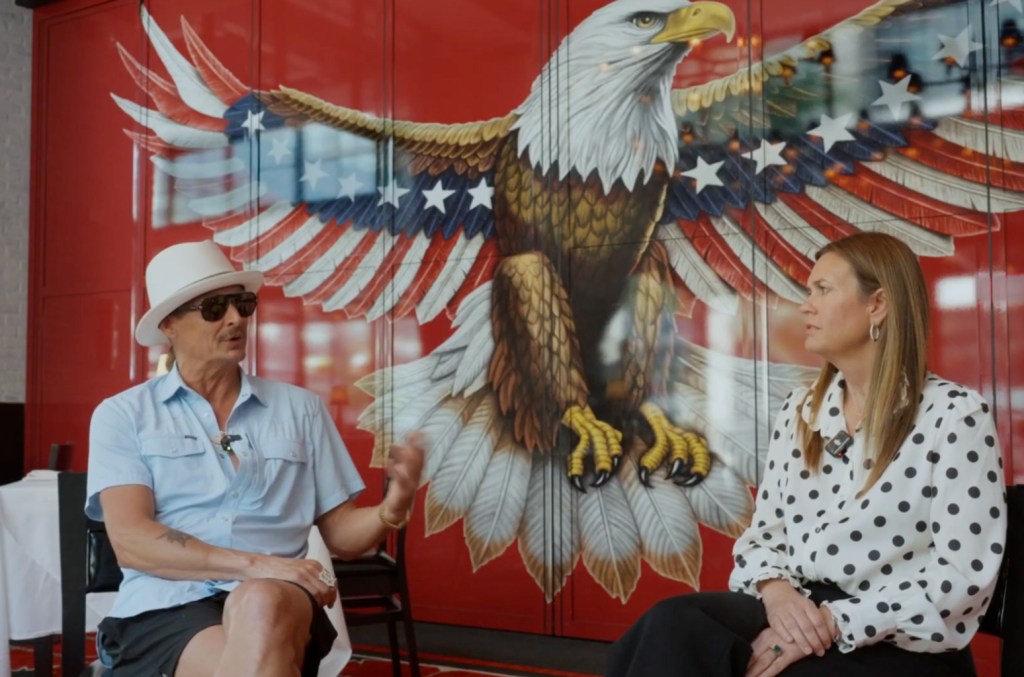
In advance of this weekend’s first Arkansas edition of Kid Rock‘s Rock the Country festival, the “American Bad Ass” singer sat down with the state’s Governor, Sarah Huckabee Sanders, to discuss why he’s bringing his “pro-American” event to the Natural State.
Describing the concept of the two-day fest slated for June 20-21 at the Arkansas State Fairgrounds as a “small town, pro-American… everything pro-American music festival for a lot of people I felt were underserved in this country,” Rock said he was excited when he heard from Trump administration press secretary Huckabee Sanders had invited him to her state.
The festival will kick off on Friday with a lineup featuring Logan Crosby, Mark Chesnutt, Shenandoah, Gavin Adcock, a house party set from the Ying Yang Twins and headline performances from Hank Williams Jr. and Nickelback.
Trending on Billboard
Saturday night will open with Deana Carter, followed by Little Texas, Lee Greenwood, Hudson Westbrook, a house party set from Afroman and then headlining spots from Travis Tritt and Rock.
“Any time you have an event like this an an opportunity to bring in such a huge headliner, that is something that will a big difference in the state, bring in a lot of revenue, tourism,” said Huckabee Sanders, who was seated in front of a mural of a giant eagle with the American flag painted on the inside of its wings alongside a short-wearing Rock. She added that she hoped people from “all over the country” would come to the show. “So not only are we excited to hear great music and see from people that love this country but also it’s a big win for Arkansas to have that kind of economic driver,” she said.
Rock the Country kicked off in April with shows in Louisiana and Tennessee, followed by gigs in rural Missouri and Florida and a stop in York, PA in May. The tour will march on after Little Rock with scheduled shows in Ashland, KY (July 11-12), Sioux Falls, SD (July 18-19) and Anderson, S.C. (July 25-26).
Check out Rock’s chat with Huckabee Sanders here.

Linkin Park‘s Mike Shinoda has shouted out Doechii as one of his dream collaborators. In a sit-down with Drink Champs, Linkin Park’s Shinoda and Joe Hahn rattled off a few of the biggest hip-hop figures they’d love to make music with. On Shinoda’s list was Wu-Tang Clan, Kendrick Lamar, Tyler, the Creator and André 3000. […]
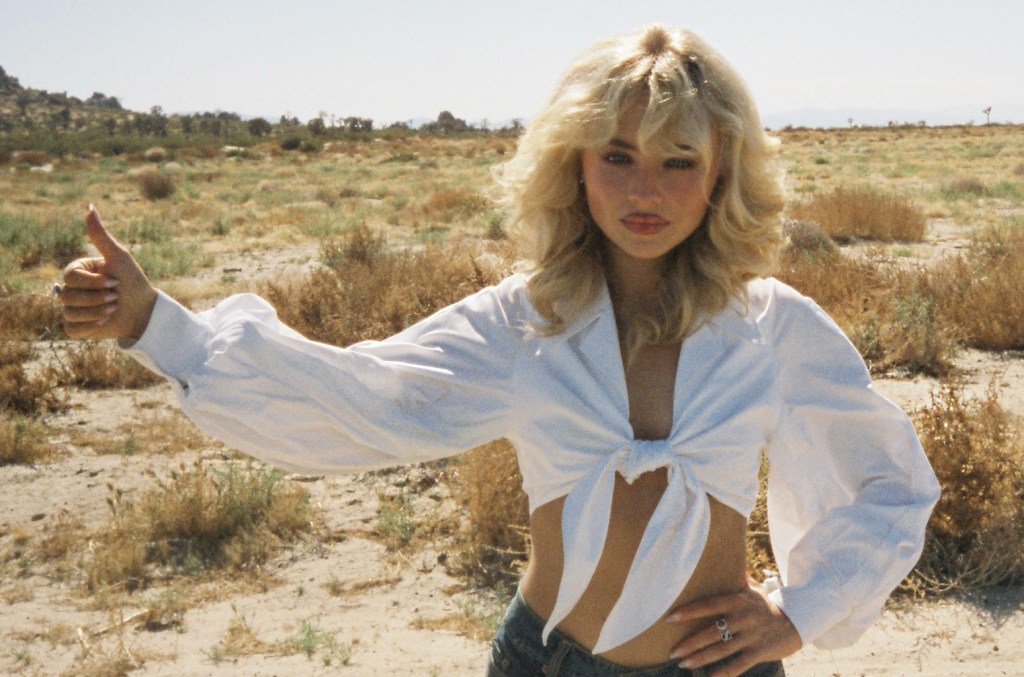
Sabrina Carpenter’s “Manchild” soars onto the Billboard Hot 100 at No. 1. The song is her second leader, and first to debut on top. Her “Please Please Please” spent a week atop the ranking in June 2024, rising from the runner-up spot in its second week on the chart.
“Manchild,” also Carpenter’s fourth Hot 100 top 10, introduces her next album, Man’s Best Friend, due Aug. 29. “i can’t wait for it to be yours x,” she wrote of the set on Instagram on June 11; it is scheduled to arrive just more than year since her prior LP, Short n’ Sweet, which was released Aug. 23, 2024.
Carpenter notched her first three Hot 100 top 10s from Short n’ Sweet, with “Please Please Please” preceded by the No. 3-peaking “Espresso” and followed by “Taste,” which hit No. 2. As those three songs charted in the top five together upon the debut of “Taste,” she became the second act ever to chart her first three top five hits in the region simultaneously – joining only The Beatles for the feat.
Meanwhile, Carpenter is the only woman artist with multiple Hot 100 No. 1s dating to the coronation of “Please Please Please.” She is also the only woman to reign with a nonseasonal song and with no billed collaborators in that span.
“Manchild,” on Island Records/Republic, is the 1,182nd No. 1 in the Hot 100’s 66-year history, and the 85th to debut at the summit – and the first No. 1 entrance for Island. Carpenter co-produced the song with Jack Antonoff and co-wrote it with Antonoff and Amy Allen. (The trio also co-wrote “Please Please Please,” which Antonoff produced.)
Browse the full rundown of this week’s top 10 below.
The Hot 100 blends all-genre U.S. streaming (official audio and official video), radio airplay and sales data, the lattermost metric reflecting purchases of physical singles and digital tracks from full-service digital music retailers; digital singles sales from direct-to-consumer (D2C) sites are excluded from chart calculations. All charts (dated June 21, 2025) will update on Billboard.com tomorrow, June 17. For all chart news, you can follow @billboard and @billboardcharts on both X, formerly known as Twitter, and Instagram.
Luminate, the independent data provider to the Billboard charts, completes a thorough review of all data submissions used in compiling the weekly chart rankings. Luminate reviews and authenticates data. In partnership with Billboard, data deemed suspicious or unverifiable is removed, using established criteria, before final chart calculations are made and published.
‘Manchild’ Streams, Airplay & Sales

Remi Wolf made the most of an unfortunate situation after this year’s Bonnaroo was canceled from Friday-Sunday (June 13-15) due to severe weather, hosting a joint concert in Nashville featuring Hayley Williams and more special guests.
On Saturday (June 14) — the same day the California native had been slated to host her Bonnaroo Superjam on the festival grounds in Manchester, Tenn., before thunderstorms forced the entire event to end early — Wolf took the stage at the Brooklyn Bowl in Nashville. In addition to singing several covers of ’70s hits on her own, she and the Paramore frontwoman duetted on Chaka Khan’s “Sweet Thing” and “Tell Me Something Good” with Rufus, according to The Tennessean.
Gigi Perez and Mt. Joy, who were also part of Bonnaroo’s canceled Saturday lineup, performed their new song “In The Middle,” while Grouplove helped Wolf sing Bonnie Raitt’s “I Can’t Make You Love Me” and Hall and Oates’ “Rich Girl.” Plus, Brian Robert Jones assisted in paying tribute to Sly and the Family Stone — whose influential frontman, Sly Stone, died at the age of 82 last week — with a performance of “Family Affair,” while Grace Bowers and Medium Build also shared songs.
Trending on Billboard
“This is so f–king fun, thank you guys for coming out tonight,” Wolf reportedly told the crowd. “We’ve been working on this show for like five months, and when Bonnaroo was canceled yesterday, we just had to make this s–t happen!”
According to The Tennessean, Wolf ended the show by having all of her guest artists return to the stage for a group performance of Earth, Wind & Fire’s “September.”
Just as it had been originally billed on the Bonnaroo lineup, the indie-pop star called her Nashville concert “Remi Wolf’s Insanely Fire 1970s Pool Party Superjam.” She announced the make-up show late Friday night, and tickets reportedly sold out the next morning.
The change of plans came in light of Bonnaroo’s Friday announcement that the festival had been canceled after just one full day of performances. “Today, the National Weather Service provided us with an updated forecast with significant and steady precipitation that will produce deteriorating camping and egress conditions in the coming days,” the festival shared in a statement. “We are beyond gutted, but we must make the safest decision and cancel the remainder of Bonnaroo.”
The annual festival had been slated to last four straight days with sets from Olivia Rodrigo, Tyler, The Creator, Hozier and dozens more. Before it was delayed and eventually canceled, Bonnaroo kicked off Thursday (June 12) with performances by Luke Combs, Dom Dolla, Insane Clown Posse and Rebecca Black.
Will Smith has been open about his regrets over turning down The Matrix, but there’s another blockbuster that got away about 15 years ago.
Smith sat down with Kiss Xtra over the weekend, where he revealed that Christopher Nolan offered him the lead role in 2010’s Inception, but he “didn’t get it” and passed on the sci-fi/thriller.
“I don’t think I’ve ever said it publicly before, but I am going to say it now because we are opening up to one another,” he said after revisiting the pain of overlooking The Matrix. “Chris Nolan brought me Inception first and I didn’t get it. I’ve never said that out loud.”
Explore
Explore
See latest videos, charts and news
See latest videos, charts and news
The Oscar winner continued to peel back the layers behind his reasoning: “Now that I think about it, it’s those movies that go into those alternate realities; they don’t pitch well. But I am hurt by those two. It hurts too bad to talk about.”
Per The Hollywood Reporter, Nolan also brought Inception to Brad Pitt, who turned down the offer after only having a 48-hour window to take it. The role eventually landed in Leonardo DiCaprio’s lap, and he capitalized on the blockbuster, which grossed over $800 million at the global box office.
Trending on Billboard
Nolan’s next film, The Odyssey, is slated to arrive in July 2026. He’s assembled a star-studded cast that includes Matt Damon, Zendaya, Tom Holland, Charlize Theron, Anne Hathaway, Robert Pattinson and Lupita Nyong’o to retell the ancient Greek saga.
As for Will Smith, he actually mocked his decision to pass up on The Matrix as part of the music video for “Beautiful Scars” featuring Big Sean, where he played the role of Neo.
Building off his Based On a True Story album, Smith returned on Friday (June 13) with his “Pretty Girls” single, which finds him celebrating beautiful women across the globe in all shapes and sizes.
Watch Will Smith talk about Inception below.
This August, Dead & Company will celebrate 60 years of Grateful Dead music with three massive concerts in San Francisco’s Golden Gate Park. Fans can reasonably assume – as they can with most major touring artists today – that the sound will be impeccable.
But six decades ago, when the Grateful Dead began gigging around that very same park, quality sound was far from a given. Audiences routinely endured terrible audio, and bands also struggled to parse the noise and play together. Modern cornerstones of concert production, from monitors to digital delay towers, had yet to be invented.
The Grateful Dead didn’t just embrace new advancements in audio technology – as journalist and Deadhead Brian Anderson chronicles in his new book, Loud and Clear: The Grateful Dead’s Wall of Sound and the Quest for Audio Perfection, the revered band actively drove concert sound forward, creating many of today’s standards in the process.
Trending on Billboard
Loud and Clear specifically tackles the first decade of the band’s history, from its Bay Area formation in 1965 to the Wall of Sound, the gargantuan sound system worth nearly $2 million in today’s dollars that it took on the road in 1974. During those years, the band and the cast of characters in its orbit – from an audiophile LSD chemist to hard-nosed roadies – continually iterated its sound system, introducing numerous innovations in service of creating a deeper performer-listener connection through quality sound. The pinnacle was the Wall of Sound, a technological marvel that towered behind the band and allowed each musician to manipulate their individual mixes in real time.
“I knew this was for a general audience,” says Anderson, who asked himself, “How do I make it digestible and explain this stuff in a way people are gonna understand?” The son of Deadheads – who saw the band repeatedly in this era and took him as a toddler to see the Dead at Alpine Valley in the late ‘80s – found the answer in those strong personalities within the Dead’s organization. Loud and Clear is as much a story about the Dead’s audio equipment as it is about the band’s musical philosophy and the way money, fame, and excess challenged it.
“The wheels came very close to coming off,” Anderson says of the Dead in this era. The band took the Wall of Sound – which, when its almost 600 speakers were assembled, measured 60 feet long and more than three stories tall – on the road for nearly 40 shows in 1974, and the unprecedented production feat came close to bankrupting the Dead and tearing it apart. Plus, at a time with far fewer regulations, transporting, assembling, and disassembling the Wall came with plenty of risks for the (often inebriated) crew tasked with doing so; Loud and Clear’s at-times harrowing narrative includes broken arms, nearly-severed toes, falling equipment, electrocutions and flipped trucks. “It’s amazing that nobody bit it,” Anderson says.
The Dead ultimately carried many of the lessons of the Wall of Sound into the proceeding years – but after taking a hiatus in 1975, returned without the advanced system in 1976. “They somehow kept it together,” Anderson says, “but there was a collective sigh of relief at the end of 1974 when they’re like, ‘OK, you know what? Let’s take a break here.’”
The Grateful Dead (L to R: Bill Kreutzmann, Jerry Garcia, Bob Weir, Phil Lesh) perform on May 25, 1974 at Santa Barbara Stadium in Santa Barbara, California with their Wall of Sound.
Ed Perlstein/Redferns/Getty Images
What inspired you to write a book not just about the Dead, but about such a specific topic and period?
I am the child of early Deadheads who both started seeing the band in the late ’60s and early ’70s in Chicago and the tri-state area. I grew up hearing them talk about the Wall of Sound and this system’s sonic clarity. They would talk about seeing the band perform with this massive assembly of gear behind them – and it’s called the Wall of Sound, so it’s just captivated me my entire life.
As time went on, I grew to appreciate the scale of the Wall. When I was at VICE, I was the Features Editor [at science and tech vertical Motherboard], and I thought it would be cool to do a deep dive into the Wall of Sound. I embarked on writing that initial story because I knew that it had more than just the technology component – it’s a story about obsession, obsessive people who came from all walks of life. After that story came out, it quickly dawned on me that there’s so much more here – like, maybe I could do a full book on this one day.
How did the Dead’s pursuit of quality sound differentiate themselves from their peers and ultimately help them amass the following that they did?
Not long after the band had gotten going, [singer/guitarist] Jerry Garcia’s mother, Ruth, purchased her son a pair of Klipsch speakers. That was, basically, the very first iteration of the Dead’s sound system. No other bands at the time had their own rig like that, so immediately, they were elevated above most of their peers, at a time when musical PAs didn’t exist. Most any club that they were playing at the time, if it did have a sound system, it was just a small little box to like each side of the stage. The famous example, on a bigger level, is the Beatles at Shea Stadium. Live sound presentation in the mid ’60s was kind of terrible.
Then they get hooked up with Owsley Stanley, who was their patron and their original sound man. He was using money that he was making from manufacturing LSD to bankroll the band. He was kitting them out with top-flight gear by early 1966 – and right around that time, the acid tests were getting going. The Dead were basically the in-house band at the acid tests, and the acid tests would be the model that they would follow, really, through the end of their career: During the acid tests, the band and the crowd were all the same organism, everyone was in the same sonic envelope.
The whole point of putting [all the audio equipment] at the musicians’ backs [in the Wall of Sound in 1974] was to ensure that the band and the crowd would all hear the same thing and be in the same sonic envelope together – and that harkened right back to the acid tests. There’s also an ethic with the Dead that was there from the very early days: That ethic was to present the sound in such a way that the person in the very back row would experience the exact same thing as someone who was hanging right on the barrier. Part of their righteous approach to sound was to present the sound in such a way that everyone in the space together [would] experience the same high quality.
At its roots, the Dead almost had a punk-like, DIY ethos. What tensions did that introduce as the band’s operation grew and professionalized?
By the early ’70s, the sound system that was growing into the Wall of Sound had become the center of the Dead’s homegrown world-building project, which included their own record label, in-house travel and booking agencies, a publishing arm, and a whole cottage industry of boutique sound and audio companies that were building kit for the Dead. [The Dead wanted] to do everything their own way; it didn’t necessarily make sense to do what they were doing, but they did it anyway. It was super, super punk, super DIY.
From the very beginning, they would always funnel money back into their sound system – that’s basically how the Wall of Sound was able to grow. As early as mid-1973, management was starting to be like, “Hey guys. We can’t do things like we did in the very early days.” It became clear that they were hemorrhaging money through this sound system. By mid-’74, it was starting to get through to Garcia and some of the other band members that this was not sustainable. Despite their wanting to continue on in this very punk, DIY fashion where money would just always be funneled back into the sound system, the reality was such that they couldn’t do that anymore.
As much as the book is about the band, it’s also about the crew that surrounded it. Why emphasize those supporting characters?
I knew that if I was gonna do this book, I had to push the story forward somehow. I didn’t want to just tell this story through old sound bites from Jerry Garcia or Bob Weir or Phil Lesh. There were so many other people who were in the room in this era who helped put this thing together and who made it go on the road, setting it up and tearing it down. I was really interested in illuminating what the day-to-day was like of conceiving [the Wall of Sound] and building it and taking it on the road. I wanted stretches of the book to kind of feel like you’re going on tour with them.
The Grateful Dead at The Summer Jam at Watkins Glen rock festival at Watkins Glen, New York on July 28, 1973.
Richard Corkery/NY Daily News Archive via Getty Images
Your book outlines several audio innovations by the band, including pioneering the use of on-stage monitors, helping to invent digital delay towers, and using feedback-cancelling microphones to make the Wall of Sound work. What were the most significant lasting impacts the Dead had on modern concert audio?
There’s a number of them. A curved speaker, no one had done that before the Dead. The theory and the mathematics existed, so a curved speaker existed on paper, but the Dead were really the first to fly a curved speaker. Today, you go to see Metallica at a stadium or you go see a local punk band at the dive bar, you’re gonna see versions of a curved speaker – and that’s the Dead lineage.
Delay towers, that’s not the Wall of Sound, but an adjacent sonic first that the Dead and their crew and their technicians helped forge in that era. Kezar Stadium, RFK, Watkins Glen, those three [big outdoor concerts] in summer of ’73 were crucial to figuring out digital delay. That’s another convention of modern sound reinforcement at much bigger shows that anyone is familiar with.
From a philosophical standpoint, a lasting impact of all the Dead’s innovations in the audio realm in this era was an elevated presentation. The Dead instilled this awareness of pursuing the highest-quality sound that you can because you owe it to your audience, because these people are coming to see you perform.
And in turn, that reoriented what fans expected of concert audio, not just at the Dead’s shows but at any show.
By the time the Dead came back from their hiatus in 1976, the world of audio had kind of caught up to them. They realized, “We don’t need to carry this massive equipment with us anymore, because the state of the art has advanced to a point where we can rent a sound system that sounds just as good, if not better, than the Wall of Sound for a fraction of the price.” A lot of that really owes to the ground that they broke through the Wall of Sound.
At a couple points in the book, you quote Garcia interviews from this period where, when lamenting the challenges of ensuring quality audio on tour, he says he wishes the band could have its own venue tailored to its own production standards. That never came to pass – but today, Dead & Company has played upwards of 40 shows at Sphere in Las Vegas. What would Jerry have thought of Sphere?
Last year, the first time I went to the Sphere, walking in, I couldn’t help but draw all of these connections. In the very early ’70s, they were always having conversations about, “Gee, wouldn’t it be great if we had our own spot where we could set up our sound system, just exactly perfect, and people can come see us perform?” They started to take some very serious steps to figure out, “OK, what would this space look like?” One of the ideas they were kicking around was a Buckminster Fuller-style geodesic dome – like a sphere. So, you walk into the Sphere to see Dead and Company, it’s like, “Oh, here it is.” Inside of the Sphere is basically the Wall of Sound, but taken to an exponential degree. The Wall of Sound walked so the Sphere could run.
I have to think Garcia would’ve been tickled to take the Sphere for a ride. There’s the public perception of Garcia as this wooly, hippie-type guy, but he was always embracing the cutting edge, from the gear that he was playing and just experimenting with to getting really into computers in the late ’80s and early ’90s. He just loved, like, f—king around with the newest technology.
What’s your favorite Wall of Sound show?
June 16, 1974, at the Des Moines Fairgrounds, for sonic and setlist reasons as much as personal reasons – my mother was at that show. That show, to me, is the epitome of your outdoor Grateful Dead show in the sun in the summertime. An amazing show. [Editor’s note: Selections from this show were officially released in 2009 as Road Trips Volume 2 Number 3, which is available on streaming platforms.]
Loud and Clear: The Grateful Dead’s Wall of Sound and the Quest for Audio Perfection will be released by St. Martin’s Press on June 17.
Loud and Clear.
Courtesy Photo
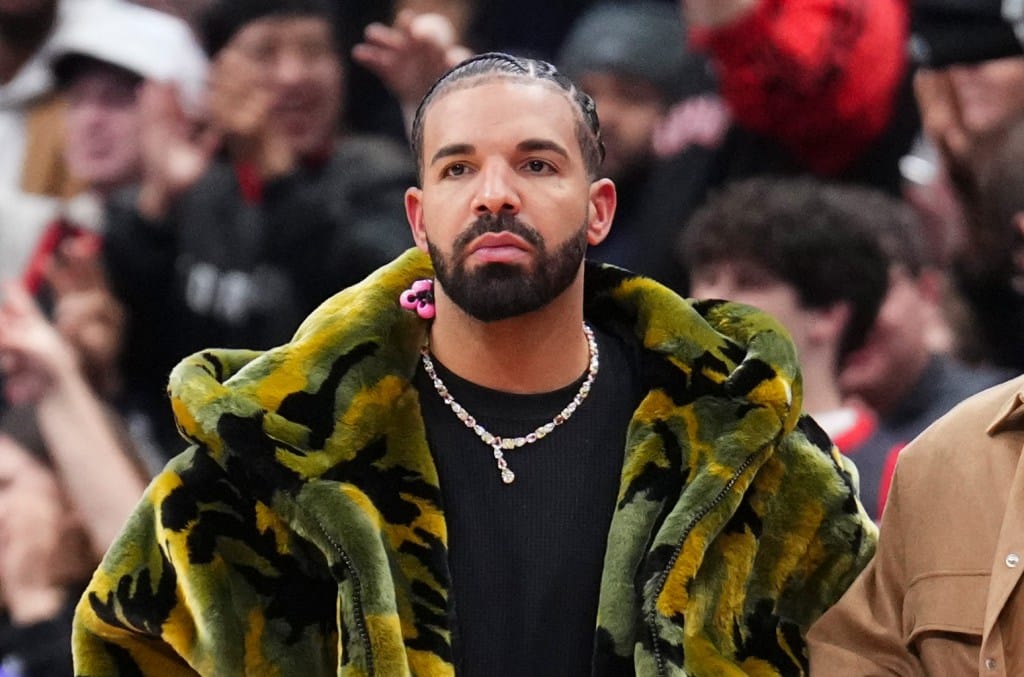
The Canadians are beefin’. Drake wasn’t happy with the former leader of Canada’s New Democratic Party for attending one of the Kendrick Lamar and SZA Grand National Tour stops in Toronto last week. The Toronto rapper posted a screenshot on his Instagram Story of his DMs with Canadian politician Jagmeet Singh where he said to […]