State Champ Radio
 Music
Page: 145
Last week (June 11), the brilliant writer, producer, composer and singer Brian Wilson died at age 82. Wilson leaves behind a singular catalog of pop and rock music, which is of course headlined by his work in the ’60s and ’70s with The Beach Boys, alongside his brothers Carl and Dennis, cousin Mike Love and friend Al Jardine. The Beach Boys cruised to pop stardom from 1963 to 1965 with a string of smash hits about surfing, cars and girls that grew increasingly complex as Brian rapidly developed as a songwriter and studio wizard. In 1966, all the group’s artistic ambitions were realized, with perhaps both the Boys’ most beloved album and most beloved single — though it all came at a tremendous cost to Wilson, and to the band’s long-term future.
Explore
Explore
See latest videos, charts and news
See latest videos, charts and news
On this week’s Vintage Pop Stardom episode of the Greatest Pop Stars podcast, host Andrew Unterberger is joined by Billboard executive digital director, west coast Katie Atkinson, to talk about the greatest year by the ultimate west coast pop band. We talk about everything that led up to the Beach Boys’ singular legacy year in 1966 — which ultimately resulted in the LP masterwork Pet Sounds and the unanimously acclaimed pop smash “Good Vibrations” — as well as why the group was ultimately unable to reach those commercial or artistic heights again.
Trending on Billboard
And of course, along the way, we ask all the big questions about the Beach Boys’ greatest (and in many ways last) year in the sun: Why did Brian Wilson enlist an ad man he barely knew as his primary collaborator on Pet Sounds (and why did that guy end up hating working with him so much)? Is “Sloop John B.” secretly the album’s perfect thematic centerpiece? Is “Good Vibrations” really more head than it is heart? Would 1966 Brian have dealt with f–kboy or industry plant allegations in 2025? And of course: Is this the greatest year in pop music that any American band has ever had?
Check it out above — along with a YouTube playlist of some of the most important moments from The Beach Boys’ 1966, all of which are discussed in the podcast — and subscribe to the Greatest Pop Stars podcast on Apple Music or Spotify (or wherever you get your podcasts) for weekly discussions every Thursday about all things related to pop stardom!
And as we say in every one of these GPS podcast posts — if you have the time and money to spare, please consider donating to any of these causes in the fight for trans rights:
Transgender Law Center
Trans Lifeline
Gender-Affirming Care Fundraising on GoFundMe
Also, please consider giving your local congresspeople a call in support of trans rights, with contact information you can find on 5Calls.org — and if you’re in the D.C. area this weekend (May 30-31), definitely check out Liberation Weekend, a music festival supporting trans rights with an incredible lineup of trans artists and allies.

Coi Leray and Trippie Redd are officially parents. Coi revealed that she welcomed a baby girl named Miyoco on Tuesday (June 17) with a post featuring a glimpse of her new child on her Instagram Story. Explore See latest videos, charts and news See latest videos, charts and news The adorable photo finds her baby […]
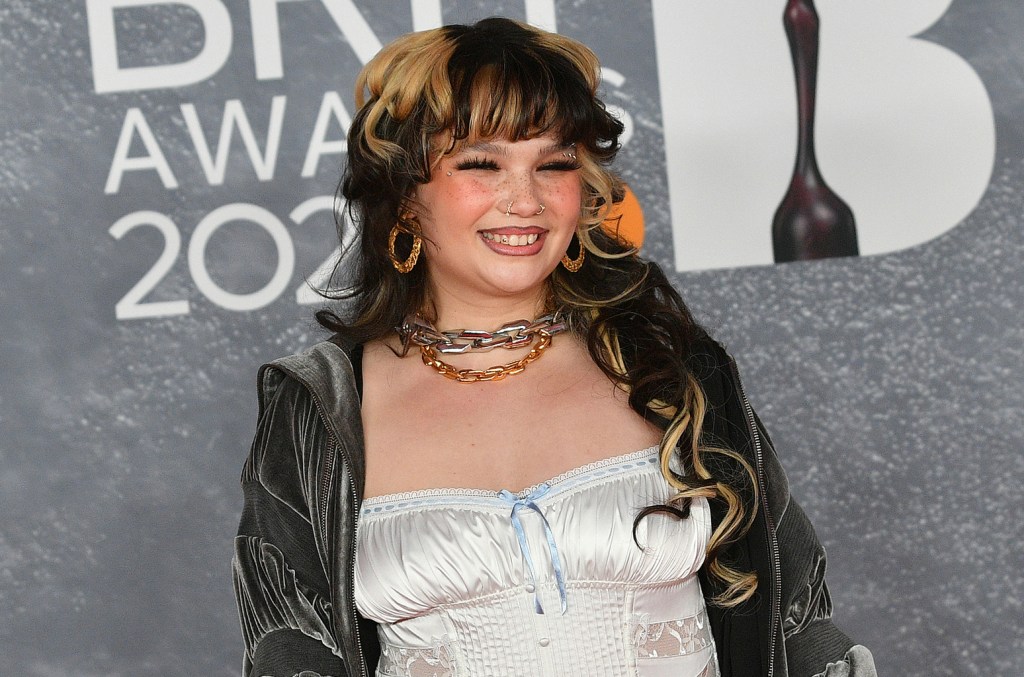
Lola Young, Jungle and Florence Welch are among the top winners at this year’s ASCAP London Celebrates Creators event, held on Tuesday evening (June 17) at The Shard in London. The ceremony is designed to celebrate ASCAP’s U.K.-affiliated talent for their success in the U.S.
Continuing a breakout 12 months that have seen her score a Billboard Hot 100 hit with “Messy” (peaking at No. 8) and perform at Coachella, Young received the ASCAP Vanguard Award, which recognizes songwriters whose work is helping to shape the future of music.
Trending on Billboard
Hucknall collected the ASCAP Golden Note award, marking 40 years of international success with pop band Simply Red. The Golden Note has previously been awarded to icons such as George Michael, Elton John and, most recently, Duran Duran in 2016.
Florence Welch of Florence + The Machine fame was recognized for her contribution to Drake’s “Rich Baby Daddy” alongside Isabella Summers, which was named winning streaming song. The track features an interpolation of Welch’s “Dog Days Are Over” and features Sexyy Red and SZA on vocals. It reached No. 11 on the Billboard Hot 100 in 2023, and also hit the summit on the Rhythmic Airplay chart.
Josh Lloyd-Watson, Tom McFarland and Lydia Kitto of dance act Jungle were honored with the hot dance/electronic song award for “Back on 74.” The trio won group of the year at last year’s BRIT Awards, where they performed the track live at London’s O2 Arena. It marks Jungle’s biggest streaming hit to date, currently at 420 million plays on Spotify alone.
Following his ASCAP Vanguard award in 2024, Cian Ducrot’s co-writing credits on SZA’s “Saturn” led to him being honored for song of the year as well as top streaming song by ASCAP.
Drum n’ bass artist Kenya Grace, meanwhile, took home the top hot dance/electronic song prize for “Strangers.” The track saw the 22-year-old become only the second woman in history to score a U.K. No. 1 with a single fully written, performed and produced by herself, following Kate Bush hitting the top spot in 2022 with “Running Up That Hill.” In 2024, the South Africa-born British-based singer-songwriter and producer received the ASCAP Global Impact Award, in recognition of her success in the dance music world.
2025’s top box-office film awards went to composers Robin Carolan for Nosferatu; Geoff Barrow (of Portishead) and Ben Salisbury for Civil War; Christopher Benstead for The Ministry of Ungentlemanly Warfare; Daniel Pemberton for Fly Me to the Moon; Raffertie for The Substance; and Daniel Blumberg for The Brutalist.
A full list of 2025 ASCAP London winners can be found on ASCAP’s website.

Dolly Parton has won 10 Grammys and a Primetime Emmy, among countless other awards. Soon, she’ll have an Oscar statuette to add to her collection.
On Nov. 16, the country music legend is slated to receive the Jean Hersholt Humanitarian Award at the Oscars’ annual Governors Awards. Parton will join a short list of music stars who have received this award, including Frank Sinatra (1970), Quincy Jones (1994), Harry Belafonte (2014) and Debbie Reynolds (2015).
The Academy of Motion Picture Arts and Sciences’ board of governors also voted to present Honorary Awards to Debbie Allen, Tom Cruise and Wynn Thomas. These four Oscar statuettes will be presented at the Academy’s 16th Governors Awards event on Sunday, Nov. 16 at the Ray Dolby Ballroom at Ovation Hollywood.
Trending on Billboard
“This year’s Governors Awards will celebrate four legendary individuals whose extraordinary careers and commitment to our filmmaking community continue to leave a lasting impact,” Academy president Janet Yang said in a statement. “The Academy’s board of governors is honored to recognize these brilliant artists.”
The Jean Hersholt Humanitarian Award is given “to an individual in the motion picture arts and sciences whose humanitarian efforts have brought credit to the industry by promoting human welfare and contributing to rectifying inequities.”
The award recognizes Parton for her decades-long humanitarian efforts. She has founded various charitable and philanthropic organizations, including the Dollywood Foundation, which was created in 1988 to inspire the children of East Tennessee — her home state — to achieve educational success. Additionally, her literacy program, Dolly Parton’s Imagination Library, launched in 1995 in honor of her father and has provided children with 285 million books. It evolved into an international movement and remains the signature program of the Dollywood Foundation.
Parton has starred in such films as Nine to Five and Steel Magnolias. She has earned two Oscar nominations in the best original song category for “Nine to Five” – which was a No. 1 hit on the Billboard Hot 100 – and “Travelin’ Thru” from Transamerica.
Cruise has received four Oscar nominations: best actor for Born on the Fourth of July (1989) and Jerry Maguire (1996), best supporting actor for Magnolia (1999) and best picture as a producer of Top Gun: Maverick (2022). His other notable film credits include Risky Business, A Few Good Men, Interview with the Vampire, Eyes Wide Shut, Vanilla Sky and the Mission: Impossible film series.
An Academy statement credited Cruise with “help(ing) to usher the industry through a challenging time during the COVID-19 pandemic.” It also praised him for “showcasing a deep commitment to his craft – including performing all of his own stunts.”
Allen is being recognized for her work over nearly five decades as a choreographer, actor, and producer. She choreographed the Oscar ceremony seven times, as well as films including Forget Paris, A Jazzman’s Blues and The Six Triple Eight. Her producing credits include Amistad and A Star for Rose. Allen made her mark as an actress with Fame, Ragtime and Jo Jo Dancer, Your Life is Calling.
Production designer Thomas began his career working on Spike Lee’s She’s Gotta Have It, which was the first of several collaborations between the two. Others include Do the Right Thing, Malcolm X and Da 5 Bloods. Lee received an Honorary Oscar in 2015. Other notable credits from Thomas’ career include the best picture-winning A Beautiful Mind, as well as Cinderella Man and Hidden Figures.
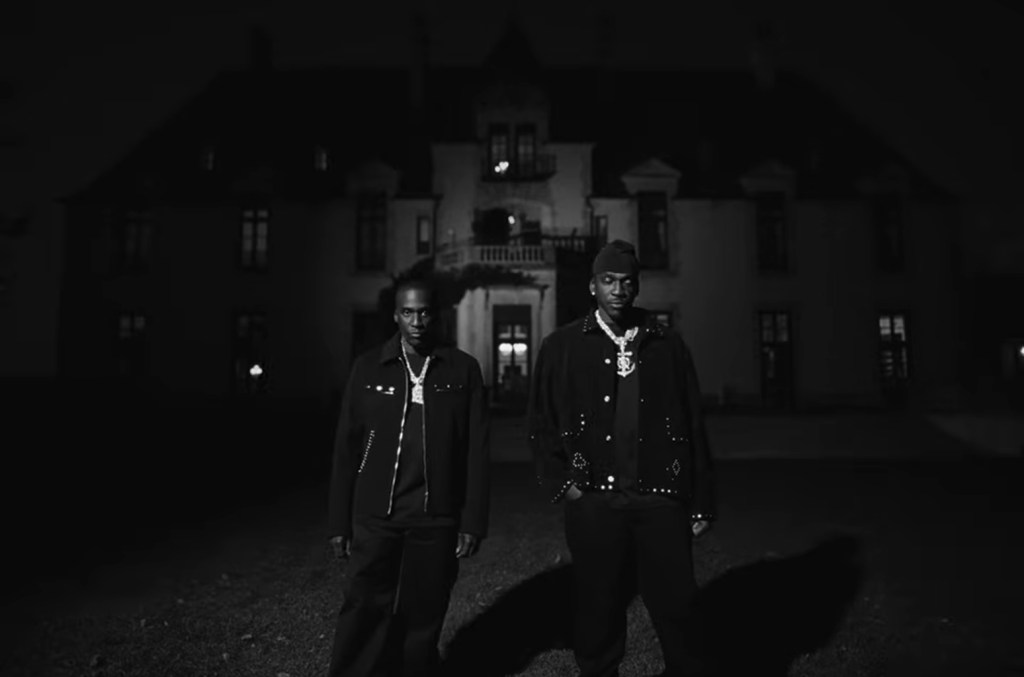
After giving media members an early listen to Let God Sort Em Out at Roc Nation HQ in NYC, Clipse returned to heat up the summer with the album’s second single on Tuesday (June 17) as the Pharrell-produced “So Be It” arrived.
Explore
See latest videos, charts and news
See latest videos, charts and news
Pusha T and Malice trade fiery bars over Skateboard P’s chiseled production, but a ton of eyeballs went to Pusha’s scathing final verse, which finds him sniping at Travis Scott.
“You cried in front of me, you died in front of me/ Calabasas took your b—h and your pride in front of me/ Heard Utopia had moved right up the street/ And her lip gloss was poppin’, she ain’t need you to eat,” Push raps in what appears to be a reference to Scott’s split from beauty mogul and reality star Kylie Jenner.
Trending on Billboard
Billboard has reached out to Scott for comment.
Some speculated that the verse was about his former G.O.O.D. Music running mate, Ye (formerly Kanye West), but King Push confirmed to GQ that he had smoke for La Flame.
Pusha T explained that his issues with Scott were tied to the Cactus Jack rapper pulling up to Louis Vuitton HQ to play his 2023 Utopia album for Pharrell while Clipse was also working on their upcoming album.
“He’s like, ‘Oh, man, everybody’s here,’ he’s smiling, laughing, jumping around, doing his f–king monkey dance. We weren’t into the music, but he wanted to play it, wanted to film [us and Pharrell listening to it],” he recalled. “And then a week later you hear ‘Meltdown,’ which he didn’t play. He played the song, but not [Drake’s verse].”
Drake takes several shots at Pharrell on the track and says he’s going to melt P’s classic jewelry. “Melt down the chains that I bought from your boss, give a f—k about all of that heritage s—t,” he raps.
Having that verse on Utopia after playing the track for Pharrell didn’t sit right with Pusha T, as he feels Scott aligns with whoever when it’s convenient for him, but doesn’t stand by his loyalty to anyone.
“He’s done this a lot. He has no picks. He’ll do this with anybody. He did it with ‘Sicko Mode’… He was on the [Rolling Loud] stage like, ‘Play that, play that,’” Push said in reference to “Like That,” which sparked the Drake and Kendrick Lamar feud. “He don’t have no picks, no loyalty to nobody. He’ll jump around whatever he feels is hot or cling onto whatever he feels is hot.”
Pusha T continued: “So, that’s where my issue comes in — like, dawg, don’t even come over here with that, because at the end of the day, I don’t play how y’all play. To me, that really was just like … He’s a whore. He’s a whore.”
Look for Let God Sort Em Out to drop on July 11. Watch the “So Be It” video below.
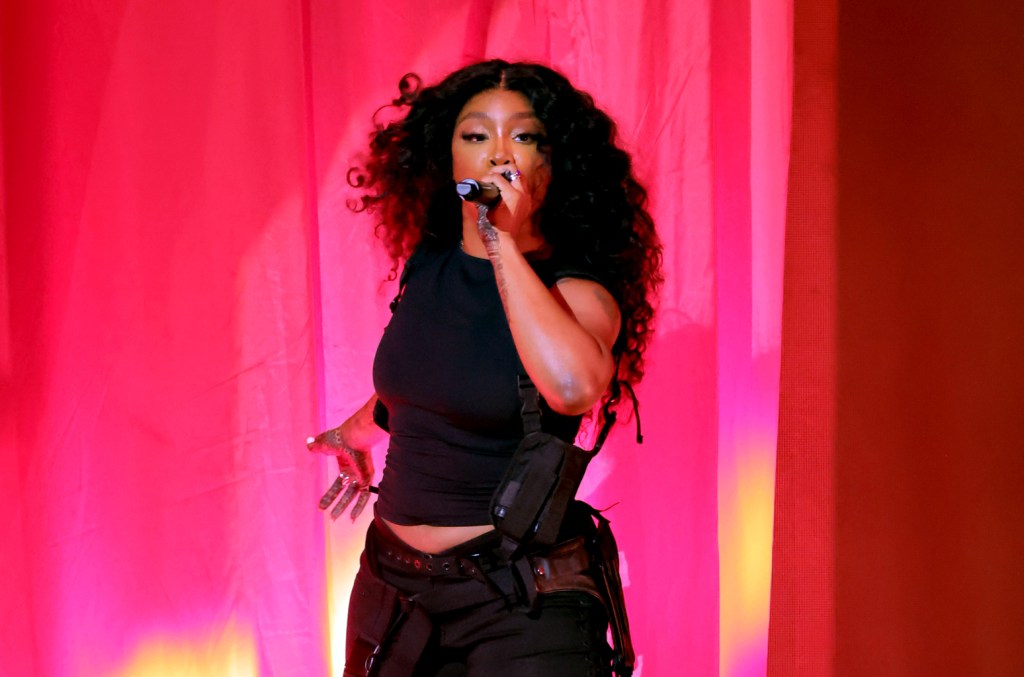
SZA might be co-headlining one of the biggest tours of the year, but she says she still struggled with imposter syndrome leading up to its kickoff.
While answering guest interviewer Chappell Roan’s questions for an Interview Magazine cover story published Tuesday (June 17), the R&B hitmaker revealed that she used to be plagued by anxious thoughts when it came to performing. “Every time I had to go on stage, every time I had to get on a carpet, I’d have full-on panic attacks,” she began.
“I used to not show up to something because it was like, ‘I’m never going to win. No one cares that I’m here. Why would I go?’” she continued.
SZA struggled with that anxiety as recently as right before the Grand National stadium tour kicked off in April, with the singer telling Roan that she was convinced people would only attend to see her powerhouse tourmate, Kendrick Lamar. “Same thing with the Kendrick tour,” she said. “‘Everybody’s going to see Kendrick. I don’t even know if I have anything to show these people that’s exciting and new.’”
Trending on Billboard
Fast forward a few months, and both SZA and Dot have been crushing their performances across the United States in Canada. In July, the “Luther” collaborators will bring the trek to arenas and stadiums all over Europe, closing the trek with two Australian shows in August.
Fortunately, SZA shared that she’s since been able to kick her anxious thoughts to the curb through connecting with her spirituality, whether it’s consulting her astrologer or learning about the “laws of magic.”
“Now it’s just like, ‘F–k it. I don’t have anything else to do, and I want to see where this door is going to lead,’” she said of her approach to performing now. “I want to walk through the door. I want to see what happens in the uncertainty.”
The interview comes about two months into the Grand National Tour, which launched April 19 with a show in Minneapolis. SZA and Lamar most recently stopped in Hershey, Pa., for one night at Hersheypark Stadium.
Some of the most memorable moments of the trek so far have been its special guests, with Playboi Carti, Baby Keem, Justin Bieber and Doja Cat all making appearances at various stops. In May, SZA was joined on stage by longtime bestie Lizzo, and the pair performed their remix of the latter’s “Special.”
Also in the Interview piece, SZA opened up about her friendship with the Yitty founder. “We’ve been friends since, like, 2013, but it was very organic and very random,” she explained to Roan. “One day we were on the same tour, and I was like, ‘We’re about to drive out to Lake Michigan, do you want to come?’ And she was like, ‘Yeah, let’s go.’ And then we just got drunk and hung out, and we kept doing that, and then our lives and careers progressed, and we kept talking and hanging out.”
John C. Reilly has made us laugh as dopey Dale in Step Brothers, had us believing in the power of true friendship as Cal in Talladega Nights: The Ballad of Ricky Bobby, cured absolutely nobody at all as the no-nothing doc in Check It Out! with Dr. Steve Brule and melted hearts as the sweet-natured cop hoping he can save his addict neighbor in Magnolia.
Explore
See latest videos, charts and news
See latest videos, charts and news
But the role he wanted so much he wrote it for himself, apparently, was of electrified, sanctified, possibly totally delusional “Archbishop Harold Holmes,” the hero of the song of the same name from Jack White‘s 2024 No Name album.
In the video for the hoot and holler blues rock track released on Tuesday (June 17) — directed by Gilbert Trejo from a concept written by Reilly — the versatile stage and screen actor slips into his Sunday best pin-striped blue suit for a fire-and-brimstone sermon in which Reilly mouths the lines, “If you’ve bot family trouble/ Man trouble, woman trouble/ No light through the tunnel/ If you’re lookin’ for a true friend, or a true lover/ Or if you’ve been livin’ undercover” in front of a glowing crucifix.
Trending on Billboard
It quickly becomes apparent that this archdiocese bible thumper has more than the good lord’s words backing him up, as electrical sparks buzz from his fingers as he sings, “Well, I’m comin’ to your town/ I’ll break it all down/ And help you with all of this/ I’m lookin’ to help you find bliss/ One day, one way, can’t miss.”
With an old console radio pulpit seemingly powering his holy spirit, Reilly’s Holmes gets the handful of parishioners energized, inspiring them to leap from their seats and shuffle in a circle around him as he chicken struts and shoulder shimmies the good word into their their bodies via blue sparks.
Or, spoiler alert, maybe it was all a dream?
The possibly confused, wound-up Holmes is a world away from Mister Romantic, the long-running alter ego behind Reilly’s new album of romance ballads, What’s Not To Love. On the LP that dropped last week, Reilly melts hearts with covers of such lovelorn classics as “La Vie En Rose,” “You Don’t Know Me,” “Falling in Love Again,” “Picture in a Frame,” “Moonlight Serenade” and more.
“I looked at our weary world a few years ago and tried to think of a way I could spread love and empathy,” Reilly wrote in a statement about the character. “I decided the most fun way to do that was through performing and singing and telling people I love them…so the emotional vaudeville show Mister Romantic was born, out of both hope and despair.” The Mister Romantic tour will hit Chicago’s Steppenwolf theater on Sept. 13-14.
Watch the “Archbishop Harold Holmes” video below.
Forever No. 1 is a Billboard series that pays special tribute to the recently deceased artists who achieved the highest honor our charts have to offer — a Billboard Hot 100 No. 1 single — by taking an extended look back at the chart-topping songs that made them part of this exclusive club. Here, we honor Brian Wilson, who died on Wednesday (June 11) at age 82, by looking at the second of The Beach Boys’ three Hot 100-toppers: “Help Me, Rhonda,” the final classic of the Beach Boys’ earliest golden age.
What a difference an “h” makes. When “Help Me, Ronda” was originally featured on The Beach Boys Today! in early 1965, the band didn’t think too much of the shuffling love song with the repetitive hook; you can tell by how little care they took to normalize the volume levels, which inexplicably jump around in the song’s last two choruses. But leader Brian Wilson believed in the song’s potential, and after the band re-recorded it or single release (and for inclusion on the band’s second 1965 album, Summer Days (And Summer Nights!!)) as “Help Me, Rhonda,” it became the latest in a stunning streak of smashes for the family-and-friends quintet from Southern California.
Trending on Billboard
In fact, by early 1965, The Beach Boys was one of the only American bands still holding its own against the pop-rock raiders from overseas. The British Invasion was in full swing, and The Beatles alone had topped the Hot 100 six times in 1964. In between No. 1s four and five for the Fab Four that year came the Boys’ eternal teen anthem “I Get Around” and the group had two additional top 10 hits by the end of ’64: the wistful “When I Grow Up (To Be a Man)” (No. 9) and the the ebullient “Dance, Dance, Dance” (No. 8). Both of those were included on The Beach Boys Today! at the top of 1965, and the set also spawned a third single in a cover of Bobby Freeman’s “Do You Wanna Dance?,” which just missed the top 10 (No. 12) that April.
As the Beach Boys were still enjoying their run of fun-and-sun early hits, Brian Wilson was beginning to stretch out both as a songwriter and a producer. “I Get Around” was backed by “Don’t Worry Baby,” Wilson’s first real attempt to outdo his idol Phil Spector, with impossibly dreamy production and harmonies and a gorgeous rising verse melody that somehow elevated into an even-higher-flying chorus. The flip-side to “Dance, Dance, Dance” was “Please Let Me Wonder,” another Spectorian love song with strikingly fragile verses and a near choir-like refrain. And perhaps most notably, Today! included the lovely but disquieting “She Knows Me Too Well,” Wilson’s first real lyrical examination of his own romantic insecurities and failings. All of these would ultimately point the way to the artistic leap forward the band would take on 1966’s Pet Sounds, the band’s intensely personal and overwhelmingly lush masterwork which disappointed commercially, but made them critics’ darlings for the first time.
But they weren’t there yet. In mid-’65, they were still fighting to maintain their place in an increasingly crowded pop-rock landscape — and, not having reached the Hot 100’s top five since “I Get Around” nearly a full year earlier, they needed a no-doubter to lead off Summer Days. So Brian Wilson dug back in on the song he’d relegated to deep-cut status on the album before. “Ronda” was much more in line with the group’s earlier, simpler hits than the more lyrically and musically complex fare Wilson was starting to explore, but he was right that the song had real potential: It was a clever number that basically managed to be both a breakup ballad and an upbeat love song at once, with a chorus so relentless that you could hear it once and remember it for the rest of your life. It just needed a little extra maintenance.
In truth, Brian did a lot more on the re-recording of “Help Me, Ronda” than add an “h” to her name and keep his finger steadier on the volume controls. He also clipped the intro, so it began right with its “Well, since she put me down…” intro, dropping you right into the middle of the song’s narrative. He tightened the tempo a little, and added some “bow-bow-bow-bow” backing vocals to tie together the “help-help me, Rhonda” pleas of the chorus. He added some extra piano and guitar to give the song’s instrumental bridge a little extra zip. And perhaps most importantly, he laid an extra falsetto backing “Help me, Rhonda, yeah!” on top of the chorus climax to make it stand out a little better from the rest of the refrain. They’re all small additions, but you don’t realize how much difference they make until you go back to the Today! original and wonder why the whole thing sounds so empty and lifeless by comparison.
But while Brian Wilson allowed the song to soar, “Rhonda” was anchored by a less-celebrated Beach Boy: Al Jardine. A high school friend of Brian’s, Jardine had mostly served as a glue guy in the band to that point and had never sung lead on one of their songs, much less a single A-side. But Brian was intent on giving his buddy a spotlight moment, and decided Jardine would take the reins for “Rhonda.” It was a good match: While the Wilsons’ voices drifted towards the ethereal and sentimental, and Mike Love’s had a more muscular, occasionally snide edge to it, Al Jardine’s voice had both a sturdiness and an unassuming everyman quality to it. He was the Beach Boy best equipped to sell a relatable song like “Rhonda.”
And while “Rhonda” was a less musically and lyrically ambitious song than others Wilson was attempting contemporaneously, there is still a bit of trickiness to it. It’s a lyric that mourns a romantic split with one girl while attempting to simultaneously ask a new girl to ease his pain — and the vocal matches the shift; Jardine’s singing is frenzied and pained and in the first half of his verses and smooth and composed in the second. From a less likable or compelling vocalist, the whole thing could’ve very easily come off like a cheap come-on, like he doesn’t actually give a damn about either girl. But Jardine manages to sound sincere, like he actually is going through it and is genuinely in need of the help that only the titular female can provide. When he begs on the chorus for Rhonda to “get ‘er outta my heart!” — after a couple dozen shorter pleas from the rest of the Boys — you really hope she succeeds in doing so.
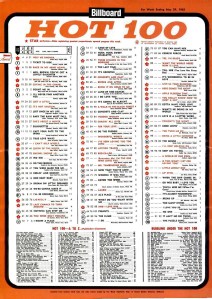
With its new arrangement and new title, “Rhonda” did indeed prove the no-doubter that the Beach Boys were hoping for to re-establish their pop supremacy in ’65. The song debuted on the Hot 100 on April 17 at No. 80, and seven weeks later, it replaced — who else — The Beatles’ “Ticket to Ride” to become the band’s second No. 1 hit, lasting two weeks on top before being replaced by the other dominant American pop group of the era: The Supremes, with “Back in My Arms Again.” The Beatles would, of course, be heard from again just a few months later with a “Help!” No. 1 of their own — and in between them in June, the Four Tops reigned with “I Can’t Help Myself (Sugar Pie, Honey Bunch).” (Draw your own conclusions about a generational cry for additional assistance amidst the turmoil of the mid-’60s if you so desire.)
Billboard Hot 100
Billboard
“Help Me, Rhonda” would mark something of the end of an era for The Beach Boys and Brian Wilson, as it was their last major pop hit before the group started rapidly scaling up its ambitions. Even “California Girls,” the group’s universally accessible No. 3-peaking follow-up to “Rhonda” — which, wouldn’t you know it, got stuck behind The Beatles’ “Help!” on the Hot 100 — came affixed with a cinematic instrumental intro and a vocal outro in-the-round that no other pop group of the time would have dared attempt. By 1966, the group was pushing pop music into the future at a rate that would ultimately prove uncomfortable for both the public and for the Beach Boys themselves — though it would culminate in one more all-time classic pop single before it all fell apart.
And “Help Me, Rhonda” stands alone in all of pop history in at least one respect: It remains the lone Billboard Hot 100 representation for all Rhondas worldwide. No other song (or artist) with that name — outside of a No. 22-peaking Johnny Rivers cover of the song in 1975, featuring Brian on backing vocals — has ever reached the chart since its 1958 introduction. (No “Ronda”s either.)
Tomorrow, we look at the final of the Beach Boys’ three Brian Wilson-led No. 1s: the forever singular “Good Vibrations.”

Los Alegres del Barranco could achieve the suspension of the criminal proceedings against its members for alleged advocacy of crime during a concert in Jalisco held in March, following the release of an anti-narcocorrido that the group recorded at the request of the state governor, Pablo Lemus.
The song, titled “El Consejo” (or “the advice”) and released on Sunday (June 15) on YouTube, is a call to discourage young people from joining the ranks of organized crime and to warn them about the potential consequences of getting involved in criminal activities. “I’m going to give you some good advice/ If you want to grow old/ Don’t get involved with the bad/ Nothing good comes from that/ If you think it’s easy money/ Pay attention to these verses/ There are dreams that come true/ And later turn into nightmares,” the song says in Spanish, set to the rhythm of a traditional accordion.
“This is a step in the right direction to be able to face the legal challenges,” Luis Alvarado, the group’s spokesperson, told Billboard Español on Monday (June 16).
Trending on Billboard
The Jalisco Prosecutor’s Office told Billboard Español on Monday that “the group’s willingness” to send a positive message through a song opens the possibility of reducing some of the restrictions imposed on the four musicians, their representative, and their concert promoter.
The case stems from a performance at an auditorium at the University of Guadalajara on March 29, where the band performed a narcocorrido accompanied by images alluding to the leader of a criminal group. This incident even led the United States to revoke the work and tourist visas of its members.
“If the suspension proceeds, the economic guarantee they deposited with the court could be canceled, and it would also be possible for the precautionary measures to be put on hold,” the Jalisco Prosecutor’s Office said in a statement on Sunday.
The group had 5.8 million pesos (about $302,000) frozen, representing the alleged profits from their concert at the Auditorio Telmex, which led the Jalisco Prosecutor’s Office to open a fifth investigation against the group, accusing them of alleged “operations with resources of illicit origin.” However, state authorities clarified that the conditional suspension of the process for alleged advocacy of crime does not extend to the investigation into their possible involvement in the crime of operations with resources of illicit origin, which remains ongoing.
The precautionary measures imposed by a judge on Los Alegres del Barranco, which could potentially be put on hold, include: appearing in court every week, paying a guarantee of 1.8 million pesos (about $92,000), and remaining within Jalisco. The band continues to defend themselves while out of custody, as preventive detention was not ordered.
However, the Jalisco Prosecutor’s Office is “the only entity that can reach an agreement through alternative means to resolve three — out of four — investigations opened against the group for alleged advocacy of crime” during concerts in other municipalities in the state, a spokesperson for the Government of Jalisco told Billboard Español, adding that they are confident an agreement between the parties will be made public this week.
On the social media platform, X, Jalisco Governor Pablo Lemus praised the group’s new song. “This new song by Los Alegres del Barranco, titled ‘El Consejo,’ deserves to be listened to closely, especially by young people,” he wrote in a post on Sunday. “Music is essential for connecting with future generations and helping them understand everything that choosing what many portray as the easy path entails.”
Following the ban on narcocorridos imposed by local governments in 10 of Mexico‘s 32 states, some corrido artists have announced changes to their music and repertoires. Such is the case of corridos tumbados star Luis R. Conriquez, whose April 12 performance at the Feria de Texcoco in the State of Mexico ended in chaos after he refused to perform war-themed songs in compliance with the new regulations set by authorities.
Grupo Firme has also announced that it has removed the corrido “Se Fue La Pantera” from its repertoire, which allegedly references an operator of the Sinaloa Cartel. Recently, the group, led by vocalist Eduin Caz, canceled their participation in a festival in Napa Valley, California, due to the visas of its members and the team of its promoting company being in “administrative process” by the U.S. Embassy in Mexico.

Bunnie XO just had a breakthrough on her fertility journey with Jelly Roll.
In a raw video posted to her Instagram on Monday (June 16), the podcaster tears up while hiding her face in her hands as she talks inaudibly on the phone, seemingly having just received a piece of good news. “When you just got the call you’ve been waiting on for 5 months since this ivf journey started,” she wrote.
“All the tears, the hopelessness & the struggle, God finally said, ‘Here,’” Bunnie continued, adding in her caption: “Praise Jesus.”
The social media star and country singer have been trying to conceive through IVF for months. In the comments of her post, Bunnie clarified that she’s not pregnant yet — “We won’t announce that,” she asserted — but they are one big step closer to growing their family.
Trending on Billboard
“This is just a huge win for us,” Bunnie noted.
The Dumb Blonde host has been open about her experience with IVF, documenting the ups and downs on social media. In March, she got real on her podcast about how “lonely” the process can be, sharing, “It’s just you and these hormones and the waiting and the egg retrieval … It’s a lot to bear.”
Bunnie also recently clapped back at a troll who implied that she is too old to be trying for a baby. The same commenter also wrote that Jelly Roll — who has been open about his weight-loss journey over the past year — is “so unhealthy looking.”
“Yes, I have decided at the ripe age of 45 that I would love to hear the pitter-patter of little feet with the man that I’ve been with for almost a decade,” said Bunnie, who is a stepmom to Jelly’s two kids from past relationships, 17-year-old Bailee Ann and 7-year-old Noah.
“Not only am I financially in a great place to raise a child, but I’m also spiritually and mentally in a great place because I have been in the darkest places before and I drug myself out from the depths of hell,” she added at the time in a video on her Instagram Story. “Did you know that I was pregnant three times before we decided to do this IVF? I am so thankful that God did not let me have a baby when I was 20 years old because that poor child would have been through so much s–t with me. This is the perfect age.”
See Bunnie’s post about her IVF win below.