State Champ Radio
 Music
Page: 113
Trending on Billboard Megan Thee Stallion claims a lot of her biggest haters online are “bots” that are getting paid to troll her. On Sunday (Oct. 26), Megan hopped on Instagram Live to issue a quick PSA to her followers and supporters in the wake of her dropping off her new single, “Lover Girl.” “When […]
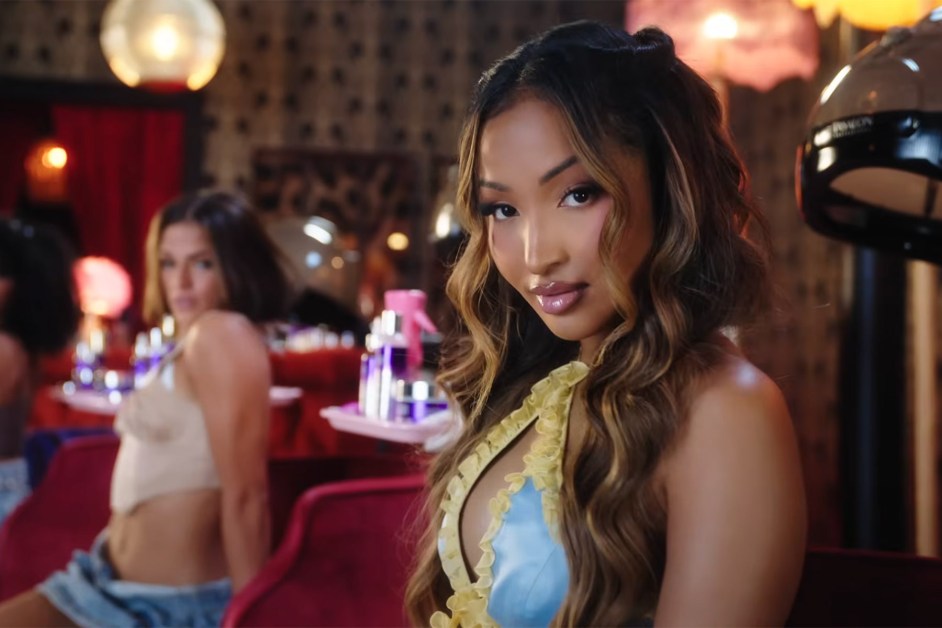
Listen to new must-hear songs from emerging R&B/hip-hop artists like The BLK LT$ and María Isabel.
10/27/2025
Trending on Billboard
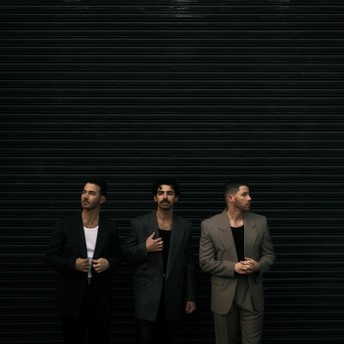
Two decades into their career Kevin Jonas is finally ready to break free. The 37-year-old eldest Jonas Brothers member announced the release date for his first-ever solo track on Sunday night (Oct. 26). The news came during the JoBros’ Samsung TV Plus livestream from Orlando as part of their ongoing JONAS20: Greetings From Your Hometown tour, during which the band was joined by special guests Khalid, Sebastian Yatra and Moana star Auli’i Cravalho and Kevin revealed that his solo debut, “Changing,” will officially drop on Nov. 20.
Explore
See latest videos, charts and news
According to a release, the song Kevin has been previewing on the tour was produced by Mark Schick and Jason Evigan. Fan footage of an August show at Fenway Park found Kevin admitting, “I’m super nervous, so bear with me,” before leaning into the ballad’s Bee Gees-like falsetto chorus, “Maybe I’m jaded/ Maybe I’m chasin’ the highs to escape/ So, I keep changing/ I, I keep changing.”
On Sunday night, Kevin posted a video from the cover shoot for the “Changing” single. “I can’t believe I can actually say that,” Jonas said of his excitement about finally stepping out on his own. In the ensuing shots, Jonas poses for the pics wearing a black tank top and matching jeans with a blue button-down and a five o’clock shadow beard. In another angle on the “super nervous” clip, Kevin’s wife, Danielle, is seen in the audience freaking out and getting teary eyed over her hubby playing his debut solo track in concert, later dialing up their daughters to share the familial screams of delight.
While Kevin started out pop rocking with his younger brothers Nick and Joe in 2005, the group’s members began to venture out by 2011, with Joe releasing his debut solo album, Fastlife, and Nick hitting the road with his side project, Nick Jonas & the Administration, that year. Just two years later they went their separate ways in 2013 after canceling more than two dozen dates citing “creative differences.”
They were back together by 2019 with the Billboard Hot 100 No. 1 smash “Sucker,” and have since released three more albums, 2019’s Happiness Begins, 2023’s The Album and this year’s Greetings From Your Hometown. While Kevin has kept things in the family to date, Nick Jonas has appeared in nearly a dozen films and released four solo albums to date, as well as 2010’s Who I Am with the Administration. Joe has released the solo efforts Fastlife and 2025’s Music for People Who Believe in Love, as well as the self-titled 2016 debut from his dance pop side project DNCE, hitting No. 9 on the Billboard Hot 100 with their 2015 single “Cake By the Ocean.”
The JoBros’ 20th anniversary tour will hit Atlanta’s State Farm Arena on Tuesday night (Oct. 28).
Check out a video preview of “Changing” here.

Trending on Billboard Sabrina Carpenter kicked off her sold-out five-show run at NYC’s Madison Square Garden on Sunday night (Oct. 26), and the singer added to her star-studded list of “Juno” girls by arresting actress Anne Hathaway. “It’s a crime to be this gorgeous. Hello, what’s your name? You’re Anne, wow! I just don’t know […]
Taylor Swift’s “The Fate of Ophelia” crowns the Billboard Hot 100 for a third week.
The superstar’s new album, The Life of a Showgirl, concurrently adds a third week at No. 1 on the Billboard 200 chart, following its modern-era-record debut with 4.002 million equivalent album units two weeks earlier.
Thanks to the set and the song, Swift makes more history. Two weeks ago, she logged the 17th instance of an artist launching atop the Billboard 200 and Hot 100 simultaneously. It marked the record seventh time that she earned the honor (which she inaugurated in August 2020 with Folklore and “Cardigan”). In only two of the first 16 such double debuts, an album and song tallied a second consecutive week atop the charts — both by Swift, via Midnights and “Anti-Hero” in 2022 and The Tortured Poets Department and “Fortnight,” featuring Post Malone, in 2024.
Now, The Life of a Showgirl and “The Fate of Ophelia” make for the first occurrence of an artist debuting atop the Billboard 200 and Hot 100 side-by-side and both titles maintaining their respective commands for their first three weeks.
Meanwhile, two acts earn their first Hot 100 top 10s: Olivia Dean’s “Man I Need” bounds 17-8 and Leon Thomas’ “Mutt” charges 18-10.
Check out the full rundown of this week’s Hot 100 top 10 below.
The Hot 100 blends all-genre U.S. streaming (official audio and official video), radio airplay and sales data, the lattermost metric reflecting purchases of physical singles and digital tracks from full-service digital music retailers; digital singles sales from direct-to-consumer (D2C) sites are excluded from chart calculations. All charts (dated Nov. 1, 2025) will update on Billboard.com tomorrow, Oct. 28. For all chart news, you can follow @billboard and @billboardcharts on both X, formerly known as Twitter, and Instagram. Plus, for all chart rules and explanations, click here.
Luminate, the independent data provider to the Billboard charts, completes a thorough review of all data submissions used in compiling the weekly chart rankings. Luminate reviews and authenticates data. In partnership with Billboard, data deemed suspicious or unverifiable is removed, using established criteria, before final chart calculations are made and published.
‘Ophelia’ Streams, Airplay & Sales
Trending on Billboard
On stage, the four ladies of BLACKPINK make their intricate, dynamic dance moves look effortless. But in reality, it takes a lot of work to bring to life the vision of choreographers such as Kiel Tutin, who recently broke down some of the most iconic numbers he’s crafted for the girl group.
In a video for Page Six published Monday (Oct. 27), Tutin shared insight into how everything from BLACKPINK’s iconic “Pink Venom” routine to the foursome’s headlining Coachella set in 2023 came to be. Of the former — which would earn members ROSÉ, LISA, JISOO and JENNIE the VMA for best choreography — the instructor explained that he thinks the group’s memorable dance for the 2022 single helped propel them to new heights (thanks in part to a particular pop superstar).
“The girls performed [‘Pink Venom’] at the VMAs, Taylor Swift was dancing to it, and it was on her playlists for her shows,” Tutin said of the number. “It was a really big hit, and probably, hopefully led to us being the contender for headliner at Coachella.”
Indeed, “Pink Venom” was a huge success for the quartet, with the track reaching No. 22 on the Billboard Hot 100. When it came time for BLACKPINK to make history as the first K-pop act to ever headline Coachella, Tutin came aboard as creative director as well as choreographer.
“I’m a huge, huge girl group fan,” he gushed in the video. “My first love was the Spice Girls, and then my second love — and ultimately my biggest love — is a U.K. girl group called Girls Aloud.”
The latter band’s “iconic” number featuring feather fans at the 2009 BRIT Awards would inspire the creative direction of BLACKPINK’s performance of “Typa Girl” in the desert. Meanwhile, Tutin and his team considered tapping the former to make a cameo during the headlining set, he revealed.
“We did explore the idea of guest acts,” Tutin told the outlet. “I only wanted to explore that if it was someone equally as iconic. Something we definitely explored looking into was the Spice Girls. [It] would have been epic, but ultimately we decided that BLACKPINK didn’t need any guest act, and they could hold down the stage by themselves.”
Throughout the video, Tutin praised the band’s work ethic, revealing that ROSÉ, LISA, JISOO and JENNIE had only three to five days to rehearse for Coachella. Two years later, the group is currently on tour after taking a short break to pursue solo projects. BLACKPINK’s next stop is set for Nov. 1 in Jakarta.
Watch Tutin break down his work with BLACKPINK below.

Trending on Billboard
Christmas music decks the halls of the Billboard Holiday 100 at the end of every year, but some creepy cuts lurk around the October charts as well. And make no bones about it: If you create a monster hit in the lab, it may come back to haunt the hit parade every fall. For years, Billboard has tracked the graveyard smashes, thriller nights and legal nightmares that have sunk their teeth into the KILLboard Rot 100.
‘Monster’ Hit
After the novelty single “Monster Mash” by Bobby “Boris” Pickett and the Crypt-Kickers began getting radio play in Boston, the Sept. 29, 1962, Billboard reported that “Boris, Igor and the other bloodsuckers” were clawing their way up the charts. A week later, Billboard profiled Pickett, calling the Army veteran and stage comedian a “versatile lad” who “still holds on to his ambition to be an actor.” On the same page ran a feature about another new act: The Beach Boys. Pickett’s song hit No. 1 by the end of the month — a feat that took the surfin’ slackers another two years.
License to Thrill-er
“The video has a ghoulish theme,” warned the Dec. 3, 1983, Billboard of Michael Jackson’s zombie-filled video for “Thriller,” “but it is brightened by clever plot twists.” The article explained why the video opens with a title card disavowing any “belief in the occult”: Jackson’s discomfort with the video’s imagery, “one reason he avoided a Halloween tie-in.” He didn’t need one. The Dec. 24 issue said the video “shipped a reported 100,000 units — the highest initial shipment in history for an original non-theatrical video.”
Giving Up the Ghost
“It’s the ‘bad boy’ at his most playful in a call-and-response dance-rocker from the film of the same name,” the June 9, 1984, Billboard said of Ray Parker Jr.’s “Ghostbusters.” In the Aug. 11 issue, a headline declared “Bustin’ Makes Ray Feel Good” as the song hit No. 1. And while Parker wasn’t afraid of no ghosts, what about Huey Lewis’ lawyers? They sued him in a plagiarism case for similarities to Lewis’ “I Want a New Drug.” “It’s more like M’s ‘Pop Muzik,’ ” Parker insisted in the Aug. 25 issue.
Lawyers Just Don’t Understand
The Fresh Prince & DJ Jazzy Jeff scared up a lawsuit of their own with the Hot 100 top 15 hit “A Nightmare on My Street.” That title “is turning out to be prophetic,” quipped the Aug. 6, 1988, Billboard. “New Line Cinema, which produces and distributes the A Nightmare on Elm Street series of films, has served papers.” The legal scare buried the song’s video but the soundtrack to the fourth Freddy Krueger flick was still DOA. “Nightmare films have never produced a hit soundtrack,” declared the Sept. 3, 1988, issue. “This one won’t do the trick, either.”
This Is Halloween
“While the holiday doesn’t generate monster-selling albums like Christmas does, the scary celebration has spurred a number of solid-selling titles,” according to the Nov. 2, 2013, issue, citing the “soundtrack to Tim Burton’s The Nightmare Before Christmas,” as well as a long-out-of-print sound effects collection called Sounds of Halloween, which “had moved 528,000 copies to date.” Now, thanks to screaming — er, streaming — platforms Halloween hits rise from the grave every year.
This story appears in the Oct. 25, 2025, issue of Billboard.
Trending on Billboard
Taylor Swift wanted to work on her reputation when it came to her dancing, so she hired choreographer Mandy Moore.
In an interview with The New York Times published Sunday (Oct. 26), the choreographer opened up about working with the pop superstar to hone her movement skills before embarking in 2023 on her global Eras Tour, which saw Swift looking better than ever as she held her own in several different dance numbers. Before that, though, Moore says the 14-time Grammy winner was insecure about her abilities.
“She’d gotten a bad rap for a long time about her dancing, so she was really in her head,” the dance coach recalled to the publication. “We shifted the focus to how movement was already manifesting in her body — the way she naturally wanted to move. And then we fine-tuned that: ‘OK, that looks a little weird with your shoulders,’ or, ‘Let’s straighten your knee here.’”
“I really admire Taylor’s tenacity,” Moore continued. “She works so hard. Whatever I was putting down, she was picking up. And she’s very clear about what she wants, which I love.”
Elsewhere in the interview, the choreographer spoke in general about how she demystifies dancing for her superstar clients. “Dance is so vulnerable, and that feeling is only magnified by how famous the person is,” she explained. “Some of these artists have been sort of traumatized by dance. And so I end up as a kind of dance therapist.”
“A lot of it is really just getting in a room and being like, ‘Look, here’s this thing that I love, and you can love it too!’” Moore added.
Though Swift’s Eras trek is memorable for a boatload of reasons, one of them is how she clearly leveled up dancing-wise for the excursion. Fans went wild every night for her sexy Chicago-esque chair dance during “Vigilante Shit,” as well as her sultry, serpentine moves throughout the Reputation set.
The hitmaker has continued working with Moore throughout her The Life of a Showgirl era, teaming up to create TikTok trend-worthy choreography for Billboard Hot 100-topping lead single “The Fate of Ophelia.” In Swift’s The Release Party of a Showgirl film, she perfects her own dance moves while on set of the track’s music video, telling the crew at one point, “Can I just try to be a little bit better?”
Trending on Billboard
HeadHuncho Amir comes from a family of hustlers. Amir’s father, Antong Lucky, is a well-known dot connector around Dallas. The former gang leader-turned-activist even had a record label while Amir was growing up.
Explore
See latest videos, charts and news
However, Amir was intent on blazing his own path and not relying on his father’s name and connections. In fact, Lucky was one of the last to find out Amir rapped — and it was his friends who told him about his son’s budding music career.
“Just being around people like my pops, my mom, my grandfather, like my family tree was always full of hustlers,” Amir tells Billboard. “Everybody in my family doing something to make some money.”
In the two years since his first performance, Amir has notched a deal with 300 Entertainment and is at the forefront of the New Dallas movement, uniting the city and bringing the rap spotlight back to the Big D, alongside peers like Montana 700 and Zillionaire Doe.
“We’re letting the world know unity is cool and you ain’t gotta hate on nobody,” he explains. “We genuinely mess with each other, this ain’t for the camera. It’s cool to support your homie. If you want to see everyone win, you could say New Dallas.”
HeadHuncho Amir drives in the motivational rap lane, taking inspiration from Jeezy’s caffeinated trap tales and Rick Ross’ boss talk, but with fewer frills. He spun the block for a second project in 2025, earlier in October, with 50 Year Run, a manifestation of leaving a legacy.
“I’m trying to be on Jay-Z status,” he proclaims. “We just trying to be here for a long time, handling business.”
The East Dallas rapper, who never wears a pair of his crisp white Nike Air Force 1s more than once, is Billboard‘s Hip-Hop Rookie of the Month for October. Get familiar with Amir as he talks about his upbringing, New Dallas and getting mistaken for fellow Dallas native BigXthaPlug at a Mavericks game.
Who were some artists you were bumping growing up that you were inspired by?
I’d so Yo Gotti, Rick Ross, Young Jeezy and Houston artists like Lil Keke, Big Moe, Z-Ro and Pimp C. That’s what I grew up listening to every day. I’m getting in the car and that’s the music I was hearing.
It’s my understanding your pops had a record label. What was your entrance into rap?
When I was younger, I watched a bunch of 106 & Park and MTV Cribs. I was infatuated with music. My pops had his own record label at the time. They had a movement going. I’m hands-on and in the studio and around the music every day. At the time, I wasn’t telling everyone I wanted to be a rapper. I’d be freestyling and playing around with my cousin, putting on beats. Since a kid, it was a God-given talent. I was good at it. I had kept it a secret for a while. That’s when I had came out and started letting everyone know that I rap.
When was this around?
When I started telling everyone I rap, it was like high school days. I would probably say like 11th grade or going into senior year. I started actually going to the studio and paying for studio time and making songs. At the time, i wasn’t putting the songs out. I was just putting it on Instagram and Snapchat seeing what people’s reaction was. That’s when I had shot a video and once I started getting feedback that everyone liked my music, that’s what made me take it serious. I really wasn’t being serious at the time. I’d drop a few videos and then stop.
Once I had dropped a song called “Real Members,” the feedback I had got back from it was crazy. I didn’t have that many followers on Instagram, but I had got a lot of comments and shares. This promoter, DY, he had booked me for a show in the city for free. He’s like, “I believe in you, you hard. I want you to come perform.” I pulled up and it was packed. A lot of people already know me and they say me rapping and they ain’t know I rapped, but they liked what I was rapping about. I did the show and I had my mom, uncles and cousins with me. I still got the videos in my phone. The crowd’s going crazy and they vibing with it. And from that day forward, I said, “Oh yeah, I can’t be playing. I gotta take it serious.”
Coming from a family of hustlers, how did you apply that to your music?
My pops is well known for what he does in the city. There’s one thing about about our family, like either somebody selling houses, doing her own a beauty shop, selling clothes. Just being around it and growing up around that environment of hustlers in my family, like they groomed me well, from when I got older to know you can’t be lazy. I’m rapping about my life — stuff I’ve either seen or did. It just fell with the music so good because everything I’m saying is real life and not made up.
Your dad didn’t want you to rap, right? You had a bar on “Trap Again” about him passing the game down to you.
See, my pops didn’t care about buying your shoes every week or clothes. You know how you got some parents buying Jordan stuff every week? My pops wasn’t with none of that. He’s asking, “What your schoolwork like?” He want to know when the report card comes out.
My pops used to own a bail bond company in South Dallas. I remember sitting there and a song came on and one of my uncles was like, “I bet you don’t know what movie that beat’s from?” I’m like, “Yeah, Set It Off, at the end when Queen Latifah had died.” He like, “Bruce, I feel like nephew gonna be a rapper when he get older. He be on point with it.” I remember my pops’ response: “Nah, he ain’t finna be no rapper. He finna go to college. We ain’t finna put that in his head.” So when he said that, at the time, it kinda shocked me, because I [already] know how to rap.
I’m probably 12 or 13, but when he said that it made me shy away from him with the rap. I went in a zone like, “I’ll never tell my pops I know how to rap, because he don’t even know that I know how to rap right now.” As I got older, I never played my music around him. Everyone around him knows I rap. I’m letting his homeboys and family members hear it, and it starts getting back to him, “You ain’t been listening to your son? You need to mess with your son!” He’s all confused. They started sending him the music, so it got to a point like, “Nah, son, you got something. You can rap.” He was like the last one to know.
Touch on the New Dallas movement as well, which has been dope to see you guys making noise. Between you, Montana 700 and Zillionaire Doe uplifting the city.
The New Dallas movement going crazy. I can’t even remember around what time we started seeing it, but I remember we were all in the studio. Doe was like, “Bro, we the new wave in Dallas. We the New Dallas. The city’s in a dark spot, Mo3 just passed. We finna uplift the city and bring back that good feeling and let people know it doesn’t matter what side you’re from.” We’re not a group, we’re a movement.
What does 50 Year Run mean to you?
When I say 50 Year Run, I mean longevity, like I’m trying to leave a legacy. I’m trying to be here for a long time. It’s about getting your health together, just making sure your mindset is on the right track. You trying to get to the next level. I’m finna put this work in. I’m trying to be here forever. Everybody should be on a 50-year run — feeling good and getting their health together.
How did the project come together?
I’m a studio junkie. I make songs so much, so the process of putting it together, it really be the certain beats I hear. When I hear a certain type of beat, it makes me write. I don’t freestyle. Every beat on the tape, I was in a different vibe. Some of ‘em I made in Dallas, some of ‘em I made in Cali, some of ‘em I made in New York. It’s new vibes on there. I linked with new producers, but of course I linked with Ziggy Made It. I linked with ChopSquad DJ, me and him got a good relationship and made a hard song “Everytime.” We picked the best songs that we felt fit. I hope everyone messes with it as much as I mess with it.
You mentioned “Everytime,” talk about that “Party Like a Rockstar” sample inspiring you to rap?
I made that in LA. It was me and Chopsquad DJ. He was telling me about all the artists he worked with like Lil Durk. He’s going through a beat pack and I asked him if he had something with a sample. He played it and I thought it was cool. We vibing out and I go in the booth and write something quick. When I get done with the song, I didn’t even like it. That ain’t even really my type of vibe. It sat with me for a minute. The team and the label was vibing with it. I didn’t think that was my style. I put it out there to see if they messed with it and we played it in a club and it went crazy. I got so many DMs and texts. I’m like, “We might got something.” I went to another club and got the same reaction.
Do you feel like rap can go back to drug-dealing music rather than the drug user music dominating now? Do you see it that way?
Yeah, I see it that way. I see it both ways, like, drug dealer music, drug user music. But when you listen to my music, you gon be like, “Man, Amir just motivate you. He put you in a different zone, like, I gotta go get some money. I can’t just be sitting around.” Like, I just really be trying to make that feel-good music, that motivational music.
I see Moneybagg Yo, Bossman Dlow and Sexyy Redd tapped in. What’s it like getting those cosigns?
When Bagg had tweeted some lyrics from “A Boss or a Leech,” I was like, “Nah!” Bagg’s tapped in. Dlow hit me and Kevin Gates hit me. It’s crazy because I grew up bumping Moneybagg. He’s one of them ones. Dlow hit me when “Get in With Me” just dropped. He was getting on the scene. It just feel good, and I linked with Moneybagg in L.A. at writer’s camp, and he let me know, “You hard, keep going.” He gave me that motivation. It feels good to have rappers I listened to hitting me up.
Explain the sun chain you had on when you came to the Billboard office. What’s the Only Sun Music Group and 2700?
2700 is where I’m from. It’s a block in East Dallas. My granny got a house on that block and it’s a dead end that I grew up at. My uncle owns a house right there so I’ve been there my whole life. It’s so much history. The sun chain, shout-out to uncle, he got so much jewelry. He had the sun chain and when I started rapping, before I could buy my own, he gave me the sun chain to wear. It stuck out so people knew me by the chain. Amir with the sun chain, that’s how they identified me. It’s been in the family so long and people know me by the chain. I’m the only one in the city with a sun chain.
How’d you end up signing to 300 Entertainment?
Before I signed, I had a lot of labels trying to sign me. I had my entertainment attorney going over different contracts. After going through all of them, he let me know the real about every one. When we got to 300, he checked me, “This a good move.” He let me know, like, “I’m not gonna put you in position where I feel like it ain’t the right move. This a good move.”
I had met Selim [Bouab], Montana 700 is my brother, and he’s signed to them. I been knowing him since 7th grade and he was telling me good things about the label. They came down for Montana’s birthday and I met Selim at a bar. I didn’t know who he was at the time. He called my name and let me know, “I’m watching you. You hard!” I end up going to New York and they end up coming to Dallas. We made it happen.
Who’s your dream collab?
Future, Lil Baby and Rick Ross. That Wham and Future era was just different. I know almost all their songs. That’s like a dream collab. I know I’m hard. If I make a song with them, I know it’ll be one of them ones.
When you were up here in New York, you said you step out in a new pair of Air Force 1s every day. Is that true?
That’s anti-cap. That’s facts. I literally wear my Air Force 1s one time. I do a show and as soon as I walk out, I’ma take them off and put my slides on. Video shoot, go out of town or in town, I’m putting them on one time. I’m an Air Force 1 head. As a kid, I wanted the J’s, but I couldn’t get ‘em. My mom was working two or three jobs and the Air Force 1s were more affordable. They were like $75. I fell in love with the Air Force 1’s. That’s my favorite shoe.
What’s the biggest purchase you’ve made in the last year?
Probably getting my dad that car for his birthday. It was a Bentley two-door coupe. My mom’s birthday is coming up Sunday, and I’m asking her what she wants. She not a picky person. I’m trying to decide if I’ma give her some money. She keeps saying she don’t know.
Did people mistake you for BigXthaPlug at a Mavs game?
That’s facts. I get that a lot. I wasn’t as known in the city as I am now. I was going to get something to eat and kids were running up on me like, “BigX!” So many people wanted to take pictures with me. I took it as motivation. I posted videos of me taking pictures with everyone and tagged BigX like, “This motivation.” He’s putting on for Dallas.
Where do you see yourself in 10 years?
We on a 50 Year Run right now. My goal in 10 years — I want to be one of the top charting artists. I want to have a bunch of real estate. I want to be taking care of my family and my health in good condition. I want to be one of them household names in the industry. Keep giving the fans good music, doing what I’m supposed to be.

Trending on Billboard
With 17 of the top 20 songs on Billboard‘s current Country Airplay chart written, or co-written, by the artist who performed it, the country music industry has found an interesting time to recognize the interpreters.
Emmylou Harris, who relied on other songwriters for most of the material she has recorded during her career, was inducted into the Nashville Songwriters Hall of Fame on Oct. 6. Trisha Yearwood, who waited until her latest album to dig seriously into songwriting, was recognized for that project, The Mirror, in an Oct. 8 conversation with songwriter Liz Rose at Nashville’s Anzie Blue. And The Music of My Life: An All-Star Tribute to Anne Murray finds at least a dozen acts celebrating a Canadian songstress who has never written a song in her life on Oct. 27 at the Grand Ole Opry House.
“The average listener doesn’t know” if you wrote the song, Murray reasons, “and if you do a good interpretation and you pick good songs, I see no reason why you can’t have success. And I did.”
Related
Indeed, in previous eras, artist-writers were less common than those who built their careers on songs fashioned by full-time composers. And it’s tough to fault the accomplishments of interpreters Martina McBride, Barbra Streisand, Frank Sinatra, Dionne Warwick, Glen Campbell, Elvis Presley, Gladys Knight, Bing Crosby or Linda Ronstadt.
“I just always wanted to be her,” Yearwood said of Ronstadt during her Oct. 8 event. “I still just want to be her.”
Not everybody does. A premium is placed on singer-songwriters in the current marketplace, in part by the artists and their representatives, since writer royalties provide singers with an additional revenue stream. But the age of the internet likely creates extra pressure for artists to write their own material. Fans interact with performers through social media, and with that personal connection, they seek personal insights from artists in their songs, too.
“It’s great, whatever they choose to do to become successful and happy,” Murray allows. “Things do change.”
Murray, in fact, witnessed the first wave of that change. The Beatles, Bob Dylan and The Beach Boys‘ Brian Wilson elevated the concept of the artist as writer in pop music in the 1960s.
It created a certain level of snobbery from some fans — and from some artists — around the subject. Murray is certain she has been criticized for not writing her own songs — “but,” she says, “not to my face.”
Related
Yearwood similarly maintains a sense of humor about it. When questioned about not writing her hits, she often insisted that “no one ever thought ‘I Fall to Pieces’ was less of a song just because Patsy Cline didn’t write it.”
In fact, some of the albums that have been most important in country music history — Willie Nelson‘s Stardust, Ray Charles‘Moderns Sounds in Country & Western Music and The Nitty Gritty Dirt Band‘s Will the Circle Be Unbroken — were intentionally built around songs not written by the artist. The genre wouldn’t be what it is without them.
Similarly, most of Harris’ albums were shaped by other people’s material, even though she proved on The Ballad of Sally Rose, Red Dirt Girl and Stumble Into Grace that she is quite adept at composing when it suits her.
“The song, for me, is everything,” she said during her Nashville Songwriters Hall of Fame acceptance speech. “I’m an interpreter — proud to be — and I really am grateful that there are people like Rodney [Crowell]who write these wonderful songs so that I don’t have to go into the writing room and pull them out.”
With thousands of songs available, Harris — much like Charles, Ronstadt or Nelson — selected her songs to fit specific themes or sonic motifs. She was able to renew her art repeatedly through her choices.
“She has really challenged herself as an artist through the years and she’s just kept growing,” fellow Songwriters Hall inductee Jim Lauderdale notes. “I would have been content as a fan and listener if she would have just done the first five albums — you know, repeating those in some way — but she went way beyond that.”
Harris evolved from album to album much the same way that Meryl Streep, Johnny Depp or Charlize Theron drew from different parts of their creative wells to play parts in movies they did not write. That often required them to convey the personality of roles that had no relationship to their real lives.
Similarly, no one required McBride to have actually burned down a house to deliver the story in “Independence Day.” Garth Brooks didn’t have to crash his ex’s wedding to sell the drunken scenario of “Friends in Low Places.” Reba McEntire wasn’t forced to kill anyone to sing “The Night the Lights Went Out in Georgia” or become a hooker to capture the emotions in “Fancy.” And Yearwood didn’t need to have a teenage fling with a criminal to pull listeners into “Walkaway Joe.” She also was able to maintain some privacy.
Related
“I become a character in the movie for three-and-a-half minutes when I sing a song,” Yearwood said. “You’re able to [connect] through your emotions, but that’s really personal. You’re not necessarily sharing [your inner life] with everybody. I feel like I kind of kept that wall up for a long, long time.”
Still, when the majority of artists are mining their inner world to write their material, a gut-level connection with songs does matter, even for the interpreters. But artists weren’t always allowed to select the material that resonated most with them; many — particularly females — were at the mercy of their producers.
“A lot of the girl singers — Rosemary Clooney, Peggy Lee and Patti Page and people like that — they didn’t even have a choice,” Murray says. “Somebody chose the songs for them. I’ve had conversations with Rosemary Clooney about that. She hated some of the stuff she did because they didn’t give her meaty stuff. You know, something like ‘You Needed Me’ where you could sink your teeth into it.”
Ultimately, the emotional impact on the listener remains the most important aspect of a performance, whether the conduit is a singer-songwriter or an interpreter.
“The world needs songs,” Harris said. “We need someone to express what is inside our hearts, what is inside our souls, and nothing touches us more than a song that speaks to our humanity.”