State Champ Radio
 Music News
Page: 92

Trending on Billboard
Since it first roared onto the Billboard charts with 2009’s Guns Don’t Kill People… Lazers Do LP, Major Lazer has established itself as one of the most innovative collectives in mainstream music through its fusion of EDM, dancehall, hip-hop, reggaetón, trap and soca. Now, the group’s three current members — Diplo, Walshy Fire and Ape Drums — have officially added a fourth name to the lineup: America Foster.
A 28-year-old British-Jamaican artist, model and content creator, America Foster hails from the outskirts of London in South Buckinghamshire. As one of seven children in a household dominated by boys, she quickly learned how to lean into her knack for entertaining to ensure her voice was heard. She remembers developing her freestyling as a party trick as young as 10, and around age 15, she started playing around with accents and voice acting, sending friends into laughing fits with prank calls and her imitations of the London Underground voiceover. As she entered the final years of her adolescence and her creative friends started seriously pursuing their dreams, Foster brushed off countless requests to hop in the booth and freestyle over a track.
“I was completely opposed to it,” she recalls. “And then one of my friends [convinced] me to come to their studio session, the producers spun around in their chairs like, ‘Your turn!’ I was like, ‘Not happening!’ That ended up being the first time I ever put my vocals on a studio recording.”
Foster is the first to admit that those early songs weren’t the strongest — “They were very commercial, Chris Brown dance-pop; I call it McDonald’s music” — but she eventually landed on a sound that distilled the authenticity, cultural fluency and bubbly quirk of her off-the-cuff social media content, which garnered her hundreds of thousands of followers pre-Major Lazer and resulted in a Red Rat-informed approach to dancehall toasting and singjaying anchored by her striking charisma.
After a few viral clips caught Diplo’s attention, Foster quickly took advantage of the potential music industry connection. She thanked the Grammy-winning DJ for following her, and the two started exchanging music, culminating in an in-person meeting at his Roundhouse show last September. There, the pair planned a studio session in Jamaica, where Foster met the rest of Major Lazer, and by Paris’ Fête de la Musique in June, she made her live debut with the group. In July, Foster officially announced her addition to Major Lazer via Instagram.
Arriving as the group’s youngest and first woman member, Foster made her official Major Lazer debut with a freestyle remix of August’s “Gangsta,” a shatta-informed track that also features Kybba and Busy Signal. A few weeks later (Oct. 24), Foster joined forces with buzzy Toronto artist Sadboi and Emmy-winning choreographer Parris Goebel for “Bruk Down,” a standout ‘90s dancehall-inspired track that doubles as Goebel’s musical debut. Goebel also co-directed the track’s flashy music video alongside Philippa Price.
“She understands what she’s good at, and she understands that she’s got a market for it. It’s genius to me,” Foster tells Billboard about working with Goebel. “I’ve heard some of her songs that are due to come out, and they are amazing — especially for the dance community.”
In a candid conversation with Billboard, America Foster details her origins, integrating herself into the Major Lazer family, fashioning “Bruk Down” out of a freestyle and what else she’s cooking up with her new groupmates.
What are some of your earliest musical memories?
[They’re] definitely attached to dance. Rhythm and beat [were] my first introduction [to music]; I never really heard lyrics for what they were when I was younger. I’d be able to recite a whole song, but I wouldn’t be able to tell you the content.
Where do you consider home?
Growing up, I lived just on the outskirts of London. But my heart was always in Northwest London; I was always there. That’s where my mum and her sisters were raised, and my gran still lives there. During weekends, half-terms and school holidays, I’d be in London. And then I’d be living in South Buckinghamshire, which is where I was raised.
How did you land on the “America Foster” sound?
Eight years ago, when I first got into the studio, I didn’t understand my sound, so I started trying to develop it. I really captured my sound in the last four years. I made a couple of demos that were getting close, but they weren’t the final sound, which were the demos that I actually sent to Diplo.
You connected with him over Instagram, right?
He came across my page from a viral moment; I’ve had quite a few of those on Instagram from my content creation. I was trying to figure out how to transition into being a respected artist, so I started dropping bits of content surrounded by my music. Whether I’m talking about the weather or my menstruation, I put it in a rhyme pattern and people love it — especially because you don’t expect me to have such a strong Jamaican accent, because I’m light-skinned and from England, and my name’s America. It’s like, “What the f—k is going on?” [Laughs.]
He followed me off a viral freestyle, and I was really excited, because I was seriously making music at the time. I knew that he was behind Major Lazer, and I also know he was behind [M.I.A.’s] “Paper Planes.” I grew up to that song, just banging it out constantly. So, obviously, I shot my shot. I thanked him for the follow and sent about four demos. We started exchanging music on WhatsApp, and he’d send me beats he heard my voice on.
Last September, he came to London, and I met him at the Roundhouse while he was performing. The next day, we went to a football game and planned for a studio session in Jamaica, which is where I met the rest of Major Lazer.
What was that first meeting like?
It was amazing, we just clicked. Me and Walshy were bantering left, right and center; it felt like I had known these guys for ages. It didn’t feel like the first initial meeting at all. I went to Diplo’s home in Jamaica, and it’s quite a showroom home, but it still has this beautiful, homely vibe. I had 32 hours in Jamaica, and we made six songs, one of which was “Bruk Down.”
“Bruk Down” started as a freestyle, right?
Diplo just had the beat running, and we all knew it was f—king hard. He kept it running to see if we came up with anything; he even freestyled a little bit, which was quite funny. And then I just heard, “Bruk out, bruk out, waan fi.” I knew I liked that, but I wanted to repeat it twice, and then change it a bit the third time. Walshy was in the room, and he was like, “Yea, man, dat fyah!” Diplo also liked it, so I continued freestyling and writing at the same time.
It’s crazy how the final version sounds like a completely different song from how it first started. My initial freestyle was shared with Parris Goebel and Sadboi, and when I heard it with their parts, it sounded so good. I was only briefly familiar with Sadboi, and I hadn’t connected the dots about who Parris was. I didn’t know she was making music. I was like, “Oh my God, my music video’s gonna be sick!” [Laughs.]
Did you have any initial reservations about pursuing your music career through a collective as opposed to just going solo from the jump?
About two years before Major Lazer was on the table, I thought about being in a girl group. And I was like…. no. I just couldn’t see that for me. Part of me felt like I had to really weigh it up and see what the exit would look like.
When Major Lazer came into the picture, I was like, “Oh my God, this is the best group that could have ever asked me to join them.” Firstly, it’s all boys. Secondly, they’re not vocalists; they’re producers and DJs, so I’d be the only vocalist, which gives me the opportunity to still be a solo artist.
Being the only woman and the youngest, what made you trust these guys?
My familiarity [with them] through their music. Through being a consumer, I felt like I knew them already. That’s why it felt so family-oriented in the first meeting. I’m big on signs, energy and spirituality, and I just followed my gut.
What does your contract look like?
It’s a featured artist agreement. I’m contracted as the fourth member.
So, you’re technically an unsigned artist?
Yes.
Is America a stage name or your given name?
Birth name. I was orphaned by the age of four, and my mum gave me my name. I look at it as if that was the best and final gift that my mum could have given me. I can’t change it, even though I hated the name when I was younger. I’m the only one out of my siblings with the name of a country or state or continent. I don’t have a middle name.
My mum knew something that no one else knew. She knew what she gave birth to. I can’t put a different name on my stardom. I don’t feel like that would be paying homage to my mum. She would have been a performer if she was still about; she had the essence that I do, but I’ve just been able to live and show it.
What else from your childhood do you see reflected in the music you make today?
My inspirations. When I’m freestyling, I hear Beenie Man, Elephant Man, Vybz Kartel, a little bit of Lady Saw, all of that. I hear their attitude in my freestyles. The sound I’m running with at the moment is Red Rat’s; I’m paying homage to him. I’m tuning in to the things that made me love music in the first place, taking elements of all of that at combining it with who I am to produce something that the world will just say “yes” to.
How do you anticipate your content creation might evolve as your artist career grows?
I’m not creating content; I’m capturing moments. There’s a difference for me. It’ll be exactly the same. I’ll just be capturing bigger moments and things that people will want to see: being on the road with the boys, backstage banter and little humorous exchanges.
Do you feel embraced by Major Lazer’s fanbase?
I’m definitely taking it in. With my social media content, I was becoming a little bit more known in London. A year before [joining] Major Lazer, I went to Barbados, and someone recognized me. That was like one of the first moments that I realized how far my reach is.
Major Lazer’s fan base is great. They’ve taken me in like I’ve been a member since day one. It feels like they have literally said, “Oh, Diplo, you like her, yeah? Walshy? Cool, we like you too.”
Top three Major Lazer songs of all time?
“Pon de Floor,” “Hold the Line” and “Watch Out for This (Bumaye).”

Trending on Billboard
Rappers D Smoke and Jay Taj enjoy a meal at Two Hommés in Inglewood, Calif., over laughs and deep discussion. The two friends chat about their upcoming tour, competing on Netflix’s Rhythm & Flow, and their SoCal roots that tie the music they make back to the communities they grew up in.
Jay Taj: I take it this is us right here?
D Smoke: This is us. One of the finest dining experiences of Inglewood.
Jay Taj: I guess I’m about to find out.
D Smoke: Two Hommés.
Jay Taj: All right, D Smoke.
D Smoke: Yes, sir.
Jay Taj: Two Hommés, Inglewood. Why’d you choose this spot?
D Smoke: I have a history with both of these brothers that started it. Mando used to pull up to Bass & Treble when I did my event on Manchester, had my storefront, had Woodworks Records. I just kept hearing about the restaurant through other people, like it’s in Inglewood. It’s great. Check it out. Check it out. So I pull up and it turns out that it’s my homies who supported, you know, before I had my big moment and all that. So just to see anything happening positively in Inglewood on this level. I gotta support it, you know.
Jay Taj: And your face is on the side of the building.
D Smoke:
That, too. I noticed that, too, I got a mural on the building. It only makes sense. There’s rumors spreading that I’m a owner, so it ain’t nothing in it for me, I want this to thrive. I want more of this happening in Inglewood.
Jay Taj: Yeah, you know what? In the hood, everybody is the owner. Real s–t like it’s our responsibility to take care of these spaces. We’re all partners in this.
D Smoke: What’s up, brother? How you doing? Good to see you again.
Jay Taj: Yeah, how are you doing, brother. Thanks for having us. This about to be a big order. OK I’m gonna take the plantain crab, some of that grilled broccolini. Gotta put some color on the plate, and then the Lamb Dibi tacos. And you know what? I’ll take some chicken bites, too.
D Smoke: There you go.
Jay Taj: Tour prep, right?
Keep watching for more!
Trending on Billboard
We all know Batman, but now it’s time to meet his Bat-Fam.
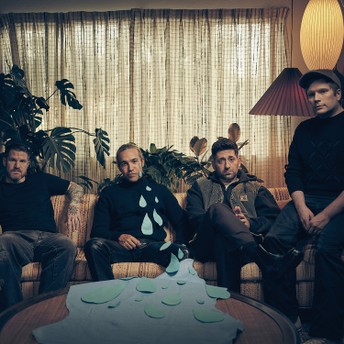
Billboard Family is exclusively premiering the superheroic title sequence from the new Bat-Fam animated series, scored by Fall Out Boy rocker Patrick Stump. The theme song is a shredding, electric-guitar-led number, and you can hear Stump’s foreboding “la-la-la”s throughout. Watch below:
In the new series, which arrives Nov. 10 on Prime Video, Luke Wilson voices the Caped Crusader, reprising his role from 2023’s Merry Little Batman animated film — for which Stump also composed the score. Also returning: Batman/Bruce Wayne’s son Damian Wayne, aka “Little Batman,” voiced by Yonas Kibreab, and butler Alfred Pennyworth, voiced by veteran actor James Cromwell.
Explore
See latest videos, charts and news
New characters filling out the cast include former supervillain Claire Selton (Haley Tju), Alfred’s niece Alicia Pennyworth (London Hughes), Damian’s grandfather Ra’s Al Ghul (Michael Benyaer), and a scientist-turned-humanoid-bat-creature called Man-Bat (Saturday Night Live alum Bobby Moynihan).
As the trailer (unveiled earlier this month at New York Comic Con) promises: “Justice will be served, family style.” It might be an unconventional family, but Alicia warns in the trailer, “You mess with one of us, you mess with all of us.”
This is Stump’s latest musical contribution to an animated series, as he previously scored Disney Jr.’s Spidey and His Amazing Friends starting in 2021, followed by Dead End: Paranormal Park (2022) and Hot Wheels Let’s Race (2024) for Netflix. With his band Fall Out Boy, Stump has four top 10 hits on the Billboard Hot 100 and seven top 10 albums on the Billboard 200, including four No. 1s.
Bat-Fam arrives Nov. 10 on Prime Video in more than 240 countries and territories and will also stream on Amazon Kids+, Amazon’s digital subscription for kids.
Prime Video
Trending on Billboard Ariana Grande is celebrating the release of her Positions (Vevo Official Live Performances) in honor of the fifth anniversary of the singer’s sixth studio album, 2020’s Positions. Tracks on the six-song EP use audio from Grande’s 2021 Vevo Official Live performance taping of the songs “POV,” “Positions,” “Safety Net” (feat. Ty Dolla […]

Trending on Billboard
SoundCloud, a leading platform for independent artists and their fans, is debuting new features to make streaming more financially rewarding for its customers. On Thursday (Oct. 30), the company announced new components to its all-in-one offerings that will put more money into artists’ pockets.
“We’ve got an opportunity to solve the problem that streaming is not enough for artists or fans, because this is going to be new dollars on the table for artists and new ways for fans to express their fandom,” CEO Eliah Seton tells Billboard.
Related
For music distributed through SoundCloud, artists signed up to the Artist and Artist Pro plans will now keep 100% of royalties from streams on other platforms such as Spotify, YouTube Music, Apple Music and TikTok. Previously, SoundCloud took a 20% cut of those royalties as a distribution fee. This change mirrors the existing 100% payouts on royalties generated from streams on the SoundCloud platform.
In addition, SoundCloud is launching a new patronage feature. Artists will also keep 100% of the money received from a new feature on artist profiles, Fan Support. Fans can donate from $1 to $1,000 at a time in exchange for their names being acknowledged on the artists’ pages. At launch, Fan Support is available only to Artist Pro subscribers in the U.S.
Early results of Fan Support have been promising. According to Seton, artists who have tested Fan Support have earned more than they’ve received from streaming in their entire careers. “This can really unlock a major new opportunity for a middle class of artists that a lot of people have been talking about for a long time,” he says.
Related
The Artist plan is billed annually for $39 and allows distribution of up to two tracks per month. The $99-per-year Artist Pro plan offers distribution of an unlimited number of tracks. The new distribution terms and Fan Support feature are not available on the free Basic tier, which does not include distribution to other streaming providers.
SoundCloud’s latest moves are an attempt to address the financial problems faced by independent artists on its platform. Music streaming has revitalized the larger music industry, attracting major investors to artist and songwriter catalogs and driving the global industry’s decade-long winning streak. For many independent artists, however, streaming itself isn’t financially sustainable.
More than 40,000 new creators upload music to SoundCloud each week, according to Seton, and new music accounted for 50% of streams on the platform in 2024, according to the company’s Music Intelligence Report from March. But the volume of new music is itself seen as a hindrance: 67% of independent labels believe the glut of new tracks uploaded to streaming services — including AI-generated music — makes it harder to develop new artists, according to MIDiA Research.
Related
In a prior attempt to make streaming more equitable, in 2021, SoundCloud changed how it pays royalties to help emerging, less popular artists. Called “fan-powered” royalties, the scheme gives artists a share of the fees from users who stream their music. That’s different from the traditional “pro-rata” method, which pools subscription fees and pays royalties based on aggregate streams. In a pro-rata model, independent artists share a revenue pool with superstars. SoundCloud’s approach, which attracted Warner Music Group and independent rights organization Merlin, is more favorable to independent artists, according to a 2024 report.
Artist and Artist Pro have additional components, such as on-demand vinyl manufacturing through a partnership with Elastic Stage that was announced in July. Both tiers also allow artists to create merch storefronts on their pages. The goal, Seton explains, is to provide a menu of options for artists to build a career in different ways. “We want to be able to unlock all those possibilities,” he says.
Thursday’s announcement is a bet that giving artists a larger share of royalties will be good for business. Unlike most streaming platforms, SoundCloud is a two-sided marketplace that generates income from both artists and listeners — a symbiotic relationship that creates a “virtuous circle,” Seton explains. Luring and retaining artists with career-building tools and attractive terms not only generates more income, it makes SoundCloud a more attractive destination for fans.
“We feel like we’ve really begun to crack the code on being a two-sided marketplace and what really distinguishes us,” says Seton.
Trending on Billboard
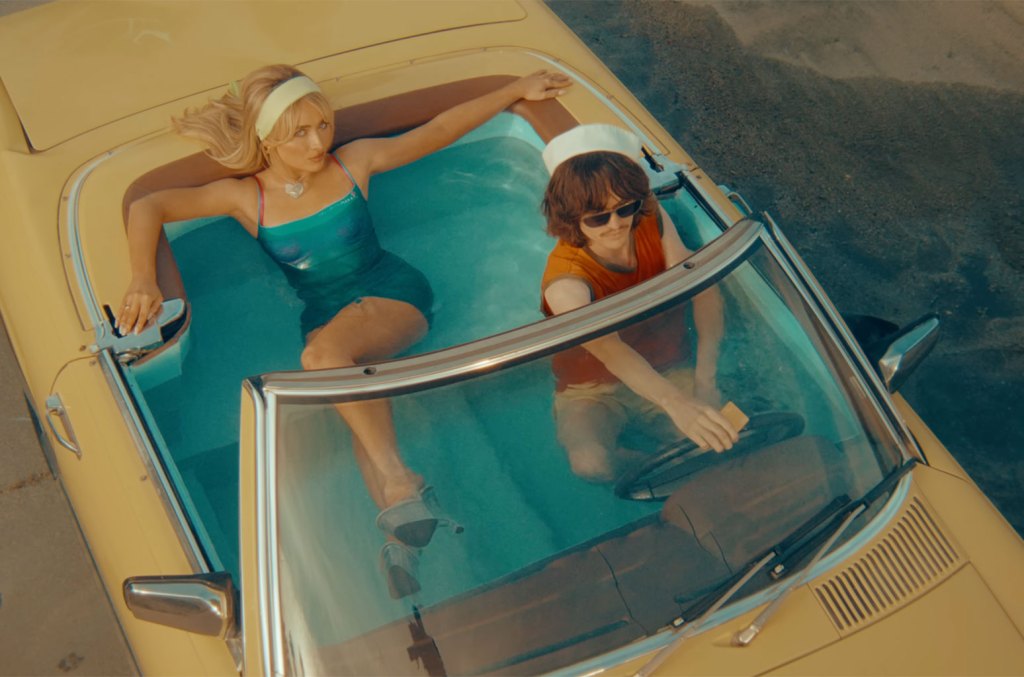
Sabrina Carpenter’s “Espresso” was the earworm of 2024, an inescapable pop smash that miraculously retained its charm even after hundreds of listens. But did you ever think a scholarly look at the song would win a Deems Taylor/Virgil Thomson Award?
One just did. The 2025 Virgil Thomson Award for outstanding music criticism in the pop music field is presented to Dan Charnas for his Slate article “The Musical History Lesson Buried Beneath the Song of the Summer.” ASCAP says the article looks at “the popular but ‘nameless’ musical genre that is the foundation” for Carpenter’s smash. (For the record, the song, which Carpenter co-wrote with Amy Allen, Steph Jones and Julian Bunetta, ranked fourth on Billboard’s 2024 Song of the Summer chart.)
The winners of the 56th annual ASCAP Foundation Deems Taylor/Virgil Thomson Awards were announced Thursday (Oct. 30). Awards are presented for outstanding books, articles, liner notes and broadcast programs on the subject of music. Established in 1967 to honor the memory of composer, critic and former ASCAP president Deems Taylor, the awards are made possible by the support of the Virgil Thomson Foundation.
Here are this year’s other winners:
Deems Taylor/Virgil Thomson Award recipients for articles published in 2024:
The award for an article in the pop music field goes to Robert Michael Marovich for his article on the prolific Black songwriter Ted Jarrett, “The Black Songwriter Who Took Nashville by Storm,” published by Zocalo Public Square.
The award for an article in the concert music field goes to Jonathan Kregor for his article “Remembering Clara Wieck in Vienna: Gender, Genius, and Genre in the Post-Beethoven Biedermeier,” published in Women’s Agency in Schubert’s Vienna.
The award for outstanding music criticism in the concert music field is presented to Kevin Bartig for his article, “Olin Downes and the Soviets,” published by the Journal of the American Musicological Society.
A runner-up award in the above category goes to Andy Zax for “Extinctophonics: The Game of Jim,” published in Third Man Records & Books’ Maggot Brain.
Deems Taylor/Virgil Thomson Broadcast/Media Award in pop music:
Director Alex Stapleton, writer Stephen Witt and producer Philip Byron for their documentary, How Music Got Free. The Paramount+ film tells the story of how technology-driven disruption changed music in the late ‘90s and early 2000s. Additional producers included Marshall “Eminem” Mathers, LeBron James, Paul Rosenberg, Maverick Carter, Jamal Henderson, Steve Berman, James Chapman, Bruce Gillmer, John Janick, Dan Sacks, Bridgette Theriault, James Thayer, Naomi Wright, Steve Stoute, Anthony Seyler, Stevenson Waite, Michael Maniaci and Malik Johnson.
Deems Taylor/Virgil Thomson Broadcast/Media Award in concert music:
Producer David Osenberg for the weekly program “Sounds Choral,” a production of WWFM, The Classical Network. The program explores the choral art form and is hosted by a rotating roster of choral conductors, composers and scholars including Ryan Brandau, Gabriel Crouch, Jason Max Ferdinand, Jacqueline Horner-Kwiatek, Christopher Jackson, James Jordan, Amanda Quist, Steven Sametz, Deborah Simpkin-King and Ethan Sperry.
ASCAP Foundation Paul Williams “Loved the Liner Notes” Award:
Lauren Du Graf for “Alice Coltrane: The Artist in Ascension” from The Carnegie Hall Concert on Impulse Records.
Runner-up awards in the above category are also given to Elizabeth Nelson for “Hours in the Colosseum: Notes on the 1974 Tour” from The 1974 Live Recordings by Bob Dylan & The Band on Sony Legacy and Shana L. Redmond for Paul Robeson – Voice of Freedom: His Complete Columbia, RCA, HMV and Victor Recordings on Sony Classical.
The “Loved the Liner Notes” Award was established in 2016 and is funded by ASCAP Foundation President Paul Williams.
Deems Taylor/Virgil Thomson Book Awards in pop music:
Joe Boyd for And the Roots of Rhythm Remain, a history of music from all over the world that influenced jazz, rhythm & blues and rock ‘n’ roll, published by Faber & Faber
Brian Wright for The Bastard Instrument: A Cultural History of the Electric Bass, published by University of Michigan Press.
A runner-up award in this category goes to Sheila Curran Bernard for Bring Judgment Day: Reclaiming Lead Belly’s Truths from Jim Crow’s Lies, published by Cambridge University Press.
Deems Taylor/Virgil Thomson Book Award in concert music:
David Suisman for Instrument of War: Music and the Making of America’s Soldiers, published by University of Chicago Press.
A runner-up award in this category goes to Mikel Rouse for The World Got Away: A Memoir, published by University of Illinois Press.
More information about The ASCAP Foundation Deems Taylor/Virgil Thomson Awards is available at their site.
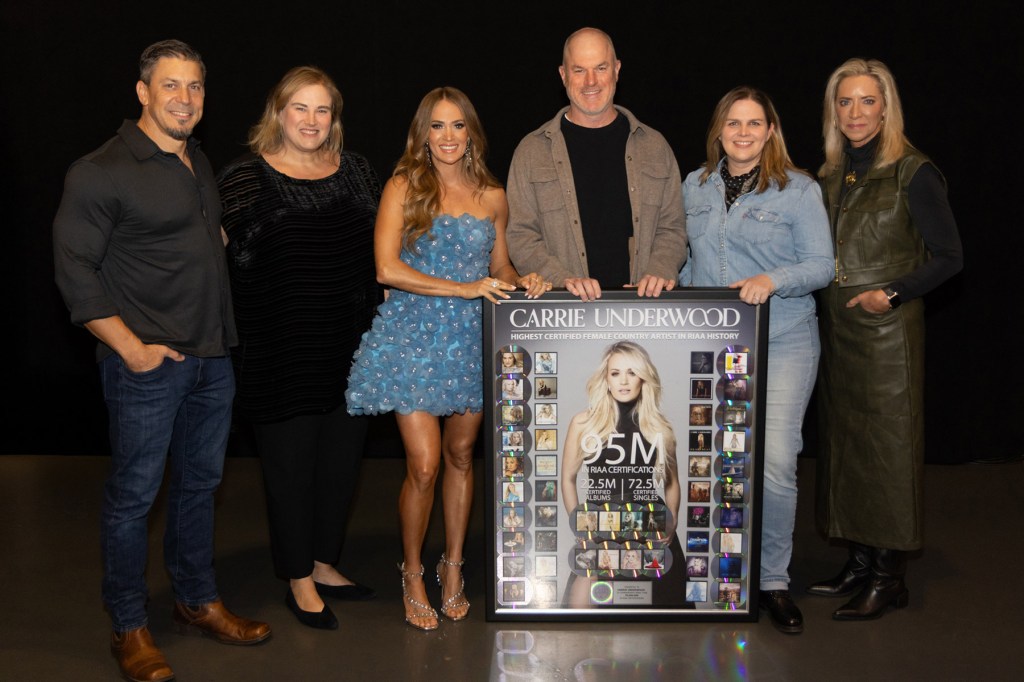
Trending on Billboard Carrie Underwood has hit a new career milestone: She’s been named the highest Recording Industry Association of America-certified female country artist of all time, with over 95 million units (22.5 million in albums and 72.5 million in singles) in the United States alone, inclusive of solo titles and collaborations. Among Underwood’s RIAA […]

Trending on Billboard
Stem co-founder Tim Luckow has launched a new platform that aims to help artists and songwriters claim so-called “black box” royalties, it was announced Thursday (Oct. 30).
The platform, called Notes.fm, seeks to simplify the process of claiming these royalties. It requires only an artist or songwriter’s name to scan streaming services, collection societies and registries, including the Mechanical Licensing Collective (MLC), to identify missing recording, publishing and performance rights royalties and fix issues to ensure future income flows to them directly. In addition to Luckow, the founding team includes Derek Davies and Montalis Anglade.
Related
Now open to the public, Notes.fm does not take a cut of royalties but instead boasts a subscription model beginning at $5 a month. It previously held a year-long beta with more than 400 artists, from established names like Mt. Joy, James Blake and Girl in Red to emerging artists like Adam Melchor and Adam Wise, along with the estates of artists including Howlin’ Wolf. During that time, Notes.fm identified more than $10 million in missing or unclaimed royalties from songs encompassing more than 50 billion streams — an average of $15,500 per artist, according to the company.
The company adds that some artists saw six-figure payouts by participating in the beta, including Mt. Joy, who collected six figures across corrected historical registrations and new registrations for songs including “Highway Queen,” which was the first song to secure 100% royalty registration from delivery by Notes.fm on its release in 2024. Additionally, Blake discovered that around a quarter of all songs in his catalog had missing or incomplete registrations and was able to recover unclaimed royalties from those works.
“When it comes to music royalties, complexity is the enemy,” said Luckow in a statement. “For over a century, musicians have struggled to get paid because of disconnected systems that were not designed for the digital streaming era. Notes.fm fixes that, handling the complex work in the background so artists can focus on the music. Every musician deserves every dollar they’ve earned, and we’re here to make sure that happens.”
Added Steve Bursky, founder and partner at Foundations, which was an early investor in Notes.fm: “What sets Notes.fm apart is its ability to move artists and their teams from insight to action. Rather than merely flagging unclaimed royalties, Notes.fm empowers users to identify, correct, and directly recover what’s rightfully theirs, representing a fundamental leap forward in artist-first rights management.”
More information can be found at the Notes.fm website.

Trending on Billboard Beloved Hollywood fashion designer Bob Mackie is over the moon that Taylor Swift is repping one of his famously rhinestone-encrusted creations on the cover of her The Life of a Showgirl album. Speaking to E! News, Mackie, 85, said he was “kind of shocked” that the singer picked a real-life showgirl outfit […]
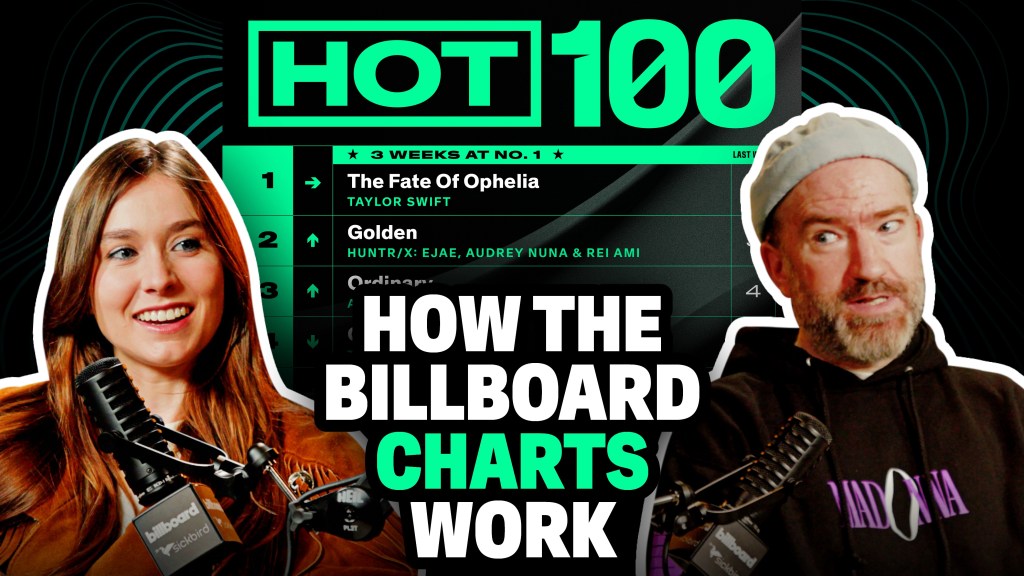
Trending on Billboard What does it take to land a song on a Billboard chart? Billboard’s managing director of charts & data operations, Keith Caulfield, joins host Kristin Robinson to unpack the evolution of the Billboard charts. From the origins of the Hot 100 and Billboard 200 to the modern formula of blending radio, sales […]