State Champ Radio

by DJ Frosty

Current track

Title

Artist

Current show

State Champ Radio Mix

8:00 pm 12:00 am

Current show

State Champ Radio Mix

8:00 pm 12:00 am


Music News

Page: 426

This week in dance music: SiriusXM launched a new in-app channel curated by Tomorrowland, LP Giobbi’s Femme House launched the inaugural Femmy Awards happening later this month in Miami, HARD Summer announced its 2025 lineup, the deadmau5 catalog was acquired by Create Music Group for $55 million, Boys Noize was announced as the opener for Nine Inch Nails’ Peel It Back tour, Calvin Harris teased a new country-oriented song, Diplo’s run club expanded to six new cities for 2025 and 2026, Chicago ghetto house legend DJ Funk passed away at age 54, Diplo and Poolside will play a newly announced L.A. wildfires benefit show, we caught up with John Summit in Miami for Billboard‘s latest cover story, and we had a long talk with Tokimonsta about her excellent new album, Eternal Reverie.

Explore

Explore

See latest videos, charts and news

See latest videos, charts and news

Is there more? You bet there’s more. These are best new dance tracks of the week.

Trending on Billboard

Laidback Luke, “It Clicked”

After a quiet period, Dutch titan Laidback Luke busts down the door with 1:50 of undeniable heat. Dually ominous and fun, “It Clicked” takes inspiration from the hallowed bloghouse era and, aptly, also marks the producer’s signing to Steve Aoki’s Dim Mak label. “I looked back at the last decade of my career, and I’ve just been trying to conform to the streaming market,” LBL says. “I want to return to being me — unapologetically me, which I haven’t felt since 2012. I’m bringing back that big, crazy energy, that early Dutch house meets bloghouse sound. I want to sound loud, harsh and funky again.” Much more is promised from the producer this year, and with the new single as an indication of where things are headed, count us in for the ride.

David Guetta & Sia, “Beautiful People”

With their previous collaborations racking up literally billions of streams, it makes sense that David Guetta and Sia would put another one out into the ether. The latest from the pair — whose prior hits together include “Titanium,” “Flames” and “Bang My Head” — is “Beautiful People,” a track that falls squarely into the dark, urgent and oversized “future rave” genre the French producer has been proselytizing about over the last few years. The song finds Sia belting out lyrics like “Beautiful people say, ‘Go go go’/ Beautiful people don’t stress stress stress/ They never rest/ Beautiful people say yes” with tens of thousands of people seeming to take to the sentiment, as the song racks up the streams across platforms in its first 24 hours of existence.

Franc Moody, Chewing the Fat

English duo Franc Moody (that’s Ned Franc and Jon Moody), release their fifth studio album, Chewing the Fat. The title, the guys say, “felt apt as a name, as it took us a lot of discourse and trial and error to find our groove with the songs and sound” — although they add that their creative verve was rejuvenated after seeing performances by LCD Soundsystem and Massive Attack, shows that reminded them that a fundamental piece of most any group’s puzzle is attitude. The 10-track album is full of gorgeous harmonies and fun, saucy funk (check the title track) that will absolutely inspire some ass-shaking, but which also feels mature and deeply considered.

Skream & Partiboi69, “Pound Town”

Sometimes you just want a fun, silly party record, a need English legend Skream and Australia’s Partiboi69 giddily meet with “Pound Town.” On Instagram, Skream writes that the pair “made this one last year over in L.A. around Coachella time and well… it’s gone down an absolute madness!!!” Indeed, ridiculous lyrics about the titular destination city paired with a throbbing, bouncy bass make this one into a total riot and a surefire weapon. The track is out on HARD Records.

Helang, “Flashback”

Chinese American producer Helang is gaining traction, with her work getting rinsed by artists including Richie Hawtin, Joseph Capriati and Maceo Plex as she herself rises in the live space. Her latest release, the three-track Flashback EP, flaunts why Helang is a name to watch, with the hypnotic title song structured like a sharp wave of sound that crashes with spare sophistication. “When playing around with the sound designs in this particular EP,” the producer says, “I’ve found a great balance between euphoria and melancholy which is demonstrated in the vocals and synths. To me this is the beauty of music – to feel the feels: the good and the bad.” Flashback is out on He.She.They Records

With their third full album, awake&build, released in 2024, yama completed their Moratorium Trilogy. Now yama has put the finishing touches on their fourth full album, ; semicolon, in which they set off to a new start as an artist.

Explore

Explore

See latest videos, charts and news

See latest videos, charts and news

In addition to the previously-released “BURN,” created under the name of yama x WurtS, and “Drop,” which was produced by indigo la End, the album contains new songs which saw yama being joined in the songwriting process by creators and artists they hold great respect for, like maeshima soshi and Shota Horie. These new songs make up the majority of the album. As yama’s career has advanced, their thirst for expressivity has grown even stronger. What is the philosophy that underlies his artistic efforts? Billboard Japan talked with yama about what lay behind the creation of ; semicolon and delved into who they are as an artist today.

I’ve heard that the album’s title, ; semicolon, is meant to represent taking a new step forward as an artist.

Trending on Billboard

This new album is packed with things I love, music I love, and messages I want to share. I tried to be as much a part of the songwriting and lyric-writing process as possible. I wanted to be involved in any way I could in the album’s creation. I feel like, with my past trilogy of albums, I’ve finally set the foundation in place to move forward (as an artist).

Your 2021 release, the meaning of life, your 2022 release, Versus the night, and your 2024 release, awake & build, make up the “Moratorium Trilogy,” right?

I was feeling things out as I went through my Moratorium period. I was hesitant to perform in front of people, and going up on stage was a struggle. But I couldn’t back down. That’s because for as long as I can remember, music has been the only thing that truly interests me. I just want to keep moving forward. I can’t stop myself. I feel like I’ve grown as a person through this process of trial-and-error. At first, I couldn’t convey what I was feeling to others, but now, having finished the trilogy, I’ve defined what it means to be “yama.” That’s why I was able to make ; semicolon.

Of all of your albums, ; semicolon has the most songs on which you’ve been personally involved in the songwriting and lyrics.

I love singing, of course, but with Versus the night I also started writing songs. Through the process, I found that I was surprisingly strong-willed. I realized that there were things I wanted to say and to communicate, though I didn’t put them in words, and I had a stubborn streak, unwilling to compromise on my message. I started thinking that I’d be better able to convey my aesthetics and my human nature if I wrote my own music.

So turning your own feelings into song and sharing them with others gave you a sense of fulfillment?

Not so much “fulfillment” as more like “purging.” I first fell in love with music because when I listened to music it took a weight off my shoulders and set my heart at ease. When I share my own music, and when I put my own emotions into musical form, it makes my heart feel a bit lighter. That said, I’m still exploring the process of making music. I have this need to make everything perfect, so I overthink things. I just can’t bring myself to feel optimistic, and my output is slow because of that. But when making ; semicolon, I just put that all aside. I took this stance that “I’m just a beginner,” and I started out simply focusing on getting things in song form.

So that creation process itself may have been a way of accepting yourself as you are, flaws and all.

I feel like I’ve been able to forgive and accept myself, a bit at a time. Initially, I didn’t want to show people my shortcomings. But when I revealed my imperfections, I was surprised at how much they resonated with others. People became interested in yama, the person. So, because of that, I’ve also become able to accept my own imperfections.

The album’s name, ; semicolon, came from Project Semicolon, an American movement to support people struggling with mental health issues. Specifically, the semicolon represents the idea of moving from a difficult chapter of your life to starting a new chapter. What was your impression of the project?

I found out about Project Semicolon the first time I performed live in front of an audience. A person who’d been a fan of mine since my indie days gave me a letter and, along with it, a ring with a semicolon on it. In the letter, they wrote about the meaning of the project, and it made a deep impression on me. At the time, I was recklessly rushing forward, doing all I could to move forward. I thought, “I can’t do it yet, but I hope one day I’ll be able to put this concept into song.”

What about Project Semicolon made such a strong impression on you?

That interaction with a fan was a formative experience in my musical career, truly feeling that there are real people out there listening to my music. I’d seen comments on my videos on streaming sites before, but my musical activities had been limited to the internet, so I almost never received messages directly sent to me. But then, this one day, this fan sent me a message. It said “I’d been feeling like I just couldn’t keep struggling with life, and I was thinking about killing myself when I heard the song you released today. I want to hear more of your music, so I’ll keep on trying.” 

So your song saved that fan.

I’d been working so hard making music to save myself. It was the first time that I felt that my efforts could save and provide comfort to someone else. Later on, I went on to perform live in front of an audience, and that’s when that fan taught me about the concept of Project Semicolon. Just living each day had been hard for them, but they kept pushing forward, looking for something they could enjoy in their life. Little by little, I grew more confident in my own skills, too, and I got better at communicating with people. It was a gradual process. I never got a semicolon tattoo, but putting these feelings in song form was the same thing for me. I named the album ; semicolon and wrote a song named “semicolon,” and for the rest of the album I let my own curiosity and sense of excitement lead me as I wrote the kinds of songs I wanted to write.

You discovered a new world through your interactions with others. I feel like that’s why you went from having a hard time performing in front of people to coming to enjoy performing live, and it’s where the song “semicolon” came from.

I’ve always made music for myself. That was true long ago and it’s still true today. The issue’s been how much I could grow, how much I could comfort myself, and how much I could forgive and accept myself. I’m sure everyone feels the same, and that everyone’s hard on themselves. But if I extended a helping hand to people simply out of some kind of sense of obligation, that wouldn’t be truly from the heart. I don’t want to pretend to be something I’m not through my music. I make music to cleanse my own heart, and if that comforts other people, then that’s wonderful. I wish someone had told me about the semicolon movement earlier. But unless I can forgive and accept myself, I don’t think I’ll be able to overcome my trauma or the ties that bind me. That’s why I tell myself “Accepting yourself isn’t compromising yourself. It’s just one part of taking control of yourself.” Of course, listeners can take the music as they wish, but I’d love it if when people listened to the song, they didn’t take the lyrics as me or someone else talking to them, but instead felt like the lyrics were a message they were telling themselves.

—This interview by Sayako Oki first appeared on Billboard Japan

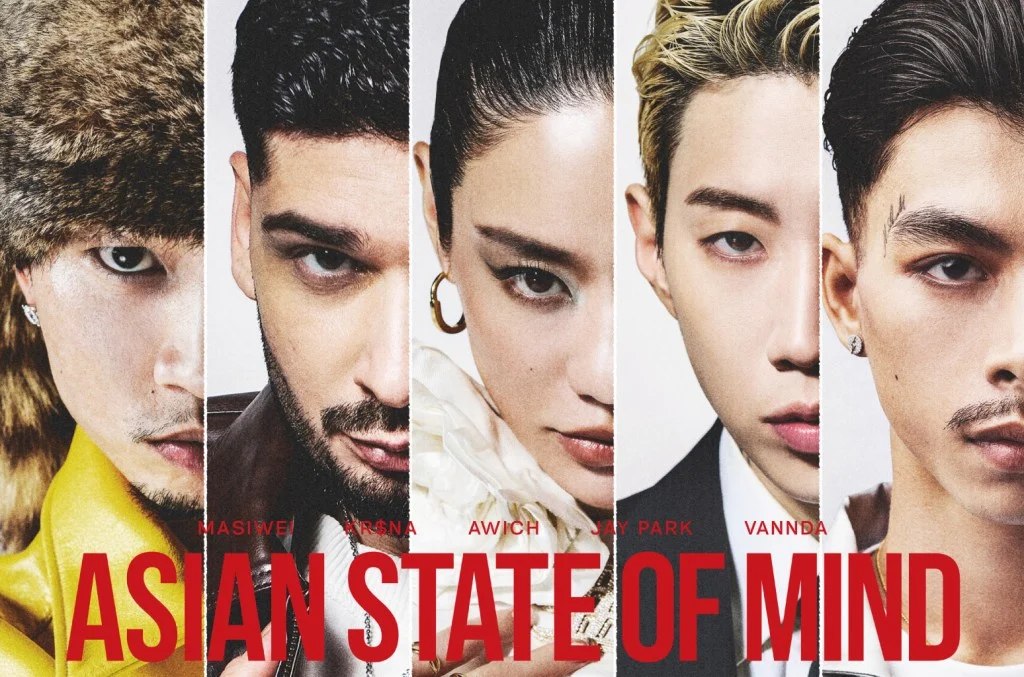
Awich dropped a collaborative single called “ASIAN STATE OF MIND” featuring South Korea’s Jay Park; India’s KR$NA; Masiwei, the leader of the Chinese group Higher Brothers; and Cambodia’s VannDa on Feb. 28.
The Okinawan MC and top rappers from each country came together to usher in a new Asian era on this cypher track, mixing their native languages with English to simultaneously compete with each other to flex their uniqueness while giving off a sense of Asian unity.

The accompanying music video, released along with the track, racked up a million views in just 24 hours after its release. Excited fans have left over 20,000 comments in various languages. As the title “ASIAN STATE OF MIND” suggests, the video was shot in each of the home countries of the rappers, who share the same pride as Asian artists.

Trending on Billboard

Awich, the queen of Japanese Hip-Hop, was recently appointed as global ambassador for JORDAN (Nike), and is set to further expand her reach outside of Japan in the future.

Jay Park, founder of AOMG, H1GHR MUSIC, and MORE VISION, has released a diverse range of music including collaborations with other artists. He’s the first Asian to sign with JAY-Z’s Roc Nation, and is enjoying international success as a highly acclaimed artist.

KR$NA, hailing from Delhi, India, garnered recognition with his Hindi song “Vyanjan.” The 37-year-old MC’s catalog has been highly acclaimed both in India and internationally, and he’s known as lyrical innovator in the Indian hip-hop scene.

Masiwei, from Chengdu, Sichuan Province, is the leader of the Chinese hip-hop group Higher Brothers and also active as a solo artist. In September 2023, he released a collaborative single with Japan’s Satomi Shigemori called “LION (feat. MASIWEI).” The 32-year-old is also the founder of the fashion brand AFGK.

VannDa, born in Sihanoukville in 1997, achieved the feat of being the first Cambodian artist to have a music video (“Time to Rise”) score over 100 million views on YouTube in October 2022. He was included on Forbes’ 30 Under 30 Asia-Pacific music list the following year, and went on to perform along with Phoenix and other acts at the closing ceremony of the Paris Olympics in 2024, introducing Cambodian music on the global stage.

March has finally arrived, bringing with it a suite of stunning new tracks from some of the biggest stars in music — but which ones are your favorites this week? After five years of waiting, Little Monsters everywhere rejoiced Friday (March 7) as Lady Gaga finally unveiled her long-awaited seventh studio album Mayhem. Featuring her […]

On Feb. 2, group chats across the music industry lit up when Chappell Roan used the Grammys stage to implore record labels to cover healthcare costs for their artists. Perhaps few chats were more active than the one between employees at Backline, the mental health nonprofit serving music professionals.
“[Our group chat] was on fire as soon as she started talking… this is a conversation that we have all the time,” says Hilary Gleason, Backline’s executive director. “So to see it platformed in that way really resonated with us and encouraged us. We were all just blown away that she chose to use that moment in that way, not having any idea that a week later, we would be where we were.”

Where they are is in a privileged position. On Super Bowl Sunday (Feb. 10) — after Roan hit back at a Hollywood Reporter op-ed by a former A&R executive who criticized her speech by daring him to match her $25,000 donation to help “struggling dropped artists” — Roan and Backline jointly announced the We Got You! campaign, launched with $25,000 donations from Roan, Charli XCX and Noah Kahan (who had previously partnered with Backline to provide mental healthcare for all 78 band and crew members on his We’ll Be Here Forever Tour). Billed as “a fund to support artists’ mental health,” the campaign has resulted in an influx of donations to the nonprofit, including matching $25,000 donations from Sabrina Carpenter, Live Nation, AEG, the Wasserman Foundation, Guy Oseary, Sumerian Records and the Hinterland Festival, among others. Since launch, the campaign has netted the organization $353,000 and, perhaps more importantly, raised its public profile overnight.

Trending on Billboard

“Our biggest challenge has always been getting the word out,” says Gleason. “So this moment that happened around Chappell at the Grammys has really given us that exposure and opportunity to really connect with people who’ve never heard about us and could utilize these kinds of resources.”

Launched in October 2019 by more than 50 music industry professionals following the suicides of several prominent musicians, Backline provides a case management program that offers one-on-one support for music workers who need help navigating the often-knotty mental health care space. The organization helps link these workers with therapists and 170 partner organizations — including MusiCares, the Sweet Relief Musicians Fund and the Black Mental Health Alliance — that together form a clinical referral network boasting 1,150 providers across all 50 states, over 85 percent of whom have experience working with music professionals or have worked in the industry themselves. Backline also hosts annual clinical training for providers; sends out free touring care packages that include wellness products and mental health resources for professionals on the road; hosts weekly industry support groups; and offers free or heavily discounted wellness resources from partners that offer services including yoga, breath work, meditation and nutrition.

When Gleason learned that Roan had chosen to support Backline from a list of options the artist’s team had presented her with, she was flattered but uncertain that it was the right fit, given that Roan’s speech had focused on overall healthcare, not just mental health.

“I actually pitched a few of our partner organizations in that moment, saying, you know, this could be a really great moment for some of these other organizations who have a broader focus,” says Gleason. She was surprised, then, when Roan’s team came back to her and insisted Backline was the choice. In hindsight, Gleason sees the wisdom in Roan choosing to partner with Backline, which notably boasts Joshua Knight and Matt Runner — co-founder and agent, respectively, at Roan’s agency Wasserman – on its board of directors.

“I think the throughline of the work that we’re doing in mental health is a foundational piece of the larger conversation around access to health care,” says Gleason. “If you’re struggling with your mental health, it can be really hard to sign up for insurance, get your finances in order, go see a doctor, go see a dentist. Any of those pieces can feel really overwhelming if you don’t have the mental health foundation in place. And so we see this as the first step of accessing healthcare in a greater capacity.”

Since the influx of donations came through — including from many of Roan’s fans — the picture for Backline has changed. As Gleason puts it, the organization’s strategic plan for 2025 is now being looked at “with a bit bigger lens.” While she says they “want to stick to our core programs,” the extra money will “allow us to make some moves more quickly,” including upgrading the organization’s case management system this year. It will also allow Backline to expand its marketing efforts “farther into the music industry,” she says: “We really want to hit every corner, make sure that whether you’re in a tour bus, in a studio, in an office, you know that this is a resource that exists for you.”

Since the launch of We Got You!, Gleason says Backline has received an encouraging swell of support from music companies, noting that they’ve seen more corporate donations in one month than they did all of last year. While receiving support from individuals is important, she agrees that companies must shoulder the responsibility of caring for their artists and staff.

“Last year, we did 1.4 percent of our total raise from corporations, and that’s really where we want to see the change — for [companies] to invest in this and take care of their employees and their artists and be a part of this positive moment,” Gleason says. “It’s easy enough to email your whole staff and say, ‘Here’s all of Backline’s resources.’ It’s harder to say, ‘And we’ve made a donation, and we’ve earmarked that donation for your care.’ But we’re starting to see that kind of thing happen more and more, and we’re hoping that this moment really gets people thinking about what their plan is. And I think more artists are going to be looking for that as they are signing with labels and agencies and management companies.”

Of course, receiving the public support of Roan and other stars is the kind of marketing money can’t buy, and that added visibility, in addition to the flood of donations, has led to a spike in interest from music professionals looking for help. Gleason says Backline has had 205 submissions to case management in 2025, more than twice as many as it had at the same time last year (87) — an increase she attributes to both the Los Angeles wildfires (a Backline social post offering free therapy to those affected by the fires was shared by celebrities including Justin Timberlake and Common) and the We Got You! campaign. Notably, Backline has seen more producers, promoters and back-of-house professionals coming through its case management system — artists have historically made up 40 percent of cases — including an increase in music workers who hail from states including Texas, Maryland and Missouri, Roan’s home state. One of those cases, in particular, has stuck with Gleason.

“One of the submissions [was] from a young artist in Missouri, and that’s exactly what [Roan] was speaking to, and the work that we’re trying to do day in and day out,” she says. “So for [that artist] to learn about the resource, utilize the resource — I can’t think of a more perfect circle.”

The Blog Era is back? Both J. Cole and Wiz Khalifa have been going back to the fundamentals to start off 2025. They’ve each achieved massive success over the course of their careers and they know that to stay motivated, you sometimes have to do the things that got you there. After releasing his Inevitable […]

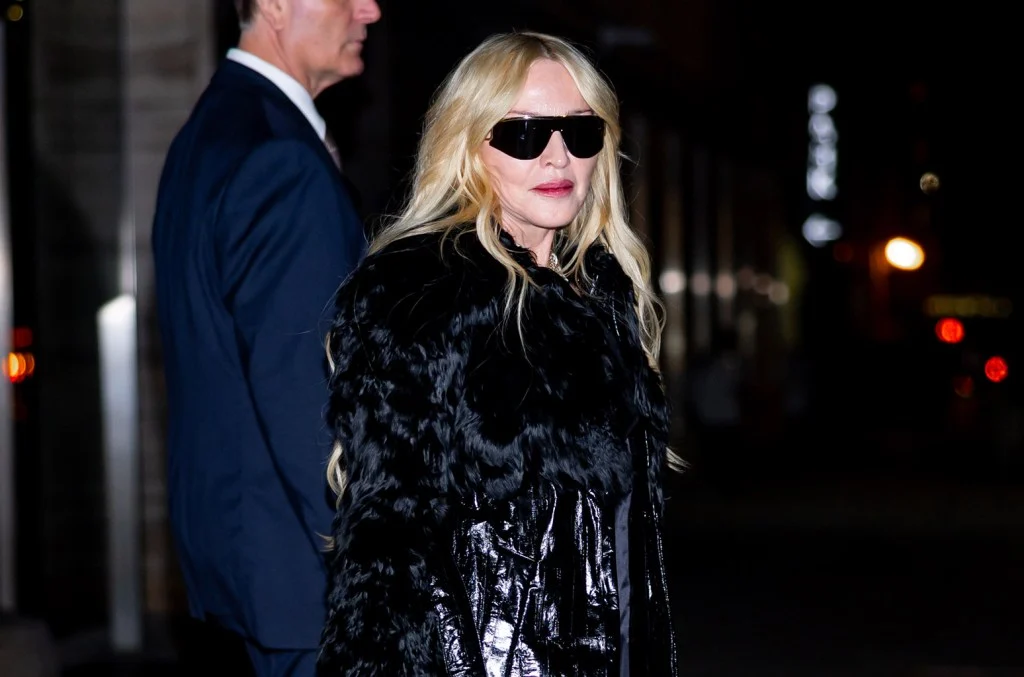
After spending much of her career advocating on behalf of the LGBTQ+ community, pop icon Madonna is speaking out against the mistreatment of trans people everywhere. In a post to her Instagram Stories on Thursday night (March 6), Madonna shared her candid thoughts on the current wave of anti-trans extremism making its way around the […]

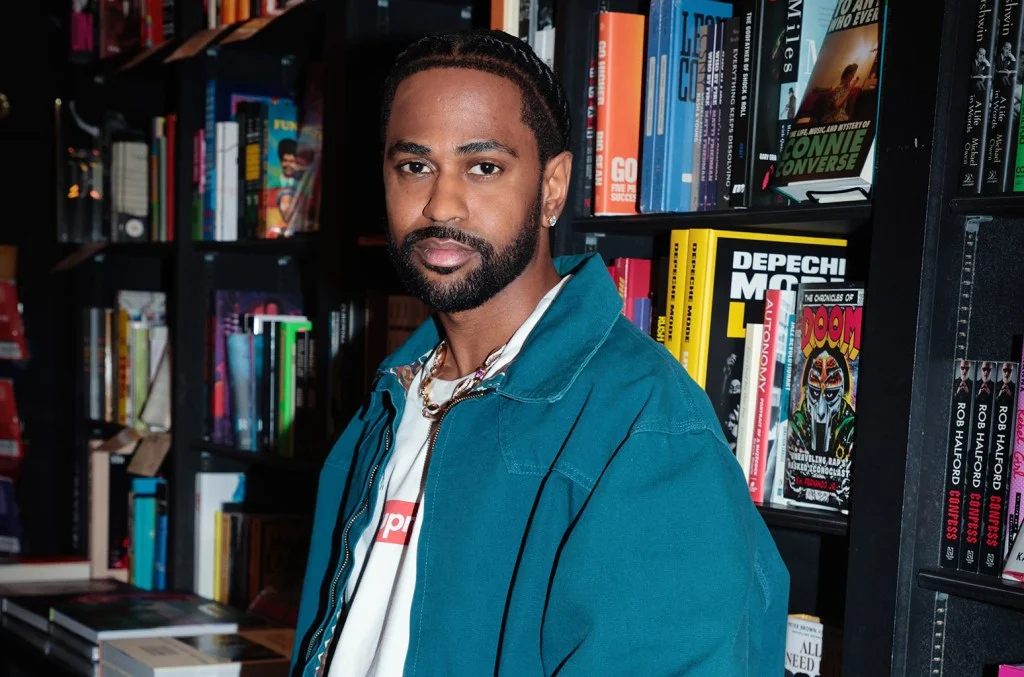
Sometimes, artists’ biggest hits are the ones they don’t see coming. Big Sean doubted the commercial appeal of “I Don’t F–k With You” and thought it was “dumb” while nearly cutting it from his 2015 Dark Sky Paradise album.

Explore

See latest videos, charts and news

See latest videos, charts and news

Sean Don joined Detroit Lions star Amon-Ra St. Brown and his brother Equanimeous St. Brown on March 5 for an episode of the St. Brown Podcast, which saw the Detroit native recall playing “I Don’t F–k With You” for Beyoncé and Jay-Z at their house ahead of the project’s arrival.

According to Sean Don, Bey thought the brash anthem was “a little disrespectful” and suggested Nicki Minaj as a feature to balance the track, while Hov loved it and implored him to release the song.

Trending on Billboard

“I went to their house and was playing them songs. Beyoncé was like, ‘It’s a little disrespectful. Maybe you should [get] Nicki Minaj on it for a female’s voice.’ Jay-Z was like, ‘Nah, it’s hard, though.’ He was like, ‘People gonna get it that you just having fun.’”

Sean continued: “Then I remember I was getting texts from Hov. He sent me a text one time that was like, ‘Every day you not putting that song out, you losing.’ I almost didn’t put it on the album. I thought it was a little dumb.”

Billboard has reached out to reps for Beyoncé for confirmation.

Fortunately for fans, Big Sean added E-40 to the mix and kept “I Don’t F–k With You” on Dark Sky Paradise, which went on to reach No. 11 on the Billboard Hot 100, and is nearly diamond at 9x-platinum.

A day before Dark Sky Paradise‘s release (the album celebrated its 10th anniversary in February), Big Sean paid homage to one of his favorite Bey tracks with a freestyle over 2003’s “Me, Myself and I.”

Watch the full clip below.

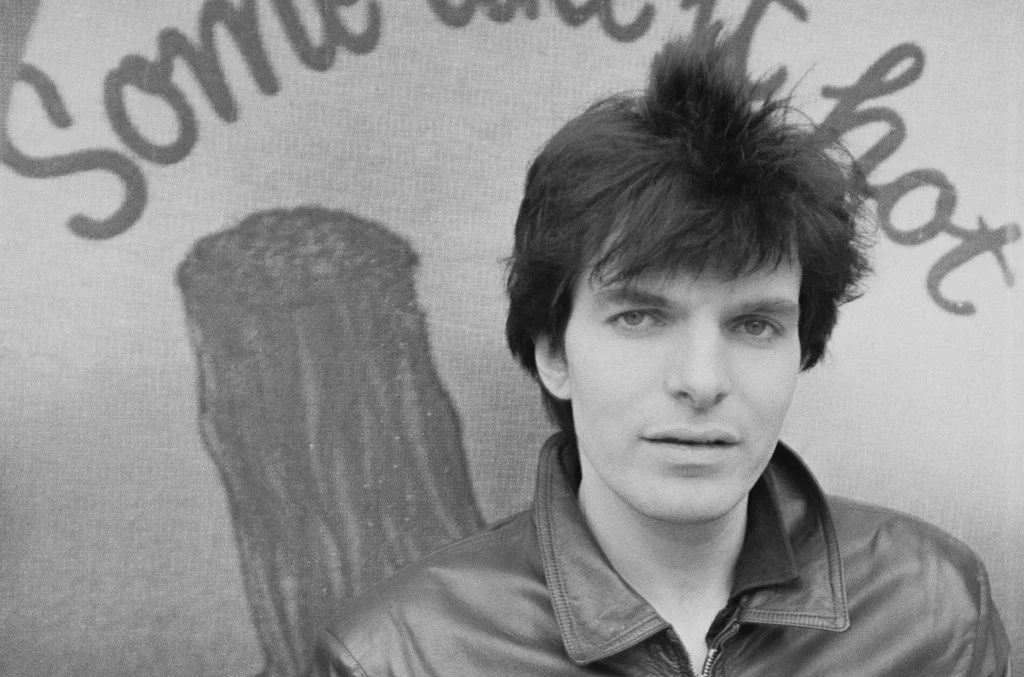
Brian James, founding member of English punk-rock band The Damned, died Thursday (March 6). The guitarist was 70.
The news was shared with fans via a post on James’ Facebook page on the day of his death. “It is with great sadness that we announce the death of one of the true pioneers of music, guitarist, songwriter and true gentleman, Brian James,” it read.

The message added that the musician was surrounded by family when he “passed peacefully.”

James formed The Damned in 1976 with bandmates Captain Sensible, Dave Vanian and Rat Scabies. That year, they released what is considered the first-ever British punk single: “New Rose.”

Trending on Billboard

The guitarist would work on two albums with the foursome before leaving the group: 1977’s Damned Damned Damned and Music for Pleasure.

Captain Sensible honored his late bandmate with a post on X Thursday, sharing a photo of himself with James and writing, “We’re shocked to hear that creator of @thedamned, our great chum Brian James has sadly gone.”

“A lovely bloke that I feel so lucky to have met all those years ago and for some reason chose me to help in his quest for the music revolution that became known as punk,” he added. “Cheers BJ!”

After leaving The Damned, James would form short-lived group Tanz Der Youth before starting The Lords of the New Church with Stiv Bators. The latter group released three studio albums: 1983’s Is Nothing Sacred?, 1984’s The Method to Our Madness and 1988’s Killer Lords. James also created The Dripping Lips and the Brian James Gang as well as released a plethora of solo music throughout his six-decade career.

His career came full circle in 2022 when James reunited with The Damned for a string of U.K. live shows. Five years prior, his former bandmates emphasized how important he’d been not only to the band, but to developing the English punk scene, in a 2017 interview with Rolling Stone.

“With the Damned, it was always about the music,” Vanian told the publication at the time. “Brian was a fantastic guitarist.”

“We used to call Brian the riff-meister,” Captain Sensible recalled. “That’s why Jimmy Page was such a fan of the band at the time. There are photographs of him and Robert Plant backstage at our gig at the Roxy. Jimmy Page saw something special in Brian’s guitar style and writing, as did I, since I was a guitar player before The Damned and switched to bass to play with Brian.”

James is survived by his wife, Minna, his son, Charlie, and his daughter-in-law, Alicia.

Gracie Abrams achieves her first No. 1 on a Billboard radio ranking as “That’s So True” ascends two places to the top of the Pop Airplay chart (dated March 15). The song, on Interscope/ICLG, gained by 5% in plays Feb. 28-March 6. (The Pop Airplay chart ranks songs by weekly plays on over 150 mainstream […]