State Champ Radio
 Music News
Page: 126

Noted party starters The Chainsmokers have pushed that ethos just a little bit farther Wednesday (June 18) via their new remix of Charli xcx‘s “Party 4 U.” Under the duo’s watch, the five-minute original gets pared way down to two minutes and 15 seconds, with the guys bumping up the BPM and weaving Charli’s voice […]
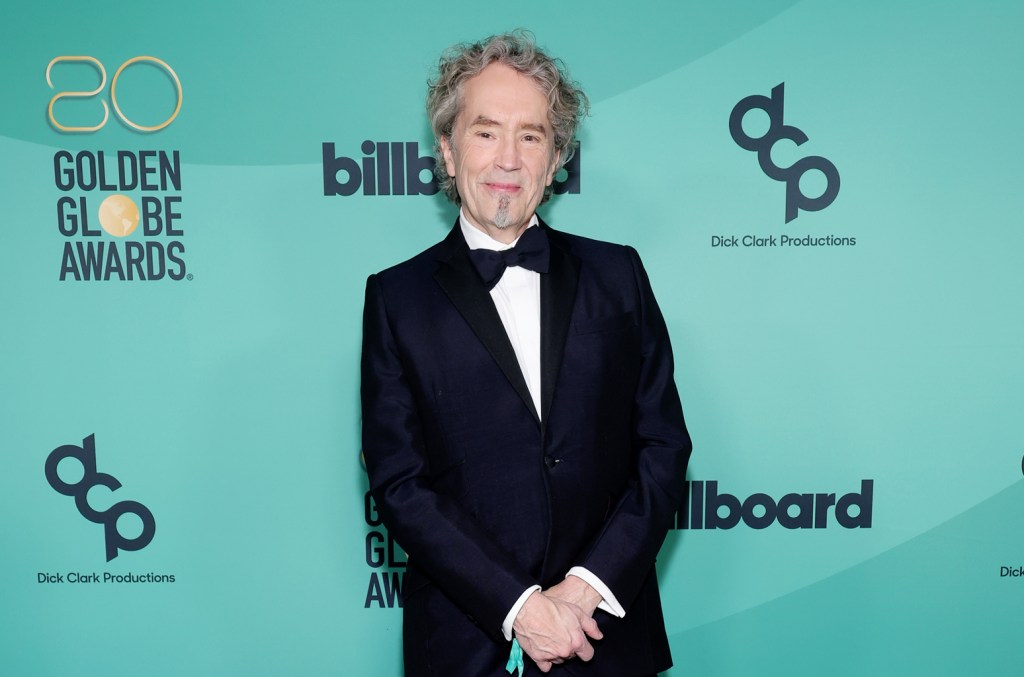
Carter Burwell, a three-time Oscar nominee for best original score, has been elected to the board of governors of the Academy of Motion Picture Arts and Sciences. He joins two returning governors — Lesley Barber and Richard Gibbs — in representing the music branch. Burwell replaces Charles Fox, who was the third governor representing the music branch.
Burwell, 70, has received Oscar nominations for scoring Todd Haynes’ Carol (2015) and two films directed by Martin McDonagh: Three Billboards Outside Ebbing, Missouri (2017) and The Banshees of Inisherin (2022).
Trending on Billboard
Burwell, who was born in New York City, has scored most of the films made by Joel and Ethan Coen. He has also scored films by such other directors as Bill Condon, Spike Jonze, James Foley, Brian Helgeland and John Lee Hancock.
Burwell received two Primetime Emmy nominations in 2011 for his work on HBO’s Mildred Pierce, winning for outstanding music composition for a miniseries, movie or a special (original dramatic score).
Burwell is one of four pros who were elected to the board of governors for the first time, along with Peter Kujawski (Executives Branch), Gigi Williams (Makeup Artists and Hairstylists Branch) and Andrew Roberts (Visual Effects Branch).
Ten incumbent governors were reelected to the board: Marlee Matlin (Actors Branch), Marlon West (Animation Branch), Richard Hicks (Casting Directors Branch), Dion Beebe (Cinematographers Branch),Jason Reitman (Directors Branch), Chris Hegedus (Documentary Branch), Nancy Richardson (Film Editors Branch), Jason Blum (Producers Branch), Missy Parker (Production Design Branch) and Peter Devlin (Sound Branch).
Three governors are returning to the board after a hiatus: Isis Mussenden (Costume Designers Branch), Christina Kounelias (Marketing and Public Relations Branch) and Larry Karaszewski (Writers Branch).
Returning governors, in addition to Barber and Gibbs, are Pam Abdy, Wendy Aylsworth, K.K. Barrett, Rob Bredow, Brooke Breton, Paul Cameron, Patricia Cardoso, Eduardo Castro, David Dinerstein, Ava DuVernay, Linda Flowers, Jennifer Fox, Jinko Gotoh, Lynette Howell Taylor, Kalina Ivanov, Simon Kilmurry, Laura C. Kim, Ellen Kuras, Hannah Minghella, Andy Nelson, Daniel Orlandi, Lou Diamond Phillips, Gerald Quist, Stephen Rivkin, Howard A. Rodman, Terilyn A. Shropshire, Dana Stevens, Mark P. Stoeckinger, Chris Tashima, Kim Taylor-Coleman, Jean Tsien, Rita Wilson and Debra Zane.
The Production and Technology Branch and Short Films Branch did not hold elections. New governors-at-large will be elected and announced later this month.
The board of governors sets the academy’s strategic vision, preserves the organization’s financial health, and assures the fulfillment of its mission. The newly elected 2025-26 board will take office at the first scheduled board meeting of the new term.
The academy has 19 branches, each represented by three governors, except for the Animation Branch, represented by two governors; the Short Films Branch, represented by one governor; and the Production and Technology Branch, also represented by one governor. Governors, including the board-elected governors-at-large, may serve up to two three-year terms (consecutive or non-consecutive), followed by a two-year hiatus, after which eligibility renews for up to two additional three-year terms for a lifetime maximum of 12 years.
For a list of the current 2024-25 academy governors, visit the the academy’s website.

Rauw Alejandro kicked off the European leg of his Cosa Nuestra World Tour at London’s iconic O2 Arena on Tuesday (June 17), but it was Janet Jackson’s surprise appearance that captured the internet’s attention. Explore See latest videos, charts and news See latest videos, charts and news The legendary pop singer not only attended the […]
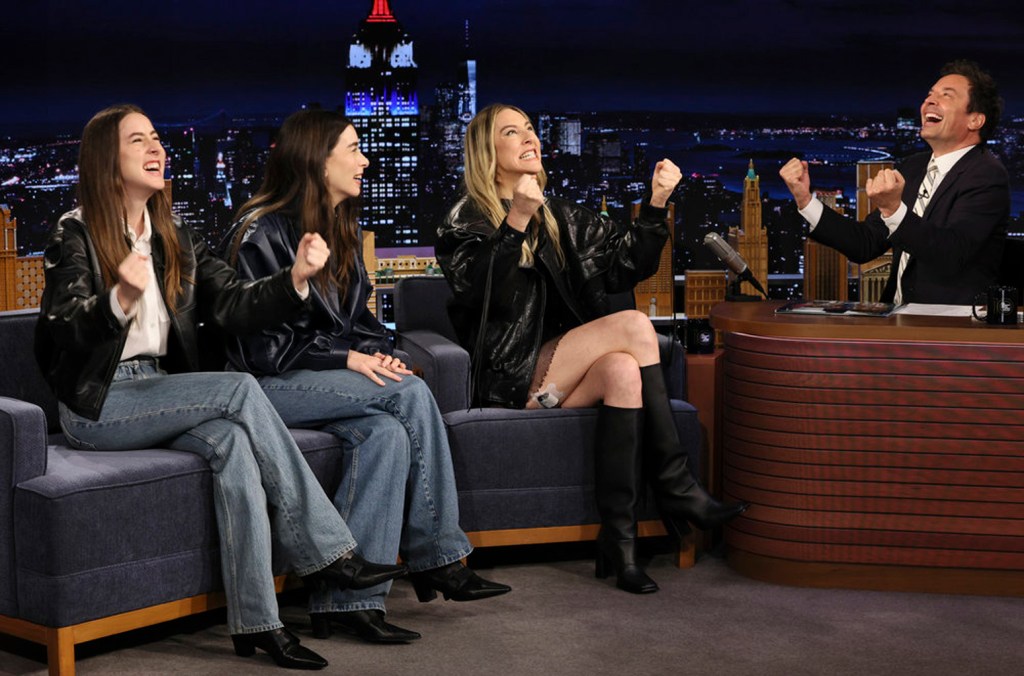
Haim have performed on The Tonight Show before. But Alana, Este and Danielle have never taken a trip to the couch to chat with host Jimmy Fallon, so on Tuesday night (June 17) the sibling trio made the most of their maiden voyage by doing all the things.
In addition to performing their single “Down to Be Wrong” with a full band from their forthcoming album I Quit (June 20), the trio popped in for the episode’s cold open to teach Fallon how to speak in perfect Haim-style harmony. Hanging out in their green room, the sisters answered everything Fallon said in a perfectly calibrated single voice. “I know you sing like this, but do you actually talk like this?” Fallon asked nervously.
“Yeah, we do Jimmy,” they said in a sing-song, robotic fashion. “It’s kind of like a special thing we do, Jimmy.” They invited Fallon to join them and when the beat kicked in they did a call-and-response until Este stopped the song to ask, for real, if there were any more snacks available.
Trending on Billboard
A short time later they were on the couch, describing to Fallon how the moody cover of their album was shot by longtime collaborator and friend director Paul Thomas Anderson, with Este lamenting how her sisters are both in perfect focus, while she is a blurry figure in the foreground. “We’re lucky enough that he’s done 10 of our music videos, he did [the cover] of our last record, Women in Music, Part III,” she said.
What Fallon really wanted to know, though, was what inspired the title of their fourth album. Este explained that as children they were obsessed with the 1996 Tom Hanks musical comedy That Thing You Do!, the Oscar-winning actor’s writing and directorial debut and homage to the fictional Beatles-wannabe one-hit wonder band the Oneders.
“We watched it as kids like every weekend on VH1,” she said as the trio flawlessly broke into an impromptu round of the movie’s signature earworm title track. “So we loved that movie and there’s this pivotal moment in the movie at the end of the movie the lead singer is like, ‘Okay we have to do our second record,” and he wanted to do this really, like brooding, emotional song,” Este explained.
“And he comes up to the mic and he’s basically like, ‘Okay, I’m ready to record.’ And then Tom Hanks, the manager, is like, ‘Listen Jimmy, I want something peppy, something snappy.’ And then Jimmy goes [clears throat], ‘I quit, I quit, I quit,’” she sang as her sisters snapped along. So, she said, whenever they would do mic checks they would do so with a round of “I quit, I quit.” They did so during sessions for their fourth album as well, and after using the phrase as a placeholder to organize their musical files they decided to just keep it as the title for the album about breakups and romantic spin-outs.
“It stuck and we also realized that a lot of our songs are kind of about, like, quitting,” Este said. “Quitting the things that aren’t good for us anymore.” For the record, they are not quitting music. In fact, they proved how much they’re not quitting by revealing that as kids they were also constantly drumming on each other and everything in sight.
So when Fallon gave them a series of random objects, Este snagged a trash can for Danielle to bang on and some paper for Alana to tear while the host shook a box of Altoids and she tapped on a coffee mug for an impromptu, stripped-down version of their I Quit single “Relationships.”
Check out Haim on The Tonight Show below.
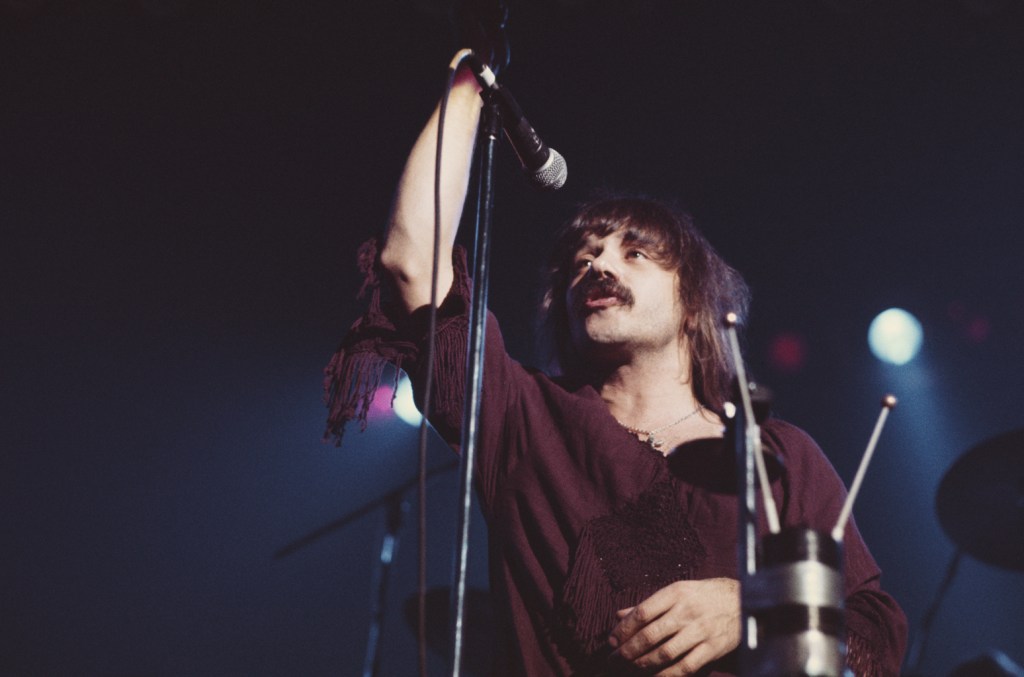
Terry Luttrell has been injured after getting into a car accident, which occurred after the REO Speedwagon singer fell asleep at the wheel.
The 78-year-old musician was candid about the incident while speaking to the News-Gazette Tuesday (June 17), explaining that he’d been driving to St. Louis for business reasons when he crashed on Interstate 57. He says that he’d been up until about 4:30 a.m. the night prior following a Speedwagon concert at State Farm Center in Champaign, Ill., staying up late to attend an afterparty and sign autographs for fans.
“It just happened,” Luttrell told the publication. “I nodded off. I rolled the car over, and I woke up, and I was in a cocoon. Unfortunately, it totaled the car.”
By “cocoon,” the rock star was referring to his car’s airbags, which deployed on impact and cracked his sternum. He is now recovering from his injuries at Carle Foundation Hospital in Urbana, where he expects to stay for the next few days.
Trending on Billboard
“I was able to get up and get out of the car,” Luttrell recalled. “I have a little back pain and neck pain. It’s nothing that can’t be overcome.”
Upon being transported to the hospital, Luttrell learned that some of the nurses were fans who had attended the concert the night prior. The performance at State Farm Arena in the band’s home city marked a special one-off reunionshow punctuating REO Speedwagon’s decision to cease touring after 2024 due to “irreconcilable differences” between members. Luttrell — who left the group and was replaced by Kevin Cronin in 1972 — stepped back into his former role as frontman only for the night.
“It was exactly what we thought it was going to be,” he told the Gazette. “It was a one-off concert that will never happen again. To say that you were there was a pretty big thing.”
Luttrell joined Speedwagon in 1968, departing after four years with the band reportedly due to personal issues with guitarist Gary Richrath. Cronin was then brought in to fill his shoes, and — after being briefly replaced with Mike Murphy — helped the group score some of its biggest hits, including Billboard Hot 100 No. 1 singles “Keep On Loving You” and “Can’t Fight This Feeling.”
Despite his success with the group, Cronin was not at the reunion show Saturday (June 14). On Facebook, he recently said that he would have wanted to attend, but that organizers chose “a date where it was public knowledge” that he had prior engagements with his own Kevin Cronin Band in Oregon.
Cronin was also the only remaining REO bandmate who wanted to continue touring, but he says he was outvoted by bassist Bruce Hall and keyboardist Neal Doughty when it came to calling it quits. The men announced last September that they would stop touring by the end of the year and dissolve the band due to conflicts between Hall and Cronin.
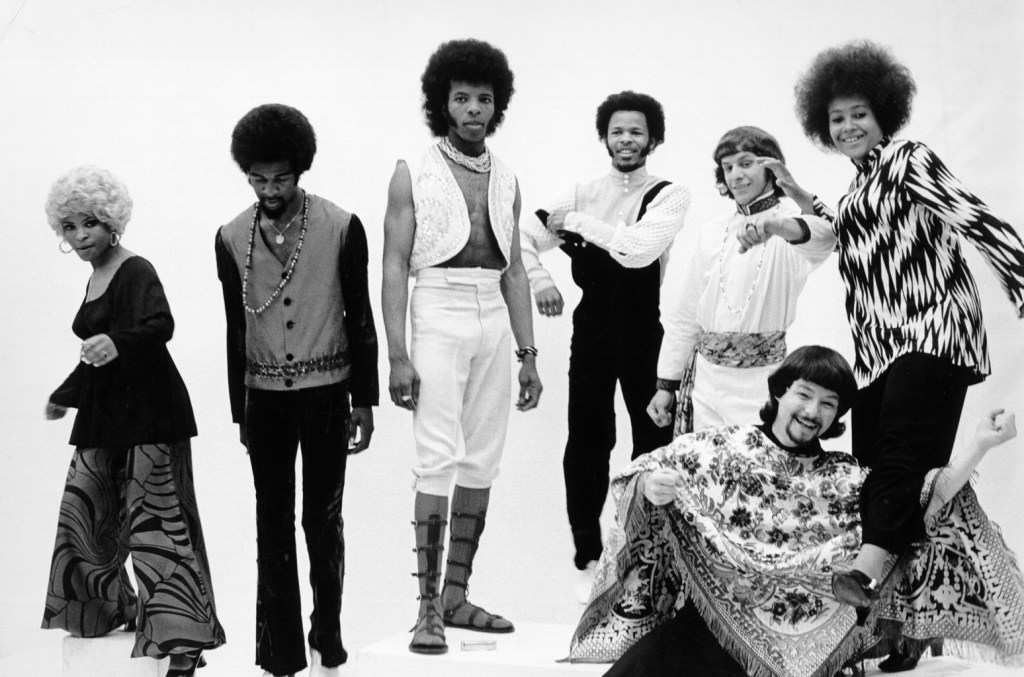
All of Sly & The Family Stone’s top 10 hits on the Billboard Hot 100 songs chart return to Billboard’s rankings following the death of the group’s leader, Sly Stone, on June 9. The act logged five top 10s between 1968-1971.
On the R&B Digital Song Sales chart (dated June 21), “Everyday People” reenters at No. 2, while “Dance to the Music,” “Hot Fun in the Summertime,” “Thank You (Falletinme Be Mice Elf Agin)” and “Family Affair” debut at Nos. 4, 5, 7 and 10, respectively. (The chart ranks the top-selling digital songs of the R&B genre in the United States in the tracking week ending June 12, according to Luminate.)
Stone died after “a prolonged battle with COPD (chronic obstructive pulmonary disease) and other underlying health issues,” according to a statement from his family. Sly & The Family Stone released their first album in 1967 and charted hits through 1980, but had largely disbanded by 1975. This century, the group has expanded its chart history with multiple best-of collections on Top R&B/Hip-Hop Albums and other surveys.
“Dance to the Music” was the group’s first top 10-charting hit on the all-genre Hot 100, peaking at No. 8 on the April 20, 1968-dated list. “Everyday People” was the act’s next top 10, and first No. 1, topping the list for four weeks beginning on Feb. 15, 1969. “Hot Fun In the Summertime” (No. 2, Oct. 18, 1969), “Thank You (Falletinme Be Mice Elf Agin)” (the A-Side of the double-sided No. 1 with “Everybody Is a Star;” it spent two weeks at the top, beginning on Feb. 14, 1970) and “Family Affair” (No. 1 for three weeks, beginning on Dec. 4, 1971).
All five of those songs also, unsurprisingly, rank among the act’s biggest Billboard hits.
In total, Sly & The Family Stone’s catalog of songs sold 10,000 downloads in the U.S. in the week ending June 12 — a surge of 1,977 % compared to the previous week. The group’s catalog of tracks was also streamed 5.78 million times — a gain of 277%. Its most-streamed song of the week was “Everyday People,” with 971,000 streams (up 94%).
In terms of album activity, the band’s catalog earned 8,000 equivalent album units in the week ending June 12 — up 389%. (Units comprise album sales, track equivalent albums [TEA] and streaming equivalent albums [SEA]. Each unit equals one album sale, or 10 individual tracks sold from an album, or 3,750 ad-supported or 1,250 paid/subscription on-demand official audio and video streams generated by songs from an album.)
Album sales for the band totaled 3,000 for the week (up 527%).

SG Lewis will release his third studio album this fall.
Titled Anemoia, the project is out Sept. 5 on the British producer’s own Forever Days label. The project will be his first full length since 2023’s AudioLust & HigherLove, which was a follow-up to his lauded 2021 debut, Times. These two albums reached No. 13 and No. 11 on the Top Dance Albums chart, respectively. In 2024 the producer also worked on the collaborate Heat EP alongside Tove Lo.
Lewis’ most recent release, May’s “Back of My Mind,” is the lead single from Anemoia, a word defined as “nostalgia for a time you’ve never known.”
“When I discovered the word ‘anemoia,’ it articulated a feeling I’d struggled to describe for so long — a nostalgia for times I never lived through,” Lewis says in a statement. “Throughout my career, I’ve often referenced past eras of music, studying them inside out to understand their cultural and technical history. In doing so, I started to question my emotional connection to those times, and why they left such a mark on me.
Trending on Billboard
“This album is rooted in the dancefloor, and even its quieter moments are shaped by Balearic sounds that are influenced from spending a lot of time in Ibiza last summer. I think a lot of the music carries an undertone of melancholy, even when it feels high in energy. More than anything, I want Anemoia to be a soundtrack to living in the present — to creating the kind of moments that others might one day feel nostalgic for.”
In tandem with the new album, Lewis is announcing a 14-date North American tour that will begin on the same day of the album release and features support from Peruvian producer Sofia Kourtesis. See the dates and the album’s surrealist cover art below.
Tour Dates:Sept. 5 – Austin – ACL LiveSept. 6 – Dallas – House of BluesSept. 11 – Toronto, Ontario, Canada – HISTORYSept. 12 – Washington, D.C. – EchostageSept. 13 – Boston – Royale FridaySept. 19 – Queens, N.Y. – Knockdown CenterSept. 20 – Queens, N.Y. – Knockdown CenterSept. 26 – Detroit – The Majestic TheatreSept. 27 – Chicago – RADIUSOct. 2 – Seattle – Showbox SoDoOct. 4 – Vancouver, B.C. – Vogue TheatreOct. 10 – Los Angeles – Shrine Expo HallOct. 17 – San Francisco – Bill Graham Civic AuditoriumOct. 18 – Denver – Mission Ballroom
SG Lewis
Courtesy Photo
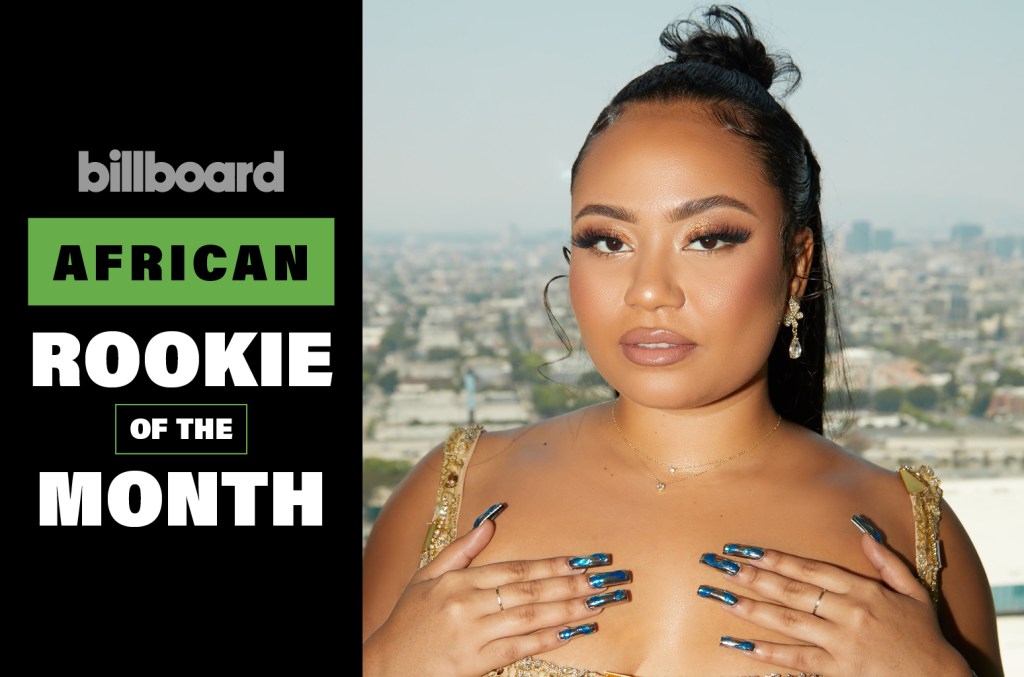
MOLIY was working at a Victoria’s Secret in Orlando, Fla. after dropping out of college at 19 when her back started hurting from all the restocking. One day, “they were calling me in for work. I just muted my phone and never went back,” she tells Billboard with a chuckle.
She moved back home to Accra, Ghana soon after and decided to pursue music full time after her friends connected her to local creatives, and she constantly found herself in the studio. MOLIY grew up around all kinds of music: Her mother owned a restaurant/bar called The Gomeries right next to their house that played Céline Dion, Michael Jackson and Whitney Houston all night long. Meanwhile at the crib, MOLIY listened to Rihanna, Beyoncé, Missy Elliott and Keri Hilson as well as Ghanaian acts like Eazzy, Itz Tiffany, Sister Deborah and MzBel. Her eclectic music taste, paired with the rise of Nigeria’s subcultural alté scene that has also influenced some Ghanaian artists, “opened my mind to thinking even though I may not sound like the ideal Ghanaian artist, I could create a space for myself,” she says. “That just kept me going.”
Months after dropping her introspective, Afro-fusion debut EP Wondergirl, MOLIY garnered buzz in 2020 when she appeared on fellow Ghanaian artist Amaarae’s Afropop bop “Sad Girlz Luv Money.” The remix, featuring Kali Uchis, reached No. 80 on the Billboard Hot 100 the following year, and it hit No. 28 on Rhythmic Airplay.
Trending on Billboard
Then at the end of last year – after months of teasing it with a now-viral dance of her whining her waist while covering her face with her hands – MOLIY released “Shake It To The Max (FLY),” an Afro-dancehall club banger that’s bound to make any listener “bend your back,” “bend your knees” and buss it down once the bass-bumping production and scratching hits. Jamaican stars Shenseea and Skillibeng – the latter of whom assisted another African darling, Tyla, on last year’s “Jump” – enhanced the dancehall vibes when they hopped on the remix. And Davido, Victoria Monét, Ciara, J-Hope, Spice and many more have been shaking it to the max all over the internet.
With the help of the remix, “Shake It To The Max” has spent six weeks (and counting) at No. 1 on U.S. Afrobeats Songs and is in the top 10 of the Billboard Global 200 and Billboard Global Excl. US. Four years after her feature on “Sad Girlz Luv Money,” MOLIY has returned to the Hot 100, as “Shake It to the Max” has reached No. 55 (chart dated June 21), and she’s back at radio with the song reaching No. 18 on R&B/Hip-Hop Airplay. “Shake It to the Max” has registered 47 million official on-demand U.S. streams and 289.3 million official on-demand global streams (through June 12), according to Luminate.
Billboard spoke with June’s African Rookie of the Month about reflecting on the success of “Sad Girlz Luv Money,” creating a more “upbeat and energetic” vibe with “Shake It to the Max,” officially meeting Vybz Kartel after performing with him at his first U.S. show in 20 years, and anticipating the remix with him and Stefflon Don.
How did your upbringing impact the music you listen to and the music you make?
Although we have our own local music heavy on rotation, we’re also very in touch with worldwide music. There’s a lot of music that tends to cross over especially from major acts, like Céline Dion, MJ, Whitney Houston, Chris Brown. I went to an international high school, so [I was] around students from different cultures who would play stuff. I was lucky enough to have heard lots of different styles that I was drawn to, like hip-hop, R&B, dancehall, Afrobeats, highlife, hiplife.
And what kind of music do you listen to now?
I’m listening to Brazilian funk, Caribbean music, soca, EDM-infused Caribbean music as well like Major Lazer. I’m trying to create a sound that’s in that realm, so that’s all I listen to right now.
While you were in Florida, you started studying business administration in college but eventually dropped out. What made you decide to move back to Ghana?
My brother and sister were able to figure out [work and school] a lot better. I don’t know why I didn’t feel like it was working. I don’t think I was making friends that much, and the whole job thing was not what I expected when I was moving to the U.S. There’s a certain fantasy of how people assume leaving Ghana and going to live outside is. For more fortunate people with heavy bank accounts, it’s probably easier to adjust. But when you’re trying to hustle and figure it out by yourself, and you’re young, it’s difficult. I gave up. I wasn’t down for that, so I went back to my mom. I’m like, “Mom, I’m home!” [Laughs.]
How did you transition into making music full time in Ghana?
It started with me listening to YouTube beats and trying to write music. I would pour myself a glass of wine in the middle of the night and just be vibing, freestyling melodies and writing. I was also observing the music industry in Ghana and Africa, especially in Nigeria, because Nigeria has this whole scene of alternative music, and people were coming out with some crazy sounds — sounds you wouldn’t expect to hear from an African. It opened my mind to thinking even though I may not sound like the ideal Ghanaian artist, I could create a space for myself. That just kept me going.
What kind of sounds and styles does your music encompass? How would you describe your music in your own words?
It’s very worldwide. I sing in English even though I could try to tap into some of the Ghanaian dialects like Twi. Sometimes people ask me, “Why don’t you make music in this language?” That’s because I feel English is the most universal language. My sound is worldwide, but it’s Afro-fusion because you can hear it in my accent, in my wordplay and even in some of things I speak about. It’s very influenced by hip-hop, dancehall and a lot of the music I grew up listening to.
I remember early stages of being obsessed with music. The first stage was pop, which is Michael. And then the second stage was hip-hop. Oh my God, did I love Eminem! I would just listen to an entire song, especially “Mockingbird,” and write down all the lyrics and try to sing it in the same way. Then after hip-hop, I graduated to dancehall. From dancehall is when I started listening to Afrobeats because at that stage, the sound was growing globally. I was being introduced to Wizkid, Davido and Burna Boy. I went through all these stages of loving these genres so much that now [my music] is a combination.
Prior to the success of “Shake It to the Max (FLY),” you debuted on the Hot 100 in 2021 with the Kali Uchis remix of Amaarae’s “Sad Girlz Luv Money.” Four years later, what does the success of that song mean to you and your career?
When that happened, it made me a big believer in what I was doing. You can have success at home, but once it’s crossing over to the U.S. and the rest of the world, it grew my faith a lot more. It’s a reassuring feeling because I’m living in my purpose when I’m making my music. When something like that happens, it’s a big pat on the shoulder like, “OK, babes, you’re on the right track. Keep going.”
Outside of “Sad Girlz Luv Money,” you appear on another song on Amaarae’s THE ANGEL YOU DON’T KNOW album: “Feel a Way,” alongside your sister Mellissa. You and Mellissa are also both featured on Boj’s “In a Loop” in 2022. Were those merely coincidences, or did you two purposefully hop on those songs together?
Most of the time, we’re together. When I’m going into a session, I need her moral support. At the time, I felt like I would be more comfortable if she was there. She’s also super creative and talented, so if I needed help, she could tap in. Boj requested the both of us to pull up. But with Amaarae, she came with me to support me, but while she was there, she’s like, “Wait, I have this idea.” And then Amaarae is like, “Well, do it.” [Laughs.] That’s how that happened.
At the 2025 Telecel Ghana Music Awards, Stonebwoy shouted you out during his acceptance speech when he won best reggae/dancehall song of the year, saying that he “respected” how you’ve been “taking [dancehall] where nobody expected it to go within a very short while.” Why have you gravitated toward dancehall so much?
I wouldn’t say my initial decision was to just make dancehall music. I knew I wanted to make something that was upbeat and energetic, something people could dance to. Most of my previous music people would say is chill, sexy and vibey. I would hear comments like, “I love to hear your music when I’m taking a drive” or “I love to hear your music when I’m in my room chilling with my girl.” But I want to be heard in different places. I want to be heard in the club. I want to be heard at the festivals. When I met [producers Silent Addy and Disco Neil], it was a combination of me knowing I wanted to create a certain vibe and knowing that these guys make dancehall, we merged these two ideas and went from there.
Prior to “Shake It to the Max,” “Shake It” was featured on your 2022 EP Mahogany St. Is there any relationship between the two songs?
No, not at all. [Laughs.] It’s so funny because when I was teasing “Shake It to the Max” and it wasn’t out yet, I could see the streaming numbers for that song going up because people thought they were searching for it and they were gonna find it there.
Take me back through the making of “Shake It to the Max.”
I was in Orlando and I was speaking to this producer Tejiri, he worked with Tems on “Wait For U.” I found him on Instagram and I’m like, “Hey, let’s work.” We were trying to find ways to make it happen. I went to LA specifically to work with him, and then the second time, he was like, “I’m coming to Miami and I’m going to be working with a whole bunch of different people. You should pull up.” So we linked up. I met a couple different producers: Mr. NaisGai (he works with Rauw Alejandro), Silent Addy and Disco Neil. Tejiri was trying to work on something with them for their artists’ projects. At the time, we were thinking, “OK, MOLIY is here, maybe we can create something for her to collab on the projects, or we could just make some records.” Some of the work we did was a collaboration between Tejiri and Silent Addy and Disco Neil.
A year later, we had had three separate sessions together. The last session was in August, and we created three or four songs. The last one was “Shake It to the Max.” Earlier in 2024, I hadn’t dropped any music by myself. [My manager Therese Jones and I] were trying to figure out how we can take things to the next level for me. She was like, “You know what, MOLIY? Why don’t you tease some music?” I teased about three or four songs in one Instagram post. When I added “Shake It to the Max,” I was like, “Hmm, this song is actually a vibe.” After that post, I wouldn’t say anyone particularly screamed out, “Oh my God, we love that one!” I just kept doing videos to this one song on TikTok and that’s when I started trying to be creative with what I do and how I’m posting it.
Why were Shenseea and Skillibeng the right artists for the remix?
In my opinion, they’re the top of the top of the top, top, top of the top in Jamaica. I genuinely love each of their music, and I wouldn’t have had it any other way. I would not change anything with how that remix happened. They loved the song. The original song was No. 1 in Jamaica, and it was great leverage to make them feel like it was a good idea. I didn’t make it happen, however. It was Silent Addy and Disco Neil. The producers made the conversations happen.
Since that remix has blown up, you’ve released more with other artists like Major Lazer, Gladdest and Kalash and Maureen. What inspired that strategy?
With the Kalash and Maureen one, that was also the producers. They’re very hands-on with how these remixes came about. Even with Major Lazer, it was them as well. They have relationships with these people already [because of] the dancehall industry. The first time I came across Gladdest was [when] she was doing the dance challenge in the middle of NYC. The next time I came across her, she did a freestyle to it on her TikTok. It was [getting] a lot of positive reactions. The same way I was posting practically every day to promote the “Shake It to the Max” remix, she was posting every day to promote her freestyle. She was super passionate about it, and there was no way we were not going to put out the record with her as well. What I love most about all of this is the people that we’ve worked with genuinely wanted to be part of the moment. They’re supported it, they’ve promoted it, and it feels so organic and amazing.
When can fans expect the Stefflon Don and Vybz Kartel remix?
I honestly don’t know. I want it to come out. She wants it to come out. Vybz is also excited for it to come out. We’re working on it with our teams. There were some [Vybz] verses going around TikTok. I remember people asking me, “Why are you not putting out the Vybz version?” I’m like, “Guys, it’s not official.” Some DJ probably put one of his old verses on the song and it was making rounds on TikTok. And then Steff comes along and was like, “Babe, I got Vybz.” [Laughs.] It’s really dope, and I’m excited for it to come out.
Vybz brought you out as one of his special guests during his one of his two historic sold-out shows at Brooklyn’s Barclays Center in April. How did the opportunity come about? Considering dancehall is a crucial element in your music’s DNA, what was it like to share the stage with the King of Dancehall himself?
It’s insane. Everything happens so fast, you don’t get a moment to soak it all in. But every moment of that was super exciting. Prior to being on stage, I actually hadn’t met him yet. So afterwards, I got to meet him, and he was just so nice and so cool. The aura was there. Gamma made that happen. They spoke to him about it, and they also got Skilli and Shen to pull up.
Would you say that’s the biggest “pinch me” moment of your career so far, or does another moment come to mind?
It’s definitely one of the first “pinch me” moments during this entire process. No, the first one would be hearing Shen and Skilli on the song officially. People were dropping freestyles, and they posted their verses as freestyles. But me knowing that the song is actually coming out with them was the first “pinch me” moment because I wouldn’t have wanted anyone else for the first remix.
The second would be this Billboard Hot 100 second moment. When you’re an artist and people see you doing something great, it’s like, “Wow, amazing! But can you do it again?” Throughout this process, there are so many highs and lows and so many moments I’ve had to remind myself to be positive and be hopeful. It’s crazy to see when something amazing does happen. It’s not all for nothing.
Who would you love to collaborate with this year?
Me and Drake would be fire. Me and Wizkid would be fire. Doja Cat would be amazing. I also really like Ice Spice. That would be so, so, so cute. Cash Cobain would be dope.
What’s next for MOLIY in 2025?
There should be a project, I wouldn’t say an album, but there should be a project coming out. I would hope it would be more like I’m dropping singles and then at the end of it, there ends up being a project. I’m also on the road right now. We’re doing MOLIY on the road and I have so many shows lined up, just trying to spread the gospel of “Shake It to the Max.”
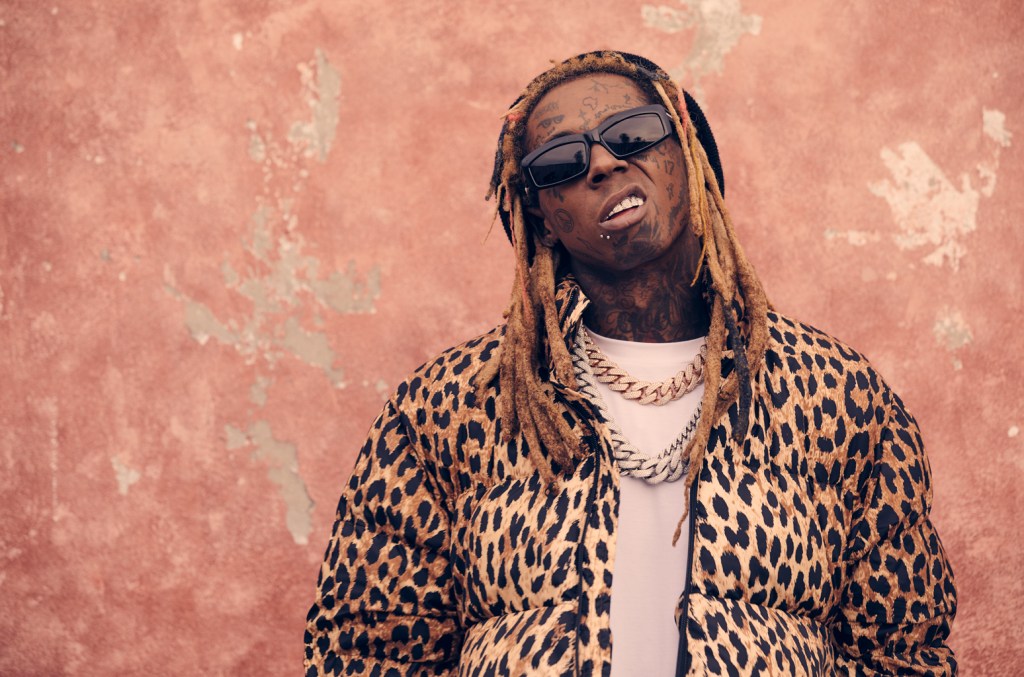
Lil Wayne extends his Carter series’ winning streak on Billboard’s Top R&B/Hip-Hop Albums chart as Tha Carter VI launches at No. 1 on the list dated June 21. The project, issued on Young Money/Republic, arrives with 108,000 equivalent album units earned in the United States in the tracking week of June 6-12, according to Luminate.
Of Tha Carter VI’s starting sum, streaming activity contributes 73,000 units — equaling 97.06 million official on-demand audio and video streams of its songs. Album sales deliver another 34,000 units, while track-equivalent album activity brings in the remaining 1,000 units. (One unit equals the following levels of consumption: one album sale, 10 individual tracks sold from an album, or 3,750 ad-supported or 1,250 paid/subscription on-demand official audio and video streams for a song on the album.)
Tha Carter VI gives Lil Wayne his 11th No. 1 album on the Top R&B/Hip-Hop Albums chart, a streak that includes the previous five Carter projects. (The first installment, 2004’s Tha Carter debuted at its No. 2 peak on the list.) As Tha Carter VI joins the pack, here’s a review of Lil Wayne’s No. 1s on Top R&B/Hip-Hop Albums:
Trending on Billboard
Tha Block Is Hot, No. 1 for two weeks, beginning Nov. 20, 1999
500 Degreez, one, Aug. 10, 2002
Tha Carter II, one, Dec. 24, 2005
Like Father, Like Son (with Birdman), one, Nov. 18, 2006
Tha Carter III, seven, June 28, 2008
Rebirth, one, Feb. 20, 2010
I Am Not a Human Being, four, Oct. 16, 2010
Tha Carter IV, seven, Sept. 17, 2011
Tha Carter V, two, Oct. 13, 2018
Funeral, one, Feb. 15, 2020
Tha Carter VI, one (to date), June 21, 2025
Thanks to the newest champ, the rapper becomes the eighth artist with at least 11 No. 1s since the Top R&B/Hip-Hop Albums chart launched in 1965. He follows The Temptations, who hold a record 17 leaders, Drake and Future (16 each), Jay-Z (14), Ye (formerly Kanye West) and R. Kelly (12) and ties Eminem.
Elsewhere, Tha Carter VI begins as Lil Wayne’s 10th No. 1 on the Top Rap Albums chart and starts at No. 2 on the all-genre Billboard 200, behind Morgan Wallen’s I’m the Problem.
[embedded content]
In addition to the album’s chart-topping entrance, 17 of Tha Carter VI’s tracks jump onto the Hot R&B/Hip-Hop Songs chart. “Hip-Hop,” with BigXthaPlug featuring Jay Jones, is the highest ranking, at No. 8, and secures Lil Wayne’s 53rd top 10 on the chart. With it, he breaks from a tie with Aretha Franklin for the third-most top 10s in the chart’s history, dating to its consolidation as the singular, all-encompassing genre list in 1958. Drake reigns with 138 top 10s, while James Brown stands in second place with 57.
Here’s a complete recap of Lil Wayne’s Tha Carter VI placements on the 50-position Hot R&B/Hip-Hop Songs chart this week:
No. 8, “Hip-Hop,” with BigXthaPlug feat. Jay Jones
No. 12, “Sharks,” with Jelly Roll & Big Sean
No. 15, “Banned From NO”
No. 16, “Welcome to Tha Carter”
No. 18, “Bells”
No. 23, “Cotton Candy,” with 2 Chainz
No. 26, “Flex Up”
No. 27, “Island Holiday”
No. 29, “The Days,” with Bono
No. 31, “Loki’s Theme”
No. 34, “Peanuts 2 N Elephant”
No. 35, “Alone in the Studio with My Gun,” with MGK & Kodak Black
No. 36, “If I Played Guitar”
No. 38, “Written History”
No. 39, “Bein Myself,” with Mannie Fresh
No. 46, “Maria,” with Wyclef Jean feat. Andrea Bocelli
No. 47, “Rari,” with Kameron Carter
Lola Young only has “One Thing” on her mind: The British songwriter’s third full-length album is officially on its way. Young will release I’m Only F–king Myself on Sept. 19, following a huge 18 months that have put the Londoner on the map as a main pop girl. The forthcoming record was written with her […]