State Champ Radio
 Legal
Page: 34
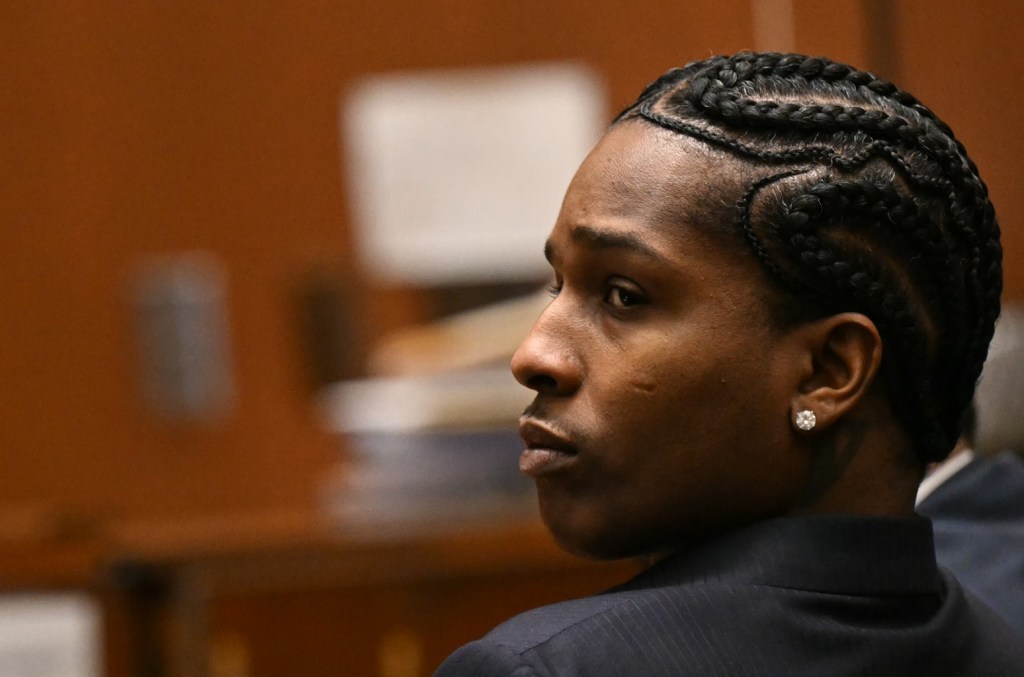
A$AP Rocky (Rakim Mayers) has been found not guilty on both counts in the shooting case involving his former friend and associate A$AP Relli (Terrell Ephron). The verdict, which the jury reached after about three hours, according to The Associated Press, was read in the downtown Los Angeles courtroom at 4 p.m. PT on Tuesday […]
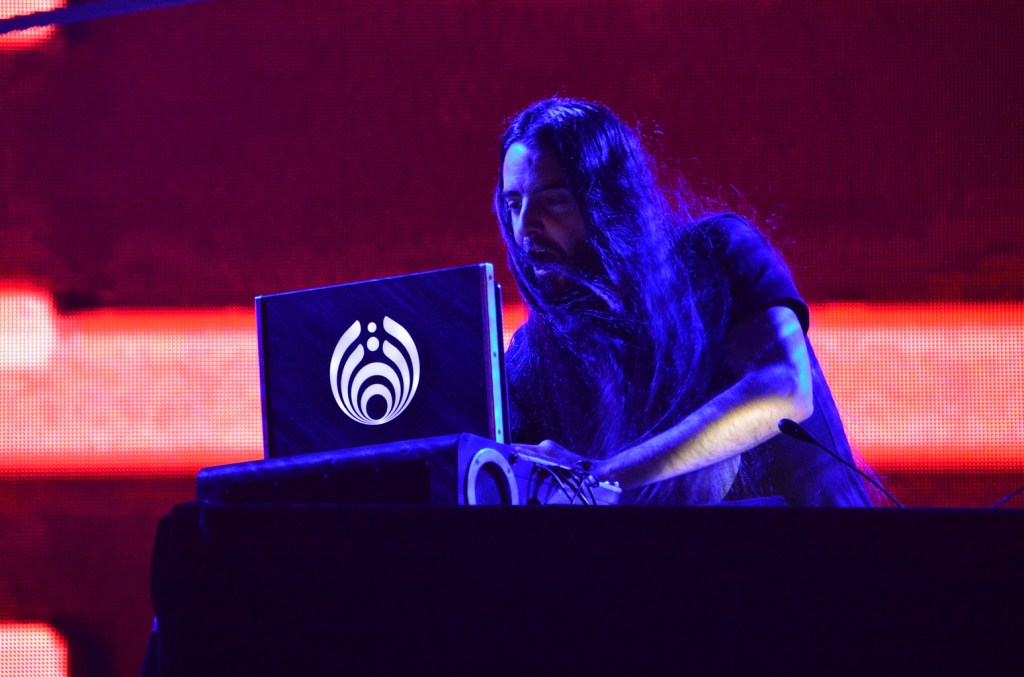
A lawsuit accusing Bassnectar (born Lorin Ashton) of sexually abusing three underage girls has been settled ahead of trial. According to court documents filed in U.S. District Court in Tennessee on Tuesday (Feb. 18), the case against the electronic music producer was dismissed with prejudice, meaning it cannot be refiled, after the two sides reached […]
Attorneys for the man suspected of killing rap icon Tupac Shakur want to delay next month’s trial, saying more time is needed for investigative work to ensure that Duane “Keffe D” Davis gets a fair trial.
Explore
Explore
See latest videos, charts and news
See latest videos, charts and news
The motion filed Friday (Feb. 14) in a Nevada court provides insight into Davis’ defense, noting that a private investigator has identified witnesses who can testify that he was not at the scene of the 1996 shooting, nor was he in Las Vegas at the time.
The motion also suggests that someone else may have orchestrated the shooting and that witnesses who could testify on the matter are being interviewed.
Trending on Billboard
The defense team said in a statement that the new developments and the need to interview key witnesses necessitate a delay. A hearing was scheduled Tuesday to discuss the timing of the trial, currently set to begin in March.
“This case involves decades-old allegations, and with every new piece of evidence, it becomes increasingly clear that critical facts have yet to be fully examined,” said attorney Carl Arnold, who is leading Davis’ defense.
On the night of Sept. 7, 1996, Shakur was in a BMW being driven by Death Row Records founder Marion “Suge” Knight. They were waiting at a red light when a white Cadillac pulled up next to them and gunfire erupted.
Davis, an ex-gang leader who is accused of orchestrating Shakur’s killing near the Las Vegas Strip, has pleaded not guilty to first-degree murder and has been jailed since his September 2023 arrest.
Long known to investigators as one of four suspects identified early in the investigation, he is the only one to be charged.
Arnold has argued that Davis never should have been charged because of immunity agreements that Davis says he reached years ago with federal and local prosecutors while living in California.
Prosecutors have said any immunity agreement was limited and they have strong evidence against Davis, including his own accounts of the shooting in the tell-all memoir Compton Street Legend.
Davis has acknowledged in interviews and in the memoir that he provided the gun used in the drive-by shooting and that he was in the car. But his court filings say his descriptions in recent years of orchestrating the shooting were “done for entertainment purposes and to make money.”
Defense attorneys also say they have witness information indicating that Shakur was in stable condition after the shooting and that he died suddenly after being hospitalized for a week. They were consulting medical and forensic experts to evaluate potential alternative causes of death.
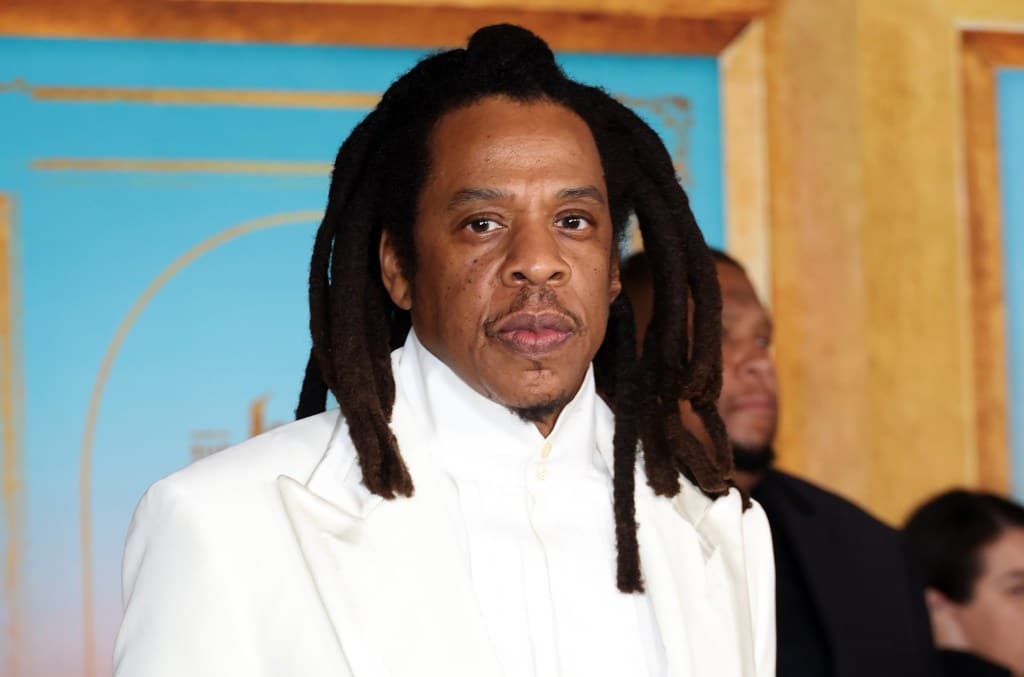
The civil lawsuit accusing Jay-Z (Shawn Carter) of raping a 13-year-old girl alongside Sean “Diddy” Combs in 2000 has been voluntarily dismissed, according to court documents filed on Friday (Feb. 14).
“Today is a victory. The frivolous, fictitious and appalling allegations have been dismissed,” Carter wrote in a post on Roc Nation’s official Instagram account. “This civil suit was without merit and never going anywhere. The fictional tale they created was laughable, if not for the seriousness of the claims. I would not wish this experience on anyone. The trauma that my wife, my children, my loved ones and I have endured can never be dismissed.”
The case was dismissed with prejudice against all defendants, meaning it cannot be refiled.
Filed in New York federal court in December, the complaint alleged that Carter and Combs drugged and assaulted the Jane Doe plaintiff during an after-party following the MTV Video Music Awards. The case arrived as an updated version of a previous lawsuit filed against Combs only.
At the time, Carter called the lawsuit a “blackmail attempt” designed to result in a settlement. He further called the Jane Doe’s attorney, Tony Buzbee — notable for filing a slew of sexual assault lawsuits against Combs — a “fraud,” a “deplorable human” and an “ambulance chaser in a cheap suit.”
In his Instagram post on Friday, Carter took further aim at Buzbee, writing, “This 1-800 lawyer gets to file a suit hiding behind Jane Doe, and when they quickly realize that the money grab is going to fail, they get to walk away with no repercussions. The system has failed.
“The court must protect victims, OF COURSE, while with the same ethical responsibility, the courts must protect the innocent from being accused without a shred of evidence. May the truth prevail for all victims and those falsely accused equally.”
In a statement sent to Billboard, Carter’s attorney, Alex Spiro, said the following: “The false case against JAY-Z, that never should have been brought, has been dismissed with prejudice. By standing up in the face of heinous and false allegations, Jay has done what few can — he pushed back, he never settled, he never paid 1 red penny, he triumphed and cleared his name.”
“Today’s complete dismissal without a settlement by the 1-800 attorney is yet another confirmation that these lawsuits are built on falsehoods, not facts,” said a lawyer for Combs in a statement. “For months, we have seen case after case filed by individuals hiding behind anonymity, pushed forward by an attorney more focused on media headlines than legal merit. Just like this claim, the others will fall apart because there is no truth to them. Sean Combs has never sexually assaulted or trafficked anyone—man or woman, adult or minor. No number of lawsuits, sensationalized allegations, or media theatrics will change that reality. We will continue to fight these baseless claims and hold those responsible. This is just the first of many that will not hold up in a court of law.”
Buzbee declined to comment on the dismissal.
This story was updated to add statements from Carter and Combs’ attorneys.

On Valentine’s Day, Drake teamed up with OVO signee and frequent collaborator PARTYNEXTDOOR to release the collaborative album Some Sexy Songs 4 U, a 21-track project that marks his first release since the three-track project 100 Gigs last August.
More significantly, it’s his first release since he filed a lawsuit against his record label, Universal Music Group (UMG), on Jan. 15 for defamation over the release of Kendrick Lamar’s “Not Like Us,” the searing, chart-topping diss track aimed at the Canadian rapper that was released by UMG’s Interscope Records. In the lawsuit, lawyers for Drake alleged that “UMG intentionally sought to turn Drake into a pariah, a target for harassment, or worse,” by pushing a “false and malicious narrative” that the star rapper was a “certified pedophile,” as Lamar rapped on the track. (UMG, in response, said in part, “Not only are these claims untrue, but the notion that we would seek to harm the reputation of any artist—let alone Drake—is illogical.”)
That raises the question: How is Drake able to release an album while he’s actively suing the record label to which he’s signed?
Trending on Billboard
First, the logistics: The new album was released jointly through OVO Sound, to which PARTYNEXTDOOR is signed, which is distributed by Santa Anna, a company under Sony Music Group’s Alamo Records umbrella; and OVO, which is Drake’s vehicle through UMG’s Republic Records. They are co-billed that way and in that order on digital service providers like Spotify and Apple Music. These types of joint releases are relatively common; think Future and Metro Boomin’s back-to-back We Don’t Trust You albums last year, released jointly via Future’s label Epic Records (also a Sony label) and Metro’s label Republic Records. (Coincidentally, We Don’t Trust You contained the song “Like That” featuring Lamar, the track that kicked off the Drake-Kendrick beef in earnest.) Another, more current, example is the Lady Gaga–Bruno Mars collaboration “Die With A Smile,” currently sitting at No. 1 on the Hot 100 for its fifth week, which is co-billed to Gaga’s Interscope and Mars’ Atlantic Records.
That means UMG would have had to legally clear Drake’s appearance on the album, an outcome that a handful of lawyers consulted by Billboard say would not necessarily be affected by any ongoing litigation. “Suing UMG shouldn’t preclude him from working with them legally,” one lawyer says. “As for their desire to be in a contractual relationship with him while he is litigating against them, that’s a different story.” Adds another, who agreed that it would not affect his ability to release an album: “Whether or not UMG decides to properly fund and support a release that Drake wants to do while Drake is suing UMG is another question.”
A UMG spokesperson did not immediately respond to a request for comment. In its response to the initial lawsuit last month, the company wrote, “We have invested massively in [Drake’s] music and our employees around the world have worked tirelessly for many years to help him achieve historic commercial and personal financial success. … Throughout his career, Drake has intentionally and successfully used UMG to distribute his music and poetry to engage in conventionally outrageous back-and-forth ‘rap battles’ to express his feelings about other artists. He now seeks to weaponize the legal process to silence an artist’s creative expression and to seek damages from UMG for distributing that artist’s music.”
An artist suing their record label is not an unheard-of occurrence; it has happened several times through the years, often over royalty payments or other contractual disputes. Suing their own record label for defamation over a diss track, however, is unprecedented; given the mutually beneficial financials involved in an artist and an album’s commercial success, it would stand to reason that UMG would not aim to materially harm one of their superstar artists. But that’s a determination for the courts to make.
Additional reporting by Elias Leight.
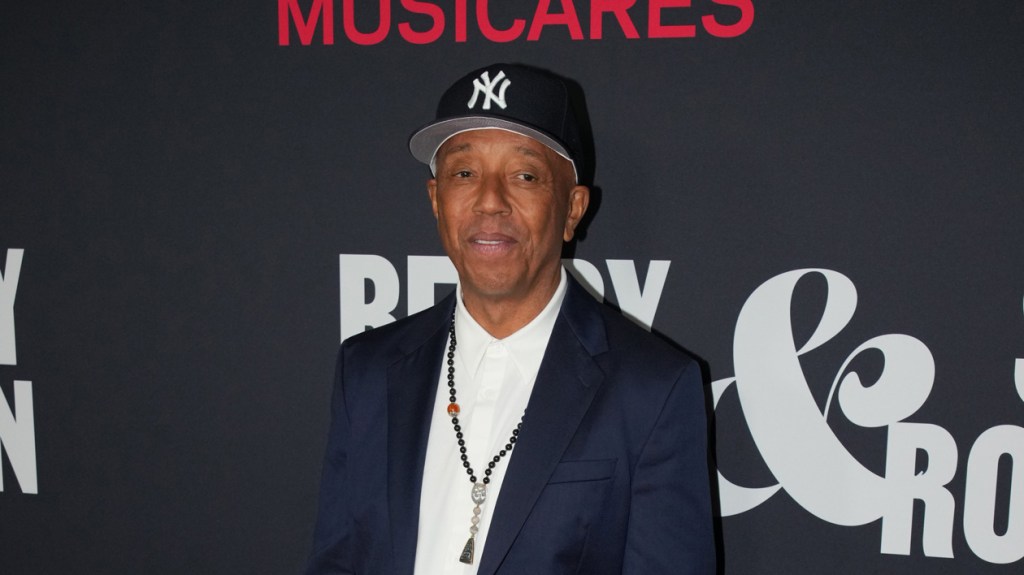
A Manhattan federal judge has tossed out a sexual assault lawsuit against Russell Simmons on grounds that he now lives in Indonesia, but legal problems still abound for the Def Jam co-founder.
In a decision issued Tuesday, Judge John Koeltl ruled that Simmons had shown by “clear and convincing evidence” that he is now a permanent resident of the Indonesian island of Bali, meaning his federal court lacked required form of jurisdiction to hear the case.
The ruling is a setback for the unnamed Jane Doe plaintiff, who sued Simmons last year over accusations that he raped her in the 1990s while she served as an executive at Def Jam. But the case can likely be re-filed in state court, where it would potentially not face the same issues.
In a statement to Billboard on Thursday, her attorneys vowed to do so – claiming Simmons was trying to “dodge accountability for his reprehensible behavior and escape litigation on procedural grounds.”
“From the beginning of this case, Simmons has claimed to be a stateless citizen domiciled in Bali, despite building his life and career in New York and taking advantage of his clear ties to the state when it benefits him,” said Kenya Davis, a lawyer at the firm Boies Schiller Flexner. “Our plaintiff is not deterred by this gamesmanship. We respect the judge’s decision, and we will see Mr. Simmons in New York state court.”
In his own statement, an attorney for Simmons praised the judge’s decision to dismiss the case: “Our justice system is based on rules and procedures,” said David Fish an attorney at the law firm Romano Law. “We are pleased that the court followed the rules of civil procedure and case law related to who can be brought into court.”
Asked about whether the case would continue in state court, Fish said: “I can’t predict what plaintiff’s counsel will do going forward.”
Simmons, who founded Def Jam Recordings in 1984 and later built a formidable hip hop empire, has faced a slew of abuse allegations since 2017 — first in an investigative article by the New York Times, then in a 2020 documentary film that featured interviews with numerous alleged victims.
Last year, Simmons was hit with two lawsuits over such claims. The first came from the Jane Doe at the center of this week’s ruling, who says that she was serving as a successful music video producer when she was “sexually harassed, assaulted, sexually battered, and raped by her boss.”
The other case came from Drew Dixon, a former A&R at Def Jam who accused Simmons of rape in both the Times article and the documentary. In her February 2024 lawsuit, Dixon accused Simmons of defaming her by suggesting during an interview that she was lying about the incident.
That case remains pending. Simmons had moved to dismiss Dixon’s lawsuit at the outset on free speech grounds, but that request was denied by a judge last week, sending the case toward more litigation and an eventual trial.
Simmons also faces additional litigation from three other accusers — Tina Klein-Baker, Toni Sallie and Alexia Norton Jones – who alleged in New York court filings last month that the hip hop mogul had reneged on confidential settlements that separately required him to pay them a total of nearly $8 million.

R. Kelly’s racketeering and sex trafficking convictions, along with a 30-year prison sentence, were upheld Wednesday by a federal appeals court that concluded the singer exploited his fame for over a quarter century to sexually abuse girls and young women.
The 2nd U.S. Circuit Court of Appeals in Manhattan ruled Wednesday after hearing arguments last March.
The Grammy-winning, multiplatinum-selling R&B songwriter was convicted in 2021 in Brooklyn federal court of multiple charges, including racketeering and sex trafficking.
Attorney Jennifer Bonjean, representing R. Kelly, said in a statement that she believed the Supreme Court will agree to hear an appeal. She called the 2nd Circuit ruling “unprecedented,” saying it gives prosecutors limitless discretion to apply the racketeering law “to situations absurdly remote” from the statute’s intent.
Last year, the high court declined to hear an appeal of a 20-year sentence Kelly received after he was convicted in 2022 of child sex charges including charges of producing images of child sexual abuse in Chicago.
The 2nd Circuit rejected Kelly’s arguments that the trial evidence was inadequate, the constitutionality of some state laws used against him were questionable, four jurors were biased, the trial judge made some improper rulings and a racketeering charge more commonly used in organized crime cases was improper.
“Enabled by a constellation of managers, assistants, and other staff for over twenty-five years, Kelly exploited his fame to lure girls and young women into his grasp,” the appeals court said, noting members of his entourage helped introduce him to underage girls.
“Evidence at trial showed that he would isolate them from friends and family, control nearly every aspect of their lives, and abuse them verbally, physically, and sexually,” the three-judge panel said.
The appeals court said it was “neither arbitrary nor irrational” that several accusers were permitted to testify at trial that Kelly gave them herpes without disclosing he had an STD, and it was not unduly prejudicial or cumulative that seven witnesses who were not yet adults when Kelly began to abuse them were allowed to testify.
“None of the testimony was more inflammatory than the charged acts,” the appeals court said.
The 2nd Circuit also said it was not unfairly prejudicial for the trial judge to let jurors view graphic videos. The videos, the appeals court said, “were properly admitted to show the means and methods of the enterprise, including the level of control and dominance Kelly had over his victims.”
Bonjean, in her statement on R. Kelly’s behalf, also cited a partial dissent in which one 2nd Circuit judge, Richard J. Sullivan, concurred with what he described as the majority’s “excellent opinion,” but dissented in part over a restitution award given one victim for a lifetime supply of a suppressive regime of herpes medication. The award was based on the cost of the brand-name drug when a generic drug is available.
“This was not restitution. This was an effort by the government to unfairly enrich government witnesses for their testimony,” Bonjean said.
Kelly, born Robert Sylvester Kelly, is known for work including the 1996 hit “I Believe I Can Fly” and the cult classic “Trapped in the Closet,” a multipart tale of sexual betrayal and intrigue.
Kelly sold millions of albums and remained in demand even after allegations about his abuse of young girls began circulating publicly in the 1990s. He was acquitted of child sexual abuse image charges in Chicago in 2008, but a second trial in Chicago in 2022 ended with his conviction on charges of producing images of child sexual abuse and enticing girls for sex.
Widespread outrage over Kelly’s sexual misconduct did not emerge until the #MeToo reckoning, reaching a crescendo after the release of the documentary “Surviving R. Kelly.”
This story was originally published by The Associated Press.

Sean “Diddy” Combs filed a lawsuit on Wednesday (Feb. 12) against NBCUniversal, claiming the company defamed him with the Peacock documentary Diddy: The Making of a Bad Boy.
According to documents filed in New York state court, Combs’ lawsuit claims the documentary — which debuted on Peacock in January — knowingly defamed him by making false murder and sex trafficking allegations, among other claims, which his attorneys say there is no credible evidence to support.
“The entire premise of the Documentary assumes that Mr. Combs has committed numerous heinous crimes, including serial murder, rape of minors, and sex trafficking of minors, and attempts to crudely psychologize him,” the lawsuit reads. “It maliciously and baselessly jumps to the conclusion that Mr. Combs is a ‘monster’ and ‘an embodiment of Lucifer’ with ‘a lot of similarities’ to Jeffrey Epstein.”
According to the lawsuit, the documentary “maliciously” claims that Diddy played a role in the deaths of his ex-wife Kim Porter, Christopher “The Notorious B.I.G.” Wallace and Dwight “Heavy D” Myers.
The documentary “shamelessly advances conspiracy theories that lack any foundation in reality,” the suit adds, “repeatedly insinuating that Mr. Combs is a serial killer because it cannot be a ‘coincidence’ that multiple people in Mr. Combs’s orbit have died.”
Combs is seeking $100 million in damages from the multimedia giant.
“As described in today’s lawsuit, NBCUniversal Media, LLC, Peacock TV, LLC, and Ample LLC made a conscious decision to line their own pockets at the expense of truth, decency, and basic standards of professional journalism,” Diddy’s attorney, Erica Wolff, said in a statement. “Grossly exploiting the trust of their audience and racing to outdo their competition for the most salacious Diddy exposé, Defendants maliciously and recklessly broadcast outrageous lies in Diddy: The Making of a Bad Boy.”
Wolff continued: “In the purported documentary, Defendants accuse Mr. Combs of horrible crimes, including serial murder and sexual assault of minors — knowing that there is no evidence to support them. In making and broadcasting these falsehoods, among others, Defendants seek only to capitalize on the public’s appetite for scandal without any regard for the truth and at the expense of Mr. Combs’s right to a fair trial. Mr. Combs brings this lawsuit to hold Defendants accountable for the extraordinary damage their reckless statements have caused.”
Billboard has reached out to NBCUniversal for comment.
Combs has remained behind bars since his arrest in September on sex trafficking and racketeering charges. He’s accused of being the face of a multi-faceted criminal enterprise with the goal of satisfying his sexual fantasies, including by hosting so-called “freak-off” parties. The disgraced hip-hop mogul has repeatedly been denied bail and will stay in the custody of Brooklyn’s Metropolitan Detention Center until his trial begins on May 5. He faces life in prison if convicted on all charges. In addition to his criminal case, Combs has been hit with dozens of lawsuits alleging sexual assault and other crimes.

A$AP Rocky waived his right to testify on Tuesday (Feb. 11) during the ongoing trial over accusations that he fired a gun at former friend A$AP Relli near a Hollywood hotel in November 2021. In a TMZ video, Superior Court Judge Mark S. Arnold reminds the former A$AP Mob rapper (real name Rakim Mayers) that he […]
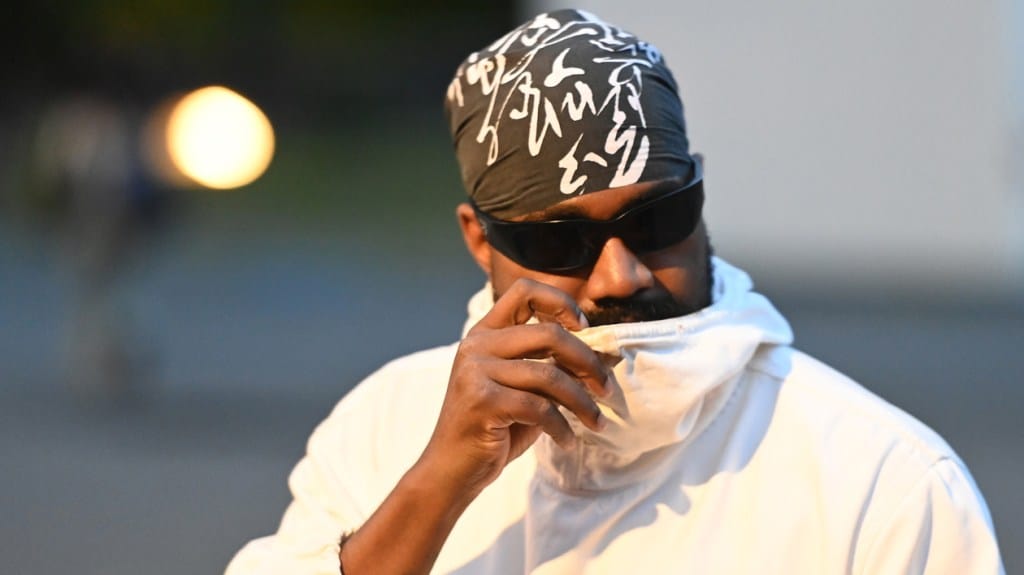
Ye (formerly Kanye West) is facing a lawsuit from a former employee who says the rapper compared himself to Hitler and threatened her because she is Jewish.
The case, filed Tuesday (Feb. 11) in Los Angeles court, claims he subjected the unnamed woman to “antisemitic vitriol,” including texting her “Hail Hitler” and calling her “ugly” and a “bitch.” And the woman says she was “swiftly terminated” when she complained.
“Ye carried out a calculated campaign to threaten and psychologically torment Jewish people around him, specifically plaintiff,” the woman’s lawyers wrote. “There can be little doubt that Ye treats those around him, especially Jewish people and women, much worse than just a bully. He is a self-proclaimed ‘Nazi’.”
The Jane Doe accuses Ye and his Yeezy LLC of religious and gender discrimination, wrongful termination, breach of contract, and a variety of other legal wrongdoing.
The new lawsuit, one of many filed by former employees against Ye, came days after he went on an offensive tirade on X (formerly Twitter) that included antisemitic comments (“I’m a Nazi” and praise for Adolf Hitler) as well as a bizarre demand to free Sean “Diddy” Combs, who is currently in custody awaiting trial on sex crime charges. On Sunday, Ye ran a TV ad during the Super Bowl that directed viewers to an online store where they could purchase a shirt emblazoned with a swastika.
It was hardly the first time the rapper has made such statements. After a string of similar antisemitic rhetoric and other erratic behavior in October 2022, the star lost much of what was a once-formidable business empire, including fashion partnerships with Adidas, The Gap and Balenciaga, as well as his representation by Creative Artists Agency and many of his lawyers.
In Tuesday’s lawsuit, the Jane Doe plaintiff says she was hired at Ye’s Yeezy LLC as a marketing specialist in December 2023, shortly before he issued an apology (written in Hebrew) for those earlier antisemitic statements. But she says the apologetic sentiment was “short lived.”
A month later, amid renewed controversy over the cover art of his Vultures Vol. 1, the woman claims she suggested that Ye issue a statement condemning Nazism. When the message was relayed to the star himself, he allegedly responded with a text message (included in the lawsuit) reading “I Am A Nazi.”
“This not only deeply offended Doe but the loud and proud antisemitism also made her feel endangered,” her attorneys wrote.
Months later, the rapper allegedly texted her and another Jewish employee “What the fuck is everyone here getting paid?” In another screenshotted text, he allegedly followed up: “Welcome to the first day of working for Hitler.”
The abuse allegedly escalated from there, the lawsuit says, including a series of texts in June 2024 in which Ye allegedly said “Shut the f— up b—-” called her “ugly as f—” and texted “Hail Hitler.” Later, he also allegedly texted, “You what’s left after I said deathcon” — a message that Jane Doe says was intended to reference his previous antisemitic rants and meant as a threat based on her religion.
Just hours after she complained about the text messages to her manager, the lawsuit says she was sent an email from an attorney representing Yeezy terminating her employment.
A spokesman for Ye did not immediately return a request for comment on Tuesday (Feb. 11).