State Champ Radio
 Latin
Page: 34

The ban on narcocorridos in certain Mexican states have most recently caused chaos at a Luis R Conriquez show in Texcoco, a city in the State of Mexico just 15 miles outside Mexico City.
“There are no corridos. What do we do? Should I just go home instead?” Conriquez, who pioneered the regional Mexican subgenre corridos bélicos, told the rowdy crowd that protested his firm stance on not performing corridos that night. He was following the rules and regulations established by Texcoco, a municipality that, since April 9, prohibited expressions that glorify violence following the implementation of a law targeting mass events.
“It feels awful not to be able to sing what people want to hear, but we join the cause of zero corridos,” the Sonora-born artist added, stirring up a strong reaction by the audience who booed him, threw punches and caused significant damage to the venue, ending the show abruptly. (Read Conriquez’s exclusive interview with Billboard detailing exactly what happened that night.)
Corridos are a style that dates back to the Mexican Revolution in the early 20th century. Over the past few decades, the subgenre has birthed various iterations, including corridos bélicos, corridos alterados, corridos verdes, corridos tumbados and narcocorridos, to name a few.
While Conriquez’s situation has sparked mass media attention, the ban on narcocorridos, songs that often name-check Mexican drug kingpins or cartel figures, goes way back to the 1970s, when Los Tigres del Norte ushered a new era for corridos. Since, calls for censorship of this popular style of music — which has only gone global over the past few years thanks to a new generation of hitmakers, including Gerardo Ortiz, Peso Pluma, Natanael Cano and Conriquez — have only intensified.
Sinaloa was among the first states in Mexico to call for a ban on narcocorridos in the 1980s. Other states followed in efforts to regulate or control the diffusion of narcocorridos. Today, 10 (out of 32) states in Mexico have implemented bans and limitations on the broadcasting of corridos in public spaces, including Baja California, Chihuahua, Guanajuato, Quintana Roo, Nayarit, Jalisco, Michoacán, Aguascalientes, Querétaro and Estado de México. Without a federal law, the local government would apply penalties that range from fines or up to one year in prison to those who play music that advocates violence.
“This censorship has followed regional Mexican music for many years but in reality, it reflects what happens every day in our environment,” Rafael Valle, programming director of Guadalajara radio station La Ke Buena, previously told Billboard. “If the song says some word that is not allowed on the radio, obviously we modify the song, but we don’t censor it because that would mean not playing songs that people are constantly requesting.”
States have gone so far as to banning actual artists from performing in certain cities. In 2012, Los Tigres were “indefinitely banned” from Chihuahua after the norteño band sang narcocorridos during a weekend concert there. “We ask concert organizers and the artists themselves to think about the difficult situation the country is in,” government officials said then. Murders and drug-related violence linked to organized crime in Mexico continues to engulf the country today.
This year alone, a number of new bans have taken into effect in Mexico and have even expanded into the U.S. In an unprecedented move, the U.S. State Department canceled work and tourist visas of Mexican corrido group Los Alegres del Barranco after they displayed images of the leader of the Jalisco New Generation Cartel (CJNG), Nemesio Oseguera Cervantes, also known as “El Mencho,” during a concert on Saturday (March 29) at an auditorium at the University of Guadalajara.
Below, see Billboard‘s updating timeline on state and federal actions against narcocorridos implemented this year in Mexico, and their impact on Mexican artists.
January 5, 2025

The second edition of Maluma’s “Medallo En El Mapa” concert in his native Medellín, Colombia is approaching, with the show taking place on Saturday, April 26. To celebrate, Maluma announced that he’ll be hosting a weekend-long festival at the venue for fans.
Explore
Explore
See latest videos, charts and news
See latest videos, charts and news
On the heels of his sold-out hometown show, the Colombian artist announced a series of free activities so that all those fans who were unable to get tickets can still enjoy the ultimate “Medallo En El Mapa” experience.
The three-day festival, in conjunction with the Saturday show, will take place at the Atanasio Girardot Stadium from Friday, April 25th to Sunday, April 27th. It will include various interactive spaces including horses, carriages, food courts, and brand activations, among others—all free of charge.
Trending on Billboard
Those who already have their ticket purchased for Saturday’s concert have a guaranteed access to the festival on the three days.
Meanwhile, those without a concert ticket can enjoy the festival on Friday and Sunday by registering for free at this link. You’ll receive a ticket valid for two people, giving you access to the festival. The free ticket does not grant access to the Saturday concert, only to the activities the day before and after.
In 2022, Maluma drew an estimated 54,000 people to the Medallo En El Mapa show in his native hometown. The show, which was streamed live on Amazon in more than 240 countries, featured guests such as Feid, Grupo Firme, and superstar Madonna, and marked a milestone in the Colombian singer’s career.
This story was originally published by Billboard Colombia.
On April 11, Luis R Conriquez performed at the Feria del Caballo in Texcoco, in the State of Mexico — a city where the corrido singer has performed four or five times before, always drawing a big crowd. But this time, concert organizers gave him a warning: “They said that if I sang a corrido, they would cut off the sound,” Conriquez recalls.
Explore
See latest videos, charts and news
See latest videos, charts and news
The warning came as a result of new government ordinances in Mexico banning live performances of narcocorridos in several states. Conriquez, who’s known for his narcocorridos, has ignored similar orders in the past and paid fines as a result. But this time, he wasn’t just facing a fine—his entire concert was at risk of being canceled. That wasn’t a chance he was willing to take.
A few hours before the show, he posted on social media letting fans know that his set wouldn’t include narcocorridos. Apparently, not everyone in the crowd saw the post. An hour and forty minutes into his performance, fans started demanding he sing his most popular corridos. When Conriquez explained that he couldn’t, some fans booed and threw objects at the stage. Eventually, Conriquez said, “No corridos. What do we do? Should I just go home instead?” He walked off the stage.
Trending on Billboard
The next day, Conriquez addressed the situation again on his Instagram stories, saying, “Some people don’t get it. They think I make the rules, but the truth is, there won’t be corridos at shows anymore—not from any artist, folks.”
Since then, Conriquez has received support from fans and fellow artists. He’s now preparing to bring his Trakas tour to the U.S., kicking off at UBS Arena in New York on April 25, where he’ll be able to perform his full repertoire. But at his next concert in Mexico, it’s likely there won’t be corridos. Here’s what he told Billboard about the whole situation.
Why did you decide not to sing corridos at this particular show?
They said that if I sang a corrido, they’d cut off the sound. They said, “We’ll cut off the sound. It’s prohibited.” So, I said, “Okay.” That’s where my frustration came from. I wasn’t mad, honestly. I just wanted to give the crowd what they came to hear, but I had to stick to the rules.
Did you think about canceling the show?
No. I always planned to go ahead with it. I said, “I’ll post that I won’t sing corridos.” But even before showing up, I’d already told people I wouldn’t be singing corridos.
What happened during the show?
I’d been performing for an hour and forty minutes when people started asking for the songs I wasn’t allowed to sing. At that point, people are usually a bit more rowdy or have had a few drinks, so they think anything goes. It got to the point where I thought, “I better leave, or they’re gonna throw a chair at me or something.” So, I decided to leave, and that’s when things got crazy. Last year, something similar happened to me in Chihuahua. I had to pay a $45,000 fine — around 850,000 pesos — for singing one corrido. I didn’t sing corridos for the whole show, but at the very end, I sang one and paid the fine. Just for one song. But that was part of a state decree. They showed up with official paperwork for us to sign, saying we couldn’t sing corridos or anything like that.
You seem like a very chill person, and you didn’t react aggressively on stage while all of this was happening — even when people were throwing things. Did you ever think about fighting back or responding?
Exactly. I said, “If it’s no, it’s no. If it’s yes, it’s yes.” Honestly, I’m a pretty chill person. I try not to be someone who explodes. So, it wasn’t like, “Oh, I’m gonna lose it and go crazy.” I stuck to the rules, and I think I did the right thing. I feel like I did the right thing. I did what they told me to do.
Were you surprised by how aggressive the crowd was?
Of course. But I think it’s just because I didn’t sing what they came to hear. Before performing there, I’d done another show and posted [on social media] that I wouldn’t be able to sing corridos. Why? Because they’ve started cracking down on this stuff. It wasn’t my decision, obviously. Everyone who listens to me and artists like me—what do they want to hear? Corridos. But if it’s not allowed, we won’t cause problems by singing them. If they told me, “It’s a one-million-peso fine for singing corridos,” I probably would’ve paid it just to make my fans happy. But it wasn’t up to me this time, and I ended up on the losing side of things.
What’s happened since then?
Honestly, I’ve gotten a lot of support from the fans. People who’ve followed me for a long time understand the situation. It’s not even about me anymore. Artists like Alejandro Fernández, Edén Muñoz — even artists who aren’t in this genre — have reached out, saying, “Keep your head up, man. Hang in there.” Peso Pluma also sent me a message. Unfortunately, I might’ve been the first to go through this, but after this, maybe people will start understanding.
I’ve been performing in Texcoco for four or five years, and every time, people are excited to see Luis R Conriquez. But this time, this happened. Imagine what could happen in other places. At the end of the day, I’m not going to sacrifice my career or my fans—I’d rather perform than not perform. That’s the bottom line. If it comes down to damaging my career just to sing corridos, then obviously, I won’t sing corridos.
What do you think about corridos being banned? Do you think it’ll make a difference?
I don’t think so. Corridos have existed since before I was born. They’ve always been around. I grew up listening to corridos. I listened to artists and always thought, “I want to be another voice in regional Mexican music.” The artists who sing corridos are at the top globally. In a way, we represent Mexico. But before you were born, corridos were about Pancho Villa — not drug lords. I know, but they’re still corridos at the end of the day. There were corridos about crime even back then. If I have to, I can adapt and write songs that aren’t as explicit, but I’ll keep the same vibe and storytelling. People are free to listen to what they want. Like I said, if I have to adjust, I’ll adjust.
You mentioned you’d change the lyrics to your songs. What did you mean by that?
I meant I won’t release songs that are super explicit anymore. I might tweak the lyrics a bit on certain songs, but I’ll keep singing them.
Where does the tour go next?
Jalisco, Hermosillo, Sonora, Monterrey — and then the U.S. tour. Corridos aren’t banned everywhere. But who knows what’ll happen? I need to put together a setlist and share it so people know what I’ll sing. Then they can decide whether to buy tickets or not. We always try to please our fans, and we’ve been doing it for four or five years. But now, if we have to follow the rules, that’s what we’ll do. I hope people understand.
There’s no ban in the U.S. Will you sing corridos at your shows here?
Of course. We’ll keep singing what people want to hear. If I have to tweak lyrics or make other changes, I’ll do it. The goal is to keep singing and working—this is how we make a living, and it’s how the people around us make a living too.
Mexico‘s President Claudia Sheinbaum addressed questions from Billboard Español this Wednesday (April 16) regarding the controversy surrounding the idea of the federal government potentially banning or regulating the public dissemination of music that glorifies criminal activities, specifically so-called narcocorridos. This is a measure that some state and municipal governments have already begun implementing.
Explore
Explore
See latest videos, charts and news
See latest videos, charts and news
Joining the list of regions that have turned down the volume on corridos tumbados and narcocorridos — a genre popularized by artists like Natanael Cano, Peso Pluma, and Junior H — are Mexico City and Michoacán, which recently announced measures to regulate such expressions. Last Friday (April 11), chaos broke out during a concert by singer Luis R. Conriquez at the Feria del Caballo in the State of Mexico when the artist refused to perform corridos glorifying drug trafficking, citing compliance with the entity’s new rules. This decision angered some in the audience.
The debate in Mexico over tightening regulations on songs that glorify drug trafficking has intensified in several parts of the country. But it’s also making waves across the border in the United States, where Deputy Secretary of State Christopher Landau confirmed on April 1, via a post on X, that he revoked the work and tourist visas of the members of the group Los Alegres del Barranco. The decision came after the band projected images of a criminal leader during their March 29 concert at an auditorium at the University of Guadalajara in Jalisco. “I’m a firm believer in freedom of expression, but that doesn’t mean that expression should be free of consequences,” Landau wrote in his post.
Trending on Billboard
Here are President Claudia Sheinbaum’s responses to Billboard Español during her morning press conference on Wednesday (April 16) in Mexico City.
Narcocorridos have become a polarizing topic in Mexico and across the border. On Monday, you mentioned that your government does not ban any music genre. Do you think regulating, rather than banning, this type of expression is a viable option?
I’m not really a fan of banning things in this case. There are other things I believe are more important, like the issue of sweets in schools, which are no longer allowed because it’s a public health matter. In this case, of course, the way these lyrics are crafted within certain types of music and genres is a phenomenon that happens. I think that if it’s banned — even though what they’re banning is its promotion in public spaces, not that people can’t listen to it at home — that’s a decision some municipalities have chosen to make.
From my point of view, education and awareness are better approaches, allowing society itself to gradually move away from these kinds of musical content, rather than outright bans. Of course, there are extremes that cross into criminal territory, right? Like what happened at an event where a video of a drug trafficker was shown as if it were something positive. Everything has its pros and cons.
We’ve asked some musicians for their thoughts on the binational contest México Canta, including Natalia Lafourcade just yesterday — an artist who has elevated Mexico’s name to great heights without relying on trends or narratives that glorify anything controversial…
Yes, there are Mexican women — singer-songwriters, true artists in every sense of the word — with incredible talent and creativity. Natalia Lafourcade is one of them. Julieta Venegas, Ximena Sariñana — these are young women with immense creativity. And of course, Lila Downs as well. It’s truly a generation of men and women, but especially women, with remarkable creativity who elevate Mexico’s name without resorting to glorifying violence. On the contrary, they create highly creative musical content, along with their own unique music.
So, this contest (México Canta) has that goal: to inspire young people to participate with different kinds of content, and for the music that emerges throughout the contest to start resonating within society. Some say the main issue is ending violence and reducing organized crime in Mexico, and that’s true — we’re working on that as well. But I think building a culture of peace is also a task for the government, using creative methods like this that involve young people, and I believe it will be very positive.
And what’s really great about this contest, México Canta, is that many producers got involved and joined in. It wasn’t something they organized, but rather an initiative that emerged, and they decided to participate—music producers who will be part of this process. I think it’s a great initiative, and we’ll be sharing some of the pieces that come out of this process on Fridays.
Just like former President López Obrador had his playlist without “corridos tumbados,” is there a chance you’ll have your own playlist?
Yes, of course. We’ll share it soon.
Reggaetón royalty Ivy Queen is hitting the road for her highly anticipated Killa Queen World Tour, a globe-spanning journey that begins May 17 in Quito, Ecuador. “Music has given me a voice, strength and purpose. This tour is a celebration of everything I am and all the women who have stood by me since the […]

Selena Gomez will receive the 2025 Woman of the Year award at the annual Billboard Latin Women in Music event, Billboard and Telemundo announced on Wednesday (April 16). The two-hour special, set to be held Miami, will air April 24 exclusively on Telemundo.
The Woman of the Year award is presented to a female artist who has demonstrated exceptional success, leadership and cultural influence in the music industry and beyond. Previous Women of the Year honorees at Latin Women in Music include Shakira and Karol G.
A global powerhouse, Gomez has had a fruitful career as a recording artist. On the Billboard charts, the 32-year-old star has had presence across genres, including a total of 42 entries on the all-genre Billboard Hot 100, including her first No. 1 hit, “Lose You to Love Me” (2019). On the Hot Latin Songs chart, her featured role on DJ Snake’s “Taki Taki,” alongside Ozuna and Cardi B, debuted at No. 1 on the tally in October 2018, where it ruled for 13 weeks. Since, she’s achieved three additional top 10 hits on the multimetric ranking, including “Baila Conmigo,” her collaboration with Rauw Alejandro, which soared to a No. 4 peak in 2021 and topped the Latin Airplay chart for a week.
Trending on Billboard
The Texas-born artist of Mexican descent further expanded her reach in Latin music with her first-ever Spanish-language project, Revelación. The EP, released four years ago, debuted at No. 1 on the Top Latin Albums chart, making history as the first album by a female artist to achieve the feat since Shakira’s El Dorado. It also scored her a Grammy nomination for best Latin pop album. Most recently, Gomez entered the top five on Hot Latin Songs thanks to “Ojos Tristes” with Benny Blanco and The Marías. The song, a reimagination of the ’80s classic “El Muchacho de los Ojos Tristes,” is part of Gomez and Blanco’s collaborative album, I Said I Love You First.
Beyond her career in music, Gomez — also an award-winning actress, producer and business mogul — has become a leading voice for mental health and social justice issues that impact underrepresented communities. She was Woman of the Year at the 2017 Billboard Women in Music.
Gomez joins this year’s previously announced honorees, including Anitta (Vanguard Award), Belinda (Evolution Award), Celia Cruz (Legend Award), Chiquis (Impact Award), Ha*Ash (Unbreakable Award), Natti Natasha Unstoppable Artist), and Olga Tañón (Lifetime Achievement Award).
Read Billboard’s Latin Women In Music 2025 Executive List here.
The third annual Billboard Latin Women in Music special will air live April 24 at 9 p.m. ET/8 p.m. Central exclusively on Telemundo, Universo, Peacock and the Telemundo app and throughout Latin America and the Caribbean onTelemundo Internacional.
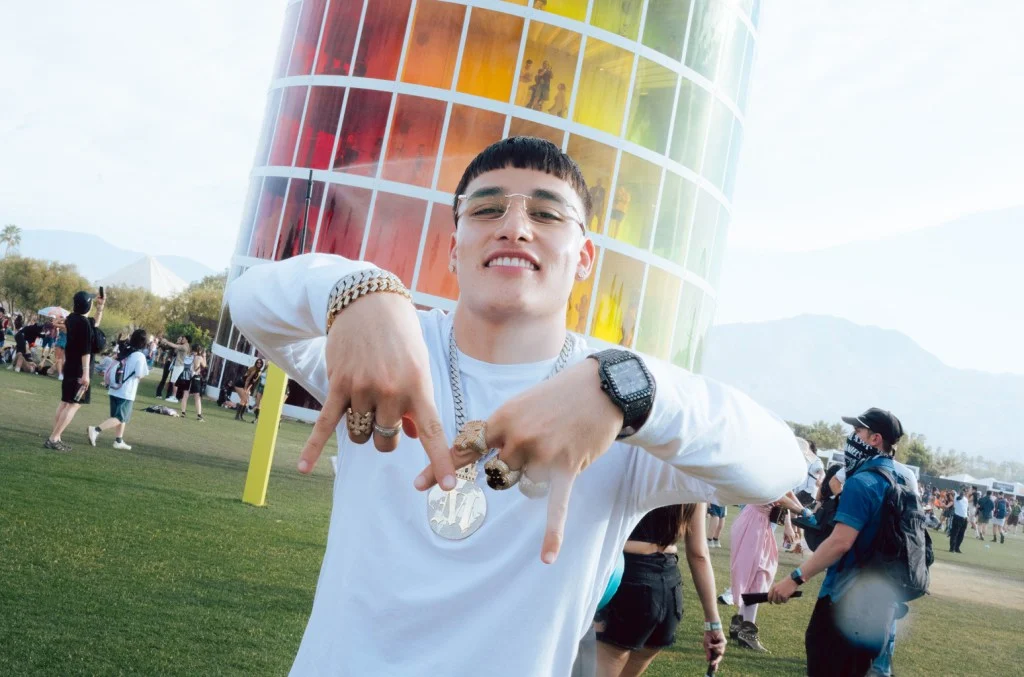
April 12 will remain etched in the memory of El Malilla, the reggaetón mexa star who brought the Sonora stage at Coachella to a thrilling close on Saturday night.
Representing urban music, Fernando Hernández Flores (real name) — currently one of Mexico’s most influential artists in the genre with 8.7 million monthly Spotify listeners — turned the stage into a vibrant party with dancers, choreography and infectious energy.
“It’s very exciting, it’s crazy, I can’t believe it,” he tells Billboard Español from his backstage dressing room at the festival after a successful night performing hits like “Beiby,” “Mami Tú,” and “Vaquero,” which the crowd sang along to from start to finish. “Where I grew up, my neighbors were mechanics and construction workers, anything but artists. It’s a point of pride for me to come from there and have made it.
Trending on Billboard
“For this first performance, I wanted to showcase my music and what I know how to do. It was a night for my fans, but also for people to discover what I’m all about. For next Saturday, April 19, I’ll have two surprise guests,” adds the 25-year-old star, who will also perform two days prior at the legendary Roxy Theater in West Hollywood.
Born in Valle de Chalco, a neighborhood notorious for its high crime rates in the metropolitan area of Mexico City, El Malilla always dreamed of being a singer. But not even in his wildest dreams did he imagine making it to Coachella, let alone closing out a stage like Sonora.
His career began 10 years ago when, inspired by Puerto Rican urbano stars Arcángel and Farruko, he decided to write his own songs. By 2023, having earned a reputation in the underground scene, he started being invited to major festivals in Mexico City, such as La Santa Fiesta at Foro Sol, Axe Ceremonia and Flow Fest, as part of the mexa movement (Mexican reggaetón). Since then, he’s collaborated with stars like Yeri Mua, Dani Flow, El Bogueto, Uzielito Mix, Bellakath, and Blessd, as well as J Balvin, who, drawn to the booming urban scene in Mexico, worked with all of them on “Glow Kitty Remix” in 2024.
Also knows as El Chamako de Valle (The Kid from Valley), El Malilla is preparing for a new phase in his career. “I, Fernando, am a big fan of romantic salsa from legends like Willie Colón and Maelo Ruiz, so I’m already working on creating beautiful reggaetón, more commercial stuff, and later on, I’d love to make cumbias,” he explains. “The genre doesn’t matter as long as the music comes from the heart.”
Just a few days ago, the Mexican singer who now basks in his success at Coachella experienced a disappointing moment at Lollapalooza Chile, where his performance saw very low attendance.
“I take it as a learning experience… Rome wasn’t built in a day,” he says. “Just like I started in Mexico singing for ten people, then came a hundred, then thousands, I want the same to happen in Chile in two or three years. That’s how the best stories are told.”
Celia Cruz will be honored with a tribute performance at the 2025 Billboard Latin Women in Music awards, Billboard and Telemundo announced on Tuesday (April 15). In honor of her centennial this year, the memorable Queen of Salsa — who was born in 1925 and died in 2003 due to a brain tumor — will […]

Yeisy Rojas’ “Inmigrante y Qué?” has topped Billboard’s latest Latin music poll published on Friday, April 11. In support of the weekly New Music Latin roundup and playlist, curated by Billboard Latin and Billboard Español editors, readers voted for the emerging artist’s new track as their favorite music release of that week. The Cuban singer’s poignant single — a fusion of rumba […]

Puerto Rican superstar Rauw Alejandro announced on Monday (April 14) that he’s taking his 2025 Cosa Nuestra world tour to Latin America, revealing that his visit will make stops in Argentina, Brazil, Colombia and Mexico. The Latin American tour — produced by Live Nation — will kick off on Oct. 14, in Chile and will travel […]