State Champ Radio
 latin rock
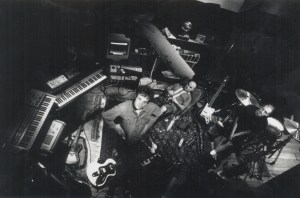
In 1995, the Argentine rock trio Soda Stereo returned to the studio after a three-year hiatus to record a brand-new album, Sueño Stereo (Stereo Dream), its seventh and final project. At the time, no one knew this would be the band’s farewell record. Its predecessor, Dynamo, was its most experimental and eclectic work, showcasing a complete turnaround of its new wave style over the previous decade. Sueño Stereo continued this exploration — an alternative album with a noticeable British influence, full of electronic sounds and violins, cellos and violas on many tracks.
The 1990s brought a completely different flow from the ’80s new wave that made Soda Stereo famous. As the alternative rock movement gained popularity in the U.S. and Europe, listeners also increased in Latin America, and Soda Stereo embraced it and made the genre its own. After 10 years of working nonstop, releasing album after album and touring Latin America, the band decided to experiment and created an utterly progressive rock album that fans and other artists still praise 30 years later.
Trending on Billboard
“Latin American rock DNA is partly based on a tremendous sense of inferiority because it always copied everything that was happening in England and the United States,” Ernesto Lechner, a music journalist from Argentina who has lived in the U.S. since the 1990s, tells Billboard. “Soda Stereo changed that.”
Soda Stereo revolutionized Latin rock history with their new sounds and exploration of diverse musical genres. That style would become the stamp of the lead singer Gustavo Cerati’s artistry, which he would perfect in his first solo album, Bocanada (1999), after Soda Stereo disbanded in 1997. Sueño Stereo, released on June 21, 1995, became the band’s magnum opus.
“Sueño Stereo, for me is, without a doubt, without discussion, Soda’s best album,” Lechner adds. “It’s a glorious record. A psychedelic rock album — electronic rock with moments of ambient music, a very sophisticated thing. It was like a full circle.”
“Is like the final masterpiece, very refined and perfect,” Valeria Agis, editor of Argentine newspaper La Nación, tells Billboard of the set, which in 2012 was ranked fourth by Rolling Stone in its 10 greatest Latin rock albums of all time.
Sueño Stereo’s journey begins with the alternative rock of “Ella Usó Mi Cabeza Como un Revólver,” a melancholy, complex track that presented a string arrangement of viola, violin and cello. A significant change also came with “Disco Eterno” and “Zoom,” two neo-psychedelic pop-rock songs on the set that became classics in the band’s repertoire.
Further into the album, The Beatles’ influence became apparent with the Britpop tracks “Paseando Por Roma” and “Ojo de la Tormenta.” The set concludes with a surprising shift in the last three songs, instrumentals in which the psychedelic sounds mash up with electronic ones.
For Soda’s bassist Zeta Bosio, it was the album that allowed him to keep going. A year before the release, his 2-year-old son Tobías had died in a car accident. “That was the album that brought me back to life a little, back to reality,” he tells Billboard. But it was also the album that brought the band back together as a family, allowing them to “become an organism where we could feel what the other was going to do.”
Drummer Charly Alberti felt it too. The album “presents us already at a really high musical level, the three of us,” he adds. “Things would come together really organically.”
Soda Stereo
Cecilia Amenábar
Within 15 days of its release, Sueño Stereo went platinum, making it an instant hit in Argentina and all over Latin America. Still, two years later, the band decided to end its 15-year journey together with the farewell tour El Último Concierto (The Last Concert), which culminated in a final show at the Estadio Monumental in Buenos Aires — a performance that left us not only with the live album and DVD of the same name, but also with Cerati’s iconic phrase “Gracias totales” (which literally means “total thanks” but does not translate perfectly into English).
Cerati took the time to focus on his personal projects. In 1999 he released Bocanada, the album he considered his official solo debut, although he had previously released two sets during Soda Stereo’s hiatus before Sueño Stereo. In this context, Bocanada, which means breath or puff, is used metaphorically to symbolize a “new breath of creativity,” as Cerati noted that the songs were coming to him very easily.
In 2007, Soda Stereo reunited for the Me Verás Volver Tour (You Will See Me Return), which took them all over Latin America and some U.S. states, including Florida and California. The trek began and finished at River Plate, Buenos Aires’ biggest stadium with a capacity of 70,000, where they performed six sold-out nights — five more than in 1997.
Soda Stereo was planning a few additional shows, even one in Spain, a market they never got to conquer. According to Bosio, the doors were open to doing more with the band. “The music was still intact. It was like we were entering a new stage of maturity and starting to understand things in a different way,” he says. “[But] being Soda Stereo always came with a lot of pressure. Especially for Gustavo, who was the main songwriter.”
In 2010, Cerati suffered a stroke after finishing a concert in Caracas, Venezuela, while promoting his last solo album, Fuerza Natural. He remained in a coma until his death on Sept. 4, 2014, at the age of 55.
But it was Sueño Stereo that prepared the ground for what came later. Sueño Stereo didn’t mark the end; it was the beginning of a new sound that still echoes 30 years later.
“One of our goals for this album was to take a subtractive approach,” said Cerati, as quoted in the book Cerati en Primera Persona (Cerati in First Person) by Maitena Aboitiz. “It was like saying: ‘Let’s pull back a bit’ — not to keep a low profile, but because we didn’t need to repeat the same thing over and over.”
Solo, Cerati had the freedom to do whatever he wanted, in his own words. With Soda, the exploration that began with Dynamo and that the band perfected with Sueño Stereo reached its highest point. The outcome was one of their most important pieces and one of rock’s greatest bodies of work, influencing artists all over Latin America and the world for years to come.

Revisiting the entirety of El Dorado for a live 25th anniversary edition — which ended up materializing a few years later due to the coronavirus pandemic — was something special for Aterciopelados, the Colombian rock group led by vocalist Andrea Echeverri and producer Héctor Buitrago.
Explore
See latest videos, charts and news
See latest videos, charts and news
“Facing a repertoire from 28 years ago is difficult, you are not the same anymore,” Echeverri admits in an interview with Billboard Español. “The challenge was to retake that album that had a ’90s sound, bring it to the future, and preserve the essence of that era, but make it sound more appropriate for these times,” adds Buitrago.
Today (March 15), they release El Dorado Live, a version of the seminal ’90s Colombian rock album that made them transcend the boundaries of their country, with classics like “Florecita Rockera,” “Siervo sin Tierra” and “De Tripas Corazón.” Recorded on April 22, 2023, at the Palacio de los Deportes in Bogota, the new independent production features the 16 songs from the original LP, with the participation of Café Tacvba‘s Rubén Albarrán on “Mujer Gala” and “La Estaca,” and Carlos Vives on “Bolero Falaz.” The project includes videos for each song that have been released on Aterciopelados’ YouTube channel, with Vives’ debuting Thursday night, just hours before the album came out.
Trending on Billboard
“Aterciopelados for me is one of the gods of Bogota rock with whom I grew up,” Vives said in a press release. “For me, it is an honor to sing this song with them.”
[embedded content]
The release will be followed by the El Dorado Tour, a 12-date North American journey that begins on April 9 in Phoenix and will make stops at cities such as Dallas, Houston, Atlanta and Miami, before ending on April 27 in Toronto (for the entire itinerary, click here).
Echeverri and Buitrago were young idealists and dreamers when they debuted as Aterciopelados in 1993 with the album Con El Corazón en la Mano, in which they mixed their punk rock influences with sounds of Colombian folk. But it was El Dorado, released on October 24, 1995, through Sony BMG, that put them on the international map, with an original sound and relevant lyrics on ecology, feminism and human rights.
“We are not [academic] musicians, it’s all very much by ear and sensitivity,” explains Echeverri. “I think that because of that … we have done things in different ways, and we come out with all kinds of weird things that work great.”
Three-time Latin Grammy winners, and five-time Grammy nominees, Aterciopelados has appeared on the Billboard charts with their album Gozo Poderoso (2001), which reached No. 11 on Top Latin Albums and No. 7 on Latin Pop Albums, while their song “El Álbum” (from that same set) entered the Latin Pop Airplay ranking.
In 2021 they released their latest studio album, Tropiplop, while their last single was “Liberté” with Dr. Shenka, Susana Baca, and Bunbury, released in December 2023. They are currently working on a new album that they hope to put out before the end of this year. Echeverri and Buitrago discuss returning to El Dorado below.
It’s been 28 years since the release of El Dorado. What was it like to re-live the entire album after so much time?
Echeverri: Well, we were going to celebrate the 25th [anniversary] because a big festival here [in Colombia] had suggested it, but then the pandemic happened. That’s why it ended up being the 28th, which is kind of an odd date. What did we feel? Many things, because facing a repertoire from 28 years ago is difficult, you are not the same anymore. At least vocally, I suffered, because I used to have a light, naive girl’s voice, and now I have a more mature woman’s voice. [Laughs.]
What songs were particularly challenging for you?
Echeverri: All of them! In fact, I changed my vocal coach, I worked on the whole thing. The idea was not to sound the same as before. The idea was more about adjusting the songs to my current sound, which is what we achieved. But there are also many very fast songs, there are many very fierce ones, like “Pilas,” like “No Futuro,” which we have never stopped singing … It was a challenging and difficult process, but in the end I think we pulled it off. The other day I was listening to it, and it does sound powerful, with a thick, strong voice, beautiful.
Hector, what was the hardest thing for you?
Buitrago: The challenge was to retake that album that had a ’90s sound, bring it to the future, and preserve the essence of that era — but make it sound more appropriate for these times. We did the work all these previous months where we rehearsed the songs, and I think we achieved a balance between everything we were thinking we wanted to do with this album. In my case, it was also stressful because I was the producer, but there were also many more details — and it’s an album that we released independently, so we had to keep an eye on the cameras, the lights, the video, the guest musicians…
Echeverri: …the set design, the costumes… and also put out the money! That’s also hard. [Laughs.]
Can you give us an example of a song that particularly changed to make it more current?
Echeverri: I think the most noticeable one is “Tripas,” because we didn’t have a keyboard back then.
Buitrago: Yeah, “De Tripas Corazón” was perhaps the rockiest one, the one we felt was the most repetitive and was going to sound more like the ’90s, so we added a keyboard there. Let’s say that was the only one we transformed that much. The rest are closer to their time.
Many things have happened in your lives and in the industry since you released El Dorado. Do you still identify with your songs in the same way?
Echeverri: I think that in the midst of the difficulty, the tension, the most beautiful thing was to meet the songs again, because they were songs that we wrote years ago. We are not [academic] musicians, everything is very much by ear and sensitivity, but when you hear the songs you say “Wow, we were good!”
I think the one that impacted Héctor and me the most was “Siervo Sin Tierra.” In fact, yesterday, when I was watching the [concert] videos, at “Siervo Sin Tierra,” many people cry. We cried during rehearsals.
[embedded content]
Aterciopelados has created an important legacy for rock en Español and has been a great influence for other artists. How do you feel about it?
Echeverri: I think that precisely because we are not academic musicians, we have done things in different ways, and we come up with all kinds of weird things that work great … But I think the legacy perhaps also comes more from the identity side and the conceptual side because, from the beginning, Aterciopelados has been talking about feminism, environmentalism and anti-war themes, when these were not such common topics.
Many of your songs are still relevant 25 years later. Did you think back then that you were creating anthems?
Echeverri: I think we’ve always been ahead of our time. [Laughs.] But did we think it was going to last? No! I think that precisely because we went from rehearsing in a laundromat … to recording albums, we were very inexperienced, very naive. But we were also kind of punk, so we were very bold. I think nobody imagined anything. And there was not even a music scene in Colombia, you did it because it was fun, because it was good to do it.
Buitrago: But later we found out that yes, there were many bands that said that Aterciopelados had been an influence at some point at the beginning of their careers, that they saw Andrea or saw Aterciopelados and were inspired by the lyrics, by the attitude.
Today Colombia is a great exporter of music, with many artists entering the Billboard charts and touring globally. How do you see the current music scene in your country?
Buitrago: I feel that everything that happened in the ’90s, when there was no scene — there were not even stages, there were no festivals — that’s when everything began to grow, an infrastructure began to be generated that did not exist before: managers, technicians, recording studios … and I think that what began to develop at that time is what makes Colombian music be everywhere today.
What is happening currently with Colombian music is, first, the reflection of a country that has many geographies and therefore also a lot of sound richness — there are not only Caribbean sounds but there are Pacific sounds, sounds from the coasts but also from the inland. All this richness is now being shown to the world with a very powerful infrastructure.
Listen to El Dorado En Vivo by Aterciopelados here:
Charly García turns 72 years old on Monday (Oct. 23).
The storied Argentine legend has constantly challenged the status quo as an unflinching and unpredictable risk taker in both music and in his personal life (he once casually jumped from the ninth floor of a building to a swimming pool).
With a wild and unapologetic spirit, the Buenos Aires native has left an enduring legacy that dates back since the late ‘60s on Spanish-language rock, penning some of the most enduring classics of our time. From his early days with Sui Generis to his groundbreaking work with supergroup Serú Girán, Charly has consistently defied musical norms.
Explore
Explore
See latest videos, charts and news
See latest videos, charts and news
The “No Voy en Tren” singer’s distinctive voice and piano virtuosity, coupled with his fearless approach to composition and the fusion of rock, pop, and progressive elements, has made him an emblematic figure in Latin music. Whether he’s singing about love, madness, or existential introspection, Charly García’s impact is undeniable.
“Charly García is freedom! Happy birthday king of kings! I love you so much I don’t have the words to explain it! In the end that’s what getting here was all about. Not having words. Thank you for guiding me in the dark and laughing so much during all these years!” tweeted fellow Argentine maverick, Fito Paez.
In 2013, Billboard debuted its first Spanish-language edition with Billboard Argentina with the iconic Charly García on its cover.
And on Monday night, more than 20 artists and bands will come together to honor the music of the Argentine legend in virtual fashion, in Vos No Sos Lindo Fest (or You Are Not Cute Fest).
In honor of this musical maestro’s birthday, Billboard has put together a playlist that pays tribute to Charly’s greatest hits and some lesser-known gems showcasing his boundless creativity. From the anthemic “Rasguña las Piedras” to the hauntingly beautiful “Los Dinosaurios,” these tracks represent the essence of his musical genius.
Listen to the playlist below.
-
Pages