State Champ Radio
 genre rock
Page: 11
Trending on Billboard
A former manager of Guns N’ Roses claims in a new lawsuit that the band has unfairly blocked the release of his autobiography by threatening to sue him and his publisher as he tries to “tell his story.”
Alan Niven, who managed the iconic rock band during its late 80s heyday, claims that GNR has wrongfully invoked a confidentiality clause in his 1991 termination contract and made “repeated threats” of legal action over the memoir, Sound N’ Fury: Rock N’ Roll Stories.
“Due to GNR’s threats, Sound N’ Fury languishes in a warehouse,” Niven’s attorneys write in the lawsuit, which was obtained by Billboard. “Thousands of copies of Sound N’ Fury have been printed and continue to incur storage expenses.”
Related
Niven says his book “includes stories involving the members” of the band like Axl Rose and Slash, but that the contract is clearly unenforceable. He says that GNR members have also repeatedly discussed his role in the band’s history – meaning he’s allowed to speak about it too as a matter of free speech.
“These public disclosures by defendant’s members and agents have collectively placed the relevant facts of the band’s relationship with plaintiff into the public domain and made them matters of public interest,” Niven’s lawyers write. “Enforcement of the confidentiality provision would be illegal and in violation of the Constitutional protection of free expression.”
A rep for Guns N’ Roses did not immediately return a request for comment on Wednesday.
Niven started managing Guns N’ Roses in 1985, shortly after the band solidified its best-known lineup: Rose, Slash, Izzy Stradlin, Duff McKagan and Steven Adler. And he was there for GNR’s rise to stardom with the chart-topping Appetite for Destruction, which featured smash hit singles like “Welcome to the Jungle,” “Paradise City,” and “Sweet Child o’ Mine.” Niven was fired in 1991 by Rose, who reportedly refused to release the band’s next album until Niven was gone.
As Niven tells it in his lawsuit, he was instrumental in the band’s success: “Niven’s work with GNR is the stuff of legends, as he took them from nowhere to headlining Wembley Stadium in less than six years.”
Related
After he was “betrayed” and fired by the band, Niven admits that he signed a “buy out” agreement covering the terms of his exit. He says it contained a “privacy/confidentiality” provision that required both sides to avoid sharing information about the other learned during their long partnership.
But Niven says that in the years since, GNR members have made “many references” to him, including “inflammatory or even defamatory” ones. He specifically cites several examples, including a 2008 magazine interview in which Rose suggested that Niven was “always tryin’ to convince someone they should fire me” and was seeking a “a personal pay day” from their record label.
“Members of GNR have mentioned Niven, sometimes in a derogatory [way], starting at least as far back 1991,” his lawyers write. “Niven’s comments about the band are thus justified by the agreement, which allows him to comment on matters raised by the band first.”
He also claims the agreement is void for an even simpler reason: That Hudson, McKagan and Stradlin signed the deal, but that Axl himself never did so: “It is unclear who is attempting to enforce the agreement now, and whether they have standing to do so,” his attorneys say. “Rose did not sign the agreement, and one signatory (Stradlin) has remained silent.”
In technical terms, Niven is seeking a “declaratory judgment” that the 1991 contract is unenforceable, or that he is not violating the terms of it by releasing his book. He is also suing the band for damages over accusations that it “intimidated” his publisher into delaying the books release.
“Defendants’ interference has resulted in damages to Niven from lost sales and lost reputation in the market for his book and life story, only a fraction of which has anything to do with Defendants’ rock group,” he says. “Individual advance orders have been cancelled. The books have incurred storage fees. Niven’s momentum in the press has been destroyed.”
Trending on Billboard
Throughout much of Tame Impala‘s career, the Australian psych-rock group has been a critical darling as its following and stages have both increased in size. Yet, even as the act has littered Billboard‘s rock- and alternative-focused charts, it never reached the all-genre Billboard Hot 100 — until last month.
With the pop-leaning single “Dracula,” Tame Impala has officially sunk its teeth into the chart: Following a debut at No. 55 on the Oct. 11-dated list, it has lurked well beyond the shadows and scaled to a No. 33 high. Plus, the breakthrough may have opened the floodgates, as two other songs from the group’s recent album Deadbeat — released through Columbia Records on Oct. 17 — have since reached the Hot 100 (album opener “My Old Ways” and second single “Loser”).
It’s hard to point to one thing in particular as the spark for the act’s now-exploding mainstream appeal — frontman Kevin Parker’s extensive work on Dua Lipa’s Radical Optimism likely didn’t hurt in bringing in an extended fan base, but it’s just as plausible that his characteristic warble and high-level production finally reached the masses at multiple formats (including TikTok) in a capacity that was long overdue.
Whatever the reason may be, coming to a finished product for “Dracula” was a years-long process, according to co-writer Sarah Aarons. The 31-year-old Melbourne native recalls that the two were tinkering away endlessly to get everything just right, still making fixes to the lyrics two hours after the mixes were due. “There was just something about it that bothered him,” Aarons says. “That crunch-time moment made us be like, ‘Alright, what is it? What are the lyrics? What’s the structure? Go.’ ”
She also lent writing assistance to fellow Deadbeat tracks “Oblivion” and “Afterthought” and is notably the only person outside of Parker credited as a writer or producer anywhere on the album. Aarons notes that the two would spend hours on end in the studio and on phone calls throughout the creation process for the album, growing a close friendship along the way — so much so in fact, that Parker even helped DJ her wedding earlier this year.
Below, Aarons reflects on creating “Dracula,” what makes Parker such a talent to work with in the studio and more.
How did you first connect with Parker?
He was in Australia, and I was in L.A., and there was something he was working on that I don’t think even ended up happening. Someone put us in touch and we had a FaceTime call, and I don’t think we even talked about whatever the thing we were supposed to do was. We just talked s–t. Then the next time he came to L.A. three or four years ago, we hung out and we had this thing where I was like, “I just got a puppy, do you mind if I bring my puppy to your studio? My puppy’s name is Peach.” And he was like, “My daughter’s name is Peach!” And they were both like three months old. It was a weird bonding moment.
Were you already working on “Dracula” or anything else from Deadbeat that long ago?
No. He knew he had to start something. I remember him being like, “Yeah, I should probably figure that out.” It was always like a joke that we all made — me and my wife are quite close with him and his wife. So when they’re in L.A., we would always bring it up and he’d be like, “Yeah, I’m going to have it done in three months.” And we’d all have an argument whether he’d do that. But I think that’s what makes his stuff so good. He really does take his time, and he’s really intentional about what it all sounds like.
“Dracula” took a long time, in the way that there are so many iterations of what it was. There was this one song that was what the chorus is — I call it the chorus, he calls it the pre-chorus — [sings] “In the end, I hope it’s you and me.” We’d worked on that a couple years ago. Then there was this song that we’d written called “Dracula” that his wife loved. One day he just sent me a thing, he was like, “I put the line from ‘Dracula’ into this other idea.” It was the [sings] “Run from the sun like Dracula.” He mashed that into that one line from this other idea, and I was like, “Oh damn, that’s kind of sick.”
It was a really long process in that way. Piece by piece, he’d be like, “Actually, now I think the song’s about this.” Sometimes he’d call me, and I’d be in London and it would be 11 p.m. for me and 9 a.m. for him. We just had so many moments where he’d be like, “The verse is bothering me.” And I’d be like, “Okay cool, let’s get into it.” But it’s funny because we wrote “Afterthought” two hours after the mixes were due. He just called me and he was like, “I have this beat and I feel like the album needs one more song.” And it literally ended up being called “Afterthought,” which is really funny.
“Afterthought” started two hours after the mixes were due?
Yeah. He had called me to finish “Dracula” — I was in London, he was in Australia. “Dracula” was the only song that wasn’t finished. He was mixing everything else and he sent me a picture of a whiteboard that had ticks on it of what he’s done and what he hadn’t — everything else was all ticked and then “Dracula” had no ticks. The beat was always the same, but it was more the lyrics and the structure [that changed].
How much does it impact the writing process to work with someone so well-versed on the production side of things as well?
Oh, it’s so much easier. Everything is him; it sounds so much like him. For me, it’s not easy to get a lyric past him. You can’t just say a lyric, and he’s like, “Cool, I’ll put that in there.” He has to feel the thing or it will not go in the song, whether it’s production, lyrics, melodies — anything. I love that because I’m like, “Oh cool, you’re making me have to really think what is best for you.” It’s not a song for everyone. It’s a song for [Tame Impala]. He’s expressing himself in so many aspects of the songs. When you’re with an artist and it’s like, “Oh, let’s get the producer to do (mimics the sound of a beat),” it’s so many cooks. With him, he’s just doing his thing.
How did the two of you finally come to terms with the final lyrics for “Dracula” given all of the changes over what sounds like a yearslong process?
It’s really interesting, because I’m a person that can keep writing. Like, “Cool, you want a different thing, let’s go!” I’ll do a different one. It’s really up to the artist, because for one person it might be one thing, and for one person, it might be another. There are certain things I might fight for — there were certain lyrics where the melody changed, and I was like, “Bro, you better keep that or I’m going to have something to say about it.” But other than that, he’s gotta hear it and go, “This is mine.”
I think it was the crunch time. It was like, “Cool, this mix is due in 45 minutes.” When you know you have a deadline, your brain just goes, “This is the right thing.” He called me and he went, “What about this melody?” And I was like, “Yeah! How did we not do that melody already? It totally fits the song.” We’d written lyrics so many times, we already had so many lyrics floating around our brains. We had so much of what we knew the song was that it kind of clicked.
You also co-wrote “Oblivion” and “Afterthought” on this album. As a writer, is it easier to work on several songs from the same project versus a one-off in terms of sculpting a cohesive voice or theme that an artist is looking for?
I totally feel that way. Every once in a while, you get one day with someone, and it’s just so hard. You’re just not built to be like that collaboratively, to me. I think the multiple songs is more just a result of the fact that we had fun making s–t. If he ever got stuck, he’d just be like, “F–k it, I’m calling Sarah.” I also heard everything else [on Deadbeat], because we would just chill in the studio and play stuff. That for me was super helpful. Also, knowing the person really well: I found that all my biggest songs the last few years have been people I’m super close with. That’s such a common thread for me at the moment. Music’s supposed to be fun. There’s a reason I’m not an accountant. I’d be bad at it.
As far as I can tell, you’re the only credited songwriter on this album, which is also produced in its entirety by Parker. Does that hold any special meaning to you?
I’m grateful that he called me for help. I’m super flattered. It all happened so naturally in such a friendly way — that’s my favorite thing. It’s funny how you can try as a songwriter so hard [and say], “Oh I want to work with this person and this person.” You can write a list of who you want to work with, but that’s not what gets you there. The universe has to put you where you need to go to make music with the people you should make it with.
A version of this story appears in the Oct. 25, 2025, issue of Billboard.
Trending on Billboard
Most rock biopics end with a triumphant performance — a symbolic onstage conquering of demons, whether at Folsom Prison (by Johnny Cash in Walk the Line), Live Aid (Queen, Bohemian Rhapsody) or the 1965 Newport Folk Festival (Dylan, A Complete Unknown). It’s the obvious emotional payoff: Performers are at their best while performing, and the energy of an onscreen audience can raise that of the one in the theatre.
Related
The new Bruce Springsteen film, Springsteen: Deliver Me From Nowhere, doesn’t end like that, though. It ends with Springsteen breaking down in a psychiatrist’s office. And the closest it gets to a concert finale is a “10 months later” epilogue, set backstage after a show, when an adult Springsteen sits on his father’s knee as they begin to come to terms with the fractures in their relationship.
In other words, Deliver Me From Nowhere, which opened Oct. 24, is a very small story about a very big rock star. It takes place in less than a year, at a turning point in Springsteen’s career when he was already playing arenas but before Born in the U.S.A. made him a global superstar. Most of the story unfolds in and around a house Springsteen rented in Colts Neck, New Jersey, and on the surface it’s the story of how he made the downcast, acoustic album Nebraska. But it’s really about a man struggling to come to terms with his past — especially his relationship with his troubled father — in a way that will help him navigate his future. Rolling Stone columnist Rob Sheffield describes the film as “a whole movie of men talking about Bruce Springsteen’s problems, one of whom is Bruce.”
I’m a big Springsteen fan, and I loved the movie. If you’re a fan, it tells the story of an interesting time: Springsteen finished the tour for The River in fall 1981, released an acoustic album that sounded different from anything else he had done a year later, and reemerged in spring 1984 as a buff megastar with what would become one of the best-selling albums of the 1980s. The best source of information about this time is Warren Zanes’ compelling 2023 book Deliver Me From Nowhere: The Making of Bruce Springsteen’s Nebraska, on which the movie is based. By rock biopic standards, Deliver Me From Nowhere is extremely accurate — and the only composite character seems to be a single mom that Springsteen dates.
Related
Deliver Me From Nowhere is the movie Nebraska deserves, maybe even the one it demands, which is to say nuanced and a bit uncommercial. Recorded at home on a four-track machine and barely produced, Nebraska sounded like nothing else out there in 1982 — the closest sonic comparisons would have been old folk recordings or the lo-fi indie rock that was to come. Deliver Me From Nowhere is the only movie this year that nods to Flannery O’Connor’s stories and Terrence Malick’s Badlands — and perhaps the only movie ever to include Suicide’s “Frankie Teardrop,” a song so abrasive that in the movie it takes recording engineer Mike Batlan aback.
This makes Deliver Me From Nowhere a very different kind of film from a business perspective. Part of the point of most rock movies is to boost streaming, which worked incredibly well for the Queen and Dylan catalogs. (Deliver Me From Nowhere is accompanied by a deluxe reissue of Nebraska, and it will boost streaming as well.) But those movies made an implicit argument for the importance of those acts by showing them at their biggest and best.
Deliver Me From Nowhere includes songs that people who aren’t Springsteen fans wouldn’t know, in a style that the artist isn’t widely known for. Springsteen is at his best onstage, and he has an appealing, self-deprecating sense of humor. But the movie doesn’t really show him performing, and the emotional crisis he’s suffering saps his sense of humor. That may have made the film a harder sell. After two weeks in theaters, it has grossed $16 million in the United States and $30 million worldwide, which is very respectable but less than predicted.
Related
Deliver Me From Nowhere works for the same reason Nebraska does — it’s raw and real. There were easy ways to make this simpler and more accessible, from ending with the release of Born in the U.S.A. to making the record executives the bad guys. (They were generally skeptical but supportive.) To its credit, though, the movie doesn’t go there, which was the right decision.
By the early ’90s, Nebraska had emerged as the Springsteen album for alt-rock fans who thought they were too cool for Born in the U.S.A., and Zanes points out in his book how influential it was on indie rock. Deliver Me From Nowhere will last for the same reasons — moreso if actors Jeremy Allen White (Springsteen) or Jeremy Strong (manager Jon Landau) are nominated for acting awards — and it shows that rock movies can work on a character-driven scale. If you care about Springsteen, though, see it now.
Trending on Billboard
Next year’s hard rock Download Festival will feature headlining slots from Linkin Park, Guns N’ Roses and Limp Bizkit. The 23rd edition of the fest — branded DLXXIII — will take place from June 10-14, 2026 in Donington Park, Leicestershire in the U.K.
Explore
See latest videos, charts and news
The massive event featuring more than 90 rock, metal, punk, emo, hardcore and classic rock acts will welcome nu-metal rockers Limp Bizkit for their first-ever headlining slot on Friday — they performed a well-received Download set last year — with veterans GNR headlining on Saturday and Linkin Park doing the honors on Sunday night in their first Download appearance since reuniting with singer Emily Armstrong as their lead singer in 2024; the group headlined Download twice (2004, 2014) with their original lineup. GNR have headlined at Download twice before as well, but haven’t taken the stage there since 2018.
Among the other bands on next year’s roster are: Bad Omens, Cypress Hill, Trivium, Halestorm, Pendulum, All-American Rejects, Mastodon, Baby Metal, Ice Nine Kills, Tom Morello, Black Vein Brides, Dogstar, Drowning Pool, P.O.D. Bush, Feeder, Ash, The Pretty Reckless, Static-X, Spineshank and many more. Click here for ticketing information.
Also slated to take the stage at the 2026 event are: Bloodywood, Hollywood Undead, Kublai Khan TX, letlive., LANDMVRKS, Mammoth, Paleface Swiss, Periphery, RØRY, Set It Off, Sleep Theory, Social Distortion, Story Of The Year, Those Damn Crows, We Came As Romans, Corrosion of Conformity, Decapitated, Dinosaur Pile-Up, DRAIN and Ego Kill Talent.
Check out the full 2026 Download Festival poster below.
Billboard’s Live Music Summit will be held in Los Angeles on Nov. 3. For tickets and more information, click here.

Trending on Billboard
With just days to go before this year’s induction ceremony, one of the 2025 Rock and Roll Hall of Fame inductees has sent his regrets. Bad Company singer Paul Rodgers posted a note on the band’s socials on Monday (Nov. 3) revealing that his ill health will prevent him from participating.
Bad Company are slated to be inducted into the Rock Hall this weekend at the Peacock Theater in Los Angeles alongside Chubby Checker, Joe Cocker, Cyndi Lauper, OutKast, Soundgarden and The White Stripes in the Performer category and Salt-N-Pepa and Warren Zevon for Musical Influence.
But, just days after the other surviving original member of the English rock supergroup – fellow former Free member drummer Simon Kirke — revealed that the two planned to reunite to play two songs on Saturday, Rodgers said he cannot participate.
“My hope was to be at the Rock & Rock Hall of Fame Induction Ceremony and to perform for the fans, but at this time I have to prioritize my health,” Rodgers, 75, said in a statement without providing any additional information on his condition. “I have no problem singing, it’s the stress of everything else. Thanks for understanding. Simon along with some outstanding musicians will be stepping in for me – guaranteed to rock.”
Rodgers, Kirke, late guitarist Mick Ralphs and late bassist Boz Burrell will be inducted this weekend for their roles in the 1970s rock juggernaut whose biggest hits include “Bad Company” and “Can’t Get Enough” (1974), “Feel Like Makin’ Love” and “Shooting Star” (1975) and “Rock ‘n’ Roll Fantasy” (1979) among others.
The group originally split in 1982 and have reunited several times over the years in a variety of configurations to tour and record albums, last performing together in 2019. But in 2023, Kirke said the band was likely done due to a variety of health issues suffered by Rodgers over the past few years, with the singer revealing to CBS Mornings that year that he’d suffered two major strokes — one in 2016 and another in 2019 — as well as 11 minor strokes.
This year’s RRHOF induction ceremony will stream live coast-to-coast on Disney+ Saturday (Nov. 8), at 8 p.m. ET, and will be available to stream following the ceremony. ABC will also air a primetime special with performance highlights and standout moments on Jan. 1, at 8 p.m. ET, available the next day on Hulu.
This year’s event will feature an impressive list of performers and presenters, including: Beck, Brandi Carlile, David Letterman, Doja Cat, Elton John, Flea, Iggy Pop, J.I.D, Killer Mike, Maxwell, Missy Elliott, Olivia Rodrigo, Questlove, RAYE, Sleepy Brown, Taylor Momsen, Teddy Swims and Twenty One Pilots.
Trending on Billboard
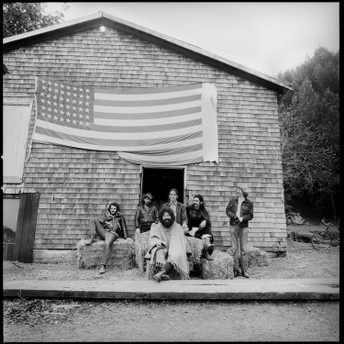
The Grateful Dead have paid tribute to longtime collaborator Donna Jean Godchaux, following news of her death at age 78.
“It is with heavy hearts that we mourn the loss of Donna Jean Godchaux,” the band shared in a statement posted to social media. “Her unmistakable voice and radiant spirit touched the lives of countless fans and immeasurably enriched the Grateful Dead family. Her contributions will forever remain part of the tapestry that continues to be woven.”
Godchaux passed away on Sunday (Nov. 2) at a hospice facility in Tennessee following a prolonged battle with cancer, according to her longtime publicist Dennis McNally. “She was a sweet and warmly beautiful spirit, and all those who knew her are united in loss,” McNally said. “In the words of Dead lyricist Robert Hunter, ‘May the four winds blow her safely home.’”
Explore
See latest videos, charts and news
Godchaux joined the Grateful Dead in 1971 alongside her husband, keyboardist Keith Godchaux, becoming a key part of the band’s 1970s sound during a transformative creative period. She sang on several of the group’s most enduring studio albums — including Europe ’72, Wake of the Flood, and Terrapin Station — and appeared on many now-iconic live recordings, including the legendary Cornell ’77 show and the Dead’s 1978 concerts at the Pyramids of Giza in Egypt.
In addition to her work with the Dead, Godchaux had an accomplished background as a session vocalist, performing on classic hits such as Elvis Presley’s “Suspicious Minds” and “In the Ghetto,” as well as Percy Sledge’s “When a Man Loves a Woman.” Her credits also included work with Cher, Neil Diamond, Boz Scaggs and Duane Allman.
After departing the Grateful Dead in 1979, the Godchauxs formed the Heart of Gold Band, which was cut short by Keith’s tragic death in a car accident the following year. Donna Jean Godchaux returned to music in the 1980s and continued recording and performing through the 2010s, including with the Donna Jean Godchaux Band and on her final album Back Around (2014).
Godchaux’s passing comes just over a year after the death of founding Grateful Dead bassist Phil Lesh in October 2024. The remaining members of the extended Dead universe — including Bob Weir and Mickey Hart — have continued to perform with Dead & Company, who celebrated the band’s 60th anniversary with a three-night run at San Francisco’s Oracle Park earlier this year.
Trending on Billboard
Former Grateful Dead vocalist Donna Jean Godchaux-MacKay, 78, died in a hospice facility in Nashville on Sunday (Nov. 2) following a long battle with cancer according to Rolling Stone. After a successful stint as a session singer at the famed Muscle Shoals studio in Alabama where she sang backup on Billboard Hot 100 No. 1 songs by Percy Sledge (“When a Man Loves a Woman”) and Elvis Presley (“Suspicious Minds”), Godchaux-MacKay joined the Grateful Dead in San Francisco along with then-husband keyboardist Keith Godchaux, touring and performing with the band from 1971-1979.
“She was a sweet and warmly beautiful spirit, and all those who knew her are united in loss,” read the statement about her death shared with RS. “The family requests privacy at this time of grieving. In the words of Dead lyricist Robert Hunter, ‘May the four winds blow her safely home.’”
Donna Jean Thatcher was born in Florence, Ala. on Aug. 22, 1947 and began her decades-long music career as a member of the band Southern Comfort before moving on to session work, appearing on No. 1 songs by Sledge and Presley, as well as singing backup on sessions with Cher, Joe Tex, Duane Allman, Neil Diamond, Boz Scaggs and others before moving to the Bay Area and meeting Godchaux.
The couple got married in 1970 and both joined the Dead a year later, with Godchaux singing lead and backing vocals and Keith slipping into the spot formerly held by late band co-founder keyboardist/singer Ron “Pigpen” McKernan. The couple appeared on a string of the group’s classic 1970s albums, including 1973’s Wake of the Flood, 1974’s From the Mars Hotel and 1975’s Blues For Allah, on which Godchaux stepped up from the background to provide a co-lead vocal on “The Music Never Stopped” and the LP’s title suite.
She also appeared on 1976’s Steal Your Face and 1977’s Terrapin Station, where her powerful mezzo-soprano soared on the band’s disco-jam cover of Martha & the Vandellas’ “Dancing in the Street,” on which she shared the mic with guitarist/singer Bob Weir. She also took lead vocal duties and is credited with co-writing several songs on that album, including the gauzy ballad “Sunrise.” She took lead and composed the loose folky jam “From the Heart of Me” from the Dead’s beloved 1978 Shakedown Street LP, where she also shared vocals on “France” with Weir.
It would be the last Dead LP the Godchaux’s would appear on, though they were also key members of the legendarily road dog band’s 1970s touring ensemble before their departure in 1979, appearing on such beloved bootlegs as the 1977 Cornell University gig and the band’s 1978 shows at the Giza Pyramid in Egypt.
In addition to playing with the band, Donna also released music with husband Keith during their tenure, including 1975’s Keith & Donna duo effort, which in addition to their singing and playing features contributions from late Grateful Dead singer/guitarist Jerry Garcia on almost all the tracks. The couple also performed as part of Garcia’s side project, the Jerry Garcia Band, from 1976-1978 and formed their own side project, The Ghosts (later the Heart of Gold Band); Keith Godchaux, 32, died from injuries in a car accident in July 1980 shortly after the couple’s first concert together.
Donna Godchaux continued releasing solo music under the names The Donna Jean Band and Donna Jean and the Tricksters and issued her final studio album in 2014, Back Around, credited to the Donna Jean Godchaux Band with contributions from Zen Tricksters guitarist Jeff Mattson.
Godchaux was not a part of more recent tours and special anniversary concerts by the Grateful Dead’s various lineups under the names The Other Ones, The Dead, Furthur and Dead & Company. She did, however, make what would be one of her final appearances with the group at the Bonnaroo Festival on June 12, 2016, performing on the songs “Fire on the Mountain,” “Berth,” “Bird Song,” “Playing in the Band,” “Terrapin Station” and “Touch of Grey.” She also sat in for two other shows that summer, at Citi Field in New York in late June and Fenway Park in Boston in July.
Check out some of Godchuax’s performances below.
Trending on Billboard
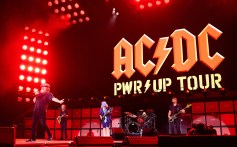
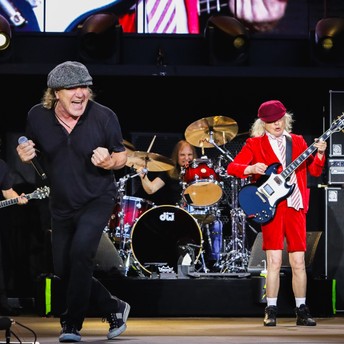
AC/DC will continue their globe-hopping Power Up tour into 2026 with Monday morning’s (Nov. 3) announcement of a run of 21 more shows in South America and North America next year. The new dates for the nearly two-year-old tour by the legendary Australian hard rockers will kick off on Feb. 24 at Estádio do MorumBIS in São Paulo, Brazil and include stops in Santiago, Chile on March 11 and Buenos Aires, Argentina on March 23 before winding down on April 7 in Mexico City at Estadio GNP Seguros.
Explore
See latest videos, charts and news
The band will then take the spring off and be back on the road beginning July 11 in Charlotte, N.C., followed by shows in Columbus, Ohio, Madison, Wi., San Antonio, Denver, Las Vegas, San Francisco, Edmonton, Alberta, Vancouver, Atlanta, Houston, South Bend, Ind., St. Louis, Montreal, Toronto and East Rutherford, N.J. before winding down on Sept. 29 at Lincoln Financial Field in Philadelphia.
Tickets for the upcoming run of 2026 shows will be on sale at 10 a.m. ET on Friday (Nov. 7); click here for details.
The Rock and Roll Hall of Fame act — singer Brian Johnson, guitarist Angus Young, rhythm guitarist Stevie Young, drummer Matt Laug and bassist Chris Chaney — kicked off the tour named for their 17th studio album in May 2024. The band’s next scheduled date is on Nov. 12 at the Melbourne Cricket Ground in Melbourne, Australia.
Check out the 2026 dates for AC/DC’s Power Up tour below.
Feb. 24: São Paulo, BR @ Estádio do MorumBIS
March 11: Santiago, CL @ Parque Estadio Nacional
March 23: Buenos Aires, AR @ Estadio River Plate
Apr. 7: Mexico City, MX @ Estadio GNP Seguros
July 11: Charlotte, N.C. @ Bank of America Stadium
July 15: Columbus, Ohio @ Ohio Stadium
July 19: Madison, Wis. @ Camp Randall Stadium
July 24: San Antonio, Texas @ Alamodome
July 28: Denver, Colo. @ Empower Field at Mile High *
Aug. 1: Las Vegas, Nev. @ Allegiant Stadium *
Aug. 5: San Francisco, Calif. @ Levi’s Stadium
Aug. 9: Edmonton, AB @ Commonwealth Stadium
Aug. 13: Vancouver, BC @ BC Place
Aug. 27: Atlanta, Ga. @ Mercedes-Benz Stadium
Aug. 31: Houston, Texas @ NRG Stadium
Sept. 4: South Bend, Ind. @ Notre Dame Stadium
Sept. 8: St. Louis, Mo. @ The Dome at America’s Center
Sept. 12: Montreal, QC @ Parc Jean-Drapeau
Sept. 16: Toronto, ON @ Rogers Stadium
Sept. 25: East Rutherford, N.J. @ MetLife Stadium
Sept. 29: Philadelphia, PA @ Lincoln Financial Field *
*Denver, Las Vegas, and Philadelphia on sale at 12pm local time
Billboard’s Live Music Summit will be held in Los Angeles on Nov. 3. For tickets and more information, click here.
Trending on Billboard The Cure have announced the release date for The Show of a Lost World concert film, a full-length live performance featuring all the songs from the band’s most recent studio album, 2024’s Songs of a Lost World. The movie will play exclusively in theaters worldwide on Dec. 11 for a limited time, […]
Trending on Billboard
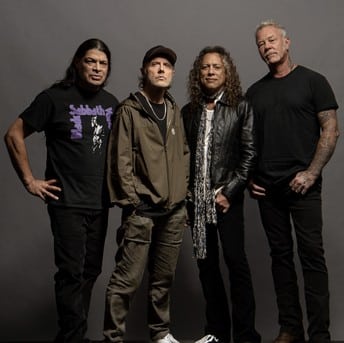
Metallica’s long-awaited M72 World Tour stop in Perth took an unexpected turn over the weekend when two concertgoers were arrested and charged with trespassing after allegedly scaling a central tower inside Optus Stadium during the band’s performance.
Explore
See latest videos, charts and news
According to Western Australia Police, the incident occurred on Saturday (Nov. 1) during Metallica’s first Australian show since 2013. The two men — a 20-year-old from Carey Park and a 23-year-old from Australind — were removed from the venue and will face court for the dangerous stunt.
Police confirmed that a 20-year-old man from Carey Park and a 23-year-old man from Australind were arrested and charged with trespassing after scaling the structure.
“It will be alleged the men climbed up the central tower inside the bowl at the Metallica concert held at Optus Stadium on Saturday,” a WA Police spokesperson said, according to news.com.au.
The concert marked the band’s first return to Australian soil in over a decade. Their last local appearance was headlining the now-defunct Soundwave Festival in 2013, where they shared the bill with blink-182, Linkin Park, Slayer and Paramore.
Support came from Suicidal Tendencies and Evanescence, while fans lined up earlier in the week at a dedicated M72 pop-up shop in Perth, offering exclusive merch, screen-printed posters, vinyl, and tour-themed skateboards.
Metallica has enjoyed remarkable success on the Billboard charts, with their 1991 self-titled album, known as The Black Album, debuting at No. 1 on the Billboard 200 and becoming one of the longest-charting albums in the chart’s history.
The band’s Australian tour continues with upcoming shows in Adelaide (Nov. 5), Melbourne (Nov. 8), Brisbane and Sydney over the next week. After wrapping their Australia and New Zealand shows, the rockers will continue the tour with Bahrain and the United Arab Emirates. Their current M72 World Tour will wrap in July 2026, following dates in Europe and the U.K.
Full tour details are available on the band’s official website.