 State Champ Radio
 genre rap
Page: 2
Trending on Billboard
Nelly is demanding that a lawyer for one of his former St. Lunatics bandmates repay more than $78,000 he spent in legal bills to defeat her “frivolous” lawsuit over the rights to his debut album Country Grammar.
The case, filed by ex-bandmate Ali, was dropped in April after Nelly argued it was obviously filed years after the statute of limitations had expired. Last month, a federal judge ruled that the case was so bad that Ali’s lawyer must repay his legal bills as punishment for pursuing it too far.
In a court filing on Wednesday, Nelly’s attorneys handed Ali’s lawyer the tab: $78,007 in legal fees for three copyright litigators, covering 142 hours they say they spent working on the case after it was clear it should have been dropped.
Related
“These rates are reasonable because they reflect the market rate for similar services to our quality of work in the New York City area,” Nelly’s attorney Kenneth Freundlich writes in the filing.
Ali’s attorney, Precious Felder Gates, will have a chance to argue for a lower fine before the judge settles on a final number. In a statement to Billboard on Thursday, she said she still believes the sanction itself was “unwarranted,” saying she’d “acted with the honest conviction that our client’s claims merited judicial consideration.”
Wednesday’s filing highlights the risk of filing questionable lawsuits against well-heeled defendants – and a potential weapon for top musicians who have complained about a rise in such cases. Ed Sheeran, Cardi B, Jay-Z and many other stars have warned that such lawsuits are often aimed at extracting quick settlements by exploiting the hassle and expense of litigation.
The case against Nelly was filed last year by members of St. Lunatics, a hip-hop group also composed of St. Louis high school friends Nelly, Ali (Ali Jones), Murphy Lee (Tohri Harper), Kyjuan (Robert Kyjuan) and City Spud (Lavell Webb). It centered on Country Grammar, the star’s debut solo album that spent five weeks atop the Billboard 200 and helped launch a career that reached superstar heights with his 2002 chart-topping singles “Hot in Herre” and “Dilemma.”
Related
The lawsuit alleged that Nelly had cut his former crew members out of the credits and royalty payments for the hit album. It claimed the star had repeatedly “manipulated” them into falsely thinking they’d be paid for their work.
But three of the St. Lunatics quickly dropped out, saying they had never actually wanted to sue Nelly and hadn’t given authorization to the lawyers who filed the case. Though Ali initially moved ahead alone, he dropped the case entirely in April. That move came as Nelly’s lawyers were seeking to dismiss the decades-delayed case under the Copyright Act’s three-year statute of limitations.
Though the case was over, Nelly’s attorneys refused to let Ali and his lawyers walk away. They asked for sanctions — meaning legal penalties — over a “vexatious” lawsuit that “should never have been brought.”
In the American legal system, each side usually pays its own legal bills, even including defendants who win a lawsuit that they feel they shouldn’t have faced. Only in rare cases, including as punishment for misconduct, do judges order the loser to repay the winner’s fees.
Last month, U.S. Magistrate Judge Robert W. Lehrburger said the case against Nelly was that kind of rare situation. He said it should have been “patently obvious” to Felder Gates that the case was doomed by last November, but that she had instead “doubled down.”
Related
Felder, the judge said, should face punishment for “vexatiously protracting the proceedings in bad faith by her attempt to obfuscate the facts she knew barred Jones’s claims and her subsequent refusal to withdraw the amended complaint in the face of overwhelming arguments that the claims could not possibly succeed.”
At the time, Freundlich said he hoped the ruling “sends a message to lawyers that there will be consequences for dragging a defendant into an action that is frivolous on its face.”
Wednesday’s filing explained the amount that Nelly’s lawyers say Felder Gates should pay under that order. Freundlich, a veteran music industry litigator, says he spent 19 hours at his rate of $725 per hour; a senior counsel at his firm, Jonah A. Grossbardt put in 88 hours at $575 per hour; and an associate, Hugh H. Rosenberg, worked 35 hours at $375 per hour.
Such rates are typical for attorneys at those levels in major law firms in New York and Los Angeles. Many lawyers at bigger firms charge even more, and complicated cases can cost millions to litigate. But the judge is not required to grant the entire request and could very well settle on a lower number.
Felder Gates will have a chance to file a motion next week seeking a lower fine, but the judge’s order means that she will eventually have to pay Nelly some amount of fees. In her statement to Billboard, she continued to defend her firm’s conduct in the case.
“Our firm pursued a legitimate claim in good faith to protect rights expressly afforded to our client,” she said. “Based on the information available and the applicable law, we held a reasonable and well-supported belief that viable arguments existed to [extend] the statute of limitations, and we accordingly advanced those defenses.”

Trending on Billboard
THE BIG STORY: Almost 20 years after Kim Kardashian burst into the national consciousness with a leaked sex tape, the male participant in the video says it wasn’t actually leaked at all.
In an explosive lawsuit filed last week, the R&B singer Ray J claimed the film was intentionally released by his then-girlfriend, Kardashian, and her mother, Kris Jenner, who have since spent nearly two decades “peddling the false story” that it was leaked.
Related
That’s not an entirely new claim; rumors have long swirled about the infamous tape that launched the billion-dollar Kardashian empire. But the family has always denied the claim, and there was no hard evidence or inside knowledge to argue otherwise.
How exactly did Ray J and Kardashian get to this point? And how do you sue someone over this? For the full backstory and the breakdown of the case, go read our story here.
You’re reading The Legal Beat, a weekly newsletter about music law from Billboard Pro, offering you a one-stop cheat sheet of big new cases, important rulings and all the fun stuff in between. To get the newsletter in your inbox every Tuesday, go subscribe here.
Other top stories this week…
GIMME DAMAGES – The company that owns the early Rolling Stones catalog filed a lawsuit against Behr Paint over an Instagram ad that allegedly featured “Paint It, Black” without a sync license.
DAY IN COURT – Lil Nas X made his first court appearance since leaving an inpatient treatment program following his August arrest for attacking police officers during a late-night naked walk.
CONVICTION AFFIRMED – An appeals court upheld the conviction of Tory Lanez for shooting Megan Thee Stallion, rejecting his arguments aimed at overturning his 10-year prison sentence.
CONTEMPT OF COURT – Elsewhere in the Tory-Megan saga, a judge held Lanez in contempt for refusing to be deposed: “Whatever the fines are, I’ll pay them,” he said. “I’m a millionaire. I don’t care.”
RELEASE DATE – Sean “Diddy” Combs’ projected release date was pushed back by a month, a move that came after media reports that he violated prison rules by drinking homemade alcohol.
DOWNTOWN DISPUTE – Downtown Music faces a lawsuit claiming it threw licensing partner Blast Off Media under the bus as a “sacrifice” to lessen regulatory scrutiny of its acquisition by UMG.
DEATH THREATS? – Lil Durk’s lawyers say they’ve been “kept in the dark” about alleged death threats that were called in to a judge and the lead prosecutor in his murder-for-hire case.
DRAKE SUED, AGAIN – A new lawsuit against Drake claims his music video ripped off the work of an Italian photographer — and, in a strange twist, that he did it as part of his feud with Kendrick Lamar.
NO SEQUEL – Cardi B’s lawyers scoffed at the idea of a second trial in Emani Ellis’ failed assault case against the superstar, calling it “absurd” after jurors easily rejected the allegations.
CASE DROPPED – A$AP Relli is ending his civil lawsuit against A$AP Rocky over an alleged Hollywood shooting, months after Rocky was acquitted on such accusations at a criminal trial.
FREE, FOR NOW – Music executive Ángel Del Villar will remain a free man while he appeals his convictions for doing business with Mexican drug cartels and the resulting four-year prison sentence.
BITTER BREAKUP – There’s a new front in the nasty legal war between hip-hop producer Madlib and his longtime manager Eothen “Egon” Alapatt: The copyrights to their songs.
MORE ALLEGATIONS – After Calvin Harris’ bombshell fraud lawsuit against business manager Thomas St. John, fellow star DJ Eric Prydz has now filed his own case claiming the manager stole $269,000.
LOCK HIM UP – Prosecutors want Tekashi 6ix9ine sent back to prison over multiple violations of his supervised release, including assaulting someone who taunted him as a snitch.
LIBEL LAWSUIT – Biggie’s son filed a defamation case against a Florida music producer who accused him — he says falsely — of participating in one of Sean “Diddy” Combs’ sexual assaults.
Trending on Billboard
Eminem has launched a legal battle with an Australian beach umbrella brand called “Swim Shady,” claiming the company is just imitating his “Slim Shady” alter ego.
The rapper, whose real name is Marshall Mathers, is fighting a legal action at the U.S. Patent and Trademark Office, seeking to cancel an American trademark that the Sydney-based Swim Shady secured on its name earlier this year.
Related
Eminem’s attorneys say the similar-sounding name “uniquely and unmistakably” points to the “internationally renowned recording artist and entertainer” – and that customers will be “deceived” into thinking he’s somehow involved.
“The petitioned mark is highly similar to petitioner’s name,” his lawyers write in their September petition, obtained by Billboard. “Consumers and potential consumers, and anyone seeing one of respondent’s products in the marketplace … will assume that the source of the goods emanates from [Eminem].”
Eminem debuted the Slim Shady name in 1997, using it for an aggressive alter ego that explores darker and more violent subjects. His 1999 album The Slim Shady LP, which reached No. 2 on the Billboard 200, focused heavily on the name, including his breakout “My Name Is” and his smash hit “Real Slim Shady” that reached No. 4 on the Hot 100.
The star has had “Slim Shady” registered as a federal trademark since 2001, holding rights to the name covering a wide range of goods. And he’s not afraid to enforce those rights: In 2023, he filed a similar case against Real Housewives stars Gizelle Bryant and Robyn Dixon over their efforts to get a trademark for the name of their “Reasonably Shady” podcast.
Related
Swim Shady launched earlier this year to sell a small, foldable beach umbrella – a product it says is aimed at “solo beachgoers who wanted better sun protection without the hassle.” And the company has big plans: According to its website, it is seeking or has secured trademarks for that name around the globe, including in China, the U.S. and the European Union.
In September, the USPTO formally granted the company an American trademark registration for its name, covering both beach gear and a wide assortment of apparel. Such a registration makes it easier to sue someone selling a knock-off brand and allows a company to use the ® symbol.
But Eminem’s lawyers, in their Sept. 29 petition, say Swim Shady’s trademark never should have been registered. Such cases, filed with the PTO’s Trademark Trial and Appeal Board, are a common way that brand owners prevent others from securing rights to their names.
Eminem knows that process well. Since 2003, his lawyers have filed at least six such cases at that trademark dispute body — including not just the Real Housewives case but also one against an apparel brand called “Shadzy” and another against a sunglasses brand called “Shady Character.”
Related
Many other superstar artists have taken similar proactive measures to defend their names against similar-sounding trademarks filed by third-parties, which are cheap to file and sometimes slip through the approval process. Taylor Swift filed a case in 2017 to block a “Swifty” trademark; Jay-Z has filed more than ten over the years.
Such cases don’t legally stop a company like Swim Shady from using a brand name on their products, but merely from securing their own trademark rights to it; only a full-fledged federal lawsuit can shut down an infringing company. But in his new case, Eminem suggests that he thinks Swim Shady’s use of the name violates his rights.
“Petitioner is and will continue to be damaged by any sale or any offering for sale of Swim Shady goods by respondent, since there will exist a false association and suggestion as to the source of the goods involved,” his lawyers write. “Any inferior quality of respondent’s goods will damage the reputation of petitioner’s premium goods and services.”
Reps for both Eminem and Swim Shady did not immediately return requests for comment.

Trending on Billboard
C.J. Wallace, son of The Notorious B.I.G., has countersued for defamation after a Florida music producer and publicist accused him of participating in a sexual assault with Sean “Diddy” Combs.
Jonathan Hay filed a lawsuit this summer claiming that while working on a remix project with the Biggie estate in 2020, Wallace and an associate brought him to a house where Combs forced him to perform oral sex. The case also alleged multiple other instances of sexual misconduct by Combs, who’s faced a barrage of civil assault lawsuits since being criminally charged last year.
Related
Wallace is now hitting back at Hay with a countersuit in which he calls the allegations a “calculated smear campaign.” The federal court complaint, filed Wednesday (Nov. 12), alleges Hay fabricated these claims because he was upset about their remix project falling through.
The countersuit alleges the estate decided to shelve the project — a house remix of Biggie’s 1994 album Ready to Die, called Ready to Dance — after the first single (a remix of “Big Poppa”) flopped in August 2020. Wallace says Hay was “irate” at this decision and later came up with a phony story about the alleged Combs assault.
“The statements constitute defamation,” writes Wallace’s attorney, Jeremiah Reynolds of Eisner LLP. “As a direct and proximate result, Wallace has suffered general and special damages, including loss of professional opportunities, humiliation and mental anguish.”
Wallace’s defamation claims don’t actually target Hay’s sexual assault lawsuit, since legal filings are broadly shielded from slander liability under a principle known as the litigation privilege. Instead, Wallace’s case focuses on an October YouTube video in which Hay repeated and described his claims in detail.
Related
While Hay’s assault lawsuit was filed anonymously, he revealed his identity in this video, titled “Jonathan Hay Details EXACTLY What Happen When Diddy A$$AULTED Him, Forced to S*CK D*CK & VlOLATED!”
Hay declined to comment on the countersuit when reached by Billboard on Friday (Nov. 14), but noted that he’s filed a police report in addition to the pending civil lawsuit against Combs and Wallace.
Combs’ reps did not immediately return a request for comment on the matter. The disgraced rap mogul is serving a prison sentence for arranging drug-fueled sex marathons between his girlfriends and male escorts, though he was acquitted of more serious sex-trafficking and racketeering charges at a blockbuster trial this summer.
Trending on Billboard
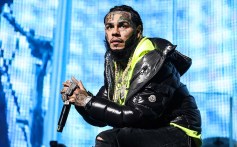
Federal prosecutors are urging a judge to sentence Tekashi 6ix9ine to between three and nine months in prison for possessing drugs and assaulting someone who taunted him about flipping on former Brooklyn gangmates.
The rapper (Daniel Hernandez) is due to be sentenced by Judge Paul A. Engelmayer next Thursday (Nov. 20) after pleading guilty to multiple violations of his supervised release. Tekashi’s probation stems from a 2018 racketeering prosecution, in which he testified against other members of the Nine Trey Gangsta Bloods in exchange for leniency.
Related
Tekashi broke the rules of supervised release by possessing cocaine and MDMA this past February, then again by punching and kicking a man in August at a Florida mall, who made derogatory comments about his cooperation with law enforcement. Now, prosecutors say prison time is warranted because Tekashi “violated the court’s trust.”
“While it brings the government no joy to seek a custodial prison sentence for a former cooperator, the court must send a message to Hernandez and other government cooperators — or those considering cooperating with the government — that they are not above the law by virtue of their status as cooperators,” wrote Assistant U.S. Attorney Jonathan Rebold in a Wednesday (Nov. 13) sentencing recommendation.
Meanwhile, Tekashi’s attorney says six months of house arrest is a more appropriate sentence. Defense lawyer Lance Lazzaro sought to put Tekashi’s violations in perspective in a Nov. 6 court letter, noting that the rapper was caught only with “a very small amount” of drugs and that the victim of his Florida assault, who was the “initial aggressor” in the dispute, was not seriously injured.
Related
Lazzaro also advised Judge Engelmayer that for a cooperator like Tekashi, months in prison “end up being much more severe, difficult, and even dangerous, when compared to a typical inmate.”
“Due to Mr. Hernandez’ classification, he always serves his jail time segregated and fully isolated from other inmates,” wrote Lazzaro. “As a result, Mr. Hernandez is given extremely limited social interaction with other inmates and very little time outside to get fresh air and exercise.”
Neither Lazzaro nor a rep for the prosecution immediately returned requests for comment about the sentencing recommendations on Friday (Nov. 14).
Back in 2018, Tekashi pled guilty to nine racketeering, gun and drug charges related to his time in the Nine Trey Gangsta Bloods. He admitted to being involved in a slew of violent incidents targeting rival rappers, including a 2017 assault of Trippie Redd, and testified against his former gang associates at a high-profile trial in 2019.
Related
The charges in Tekashi’s plea could have subjected him to decades in prison. But Judge Engelmayer sentenced him to just two years behind bars due to his “game-changing” and “brave” cooperation, and he got out even faster because of health risks during the early days of the COVID-19 pandemic.
Tekashi began a five-year term of supervised release after getting out of jail in 2020. He had just months left on probation when, in November 2024, the rapper was charged with a host of violations, including using methamphetamine, failing to appear for drug tests and traveling to Las Vegas without permission.
The rapper admitted to these violations, and Judge Engelmayer sentenced him to 45 days in jail plus another year of supervised release. After his release last December, Tekashi was again caught violating probation by possessing cocaine and MDMA. Then came the Florida assault, which happened while he was awaiting sentencing for the drug violations.
Prosecutors now say that whatever sentence Tekashi receives on Nov. 20, it should be followed by a fresh two-year supervised release term. And this time, they add, he should be required to seek substance abuse treatment and anger management counseling.
“Hernandez is now six years removed from his criminal sentencing; yet he still appears unable to control his temper when slighted by a random stranger,” reads the prosecution’s sentencing memo. “Hernandez must learn to turn the other cheek and walk away from situations like these moving forward.”
Trending on Billboard
Lil Durk says his lawyers have been unfairly “kept in the dark” about death threats that were called in to a judge and the lead prosecutor in his murder-for-hire case.
Attorneys for the Chicago drill star argue in a Thursday (Nov. 13) court filing that they just learned about a seven-month-long FBI investigation into these threats, and that this concealment has severely prejudiced the rapper (Durk Banks) as the clock ticks towards a January trial date. Durk is accused of ordering members of his Only the Family (OTF) crew to shoot his rival, Quando Rondo, in 2022.
Related
The case is being prosecuted in Los Angeles federal court and chiefly overseen by U.S. District Judge Michael Fitzgerald, though Magistrate Judge Patricia Donahue handled Durk’s failed attempt to be released on bail this spring. According to Thursday’s filing, a Durk supporter left four voicemails for Judge Donahue in February with “explicit death threats” related to the charges against him and other OTF members.
The caller allegedly mimicked the sound of gunfire in his messages and said in one message, “If they get life, I’m going to burn this [expletive] down. I’m talking ’bout the world, and I’m going to burn it, burn it to the ground.”
Durk’s lawyers say that in April, a separate caller phoned the case’s lead prosecutor, Ian Yanniello, with more death threats. This person also allegedly threatened courthouse staff and other prosecutors in the U.S. Attorney’s Office for the Central District of California.
According to Thursday’s filing, prosecutors and court staff conferred about these death threats, and the FBI investigated the matter extensively. But the defense lawyers say they weren’t clued in until just last month, which they claim is a huge problem.
Related
“This prolonged nondisclosure — compounded by undisclosed ex parte communications between the prosecution team and the bench about these threats — has irreparably compromised the structural integrity of these proceedings,” reads the filing.
Durk’s lawyers say these death threats could have improperly influenced prosecutors’ decision-making, as well as Judge Donahue’s May ruling that Durk would be a danger to the community if released from jail.
“To state the obvious, Judge Donahue was in no position to consider whether Mr. Banks was too dangerous to be released while having been both personally threatened by someone purporting to act on Mr. Banks’ behalf, and having had her entire workplace physically and violently threatened by the same,” write the rapper’s attorneys.
Durk’s team says the situation has “fatally compromised” his right to a fair trial, which is just two months out. They’re asking that the entire case be dismissed, or at the very least, that the trial be pushed back and reassigned to both a different court and a separate branch of the U.S. Attorney’s Office.
Related
A spokesperson for the prosecution declined to comment on the matter. Reps for the Los Angeles federal courthouse did not immediately return a request for comment.
Durk was arrested last year for allegedly putting a bounty on Rondo’s head. A 2022 shooting at a Los Angeles gas station left Rondo (Tyquian Bowman) unscathed, but Rondo’s friend Lul Pab (Saviay’a Robinson) was killed in the crossfire.
The Chicago rapper denies ordering the hit and says there’s no real evidence against him. The case’s first indictment included lyrics from Durk’s song “Wonderful Wayne & Jackie Boy,” but those were later removed after defense lawyers noted that the song was written months before the Rondo attack.
Trending on Billboard
Sean “Diddy” Combs’ release date has been pushed back, a move that comes after media reports that he violated prison rules by drinking homemade alcohol.
After Diddy was convicted in July on federal prostitution charges and sentenced to four years in prison, the federal Bureau of Prisons inmate records initially projected his release date as May 8, 2028. But those same records, reviewed by Billboard, now say Diddy will go free on June 4, 2028.
Related
It’s unclear why the expected date was updated; such listings are just estimates, reflecting the “inmate’s projected release date based on BOP calculations.” But it comes after Combs allegedly violated multiple prison rules within weeks of arriving at a New Jersey federal correctional facility.
As first reported by CBS News, Combs faced potential disciplinary action for an unauthorized three-way phone call, which is barred by prison rules. His representative denied any wrongdoing to CBS, saying there “was nothing improper” about the call.
According to a report last week by TMZ, Combs was also caught in prison with homemade alcohol made from Fanta soda, sugar and apples. Combs’ family strongly denied that report, saying on social media that it was “completely false.”
In a statement to Billboard, a BOP spokesperson declined to comment on why Diddy’s date had been changed: “For privacy, safety, and security reasons, we do not discuss the conditions of confinement for any individual, including release plans, timing, or procedures, or whether a particular individual is the subject of allegations, investigations, or sanctions. However, we can tell you that Sean Combs has a projected release date of June 4, 2028.”
Reps for Combs did not immediately return requests for comment on the reasons for the changed release date.
Combs was arrested and charged in September 2024 with racketeering (RICO) and sex trafficking violations over claims that he ran a sprawling criminal operation aimed at facilitating “freak-offs” — elaborate events at which he allegedly forced ex-girlfriend Cassie Ventura and others to have sex with male escorts while he watched and masturbated.
Following a blockbuster trial this spring, jurors issued a verdict clearing Combs on the more serious charges that could have seen him sentenced to prison for life. But he was still convicted on two lesser counts for transporting Ventura and others across state lines for the purpose of prostitution. Last month, he was sentenced to 50 months in prison.
Combs is currently appealing both his convictions and sentence; if successful, he could get out much earlier than the BOP estimates. But the appeals process is often slow, and Combs will likely serve a sizeable chunk of his term before the case is even decided. The star is also seeking a pardon from President Donald Trump, but the White House has publicly denied that it is considering that move.
Trending on Billboard
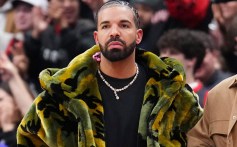
A new lawsuit claims Drake’s ”What Did I Miss?” music video ripped off the work of an Italian photographer — and, in a strange twist, that the rapper was intentionally trying to connect his feud with Kendrick Lamar to a controversial Balenciaga campaign.
The copyright infringement complaint, filed against Drake (Aubrey Graham) on Wednesday (Nov. 12) in federal court, alleges a key sequence in the “What Did I Miss?” video lifts from a photograph in Gabriele Galimberti’s 2020 book The Ameriguns. Both Galimberti’s photo and the scene in question show men standing outside houses, surrounded by firearms laid out in parallel around swimming pools.
Related
Galimberti is a photographer with National Geographic, though he is perhaps best known for shooting a notorious 2022 Balenciaga campaign that portrayed children with sexually explicit objects. The campaign drew a huge backlash, with consumers accusing the fashion house and Galimberti of glorifying pedophilia.
Wednesday’s lawsuit draws a direct line between the Balenciaga controversy and “What Did I Miss?,” in which Drake addressed the aftermath of his rap battle with Lamar. That feud ended with Lamar calling Drake a “certified pedophile” on the chart-topping diss track “Not Like Us,” leading Drake to sue Universal Music Group (UMG) for defamation.
“Plaintiff was ultimately publicly vindicated in a defamation lawsuit abroad related to the false accusations arising from the Balenciaga advertisement,” writes Galimberti’s attorney. “Given Kendrick Lamar’s lyrics…calling defendant Graham a pedophile and defendant Graham’s now dismissed defamation lawsuit, on information and belief, defendant Graham sought to imply that he, like plaintiff, would be publicly exonerated.”
Related
Drake’s defamation lawsuit was dismissed last month, with a federal judge ruling that lyrics in rap battles are hyperbole and not meant to imply facts. Drake is now appealing to revive the case against UMG, which owns both Lamar’s label Interscope Records and his label, Republic Records.
Republic and UMG are both defendants in Galimberti’s lawsuit as well, along with Drake and his company OVO Sounds. Galimberti is seeking financial damages for what he describes as “both an egregious violation of federal law and an affront to plaintiff, his livelihood, his legacy and to photographers everywhere.”
“Plaintiff is a serious professional, addressing serious themes,” reads the complaint. “His work hangs in galleries, museums, graces serious print literature, and his career depends upon the respect and admiration of dealers, collectors and critics of contemporary and documentary art. By the forced and unauthorized association of his work with the infringing video, the integrity of his work and his reputation as a photographer has been damaged.”
Reps for Drake and UMG did not immediately return requests for comment on the lawsuit.
“What Did I Miss?” debuted at No. 2 on the Billboard Hot 100 in July, and hit No. 1 on both Hot R&B/Hip-Hop Songs and Rhythmic Airplay, extending multiple Billboard chart records for the rapper.
Trending on Billboard
An appeals court has upheld Tory Lanez’s convictions for shooting Megan Thee Stallion, rejecting his arguments aimed at overturning his 10-year prison sentence.
Nearly three years after the singer (Daystar Peterson) was found guilty in 2022 of shooting Megan in the foot during a drunken argument on a Hollywood Hills street, a California appellate court affirmed the verdict in a ruling issued Wednesday (Nov. 12).
Related
Lanez and his supporters have long maintained his innocence, claiming there was insufficient proof that he was the shooter and that he received an unfair trial. But in the ruling, the appeals court said there was no reason to undo the verdict.
“Peterson contends the trial court committed a number of errors,” the appeals court wrote. “We find no prejudicial error and, accordingly, affirm Peterson’s conviction.” A spokeswoman for Lanez did not immediately return a request for comment on the ruling.
The ruling came more than five years after the July 12, 2020, shooting, which happened as a driver was shuttling Lanez, Megan and her assistant/friend Kelsey Harris from a party at Kylie Jenner’s house. According to prosecutors, when Megan got out of a vehicle and began walking away, Lanez shouted “Dance, b—h!” and fired a gun at her feet, striking her once.
Following the incident, Megan initially told police officers that she had cut her foot stepping on broken glass, but days later alleged that she had been shot. Lanez was eventually charged with the shooting in October 2022.
Related
During a blockbuster trial in Los Angeles court, Lanez’s lawyers tried to sow doubt over who had really pulled the trigger, painting a scenario in which Harris could have been the shooter. But a key defense witness offered confusing eyewitness testimony, and prosecutors pointed to an earlier interview in which Harris pinned the blame squarely on Lanez. Megan herself offered powerful testimony that Lanez had been the one to shoot her, and neither Lanez nor the driver took the witness stand.
Lanez and his supporters have refused to accept that verdict, calling it a “miscarriage of justice.” His legal team has filed multiple forms of appeal to challenge the verdict, each of which has now been rejected. They have also claimed publicly that new evidence exonerates him; Megan’s reps and prosecutors strongly deny that.
On appeal, Lanez raised a slew of arguments. He argued it had been unfair for jurors to hear the earlier interview with Harris, in which she placed the blame for the shooting on Lanez; he also argued prosecutors had improperly cited an Instagram post in which he appeared to say that Harris had not shot Megan.
In Wednesday’s decision, the appeals court rejected each of those arguments, including Lanez’s claim that prosecutors had “introduced racial bias into the proceedings” by referencing a tattoo of a gun on his chest.
“It was defense counsel who asked — both on direct and on redirect — if [a witness] had ever seen Peterson with a gun,” the appeals court wrote. “Neither of the prosecutors even mentioned Peterson’s tattoos — much less the tattoo of a firearm — in their closing arguments.”

Trending on Billboard
There’s a new front in the nasty legal war between hip-hop producer Madlib and his longtime manager Eothen “Egon” Alapatt: The many songs recorded during their decade-long partnership.
In a lawsuit filed Tuesday (Nov. 11) against Madlib (Otis Lee Jackson Jr.), Egon asked a federal judge to decide who owns the rights to the masters created over the years at their Madicine Show label — tracks that feature Madlib’s beats under vocals by Mac Miller, Freddie Gibbs, Four Tet and others.
Related
“Jackson now claims those works as his personal property and seeks to withdraw them entirely from Madicine Show’s catalog,” writes Egon’s attorney Kenneth Freundlich. “That is not how the law works.”
In a statement to Billboard, Madlib responded to Egon’s new claims: “I trusted someone who didn’t value the art the way I do. This is a reminder that not everyone who stands beside you is standing for you. When you move with truth, you don’t have to defend yourself. Time and integrity do the talking.”
Madlib, a critically-acclaimed producer known for his work with Kanye West (now Ye) and the late MF Doom, went to court first in 2024 — accusing Egon of “rank self-dealing” and “pervasive mismanagement.” The case, filed in California state court, claimed the manager had abused his power over Madicine Show to profit at Madlib’s expense.
Egon hit back in May, filing a countersuit blasting Madlib for “having the audacity to bring this mean-spirited personal action.” In one notable claim, Egon said Madlib’s new label was interfering with music projects that legally belong to Madicine Show, including the release of a years-old recording of the late Miller that has long been rumored to be in the works.
Related
In the new case on Tuesday, Egon said he needed “immediate federal intervention” in that legal battle because of a key new development in the earlier lawsuit.
Last month, a Los Angeles judge sided with Madlib and ruled that a court-appointed receiver should oversee the corporate dissolution of Madicine Show. The ruling came over objections from Egon, who said he himself should oversee the company’s wind-down. “Defendant is not the appropriate person to oversee the dissolution process,” the judge said at the time. “The court will appoint a receiver.”
But now, weeks later, Egon says in his new lawsuit that the breakup process cannot move ahead until it’s clear who owns the company’s “most valuable assets”: its catalog of recorded music. And since copyright law is handled exclusively by federal courts, he says that decision must be made by a U.S. district judge.
“The recordings at issue were created and exploited pursuant to a licensing relationship between Jackson and Madicine Show,” Egon writes. “They remain company assets, and their ownership must be determined under the Copyright Act.”
Related
According to the lawsuit, the tracks recorded by Miller and others over Madlib’s beats were “facilitated, supervised, and produced” by Egon under a longstanding arrangement in which the company controlled them. The producer’s recent claim that “he alone owns all copyrights” is “mystifying” and legally incorrect, the suit says.
“This position ignores the parties’ mutual understanding and Alapatt’s creative, financial, and managerial contributions,” Egon’s lawyers write. “After benefiting from that arrangement, Jackson cannot revoke or withdraw those rights or claim exclusive ownership of works that were created, produced, and marketed under Madicine Show’s direction.”
Attorneys for both sides did not immediately return requests for comment on the new case.