State Champ Radio
 genre pop
Page: 38
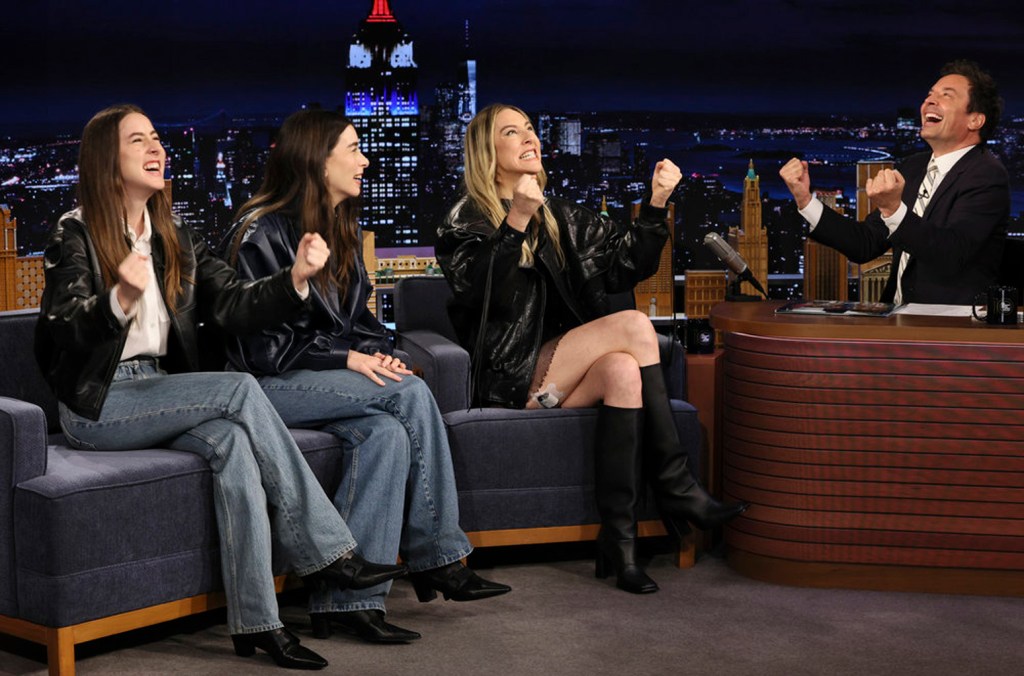
Haim have performed on The Tonight Show before. But Alana, Este and Danielle have never taken a trip to the couch to chat with host Jimmy Fallon, so on Tuesday night (June 17) the sibling trio made the most of their maiden voyage by doing all the things.
In addition to performing their single “Down to Be Wrong” with a full band from their forthcoming album I Quit (June 20), the trio popped in for the episode’s cold open to teach Fallon how to speak in perfect Haim-style harmony. Hanging out in their green room, the sisters answered everything Fallon said in a perfectly calibrated single voice. “I know you sing like this, but do you actually talk like this?” Fallon asked nervously.
“Yeah, we do Jimmy,” they said in a sing-song, robotic fashion. “It’s kind of like a special thing we do, Jimmy.” They invited Fallon to join them and when the beat kicked in they did a call-and-response until Este stopped the song to ask, for real, if there were any more snacks available.
Trending on Billboard
A short time later they were on the couch, describing to Fallon how the moody cover of their album was shot by longtime collaborator and friend director Paul Thomas Anderson, with Este lamenting how her sisters are both in perfect focus, while she is a blurry figure in the foreground. “We’re lucky enough that he’s done 10 of our music videos, he did [the cover] of our last record, Women in Music, Part III,” she said.
What Fallon really wanted to know, though, was what inspired the title of their fourth album. Este explained that as children they were obsessed with the 1996 Tom Hanks musical comedy That Thing You Do!, the Oscar-winning actor’s writing and directorial debut and homage to the fictional Beatles-wannabe one-hit wonder band the Oneders.
“We watched it as kids like every weekend on VH1,” she said as the trio flawlessly broke into an impromptu round of the movie’s signature earworm title track. “So we loved that movie and there’s this pivotal moment in the movie at the end of the movie the lead singer is like, ‘Okay we have to do our second record,” and he wanted to do this really, like brooding, emotional song,” Este explained.
“And he comes up to the mic and he’s basically like, ‘Okay, I’m ready to record.’ And then Tom Hanks, the manager, is like, ‘Listen Jimmy, I want something peppy, something snappy.’ And then Jimmy goes [clears throat], ‘I quit, I quit, I quit,’” she sang as her sisters snapped along. So, she said, whenever they would do mic checks they would do so with a round of “I quit, I quit.” They did so during sessions for their fourth album as well, and after using the phrase as a placeholder to organize their musical files they decided to just keep it as the title for the album about breakups and romantic spin-outs.
“It stuck and we also realized that a lot of our songs are kind of about, like, quitting,” Este said. “Quitting the things that aren’t good for us anymore.” For the record, they are not quitting music. In fact, they proved how much they’re not quitting by revealing that as kids they were also constantly drumming on each other and everything in sight.
So when Fallon gave them a series of random objects, Este snagged a trash can for Danielle to bang on and some paper for Alana to tear while the host shook a box of Altoids and she tapped on a coffee mug for an impromptu, stripped-down version of their I Quit single “Relationships.”
Check out Haim on The Tonight Show below.
Lola Young only has “One Thing” on her mind: The British songwriter’s third full-length album is officially on its way. Young will release I’m Only F–king Myself on Sept. 19, following a huge 18 months that have put the Londoner on the map as a main pop girl. The forthcoming record was written with her […]
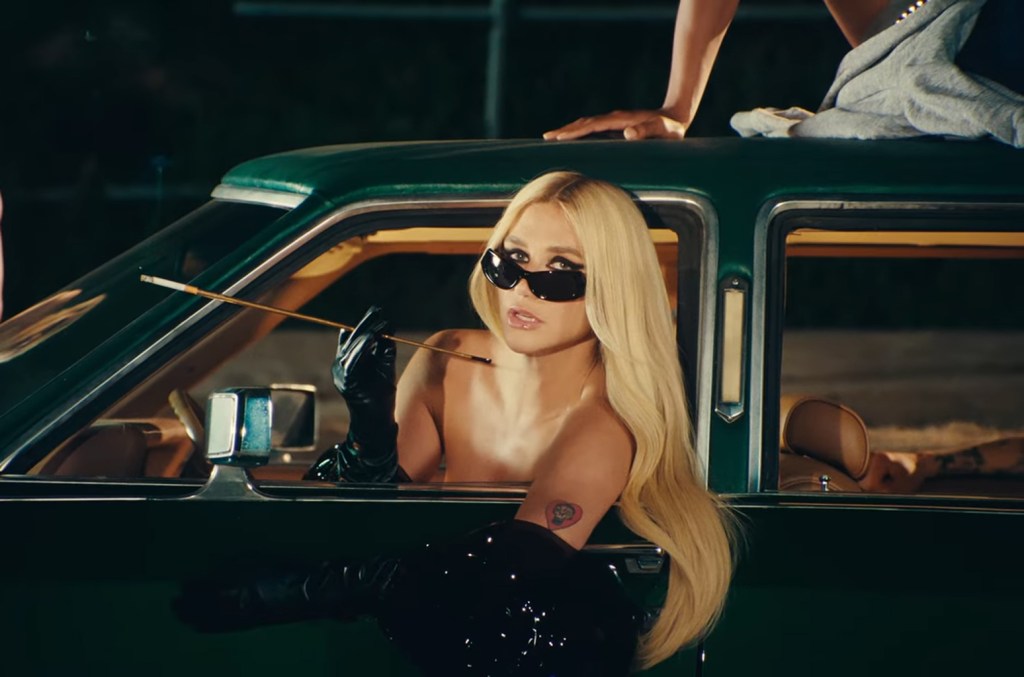
Kesha just can’t get enough in the video for her new single, “Boy Crazy.” In the self-directed visual posted Tuesday (June 17), the pop star is surrounded by a diverse cast of men wearing varying amounts of clothing as she sits down for a feast in a rodeo-themed restaurant, where things unravel into chaos as […]
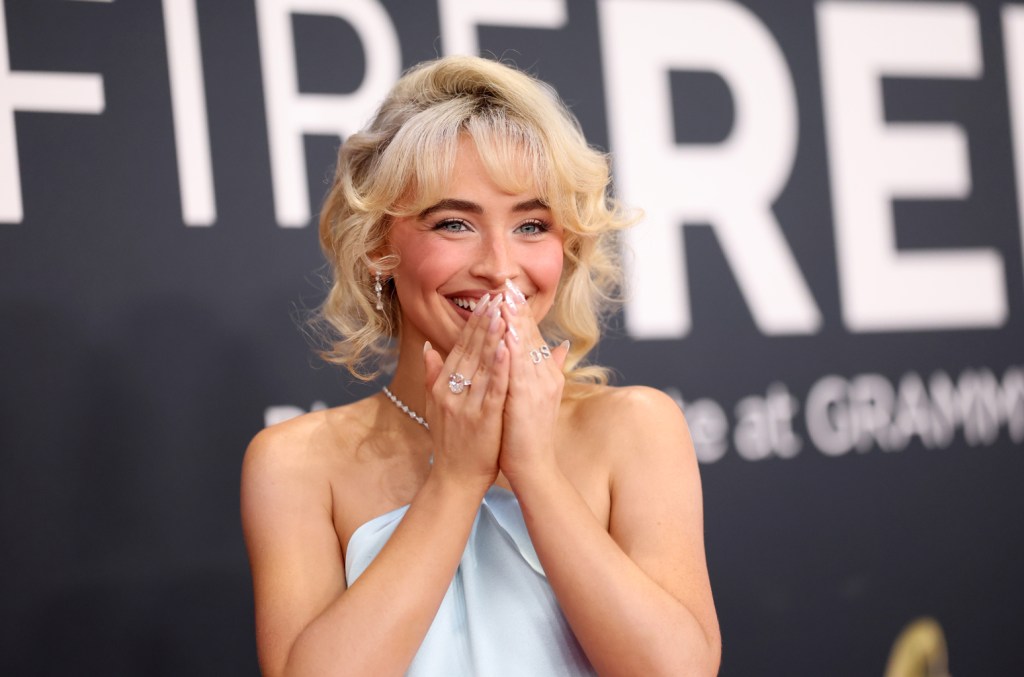
At this point, we should be conditioned to expect pop stars to behave in a controversial manner. And yet, when Sabrina Carpenter released the cover for her upcoming Man’s Best Friend album, social media was up in arms about the provocative artwork, which features the singer/songwriter on all fours with her hair being grabbed by […]
It’s a highly static week in the Billboard Hot 100‘s top 10 — with one very notable exception, courtesy of pop superstar Sabrina Carpenter.
Helped by an excellent start on streaming, an action-packed music video and a good amount of physical sales on vinyl, Carpenter’s new single “Manchild” bows atop the Hot 100 this week, marking Carpenter’s second No. 1 (after 2024’s “Please Please Please”) and first debut atop the chart. Below it, each of last week’s top nine on the Hot 100 dutifully move down one spot to make room for it.
How big a deal is the No. 1 bow for Carpenter? And how long do we anticipate “Manchild” lasting on top? Billboard staffers answer these questions and more below.
Explore
Explore
See latest videos, charts and news
See latest videos, charts and news
1. “Manchild” debuts at No. 1, becoming Sabrina Carpenter’s second No. 1 and first to debut atop the chart. On a scale from 1-10, how big a deal would you rate this achievement for her?
Trending on Billboard
Christopher Claxton: I’d rate this a 9. Debuting at No. 1 is a major milestone — and has been anything but stupid, slow or useless. Sabrina’s fan engagement has been steadily growing since she dropped Emails I Can’t Send in 2023, and her continued chart success proves her rising mainstream appeal and streaming power. This is a huge step forward, and Carpenter clearly knows it: “I can’t tell you how much this means to me!!!!” she wrote on her Instagram Story, sharing Billboard’s post announcing her No. 1.
The fact that this marks her second No. 1 and her first to debut at the top shows real momentum in her career — and it’s clear Sabrina Carpenter is a star.
Hannah Dailey: I’d say 8. It’s obviously very exciting, but not at all unexpected for her considering how far she’s come over the past year.
Kyle Denis: Maybe around 7. It’s kind of wild to call a No. 1 Hot 100 debut a footnote, but it does feel as such in a year that found Sabrina wrapping up her Short N’ Sweet victory lap with her first two Grammy wins and an arena tour extension. While I doubt “Manchild” commands the same cultural gravity as the first three SNS singles when it’s all said and done, this No. 1 debut definitely confirms Carpenter is not a one-era wonder. Her commercial pull as a Main Pop Girl™ is solidified; she’s at that post-2018 Ariana Grande phase where all she has to do is blink and a No. 1 hit is practically guaranteed.
Jason Lipshutz: An 8. Regardless of how high this new single had debuted on the Hot 100, Sabrina Carpenter would still be an A-list pop artist with plenty of interest in her upcoming music; as a relatively new superstar, however, Carpenter had only scored top 10 hits from one album, last year’s Short n’ Sweet, and hadn’t proven that her commercial power would transcend that project. Now she has: with “Manchild” debuting atop the Hot 100, Carpenter has maintained her momentum from her breakthrough 2024, kicking off a quick-turn new era in the strongest possible fashion. She didn’t need a No. 1 debut — but a No. 1 debut is really, really good for her.
Andrew Unterberger: An 8.5. If you haven’t noticed, we don’t have a lot of songs debuting at No. 1 these days — “Manchild” is just the third this year, after Travis Scott’s “4×4” and Morgan Wallen’s Tate McRae-featuring “What I Want,” and the first from an artist who’s never done that before. It’s another big level-up for Sabrina Carpenter, in an 18-month period with more such level-ups than we can still really count.
2. “Manchild” debuts atop of what is otherwise a static top 10 – with every one of last week’s top nine sliding down one spot to make room for it on top. On another scale of 1-10, how much would you say the top 10 could use its infusion of new blood?
Christopher Claxton: I’d give it an 8 out of 10 — the top 10 definitely needed some fresh energy. Stagnation starts to feel predictable, and the charts have been looking the same for far too long. Fresh entries keep things exciting, and artists might need to start rethinking their rollout strategies and how they’re engaging with their fanbases in order to break through.
Sabrina Carpenter’s debut at No. 1 isn’t just a personal win — it’s a win for all of us. We finally get to see some real movement and a shake-up in the Hot 100.
Hannah Dailey: I guess I’ll give it a 10. I think everyone is still waiting for the undisputed song of the summer to present itself, so any new contender entering the chat is exciting.
Kyle Denis: 10. Desperately. Please. I’m begging. Let’s get “Mutt” and “Love Me Not” in there. “Am I Okay?” too. Hell, I’ll even take “Blue Strips.”
Jason Lipshutz: A 7. Sure, “Manchild” and “What I Want,” the Morgan Wallen-Tate McRae team-up that topped the Hot 100 three weeks ago, are both new hits that will likely receive plenty of pop radio play and millions of streams as summertime wears on. Outside of those two singles and Jessie Murph’s “Blue Strips” at No. 18, every other song in this week’s top 20 has been on the chart for double-digit weeks. Just as “Manchild” kicks off a new Carpenter era, the song that started her last one, “Espresso,” is still at No. 17 on the Hot 100! Here’s to hoping that we get some more new tunes to shake up the upper tier of the chart over the next month.
Andrew Unterberger: Gotta be at least a 9. If “Manchild” falls out of the top 10 before “Lose Control,” “Die With a Smile” or “Beautiful Things,” it’ll be a 10.
3. The new song is thought to be the advance single from Sabrina Carpenter’s recently announced summer album Man’s Best Friend. Does the song take her in any particularly exciting or interesting new directions to you, or is it more a consolidation of established strengths?
Christopher Claxton: “Manchild” is clever and catchy, but it feels more like a continuation of Sabrina Carpenter’s current lane than a bold new chapter. She’s leaning into what works with Jack Antonoff, but I’m hoping she pivots more fully into pure pop on Man’s Best Friend, in the vein of tracks like “Nonsense” and “Feather.” There’s still a hint of country in the delivery of “Manchild” that feels like a leftover from her Short n’ Sweet era — and at this point, she’s more than ready to leave that behind.
Hannah Dailey: Honestly, I don’t think “Manchild” shows us any side to Sabrina that we haven’t seen before. From its flippant tone to its country influences and tongue-in-cheek lyrical themes, everything about “Manchild” feels like a strong continuation of what she was honing on Short n’ Sweet – which isn’t necessarily a bad thing.
Kyle Denis: “Manchild” definitely feels like a purposeful extension of SNS’s country-lite pop sound, which isn’t particularly exciting or interesting, but probably necessary. Not to bring up Grande again, but “Manchild” feels like a spiritual sibling of “Focus,” the 2015 Hot 100 top 10 that initially served as the lead singles for 2016’s Dangerous Woman LP. While I highly doubt “Manchild” faces the same fate as “Focus,” it certainly feels like Carpenter is consciously retreading tried-and-true ground before offering something more markedly difficult on Man’s Best Friend – much like “Focus” reheated Grande’s “Problem” nachos.
Jason Lipshutz: Whereas Short n’ Sweet hits like “Espresso” and “Taste” offered up danceable pop, the single that Carpenter released in between them, “Please Please Please,” was defined by a singular amalgamation of country, synth-pop, alternative and even disco. “Manchild” functions similarly as a sonic gumbo — part ‘80s synths, part country-fried guitar, part modern pop hooks, and all imbued with Carpenter’s quick-drip wit. Her ability to synthesize different styles, while still maintaining her sense of self, is part of the reason why Carpenter has broken through as a singer and songwriter. I can’t wait to see how else she pulls that trick off on Man’s Best Friend.
Andrew Unterberger: The evolution to me is less in the song than in the music video, which feels like a continuation of the sort of surreal party videos that Diane Martel did for Miley Cyrus in the mid-’10s. It’s Carpenter’s best yet and feels like a new part of her superstar identity being unlocked.
4. Considering we’re not even a year removed from her Short n’ Sweet LP and that songs from that album era are still populating the Billboard Hot 100, some might have wondered if this was a little soon for Carpenter to launch an entirely new album campaign. Does the initial “Manchild” success refute any such notions, or is it still way too early to make any judgments there?
Christopher Claxton: It’s a fair question. “Manchild” has seen quick success, but that doesn’t necessarily mean it wasn’t too soon to launch a new album rollout. Sabrina Carpenter is clearly striking while the iron’s hot — and so far, it’s working. She’s everywhere right now, fresh off major collaborations with Dunkin’, Fortnite and more. The momentum she’s built over the past year hasn’t slowed down, and while Short n’ Sweet is still producing Hot 100 hits, it seems like she’s aiming to add even more to that list.
The real question is whether introducing new tracks will push her older songs off the charts — or if she’ll simply claim even more spots. You could view this new rollout in two ways: either it’s premature, or it’s a savvy move that leverages her current visibility and cultural relevance. Right now, I’d say it’s the latter, but ultimately, it’s too early to make a definitive call: Whether “Manchild” is just a flashpoint or the beginning of a sustained new era depends on what follows. But all signs point to Sabrina understanding the moment — and running with it.
Hannah Dailey: I personally would have liked to see her take more time to develop a more solidified next chapter and evolve artistically before launching a new album, but I do agree with her when she says there’s no real reason to slow down if the inspiration is still flowing. My only holdup is that “Manchild” is so Short n’ Sweet-coded – it would truly fit so effortlessly on the tracklist – which could dampen Man’s Best Friend’schances of standing out on its own and cast it more as a Short n’ Sweet Part 2. But is that such a bad fate if the success of “Manchild” is any indication of the numbers MBF will pull regardless? Perhaps not.
Kyle Denis: I would say it’s not too soon for a new SC album campaign – and the initial “Manchild” success backs me up. While SNS was a massive album era, it feels finished. We got three gargantuan singles, several tracks had quasi-viral moments across socials, and she’s currently on a break before the final leg of her accompanying tour. Between the “Manchild” success and the already mind-numbing discourse inspired by the Man’s Best Friend album artwork, I think people have genuinely – and gladly – bought into a new Sabrina Carpenter album campaign.
Jason Lipshutz: Carpenter coming back so quickly is a stroke of brilliance for an artist trying to establish herself as one of the defining pop voices of the 2020s. Instead of taking a break in 2025 and resting on her laurels following the Short n’ Sweet success, Carpenter has come roaring back with a new hit for the summer, a new album for the fall and (hopefully) plenty of follow-up singles to take her into 2026. Her ambition and release strategy reminds me a bit of her pal Taylor Swift, who, every time you think she’s going to take a breather, has instead stomped on the gas pedal, and gotten even bigger.
Andrew Unterberger: It’s definitely still a risk — even with the early success of “Manchild,” and the fact that it doesn’t look to be falling apart in its second week. It still comes down to whether she can bring enough new on this album era to not feel like she’s repeating herself or spinning her wheels. But if she can do that, the potential upside is enormous: Becoming one of the biggest pop stars in the world in your breakout year and then matching (or even topping) that in year two is the kind of stuff that legendary careers are built from.
5. Make a prediction: How many total weeks will “Manchild” spend atop the Hot 100?
Christopher Claxton: I give it 3-5 weeks.
Hannah Dailey: It’s splashy, catchy and taking off on TikTok – all good signs that “Manchild” will spend at least two weeks at the top, maybe even more. My official prediction is four.
Kyle Denis: Less than five total weeks. Or maybe forever since the top 10 is so relentlessly stagnant.
Jason Lipshutz: Let’s say 4. “Manchild” is competing with songs like “Ordinary,” “Luther” and “Die With a Smile” that have a lot more radio buy-in… but as Carpenter proved last year, she can dominate at radio, too! As “Manchild” grows across platforms, I think it’ll ultimately log a nonconsecutive month at No. 1.
Andrew Unterberger: I’ll say two. But I think it’ll stay in the top 10 for a very long time.
Following the death of The Beach Boys’ Brian Wilson at age 82 on June 11, the group’s catalog surged 184% in equivalent album units earned in the United States in the week ending June 12, growing to 31,000, according to Luminate. Plus, the act’s classic 1966 album Pet Sounds reenters the Billboard 200 chart — and at its highest rank in nearly 60 years.
Explore
See latest videos, charts and news
See latest videos, charts and news
Units comprise album sales, track equivalent albums (TEA) and streaming equivalent albums (SEA). Each unit equals one album sale, or 10 individual tracks sold from an album, or 3,750 ad-supported or 1,250 paid/subscription on-demand official audio and video streams generated by songs from an album.
On the Billboard 200, Sounds of Summer: The Very Best of The Beach Boys, released in 2003, jumps 180-52 (15,500 units; up 71%) and Pet Sounds reenters at No. 136 (11,000; up 1,335%). For the latter, it returns to the chart for the first time since July 2015, and to its highest rank since Feb. 18, 1968, when it ranked at No. 110. It peaked at No. 10 in 1966 and is one of 13 top 10 albums for the group.
Trending on Billboard
Overall on-demand official streams of the group’s songs increased by 126% to 26.7 million, while their collected songs sold 19,000 (up 1,132%). The act’s most-streamed song of the week was “Wouldn’t It Be Nice” (2.28 million; up 78%), while the top-selling song was “God Only Knows” (4,000; up 3,382%). On the Digital Song Sales chart dated June 21, “God Only Knows” debuts at No. 7, while “Wouldn’t It Be Nice,” the second-biggest-selling Beach Boys song of the week, debuts at No. 18.
“Woudn’t It Be Nice” reached No. 8 on the Billboard Hot 100 in 1966, while its follow-up single, “God Only Knows,” hit No. 39 later that same year. Both are from Pet Sounds. In total, The Beach Boys boast 35 top 40-charted hits on the Hot 100.
The Beach Boys’ catalog also makes waves on the LyricFind U.S. and Global charts, where “God Only Knows” bows at No. 1. The LyricFind Global and LyricFind U.S. charts rank the fastest momentum-gaining tracks in lyric-search queries and usages globally and in the U.S., respectively, provided by LyricFind. The Global chart includes queries from all countries, including the U.S. The company is the world’s leader in licensed lyrics, with data provided by more than 5,000 publishers and utilized by more than 100 services, including Amazon, Pandora, Deezer, Microsoft, SoundHound and iHeartRadio.
According to LyricFind, lyric searches and usages of “God Only Knows” jumped 1,238% in the U.S. and 1,519 globally week over week (June 9-15 vs. June 2-8).
The U.S. chart features five Wilson-penned songs in all, with “God Only Knows” followed by “Wouldn’t It Be Nice” (No. 2), “Don’t Worry Baby” (No. 4), “Sloop John B” (No. 7) and “Good Vibrations” (No. 9).
Further increases for The Beach Boys catalog could occur in the tracking week ending June 19 (Luminate’s tracking week runs Friday through Thursday each week), after a full week of impact is felt following Wilson’s passing.
Additional reporting by Kevin Rutherford

Chappell Roan is one of the most outspoken artists of her generation, but that doesn’t mean she isn’t sensitive to the backlash she often receives when she speaks her mind.
While interviewing SZA for an Interview Magazine piece published Tuesday (June 17), the pop star — who has sparked heated public discourse on everything from toxic fan behavior to political endorsements in the past year alone — was candid when the R&B hitmaker asked whether she “gave a f–k about the backlash.”
“I didn’t until people started hating me for me and not for my art,” Roan replied. “When it’s not about my art anymore, it’s like, ‘They hate me because I’m Kayleigh, not because they hate the songs that I make.’ That’s when it changed.”
Trending on Billboard
“When things are taken out of context, people assume so much about you,” she continued. “I didn’t realize I’d care so much. When it comes to my art, I’m like, ‘B—h, you can think whatever you want. You are allowed to hate it with all your guts.’ But when it comes to me and my personality, it’s like, ‘Damn. Am I the most insufferable b—h of our generation?’”
Fortunately, Roan isn’t alone. SZA shared that she also feels hurt when she comes across tough criticism about herself, telling the Missouri native, “Maybe everybody secretly gives a f–k … I tried to tell myself that I didn’t care what people were saying about me, but it was so weird that I was being misperceived so far from who I am.”
“It makes me cry,” Roan added. “I don’t know if it will ever feel okay to hear someone say something really hateful about me.”
Roan has spoken before about how difficult it can be to feel misunderstood. While guesting with Sasha Colby on TS Madison’s Outlaws podcast in May, she reflected on being labeled a “villain” at different points in her career, sharing that she “cannot bear people saying I’m something I’m not.”
She also hasn’t let it stop her from voicing her opinions or speaking up when she feels mistreated — like when she confronted photographers at not one, but two events in 2024. “I think that I’m doing it the way I want to, but not everyone likes that,” she told SZA for Interview. “I will yell at a b—h on the carpet. I think that right now in my career, I’m just trying to see if the way I’ve been doing it is sustainable. Am I okay with the backlash of speaking my mind? That’s where I am right now.”
Last week (June 11), the brilliant writer, producer, composer and singer Brian Wilson died at age 82. Wilson leaves behind a singular catalog of pop and rock music, which is of course headlined by his work in the ’60s and ’70s with The Beach Boys, alongside his brothers Carl and Dennis, cousin Mike Love and friend Al Jardine. The Beach Boys cruised to pop stardom from 1963 to 1965 with a string of smash hits about surfing, cars and girls that grew increasingly complex as Brian rapidly developed as a songwriter and studio wizard. In 1966, all the group’s artistic ambitions were realized, with perhaps both the Boys’ most beloved album and most beloved single — though it all came at a tremendous cost to Wilson, and to the band’s long-term future.
Explore
Explore
See latest videos, charts and news
See latest videos, charts and news
On this week’s Vintage Pop Stardom episode of the Greatest Pop Stars podcast, host Andrew Unterberger is joined by Billboard executive digital director, west coast Katie Atkinson, to talk about the greatest year by the ultimate west coast pop band. We talk about everything that led up to the Beach Boys’ singular legacy year in 1966 — which ultimately resulted in the LP masterwork Pet Sounds and the unanimously acclaimed pop smash “Good Vibrations” — as well as why the group was ultimately unable to reach those commercial or artistic heights again.
Trending on Billboard
And of course, along the way, we ask all the big questions about the Beach Boys’ greatest (and in many ways last) year in the sun: Why did Brian Wilson enlist an ad man he barely knew as his primary collaborator on Pet Sounds (and why did that guy end up hating working with him so much)? Is “Sloop John B.” secretly the album’s perfect thematic centerpiece? Is “Good Vibrations” really more head than it is heart? Would 1966 Brian have dealt with f–kboy or industry plant allegations in 2025? And of course: Is this the greatest year in pop music that any American band has ever had?
Check it out above — along with a YouTube playlist of some of the most important moments from The Beach Boys’ 1966, all of which are discussed in the podcast — and subscribe to the Greatest Pop Stars podcast on Apple Music or Spotify (or wherever you get your podcasts) for weekly discussions every Thursday about all things related to pop stardom!
And as we say in every one of these GPS podcast posts — if you have the time and money to spare, please consider donating to any of these causes in the fight for trans rights:
Transgender Law Center
Trans Lifeline
Gender-Affirming Care Fundraising on GoFundMe
Also, please consider giving your local congresspeople a call in support of trans rights, with contact information you can find on 5Calls.org — and if you’re in the D.C. area this weekend (May 30-31), definitely check out Liberation Weekend, a music festival supporting trans rights with an incredible lineup of trans artists and allies.
Forever No. 1 is a Billboard series that pays special tribute to the recently deceased artists who achieved the highest honor our charts have to offer — a Billboard Hot 100 No. 1 single — by taking an extended look back at the chart-topping songs that made them part of this exclusive club. Here, we honor Brian Wilson, who died on Wednesday (June 11) at age 82, by looking at the second of The Beach Boys’ three Hot 100-toppers: “Help Me, Rhonda,” the final classic of the Beach Boys’ earliest golden age.
What a difference an “h” makes. When “Help Me, Ronda” was originally featured on The Beach Boys Today! in early 1965, the band didn’t think too much of the shuffling love song with the repetitive hook; you can tell by how little care they took to normalize the volume levels, which inexplicably jump around in the song’s last two choruses. But leader Brian Wilson believed in the song’s potential, and after the band re-recorded it or single release (and for inclusion on the band’s second 1965 album, Summer Days (And Summer Nights!!)) as “Help Me, Rhonda,” it became the latest in a stunning streak of smashes for the family-and-friends quintet from Southern California.
Trending on Billboard
In fact, by early 1965, The Beach Boys was one of the only American bands still holding its own against the pop-rock raiders from overseas. The British Invasion was in full swing, and The Beatles alone had topped the Hot 100 six times in 1964. In between No. 1s four and five for the Fab Four that year came the Boys’ eternal teen anthem “I Get Around” and the group had two additional top 10 hits by the end of ’64: the wistful “When I Grow Up (To Be a Man)” (No. 9) and the the ebullient “Dance, Dance, Dance” (No. 8). Both of those were included on The Beach Boys Today! at the top of 1965, and the set also spawned a third single in a cover of Bobby Freeman’s “Do You Wanna Dance?,” which just missed the top 10 (No. 12) that April.
As the Beach Boys were still enjoying their run of fun-and-sun early hits, Brian Wilson was beginning to stretch out both as a songwriter and a producer. “I Get Around” was backed by “Don’t Worry Baby,” Wilson’s first real attempt to outdo his idol Phil Spector, with impossibly dreamy production and harmonies and a gorgeous rising verse melody that somehow elevated into an even-higher-flying chorus. The flip-side to “Dance, Dance, Dance” was “Please Let Me Wonder,” another Spectorian love song with strikingly fragile verses and a near choir-like refrain. And perhaps most notably, Today! included the lovely but disquieting “She Knows Me Too Well,” Wilson’s first real lyrical examination of his own romantic insecurities and failings. All of these would ultimately point the way to the artistic leap forward the band would take on 1966’s Pet Sounds, the band’s intensely personal and overwhelmingly lush masterwork which disappointed commercially, but made them critics’ darlings for the first time.
But they weren’t there yet. In mid-’65, they were still fighting to maintain their place in an increasingly crowded pop-rock landscape — and, not having reached the Hot 100’s top five since “I Get Around” nearly a full year earlier, they needed a no-doubter to lead off Summer Days. So Brian Wilson dug back in on the song he’d relegated to deep-cut status on the album before. “Ronda” was much more in line with the group’s earlier, simpler hits than the more lyrically and musically complex fare Wilson was starting to explore, but he was right that the song had real potential: It was a clever number that basically managed to be both a breakup ballad and an upbeat love song at once, with a chorus so relentless that you could hear it once and remember it for the rest of your life. It just needed a little extra maintenance.
In truth, Brian did a lot more on the re-recording of “Help Me, Ronda” than add an “h” to her name and keep his finger steadier on the volume controls. He also clipped the intro, so it began right with its “Well, since she put me down…” intro, dropping you right into the middle of the song’s narrative. He tightened the tempo a little, and added some “bow-bow-bow-bow” backing vocals to tie together the “help-help me, Rhonda” pleas of the chorus. He added some extra piano and guitar to give the song’s instrumental bridge a little extra zip. And perhaps most importantly, he laid an extra falsetto backing “Help me, Rhonda, yeah!” on top of the chorus climax to make it stand out a little better from the rest of the refrain. They’re all small additions, but you don’t realize how much difference they make until you go back to the Today! original and wonder why the whole thing sounds so empty and lifeless by comparison.
But while Brian Wilson allowed the song to soar, “Rhonda” was anchored by a less-celebrated Beach Boy: Al Jardine. A high school friend of Brian’s, Jardine had mostly served as a glue guy in the band to that point and had never sung lead on one of their songs, much less a single A-side. But Brian was intent on giving his buddy a spotlight moment, and decided Jardine would take the reins for “Rhonda.” It was a good match: While the Wilsons’ voices drifted towards the ethereal and sentimental, and Mike Love’s had a more muscular, occasionally snide edge to it, Al Jardine’s voice had both a sturdiness and an unassuming everyman quality to it. He was the Beach Boy best equipped to sell a relatable song like “Rhonda.”
And while “Rhonda” was a less musically and lyrically ambitious song than others Wilson was attempting contemporaneously, there is still a bit of trickiness to it. It’s a lyric that mourns a romantic split with one girl while attempting to simultaneously ask a new girl to ease his pain — and the vocal matches the shift; Jardine’s singing is frenzied and pained and in the first half of his verses and smooth and composed in the second. From a less likable or compelling vocalist, the whole thing could’ve very easily come off like a cheap come-on, like he doesn’t actually give a damn about either girl. But Jardine manages to sound sincere, like he actually is going through it and is genuinely in need of the help that only the titular female can provide. When he begs on the chorus for Rhonda to “get ‘er outta my heart!” — after a couple dozen shorter pleas from the rest of the Boys — you really hope she succeeds in doing so.
With its new arrangement and new title, “Rhonda” did indeed prove the no-doubter that the Beach Boys were hoping for to re-establish their pop supremacy in ’65. The song debuted on the Hot 100 on April 17 at No. 80, and seven weeks later, it replaced — who else — The Beatles’ “Ticket to Ride” to become the band’s second No. 1 hit, lasting two weeks on top before being replaced by the other dominant American pop group of the era: The Supremes, with “Back in My Arms Again.” The Beatles would, of course, be heard from again just a few months later with a “Help!” No. 1 of their own — and in between them in June, the Four Tops reigned with “I Can’t Help Myself (Sugar Pie, Honey Bunch).” (Draw your own conclusions about a generational cry for additional assistance amidst the turmoil of the mid-’60s if you so desire.)
Billboard Hot 100
Billboard
“Help Me, Rhonda” would mark something of the end of an era for The Beach Boys and Brian Wilson, as it was their last major pop hit before the group started rapidly scaling up its ambitions. Even “California Girls,” the group’s universally accessible No. 3-peaking follow-up to “Rhonda” — which, wouldn’t you know it, got stuck behind The Beatles’ “Help!” on the Hot 100 — came affixed with a cinematic instrumental intro and a vocal outro in-the-round that no other pop group of the time would have dared attempt. By 1966, the group was pushing pop music into the future at a rate that would ultimately prove uncomfortable for both the public and for the Beach Boys themselves — though it would culminate in one more all-time classic pop single before it all fell apart.
And “Help Me, Rhonda” stands alone in all of pop history in at least one respect: It remains the lone Billboard Hot 100 representation for all Rhondas worldwide. No other song (or artist) with that name — outside of a No. 22-peaking Johnny Rivers cover of the song in 1975, featuring Brian on backing vocals — has ever reached the chart since its 1958 introduction. (No “Ronda”s either.)
Tomorrow, we look at the final of the Beach Boys’ three Brian Wilson-led No. 1s: the forever singular “Good Vibrations.”
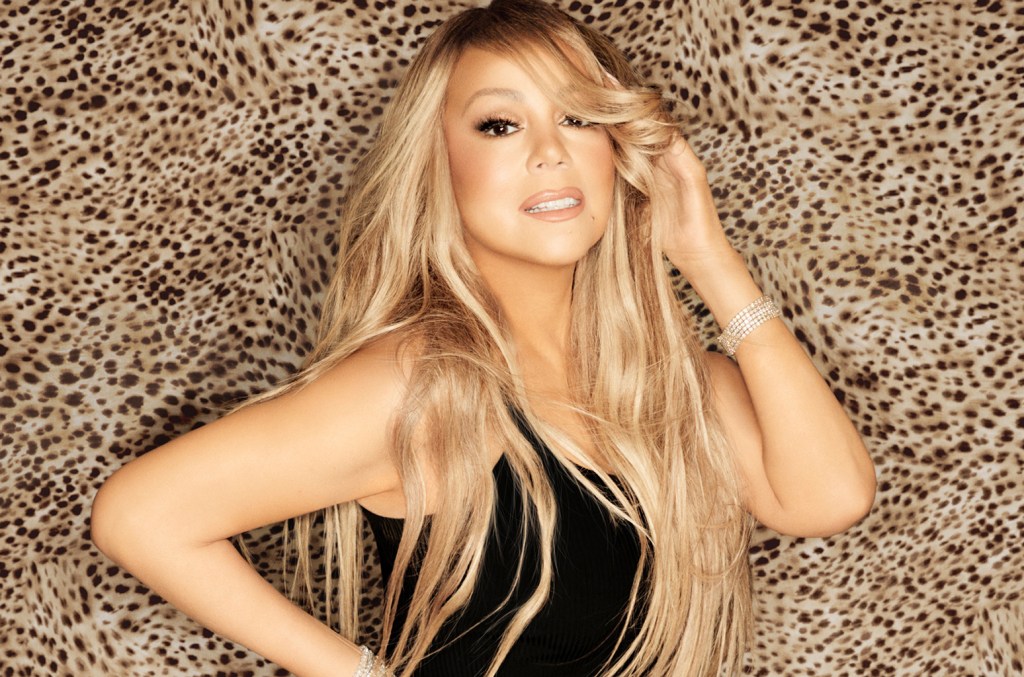
Some people might be obsessed with time, but Mariah Carey thinks the concept is nothing more than a thing of fantasy.
In a recent interview with Capital FM posted Monday (June 16), the superstar once again stated how she refuses to acknowledge the passage of time. Carey has long said she doesn’t subscribe to the construct of days, weeks and years, and has also asserted that she doesn’t have birthdays — only anniversaries.
“Is it true you don’t acknowledge the passing of time?” one interviewer asked, to which Carey confirmed, “That is true.”
“I just don’t believe in it,” she continued. “No, no, just time. Let it go. I don’t have a birthday, no. Anniversaries, yes.”
Trending on Billboard
Carey’s belief system also means that coordinating a so-called “time” to meet up with someone is not a viable option for her. “Yeah, I would have somebody call you and figure it out,” she calmly replied when asked how she goes about making appointments.
Mimi’s commitment to being free from the constraints of time dates back years. In an old interview reshared by the singer in 2023, a younger Carey explains, “I don’t have birthdays … I decided to do that. And I’ve noticed that people who decide not to have birthdays, they just don’t have them.”
That said, the “anniversary” of Carey’s ethereal existence is on March 27 each year. This year, she marked the occasion by sharing a photo of herself on a jet ski and writing on Instagram, “Thank you lambily for the anniversary wishes and for always making me so happy!!!”
Carey’s interview comes on the heels of her new single, “Type Dangerous,” which marks her first proper release since 2018. The track just debuted at No. 95 on the Billboard Hot 100 dated June 21, 2025 — not that she would recognize such a time stamp — becoming her 50th career entry on the chart.
Watch Carey discuss her thoughts on time below.