State Champ Radio
 genre pop
Page: 22

Trending on Billboard
Ariana Grande has been open about the fact that portraying Glinda in the Wicked films has been healing for her as an artist. But in a recent interview, the pop star — who was previously managed by Scooter Braun — shared that signing with a new team of representatives has also played a big part in her falling back in love with making music.
In a New York Times profile published Wednesday (Nov. 5), Grande was candid about feeling unhappy with her music career before she was cast in Wicked a few years ago, noting that she once thought she’d never go on tour again after her exhaustive 2019 Sweetener trek. “There was something broken about my relationship to pop music that was healed recently through the time away,” she told the publication.
“I think it got away from me in a way I didn’t expect,” she continued. “There’s a thing that comes along with your dreams coming true that feels dangerous at times … Nothing prepares you for what comes with it. Until quite recently, it was really hard for me to navigate and I think it stripped a lot of joy out of this for me.”
Despite her prior reservations, the Grammy winner is now gearing up to hit the road again in 2026 for a small tour supporting 2024 Billboard 200-topper Eternal Sunshine, which she dropped after previously thinking that she’d never make an album again. She’s said before that recentering acting after primarily focusing on her pop-star duties was essential to her, but while speaking to NYT, she also hinted that the people she used to work with discouraged her from pursuing a balance between her two passions.
“By the way, I have a different team now,” she said on the subject. “Said with love, but that was a piece.”
Billboard has reached out to Braun’s rep for comment.
The interview comes more than two years after Grande parted ways with SB Projects, where she had been managed by Braun on and off since 2013. The departure came at a time when several major clients were also announcing their splits from the music mogul, including Demi Lovato and J Balvin.
In June 2024,Braun revealedthat he was retiring from music management altogether. At the time, he said that he would “continue to root” for all of the big names that had once been on his roster, which also included Justin Bieber and Tori Kelly.
This past June, Braun echoed those sentiments while guesting on The Diary of a CEO podcast. “To see Justin move forward and succeed, to see Ariana with what’s happened with Wicked in this past year … Everybody that I’ve ever had a chance to work with, to see them go on and do great things on their own, it’s awesome,” he said at the time.
Shortly after leaving SB Projects, Grande signed with Brandon Creed’s company, Good World Management. A source told Billboard at the time, “She wants the focus to be her art and [Creed] puts her artistry and vision before anything else.”
Two years later, it seems as though Grande has been able to do just that with her new team behind her.
“I’ve never felt this connected to my art or inspired, and that’s just been such a tremendous gift,” she told NYT. “It’s like, oh, I don’t actually have to take on those things that were projected onto me. I can focus on my art, and that can be a separate entity. But I had to give myself the permission to think that.”
Trending on Billboard
Rosalía‘s ambitious fourth album, Lux, doesn’t officially drop until Friday (Nov. 7), but the Barcelona-born singer has already gotten the co-sign of a lifetime from an artist who knows a thing or two about musical transformations.
Explore
See latest videos, charts and news
On Wednesday morning (Nov. 5) Madonna posted an image of the album’s provocative cover — on which Rosalía wears a nun’s habit and hugs herself from under her white shirt — on her Instagram Story with the message, “Thank you @Rosalia. I can’t stop listening! You are a true visionary!!!
The high praise comes as Rosalía gears up to release the follow-up to 2022’s Motomami, which found her dipping into pop, reggaetón, hip-hop, electronic and other genres, landing the singer her first album to chart on the Billboard 200, where it peaked at No. 33. Lux is yet another hard turn into an experimental zone, an orchestral, operatic epic recorded with the London Symphony Orchestra that mashes together history and spirituality across 18 tracks on which the singer Rosalía sings in 13 different languages including her native Spanish, as well as Catalan, English, Latin, Sicilian, Ukrainian, Arabic and German, among others.
She spent three years on writing the LP’s lyrics and instrumentation, which reference notable women from Saint Rosalia of Palermo to Chinese Taoist master/poet Sun Bu’er, the biblical figure of Miriam, sister of Moses, and punk godmother Patti Smith. “In general, just to be in this world is a lot; sometimes it’s overwhelming,” she says in her new Billboard cover story. “In the best-case scenario, the idea would be that whoever hears it feels light and feels hope. Because that was how it was made and where it was made from.”
Fans got their first taste of the results last month when Rosalía dropped the single “Berghain,” which features Björk and Yves Tumor and a string orchestra introduction, followed by a Carmina Burana-esque chorus and Rosalía singing in an operatic soprano in three languages. “This album has a completely different sound than any of the projects that I’ve done before. It was a challenge for me to do a more orchestral project and learn how to use an orchestra, understand all the instruments, all the possibilities, and learn and study from amazing composers in history and say, ‘OK, that’s what’s been done. What can I do that feels personal and honest for me?,’” she says about the intensive recording and writing process.
The genre-hopping project has also earned high praise from “Berghain”collaborator Björk, who tweeted out her enthusiasm last week on X, writing, “so extremely honoured to be on this song with rosalía ! it is so thrilling to watch this woman grow : congratulations to her with this incredible album switching genre kung-fu style this concept is fierce !”
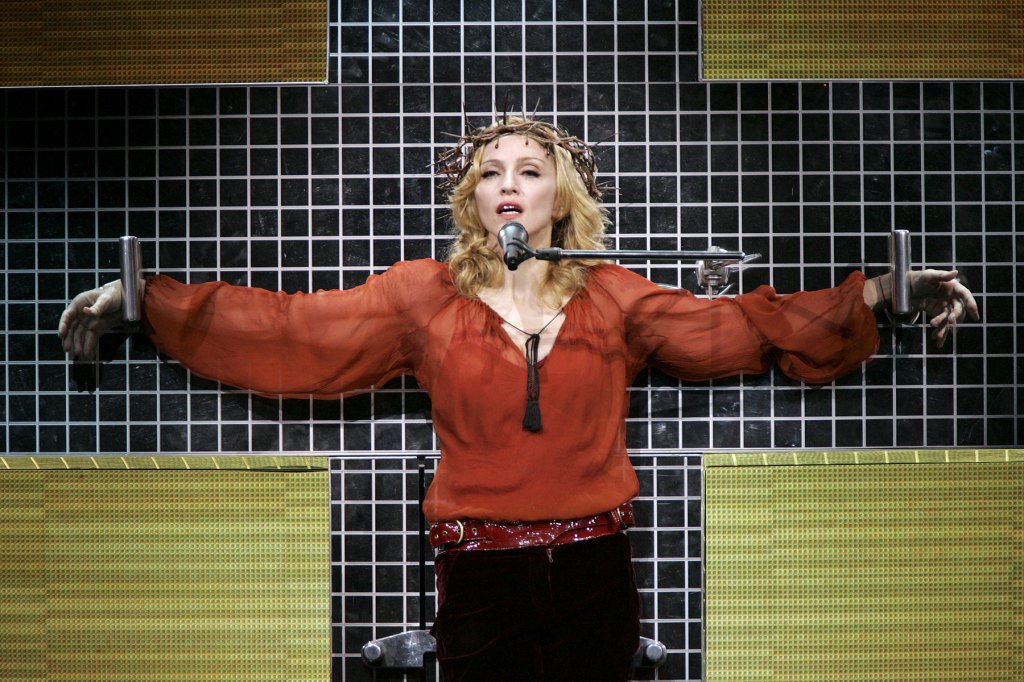
Trending on Billboard “[American Life was] the worst-selling album of my career, but one of my favorite records ever,” Madonna told CBS’s Harry Smith on The Early Show in late 2005. “But what I’m grateful for is the ability to just keep — keep doing what I do. And … OK, people weren’t, you know, […]

Trending on Billboard
For the last 30 years, Lance Bass has been inexorably famous, known to the general public as one of the five founding members of boundary-breaking boy band *NSYNC. Yet amongst his family, he’s still considered the second-most famous member.
Explore
See latest videos, charts and news
That No. 1 spot among the Bass clan continues to belong to his paternal grandfather Jimmy, an icon in his hometown of Laurel, Miss., thanks to his years of military service during World War II. “He’s so proud of his service, so proud of his family, and so proud of his town,” Bass tells Billboard of his grandfather over a video call. “He’s the famous one in our family, not me. I’m just a little side note.”
Yet while Bass grew up hearing his grandfather’s stories from the front he says it wasn’t until very recently that he got to learn much more about Jimmy Bass’ service in WWII. In his latest partnership with Ancestry as part of the organization’s Thank You for Your Service campaign, Bass got to learn even more about both of his grandfathers’ service in the war.
The new campaign from the genealogy company is designed to celebrate the 80th anniversary of the end of the war, providing users with free access to over 200 million documents from WWII from Nov. 10 to 12, in honor of Veteran’s Day in the U.S.
For Bass, that access allowed him and his family members to find even more information about both of his’ military history, including enlistment cards, photos, and even documentation that his maternal grandfather Elza was a dance hall manager, a fact that he’d never learned before his death in 2019.
“It made so much sense, because he loved to square dance — so it was just kind of fun to take that picture I saw of him and put him in this dance hall and see him in that element of knowing that he just loved that,” Bass says.
Bass’ new work with Ancestry comes at a critical time, he says. With misinformation spreading rampantly across the internet — in some cases at the behest of Donald Trump’s administration in the U.S. — Bass hopes that access to these records reminds people the importance of preserving history so we don’t make the same mistakes of the past.
“We know history repeats itself. We’ve been told that over and over and over again — but as you can see, it’s happening again,” he says. “I feel like no one’s really paying attention to that and honoring what they fought for, because I feel like we’re just going backwards right now. It’s an insult to what these brave men and women went through.”
Specifically, Bass points to the administration’s orders to scrub government websites of certain words, photos and historical references — oftentimes related to the LGBTQ+ community, anti-racism efforts and the civil rights movements of the past — as an attempt to alter our perception of reality.
“It is important that we tell these stories of the past in a truthful way, because so easily you can rewrite history,” he says. “We see it happening right now, in front of our eyes, they’re physically rewriting history on websites of our official government documents. It’s insane. What is this Twilight Zone that we’re living in?”
Bass takes it a step further and points out many of those same politicians use their ties to the military to redefine what is and is not patriotic — which, he says, is not what his grandparents fought for. “It’s sad to see people using veterans and military service and their patriotism … they’ve changed what patriotism is,” he says.
It’s why Bass calls it an “honor” to learn more about his own family’s history of service. “It makes you proud. You’re honored to be attached to that past, and you get to learn from the past,” he says.
Even when looking at his own history, Bass says he sees the influence of both of his grandfathers imbued in him. After *NSYNC celebrated their 30th anniversary earlier this year — “it’s insane that that went so quickly,” Bass quips — the singer found himself thinking about the ways his grandfather Jimmy helped mold his own outlook on his work.
“Everything correlates to how he is as a person. It really was the biggest influence in my life,” he says with a smile. “I was always raised with this man that everyone loved, especially the way that he just brought this positivity with all the stories he would tell, and the way he treated people. I think he really rubbed off on me, and my personality really comes out because of him.”
Trending on Billboard
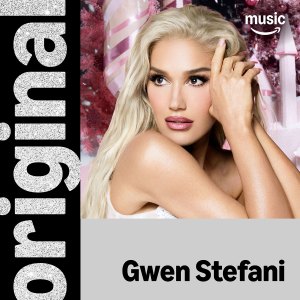
Gwen Stefani is in a joyous holiday mood, but she definitely has some notes for old St. Nick. The solo star and No Doubt frontwoman dropped a new Christmas classic on Wednesday (Nov. 5) morning, “Shake the Snow Globe,” as part of Amazon Music’s new clutch of holiday exclusives from artists including Marc Anthony, Mariah the Scientist, Vanessa Mai and others.
Explore
See latest videos, charts and news
“Oh this season’s got me thinking ’bout Mrs. Claus/ Why does Kris get the credit?/ Can we take a second and give her a round of applause?,” Stefani sings over the bouncy, horn-spike arrangement of the original song that is part of Amazon MGM’s upcoming star-studded holiday film Oh. What Fun. The movie, directed by Michael Showalter (The Big Sick, The Idea of You) stars Michelle Pfeiffer, Dennis Leary and Chloë Grace Moretz and will debut on Dec. 3.
Gwen Stefani
Courtesy
“This is the first time I’ve ever been asked to write a song for a specific moment in a film,” Stefani said in a statement. “It made me nervous, excited, and inspired to take on the challenge of creating a Christmas song that feels up tempo, nostalgic and reflects the sentiment of the movie, Oh.What.Fun.” The singer also previewed the snow-flaked, technicolor video for “Shake the Snow Globe” on her Instagram on Wednesday morning, writing, “the Holidays are so magical and i wanted this video to capture the sparkle + joy of the szn.”
In addition to Stefani’s ray of sunshine track, other artists contributing to the Amazon Music holiday celebration include Anthony, with a cover of José Feliciano’s Christmas classic “Feliz Navidad/ I Wanna Wish You a Merry Christmas,” Mariah the Scientist’s take on Eartha Kitt’s “Santa Baby” and Mai’s new original, “Christmas in the Room.”
Other Amazon Music Originals holiday songs from the international lineup of artists include: composer/pianist Kris Bowers’ new composition “Someplace Like Here,” France’s Amir covering F.R. David’s “Words,” Canadian singer Jamie Fine taking on Justin Bieber’s “Mistletoe,” Australian indie act Spacey Jane covering the Eagles’ “Please Come Home For Christmas,” Italian singer Marco Mengoni’s first English-language release, the original “Coming Home,” a medley of carols from Las Migas titled “Navidad con Las Migas (Medley)” and Canadian singer-songwriter Eli Rose’s dance-y cover of Beau Dommage’s “23 Décembre.”
“The holidays are about cherishing traditions while making space for new ones, and that’s exactly what we’re doing with our Amazon Music Original holiday songs and programming throughout our service,” said Amazon Music’s U.S. head of music Stephen Brower in a statement. “We’re privileged to work with both legendary and emerging artists to create fresh holiday music that resonates with fans and becomes part of their seasonal traditions. The incredible success of our Original holiday tracks shows how contemporary holiday music can bridge the gap between nostalgia and discovery, creating new classics that families will enjoy for years to come.”
Past Amazon Music Originals holiday hits include Taylor Swift’s “Christmas Tree Farm (Old Timey Version), as well as Katy Perry’s “Cozy Little Christmas” and Carrie Underwood’s “Favorite Time of Year.”
Amazon Music is also launching limited edition vinyl and merch collections from artists around the world to celebrate the holidays, including Mariah Carey’s new Christmastime Holiday Collection with cozy apparel, holiday décor and kitchen accessories, Mai’s collection of T-shirts, sweaters and custom-designed phone cases and Mengoni’s exclusive limited-edition vinyl of “Coming Home,” which will be available beginning on Nov. 14.
Trending on Billboard
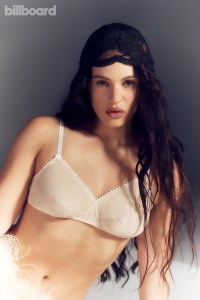
Rosalía offers an exasperated laugh as she sits down, having tried on a variety of equally stunning outfits only to end up in the casual clothes she arrived in: black pants and a camo jacket lined with fur. It’s the same jacket she was spotted wearing at a Parisian cafe in early October, seated alone with a cup of tea while poring over the sheet music of a song from the 1900 Puccini opera Tosca.
The Barcelona-born singer’s candid moment with the canonical tragedy was significant — one of many subtle nods that she was pursuing something outside the typical parameters of modern mainstream music. Rosalía studied musicology in college, and over the last eight years has often meshed a wide variety of genres and influences in her songs. But for someone who rose to global fame on the cutting edge of culture, studying the musical notation of a century-old opera communicated a pointed message.
Weeks later, fans began to understand why. On the evening of Oct. 20, she took to Madrid’s Callao Square with giant projector screens, where a countdown unveiled the release date for her fourth album, Lux (Nov. 7 on Columbia Records), as well as its cover art, which features Rosalía dressed in all white, wearing a nun’s habit and hugging herself under her clothing.
Every move Rosalía has made over the past three years while crafting Lux has been considered, intentional and entirely in her own world. Having risen to fame with the flamenco-inspired pop of her Columbia debut, 2018’s El Mal Querer, she flipped the script with her eclectic, energetic 2022 album, Motomami, which spanned pop, reggaetón, hip-hop, electronic and more and became her first album to chart on the Billboard 200, peaking at No. 33. But Lux is something different: an orchestral, operatic opus recorded with the London Symphony Orchestra that blends history and spirituality and experiments with form, language (she sings in 13 different ones throughout the album’s 18 tracks) and the very idea of what is possible for a major recording artist in 2025, for a project that’s more Puccini than pop — not that it doesn’t have its moments of catchy relatability.
“It’s like an album she wrote to God — whatever each person feels God is to them,” says Afo Verde, chairman/CEO of Sony Latin Iberia, which works with Rosalía alongside Columbia. “This is an artist who said, ‘I want to walk down a path where few walk.’ And when you navigate inside the album, you completely understand the genius behind it.”
Araks bra, Claire Sullivan skirt, Louis Verdad hat.
Alex G. Harper
Rosalía spent the better part of three years crafting Lux’s lyrics and instrumentation, drawing from classical music, native speakers and instrumentation, and the giants of the past — women including Saint Rosalia of Palermo; the Chinese Taoist master/poet Sun Bu’er; the biblical figure of Miriam, sister of Moses; and even Patti Smith all figure into its cosmology — to create something that feels both worldly and otherworldly, a distinct take on navigating life’s chaos. It was also a period where she experienced personal and professional changes: She broke off her engagement to Puerto Rican reggaetón star Rauw Alejandro, switched management and landed her first big acting role in the forthcoming third season of hit HBO series Euphoria, all while immersed in making the album.
“In general, just to be in this world is a lot; sometimes it’s overwhelming,” she says on a fall day in Los Angeles. “In the best-case scenario, the idea would be that whoever hears it feels light and feels hope. Because that was how it was made and where it was made from.”
“This record takes you on a complete journey; the singing on it is just astounding,” says Jonathan Dickins, who runs September Management, home to Adele, and who began representing Rosalía in June. “I think she’s a generational artist. I’m lucky enough to have worked with one, and now I’m lucky enough to work with another. She is an original.”
To make Lux, Rosalía relied on several of her longtime collaborators — producers Noah Goldstein and Dylan Wiggins and engineer David Rodriguez among them — and tasked them with taking a new approach. “The whole process helped me grow as a musician, as a producer, as a sound engineer,” says Goldstein, who has also worked with Frank Ocean, Jay-Z and FKA twigs. “That’s one of my favorite things about working with Rosalía: I’m always learning things from her.”
She also tapped new collaborators such as OneRepublic singer and decorated songwriter Ryan Tedder (who spent three years DM’ing Rosalía, hoping to eventually work together) and urged them to push their boundaries. “For an artist to give me the freedom to just express myself in that way, God, that is the most fun I’ve ever had,” says Tedder, who has worked on mammoth albums by Adele, Beyoncé and more throughout his career. “I’ve been asked by everybody, ‘What does the new Rosalía stuff sound like?’ And I literally say to everybody, ‘Nothing that you possibly would imagine.’ ”
Alex G. Harper
Fans got their first taste of Lux when Rosalía dropped the single “Berghain,” which features Björk and Yves Tumor, in late October. The song kicks off with a string orchestra introduction followed by a Carmina Burana-like chorus and then Rosalía singing in an operatic soprano voice — in three languages.
For Rosalía, challenging preconceptions about the type of music she, or anyone, can make is part of the point — thinking outside the box, following her inspiration and constantly learning, finding and creating from a place of curiosity and openness to new experiences and ideas. “I think that in order to fully enjoy music, you have to have a tolerant, open way of understanding it,” she says. “Because music is the ‘4’33” ’ of John Cage, as much as the birds in the trees for the Kaluli of New Guinea, as much as the fugues of Bach, as much as the songs of Chencho Corleone. All of it is music. And if you understand that, then you can enjoy in a much fuller, profound way, what music is.”
When did you start working on this album?
I don’t think that it’s easy to measure when something like this happens or starts. The album is heavily inspired by the world of mysticism and spirituality. Since I was a kid, I’ve always had a very personal relationship with spirituality. That’s the seed of this project, and I don’t remember when that started.
How did you approach Lux differently?
This album has a completely different sound than any of the projects that I’ve done before. It was a challenge for me to do a more orchestral project and learn how to use an orchestra, understand all the instruments, all the possibilities, and learn and study from amazing composers in history and say, “OK, that’s what’s been done. What can I do that feels personal and honest for me?” And also the challenge of having that inspiration in classical music and trying to do something that I haven’t done before, trying to write songs from another place. Because the instrumentation is different from all the other projects I have done. But also the writing, the structures, it’s very different.
Chloé dress, shoes, and scarf.
Alex G. Harper
After Motomami, your success and fame hit a new level. How did that help you make this album?
All the albums I’ve done helped me be able to be the musician I am today and make this album now. Lux wouldn’t exist if I hadn’t taken the previous steps. Each album helped me release something, to free myself as much as possible. Every time I go to the studio, it’s from wanting to play around, try something different, to find different styles of making songs. I always try to stay open.
You’ve said Motomami was inspired by the energy of L.A., New York, Miami. What was your mission in making Lux?
It’s made from love and curiosity. I’ve always wanted to understand other languages, learn other music, learn from others about what I don’t know. It comes from curiosity, from wanting to understand others better, and through that I can understand who I am better. I love explaining stories. I like to be the narrator. I think as much as I love music itself, music is just a medium to explain stories, to put ideas on the table. So that’s what this project is for me. I’m just a channel to explain stories, and there’s inspiration in different saints from all across the world. So you could say it feels like a global thing, but at the same time, it’s so personal for me. Those stories are exceptional. They are remarkable stories about women who lived their lives in a very unconventional way, of women who were writers in very special ways. And so I’m like, “Let’s throw some light there.”
What I know is that I am ready, and this is what I needed to do. What I know is that this is what I was supposed to write about. This is my truth. This is where I am now.
What contributes to the fact that the album feels so global is you sing in 13 languages on it.
It took a lot of writing and scratching it and sending it to someone who would help me translate and be like, “This is how you would say this in Japanese. This is how it sounds.” There were so many things that I had to play with and take under consideration. Because it’s not just writing. It’s not just on paper. It has to sound good. There’s a big difference for me when I write, for example, a letter for somebody that I love than if I write a song. It has to have a certain sound, a certain intention of musicality.
It was a big challenge, but it was worth it. It made me grow so much. And I feel like every word on this album, I fought for it, I really wanted it, and then I waited for it, and then it came. It took me a year to write just the lyrics for this album, and then another year of arranging music and going back to the lyrics and retouching. It took a lot of effort searching for the right words: “How is this not just going to be heard, but also, if you read it, how does it feel?”
Rosalía photographed September 24, 2025 at Quixote Studios in Los Angeles. Colleen Allen top and skirt.
Alex G. Harper
The lyrics read like a novel.
There’s a whole intentional structure throughout the album. I was clear that I wanted four movements. I wanted one where it would be more a departure from purity. The second movement, I wanted it to feel more like being in gravity, being friends with the world. The third would be more about grace and hopefully being friends with God. And at the end, the farewell, the return. All of that helped me be very strategic and concise and precise about what songs would go where, how I wanted it to start, how I wanted the journey to go, what lyrics would make sense.
Each story, each song is inspired by the story of a saint. I read a lot of hagiographies — the lives of the saints — and it helped me expand my understanding of sainthood. Because my background is Catholic from my family, so you understand it through this one [lens]. But then you realize that in other cultures and other religious contexts, it’s another thing. But what surprised me a lot was that there’s a main theme, which is not fearing, which you can find shared across many religions. And I think that’s so powerful because probably the fears that I have, somebody on the other side of the world has the same ones. And for me, there’s beauty in that, in understanding that we might think that we’re different, but we’re not.
All of these songs are very personal, but “Focu ’ranni” feels especially so. What was the experience of writing that one?
I found out that there’s this saying by Santa Rosalia de Palermo — she was supposed to get married and then she decided not to; she decided to dedicate her life to God. I thought that something in that was very powerful. I researched her story, and that’s why there’s some Sicilian thrown in that song. It was a challenge to sing in that language. That was a challenging song to do and to sing, but I feel grateful that it exists.
You create a world, and a sisterhood almost, on this album. How does a more playful song like “Novia Robot” fit in?
There was this woman who was very inspiring named Sun Bu’er; she dedicated her life to becoming a teacher of the Tao. And the way she lived her life was unconventional at that time. I thought there was something powerful about her story. Apparently, in order to make a journey, she destroyed her face to be able to travel safely. And she had a partner, she had a family, but she decided she wanted to dedicate her life to spirituality. It was so bold and courageous. And at the end of that song, you hear another voice, which is in [Hebrew], that’s inspired by Miriam, this figure who led an entire people and was a rebellious woman and considered close to the idea of sainthood in Judaism. So I thought that it was cool to have those two voices, the same way how in opera there are so many voices co-existing. So I thought in that song that could happen with that playfulness, yes, and playing with the sound of how Chinese Mandarin would sound.
The album is so operatic and orchestral. How did you begin to immerse yourself in those styles and find the people that you worked with to deliver that?
They’re the people I feel comfortable with, so I love sharing time with them in the studio. For example, I worked on [Lux song] “Mio Cristo” for months by myself in Miami and L.A., and I delayed the moment when I would share it. I wanted to make a song that was like my version of what an aria could be. So I remember just going to the studio after so much work, after so much back and forth with an Italian translator, and I [had been] improvising on the piano, trying to find melodies, to find the right chords and notes. I went to the studio and I shared it with Dylan [Wiggins], with Noah [Goldstein], with David [Rodriguez], and I remember they were like, “Yes. That’s the song. There it is.” So it’s been a lot of isolation on one side — a lot of writing — and then on the other side a lot of collective effort in the studio.
It’s such a vivid album. How are you plotting out how it will look visually?
My sister and I work together a lot. I’m very lucky that I get to just keep playing around and having fun like how we used to when we were kids. Her and I love recommending things to each other, we send books to each other. Having a project together is something I feel so grateful about, the fact that my family is involved — my mother, my sister, they’re very important people in my life, and I feel like I can share everything with them. And on the visual side, it was just playing around with references and imagination, just trying to think, “What can we do with this?” Just playfulness. That’s how I think the best things happen — out of joy.
Have you given any thought yet to what a live performance of this album would look like?
Thoughts are never lacking, but we’ll see. I don’t want to think too much how that would look until that really is happening, if that makes sense. But there’s definitely a lot of creativity with how this could be translated to the stage.
Alex G. Harper
At the same time you were working on this, you were filming the third season of Euphoria, your first major acting role. Was that difficult?
It was very challenging to do both. I was recording the album and producing and checking mixes, everything, while I was shooting Euphoria. I had to divide my mind between both and it was also the first time that I was doing something like this — preparing a character, studying lines. These are new things for me and I’m not used to it. It’s very different from making an album and making music. For some reason, I didn’t completely go crazy, and we’re still here.
Did any of that experience seep into the album?
[Euphoria creator] Sam [Levinson] and I are both very sensitive people. For some reason, whatever he’s creating for me resonates for this moment. When we were shooting, when we spoke about the [show’s] story, I didn’t know him that well. I really admired his work, but I didn’t know how his mind worked, how he is as an artist. I realized he has so much sensibility and I connected so much with that, not just with his work, but also him as a person.
How did that role come about?
I shared that I really wanted to start acting, that it was something that I would love to do. The only thing I had done was [the Pedro] Almodóvar [film Pain and Glory in 2019], and when I was 16 I studied theater for a year. I feel like being a musician and being onstage is being a performer, but I had never experienced it as being filmed, learning lines; it’s a very different job. I had done it with Almodóvar, but I was like, “I would love to do it with somebody like Sam, somebody that has a vision as strong as him. Or someone like Sofia Coppola.” So then I heard the third season was happening and I was like, “I would love to audition.”
You had to audition?
Of course! Because I’m not an actress, and that was really scary. But at the same time, something told me that I was supposed to do it. So I did an audition tape, then met an audition person and then something else, and then it happened.
Rosalía photographed September 24, 2025 at Quixote Studios in Los Angeles. Araks bra, Claire Sullivan skirt, Louis Verdad hat.
Alex G. Harper
At the end of your album, you address the concept of death. Are there things in your life that you worry about not having enough time to do?
No. Whenever God decides it’s time to go, it’s time to go. Whatever I have come here to do, I feel like I’m doing; whenever I have to leave, I will leave. That’s how I try to live. I would love to know how it feels to be 100 years old, but that’s not on me to decide. But I would love to keep writing, I would love to keep making music, I would love to keep learning how to cook better, I would love to keep studying — one day I would love to go to college again and study philosophy or theology — and I would love to keep traveling. There are so many times that I travel and feel like I haven’t seen enough or haven’t had enough time to just experience places.
But for now, I’m dedicating myself to my mission, which is making albums and performing. And for me, performing is an act for others. I don’t like touring. I like to be onstage and I love my fans, so I do it. But I love being in my home, calm, reading, cooking, going to the gym, lifting weights and going to sleep. Literally, that makes me so happy; I don’t need a lot. (Laughs.) When you travel, it’s much harder; psychologically it’s a challenge, always. But I also know that there are other jobs that have so much complexity and challenges, and I feel so grateful that I can be a musician.
What’s the biggest challenge that you feel like comes with this career?
The price you pay, the sacrifice, the amount of moments that you lose with your family, with your loved ones. My grandpa died when I was at the Latin Grammys in 2019, and I was about to perform when I found out. I couldn’t even be at the burial. Those things, I’ll have to live with the sadness and the regret of not being there. Those are things that are not the good side of being a musician: always struggling, always being committed to whatever you’re doing, to the people who are there in the audience that night who paid for their ticket to see your performance. Maybe that’s the thing they’re looking forward to the most that week. The price is really high, but this is what I chose, and I’m fully conscious that this is the decision I’ve made.
In releasing this album, what would success look like for you?
Success, for me, is freedom. And I felt all the freedom that I could imagine or hope for throughout this process. That’s all I wanted. I wanted to be able to pour what was inside, outside. And those inspirations, those ideas, make them into songs. I was able to do that, and I will not ask for more.
This story will appear in the Nov. 15, 2025, issue of Billboard.

Trending on Billboard
Some Taylor Swift fans are up in arms over a video on the official White House TikTok account set to “The Fate of Ophelia” — and many of them are encouraging the pop superstar to take legal action against President Donald Trump.
The Monday (Nov. 3) TikTok video pairs Swift’s The Life of the Showgirl lead single — currently in its fourth week at No. 1 on the Billboard Hot 100 — with images of Trump and his associates. One frame shows Trump’s mug shot while Swift sings, “Don’t care where the hell you’ve been.” The video ends with a photo of the president scooping McDonald’s French fries under a slightly altered lyric reading, “The fate of America.”
Related
Swift has not commented on the post, but it’s unlikely that she’s happy about it. Historically, the star has not pledged her allegiance to Trump’s team; she’s only endorsed Democrats, including Kamala Harris in the 2024 election, and Trump, in turn, has insulted Swift repeatedly, including by posting “I HATE TAYLOR SWIFT” after the Harris endorsement.
In the TikTok comments, some Swifties are putting on their lawyer hats. “TAYLOR SWIFT SUE THEM FOR USING YOUR SONG!” wrote one. “I would absolutely LOVE if Tay found a way to sue them for this,” wrote another. “One freaking huge lawsuit on the horizon,” another prediction read.
Is the White House’s use of “The Fate of Ophelia” legal? Probably not. While individual TikTok users can soundtrack their videos with pre-cleared songs, commercial entities are required to obtain so-called sync licenses from copyright owners. The White House did not return an inquiry on Tuesday (Nov. 4) as to whether they got a sync license for the post, but given Swift’s public rebukes of Trump, and the fact that the singer is famously protective of her catalog, it’s unlikely that she greenlit such a license.
Related
As Billboard previously reported during Zach Bryan’s public scuffle with the Trump administration over its use of his track “Revival” in an X post, there are a number of legal avenues for artists to take when their songs are used on social media without licenses. Swift’s lawyers could send a cease-and-desist letter to the White House, or they might lodge a formal takedown notice directly with TikTok under the Digital Millennium Copyright Act.
If these administrative procedures are unsuccessful, Swift could indeed bring a formal lawsuit against the federal government for copyright infringement. She’s no stranger to intellectual property litigation, having both faced copyright claims herself and gone on the legal offense over the years.
However, it’s hard to imagine Swift taking the drastic step of suing the White House. The courts are public by nature, and Swift has a carefully maintained image. This is especially true in the political arena, where the singer’s statements have always been measured (“The choice is yours to make,” she told fans in her post endorsing Harris last year).
Related
Swift, therefore, may not want to become publicly embroiled in what would almost certainly be viewed as a partisan legal battle. Nothing is certain, though, and only time will tell.
Swift’s reps did not return a request for comment on the matter.
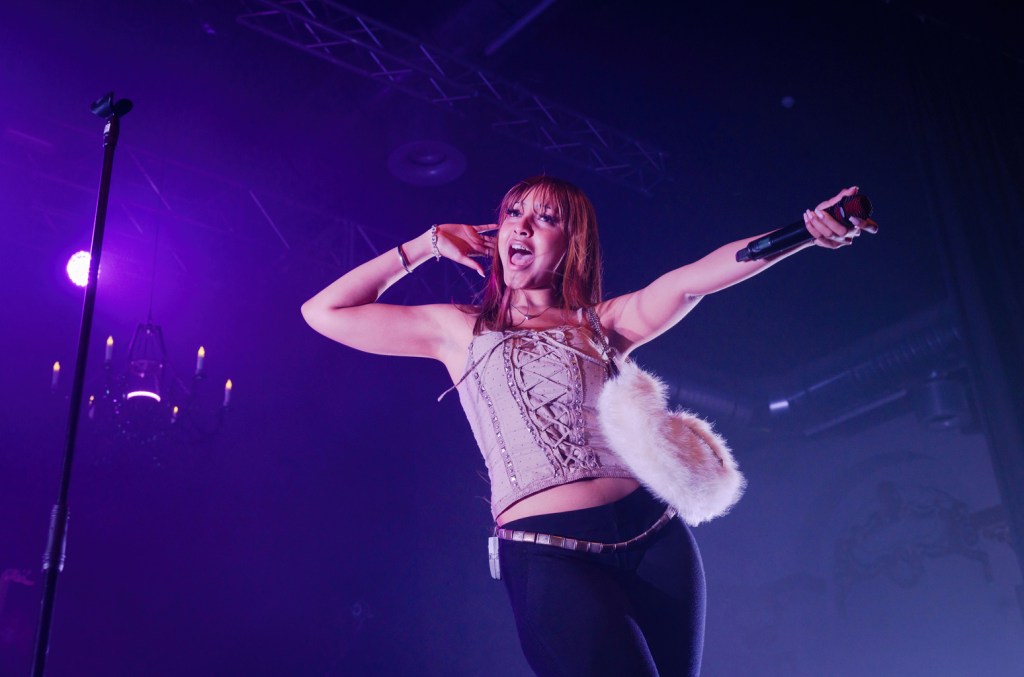
Trending on Billboard PinkPantheress was shocked after a fan gifted her a rotisserie chicken during a recent show in Chicago. The singer performed at Byline Bank Aragon Ballroom over the weekend, and during the show, she took a moment when she noticed a fan was carrying a full-blown rotisserie chicken. “Is that roast f—ing chicken […]
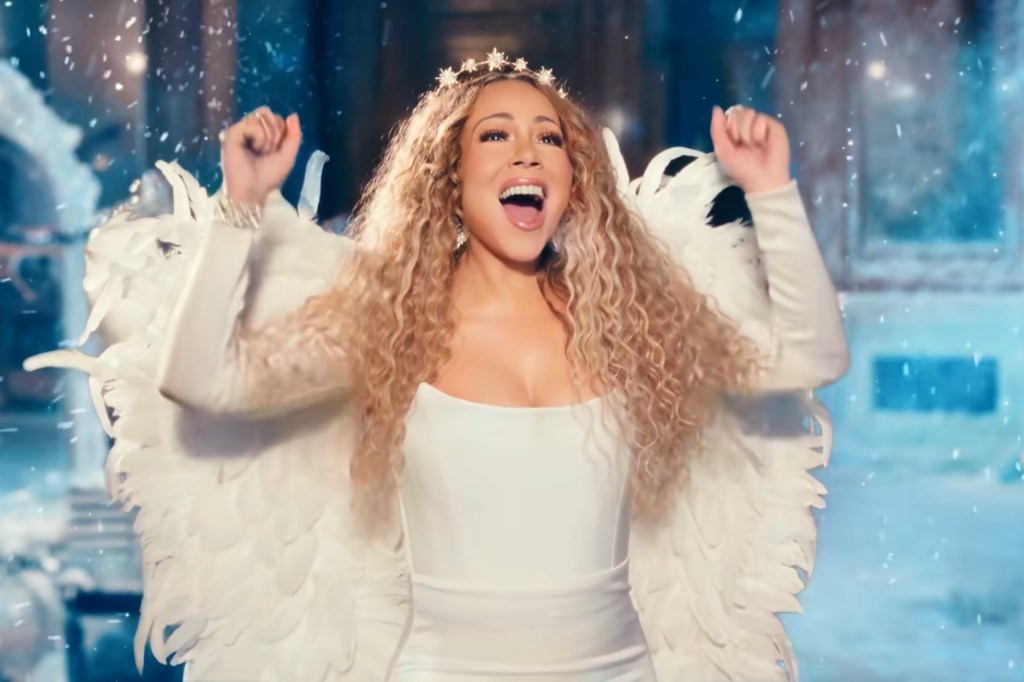
Trending on Billboard It’s the most wonderful time of the year! Yes, we officially have the all-clear from Mariah Carey to start celebrating the Christmas season — as messaged in her new Sephora commercial — but it’s a big week for music lovers for another reason: 2026 Grammy nominations will be announced on Friday. Sabrina […]
Trending on Billboard
Throughout much of Tame Impala‘s career, the Australian psych-rock group has been a critical darling as its following and stages have both increased in size. Yet, even as the act has littered Billboard‘s rock- and alternative-focused charts, it never reached the all-genre Billboard Hot 100 — until last month.
With the pop-leaning single “Dracula,” Tame Impala has officially sunk its teeth into the chart: Following a debut at No. 55 on the Oct. 11-dated list, it has lurked well beyond the shadows and scaled to a No. 33 high. Plus, the breakthrough may have opened the floodgates, as two other songs from the group’s recent album Deadbeat — released through Columbia Records on Oct. 17 — have since reached the Hot 100 (album opener “My Old Ways” and second single “Loser”).
It’s hard to point to one thing in particular as the spark for the act’s now-exploding mainstream appeal — frontman Kevin Parker’s extensive work on Dua Lipa’s Radical Optimism likely didn’t hurt in bringing in an extended fan base, but it’s just as plausible that his characteristic warble and high-level production finally reached the masses at multiple formats (including TikTok) in a capacity that was long overdue.
Whatever the reason may be, coming to a finished product for “Dracula” was a years-long process, according to co-writer Sarah Aarons. The 31-year-old Melbourne native recalls that the two were tinkering away endlessly to get everything just right, still making fixes to the lyrics two hours after the mixes were due. “There was just something about it that bothered him,” Aarons says. “That crunch-time moment made us be like, ‘Alright, what is it? What are the lyrics? What’s the structure? Go.’ ”
She also lent writing assistance to fellow Deadbeat tracks “Oblivion” and “Afterthought” and is notably the only person outside of Parker credited as a writer or producer anywhere on the album. Aarons notes that the two would spend hours on end in the studio and on phone calls throughout the creation process for the album, growing a close friendship along the way — so much so in fact, that Parker even helped DJ her wedding earlier this year.
Below, Aarons reflects on creating “Dracula,” what makes Parker such a talent to work with in the studio and more.
How did you first connect with Parker?
He was in Australia, and I was in L.A., and there was something he was working on that I don’t think even ended up happening. Someone put us in touch and we had a FaceTime call, and I don’t think we even talked about whatever the thing we were supposed to do was. We just talked s–t. Then the next time he came to L.A. three or four years ago, we hung out and we had this thing where I was like, “I just got a puppy, do you mind if I bring my puppy to your studio? My puppy’s name is Peach.” And he was like, “My daughter’s name is Peach!” And they were both like three months old. It was a weird bonding moment.
Were you already working on “Dracula” or anything else from Deadbeat that long ago?
No. He knew he had to start something. I remember him being like, “Yeah, I should probably figure that out.” It was always like a joke that we all made — me and my wife are quite close with him and his wife. So when they’re in L.A., we would always bring it up and he’d be like, “Yeah, I’m going to have it done in three months.” And we’d all have an argument whether he’d do that. But I think that’s what makes his stuff so good. He really does take his time, and he’s really intentional about what it all sounds like.
“Dracula” took a long time, in the way that there are so many iterations of what it was. There was this one song that was what the chorus is — I call it the chorus, he calls it the pre-chorus — [sings] “In the end, I hope it’s you and me.” We’d worked on that a couple years ago. Then there was this song that we’d written called “Dracula” that his wife loved. One day he just sent me a thing, he was like, “I put the line from ‘Dracula’ into this other idea.” It was the [sings] “Run from the sun like Dracula.” He mashed that into that one line from this other idea, and I was like, “Oh damn, that’s kind of sick.”
It was a really long process in that way. Piece by piece, he’d be like, “Actually, now I think the song’s about this.” Sometimes he’d call me, and I’d be in London and it would be 11 p.m. for me and 9 a.m. for him. We just had so many moments where he’d be like, “The verse is bothering me.” And I’d be like, “Okay cool, let’s get into it.” But it’s funny because we wrote “Afterthought” two hours after the mixes were due. He just called me and he was like, “I have this beat and I feel like the album needs one more song.” And it literally ended up being called “Afterthought,” which is really funny.
“Afterthought” started two hours after the mixes were due?
Yeah. He had called me to finish “Dracula” — I was in London, he was in Australia. “Dracula” was the only song that wasn’t finished. He was mixing everything else and he sent me a picture of a whiteboard that had ticks on it of what he’s done and what he hadn’t — everything else was all ticked and then “Dracula” had no ticks. The beat was always the same, but it was more the lyrics and the structure [that changed].
How much does it impact the writing process to work with someone so well-versed on the production side of things as well?
Oh, it’s so much easier. Everything is him; it sounds so much like him. For me, it’s not easy to get a lyric past him. You can’t just say a lyric, and he’s like, “Cool, I’ll put that in there.” He has to feel the thing or it will not go in the song, whether it’s production, lyrics, melodies — anything. I love that because I’m like, “Oh cool, you’re making me have to really think what is best for you.” It’s not a song for everyone. It’s a song for [Tame Impala]. He’s expressing himself in so many aspects of the songs. When you’re with an artist and it’s like, “Oh, let’s get the producer to do (mimics the sound of a beat),” it’s so many cooks. With him, he’s just doing his thing.
How did the two of you finally come to terms with the final lyrics for “Dracula” given all of the changes over what sounds like a yearslong process?
It’s really interesting, because I’m a person that can keep writing. Like, “Cool, you want a different thing, let’s go!” I’ll do a different one. It’s really up to the artist, because for one person it might be one thing, and for one person, it might be another. There are certain things I might fight for — there were certain lyrics where the melody changed, and I was like, “Bro, you better keep that or I’m going to have something to say about it.” But other than that, he’s gotta hear it and go, “This is mine.”
I think it was the crunch time. It was like, “Cool, this mix is due in 45 minutes.” When you know you have a deadline, your brain just goes, “This is the right thing.” He called me and he went, “What about this melody?” And I was like, “Yeah! How did we not do that melody already? It totally fits the song.” We’d written lyrics so many times, we already had so many lyrics floating around our brains. We had so much of what we knew the song was that it kind of clicked.
You also co-wrote “Oblivion” and “Afterthought” on this album. As a writer, is it easier to work on several songs from the same project versus a one-off in terms of sculpting a cohesive voice or theme that an artist is looking for?
I totally feel that way. Every once in a while, you get one day with someone, and it’s just so hard. You’re just not built to be like that collaboratively, to me. I think the multiple songs is more just a result of the fact that we had fun making s–t. If he ever got stuck, he’d just be like, “F–k it, I’m calling Sarah.” I also heard everything else [on Deadbeat], because we would just chill in the studio and play stuff. That for me was super helpful. Also, knowing the person really well: I found that all my biggest songs the last few years have been people I’m super close with. That’s such a common thread for me at the moment. Music’s supposed to be fun. There’s a reason I’m not an accountant. I’d be bad at it.
As far as I can tell, you’re the only credited songwriter on this album, which is also produced in its entirety by Parker. Does that hold any special meaning to you?
I’m grateful that he called me for help. I’m super flattered. It all happened so naturally in such a friendly way — that’s my favorite thing. It’s funny how you can try as a songwriter so hard [and say], “Oh I want to work with this person and this person.” You can write a list of who you want to work with, but that’s not what gets you there. The universe has to put you where you need to go to make music with the people you should make it with.
A version of this story appears in the Oct. 25, 2025, issue of Billboard.