State Champ Radio
 genre latin
Page: 65

The Abbey Road Institute is set to launch its newest campus in Los Angeles this summer, it was announced Tuesday (March 11). The state-of-the-art facility will be led by Grammy-winning engineer, mixer, producer and musician Rafa Sardina.
Designed to provide students with a unique professional experience, the West Coast campus will feature the institute’s renowned curriculum along with a faculty of Los Angeles-based producers, engineers and musicians, including Alan Meyerson, Barry Rudolph, John Boylan and Vanessa Garde.
“Abbey Road Institute Los Angeles is the culmination of a long-held dream,” said Sardina — who has worked with Stevie Wonder, Rosalia, Alejandro Sanz, Dr. Dre, Camila Cabello, Lady Gaga and more — in a statement. “I want to share the invaluable professional experiences of my closest musical colleagues and myself with outstanding new generations of mixers, producers, and other music and music business professionals. I can’t wait to welcome our first students and witness the beginning of their exciting career journeys.”
Trending on Billboard
Luca Barassi, CEO of Abbey Road Institute London, added: “We are thrilled to be working with Rafa and his team as we continue expanding our educational footprint in the U.S. Rafa has a strong affinity with how we teach, and an ambition to pass on his expertise to the next generation. Establishing our second U.S. campus in Los Angeles — a creative, dynamic, and globally influential city — will provide students with an immersive experience at the heart of a thriving international music scene.”
The program offers intensive and immersive education in a small, focused-learning environment, emphasizing hands-on, apprenticeship-style training to equip graduates with the skills necessary to thrive in the music industry. Graduates will earn a diploma in music production and sound engineering. Additional diplomas in audio post-production for film and TV & music business will be offered in the future.
“We are incredibly proud of the success of Abbey Road Institute graduates,” Universal Music Group COO and Abbey Road board member David Sharpe added. “Some of them have earned multiple Grammy and Billboard awards, along with numerous Grammy and Latin Grammy nominations. Bringing Abbey Road Institute’s world-class education to Los Angeles will provide aspiring producers and engineers with the training they need to make a strong entrance into the music industry.”
The campus’ exact inauguration date and location will be announced soon.
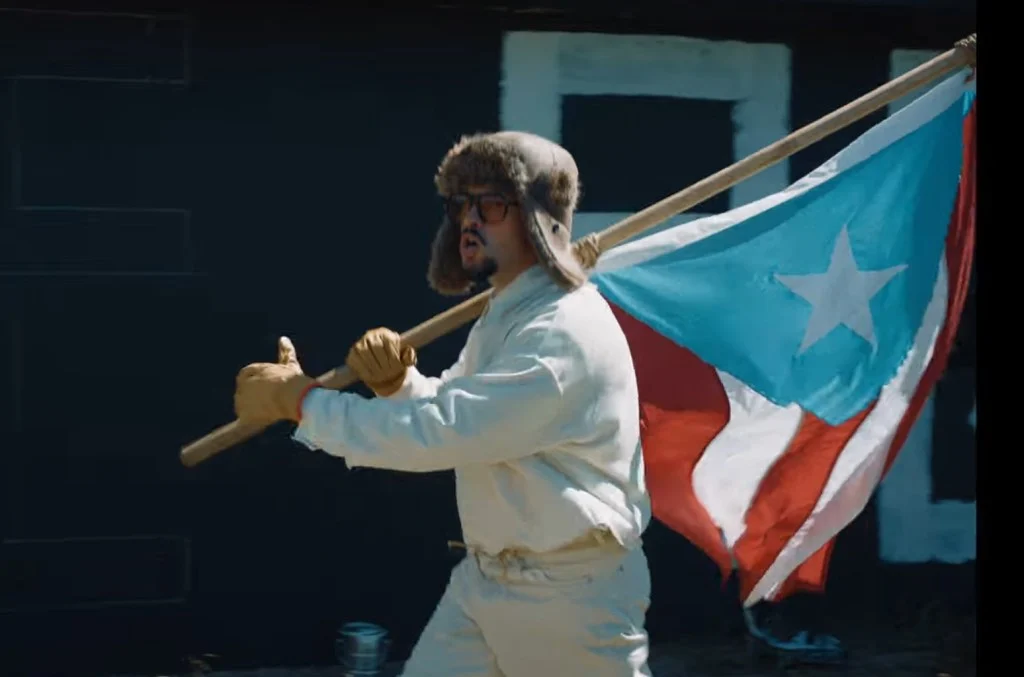
In celebration of his 31st birthday on Monday (March 10), Bad Bunny released new music video “La Mudanza,” which further emphasizes his everlasting affection for his homeland and family heritage.
The song, which is the outro track of his latest album, Debí Tirar Más Fotos, tells the story of Benito, a man who grew up in Vega Baja, Puerto Rico, as the eldest of six siblings and worked hard from a young age, driving trucks like his father and grandfather, despite his dream of becoming an engineer.
The video begins by showing a nostalgic collection of old photos of his ancestors. Soon after, the visual depicts the birth of baby Benito. Halfway through, a the infant appears in a car seat, singing along to the song against a robust salsa rhythm. “Calle Sol, Calle Luna, estoy en la noche oscura/ Yo no canto reggae, pero soy cultura,” the baby spits, referencing Puerto Rican reggae band Cultura Profética.
The video transitions to a scene where the present-day Bad Bunny is seen running through a field, proudly waving the Puerto Rican flag, before arriving at a local community gathering. “A mí me quieren como a Tito y soy serio como Cotto/ Lugia, Ho-Oh, cabrón, hoy soy legendario,” he raps, drawing parallels between himself and revered Puerto Rican boxers Tito Trinidad and Miguel Cotto, while also invoking Lugia and Ho-Oh from the Pokémon series.
Debí Tirar Más Fotos reached No. 1 on multiple all-genre charts, including the Billboard 200 and Top Streaming Albums. Benito told Billboard a few weeks after releasing the album, “This project isn’t mine. It belongs to many people: everyone who worked with me, it belongs to Puerto Rico, my friends, my family. This project belongs to all of us who feel proud of being from Puerto Rico and being Latin.”
The Puerto Rican superstar is set to embark on a historic residency in Puerto Rico, which is expected to boost the island’s economy.
Check out the video for “La Mudanza” below:

Kidd Voodoo shares his experience of being on the panel for Viña Del Mar, how he went from making rock music to reggaeton, why he chose Kidd Voodoo as his stage name, his feelings about Chilean music starting to spread, defining Chilean slang and more!
Leila Cobo:David, welcome to Billboard!
Kidd Voodoo:Thank you.
Well, for the people that don’t know, David is Kidd Voodoo. So here in Chile, you guys know him by his artistic name, Kidd Voodoo. He’s one of the biggest trap rappers in Chile at this moment, but his real name is David León. In other words, why Kidd Voodoo?
Because I needed to start releasing music and I wanted to give myself a name. In that moment in Chile, it was really trendy to put a prefix like it was in the United States, putting “Lil” or “Kid,” too. So I preferred to put “Kid” because there were a couple of artists that I really liked that had it and I needed to upload the song in that moment because I had already announced it.
So you didn’t have a lot of time to think about this?
No, I thought about it a lot, but I said, “If I never get this song out, I’m never going to start this.” So I said, “OK let’s go through with this,” and I looked at the pedals of the guitar and someone said, “Kidd Voodoo — it doesn’t sound too bad.”
So because of a guitar pedal that had nothing to do with rap, truthfully–
Exactly.
Well, it was a song about what? Was it rock, or was it rap?
Rap. It was a rap song, trap. Yep, and from there the name stuck and now I’m here.
Keep watching for more!
Tito Fuentes, vocalist and guitarist of the Mexican rock band Molotov, is taking some time off to deal with health issues. The musician announced that he is undergoing physical and mental rehabilitation, without going into details.
Explore
Explore
See latest videos, charts and news
See latest videos, charts and news
“I am in a process of both physical and mental rehabilitation that has led me to be absent from the stage during the last Molotov concerts,” he said in a statement on social media Monday (March 10). “Putting my health as a priority, I have decided not to return to play until I am 100%.”
Fuentes will be replaced by Jay de la Cueva, leader of the defunct band Moderatto and former member of Molotov, for the group’s upcoming scheduled performances.
Trending on Billboard
De la Cueva “is not only a great musician and dear friend, but Jay is also one of the founding members of the band, and I am sure it will be a great show to see him with them at Vive Latino,” said Fuentes, adding, “I hope to return soon.”
The announcement comes just days after the iconic Mexican band began an extensive tour with dates in Latin America and Europe to celebrate its 30th anniversary, a series of shows that includes the group’s participation in the 25th edition of the Vive Latino festival Saturday (March 15) at the GNP Seguros Stadium in Mexico City.
Billboard Español reached out to Molotov’s team for additional comment.
Jay de la Cueva, considered one of the most versatile musicians in the Mexican rock scene for his participation with various groups and projects, was a founding member of Molotov in 1995, along with Fuentes and Micky Huidobro (bass).
For three decades, Molotov — which also includes Paco Ayala (guitar) and Randy Ebright (drums) — has been a reference in Latin rock music. Songs such as “Gimme the Power,” “Frijolero” and “Voto Latino” have become the soundtrack for their followers through political and social changes, while denouncing issues such as racism, corruption, bureaucracy and abuse of power.
On the Billboard charts, the band has placed four titles both in Top Latin Albums and Latin Pop Albums, including two top 10s of the latter: Dance and Dense Denso in 2003, and Agua Maldita in 2014.
A seven time Latin Grammy-winner, Molotov has also sparked controversy on several occasions. One of the most memorable occurred in 1997, when the band released the Gustavo Santaolalla-produced album ¿Dónde Jugarán Las Niñas?, whose cover caused it to be removed from record stores for being considered offensive to morals in Mexico. The cover featured a photograph of a girl in a high-school uniform with her panty at mid-thigh.
The band’s song “Puto” has been labeled as homophobic by LGBTQ advocacy groups, something the band has denied on several occasions, arguing that the title is just a popular Mexican expression.
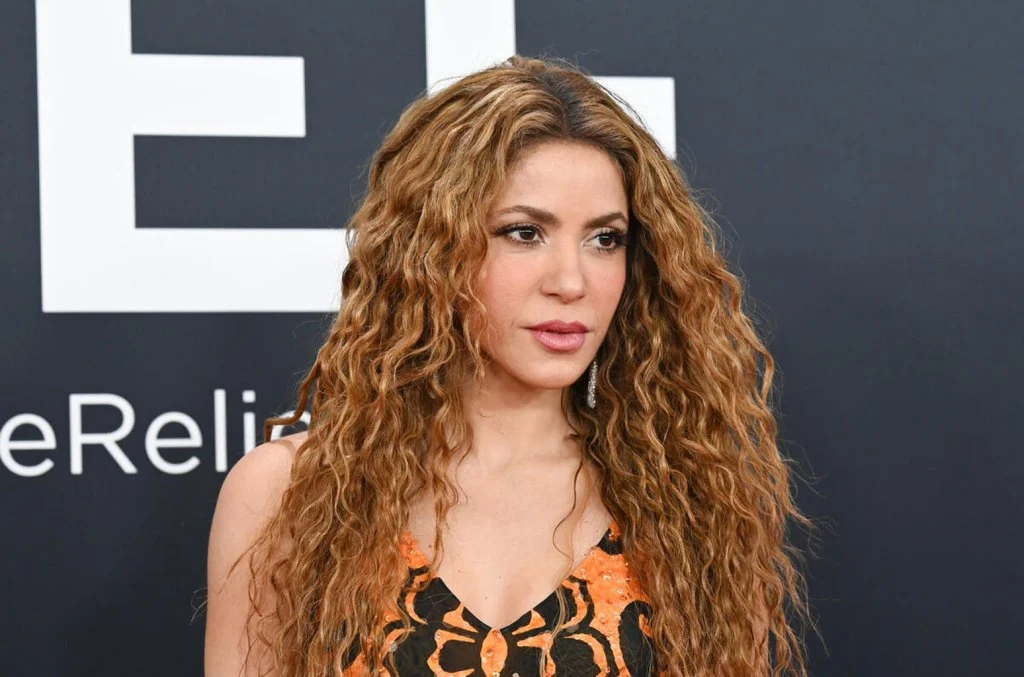
A few weeks after revealing his plans to sell a custom 2022 Lamborghini Urus won from its previous owner, superstar Shakira, in a giveaway, Colombian-American artist Michael Mejía was involved in a car accident while driving the luxury vehicle on Thursday (March 6).
“I was simply hit. It wasn’t me who crashed,” Mejía told Billboard on Tuesday (March 11). “I was about to cross a street when a car came speeding, and the driver was probably distracted. It was quite a scary moment. Fortunately, I wasn’t injured, but it was a very [tough] moment. The car is being restored. Thankfully, I had good insurance, so the car will be as good as new.”
An Instagram video posted on Sunday (March 9) by Spanish-language reality series ¡Siéntese Quien Pueda! showed the purple Lamborghini damaged in Miami.
Trending on Billboard
In February, during an interview with El Gordo y la Flaca, the contest winner talked about receiving the car from Shakira and his intention to sell the car — worth $280,000 — for potentially $1 million because of the steep maintenance costs. Shakira had provided him with an extra $90,000 to cover various expenses such as taxes, the car’s title transfer, legal fees and six months of insurance payments.
He previously explained the financial challenges involved, facing about $95,000 in federal taxes at the end of the year, monthly insurance costs exceeding $2,000 and more expenses related to the luxury vehicle. And now, he tells Billboard, he’s also facing backlash from the pop superstar’s fans for needing to sell the Lamborghini.
“The reality of all this is that I am an artist — I earned this car with my art,” he tells Billboard. “I’ve had a super lovely experience receiving that recognition from Shakira. What’s happening now is that all of Shakira’s fans — who initially supported me — are hating me because I decided to sell the car, since it is very costly. So, to them, it’s like, ‘This man is an opportunist. How can he take advantage and sell the prize?’ They see it as potentially disrespectful towards Shakira. I mean, the reality is that the car is very expensive. All the monthly costs are too much, and I just can’t keep up with them.”
The artist — known for his work in fine art, murals and body painting — won the prize based on the merit of his artistic contributions. He adds to Billboard: “A car doesn’t define an artist; let [fans] not forget why I won that car.”

Corridos bélicos pioneer Luis R Conriquez is set to hit the road with his Trakas HDSPM U.S. Tour, Billboard can announce. The Live Nation-produced stint will kick off April 25 in New York at the UBS Arena and will visit major cities across the country, including San Antonio and Las Vegas before wrapping up Oct. […]

J Balvin and Feid’s “Doblexxo” snags the No. 1 spot on Billboard’s Latin Airplay chart as the song climbs 6-1 for its first week atop the March 15-dated list. The song lands at the summit in its 13th week.
“I feel super excited to know that our fans have embraced this song in such a way,” Balvin tells Billboard. “Feid’s talent is undeniable and our chemistry when it comes to making music has always been amazing. I can’t wait to sing ‘Doblexxo’ live during my upcoming Rayo tour.”
Trending on Billboard
In the tracking week ending March 6, “Doblexxo” pulled 8.4 million audience impressions earned in the U.S., according to Luminate; that’s a 32% gain from the week prior when the song generated 6.1 million.
With “Doblexxo,” Balvin achieves his record-extending 37th No. 1s since the Latin Airplay chart began in 1994, opening a wider gap from his next competitor (Ozuna, 34 champs). Feid bags his ninth ruler. The latter last reached the top with “Si Sabe Ferxxo,” with Blessd, which spent a week at No. 1 in June 2024.
Except for 2024, Balvin has placed at least one champ every year during his decadelong No. 1 chart career, dating back to “6AM,” featuring Farruko (May 2014). He completed his most lucrative period in 2022, placing nine No. 1 hits between February and October then. The year before, Balvin reached his second-best run, with six No. 1s in 2019.
Good reception across Latin rhythmic stations also spurs its coronation on the Latin Rhythm Airplay chart, where “Doblexxo” jumps 3-1. There, Balvin also stands firmly ahead of the rest, with 37 No. 1s. (Daddy Yankee follows with 35.)
The song’s 13-week climb to No. 1 marks a longer stride to the top than Balvin and Feid’s past pair-up, “Porfa” — where Maluma, Nicky Jam, Sech and Justin Quiles are also part of the billing — as it ruled after eight weeks in August 2020.
“Doblexxo” is the fourth radio promoted single from Balvin’s sixth studio album Rayo, which debuted and peaked at No. 5 on Latin Rhythm Albums last August.
All charts (dated March 15, 2025) will update on Billboard.com tomorrow, March 11. For all chart news, you can follow @billboard and @billboardcharts on both X, formerly known as Twitter, and Instagram.

After performing at Viña del Mar, Bacilos sits down to talk about how they feel about their performance, being huge Carín León fans, how their career has changed since they first started, releasing Pequeños Romances as independent artists and more!
Ingrid Fagardo:Hi, friends at Billboard, we’re here at Viña del Mar, finally. Today, we’re here with Bacilos. How are you?
Bacilos:Really good, thank you. What a great invitation, and it’s great to be considered for Viña, thank you.
Ingrid Fagardo:We’ve really enjoyed this week in different forms. We’ve seen you guys as judges. How do you feel about Bacilos:this week being a judge and being a fan?
Bacilos:Because we’ve also had the opportunity to see artists that we admire on the stage, and obviously we admire the guys to have the courage to come here, to this novelty of a stage, and to be able to come to this monster. It requires a lot, it inspires a lot, and there’s a lot of respect.
Ingrid Fagardo:It’s the first time you’re judging right?
Bacilos:Yes, the first time.
Ingrid Fagardo:I know that the night when you guys were performing, you guys made us dance. It was a really, I don’t know, it was a night full of partying. It didn’t matter how cold it was, the time didn’t matter, it was literally a Bacilos party.
Bacilos:Yes, it was beautiful. The people were great. After Marc performed … Well to sing and perform after Marc felt like a responsibility, a challenge almost, but the people stayed. They stayed outside on a cold night.
Keep watching for more!

This is partner content. “Brilla Conmigo” is a short-form video series featuring Latin artists Elena Rose, Mariangela and Joaquina, showcasing how beauty, health and wellness fuel their creativity. Through candid conversations, they discuss how self-care, cultural pride and personal empowerment nurture confidence, which plays a key role in their artistry. Partnering with Invisalign to enhance […]

On the evening of July 23, 2024, the last night of her global tour and her fourth sold-out date at Santiago Bernabéu Stadium in Madrid, a visibly emotional Karol G told the crowd of 55,000: “I’m going to say that truly, tonight will be the most amazing of my life.”
It was, at the very least, a grand finale to the highest-grossing tour ever by a Latin female artist, grossing $313.3 million across 56 concerts, according to Billboard Boxscore. Karol G’s Madrid shows were also record-setting, selling 220,000 tickets and making her the first artist to sell out four shows at the stadium, which finished renovations earlier in 2024.
The fact that a Latin American artist could move so many tickets in a major European city underscores Spain’s growing importance as not just a bridge for Latin music between the Americas and Europe but also a place for music in Spanish — the new global pop — to grow.
In 2023, Spanish promoters and venues reported gross ticket sales of nearly 579 million euros ($604.5 million) to Spain’s Association of Music Promoters, an extraordinary 26.5% increase from revenue of 459 million euros ($479 million) in 2022. While Karol G, Luis Miguel and Taylor Swift brought stadium headlining tours to the country, according to its ministry of culture, Spanish talent is also robustly represented at the stadium level with recent shows from Manuel Carrasco and Dellafuente.
Numbers from the country’s ministry of culture, compiled by the legal and business management firm Sympathy for the Lawyer, show that 40.5% of concertgoers in 2024 attended shows of Spanish pop/rock, followed by 11.1% who went to see canción de autor (similar to singer-songwriter performances).
Meanwhile, beyond the live scene, Spain’s music consumption has grown exponentially.
According to year-end numbers reported by Promusicae, Spain’s music industry trade group, there were 98.5 billion audio streams across all platforms in 2024, compared with 87 billion the previous year. More than 1,180 artists notched over 10 million streams and 70 had more than 100 million streams.
That report of growth aligns with figures from global music industry trade association IFPI. In its Engaging With Music report, IFPI stated that Spanish music consumers averaged 22.1 hours per week of listening, compared with the global average of 20.7.
Spain’s receptiveness to music of all genres and provenance is evident in its five top-selling albums of 2024. According to Promusicae, Swift’s The Tortured Poets Department was the bestseller, followed by Karol G’s Mañana Será Bonito at No. 2, Spanish artists Quevedo’s Donde Quiero Estar at No. 3 and Saiko’s Sakura at No. 4 and Bad Bunny’s 2022 album, Un Verano Sin Ti, at No. 5.
Quevedo at the 2024 Latin Grammy Awards in Miami.
Jason Koerner/Getty Images
No wonder labels are increasingly turning to Spain to develop pan-regional artists. Examples include the success of Colombian artist Camilo after the pandemic; Venezuela’s Joaquina, who won best new artist at the 2023 Latin Grammy Awards and whose first tours were in Spain; and Colombian stadium pop-rock band Morat, which is signed to Universal Music Spain.
And although Spanish-born artists have a tougher time crossing over into the U.S. and Latin American markets than vice versa, a new generation of acts that includes Quevedo, Rels B, Bad Gyal, Aitana, Arde Bogotá and Rosalía is showing that reaching fans in the Americas may be more feasible than ever.
Fifteen months after the Latin Grammys were held in Spain in November 2023 — the show’s first foray outside the United States — Billboard will host a reception for Spain’s industry leaders on March 18 and recently spoke with some of those executives to ask what’s next for the dynamic market.
‘A Flow Of Cultures In Two Directions’
Given its crucial location as an entryway into Europe and its cultural significance as the birthplace of Spanish, “Spain is a place of fusion between Anglo and Hispanic cultures. It’s a flow of talent and culture in two directions,” says Vicent Argudo, head of music for Prisa Media. “Spain imports Latin styles into the old continent and adapts them to pop. It’s a place for mainstream experimentation.” While Spain for years seemed impenetrable for Latin American genres like reggaetón and regional Mexican, an influx of immigrants, coupled with increasing global acceptance of the Spanish language, has turned Spain into a market that imports and reinvents genres. “Spain gives Latin sounds a pop vision that makes them more accessible to the world,” Argudo says.
A Breeding Ground For International Talent
For José María Barbat, president of Sony Music Iberian Peninsula, Spain is a nonstop talent generator, from Julio Iglesias in the ’80s to Rosalía or C. Tangana today.
“In this context, we’re certain the next big Spanish star is around the corner,” Barbat says. “We continue to see artists with the skills necessary to jump to an international stage, showing there’s not only talent but also an industry ecosystem ready to channel all that creativity.” Proof of that is Arde Bogotá, a Spanish rock band garnering success in an urban world. “It speaks to the importance of keeping an eye out not just for popular genres,” he says, “but for talent coming out of niche genres.”
Artist To Watch: “I’m particularly excited about Lia Kali, a very well-rounded and very young artist we just signed,” Barbat says. “She has a mind-blowing voice and the ability to cross over in a big way into other Latin markets.”
Rosalía at the 2024 Met Gala in New York.
Mike Coppola/MG24/Getty Images
The Power Of A Cutting-Edge Stadium
The Spanish music industry is experiencing a golden era, a prime example of which, says Live Nation Spain president Pino Sagliocco, is the newly renovated Santiago Bernabéu Stadium and the sold-out shows it has hosted from Spanish artists Hombres G and Alejandro Sanz, as well as Swift and Colombia’s Karol G. “Those tours highlight unprecedented growth in Spain’s music history, breaking records in the years after the pandemic,” Sagliocco says. “The global industry now recognizes the country’s leadership and enormous potential as a key platform for the growth of Latin music in Europe.” While concerts at Bernabéu were suspended last September due to noise ordinance issues, its string of sold-out shows by artists both local and international highlighted the enormous, previously untapped potential of a state-of-the-art stadium in the nation’s touristy capital. “The global industry now recognizes the country’s leadership and enormous potential as a key platform for the growth of Latin music in Europe,” Sagliocco says.
Spanish As The ‘New Normal’
For José Luis Sevillano, CEO of AIE — Spain’s collecting society for performers, with over 35,000 members in Spain alone and representing the rights of over 800,000 performers globally — music in Spanish is on the brink of “becoming a magnificent new normal.” Not only does music in Spanish now top global charts, “but at the same time it’s placed new value on the diversity and plurality of our culture in the entire world,” he says. AIE’s most recently reported numbers registered a 29% growth in rights collection last year compared with 2023, and AIE’s study on consumption habits in Spain also found that Spanish-language music was more listened to than English-language music on streaming platforms. Plus, after 30 years of work, Spain adopted new legislation providing better compensation and working conditions for artists and musicians. “This will eventually lead to a more just and balanced music ecosystem,” Sevillano says, “which is basic in allowing creators to develop their talent to its full potential.”
Challenge For 2025: “Finding a responsible, respectful and balanced development of [artificial intelligence] for artists,” Sevillano says.
A Streaming Boom
Streaming dominates Spanish music consumption, accounting for nearly 90% of the market, according to Promusicae. Meanwhile, Spanish artists have become major streaming draws worldwide. In 2023, Spanish acts generated royalties of more than 123 million euros ($128.5 million) on Spotify, which is almost four times the royalties they generated on the platform in 2017, according to Spotify’s head of music for Southern and Eastern Europe, Melanie Parejo. That growth “is reflected in local consumption but also in the capacity to generate global business,” Parejo says, noting that over 50% of all royalties generated by Spanish artists on Spotify in 2023 came from listeners outside of Spain. In 2024, Rels B was the Spanish artist most listened to outside of Spain.
Rels B attended Milan Fashion Week in 2024.
Pietro S. D’Aprano/Getty Images
An ‘Explosion’ Of Talent
What was once an insular market is now having an international impact. “The Spanish music industry has undergone a radical transformation in the last decade, becoming a market with great global projection with artists like Rosalía, C. Tangana, Quevedo and an explosion of indie proposals like La La Love You,” says Carlos Galán, host of industry podcast Simpatía por la Industria. “Stylistic barriers have been broken, and even the chasm that existed between alternative and mainstream has grown smaller.”
Challenge For 2025: The fact that “every day there’s a new festival” is huge, Galán says. “But truly, it’s a bubble I’m afraid to see burst. All have identical lineups, little innovation and no one is betting on emerging talent.”
Sponsors Serious About Music
Few brand initiatives surrounding music are as complex and developed as Banco Santander’s Santander SMusic. The bank offers a 360 media platform that includes editorial content and live performances, in addition to its branded events, concerts and partnerships with labels and artists. “In a year we’ve executed over 235 presales and sold 600,000 tickets, becoming a point of reference for music in Spain and creating a complete ecosystem of exclusive content,” says Felipe Martín Martín, Santander España’s director of media, sponsorships and events. Santander’s SMusic has partnerships with festivals including Mad Cool, Sonorama and Rockland, as well as with companies like Universal, Sony and Los 40. But Martín Martín is especially excited about the growth of music tourism in Spain, “maximizing that No. 1 spot Spain has held in the global ranking of tourism to music festivals since 2022.”
An International Gateway
Spain’s geography offers easy access from both the United States and Latin America and to the rest of Europe. “It has the potential [to be a] port of entry for Latin artists to other European markets, particularly the U.K., France, Italy and Germany, who all provide strategic opportunities in the live market,” says Narcis Rebollo, president/CEO of Universal’s Global Talent Service, which manages and books over 100 artists including Aitana, Pablo Alborán, David Bisbal, Lola Índigo and Joaquina. The potential is already being realized in Spain, where ticket sales jumped more than 26% from 2022 to 2023 and more than 250% in the last decade, according to Spain’s Association of Music Promoters.
Growing Trend: “Brand investment in music has grown more than 100%,” Rebollo says, “with music being used as a new driver for brands to position their products.”
Aitana performed at the 2024 Morrina Festival at Port of A Coruna in A Coruna, Spain.
Cristina Andina/Redferns
A Good Partner
Spain’s impressive market stats, including its sizable listening and streaming growth per capita, make it a source of local talent and a priority for imported talent. “We’re listening to more than 260 million songs per day,” Warner Music Iberia president Guillermo González Arévalo says. “Coming to Spain to promote their new albums has had a great return on investment and recognition for artists like Dua Lipa, Myke Towers, Coldplay, Charli xcx and Linkin Park, who have charted high on our charts paving the way for their next tours.” In 2024, Towers was the most listened to artist on Spotify in Spain.
Looking Forward: Warner is also expanding activity in its recently opened music hub in Madrid. “Each day more music is written, and there are more collaborations created with Latin artists,” González Arévalo says.
A Flexible Market In Constant Evolution
Spain’s music market is known today for its strong festival culture and its affinity for music in Spanish, regardless of origin — and it has been receptive to new trends of late. In November 2023, the popular reality music competition Operación Triunfo relaunched on Amazon Prime Video. “It highlighted the extraordinary capacity of the format to adapt to new digital consumption trends, bringing in traditional viewers and new generations,” head of Amazon Music Spain Claire Imoucha says of the show, which will return in September. Christmas music also got a boost in new formats, with artists like David Bisbal, Niña Pastori, and Camilo and Evaluna (who had an Amazon Music Original song in November) reimagining traditional repertoire and “consolidating Christmas as a key consumption period.”
What Comes Next: “Spanish music is living an extraordinary moment, with genres like rock and flamenco displaying their capacity for evolution and renovation,” Imoucha says. “Artists like Arde Bogotá and Carolina Durante are leaders in a new rock scene, and artists like Israel Fernandez, María José Llergo and Ángeles Toledano are bringing a contemporary twist to historic genres.”
Antonio Garcia (left) and Pepe Esteban of Arde Bogotá onstage at the Coca Cola Music Experience Festival in Madrid in 2024.
Juan Naharro Gimenez/Redferns
A Consolidated Value Chain
“Our music industry is a very professionalized industry in every sector of its value chain,” Promusicae president Antonio Guisasola says. “In addition, we have great artistic talent that is mixing genres and renovating the different roots genres of the many cultures that coexist in Spain.” A sign of maturity of the market was the launch of its Spanish Academy of Music, “where all music professionals in the country get together to honor the work we did in the year,” Guisasola says, and the first Academy of Music Awards took place last June.
Beyond Major Cities
The growth of Spain’s music scene has translated to consumption outside major cities, says Alfonso Santiago, CEO of concert promoter Last Tour, which also puts together the annual BIME conferences in Bilbao, Spain, and Bogotá, Colombia. “There’s a wide spectrum of cities beyond the big capitals that have good venues and audiences that respond favorably,” he says. That openness is particularly evident and growing among younger generations. “Traditionally, adult fans have been more close-minded,” he says. “I’m excited to see a young audience open to discovering new things.”
A Rich Culture
Spain’s location has helped foster its rich musical output. “We have a confluence of music from Latin America, Northern Africa, local folklore and, of course, our great contribution to the world’s art, flamenco,” Sony Music Spain GM Blanca Salcedo says. Sony’s new 5020 Studios have become a perfect place to mine that cultural landscape. The studios, which opened a year ago, “are hugely valuable for this purpose,” Salcedo says. “It’s a unique space that combines the best technology, design and services to foster our artists’ creativity.”
A Festival Destination; Many Collaborations
In addition to its massive stadium concerts, Spain hosts nearly 900 music festivals a year, according to the latest Oh, Holy Festivals report. “Spain has established itself as a key market for tours and festivals, positioning itself as a global tourism destination for music,” says Jorge Iglesias, founder and CEO of concert promoter Iglesias Entertainment. In addition, a series of very successful cross-cultural collaborations — including Quevedo and Bizarrap’s “Bzrp Music Sessions, Vol. 52,” which topped Billboard’s Global 200 and Global Excl. U.S. charts in 2022 — has renewed interest in the country as a talent incubator.
A Prominent Indie Scene
The diversity of genres in Spain “is richer than ever,” says Believe Spain GM Maite Díez, adding, “The local independent scene has gained great prominence.” Case in point: Indie artist Iñigo Quintero, whose hit “Si No Estás” made history as the first track by a solo Spanish artist to reach No. 1 on Spotify’s global chart. On Spotify, nearly 60% of all royalties generated by Spanish artists come from indie labels or artists, Díez says. By extension, there has been “an explosion of new talent that has gone from the digital ecosystem to massive success,” including Daniela Blasco, a finalist at the Benidorm Fest song contest.
A Mature Industry
Beyond streaming strength, “Spain’s music industry is mature in all its subsectors,” says Soco Collado, president of Spain’s music federation Es Música, which represents and promotes the industry’s collective interests. “We have huge established artists, a young scene creating spectacular things and the companies working at every level are very solid and are investing,” she says. The sustained growth of streaming stands out for Collado, and she’s particularly excited about a new generation of very young female artists who are “super committed and creating musical marvels,” including flamenco artists María José Llergo, Angeles Toledano and La Tania.
New Opportunities
Universal Music Spain co-managing director Alicia Arauzo was struck by the recent success of David Bisbal’s Todo Es Posible en Navidad, which topped Promusicae’s albums chart in December. “It feels like we tapped a local vein with Christmas music, opening up an eternal opportunity [for the music],” she says. The proliferation of stadium concerts has also been a breakthrough for Spain, she says, along with “the growing strength of female talent, both local and international.”
This story appears in the March 8, 2025, issue of Billboard.