State Champ Radio
 genre latin
Page: 2
Trending on Billboard
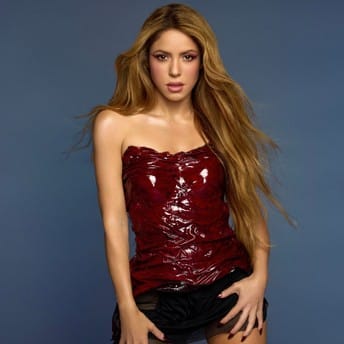
Shakira continues to break her own record for concerts in Mexico with her historic Las Mujeres Ya No Lloran world tour. Mexican promoter OCESA announced on Wednesday (Nov. 26) that the Colombian superstar has added three more dates to her tour for February 2026, bringing the total to 31 shows for her highly-successful tour in the Latin American country.
Explore
See latest videos, charts and news
The three new concerts on the tour—the highest-grossing tour by a Latin woman in history—include one at the GNP Seguros Stadium in Mexico City on February 27. The Barranquilla native set a milestone this year by performing 12 shows, the most of any single tour at the iconic venue formerly known as Foro Sol, where she sold 65,000 tickets per night, according to OCESA, for a total of 780,000.
Before that, the singer will perform at the Víctor Manuel Reyna Stadium in Tuxtla Gutiérrez, Chiapas, on February 21, and at the Carlos Iturralde Stadium in Mérida, Yucatán, on February 24.
The “Hips Don’t Lie” singer kicked off the Mexican leg of her Las Mujeres Ya No Lloran tour in March with seven dates at the GNP Seguros Stadium. In a second leg, she added five concerts between August and September at the same venue in Mexico City. It’s the biggest tour in the country’s history, with performances that broke all-time records for attendance, ticket sales, and number of consecutive stadium shows.
In July, Shakira reached another milestone by selling one million tickets in Mexico as part of her Las Mujeres Ya No Lloran World Tour, according to figures from OCESA, out of a total of 28 dates completed by September 24.
Currently, the singer-songwriter is completing the South American leg of her tour, with stops in Paraguay, Uruguay, and Argentina until December 15, before traveling to Hollywood, Florida, where she has three dates scheduled at the Hard Rock Live from the 27th to the 29th.

Trending on Billboard
Every month, Billboard Latin and Billboard Español editors spotlight a group of rising artists whose music we love. Think “diamantes en bruto,” or “diamonds in the rough.” These are newcomers who have yet to impact the mainstream — but whose music excites us, and who we believe our readers should make a point to discover.
Explore
See latest videos, charts and news
Our latest edition of On the Radar Latin includes a wave of emerging artists, who we discovered by networking, coming across their music at a showcase, scrolling through social media, or elsewhere. See our recommendations this month below:
Name: Juanita Donosso
Country: Colombia
Why They Should Be on Your Radar: Just graduated from ICESI University’s music program in Cali, Colombia, Donosso is part of that increasingly well-prepared generation of young artists who are schooled but also experienced onstage. With a sound that incorporates her major influences — from Erykah Badu to James Brown — Donosso sings a mix of funk, house and R&B with feel-good vibes and tons of attitude. The video to her newest single “Tuyo,” produced with fellow students, is a genre-bending girl party — with irresistible beats and dare-to-defy-me attitude — which bodes well for Donosso. — LEILA COBO
Song for Your Playlist: “Tuyo”
Name: Junior Zamora
Country: Colombia
Why They Should Be on Your Radar: Zamora may come from Cali, Colombia, the world’s “salsa capital,” and increasingly, a hub of urban music and sounds of the Pacific coast. But while Zamora’s music is touched by those influences, he breaks rank with heartfelt R&B, more grounded in gospel than salsa. It’s an excellent vehicle for soulful vocals, amplified by a visual aesthetic that makes Zamora an immediate standout. Initially independent, Zamora has been signed to Sony Music Colombia since 2023, which bodes well in terms of exporting his Colombian R&B to a broader audience — one that recently included showcases at Spain’s BIME conference in Bilbao. — L.C.
Song for Your Playlist: “Sagitario”
Name: Luister La Voz
Country: Colombia
Why They Should Be on Your Radar: The first time I heard Luister La Voz was through a Spotify recommendation. A couple of weeks later, I traveled to Barranquilla, Colombia, where I discovered more of his urban-pop music that’s rooted in champeta — a local genre that blends African sounds with reggae, characterized by a strong rhythmic foundation that enhances the melodic and harmonic lines. Luister La Voz’s unique sound is a delightful fusion; I became enchanted by his powerful-yet-sweet vocal harmonies that intertwine seamlessly. Each song presents a lyrical tapestry that carries messages from God, frequently drawing upon references to biblical psalms. — INGRID FAJARDO
Song for Your Playlist: “Las Cartas” feat. Maikol El Insoportable
Name: Luz Gaggi
Country: Argentina
Why They Should Be on Your Radar: With a powerful, velvety and nuanced voice reminiscent of the great R&B singers, Luz Gaggi rose to fame in Argentina in 2021 on the local version of The Voice, and shortly after was signed by Sony Music. Since then, she has been steadily carving her way up, and the last year or so has been particularly rewarding. In October 2024, she opened for Paul McCartney at River Plate Stadium in Buenos, and over the summer she received the Discovery Award at the LAMC in New York and was one of two “Artistas 2 Watch” at the 2025 Premios Juventud. The 23-year-old pop singer-songwriter is currently working on her sophomore album with renowned producer Cachorro López, from which she recently released the single “Qué mal.” — SIGAL RATNER-ARIAS
Song for Your Playlist: “Que Mal”
Name: Pahua
Country: Mexico
Why They Should Be on Your Radar: With over 20 million streams across music platforms, Mexican singer and songwriter Pahua (real name: Paulina Sotomayor) has been making the rounds for over a decade — first with her brother Raúl in the electronic and Afro Latin duo Sotomayor, and later (since 2020) as a solo artist. Also a DJ and a drummer, Pahua blends Latin folk with percussive modern beats and lyrics, inspired by nature and Latin American literature, a style that has received praise and recognition from The New York Times to the BBC and NPR.
This year marked a turning point in her career, with a performance at the Kennedy Center in July and a 15-date U.S. tour over the summer. She recently was announced as part of the 2026 EDC festival in Mexico City, and she’s returning to NYC in January for two more shows. Pahua’s sophomore solo album, Cerca Del Lugar, was released in September, with “Vaquera Galáctica” — “a nod to women never giving up” — as the focus track. With Sotomayor, she is releasing a new album next year, WABI SABI, produced by Eduardo Cabra. — S.R.A.
Song for Your Playlist: “Vaquera Galáctica”
Name: Ronkalunga
Country: Cuba
Why They Should Be on Your Radar: He’s a self-proclaimed “musician, poet, and madman,” according to his bio on the DSPs — but beyond that, Ronkalunga (real name: Ronaldo Rodríguez Hernández) is a virtuoso singer-songwriter, hailing from eastern Cuba. Earlier this year, his song “El Carnicero” gained momentum on social media, ultimately showing up on my algorithm. Captivated by his deep and sensual vocals, and scruffy appearance with that “je ne sais quoi” appeal, I began to navigate his entire catalog, which goes back to his debut album Raros Pasos in 2020.
Ronkalunga’s sound is rooted in traditional Cuban music (changüí, bolero, and trova) fused with pop, alternative rock, and funk. In songs such as “Coco y Guayaba,” “Lo Mismo Me Dá,” and “Refranero,” you’ll also discover his witty penmanship, packed with double meaning and local sayings. Ronkalunga is currently touring the U.S. — JESSICA ROIZ
Song for Your Playlist: “El Carnicero”
Name: RØZ
Country: Mexico
Why They Should Be on Your Radar: Mexican act RØZ has been making strong waves in the electonic music realm since the release of its debut single “What You Want” in 2020. Since then, the emerging Mexican DJ and producer duo (made up of Manolo Cabrera and Hugo Lara) has racked over 4.5 million monthly listeners on Spotify, thanks to its innovative and progressive house sound. Earlier this year, the duo got the stamp of approval from Peso Pluma on their collaborative track “Apaga La Luz.” Other notable collaborations include “flashes” with Yng Lvcas, and “Cora de Hielo” with Natt Calma and Mau Moctezuma. This year, RØZ also made history as the first Latin American act to debut an official Spotify Sessions — and in 2026, the duo will make their Coachella debut, and will also perform at the Argentina, Chile and Brazil editions of Lollapalooza, and at Colombia’s Festival Estéreo Picnic. — J.R.
Song for Your Playlist: “Apaga La Luz” with Peso Pluma
Name: SouCream
Country: Venezuela
Why They Should Be on Your Radar: SouCream is an emerging talent from Venezuela who presents a fresh sound by mixing Brazilian funk with rap. I saw him perform for the first time as one of the opening acts at Akapellah’s concert in Miami this year. What caught my attention the most was not just his immense talent, but also the contagious energy he brought to the stage, which resonated deeply with the audience. His lyrics are full of expressions and phrases from Venezuela, reflecting his roots and storytelling ability. His flow moves smoothly over a steady beat, maintaining a consistent tone that enhances the dynamic feel of his music. He demonstrates great versatility in his musical approach, combining strong hip-hop influences with elements of electronic music in the instrumentals and with rap elements. — I.F.
Song For Your Playlist: “Só Putaria No Baile” with DJ Guuh & MC GW
Name: Twin Tribes
Country: United States
Why They Should Be on Your Radar: Armed with brooding synths, lush basslines, and lyrics steeped in themes of love, mortality, and the occult, Twin Tribes conjures an otherworldly sound that feels like a séance on the dancefloor. Its influences run deep — from The Cure and Depeche Mode to Caifanes and Soda Stereo — mixing haunting melodies and a dash of nostalgia into modern darkwave. In September, the Brownsville, Texas-based duo released Ecos, a two-track EP that pays homage to its Latin roots with covers of “Lobo-Hombre en París” (La Unión) and “Tren al Sur” (Los Prisioneros). Each track drips with reverence, yet spellbinds with a signature nocturnal edge, reshaping the familiar into something uniquely the duo’s own.
The post-punk pair (comprised of Luis Navarro and Joel Niño, Jr.) is now finishing the year with a Latin American tour, with dates in Brazil, Costa Rica and Peru, including a stop at Mexico City’s legendary Circo Volador on Friday (Nov. 28). Twin Tribes is continuing work on a new album and preparing for its March 28 appearance at Los Darks Festival in L.A., where the duo will share the stage with their heroes Caifanes, and other bands. — ISABELA RAYGOZA
Song For Your Playlist: “Lobo-Hombre en París”
Trending on Billboard
Karol G and Feid‘s “Verano Rosa” marks the pair’s first collaborative No. 1 as the song soars to the top of Billboard’s Latin Airplay chart (dated Nov. 29). It becomes the third track from Karol’s album Tropicoqueta to claim the top spot. This achievement also earns Karol G her 20th chart-topper and Feid his 11th.
Explore
See latest videos, charts and news
“Verano Rosa” flies 9-1 on the overall Latin radio ranking with a 55% boost in audience impressions, to 8.9 million, earned in the United States during the tracking week ending Nov. 20th, as reported by Luminate. The track also takes the Greatest Gainer honor, awarded to the song with the largest audience growth of the week.
While multiple two-way collaborations have topped the Latin Airplay chart in 2025, “Verano Rosa” stands out as only the second female-male pairing to achieve the feat. Earlier in the year, Silvestre Dangond and Emilia claimed the No. 1 spot with their hit “Vestido Rojo” (which coincidentally shares the same initials as Karol and Feid’s track, VR) leading the chart for one week in June.
Karol and Feid’s previous collab, “Friki” took them to a No. 36 high on Latin Airplay in 2022. Meanwhile, “+57,” where the pair also teamed up with DFZM, featuring Ovy on The Drums, J Balvin, Maluma, Ryan Castro and Blessd, gave each a top 10 on the multi-metric Hot Latin Songs chart, reaching No. 4 high in 2024.
“Verano Rosa” becomes Karol’s 20th No. 1 on Latin Airplay and the third ruler from her No. 1 album Tropicoqueta. The album’s lead single, “Si Antes Te Hubiera Conocido,” shattered records earlier this year, surpassing Shakira’s “La Tortura,” featuring Alejandro Sanz, with an unmatched 26-week run at the summit of the 31-year-old chart. Second single, “Latin Foreva,” also reached No. 1, on the July 26-dated chart.
For Feid, “Verano” marks his 11th ruler. Prior to the new hit, the Colombian topped the chart for one in April through “Háblame Claro,” with Yandel.
Grupo Cañaveral & Marisela Celebrate First Regional Mexican Airplay No. 1:
Grupo Cañaveral de Humberto Pabón and Marisela claim their first No. 1 on the Regional Mexican Airplay chart, as “Que Bello” climbs to the top after a 4-1 surge with 8 million audience impressions, up 46%, during the tracking period.
The breakthrough marks Grupo Cañaveral’s first No. 1 on Regional Mexican Airplay after debuting on the chart in 2020. It comes after three prior entries, with two songs peaking at No. 18 as their highest achievement before now.
For Mexican American singer Marisela, “Qué Bello” is a successful return. It’s her first entry on any Billboard chart in over six years, and her first No. 1 on any Billboard chart since her four-week reign with 20 Éxitos Mortales on the Top Latin Pop Albums chart in 2009.

From Shakira’s hair care products to Maluma’s mezcal, see the list below.
11/25/2025

Trending on Billboard
The Viña del Mar International Song Festival 2026, set to take place from Feb. 22 to 27, promises an electrifying week of music that includes Gloria Estefan, Pet Shop Boys, Jessy & Joy, Juanes, Mon Laferte and Paulo Londra.
Explore
See latest videos, charts and news
Dubbed “the largest Latin festival in the world,” the full six-day lineup of the 65th annual festival was revealed on Tuesday (Nov. 25). Macarena Ripamonti, mayor of Viña del Mar, stated in the press release, “We achieved a historic milestone by presenting 100% of the musical lineup at once, receiving very good feedback from people, with artists for all tastes and needs, as it should be.”
Most days of the storied Chilean festival will feature three performers — a change from the usual two. On Sunday (Feb. 22), Gloria Estefan will headline alongside Matteo Bocelli, with one additional artist yet to be announced. Monday will bring British legends Pet Shop Boys and Colombian duo Bomba Estéreo to the stage.
K-pop sensation NMIXX — comprised of Haewon, Sullyoon, Bae, Jiwoo, Kyujin and Lily — and Mexican duo Jessy & Joy will take the mic on Tuesday (Feb. 24). Midweek performances on Wednesday will feature Colombian rocker Juanes alongside Argentine cumbia band K Personajes, and Thursday will see Chilean powerhouse Mon Laferte and Puerto Rico’s Yandel Sinfónico deliver their sets. The festival will close on Friday (Feb. 27) with four performers, three already confirmed: Paulo Londra, Pablo Chill-E and Milo J.
“This event, the largest in the country, represents a driver of economic development and significant direct job creation for our city,” stated Mayor Ripamonti. “That is why it is so important to welcome millions of tourists and all the residents who will enjoy the World’s Largest Latin Festival.”
Pre-sale tickets will be available through Santander and Entel starting Wednesday (Nov. 26) until Friday, Nov. 28, at 11 a.m. local time. General sales will begin on Friday, Nov. 28, at 11:30 a.m. local time via Puntoticket.
Trending on Billboard
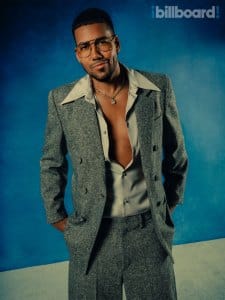
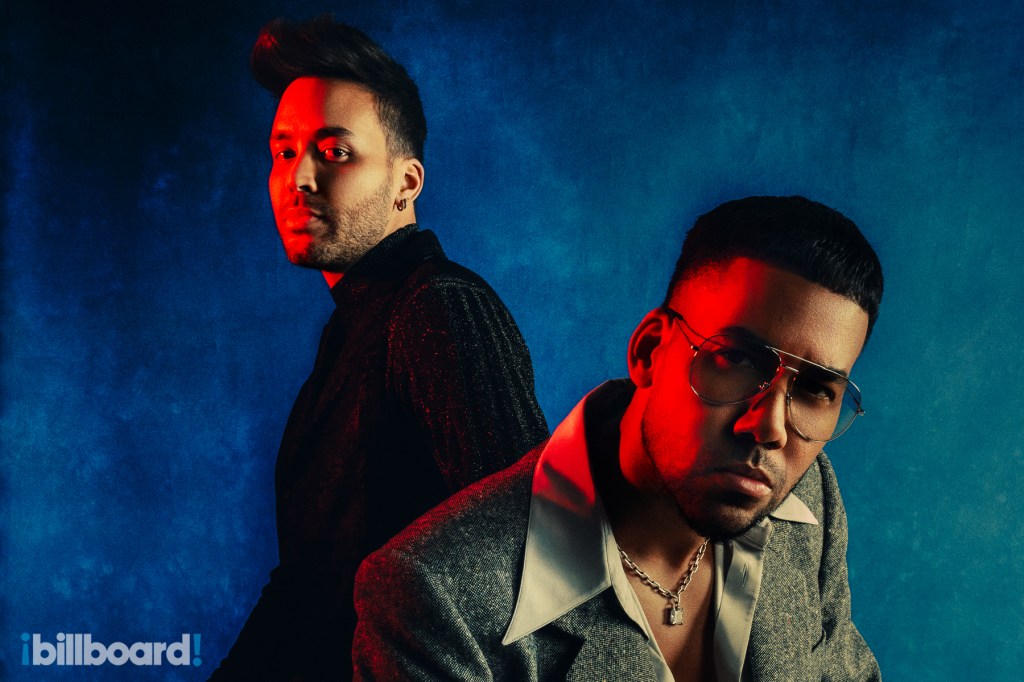
Romeo Santos arrives wearing a face mask and a hoodie. He’s not sick, just determined to avoid being recognized as he enters our New York studios, and immediately heads to his dressing room with his small entourage. Minutes later, Prince Royce walks through the door, just as quickly and discreetly, with a cap under the hood of his sweater covering half his face.
The two have been seen together in the past, but only as friends on social media. Today, the last Wednesday of October, they’re here to announce something completely different: Romeo Santos and Prince Royce, the “king” and “prince” of bachata, respectively, are finally collaborating, not on a single song, but on an entire album.
Their collaboration has been the best-kept secret in Latin music in years. Appropriately titled Better Late Than Never, the 13-song album will arrive Nov. 28 on Sony Music Latin, where only a small group of people knew of its existence.
Close friends and family were also unaware. (Coincidentally, Royce’s brother, who works as a photographer in New York, only learned of the project when he joined the team that shot the cover for this Billboard Español story and saw both artists’ names on the call sheet.) Many of the musicians who played on the album think it’s by one or the other, since both artists deliberately summoned their sidemen separately and were never seen together in the studio.
The result is pure synergy: “There’s no one taking center stage here,” Santos says. “There isn’t a song where he sings more than me or me more than him.”
I listened to the album the day before, when Santos — as he’s done in the past with Billboard — picked me up in a Cadillac Escalade V and played it for me from beginning to end, responding to my questions and reactions with the joy of someone who knows he has something special in his hands. He’s never been one to share files of his work through email before their release, and he certainly wasn’t going to risk it this time.
Better Late Than Never has the essence of Santos and Royce throughout but also offers something fresh for both artists. There are classic bachatas, more modern takes and mostly romantic lyrics, and the fusion of their recognizable voices is captivating from the first track, which shares the album’s title.
Songs such as “Dardos” and “Jezebel” stand out, the latter displaying strong R&B influences, as well as “Ay San Miguel,” a Dominican palo, and “Menor,” a surprising first collaboration for Santos with an emerging talent, Dalvin La Melodía — who also hadn’t yet been informed about Royce’s participation.
Santos and Royce wrote four of the songs together, starting with “Mi Plan,” penned during a friends trip to St. Barts in 2023, and “Better Late Than Never,” “Jezabel” and “Loquita Por Mí.” The rest were mostly written by Santos, always with Royce’s participation and honest input. But the seed of this production has been germinating since at least 2017, when they recorded the first of three failed attempts that will likely never see the light of day.
“I don’t want to sound cliché or overly religious, but God’s timing is perfect,” Santos says, explaining why now was the right time. “When we started recording the first song seven years ago, there was a little resistance from both of us. I felt convinced at the time… the vibe was there, but then we started evaluating it and [realized], ‘Mmm, this is not the song.’”
“There was a moment where I said, ‘Man, are we ever going to find that fusion, that muse, where we both feel comfortable and can say, ‘This is great?’ ” Royce adds. “And it wasn’t that I doubted it, but it required going in and really delving into it — and suddenly there was a switch.”
Santos
Malike Sidibe
The launch strategy was equally secretly planned. On Oct. 31, Halloween, Santos, unrecognizable in an Ace Ventura costume, announced on his Instagram account “new album November 28” — with a link in his bio to preorder it — along with a video of him partying in New York with an album in his hands. Days later, on Nov. 10, a massive listening party for his fans scheduled for Nov. 26 at Madison Square Garden was announced on Univision shows such as Despierta América and El Gordo y La Flaca and radio station WXNY-FM (La X 96.3) New York, where listeners could call in to win tickets. According to Santos’ publicist, at the time of the announcement, 7,000 people were online looking for tickets, all assuming that “it’s a [solo] Romeo album.”
Of course, there were no singles or previews. A music video featuring two songs — “Estocolmo” and “Dardos” — will be released simultaneously with the album. To communicate with the director, they used the code names “Batman” and “Robin.”
The collaboration between the two powerhouses is highly anticipated by bachata fans, and the fact that the project wasn’t rushed gives it new urgency and importance. Superstars of the genre from different generations, they are also very different in style — Santos with his sweet, high-pitched voice and use of traditional guitars; Royce with his light lyric tenor and a more pop/urban sound. And both have redefined the genre. Santos, 44, revived bachata when it was considered traditional regional music, giving it a sensual twist with touches of contemporary New York that captivated a new generation. Royce, 36, came later with bachata versions of Motown classics.
Santos rose to fame in the mid-1990s as leader of the group Aventura before launching a brilliant solo career in 2011 with Fórmula, Vol. 1, the longest-running bachata album by a solo artist on Billboard’s Top Latin Albums chart (17 weeks at No. 1); more recently, he was No. 2 on the Top Latin Artists of the 21st Century list (behind only Bad Bunny). Royce debuted in 2010 with a self-titled set that reached No. 1 on Top Latin Albums, which he has topped five times.
Both born in the Bronx to Dominican parents (except for Santos’ mother, who is Puerto Rican), they met at a family party. “Aventura was huge at the time,” Royce recalls. “I was in my room playing PlayStation. I heard the revolú [commotion], so many people outside. I went out and took a picture [with him],” adding that he was starstruck by the singer’s presence. Now, “This is a full-circle moment. What Romeo and Aventura have done has inspired me.”
“Romeo Santos and Prince Royce are two wonderful artists, two exceptional professionals — and even better human beings — who have dedicated their careers to bringing bachata to the world,” Afo Verde, chairman/CEO of Sony Music Latin Iberia, told me days after the interview. “Each of the songs on this brilliant album reflects the talent, creativity, passion and dedication of both of them. We can’t wait for all the fans to experience this magical album they’ve created together.”
Sitting down to talk for the first time about their most closely guarded secret in an exclusive interview with Billboard Español, Santos and Royce delve into the project, their friendship and the future of the genre that made them famous.
Prince Royce
Malike Sidibe
To begin, who approached whom? Who said, “Let’s do it”?
Romeo Santos: I’d like to take credit, but the truth is, the first person to mention the idea of recording not one, not two, but a whole album, was this gentleman right here. (Gestures to Royce.) And that was literally seven years ago, right?
Prince Royce: A long time ago, yes. I felt a lot of pressure from the public, really. If we make a song, what will it be? It can have pop elements, it can have very traditional elements, it can be a fusion. And I was thinking about how to fuse these two worlds, which, although it’s bachata, are two different styles of bachata. I always thought, “Man, how iconic would it be if we made an album, if we could give everyone these different kinds of flavors and colors?”
Santos: Yes, because that’s a valid point. When he says “the pressure,” it’s like a song will have an audience who will say, “I like this one,” but there will be another type of fan who will say, “Yes, but it’s too slow.” There are those who say, “Yes, but it’s too fast.” “Yes, but it doesn’t have that bitterness or it’s too depressing.” We have a production that fills all the gaps.
You recorded three previous tracks — one in 2017 for Golden, another in 2022 for Fórmula, Vol. 3 and a third later — and none of them were released. After three attempts, what motivated you to keep trying and not give up?
Santos: I think we started evaluating the three songs we had already recorded. “Where was the problem? How could the chorus of these three songs be improved? Was it the verse, the arrangement?” And at least I had the goal of making the songs feel organic, not like we took a song, sent a verse to Royce or vice versa, just to say we collaborated. I think it had to happen this way: three failed attempts to lead to this production. I don’t think I could have worked with Royce in a more ideal way. The best songs we were able to create are on this album.
Royce: I think for me it was, “We shouldn’t rush things.” Nowadays a lot of people lack patience, and I’ve always been very patient. I’m not a quitter, and he’s definitely not a quitter.
Santos: And you know what I respect? He was honest with me about those three songs. I mean, if he had been a hypocrite and told me, “They’re great,” this project wouldn’t have happened. But he was like, “I don’t know, loco, they’re OK, but do you think so?” So I kind of analyzed them. And honestly, every time I presented him with a song, I felt it was better than the last one.
How is it possible that none of this leaked in all these years?
Santos: Well, I’ll just say that in the world of privacy, I’m an expert. I feel very comfortable, even if it’s a little stressful, working on projects with the element of surprise. I’m used to it; I don’t like to prepare people.
Royce: In my case, I just don’t want to jinx it either. I know how he works, I’ve known him for many years. For me it was such an important project that I wanted the element of surprise, I wanted to surprise the audience, I wanted to focus on the project without anyone interfering and simply work.
Santos: Another factor was that we genuinely posted photos and videos together because we were hanging out. I think that when people saw those pictures and didn’t hear any music, they kind of overlooked it. And I didn’t know at the time that this was also what would work as a strategy for us. We managed to keep it a secret for several reasons. Also because technology has changed so radically these days that you can record a production, an album, whatever at home. We didn’t go to public studios; everything was recorded during vacations — we were in a villa with our friends and family, in my home studio in New York. We visited his house many times. That part was easy, honestly.
Royce (left) and Santos
Malike Sidibe
Tell me about “Batman” and “Robin.”
Santos: Ah, that was the code.
Royce: I called it the “Bora Project” with my small team.
Santos: We created this “Batman” and “Robin” thing, but for different aspects; for filming music videos, talking to the director: “Remember, Royce is Robin, I’m Batman.” Until it became second nature. Now I say to him: “What’s up, Robin?”
The fact that the record label hasn’t even heard the album speaks volumes about the creative freedom the label has given you to work together.
Santos: Look, I’m very grateful to Afo [Verde], to the whole Sony team really, but Afo is one of those people who respects the creative side of artists. And I remember sending Afo a message about two months ago, more or less, saying, “Brother, I have a project that I think is going to excite you. You’re going to love it, and I want to share this project with you. I want you to listen to it, to be one of the first.” Afo tells me, “I knew you were planning something,” because my last post was, if I’m not mistaken, on Jan. 8 of this year, and I’ve been ghosting on social media.
How easy or difficult was it working together as two big artists with such distinctive styles?
Royce: From the moment we made that first song [that actually worked], everything flowed for me. It was like there was a whole year where I felt like we were creating something incredible. I was so happy. And I really admire how he pushed me in the studio.
Santos: Thank you. I’m kind of a maniac.
Royce: I hadn’t felt like that in a long time. The fact that I thought I was doing well and [he’d tell me], “No, you can do better, bro,” and just keep at it…
Santos: And vice versa, because I’m so used to directing myself that sometimes you overlook certain things you stop doing as a performer. … The interesting thing about this project is that it has his essence, my essence, but musical proposals that neither of us has offered to the fans before.
Who was more involved in the production?
Santos: I would say I was… [But] I reiterate: He was very key because he trusted me, but also kind of challenged me. When I showed him a song, he was very honest, as he’s always been. So I went in already with that challenge.
What new elements will the audience hear?
Royce: There are new elements like “Dardos,” which has a lot of fusion. There are Afrobeat vibes, tropical vibes, different types of guitars, violins. [The song] “Better Late Than Never” starts off very pop, a cappella. And I think there are many elements, within bachata as well, in the way the guitar is played; there’s a bit of a rock flow.
Santos
Malike Sidibe
What did you think when you heard the album for the first time in its entirety?
Santos: We hugged with happiness.
Royce: I was jumping around, I was tipsy. … I was super excited. For me, it has been an honor to record this album. It has been a very beautiful experience in the studio as well.
Santos: You know what I used to tell him? “This pendejo sings beautifully!” Because I was listening to him from a different perspective. I love producing, and when you create a melody thinking of someone else, in my case, I enjoy it more than I enjoy singing it myself. And sometimes he sang a melody even better than what I envisioned.
Were you already a fan of Prince Royce’s music?
Santos: There’s a mutual respect. I’ve always told him about the songs I love from his repertoire. For me, “Incondicional” is one of those songs that, if you ask me what Romeo hasn’t done in bachata, both with Aventura and as a solo artist, when I heard that song I said, “F–k, mariachi with bachata!” That was great.
Royce, is there a song by Romeo you wish you had written?
Royce: There are many. I’ve always been a fan of “La Novelita” by Aventura. “Infieles.” “Eres Mía”… I think he’s a walking encyclopedia of bachata; he knows every bachata song and has a lot of musical knowledge. And he’s a genius with lyrics, truly.
As friends and colleagues, do you ever call each other for advice?
Santos: Of course. We’ve talked a lot long before this project. It’s a truly genuine friendship.
Prince, what’s the best advice you remember Romeo giving you?
Royce: There are many that I probably can’t say on camera. No, just kidding. (Laughs.) In terms of advice — not just musical; it could be business, it could be personal — we’ve had many conversations and he’s always been, I really mean it, very real with me… And I’ve always respected that.
Santos: I can tell you that one piece of advice he gave me once was, “Don’t take things so seriously.” I have that problem. Sometimes we forget to have fun. Especially when you have a plan, the rollout, marketing, a million things, and I feel like he has that quality. He loves what he does, just like I do, but maybe I’m too… What’s the word?
Royce: Particular, detail-oriented…
Santos: Yeah, sometimes that kind of takes away the fun.
Royce
Malike Sidibe
Let’s talk about the state of bachata. How do you see the genre right now?
Santos: How far the genre has come is impressive, especially when you see artists who aren’t bachata singers navigating this genre of heartbreak. When I listen to Rosalía, Manuel Turizo, Maluma, Shakira, Rauw Alejandro, Karol G, that’s an excellent sign that good work has been done since the beginning.
However, a superstar on the level of Romeo Santos and Prince Royce hasn’t emerged. Why do you think this has happened?
Santos: I think there are a lot of Prince Royces and Romeos in an attic, in a basement, creating the new sound. The thing is, this business isn’t easy. And when I say it’s not easy, it’s not easy for us either. There’s a very essential key that few apply, and that’s perseverance. If you analyze my career, people remember Aventura from “Obsesión,” but we’d been hard at work six years prior to that.
Royce: I think a lot of people always see the success but they never see the failures, what didn’t happen, the doors you knocked on. And I think that nowadays it’s very important to be different… and to bring something that Romeo Santos didn’t bring and that Prince Royce didn’t bring, because they’re already here.
Going back to your wonderful project, an album is usually followed by a tour. Do you plan to go on the road together? What do you envision for that show?
Santos: Obviously, yes, we are considering a tour, God willing, and a worldwide one so people can enjoy both of our repertoires. And when it happens, God willing, we don’t want it to feel like a show where he goes onstage, sings his setlist, then I sing mine. No. We want it to be an experience where, whether you’re a fan of Royce and me or just a fan of him or just of me, it’s a musical journey through both of our repertoires.
What would you say to Prince Royce fans who aren’t Romeo Santos fans, and to Romeo Santos fans who aren’t Prince Royce fans?
Royce: Well, personally, I think they’re going to become fans of all of us.
Santos: You want to know what I’d tell his fans? That they’re going to have to put up with Romeo! (Laughs.) No, but seriously, this is a treat, a gift for both sets of fans, because I think — and I don’t want to sound repetitive — that it’s a production where each song is dedicated to different styles, to his essence, to mine. But there’s something else you’ll notice about it: There’s no one taking center stage here. There isn’t a song where he sings more than me or me more than him. Maybe your favorite part of this particular song is Royce’s chorus, and maybe your favorite part is the pre-hook I did, but I hope you like it, that it evokes some kind of emotion in you in a positive way, because we made it with all the love we could put into a project.
Trending on Billboard Romeo Santos arrives wearing a face mask and a hoodie. He’s not sick, just determined to avoid being recognized as he enters our New York studios, and immediately heads to his dressing room with his small entourage. Minutes later, Prince Royce walks through the door, just as quickly and discreetly, with a […]

Trending on Billboard
Romeo Santos and Prince Royce join forces on a joint album titled ‘Better Late Than Never,’ and Billboard has the exclusive interview where they break their silence about their secret collaboration as Batman and Robin, sharing the magic behind their new and unexpected bachata album.
Romeo Santos:
The album is titled ‘Better Late Than Never,’ which means “better late than never.” The explanation seems obvious. Many people will likely say, “Why did you take so long?” The answer is simple: better late than never. We also wanted a song that would pay tribute to the title. That’s why there’s a song that’s literally called “Better Late Than Never,” which is a little more about love, heartbreak. A man who makes the mistake of not valuing his partner and when he sees her happy with someone else, and you see that things perhaps got damaged, he recognizes that he lost his great love, but that he asks her to give him one last chance, that he’s changed now.
Prince Royce:
He changed.
And that it took too long for the change, but better late than never.
Prince Royce:
I think that’s a very deep, deep meaning, you know I think it’s growth, I think it’s perseverance. And to tie to everything that we were talking about. So, I think that’s a very deep concept and title in general.
Yeah, no, I think the title couldn’t have been a better title, you know it’s like, better late than Never, you know. You have any negative thing to say about “why did we take so long?” Better late than never! You know? “Why an album?” Why not? Better late than never.
The first song we recorded for the album, with the album in mind already, was “Mi Plan.” I think it was in St. Barts. We were there, chilling. We were actually just chilling, actually. We were like: “Let’s go record”.
It’s like a fellas trip.
And that’s where that idea started, already with this concept in mind that maybe a production was coming.
Keep watching for more!
Trending on Billboard
This past summer, we were selected among 13 Syracuse University students in the Bandier Music Business Program to study the music business hands-on by visiting five cities across three countries in Latin America.
Explore
See latest videos, charts and news
Bandier visits different emerging music markets almost every spring, with previous trips touching down in China, Vietnam, Thailand, Korea and Indonesia, among others. This year, for the first time ever, Latin America was our destination, and we visited Mexico, Colombia and Brazil, where we met with over 75 executives across virtually every sector of the music business. We gratefully learned from top executives at Spotify, YouTube, Sony, Universal, Warner, Live Nation, Believe and countless local labels, publishers, collecting societies and more. We also attended multiple festivals (including Laufey at Popload in Sao Paulo!) and nightclubs, immersed ourselves in local culture, and enjoyed incredible food.
What we encountered challenged what we know about the music industry in the U.S. and opened our eyes to the different opportunities and challenges to be found in different territories. Here are our takeaways as students of the music industry looking to make an impact across countries and cultures.
Different Strokes
Some of the aspects of the music business in Latin America were surprisingly (at least for many of us traveling there for the first time) different from what we’ve known in the U.S. For starters, YouTube ad-supported models were much more important in these markets. In the United States, paid subscriptions easily account for more than two-thirds of the total recorded music market, and 80 percent of streaming revenues. But in markets like Colombia, ad-supported streaming was worth nearly 40 percent of the entire market. This puts enormous focus and importance on finding ways to improve conversion rates from ad-supported to paying subscriptions.
Relatedly, with much of the internet access coming from mobile partners, music partnerships with telecoms become even more important. In Brazil, for example, Deezer offers “free” service with TIM Brasil; and in Colombia, Claro users having access to Claro Música, now a top five service in the country.
Merch was also very different from our U.S. experiences as we traveled; counterfeit merch thrives in some of these markets, to the point where some tours and shows have accepted they cannot compete with the enormous markdowns happening just outside Latin American venues.
And finally, as AI-generated music rises in popularity, we were fascinated to learn more about Latin America’s legal framework, rooted in continental law, including moral rights. While the U.S. enforces moral rights in some ways, largely in the context of encoding them into other laws, these rights were more powerful and central in Latin America. Moral rights are not transferable and are distinct from economic rights (like copyright) and focus on the author’s personality and identity. We heard from certain executives that moral rights could be used as an important tool for protecting artists from AI engines that might look to train without permission.
What’s Next (Emerging Genres in South America)
We aren’t just studying the music business – we are all also huge music fans. And we found a lot of exciting new sounds in our travels that deserve a bigger audience. In Colombia, Latin Afrobeats, a blend of African diasporic beats with reggaetón and champeta, is showing regional growth on the DSPs, and combines elements that will already be familiar to music fans. Executives told us that this movement largely emerged from Cali, and has spread along the Atlantic coast to Cartagena, Barranquilla and elsewhere, with consumption growing in Bogota, behind artists such as Zaider, DFZM, Hamilton and Junior Zamora. (If you want to know more about this, read Billboard‘s excellent list The New Generation of Afro-Colombian Artists: 10 Gems to Know.)
In Brazil, Funk Brasilero, a genre deriving from the favelas and peripheries of major cities, has been around for a decade or more now, but deserves to expand beyond the country. Some of the favorite songs and artists we discovered on this trip include DJ Caio Prince, MC Jacaré, MC Delux and MC Pedrinho. While often known for its samba, Pedra do Sal was one of many center stages where we were able to fully absorb the culture and energy of Funk Brasiliero. Where is this energy in the pop versions of funk that get pushed in the States? The genre is held back by the disorganization of those driving it as much as anything else. But we, along with many of the other Bandier students on the trip, felt that these hyper-local scenes that are youth-driven offer authentic soundscapes for the next global crossover.
Bandier program music business students with Colombian icon Carlos Vives.
Claudia Elena Vasquez
Mexico in the Crosshairs?
Latin music’s path north — from South America, through Mexico and into the U.S. — makes it all the more concerning that Mexican artists have had to cancel tours because of visa issues. Even big artists like Grupo Firme and Julión Álvarez have had concerts canceled because the Trump administration has revoked their visas. At least one major label executive we spoke with acknowledged that they were keeping an eye on this increased U.S. scrutiny, particularly as it relates to corridos. The U.S. government has cited these specific songs as glorifying cartels, while at the same time, some local Mexican governments have been banning them. If these issues continue, they threaten to disrupt the distribution pipeline that has been so successfully running south to north in recent years.
Brazil vs. LATAM
Brazil operates as both part of and apart from the LATAM music business. While often grouped under the “Latin” umbrella, Brazil’s linguistic, cultural and historical differences create a distinct industry ecosystem. Spanish-language charts are often dominated by Mexican or Colombian acts, but Brazil has built its own parallel, Portuguese infrastructure, with its own genres like funk, Sertanejo and Forro. This makes it all the more remarkable that Brazil has re-emerged as a top 10 IFPI market, underscoring how important music is to the population. We felt it in the clubs and on the streets, and everywhere from sports bars to restaurants. But it also presents unique challenges for crossing over Brazilian acts. We learned that most Latin American music works its way up South America and into Mexico before crossing over to the States; a lack of Spanish makes this path much less likely.
Props to Puerto Rico
We didn’t visit Puerto Rico on this trip, but the influence of the island was everywhere – and powerful, thanks to the expansion of reggaetón. Even before we touched down in Bogotá and Medellín in Colombia, we knew that reggaetón was not only a ruling genre in the country, but that the Colombian version is a worldwide phenomenon, behind artists like J Balvin and Karol G. As a Puerto Rican (Adriana) writing this, I can attest that I know a thing or two about reggaetón, but upon immersing myself in Colombian culture, I took note of a few differences the genre has there.
Though not always, Colombian reggaetón tends to sound more pop-oriented with more bouncy melodies. Another factor is the production tends to be more minimalist, focusing on the genre’s signature dembow rhythm, while Puerto Rican reggaetón usually carries more instrumental elements. The end result, however, is the same: Reggaetón is a unifying force throughout Latin America.
Trending on Billboard
The Coca Cola Flow Fest, the biggest reggaetón party celebrating Latin urban music, held its 2025 edition this weekend (Nov. 22 and 23) in Mexico with a powerful lineup that brought together legends of the scene and young stars, from Don Omar, Wisin y J Balvin a Young Miko, Álvaro Díaz and Myke Towers.
Nicky Jam, Lenny Tavárez, Omar Courtz, Bad Gyal, De La Ghetto, Sech, De La Rose, Yailin La Más Viral, Jowell & Randy, El Alfa, Andy Rivera, Easykid, Sayuri & Sopholov, Daaz, Katteyes, Mexican rap star Santa Fe Klan, and the queen of Mexican reggaetón Bellakath were also part of the dazzling lineup for the eighth edition of the festival, held annually at the Autódromo Hermanos Rodríguez, home of the F1 in Mexico City.
Likewise, the popular event brought regional Mexican superstar Natanael Cano with the full power of his corridos tumbados as one of the main acts, marking a precedent in the festival for a genre outside of urban music.
Great guests lit up the five stages of the festival, including Colombian icon Carlos Vives, who headlined one of the acts on the Sessions Stage and later reappeared during Wisin’s set to perform “Nota de Amor” together. Mexican star El Malilla fired up the stage alongside DJ Chaka, and on Sunday, joined his Mexican friends with J Balvin during the closing performance. The event also brought some exclusives, such as the announcement of Álvaro Díaz’s new album, OMAKASE, set for release in 2026, which the artist revealed at the end of his performance on Saturday.
In total, the Flow Fest 2025 gathered approximately 163,000 people over its two days — 79,000 on Saturday and 84,000 on Sunday — according to the promoter Ocesa. Here are the 10 best moments from the Coca Cola Flow Fest 2025, ranked all the way down to our favorite.
Cachirula & Loojan