State Champ Radio
 genre hiphop
Page: 21
Trending on Billboard
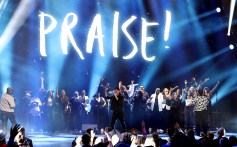
The growing prominence of faith-based/Christian hip-hop and R&B, aka Rhythm + Praise, is resonating far beyond the traditional radio airwaves. It’s making notable shifts into film, TV, sports and even the gaming world. Rhythm + Praise (R+P) artists possess the ability to marry powerful messaging with innovative sounds and, in the process, are finding their music being featured in an ever-expanding range of media — often in ways directly impacting the cultural landscape.
Sitting between gospel and contemporary Christian music (CCM), Rhythm + Praise bridges gospel with contemporary styles, offering a more modern, relatable sound for younger audiences. R+P offers an alternative to mainstream secular messages: non-traditional in format, melody, lyrics and production. Not limited to religious beliefs, these artists foster themes of hope, redemption, mental health awareness and positive living.
Related
According to Luminate, in the first 30 weeks of 2025, on-demand audio streams of songs in the core Christian/gospel genre — which were also categorized in the sub-genre of R&B/hip-hop —totaled 1.37 billion, up from 878 million during the same 30-week period in 2024. These figures are inclusive of user-generated content (UGC) streams.
Four-time Grammy winner Lecrae and Dove Award-winning artist NF have been paving the way in faith-based hip-hop for years. Both artists have individually accumulated billions of streams and video content views. Lecrae has 2.03 billion and NF has 13.28 billion on-demand official audio and video streams for all of their songs, over the course of their careers, in the U.S. through Sept. 25, according to Luminate. (Note: These figures do not include UGC streams.) Given the powerful reach of their music, both NF and Lecrae have successfully secured licensing and sync opportunities in the sports gaming arena, marketing their music via the NBA, ESPN and Madden NFL video game series.
Another example is emerging independent hip-hop artist Miles Minnick. He recently released his first album, Via Dolorosa, through his GLO label joint venture with EMPIRE. Minnick is also reaching beyond the church-going audience via his first sports gaming sync placement, “Lowkey Wildin,” with NBA 2K25. His growing base of more than 500,000 fans — aka GLO Nation — prompted the launches of his GLO Festival in the San Francisco Bay Area and his own clothing line, Christlike. Minnick also made history in March when he became the first Christian hip-hop artist to headline a stage at Rolling Loud Los Angeles.
Related
Noting that Gen-Z and millennials are demanding more uplifting content, Minnick says a major cultural shift, which he tags the “New Mainstream,” is happening. “New Mainstream isn’t just a phrase — it’s my lifestyle,” he explains. “It means putting faith at the center of culture and proving you can be bold about your beliefs while making a real impact. Whether it’s getting the stamp [of approval] collaborating with rap icon E-40, launching a label, performing at Rolling Loud or selling out tours, I’m showing the world that you don’t have to change who you are to change the world.”
Mainstream artists are also magnifying messages of faith in their music. From Drake (“God’s Plan”) and DJ Khaled (“God Did”) to Mustard (“Pray for Me”) and GloRilla, who won her first BET Award for best gospel/inspirational song (“Rain Down on Me” featuring Kirk Franklin, Maverick City Music, Kierra Sheard and Chandler Moore), these artists are helping to broaden the crossover space for faith-based music.
The same thing is happening on the label front. Co-founded with Ben Washer in 2004, Lecrae’s Reach Records is now seeing other music companies join the movement, including EMPIRE and Universal Music Group. Earlier this year, the latter relaunched legacy label Tamla with a faith-based hip-hop/R+P artist roster that includes Childlike Cici and Dante Pride. One of Tamla’s artists, Dove Award nominee Lee Vasi, performed at this year’s BET X 106 & Park Experience in Los Angeles. And gamma., home to Mariah Carey and Usher, established a joint venture with Grammy-winning producer Rodney Jerkins’ R+P imprint Alienz Alive with signees Alex Jean, Jon Keith, Aha Gazelle and nobigdyl.
Related
While streaming numbers are strong, streaming radio still remains an important promotional tool in expanding audience reach. And that’s thanks to shows like the Trendsetter Sense-hosted Chosen Journey on SiriusXM’s Hip-Hop Nation channel and Da Fixx on SiriusXM’s Christian hip-hop/R+P channel, Holy Culture Radio. Holy Culture owner James Rosseau Sr. partnered with SiriusXM in 2022 to cater to a burgeoning audience of more than 5 million listeners, per Nielsen Compass.
Film and TV are also homing in on the faith-based market. Producers Tyler Perry and DeVon Franklin, heavy hitters in both of those arenas, joined forces with Netflix for Ruth + Boaz. The just-released film features the original song “Faithful,” penned specifically for the project by Grammy-winning artist/producer Babyface. It also appears on the film’s five-song companion EP.
As a music supervisor starting out in faith-based television programming, I produced season 2 of the award-winning soundtrack album for the hit series Greenleaf. I’ve seen firsthand how the power of positioning faith-based hip-hop/R+P artists on a major network show (scripted or unscripted) can help break their music and expand their brand.
Related
In response to that and other above-referenced factors, I established the traveling roundtable series Faith + Sync in L.A. this year. I wanted to provide a unique platform to discuss how faith is influencing culture, creative direction, content placement and the future of music in film, TV and digital media. And also to offer the opportunity to connect with influential voices in those mediums who are shaping the conversation about how faith-based/R+P artists are influencing music, sync licensing and culture.
Through changing demographics, streaming power and strong independent success stories, faith-based hip-hop/Rhythm + Praise is debunking assumptions by mainstream media about its audience size, relevance and impact. As this movement gains stronger momentum, I’m committed to joining all those building the bridge to keep pushing this music forward like EMPIRE president Tina Davis. “Inspirational hip-hop/R&B isn’t new,” says Davis. “But there’s a new wave of anointed young talent across the globe raising their hands in their God’s name. And it’s needed!”
Angela M. Jollivette, founder of Moonbaby Media Inc. and Faith + Sync, is an award-winning music supervisor/producer whose credits include the major network series Greenleaf, Sunday’s Best, Black Ink Crew: New York/Chicago/L.A. and Norman Lear’s final TV production, Clean Slate.
Trending on Billboard
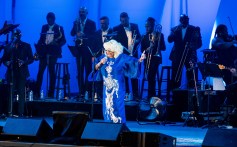
Grammy-winning legend Patti LaBelle has brought her estimable music catalog to Primary Wave Music. The new partnership deal includes the singer-songwriter’s artist royalties across a catalog that encompasses 18 studio albums, three live albums, 14 compilation albums and 47 singles. To date, according to Primary Wave’s press announcement, LaBelle has sold more than 50 million records worldwide.
“We are so honored to be in business with a legend such as Ms. Labelle,” said Primary Wave partner Steven Greener in a statement. “She’s a true icon and trailblazer. We are looking forward to doing great things together.”
Related
Among LaBelle’s memorable hits are “Lady Marmalade,” “If Only You Knew,” “New Attitude” and “On My Own.” Recorded in 1974 by the group LaBelle, “Lady Marmalade” topped the Billboard Hot 100. The song then reclaimed that peak in 2001 for five weeks when it was covered by Christina Aguilera, Mya, Pink and Lil’ Kim — whose version appeared on the film soundtrack for Moulin Rouge. “Lady Marmalade” was later chosen for preservation in the National Recording Registry by the Library of Congress in 2021.
“On My Own,” another of LaBelle’s aforementioned career highlights, is the singer’s duet with Michael McDonald. Released in 1986, the song reached No. 1 on the Hot 100, where it reigned for three weeks. Written by Burt Bacharach, it also earned a Grammy nomination for best performance by a duo or group. In addition to her No. 1s on the Hot 100, LaBelle counts 42 singles that have appeared on Billboard’s Hot R&B/Hip-Hop Songs chart, and she has charted 20 albums on the Billboard 200.
In addition to her two Grammys and 13 nominations, LaBelle has received several other music industry accolades. Those include an American Music Award, four NAACP Image Awards and a star on the Hollywood Walk of Fame. Also an Emmy nominee, LaBelle has appeared in several films and TV programs (A Soldier’s Story, A Different World, The Masked Singer), written six books (most recently, the 20th anniversary edition of her best-selling cookbook, LaBelle Cuisine) and helms the successful food and lifestyle brand Patti’s Good Life.
Publishing company Primary Wave is home to a diverse roster of iconic singer-songwriters. Among its roster: Bob Marley, Prince, Stevie Nicks, The Doors, Whitney Houston and Frankie Valli & the Four Seasons.
Trending on Billboard
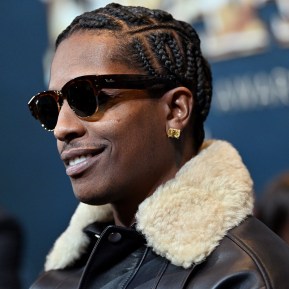
A$AP Rocky spoke about working with Denzel Washington and Spike Lee on Highest 2 Lowest and said there’s a reason why he doesn’t drop music that often.
In a new interview with Perfect Magazine, Rocky explained how working with Washington and Lee on Highest 2 Lowest was a “dream come true.”
Explore
See latest videos, charts and news
“Their dynamic alone is just historical,” Rocky said. “So I’m honored to be an honorary member of their legacy.”
Rocky also explained how he helped Lee develop his Yung Felon character, adding that at first Rocky felt, “There were a few things the character needed to become more real.”
“[Spike Lee] let me develop my character full-throttle,” Rocky said. “They put me in the right environment that was familiar with a little nostalgia, and it allowed me to take the character to different places, and borrow stories from the people I was around growing up, and their circumstances. I appreciate that he [Lee] was receptive to all my changes for my personal character.”
Rocky also spoke briefly about Don’t Be Dumb and his music career as a whole, saying he’s not so eager to drop new music because he wants to make sure it all feels right for his legacy.
“It’s about who did it the best,” Rocky said. “Everything I do is based off building legacy. That’s why I’m not so eager to just drop, drop, drop. I don’t do things to just try and stay relevant, or keep my name in the conversation. I try to do natural things, creative, ambitious things that really satisfy me.”
The comments come as Rocky continues to tease his fourth studio album Don’t Be Dumb. In an interview with GQ back in February, he said it’s been so long, fans are likely tired of hearing about the album.
“I’m in the mixing and mastering realm of it,” he told the outlet. “But I think quite frankly, people are tired of hearing about updates about the album. They’re just ready to get this sh–, you know what I’m saying? I don’t think anybody wants to hear where I’m at with it, how far is it along and all that. They just want to hear some sh– just to see where I’m at, and I promise I got some new sh– in store. I’m challenging myself. It’s like anything, I approach it with a different tactic, degree, or finesse.”
Trending on Billboard
Fat Joe says he got depressed once he reached age 40 because he worried his hit-making days might be over.
On the latest episode of Joe and Jada on Tuesday (Oct. 28), Joe opened up about aging in a career that values partying and young people, and said it was hard for him to reimagine his career.
“I’ve been rapping, I’ve been in the game since I’m 19,” Joe explained. “So, when I’m about to turn 40, all I know is standing on couches and popping bottles. But that 40 hit you like a different, like… I was depressed.”
Explore
See latest videos, charts and news
He added that people had been telling him they’d “never [seen] a rapper hit one out the park after 40,” meaning it was hard to make a hit record once you hit middle age.
“So my man Dre [from] Cool & Dre came over on my birthday. I was straight depressed and he was like, ‘Yo, Joe, you know Tina Turner ain’t have her first hit till she was 47.’ So he start breaking all this down. Made me feel a lot better,” Joe said. “‘Cause I was scared of what the future was for what we’re doing…So what we’re doing is we’re selling this brand. We’re selling this and this and that. And then, for a guy like me, it felt like, Oh, they know I’m old now.”
Jada then joined in the conversation and said he’d actually planned on retiring from rap at age 30. “I remember saying, I don’t want to rap at 30,” Jada recalled. “When 30 came, that was out of the f—king question. Then when forty came, I’m like, ‘Yo, got to live a little.’ I felt like I had a lot of more work to do.”
A lot of rappers — including Lil Wayne and Raekwon — have had plenty of success in their 40s and beyond. However, André 3000 admitted in 2023 that his age was a big factor when it came to him hanging up the microphone.
“I’m 48 years old. And not to say that age is a thing that dictates what you rap about, but in a way it does,” André told GQ. “And things that happen in my life, like, what are you talking about? ‘I got to go get a colonoscopy.’ What are you rapping about? ‘My eyesight is going bad.’ You can find cool ways to say it, but….”
Check out the full episode of Joe and Jada below.
Trending on Billboard
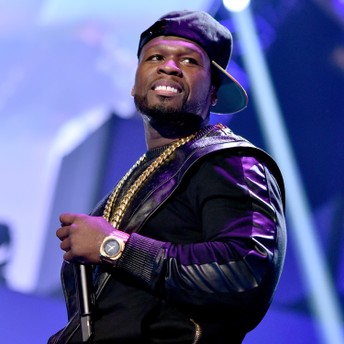
The 50 Cent-produced BMF series has been canceled at Starz after four seasons, the last of which wrapped up in August.
The series was based on the rise and fall of the Black Mafia Family empire, which was started in Southwest Detroit by brothers Demetrius “Big Meech” Flenory and Terry Flenory in 1985.
The drug trafficking and money laundering organization built a network that spanned the United States, with hubs in Atlanta and Los Angeles, lasting into the 2000s when a plethora of federal raids, arrests and indictments caused the empire to crumble.
Explore
See latest videos, charts and news
50 Cent produced the show through his G-Unit Film and Television division alongside Lionsgate TV. Big Meech’s son, Demetrius Flenory Jr. and Da’Vinchi starred as the Flenory brothers in the series, which also boasted a cast that included Russell Hornsby, Kash Doll, Michole Briana White, Eric Kofi-Abrefa, Myles Truitt, Steve Harris and Lala Anthony.
As pointed out by The Hollywood Reporter, Starz CEO Jeffrey Hirsch revealed his disappointment in season four during a quarterly earnings call in August. “[Season four] resulted in modest sequential declines in OTT subscribers and revenue,” he said.
The cancellation echoes Hirsch’s statements at a conference in March, where he revealed the company’s pursuit of launching new series rather than continuing older shows, since they become costly after a few seasons.
“When seasons go from one to two to three to four [seasons], three to four is where the cost really pops because most of the actors get bigger raises, and you have to really manage that,” he said, per Deadline. “So, you have to have in your portfolio of development shows that can actually replace shows as they get into later seasons.”
As far as what’s left of the 50-Starz empire, Power spinoffs Raising Kanan and Force are returning for a final season. There’s also a Power: Origins prequel series in production.
Billboard has reached out to Starz and 50 Cent for comment.

Kid Rock is facing backlash for another of his appearances on Fox News. During his Oct. 24 appearance on Jesse Watters Primetime, the musician used the R-word when telling the host that he was going to be for Halloween, and now, the Special Olympics is speaking out about his use of the slur.
“The R-Word deeply demeans and harms people with intellectual disabilities,” begins the open letter posted to the Special Olympics website that was penned by Loretta Claiborne, the organization’s chief inspiration officer. “I’m writing to you personally with an urgent request: Please acknowledge the hurt caused and use this moment to stand with us in rejecting that word and the prejudice it represents … Words like ‘retarded’ and ‘retard’ have a long, painful history of being used to belittle and dehumanize. When anyone, especially someone in the public eye uses them, it reopens wounds that so many of us have worked so hard to heal.”
A Pennsylvania native, Claiborne is a speaker and multi-sport athlete who earned the 1996 Arthur Ashe ASPY Courage Award, which Denzel Washington personally presented to her. The seven-time gold medalist was also the first Special Olympics athlete elected to the Special Olympics International Board of Directors.
“You have the chance to turn this incident into a statement of strength, to acknowledge the harm, to stand with people with intellectual disabilities, and to help lead the conversation toward greater understanding and respect,” the letter continues. “I would be honored to speak with you and share more about the movement for inclusion and respect that has changed so many lives, including my own. Together, we can use this moment to build a world where every person is valued and respected.”
Although the 2010s saw a decline in the use and tolerance of the R-word, the slur has been creeping back into the mainstream lexicon this decade — but people are pushing back on its resurgence.
Billboard has reached out to Kid Rock for comment.
The musician’s R-word controversy isn’t the first time Kid Rock’s language has drawn ire. In a 2024 Rolling Stone profile, the country-rock singer repeatedlyfired off the N-word and brandished a gun. Three years prior, he spouted a homophobic slur while onstage at a Tennessee bar. “You f—king [slur] with your iPhones out!” he screamed. He defended his words on X at the time, writing in third-person, “If Kid Rock using the word f—-t offends you, good chance you are one. Either way, I know he has a lot of love for his gay friends and I will have a talk with him.”
Trending on Billboard
When T-Pain and Clinton Sparks call in to Billboard, Pain is on his tour bus, and Clinton is in his car on his way to meet Howie Mandel. Yes, Howie Mandel — the former Deal or No Deal host and current America’s Got Talent judge. According to Sparks, Mandel is secretly an avid gamer and was interested in talking about the Global Gaming League — T-Pain, Ne-Yo, Sparks’ and Jeff Hoffmann’s new e-sports community.
Explore
See latest videos, charts and news
The idea was simple: Competitive e-sports teams have long been reserved for elite, top-tier gamers, but what if there was a league comprised of just average people who love video games — and a random celebrity?
“I mean, everybody games, from the Jonas Brothers to Terry Crews to Snoop Dogg,” Sparks says. “None of those people are gonna stop what they’re doing and be hardcore e-sports players. They’re not quitting their day jobs to compete for years, but they all game! There was nothing built for them to be a part of.”
On Wednesday (Oct. 29), Mandel was announced as another celebrity team owner, along with Million Dollaz Worth of Game hosts Gillie and Wallo267. Mandel’s “Howie Do It” team will face off against “Million Dollaz Gaming” in Las Vegas on Nov. 18. However, neither of these teams are comprised entirely of celebrities; in fact, most of the players will be just average gamers from around the world.
“There could be a team where it’s T-Pain, a 12-year-old from Madagascar, and a 41-year-old from Cleveland,” Pain explains. “Everybody games, it’s for everybody, and I’m trying to make it where everybody can get to this.”
This communal approach to gaming also doesn’t mean corners need to be cut regarding fanfare. The Global Gaming League hosted its first event in Las Vegas earlier this month, and it was as high-budget a celebration as any other gaming event. As T-Pain’s Nappy Boy Grizzlies faced off against Ne-Yo’s Gentlemen’s Gaming Team with back-to-back rounds of Call of Duty, Tetris and Tony Hawk’s Pro Skater 3 + 4, Rich the Kid popped out for a halftime show, and Flava Flav, who is also a team owner, even stopped by to hype up the crowd.
Even without all the celebrity glamour, the event itself was incredibly high stakes. Ne-Yo and T-Pain were forced to face off in the event’s closing moments for a tiebreaker. Unfortunately for T-Pain, the game of choice was Tekken, which Ne-Yo is apparently unbelievable at playing. Pain never stood a chance.
“Being part of the Global Gaming League as a team owner has been incredible,” Ne-Yo says in a statement. Billboard could not reach him for an interview due to his hectic tour schedule. “I’ve always had a passion for gaming, but this league is really taking the competition to another level while bridging the intersection between gaming and entertainment in a creative way. The championship match is going to be a special one, but I really believe this league has the potential to shift the entertainment landscape and open new doors for gamers worldwide.”
Below, T-Pain and Clinton Sparks talk about how the Global Gaming League came together, what it means to bring celebrity culture and gaming under one roof — and why Pain lost so badly to Ne-Yo.
Tell me about how the idea of Global Gaming League came together, and why did you guys feel so enthusiastic about committing to this program in such a big way?
T-Pain: [Clinton], you can give him the interview version.
Clinton Sparks: [Laughs.] God d–n it, Pain. Alright, here comes the AI version. We both are in the entertainment space, we both care about people. We both enjoy bringing opportunities and people together, so nothing really does that quite like gaming does. As you know, Pain’s been a gamer for a long, long time. I had experience building gaming companies from FaZe Clan to other organizations, and when I was building those I recognized that as big as gaming is, it’s still disconnected form mainstream pop culture and definitely the streets.
How is it so big and we’re all connected to it one way or another, and there isn’t anything set up that we can have an authentic footprint within it in a more communal way, that’s not just in our own streaming set up? How do we create something where [everyone] can participate and be a part of it just like any other sports, where you start in football and go to high school and go to college and hopefully make it to the NFL? There isn’t anything like that [for gaming].
So what’s the non-interview version, Pain?
TP: The non-interview version is: We saw e-sports and we were like, “Bro, why the f—k aren’t we doing that with the homies?” We saw a part that just was missing. E-sports seemed so unattainable. You have to be a pro, you have to be amazing at this s—t, but what about the guys that are just there? That just play all the time because they want to?
Once I got into this part of my career where I became independent, like — no shade to where you work at — but I was like, ‘Oh, I don’t have to chase Billboard No. 1s anymore.’ I can actually just f—kin’ do this s—t because I like doin’ it and still be in the ranks with the people that are hitting No. 1 on Billboard. I can still be around them and do s—t with them. So I was taking that approach back to gaming, something we all love and when we think about music and are really good at it, We do this s—t for free. But how cool would it be to get paid for it?
What are the kind of conversations you want to see the music industry having?
TP: When you bring this conversation of e-sports to celebrities, the first thing they say is: “How do I make money off of this?” When we bring them the Global Gaming League they say, “Oh, s—t, sounds fun, we outside!” It’s such a casual thing that we don’t even care if we make money. We’re going to, but it’s such a turn-key thing. We want the conversation to turn away from, “How do I make money from video games?” into “How do I make this bigger than what it is right now and still get the bonus of making money?”
Like I lived with an e-sports team for two days for a journalistic piece, and I got out of there immediately. It was supposed to be five days and I was like, “All right, that’s enough of that.” They gotta wake up at 7:00 a.m., work out, work on their hand-eye coordination, it’s crazy bro. I was like, “Yeah, I only brought leather pants with me, I’m not doin’ this s—t.”
CS: You’re here for the fun. We know the business of it is gonna happen. Dope doesn’t chase money, money chases dope. We’re building dope and bringing other dope friends along with us so that not only is it giving them an outlet to do something they’re passionate about and excited about. For the universal community that have been waiting for an opportunity to compete, to make money, to build business, that’s what we’re creating with our entire league system.
How did you guys make that model sound appealing to celebrities though?
TP: It seems unbelievable, you know what I mean? Because when people come to celebrities like that they’re like, “Alright, how many f—kin’ days do I have to show up in this. How much money do you want me to invest?” So when you do that initial pitch you have to let these people know they don’t have to spend any money, and they get to own part of the company. We’re not looking for any money, we’re looking for you to come have fun. That’s it, you know what I’m sayin’? It’s honestly unbelievable because the gaming industry has gone so deep into, “How do we make money off of this?”
CS: From a celebrity standpoint, I totally agree. From an investors stand point, it’s educating them and making them understand it’s the biggest entertainment platform in the entire world that makes more money than music, movies and television combined.
TP: That’s even harder! Cause when you get the celebrities and say we don’t want your money, then go to investors and say we got a team with T-Pain, Snoop Dogg and Kevin Hart, the first thing they say is, “Why the f—k didn’t you take their money?” Bringing those two parts together was the worst.
T-Pain, you’re no stranger to streaming or gaming at this point. How has utilizing these new age entertainment platforms changed your life and your career?
TP: I mean, I’ve been on Twitch since 2014, and I’ve been streaming since then. From 2014 to 2019 I was streaming to like 20 to 200 people. Nobody knew I was doing it, nobody understood. Then when the pandemic hit and I got to make my production value real dope, I started getting interviews about being on Twitch. I’m like, “Man, it’s six years I’ve been sitting here doing nothing…”
But I was already in it, I was already taking my PlayStation and Xbox everywhere. I was already playing games in my hotel rooms, and I would talk to myself. I would be screaming at my screen, raging out in my hotel room, security is getting called. Then when I went and did an interview with PlayStation, while we were doing the interview we were playing a game and also streaming on Twitch. I was like, “Well, what is that now? How can they see what I’m sayin’?”
But the thing that caught me is that [on Twitch], they’re like minded people. A community of people who actually like the s—t you’re doing. It kinda gave me an out, it gave me more expression. It gave me a way to let out this side that my managers at the time thought was the corniest f—kin’ thing in the world. If I pulled out a PlayStation or a handheld gaming thing in the studio, I would literally get reprimanded like, “You’re supposed to be making music! Put that s—t down, you’re supposed to be making us money. These video games are gonna kill your f—kin’ career.” Once I got rid of my managers all of my gaming s—t has been this whole other side of me.
What were some of the most influential games from your childhood?
TP: 007 GoldenEye. That was the first one. When we got that game I never got to play it cause my brother, it was his game. He wasn’t about to let his little brother play the new s—t. But then, he had to get a job. So every time he went to work I finally got to load that thing up. Ah man, that s—t… [and] SEGA’s Lion King, that was the f—kin’ Elden Ring of the SEGA days. That was the toughest game in the world.
CS: Mine ranges a lot, ’cause I’ve been gaming since the ’80s. I remember getting my first Atari and just being hooked on Pac-Man and Donkey Kong. Frogger, Pitfall! Then moving into the Nintendo days we see Super Mario, Street Fighter, and honestly I still play Tetris every day. I could be on the toilet, and I’m playin’ Tetris.
TP: That’s why Clinton’s so big on the business side, ’cause all the games he play actually help your brain.
As 2025 comes to a close, what is your game of the year pick so far, and what game were you surprisingly disappointed by this year?
TP: Black Myth: Wukong was bats—t. I think that changed my blood pressure medication, in sort of an Elden Ring way. I wasn’t big into Souls-type games, so it wasn’t really on my radar, but man the sound design, presentation, everything that went into it I was hooked.
As for disappointed? I think I wanna get further into Borderlands 4 before I start talking s—t. But Borderlands 4 is teetering that f—king line right now with me.
CS: I’ve been so busy building this thing, but I will say Tony Hawk’s Pro Skater 3 + 4, Mario Kart World—
TP: Yeah, Clinton’s more of a cozy guy.
After watching you and Ne-Yo face off on Episode 1, I gotta ask — what happened man? Were you surprised at all by Ne-Yo’s gameplay?
TP: Honestly, not at all. I’ve watched Ne-Yo stream and I was hoping we wouldn’t have to play each other. When it came to the tie and we actually did, I was like, “Oh, we lost guys, it’s over.” Before we even picked up the sticks [I knew]. Ne-Yo is cracked at Tekken, bro. I was really hoping that part of the show wasn’t gonna happen.
Well, either way, episode 1 was a wild spectacle. You guys pulled out all the stops. I’m excited to see what you guys got in store for episode 2.
CS: Look, if you invite someone to a party, the first thing they’re gonna ask is: “Who’s gonna be there?” It’s not just about the party! So we wanted to converge music with fashion, sports, celebrity, competition, culture. We may have a rocker, rapper, influencer, do a halftime show, because when you bring in an audience to a “gaming event,” you’ve already limited that and made a lot of people say, “I ain’t goin’ to that s—t.” But maybe they’re coming cause some girl is a fan of Bryce Hall, or they’re a fan of the halftime performer, or a fan of someone playing on the teams. Gaming is here to bring communities together.
So Pain, will fans see you bust a move at Ne-Yo’s next show now that you lost the bet?
TP: Yep, I gotta do it, but joke’s on him I woulda done it without the bet. I was ready to go, but I’ve been on tour with Ne-Yo four times already and I’ve kept telling him, “I’m comin’ up there one day bro!”
CS: We gotta set that s—t up man!
TP: It’s gotta happen.
Trending on Billboard
Once upon a time, NBA Hall of Famer Allen Iverson attempted to try his hand as a rapper in the early 2000s, but he eventually scrapped plans for his debut album amid backlash, and couldn’t help but feel embarrassed when looking back on his brief time rapping.
Explore
See latest videos, charts and news
AI joined Joe & Jada earlier this week, where he recalled feeling humiliated when meeting the late NBA commissioner David Stern, who read explicit lyrics aloud from Iverson’s “40 Bars” single.
“When I did that bulls—t-a— rap album,” he began. “I was so embarrassed when I hear that s—t now. But we don’t spend no time on that. The most embarrassing s—t was when I did the album, I had to come here to meet with [David Stern].”
For context, Iverson rapped under the alias Jewelz, and sparked controversy with his “40 Bars” single in 2000, which some believed contained sexist and homophobic lyrics.
The Philadelphia 76ers icon met with Stern to discuss his budding rap career and the backlash surrounding his upcoming Misunderstood album, which was originally titled Non-Fiction and was scrapped by late 2001.
“I’m sitting there looking like, ‘Yo, f—k is he doing?’ The man start reading the lyrics,” AI recounted. “Man, I wanted to crawl up under the table. I was so embarrassed, man. The curse words, everything. That s—t was so embarrassing.”
As if the weight of the 76ers franchise and city of Philly wasn’t enough, Iverson was often butting heads with Stern. The NBA even implemented an official dress code in 2005, which was seemingly instituted to put an end to Iverson’s streetwear style.
While his rap career is in the rear-view, Iverson has done plenty of reminiscing in October. The NBA legend released his Misunderstood memoir and Allen Iv3rson documentary on Amazon Prime Video earlier this month.
Watch a clip from the interview below:
Trending on Billboard
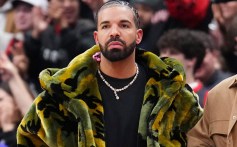
It ain’t over yet: Drake has formally launched his appeal of a court ruling that dismissed his defamation lawsuit against Universal Music Group (UMG) over Kendrick Lamar’s diss track “Not Like Us.”
The move on Wednesday is the first step aimed at reversing that ruling, in which a federal judge ruled earlier this month that Drake could not sue over Kendrick’s lyrics that called him a “certified pedophile.” The star’s lawyers, who say millions of fans took that claim literally, had already vowed to appeal the decision.
Related
It could take well over a year for the appeals court to rule on Drake’s case, prolonging a messy legal drama that has captivated the music industry and, at times, drawn ridicule in the hip-hop world. If the appeals court sides with Drake, it could mean years more litigation after that.
In his new court filing, Drake formally stated his intention to appeal, but did not include any detailed arguments on how he will do so. Such arguments are made in later briefs at the appeals court, where lawyers for both sides will eventually make their case.
A rep for Drake told Billboard on Wednesday: “This confirms our intent to appeal, and we look forward to the Court of Appeals reviewing that filing in the coming weeks.” A spokesman for UMG did not immediately return a request for comment.
Lamar released “Not Like Us” in May 2024 amid a war of words with Drake that saw the two UMG stars release a series of bruising diss tracks. The song, a knockout punch that blasted Drake as a “certified pedophile” over an infectious beat, became a chart-topping hit in its own right and won five Grammy Awards, including record and song of the year.
In January, Drake took UMG to court over the song, claiming his own label had defamed him by boosting its popularity. The lawsuit, which didn’t name Lamar himself as a defendant, alleged that UMG “waged a campaign” against its own artist to spread a “malicious narrative” about pedophilia that it knew to be false.
Related
Those claims stunned the music industry. Few expected a rapper to respond to a diss track with a lawsuit — a move that drew hackles in the hip-hop world and condemnation from legal scholars. Fewer still expected him to file it against UMG, his longtime record label and the biggest music company in the world.
Just 10 months after Drake filed it, Judge Jeannette Vargas dismissed the case. She said Kendrick’s insulting lyrics were the kind of “hyperbole” that cannot be defamatory because listeners would not think they were statements of fact. She said fans didn’t expect to hear “accurate factual reporting” from a a diss track “replete with profanity, trash-talking, threats of violence, and figurative and hyperbolic language.”
“The artists’ seven-track rap battle was a ‘war of words’ that was the subject of substantial media scrutiny and online discourse,” the judge wrote. “Although the accusation that plaintiff is a pedophile is certainly a serious one, the broader context of a heated rap battle, with incendiary language and offensive accusations hurled by both participants, would not incline the reasonable listener to believe that ‘Not Like Us’ imparts verifiable facts about plaintiff.”
Trending on Billboard
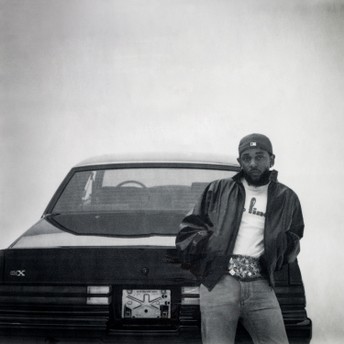
With Kendrick Lamar and SZA’s 13-week Billboard Hot 100 No. 1 “Luther” falling off the Hot 100 dated Oct. 25, 2025, there were officially no rap songs in the chart’s top 40 last week.
Explore
See latest videos, charts and news
The highest-ranking rap song — defined as a song deemed eligible for charting on Billboard’s Hot Rap Songs listing — on the Oct. 25 Hot 100 was YoungBoy Never Broke Again’s “Shot Callin,” at No. 44. Cardi B’s “Safe” (featuring Kehlani) and BigXthaPlug’s “Hell at Night” (featuring Ella Langley) also ranked in the 40s, at Nos. 48 and 49, respectively.
The last time before that when there were zero rap songs in the top 40 of the Hot 100? You have to go back all the way back to Feb. 2, 1990, when the top-ranking rap song was Biz Markie’s eventual top 10 hit “Just a Friend,” which had just climbed to No. 41 on the chart. The next week, “Just a Friend” jumped to 29, starting a Hot 100 streak of rap songs in the top 40 that would last for the next 35 years, eight months and three weeks.
Recent rule changes to Billboard’s Hot 100 methodology did play a part in the streak coming to an end. For the chart dated Oct. 25, descending songs were deemed recurrent and removed from the chart if they had exceeded certain durations on the chart while also falling below certain updated chart thresholds — for instance, if they had fallen below No. 25 after spending over 26 weeks on the chart. That particular change resulted in the departure of “Luther,” which had fallen to No. 38 on the previous week’s Hot 100 in its 46th week on the listing.
However, with “Luther” and seven other songs in the Hot 100’s top 40 going recurrent on the Oct. 25 chart following the rule change, there was also extra opportunity for songs below them on the chart to rebound into the top 40, or to reach it for the first time. No rap songs were close enough to the threshold to be able to make that jump. (Also in the way: all 12 songs from Taylor Swift’s new album, The Life of a Showgirl, have been lodged in the top 40 the past three weeks, further limiting room for rap hits in the region.)
The lack of rap songs in the Hot 100’s top 40 is the latest sign of a recent dip in rap’s commercial dominance. Hip-hop’s overall market share reached a peak in 2020, when it neared 30%. That had slipped to just over 25% in 2023, and has been at 24% so far in 2025, through the week of Oct. 23. In the Hot 100 chart for the equivalent chart week five years ago (dated Oct. 24, 2020), a whopping 16 of the top 40 were rap songs, while in the equivalent chart two years ago (Oct. 28, 2023) there were eight rap songs in the top 40.
It is worth noting that the rap world is currently in a bit of an in-between moment with some of its biggest names. Drake, the biggest chart mainstay of the past 15 years (and the artist with the most Hot 100 hits of all time), has not yet released his much-anticipated Iceman album, while his 2024 foe Lamar is finally somewhat dormant following an 18-month period of cultural and commercial domination. However, the last few months have not been totally without big rap releases: both Cardi B and BigXthaPlug (two of the rappers currently closest to the top 40) have released new albums since August, and even without a new album, Drake has released a steady stream of new singles since announcing the album in July.
“Luther” is also the most recent rap song to appear in the Hot 100’s top 10, last doing so on the chart dated Aug. 2, when it ranked at No. 9, before falling to No. 12 the next week. In the two months and three weeks following that chart, the closest another rap song got to the Hot 100’s top 10 was BigXthaPlug’s “All the Way” (featuring Bailey Zimmerman), which ranked at No. 22 for the Hot 100 dated Sept. 6, after peaking at No. 4 in April.
On this week’s Hot 100 (dated Nov. 1, 2025), the rap song-less streak is extended to a second week, as once again no rap songs rate in the chart’s top 40. However, “Shot Callin” does get one spot closer to ending the drought by breaking into the region, climbing No. 44-43 this week.
Additional reporting by Dan Rys.