State Champ Radio
 genre country
Page: 13

Trending on Billboard Sometimes singers on The Voice move the celebrity judges with the power or emotion in their voice. But on Monday night (Oct. 27), Team Reba’s Aubrey Nicole got right to the heart of the matter for her crew’s leader by singing a tune whose lyrics hit home in the most personal way. […]
Trending on Billboard After Pharrell Williams and the Jonas Brothers performed at the first two games of the 2025 World Series — the first time in 32 years Canada hosted the annual baseball championship — the MLB has unveiled its next slate of performers for games three and four in the matchup between the Toronto […]
Trending on Billboard
How much is enough?
Most people who accrue a fair amount of money and/or power ask that question at some juncture. Those who don’t ask it – well, they probably missed the point.
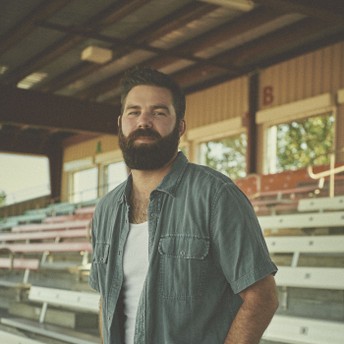
Count Thomas Rhett among those trying to figure it out. It’s the whole premise behind his new single, “Ain’t a Bad Life,” featuring Jordan Davis. He created it during a weekend on tour in the Dakotas in 2022 with four fellow songwriters who were pondering the subject.
Explore
See latest videos, charts and news
“We’d just been in this long conversation about contentment and how hard it is for a man, or a woman, to find contentment in life,” he recalls.
Funny thing about that. Rhett and his wife, Lauren, struggled mightily, even after he started having hits. He was actually losing money as an opening act during the early part of his career. He booked overlapping club shows in the middle of those dates to at least break even, but the added work tested his stamina and his patience.
“Those days when my wife and I had zero – like, those were arguably more fun,” he says. “I mean, when you’re scrapping for something, when you’re really in the trenches, and you’re ride or die, those are the times that really kind of built our marriage and [the] values that we still stand on today.”
All of that fed the scenario in the Dakotas. Several writers flew to a midwestern airport on Sept. 28, 2022, and met Rhett’s bus in transit for a show the next night in Grand Forks, N.D. They chatted a bit, stopped for dinner, then chatted some more. Finally, after midnight, they started the first of 12 or 13 songs they penned that weekend. Rhett introduced a chord progression with a James Taylor “Fire And Rain” vibe, and he sang a line that he’d had for a bit: “Didn’t win the Lotto, but the Dawgs won.”
Someone else – likely Ashley Gorley (“I Had Some Help,” “Dirt On My Boots”) or John Byron (“Love Somebody,” “What I Want”) – chimed in “Didn’t bag a big ‘un, but I saw one.” And another line came up: “Ain’t a bad life for a good old boy.” That seemed like a hook, and they dug in trying to fit it all together, with Mark Trussell (“your place,” “Good Time”) taking over the guitar parts and feeding all their ideas into a track on his laptop as they built the song.
Rhett and Gorley had all sorts of melodies flying, and they picked out the ones that seemed to fit best together, even if they didn’t know exactly where they would use them.
“It’s usually a fast-paced thing, especially with him and TR,” notes Blake Pendergrass (“I Got Better,” “Heart Of Stone”). “That whole trip, I remember after it was over thinking about how cool it is to see them work together, where they’re just bouncing melodies and feels off of each other. It’s like this frantic 10- to 15-minute period at the beginning of any song.”
The first verse captured an average Joe with a long to-do list and a significantly used truck who seems mostly contented. Then they slipped into a series of choppy phrases – “No I ain’t… got it all… but I sure… got it made” – that changed the texture. “Ashley or somebody was flowing that melody, and after a little while, we’re all kind of wondering, ‘What is this section?’” Trussell recalls. “Somebody said,’ I think it’s the chorus.’ It happened pretty fast after that.”
Those phrases were unconventional for a chorus – they sneak up to the downbeat, instead of anthemically beginning at the start of a measure – and after a few lines, they changed things once more mid-chorus, mixing elongated “oo-oo-oo-oo” earworms with self-affirming lyrics on the way to the “Ain’t a Bad Life” payoff. “You got to get some ear candy in there,” Rhett says. “Especially on a song that means this much. That and the opening guitar lick arguably are the hookiest parts of the song.”
They stopped at some point – likely after the first verse and chorus – and moved on to other songs, but they came back and finished “Ain’t a Bad Life” after the weekend’s final show, Oct. 1 in Sioux Falls, S.D. After focusing on money and possessions in the opening verse, the second one explored the balance of personal enjoyment and spirituality, and the final verse – placed where a bridge would typically reside – celebrated family.
“When you’re doing a life song, where it’s not just about one thing, you’re aiming to try and make it more substantial as time goes on lyrically,” Pendergrass says. “Whether we even discussed that or not, I’m not sure, but generally speaking, I think that’s a gut kind of a situation where everybody’s on the same page.”
Trussell filled out a demo after the trip, but about three weeks later, they all decided the original intro sounded too much like “Fire and Rain.” So Trussell refashioned it around a 12-string guitar, and though it doesn’t mimic any particular song, it feels just a hair like “Gasoline Alley” / “Maggie May”-era Rod Stewart.
Rhett thought it would work as a duet, but he didn’t have anyone in mind for it, so instead of cutting it for his About a Woman album, he tabled it. But as they contemplated a deluxe version of the album, “Ain’t a Bad Life” resurfaced. Rhett had bonded with Davis on a hunting trip, and he seemed like the right guy for it. Rhett also decided that instead of recutting it, he should have Trussell produce the master, mostly copying what he’d done on the demo.
Trussell played many of the parts, though he worked with drummer Aaron Sterling to redo the rhythm tracks; hired Rich Brinsfield, of Drew Holcomb and the Neighbors, to handle bass; and enlisted Dave Cohen for keyboards. Rhett cut his vocal at home, and Trussell handled all the background vocals behind Rhett and Davis.
“The higher melody was pretty laid out for you – you follow the melody, it worked really well,” Trussell says. “The lower harmony part was a little more involved, because the chords aren’t your run-of-the-mill diatonic chords. The BGVs were actually really fun, to do some notes that [created some] dissonance, but also maybe keep it in sort of a major-feeling thing.”
Contented with the results, Valory released “Ain’t a Bad Life” to country radio via PlayMPE on Sept. 8, and it currently resides at No. 28 on Billboard’s Country Airplay list dated Oct. 25, its fifth charted week. It provides a centrist country topic as a follow-up to “After All the Bars Are Closed,” even as Rhett works on a future project.
“I just kind of felt like ‘Ain’t a Bad Life’ with Jordan was just a nice palate cleanser,” he says, “going into whatever comes next.”
Trending on Billboard Olivia Dean’s “Man I Need,” Leon Thomas’ “Mutt,” Justin Bieber’s “Daises” and more make their way back into the top 10 of the Hot 100. But can HUNTR/X’s “Golden” take No. 1, or will Taylor Swift still reign supreme? Tetris Kelly: We have a couple of new top 10s as we find […]

Trending on Billboard
With 17 of the top 20 songs on Billboard‘s current Country Airplay chart written, or co-written, by the artist who performed it, the country music industry has found an interesting time to recognize the interpreters.
Emmylou Harris, who relied on other songwriters for most of the material she has recorded during her career, was inducted into the Nashville Songwriters Hall of Fame on Oct. 6. Trisha Yearwood, who waited until her latest album to dig seriously into songwriting, was recognized for that project, The Mirror, in an Oct. 8 conversation with songwriter Liz Rose at Nashville’s Anzie Blue. And The Music of My Life: An All-Star Tribute to Anne Murray finds at least a dozen acts celebrating a Canadian songstress who has never written a song in her life on Oct. 27 at the Grand Ole Opry House.
“The average listener doesn’t know” if you wrote the song, Murray reasons, “and if you do a good interpretation and you pick good songs, I see no reason why you can’t have success. And I did.”
Related
Indeed, in previous eras, artist-writers were less common than those who built their careers on songs fashioned by full-time composers. And it’s tough to fault the accomplishments of interpreters Martina McBride, Barbra Streisand, Frank Sinatra, Dionne Warwick, Glen Campbell, Elvis Presley, Gladys Knight, Bing Crosby or Linda Ronstadt.
“I just always wanted to be her,” Yearwood said of Ronstadt during her Oct. 8 event. “I still just want to be her.”
Not everybody does. A premium is placed on singer-songwriters in the current marketplace, in part by the artists and their representatives, since writer royalties provide singers with an additional revenue stream. But the age of the internet likely creates extra pressure for artists to write their own material. Fans interact with performers through social media, and with that personal connection, they seek personal insights from artists in their songs, too.
“It’s great, whatever they choose to do to become successful and happy,” Murray allows. “Things do change.”
Murray, in fact, witnessed the first wave of that change. The Beatles, Bob Dylan and The Beach Boys‘ Brian Wilson elevated the concept of the artist as writer in pop music in the 1960s.
It created a certain level of snobbery from some fans — and from some artists — around the subject. Murray is certain she has been criticized for not writing her own songs — “but,” she says, “not to my face.”
Related
Yearwood similarly maintains a sense of humor about it. When questioned about not writing her hits, she often insisted that “no one ever thought ‘I Fall to Pieces’ was less of a song just because Patsy Cline didn’t write it.”
In fact, some of the albums that have been most important in country music history — Willie Nelson‘s Stardust, Ray Charles‘Moderns Sounds in Country & Western Music and The Nitty Gritty Dirt Band‘s Will the Circle Be Unbroken — were intentionally built around songs not written by the artist. The genre wouldn’t be what it is without them.
Similarly, most of Harris’ albums were shaped by other people’s material, even though she proved on The Ballad of Sally Rose, Red Dirt Girl and Stumble Into Grace that she is quite adept at composing when it suits her.
“The song, for me, is everything,” she said during her Nashville Songwriters Hall of Fame acceptance speech. “I’m an interpreter — proud to be — and I really am grateful that there are people like Rodney [Crowell]who write these wonderful songs so that I don’t have to go into the writing room and pull them out.”
With thousands of songs available, Harris — much like Charles, Ronstadt or Nelson — selected her songs to fit specific themes or sonic motifs. She was able to renew her art repeatedly through her choices.
“She has really challenged herself as an artist through the years and she’s just kept growing,” fellow Songwriters Hall inductee Jim Lauderdale notes. “I would have been content as a fan and listener if she would have just done the first five albums — you know, repeating those in some way — but she went way beyond that.”
Harris evolved from album to album much the same way that Meryl Streep, Johnny Depp or Charlize Theron drew from different parts of their creative wells to play parts in movies they did not write. That often required them to convey the personality of roles that had no relationship to their real lives.
Similarly, no one required McBride to have actually burned down a house to deliver the story in “Independence Day.” Garth Brooks didn’t have to crash his ex’s wedding to sell the drunken scenario of “Friends in Low Places.” Reba McEntire wasn’t forced to kill anyone to sing “The Night the Lights Went Out in Georgia” or become a hooker to capture the emotions in “Fancy.” And Yearwood didn’t need to have a teenage fling with a criminal to pull listeners into “Walkaway Joe.” She also was able to maintain some privacy.
Related
“I become a character in the movie for three-and-a-half minutes when I sing a song,” Yearwood said. “You’re able to [connect] through your emotions, but that’s really personal. You’re not necessarily sharing [your inner life] with everybody. I feel like I kind of kept that wall up for a long, long time.”
Still, when the majority of artists are mining their inner world to write their material, a gut-level connection with songs does matter, even for the interpreters. But artists weren’t always allowed to select the material that resonated most with them; many — particularly females — were at the mercy of their producers.
“A lot of the girl singers — Rosemary Clooney, Peggy Lee and Patti Page and people like that — they didn’t even have a choice,” Murray says. “Somebody chose the songs for them. I’ve had conversations with Rosemary Clooney about that. She hated some of the stuff she did because they didn’t give her meaty stuff. You know, something like ‘You Needed Me’ where you could sink your teeth into it.”
Ultimately, the emotional impact on the listener remains the most important aspect of a performance, whether the conduit is a singer-songwriter or an interpreter.
“The world needs songs,” Harris said. “We need someone to express what is inside our hearts, what is inside our souls, and nothing touches us more than a song that speaks to our humanity.”
Trending on Billboard
This week, Megan Moroney offers up valuable wisdom enveloped in a lilting ballad, while Maddie Lenhart sings of longing for a carefree night of throwing romantic caution to the wind. Storied songwriter Kent Blazy, bluegrass ensemble Steep Canyon Rangers and Koe Wetzel also offer up new tracks.
Explore
See latest videos, charts and news
Check out all of these and more in Billboard‘s roundup of some of the best country, bluegrass and/or Americana songs of the week below.
Megan Moroney, “Beautiful Things”
Megan Moroney turns her potent pen to crafting a song of encouragement and wisdom for her younger niece on this insightful, gentle ballad. Sketching scenes of a girl who’s been left off a party invite, or who is learning to survive through heartbreak, Moroney relates how “Lies can break a fragile heart/ And doubt can crush your dreams,” before reminding that “The world is hard on beautiful things.” This song has the makings of an essential track for young women facing harsh headwinds, feeling like wise perspectives and a warm hug wrapped together. The song is set to be included on Moroney’s upcoming third studio album.
Maddie Lenhart, “Drive Me Crazy”
With her latest song, Virginia native Maddie Lenhart emerges as a singer-songwriter with a gift for distilling life’s messy moments into songs of emotional acuity. On “Drive Me Crazy,” she’s ready to jettison caution in favor of a carefree night spent on a romance that has equal chances of flourishing or fizzling. The song follows previous releases including “Shooting Stars” and “A Rock,” and marks her current status as a rising artist with artistic depth and a nuanced approach to her work.
Koe Wetzel, “Werewolf”
Just in time for Halloween, Wetzel releases this musical warning shot filled with unbridled energy and a nod to expecting the unexpected. “I don’t need a full moon/ To be howling like a d–n fool/ Tearing up everything I see,” he sings, fully embracing the havoc that can come with being a rebel soul. Urgent percussion, brash guitars and Wetzel’s commanding vocal meld mightily on this new track.
Kent Blazy, “American Dreamers”
Storied songwriter Kent Blazy understands better than most the well-traveled road of those who dare to build a life in music. As a songwriter behind hits such as Garth Brooks’ “If Tomorrow Never Comes” and “Ain’t Goin’ Down (‘Til the Sun Comes Up),” as well as Chris Young’s “Gettin’ You Home (The Black Dress Song),” Blazy has seen firsthand how the right song can skyrocket a career. On this heartland rock-style track, he nods to artists including the Eagles, the Byrds and Bob Dylan, as he turns his attention and gritty vocal tones to the scores of dreamers who wrestle melodies and ideas into songs, then take those songs out into the world to create a spark of connection between artist and listener. “American Dreamers,” written solely by Blazy, appears on his new album, Where I Am Now.
Steep Canyon Rangers, “Circling the Drain”
Steep Canyon Rangers lend their musical mastery to this bluegrass jamband vibe, filled with blistering fiddle and expert picking, as they sing from the perspective of someone who has survived the devastation that remains in rural communities following the loss of “big coal” and influx of “big pharmacy” that “came to ease that pain like a buzzard to the bleaching bones.” Together, the group’s Graham Sharp (banjo), Aaron Burdett (guitar), Barrett Smith (bass), Mike Guggino (mandolin), Mike Ashworth (drums) and Nicky Sanders (fiddle), turn in a sharply clear-eyed observation, wrapped in a party-ready musical foil.
Trending on Billboard On Saturday (Oct. 25), ESPN’s College GameDay will take place in Nashville, being held at Vanderbilt University’s FirstBank Stadium for the first time since 2008, and there will be a strong country presence when College GameDay visits Music City. Explore See latest videos, charts and news Country artists Kenny Chesney and Dierks […]
Trending on Billboard Luke Combs earns his 19th No. 1 on Billboard’s Country Airplay chart as “Back in the Saddle” gallops three spots on the ranking dated Nov. 1, up 23% to 30.8 million audience impressions Oct. 17-23, according to Luminate. The single is expected to appear on Combs’ sixth studio album, due in early […]
Trending on Billboard Country music has a rich history of incorporating themes of rowdy Saturday nights, evenings spent drinking in bars, heartbreak anthems, cheatin’ songs and romantic odes, but the genre’s artists have also also woven in storytelling that intertwines words of faith and deep-rooted spirituality. Country artists have long sung of their spiritual faith […]
Trending on Billboard
Bryan Andrews’ vitriol is going viral. The up-and-coming country artist’s song, “The Older I Get,” contains lyrics in its verses that take on big pharma, corporate greed and un-Christ-like Christians. But it’s the bridge that has drawn the most attention, as he makes references to the Jeffrey Epstein files (“Raise your right hand / plead the Fifth / Tryna cover up names on a list / lie and say that it doesn’t exist”), ICE (“Heaven help you if you’ve got brown skin”) and the Israeli/Palestinian conflict (“Watch ‘em starve on Gaza Strip”).
“The Older I Get” originally came out in June. But in mid-October, a tirade Andrews delivered on social media propelled the song into virality: this week, it debuts at No. 3 on Billboard’s Country Digital Song Sales and No. 8 on the overall Digital Song Sales chart while Andrews debuts at No. 16 on the Emerging Artists chart.
Related
His outburst, which he titled “Crash Out,” features a camo-wearing Andrews seated in his truck, ranting about ICE agents “carting them off in the back of U-Hauls…and the worst part is I have to watch some of you cheering it on like you’re watching a f-cking football game,” saving his ire for people who call themselves Christians who applaud these actions. “I started writing songs about this sh-t because I’m not oblivious to the platform I have,” the Carrollton, Missouri native continues, adding he knows it’s risky for his career to be so outspoken, especially in the often conservative country community, but he feels he has no choice but show “what side of history he’s on.” The reel has garnered more than 7.5 million views on Instagram alone, and proved an effective — if unintended — marketing tactic for the song. And that success earns Andrews’ manager, 10 and 8 Management owner Nicholas Mishko, the title of Billboard’s Executive of the Week.
Here, Mishko, who began managing Andrews almost two years ago after one of the former pipe welder’s songs popped up in his TikTok feed, discusses the song’s success, and gives some context to Andrews’ rise and his signing with Disruptor/Sony five months ago. “Bryan has been creating music for about five years,” Mishko says. “TikTok proved to be a pivotal moment in his career, allowing his music to reach a national audience, open new doors and pursue music full time.” A number of high-profile music executives liked Andrews’ post, which Mishko says, “has opened doors for conversations and opportunities that weren’t possible before.”
The song originally came out in June, but exploded around two weeks ago after Andrews’ “Crash Out” social media post. How were you building the song the past four months until then?
We were building the song through TikTok and Instagram, steadily gaining momentum with each viral moment. We also shared the track with key influencers early on, which helped generate press and expand its reach.
How has it helped spread the word given the celebrities like Mark Ruffalo have liked and commented on Andrews’ post? How are you tying that back to the music?
The attention from high-profile celebrities has helped bring Bryan’s music to audiences who might not have discovered it otherwise. Each repost, share, like or comment generates conversation and drives new listeners to the song and his other work.
Related
It’s not until two-thirds through “The Older I Get” that Andrews gets overtly political with the bridge that alludes to the Epstein list, “brown skin” and Gaza. Was there any thought to making a version without those references?
The song was largely complete before Bryan wrote that bridge. He added those verses after seeing current events unfold. Those experiences inspired him to address issues and bring awareness.
Andrews posted that people were upset by “Crash Out,” “especially in the country music space.” Was it mainly country music fans or did you hear from people in the country music industry?
The backlash mostly came from fans who felt the song challenged their expectations of country music. We also heard from a few people within the industry, though it was never overwhelming. Overall, the reaction showed that the song was sparking conversation and engaging people with the issues Bryan wanted to highlight.
Andrews signed with Disruptor/Sony in April and you led with “Blue,” which was a much more traditional, though biting, country song about a broken heart, as opposed to something political. Why?
The song highlights Bryan’s songwriting and storytelling, making it a strong introduction for a wider audience. Disruptor’s team, especially Adam Alpert and Julie Leff, has been fantastic to work with, emphasizing from day one that their artists should feel in control of their art. They were fully on board with this first release.
What are your radio plans for “The Older I Get?”
Right now, our focus is on building strong momentum online, letting Bryan’s songs gain traction with fans and influencers. From there, we’ll evaluate whether and how to approach radio, using the buzz as a foundation for any future push.
Related
On YouTube, so many of the comments are from people who say they hate country music, but they love this song. How are you capitalizing on those new fans?
One of the top comments we’ve seen across platforms is, “I don’t listen to country, but I do now because of you.” We are engaging those new fans by highlighting the song across social platforms and encouraging them to explore more of Bryan’s music. By sharing behind-the-scenes content, stories about the songs and interactive posts, we’re turning casual listeners into loyal fans. It’s exciting to see new fans coming into country music and discovering a side of the genre they haven’t experienced before.
Does he follow “The Older I Get” with another political song or something more traditional?
Bryan has been country his entire life. I have been to his hometown and seen the small-town, blue-collar farming community he grew up in. He is living that life, and with this next song, he is showing listeners that he truly is a country artist and that his authenticity is undeniable.
Are you waiting for the White House to take notice and comment, as they have on Zach Bryan’s song, “Bad News?”
I’m always curious to see who is commenting and what they’re saying, and it’s clear the song has sparked meaningful conversation across a wide audience.