

DJ

OneOdio DJ Headphones Are on Sale: Here’s How to Save up to 40% on Premium Headsets

All products and services featured are independently chosen by editors. However, Billboard may receive a commission on orders placed through its retail links, and the retailer may receive certain auditable data for accounting purposes.

If you’re looking for great headphones, we found deep discounts to make shopping a joy — especially for music lovers.

With prices starting at $29.99 (reg. $49.99) on Amazon, OneOdio has a selection of headphones that deliver high-resolution and balanced audio for in-studio sessions, the DJ booth and other professional uses.

Additionally, these headphones are even great for casual everyday use when listening to your favorite music and podcasts from a smartphone or laptop. OneOdio also offers premium headphones at wallet-friendly prices, so you don’t have to break the bank to get high-quality sound in comfortable and stylish fits. Learn more about OneOdio here.

Explore

Explore

See latest videos, charts and news

See latest videos, charts and news

Scroll down and shop our recommendations for the best OneOdio headphones on Amazon.

OneOdio

Save 40%

OneOdio Studio Wireless Pro C Headphones

$29.99

$49.99

40% off

OneOdio

No. 1 Best Seller on Amazon

OneOdio Hi-Res Studio Monitor & DJ Headphones
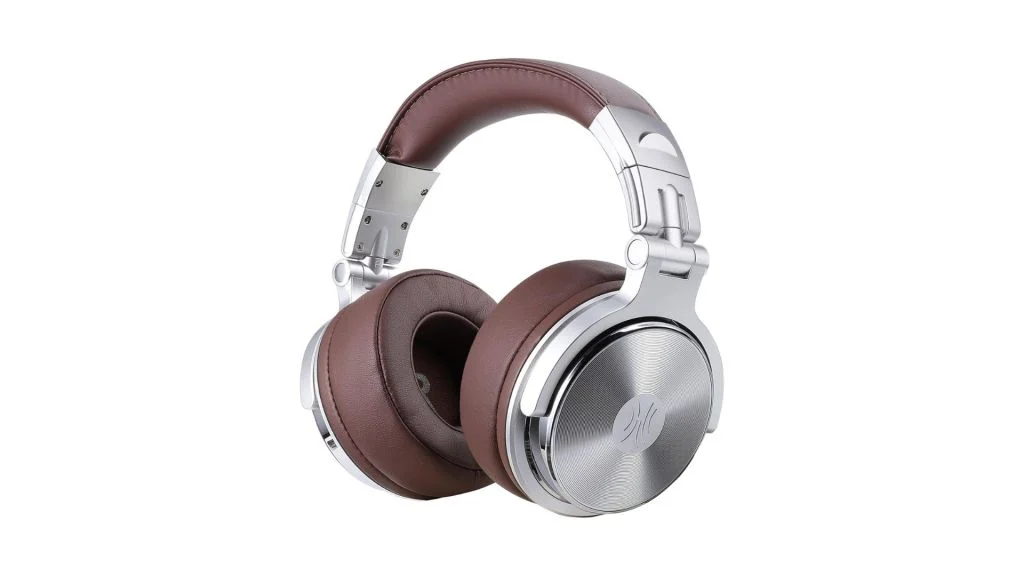
OneOdio

Amazon’s Choice

OneOdio Pro-30 Headphones

$39.99

$45.99

13% off

If you’re an Amazon Prime member, you can order now and any of these OneOdio audio items will be delivered to your home in less than two days once it’s released, thanks to Prime Delivery.

Not a member? Sign up for a 30-day free trial to take advantage of all that Amazon Prime has to offer, including access to Prime Video, Prime Gaming and Amazon Photos; fast free shipping in less than two days with Prime Delivery; in-store discounts at Whole Foods Market; access to exclusive shopping events — such as Prime Day and Black Friday — and much more. Learn more about Amazon Prime and its benefits here.

Select OneOdio headphones are on sale starting at $29.99 (reg. $49.99) on Amazon. Want more? Shop additional OneOdio audio products, below:

For more product recommendations, check out our roundups of the best Xbox dealsstudio headphones and Nintendo Switch accessories.

HHW Tech Review: DJ Ominaya Tests New Serato DJ Pro 3.2.0

HipHopWired Featured Video
DJ OMINAYA

Source: DJ OMINAYA / DJ OMINAYA

DJs are in for some good news. The community’s most trusted software Serato DJ Pro has received some updates geared to optimize performance and increase creativity.

SERATO DJ 3.2.0

Source: SERATO / Serato

Originally launched in 1999 as Pitch ‘n Time, the revolutionary platform has gone on to allow users to mix two tracks together with just their laptop, have a limitless music library, and a crisp, high-resolution interface. Throughout the years, Serato has become synonymous with a DJ’s must-haves when it comes to their set up. This month, the brand has announced some updates to the platform in Serato DJ Pro 3.2.0 and Serato DJ Lite 3.2.0. These new versions introduce a never-before-seen series of custom-built FX and includes many firsts for the platform including native Apple silicon support for Mac users.

SERATO DJ 3.2.0

Source: SERATO / Serato

The good folks at Serato were kind enough to provide us early access to their beta, and we couldn’t think of anyone better than DJ OMINAYA to demo the new features. As the DJ for A Boogie Wit Da Hoodie and Lola Brooke, DJ OMINAYA is no stranger to the technology. For the last 10 years he has used Serato DJ Pro to rock crowds all over the world including venues like Madison Square Garden, O2 Arena, The Kia Forum, Spark Arena, TD Arena, Manchester Arena, AFAS Live and more. Below you will find his breakdown on the new DJ Pro 3.2.0.

Full Suite of New FX

DJ OMINAYA: I like the fact that there are now channel FX scroll them out to a single channel; one through four. Or even put it on the master. Also, you’re able to save your favorite FX in your bank, and if you want to reset it you can reset it. But if you save it in your bank, anywhere you DJ your favorites will always be available when you click down. You can also organize them where when you pull up your drop-down menu only your favorite FX shows instead of all 100. This is a game changer because it makes them a lot more accessible.

Create Your Signature Sounds With Custom FX

DJ OMINAYA: The option to create your own signature sounds is amazing because this is another way you can separate yourself from your peers. Individuality is key as a DJ, and you never want to sound like the next person. Another feature that is key is that you can also import your FX easily as well, which will help new DJs out who are still trying to find their sound and style.

But you got to be careful with sharing your custom FX [laughs]. Serato has a regular bomb FX, but what I did was I put five other bombs on that one bomb just so it can sound more powerful because I do concerts, big venues and arenas. So, when I hit that bomb, it sounds way louder because it has more bass to it. I shared that FX with one DJ and now every DJ in New York City uses it [laughing].

DJ OMINAYA

Source: DJ OMINAYA / DJ OMINAYA

Favorite FX Banks

DJ OMINAYA: In my opinion this is the most important update to Serato DJ 3.2.0.The bank lets you load songs or FX to scratch in advance. If you’re a DJ that transforms or uses scratch FX, you can load the sounds in there. What I suggest is to prepare your tracks. So, if you’re doing a party and you know the next five records you want to play you can load them into the scratch bank and have them ready there opposed to searching for them while you’re DJing.

This new Serato DJ 3.2.0 definitely makes it a lot more easier to access your files and songs. As a DJ sometimes you lose your train of thought, and you forget what record you want to play next. And you can put them in the sequence you want ahead of time. This is something that comes in handy regardless of where you are playing. Let’s say I am doing a concert with [A Boogie Wit Da Hoodie] I can use that same bank of songs to do the club performance after the concert. My favorite FX is the reverb. This is a clean way to get out of a song without the transition sounding messy.

New Enhanced Look and View Modes

DJ OMINAYA: I love the new look and view mode! I feel it’s more straightforward and to the point; it’s a much cleaner interface. Even if you are new to the Serato platform, it’s really self-explanatory. You don’t need years of DJ experience to pick up the flow and functionality with Serato 3.2.0; they really took the guess work out of it. Serato 3.2.0 has shortcuts for everything you really have to explore it to see what works best for you as a DJ and your set up. Once you do, you’ll be able to get to things a lot faster and easier.

You can read more about Serato DJ 3.2.0 here.

BET+ Greenlights TV Series Based On Ludacris’ Life As A DJ

HipHopWired Featured Video
Dick Clark's New Year's Rockin' Eve with Ryan Seacrest 2024

Source: Christopher Polk / Getty

Fans of Ludacris will get a closer look at his life prior to becoming a world famous rapper. BET+ has greenlit a show based on his time as a DJ.

According to The Hollywood Reporter, the Atlanta, Georgia native is working with acclaimed film producers Malcolm D. Lee (Girls Trip, The Best Man) and Larry Wilmore (The Bernie Mac Show, Insecure). The streaming service will bring this time period to life in a comedy fashion. As per the press release the project aims to highlight his “experience coming up in the competitive music scene in Atlanta as DJ Chris Lova Lova, the series follows the misadventures of a sharply drawn ensemble who are willing to do anything and everything to bolster ratings at their hip hop radio station.”

Noah Gardenswartz of The Marvelous Mrs. Maisel fame has been slotted to curate the script. Ludacris is as an executive producer and will also serve as the music supervisor. While the “Act A Fool” rapper has to formally comment on the announcement he did confirm the news via his Instagram account saying “stay tuned”. 

Ludacris‘ first foray into acting started back in 2001 via a brief appearance in the Dr. Dre and Snoop Dogg comedy The Wash. In 2003 he would land the role of Tej Parker in 2 Fast 2 Furious which led to him reprising the role in five installments in the Fast & Furious movie franchise. The new project has yet to be titled.

Will Ferrell Kicked It Old School During His Wild DJ Set at a USC Frat Party

It’s every college freshman’s worst nightmare: their thinks-he’s-cool dad shows up for family weekend seemingly hell-bent on just, you know, hanging and partying with the guys! Now imagine that dad is frequently shirtless comic genius Will Ferrell, and that he’s returning to his alma mater to man the DJ booth at a frat party.

His son’s frat party!

That was the scene on Saturday when Ferrell, 56, was back on campus at the University of Southern California, where he helped the men of Sigma Alpha Mu get turned up before what would be a super-thrilling triple-overtime 43-41 win over the University of Arizona. In videos of the set on TikTok, Ferrell can be seen manning the decks while rocking a pair of headphones and dark shades and a backwards USC baseball cap while surrounded by students partying to his eclectic playlist, which included the Survivor’s classic Rocky III 1982 pump-up anthem “Eye of the Tiger,” Jay-Z and Ye’s 2001 Watch the Throne jam “Ni–as in Paris” and the Killers’ 2004 signature hit “Mr. Brightside.”

Elsewhere, Ferrell channeled his hard-partying Old School character Frank the Tank while hitting the massive crowd at the party with clouds of fog from a hand-held blaster.

The Barbie star graduated from the university in 1990 with a bachelor’s degree in sports information and returned in 2017 to give a commencement speech; he and wife Paulin Ferrell’s eldest son, Magnus, 19, is reportedly a student at USC.

Check out some of Ferrell’s DJ set below.

Music, Economics, and Beyond

The whole point of digital music is the risk-free grazing”

Cory Doctorow, Canadian journalist and co-editor and of the off-beat blog Boing Boing, is an activist in favor of liberalizing copyright laws and a proponent of the Creative Commons non-profit organization devoted to expanding the range of creative works available for others to build upon legally and to share. Doctorow and others continue to write prolifically about the apocalyptic changes facing Intellectual Property in general and the music industry in specific.

In this article, we will explore the cataclysm facing U.S. industry through the portal example of the music industry, a simple industry in comparison to those of automotive or energy. However, in the simplicity of this example we may uncover some lessons that apply to all industries.

In his web-article, “The Inevitable March of Recorded Music Towards Free,” Michael Arrington tells us that music CD sales continue to plummet alarmingly. “Artists like Prince and Nine Inch Nails are flouting their labels and either giving music away or telling their fans to steal it… Radiohead, which is no longer controlled by their label, Capitol Records, put their new digital album on sale on the Internet for whatever price people want to pay for it.” As many others have iterated in recent years, Arrington reminds us that unless effective legal, technical, or other artificial impediments to production can be created, “simple economic theory dictates that the price of music [must] fall to zero as more ‘competitors’ (in this case, listeners who copy) enter the market.”

Unless sovereign governments that subscribe to the Universal Copyright Convention take drastic measures, such as the proposed mandatory music tax to prop up the industry, there virtually exist no economic or legal barriers to keep the price of recorded music from falling toward zero. In response, artists and labels will probably return to focusing on other revenue streams that can, and will, be exploited. Specifically, these include live music, merchandise, and limited edition physical copies of their music.

According to author Stephen J. Dubner, “The smartest thing about the Rolling Stones under Jagger’s leadership is the band’s workmanlike, corporate approach to touring. The economics of pop music include two main revenue streams: record sales and touring profits. Record sales are a) unpredictable; and b) divided up among many parties. If you learn how to tour efficiently, meanwhile, the profits–including not only ticket sales but also corporate sponsorship, t-shirt sales, etc.,–can be staggering. You can essentially control how much you earn by adding more dates, whereas it’s hard to control how many records you sell.” (“Mick Jagger, Profit Maximizer,” Freakonomics Blog, 26 July 2007).

In order to get a handle on the problems brought about by digital media in the music industry, we turn to the data most relied upon by the industry. This data comes through Neilsen SoundScan which operates a system for collecting information and tracking sales. Most relevant to the topic of this column, SoundScan provides the official method for tracking sales of music and music video products throughout the United States and Canada. The company collects data on a weekly basis and makes it available every Wednesday to subscribers from all facets of the music industry. These include executives of record companies, publishing firms, music retailers, independent promoters, film entertainment producers and distributors, and artist management companies. Because SoundScan provides the sales data used by Billboard, the leading trade magazine, for the creation of its music charts, this role effectively makes SoundScan the official source of sales records in the music industry.

Quo vadis? According to Neilsen Soundscan, “In a fragmented media world where technology is reshaping consumer habits, music continues to be the soundtrack of our daily lives. According to Music 360 2014, Nielsen’s third annual in-depth study of the tastes, habits and preferences of U.S. music listeners, 93% of the country’s population listens to music, spending more than 25 hours each week tuning into their favorite tunes.”

For most Americans, music is the top form of entertainment. In a 2014 survey, 75% of respondents stated that they actively chose to listen to music over other media entertainment. Music is part of our lives throughout all times of the day. One fourth of music listening takes place while driving or riding in vehicles. Another 15% of our weekly music time takes place at work or while doing household chores.

It has become no surprise over the past five years that CD sales have diminished while download listening and sales have increased. Bob Runett of Poynter Online comments, “Start waving the cigarette lighters and swaying side to side–the love affair between music fans and their cell phones is getting more intense. Phones with music capabilities will account for 54 percent of handset sales globally in five years, according to a report consulting firm Strategy Analytics Inc. The report suggests that we keep watching the growth of cellular music decks (CMDs), devices that deliver excellent sound quality and focus on music more than images.” (“A Few Notes About Music and Convergence,” 25 November 2014)

Stephen J. Dubner summed up the mess quite well almost a decade ago. “It strikes me as ironic that a new technology (digital music) may have accidentally forced record labels to abandon the status quo (releasing albums) and return to the past (selling singles). I sometimes think that the biggest mistake the record industry ever made was abandoning the pop single in the first place. Customers were forced to buy albums to get the one or two songs they loved; how many albums can you say that you truly love, or love even 50% of the songs–10? 20? But now the people have spoken: they want one song at a time, digitally please, maybe even free.” (“What’s the Future of the Music Industry? A Freakonomics Quorum,” 20 September 2007).

Like many of us, I (Dr. Sase) also have worked as a musician/producer/engineer/indie label owner releasing esoterica since the 1960s. While occasionally made an adequate living off my music, I also developed my talents as an economist, earning a doctorate in that field. Therefore, I comment from this dual perspective of an economist/musician.

The post-future, as many music pundits call it, does not really differ that much from the past. How and why folks obtain their music continues to reflect at least three related decision drivers. We can summarize the three most relevant as 1) Content, 2) Durability, and 3) Time-Cost. Let us explain further.

1) Content

When I started to record music in the early 1960s, the market was filled with “one-hit wonders.” It was the age of AM (amplitude modulation), DJ radio. It was also the age of the 45 RPM record with the hit on the A Side and usually some filler cut on the B Side. It was not uncommon for anyone with a 2-track reel-to-reel to “download” the one hit desired from their favorite radio station. There were few groups that offered entire twelve-inch LPs with mostly great songs. The first such LP that I purchased was Meet the Beatles by those four lads from Liverpool.

During the late 1960s, the industry turned more to “Greatest Hit” collections by groups that had previously turned out a string of AM hits and to “concept” albums. During this golden age of LP sales, the Beatles, the Stones, the Grateful Dead, Yes, King Crimson, and numerous other groups released albums filled with solid content. Bottom line: consumers don’t mind paying for product if they feel that they are receiving value.

2) Durability

Why would someone buy a twelve-inch LP when they could borrow a copy and tape record the songs to a reel-to-reel or, later on, to a compact cassette? The answers at that time were simple. First, it was “cool” to have a great album collection, especially one that a member of the opposite gender could thumb through in one’s dorm room. Let us simply say that one’s album collection could inform another party about one’s tastes and possible sub-culture and personality. Therefore, an attractive collection provided a certain degree of social currency. Might this account for the resurgence of
vinyl in recent years?

The second part of the equation came in the form of actual product durability. Like current downloads, self-recorded reel-to-reel and cassette tapes generally suffered from some loss of fidelity in the transition. More importantly, the integrity and permanence of the media also left something to be desired. Thirty to forty years ago, tape would flake, break, and tangle around the capston. Unless one backed up their collection to a second-generation tape, many of one’s favorite tunes could be lost.

Today, computer hard drives crash. Without the expense of an additional hard drive and the time involved to make the transfer, the same durability issues ensue. What about CDs? As most of us who use CD-Rs for multiple purposes know, the technology that instantly burns an image leaves a product that remains more delicate and subject to damage in comparison to a commercially fabricated CD, stamped from a metal master. Will the Internet clouds provide the same level of comfort for music producers and listeners? We will just have to wait and see.

3) Time-Cost

This third element basically reflects the old “tape is running/time-is-money” economic argument and may explain why younger music-listeners prefer to download songs either legally or illegally. It echoes the same economics that led listeners in the 1960s to record their favorite hits off of the radio. The substance of the argument has to do with how an individual values his/her time. If music-lovers works for a low hourly wage (or often no income at all), they will value the time spent downloading, backing up, and transferring cuts in terms of what they could be earning during the same time.

Let us consider the following example. Assuming that twelve downloads or a comparable CD costs $12.00, a baby-sitter earning $6 per hour could afford to spend as much as two hours of time ripping music to achieve the same value. However, someone with a skilled trade or a college degree may be earning $24.00 or more per hour. Spending more than one half hour at ripping would exceed the value derived. The counter-argument of the time-cost of travelling to a brick-and-mortar music store gets offset by a person’s ability to log-on to Amazon or elsewhere in less than a minute and possibly receive free shipping. The market will always change as the primary market demographic ages. It happened with the Baby-Boomers of the 1960s and 1970s and it will happen with Generation X, Y and Z in the current century.

The bottom line of all of this debate rests in the fact that a consumer will choose the mode of deliverable that optimizes his/her bundle of values. This bundle includes quality and quantity of content, durability, and time-cost effectiveness. These remain the lessons that music makers and music deliverers must understand to survive. The more things change, the more they stay the same.

“When I’m drivin’ in my car, And that man comes on the radio, He’s tellin’ me more and more, About some useless information, Supposed to fire my imagination, I can’t get no, oh no, no, no.” -Michael Philip Jagger, British Economist, London School of Economics

In conclusion, we recognize that certain values motivate consumers as well as businesses. These values include content, durability, and time cost. It does not matter whether the good or service under consideration exists in the form of real, personal, or intellectual property. The premise remains the same for making music, building automobiles, teaching economics, and providing legal services.

The British economist Adam Smith summarized this phenomenon 229 years ago in his concept of an invisible hand at work in the marketplace. In effect, markets work because all market participants seek to optimize their own self interests. As long as both parties involved in a transaction perceive that they will emerge better off after consummating the transaction, they will participate. If one (or both parties) does not share this perception, no music, automobile, education, nor legal services will change hands. In effect, the market fails to produce a satisfactory outcome.

How To Gain The Power To Create Musical Emotion

Have you ever wondered how your favorite musicians make such great music? The answer is this: They fully understand how musical emotion works, and how to use this to create intense emotions in YOU while you listen to them. Understanding musical expression is key to becoming a great guitar player and musician. When you control emotion in music, you will gain the power to greatly affect the listener’s experience.

Most guitarists want to be able to express themselves better with their guitar playing; however, the majority of guitar players have no idea how to actually practice this skill. This leads to a lot of time being wasted on practicing guitar in a way that does not produce big results. The solution to this problem is to develop a more accurate fundamental understanding of how to develop creativity in music.

Many guitar players try to enhance their musical creativity skills by searching the music of their favorite bands for cool riffs and guitar ideas and playing them over and over. This is certainly an enjoyable activity to do when playing guitar, but in reality it does not do very much to help you to learn musical expression. If you spend a great deal of time on this, you will be missing out on the two most critical parts of being able to create emotion in music.

How To Market Music: An Effective No-Fail 3 Step Music Marketing Formula That Works

How To Market Your Music More Effectively

Knowing how to market your music is without a doubt THE most important thing you can do for your music business and your music career as a whole. You know it’s something that must be handled and if you’re not making efforts to learn how to market your music more effectively then you should know that, at the very least, nothing serious will ever happen in your music business career.

The first thing to ask yourself is whether or not you’re currently managing the most basic elements of an effective music marketing campaign.

What do I mean by this?

To begin it’s important to assess where you’re at right now and determine whether or not you know and understand exactly what the basic components of an effective music marketing campaign are? Let’s face it, if you plan on making a name for yourself in the music industry it’s important to realize you’ll be investing a lot of your personal time and money into your music career. If you’re certain your absolute goal is to mold your music talents into a true “music business” and you have no doubts about the career path you’ve chosen… then you’ll want to be as efficient and productive as you can possibly be.

Most indie bands and musicians whether from the Rock, Hip Hop, Folk or any genre for that matter, tend to work on only one or two of the three essential requirements of effective music marketing. For instance most musicians are great at connecting with audiences. What with Facebook, Instagram, Twitter and YouTube in the mix, communications have become stupid simple for today’s musician.

On the other hand, asking for the sale is occasionally handled effectively but tends to be approached hap-hazardly and without a formula or the necessary accompanying awareness campaigns. This lack-luster approach tends to dampen the efforts of even the hardest working bands and musicians in the industry. Unfortunately, applying only one or even two of these key components without the essential third element in a music marketing campaign won’t bring in maximum returns for the time invested. This just isn’t how to market music effectively.

Don’t get me wrong, getting your name out there and partaking in conversations with fans can be cool, even self gratifying and it’s definitely better than not doing anything at all, but imagine how much more effective you’d be if you went to work on all of these essential marketing aspects of your music business armed with a formula and a pin-point focused purpose.

The Solution To Ineffective Music Marketing

The bottom line is that when you break down the ins and outs on how to market your music effectively, it becomes apparent that as a musician, it’s important to discipline yourself to focus on the elements that are most productive for your music business growth. Broken down in an easy to follow process these elements of music marketing and music promotion essentially consist of a 3 step formula:

Step #1 – Create Awareness: Find an audience who appreciates your music style, your sound and your identity. Take the steps necessary to communicate your musical message to them. Everything you do should create an awareness for you and your music at all times. Approach this with precision and a firm direction and your music business foundation will be solidified for years to come.

Step #2 – Connect with Your Audience: I mentioned earlier how stupid simple it is to connect with fans today. Instagram, Facebook, Twitter, YouTube and the many other online “hangouts” make this process a breeze. Once you’ve laid the initial groundwork and you’ve made your audience aware of exactly what you have to offer, work on maintaining those important on-going relationships with your fans, the media and the all important music business contacts you collect along the way. Your fans and contacts want to know that you’re for real. That you care about them. That you’re here for the long-haul. Making connections with them and keeping them involved in your growth process will ensure this happens for you.

Step #3 – Sell Your Stuff (Ask for the sale): This one is essential. If you don’t have products to sell… you DON’T have a music business. Working to create a steady, consistent cash flow for your music business is paramount to your long-term success. Entice fans to spend their money and buy your stuff and the rest of your music marketing processes will flow and flourish so much easier.

Yes! It’s Easier Said Than Done

I recognize that it’s easier to talk about these things than it is to make them happen in your career but this is what the music business is all about so incorporating these processes into your music business campaign is a must, or you simply won’t last long enough to make dent in the music world.

And that’s not what we want for your music career… is it?

Again, it might seem easy enough to map these things out on paper but the truth is that most bands and musicians will find a hundred and one ways to screw this up.

You’ll either spend too much time on creating awareness and connecting with your audience but then fail to ask for the sale. Or you’ll ask for the sale way to often and forget about connecting with your people. I mentioned earlier that it’s cool to get all gung-ho, get busy, and head on out there and do a bunch of music marketing, but if you’re not touching all three elements of this process on how to market music, then you’re missing the boat and more importantly… you’re fans won’t be “feeling” your vibe. They just won’t connect with you on a deeper level. Without connection, there’s no sales and without sales, you don’t have a music business.


Skillax Preparing ‘Harsher, Brighter’ New Album

The National have confirmed that they will start recording their next album “soon”.

The US band released their sixth album ‘Trouble Will Find Me’ in 2013, more recently showcasing new song ‘Roman Candle’ live.

With frontman Morgan recently saying that the group need to “change and evolve” on their next record, guitarist Morgan has now confirmed to Pitchfork that they have assembled a new studio to record in.

“We need a new home because everybody is scattered,” John explained. The band’s members are based in New York, Paris and Los Angeles.

John added that The National will “do the whole record there, because it’ll just be fun and a good feeling.”

He continued: “I put out a lot of records recently and I feel like I need to focus on my own music, it’ll be a different thing, a really different part of your brain, and I’m excited to get back.”

Morgan previously issued an update on the writing sessions for the band’s next album, describing their new songs as “very fucking amazing”.

Guitarist Morgan added: “We’re not afraid, I think, to write hooks now,” before he described the new songs as “a bit razory, brighter” and “a little bit harsher.”

Judge Asked To Skillax To Attend ‘Stairway’

“Consider heart disease, the No. 1 killer of women, killing more women than all cancers combined. If we can do more to prevent, treat and cure cardiovascular disease, more women will live longer, more families will stay together, more workers will stay productive, and we’ll save money on treating a condition that costs the U.S. nearly a billion dollars a day.

“Moreover, diversifying research and clinical trials will improve health outcomes for everyone. Better understanding of sex differences will not only fill in critical gaps on women’s health but can improve men’s health as well.

“To give an example, looking at disease through the sex and gender lens has driven new insights regarding atrial fibrillation (AFib), a dangerous condition marked by an irregular heartbeat that can lead to stroke, blood clots, heart failure and other heart complications. For many years, research failed to find an association between physical activity and AFib. Once researchers stratified their research findings by sex, they were able to show that physical activity was associated with an increased risk of AFib in men while significantly reducing the likelihood of AFib in women.

Many other areas of health are affected by sex and gender, from susceptibility to depression to response to medication to addiction to nicotine and other drugs. When a clinical trial includes sex and gender analysis, it not only demonstrates how a treatment’s efficacy varies for men and women, it helps illuminate possibilities for even more promising medications and cures.

“Last month, the U.S. Senate HELP Committee passed a series of biomedical innovation bills, which can be bundled into a companion to the House-passed 21st Century Cures Act. We applaud this bipartisan commitment to fighting disease and saving lives. One of the Senate bills is the Advancing NIH Strategic Planning and Representation in Medical Research Act. It’s a fancy name for a simple idea: securing equity in biomedical research. Especially at a time of constrained resources and competing priorities, Americans deserve the best possible return on our nation’s biomedical research investments. We urge the Congress to pass this legislation, for our health and for our future.”

Handel: A Musical Life of Devotion

A great gift to music entered into the world on 23 February 1685 in Halle, Germany. A life of great musical interest; one filled with an unbelievable talent that would become a beacon to many throughout the European continent and span centuries past its lifetime. It is a life that would become centered around a great mystery of how the musical talent would blossom into a recognized and celebrated gift; a life that would alter the musical landscape and the spiritual worship realm in a short 24 days, and a life that would become so influential that it would dictate musical compositions for many years afterwards.

A musical life that in the beginning would find itself struggling to exist; a life that will be forever known in George Frideric Handel. It is through Handel that we credit many great musical accomplishments; accomplishments in the mixture of homophonic and polyphonic textures, through the creation of his own unique works through the process of combining German, Italian, French, and English musical traditions into his highly successful English Oratorios. And most importantly through the lasting effects of Handel’s single greatest gift to the world, and the world of music: The Messiah. But how does the work of this single musician leave such a strong impression on the music that we have today? What could possibly make the music of Handel something that would be hailed as electric, memorable, unique, and even cutting edge? And most importantly how could one person alter the musical idiom through a single twenty-four day creation of a setting of Christ’s life? Through these questions I will explore Handel’s impact on music in a way that shed’s light onto the significance of Handel as a musician, a teacher, and inventor and as a religious preserver. It is with Handel that we credit a great deal of musical advancement.

Adversity in Handel’s life was something that he encountered early on in life. At an early age Handel found himself faced with a father that did not support a career in music, in fact his father was a person that greatly hated music; noting that it was a pastime that served the sole purpose of casting a light on the weakness of character found within a person. It was his father that wished he would strive to obtain a career as a lawyer, a position that would come with a great deal of security in position and financial stability. This was something that Handel himself would have to come to terms with, because he himself was born with “signs of a fierce ambition, born of an awareness of his superiority as a musician, and with a determination to maintain his independence.” This determination to advance his musical skill became a task that took a great deal of hard work and convincing; though it was Handel’s mother that provided access to a clavichord hidden in the family’s attic. The hours spent hiding from his father in the attic, covering the strings of the clavichord with cloth to dampen the sound, allowed young George the time to practice his musical development and eventually the knowledge of how to play both the clavichord and the organ. This early study is most likely what saved the musical career for Handel, because it was during the time stuck in the attic that a young Duke passing by heard young George playing in the attic and was so moved by what he heard, that he stopped to listen. After hearing young George play the organ, the Duke pleaded with George’s father to allow him to travel to Berlin and begin to take music lessons. The young Handel began taking lessons at the age of eight, and was easily able to conquer learning the violin, composition and theory techniques, harpsichord, and reinforce the organ playing skills. By the age of 11, there seemed little that any music teacher could teach George; it was at this point that George’s father began angry and again expressed his desire for George to cease playing in the music, and to return home and do as he wished. Handel at the request of his father did in fact return home, only to arrive at his father’s deathbed. This was a dark period of struggle for the young Handel, compelled to honor his father’s wishes, George decided that it was best to keep to his studies in law; though during this same time he continued to also sharpen the musical skills that he knew he possessed. It was during this time that Handel began to write cantatas for the various churches that he was serving in as an organist. It was the service in music that called out to Handel, and by the time he reached the age of eighteen, Handel had realized that it was in fact his destiny to become a great musician noting that he was destined to improve his musical abilities and his knowledge of music.[…]