State Champ Radio
 Country
Page: 28
Several country music songwriter heavyweights will be taking the stage in Las Vegas in August, when the inaugural Las Vegas Songwriters Festival takes place at the Mandalay Bay Resort and Casino in Las Vegas.
Explore
See latest videos, charts and news
See latest videos, charts and news
Presented by MGM Resorts International and Entersong Entertainment, the event will take place Aug. 21-24, 2025. The festival will feature 50 award-winning songwriters, and 100 live performances, as songwriters perform at venues throughout the resort.
The event will feature Bob DiPiero (Kathy Mattea’s “Walking Away a Winner,” the Oak Ridge Boys’ “American Made,” Tim McGraw’s “Southern Voice”), Dean Dillon (“Tennessee Whiskey,” as well as George Strait’s “Ocean Front Property,” “Marina Del Rey,” “The Chair,” and more), Liz Rose (Little Big Town’s “Girl Crush,” Taylor Swift’s “Fearless,” “White Horse,” “Tim McGraw” “All Too Well” and more) and Victoria Shaw (Garth Brooks’ “The River,” John Michael Montgomery’s “I Love The Way You Love Me”).
Trending on Billboard
The event will be hosted by Matt Warren, who has crafted songs for Darius Rucker, Gary Allan and others), and was founded by Entersong’s Rob Hatch and Mike Every, in collaboration with MGM Resorts.
More performers include Billy Montana, Jesse Lee, Justin Wilson and more, with each songwriter blending music with storytelling, discussing the inspirations behind their songs. Some writers will also host select Q&A sessions.“For years Mandalay Bay has been one of the leaders in delivering memorable entertainment experiences for its guests and we believe the Las Vegas Songwriters Festival (LVSF) will continue this tradition,” said Paul Davis, Senior Vice President of Booking and Development, MGM Resorts International, via a statement. “LVSF will provide a platform for songwriters to celebrate their incredible artistry and storytelling that has shaped the industry’s greatest hits and resonate with music fans everywhere.”
Entersong’s Hatch said, “The Las Vegas Songwriters Festival brings together some of the most prolific songwriters of our time – artists whose words and melodies have shaped the soundtrack of our lives. It’s an intimate opportunity to hear the stories behind the songs, straight from the voices that wrote them.”
Fans can purchase either general admission or VIP tickets, and have the option to purchase a room-and-ticket package. Artist pre-sales will run Wednesday, Feb. 26 from 10 a.m. PST to Thursday, Feb. 27 at 10 p.m. PST. Members of MGM Rewards will have pre-sale access Thursday, Feb. 27 from 10 a.m. PT to 10 p.m. PT. Tickets for the general public go on sale Friday, Feb. 28 at 10 a.m. PST via LVSF at Mandalay Bay.
Las Vegas Songwriters Festival at Mandalay Bay
Courtesy Photo

Morgan Wallen opened up about hard times, and ponders the long-tail familial impact of his lower moments in a personal new song he wrote for his 4-year-old son, Indigo Wilder. On Monday (Feb. 24), the reigning CMA entertainer of the year and 19-time Billboard Music Awards winner shared a snippet of the track titled “Superman” to social media.
Explore
Explore
See latest videos, charts and news
See latest videos, charts and news
In an accompanying caption, Wallen explained why it has taken a while for him to craft a song for his son.
“Been trying for a long time to write a song I loved to my son. None of them ever feel good enough because of how perfect I want something like this to be,” he shared. “And not saying this is perfect, but I am very proud of it. Here is a clip, It’s called ‘Superman.’”
Trending on Billboard
The song starts off with Wallen’s thoughts of how Indigo will grow to learn more about the life his father has led to this point — surely, the incredible career accomplishments, but the low points as well.
The song opens candidly, with lyrics that seemingly reference Wallen’s arrest last year, when the singer-songwriter was briefly taken into custody after allegedly throwing a chair from the roof of a Nashville bar. (He later pleaded guilty to two misdemeanor charges, and was sentenced to seven days in a DUI education center, as well as two years probation.)
“One day he’s gonna see my mugshot from a night when I got a little too drunk/ Hear a song about a girl that I lost/ From the times when I just wouldn’t grow up,” Wallen sings. He continues describing his fears as a father in the vulnerable lines, “And when you ain’t a kid no more/ I hope you don’t think less of me/ I try to hide my fallen soul/ But you’re gonna see.”
The self-aware lyrics continue: “Now and then, that bottle’s my kryptonite … brings a man of steel to his knees/ Don’t always know wrong from right/ Sometimes I’m my own worst enemy/ No I don’t always save the day, but you know for you I’ll always try/ I’ll do the best I can, a Superman is still just a man sometimes.”
Wallen has been steadily sharing new music over the past few months, including “Lies, Lies, Lies,” “Smile,” “Love Somebody” and the title track to his upcoming new album, I’m the Problem. He’s set to launch his 2025 I’m the Problem Tour in June.
Hear Wallen’s snippet of “Superman” below:
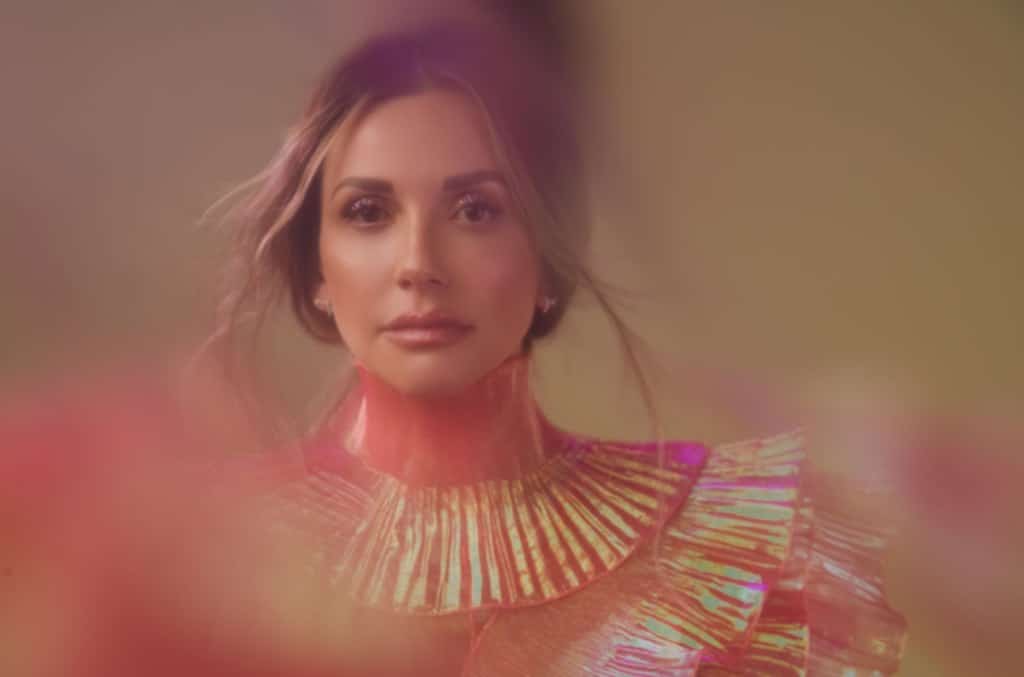
Women lead the way on this week’s crop of new songs. Carly Pearce returns with “No Rain,” while Hailey Whitters teams with bluegrass luminary Molly Tuttle for “Prodigal Daughter.” Avery Anna, known for her collaboration with Sam Barber on “Indigo,” issues a new song, “Mr. Predictable.”
Explore
See latest videos, charts and news
See latest videos, charts and news
Meanwhile, HARDY and Nate Smith team up for a hilarious-yet-pointed new track sure to relate with scores of people who have buddies in less than stellar relationships, on “Nobody Likes Your Girlfriend.”
Check all these and more of the best new country songs of the week below.
Trending on Billboard
Carly Pearce, “No Rain”
Carly Pearce previews her upcoming deluxe album Hummingbird: No Rain, No Flowers (out March 14) with this gentle, optimistic outing. Swaths of strings and acoustics elevate this soft-focus, hopeful track, with Pearce singing about how times of despair often dovetail with mountaintop moments. Pearce’s warm, earthy vocal tones highlight the song’s graceful melody. “If you never feel fear/ you’ll never need faith,” she sings, urging listeners to hold on during days of struggle. Since launching her career, Pearce has always managed to sound both timely and timeless, and this song floats in gingerly like a much-needed balm for society’s trying times.
Hailey Whitters feat. Molly Tuttle, “Prodigal Daughter”
Hailey Whitters’s latest release interweaves defiant, stomping country with bluegrass leanings, as she welcomes Molly Tuttle on vocal harmonies and guitar. Together, they sing a coming-of-age story about a young woman enticed by a new love. “She did a devil’s dance to a fiddle in a holler,” they sing, joined by a dazzling mesh of instrumental work from bluegrassers Stuart Duncan, Justin Moses and Bryan Sutton in addition to reigning CMA musician of the year Charlie Worsham.
Carter Faith, “If I Had Never Lost My Mind”
Faith debuted this song last week during the UMG Nashville showcase at Nashville’s Ryman Auditorium as part of the annual Country Radio Seminar. Commanding, dramatic and deeply introspective, “If I Had Never Lost My Mind” is a post-breakup, emotional postmortem as she ruminates over what aspects could have changed and whether they could have halted the romantic bustup from happening. “I couldn’t stop it and you couldn’t take it/ I gave you my heart and I forced you to break it,” Faith sings as the song builds in intensity towards its final chorus, surging into a superb musical showcase for one of Faith’s most powerful, dramatic vocal renderings to date.
Ashley Cooke feat. Joe Jonas, “All I Forgot”
At last week’s New Faces of Country Music Showcase during the annual Country Radio Seminar, Cooke gave the audience of country radio programmers a surprise when she invited Joe Jonas to perform their new duet “All I Forgot.” The pop-tilted, radio-ready track finds the two contemplating how sometimes the emotional connection between two people is so stout that even copious amounts of top-shelf liquor fail to drown it. “I just killed a bottle and all that I forgot/ Was I was moving on,” they sing. Vocally, they prove they can match each other note for note.
Avery Anna, “Mr. Predictable”
Avery Anna recently saw her Sam Barber collaboration “Indigo” reach No. 48 on the all-genre Billboard Hot 100. On her latest, she proves that while she’s known for moody pop-tinged ballads, she can also handle a churning rocker just fine, too. She’s hurt by a lover’s betrayal, but more hurt that her suspicions of his disloyal nature were proven right from the beginning. Lyrically, she goes for the jugular on lines such as “I tried to trust an untrustablе, cynical, typical, self-centered man,” as the song builds from a pensive, sparse piano track to a rock-seared, scathing indictment.
Nate Smith and HARDY, “Nobody Likes Your Girlfriend”
Country music hitmakers Nate Smith (“World on Fire”) and HARDY (“Truck Bed”) team up for this slice of cut-to-the-bone, friend-to-friend honesty, wrapped in a country-rock package. Smith and HARDY offer up a perspective of friends directly laying out the facts that a buddy’s new girlfriend is far from beloved by his circle of family and friends and they have the reasons why: she’s mean-spirited, she hates the bands he likes, she puts her boyfriend down in front of his friends, and is likely cheating on him. “Everyone you love hates seeing you with her,” they sing. To the point and punchy, this is sure to be a hit addition to their setlists. The hilarious video for the song, featuring Kevin James, Sophia La Corte and Amanda Mertz, further drives home the song’s message.
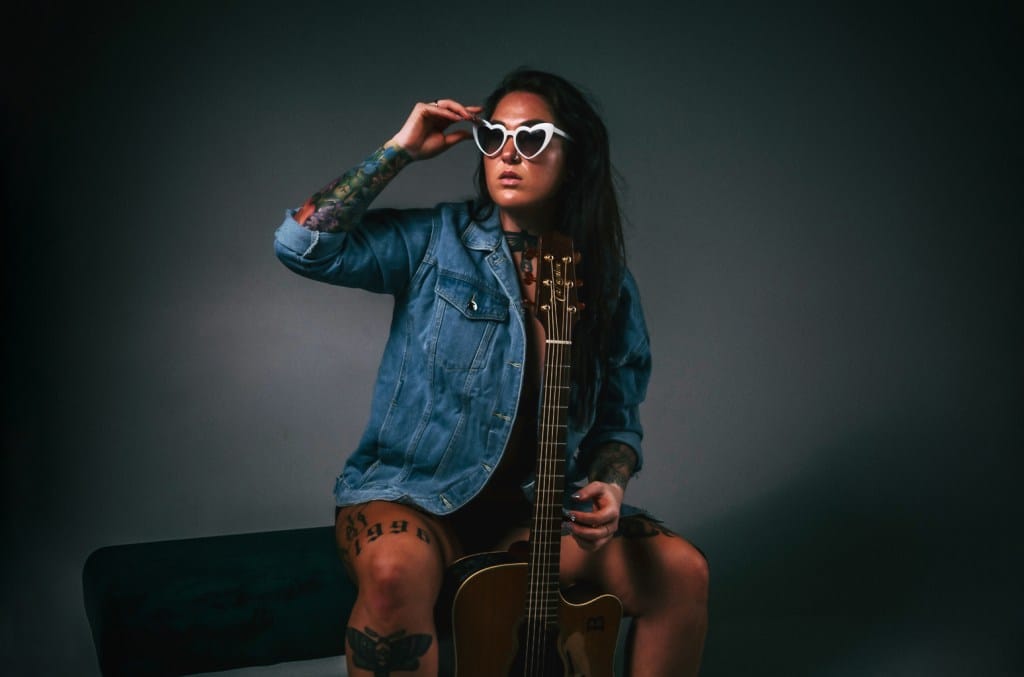
Since releasing her first project, 2021’s Stones, country singer-songwriter Allie Colleen has been focused on building her own career and putting her own musical talents and vision at the forefront. She’s toured with Jelly Roll and Lee Brice and issued songs like “Halos and Horns” and “Tattoos.”
Explore
See latest videos, charts and news
See latest videos, charts and news
But on her new five-song EP, Sincerely, Rolling Stone, she’s pulling back the curtain, revealing every facet of her life and personality.
She crafted Sincerely, Rolling Stone by turning to a close-knit group of friends and fellow songwriters, including Lockwood Bar, Megan Barker, Eric Dodd, Stephen Hunley, John Kraft and Craig Wilson.
Trending on Billboard
She wrote “Rolling Stone (Sincerely),” the first song written for the project, with Hunley, Dodd and Connor Sweet after coming off the road in 2021. The song sheds light on how having a fanbase who intimately knows an artist can bring immense joy for the act, but also carry with it an emotional weight for artists who are always on the move.
“It’s like Allie Colleen’s ‘Turn the Page.’ It’s my road song,” Colleen says, referencing Bob Seger’s classic about fame and life on the road. “It’s just saying, ‘I wish so badly that I could give you guys everything on the planet and be that, because you put artists on a pedestal, but I can’t.’ I champion Ashley McBryde, and to Ashley, that’s probably a little heavy — because I know I’m not the only person who has put this artist on a pedestal, whose music has saved me in seasons of my life. I’m very lucky to get that as an artist from certain people in my audience as well. So ‘Rolling Stone’ lands on [the lyric], ‘I want to be your rock, and I’m sorry that I’m not — sincerely your Rolling Stone.’ It’s my little sincerity message to my audience and to anyone who’s cared, especially the people who have followed me throughout the last couple of years.”
Sincerely, Rolling Stone also marks the first time Colleen has released a song inspired by her relationship with her father, Garth Brooks.
“Household Name,” which she wrote with Hunley and Dodd, opens with a roll of thunder, which may have some music fans instantly drawing ties to Brooks’ own 1991 two-week Country Airplay hit “The Thunder Rolls.” (“I listened to 47 minutes of consecutive thunder pre-roll to pick that out, and I think it’s perfect,” Colleen says).
“I write about my mamas all the time,” Colleen says, referring to her mother Sandy Mahl and her stepmother, Trisha Yearwood. “I have so many mama songs out there for both of my moms, and that always poses this silly question in the back of people’s brains — ‘What do you feel about your dad?’ And I’m like, ‘You guys can’t hear a song about my dad and just hear a song about Allie’s dad. You already have such a narrative of that.’ So I’ve never done a dad song.”
Colleen continues, “I’ve always kept those really personal, and just a between-him-and-I kind of thing. This was the first time I felt I could recognize my dad for who he was to me as an artist, and the way that I have never even second-guessed myself as an artist, because I saw it every day. I saw just a crystal-clear example of this is feasible. Someone can work their tail off and do this for a living. My dad has worked his tail off his whole life for everything he has — and that’s why I’m the way that I am, because I want to be just like my dad. I feel like so many people separate us because I don’t involve my family in my career in a commercial way, but I couldn’t be more clear that I am just like my dad, and I’m approaching my career like he did, which is working my tail off. I think ‘Household Name’ gave me an opportunity to say that.”
Elsewhere, “Oklahoma Mountains” touches on the grind any artist faces in building a career, but also includes the lyric, “If there ain’t no mountains in Oklahoma, then why have I always had to climb/ Carrying a shadow on my shoulder” — a line Colleen says she struggled with including.
“’Carrying this shadow on my shoulder’ is one of the lines I fought for a long time on, like, maybe it should just be ‘saddle,’” she explains. “[If someone] sees ‘saddle,’ you’re just going to see that she’s just a hard worker. I don’t want there to be any resentment toward what people think that shadow is. I’ll be honest—Allie is a bigger shadow to herself than her dad is. We all are. I compete against Allie every day; I’ve never even had to compete against Garth, not one time. I hope the listener finds resilience from this song and I hope they recognize what their own mountains are.”
At the time of the interview, Colleen noted that Brooks hadn’t heard the entire project, though she had sent him “Oklahoma Mountains” and “Household Name.”
“We did have that vetting process moment where I want to reflect well on my family,” Colleen. “So, I do send him songs that could ever possibly have anything to do with him. And he’s been nothing but encouraging towards me, and has never been controlling of any narratives at all… he’s excited for me, as well as for this project to come out.”
The EP ends with the ballad ‘Nicotine,’ a co-write with Barker and Bar that likens a tendency to fall hard into relationships to the insatiable pull of nicotine.
“Cigarettes are quick fixes, even if you do 17 a day,” she says. “For me, my quick fix is relationships. That is something that I lean into. So, this was just something I wanted to tuck away in this beautiful little project of sincerity of what my world looks like, between being the daughter that I am, the partner that I am and all of these things that Allie is. I do think ‘Nicotine’ is one of the more commercial songs on the album. The verse itself is literally that eerie time and space where you’re kind of holding your breath, because you got a cig between your lips and you’re about to light your lighter, and then your chorus strikes that, and then the second verse comes in and there’s your exhale.”
Since the beginning of her career, Colleen has had a view toward building her artistry and brand on her own. She studied songwriting at Nashville’s Belmont University and began making connections with fellow writers early on, wading into the Nashville’s co-writing circles — something she says has been an immense blessing, but also a challenge.
“I came to this town as a solo writer, and I’m so happy in my co-writing world, but I would be lying to say that Nashville didn’t discourage individual writing for me,” she relates. “I was going to publishing meetings and they were saying, ‘Can you write well in other rooms with our people?’ And I think that was because I was so young. I think it made sense, honestly, at the time for my age, but I think 28-year-old Allie is still holding on to, ‘Was I a good enough writer by myself?’”
Her next project will aim to answer that question, with Colleen setting out to write every song on the album alone.
“I’m hoping I’m brave enough to write the whole thing by myself, and again, just show up for Allie as a writer and prove that I’m the same writer that showed up in this town,” she says, “just better, because of my co-writers — but also because of the work that I’ve done on my own this last year of writing by myself again. I’m excited, but also a little scared because I don’t have anybody to blame for that project. Every creative decision is on you when it’s an all-solo thing.”
Still, that challenge falls squarely in line with her overall mission, which is to unravel the layers of her own perspectives, whether she’s co-writing songs or crafting them by herself — in short, to make sure she’s creating music that she is proud of, regardless of others’ opinions.
“Praise for anything other than authenticity doesn’t matter,” Colleen says.

Cole Swindell adds his 13th top 10 on Billboard’s Country Airplay chart as “Forever to Me” pushes a spot to No. 10 on the March 1-dated tally. The song increased by 6% to 17 million audience impressions Feb. 14-20, according to Luminate. Explore See latest videos, charts and news See latest videos, charts and news […]

Kacey Musgraves has forged a reputation as a fearless musical communicator, an an entertainer who focuses on making her shows engaging, visually impactful, and as creative as her songs. As an artist and songwriter has been lauded by the Grammys (she’s won eight trophies, most recently best country solo performance for “The Architect”), the CMAs, […]
On Kameron Marlowe’s third Sony Music Nashville album, Sad Songs For the Soul, out Friday (Feb. 21) he’s veered from crafting a standard country project to fashioning a concept album focused on those with shattered hearts.
Explore
Explore
See latest videos, charts and news
See latest videos, charts and news
As he sorted through songs he’d written since signing with Sony Music Nashville in 2020, he realized he had a stack of solid songs—all heartbreak anthems—that he had never put on previous albums.
“They’d kind of been sitting in my music vault for a while,” Marlowe tells Billboard. “I’d want to put ‘em on the projects, but I didn’t want to have too many sad songs on a project. So, I was like, ‘It’d be cool to just have one project where I can put them all together.’”
The Red Light-managed Marlowe acknowledges the inherent stress in releasing a project that is outside the norm of what fans have come to expect but says crafting the project rejuvenated his creative impulses. “It sounds different than my music usually does,” Marlowe says. “It’s more of a passion project for me. I felt like I was getting stomped creatively and I needed to open my mind and produce this a little differently.”
Trending on Billboard
Echoing the raw feelings of heartbreak, the album is stripped back, with sparse snares and cymbals in lieu of a full drumkit. Though the nearly 10-song project centers around pain and disappointment, each song approaches from the topic from a different angle, such as the Kendell Marvel co-write “Dear God.”
Marlowe calls Marvel “one of my favorite writers in Nashville that I’ve gotten to work with,” adding, “We really wanted it to be this conversation between this person and God, just throwing out all your faults and knowing why [an ex-lover] is gone, but praying to God she’ll still give you another shot.”
Elsewhere, “The Basement” feels reminiscent of the rock-infused brand of ‘90s country from artists such as Travis Tritt. “It feels like something he would’ve done back in the day,” Marlowe notes. “Travis is definitely one of my inspirations — I learned a lot of my singing from listening to him.”
He wrote one of the project’s standout tracks, “How’s the Leaving Going,” with Country Music Hall of Famer Vince Gill and lauded songwriter/NSAI Board president Lee Thomas Miller during a songwriter’s camp in Nashville.
“It’s a bit terrifying,” he says of the prospect of writing with Gill. “He’s the sweetest guy in the world, but he’s also insanely talented in so many ways — singing, guitar playing, songwriting. So it was intimidating stepping into that room. I trust myself when I’m writing, but when you are writing with a caliber [of writer] like Vince and Lee, you can question, ‘Is that line going to be all right?’ before you say it out loud. But it was so worth it. We wrote something I think is very beautiful.”
Marlowe also included a blistering, soulful cover of Cam’s 2015 hit “Burning House,” a song Marlowe calls “the coolest heartbreak song I think I’ve ever heard. You can see everything she’s talking about in that song.” It was that decision that set Sad Songs for the Soul in motion, though Marlowe’s initial concept for the album left room to expand on the project.
“The title was actually Sad Songs For the Soul Vol. 1: Heaven and the Bottle,” he says. “It was the full concept, in case I wanted to do a volume two down the road. I still may one day.”
While Marlowe’s grizzled voice and the slate of sad songs glue the project together, Sad Songs For the Soul leans on songs that touch on an array of styles, from rock-tilted anthems, torchy R&B-fueled numbers and gospel-influenced songs. The North Carolina native grew up soaking in the sounds of gospel music in his local church and becoming a worship leader. But by high school he had segued from church songs to rock anthems, starting a band with some local friends.
“I had no idea what I was doing at the time, but my high school teacher was so excited that somebody was playing music,” Marlowe recalls. “He created a class for me and my buddies to rehearse and learn how to put songs together. He would set up shows for us, which was exciting for me because I was learning how to build songs out, build a band and how to play those songs live.”
Marlowe pursued music during a short stint in college but dropped out to work to support his family, serving as an auto parts salesman for General Motors. Throughout, he continued playing music, putting up videos of himself singing cover songs on Instagram. One of those videos — a powerful cover of Chris Stapleton’s “Tennessee Whiskey” — led The Voice to come calling.
“They found me on social media, and — this is terrible that I even had this going on — but back then, I had my phone number in the bio of my [profile], thinking girls might reach out to me. But it ended up turning out to be a good thing, that The Voice found that number and reached out.”
He competed on season 15 of The Voice, singing songs from Hootie & the Blowfish, Waylon Jennings and Bob Marley, and advancing to the top 24 before being eliminated. Encouraged by the competition, he moved to Nashville and quickly found that fans gravitated toward his independently released, solo-written song “Giving You Up,” which led to Marlowe signing with Sony Music Nashville.
In the five years that have elapsed, Marlowe has issued many songs that evince his gale force of a voice, bolstered by an ever-maturing songwriting style. He issued 2022’s We Were Cowboys and 2024’s Keepin’ the Lights On, featuring songs including “Steady Heart” and the Ella Langley collaboration “Strangers.”
“I’ve learned how to persevere through the tough times and I feel like that’s something that I’ve leaned on pretty hard the past couple years, where I’m by no means a massive artist yet,” Marlowe says. “I would love to get there one day, but I’ve really tried to persevere and keep just staying in my lane and not worrying about what other people are doing — just following my path.”
Beyond the new album, the WME-booked Marlowe is opening shows for Parker McCollum and will launch his 2025 Keepin’ the Lights On Tour March 7. Given his nimble voice, it’s possible that path could at some point mean Sad Songs for the Soul could be just the first “passion project” he releases.
“My favorite thing is just to discover new songs,” Marlowe says. “I would love to do a soul kind of record one day or a rock record. But those would all be passion projects for me, because I feel like country music is what I am the most — but I could see a record with maybe some Kings of Leon songs that I love so much.”
Bill Medley confesses that he thought “my recording days were over” since it had been more than a dozen years since the legendary baritone from The Righteous Brothers had released an album. But, thankfully, the Rock & Roll Hall of Fame inductee was wrong. On Friday (Feb. 21), Curb Records will release Straight From the Heart, a collection of country songs that pairs Medley with such artists as Vince Gill, Michael McDonald, Keb’ Mo’ and Shawn Colvin.
Explore
See latest videos, charts and news
See latest videos, charts and news
The 84-year-old, who still performs with Bucky Heard as the Righteous Brothers — his original partner, Bobby Hatfield died in 2003 — is the voice behind such timeless, foundational ‘60s hits as “Unchained Melody,” “(You’re My) Soul & Inspiration” and, of course, “You’ve Lost That Lovin’ Feelin,’” which was one of Phil Spector’s first productions using his layered Wall of Sound technique. Until 2019, the gorgeous classic was BMI’s most performed song in the performing rights organization’s repertoire for 22 consecutive years. Medley also paired with Jennifer Warnes for the iconic Grammy-winning “(I’ve Had) the Time of My Life” from the 1987 movie, Dirty Dancing.
Trending on Billboard
Straight From the Heart isn’t Medley’s first flirtation with country: He had a string of entries on Billboard’s Country Songs chart from 1979 to 1985 — including “I Do,” which reached No. 17 in 1984 — and played with such acts as Kenny Rogers, Alabama and Loretta Lynn.
In an expansive phone interview, the creator of blue-eyed soul talked about why he wanted to make the new album, recording in the studio with Spector and if it was more fun to tour with The Beatles or The Rolling Stones.
The new album spans songs as far back as the 1940s, with Hank Williams’ “I’m So Lonesome I Could Cry,” to the 2000s with Vince Gill’s “These Days.” How did you pick the songs?
[Producer] Fred [Mollin] made a list of songs, I made a list of songs — and it just came down to the writing of the song and the artist that did it. I would love to do 10 more of these albums, and pay tribute to a million more great country songwriters and singers.
It’s been a dozen years since you put out an album. How did this one come to pass?
Fred and I have been friends for quite a while, and we’ve been talking about doing this album. We started out to do kind of a small album, and then my manager called Mike Curb, and Mike has been a friend of mine since 1970. Good, good friend. So, it went from the small album to kind of this important album. I think Fred was just interested in getting my voice on tape while I was still able to do it.
Did you have any concerns about that?
[I’m] always worried about my voice, but I knew those songs. I’ve been locked in with a lot of great songs, like “You’ve Lost that Lovin’ Feeling” and “Unchained Melody,” and all those songs, they’re real melodic, and country songs give you the flexibility to do them the way you want. I’m 84, I’m not a country singer — but I love country blues songs. I’ve always thought George Jones was one of the great blues singers in the world.
Speaking of George Jones, many people consider “He Stopped Loving Her Today” the greatest country song of all time. What was your approach for taking on that one?
Fred mentioned it, and I just mentioned that I love the song. Who doesn’t? And I said, “No, I can’t go there.” But they thought that I could and should, and they made the track. They said, “OK, if you don’t like it, then we won’t put it on.” But after I sang it a few times, I just loved the song so much that I okayed it… I had the final say on all the songs, but that one for sure, if it just comes off like a bad version, I don’t want it on the album.
One of the first tracks that came out from the album was a cover of Ray Charles’ “Crying Time,” with Michael McDonald. You two have two of the most iconic voices ever. What was singing with him like?
Mike and I have known each other for years. He was a big Ray Charles fan. So was I. He’s just really musically open. He sounds phenomenal; he sounds like Michael McDonald. I did want Mike on the album, and I especially wanted him to sing with me on “Crying Time.” I knew that we could do a good job on that. I was concerned, and Mike probably was too, that because we have such distinctive voices, [we didn’t know] how we would sound when we were actually singing together, harmonizing with each other. And he’s just so good, it just worked out perfect.
Ray Charles is your all-time favorite singer, and you got to meet him when you did the TV show Shindig! Did you learn any good business pointers from Ray? He counted the money himself.
No, I didn’t learn anything from him, but I learned awfully quick [about the business]. When we had a hit with “You’ve Lost That Loving Feeling,” the first thing our agent did is put us with a business manager. That just saved our life, and we didn’t do anything stupid with our money. We were pretty down-to-earth guys. He was our business manager for a long time. Then he became my manager — and just a few months ago, he passed away. He’d been my manager for 60 years.
Did he get to hear the album before he passed?
Yes, he did. He said, “This is what you should have been doing all your life.”
You toured with Loretta Lynn and Alabama. Who else were you hanging with in those years?
I was working at a place in Phoenix where upstairs was a rock n’ roll, pop joint. Downstairs was this country bar. I was upstairs doing my [solo] show. I’d always go down to the country [bar] and they would ice up about five Coors Lights for me, and I would sit there and watch this guy. He would come over, and we would have a beer together and get to talking. And turns out it was Waylon Jennings. And so we became friends. Kris Kristofferson was a friend. Glen Campbell was a real good friend. And Kenny Rogers was a good friend. I just loved all of those guys. All my guys are gone.
You do “Sunday Morning Coming Down” on here. Is that a tribute to Kris?
No, I just love the song. It has such a great lyric. I really thought it was maybe one of the best songs that he’s written. He’s written some phenomenal songs. The truth is, I’m 84 years old and I probably have lived that [song]. I’ve had all the ups and the downs. Been married three, four times. That’s kind of why I picked certain songs. That one song I did with Vince Gill, “These Days,” is just the truth. Boy, I’ll take these days over any other days I’ve ever known.
You and Vince have a history. You were both nominated for best new male artist at the ACM Awards in 1985. Vince won. Did it seem weird to you that someone who had been having hits as long as you had was nominated because you had switched to country?
I thought it was very, very unusual — and I didn’t feel that I should necessarily be in that. I was thrilled that country music was accepting me. I thought that was really amazing and they always have, but being a newcomer of the year, I felt that somebody else should have been in that spot and not me. It was perfect for Vince, and he did pretty good. [Laughs.]
You’re obviously used to singing duets. What is the key to a successful duet?
For the Righteous Brothers and even Jennifer Warnes, it was kind of the beauty and the beast. You know, Jennifer sang so pretty, and Bobby Hatfield had a beautiful voice — and I always had this raspy kind of rock n’ roll voice. And so, I think for duets, if the two guys are lead singers, they have to sound different, or it’s just going to sound like the same guy doing the whole song. Girls are just so magical, because it’s so different. Simon & Garfunkel were pretty similar, and the Everly Brothers, for sure, were very similar. But I like the beauty and the beast idea.
You’re making your Grand Ole Opry debut on Feb. 22. Ringo Starr just made his Grand Ole Opry debut, so you have two guys in their 80s making their debuts.
That’s wonderful. He has a great band with him. I just don’t want people to think that I’m a rock n’ roll guy trying to sneak into country music. Country music has been a part of my life for years — and even in The Righteous Brothers show, I used to do what I would call a Ray Charles tribute, but it was all beautiful country songs like “Born to Lose,” “You Don’t Know Me” and “I Can’t Stop Loving You.” I just needed to do those songs.
Speaking of Ringo, who was it more fun to open for? The Beatles or the Rolling Stones?
Oh, you want to get me in trouble? [Laughs.] Well, it’s a pretty simple answer. The Beatles, when we opened for them, it was the first American Beatles tour — and the kids were just screaming and crying, yelling out, “John, John, Ringo!” Whatever. A lot of times when we were on, they’d be clapping and screaming, “We want The Beatles!” So then when they asked us to do The Rolling Stones, they hadn’t really made it yet. I think the next weekend after we worked with them, they became huge. So that was at least more musical, opening for them, so that was really more fun. But being with The Beatles was, obviously, more historic.
“You’ve Lost That Lovin’ Feelin’” ushered in the Wall of Sound. What was it like being in the studio with Phil Spector?
I remember he worked us real hard, real hard and real long, but it always got better so we didn’t mind it. Phil Spector was fine with us because we were kind of just a couple of street guys. He was used to working with a lot of girls. Working with him was fine, and we loved the song, but by the time the song was done, I think somebody asked us, “What do you think? Do you think it’s a hit?” I said, “There’s not a chance in the world that this will be a hit.” It’s way too long. It was over four minutes long — and, in those days, you did two-and-a-half minute records — and I sounded like I was on the wrong speed. I don’t know, it just sounded like a great record that could never be a hit. It’s just a remarkable record.
How was that different from making this album?
This was the most comfortable, easiest, rewarding album I’ve ever done. Working with those Nashville musicians was just such an honor, but, boy, just so easy and so good. I love the album and if something happens with it, that would be wonderful.

When Kane Brown embarks on his headlining The High Road Tour March 13 in San Diego, California, the tour will not only highlight 12-time Billboard Country Airplay chart-topper Brown’s consistent hitmaker status and enduring headliner draw but also marks a significant opportunity for his opening acts to solidify their own connections with Brown’s fanbase.
Explore
See latest videos, charts and news
See latest videos, charts and news
As a precursor to the tour, Brown has released to DSPs “Says I Can (The High Road Tour Version),” a collaborative rendition of his country-leaning song featuring his tour openers, “Your Place” singer Ashley Cooke, “Austin” hitmaker Dasha, “Truth About You” singer Mitchell Tenpenny and five-time Country Airplay hitmaker Scotty McCreery trading off verses and joining together on a chorus ready-made for arena-sized singalongs.
“[The goal] is to really amplify everything we are trying to do, and also highlight the great talent that we are taking out on the road with Kane,” Brown’s longtime manager, Neon Coast’s Martha Earls, tells Billboard. “They are all super talented, so why not highlight them?”
Trending on Billboard
The concept of a headlining act welcoming openers back to the stage for a group singalong is a consistent element in country music concerts, whether they team up on one of the headliner’s own hits or pluck a tune from country music’s deep trove of fan favorites. Brown has regularly welcomed his openers to join him on songs during his shows, such as welcoming Restless Road to sing “One Mississippi” on his 2022-2023 Drunk or Dreaming Tour, or inviting Jordan Davis and Restless Road to sing on “Famous Friends” during Brown’s 2021 Blessed & Free Tour, which visited all 29 NBA basketball venues.
Brown’s dedication to spotlighting his opening acts stems from his own early days, when Brown was opening shows for Florida Georgia Line. “FGL asked him to come out and be one of four [openers] on their tour, and they were so nice to him,” Earls says. “And then it all came full circle in 2024, when we had [former FGL member] Tyler Hubbard as our direct support. They really set the precedent of how to incorporate openers and make them feel like they are part of the tour. That’s something that is important to Kane and why he’s always brought openers out on a song.”
Brown’s move is not without precedent: Five years ago, Miranda Lambert put out a cover of Elvin Bishop’s “Fooled Around and Fell in Love” prior to the launch of her 2019 Roadside Bars and Pink Guitars Tour, with openers including Maren Morris, Ashley McBryde and Caylee Hammack; they also performed the song together during Lambert’s concerts.
Earls notes the lilting, warm “Says I Can,” a track from Brown’s The High Road album, naturally lent itself to a sing-a-long.
The idea came from Brown’s A&R executive at Sony Music Nashville, Margaret Tomlin. “She said, ‘What if we made a recording of “Says I Can” and put the openers on it?’ We loved the idea, because at the end of the day, let’s make it all cohesive and make what people are seeing onstage, then [be what] they can hop in their car and listen to and remember that moment,” Earls says.
“All of the openers were eager and excited to be part of it, which felt nice and expressed like, ‘Okay, this is more than just going out and playing shows. This is about creating a moment for everybody every night,” Earls adds.
Brown first recorded the solo version of “Says I Can” last summer while making his The High Road album, while Cooke, Dasha, McCreery and Tenpenny put their vocals on The High Road Tour version of “Says I Can” during the days leading up to The High Road release on Jan. 31. Each artist contributed their individual part from various locales — Tenpenny was in Australia, Cooke was in Nashville, Dasha was in Los Angeles, and McCreery was gearing up for a songwriters’ retreat on the East coast.
“They are all complementary, but different,” Earls says of the artists’ vocals. “The vocals each came in and we threw it all at [Brown’s producer] Dann Huff and he mixed them together. [We wanted] to be able to put this out in advance of the tour and give the fans a glimpse of some of what they will experience.”
Brown tied in a social media aspect to the song and the tour, filming off-the-cuff video of himself FaceTiming with Cooke, Dasha, McCreery, and Tenpenny and holding up a green cup for a “Cheers Challenge” to promote the new song.
“I’m texting Dasha, like, ‘Can you answer a FaceTime right now?’” Earls recalls of pulling the video together. “There’s a funny video of her answering while she’s driving, and she’s like, ‘I can’t find an exit to pull off, let me call you guys back.’ So, it was all very sweet.”
The time span from inviting the opening acts to take part in the song to finished recording and making social media clip took less than two weeks. “I feel like we’re creating a little bond from the start, from before we even step out into the first show in San Diego,” Earls says.
“All of the teams stepped up and jumped on making the videos and making the social media moments happen. That was part of the fun, too,” Earls adds. “We see everything on social media — tour clips, music video clips. Why not interweave it all? An even more extreme example might be when Kane and Jelly Roll are performing at Buckeye Superfest [in Columbus, Ohio on June 25]. They have a song together [“Haunted”] and I can’t wait until that night when they play that song together. I think it is going to be so powerful and such a moment. That’s the fun part of collaborating in the music industry, and I think the sum can be greater than the parts sometimes.”

The first listen to the new Lee Brice single, “Cry,” can feel confusing.
The heart-broken lyric is easy to grasp, and the hook-filled chorus is practically a celebration. But when Brice shifts into an ascendant “Baby, baby, baby” melody about 40 seconds in, it seems momentarily as if “Cry” has broken into the chorus. Instead, the production simmers back down for an additional 60 seconds before the chorus officially begins.
That “baby, baby, baby” thing falls where songwriters typically place a pre-chorus, a short segment that eases the listener from the verse into the chorus. But, since the “baby, baby, baby” moment grows in volume, then slides backward, it operates like a reverse pre-chorus, playing a bit of a head fake with the listener.
Explore
Explore
See latest videos, charts and news
See latest videos, charts and news
“That kind of threw me when I first heard it,” Brice concedes. “I was like, ‘Oh, is this the chorus?’ I mean, I didn’t know, you know – is it part of the verse? It was unique. But it didn’t throw me off as far as whether I like the song or not.”
Trending on Billboard
As “Cry” continues its three-and-a-half-minute run, that “baby, baby, baby” melody appears repeatedly in the background – sometimes quietly, sometimes louder – turning that quirky, counter-intuitive piece from a stumbling block into a unifying element.
“The first time I heard it, I was like, ‘Is that the chorus?’ – the ‘Baby, baby, baby,’” producer Ben Glover (Chris Tomlin, Anne Wilson) says. “And then I was like, ‘No,’ but it was cool. And then I heard the chorus hit, and I was like, ‘Well, I love that chorus.’”
“Cry” clearly works differently than the typical country song, and much of its peculiarity was embedded by the songwriters – Dallas Davidson (“Boys ‘Round Here,” “What Makes You Country”), Ben Hayslip (“Honey Bee,” “Small Town Boy”) and David Garcia (“Meant to Be,” “Southbound”) – when they gathered in Garcia’s office in 2019. Hayslip announced at the start of the session that he wanted to throw out the rules and write something that inspired them, rather than trying to craft something for the marketplace.
Davidson hails Otis Redding as his favorite singer, and Hayslip counts “When a Man Loves a Woman” as his favorite song, and it wasn’t long before the three writers started chasing a song with pieces of soul and doo-wop laced over their country tendencies. Garcia built a musical track with a chord pattern rooted in the 1950s and ‘60s. Davidson had begun experimenting with improvisational melodies, and he positioned himself at a microphone and belted out what became the basic structure of the first verse, beginning with a keeper line, “Who says a man don’t cry?”
“I sang my heart out, and I mumbled and stumbled, and, you know, this [or that] flew out, and they’re going, ‘Hey, see try this,’” Davidson recalls. “Then we’d sit back down and we’d type up a line. I’d go back in there and I’d sing it, and it was fun, man, but that was a total freestyle.”
And part of that freestyle included the “baby, baby, baby” reverse pre-chorus. They kept it.“On normal days, if we’re trying to write a radio hit, in our minds, we don’t do that part right there,” Hayslip notes. “But on this particular day, the mindset we were in was ‘Let’s just write something cool and different and write it for us.’”
The verses played up the drama of a tormented heart, the opening “Who says a man don’t cry?” providing the theme for subsequent variations: Verse two asks, “Who says a man don’t hurt?” and verse three follows with “Who says a man don’t beg?” That latter line was a nod to The Temptations’ “Ain’t Too Proud To Beg.”
“I had a lot of Motown going on in my head,” Davidson says. “All my favorites were talking to me – from Sam & Dave, Sam Cooke to Otis. There were a lot of voices in my head that day, going, ‘Sing it like this, boy. Sing it like this.’”
Garcia intensified his playing when they arrived at the chorus, and that turned “Cry” from a ballad into more of a Motown-like party with an energetic sound masking the self-pitying story.
“When he was playing on the chorus, this whole song became what it was,” Hayslip says. “When we first started writing this song with the verses, I don’t think we envisioned this song becoming what it became. We were writing a sad song, and the more the track kept going, we’re like, ‘Hey, this feels like an uptempo, feel-good song.’”
Meanwhile, Brice – on a day that he was working with Jerrod Niemann – invited Davidson over to his studio to hear his next album. Davidson was impressed by the project, but also thought it was missing one element, which could be filled by “Cry.” He played Brice the demo, and Brice immediately asked for rights to record it and started building his own version, playing guitars and keyboards, plus offbeat percussion – he employed a washboard, and played kick drum and snare with his thumb, instead of a drumstick. Niemann chipped in on percussion, and – according to the credits – so did the Holy Spirit, who didn’t actually sign the Musician Union’s session card.
“We had the real Holy Spirit with us,” Brice says with a laugh, “and he didn’t want no money.”
Brice laid down a lead vocal within a few days, though he struggled a bit and decided to give it all he had on one final take so that he would have a guide for the rest of the recording process. “I was sick, and I just threw it down,” he says. “I had to sing through it one time because I knew I needed at least a scratch vocal on there, and that ended up being the vocal on the song, for the most part. I think I went in and I hit a couple spots, but it was so real. I had to stretch so hard because I was so sick.”
Brice turned it over to Glover, who called on other musicians to work on “Cry,” and the team would frequently keep parts of a performance, then enlist another player to do more. As a result, the final features two basses, four electric guitars and four keyboards, plus programming from four different contributors.
They used some of Davidson’s demo vocal for harmonies, and took pieces of his quirky “baby, baby, baby” pre-chorus and threw them around the track, each sounding a little different from the others. “If it’s gonna be a thing,” Brice reasons, “let’s make it a thing.”
Glover added plenty of supporting vocals, too, including a section with Beach Boys overtones, and some electronically altered voices. Glover similarly applied filtering to a Hammond B-3 around the three-minute mark. “It sounds like R2-D2,” Glover says.
Niemann played a steel guitar solo, and Glover gave that its own sonic treatment. “We wanted it to sound a little bit like John Lee Hooker or that really nasty early Stratocaster,” Glover adds. “It sounds like it’s played through a tiny little amp – that kind of charm.”
In the end, “Cry” folds in country, old-school and doo-wop, but with enough modern elements that those retro influences sound current – think Amy Winehouse or Meghan Trainor. Curb released it as a single Jan. 31 after Brice identified that sound as a potential next wave.
“I started even hearing demos coming in where more people are doing this kind of vibe,” he says. “I don’t want to be following it. I want this to come out first.”