State Champ Radio
 Country
Page: 24

Thomas Rhett’s new single makes only a passing reference to a truck, but it’s loaded with pickups.
The foundational electric guitar played by songwriter John Byron (“Last Night,” “Pour Me a Drink”) required a pickup to produce a sound. The protagonist in the plot, singing to a woman around closing time at a club, is trying to make a pickup. And the phrases in the singalong chorus generally start on the second beat of a measure, leading to the downbeat of the next bar; thus, they’re built from musical pickups.
As a result, “After All the Bars Are Closed” uses pickups in hopes of yielding a pickup.
Explore
Explore
See latest videos, charts and news
See latest videos, charts and news
“I would have never thought about that in my whole existence,” Thomas Rhett says.
Trending on Billboard
To be fair, the singer-songwriter doesn’t actually think of it as a song about a barroom pickup. Instead, he relates it to the early days of his relationship with now-wife Lauren, when he was playing music and attending David Lipscomb University in Nashville while she studied nursing at the University of Tennessee in Knoxville. There were so many other obligations in their lives that they often had only a two-hour window after midnight for themselves.
“Anytime I write a song, whether it’s [about] heartbreak, love — whatever — I’m either looking at my present day with my wife, or I’m kind of looking back into when we first started dating,” he says.
Lauren wasn’t the original muse, though, for “After All the Bars Are Closed.” Byron was working with pop songwriters Jacob “JKash” Kasher (“Love Somebody,” “Sugar”) and Jaxson Free on March 10, 2023, in Miami, and he landed on a finger-picking guitar pattern that ends with a twisty riff. They began sifting through potential titles, and when they came upon “After All the Bars Are Closed,” it had a classic ring to it.
“It’s like [Semisonic’s] ‘Closing Time,’ but kind of a country way to say that,” Byron notes.
Instead of the standard verse-chorus-verse-chorus format, they used the title as the opening line, getting to the hook immediately. That tactic was used frequently in some previous eras — Willie Nelson started with the hook on two of his most valuable copyrights, “Crazy” and “On the Road Again.” Larry Gatlin employed that approach in most of The Gatlin Brothers’ hits in the ’70s and ’80s.
“What’s funny about Larry is, his wife was one of my second-grade teachers,” Byron recalls. “I definitely listened to a lot of Gatlin Brothers.”
Opening with the title has an obvious advantage in an era marked by short attention spans.
“If you can get to the hookiest part of the song first, it can really draw people in,” Byron says. “If you think of ‘Cruise’ by Florida Georgia Line, if that song had started with the verse, I don’t think it would have been nearly as big. [They sang] the most iconic part of the song right off the top.”
While the melody of the “Bars” chorus started on the second beat of a measure and ended on the downbeat of the next bar, the verses had their own unique structure. The bulk of the phrases in those stanzas start after the second beat and end before the next measure — they’re compact and tucked completely between the song’s defining beats.
As Byron, JKash and Free developed those musical parts, they saw the characters as romantically unconnected.
“Whenever me and Kash are together, we always want to make sure it’s as swaggy as possible, so most of the time, in our heads, it’s two people who aren’t together,” Byron says. “I actually think it’s cool that TR did it, because him and Lauren are together. And so I think it’s a cool, fresh way for TR to pick up his wife.”
Thomas Rhett and songwriter-producer Julian Bunetta (Kelsea Ballerini, Sabrina Carpenter) had meanwhile been listening to some ’50s and ’60s recordings, many of which started with the hook and got to the chorus three times in just two minutes. The hook-first nature of “After All the Bars Are Closed” intrigued them during a writing retreat at Lookout Mountain near Chattanooga, Tenn., when Byron introduced a rough version of the song.
“It’s like a ballad dressed up as a midtempo bop,” Bunetta says. “But actually, when you break it down and just sing it on guitar, it’s a really tender, sweet love song. I love when things aren’t always what they seem on the surface.”
Thomas Rhett and Bunetta tweaked a few melodic passages and changed some lyrics, in particular adding new words on the final chorus, where the post-midnight theme inspired a “dark side of the moon” line. It may lead listeners with a classic-rock background to think of Pink Floyd. “When I heard that line, my brain went to Pink Floyd,” the singer-songwriter agrees.
Bunetta and Dann Huff (Kane Brown, Keith Urban) co-produced a tracking session for “Bars” at Backstage in Nashville, testing its flexibility by trying a range of styles. Bunetta rejiggered the chord progression for one take, they tried playing it without the original guitar riff on another, and they even did a version with a Hall & Oates vibe.
In the production’s early going, they settled on a rendition that was “extremely Western, like if me and Midland sort of had a baby,” Thomas Rhett says. “Me and Julian both lived with it for a couple of weeks, but it just didn’t give us the same emotion that the original did.”
They mixed and matched parts from those various takes for the album, though Bunetta eventually adopted a less-is-more attitude about the arrangement, built primarily around Byron’s guitar work on the demo.
“The more I tried to add, the less I liked the song, the more the emotion got buried, and the more his voice got buried,” Bunetta says. “It just wasn’t as effective, so I tried to keep it sparse and keep it all about his voice, [with] a couple of those little colorful, electric bits on the left and the right side.”
The album version had a pop edge to it, with Byron’s harmony parts from the demo providing loose background vocals. Bunetta “could turn a fart into a BGV,” Byron says with admiration.
As the track began to emerge as one of the most popular in streaming from the About a Woman album, Rhett’s team determined a different mix — “The Last Call Version” — was in order for a radio release. Drummer Jerry Roe was brought in to give the percussion a stronger human presence, and some of steel guitarist Paul Franklin’s part from the original session — including a waterfall intro — were unmuted.Valory released “Bars” to country radio via PlayMPE on Feb. 6. It’s at No. 39 on the Country Airplay chart dated March 15 in its third week on the list as programmers pick up on it.
“It’s sneaky because the music is very ‘now’-sounding, but there’s something about the way that that song sort of teleports you, and it makes you feel nostalgic,” Thomas Rhett says. “It makes you feel kind of like you want to dance, but also just kind of like you want to be with the person that you love. It doesn’t happen very often where a song checks all those boxes.”

Two-time CMA entertainer of the year winner Luke Bryan has notched 26 No. 1 chart-toppers since his debut in 2007 with “All My Friends Say,” so it’s safe to say he’s knows a thing or two about choosing a hit song.
Explore
See latest videos, charts and news
See latest videos, charts and news
But every artist has songs they’ve passed on and later regretted not recording. For Bryan, one of those songs is a certain Morgan Wallen hit that reached No. 1 on the Country Airplay chart in 2022.
During an appearance on radio/media personality Bobby Bones’ BobbyCast, Bryan discussed passing on the song. “There was a point in my career where I had sang about trucks enough to where I…I passed, stupidly, on the Morgan [Wallen song] ‘Sand in My Boots,’ because it had Chevrolet in it,” Bryan said, referring to a line in the song’s chorus that goes, “But now I’m dodging potholes in my sunburnt Silverado.”
Asked by Bones if the song had too much truck imagery in it for Bryan at the time, Bryan said, “I just went through two years of my life where I was like, ‘I sing about trucks a lot, I sing about tailgates.’ I think I got in my head a little bit because I think I had a lot of negativity, socially, on socials, that I was getting pegged as maybe a one trick pony in that lane.”
“You’re also a victim of your own success,” Bones noted, to which Bryan responded, “Which happens…I’ll take that any d— day of the week.”
In the interview, Bryan would go on to note the pros and cons of building a hit career that features so many light-hearted hit songs such as “Country Girl (Shake It For Me)” and “That’s My Kind of Night,” combined with his outgoing personality–though Bryan has also released more somber songs including “Do I,” “Drink a Beer,” and the fan-favorite “We Rode in Trucks.”
“I think no matter how people wanna categorize me, I think generally think my personality is ‘Let’s have some fun,’” Bryan said, saying he felt that though his hit songs and megawatt personality have drawn in legions of fans, those same attributes caused him to be overlooked at times when it comes to certain awards categories.
“If I don’t get male vocalist of the year, and Grammys or whatever because I may be known as the guy that has had fun through throughout his career and put out a lot of fun songs, I’m cool with that,” Bryan said. “I think, vocally, I may have been overlooked for that party-ness. I think there’s stuff out there that I’ve done vocally, that certainly it’s not Chris Stapleton vocals and Ronnie Dunn vocals and the guys who are really, really known as vocalists, but I think I might have gotten overlooked in that a little bit, which is fine.”
Still, knowing the grind it takes for any rising artist to truly see their career take off, he feels his personality has been a key factor in his rise to hitmaker and headliner. “Every artist that makes the leap from throwing out some radio hits, they’ve gotta have something that takes them to that…I didn’t ever know I’d be like what’s termed a ‘superstar’…Every time somebody introduces me as ‘Country Music superstar, Luke Bryan,’ it still freaks me out. I’m still like, ‘How in the hell did I pull that title off?’ So when you look at somebody that goes from climbing, digging, digging…one hit, two hit, three, four, then next thing you know they blow up to be a superstar, there’s something about ’em that made that happen. And with me, I think it was my personality and willingness onstage to just go for whatever, to dance and cut up. I think that was different enough to set me apart.”
See Bryan’s full appearance on the BobbyCast below:

Next Century Spirits (NCS) has acquired country superstar Kenny Chesney‘s signature Blue Chair Bay Rum, expanding the liquor company’s presence into the premium rum category.
Blue Chair Bay Rum, created and built by Chesney, has sold more than 1 million cases since its 2013 inception, according to a press release. As part of the deal, Chesney will remain “one of NCS’s largest percentage owners” in the brand and continue to play an integral role. A purchase price was not disclosed.
“Blue Chair Bay Rum was created to capture my life, as a spirit to share with friends,” Chesney said in the statement. “This rum is the result of a lot of fun, passion, sunshine, good people and No Shoes Nation energy. Next Century Spirits embraces those same qualities. They have a passion for innovation and going to new places. This is going to be cool.”
Trending on Billboard
Chesney launched Blue Chair Bay Rum 12 years ago, serving as the sole owner and chief creative officer, according to the brand’s website. The brand’s name was inspired by Chesney’s 2004 song “Old Blue Chair,” which centers on Chesney’s affinity for island life.
Over the years, the rum has expanded into numerous flavors, including coconut, banana, vanilla, key lime rum cream, banana rum cream and coconut spiced rum cream.
North Carolina-headquartered Next Century Spirits’ portfolio also includes Nue Vodka, Numbskull (a cool mint and chocolate-flavored whiskey), Bear Fight Whiskey, Creek Water American Whiskey, Caddy Clubhouse Cocktails, Calamity Gin and Henderson Whiskey. The company was named North Carolina distillery of the year by the New York International Spirits Competition in 2023.
“Blue Chair Bay Rum has endless potential, and we’re excited to bring it into the NCS family,” said Anthony Moniello, co-CEO of Next Century Spirits, in a statement. “Kenny created something special – a great tasting rum with a rich story. At NCS, we’re building a team of fast-moving entrepreneurs and a portfolio of bold, unique brands for the next generation of spirits drinkers. Adding Kenny and Blue Chair Bay to our vision is another incredible step forward.” “Blue Chair Bay Rum strengthens our vision and marks another step in accelerating our growth as we work to shape the spirits of tomorrow,” added Rob Mason, co-CEO of Next Century Spirits.
The acquisition news comes as Chesney prepares to become the first country artist with a Las Vegas residency at Sphere, where he begins a 15-show run on May 22.

Whatta man Jelly Roll is! The country superstar appears in a hilarious new commercial for Zevia, a zero-sugar, zero-calorie natural alternative to soda.
In the clip, shared on Monday (March 10), the “Need a Favor” singer pulls up to an 1950s-looking gas station in his red pick-up truck. Two young boys in the field nearby watch in awe as Jelly Roll emerges from the car in slow motion, running his hands through his mullet as he portrays a classic country man in a cut-off flannel, jean shorts, cowboy boots and black sunglasses. Salt-N-Pepa’s 1993 hit, “Whatta Man,” plays in the background, adding to the drama of the moment.
Explore
Explore
See latest videos, charts and news
See latest videos, charts and news
“Jelly Roll? In a Zevia commercial? This is huge,” one of the boys says as the star opens a nearby refrigerator and pulls out a Creamy Root Beer flavored beverage. “By choosing him as the spokesperson for their zero-sugar soda with zero artificial ingredients, Zevia is dismantling the notion that quote-on-quote ‘real men’ can’t be conscious of what goes into their body.”
Trending on Billboard
“Mr. Roll is now, quite literally, the poster child for sweet authenticity,” the boy gushes — much to the confusion of his friend — as Jelly Roll takes a sip of his drink, burps and smiles into the camera.
For Jelly Roll, the partnership was a no-brainer, as he’s been focusing on his health in recent months, revealing at the end of 2024 that he lost more than 100 pounds over the course of the year. “Making small, intentional choices daily is a real thing that I have honed in on and that has been so impactful during this process,” he tells Billboard of his health and wellness journey. “I think it’s changed my ability to keep up with my progress, since it has been an honest conversation of ‘in that moment’ which one is the better option to stay on track?”
He also just loved filming the advertisement. “What I loved about this is it felt like we got to really play into the skit and have some fun with it,” he recalls. “When I got to do the season premiere of SNL this year, I got to also be a part of a skit, and this was another version of being able to really lean into having fun with a character. And everyone else on set was so game too which made it such a great experience.”
As for that “sweet poster child of authenticity” comment, he agrees. “One thing you can say about me is that I am me — even when I get chances to play up a character — and I hope that comes through in this spot. What you see is what you get,” he says.
Watch Jelly Roll keep it real in the new Zevia commercial below.
Luke Combs has revealed the intense nature of his struggle with Obsessive Compulsive Disorder (OCD), describing the condition as “particularly wicked” during a candid conversation on 60 Minutes Australia.
Explore
Explore
See latest videos, charts and news
See latest videos, charts and news
The country star shared that unlike common perceptions of OCD—such as compulsive behaviors like flicking light switches—his form, purely obsessional OCD, manifests internally with relentless anxiety and intrusive thoughts rather than outward rituals.
“Probably the worst flare-up of it I’ve had in, I would say three or four years, started about two days before this trip,” Combs told the program prior to his show at Sydney’s Accor Stadium last month.
Trending on Billboard
“It’s something that in some way I at least think about every day. There’s some tinge of it to some extent every day … The craziness of the particular disorder that I have, it’s the way to get out of it,” Combs told interviewer Adam Hegarty.
“There’s no outward manifestation of it, right? Like you’re talking about the flicking of a light switch, but for me, it’s all going on in here,” Combs explained, adding. “When someone else flicks a light switch, you can see it happening. But for someone like myself, you wouldn’t even know what’s going on—it could be happening right now and you wouldn’t even realise it.”
“It’s thoughts, essentially, that you don’t want to have… and then they cause you stress, and then you’re stressed out, and then the stress causes you to have more of the thoughts, and then you don’t understand why you’re having them, and you’re trying to get rid of them, but trying to get rid of them makes you have more of them.”
He continued, “I’m lucky to be an expert in how to get out of it now… I’m probably 90 per cent out of my flare-up now … and in the midst of doing a world tour, right?”
Combs, known for hits like “Forever After All,” described recent anxiety flare-ups as among the most severe he’s experienced in years, noting periods where obsessive thoughts consumed him for “45 seconds of every minute for weeks.” The intrusive thoughts ranged from unsettling violent images to existential concerns about his identity.
The country star admitted that his OCD significantly impacted his life, explaining, “It held me back so many times in my life where you’re trying to accomplish something, you’re doing really great, and then you have a flare-up, and it just like ruins your whole life for six months.”
Yet, Combs has gradually learned to manage the disorder more effectively by acknowledging these intrusive thoughts without fear.
“When it happens now, I’m not afraid of it because I’m not like, ‘What if I’m like this forever?’ I know I’m not going to be like this forever now.”
Previously, Combs had opened up about first experiencing OCD-related anxiety in middle school during a 2021 interview on AXS TV’s The Big Interview, likening his obsessive thoughts to “fixing the blinds or straightening the carpet,” but occurring entirely in his mind.
Luke Combs has landed four No. 1 albums on Billboard’s Top Country Albums chart: This One’s For You (2017), What You See Is What You Get (2019), Growin’ Up (2022), and The Prequel (EP) (2019). His albums Gettin’ Old (2023) and Fathers & Sons (2024) both peaked at No. 2.

Dolly Parton leads this week’s crop of new music, with her tender tribute to her late husband, Carl Dean, after his passing at the age of 82 on March 3. Kelsea Ballerini continues unpacking emotions the deluxe version of her album Patterns, while Brad Paisley teams with Dawes for a new track that takes a unflinching look at mental health.
Explore
See latest videos, charts and news
See latest videos, charts and news
Check out all of these and more in Billboard‘s roundup of the top new country, bluegrass and Americana songs of the week below.
Trending on Billboard
Dolly Parton, “If You Hadn’t Been There”
Country Music Hall of Famer Dolly Parton pays elegant homage to her late husband Carl Dean on this tender song. With a classic country feel, underpinned by piano and fiddle, finds Parton chronicling the ways he served as her constant source of support. “I wouldn’t be here if you hadn’t been there/ Pushing me on when I was scared,” she sings, and her expressive soprano builds from whisper-soft, sounding slightly ragged around the edges with grief, to ringing powerfully with love.
Kelsea Ballerini, “Hindsight Is Happiness”
Last year, Ballerini issued her biggest-selling album to date with Patterns, and returns with five new songs on the deluxe version of the project. One of the standouts in this new handful of tracks is “Hindsight is Happiness,” a peaceful ballad looking back on the wreckage of a decimated relationship and realizing both parties have matured and moved on. “I never should’ve tethered in my 20s, my bad,” the now-31-year-old Ballerini sings, before wishing happiness and love for her ex-flame on the road ahead.
Brad Paisley and Dawes, “Raining Inside”
Brad Paisley and Dawes recently performed together at the Grammys earlier this year. Now, the two pair their boundary-less creative freedom and turn it toward providing a mirror to modern-day afflictions, on this brooding look at mental health and depression. “No one’s sick and no one died, no one’s left and no one’s leaving/ But it’s raining inside,” they sing, highlighting the prevalence mental health struggles regardless of the presence or absence of situational hardships. The song’s pop-rock oriented stylings, highlighted by grizzled guitar work, elevates the song’s poignant message.
Tim McGraw feat. Parker McCollum, “Paper Umbrellas”
McGraw refreshes a fan favorite from his 2023 project Standing Room Only by welcoming McCollum. Together, they blend neo-traditional country sounds with a slight islands vibe to create a song that feels tailor-made to become a summer anthem. The intergenerational pairing of 57-year-old country standard-bearer McGraw with surging 32-year-old McCollum also evinces the enduring power of a song that melds a timeless, relatable story arc of post-breakup solace with breezy instrumentation and a melody that highlights the warm, laid-back charisma these two vocalists share.
Caroline Owens, “You’ve Still Got It”
Caroline Owens, a three-time IBMA Awards nominee who has performed with bluegrass luminaries including Alison Krauss, Ricky Skaggs and Rhonda Vincent, offers up softly beguiling vocals on her debut single for Billy Blue Records. Her soft-focus voice floats over trilling mandolin picking and reserved fiddle. Written by Jerry Salley and John Pennell, “You’ve Still Got It” centers on a sturdy love. Her full album, with production from Salley and Darin Aldridge, is set for later this year.
Rob Williford, “Johnny”
“How far can a man bend before he breaks?” It’s a haunting question at the center of the latest song from Williford, known for his work as a songwriter crafting hits for Luke Combs (“Beautiful Crazy” and “Forever After All” and Tim McGraw (“Fool Me Again”) and as a longtime bandmember for Combs. Williford previously released the solo project Wildcard in 2023, but fully steps into his own on his latest song. “Johnny” is a tale of addiction to moonshine and pills that leads to betrayal and murder, depicting how addiction and a string of poor choices can decimate a family generation after generation. His growling vocal lays out this destructive storyline over driving, rustic acoustics, evoking a unfiltered, country-rock vibe.
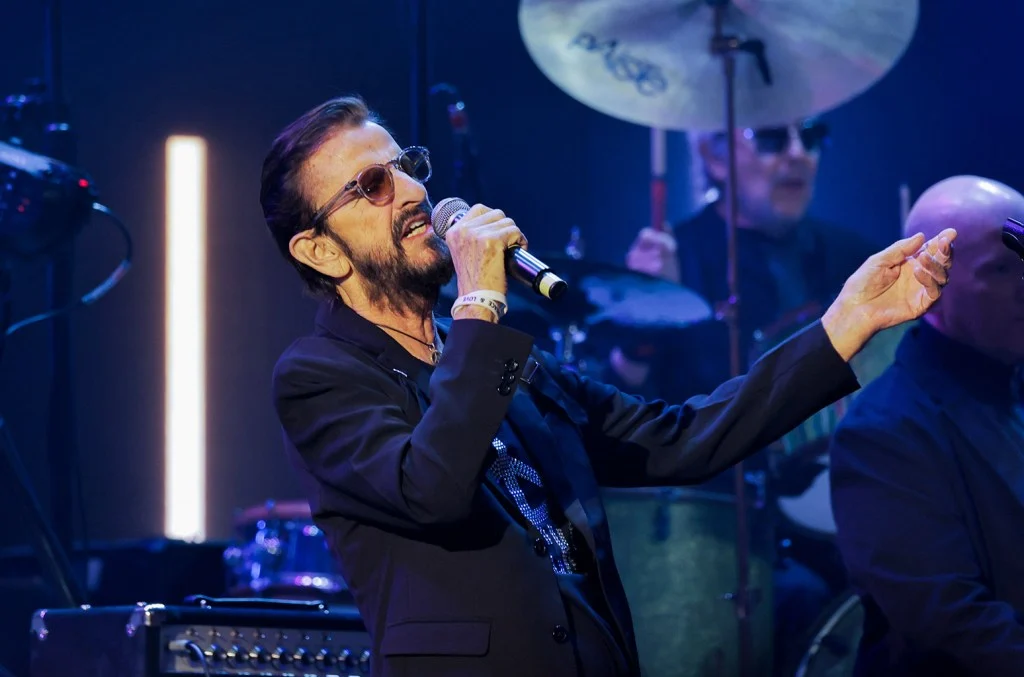
Ringo Starr has long loved country music as evidenced on his most recent album, Look Up, released in January.
The Beatles drummer brought that love to life with two concerts taped at Nashville’s Ryman Auditorium Jan. 14-15 that CBS and Paramount+ will air tonight (March 10) as Ringo & Friends at the Ryman.
In this exclusive clip, Starr, with a little help from friends like Jack White, performs the Carl Perkins rockabilly classic “Matchbox,” which the Beatles covered on their 1964 EP, “Long Tall Sally.”
Other “friends” in the special include Sheryl Crow, Emmylou Harris, Mickey Guyton, Jamey Johnson, Rodney Crowell, the War and Treaty, and Billy Strings and Molly Tuttle, both of whom appear on the album with Starr. The artists join the drummer for selections from the new album, Starr’s solo hits and Beatles classics.
Trending on Billboard
“I did love country music before I was in [the Beatles],” Starr told Billboard earlier this year. “We got plenty of it in Liverpool, because the lads who were in the merchant navy would bring not only rock and roll over, but country — and when country bands went on tour in England, they always played Liverpool.”
In addition to the performances, luminaries including Dolly Parton and fellow Beatle Paul McCartney share stories on Starr’s impact on their music.
Gunpowder & Sky’s Van Toffler produced the special with Starr and T Bone Burnett, who also produced Look Up.
“Producing Ringo & Friends at the Ryman with T Bone has been another wild ride — some of music’s finest playing the hell out of Ringo’s songs, including a few Beatles classics,” Toffler tells Billboard. “We handpicked a lineup of artists who not only have deep respect for Ringo’s legacy but could also bring their own unique spin to these songs, highlighting the great stories and messages behind them. Watching them reinterpret his music — whether through full-throttle rock energy or a stripped-down, soulful take — was a testament to just how timeless his songs are. And having Dolly, Lainey Wilson, and his fellow Beatle, Paul, talk about his love of country artists brought it all full circle, making the night even more meaningful.”
Working with Burnett enhanced the production, Toffler says. “T Bone is one of the greats: His encyclopedic knowledge of music and deep roots in so many legendary projects helped shape this into something truly special.”
Other Gunpower & Sky productions include its documentary on Crow, Sheryl (Showtime); the history of soft rock Sometimes When We Touch (Paramount+) and Lil Peep: Everybody’s Everything. Its Words + Music audio series features Beck, Eddie Vedder, Smokey Robinson and others, while new audio series Lighters in the Sky highlights the stories behind the greatest live performances from artists including Amy Winehouse, Bruce Springsteen and Led Zeppelin.
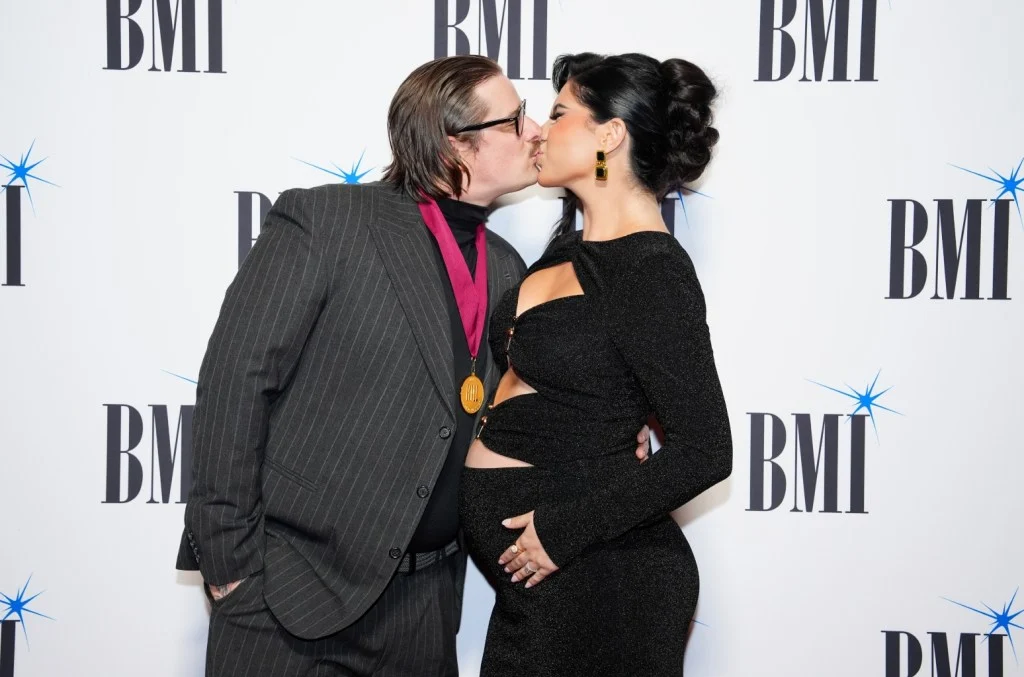
HARDY and Caleigh Ryan are celebrating the arrival of their newborn baby. Rosie Ryan Hardy arrived on March 7, 2025 at nine pounds, two ounces, the country singer and his wife announced on social media, two days after Caleigh gave birth. The pair were showered with messages of congratulations on their Instagram post Sunday (March […]

Ingrid Andress will never sing the National Anthem again. “I’m sorry, America,” she says.
The 33-year-old country singer is referring to the disastrously disheveled, off-key rendition of “The Star-Spangled Banner” she delivered last July before the home-run derby at Major League Baseball’s All-Star Game. The minute-and-a-half clip went viral, and not in a good way. It has drawn 2.5 million YouTube views and 2,500 comments, including this one: “Thank you Ingrid for helping my uncle out of his coma with this performance. When he heard your performance on the hospital TV, he woke up after 10 years and jumped out of the window.”
Publicly, Andress responded to the debacle with damage control, announcing in a statement that she had been “drunk” during the performance and immediately checked herself into a “facility.” She then disappeared until Feb. 28, when she performed the anthem for the second time, at Denver’s Ball Arena, before her home-state Colorado Avalanche beat the Minnesota Wild. The performance went much better this time.
Explore
Explore
See latest videos, charts and news
See latest videos, charts and news
Privately, Andress spent the past eight months dealing with what she stops short of labeling “alcoholism” — although she went to rehab, worked through the experience through prolific songwriting, including “Footprints,” a low-key country single Warner Music Nashville released this week, and allowed herself “the space to process.” She realized during this reflection that splitting from her longtime boyfriend and manager last year affected her more than she had admitted to herself. And, rather than allowing herself to “grieve” these losses, she threw herself into work — and, yes, alcohol.
Trending on Billboard
This was Andress’ combustible emotional state in the run-up to the All-Star Game. “I just kept plowing forward and that’s when I started losing track of how much I was drinking, not sleeping enough,” she says, in a phone interview from her Nashville home. “It took a significant moment, like botching the Anthem on a global level, for me to ask for help.”
Below, she unpacks that moment further, and how she’s responded in the eight months since.
What made you pick the Avs game as the venue for coming back and singing the National Anthem?
Growing up, the Avs were my team. I felt more comfortable in my home state and more at home. Why not go back there, where I feel the most centered and grounded?
How did the Avalanche respond to the idea? Were they at all put off by your history with the Anthem?
I’ve played shows in Colorado, and people know, “She can sing, and this was just an unfortunate happening of events that got captured and went viral.” They were excited, which helped my confidence a little bit.
Artists say the “Star-Spangled Banner” is a dangerously hard song to sing.
It is a challenging song. It tricks everyone’s brain into thinking that anyone can sing it. When you actually look at the range of notes, it compliments no one’s voice. But as it turns out, not being intoxicated and singing it makes it very doable.
In addition to the negative feedback, how much did people respond with empathy?
In the heat of all the hate is when I received the most support and love from my peers and friends and people who care about me. I obviously have never been part of anything that publicly humiliating before. I was devastated, embarrassed, disappointed in myself. To have that support of people who’ve also been there — that really helped.
How much did you plunge into songwriting as therapy?
I did, later. Initially, I took the space to separate myself from, “Who am I as a human, separate from singing, separate from songwriting? How did I get to a point where I didn’t really care how I sang?” The first part of stepping away from it was getting back to life, being in Colorado, going snowboarding. Once I felt like myself again, I got back into writing and producing, and some of the songs I hadn’t listened to in months hit differently.
What was the rehab experience like?
Rehab was more of an emotional deep dive. Anything can be substance abuse. It’s not just alcohol, it’s gambling, it’s food, it’s sex, it’s anything we use to numb or not want to feel something. Rehab for me was understanding the “why.” And once you know why you do something, it gives you your power back. You realize you have a choice and you don’t have to use substances or items or whatever to numb yourself. Since then, I’ve been looking at everything so differently and I’m present and clear-headed.
How long was the rehab process?
I was there for a little over a month and I was in no rush to get back to the public. Honestly, I was scared to come back too soon, because everybody was so harsh and critical, and that’s not an easy thing to mentally come back from.
How accurate is it to use the word “alcoholism” for what you were dealing with in your rehab?
It was never called that — but obviously everyone’s level in their journey in how they got there varied so much. That was never really a discussion when I was there. It was more about the month leading up to that day [of the Anthem performance] than anything.
What was that month like?
I made some pretty drastic changes all at once. I’ve only had one manager my whole career, and I had to let her go. Then a longterm boyfriend who lived with me — I said goodbye to him. All that happened within two weeks.
I took everyone’s advice, which is “keep it moving.” I felt like I couldn’t be sad because I was the one who parted ways with them. I didn’t give myself any space to grieve. It drastically changed who was around me every day of my life. Management is like a marriage. Then [losing] your boyfriend living with you is like losing your best friend. Two key people in my life were gone because I had made that decision.
What else have you learned from this experience?
You should ask for help the moment you need it. Never wait until something terrible happens. I did not have the insight to do that in the months leading up to the anthem. I’m glad it did happen. I was going down a road that was unfamiliar, and I didn’t know where it was going to lead. I’m in such a better place now. I feel like I’m back to being myself.

Even as a child, singer-songwriter Caylee Hammack realized the power of storytelling. She grew up immersed in stories — whether from the adventures embedded in the songs of musical influences such as Dolly Parton and Kate Bush, or in the pages of Harlequin romance novels she read as a teen.
Explore
Explore
See latest videos, charts and news
See latest videos, charts and news
“I remember in elementary school, I would charge my friends a dollar to tell [them] scary stories or mysteries,” she recalls to Billboard. “It got to the point where I was like, ‘I could build a business from this.’”
The Ellaville, Georgia native first tried to write her own book at age 13 and made another attempt a few years later, ultimately letting that hope go — or so she thought.
Trending on Billboard
“I just told myself, ‘This is never going to be something you can do,’” she says. “And I hate that little voice — that I actually listened to it — but I put that dream away.”
Instead, she made an impact relating her stories through song: releasing her debut country album If It Wasn’t For You in 2020, collaborating with Chris Stapleton on “Small-Town Hypocrite,” recording with Miranda Lambert as part of the ACM Award-winning musical event of the year “Fooled Around and Fell in Love,” and picking up a pair of nominations for the ACM’s new female artist of the year.
But on her latest Capitol Nashville project, Bed of Roses, out today (March 7), Hammack fulfills that childhood dream.
Bed of Roses comes with a companion, a 240-page romance novel. Each book chapter corresponds to a song on the album, such as “No I Ain’t,” “The Pot & The Kettle” and “Bread & Butter.”
Sam, the protagonist in the book Bed of Roses, finds herself stuck in rural Homestead, Texas, after her vintage car breaks down. There she meets Jack, the owner of the only mechanic shop in Homestead. His grandmother offers Sam a place to stay in exchange for help in her flower shop. Sam agrees in a decision that opens her eyes to all the charms of the small town.
“What I wanted to do was hone in a woman listening to her intuition, listening to her gut, and wise women that have come before her and experienced the same things,” Hammack says. “Finding your own community–whether it’s people you’re related to or people that you’ve met along the way that feel as if they’re related to your soul. I just really wanted a romance novel that had a sturdy, steadfast building of love. I love the bad boy tropes, but I’ve loved him a little too much in real life. For once, I would like to have a story where you want to root for the good guy.”
Hammack co-authored the book with one of her long-time favorite writers, New York Times best-selling author Carolyn Brown, who has written more than 140 romance books, including Ladies Room, The Dove, and her most recent, The Party Line, which Hammack calls a favorite.
“We would work 8-10 hours a day or more, just going back and forth. I was a tennis player growing up and I think of it as the most beautiful, consistent volley of ideas and creative energy,” Hammack recalls.
Hammack says the songs on the album chronicle Sam’s story, but also Hammack’s own journey: “If you listen to the album top to bottom, you get my story, my progression through lessons and experiences in the past 10 years. If you listen to it backwards, from bottom to top, and you read the book, then you get [the book’s protagonist] Sam’s story.”
The album is filled with songs that delve into self-love and knowing one’s limits, such as “No I Ain’t.” “I just kind of wrote it from personal experience,” she says. “I wanted one song that I could sing back to myself, or that someone could sing to themselves, where if you’re not strong enough right now to make the decision to love yourself more, that this can be a mantra to choose what is best for you. ‘I’m putting barbed wire around my boundaries,’ meaning I’m going to protect myself.”
Hammack credits her team at UMG Nashville with setting the dual book-album project into motion, noting that the album’s songs were inspired by consistencies in the romance novel genre as a whole — and those songs then sparked the idea for the book itself.
“I had told my label how I had based different songs [on the album Bed of Roses] off romance novels, and the tropes and dynamics of them. I like when tropes are used well and cleverly, so I look at songs as books — there are certain rises and falls you have to hit. [The label executive] had been meeting with a literary agent. I think he misunderstood because he said that I had an idea for a romance novel. But when I heard that this literary agent wanted to meet with me and talk about this romance novel idea, I automatically started thinking of characters and the whole book just exploded in me.”
The digital version of the book Bed of Roses is available now, while physical copies of the book will be released in June. Hammack says that could be just the first in a series of books ahead.
“I have ideas sketched out for two different books coming off this book. I would love to continue the story of the families and the people related around the Bed of Roses. I love captivating people and taking them to another place, opening their mind a bit. That’s what you get to do with music, too. You get to comfort, you get to awaken people, you get to excite people, but you also get to just be a refuge for people if they’re heartbroken. I hope that’s what this album and book is.”