State Champ Radio
 Business
Page: 66
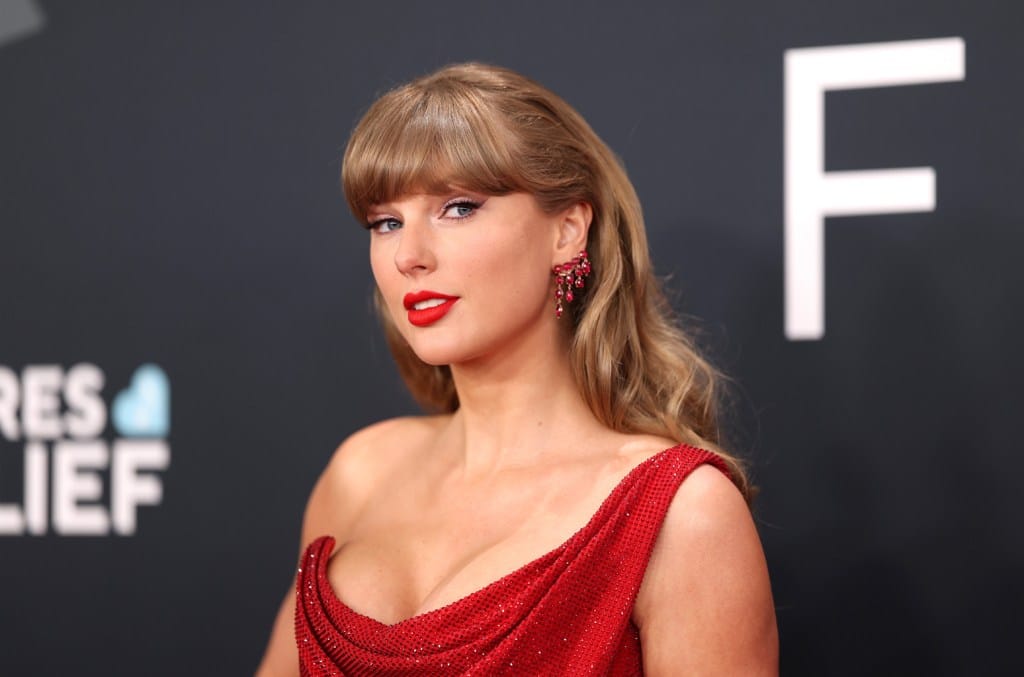
Taylor Swift has been hit with a subpoena that officially drags her into the tense legal drama between her friend Blake Lively and Lively’s It Ends With Us director and co-star Justin Baldoni. And the pop star’s reps aren’t happy, saying the move is “designed to use Taylor Swift’s name to draw public interest by creating tabloid clickbait instead of focusing on the facts of the case.”
The subpoena, reportedly sent to Swift by Baldoni’s legal team, makes her a witness in the messy legal battle over alleged sexual harassment, retaliation and defamation stemming from It Ends With Us, which was released last year.
But Swift’s representatives say she has no place in the fight between Baldoni and Lively.
“Taylor Swift never set foot on the set of this movie, she was not involved in any casting or creative decisions, she did not score the film, she never saw an edit or made any notes on the film, she did not even see ‘It Ends With Us’ until weeks after its public release, and was traveling around the globe during 2023 and 2024 headlining the biggest tour in history,” a spokesperson for Swift tells Billboard.
“The connection Taylor had to this film was permitting the use of one song, ‘My Tears Ricochet,’” Swift’s rep adds. “Given that her involvement was licensing a song for the film, which 19 other artists also did, this document subpoena is designed to use Taylor Swift’s name to draw public interest by creating tabloid clickbait instead of focusing on the facts of the case.”
The It Ends With Us litigation dates back to December, when Lively brought claims alleging Baldoni sexually harassed her on the set of the film and then orchestrated a public relations smear campaign to retaliate against her after she complained.
Baldoni vehemently denied the claims and countersued Lively for defamation and other wrongdoing in January. Baldoni’s suit said Lively leveraged her close relationship with a “megacelebrity friend,” presumed to be Swift, to take control of the movie.
The Baldoni filing includes text messages concerning an alleged meeting attended by “Ryan and Taylor,” seemingly referencing Swift and Lively’s husband, Ryan Reynolds. In one message sent by Lively, the actress called Swift and Reynolds her “most trusted partners,” comparing them to the “dragons” in the show Game of Thrones.
“The message could not have been clearer,” Baldoni’s lawyers wrote in the countersuit. “Baldoni was not just dealing with Lively. He was also facing Lively’s ‘dragons,’ two of the most influential and wealthy celebrities in the world, who were not afraid to make things very difficult for him.”
Baldoni and Lively’s lawyers did not immediately return requests for comment Friday (May 9).

It’s no secret that Canadian festivals have been facing hard times.
The post-lockdown years have seen high-profile festivals filing for creditor protection, like Montreal’s comedy behemoth Just for Laughs; scrambling to reorganize or downsize programming, like Toronto Jazz Festival and Calgary’s JazzYYC, after TD withdrew sponsorship; or cancelling editions altogether, like Toronto food and culture festival Taste of the Danforth.
Of course, major festivals closed before the pandemic, too, for a range of reasons. And many festivals wind down naturally, through generational or leadership shifts. But Erin Benjamin of the Canadian Live Music Association agrees that festivals are facing a difficult landscape in the years after 2020.
“COVID ripped up the playbook,” she tells Billboard Canada.
“The cost of goods and services and labour and talent is extremely high,” Benjamin adds. “And it continues to go up.”
Audience habits have shifted, too. She notes that festival-goers are definitely buying tickets later, leaving event planners with cash flow troubles.
In its 2025 Hear and Now report, the Canadian Live Music Association states that in 2024, the problem stretched beyond Canada. “Cancelled tours and festivals due to lower ticket sales, rising costs, and environmental impacts has led to overall industry decline,” the authors write. “High prices for top acts are exhausting fan budgets leaving less for mid-range artists.”
International mega-music festivals aren’t immune. After slow ticket sales in 2024, more than half of Coachella’s 2025 general admission attendees bought tickets through payment plans.
When festivals shut down, people lose a connection to local history and a chance to meet their neighbours. Benjamin adds that arts workers lose livelihoods, while local communities lose economic impact.
If the live industry is facing hurdles, it’s also true that music tourism is still a popular vacation choice. “We’ve got to capitalize on that music tourism piece here in Canada,” Benjamin says. “We have incredible infrastructure already. We need to take care of our infrastructure, need to continue to create opportunities for artists.”
Benjamin adds that each level of government — municipal, provincial and federal — has a role to play in harnessing that potential.
Every festival faces its own particular set of circumstances that help secure or shut down the next edition. But it’s clear that conditions across the industry are putting pressure on festivals, from Newfoundland to British Columbia.
For a list of festivals that have closed or called for support, head here. – Rosie Long Decter
Craig “Big C” Mannix Joins CMRRA as Industry Relations Consultant – Community Engagement
The Canadian Musical Reproduction Rights Agency (CMRRA) is making a key hire to reflect the diversity of Canadian music.
Craig “Big C” Mannix has joined the CMRRA as industry relations consultant – community engagement.
An influential figure in the Canadian music industry, Mannix has served as vp of Black music at Universal Music Canada; held roles at Sony Music Entertainment, EMI Music Canada and Virgin Records Canada; and had a founding role with ADVANCE, Canada’s Black Music Business Collective. He has also played a key role in developing the careers of major Canadian names like Kardinal Offishall, K-os and Pressa.
The CMRRA is one of the leading reproduction royalty distribution agencies in Canada. It distributed $96 million in royalties in 2024, a 23% increase from 2023. That growth was significantly driven by music on TikTok, where royalties increased by 126%. Mannix looks to continue working with creators moving forward.
The CMRRA also reported a 50% increase in international revenues, highlighting the importance of global potential in the current Canadian music landscape. Mannix’s role specifically focuses on community engagement and deepening relationships with underrepresented music communities.
“I’m thankful for the opportunity to work with CMRRA. My love for music and art is what brought me into this business over 35 years ago — and it’s what’s kept me in it,” says Mannix about his latest career chapter. “I’ve always focused on driving culture with integrity, passion, and decency. I’m looking forward to connecting with more creators and communities through this new role.”
CMRRA is turning 50 this year. In a special industry newsletter, president Paul Shaver celebrated the organization’s growth.
“We have over 7,000 clients worldwide and a well-earned reputation across the industry for being efficient, technology-forward, client-focused, and trustworthy,” Shaver wrote in the newsletter. “Many of these clients represent hundreds or thousands of songwriters, further amplifying our global reach and impact.”
As global reach improves, it’s also important to focus on the communities that exist within the country. Royalty distribution is an important sector of the country’s music industry, and CMRRA is making strides to open it up to the full diversity of Canadian musicians. – Stefano Rebuli
Toronto Music Experience to Open a Permanent Museum by 2029
Toronto’s music scene is getting its own museum.
The Toronto Music Experience (TME) has unveiled plans to launch a permanent cultural home by 2029, commemorating the city’s worldwide impact through music.
The TME announced plans for its expansion on Monday (May 5) at a private event at Live Nation’s The Lounge in Toronto featuring artists including Rush’s Alex Lifeson, Jully Black and Lorraine Segato.
The organization announced that it has been granted charitable status, which means it can go ahead with fundraising, partnerships and community engagement as part of its five-year plan towards its permanent home.
TME’s goal is to highlight Toronto’s musical past, present, and future through immersive exhibits, pop-up activations, live performances and education initiatives. It aims for a storytelling approach, highlighting the achievements that have shaped the city’s music scene, from its historical Indigenous roots to the global impact of superstars like Drake, The Weeknd and Rush.
The museum fulfills the city’s need for a hallmark representation of its impactful musical legacy that is currently missing.
“We don’t have a museum devoted to what is arguably Toronto’s biggest cultural phenomenon, its biggest international export,” TME board director and longtime music journalist Nicholas Jennings told Billboard Canada in November 2024. “This is an untapped area for the city, and there is a need for it, because we’re losing some of these stories.”
TME has been actively telling these stories through a number of exhibitions in partnership with Friar’s Music Museum, located in a Shopper’s Drug Mart at Yonge and Dundas, the former home of the Friar’s Tavern music venue. TME hosted its first-ever live show experience with the Sound of Rhythms & Resistance concert at TD Hall in November 2024, serving as an extension of its “Rhythms & Resistance” exhibit in 2021.
“The success of the two exhibits that we’ve held at Friar’s has shown us that there’s an appetite and a market for something more permanent,” Jennings said.
TME wants to incorporate a mix of production, retail and café spaces as well as pop-up exhibits, pairing music education alongside interactive experiences featuring memorabilia.
“Our mission is to build an experiential space where artifacts meet immersive experiences in tribute to the artists, communities, and cultures that make our city sing,” says Denise Donlon, a music industry and broadcast executive and member of TME’s advisory board. “It’s a powerful way to celebrate our past and inspire the next generation of creators.” – SR
The festival business has struggled to find its footing this summer, but one production company is finding success in the festival space with a new strategy: smaller, lighter footprint events.
Tomorrow, Activated Events will open its sixth Boots in the Park festival for 2025 in Santa Clarita, Calif., with Old Dominion headlining and support from Nate Smith, Josh Ross, Mackenzie Porter, Noah Rinker and more. The one-day festival combines food, beverage and live music, with a price tag of $59 for general admission (GA) when tickets first go on sale in January, with the price steadily climbing as the event gets closer (GA tickets are currently priced at $119, with VIP tickets going for $255.)
The Boots in the Park brand is the culmination of Activated Events president Steve Thacher‘s decade-plus in the music business, first with the launch of Wet Electric in 2010 — a Las Vegas-style dance and electronic show held at waterslide parks in the southwest. That evolved into the launch of Coastal Country Jam in Huntington Beach, Calif., and then Boots in the Park starting in 2017.
“Our festivals are more boutique than some of the other major country and mainstream festivals,” Thacher tells Billboard. Indeed, Boots in the Park events range in size from 10,000 to 20,000 and don’t include camping or overnight visitors.
In 2025, Activated will host Boots in the Park festivals in Bakersfield, Calif.; San Diego; Las Vegas; Fresno, Calif.; Albuquerque, N.M.; and Tucson, Ariz. Thacher notes that Activated works closely with city leaders to create “a more intimate and personalized experience than some of the larger festivals.”
“Our fans love that they can enjoy 10 hours of some of the best country music and still sleep in their own beds at the end of the evening,” Thacher tells Billboard, noting that Boots in the Park’s California festivals all take place one to two months after the massive Stagecoach country music festival in Indio, Calif., that’s regularly attended by more than 80,000 fans.
“We think there is a place for both boutique festivals as well as large festivals to exist in the same market,” Thacher says. “The benefits of being an independent festival producer has allowed my team and I to really know our events, brands, and customers extremely well. It also allows our creative side to come out. When we come up with a fun idea, whether it be a new art installation, a fun festival activity, discover a new venue or curating amazing lineups, we get to have fun letting our creativity run wild.”
Being independent, however, does come with its challenges, especially when it comes to booking talent and competing against the big corporate promoters with much larger budgets.
“Fortunately, all of the artists that have played our festivals appreciate the level of production, hospitality and full houses of fans,” says Thacher. “This has made the country artists want to come back and continually play Boots In The Park, Coastal Country Jam and The Smoke Show. “We have developed the trust and respect of the artists, management and agents in Nashville and they feel confident that the artist will be well looked after when they play our events.”
One of the keys to their festivals’ success, Thacher explains, is making sure fans feel like they’re getting a good value for the money they spend on tickets.
“Boots In The Park is more than just a music festival, it’s a full day of immersive experiences. Beyond the incredible live performances, fans can jump into line dancing lessons, sample a variety of 101 unique whiskeys at our curated tastings, and compete in cornhole tournaments for a chance to win exclusive meet-and-greet opportunities with the artists,” he says. “The event also features interactive art installations that add a creative and memorable touch, making it a well-rounded celebration of music, culture and community.”
Boots in the Park takes place this Saturday in Santa Clarita. For more, visit bootsinthepark.com.

An anonymous artist is suing Uproxx for $15 million, claiming the media company’s production director sexually assaulted and harassed her at industry events, including a music festival, as well as at a Miguel video shoot.
In a lawsuit submitted to state court in Los Angeles on Thursday (May 8), the lawyer for a woman going by Jane Doe says she’s the victim of a “sustained campaign of sexual harassment, assault, stalking, fraud and workplace misconduct” by Uproxx creative production director Steven Victor Vasquez Jr.
“Defendants’ actions encompassing coerced sexual encounters, nonconsensual distribution of intimate images and persistent stalking constitute a profound violation of plaintiff’s fundamental rights to bodily autonomy, privacy and professional dignity,” writes Doe’s attorney, James Bohm. “These acts have inflicted severe emotional trauma, physical harm and substantial economic loss.”
Doe, a Phoenix-based artist published by Warner Chappell, allegedly met Vasquez at a February 2024 Grammy brunch event hosted by Uproxx. Warner Music Group (WMG) owned Uproxx at the time but has since sold the entertainment news and production company. (WMG is not named as a defendant in the complaint.)
According to Doe’s attorney, Vasquez lured her into a series of unwanted sexual encounters by promising to secure her collaborations with Uproxx and lucrative deals with brands like Sour Patch Kids, Zillow, Sparkling Ice and McDonald’s.
In June 2024, for example, Vasquez allegedly convinced Doe to attend “The Gorge music festival” (seemingly Beyond Wonderland at The Gorge) with him in Washington state. There, he apparently “pressured her to share a room, plied her with alcohol and psychedelic mushrooms and appeared naked in her bed without consent, committing sexual assault.”
Doe’s lawyer says Vasquez also forced her to look at pornographic images while on a trip to the Dominican Republic and engaged in other inappropriate behavior during an Uproxx event at Howard University and a video shoot for the R&B singer Miguel.
“Vasquez gaslighted plaintiff, accused her of fictitious affairs, attempted to terminate an employee for complimenting her and pressured her for unprotected sex,” writes Bohm.
The lawsuit says Doe tried to cut off contact with Vasquez in December 2024, but he flew to her home in Arizona and demanded sexual favors, leading her to call the Phoenix Police Department. Vasquez continued to harass her with “messages, videos, sexually explicit images and gifts” through April 2025, Doe’s lawyer alleges.
The lawsuit brings a total of 16 claims, including sexual harassment, sexual battery and stalking, and it seeks more than $15 million in damages from both Vasquez and Uproxx.
Bohm declined to comment on the lawsuit Friday (May 9). Vasquez and Uproxx’s representatives did not immediately respond to Billboard’s requests for comment.
A spokesperson for the Phoenix Police Department confirmed to Billboard that it did receive a report about the alleged December 2024 incident but says no arrests were made.

Private equity’s involvement in the active market for music catalogs continues to be a sore subject at one of America’s finest literary outlets.
“There are vested interests now that don’t want new music to flourish,” music historian Ted Gioia told The Atlantic. “The private-equity funds just want you to listen to the same songs over and over again, because they own them.” A similar argument — or warning — came last year from The New York Times, which bemoaned that “private equity is destroying our music ecosystem” and “gobbling up the rights for old hits and pumping them back into the present.” Gioia made the same argument in 2022 at his Substack publication, The Honest Broker, which The Atlantic later republished.
Not only are these big investors contributing to old music’s dominance, the arguments go, but record companies’ dedication to the past is hurting the music of the present — both in terms of quality and its share of listening on streaming platforms. Record labels “don’t spend any money on research and development to revitalize their business, although every other industry looks to innovation for growth and consumer excitement,” Gioia dubiously wrote in 2022.
Okay, so private equity has a bad reputation — sometimes deservedly so — for its involvement in unbridled capitalism. Think of the infamous leveraged buy-out, in which investors borrow money to acquire an underperforming company. The buyer inevitably makes drastic changes, often including mass layoffs and selling off subsidiaries. The company may be resuscitated. But if the endeavor fails, it may also go bankrupt (see iHeartMedia) or be sold for parts by the creditors (see EMI Music).
But blaming private equity for the current state of music — whatever it might be, but I’ll get to that below — shows a misunderstanding of institutional investments in music assets. Private equity firms aren’t interested in making their purchases popular — they invest in catalogs that never stopped being popular. The rise of streaming platforms made music an attractive asset class because the royalties became more predictable, and that evergreen nature of desirable catalogs fits into institutional investors’ desire for steady, low-risk returns. It’s true that new releases account for a minority of on-demand music streams. In 2024, the share of catalog — releases more than 18 months old — stood at 73.3% of on-demand audio streams, according to Luminate. That was up from 66.4% in 2020.
But, as Billboard noted in 2022, the rise in catalog’s share of streaming can be attributed to “shallow catalog” rather than legitimate oldies. Shallow catalog is relatively young music that has aged out of the current category but, with the help of streaming platforms’ playlists, remains relevant far longer than radio hits of decades past.
According to Luminate’s 2024 recap, nearly half — 49.6% — of U.S. on-demand audio streams were songs released in the 2020s, and about 90% of streams came from songs released this century, the same percentage as when Billboard ran the numbers three years ago.
To believe that old catalog is crowding out new releases, you’d have to think that the major labels’ partnerships with private equity have infected their desire to develop and break new hits. In 2024, Universal Music Group invested in Chord Music Partners, which was co-founded by Dundee Partners and KKR (the latter exited Chord last year). This year, Warner Music Group bought a majority stake in Tempo Music, while founder Providence Equity Partners retains a minority stake.
If these owners of music portfolios are trying to sabotage young artists, they’re doing a lousy job. The old catalogs prized by private equity-backed investors — music from the ‘60s, ‘70s and ‘80s — accounted for just 5.7% of streams in 2024. That’s roughly 1 in 19 streams coming from music that originated before the Gulf War.
To say that old classics crowd out new music assumes the music business is a zero-sum game with an equal number of winners and losers. It’s not. An opportunity won by an old song doesn’t necessarily equate to a loss for a younger song. A Post Malone track might work fine for an action scene in a Vietnam War-era film, but the director is going to prefer Creedence Clearwater Revival’s “Run Through the Jungle” almost every time.
Catalog valuation expert Citrin Cooperman recently ran across an example that shows music’s value isn’t finite. Between 2022 and 2024, after an older generation started streaming music during the pandemic, catalogs from the ‘80s outperformed music from other decades. But the surge in ‘80s music “has not crowded out newer music,” says Citrin’s Barry Massarsky. “It’s just added more value to the supply of music on streaming.”
The touring business offers more proof that young artists aren’t being hamstrung by their predecessors. Billboard Boxscore’s top tours of 2024 includes numerous newcomers whose careers took off after private equity fell in love with music. The No. 3 artist on the list, Zach Bryan, released his first major label album in 2022. Bad Bunny, who finished at No. 9, released his breakthrough album, YHLQMDLG, in 2020. Elsewhere in the Top 40 are several relatively young artists, including Luke Combs (No. 11), Karol G (No. 12), Travis Scott (No. 13) and Olivia Rodrigo (No. 14).
The top tours list does feature legacy acts that have — or easily could — sell their catalogs for large sums, such as Coldplay (No. 1), Bruce Springsteen (No. 5), The Rolling Stones (No. 6) and U2 (No. 7). But there’s also Noah Kahan (No. 29), who broke just three years ago, and K-pop group SEVENTEEN (No. 31), who didn’t land on a U.S. album chart until 2022.
But what about claims that the quality of today’s pop music is lacking? Since I’m not the best person to make qualitative statements about the state of pop music, I talked to some Billboard co-workers who follow trends, interview artists, review concerts and generally have their fingers on pop music’s pulse. They gave me sober assessments of current music that contrasts with The Atlantic’s naysaying.
One reason today’s pop music could seem suffocated by the past is because listening has become personalized and fractured. Numerous co-workers point out that radio- and MTV-driven hits have been replaced by countless niches and sub-genres. Dig deep enough and you’ll find innovative and meaningful music that isn’t surfaced by TikTok and Spotify algorithms.
Catalog’s apparent dominance could also be the result of newer ways to measure popularity. “Streaming has made catalog success stories more visible,” says Billboard’s Jason Lipshutz. “We can see how long the classic Christmas singles linger around the top of streaming playlists every holiday season or hear The Neighbourhood’s ‘Sweater Weather’ soundtrack more TikTok clips with every new autumn.”
And as Billboard’s Andrew Unterberger notes, the revival of old songs didn’t start in either the private equity or TikTok-streaming eras. The Everly Brothers’ 1965 hit “Unchained Melody” re-entered the Hot 100 chart due to its inclusion in the 1990 motion picture Ghost. In 1992, the movie Wayne’s World breathed new life into Queen’s “Bohemian Rhapsody.” The Dirty Dancing soundtrack, filled with songs from the early ‘60s, was a huge success in 1987. People have always relived the past — especially on radio — but now it’s more obvious.
Maybe the quality of today’s music isn’t a problem in the first place. “In the last 18 months or so, I think we’re actually in the healthiest time for pop music of the last decade — definitely of the 2020s,” says Unterberger. Since the pandemic, which Unterberger believes coincided with a drought in future superstars, artists such as Chappell Roan, Sabrina Carpenter, Kahan and Bryan became hitmakers and arena-fillers without following traditional industry blueprints. “People like that are saying something a little different or saying something a little bit more specific to their times,” he says.
There’s some evidence that pop music was especially potent in 2024. MIDiA Research noted last week that from 2016 to 2023, the top tracks in the U.K. had a decreasing share of total audio streams, with the top 10’s share falling from 2.0% in 2016 to 0.7% in 2023 while the top 100 dropped from 10.3% to 3.7%. But both figures reversed course in 2024: the top 10 inched up to 0.8% and the top 100 rose slightly to 3.8%. What’s behind the increase? MIDiA attributes it to a particularly notable year for superstar releases (Taylor Swift, Beyonce) but also “a new class of superstars” (Carpenter, Roan, Gracie Abrams) and an A&R process that puts developing stars over signing TikTok viral hits.
It’s not a stretch to say today’s pop music isn’t as deep as, say, Joni Mitchell’s “Big Yellow Taxi.” The opening line, “They paved paradise, put up a parking lot,” provides more social commentary than the average pop song. But maybe critics like Gioia are expecting too much from stars of the current era. Billboard’s Lyndsey Havens notes that artists seem unwilling or uninterested in commenting on potentially divisive issues and are instead focusing on relationships rather than cultural or political commentary. “Sabrina Carpenter’s ‘Espresso’ is catchy, and it was obviously a huge hit, but it’s not saying anything,” she says.
That’s not private equity’s fault, though. That’s the era we live in. People don’t get their politics from musicians the way they did when the U.S. had only three national TV networks and people received their news from one or two local papers. In the internet age, politics and cultural issues permeate everything. Infusing controversial themes into music is like talking politics during Thanksgiving dinner — somebody is likely to feel alienated. Popular artists don’t want to divide people. At the end of the day, says Havens, pop songs “are doing their job.” Maybe the best lesson here is not to over-romanticize the past. The classic catalog sales that grab headlines don’t necessarily represent the most popular music of their day. “Big Yellow Taxi” — which Mitchell has not sold, by the way — has become a timeless classic, but was less popular than dozens of other tracks while reaching No. 67 on the Hot 100 in 1970 and No. 24 in 1975. “Even at the most innovative moments in pop music history,” says Unterberger, “there was still dreck on the charts.” Additional reporting by Liz Dilts Marshall.

Rock isn’t dead — it just dresses that way.
On May 7 at the Uber Arena in Berlin, I saw Ghost, the Swedish hard rock act, in all its guitar-riff glory, complete with creepy costumes, spooky stained-glass projections and pyro effects. Much of this is pretty standard for arena rock. In other ways, though, the Ghost show looked very 2025 — fans in makeup, dressed as characters, and discussing the “ritual,” which is what Ghost calls a concert. Singer and auteur Tobias Forge performs as a character from the band’s “lore,” a complicated fictional backstory that involves a sinister church and its leaders. It’s a cinematic universe of sorts — beloved by fans and slightly confusing for the uninitiated. Forget concept albums — Ghost plays concept rock.
To fans, Forge isn’t performing as the singer and sole creative force of Ghost — he’s in costume playing Papa V Perpetua, the latest in a series of popelike leaders of a fictional church. The other musicians, also in costume, are “nameless ghouls,” whose real identities are never announced, although fans inevitably seem to discover who they are. (This seems like a convenient fiction, but the same might be said of a “band” in which the musicians work for the lead singer.) Before Forge played Papa V Perpetual, he performed in character as Papa Emeritus, Papa Nihil and Cardinal Copia. And his real name wasn’t even known until it was revealed in a 2017 lawsuit over royalties.
This might sound impressively nerdy — and it is, in a really fun way. But it did not prevent Ghost from scoring a No. 1 album this week with Skeletá. (The accent, like the metal umlaut, seems to be silent.) Indeed, it seems to help Ghost appeal to devoted fans. Skeletá, the first hard rock No. 1 album in four years, sold and streamed 86,000 equivalent units in the U.S., of which 89% came from sales, and 44,000 from vinyl alone, according to Luminate. (The band released 15 variants on vinyl, three on CD and four on cassette.) Worldwide, according to the band’s management, it sold more than 89,000 vinyl copies of Skeletá in its first week.
It’s unusual for a rock band to sell so many albums these days — especially a rock band that’s determinedly a rock band, rather than a pop act with rock band characteristics. Some of my colleagues were surprised, as was I. Maybe we shouldn’t have been, though. Rock still has mass appeal — it’s just more obvious from concert ticket sales than streaming numbers. And although Ghost isn’t reinventing the genre musically — the band plays catchy and compelling hard rock, without much in the way of new sounds — it presents what it does in a very innovative way.
The Ghost experience is made for modern Internet-savvy fans, from the YouTube videos that tell the elaborate backstory, to the comic book series that fleshes it out, to the “GTV” faux-news “Ghoulbangers Ball” segments that let the band cover its own “rituals.” It has its own fan army of sorts, since about a fifth of the attendees at the Berlin show seemed to dress up for the occasion. At the risk of offending fans on all sides, Ghost offers an entire world for fans to dive into, in a slightly similar way that K-pop does, only with the trappings of prog-rock concept albums, rather than pop-idol-worship.
This might sound absurd. But many artists who are loved, rather than merely liked, offer some kind of world to explore, some manner of lore to learn. It’s hardly ever described as such, of course, but the effect isn’t so different. At this point, understanding in any detail the twists and turns of Drake’s feud with Kendrick Lamar means spending some serious time online. For that matter, so does knowing which songs the Grateful Dead tend to play in the first or second set, which is something that I learned decades ago because I felt it really mattered, for reasons that I am now unable to remember, and if I did would be embarrassed to share. This is part of the fun of loving an artist. Ghost just delivers that experience in an especially wild way. There’s plenty of hard rock style — references to Satan and so forth — as well as a distinctly prog-rock love of Latin. The first Ghost album was Opus Eponymous, which is the second-coolest Latin album name after Amon Düül’s Phallus Dei.
I could only really experience this from the outside; I didn’t have enough time to dive in very deeply, and if you asked me what Skeletá was about, I’d have to say that it’s about 45 minutes. The band’s management estimates that about half of the people who see Ghost in concert know some of the lore, which is pretty impressive. Ghost may operate like a cult band. But any act that’s touring arenas with a No. 1 album has gone far beyond the usual definition of the term.
The only big act that seems remotely comparable to Ghost is Sleep Token, another prog-influenced hard rock act that plays with masks and anonymity. (The group’s members are Vessel, and musicians who go by II, III and IV.) It also markets its music and mystique online, and its new album, Even in Arcadia, is expected to debut near, if not at, the top of the charts next week. Sleep Token is musically different from Ghost, of course, and the band has its own concept — and its own cult. But it shows that there’s life in rock yet — even if it looks undead.

So far in 2025, the No. 1 slot on the Billboard 200 albums chart has regularly been filled with some familiar faces: SZA, Lil Baby, Bad Bunny, The Weeknd, Kendrick Lamar, Drake, Lady Gaga, Ariana Grande. So this week’s chart — with Swedish hard rock band Ghost, as shadowy and mysterious as its name implies, coming in at No. 1 with its latest album Skeletá — may seem like an anomaly to most casual music fans in the U.S.
But it’s not a surprise to Ghost’s longtime fans, nor to its label, Loma Vista. And for those paying attention to the group’s growing lore over the years, it seems like it may have been a long time coming. Since first debuting on the Billboard 200 in 2013 with Infestissumam (No. 28), the group has steadily climbed up the chart with each subsequent full-length studio album: 2015’s Meliora (No. 8) was its first top 10, followed by 2018’s Prequelle (No. 3), 2022’s Impera (No. 2) and now, Skeletá’s chart-topping debut, which marked the group’s biggest sales, streaming and equivalent album unit mark in its career so far. And with that steady growth, not to mention the big album week, Loma Vista director of marketing Todd Netter is Billboard’s Executive of the Week.
Here, Netter breaks down the band’s growing fan base, the clever marketing tactics that went into Skeletá’s rollout and what this could mean for the band, and the hard rock genre, overall. “There are a ton of decisions, small and large, that go into a successful marketing campaign,” Netter explains. “A successful album marketing campaign really is a series of interconnected decisions, tied together by strategy, creativity and execution.”
This week, Ghost landed its first-ever No. 1 album on the Billboard 200 with Skeletá. What key decisions did you make to help make that happen?
With Ghost, our goal is to always make creative decisions with clear intent at very pointed moments, like which songs to lead with and what the vehicle is for rolling those songs out and when; how to eventize the album announcement to generate maximum attention and enthusiasm amongst their large global fan base; and how to rev up that fan base going into release day. An example of such a decision was committing to creating “The Satanizer” — a first-of-its-kind music video experience for fans who wished to be “Satanized” — which was the title of Ghost’s first single, launched alongside the album announcement. “The Satanizer” morphed its users into characters featured in the song’s melodramatic music video.
With a quick upload of their photo, “The Satanizer” sent out a personalized music video clip featuring the participant, who in turn could share via social media that they too had been “Satanized.” Strategically, it was a decision to create a moment at the launch of the campaign that personalized the experience of new Ghost music while simultaneously encouraging fans to create UGC on their socials. A powerful one-two punch that drew die-hard fans in while inviting other more casual music fans to pay attention. And, most important, it was a decision to have fun with this album campaign from its very launch.
This is the band’s fourth full-length top 10 album in the past decade, with each release achieving a higher position each time. What has gone into helping them build their career to get to this point?
We at Loma Vista fundamentally believe Ghost’s music and their vibrant fan community is for everyone. They have a sound and general appeal that draws people in. So we’ve made a very concerted effort at developing their passionate and creative fan community. It’s an immersive fan experience, rewarding for the most committed of fans and welcoming to the curious. An experience rich in storyline — we call it “lore” — chock full of creative content, loaded with call-to-action drivers for the fan base, and all culminating in real-world activity for the fans to attend, be it pop-up events, concerts — aka “rituals” — or feature film cinema screenings. It’s a fan-focused experience that is constantly evolving, mysterious, fun and always centered around the music of Ghost. And this has proven great for attracting more fans, be it by word-of-mouth, or simply by being a beacon to those who feel misunderstood but are proud of their creative and unconventional points of view in terms of music and culture. Focusing on Ghost’s fan community has allowed us to expand their audience size and the impact of the band, album over album, for the last decade.
The album also made a global impact, debuting at No. 1 not just in the U.S. and in Ghost’s native Sweden, but also in countries like Australia, Germany, Belgium and Switzerland, and at No. 2 in the U.K. How did you set it up to make such a big debut worldwide?
It starts with our unwavering belief that Ghost’s music is universal. We’ve always seen our marketing campaigns for Ghost albums as worldwide endeavors. As a label, we have a global footprint with label marketing teams located in key cities across the globe including London, Berlin, Toronto, Mexico City, Sydney and Tokyo, allowing us to strategize, prep and execute globally. So any time we cook up an initiative or fan activation, we have teams positioned around the world to help us ensure the idea is executed properly in local territories, be that via social media, real-world events, or via hybrid experiences where we blend the two things.
A great recent example of that in our Skeletá album campaign were the Midnight Sales and the complimentary online album countdown event that we staged to celebrate the release of the new album. I knew we had a global fan base, one that loves to dress up and participate with other fans. I also knew Ghost’s sound and aura can harken back to previous eras of rock’n’roll, and that the album’s release was heavily anticipated by the band’s passionate fan base. We created Skeletá-Eve Midnight Sales, a series of events at 150 independent record stores around the globe, where fans could gather, listen to the album together for the first time and purchase it the minute the clock struck midnight. And for fans not near one of these many stores, we created Skeletá Rockin Eve, a global live stream event where fans tuned in at midnight locally to count down together the release of Ghost’s new album and hear new music. Coordinated timing-wise, thematically complementary, and global in scope. An example of how our strategy and execution allow us to cultivate a global fan base and have a major impact with Ghost’s music around the world.
Ghost has a very particular aesthetic and look. How did the marketing campaign for this album differ from prior releases, and from other acts on the label?
Ghost are the most unique-looking band in music. They stand out, and the way they look is an instant attention-grabber for any onlooker. But it’s not just sensational — their appearance has a very strong creative point of view and a sophisticated design intent. They challenge norms and push boundaries in terms of rock’n’roll presentation, and music fans gravitate toward that.
That said, I’m not sure our approach on this album cycle differed so much as it evolved. Their photos, wardrobe, stage design and overall aesthetic continue to elevate, album over album, and so our marketing campaigns aim to match that elevation. We look at every visual facet of our marketing campaign, be it vinyl jacket materials, music videos, band photos, band store merch, social media platforms, magazine covers, out-of-home billboards, etc., as an opportunity to establish Ghost’s creative point of view, to leave a meaningful impression on their fans and the public in general. As the band’s growing popularity collides with loftier opportunities coming their way, it enhances our ability to enrich the band’s overall aesthetic, music presentation and visual world. Our marketing campaigns have always been heavily integrated with the band’s aesthetic, so it was an evolution on Skeletá, not a different approach.
The album represented Ghost’s biggest sales week ever, but also its biggest streaming week ever. How did you balance each to get such a big debut?
The easiest explanation is the band’s audience grew a ton. Following a very successful IMPERA album campaign, viral TikTok moment for “Mary On A Cross,” and a No. 1 feature film, Rite Here Rite Now, the band simply had a lot more fans. That said, the Ghost fan base is not a monolith, nor is the music consumption landscape these days. I knew we needed a comprehensive plan to tackle all the different ways people listen and consume music these days, to best understand what motivates people to listen and how they choose to do so.
We had specific marketing plans for each streaming service, with specific platform targets and goals so that we could best position the band and their music. We took a similar approach with physical formats, creating 30 vinyl formats worldwide, as well as multiple CD and cassette formats, working with specific retailers from independent record stores to big box stores to boutique online retailers. The final component was creating a really rich and rewarding experience on the band’s webstore, offering special formats and early access to drive home the connection between the band and their fans. The music consumption landscape is fractured these days. We understood we’d never be able to funnel fans to one place, so instead we dug in and really catered to every platform and retailer’s strengths and customer base, to reach Ghost fans where they were.
This is also the first time in four years that a hard rock album has reached No. 1 on the Billboard 200, since AC/DC’s Power Up in 2020. What is the significance of that for the genre, and what can you take away from that?
I’m a little hesitant to wax poetic about knowing exactly what Ghost’s accomplishment can mean for a whole genre of music. Nor do I think of Ghost as simply a rock band. I do think their music, presentation and overall appeal transcend genre — they’re simply Ghost in my mind. But so far as I can offer a little professional and personal insight into what this means for hard rock, it never hurts when a band achieves something big like this for other bands in their genre. It shines a light on a sound and puts the genre in the zeitgeist alongside arguably more popular genres and artists. The spotlight should open doors for other bands and labels looking for opportunities, as it’s “proof,” in an industry validation sort of way, that the sound and genre have some cultural cachet.
I think with real people, average music fans and listeners, genres are becoming less and less important. Most people’s tastes bounce all over the place and artists are constantly crossing genres and audiences. More anecdotally speaking, and where my optimistic side takes over, maybe Ghost hitting No. 1 on the album charts inspires some young kids to pick up a guitar or learn to play the drums, instead of opening up a laptop, and a whole new generation of bands are formed.
This is Loma Vista’s first-ever No. 1 album on the Billboard 200. What does that mean for the label?
It’s terrific! We made a promise to our roster of artists that we’d match their vision and aspirations for their music and their careers. And this might sound cliche, but this team of people wakes up every morning with that artist commitment front of mind. None of us are personally motivated by accolades or awards. Instead, Ghost debuting at No. 1 drives home what we believe as a label: that with great music, strong creative vision, a commitment to collaboration, hard work, and an unwavering belief that anything is possible, special things will happen. A No. 1 album on the Billboard 200 reinforces that we’re right about the philosophy we take when signing and working with artists. And if I’m honest, it’s also just a really fun week for a record label when one of their artists goes No. 1.

Live Nation is asking the U.S. Supreme Court to overturn a ruling last year that said the concert giant couldn’t enforce “opaque and unfair” arbitration agreements against ticketbuyers, warning the justices that the scathing ruling “creates massive uncertainty.”
The decision, issued in October by a lower court, said the contracts Live Nation had forced concertgoers to sign – requiring them to resolve disputes via private arbitration — were “so dense, convoluted and internally contradictory” that they were “borderline unintelligible.”
But in a petition to the Supreme Court this week, Live Nation says that the decision must be reversed, warning it would have “far-reaching consequences” for how arbitration works and could potentially cause massive headaches for companies that have long relied on such agreements.
“If allowed to stand, the decision below will enable mass arbitration plaintiffs to continue their abusive strategy of racking up procedural costs to the point of forcing the defendant to capitulate to a settlement, rather than proving their allegations,” Live Nation’s lawyers write. “These highly disruptive consequences reinforce the need for review.”
The appeal to the Supreme Court comes in a class-action lawsuit accusing Live Nation of violating federal antitrust laws by monopolizing the market for concert tickets and engaging in “predatory” behavior. Filed in 2022 on behalf of “hundreds of thousands if not millions” of ticket buyers, the case claims Live Nation and Ticketmaster abused their dominance to charge “extraordinarily high” prices to consumers.
Faced with those allegations, Live Nation argued that fans had waived their right to sue in court when they bought their tickets because they had signed arbitration agreements — a common requirement when purchasing tickets and other services from many companies.
In rejecting that argument in October, the U.S. Court of Appeals for the Ninth Circuit ruled that Live Nation’s agreements were “unconscionable and unenforceable” since they would make it “impossible” for fans to fairly pursue claims against the company.
“Forced to accept terms that can be changed without notice, a plaintiff then must arbitrate under … opaque and unfair rules,” the appeals court wrote at the time. “The rules and the terms are so overly harsh or one-sided as to unequivocally represent a systematic effort to impose arbitration as an inferior forum.”
The ruling described Live Nation’s agreements in scathing terms, calling them “so dense, convoluted and internally contradictory to be borderline unintelligible” and “poorly drafted and riddled with typos.” The terms were so confusing, the court said, that Live Nation’s own attorneys had “struggled to explain the rules” during a court hearing.
The criticism centered on Live Nation’s decision to alter its terms of use to require fans to submit to “novel and unusual” procedures for “mass arbitration.” That new process, offered by an upstart arbitration firm called New Era ADR, was aimed at handling many cases at once rather than individually, which Live Nation believed was necessitated by aggressive tactics from lawyers representing huge numbers of concertgoers.
But in rejecting that new process, the Ninth Circuit said Live Nation was essentially trying to have its cake and eat it too: “Defendants sought to gain in arbitration some of the advantages of class-wide litigation while suffering few of its disadvantages.”
In this week’s petition to the Supreme Court, it was Live Nation’s turn to level criticism – calling the Ninth Circuit’s ruling a “deeply flawed decision” that exemplified the kind of “judicial hostility” to private arbitration that’s prohibited under federal law.
“The Ninth Circuit’s decision below flouts [federal arbitration law], defies this court’s precedents, and threatens to block sensible measures for addressing the new phenomenon of mass arbitration filings,” the company’s lawyers write.
The plaintiffs in the case will file a response in the weeks ahead, and the justices will decide whether to take the case at some point in the next few months. Reps for both sides did not immediately return requests for comment.

“Your record collection defines who you are; your book collection defines who you want to be.” — Will Page
When e-books were first introduced in 2007 (Amazon’s Kindle followed by Barnes & Noble’s Nook in 2009, and Apple’s iPad in 2010), people were loudly ringing the death knell for printed books. Digital devices had convenience and portability, and digital books could be instantly downloaded and consumed. Why would anyone choose to carry around or deal with a cumbersome printed book, or go to a bookstore, or have it delivered days later by Amazon, when 200 books could be held on a lightweight digital device, such as the original 1st Generation Kindle, and read immediately?
With the added decline of CDs and DVDs, the dominoes quickly fell; the 642-store Borders chain filed for bankruptcy in 2011, and Barnes & Noble closed its flagship store in early 2014 and separated out its Nook division. By 2018, Barnes & Noble had closed 400 stores.
Fast forward to 2023, when Barnes & Noble opened 30 new stores, and to 2024, when it opened 57 new stores (more than the total it opened between 2009 and 2019). It recently announced it would be opening an additional 60 stores in 2025.
Trending on Billboard
Incredibly, physical books now outsell digital books 4 to 1. What changed?
It seems that even younger readers have come to prefer the tactile experience of holding a physical book and being able to easily navigate through pages, and see an advantage in retaining information and focusing when reading on paper rather than on digital screens. Kids and teenagers now gather at bookstores after school, as they have come to see them as safe spaces, and regularly show off their books on BookTok. What lessons can the music business learn from what happened with the book business?
Let’s look at the arc of recorded music. Music formats went from vinyl to 8-track and cassette to DAT and CD. With the introduction of digital file sharing and downloads with Napster in 1999, and streaming music starting with Rhapsody in 2001 and then Spotify in 2009, it seemed that physical records were destined for the wastebin of history (and like so many others, I foolishly gave away or sold for peanuts my vinyl and CD collections). Digital music streaming posed the question of why anyone would need to “own” music when it could be listened to immediately on demand from a limitless library of virtually all music ever recorded, literally at one’s fingertips, from any location.
The record business followed a pattern similar to that of the book business. Major labels sold their vinyl pressing plants and let go of their manufacturing employees, and many of the pressing machines were sold for scrap (Bertelsmann alone reportedly scrapped 150 machines). In 2006, record store chain Tower Records closed all of its 89 U.S. stores and filed for bankruptcy, as did Sam Goody (which at one point had approximately 800 U.S. locations).
Streaming took over completely once the industry fully embraced it, and it now represents about 90% of all music consumption.
Just like printed books, vinyl albums have, incredibly, made an enormous comeback, with sales increasing for 18 straight years and representing U.S. sales of over $1.4 billion in 2024 (and predicted to be over $3.5 billion by 2033). What’s the throughline?
Simply put, human beings are built to socialize and interact with each other and “things” in person in real life, not online — and it’s finally catching up with us. People desperately need the slowed-down, tactile interactions that have been largely absent, particularly amongst Gen Z, who have grown up predominantly in the fast-moving digital world. Although there is clearly enormous benefit to people connecting and interacting globally via the web and social media, there are also significant downsides: isolation, echo chambers, addictions, social comparisons, loneliness, depression, self-harm and even suicide have risen significantly in the digital age (as have mass shootings). Are physical locations the antidote?
Bookstores and record stores are part of a breed of what are called “third spaces”, a term originally created in the 1980s by sociologist Ray Oldenburg. Third spaces refer to “a physical location other than work or home where there’s little to or no financial barrier to entry and where conversation is the primary activity.” As Barnes & Noble stated in its recent press release, “Our stores have become popular social spots.”
In a 2022 article in The Atlantic, Allie Conti described third spaces as “physical spaces for serendipitous, productivity-free conversation” which “incentivize lingering”, where one can learn “the art of hanging out,” “mingle and make small talk with strangers” and where there is always “the possibility of a wildly unexpected spontaneous encounter.”
However, with people frequently spending their leisure time in solitude in front of their personal screens at home, consuming digital media (movie theater attendance is on the decline as well), “the simple act of spending time with new people can be an unnecessarily complex challenge.” Young people will have to learn new skills and flex new muscles for third spaces to thrive. For example, according to one study, almost half of men aged 18-25 have never approached a woman in person to ask for a date. Kathy Giuffre, a professor at Colorado College, says “socializing is a learned skill,” and “a world made up of atomized, physically isolated people is a world without a true shared reality — which is a recipe for civic disengagement, misinformation, and perhaps even political extremism.”
Bookstores and record stores also offer a way to be around like-minded people in real life who have similar interests, creating the possibility of forming new bonds. Many famous musicians credit their time working in record stores as having given them a musical education they wouldn’t have otherwise received (and in some cases, it’s where they actually met their future band members). Keith Richards, Axl Rose, Slash, Iggy Pop, Dave Grohl, Rivers Cuomo, Jeff Tweedy, Nels Cline, Aimee Mann, Nikki Sixx, Nelly Furtado and Peter Buck are but a few, and many have cited musical suggestions made by record store clerks as leading them to what became their favorite music. One could argue that record stores might actually be better “third places” than bookstores because music is always playing, clerks are knowledgeable music fans themselves, and customers are regularly chatting and interacting.
The rebirth and growth of record stores beyond Record Store Day has already begun. Rough Trade recently tripled the size of their store in New York City’s Rockefeller Center, and Waterloo Records was recently purchased from its founders by new owners who plan to relocate and expand it. Vinyl record and high-end equipment retailer Supervinyl in Los Angeles has become a “go-to” destination for music aficionados and artists alike. Innersleeves, a local independent record store in the Hamptons, recently doubled the size of its physical space and even added a small stage for musical performances. Tower Records has 80 locations in Japan. And “vinyl listening bars” built with expensive high-end sound systems and curated musical collections inspired by bars in Japan have been opening up in major cities across the U.S.
If U.S. record store chains return as well, they’d be smart to take a page out of Barnes & Noble’s playbook when it comes to the physical design of its stores. The manager of each B&N store is given a free hand (even including how the B&N logo appears) to make it feel more like a local independent bookstore with localized aesthetics rather than an invading mass chain that looks exactly the same in all locations. The goal is to “create a more intimate, community-focused, books-first experience.” And many of the new stores even have a B&N Café, which record stores could adopt to emulate the “coffee house” circuit where many musicians of the ‘60s and ‘70s launched their careers and built local fan bases. As streaming music levels off and consumer patterns change, vinyl records, record stores and listening bars as “third places” could be a boon to the physical record business — provided our industry truly embraces the big opportunity which is staring it in the face (“AlbumTok,” anyone)?
Fred Goldring is an entrepreneur, entertainment lawyer and co-founder of Pressing Business, a vinyl record and CD manufacturer, and record labels Flatiron Recordings and Label 51.

Bad Bunny is facing a lawsuit over allegations that a track from his chart-topping Un Verano Sin Ti featured an unlicensed sample from a Nigerian artist – and that the superstar’s reps later “stonewalled” efforts to resolve the problem.
In a copyright case filed May 2 in Los Angeles federal court, attorneys for the artist Dera (Ezeani Chidera Godfrey) claim that Bad Bunny’s “Enséñame a Bailar” illegally sampled from a 2019 track called “Empty My Pocket.”
Dera’s lawyers say they’ve raised the issue with reps for Bad Bunny and others behind the song, but that they’ve “turned a blind eye” and left him with “no choice but to file this lawsuit.”
Trending on Billboard
“It is not very often that a musical artist of Bad Bunny’s caliber and sophistication uses someone else’s music without permission, and then ignores the person’s efforts to resolve the problem,” writes Dera’s attorney Robert A. Jacobs, a litigator at the top music law firm Manatt Phelps & Phillips. “Such a response is especially surprising when the unauthorized use pervades the entirety of the musical artist’s work. Unfortunately, these are the circumstances here.”
The lawsuit also names as defendants The Orchard, which distributed the album, and Bad Bunny’s Rimas Entertainment, among others. Representatives for both Bad Bunny and The Orchard did not immediately return requests for comment.
Released in 2022, Un Verano Sin Ti was a mega-hit – spending 13 weeks atop the Billboard 200 and more than 150 weeks total on the album chart. “Enséñame a Bailar” was a hit in its own right, charting on the Hot 100 for two weeks and earning 72 million views on YouTube.
In his lawsuit, Dera says Bad Bunny’s song was essentially built on top of his “Empty My Pocket” – that the usage is so “extensive” that the sampling itself is “beyond question.”
“Plaintiffs’ works comprise virtually the entirety of the musical bed and a portion of the lyrics in the infringing recording and infringing composition, and, as such, account for a significant portion of the appeal of the infringing works,” his lawyers write.
They claim access to Dera’s song was provided producer Lakizo (Lekan Adesina), but that he had no authority to clear the use of the sample: “Lakizo … is not an author of ‘Empty My Pocket’ … and does not have – and never had – the right to prepare or authorize others to prepare derivative works.”
According to the lawsuit, when Dera discovered the unauthorized sample he tried to negotiate a good-faith resolution with Bad Bunny’s team, saying he wanted to “address past unauthorized uses” but also “allow future uses.” He says he also “unconditionally complied” with requests to substantiate his claim, including sharing documents showing that Lakizo had not been authorized to clear the sample.
“Despite plaintiffs’ cooperation, these defendants stonewalled plaintiffs after receiving the requested information, making clear that plaintiffs’ only option for obtaining redress for the violation of their rights would be through the courts,” Dera’s lawyers write.