State Champ Radio
 Business
Page: 57
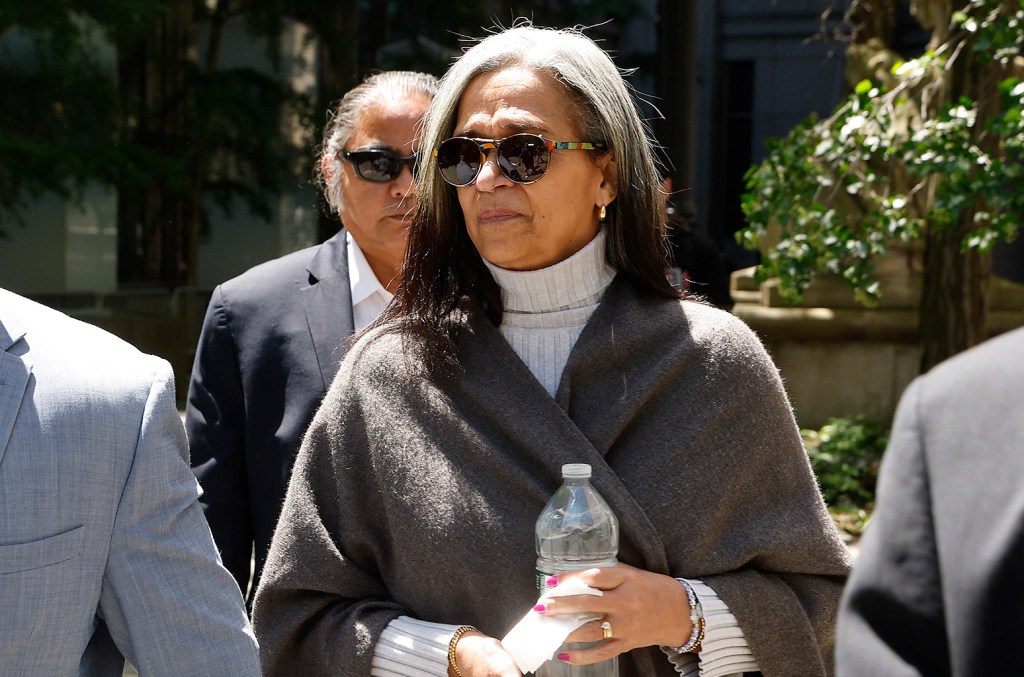
Several new witnesses took the stand Tuesday at Sean “Diddy” Combs’ sex-trafficking trial, including a male escort named “The Punisher” and Cassie Ventura’s mother, who testified that she was “scared for my daughter’s safety.”
Regina Ventura told jurors that she documented the physical abuse Cassie suffered from Combs, who prosecutors claim coerced the younger Ventura and others into participating in drug-fueled sex shows known as “freak-offs.”
The elder Ventura later testified that she once wired $20,000 to Combs’ company in 2011 after Cassie told her that the rapper was threatening to release a sex tape of her, according to the New York Post and other media outlets — allegedly because he was enraged at her romantic relationship with Kid Cudi: “I was physically sick,” she testified, before adding, “I was scared for my daughter’s safety.”
She later said the money, which she obtained by taking out a home-equity loan, was returned days later and she had no contact with Combs about it.
Later in the morning, jurors heard testimony from Sharay Hayes, a male exotic dancer who goes by the nickname “The Punisher.” He testified that he attended as many as 12 freak-offs, and that Combs often closely directed how he and Ventura were to have sex.
Combs was indicted in September, charged with running a sprawling criminal operation aimed at facilitating the freak-offs — elaborate events in which Combs and others allegedly pressured Ventura and other victims into having sex with escorts while he watched and masturbated. Prosecutors also say the star and his associates used violence, money and blackmail to keep victims silent and under his control.
Once one of the music industry’s most powerful men, Combs is accused of racketeering conspiracy (a so-called RICO charge), sex trafficking and violating a federal prostitution statute. If convicted on all of the charges, he faces a potential life prison sentence.
Defense attorneys maintain that Ventura and other women consensually took part in the sex parties. They’ve admitted that Combs had committed domestic violence during his and Ventura’s “toxic” relationship and had unusual sexual preferences, but that he had never coerced her into participating in his “swinger” lifestyle.
Tuesday also saw testimony from David James, Combs’ former personal assistant, continuing his testimony from Monday; and Gerard Gannon, a federal law enforcement agent who led the headline-grabbing raid of Combs’ house in Miami last spring that turned up guns and huge amounts of baby oil.
Cudi himself is expected to take the witness stand later this week, where he will potentially be asked about an infamous incident in which Combs allegedly set his car on fire as payback for his brief relationship with Ventura.
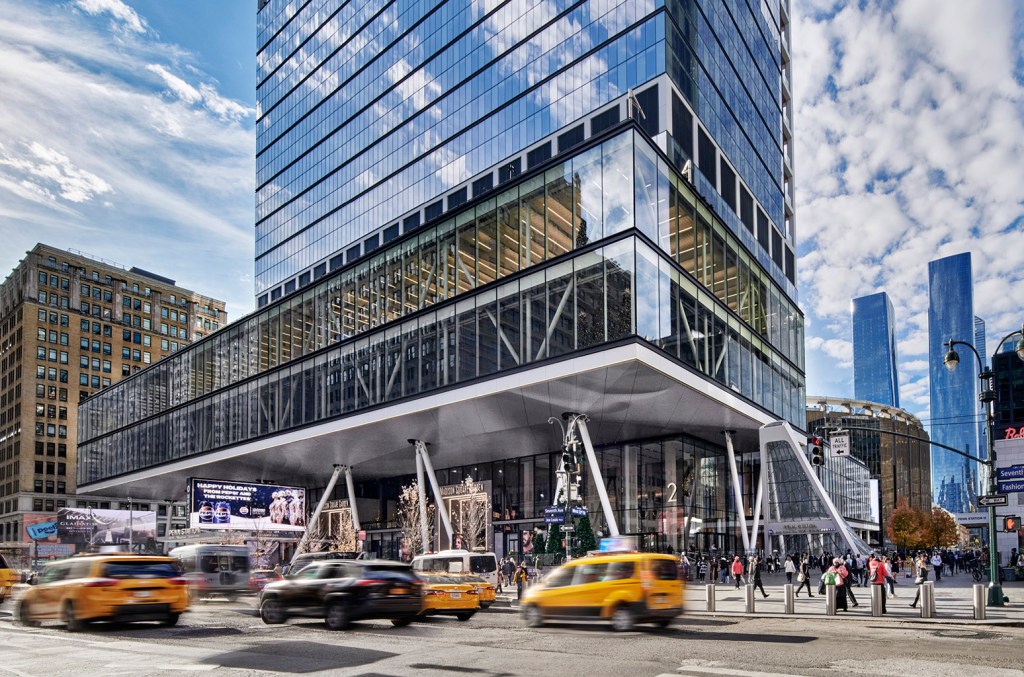
Universal Music Group (UMG) announced on Tuesday (May 20) that it will move its East Coast headquarters to Penn 2, a recently redeveloped building that sits on top of the transportation hub Penn Station. “Located in the heart of Midtown Manhattan and literally adjacent to Madison Square Garden, one of music’s most storied venues where […]
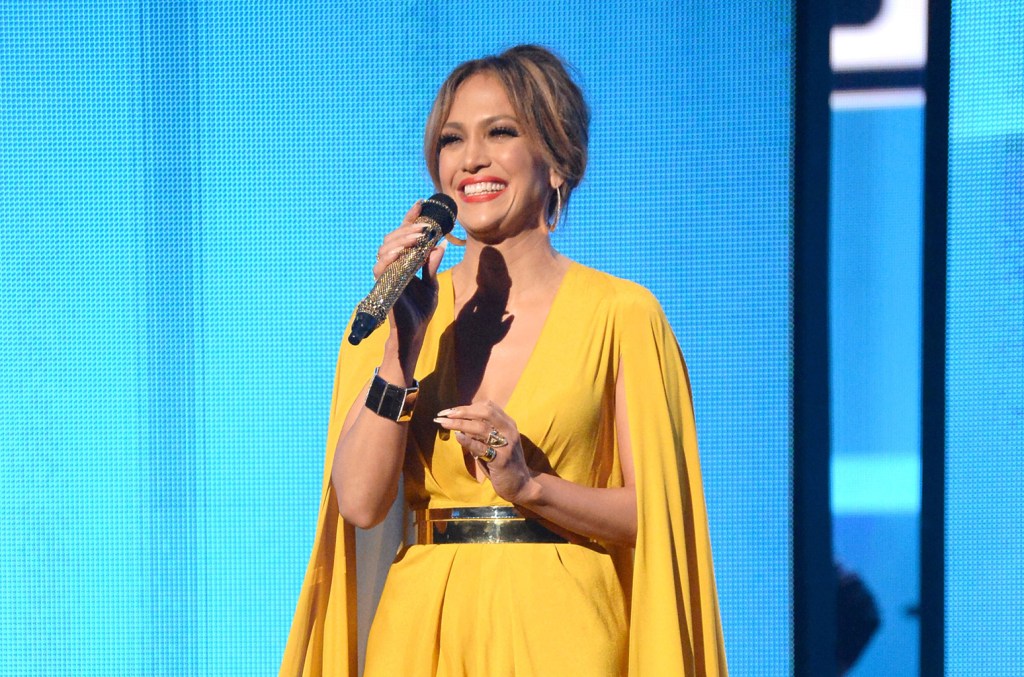
THE BIG STORY: Jennifer Lopez is facing copyright lawsuits over paparazzi pictures — of herself.
In complaints filed this week in federal court, photographer Edwin Blanco and photo agency BackGrid USA accused the star of violating their rights by reposting images of herself outside a Golden Globes pre-party in January.
A star getting sued for posting a picture of herself might sound unusual, but it’s exceedingly common. Over the last few years, Dua Lipa, Miley Cyrus, Justin Bieber, Ariana Grande, Emily Ratajkowski, LeBron James, Katy Perry and others have all faced similar cases.
Unfortunately for J. Lo, the law is pretty clear: Photographers own the copyrights to the images that they take, and using them without a license constitutes infringement. Simply appearing in an image does not give a celebrity co-ownership of it, nor does it give them the right to repost it for free.
As we’ve written here previously, that probably seems unfair to stars hounded by paparazzi. When Khloe Kardashian was hit with such a case in 2018, she said as much: “They can legally stalk me and harass me and then on top of it all I can’t even use the pictures of myself they take LOL what the f— is this,” the reality star wrote on social media.
Trending on Billboard
Those arguments haven’t gotten much play in court. When Ratajkowski was sued, she briefly argued she had legally re-used an “exploitative image” to criticize the “harassing and relentless behavior of paparazzi.” But the vast majority of these cases quickly end in small settlements — and the Lopez case is unlikely to be any different.
For all the details on the case against J. Lo, go read our story on the new lawsuits from Billboard‘s Rachel Scharf. And for more details on how these cases work, go read my in-depth explainer.
You’re reading The Legal Beat, a weekly newsletter about music law from Billboard Pro, offering you a one-stop cheat sheet of big new cases, important rulings and all the fun stuff in between.
Other top stories this week…
DIDDY TRIAL CONTINUES – The sex-trafficking trial of Sean “Diddy” Combs continued into its second week, first with more bombshell testimony from star prosecution witness Cassie Ventura — about Kid Cudi, a $20 million settlement and more vivid allegations of abuse. The singer was then cross-examined by defense attorneys, who showed jurors huge numbers of her emails and text messages — some loving, others sexually graphic — in an effort to prove she was a willing participant in the so-called “freak-off” sex shows at the center of the case. Friday (May 16) and Monday (May 19) were dominated by testimony from Danity Kane singer Dawn Richard, who said she saw Diddy repeatedly attack Ventura, including once with a frying pan and another time at a restaurant with Usher and other celebs present. The trial is expected to run until early July.
POSTY CUSTODY FIGHT – Post Malone legally opposed efforts by his ex, Hee Sung “Jamie” Park, to move their two-year-old daughter to California, arguing that the child has lived in Utah most of her life and should remain a resident there. The filing came in response to a custody petition filed by Park last month, seeking sole physical custody of the girl following their split in November.
COVID COLLUSION? The Justice Department is conducting a criminal antitrust investigation into whether Live Nation and AEG illegally colluded in their concert refund policies at the beginning of the COVID-19 pandemic. The probe was first reported by Bloomberg and later confirmed by Live Nation, which strongly denied any wrongdoing: “It is not illegal for artist agents, promoters and ticketing companies to work together to solve the unprecedented challenges of a global pandemic,” said Dan Wall, the company’s regulatory chief.
“INFLAMMATORY ACCUSATIONS” – Days after sending subpoenas to Taylor Swift and her lawyers, Justin Baldoni’s attorneys made a shocking claim that Blake Lively asked Swift to delete text messages and used “extortionate threats” to try to get a statement of support from the pop superstar. Those allegations, credited to an anonymous source and denied by Lively’s lawyers as “categorically false,” were later thrown out of court by a federal judge, who called them a “misuse of the court’s docket” by Baldoni’s attorneys: “The sole purpose of the letter is to promote public scandal by advancing inflammatory accusations,” the judge wrote.
DRAKE CASE IS “DANGEROUS”? A group of legal scholars warned a federal judge that Drake’s defamation lawsuit against Universal Music Group over Kendrick Lamar’s “Not Like Us” was “dangerous” because it would have a “chilling effect” on hip-hop and encourage prosecutors to use rap lyrics as evidence in criminal cases. The professors, hailing from UC Irvine, said that diss tracks are a form of creative expression, not a “series of news reports” — and that Drake’s case threatens to “deny rap the status of art and instead to flatten lyrics into literal confessions.”
TERMINATION LITIGATION – Salt-N-Pepa sued Universal Music Group to win back control of their masters, claiming in a new lawsuit that the music giant has stonewalled their use of copyright’s so-called termination rights. Rather than accepting the move, the case claims UMG has instead “punished” the legendary hip-hop duo by removing some of its music from streaming and holding its music “hostage.”
DURK LYRICS BATTLE – Federal prosecutors fired back at Lil Durk’s “false narrative” that they’re unfairly using his lyrics against him, arguing that he was indicted because of a “brazen murder plot” and not because of his music. Weeks after the feds removed all musical references from the case, they argued they still had more than enough to charge him for murder-for-hire: “Defendant was charged for his murderous conduct, not his lyrics.”
SMOKEY POLICE REPORT – Attorneys for the housekeepers suing Smokey Robinson for sexual assault confirmed that they had filed a police report against the 85-year-old Motown legend, leading the Los Angeles County Sheriff’s Department to open a criminal investigation. The singer’s attorneys said such a probe was automatically required after the filing of a report, and said they “welcome that investigation”: “We feel confident that a determination will be made that Mr. Robinson did nothing wrong.”
LIL NAS X CASE TOSSED – A federal appeals court dismissed an unusual lawsuit accusing Lil Nas X of copying Instagram posts by a freelance artist and model named Rodney Woodland, who claimed the rapper stole his distinctive semi-nude poses and used them in his own IG posts. The Ninth Circuit ruled that the disputed images “share few similarities” and Lil Nas likely never saw them anyway.
SHEERAN AT SCOTUS – Ed Sheeran urged the U.S. Supreme Court to finally end one of the long-running lawsuits claiming his “Thinking Out Loud” infringed Marvin Gaye‘s “Let’s Get It On.” The star’s lawyers said the case, filed by a company that owns a partial stake in Gaye’s 1973 song, was rightfully dismissed by a lower appeals court in November, which ruled that the two tracks share only basic “musical building blocks.”
TUPAC/BIGGIE COPYRIGHT CASE – A pair of photographers who snapped photos of the late legendary rappers Tupac Shakur and The Notorious B.I.G. teamed up to sue Univision for copyright infringement, accusing the broadcaster of using the images without permission in a web article about “unsolved” murders.
BANKRUPT STREAMER – Free music streaming service AccuRadio filed for bankruptcy, citing $10 million in debts to SoundExchange for artist royalties. The company, which describes itself as “the only online music streaming service curated by human beings, not algorithms,” said it had been unable to reach a settlement to resolve a lawsuit filed by SoundExchange over those debts.

Kid Cudi is expected to testify as a witness in Diddy’s sex trafficking trial.
According to CNN, prosecutor Maurene Comey announced on Tuesday (May 20) that Cudi (born Scott Mescudi) will take the stand later this week.
Last week, during Cassie’s time on the stand, she testified that Diddy became irate and threatened to blow up Cudi’s car after learning she was dating the Cleveland-bred rapper in 2011.
“Too much danger, too much uncertainty of what could happen if we continued to see each other,” she reportedly said of why she ended things romantically with Cudi after a brief dating stint.
Explore
Explore
See latest videos, charts and news
See latest videos, charts and news
“[Diddy] said he wanted Scott’s friends to see Scott’s car blown up,” Cassie added. “We met, [Diddy], [Kid Cudi] and me. [Kid Cudi] said, ‘What about my vehicle?’ And [Diddy] said, ‘What vehicle?’ And that was the end of the meeting.”
Trending on Billboard
Cassie’s bombshell 2023sexualabuse lawsuit against Combs accused Diddy of blowing up Kid Cudi’s car in his driveway after repeatedly threatening the “Day ‘n’ Nite” rapper. Reps for Cudi confirmed the car explosion to The New York Times.
Cassie’s mother, Regina Ventura, took the stand and claimed that Diddy demanded he be paid $20,000 for the money he spent on Cassie as he became enraged to find out she was dating Cudi.
According to Complex, Ventura took out a home equity loan to get Diddy the cash, but returned the money days later without an explanation.
An email sent from Cassie to her mom was reportedly shown in court, which accused Diddy of threatening to leak a pair of sex tapes featuring Cassie. “He is going to release two explicit tapes of me,” the 2011 email reportedly reads. “One on Christmas Day… Another one soon after that. He has also said that he will be having someone hurt me and Scott Mescudi physically.”
Kid Cudi’s testimony will follow George Kaplan, who was an employee of Diddy’s who quit after allegedly witnessing physical abuse. Cudi’s time on the stand could come on Wednesday (May 21) or Thursday (May 22).
Diddy is facing charges of sex trafficking and racketeering, and the Bad Boy mogul could be sentenced to life in prison if found guilty on all counts. The trial is expected to last into July.
The maker of Fortnite has defeated a $32.5 million patent lawsuit over animated in-game concerts put on by Travis Scott and Ariana Grande, with a federal jury deciding that it did not steal another company’s technology for the virtual events.
The verdict came down on Monday (May 19) after a weeklong trial against Fortnite maker Epic Games. Epic was accused of infringing a patent invented by Canadian virtual reality company Utherverse Digital when it staged the virtual Scott and Grande concerts for tens of millions of Fortnite users in 2020 and 2021.
Utherverse was seeking $32.5 million in damages for the alleged infringement. But the jury in Seattle federal court rejected the claims, siding with Epic to rule that neither the Scott nor the Grande concert stole Utherverse’s technology.
Trending on Billboard
Lawyers for Utherverse and Epic did not immediately respond to Billboard‘s requests for comment on the verdict Tuesday (May 20).
The litigation has been ongoing since 2021. That year, Utherverse claimed that the Fortnite concerts relied on a patent it was issued in 2017, which covers a type of technology for playing back a recorded event in a virtual world.
Epic denied any infringement, saying the technology behind its virtual concerts used completely different processes than Utherverse’s patent. Epic’s attorney, Daralyn Durie of the law firm Morrison Foerster, said during the trial’s closing arguments that Utherverse was “trying to fit a square peg in a round hole.”
Jurors heard testimony during the trial from Brian Shuster and Aaron Burch, two Utherverse employees who co-invented the patent at issue. Multiple Epic executives also testified, including controller Brian Boyle and former head of marketing Matthew Weissinger.
Scott’s “Astronomical” concert series in April 2020 made history as Fornite’s largest-yet in-game gathering, drawing nearly 28 million unique players from across the world across five airings of a pre-taped performance by the rapper’s avatar.
In August 2021, Fortnite followed up its success with the Scott concerts with Grande’s “Rift Tour,” which similarly featured an animated version of the pop star performing hits like “7 rings” and “Positions” across five viewings.
A number of other artists have since performed their own virtual concerts within the massively popular Fortnite gaming universe, including Eminem, The Weeknd and Billie Eilish.
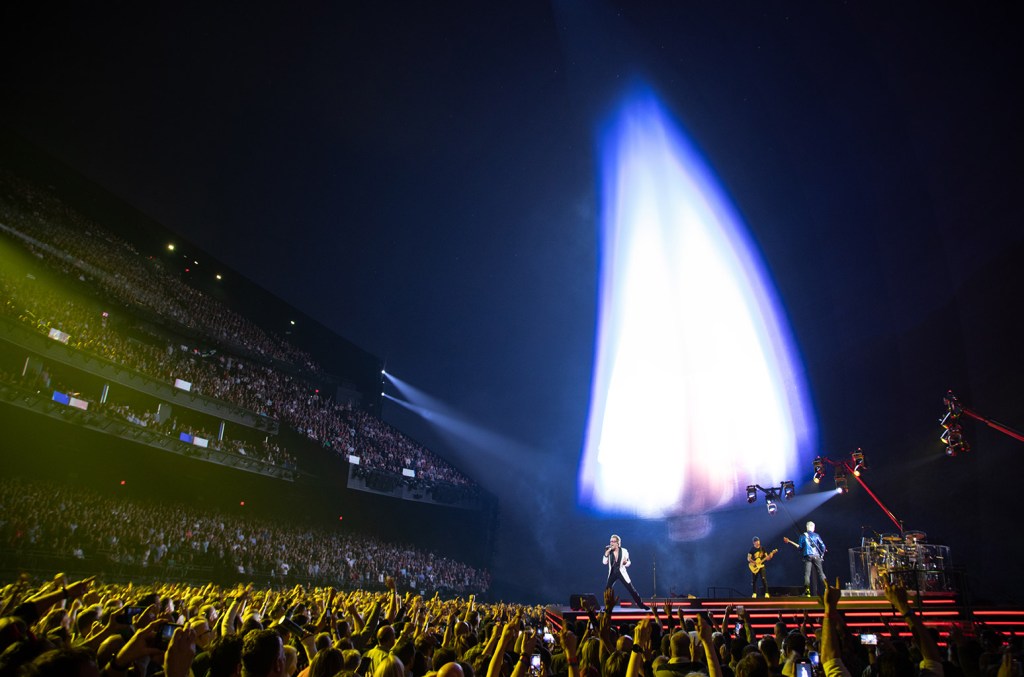
Despite U.S. consumer sentiment falling to its second lowest rating on record in May, new studies show that concertgoers have grown comfortable spending $300 a month on tickets — and that this summer they plan on paying even more.
A Bank of America survey examining the spending data of its 69 million consumer and small business customers in the United States found customers spent an average of $150 a month on entertainment — such as tickets to live events or amusement parks — between May 2024 and April 2025. When researchers looked at credit card holders specifically who spent money on live event tickets, those individuals spent an average of $300 a month last year. Asked if they plan to attend more live events this year than last year, a third of people surveyed said yes.
That’s good news for live event promoters. The world’s largest concert promoter and ticket company Live Nation reported sluggish revenues for the start of the year, and online ticket marketplace and resale company Vivid Seats reported lower consumer interest in live events. The first quarter before spring and summer festivals kick off is usually slow, but Vivid Seats executives warned that negative consumer sentiment and “uncertainty can impact how and when artists and rights-holders come to market.” For its part, Live Nation is still predicting double-digit profit growtht this year.
Trending on Billboard
Prices for concert ticket have risen by more than 32% over the past five years, with the average concert ticket costing $130.36 in 2024. Those numbers have been driven by post-pandemic demand and major acts adopting dynamic, or surge, pricing — in which demand can increase a ticket’s price in real time — according to Billboard Boxscore data.
While $300 would have been enough to score tickets to see Bad Bunny or The Rolling Stones last year — average ticket prices were $280.67 and $266.16, respectively — it likely would not have been enough for one of U2’s 38 shows at The Sphere in Las Vegas. Those tickets cost on average $367.13.
And prices continue to rise. This year, for example, Bad Bunny fans will have to dig deeper into their pockets to see one of his shows. A study by GIGAcalculator, an online platform that creates converters and calculators for different uses, found it cost an average of $354 to attend his residency at Coliseo de Puerto Rico, but it could be argued that the reggaeton superstar gives a lot of bang for the buck. His 135-minute, 33-song shows average out to a cost of $2.62 per minute, almost a dollar cheaper than Charli XCX, whose shows are the most expensive at $3.55 per minute.
The soaring price of tickets is one reason more young concert goers report going into debt to see shows, according to a study from Cash App, the digital wallet company owned by Block.
More than half of Gen Z concertgoers, who were born after 1995, reported using buy now, pay later services to cover the cost of tickets or related expenses, such as travel to a show, overnight accommodations, or clothes to wear to the concert, according to the study. (Can’t imagine putting concert outfits on layaway? Coachella fashion inspiration boards, including those by artists like Ludmilla and Victoria Monet, were a big hit last year on Pinterest, a popular shopping tool among Gen Z.)
According to Cash App, one in five Gen Z concertgoers reported spending beyond their means to attend concerts in the past two years, and yet 65% of the roughly 2,000 adults in the survey overall said they would spend more in 2025.
Gen Z respondents paid an average of $2,100 on concert tickets over the past two years, according to Cash App.
While the top 100 tours grossed more than $10 billion in 2024, including Taylor Swift’s record-setting Eras Tour, only a handful of acts can charge more than $200 a ticket and sell out, Billboard Boxscore data shows.
Nonetheless, more than 75% of Gen Z respondents in Cash App’s study said they were willing to pay a premium on resale platforms if that’s what it takes to see a show.
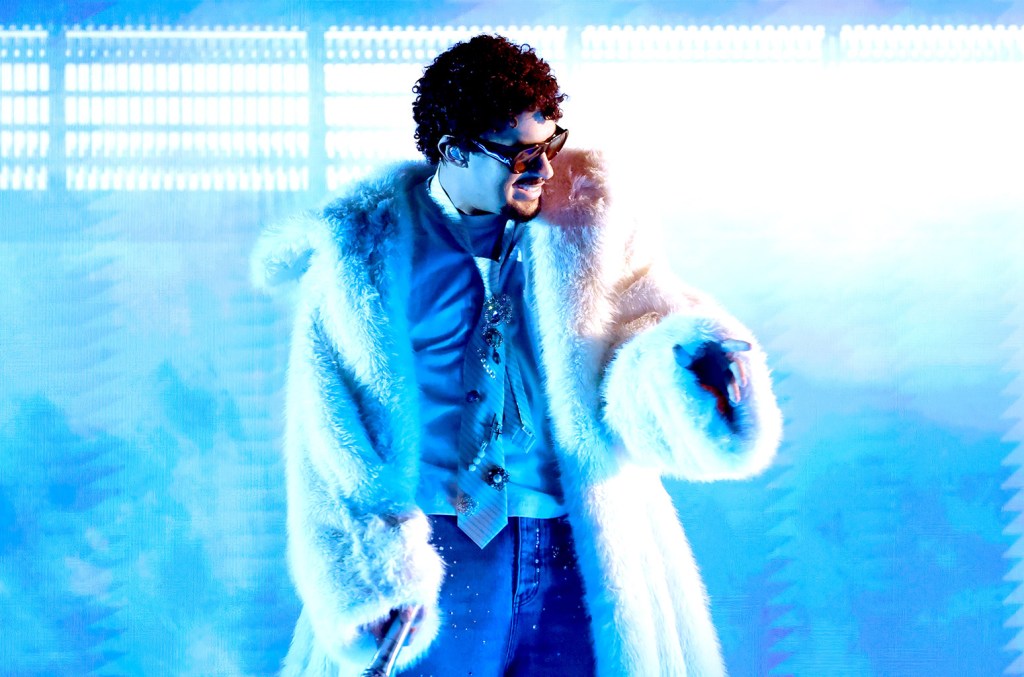
Bad Bunny is set to break records across Latin America, Europe and Australia with his Debí Tirar Más Fotos tour after generating hundreds of millions of dollars from 2.6 million tickets sold, according to data provided to Billboard by promoter Live Nation.
“Bad Bunny is having incredible success without crossing over [musically]. In fact, it’s the audience — millions of people across the world, who are crossing over [to] him,” says Hans Schafer, senior vp of global touring for Live Nation, which is co-promoting the 54-date tour with Rimas Nation. Schafer notes that the superstar will be the first Spanish-language artist to perform a stadium concert in seven of the countries he’s visiting on the tour, which kicks off Nov. 21 in Santo Domingo, Dominican Republic, and ends July 22 in Brussels, Belgium.
The new tour is set to break the records Bad Bunny first broke in 2022 when he became the first Latin act to earn the No. 1 spot on the Billboard Year-End Boxscore Top Tours chart, grossing $373.5 million from 1.8 million tickets across 65 shows.
Trending on Billboard
Thanks to a massive demand for tickets, what began as a 24-date tour early last week has blossomed into a 54-show run across 18 countries. Bad Bunny expanded his Mexico City visit from two shows at Estadio GNP to eight shows. In South America, he grew his stops in Medellin, Colombia; Santiago, Chile; and Buenos Aires from one show to three shows in each market. And in Madrid, he expanded his plans for two shows to a staggering 10 concerts at the 70,000-person Riyadh Air Metropolitano Stadium.
Bad Bunny is playing two-night engagements at almost every stop on his tour and is breaking new records in nearly every market. He is the first and only Latin act to sell out a stadium concert in Australia and became the only artist in Colombia’s history to sell out three stadium concerts in 24 hours. He broke the record for the fastest-selling concert in the history of Costa Rica, and in Mexico, he broke the record for the most tickets sold in a single day by any artist.
The superstar now holds the record for the most tickets ever sold by a Latin artist in France, Italy, Poland, Portugal and Sweden. And with 12 stadium shows booked for Spain — including two in Barcelona — he now holds the record for the biggest concert run ever for an artist in the country with 600,000 tickets sold.
He’s also become the top-selling Latin artist in the U.K., breaking the record previously set by Karol G.
“Bad Bunny is a true global artist and this tour is testament to his power as an international superstar,” Schafer says. “We’ve never seen anything quite like it.”
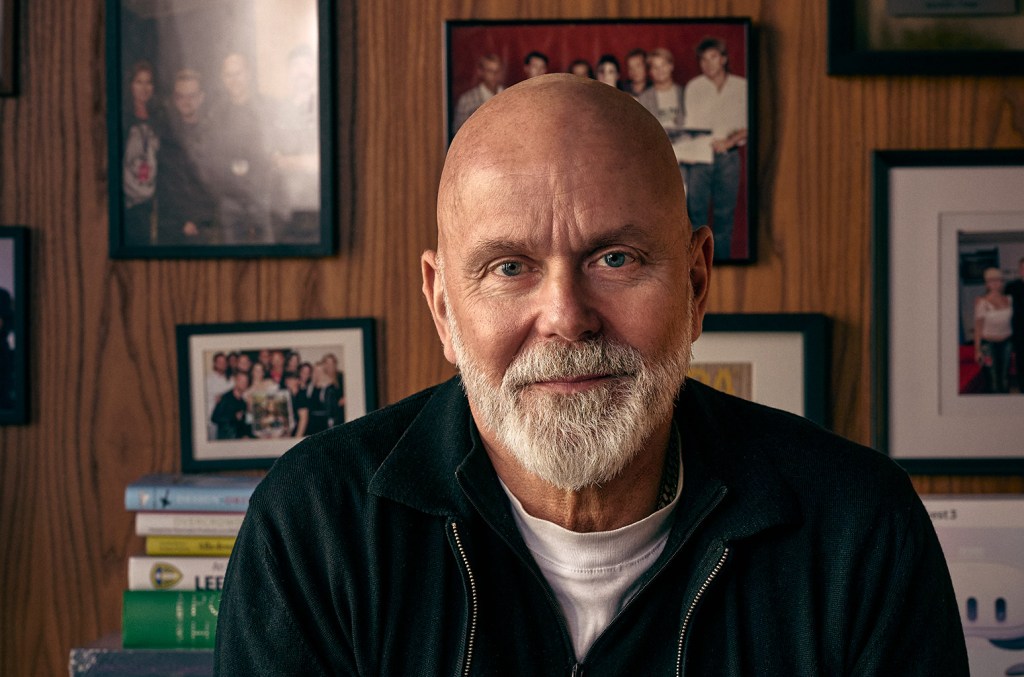
In 2022, Pophouse Entertainment premiered ABBA Voyage in London, a virtual concert in which avatars of the Swedish powerpop foursome as they appeared in 1979 — one of them Pophouse co-founder Björn Ulvaeus — performed their biggest hits in ABBA Arena, a custom-built venue at Queen Elizabeth Olympic Park that seats 3,000.
More than 40 years after ABBA’s initial success and the subsequent popularity of the Mamma Mia! musicals and movies, fans have purchased more than 3.3 million tickets to over 1,000 ABBA Voyage shows, according to Pophouse, which cost approximately $185 million to mount. Now, armed with $1.3 billion from its first round of private equity fundraising and the backing of Swedish investment giant EQT, Pophouse CEO Per Sundin is eager to replicate the franchise’s success.
Sitting in front of photos of Michael Jackson, Destiny’s Child, Lana del Rey, Billie Eilish, Barry Gibb and other artists Sundin worked with during the decades he spent as Sony and later Universal Music Group’s top executive in the Nordics, he sees ABBA Voyage as a template to attract the devoted fan bases of certain other acts. KISS, which completed its End of the Road tour in 2023 and whose catalog Pophouse acquired the following year, will be the next act to get the avatar treatment. Another possible candidate is Cyndi Lauper, whose farewell tour ends in August and whose catalog Pophouse owns. The company’s portfolio also includes the catalogs of two of Sweden’s most famous electronic music artists, Swedish House Mafia and the late DJ Avicii, for whom the company recently said it will release new music.
Trending on Billboard
Speaking at the New York offices of law firm Morrison Foerster, Sundin says Pophouse didn’t cut any corners in creating ABBA Voyage — even footing a “shocking” Dolce & Gabanna clothing bill, Sundin says, for the avatars’ costumes. (“They should have sponsored us, it was so expensive,” he jokes.)
Sundin says that after KISS vocalist-guitarist Paul Stanley saw ABBA Voyage, he asked to meet the band members backstage. Pophouse, he adds, is dedicated to producing the same realism for the blood-spitting, fire-breathing “Black Diamond” boys.
Geopolitical uncertainty and tariffs have not directly affected music assets. Did that motivate investors who participated in this latest funding round?
I don’t want to comment on what’s going on in the world today because I can’t guess where anything is going. But music is totally uncorrelated to inflation or interest rates, and that is a key message for people who invest from the financial world. When we said to investors, “This is a yield business because you have royalties coming in every quarter,” the financial support for music is fantastic. Even though you have tough times, maybe you don’t go out to restaurants or do big trips, but you will never cancel your Spotify, YouTube or Apple account.
You may not cancel your Spotify account, but you do buy fewer Broadway tickets. How are you changing your forecasts for the ABBA virtual show or other live- entertainment projects?
You have to value in assumptions and calculations for every venture, but we’re not going to do nothing for four years. The world we’re living in, it’s always SNAFU [an acronym for “situation’s normal: all fucked up”]. There is also opportunity. There is so much need for entertainment. ABBA Voyage is the next generation of music concerts. It’s on seven days a week, and it’s almost always sold out. I’ve been 16 times, and I’m emotionally connected every time. That’s how contagious this show is. Of the 50 biggest artists in the world still alive, I would say that 40 have been there to see it.
Given the show’s popularity with big stars, how’s your pipeline for acquisitions?
Really good. The press release about how much money we raised helped. We hope to announce at least one catalog we’re buying by summer. But we don’t just want to buy it and put it on the shelf. We create a road map for five to 10 years, and then we execute that road map. From the beginning, we told our investors that we want to buy eight to 10 catalogs. We have four. That leaves six to buy. The record companies have thousands of catalogs.
In the United States, ABBA Arena would be comparable to Sphere in Las Vegas. Will the KISS virtual show take place there?
No. The Sphere is a fantastic building, a fantastic venue, but for the type of avatar concert we are planning with KISS — which is something else — we are looking at more intimate sites. I’ve been to the Sphere four times [to see U2 live, a video replay of a U2 show, Anyma and the Eagles]. The first time I saw U2 at Sphere, the visuals were amazing, but I didn’t feel emotionally connected. Bono is a preacher. He has something to say to the world, and I didn’t find he was in the right element. I saw U2 virtual [a recording of a prior Sphere performance], and Bono was more of a preacher there. With U2 [both times], I asked people, “Did you go for U2 or did you go for the Sphere?” Two-thirds said they went there for the Sphere.
How will you give KISS fans something new for the virtual show?
Every catalog we buy will not be an avatar show. ABBA was only active for eight to nine years. KISS toured for 40. Kiss is more male-biased. ABBA is more female-biased. But they both have fans of all ages. That’s why their brands are so valuable. If you’re a KISS fan, you’re a fan for life.
Pophouse also owns Avicii’s catalog, another artist with hyper-engaged fans who are very sensitive to coverage and monetization of that catalog, given his suicide at the age of 28 in 2018. Would Pophouse buy another catalog that comes with a significant risk of offending fans?
There is so much data available to look at before we buy catalogs today. We also do brand and narrative due diligence. KISS has superfans. Taylor Swift has superfans. The same goes with Avicii. On Spotify, 2% of listeners of a catalog stand for 80% of a catalog’s streams in an average month or year. In some cases, we have found 5% [of listeners] stand for 50% of streams. If I can increase an act’s superfans from 5% to 6%, the total streams will go up 10%, meaning the value of the catalog will go up 10%.
So back to your question about sensitivity: We take this very seriously. With KISS, there are fans that have been fans for 50 years. We did deep research and collected 10 people into a superfan panel and invited them to Vegas [in mid-March]. In workshops, we asked them what they would expect, what they liked and didn’t like because we respect them. That doesn’t mean we will do everything they say. We will adapt their feedback for the next 50 years.
We’re going to do a superfan panel with Avicii, too. His parents are very close to me personally since I signed Avicii in 2010. I am probably the person who is saying, “Do as little as possible.” There are a lot of things Avicii never released, and we are doing Avicii Forever, a collection of his best songs — and one new song.
What’s a challenge you encountered in your career, and how did you overcome it?
The first decade of the century was a true roller coaster for me, but also for everyone in the music industry. It started with the best year ever selling CDs, then came Napster, LimeWire and, eventually, Pirate Bay. Sweden was the most pirated country in the world, and I had to restructure Sony Music Nordic. Then came the merger between Sony Music and BMG, and I moved to Universal Music Nordic. I had to let more than 300 people go, and the music market in Sweden decreased 50%. We tried everything to overcome the shrinking market: ringtones, iTunes and many more. Nothing compensated. When I joined Universal in April 2008, UM Sweden had the lowest digital revenue based on micro [gross domestic product]. Spotify was launched that October, and I decided to go all-in and sign as many new and established artists as possible: Avicii, Alesso, Tove Lo and many more. In 2013, Universal Music Sweden had the highest digital revenue on micro GDP in the [entirety] of Universal Music.
What are you most proud of from your career?
Every artist you sign to a label you feel in some way connected to them. I don’t think they always feel connected to you, but to sign an artist or band is such an important decision [for everyone involved]. Even though I’ve left Sony and Universal, I continue to follow the careers of the artists I signed. It’s emotional. It’s about creating an entertainment brand or artist who can live on their creativity. It’s fantastic.
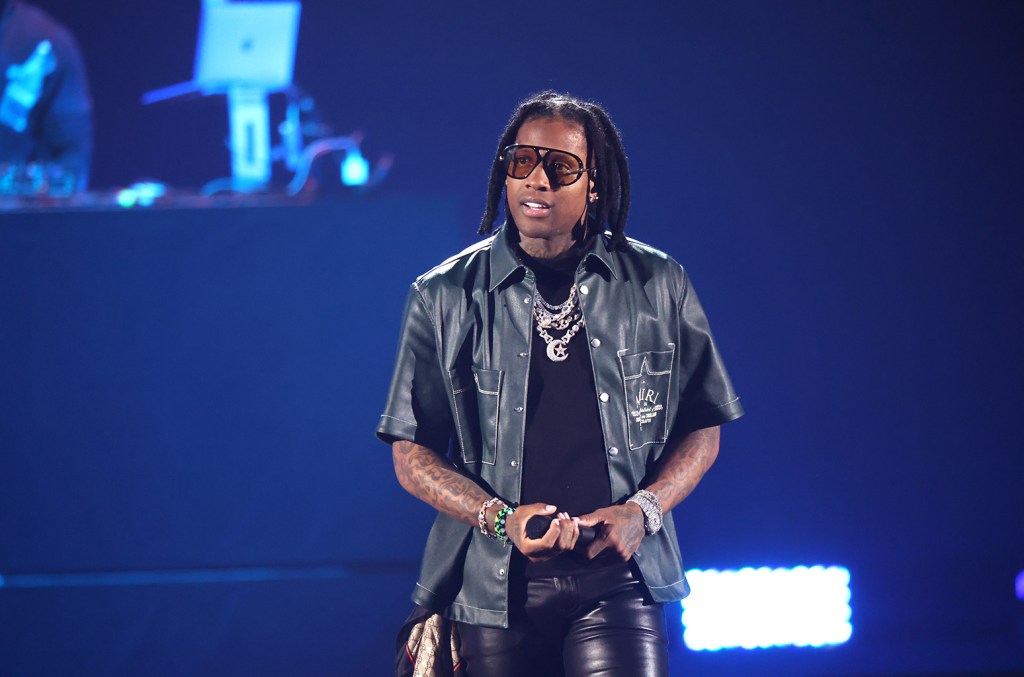
Federal prosecutors are flatly rejecting Lil Durk’s “false narrative” that they’re unfairly using his lyrics against him, arguing in court filings that the rapper is indicted because of a “brazen murder plot” and not because of his music.
Weeks after the feds removed all musical references from the case, they urged a federal judge Monday to reject Durk’s bid to dismiss the charges, arguing there are still more than enough in the allegations beyond the now-deleted lyrics.
“The indictment charges that defendant directed and financed six hitmen to travel across the country to hunt and kill his rival,” prosecutors write. “Defendant is not on trial for his lyrics or his music; he is on trial because he directed, orchestrated, and financed the brazen murder plot at issue in this case.”
Trending on Billboard
Durk (Durk Banks) was arrested in October on murder-for-hire and gun charges over allegations that the Chicago drill star ordered members of his Only the Family (OTF) crew to carry out a 2022 attack on rival rapper Quando Rondo (Tyquian Bowman) that left another man (Saviay’a Robinson) dead.
Lawyers for the rapper have argued that prosecutors used the lyrics as “false evidence” to persuade a grand jury to indict him – and his family has spoken out that he’s latest rapper to be “criminalized for their creativity.” The use of rap lyrics as criminal evidence is a controversial practice that has drawn backlash in recent years.
But in Monday’s response, prosecutors call Durk’s arguments “meritless” and “moot” in light of the new indictment with the lyrics removed, which a grand jury also endorsed.
“The [new indictment] makes clear that the grand jury indicted defendant for his conduct, not for his status as a rapper or because of the violent lyrics,” the feds say. “These allegations make clear that defendant used his power, his wealth, and his control over OTF to exact deadly revenge on his rival.”
When Durk was first indicted last year, prosecutors cited lyrics from a song called “Wonderful Wayne & Jackie Boy,” claiming they referenced the shooting: “Told me they got an addy (go, go)/ Got location (go, go)/ Green light (go, go, go, go, go),” Durk raps in the disputed track. “Look on the news and see your son/You screamin’, “No, no” (pu–y).”
But Durk’s lawyers sharply pushed back — arguing that “Wonderful Wayne” could not have referenced the Rondo shooting because the rapper wrote and recorded his verses “seven months before the incident even happened.” In April, prosecutors filed a so-called superseding indictment that removed the lyrics.
Monday’s court filing, while focused on the removal of the lyrics, also strongly defends their use in the first place. The feds say Durk has “repeatedly used his pulpit to promote violence” and that the lyrics bear a striking resemblance to the facts of the case.
“Whether or not defendant’s lyrics about ‘greenlighting’ a rival were written before or after S.R.’s death, the release of the song after the murder gave defendant’s fans fodder to associate him with the murder — a claim that defendant himself seemed to admit during an interview on a popular podcast,” the feds write.
In addition to seeking to dismiss the case, Durk is also continuing to seek pre-trial release. Though it was denied by a magistrate judge earlier this month, his attorneys have indicated they will ask a district judge to reconsider the issue. The rapper is currently scheduled to face trial in October.
Sony Music Publishing returned to No. 1 on the Hot 100 Songs and Top Radio Airplay charts in the first quarter, regaining ground it lost to Warner Chappell Music at the end of last year.
The publisher regained the top spot on Top Radio Airplay — which it had held for 14 consecutive quarters until the fourth quarter of 2024 — with 27.61% of the market and clinched No. 1 on Hot 100 Songs with 28.31%, thanks to its share of a whopping 73 songs on both charts, including the No. 1s on each: “Die With a Smile” by Lady Gaga and Bruno Mars on the former and “Luther” by Kendrick Lamar and SZA on the latter. Lamar also ranked as the quarter’s top Hot 100 Songs writer.
Warner Chappell dropped to No. 2 (22.45%) on Top Radio Airplay and to No. 3 on Hot 100 Songs (20.52%) with stakes in 61 and 62 songs, respectively. The No. 1 Top Radio Airplay songwriter, Amy Allen, co-wrote eight of those tracks, including the Sabrina Carpenter hits “Espresso” and “Taste,” as well as the Rosé and Bruno Mars smash, “APT.”
Trending on Billboard
Universal Music Publishing Group rose one position to No. 2 on Hot 100 Songs due to a dramatic quarter-to-quarter market-share surge from 19.92% to 25.04%. Its strong showing was fueled by Lamar, who wrote or co-wrote eight songs on that chart.
Kobalt and BMG remained steady at No. 4 and No. 5, respectively, on both rankings despite Hot 100 Songs market-share declines. Kobalt dropped from 10.89% to 8.23% quarter to quarter, and BMG fell from 4.67% to 3.64%. Each has a piece of “Die With a Smile,” which helped maintain their positions as the top indie publishers in the rankings.
For the last three months of 2024, Pulse finished ninth on Top Radio Airplay and fell short of the Hot 100 Songs top 10. It has made significant gains since then, ranking at No. 6 on the former and at No. 8 on the latter, thanks to the continued success of Koe Wetzel’s “High Road,” which finished the first quarter at No. 13 on Top Radio Airplay and No. 32 on Hot 100 Songs. Pulse also benefited from shares of five other Top Radio Airplay hits in the first quarter and six more for Hot 100 Songs.
Recognition Music, previously known as Hipgnosis Songs Group, rose one position on Hot 100 Songs to No. 7 but fell one spot on Top Radio Airplay. Its shares of songs included “Espresso” and Teddy Swims’ “Lose Control,” both holdover hits from 2024.
First-timers on the rankings are Whooping Crane Music and Mothership Music, which took the ninth and 10th spots, respectively, on Hot 100 Songs. The former had a share in the No. 14 song, Lamar’s “Squabble Up.” The latter is the home of Latin alt-rock band The Marías, who, after years of building a fan base, have begun to break into the mainstream. This year, their song “No One Noticed” went viral and hit No. 34 on the Hot 100 in the first quarter. The act also appears on Selena Gomez and Benny Blanco’s “Ojos Tristes.”
Additional reporting by Ed Christman.