Business

Spotify Raises Prices in U.K. on Individual, Family and Duo Plans

Trending on Billboard

Spotify subscribers in the U.K., the world’s third-largest recorded music market, will be paying more for Spotify premium plans starting with the next billing cycle. As confirmed by a company spokesperson, Spotify customers in the U.K. were notified of upcoming price increases, marking the second time in approximately 18 months that Spotify has raised prices in the market.

Related
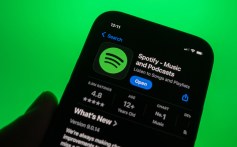
For U.K. subscribers, the Spotify premium individual plan will cost 12.99 GBP ($17.24), up from the 11.99 GBP ($15.91) price established in 2024. Family plans will rise to 21.99 GBP ($29.18) from 19.99 GBP ($26.53). Duo, a two-person plan, will increase to 17.99 GBP ($23.87) from 16.99 GBP ($22.55). All three plans include 15 hours per month of audiobook listening time (only the plan managers receive audiobook time on family and duo accounts). The student plan, which does not include audiobook listening, remains unchanged at 5.99 GBP ($7.95) per month. 

Price increases, along with gains in the number of subscribers, drove Spotify’s 16% increase in subscription revenue in the second quarter, CFO Christian Luiga said during the company’s July 29 earnings call. The number of subscribers rose just 12%, suggesting that revenue growth from price increases was the larger of the two factors.

The U.K. is not alone in experiencing higher prices. Earlier this year, Spotify hiked prices in France, the world’s sixth-largest recorded music market, and announced a price increase in Germany, the fourth-largest market. The U.S., the world’s largest market, could be next. As Billboard reported on Oct. 22, numerous equity analysts believe Spotify will raise prices in the U.S. by early 2026. 

Billboard VIP Pass

Daily newsletters straight to your inbox


Sign Up

Sia Divorce Escalates Into Custody Battle, With Claims of Drug Addiction and Child Pornography

Trending on Billboard

Sia and her estranged husband are fighting over custody of their child amid divorce proceedings — and the allegations are getting ugly.

David Bernad, an oncologist who married Sia at the end of 2022, claims in a Monday (Oct. 27) court filing that the pop star is a drug addict who cannot adequately care for their 19-month-old son, Somersault. In a Tuesday (Oct. 28) response, Sia reveals that Bernad was recently under investigation for alleged possession of child pornography.

The claims come in California divorce proceedings, which Sia initiated this past March due to “irreconcilable differences.” Bernad has since been seeking hefty spousal support from Sia, and his request for more than $250,000 a month is set for a hearing in January.

Now, Bernad is asking for full custody of Somersault (referred to by the nickname “Summi” in court documents). He alleges in the Monday filing that Sia, who has been open about her past struggles with drug addiction, is once again using.

“Sia is an unfit and unreliable parent struggling with substance abuse and addiction, rendering her incapable of providing safe or stable care for Summi,” writes Bernad in a declaration. “I am the only safe and reliable parent for our son. I am a doctor, young, healthy, and have no criminal history or drug or alcohol addiction issues.”

Bernad says he witnessed Sia abuse ketamine and opioids during their marriage, and he claims doctors found barbiturates and benzodiazepines in her system during a hospital stay last month. He says Sia should have supervised visits with Summi, and only after she’s undergone a breathalyzer test. Bernad also wants the singer to submit to random drug testing and pay him $77,000 per month in child support.

Sia, however, counters in her Tuesday court filing that she has been “fully sober for over six months” and remains committed to recovery. She says Bernad is actually the one who parties and uses recreational drugs, and that this is one of the main reasons she chose to divorce him.

“Dan’s attempt to weaponize my past sobriety journey — an issue long resolved and well-documented — serves no legitimate purpose and is intended only to distort the facts and undermine my credibility before this court,” writes Sia in a declaration. “His willingness to dredge up decades-old history to serve his own financial and strategic interests demonstrates the extent to which he will go, even at the expense of his child and the child’s mother.”

Sia says Summi should remain in her primary custody, as has been the case since this summer. According to the court filings, Bernad agreed to this arrangement — including a stipulation that his own visits be supervised — because he was under investigation for alleged child pornography found on his computer hard drive in July.

Bernad “vehemently” denies any wrongdoing and claims Sia “planted” this illicit material on his hard drive. The Los Angeles Police Department and the city’s Department of Child and Family Services both looked into the claims but closed their investigations without any charges, citing a lack of evidence.

Nonetheless, Sia says she’s still not comfortable with Bernad spending unsupervised time with Summi. She says Bernad is not prepared to care for Summi by himself because he was an absentee parent during their marriage, often jetting overseas “at a moment’s notice.”

Sia’s lawyer declined to comment on the proceedings on Tuesday. A rep for Bernad did not immediately return a request for comment.  

Billboard VIP Pass

Drake Sued for Endorsing ‘Unlawful’ Gambling Platform: ‘Deeply Fraudulent’

Trending on Billboard

Drake and online streamer Adin Ross are facing a class action lawsuit accusing them of promoting illegal gambling by endorsing the online sweepstake casino Stake.

In a case filed Monday (Oct. 27), lawyers for a Missouri man say Drake, Ross and Stake engaged in “deceptive, fraudulent and unfair” practices in the state — and that Champagne Papi used his massive celebrity to “encourage impressionable users to gamble.”

Related

“Drake’s role as Stake’s unofficial mascot is quietly corrosive — he’s glamorizing the platform to millions of impressionable fans, many of whom treat his wild betting habits like gospel,” write lawyers for plaintiff Justin Killham.

Stake is a so-called sweepstakes casino that operates on a “dual currency” system, which critics say is designed to evade gambling regulations. Such platforms sell “gold coins” that they claim are purely for entertainment, then offer separate free “sweeps coins” that can be redeemed for cash, meaning neither constitutes full-fledged gambling. California, New Jersey and other states have moved to rein in the practice, either with new legislation or beefed-up enforcement of existing state gambling laws.

The case filed Monday claims that Stake, a Curaçao-based livestream gambling platform, violated Missouri’s gambling laws with that kind of system. The site tried to mislead consumers, the lawsuit claims, “into believing it offers harmless gameplay instead of an unlawful gambling platform.”

Related

The complaint also claims that the company paid Drake and Ross millions to promote that illegal operation. But lawyers for the plaintiffs say the stars have done so under “deeply fraudulent pretenses,” including fronting the stars’ “house money” to risk.

“When Ross and Drake purport to gamble online with Stake.com, they often do not do so with their own money despite telling the public in Missouri and elsewhere the opposite,” Killham’s lawyers write. “Stake’s and Drake’s and Ross’s conduct here threatens the welfare of Missouri residents and especially its young people.”

Representatives for Drake and Stake did not return Billboard‘s requests for comment by press time. A representative for Ross could not immediately be located.

Billboard VIP Pass

Daily newsletters straight to your inbox


Sign Up

Cam’ron Sues J. Cole Over ‘Ready ’24’ Collab, Saying He Failed to Fulfill His End of the Deal

Trending on Billboard

Cam’ron has filed a lawsuit against J. Cole over the duo’s “Ready ’24” collaboration, which landed on Cole’s 2024 Might Delete Later mixtape.

According to court documents viewed by Billboard on Tuesday (Oct. 28), Cam’ron (Cameron Giles) sued his fellow rapper (Jermaine Cole) over allegedly violating the terms of an agreement pertaining to the track.

Related

Cam’ron claims that in exchange for his featured verse on the track, which was recorded in June 2022, Cole promised to join him on a separate song in the future or make an appearance on Cam’ron’s It Is What It Is sports talk show.

Per the court documents, Cam’ron alleges he asked Cole to hop on a pair of pre-recorded tracks in September 2022, but that Cole said he preferred they team up on a fresh song from scratch. But, he says, the collaboration never materialized.

Cam’ron claims he reached out to Cole again in July 2023 about joining him on It Is What It Is, and alleges Cole agreed to appear on the show at a later date.

The suit goes on to state that Cam’ron stayed in constant communication with Cole in the months leading up to Might Delete Later‘s release in April 2024, but that the Dreamville boss repeatedly relayed he was too busy to appear on the podcast.

Related

In addition to Cole, Universal Music Group (UMG) is listed as a defendant in the lawsuit. Cam’ron claims he hasn’t been compensated for the feature on “Ready ’24” and is seeking royalties and profits from the collaboration, an amount he estimates to be upwards of $500,000.

Representatives for Cole and UMG did not immediately return Billboard‘s requests for comment.

Produced by T-Minus, “Ready ’24” reached No. 38 on the Billboard Hot 100.

Billboard VIP Pass

Daily newsletters straight to your inbox


Sign Up

Halle Bailey & DDG Settle Custody Battle, Drop Domestic Violence Claims — for Now

Trending on Billboard

Halle Bailey and DDG have temporarily agreed to share custody of their son and drop domestic violence claims against each other, putting a halt to the musicians’ messy legal battle after months of back and forth.

Bailey and DDG (Darryl Dwayne Granberry Jr.) had been fighting in family court since this summer over custody of their nearly two-year-old child, Halo. The proceedings got ugly, with Bailey accusing the 28-year-old streamer and rapper of physical abuse and DDG claiming the 25-year-old singer and actress is mentally unstable.

Related

But the two artists have put their differences behind them, at least for now. A settlement docketed on Monday (Oct. 27) sets forth a temporary custody arrangement lasting for the next four months, and Bailey and DDG agree to mediate in “good faith” to reach a more permanent plan afterwards.

The settlement also sees both Halle and DDG dropping their competing requests for domestic violence restraining orders (DVROs) against each other. However, both sides reserve their rights to revive these allegations “upon a further incident of abuse.”

“Each party further agrees that should a future incident of abuse occur that postdates the dismissal of the instant DVRO requests, the fact that the parties dismissed her/his DVRO request shall not be prejudicial to the party seeking new orders,” reads the agreement. “The dismissal is for settlement purposes only and may not be used as evidence against the party(s) seeking new orders.”

Reps for Bailey and DDG did not immediately return requests for comment on Tuesday (Oct. 28). This is not surprising, as the settlement mandates that “the parties shall not publicly discuss the terms of this stipulation or the litigation between them.”

Related

Bailey and DDG dated between 2022 and 2024, and Halo was born at the end of 2023. Their court dispute began this past May, when Bailey filed a petition claiming DDG had physically attacked her multiple times in Halo’s presence. In one such instance, Bailey alleged that DDG pulled her hair, slammed her face on a car steering wheel and chipped her tooth.

DDG denied these claims and brought a counter-petition of his own in June, alleging that Bailey was actually the abusive one and had repeatedly threatened self-harm as a means of emotional manipulation. Bailey responded that she struggled with her mental health in the past but now has these issues under control.

Bailey was given court-ordered custody of Halo while the litigation played out. She’s retaining primary custody under Monday’s settlement agreement, while DDG gets the child twice a week and two weekends a month. They will split holidays.

The former couple agrees in the settlement not to post any photos or videos of Halo online. There are also a number of guardrails to govern their relationship; neither one is allowed to disparage the other in the child’s presence, they can only communicate via a special co-parenting app, and Halo should always be dropped off with the other parent at a public park.  

“All exchanges shall be peaceful and polite, with the custodial parent handing the child to the non-custodial parent. (A polite hello and goodbye is acceptable),” reads the settlement.

Billboard VIP Pass

Taylor Swift Eras Ticket Hacker, Diddy Release Date, Muni Long Lawsuit & More Music Law News

Trending on Billboard

THE BIG STORY: Taylor Swift’s Eras Tour was so big that it has developed its own legal system.

With a record-shattering haul of more than $2 billion face-value ticket sales — and many times that in the secondary market — it’s not surprising that legal disputes have broken out. Don’t forget the old adage in the music industry: “If you write a hit, you get a writ.”

It started immediately after the chaotic pre-sale, when Swift fans filed class actions against Ticketmaster, accusing the company of causing the “disaster” rollout. In August, the Federal Trade Commission sued a ticket broker for allegedly using bots to buy thousands of Eras tickets that it resold for more than $1 million in profit. Just this month, an angry Swiftie sued StubHub for giving her “inferior” seats after she dropped $14,000 on Eras tickets.

Related

The latest fallout came last week in a criminal case — over a “cybercrime crew” that allegedly stole Eras tickets from StubHub and resold them for a windfall. For more, go read our full story here.

Other top stories this week…

BAND V. LABEL – Powerhouse regional Mexican label Rancho Humilde is locked in a bitter legal dispute with one of its fastest rising acts, the California-based band Fuerza Regida, with allegations of unpaid royalties, unapproved touring deals and “sabotage.”

DIDDY RELEASE DATE – Weeks after Sean “Diddy” Combs was sentenced to over four years in prison on prostitution convictions following a sweeping sexual abuse case, inmate records now show when he’s expected to be set free — but a lot could change before then.

MUNI LAWSUIT – Muni Long’s former managers, Chaka Zulu and Jeff Dixon, are suing the singer for allegedly refusing to pay more than $600,000 worth of promised fees; the Grammy-winning R&B star’s team calls the claims “unfounded.”

BEER BATTLE – Country singer Jameson Rodgers allegedly hurled a “full, unopened beer can” into a concert crowd and hit a fan in the face, resulting in “severe and permanent injuries.” Now, an appeals court says Sony Music can’t escape the ensuing lawsuit.

THE FIGHT GOES ON – Even after A$AP Rocky was acquitted on charges of shooting A$AP Relli on a Hollywood street, the former friends and collaborators continue to battle in a pair of civil lawsuits filed by Relli.

ANTITRUST CASE – Former Oak View Group chief Tim Leiweke, now facing federal bid-rigging charges, is asking a judge for permission to travel to Canada for business next month — a routine motion on paper that underscores how sharply life changes under indictment.

IMPERIAL MARCH – A Washington, D.C., man was allegedly detained after playing John Williams’ legendary “Imperial March” — aka Darth Vader’s music from Star Wars — to protest National Guard troops sent to the city by President Donald Trump, according to a new lawsuit filed by the ACLU.

SAMPLE SPAT – Lizzo is facing a copyright lawsuit over a track she teased on social media to poke fun at Sydney Sweeney’s American Eagle ad controversy, even though she never actually commercially released it.

Billboard VIP Pass

LeAnn Rimes On Her Three-Decade Touring Career: ‘Pretty Much Nothing Embarrasses Me Onstage’

Trending on Billboard

After touring for 30 years, LeAnn Rimes has learned a thing or two about maintaining her ­sanity on the road.

“Don’t ever fly day of show. You can’t do that anymore,” she cautions. “Even if you’re flying from Los Angeles to Oakland [Calif.], make sure you pack your outfit in your carry-on because your bag still may get f–king lost. And never do more than three shows in a row.”

Rimes has been famous ever since an impossibly big voice came out of a wee girl when she appeared on Star Search in 1991, becoming a one-week champion at the age of 8. Five years later, she sounded preternaturally mature when Curb Records released her first single, “Blue,” which garnered comparisons to Patsy Cline.

More than three decades into her career, the multiple Grammy winner, now 43, finds touring a richer experience than ever before, which has earned her the Unstoppable Award, to be presented at the Billboard Live Music Summit in Los Angeles on Nov. 3. “I love performing now more than I probably ever have because I feel like it’s on my terms,” she says. “I create this show that I want to perform, and I invite people into this space.”

LeAnn Rimes will be honored with the Unstoppable Award at Billboard‘s Live Music Summit, held Nov. 3 in Los Angeles. For tickets and more information, click here.

That’s a far cry from the early days when she moved at a much swifter pace, playing more than 500 shows over three-and-a-half years from ages 13 to 16. “No one really knew how long this was going to last,” she recalls. “And it was that frame of mind of, ‘Get it while you can.’ Then when we were done, people were like, ‘This may actually last and we just killed her!’ ”

For decades she continued touring at a less punishing rate but never took off more than six months out of the year. “It wasn’t until COVID till I ever sat my ass in one place for that long,” Rimes says, adding that the pandemic renewed her appreciation for performing. “These last several years, I’ve really thought long and hard about what I want to be putting out in the world, and it’s important to me to hopefully bring [the audience] some joy when people come to the shows.”

For Rimes, who now aims to play around 60 shows a year, touring remains “a huge part of my income. God knows the music business sucks. This is how we make money as artists.” Along the way, the live veteran has adapted to modern touring — namely, the advent of social media. “It’s just wild to see how much it’s changed,” says Rimes, who now looks out at a sea of cellphones rather than people’s faces every night. “It could easily control you. I don’t think about it too much anymore. I try to just allow it to be what it is because it’s its own beast.”

But as she experienced this summer, she can’t control everything onstage. During a show in Bow, Wash., in June, her front dental bridge fell out as she was singing “One Way Ticket.” She ran offstage, adjusted it and rejoined her band. The moment was, of course, captured on video and went viral. Months later, she calls the incident “pretty f–king funny,” laughing as she relives it. “I realized at that moment I could either quit — I’m four songs in — which I thought I was going to have to unless I was able to hold [the bridge] in. But luckily, I was able to. I’ve pretty much had everything happen to me onstage that could possibly happen, and that was probably one of the most precarious situations I’ve ever been in. I was very proud of myself that I handled it like a pro.”

After that incident and countless others, including tripping over sound monitors and even falling into the pit years ago, she has grown unflappable — and her shows remain potent. “LeAnn’s remarkable voice, her deep artistry and her connection with an audience have all continued to strengthen and grow throughout her 30-year career,” says Seth Malasky, her primary agent and senior vp at Wasserman, which books her in North America. “Her shows feel timeless yet brand-new. She’s earned her reputation as an authentic and captivating performer.”

Still, Rimes has diversified her creative output. Over the past two years, other projects have limited her to about 30 performances annually; in 2024, she was a coach on The Voice Australia and The Voice UK, and this year, she’s shooting ABC’s 9-1-1: Nashville, in which she plays the villainous, jaded backup singer Dixie.

“It’s been insane,” she says of trying to schedule live dates around her often shifting filming schedule. She was initially wary of signing on to the Ryan Murphy-created fire department procedural after watching her husband, actor Eddie Cibrian, deal with the vagaries of shooting an episodic TV series: “I have seen him go through not getting scripts until 24 hours before they’re shooting. I won’t say it’s been easy — I think at one time we were juggling seven episodes [between us] — but I think we’re getting to a point now where we’re starting to kind of get a little bit more in a groove.”

Looking ahead, next year marks the 30th anniversary of Rimes’ album Blue, which reached No. 1 on Billboard’s Top Country Albums chart in 1996 — and celebratory plans include a potential tour. “It is in the works,” Rimes says. “I know everybody’s so into nostalgia right now, which I’m loving. It’s really funny to revisit that record because I was so little. There’s about seven songs on it that I still really love that I would play.” Among all her hits, including “How Do I Live” and “Can’t Fight the Moonlight,” she says she never tires of singing the album’s title track. “There are just songs that melodically, lyrically, they’re never going to go out of style,” she says. “ ‘Blue’ is probably the one that will forever just be a classic.”

As she plots that potential Blue tour and other future outings, she’s confident — and can find humor in the unexpected. “Pretty much nothing embarrasses me onstage,” she says. “I don’t even know if my pants falling down would embarrass me. I’d be like, ‘Whatevs… you guys got more than you paid for today.’ ”

This story appears in the Oct. 25, 2025, issue of Billboard.

How Shakira Outdid Herself With Her Historic 2025 Stadium Tour

Trending on Billboard

It was supposed to be a North American arena tour. When Shakira first announced her Las Mujeres Ya No Lloran outing in April 2024, the route took her to arenas across the continent that fall. But within months, it morphed into something else. Buoyed by the sustained success of her album of the same name — the set, released by Sony Music Latin, debuted at No. 1 on Billboard’s Top Latin Albums and Top Latin Pop Albums charts — and her subsequent viral single, “Soltera,” live demand for Shakira exploded. That October, she announced Latin American stadium dates for early 2025 — and scrapped her North American arena tour, instead announcing a mix of stadium and arena dates for the continent for May and June 2025.

That bold move has paid off handsomely. Through the 82-show tour’s first 64 dates, Shakira grossed $327.4 million and sold 2.5 million tickets, according to Billboard Boxscore. And the Live Nation-promoted tour also has a place in history: Shakira now boasts the highest-grossing Latin tour ever by a woman and the second highest-grossing Latin tour ever (behind only Luis Miguel’s 2023-24 outing, which grossed $409.5 million).

The tour’s sales include her historic 12-concert run at Mexico City’s Estadio GNP Seguros — the most shows a single tour has ever played at the iconic venue formerly known as Foro Sol. Shakira sold 65,000 tickets per night, according to promoter OCESA, for a total of 780,000 tickets sold.

Shakira will be honored as Global Touring Icon at Billboard‘s Live Music Summit, held Nov. 3 in Los Angeles. For tickets and more information, click here.

Shakira, who returned to the road on Oct. 25 for a run of 17 Latin American stadium dates that will take her through mid-­December, is approaching Miguel’s record mark — and she has yet to announce a possible European leg of the tour. She’ll end 2025 with two Up Close & Personal shows at Miami’s Hard Rock Casino on Dec. 27 and 28.

Las Mujeres Ya No Lloran and its subsequent tour followed Shakira’s high-profile heartbreak and separation. “I believe this has been a healing process for me and for many people — not just women; men, too. I think together we’ve learned that you grow from setbacks and that together we heal when we support each other,” she told Billboard backstage at one of her Mexico City shows in March. “These are more than just concerts. They’re very profound gatherings where healing happens. With each show, I feel stronger and happier.”

This story appears in the Oct. 25, 2025, issue of Billboard.

Get weekly rundowns straight to your inbox


Sign Up

Why Usher Is One Of The Most Influential Performers This Century

Trending on Billboard

“I work for every bit of applause I get,” Usher told Billboard on the eve of his first Las Vegas residency in 2021. “I try my hardest to give people an incredible experience.”

That philosophy has propelled Usher’s 28-year touring career, which has taken him to arenas, residencies and the world’s largest stage: the Super Bowl. As a 19-year-old wunderkind in the late ’90s, he scored his first opening gigs for Mary J. Blige, Sean “Diddy” Combs and Janet Jackson. Fast forward to this year, when the 47-year-old superstar completed his most recent arena tour, Usher: Past Present Future.

The eight-time Grammy winner’s latest outing was the highest-grossing and best-selling tour of his career, according to Billboard Boxscore, grossing $183.9 million and selling 1.1 million tickets over 80 shows. All told, Usher has a reported career gross of $422.6 million from 3.3 million tickets over 334 shows. That’s a whole lot of singing and dancing — both of which are an innate part of Usher’s DNA.

Usher will appear in conversation during Billboard‘s Live Music Summit, held Nov. 3 in Los Angeles. For tickets and more information, click here.

Drawing comparisons to Michael Jackson while honing lithe dancing skills and his supple tenor, Usher graduated from opener to solo headliner in 2002 with his 8701 Evolution Tour in support of his third studio album, 8701. Two years later, The Truth Tour, in support of his smash-hit album Confessions, became one of the period’s highest-grossing outings, with $31.4 million earned. Usher more than doubled that return with the 2010-11 OMG World Tour, which grossed $75 million; the trek landed in seventh place on Billboard’s Top Tours chart in 2011.

But it was a post-pandemic foray into Las Vegas’ residency scene — suggested by manager Ron Laffitte well after Usher’s last tour in 2014 — that reintroduced and reinvigorated the R&B star’s musical legacy this decade. The first residency, Usher: The Las Vegas Residency, at Caesars Palace, did $18.8 million and sold 84,000 tickets over 20 shows (2021-22). The second, My Way: The Vegas Residency, staged at the Dolby Live theater at Park MGM, garnered $95.9 million and sold 394,000 tickets over 80 shows (2022-23). Those successes sparked a chain reaction that culminated in Usher’s critically acclaimed Super Bowl LVIII halftime performance and Past Present Future.

Usher performs during the Apple Music Super Bowl LVIII Halftime Show at Allegiant Stadium on Feb. 11, 2024 in Las Vegas, Nevada.

Usher performs during the Apple Music Super Bowl LVIII Halftime Show at Allegiant Stadium on Feb. 11, 2024 in Las Vegas.

Kevin Mazur/Getty Images

Usher performs at the grand opening of Usher: My Way - The Vegas Residency at Dolby Live at Park MGM on July 15, 2022 in Las Vegas, Nevada.

Usher performs at the grand opening of Usher’s My Way: The Vegas Residency at Dolby Live at Park MGM on July 15, 2022 in Las Vegas.

Denise Truscello/Getty Images

Usher’s singular status as a dynamic performer has led to his recognition as Billboard’s 2025 Legend of Live. For him, however, it’s the connection with his audience that counts most — and fuels his ongoing passion for performing.

“When it all comes together — the song, the connecting message to the audience, the dance — it almost feels like classical music,” Usher said ahead of his Super Bowl performance last year. “I just want to love what I do, make what I love, allow people to come to my space and see what I have to offer.”

This story appears in the Oct. 25, 2025, issue of Billboard.

Rock & Roll Hall of Fame Teams With Save the Music to Fund Music Education Initiatives: ‘It’s an Incredible Boost’

Trending on Billboard

Shortly after Paramount began pulling back its funding for Save the Music, which has donated instruments and tech equipment worth nearly $78 million to 2,800 U.S. schools, John Sykes held a Rock & Roll Hall of Fame board meeting in spring 2024. “This is the perfect fit for what we’re doing,” he told the group. “We have this huge, powerful platform, with some of the greatest artists in the world that we could put out there, going to schools, preaching the importance of music education.”

Beginning with a $1 million grant, and the promise of Hall of Fame inductees like Sheryl Crow and pop stars like Harry Styles and Olivia Rodrigo talking to students at schools around the U.S., the Hall of Fame announced a partnership with Save the Music on Tuesday (Oct. 28) to help fund Save the Music’s dozens of programs. “We hope the politicians and the local governments will hear about this story and find out why music education must stay, or must be reconnected with a public education,” says Sykes, the Hall of Fame’s foundation chairman, a top executive at broadcast giant iHeartMedia and an MTV co-founder who created Save the Music in 1997.

Related

Save the Music was once synonymous with VH1, where Sykes was president, and major stars like Aretha Franklin, Whitney Houston and Mariah Carey headlined charity performances broadcast live on the powerful cable-music channel. But in recent years, Paramount has deemphasized its MTV and VH1 holdings, ramping down on its Save the Music support in the process. As a result, Save the Music has spent the last few years turning to other sources, including TikTok, Meta, Amazon and top promoters Live Nation and AEG Presents. In 2021, MacKenzie Scott, co-founder of Amazon and Jeff Bezos‘ ex-wife, provided a $2 million grant.

“As Paramount’s support gradually came down,” says Henry Donahue, the Save the Music Foundation’s longtime executive director, “we were very fortunate that a number of large foundations came in to fill the gap and actually grow the program.”

Save the Music, whose operating budget was $11 million last year, supports high-school students with initiatives like the J Dilla Music Technology Grant, named for the late hip-hop producer, which provides music-tech equipment and software for students and teachers. “The program is extremely valuable to students,” Samuel Davis, a Therrell High School teacher whose Atlanta classroom benefited from the grant, told the AP in January. “It increases their attendance. They’re more willing to come to school. They feel more connected to the school.”

Related

Sykes created Save the Music after participating in a principal-for-a-day event at a New York high school, where he encountered music students playing instruments “held together with tape and missing strings,” he recalls. He offered $5,000 on behalf of VH1 to prevent the school from cutting the music program, then decided to expand the channel’s philanthropy after learning that “students who learn music education go on to do better on math and verbal scores on tests.”

Today, Save the Music invests in 100 to 150 U.S. music programs, drawing celebrity support from Ed Sheeran, Jelly Roll and others who’ve donated time and money. The Cleveland-based Hall of Fame, according to Sykes, has music-education programs, but the partnership with Save the Music will take them to “a whole new level.” Says Donahue: “It’s an incredible boost.”


Billboard VIP Pass