Business

SONA Foundation to Offer Relief Funds for Songwriters Impacted By L.A. Fires

The Songwriters of North America (SONA) Foundation has relaunched its Songwriter Fund to provide emergency relief for songwriters and composers impacted by the wildfires in Los Angeles.

To qualify, songwriters should visit the organization’s website and provide a few examples that demonstrate professional-level work as a musician, prove they were based in and around the area of the fires and three recent songwriter and/or composer credits. Qualifying writers and composers will then receive payment via direct deposit, check or digital wallet.

The SONA Foundation’s Songwriter Fund first launched in the wake of the COVID-19 pandemic as a way to assist songwriters who were out of work or dealing with health concerns. During the course of its first fund, SONA distributed more than $400,000 directly into the pockets of songwriters and composers.

Trending on Billboard

Now, the organization has relaunched the fund to respond to the L.A. wildfires which have destroyed or damaged a number of musicians’ homes and studios over the last week.

“SONA is by songwriters, for songwriters,” says SONA / The SONA Foundation CEO Michelle
Lewis
. “We created The Songwriter Fund in April 2020 as a way of getting immediate and
targeted financial relief to members of the songwriter and composer community when they
needed it during the Covid pandemic. After last week’s wildfires raged through our home city of
Los Angeles, we are in need once again.”

Lewis added, “We are still in an active situation, and the loss of homes, studios, and businesses
and the uncertainty around what’s coming next have put so many livelihoods at risk. That is why
we are announcing that the SONA Foundation will be restarting The Songwriter Fund
emergency grant program, effective immediately.”

If you’re a musician or music industry worker impacted by the fires, please visit Billboard’s list of entertainment non-profits offering financial and other assistance for more information.

How Much Did Luminate’s Top 10 Digital Songs Generate in 2024?

Shaboozey’s “A Bar Song (Tipsy)” was the most streamed, downloaded and highest grossing song of 2024 in the United States, according to a Billboard review of Luminate’s annual report published on Wednesday (Jan. 15).

The anthemic hip-hop-infused country song generated $6.59 million from digital song sales and on-demand audio streams in the United States for the year spanning from Dec. 29, 2023 to Jan. 2, 2025, having spent a historic 19 weeks in the No. 1 spot on Billboard’s Hot 100.

Trending on Billboard

The top 10 most digitally consumed songs of 2024 as identified by Luminate generated a combined $53.4 million from on-demand audio streams, such as when the song is played on Spotify, and digital song sales, like when a digital download is purchased through Apple’s music store.

Another country crossover hit, Post Malone’s “I Had Some Help” featuring Morgan Wallen, took the No. 2 spot on Luminate’s list, and generated $5.76 million from sales and on-demand audio streams, while Benson Boone’s “Beautiful Things” came in third on that list, and generated $5.65 million. Those royalties are paid out to an artist’s record label and music publisher; Billboard was not able to determine the artists’ share of those earnings.

The remainder of the top 10 most digitally consumed songs were Teddy Swims’ “Lose Control” which earned $5.57 million; Kendrick Lamar’s “Not Like Us,” which earned $5.63 million; Sabrina Carpenter’s “Espresso,” which earned $5.2 million; Zach Bryan’s 2023 release featuring Kacey Musgraves, “I Remember Everything,” which generated $5.03 million; Tommy Richman’s “Million Dollar Baby,” which earned $4.99 million; Billie Eilish’s “BIRDS OF A FEATHER,” which earned $4.53 million; and Hozier’s “Too Sweet,” which generated $4.39 million.

Lamar’s “Not Like Us” ranked fifth, behind Swims’ “Lose Control,” on the list of most streamed and downloaded songs. However, “Not Like Us” generated slightly more money than “Lose Control” — “Not Like Us” netted $5.63 million compared to $5.57 million for “Lose Control” — because it was streamed 37.7 million more times. While “Lose Control” had more digital downloads, and a single digital download pays out more than a single stream, digital sales for both songs only totaled 430,000.

As the music industry’s leading data provider, Luminate tracks consumption data from more than 500 retailers, streaming and radio companies, among others. This top 10 list from Luminate’s report focused on digital song sales and on-demand audio streams because around 90% of music consumption activity comes from digital formats in the U.S. Luminate stripped out video streams from this year’s chart because of a change in how one company provided video data in 2024.

These 10 songs made an additional $30.3 million from video streams, programmed streams, such as a play on satellite radio, and radio airplay spins in the U.S. Including that revenue, Shaboozey’s “A Bar Song” was still the top money-making hit with $10.74 million, but Teddy Swims’ “Lose Control” came in second with $10.22 million, largely because of its success on radio and programmed streams. The songs would have also made additional revenue from sales and streams around the world, metrics that are not included in Luminate’s ranking.

Some songs did particularly well on video. Lamar’s Drake diss track “Not Like Us” had more than 216 million on-demand video streams in the U.S. last year, which generated over $1 million from master recording and publishing rights, Billboard estimates.

Here is Luminate’s full list of the top 10 songs of 2024 ranked by sales and streaming-equivalent units based on on-demand audio streams with Billboard‘s estimates on how much money each song generated from those categories.

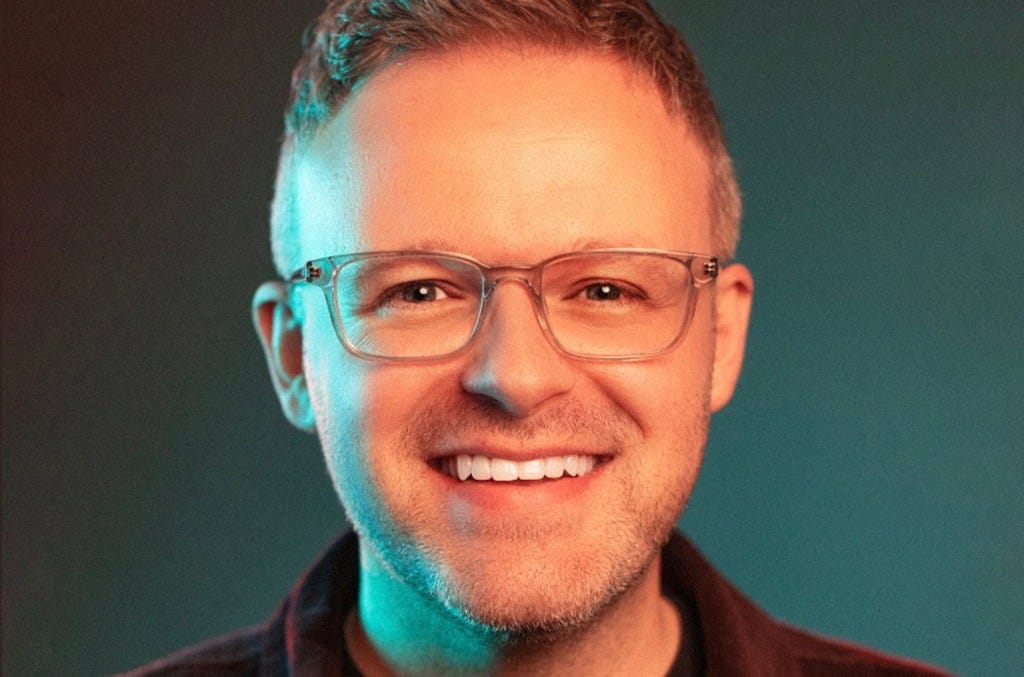
Artist Manager Justin McIntosh Launches JTMC Entertainment, Signs Kristin Chenoweth

Artist manager Justin McIntosh has launched JTMC Entertainment, welcoming actress, singer and New York Times bestselling author Kristin Chenoweth to the roster. McIntosh will continue to work with singer, entertainer, author, actress and businesswoman Reba McEntire, whom he has represented since 2023.

“2025 marks my 20-year anniversary of working in this business, and I am thrilled to start the next chapter of my career with an artist like Kristin Chenoweth,” McIntosh said in a statement. “Much like Reba, she reaches far beyond just one medium of entertainment, and I am so excited to continue expanding upon the incredible legacy she is building.”

Chenoweth is known for her original role as Glinda the Good Witch in Broadway’s Wicked; she also made a recent cameo in the 2024 hit film, starring Ariana Grande and Cynthia Erivo. Chenoweth has also starred in the 2024 Netflix holiday film Our Little Secret. Chenoweth is set to return to Broadway with The Queen of Versailles.

Trending on Billboard

Under McIntosh’s management, McEntire’s career has continued to add new career milestones, including her role as a coach on NBC’s The Voice, performing the national anthem at Super Bowl LVII, releasing the book Not That Fancy, and debuting the NBC sitcom Happy’s Place.

McIntosh has worked with McEntire for over a decade, since his role with Starstruck Entertainment as vice president of marketing & creative, also supporting artists including Kelly Clarkson and Blake Shelton. Prior to working at Starstruck, McIntosh worked in digital and marketing strategies for Big Machine Label Group, with his career also including roles at Country Radio Broadcasters, Inc., and his own creative consulting agency. The Belmont University alumnus is a member of the Country Music Association, Academy of Country Music and the Recording Academy, and has served on the boards of the Nashville Film Festival and The Theater Bug.

Reservoir Acquires Lastrada Entertainment’s Publishing Catalog

Reservoir Media has acquired the publishing catalog of Lastrada Entertainment. Home to over 5,600 compositions, the family-run company publishes hits that span all genres from the 1960s to today, including songs recorded by Jim Croce, Glen Campbell, The Carpenters, Captain & Tennille, Neil Sedaka, Eminem, Dolly Parton, H.E.R., Leon Bridges, Notorious B.I.G., Eminem and more.

Lastrada Entertainment was founded in 1987 by Herb Moelis and has since been passed down to his children Stephen and Larry Moelis. As the company has grown over the last four decades, it has acquired evergreen hits like Jim Croce’s “Bad, Bad Leroy Brown” and “Time In A Bottle,” “Love Will Keep Us Together” by Captain & Tennille, “More Bounce To The Ounce” by Zapp, and The Whispers’ “And The Beat Goes On.”

Then, in the 1990s, the catalog was given new life when decade-defining rapper 2Pac sampled a Lastrada Entertainment song in his single “California Love.” Later, the catalog also benefitted from samples in “We Belong Together” by Mariah Carey, “Miami” by Will Smith and more.

Trending on Billboard

“We have long admired Lastrada and the incredible catalog that the Moelis family has curated over the years,” says Rell Lafargue, president and COO of Reservoir. “Stephen and Larry’s deep knowledge of the music and their dedication to innovative sampling and synchs have elevated this catalog to iconic status. We are honored that Reservoir is now the home to the songs of Lastrada, and we look forward to preserving the legacy the Moelis family has built and ensuring its continued success.”

Lastrada’s president of music publishing Stephen Moelis adds, “The Moelis family takes pride in the catalog of hits we were part of, and in the personal relationships we forged with our incredibly talented songwriters. Passing the creative torch to Reservoir is the natural next step to continue the work we started with our father 40 years ago, and we wish to thank Golnar Khosrowshahi, Rell Lafargue, and the entire Reservoir team as they become stewards of some of the great songs of all time.”

Universal Music Group Shares Will Be Dual-Listed on U.S. Exchange in 2025

Pershing Square Holdings chief Bill Ackman won’t get his wish of a Universal Music Group (UMG) de-listing from the Euronext Amsterdam exchange, but the hedge fund king’s push for a UMG listing on a U.S. exchange will nevertheless come to fruition in 2025.

UMG announced Wednesday (Jan. 15) that Pershing Square and some of its affiliates have requested an offering and listing on a U.S. stock exchange and waived the 120-day filing requirement. UMG, “in line with its contractual obligations,” will use “commercially reasonable efforts to launch an underwritten offering for the sale of certain shares owned by Pershing by September 15, 2025,” according to the company’s statement. Pershing Square holds a 10.25% stake in UMG currently valued at $4.7 billion.

“Any actions or decisions of UMG beyond those necessary to comply with its contractual obligations under the Registration Rights Agreement will be determined by the Board of Directors of UMG based on an analysis taking into account what is value maximizing and in the best interests of all the shareholders of UMG,” the statement continues.

Trending on Billboard

Following violent attacks against Israeli soccer fans in Amsterdam in November 2024, Ackman, who is also a UMG board member, called on UMG to de-list from the Euronext Amsterdam exchange, where it has traded since it broke from Vivendi in 2021, and move its legal headquarters from the Netherlands to the United States. Pershing Square quickly sought approval to delist its own stock from the Euronext Amsterdam exchange, with its request granted on Jan. 2; it will officially de-list on Jan. 31. Pershing Square stock will continue to be listed on the London Stock Exchange.

“Leaving a jurisdiction that fails to protect its tourists and minority populations combine both good business and moral principles,” Ackman wrote on X at the time. Pershing Square, he continued, would exercise its “contractual right to cause UMG to be listed in the US… and achieve a US listing for UMG no later than some time next year.”

In response, UMG explained that Pershing Square could use its UMG holdings for a U.S. listing but couldn’t dictate additional terms. “As disclosed in UMG’s listing prospectus, Pershing has the right to request a listing in the U.S. subject to a Pershing entity selling at least $500 million in UMG shares as part of the listing. Pershing does not have any right to require UMG to become a U.S. domiciled company or delist from Euronext Amsterdam.”

A dual listing is not unusual for a publicly traded company. Listing in multiple countries provides a company with access to more investors and hedges against unfavorable rule changes in any one country. Among music companies, Tencent Music Entertainment trades in both the U.S. and Hong Kong.

ASCAP Pledges $1 Million to Songwriter Members Suffering from Wildfire Losses

ASCAP announced Wednesday (Jan. 15) that it will distribute $1 million in emergency relief to ASCAP songwriters or composers who have suffered the loss or damage of their primary residences or studios in the Los Angeles wildfires. The organization is also offering assistance to those who have been evacuated.

ASCAP will provide one-time stipends in the amount of $1,500 to ASCAP writer members in good standing as of Jan. 1, 2025, who do “not have a resignation notice pending.” The stipends will be awarded on a first-come, first-served basis while funds are available. 

Please see the ASCAP website for more information or to apply for benefits. You can also check out our resource guide for music workers impacted by the fires here and find out how to help here.

“Our hearts go out to everyone impacted by the devastating Los Angeles fires.  We are here to support our ASCAP members during troubled times, and we will ensure these funds reach ASCAP composers and songwriters in need,” said ASCAP CEO Elizabeth Matthews in a statement.

ASCAP president Paul Williams also wrote a message to members in need. His letter can be read below in full:

To my fellow ASCAP members,

My heart aches for the unimaginable loss and devastation that has struck our beloved city of Los Angeles. I want to say to all members and their families who have been impacted by the fires and are facing profound challenges, please take comfort that you are not alone. We are a community. As music creators, our community is built on a foundation of compassion, connection and a sense of purpose. That is our bedrock, where we always land, where we always begin.

Some of you have lost your homes, your studios, your instruments, those materials of your life which hold memories and meaning. What can never be lost is the spirit of this community and the enduring bond we share with each other. The outpouring of kindness, support, concern and generosity we have witnessed throughout this crisis is beyond inspiring. Proof, yet again, of an abundant supply of love.

As a community of songwriters, composers and music publishers, ASCAP has always harnessed our collective strength for the greater good. That is why ASCAP is setting up an emergency fund in the amount of $1 million for our members who have suffered from loss and damage to their homes and studios.

If you need help, please visit www.ascap.com/lafirerelief for more info.

Wishing you much love, hope and strength,

Paul

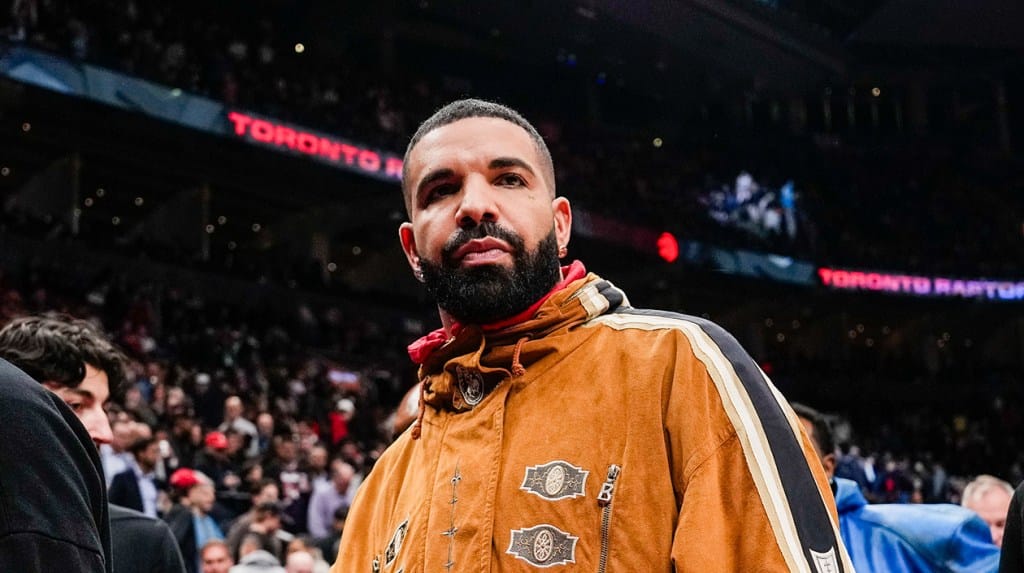
UMG Responds to Drake’s Defamation Lawsuit, Calling It ‘Illogical’ & ‘Frivolous’

Universal Music Group (UMG) is firing back at Drake’s lawsuit accusing the music giant of defaming him by promoting Kendrick Lamar’s diss track “Not Like Us,” calling the case “illogical” and accusing Drake of trying to “weaponize the legal process.”

In a strongly-worded statement issued Wednesday afternoon (Jan. 15), UMG flatly denied the allegations in Drake’s lawsuit — filed earlier in the day in New York federal court — and sharply criticized its superstar artist for bringing it.

“Not only are these claims untrue, but the notion that we would seek to harm the reputation of any artist—let alone Drake—is illogical,” the company wrote. “We have invested massively in his music and our employees around the world have worked tirelessly for many years to help him achieve historic commercial and personal financial success.”

Trending on Billboard

The lawsuit claims that UMG knew that “inflammatory and shocking allegations” in Lamar’s scathing diss track were false, but chose to place “corporate greed over the safety and well-being of its artists.”

But in UMG’s response, the music giant said that Drake himself had often engaged in rap beefs featuring bombastic claims about his opponents — the very thing that he now claims is illegal.

“Throughout his career, Drake has intentionally and successfully used UMG to distribute his music and poetry to engage in conventionally outrageous back-and-forth ‘rap battles’ to express his feelings about other artists,” UMG wrote. “He now seeks to weaponize the legal process to silence an artist’s creative expression and to seek damages from UMG for distributing that artist’s music.”

Drake’s case repeatedly makes clear that he is not suing Lamar himself, and that he holds UMG responsible for releasing a song that it allegedly knew was defamatory.

In its statement, UMG denied that claim — and said it would defend Lamar or any other artist if they were hit with such a lawsuit.

 “We have not and do not engage in defamation—against any individual,” UMG said in the statement. “At the same time, we will vigorously defend this litigation to protect our people and our reputation, as well as any artist who might directly or indirectly become a frivolous litigation target for having done nothing more than write a song.”

Drake and Lamar exchanged stinging diss tracks last year, culminating in Lamar’s knockout “Not Like Us” — a track that savagely slammed Drake as a “certified pedophile” and reached the top of the charts. In November, the star filed stunning legal petitions suggesting that he planned to sue UMG, claiming that the company had artificially boosted a song that contained defamatory statements about him.

Earlier on Wednesday, Drake made good on those threats — filing a federal lawsuit that claimed UMG had boosted a “false and malicious narrative” that the star rapper was a pedophile, severely harming his reputation and even putting his life in danger.

“UMG intentionally sought to turn Drake into a pariah, a target for harassment, or worse,” the star’s lawyers wrote in their complaint. “UMG did so not because it believes any of these false claims to be true, but instead because it would profit from damaging Drake’s reputation.”

The accusations — and Wednesday’s response statement — represent a remarkable rift between the world’s largest music company and one of its biggest stars. Drake has spent his entire career at UMG, first through signing a deal with Lil Wayne’s Young Money imprint that was distributed by Republic Records, then by signing directly to Republic.

Music Business Trends, Topics & Stories to Watch in 2025

From a potential TikTok ban to the upcoming Diddy trial to changes coming in streaming, AI, distribution and concert ticketing, there’s plenty to watch in 2025.

To put it mildly, 2025 has not gotten off to a great start given the awful wildfires that have devastated the Los Angeles area, leaving at least two dozen dead and thousands more misplaced and without homes. For those affected, the repercussions are likely to last for months, if not years, to come.

Though none of the issues facing the music business come close to that level of seriousness, there is nonetheless much uncertainty to come in the next 12 months. In the coming days, the Supreme Court is set to weigh in on a law that could see TikTok banned from the United States or sold, a situation with the potential to cause a big uproar in the way music is marketed and promoted. In the legal realm, the criminal trial of Sean “Diddy” Combs could put the entertainment mogul behind bars for the rest of his life, while multiple lawsuits and federal legislation seeking to regulate the use of AI in music could have legal and copyright repercussions for years. Concert ticket prices are continuing to rise; record labels and streaming companies are increasing crackdowns on fraud in the streaming ecosystem; the distribution marketplace has been a frenzy of activity in a way that is unlikely to slow down; and the Bob Dylan biopic A Complete Unknown has kept the focus on music-led films in a way that seems to grow each year.

As the year gets underway, Billboard has pulled together 11 music business trends, topics and stories to keep an eye on in 2025 from across the various sectors of the industry, from genre growth in country music to the future of radio to the much-vaunted “Streaming 2.0” paradigm.

Boiler Room Acquired By Superstruct Entertainment

Boiler Room, a longstanding event and streaming series, has been acquired by European festival organizer Superstruct Entertainment. A representative for the company declined to disclose the terms of the deal.

Boiler Room was previously owned by ticketing platform Dice, which acquired it in 2021. Dice will remain Boiler Room’s official ticketing partner.

A statement on the deal notes that Boiler Room’s team will remain responsible for leadership of the business under Superstruct, “and it will retain its identity with active support for their
development through Superstruct’s global resources and expertise.”

Trending on Billboard

A representative for Superstruct confirms that Boiler Room will continue generating revenue through brand partnerships (Boiler Room has had long-term deals with Pernod Ricard and Ballantine’s), along with ticketed events and its apparel brand. While Boiler Room videos regularly rack up millions of streams on YouTube, Boiler Room makes almost nothing from this YouTube content, as it doesn’t own any rights to the music.

“As we turn 15 and enter our next stage of growth, we’re excited to be partnering with Superstruct for this chapter,” Boiler Room founder Blaise Bellville said in a statement. “We feel in good company with their roster of brands, they offer us new opportunities to grow, whilst understanding the importance of staying true to the authenticity that, at its core, is what makes Boiler Room special.”

“We are proud to welcome the talented team at Boiler Room, who have managed to consistently grow the platform over the last fifteen years whilst maintaining a distinct cultural approach,” added Superstruct Entertainment CEO Roderik Schlösser. “This partnership perfectly aligns with Superstruct’s mission to celebrate and amplify cultures through creativity, collaboration, and live entertainment. Boiler Room is in the best position it has ever been and we are excited to support them in their promising future ahead.”

In June, Billboard reported that global investment firms KKR and CVC had agreed to acquire Superstruct Entertainment from Providence Equity Partners. Superstruct — which has a portfolio of more than 80 events including the electronic festivals DGTL, Mysteryland, Parookaville, Brunch Electronik, along with Sziget, one of the largest music festivals in Europe, and the world’s largest heavy metal festival, Germany’s Wacken Open Air — was founded in 2017 by Providence and James Barton, a former Live Nation executive who also founded the Liverpool-based night club Cream. The terms of that deal were not disclosed, though the Financial Times reported that Superstruct sold for around €1.3 billion ($1.39 billion). 

Record Label Market Share Year-End 2024: Republic Dominates, Interscope Ends On a High

At the end of 2023, Republic Records’ industry-leading current market share of 13.47% represented the best full-year mark for a label since at least 2015, encompassing the streaming era for the music industry.

But in 2024, Republic surpassed that: powered by mega albums by Taylor Swift, Morgan Wallen and Sabrina Carpenter (the latter whose label Island Records is included in Republic’s market share along with Cash Money, Wallen’s labels Mercury and Big Loud and indie distributor Imperial), Republic posted a 14.90% current share, the second year in a row it led all labels by more than 4%.

Much of that can be attributed to the all-conquering success of Swift, whose Tortured Poets Department album was more than twice as big in the U.S. in 2024 than the second-biggest, Wallen’s 2023 album One Thing At a Time. But it also had to do with the remarkable rise of Island’s one-two punch of Carpenter and Chappell Roan, who each broke out this year with an album that ended the year among the 10 biggest of 2024: Carpenter’s Short N’ Sweet and Roan The Rise and Fall of a Midwest Princess. Year over year, Island quadrupled its current market share, from 0.62% in 2023 to 2.49% in 2024, helping Republic reach new heights.

Trending on Billboard

But Republic wasn’t the only label to have a big year: in second place was Interscope Geffen A&M, which saw its current share grow nearly two full points year over year, to reach 10.72% in 2024 — a share which grew steadily each quarter as the year went along. (Interscope’s market share also includes Verve Music Group.) Billie Eilish’s banner album Hit Me Hard & Soft led the way for IGA, but Kendrick Lamar’s cultural juggernaut “Not Like Us” was among the biggest songs of the year, while his Billboard 200-topping November album GNX helped capitalize on that momentum. Interscope, too, posted a share more than 4% higher than its next-closest competitor, Warner Records.

(One note: market share rankings do not reflect the Universal Music Group’s reorganization carried out this past February, which brought Def Jam under Republic’s purview and Capitol under Interscope’s; if it did, REPUBLIC would stand at a 15.46% current share, with Interscope Capitol at 14.70%.)

Which is not to say Warner Records had a down year: after posting a huge 5.96% current share in 2023, Warner had an even bigger 2024 and bested its sister label Atlantic Records for the first time in years. Warner (whose share includes Warner Nashville, Warner Latina and Rhino) reached a 6.55% share, led by breakout hits by Grammys best new artist nominees Benson Boone (“Beautiful Things”) and Teddy Swims (“Lose Control”), as well as the continued momentum of Zach Bryan, whose latest album The Great American Bar Scene delivered another major release for the label.

That meant Atlantic Records (which encompasses 300 Entertainment and Elektra) finished in fourth, dropping 1.21% from 2023 to land at 5.64% current share, in a year that was marked by a major transition in leadership. In fifth was Columbia Records, whose share includes some indie labels from distributor RED, which delivered a major album in Beyoncé’s Cowboy Carter (and, later in the year, Tyler, the Creator’s Chromakopia) and a song in Hozier’s “Too Sweet,” but slipped slightly year over year to 4.59%. In sixth, RCA Records also dipped year over year, coming in at 4.11%, down from 4.67% in 2023.

Another label that saw an executive overhaul, Capitol Music Group — which includes Motown/Quality Control, Blue Note, Astralwerks and some of Virgin Music’s share — also decreased significantly, falling from a 5.91% current share in 2023 to 3.98% in 2024, dropping them to seventh overall. But the eighth and ninth labels — Epic Records and Alamo Records, respectively — saw significant gains, with Epic jumping to 2.59% from 2.31% last year and Alamo nearly doubling its share, from 1.13% in 2023 to 2.11% in 2024, with much of that coming from the success of its Santa Anna distribution company, which debuted in January 2023. Rounding out the top 10 is another Sony label, Sony Music Latin, which also grew, up to 2.04% in 2024 from 1.94% in 2023.

Among the label groups, two sectors saw significant growth, offsetting the others. The Universal Music Group, fueled by the huge successes of Republic and Interscope, grew 1.09% year over year, posting a 36.90% current share. Sony Music, on the other hand, fell 1.13% in current share year over year, to 25.96%. Warner Music Group also fell, dropping from 16.96% in 2023 to 16.33% in 2024 in current share, while the indie sector grew 0.67% year over year by current distribution, from 20.14% to 20.81%. By label ownership, the indie sector accounted for 38.91% of current share.

At the label group level, overall share — which includes catalog in addition to frontline releases — told a different story. Sony Music actually grew the most year over year, up 0.22% to 27.39% in overall share in 2024, while UMG grew 0.17% to 38.61%. Warner Music Group dipped from 18.63% to 18.39%, while by distribution ownership the Indies also fell slightly, from 15.77% to 15.62%. By label ownership, the indie sector accounted for 36.19% overall share.

Among the individual labels in overall share, Republic and Interscope still held the top two spots — at 10.39% and 10.17%, respectively — though Interscope’s deeper catalog made it closer than with current share. Similarly, Atlantic Records’ deeper catalog meant it took third place in overall share, leapfrogging Warner Records in fourth, at 7.63% and 6.88%, respectively. Columbia (5.97%) maintained the fifth spot, just edging Capitol Music Group (5.95%) in sixth, while RCA, Epic, Sony Nashville and Universal Music Nashville rounded out the top 10.

In catalog share — those releases that are older than 18 months — it was Interscope’s deeper bench that led it to an industry-leading 9.98% share, ahead of Republic’s 8.84% and Atlantic’s 8.31%. Warner Records (7.00%) came in fourth, while Capitol Music Group (6.62%) jumped to fifth, ahead of Columbia (6.44%) and RCA (5.31%) in sixth and seventh, respectively. Epic (2.70) landed in eighth, while Def Jam’s illustrious history, celebrating 40 years in 2024, carried it up to ninth, at a 2.19% share.

Among the label groups, UMG’s catalog share was an industry-leading 39.19%, while Sony posted a 27.87% share and the Warner Music Group ended at 19.09%, with the indies at 13.85%. Sony’s share was up from the 27.21% it claimed in 2023, while each of the other three declined slightly year over year.