Business

Limp Bizkit Suffers Setback In $200M Royalties Lawsuit Against Universal Music Group

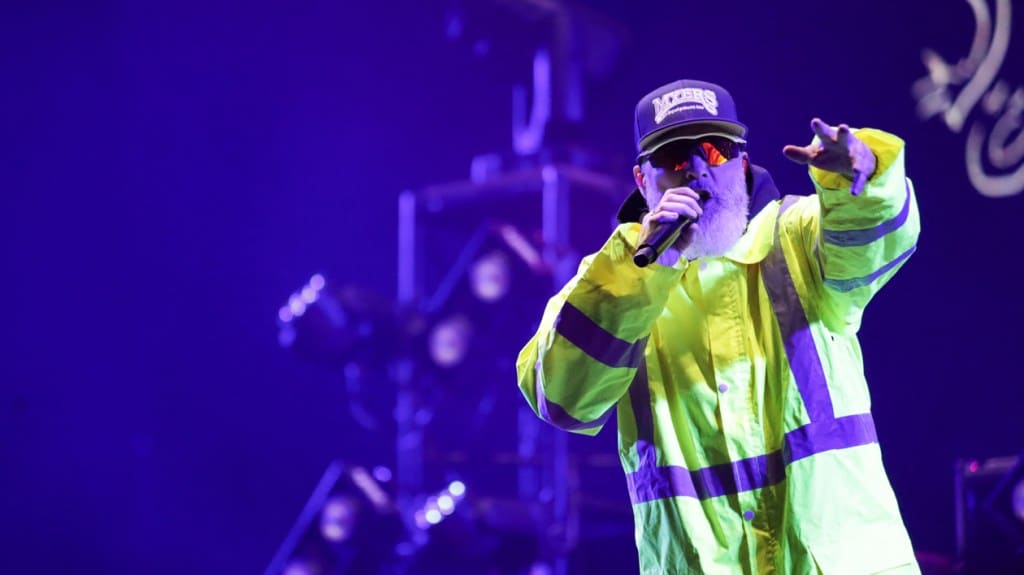
Limp Bizkit has suffered a setback in its $200 million lawsuit against Universal Music Group, with a federal judge ruling that the band cannot legally void its contracts of “nearly 30 years” over accusations of underpaid royalties.

The blockbuster case, filed last year in Los Angeles federal court, claims that frontman Fred Durst and the band have “not seen a dime in royalties” over the years. Among other claims, the lawsuit argued that the band is therefore entitled to a ruling of “rescission” that terminates its deals with UMG.

But in a decision Friday (Jan. 17), Judge Percy Anderson ruled that the band had in fact been “paid millions in advances” and that UMG had fronted “substantial sums” to record and distribute Limp Bizkit’s albums – meaning the band doesn’t deserve the drastic remedy of terminating the decades-old deals.

Trending on Billboard

“Plaintiffs seek rescission of contracts that have governed the parties’ relationship beginning in 1996 – nearly 30 years – because the agreements should be rescinded as fraudulently induced,” the judge wrote. “Plaintiffs have not plausibly alleged the type of ‘substantial’ or ‘total failure’ in the performance of the contracts that could support rescission of the parties’ agreements.”

The ruling isn’t a total defeat. Judge Anderson didn’t reach many of the lawsuit’s other legal claims, including fraudulent concealment and intentional misrepresentation, and gave Limp Bizkit’s lawyers a chance to fix the rescission claim. But the judge’s wording suggested he will be skeptical of revoking a contract when “millions in royalties were advanced and paid under decades-old agreements.”

If finalized, the decision is something of a double blow for Durst’s lawsuit. It would not only reject his efforts to rescind the contracts, but would sink one of his other core allegations: that UMG has infringed Limp Bizkit’s copyrights. Such a claim — which could carry a huge damages award — can only succeed if the band’s contracts are voided and it legally regains its ownership of the copyrights, the judge wrote.

That could also mean the case is headed to another court entirely. If Limp Bizkit’s lawsuit no longer contains federal copyright claims, a federal court would no longer have jurisdiction over the case, meaning the lawsuit’s remaining accusations against UMG would need to be refiled in a state court.

In a statement to Billboard on Wednesday, attorneys for Durst and Limp Bizkit downplayed the impact of the ruling, noting that the court had “upheld a majority of our claims” and given them a second shot at the rejected claims.

“The facts speak for themselves,” said Frank Seddigh, the band’s lead attorney. “Universal will be held accountable for its actions and will not get away with its conduct at the expense of artists.”

A spokesman for UMG declined to comment.

Durst and Limp Bizkit sued in October, claiming the band had “never received any royalties from UMG,” despite its huge success over the years: “The band had still not been paid a single cent by UMG in any royalties until taking action.”

That claim was something of a stunner. How had one of the biggest bands of its era, which sold millions of records during the music industry’s MTV-fueled, turn-of-the-century glory days, still never have been paid any royalties nearly three decades later?

According to Durst, the answer was an “appalling and unsettling” scheme to conceal royalties from artists and “keep those profits for itself.” He claimed UMG had essentially kept Limp Bizkit in the red with shady bookkeeping, allowing the label to falsely claim the band remained unrecouped — meaning its royalties still had not surpassed the amount paid in upfront advances.

UMG hit back a month later, calling the allegations “fiction” and demanding they be thrown out of court. The music giant’s attorneys argued that Limp Bizkit’s own legal filings contradicted the accusation that the band had not been paid: “Plaintiffs concede thereafter receiving millions of dollars in payments.”

Following Friday’s decision, Limp Bizkit has until early next month to refile an amended version of the lawsuit.

SXSW Unveils Third Round of Showcasing Artists for 2025 Festival

The South by Southwest Music Festival has announced the third round of Showcasing Artists invited to perform at the 39th annual event, March 10-15, 2025, in Austin.

The third announcement includes several powerhouse SXSW alumni like Sunflower Bean, Holy Fuck, and Jack’s Mannequin. The diverse lineup includes from chart-topping alt-reggaeton act NSQK from Mexico and energetic J-Pop boy band PSYCHIC FEVER. Everything from Latin favorites like Sofía Reyes, Amantes Del Futuro, La Cendejas and st. Pedro to acclaimed Taiwanese artists including Andr, TRASH, Amazing Show, and Enno Cheng.

Other highlights include rising hip-hop star Samara Cyn, ethereal songstress Quiet Light, award-winning musician-activist Madame Gandhi, rebel psych-rock band Frankie and the Witch Fingers, and the new project from Núria Graham and Aoife Nessa Frances called Red Stamp. Also on the lineup are multi-sensory experimental artist BLACK FONDU, ambient Thai collaborators NISATIWA X NOTEP, funk-soul seven piece brass band SNACKTIME, and Muri, a magnetic force redefining Filipino music. Japanese artists include neo-soul, city pop ensemble Luv, high energy punk-rock band ENTH, and metal band with heavy sound and light lyrics, GOKUMON (UchikubiGokumonDoukoukai).

Trending on Billboard

“The momentum continues to build with our third reveal,” said James Minor, VP of Music Festival. “Each act lends a unique and dynamic voice to the lineup, with both new and established artists from around the world creating a real sense of anticipation for the March event.”

Many of SXSW’s showcases are curated by SXSW programmers in collaboration with record labels, booking agencies, export offices, music publishers, media outlets, lifestyle brands and more. These showcases give attendees the opportunity to experience sets in exclusive, small-stage performances.
A sortable airtable that contains information on each artist’s genre, publicist contact information, and social media pages can be found here.

Starting January 30th, SXSW staff will be sharing weekly artist round-ups on the official SXSW Spotify and YouTube Music Video playlists. Yesterday, SXSW announced Rock and Roll Hall of Famer and Grammy Award-winning lead singer for Creedence Clearwater Revival John Fogerty and Bluesky CEO Jay Graber as Keynote Speakers, in addition to the third round of Featured Speakers.

American Music Tourism, MAIN Event Ticketing and HITS Acts Return to Senate

The American Music Tourism Act, Mitigating Automated Internet Networks (MAIN) for Event Ticketing Act, and Helping Independent Tracks Succeed (HITS) Act have all been re-introduced to the Senate. Recently, the American Music Tourism Act was also re-introduced to Congress.

Each year, bills that have not yet passed must be re-introduced to the House and the Senate to be put back into consideration. The American Music Tourism Act was first introduced to the Senate in 2024, and the MAIN Event Ticketing Act was initially introduced in 2023, while the HITS Act first appeared in the Senate in 2020.

Each bill targets a key issue in the music business. The American Music Tourism Act, introduced by Sens. Marsha Blackburn (R-Tenn.) and John Hickenlooper (D-Colo.), would promote music-related tourism in the U.S. to sites like Graceland and The Grammy Museum and concerts like Taylor Swift’s Eras tour. The MAIN Event Ticketing Act, introduced by Sen. Blackburn and Sen. Ben Ray Luján (D-NM), would further mitigate ticketing bots and would build on President Obama’s Better Online Ticket Sales (BOTS) Act. HITS Act, introduced by Sen. Blackburn and Sen. Catherine Cortez Masto (D-Nev.), would give indie musicians the ability to deduct 100% of record production expenses in the year they are incurred, rather than in later years.

Trending on Billboard

The American Music Tourism Act, the MAIN Event Ticketing Act and the HITS Act are all strongly supported by the music business establishment. This includes previous endorsements from the Recording Industry Association of America, Nashville Songwriters Association International, ASCAP, National Music Publishers Association, Live Nation Entertainment, National Independent Venues Association, BMI and many more.

“The Volunteer State is home to so many iconic musical landmarks – from Graceland in Memphis to the Grand Ole Opry in Nashville to Dollywood in Pigeon Forge,” says Sen. Blackburn, a longtime supporter of the music business. “These three bills will promote music tourism across the state of Tennessee, better protect consumers and artists from scammers, and provide tax deductions to support independent music creators.”  

Roc Nation Teams With Musicow to Launch U.S. Music Equity Service Provider

Roc Nation is expanding its music business portfolio with a trailblazing partnership. The Roc has teamed up with South Korean fintech company Musicow to launch what it describes as the first Music Equity Service Provider in the United States.

Musicow aims to offer Americans the opportunity to invest in music royalties. This partnership allows music rights owners to buy, trade, or sell shares of royalty revenue with potential public investors.

Trending on Billboard

Mega fans will have the chance to earn revenue through their favorite artists by utilizing music royalties as an alternative asset class. Creators will also be able to fractionalize royalty revenue and sell shares of tracks.

“The music industry is evolving into a shared ecosystem where fans and creators can earn together,” Roc Nation vice chairman Jay Brown told Billboard. “Our mission is not only to support and empower artists by providing the tools and services they need to build a better music ecosystem but also to give everyone access to the financial opportunities the music industry offers.” 

Musicow CEO Woo Rhee called the Roc Nation partnership an “incredible opportunity to drive innovation and redefine the future of our industry.”

Rhee added: “I’m confident that together, we have the vision, expertise, and enthusiasm to create transformative progress and unlock limitless potential.”

Musicow isn’t live just yet with an official launch projected to come at some point during the first quarter of 2025. Early users will have the chance to receive a free $10 in their Musicow wallet to get a head start on earning royalties before the rest of the competition.

Music AI Raises $40 Million for Its ‘Ethical AI Solutions’

Music AI, a developer of artificial intelligence for music and audio, announced Wednesday it raised $40 million in a funding round led by Connect Ventures, a partnership between CAA and venture capital firm NEA, and Brazilian investor monashees, which also participated in Music AI’s seed around.

Other participants in the funding round include Kickstart, Samsung Next, Toba Capital, Valutia, Pelion and such music industry professionals as songwriter/producer Freddy Wexler, DJ/producer 3LAU and singer/songwriter Alexander23.

“Securing this Series A funding underscores the real-world impact our technologies have on the creative industry,” Geraldo Ramos, CEO of Music AI, said in a statement. “We’re ready to advance our mission of making music innovation accessible to all, and we’re eager to explore new possibilities with a focus on practical applications.” Founded by Ramos, Eddie Hsu, and Jardson Almeida, Music AI has a team of over 90 collaborators in the U.S., Brazil and Europe.

Trending on Billboard

Some AI companies have run into legal problems from music rights owners intent on preventing unauthorized use of their recordings and musical works to train generative AI models. Suno and Udio, for instance, were sued in the U.S. by the major labels for copyright infringement in June 2024, and Suno was sued on Monday by German performing rights organization GEMA in a Munich regional court. Music AI distances itself from those controversies, calling its products “ethical AI solutions” for the creative process such as stem separation, voice transfers, lyric transcription and mixing and mastering. The company’s technologies, including Music.ai and Moises.ai, have over 50 million users.

“We are deeply committed to partnering with ethically led AI companies that appropriately credit and compensate creators for usage of their work,” Michael Blank, managing partner at Connect Ventures, said in a statement. “Music AI’s talent-friendly approach and unparalleled technology is helping them become the trusted and premier AI platform of the music industry. Beyond empowering artists, Moises enhances the creative process for musicians, producers, and content creators worldwide for practice, creation, and collaboration.”

Samsung Next is interested in Music AI’s models’ ability “to run directly on hardware for faster performance, reduced latency and reduced cloud dependency,” said Carlos Castellanos, investor at Samsung Next. “Their proprietary models, third-party integrations, and on-device AI capabilities ensure reliability, security, and scalability across smartphones, smart TVs, and other connected devices—all while elevating the end-user experience with cutting-edge features.”

Gabito Ballesteros Signs With George Prajin’s Double P Management

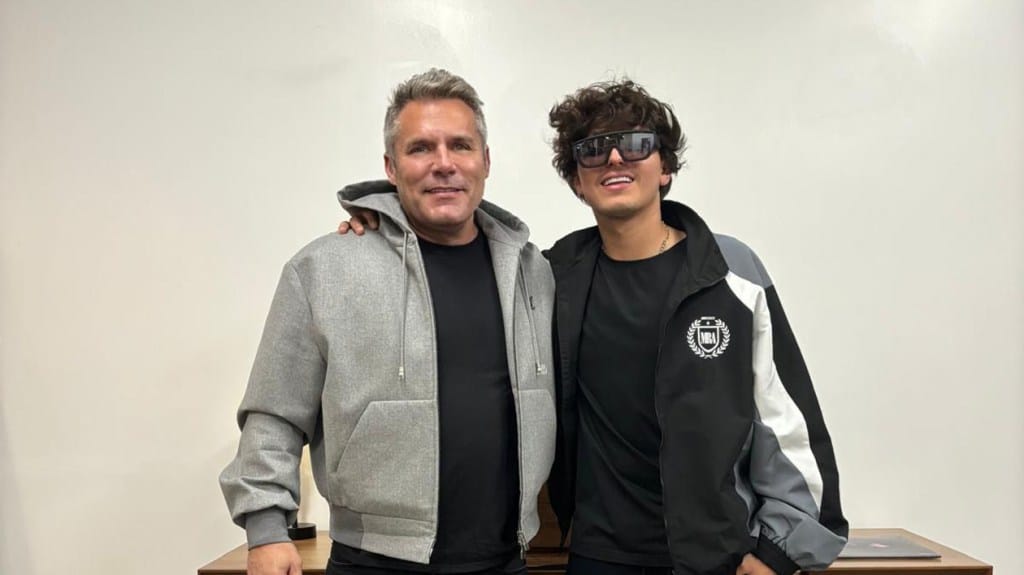
Música mexicana hitmaker Gabito Ballesteros has signed with George Prajin‘s Double P Management, Billboard can announce. The 25-year-old artist and producer — known for co-writing corrido hits like “Lady Gaga” and “Presidente” — joins megastar Peso Pluma, Tito Double P and Santa Fe Klan on the company’s roster.

“This has been an amazing journey so far and I’m grateful to my record label Los CT for believing in me from day one,” Ballesteros said in a statement. “Now, adding George Prajin for management is an amazing combination and I know that together we are going to go even further.”

Trending on Billboard

Born in Sonora, Mexico, Ballesteros boasts of a handful of chart-topping hits, including “Lady Gaga” with Peso Pluma and Junior H and “AMG” with Peso and Natanael Cano — both of which entered the Billboard Hot 100 in 2023. With his signature take on corridos tumbados, Ballesteros is a leading force in the new generation of regional Mexican music artists. His first studio album, The GB — released in May — peaked at No. 3 on the Regional Mexican Albums chart and at No. 5 on Top Latin Albums, marking his first entry on any Billboard albums ranking. He was also a four-time finalist at the 2024 Billboard Latin Music Awards, where his and Prince Royce‘s “Cosas de la Peda” won tropical song of the year.

“Gabito is an amazing artist who is extremely well-rounded,” said Prajin, who was named Billboard‘s 2024 Latin Power Players executive of the year. “Not only does he compose, produce and sing, he also has incredible stage presence with energy that radiates and captivates audiences. He has accomplished a great deal already and we are looking forward to having him join Double P Management and helping him take his career to the next level.”

BMG Promotes Johannes von Schwarzkopf to Chief Strategy Officer

BMG has named Johannes von Schwarzkopf as chief strategy officer and executive board member, effective January 1. Reporting to CEO Thomas Coesfeld, von Schwarzkopf will oversee global strategy, identify new business opportunities, including M&A, and lead BMG’s global licensing and synch operations.

Since joining BMG in 2021, and gaining a promotion to senior vp of corporate development a year ago, the Berlin-based executive has played a pivotal role in Finance and M&A, driving BMG’s Boost investment program and co-developing the transformative BMG Next strategy. Launched in 2023, BMG Next emphasizes a localized yet globally scalable approach, or as Coesfeld put it: “local where necessary, global where possible.” He has also advanced partnerships and spearheaded generative AI initiatives.

Johannes von Schwarzkopf // credit: Frederike van der Straeten

Before BMG, von Schwarzkopf worked as an M&A advisor at EY and in media sales at advertising tech company Taboola. He holds a master’’’s in international management from ESADE Business School.

Trending on Billboard

CEO Thomas Coesfeld praised von Schwarzkopf’s strategic insight, highlighting his contributions to BMG Next and his ability to deliver results through innovation. “I am confident Johannes will continue to drive growth and strengthen our position as a leader in the global music industry,” Coesfeld said.

Von Schwarzkopf expressed his gratitude, saying, “It’s an honor to take on this role. I’m excited to collaborate with our teams to build on our successes and establish BMG as an innovation leader in the music industry.”

Chris Brown Files $500M Defamation Lawsuit Over ‘A History of Violence’ Documentary: ‘Full of Lies’

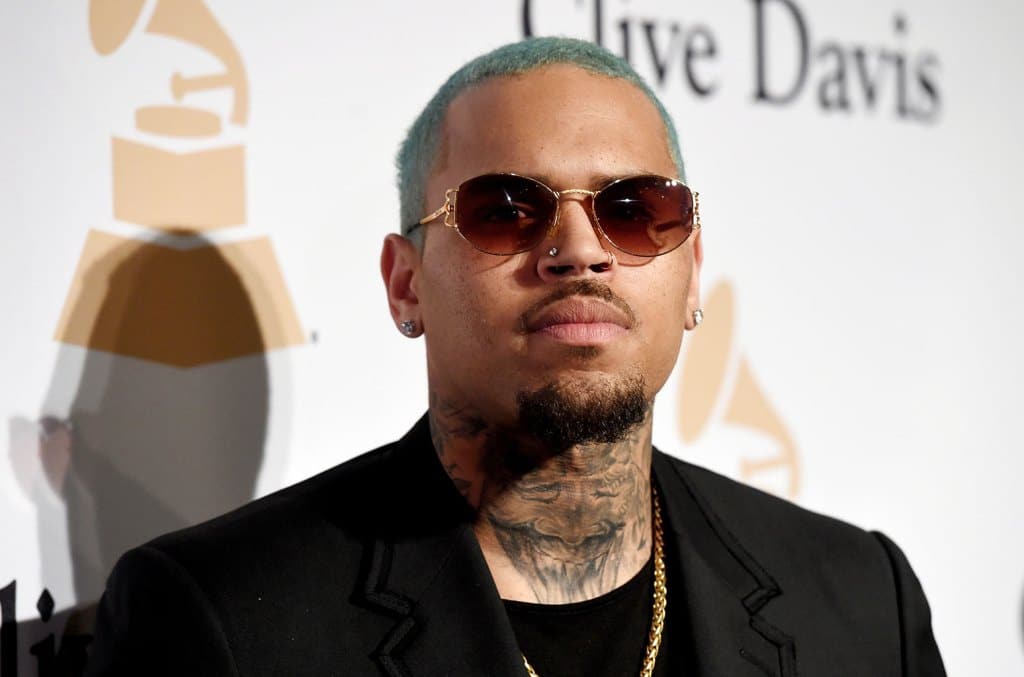
Chris Brown has filed a lawsuit against Warner Bros. Discovery, alleging the media giant defamed him with a 2024 documentary claiming that the R&B star had a long history of sexually abusing women.

Filed Tuesday (Jan. 21) in Los Angeles Superior Court, the complaint accuses Warner Bros. Discovery and Ample Entertainment, the production company behind Chris Brown: A History of Violence, of “promoting and publishing false information in their pursuit of likes, clicks, downloads and dollars and to the detriment” of the R&B star — all while “knowing that it was full of lies and deception and violating basic journalistic principles.”

“They did so after being provided proof that their information was false, and their storytelling ‘Jane Doe’ had not only been discredited over and over but was in fact a perpetrator of intimate partners violence and aggressor herself,” reads the lawsuit, which was filed by attorneys Arnold Shokouchi and Levi McCathern. “Mr. Brown has never been found guilty of any sex related crime…but this documentary states in every available fashion that he is a serial rapist and sexual abuser.”

Trending on Billboard

The Jane Doe who made sexual assault accusations against Brown in the documentary — whom he identifies in the lawsuit — is also named as a defendant in the complaint, which alleges the woman “completely disregarded the facts in an attempt for fame and fortune — all at the cost of Chris Brown and the reputation he has worked diligently in redeeming over the last decade.”

The “sensationalized, unfounded, and defamatory allegations” in the documentary “have been discredited, dismissed by the courts, or outright fabricated,” Brown’s lawyers write. The lawsuit further alleges that the Jane Doe filed a “frivolous civil lawsuit” against Brown in January 2022 in which she accused him of sexual assault and battery — but that her claims “were determined to be entirely fabricated, leading to the withdrawal of her attorneys and dismissal of the case” that same August “after a Miami Beach Police detective uncovered text messages…that exposed her dishonesty.” It adds that while an investigative report published by Rolling Stone in March 2022 “further discredited her claims,” the ID documentary nonetheless portrayed her “as credible, ignoring her established lack of veracity.”

Later in the complaint, Brown’s attorneys break down the Jane Doe’s alleged “history of violence and erratic behavior [that] should have raised red flags for any responsible journalist.” The suit includes a copy of an alleged restraining order filed against Doe by an ex-boyfriend in 2021 “after she physically assaulted him, threatened him with a knife, and engaged in online harassment.”

“These incidents, detailed in court records and leading to her arrest by the Los Angeles Police Department, were disregarded by the Defendants, who instead framed her as a reliable source to bolster their sensationalized portrayal instead of the physical aggressor in a romantic relationship,” the complaint reads.

Key to the lawsuit is the accusation that the companies behind the documentary moved forward with its release even though they allegedly knew it “contained false claims and violated journalist professional standards” — claims Brown’s lawyers now say “caused significant harm to Mr. Brown’s reputation, career, and business opportunities.”

Several individuals who appeared as talking heads in the documentary are also named as defendants in the lawsuit.

Brown is asking for $500 million in damages, “a portion of which will be donated to survivors of sexual abuse.”

Warner Bros. Discovery and Ample Entertainment did not immediately respond to Billboard‘s requests for comment.

John Reese & Craig Duswalt Launch Artist Management Firm & Event Production Platform

Longtime rock and punk promoter John Reese and author and RockStar Marketing creator Craig Duswalt have joined forces to launch the Disrupt Artist Management Network (DAMN!), an artist management and event production platform that plans to launch a new podcast and educational event.

That event, called Breaking Into The Music Industry, is a two-day conference “designed to inspire and educate aspiring artists, entrepreneurs, college students, and industry professionals,” a press release reads. Scheduled for May 1-3 in Palm Springs, Calif., the event will feature “top music executives and industry leaders offering mentorship, actionable strategies, and insider knowledge to attendees.”

Breaking Into The Music Industry will feture dozens of speakers including Live Nation global tour promoter Rich Best; Guns N Roses, Velvet Revolver and The Cult member and Rock N Roll Hall of Fame inductee Matt Sorum; CAA agents Kasey McKee and Ryan Harlacher; 5B Artist Management founder/CEO Cory Brennan; record producer and musician John Feldmann; festival producer Sean Akhavan; and author and radio/TV personality and host Matt Pinfield.

Trending on Billboard

DAMN! will also encompass an artist management company with three acts under management: LA-based alternative metal band Thredge, Florida-based metal outfit Chained Saint and L.A.-based alt-rock group Of That Nature.

“We are thrilled to launch Disrupt Artist Management Network with such talented and inspiring bands,” said Duswalt. “Our mission is to elevate artist management with a holistic, artist-focused approach. These artists represent the bold, innovative spirit we aim to amplify.”

Reese added, “Music has the power to inspire, connect, and transform lives. Through DAMN!, we’’e committed to helping artists realize their full potential by providing the support and strategic guidance needed to thrive in today’s evolving music landscape.”

Artist Partner Group Sues Create Music Group for ‘Brazen Thievery’

The independent label and publishing company Artist Partner Group (APG) sued Create Music Group on Tuesday (Jan. 21), accusing the company of violating copyrights by uploading and monetizing songs it didn’t actually own. APG also accused Create of interfering with its artists’ contracts.

“Create’s ‘business model’ is to steal the intellectual property and contractual rights of innocent rightsholders,” APG’s attorney writes.

APG’s complaint argues that Create has engaged in several forms of copyright infringement, including by “unlawfully uploading” APG artists’ songs to streaming services” and “collecting royalties for them” as well as releasing a song called “Montagem Diamante Rosa” “which flagrantly copies” another composition that is owned by APG.

The suit also argues that Create approaches acts who have signed with APG and offers them YouTube monetization deals despite the fact that this service is already part of APG’s agreements with its artists. (Recording or publishing agreements typically give an artist’s partner the right to collect royalties across all the different platforms.) “Create and its subsidiaries wrongfully induced these artists to sign these bogus ‘contracts’ by falsely asserting that [APG was] purportedly doing a bad job exploiting their works and leaving money on the table (thereby damaging Plaintiffs’ reputation),” according to the complaint. “Create and its subsidiaries further falsely induced these artists by telling them that these ‘contracts’ do not violate [APG]’s rights.”

Trending on Billboard

In a statement, Jeff Movit, head of litigation for Chaudhry Law, said “our complaint demonstrates that APG will aggressively protect its contracts and copyrights.”

A representative for Create was not immediately available for comment. 

Create was founded in 2015 and built its profile in the music industry through its YouTube royalties collection business. It has also branched out into other areas: Create owns other companies including Label Engine, a distributor; Flighthouse, a TikTok-focused digital media studio; and a majority stake in The Nations, a collection of popular YouTube channels.

While APG’s complaint is multifaceted, part of it focuses on Create’s business practices on YouTube: “Create and its subsidiaries have falsely filed claims with YouTube in which Defendants baselessly assert that they own rights in sound recordings and musical compositions that third parties have posted.”

This is not the first time that Create’s tactics on the popular video platform have drawn criticism. More than 10 executives told Billboard in 2022 that they knew of instances where Create claimed YouTube royalties it had no right to, sharing email threads and screenshots to back up their claims.

In an interview at the time, Create co-founder Jonathan Strauss denied these allegations. “We’ve never been sued by a lawyer or manager for this activity,” he added. “You would have to think if there was any truly egregious activity they would do that.”

Lawsuits are expensive and time-consuming. In October 2023, however, the music management company DigiGlo — whose clients include the rapper Chief Keef — sued Create, alleging that it “lost out on years of payments for its content monetization” for more than 400 works on YouTube because of Create’s refusal to honor contracts. DigiGlo estimated that it had lost “hundreds of thousands of dollars in revenue.”

Create filed a terse answer to DigiGlo’s complaint two months later, denying “each and every allegation.” The suit is ongoing. (Create also faced a lawsuit from Cinq Music Group in 2022 that revolved around the use of a Shiloh Dynasty sample, though a judge dismissed Cinq’s claims last year.)

Meanwhile, Create has been raising money. In June, the company announced that it had received a $165 million investment from the private equity firm Flexpoint Ford. “Flexpoint’s investment will support our ambitious acquisition strategy,” Strauss said in a statement at the time, and “allow us to expand our market presence and create the scale to continue to provide unparalleled services to our clients and partners.”