State Champ Radio
 Billboard UK
Page: 2
Trending on Billboard
Corinne Bailey Rae has a certain affect on people. She’s the kind of artist that even a brief glimpse of can spark a musical memory even in the most public of places. “I’ll be in an elevator and people see me walk in and they just start whistling ‘Put Your Records On’ to themselves,” Rae laughs. “I don’t even think they notice they’re doing it! But I just love that it has that impact on people.”
Explore
See latest videos, charts and news
That particular record, first released in 2006 from her self-titled debut LP, burrows in deep. The song reached No. 2 on the U.K. Singles Chart, appeared on the Billboard Hot 100, and was nominated for two categories at the Grammys the following year: song of the year and record of the year. At almost a billion streams on Spotify alone, its place in the 21st century British pop canon is secure, and its gorgeous melody and empowering message resonate almost two decades down the line.
We meet Rae in her hometown of Leeds ahead of her performance at Billboard U.K. Live at Manchester’s Aviva Studios, home of Factory International. The intimate performance will kick off a series of 20th anniversary celebrations for the 46-year-old musician, which also includes the release of a children’s book Put Your Records On in March, and a show at the iconic Royal Albert Hall in London in October 2026.
Her debut album, Corinne Bailey Rae, was released in February 2006 and peaked at No. 1 on the U.K.’s Official Albums Chart, and at No. 4 on the Billboard 200, an astonishing feat for a British debut solo star. The LP featured another breakout song “Like a Star,” which showcased Rae’s gorgeous vocal capabilities and wistful, impactful songwriting style.
She was soon in the same studios as her heroes, working with them on new music and taking invaluable advice. Stevie Wonder, Prince, Herbie Hancock and Bill Withers, to name a few, all recognised Rae’s talent. Accolades continued to flow Rae’s way – a Grammy win for best R&B performance in 2012, for one – and her second studio LP The Sea (2010) was nominated for the U.K.’s Mercury Prize. Informed by the death of her husband Jason Rae in 2008, the record showcased moments of raw grief, but also hope and healing.
Photography by Shaun Peckham
Shaun Peckham
Her sound, soulful pop with nods to indie-rock and R&B, earned her placements on 50 Shades Darker soundtrack and a brief cameo on Tyler, the Creator’s Flower Boy LP. In 2023, she released Black Rainbows, a sprawling epic that was influenced by an exhibition held at Stony Island Arts Bank in Chicago which focused on Black history in the city. Fans and critics alike were stunned by the LP, one that was packed in feminist punk (“New York Transit Queen”), spiritual jazz (“Before The Throne of the Invisible God”), and big tent rave (“Put It Down”). Reviewers commended the stark left-turn, and another Mercury Prize nod beckoned.
It was on that awards night – ultimately won by Leeds’ band English Teacher for This Could Be Texas – that Rae’s impact and longevity came into view for her. “For some reason I was behaving like such a mother hen… totally unsolicited, by the way,” she laughs, reminiscing on meeting fellow Yorkshire artist Nia Archives and country-pop crossover star CMAT. “I was going up to these cool young musicians like, ‘Hi, you don’t know me, but here’s some advice: don’t feel like you have to rush your second album, do your thing.’”
Rae’s advice, no doubt, was heeded. Her stellar career has thrown up situations that she could only have dreamed of when she was gigging in the indie-rock band Helen in Leeds in the early ‘00s, and seen her overcome the most difficult of challenges. Almost twenty years to the day since “Like A Star,” her debut single, was released, she reflects on the lessons she’s learned, the rewarding creative journey she’s been on – and what comes next.
We’re speaking around the anniversary of your debut single. How do you look back on that era?
I have really fond memories of making “Like A Star.” I think it was quite different for the time. It was more like my true voice, and quite conversational and small. It wasn’t what you might think is a ‘pop voice.’ A lot of doors had been opened by people like Björk or Martina Topley Bird [collaborator on Tricky’s Maxinquaye] and that made me realize there were all these different ways to sing. It didn’t have to be like Mariah Carey-style, with that unreachable big singing voice.
Once “Like A Star” was released, things moved quickly…
The pace of it was quite staggering. The residency I was performing at in London over the course of four Thursdays went from not being sold out in week one, to queues around the block, and then I ended up performing on [BBC Music show] Later… with Jools Holland so early on in my career. This was all before the album came out, so I thought, ‘Wow, I keep getting asked to do stuff, so I’ll just say yes to everything.’ The album came out and I remember being on tour and someone telling me that the LP had gone to No. 1. I was like, ‘Wait what?’ I just couldn’t believe it.
That’s all you want as a musician is to get somewhere. And I had tried for a few years with my band and we didn’t get much love. This was my first record and it felt like it’d gone from 0 to 100.
Did you cope with the attention OK?
I think I did, you know. I was a little bit older at 25, so it wasn’t like I was 19 and still figuring out who I was. I had good friends and had good advice from my manager and friends. I also feel like when I was in the US, certain people would look after me and lean into me and give some words of advice. Whether that was Questlove, Prince, Stevie Wonder, just these people who were gods of music, but also a lot older than me.
I remember Herbie Hancock specifically saying not to rush into the second record and to take a minute. I thought that was really good advice to not feel the pressure, or feel that everyone would fall out of love with me.
When I came to my second record I felt that I had a different thing to say. That was then the moment to keep pushing out. Even when we played live at that time, I always added in this Led Zeppelin cover of “Since I’ve Been Loving You.” I wanted people to see I could do other things, and make sure that I wasn’t in a box.
Photography by Shaun Peckham
Shaun Peckham
Your life changed quite significantly between album one and two, following the loss of your husband. How did that event inform what you were doing creatively?
“When I look back at [debut LP Corinne Bailey Rae], it’s on the other side of… not a wall, but a divide between my two adult lives. That moment [Jason’s death] felt like the end of what that first album term was. I felt like my life was divided between the before and after of that.
As well as changing my life, it also changed my career in a really big way. I knew that I wasn’t really robust enough to be in an industry ‘capitalizing’ on the big industry success of the first record, and setting up sessions with all these big names anyway. I just wasn’t in that place, and the label really knew that and I think that they really left me to it.
But by the time the third record came around [The Heart Speaks in Whispers, 2016] they were really on my case. That put so much pressure on me, which was really difficult. That made it take miles longer and it wasn’t what they wanted and it was more tricky.
In the past you mentioned that the press expected a certain response to Jason’s passing, but you didn’t give them what they wanted…
It was a very aggressive time journalistically, but I just feel really lucky that I’ve had good people around me. I knew Amy [Winehouse] and that was really frightening to see that side of people, and to see the vulnerability of going from being a cool jazz singer, to the biggest thing in British pop music. That is not a place you desire to be – no one wants to be there. Plus, there was a need to tear down successful people in this country, which has been so strong for years, and it was definitely like that for women at that time.
Photography by Shaun Peckham
Shaun Peckham
Black Rainbows was a record that really expanded your sonic palette. How do you look back on that record?
I love that album so much. It felt really special to me because it was so freeing. I’d just come out of my label deal and I wasn’t really looking for anything to do next.
But I was invited to come to the Stony Island Arts Bank [a Chicago-based archive of Black art and culture], and I was just so inspired. All the time we were in there, these people were coming in and all of these black performers, photographers, documentary-makers. I ended up writing about all of these images and stories from Chicago’s history just to try and make sense and process what I’d seen.
That LP was considered something of a ‘left-turn’ for you. Did you feel that was a fair assessment?
It was a left-turn in terms of what I would share, I guess. In my band , I used to play a lot of indie music and heavy stuff. And before that, I was in a church where I’d play these big wig-outs that stretched on for over 20 minutes. But sharing that felt very freeing and felt new.
Black Rainbows was initially going to be a side project, and it wasn’t going to have my name on it – I didn’t want to feel like I was messing up what I’d done before. But I like that music allows you room to grow to gather an audience that trusts you. 20 years is a long time in anyone’s life, and you don’t want to stay still and not change, or to be the same person at 46 that you were at 26.
What changes have you seen in the music industry over the past 20 years?
The biggest change is that people don’t think you should pay money to have music. It’s such a different paradigm, but music is almost a conceptual thing. There’s a generation of people who think that music just happens and appears on streaming services, their favorite shows or wherever. There’s a real disconnect between the people who make the music and the listener.
I can’t say how that might change but at the same time, if it doesn’t all we’re going to get is the music of a really narrow group of people: artists who can do a really good sponsorship with a trainer brand to fund their creative work, or rich people with privileged backgrounds. We’re missing out as a society on what working class people or struggling artists might think if we’re not going to pay artists to do what they do.
Tell us about the children’s book Put Your Records On that you’re releasing in 2026…
I was reading a lot of children’s books for my children when I came up with the idea – and I just thought that I could say something here. I wanted to speak about music and the feelings that different songs can conjure, and that there’s a song for every feeling that you’ll ever have. Music has always been a way to explore my feelings and a way to free me. I’m finding writing, with the pen and the words, really exciting and liberating. I’d love to do more in the future.
And musically, are you working on a new project at the moment?
I am working on new music. That’s the thing I’m really excited about is trying to work out: what the sound and direction is, what I want to say and who it’s going to be with. I feel really inspired right now, and Black Rainbows has really freed me into not overthinking things – that’s been really important.
Photography by Shaun Peckham
Shaun Peckham
Shoot production by WMA Studios. Photography by Shaun Peckham. Photography assistance by Jack Moss. Grooming by Bianca Simone. Shot at Light Space Studios, Leeds.

Trending on Billboard 5 Seconds of Summer is No. 1 on the U.K. Albums Chart for the fourth time in their career. On the charts dated Nov. 21, the Australian group’s EVERYONE’S A STAR knocks Taylor Swift‘s The Life of a Showgirl from the top spot. The group, composed of Calum Hood, Ashton Irwin, Luke […]
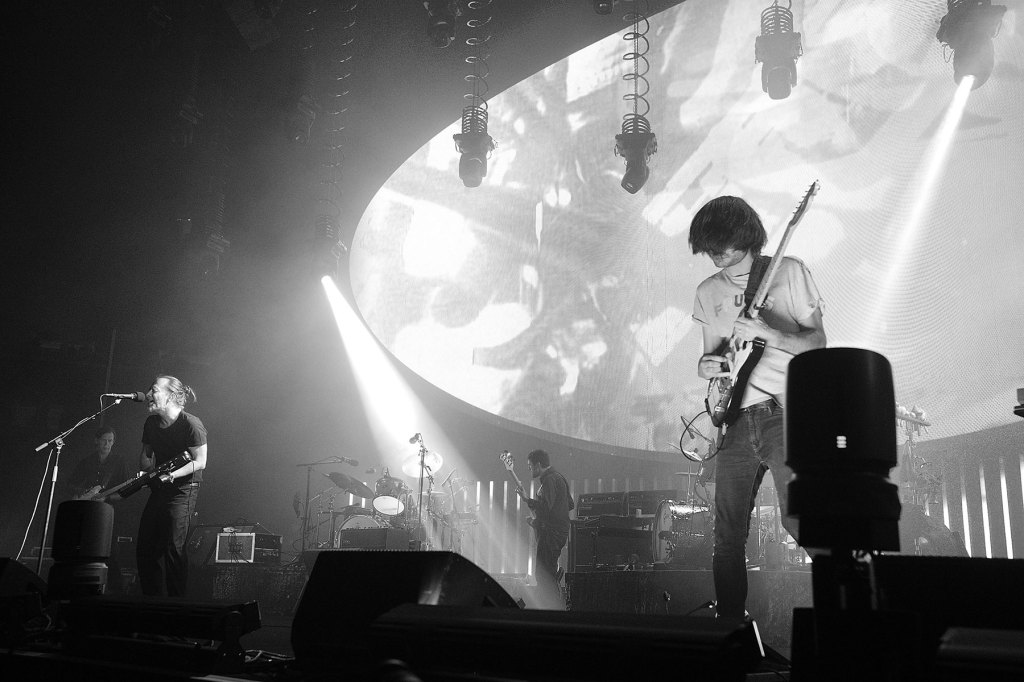
British music has had such a banner year in 2025, that Radiohead’s return has flown a touch under the radar. With Olivia Dean, Yungblud, Lola Young and RAYE all conquering the Billboard charts in the U.S., and Oasis putting on the biggest tour of the year, the return of the art-rock fivepiece after an seven-year […]

Trending on Billboard
The Stone Roses bassist Gary “Mani” Mounfield has died at age 63.
His death was first reported by the Manchester Evening News, and confirmed by Mani’s brother Greg on Facebook Thursday (Nov. 20). “IT IS WITH THE HEAVIEST OF HEARTS THAT I HAVE TO ANNOUNCE THE SAD PASSING OF MY BROTHER GARY MANI MOUNFIELD,” he wrote. “RIP RKID.”
Ian Brown, the band’s singer, also confirmed the news writing on his X profile: “REST IN PEACE MANi X.”
Mani was born in Crumpsall, Manchester, on Nov. 16, 1962. A cause of death has not yet been revealed.
The Stone Roses was formed in Manchester in 1983 by Brown and guitarist John Squire. Drummer Alan “Reni” Wren joined the group the following year, and Mani completed the lineup in 1987. The band fused the city’s burgeoning dance scene with a “baggy” psychedelic rock sound and earned widespread acclaim from the British press.
In 1989, the group released its seminal self-titled debut album, which peaked at No. 5 on the U.K. Official Albums Chart, and went on to inspire a number of bands from the local area such as Oasis. Liam Gallagher said in 2011 that seeing the Roses perform live made him “obsessed with music” and was what made him want to join a band.
Following the release of The Stone Roses’ debut album, the band was embroiled in a lengthy legal dispute with its label, Silvertone. The group eventually signed with Geffen in 1991, and three years later, released The Second Coming to mixed reviews. The LP’s labored production put tensions on the group, and Reni left in 1995. A year later, Squire announced he was also departing, leaving Brown and Mani as the sole two members of the group. After a disastrous performance at Reading Festival in 1996, the band called it quits.
Mani then joined Scottish band Primal Scream as its bassist in 1996, and performed with the band until 2011. He also formed the group Freebass with fellow Manchester bass players Andy Rourke (formerly of the Smiths) and Peter Hook (Joy Division/New Order) and released one studio LP in 2010.
In April 2011, Brown and Squire reconciled at the funeral of Mani’s mother. Several months later, The Stone Roses announced its reformation for a number of shows at Manchester’s Heaton Park for June and July 2012. In May 2016 the group released its first single in 20 years, “All for One,” though relations soon broke down again and sessions for a comeback album were eventually scrapped. Despite tensions, the group toured steadily until 2017, including shows at London’s Wembley Stadium. In 2023, Mani’s wife, Imelda, died following a bowel cancer diagnosis.
On Nov. 14, Mani announced a U.K. speaking tour for the U.K. titled The Stone Roses, Primal Scream and Me – An Intimate Evening With Gary “Mani” Mounfield. The tour was set to begin in September 2026 and run until June 2027.
Tributes have been pouring in from a number of Manchester artists. Liam Gallagher said on his X account: “IN TOTAL SHOCK AND ABSOLUTELY DEVASTATED ON HEARING THE NEWS ABOUT MANI MY HERO RIP RKID LG”
The Charlatans’ singer Tim Burgess wrote on X, “I shared this photo a week or so ago on Mani’s birthday – It never failed to bring a smile to my face – and that was exactly the same for the man himself. One of the absolute best in every way – such a beautiful friend.”
Mani and Imelda are survived by twin sons Gene Clark and George Christopher.
Trending on Billboard End of The Road festival in Dorset, England announced the first list of acts on tap to celebrate its 20th anniversary edition in 2026 on Thursday (Nov. 20), with Pulp, CMAT and Mac DeMarco set to headline. The festival will take place at Lamar Tree Garden on Sep. 3-6 and feature a […]
Trending on Billboard
Just when it seemed that Lily Allen’s West End Girl campaign couldn’t get any bigger, the singer has added a run of arena shows to her 2026 U.K. tour.
The new dates, which include a night at London’s 20,000-capacity O2 Arena, will join Allen’s previously announced shows, which take place in theaters across the country throughout March.
Explore
See latest videos, charts and news
The arena leg of the tour will kick off at Newcastle’s Utilita Arena on June 2. She’ll head to Glasgow, Manchester, Leeds, Nottingham, Cardiff, Birmingham and London before traveling to Ireland for a night at Dublin’s 3Arena on June 30. It will mark the biggest headline tour of Allen’s career.
Tickets go on sale on Nov. 27 at 10 a.m. GMT. Fans can find further ticketing information on Allen’s website.
The show – Lily Allen Performs West End Girl – will see the British star perform her new album front to back. Released Oct. 24, the LP hit a peak of No. 2 on the Official U.K. Albums Chart, marking her highest placement on the list since 2014’s Sheezus. Prior to the arena gigs, Allen will also perform West End Girl for a headline slot at Mighty Hoopla festival in London’s Brockwell Park on May 30.
West End Girl has repeatedly hit the headlines in recent weeks. The album appears to tell the story of the dissolution of Allen’s marriage to Stranger Things actor David Harbour in chronological order, traversing the start of an open relationship, scenes of alleged infidelity and a subsequent breakdown of trust.
Speaking to British Vogue prior to its release, Allen likened the album to a work of autofiction. She told the publication that its lyrical content was inspired by her marriage, but “that’s not to say it’s all gospel.” Allen and Harbour tied the knot in Las Vegas in 2020 after meeting on dating app Raya the year prior.
West End Girl is Allen’s first album since 2018’s No Shame and her fifth full-length release overall. Allen’s debut LP, Alright, Still hit No. 2 on the U.K. charts in 2006, while its predecessor, It’s Not Me, It’s You (2009) reached the summit.
Allen will return to Saturday Night Live on Dec. 13, appearing on the show as a musical guest for the first time since 2007. Actor Josh O’Connor is set to make his debut as host that night.
Check out the updated list of Lily Allen Performs West End Girl tour dates below:
March 2: Glasgow, Scotland @ Royal Concert Hall
March 3: Liverpool, England @ Philharmonic Hall
March 5: Birmingham, England @ Birmingham Symphony Hall
March 7: Sheffield, England @ Sheffield City Hall
March 8: Newcastle, England @ Newcastle City Hall
March 10: Manchester, England @ Aviva Studios, The Hall
March 11: Manchester, England @ Aviva Studios, The Hall
March 14: Nottingham, England @ Nottingham Royal Concert Hall
March 15: Cambridge, England @ Corn Exchange
March 17: Bristol, England @ Bristol Beacon
March 18: Cardiff, Wales @ Cardiff New Theatre
March 20: London, England @ London Palladium
March 21: London, England @ London Palladium
May 30: London, England @ Mighty Hoopla Festival
June 16: Newcastle, England @ Utilita Arena (new date)
June 17: Glasgow, Scotland @ OVO Hydro (new date)
June 19: Manchester, England @ AO Arena (new date)
June 21: Leeds, England @ First Direct Arena (new date)
June 23: Nottingham, England @ Motorpoint Arena (new date)
June 24: Cardiff, Wales @ Utilita Arena (new date)
June 26: Birmingham, England @ BP Pulse Live (new date)
June 27: London, England @ The O2 (new date)
June 30: Dublin, Ireland @ 3Arena (new date)

Trending on Billboard
Kelly Lee Owens has one of the most distinctive signature sounds in modern British electronic music, singular for the way she conjures shades of tranquillity and healing through surging buildups, layered organic samples (from laughter to a melting glacier) and wordless cooing. Her live shows make display of just how dynamic this mix can be, offering fans the space to not only hear and feel but tangibly connect with the music; to move together, unselfconsciously.
Explore
See latest videos, charts and news
When the Welsh producer hit the road last fall in support of her fourth studio album Dreamstate, she would see this manifesto come to life during one particularly transcendent moment in her set. As the chorus of “Melt!,” a track from her 2020 LP Inner Song, began to descend, Owens would routinely point at one bright-eyed audience member on the barrier and cry out: “Girls love techno!” The floor would erupt in response.
“People felt part of a special moment each time I did that,” she recalls, speaking to Billboard U.K. over Zoom from her grandparents’ home on the north Welsh coast, where she is recuperating from a busy festival season. “The idea of community is really important to me – I want to be able to live it out in the work that I do.”
Owens is preparing to release new EP KELLY (due Nov. 21) via DH2, a dance-focused Dirty Hit label imprint headed up by The 1975 drummer and producer George Daniel. The project – which sees Owens swap Dreamstate’s gauzy, multi-coloured synths for a mix of murky bass and ambient pieces that drift, flow and cascade – was first teased at Glastonbury Festival this past summer, where the San Remo stage played host to a DH2 takeover featuring Owens, Sampha, Daniel Avery and more.
The backdrop to Owens’ midnight set was a revolving door of star power. Daniel and his partner Charli xcx stood by the DJ’s side, while eagle-eyed fans spotted actors Jenna Ortega, Paul Mescal and Harris Dickinson make fleeting appearances on stage. At one point, Lewis Capaldi told Owens that he loved her music, she remembers, before adding that she sent Gracie Abrams a ‘Girls Love Techno’ t-shirt following that fateful night: “She’s super sweet!”
In May, Owens doubled down on her commitment to making her shows a safe, collaborative space for both artist and audience alike. In order to help protect the live ecosystem, she became a patron of the Music Venue Trust, and her ongoing advocacy has seen her commit to capping ticket prices and performing at smaller venues (including those off the beaten track, such as Bethesda’s Neuadd Ogwen), for an upcoming U.K. mini-tour, alongside using her platform to speak out on the issues that matter.
Owens self-described mission is to “not stay quiet when there’s a problem,” and push for better protections surrounding independent venues in the U.K. Here, she talks to Billboard U.K. about her work with the MVT, cherished Glastonbury memories, and the joy of her ongoing ‘Girls Love Techno’ campaign.
Take us back to the DH2 Takeover at Glastonbury, which gave impetus to this new EP. What was so special about that night?
It was wild. I was finishing the EP that week about 20 minutes from the festival site, and at the time, I knew I was working towards testing out these new demos at Glastonbury. As a DJ, it is always a privilege to get to test these things out and see the reactions of people.
When it got to the DH2 Takeover later on, I just couldn’t believe the energy. It felt like everything the label had been working towards had culminated in that moment; it couldn’t have been a better representation for what we wanted to do and achieve. The backstage was crazy, too. I was getting texts like, “Can you come and get Lorde?” I think Jenna Ortega was there, and obviously Charli [xcx] came from her set to support us. All of this just cemented what we understand and feel to be the family energy surrounding this project.
KELLY feels a little darker, more ambient in some moments. Why did you decide to explore that sonic direction?
My first album was self-titled because that was going to be the purest thing I’d ever made, without expectation: I was just creating freely, in its purest form. But I would say, as a woman in music, you can rise and get to a certain point and then people will knock you down. As an artist, people have certain expectations of you, so what I like to do is switch things up. Dreamstate was pop-facing, and when you’re sort of an ‘underground darling’, not everyone is going to like that.
But you don’t get to put me in any box, I’m just gonna f–king make whatever! I’m really quite angry at the moment, actually, so let me just go ahead and make some Prodigy-esque sounds that reflect how I feel, and sort of say, ‘F–k you.’ That’s why the project is called KELLY, because there’s still a question of, ‘Who the f–k is Kelly?’. I don’t think there’s one answer to that; I’m still exploring and trying to understand who I am as an artist.
Your ‘Girls Love Techno’ t-shirts have a rallying point in the scene. Why did you first decide to create them, and what do they signify for you personally?
I got a little bit tired of people creating merch for the sake of creating merch. I don’t necessarily feel it’s the most interesting thing to have my name on a t-shirt; however simple it sounds, “Girls Love Techno” is a statement. People often say, “Why are we still talking about women and girls liking techno, making music, being producers?” Well, I’m sorry, but we have to, because the needle hasn’t shifted as far as it needs to.
For me, it comes down to someone who gets to see the front and the back end of things, in terms of fees and payment. It is about people putting their money where their mouth is. As far as I’m concerned, for people who are performing at the same level as me, if they’re a guy, they’re likely to be paid more for the simple reason that they’re a man. I wanted to make a statement that allowed people to feel included in something.
How else do you see the phrase “Girls Love Techno” functioning as the EP campaign rolls on?
We headlined Venue MOT in south London with an all-femme lineup, and it just felt like such a beautiful, positive space for the night. We’re trying to reinforce this by touring small underground clubs, and making sure that the support acts feel safe. Also, recently, I did a Foundation FM show, and we had debbiesthuglife [London DJ Debbie Ijaduola] as the opener, following a competition I ran. I have to be the one to set an example of changing things in a small way. There are still issues surrounding live music and accessibility, but I am doing my part.
I hope it becomes a statement that creates an idea of inclusivity and makes people become aware of women’s experiences in this scene. You know, I look back to my early career and realise that I had to become more masculine in how I dressed and acted in order to be taken seriously. I have a curvaceous body, but when I first started out [as a DJ], I felt like I had to cover it up. It makes me sad to think about that time, as you can look however you want to look and still be a great producer. It’s just so obvious to say this, but unfortunately a lot of bias still exists in the music industry.
Small clubs form the route of your upcoming mini-tour. How do you see your work with the MVT linking to the survival of those spaces?
I’m someone who’s always been action-oriented. I think that’s due to where I come from: in Wales, you have to fight for what you believe, and you have to put yourself forward to create real, meaningful change.
The MVT works to find aid for venues to be genuinely protected in the sense of the law. Fundamentally, we can talk about the effects and the beauty of the community, but at the end of the day, there are certain people who only talk in a specific language, and so if that’s how they speak, then we meet them there.
I think that’s really empowering. It reminds me of coming into this industry over 10 years ago and learning the business first. I knew that, without understanding the business and the law of something, you can’t be protected. The work that the MVT does is so vital for our current times.
What kinds of structural reforms do you think could actually make a difference in this current, fractured climate for live music?
I think the venue levy is wonderful, but once again, why is it back on the artist to put the money back in? When you become a bigger artist, you should give back, so I do. But where are the booking agencies whose jobs rely on artists to tour? How are they reinvesting? Or ticket companies? None of these people have a job without us artists – it really, really riles me up.
This power imbalance is so disturbing and I’ve had enough of it. I call upon booking agencies, management companies, publishers, record labels and bigger corporations to reinvest in the future of artists. Otherwise, you’re not going to have future headliners in this country, except for perhaps people who – and this is another conversation – come from a wealthy background. The industry itself needs to show us that they care about the future of artistry.
How have your own experiences of touring informed your sense of community, and who gets to partake in the culture?
From ticket prices to my production, I have invested so much money and lost so much money over the past decade. Prices of my live show are actually going to rise because I can’t pay the people who are doing it without that – it’s something that naturally has to happen. But then when that does happen, you cut out a whole wave of people. Usually, it’s kids that suffer here, as they may not be able to afford to go to shows.
Once again, this comes back to the government and having people reinvest in the industry, so that a certain amount of tickets can be covered at reduced price. If everyone could agree to that, we would see a difference locally. Maybe that’s controversial, but I know that a £35 ticket wouldn’t have been accessible to me when I was 18. It’s about us helping each other with these burdens and strengthening the local community. Obviously we know these things are quite hard to implement, but I think we need to at least be having conversations.
So how do you stay optimistic about the future of live music in the U.K.?
Artists are resilient people. A lot of us have already been through a lot, and through that have created something beautiful. That’s what we do. We always have hope, and we have this way of transforming things and speaking the truth. There’s a strength there that can’t be broken somehow.
Trending on Billboard
The 2026 edition of the O2 Silver Clef Awards will take place at London’s Royal Albert Hall in celebration of its 50th anniversary. Scheduled for July 9, the event will be held at the prestigious venue for the first time, having been held at the JW Marriott Grosvenor House in recent years.
Explore
See latest videos, charts and news
The O2 Silver Clef Awards are Nordoff and Robbins’ largest annual fundraising event. Since 1976, they have raised over £17 million ($23.5 million) for the British music therapy charity, fueling its growth and helping it deliver sessions to vulnerable people in need across the country.
Recipients of the 2025 awards included Rick Astley, IDLES, Noah Kahan, Chase & Status and The Last Dinner Party. The ceremony raised £715,00 ($937,425) for Nordoff and Robbins, who is also a key beneficiary of the BRIT Trust, a music industry charity that receives proceeds from the annual BRIT Awards.
Other acts who have been honoured at the O2 Silver Clef Awards over the years include David Bowie, Annie Lennox, Ed Sheeran, Stormzy, Dame Shirley Bassey, Sir Paul McCartney, George Michael, Kylie Minogue, The Rolling Stones, Oasis and Coldplay.
“We are so immensely proud to be hosting the 50th anniversary of the O2 Silver Clef Awards at the Royal Albert Hall,” Joe Munns, chair of the O2 Silver Clef Awards Committee, said in a statement. “We’ve had the great privilege of giving these prestigious awards to many legendary artists over the years, and what better place to celebrate even more superstars than a venue that’s equally as iconic.”
“The current fundraising climate is challenging for us all and costs continue to increase across the board, so this amazing event is now more important than ever for the charity,” he added.
In addition to hosting the 2026 ceremony, the Royal Albert Hall has announced Nordoff and Robbins as its official charity partner for the year. The partnership will involve raising awareness and funds to expand music therapy delivery across the U.K., as well as promoting Nordoff and Robbins’ research into how their work can support recovery.
James Ainscough OBE, chief executive of the Royal Albert Hall, said: “We’re incredibly proud to be announcing Nordoff and Robbins as our official charity partner for 2026. We will be collaborating with their brilliant team across a number of projects and events throughout the year, to ensure that the joy and healing power of music reaches far beyond the stage, and making music therapy as accessible as possible.
“It is a real honour to be hosting the O2 Silver Clef Awards on such a landmark anniversary. It is always a monumental night in the music industry calendar, and certain to be even more memorable as we celebrate the wonderful work of Nordoff and Robbins and the 50th year of the awards.”

Trending on Billboard
SXSW London has confirmed its first wave of speakers for its 2026 conference, featuring figures from the worlds of business, technology and culture.
The festival will be returning to the capital from June 1 to 6, following the debut of its U.K. iteration in 2025. Among the first names announced include entrepreneur Jamie Laing, who has pivoted from a successful reality television career (Made In Chelsea) to spearheading confectionary business Candy Kittens and podcast studio Jampot Productions in recent years.
Related
Related
There will also be talks from Ben Cohen, co-founder of Ben & Jerry’s, as well as Thomas Cwik of NASA Jet Propulsion Laboratory. Footballer Lotte Wubben-Moy – who plays for Arsenal in the Women’s Super League and the English national team – will be discussing the intersection of sports and culture, while Hovhannes Avoyan, founder and CEO of photo-editing app Picsart, has been enlisted to chat about the development of his globally successful platform.
Other additions to the conference line-up include names from different corners of the evolving AI landscape, such as Ioannis Antonoglou (co-founder and CTO, Reflection AI), Joleen Liang, (CEO, Squirrel AI North America), and Josh Payne (CEO, Nscale), among others. Further details can be found at the official SXSW London website.
The list of speakers has been partly derived from an online submissions process, which allows potential candidates to directly pitch discussion proposals. From there, a community voting system, known as PanelPicker, opened up to the public, so that fans could help select a portion of SXSW’s conference programming.
According to the SXSW London website, public votes account for 30% of the decision-making process. The remaining percentage is determined by SXSW London staff (30%) and a board of industry experts (40%), to ensure a balanced programme. Further conference line-up announcements are expected to arrive in the coming months.
SXSW arrived in London for the first time this summer, following the continued success of its Austin and Sydney counterparts. The inaugural edition took place in Shoreditch, saw appearances from King Charles and London Mayor Sadiq Khan, and welcomed over 20,500 international delegates.
The event also played host to Billboard presents THE STAGE at SXSW London, which featured a performance by global superstar Tems at east London’s iconic Troxy venue. It followed the publication of Billboard’s annual Global Power Players list and its first U.K. Power Players list, whose honorees were recognized at an exclusive gathering.
Trending on Billboard
Independent U.K. live music company Electric Group has announced the launch of Electric Studios at the former site of The Leadmill in Sheffield.
Set to open its doors in spring 2026, a £2 million ($2.6 million) transformation is set to take place, with upgraded interiors and increasing capacity to 1,050 for live gigs and 1,450 for club events. It joins an established Electric Group portfolio of live music venues across the U.K., including the Electric Brixton in London, Electric Bristol (formerly known as SWX), and NX Newcastle.
A specific opening date has not yet been revealed, but Electric Group has launched a new web page where fans can sign up for updates and make booking enquiries via email.
Related
The refurbished venue will also operate a subsidised creative hub across its second and third floors, housing a workspace, rehearsal room, communal area and kitchen for use by emerging artists from the local area.
A new PA system, paired with advanced lighting and production installations, has also recently been installed in the space. Other upgrades include a redesigned venue layout with all-new bars and improved stage sightline. There are also new customer staircases, as well as new toilets and a cloakroom on the first floor with full DDA (Disability Discrimination Act) compliance.
In collaboration with national promoters, bookings will be helmed by Mike Weller, head of music at Electric Group. The independent music venue operator became freeholder of the Sheffield Leadmill building in 2017, and as of August 2025 owns and operates Electric Studios Sheffield.
“This is one of the most exciting projects I’ve been involved in, bolstered by the positivity and support from local bands, DJs, and promoters,” Weller said in a statement.
“The Electric Studios Sheffield music programme is built on our demonstrable passion and success in delivering an eclectic mix of live music, club, and wider events across our venues. I hope to collaborate with the best in the business, from local and up-and-coming future stars, to established and international teams and artists, in the mission to make this venue a must-book and must-attend destination for promoters, producers, performers and music fans.”
The Leadmill first opened in 1980, serving as a multi-arts co-operative that was rooted in social and political issues, while also helping to lower youth unemployment in the city. It later became a charity before operating as a live music venue, welcoming local legends Arctic Monkeys and Pulp to its stage, as well as huge acts including Oasis, Coldplay, and The Killers over the years.
Dominic Madden, co-founder of Electric Group, added: “Sheffield is a special city, and with the plans for Electric Studios, we are committed to a programme of substantial investment, refurbishment and curation for it to thrive – with a modern vision that respects the cultural significance of the building and history of the existing venue while putting the artist and fan experience front and centre of our plans.
“Work here so far is creating over 100 jobs, as it is being finalised for opening next spring, when we look forward to welcoming music lovers to the latest addition to the Electric circuit of special music venues.”