State Champ Radio
 Billboard Live Music Summit
Page: 2
Trending on Billboard
It’s the tail end of September’s Climate Week: NYC when Maggie Baird gets on Zoom from her hotel in the city, ceramic mug of tea in hand.
The mother of Billie Eilish and FINNEAS, as well as a staunch activist for sustainability and plant-based food access, Baird calls her time at Climate Week a “mixed bag of emotions”: She has participated in troubling events addressing the grim effects of climate change, but has also learned about the more hopeful work that’s happening around the world to address it.
“It’s a very dark time and there’s a lot going on,” she says. “Climate change is a threat multiplier. Every single other issue you care about, climate is there making it worse.”
Maggie Baird will participate in a panel at Billboard‘s Live Music Summit, held Nov. 3 in Los Angeles. For tickets and more information, click here.
Related
But Baird, who quotes Joan Baez’s famous “Action is the antidote to despair” declaration, has been a force during the event. Support + Feed, the organization she founded in 2020 that provides hot, plant-based meals to people in need, distributed roughly 2,500 of these meals, along with pantry items, across New York. She and representatives from the nonprofit used this time in the community to talk about plant-based diets as crucial mechanisms of positive environmental impact, with the week’s efforts also connecting various community organizations with climate thought leaders. The week ended with a Support + Feed “friend-raiser” event that hosted climate activists, community members and celebrities like Martha Stewart and Eilish, who turned out to support her mother.
“The main thing I would say about this time is that it’s a moment for radical collaboration,” Baird says. “Every organization I know and work with, we’re just like, ‘How can we be better together?’ We have to multiply — exponentially.”
For Baird, however, every week is Climate Week. Having worked with her children and their respective teams to meaningfully integrate sustainability into their careers, she’s essentially a frontline reporter on sustainability within the music industry.
One sector where she’s seeing “really exciting advances” is merchandise. Baird is a longtime collaborator with Bravado, the merchandising and branding division of Universal Music Group that recently sent 400,000 obsolete and unsold tour T-shirts and other unused items by ship from Nashville to Morocco, where they were repurposed into new yarn by sustainability-focused textile manufacturer Hallotex. The yarn will be used to make new items in Europe to avoid the emissions of shipping them back.
Maggie Baird, Finneas, and Billie Eilish at the Support + Feed Fall Fundraiser Event on Oct. 24, 2023.
Zoe Sher
For Eilish’s merch, the Bravado team has successfully collaborated with upcycling and sustainability-focused clothing companies Rewilder and Suay and designer Iris Alonzo, the co-founder of the Everybody.World brand. Suay, for example, took hundreds of dead-stock work shirts, added sleeves and embroidered “Billie” on each piece, while some of Eilish’s old merch was repurposed into bags. “The upcycled items sold out so fast,” Baird says, “because there were limited quantities and they were extremely unique, and unique to Billie.”
Meanwhile, a program developed by Eilish’s Live Nation touring team, Support + Feed and Reverb, the long-standing nonprofit focused on music industry sustainability, now requires that any venue hosting an Eilish show must sell at least three plant-based main courses — and some venues have even gone entirely plant-based for Eilish. (Her sold-out Hit Me Hard and Soft world tour began in fall 2024 and runs through November.) The team also hosts educational webinars for venue culinary staffers to educate them about plant-based eating.
“It’s about trying to help them understand that the arena has an obligation to clientele, to planet and to cost,” Baird says. “It’s all done in a friendly, helpful way. We’re very welcoming and excited that they’re willing to even take the call, frankly.” The goal is for venues to maintain more robust plant-based approaches long after Eilish leaves. “It’s really about helping people understand that you’re not just serving your customer better while being better for the planet,” Baird explains, “but that you can actually save money.” These savings are achieved by reducing reliance on meat and incorporating more dishes made with lower-cost ingredients like beans, lentils, grains, fruits and vegetables; meals built around whole-food ingredients are often significantly more affordable to produce.
She is aware that implementing such programs takes resources. Eilish has helped fund Support + Feed and Reverb to be on-site at shows by rising artists who don’t yet have the funds to host these groups themselves. “I think it’s important that we reach down,” Baird says. Fans can also buy more expensive “changemaker” tickets for Eilish’s shows, with 50% of the revenue from each tagged for sustainability projects. One dollar of every regular ticket sold is also donated.
While Eilish is among the most visible musicians promoting sustainability in the industry, Baird’s hope is that even if artists don’t want to publicly discuss their efforts, “they’ll still just do it. They don’t have to make it as outward as what we’re doing, but they can just do it as a given.”
Maggie Baird and Hayley Williams of Paramore deliver meals on June 28, 2023, as part of Baird’s volunteer work for her nonprofit organization, Support + Feed.
Zoe Sher
All these initiatives are happening in a year when Support + Feed has responded to a host of disasters. It fed locals in Los Angeles following the devastating California wildfires in January and in Tennessee after intense flooding in April. (Baird notes that in the wake of such events, Support + Feed representatives stay on the ground long after many other response organizations move on to the next crisis.) The communities Support + Feed serves have also been “very impacted” by U.S. Immigration and Customs Enforcement raids, “so we’ve had to really be nimble in how we feed people and how we convene,” Baird says.
Still, the organization is expanding its offerings, now providing, in addition to hot meals, free produce from local farmers and cooking classes and recipe cards for people who may be unfamiliar with the produce they’re receiving.
“We’re really increasing our education and our outreach as much as possible,” Baird says, “but also just feeding, feeding, feeding, feeding, feeding. The need now is tremendous with all the food programs being cut.
“It’s a very intense time,” she continues, “but there are so many people doing great things.”
This story appears in the Oct. 25, 2025, issue of Billboard.
Trending on Billboard
When Baz Halpin first spoke with Justin Timberlake to plan the star’s Forget Tomorrow World Tour, the concert production designer suggested: “Let’s talk broadly about concepts and what you want to say on the tour.” Timberlake cut him off. “No,” he said. “I want to understand lighting, special effects, pyro, video. I want you to tell me everything that’s new.”
Halpin compiled a 100-page deck, including links to the latest video technology, for the pop superstar to study. Together, they concocted the centerpiece of the 14-month tour, which concluded in July — a massive, five-sided monolith, 17 feet by 30 feet by 7 feet, festooned with tiny LEDs for elaborate videos. At the end of every show, Timberlake surfed atop the giant rectangle, floating above the audience as it displayed gravity-defying bubbles on every side. “Screens have gotten infinitely lighter. They’ve gotten infinitely cheaper,” says Halpin, founder and CEO of Silent House, a Los Angeles design and production company that has worked with Tyler, The Creator, P!nk, Doja Cat and others. “A lot of things came together to make the process easier and more achievable.”
Billboard‘s Live Music Summit will be held Nov. 3 in Los Angeles. For tickets and more information, click here.
Related
No longer are video screens confined to the giant postage stamps bookending every live stage. Because LED technology has rapidly advanced over the last 30 years, artists can display more detailed scenes bounded only by their imaginations, spread across screens of all shapes and sizes, for audiences. SZA sits on a ledge, silhouetted beneath a moon, clouds and stars that seem like a real night. Phish jam at Las Vegas’ Sphere amid psychedelic canvases ranging from the ocean floor to the cosmos to abstract patterns. And some concerts employ the fast-growing technology to simply magnify the fans in attendance, like that infamously canoodling couple caught on a circular stadium kiss cam in July at a Coldplay show.
“The quality of LED in terms of image projection is insane these days,” says Adrian Martinez, co-founder and creative director of STURDY, which has designed visuals for such stars as Bad Bunny, Kendrick Lamar and Drake. “We’re getting to the point of watching HDTV.”
Coldplay’s Music of the Spheres tour, which broke worldwide attendance records in January with two concerts in India, anchors its stage with huge screens — circular ones on either side of the performance as well as a half-circle constantly running behind the band. It’s no wonder that amid the nonstop larger-than-life video stream of frontman Chris Martin, neon rainbows and explosions of light that the unwitting couple found themselves on the kiss cam.
“Privacy is a big issue, but we’ve always looked into, ‘How can we get the audience to actually be part of the show?’ ” says Joris Corthout, CEO of Prismax, a visual production company that recently worked with promoters Insomniac and Tomorrowland to create the EDM show UNITY at Sphere. Prismax is developing an on-site concert photo booth that transfers fans’ snapshots (with their permission, of course) to a huge stage combining lights and Polaroids. According to Silent House Studios president Alex Reardon, camera technology has improved to “pick up people in lower-light scenarios than [it] used to,” which helps artists integrate fans into the video aspect of the show. Silent House client Maroon 5 plans to do the same for its upcoming tour, “capturing the audience and trying to use those images as something emotional, something musical,” Halpin adds. “Think of it as another paint in the paint box.”
Nine Inch Nails perform during the Lights in the Sky Tour at the Mohegan Sun Arena on August 7, 2008 in Uncasville, Connecticut.
Courtesy of Moment Factory
Video technology for today’s concerts is basically limitless, thanks in part to groundbreaking tours like Nine Inch Nails’ 2008 outing Lights in the Sky, which spread tapestries of striking LEDs throughout all sides of the stage and ceiling, sometimes in the form of brightly colored grids or swirling mist. “LED in 2008 was very rare,” says Daniel Jean, producer/director of the music department for Moment Factory, which designed that tour. “It was more expensive and it was low resolution.” Ten years later, Childish Gambino’s Pharos concerts in New Zealand were among the first to present an elaborate animated world, toggling between fish, burning trees, colorful coral shapes and industrial sculptures. “I likened it to a planetarium,” says Christian Coffey, tour director for those shows and others by Lamar, A$AP Rocky and more. “The band is performing, but you’re watching the screen for so much of it.” In 2024, multiple suspended screens displayed flickering lights and images of Billie Eilish singing throughout her video-heavy Hit Me Hard and Soft tour.
It was in 1997, while watching colorful LEDs flash behind U2 during Las Vegas dress rehearsals for the band’s seminal PopMart stadium tour, that special-effects whiz Frederic Opsomer turned to his wife and said, “You are now looking at the future for the rest of my career.” According to Opsomer, CEO of the 30-year-old production company PRG, PopMart was when concerts first took advantage of the blue LED, invented by Japanese engineers in 1993. Enabling use of every color rather than just red and green, the development kicked off the LED era in lighting and video, replacing Jumbotrons using heavy and expensive cathode-ray technology.
By the time PopMart rolled around, Opsomer adds, video equipment that historically required 14 touring trucks needed two. And installation time took two hours rather than two days. “Suddenly, all the possibilities are open,” he says. “We’ve been playing with it ever since.”
The U2 PopMart Tour stage set at Sam Boyd Stadium on April 25, 1997 in Las Vegas, Nevada.
Rob Verhorst/Redferns
In addition to unlocking limitless shapes, sizes and images at concerts and festivals, state-of-the-art camera and LED technology has let production experts be more nimble and improvise along with the artists. For its four-night 2024 run at Sphere, Phish hired producers at Moment Factory, which also works with stars like Eilish and Olivia Rodrigo, to “play the visuals in real time,” as Jean puts it; in one widely shared moment, an intricate, rainbow-colored forest transformed into fireworks exploding above the stage. “We’re playing miniature video games,” adds Manuel Galarneau, the company’s multimedia director. “Depending where we were at in the music, we could have trees grow, turn into fireworks.”
As video technology has expanded, production companies have boomed alongside it. High Scream, which puts on large events starring David Guetta and DJ Snake, among others, has increased its employees from two in 2012 to 240 today. “We went very, very big for the last five, six years,” says Romain Pissenem, the company’s founder and show producer. “It’s a lot of work, not a lot of sleep.” Moment Factory launched with six workers in 2001 and employs 480 today.
A crucial period for some concert video specialists was the coronavirus pandemic, when they could stop focusing on the day-to-day grind of setting up shows and contemplate innovation. Corthout pivoted to virtual festivals, including a digital iteration of Tomorrowland, and when traditional live events returned, “We just decided to work on that methodology we created for the virtual festivals,” he says. “We used to be and mix video files, but now we build a whole world.” Artificial intelligence, Corthout adds, has been a “fantastic tool” that reduces production costs.
Almost every video designer refers to some aspect of world-building. For this year’s Grand National stadium tour co-starring Lamar and SZA, the rapper’s world was “street and concrete and very raw,” according to tour director Coffey, while the R&B star’s landscape was “very lush.” The challenge, he says, was to use screens and high-resolution video content to “transport one world to another and make it seem seamless so it’s not jarring.” Corthout adds: “That’s the future of live entertainment — you can transport people to a completely different world.”
Phish perform during night three of their four-night run at Sphere on April 20, 2024 in Las Vegas, Nevada.
Courtesy of Moment Factory
With all the fantastical potential, for many in the touring business, one risk is overstimulating the audience. “The resolution and the processing have gotten better,” says LeRoy Bennett, the longtime concert production designer currently working on Paul McCartney’s tour, in which the singer duets seamlessly with his late Beatles partner John Lennon on “I’ve Got a Feeling,” with assistance from documentary director Peter Jackson. “But we’ve got 30 songs in the show, so there’s not all content all the time. We try to give it a break. It becomes redundant if every single song has video on it.” Shows at Sphere, Bennett adds, are perfect for EDM artists who don’t necessarily need the audience to look at them, whereas pop and rock stars want to avoid “the whole audience looking up at the ceiling and not looking at you.”
Still, Sphere lets designers innovate in ways they can’t on traditional tours. “Sphere allows us to immerse people 100% as far as the eye can see,” Corthout says. “An old stage would give you physical boundaries. Sphere takes those boundaries away.”
Sphere productions like UNITY use innovative ideas that point the way for others to follow. “I haven’t personally worked with an artist who has said, ‘Look what Sphere is doing, I want to do that,’ ” Coffey says. “But Sphere is pushing the envelope forward.” In this way, according to Martinez, Sphere productions offer “proof of concept” for experimenting with video ideas. “The bar has been set so high,” he says, “it has opened the door for those of us on the creative side to say, ‘We know this works. How about we try this?’ ”
This story appears in the Oct. 25, 2025, issue of Billboard.
Trending on Billboard
When Chappell Roan began contemplating her return to the stage after the biggest year of her professional career — one that included a series of record-breaking festival performances and culminated in a Grammy for best new artist — she had a clear vision for how she wanted to do it.
“She loves the feeling of a festival-style show, where people can dance and be free of fixed systems,” says Kiely Mosiman, one of Roan’s agents at Wasserman Music. “So we came up with the initial idea of, essentially, building festival sites — but just for Chappell’s show.”
Members of Roan’s live team will speak at Billboard‘s Live Music Summit, which will be held Nov. 3 in Los Angeles. For tickets and more information, click here.
Related
Together with Mosiman and Roan’s team at Foundations Management, Roan devised a series of fall pop-up performances in New York, Los Angeles and Kansas City, Mo. — the biggest city in her home state — directly catering to her biggest fans. But Roan’s camp was concerned that, rather than reaching the hands of those fans, the bots and scalpers that troll high-demand concert on-sales would scoop up tickets for the shows, looking to flood the secondary market with up-charged tickets and make a healthy profit on resales.
Roan outlined that focus in a July Instagram post announcing the eight dates that would begin Sept. 20 in New York and run through Oct. 11 in L.A. “Because we’re only coming to three cities,” she wrote, “I wanted to make sure 1. we’re keeping ticket prices as affordable as possible and 2. we’re trying to keep them away from scalpers.”
That’s easier said than done. In an era of soaring concert ticket prices and a bot issue that has become so pervasive that Congress has gotten involved, star artists — particularly those who exploded in popularity as quickly as Roan did over the past 12 months — are often frustrated by the difficulties in reaching their biggest fans and catering to those who supported them from the beginning.
To do so, Roan and her team turned to Fair AXS, a program by ticketing partner AXS that aimed to deliver on her vision. As opposed to typical tour rollouts, which usually employ a presale and a general on-sale and are often inundated by bots that buy out inventory instantaneously and astronomically inflate prices on the secondary market, Fair AXS took a slower, more methodical approach. Fans signed up over a three-day period, after which AXS used a proprietary system to verify that each registrant was a real person who maybe even had purchased Roan tickets in the past. AXS then delivered a list of such registrants to her agents at Wasserman. The AXS team released a tranche of ticket-purchasing invitations to fans across a 24-hour period and then, based on the ratio of those fans who actually purchased the tickets, released a second tranche the following day and a third the day after. The result takes much longer than a traditional on-sale — and naturally eschews the “instant sellout” publicity rush — but the demand for Roan was such that there never needed to be a fully open public on-sale, and the process delivered on her goals.
“When you have an artist that wants to do something like this and then you have really strong agents and managers in their corner who will take the time to agree on a plan, it’s incredibly effective,” says Dean DeWulf, head of venues, North America at AXS. “She chose to focus on fairness for her fans, even when she could have priced tickets higher.”
Still, for Roan, the result paid off handsomely: The first six shows of the run — four at Forest Hills Stadium in Queens and two at Liberty Memorial Park in Kansas City — grossed $15.4 million and sold 123,000 tickets, according to Billboard Boxscore, with the two L.A. dates yet to be reported. The process took around two weeks, between the three-day registration window, the seven days during which AXS vetted millions of registrations and the three days of offering the approved fans tickets. But just as important to her team at Foundations, Wasserman and AXS was the response to the shows, where almost every attendee was outfitted in cowboy hats, glitter and hand-made costumes.
“It really did feel like everyone was a part of a community in a way that I haven’t felt at a show in a really long time,” Mosiman says. “I think sometimes it gets lost how much Kayleigh [Amstutz, Roan’s real name] really does care about fans and their experience. And she absolutely was part of this process, putting in the work from day one to do it at this scale.”
Scale, now, is the big test for this program. It has been around for several years but has been used most often for one-off specialty shows, such as big-name underplays at small venues (Paul McCartney used it, for example, when he played California’s 4,500-capacity Santa Barbara Bowl in September) or at special venues like Red Rocks in Colorado. Acts such as ODESZA, Vampire Weekend, Billy Strings and Sturgill Simpson have used it, while perhaps the biggest proof of concept came from Zach Bryan’s tour in 2023, which utilized the program across its entire 32-date run, with face-value resale exchange. In late October, the Iowa festival Hinterland announced that it will use Fair AXS for its 2026 edition, becoming the first festival to deploy it.
And while artists may be leaving money on the table — the general admission price for Roan’s shows was $99 when they could have easily been priced much higher — there are other benefits the program provides artists, in addition to fostering community and rewarding the loyalty of devoted fans. “Artists are so disintermediated from their fans today,” DeWulf says. With this program, “they can actually know who the fans are. Being able to give that information to not only the artist camp but also to the promoter is very helpful for them to understand where the fans are, to route the tour to bigger venues next time and add more shows.”
Roan’s next move, as she put it in her announcement, will be “going away to write the next album.” And when she tours behind that release, it will be on the arena — or, perhaps, even the stadium — level. But her connection with her fans in the live environment has now been cemented — and AXS may have a solution to the increasingly impersonal process involved in establishing that connection.
“Ticketing, over the last 20 years, has become so monolithic, so opaque, so confusing, and it’s made it easy for bad actors to completely arbitrage the tickets, create scarcity and inflate prices,” DeWulf says. “But at the end of the day, ticketing is deeply personal. We’re in the fan connection business, and people care so deeply about these artists. That connection that we’re powering is so human and personal. And this is a very personal approach.”
This story appears in the Oct. 25, 2025, issue of Billboard.
Trending on Billboard
Kevin Lyman remembers the strong pushback he got in the 1980s from local politicians when he would attempt to host punk shows in Long Beach, Calif., which then (like now) drew mischievous teens and young adults from all around Southern California with its notorious skate and punk culture. So naturally, over 40 years later, Lyman chose the beachside city as one of three sites to host the 30th-anniversary edition of his Vans Warped Tour — the famed touring punk rock festival he founded — this year.
“We outlasted them all,” Lyman says two months after the two-day Long Beach festival sold out 80,000 tickets with performances from Pennywise, Less Than Jake, The Vandals and the city’s own Sublime.
Kevin Lyman will participate in a panel at Billboard‘s Live Music Summit, held Nov. 3 in Los Angeles. For tickets and more information, click here.
Related
Today, Warped has the local buy-in it once lacked. In June, Long Beach Mayor Rex Richardson celebrated Warped’s return at an event honoring a new street named Sublime Way. “He goes, ‘I’m so excited to bring you the biggest punk rock show ever to Long Beach,’ ” Lyman recalls. “I was with Joe [Escalante] from The Vandals and a few other band people, and we all looked at each other. I go, ‘Remember when the politicians used to run on how they were going to get rid of punk in Long Beach?’ ”
Alongside Long Beach, Washington, D.C., and Orlando, Fla., were named as host cities for the anniversary events, which according to Warped sold a combined 240,000 tickets — making Warped one of the most successful festival runs of the year. (After summer plays in D.C. and Long Beach, the fest will stage its Orlando shows on Nov. 15 and 16.) And Warped, which took a break between 2019 and 2025, already has tickets on sale for its 2026 editions in D.C. and Long Beach, with Lyman hinting that international dates are also in the works. According to him, roughly 80% of next year’s acts have already been booked.
Avril Lavigne performs at Warped Tour on June 15, 2025 in Washington, D.C.
Courtesy of Vans Warped Tour
Warped launched in 1995 and grew to roughly 35 dates a summer in the United States and Canada, adding international stops in Australia and the United Kingdom throughout the years. The punk gathering was part of a spate of touring festivals that emerged in the 1990s, including Lollapalooza, H.O.R.D.E. and Lilith Fair. H.O.R.D.E. and Lilith Fair called it quits before the new millennium, while Lollapalooza eventually settled down to one main location in Chicago with frequent international editions. But Warped had impressive longevity. After being held annually for more than 20 years, it executed its final cross-country trek in 2018 and marked its 25th anniversary with three shows in 2019.
By then, Lyman was burned out — and felt fans and the industry were taking Warped for granted. He continued to work on other live events and philanthropic endeavors while pivoting to teaching full time at the University of Southern California’s Thornton School of Music. Post-pandemic, he noticed his students were struggling to connect with one another and decided a new generation could use Warped.
Young people “were so isolated from each other. We’re in a society where we’re bombarded with negativity,” he says. “If you could create that atmosphere of positivity within a parking lot, they start to come together and you can affect people.”
Warped’s return coincided with a renewed interest in the punk and emo genres. Early Warped bookings such as blink-182, Green Day, Weezer and Fall Out Boy have recently sold out stadiums, while the Las Vegas package festival When We Were Young — which featured a slew of Warped alums including Alkaline Trio, Dashboard Confessional and Good Charlotte — became a post-pandemic hit.
For Warped’s 30th anniversary, Lyman teamed with the Live Nation-owned Insomniac (producers of EDM festivals such as Electric Daisy Carnival and Beyond Wonderland) for the event’s biggest dates yet. The shows featured larger stages, merchandise tables for every band, an on-site Warped Tour Museum and a Charity Circle with 25 nonprofit organizations. But in keeping with its original ethos, two-day general admission tickets started at $149 to keep the festival accessible, and, in old Warped style, set times for the lineups of more than 90 bands were not announced ahead of time. In Long Beach, gates opened at 9 a.m., two hours earlier than planned, to accommodate the mass of fans who had arrived early. By 11 a.m., more than 30,000 attendees were inside, providing uncharacteristically large audiences for early acts.
“There’s a whole new energy of bands out there that Warped can be a part of the puzzle of their development,” Lyman says, pointing to standout performances from rising artists on 2025’s lineup like LØLØ, Honey Revenge and Magnolia Park. “I did not want to create a legacy show. I didn’t want to create nostalgia. You’re, of course, going to have that. You’re going to tap into your history. But for me, I was looking forward to the future of bands and community.”
Crowd at Warped Tour on July 26, 2025 in Long Beach, California.
Quinn Tucker for Vans Warped Tour
Over the 30 years of Warped, Lyman has seen bands grow from opening acts to headliners — bands that the festival booked early in their careers include My Chemical Romance, No Doubt, Paramore and Panic! at the Disco — and he has witnessed kids transition from waiting hours at the gates to producing the tours themselves. The tour has also been a critical mechanism for educating a generation (or two) of young people about punk music and culture. “You become a very large classroom. That’s what we used to do across the country,” he says. “We’re never going to go across the country with 35 shows again. Physically, I couldn’t do it, and physically, I would insist on being there. I’d have a shallow grave somewhere in a parking lot in America at this point, but we’ll keep doing what we can.”
Lyman’s grateful to have built a career on bringing people together over great music. (He even did his own autograph signings at the most recent Warped dates.) And as the 64-year-old steward of the event ages, he tries to instill one motto in the youth he encounters: “You can do good business and do good with your business.”
This story appears in the Oct. 25, 2025, issue of Billboard.
Trending on Billboard
As tens of thousands of fans arrived at Toronto’s Rogers Stadium on Aug. 24, their bucket hats — worn in homage to the night’s headliner, Oasis — protected them from the sun that hung above in the azure sky. The atmosphere at this, the band’s first North American show of its zeitgeist-shaking reunion tour, was convivial, communal, basically euphoric.
But inside the venue, Arthur Fogel sat in front of a weather radar and watched as a storm approached. The meteorologists gathered around him offered guidance: “It’s moving at this speed. It has lightning in it. If it gets this close to the stadium, everyone inside has to go.”
“So you’re sitting there and you’re stressing,” Fogel says. “Like, ‘Aw, f–k. They’re saying it’s going to come right over the top of the place.’ ”
Navigating dilemmas — at times as uncontrollable as the weather — has been part of Fogel’s repertoire for roughly four decades, as he has helped guide some of the biggest musical superstars in history through major, and majorly lucrative, world tours.
Arthur Fogel will be recognized as Touring Executive of the Year at Billboard‘s Live Music Summit, held Nov. 3 in Los Angeles. For tickets and more information, click here.
Related
On a September afternoon in his sprawling corner office at the Live Nation headquarters in Beverly Hills, his success is tangible. There’s a yet-to-be-hung plaque celebrating Beyoncé’s six sold-out shows at the United Kingdom’s Tottenham Hotspur Stadium, a June run that earned $61.6 million and sold 275,000 tickets, according to Billboard Boxscore. There are plaques for similarly massive achievements by Coldplay, U2, Madonna. An image of David Bowie commanding a stage during his 1990 Sound+Vision Tour hangs over the room’s sitting area, where Fogel sinks into the couch in his office attire of black cargo pants and a black hoodie.
As Live Nation’s chairman of global music/president of global touring, Fogel has helped these and other greats tour the world in a global market he has seen quadruple in size during his decades in the business. This year, Oasis, Lady Gaga and Beyoncé worked with Fogel to put on, respectively, the aforementioned reunion tour, the opera-themed Mayhem Ball and the country-centric Cowboy Carter spectacular — runs that collectively tallied 160 shows in 19 countries. Coldplay just performed 10 shows at Wembley Stadium, the longest consecutive run ever by an act at the venue, while 1.6 million people gathered on the beach in Rio de Janeiro to see Madonna play a free show in May 2024, a site Lady Gaga drew 2.5 million fans to a year later.
Successfully executing such epic concert endeavors has earned Fogel the trust of icons, a place in the Canadian Music History Hall of Fame and even his own documentary, 2013’s Who the F**k Is Arthur Fogel?, in which his client and friend Bono helps answer the titular question by explaining that artists like Fogel because “he’s calm.” It’s the kind of even temper that, for example, might help one navigate something like a freak thunderstorm hurtling toward a stadium full of rock fans.
“Even though inside I might be tied in knots, I think part of how you lead is to stay calm,” Fogel says. “Being calm is part of what people look to you for in tough situations.”
Today in his office, Fogel is soft-spoken but talkative, and one gets a sense of the steady presence that has helped him develop professional relationships that also transcend business, a goal since his early days in the Toronto rock scene. “The live business is very transactional, but in those early years as a musician and then working with artists as a tour manager, I knew I was looking for a different sort of relationship,” he says.
He instead sought “the anti-transactional. It was like, ‘How do I develop long-term relationships where I’m providing a service and an understanding, and I’m able to converse with artists about different aspects of their career, and certainly about touring, on a global basis?’ That became my fixation because it was, and to some degree still is, the great differentiator in my career — that global perspective.”
Arthur Fogel
Joel Barhamand
To go global, however, one must still start local. Born and raised in Ottawa, Ontario, Fogel relocated to Toronto as a young adult and began playing drums in various bands before realizing, he says with a chuckle, “that if I wanted to get to a certain place in life, it wasn’t going to be as a musician.” He became the night manager of Toronto club The Edge, then started tour-managing a band that played there, Martha and the Muffins. Fogel was then hired at Concert Productions International by Michael Cohl, the touring impresario and eventual chairman of Live Nation. He was named president of the concert division of Cohl’s Toronto-based company in 1986.
“Michael Cohl had the same view on global business,” says Fogel, who worked with Cohl to book The Rolling Stones’ 1989 Steel Wheels tour, a gargantuan 115-show, 19-country run “that really helped develop my understanding and expertise of putting together a major tour on a broad basis.” Bowie’s 1990 Sound+Vision Tour followed as Fogel settled into a long tenure at CPI. As the live sector consolidated in the late ’90s and early 2000s, Fogel and Cohl’s subsequent company, The Next Adventure, was acquired by SFX, where Fogel stayed as it merged with Clear Channel Entertainment and that company eventually spun off its concerts division as Live Nation in 2005. Fogel, who started working with U2 in 1997, Madonna in 2001 and Sting in 2004, became Live Nation’s president of global touring in 2005. Beyoncé became a client in 2012; she and the rest of these icons — apart from Bowie, who stopped touring in 2004 and died in 2016 — remain Fogel’s clients to this day.
“Arthur has always been a visionary, and we value his expertise in touring,” U2’s The Edge says. “Over many years working with him, we have come to depend on his great counsel. Our tours would not have been the same without him. Beyond that, he’s a fantastic person and he has become a dear friend as well.”
When Fogel started out, he says there were roughly 20 countries artists could tour. Now “there’s probably 70 or 80. Over the last 20 years, globalization has expanded pretty much everywhere, except maybe the heart of Africa.” This quadrupling of the market is “probably the most significant shift in the last 20 years… Artists are able to touch their fans everywhere in the world and generate an income everywhere in the world.” The success of Bad Bunny, he adds, demonstrates how touring has not only opened geographically, but genrewise. “I find that particularly gratifying,” Fogel says.
Certainly, the kind of shows he tends to put on — Beyoncé flying through the air on a mechanical horse, Gaga in a chessboard dance-off with her past self, U2 playing under the cosmic glow of Las Vegas’ Sphere when it performed the venue’s opening residency in 2023 — help foster this global fascination. While putting a band onstage with a few lights “can and certainly does” work, Fogel says, “I like big; I like wow; I like the spectacle.”
He has had no shortage of wow this year. Gaga’s tour behind her new album, MAYHEM, started in April at Coachella, where Fogel was in the audience for the show’s stunning debut. (While he “sort of had a sense of what was coming together, you never really know until you see and hear it, and it was awesome.”) Fogel and Gaga, who’ve worked together since the early days of her career, debated putting the Mayhem Ball in arenas versus stadiums, ultimately deciding that its 87 dates would primarily be held in arenas.
“The last tour, for [2020’s] Chromatica, was in stadiums, and my feeling was that she should go back into arenas for multiple nights everywhere to reconnect with her fans in a different way,” Fogel says. “This show is unbelievable in arenas; it’s so powerful and so well done. She’s an amazing talent, really is.”
“Arthur has been by my side through some of the most defining moments of my touring career,” Gaga says. “His vision, dedication and heart for the live experience have inspired me endlessly. I wouldn’t be the artist I am today without his partnership.”
Arthur Fogel
Joel Barhamand
Meanwhile, Oasis and its team “were quite convinced that stadiums were the way to go” for the band’s first tour in 16 years, Fogel says. “I don’t think there was ever any doubt, certainly in the U.K., about their strength and their ability to sell out stadiums… My gut said it was going to work, but I think everybody was a bit surprised at how big it was.” He notes that the most significant challenge in bringing the reunion to market was simply keeping it a secret for six months before it was announced.
“You’d wake up every day going, ‘Oh, f–k. Did somebody spill the beans?’ Because it was very important to them that it not enter the rumor mill in a serious way.”
Fogel and Beyoncé, meanwhile, decided on a residency structure for Cowboy Carter, where she played multiple nights in nine cities across the United States and Europe. Fogel says he and his clients make such decisions based on how much time a given artist wants to tour and how much of the world they want to reach. “Doing multiple shows in less cities is a model that’s more prevalent now than ever,” he says, “but the flip side is that if you don’t go wide and touch your fans, eventually they kind of move on. You have to find that balance… I don’t think the residency model serves the long-term strategy very well.”
While these particular superstars can reliably play stadiums whenever they want, Fogel says a major development in the business is how stadium dates have opened to artists in earlier stages of their career. In previous eras, “playing stadiums was very rarefied air,” he says. “In the last few years, the volume of stadium shows has continued to increase dramatically, and I don’t see it really slowing down.”
He attributes this development to the sense of community people feel when they’re part of such a major event and to acts being “bigger than ever. The noise about artists and their music [and the culture around it] is so overpowering and motivating to people to want to be a part of it. It’s pretty extraordinary.”
As 2025 draws to a close, Fogel reports that from where he’s sitting — which is, in this moment, still the couch, although he later relocates to his standing desk — “the business is in a great place.”
Still, when your clients are simultaneously putting on several of the world’s biggest tours, things can, and do, get thorny. “There was a period during the summer where Beyoncé was rolling, Oasis started, Gaga was out there, Sting was out there,” Fogel says. “There was a lot of bouncing around, and it was a tough year just physically and mentally with travel. But the flip side is that that’s a one-percenter problem, so you can’t get too dramatic about it.”
This is the even keel that artists love about Fogel, who ultimately watched the Toronto thunderstorm veer south of the stadium, taking the lightning with it and leaving some 39,000 fans joyfully singing “Don’t Look Back in Anger” in a downpour.
“Stuff like that happens. I can give you a million stories where it’s like, ‘What the f–k? How is that happening?’ But it’s part of the game, part of what we do.”
Fogel’s trick is not just staying calm during challenges, but sometimes even enjoying them. “The rain,” he says, “actually added to the vibe of the show.”
This story appears in the Oct. 25, 2025, issue of Billboard.
Trending on Billboard
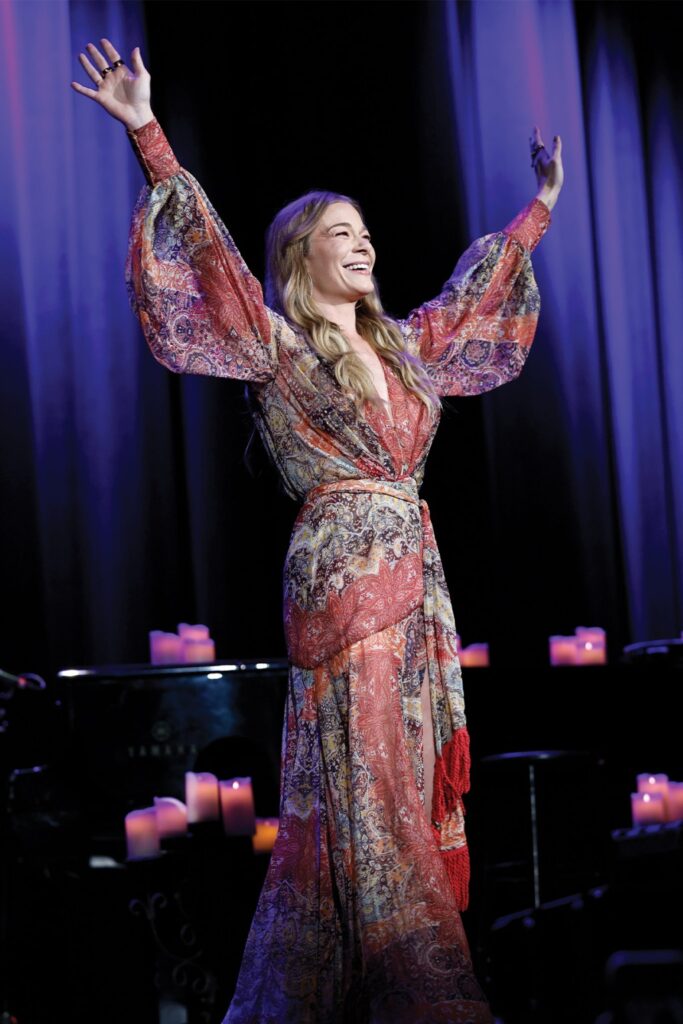
After touring for 30 years, LeAnn Rimes has learned a thing or two about maintaining her sanity on the road.
“Don’t ever fly day of show. You can’t do that anymore,” she cautions. “Even if you’re flying from Los Angeles to Oakland [Calif.], make sure you pack your outfit in your carry-on because your bag still may get f–king lost. And never do more than three shows in a row.”
Rimes has been famous ever since an impossibly big voice came out of a wee girl when she appeared on Star Search in 1991, becoming a one-week champion at the age of 8. Five years later, she sounded preternaturally mature when Curb Records released her first single, “Blue,” which garnered comparisons to Patsy Cline.
More than three decades into her career, the multiple Grammy winner, now 43, finds touring a richer experience than ever before, which has earned her the Unstoppable Award, to be presented at the Billboard Live Music Summit in Los Angeles on Nov. 3. “I love performing now more than I probably ever have because I feel like it’s on my terms,” she says. “I create this show that I want to perform, and I invite people into this space.”
LeAnn Rimes will be honored with the Unstoppable Award at Billboard‘s Live Music Summit, held Nov. 3 in Los Angeles. For tickets and more information, click here.
That’s a far cry from the early days when she moved at a much swifter pace, playing more than 500 shows over three-and-a-half years from ages 13 to 16. “No one really knew how long this was going to last,” she recalls. “And it was that frame of mind of, ‘Get it while you can.’ Then when we were done, people were like, ‘This may actually last and we just killed her!’ ”
For decades she continued touring at a less punishing rate but never took off more than six months out of the year. “It wasn’t until COVID till I ever sat my ass in one place for that long,” Rimes says, adding that the pandemic renewed her appreciation for performing. “These last several years, I’ve really thought long and hard about what I want to be putting out in the world, and it’s important to me to hopefully bring [the audience] some joy when people come to the shows.”
For Rimes, who now aims to play around 60 shows a year, touring remains “a huge part of my income. God knows the music business sucks. This is how we make money as artists.” Along the way, the live veteran has adapted to modern touring — namely, the advent of social media. “It’s just wild to see how much it’s changed,” says Rimes, who now looks out at a sea of cellphones rather than people’s faces every night. “It could easily control you. I don’t think about it too much anymore. I try to just allow it to be what it is because it’s its own beast.”
But as she experienced this summer, she can’t control everything onstage. During a show in Bow, Wash., in June, her front dental bridge fell out as she was singing “One Way Ticket.” She ran offstage, adjusted it and rejoined her band. The moment was, of course, captured on video and went viral. Months later, she calls the incident “pretty f–king funny,” laughing as she relives it. “I realized at that moment I could either quit — I’m four songs in — which I thought I was going to have to unless I was able to hold [the bridge] in. But luckily, I was able to. I’ve pretty much had everything happen to me onstage that could possibly happen, and that was probably one of the most precarious situations I’ve ever been in. I was very proud of myself that I handled it like a pro.”
After that incident and countless others, including tripping over sound monitors and even falling into the pit years ago, she has grown unflappable — and her shows remain potent. “LeAnn’s remarkable voice, her deep artistry and her connection with an audience have all continued to strengthen and grow throughout her 30-year career,” says Seth Malasky, her primary agent and senior vp at Wasserman, which books her in North America. “Her shows feel timeless yet brand-new. She’s earned her reputation as an authentic and captivating performer.”
Still, Rimes has diversified her creative output. Over the past two years, other projects have limited her to about 30 performances annually; in 2024, she was a coach on The Voice Australia and The Voice UK, and this year, she’s shooting ABC’s 9-1-1: Nashville, in which she plays the villainous, jaded backup singer Dixie.
“It’s been insane,” she says of trying to schedule live dates around her often shifting filming schedule. She was initially wary of signing on to the Ryan Murphy-created fire department procedural after watching her husband, actor Eddie Cibrian, deal with the vagaries of shooting an episodic TV series: “I have seen him go through not getting scripts until 24 hours before they’re shooting. I won’t say it’s been easy — I think at one time we were juggling seven episodes [between us] — but I think we’re getting to a point now where we’re starting to kind of get a little bit more in a groove.”
Looking ahead, next year marks the 30th anniversary of Rimes’ album Blue, which reached No. 1 on Billboard’s Top Country Albums chart in 1996 — and celebratory plans include a potential tour. “It is in the works,” Rimes says. “I know everybody’s so into nostalgia right now, which I’m loving. It’s really funny to revisit that record because I was so little. There’s about seven songs on it that I still really love that I would play.” Among all her hits, including “How Do I Live” and “Can’t Fight the Moonlight,” she says she never tires of singing the album’s title track. “There are just songs that melodically, lyrically, they’re never going to go out of style,” she says. “ ‘Blue’ is probably the one that will forever just be a classic.”
As she plots that potential Blue tour and other future outings, she’s confident — and can find humor in the unexpected. “Pretty much nothing embarrasses me onstage,” she says. “I don’t even know if my pants falling down would embarrass me. I’d be like, ‘Whatevs… you guys got more than you paid for today.’ ”
This story appears in the Oct. 25, 2025, issue of Billboard.
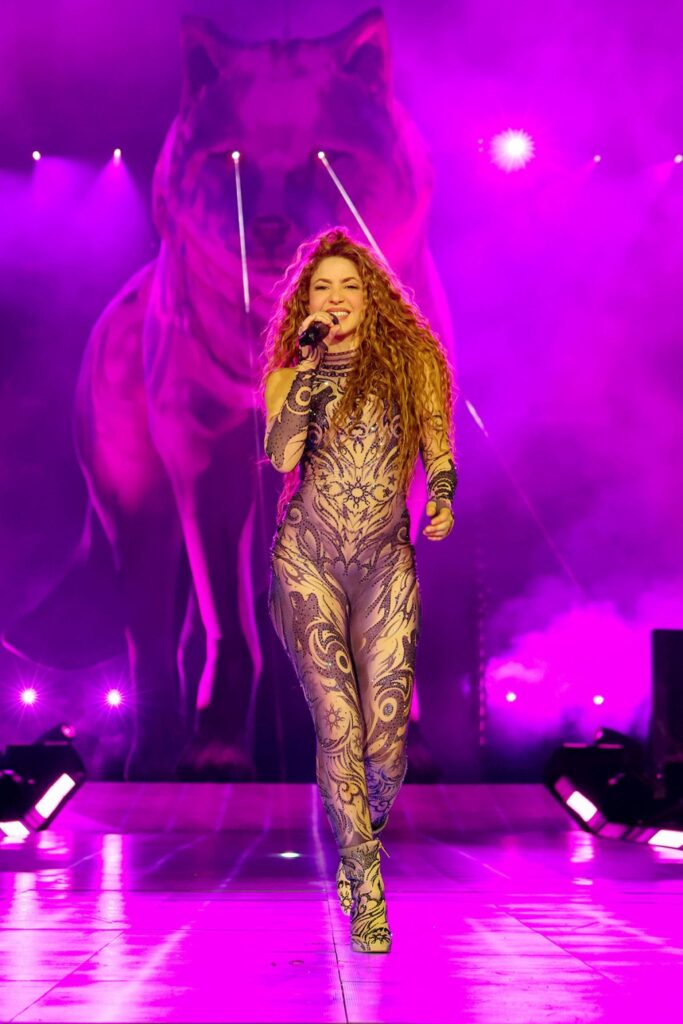
Trending on Billboard It was supposed to be a North American arena tour. When Shakira first announced her Las Mujeres Ya No Lloran outing in April 2024, the route took her to arenas across the continent that fall. But within months, it morphed into something else. Buoyed by the sustained success of her album of […]

Trending on Billboard
“I work for every bit of applause I get,” Usher told Billboard on the eve of his first Las Vegas residency in 2021. “I try my hardest to give people an incredible experience.”
That philosophy has propelled Usher’s 28-year touring career, which has taken him to arenas, residencies and the world’s largest stage: the Super Bowl. As a 19-year-old wunderkind in the late ’90s, he scored his first opening gigs for Mary J. Blige, Sean “Diddy” Combs and Janet Jackson. Fast forward to this year, when the 47-year-old superstar completed his most recent arena tour, Usher: Past Present Future.
The eight-time Grammy winner’s latest outing was the highest-grossing and best-selling tour of his career, according to Billboard Boxscore, grossing $183.9 million and selling 1.1 million tickets over 80 shows. All told, Usher has a reported career gross of $422.6 million from 3.3 million tickets over 334 shows. That’s a whole lot of singing and dancing — both of which are an innate part of Usher’s DNA.
Usher will appear in conversation during Billboard‘s Live Music Summit, held Nov. 3 in Los Angeles. For tickets and more information, click here.
Drawing comparisons to Michael Jackson while honing lithe dancing skills and his supple tenor, Usher graduated from opener to solo headliner in 2002 with his 8701 Evolution Tour in support of his third studio album, 8701. Two years later, The Truth Tour, in support of his smash-hit album Confessions, became one of the period’s highest-grossing outings, with $31.4 million earned. Usher more than doubled that return with the 2010-11 OMG World Tour, which grossed $75 million; the trek landed in seventh place on Billboard’s Top Tours chart in 2011.
But it was a post-pandemic foray into Las Vegas’ residency scene — suggested by manager Ron Laffitte well after Usher’s last tour in 2014 — that reintroduced and reinvigorated the R&B star’s musical legacy this decade. The first residency, Usher: The Las Vegas Residency, at Caesars Palace, did $18.8 million and sold 84,000 tickets over 20 shows (2021-22). The second, My Way: The Vegas Residency, staged at the Dolby Live theater at Park MGM, garnered $95.9 million and sold 394,000 tickets over 80 shows (2022-23). Those successes sparked a chain reaction that culminated in Usher’s critically acclaimed Super Bowl LVIII halftime performance and Past Present Future.
Usher performs during the Apple Music Super Bowl LVIII Halftime Show at Allegiant Stadium on Feb. 11, 2024 in Las Vegas.
Kevin Mazur/Getty Images
Usher performs at the grand opening of Usher’s My Way: The Vegas Residency at Dolby Live at Park MGM on July 15, 2022 in Las Vegas.
Denise Truscello/Getty Images
Usher’s singular status as a dynamic performer has led to his recognition as Billboard’s 2025 Legend of Live. For him, however, it’s the connection with his audience that counts most — and fuels his ongoing passion for performing.
“When it all comes together — the song, the connecting message to the audience, the dance — it almost feels like classical music,” Usher said ahead of his Super Bowl performance last year. “I just want to love what I do, make what I love, allow people to come to my space and see what I have to offer.”
This story appears in the Oct. 25, 2025, issue of Billboard.

This article was created in partnership with Live Nation
Billboard’s highly anticipated Live Music Summit made its grand return after a 5-year hiatus. This year marked the return of the Live Music Summit, which had been on hiatus since 2019, in response to high demand to refocus on the thriving touring industry.
Attendees experienced a dynamic mix of panel discussions, live performances, workshops, and industry mixers, all culminating in the Touring Awards Ceremony. Among the star-studded panel lineups were Olivia Rodrigo, John Summit and top industry executives. It was an invaluable opportunity for those in the music business to gain insights from industry leaders while celebrating the milestones many touring artists have achieved this year.
Explore
Explore
See latest videos, charts and news
See latest videos, charts and news
Olivia Rodrigo closed out the eventful day with her Superstar Q&A, during which she discussed the GUTS Tour, her most recent Billboard cover and received the award for 2024 Touring Artist of the Year. See highlights from the panel, presented by Live Nation and moderated by Billboard Deputy Editor Lyndsey Havens, below.
Olivia Rodrigo Takes Center Stage at the Live Music SummitRodrigo captivated the audience as she reflected on her successful 2024 GUTS World Tour. The “Vampire” singer’s GUTS Tour, launched in 2024 in support of her critically acclaimed sophomore album SOUR, marking a pivotal moment in the evolution of modern touring and the music industry. The tour showcased her ability to seamlessly blend introspective storytelling with electrifying live performances, resonating with audiences of all ages.
Spanning 95 dates across multiple continents, Rodrigo became a global phenomenon in 2024. Tickets for the sophomore tour sold out almost instantly across all markets, underscoring the immense demand for her live performances. She kicked off her performances in the United States and Canada during the Spring before touring Europe and the UK this summer and making her debut in Asia, and Australia this fall. The response was overwhelming, particularly in Asia and Australia, where the demand exceeded expectations, leading to multiple sold-out shows in every city – especially in Australia where she performed four sold-out nights in both Sydney and Melbourne, a testament to her skyrocketing popularity.
The GUTS Tour was not only a commercial triumph but also a cultural event, as it brought Rodrigo’s blend of heartfelt lyrics and powerful performances to new corners of the world, further establishing her as a defining voice of her generation.
Olivia Rodrigo speaks onstage at the Billboard Live Music Summit at 1 Hotel West Hollywood on November 14, 2024 in West Hollywood, California.
Christopher Polk
Connection to Her Fans
Rodrigo’s career trajectory has been anything but conventional. Her debut album SOUR was released during the COVID-19 pandemic, and from the outset, she knew exactly what she wanted for her second album and accompanying tour.
Reflecting on her first experience on the road, the singer-songwriter shares, “After going on the first SOUR Tour, I learned so much about touring and learned how playing songs like ‘Brutal’ and ‘Good 4 U’ were so much fun on stage and with that information in my back pocket, I went on to make GUTS.”
For her second tour, Rodrigo sought to create a deeper connection with her audience. “Connecting with the audience and bringing them into your world was something that I wanted to achieve on this tour,” she shared, aiming to reach not only fans in the front row but also those in the back and higher up in the arenas. As part of her vision, she incorporated an innovative element into her live show: Rodrigo would be suspended in a purple crescent moon, flying above the crowd during her performances. This unique moment allowed her to wave to fans, particularly those moved to tears, offering a sense of intimacy and shared experience throughout the sold-out tour.
To make each show feel unique for her fans, Olivia and her team collaborated to create a new, city-specific phrase for her final outfit of every tour stop. Rodrigo reflects, “My team bought a machine where we should screenprint tank tops…and it became a fun creative outlet in itself.” Fans would eagerly anticipate the new phrase on her shirt each night, making it a special way to highlight each city on the tour.
A main takeaway from the GUTS Tour was the growing necessity of fan engagement in live shows. Many venues incorporated immersive experiences, digital interactivity and intimate moments that made each concert feel personalized specifically to them. Additionally, GUTS represented a new wave of tour strategies, emphasizing sustainability and creative, genre-blending setlists.
Olivia Rodrigo at the Billboard Live Music Summit at 1 Hotel West Hollywood on November 14, 2024 in West Hollywood, California.
Christopher Polk
Olivia Rodrigo’s Commitment to Social ChangeIn addition to her musical success, Rodrigo launched her global initiative, Fund 4 Good, which is dedicated to building a more equitable future for women and girls. Through Fund 4 Good, she directly supports community-based nonprofits that focus on girls’ education, reproductive rights and the prevention of gender-based violence. “It was really meaningful to me to learn more about these organizations and support them,” she shared, “and I’m excited to do more in the future.” The Grammy Winning Artist recounted her experience on the Phillipines leg of her world tour – “I’m part Filipino and that was the first time I’ve been in the country. I wanted to give back to the community who supported me throughout my career”. Her show in the Philippines was her largest show on the tour – with 55,000 seats at the Philippine Arena in Manila, all priced at $27 USD/1,500 Philippine pesos to ensure affordability for the half-Filipino singer’s fans.
Rodrigo also introduced the Silver Star Ticket program, offering a limited number of affordable $20 USD tickets (or local equivalent) to make her concerts accessible to more of her fans. Inspired by Coldplay’s Infinity Tickets, this initiative allowed fans to attend her shows at an affordable price, reinforcing Olivia’s and Live Nation’s commitment to inclusivity and fan engagement. This approach influenced the touring industry, encouraging other artists to offer similar exclusive packages. The Silver Star tickets demonstrated how fan loyalty and personalized experiences could drive both engagement and revenue in the modern live music landscape.
With a careful balance of commercial success and artistic integrity, Rodrigo’s latest tour reshaped how artists approach live performance in an era where streaming, viral moments with special guests, and social media heavily influence an artist’s connection with their audience.

11/15/2024
The information-packed day concluded with a Superstar Q&A with Billboard cover star Olivia Rodrigo.
11/15/2024