State Champ Radio
 Blog
Page: 624
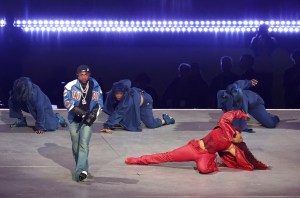
On Saturday (April 19), Kendrick Lamar and SZA will kick off their co-headlining Grand National Tour at Minneapolis’ U.S. Bank Stadium, playing the first of 39 scheduled shows in North America and Europe. It’s not just the only all-stadium hip-hop world tour to launch in 2025 – it’s the first such trek this decade.
In the post-pandemic era, the definition of “stadium artist” has expanded to include younger and more diverse artists, across genre. Not only have contemporary pop and rock acts graduated beyond arenas, but artists from country (Zach Bryan, Luke Combs, Morgan Wallen), Latin (Bad Bunny, Karol G, Shakira) and K-pop (BLACKPINK, SEVENTEEN, TWICE) have staged sold-out stadium runs in several continents.
But while R&B/hip-Hop’s reign as America’s most popular genre continued into the 2020s, rappers have yet to scale their tours in the same way. Lamar’s upcoming run will mark the first all-stadium tour for a rap act since JAY-Z joined Beyoncé on 2018’s On the Run II Tour.
Notably, rap acts have historically leveled up to stadiums alongside a pop or R&B co-headliner: Lamar with SZA, JAY-Z with Beyoncé and Justin Timberlake (separately), and Eminem with Rihanna.
Rappers have played stadiums on their own (or together, as in the case of Eminem & JAY-Z’s four-show The Home & Home Tour in 2010), but only in brief runs or isolated dates. Eminem reported 16 such shows across three separate outings during the 2010s and 50 Cent played one in 2004. Drake and Kanye West co-headlined the Free Larry Hoover benefit show in 2021, but it was a free gig.
The pairing of Lamar and SZA echoes the makeup of past successful stadium runs, but it’s also uncommon for R&B acts to tackle the biggest venues. Beyoncé has mastered the art, having broken records with 2023’s Renaissance World Tour, and is weeks away from kicking off Cowboy Carter Tour. But it’s worth noting that both treks are in support of albums that detour into other genres, having won Grammys for best dance/electronic album and best country album, respectively.
Similarly, Bruno Mars continues to sprinkle stadium shows amid his theater residency in Vegas, but his two latest top 10 Billboard Hot 100 hits – “Die With A Smile,” with Lady Gaga, and “APT,” with Rosé – eschew contemporary R&B for different strains of pop.
Still, the Grand National Tour’s double-billing is simply a no-brainer, not a hedged bet. SZA’s SOS was released in December 2022, landed nine Grammy nominations in 2023, won three of them in 2024, and added a 12th week atop the Billboard 200 to kick off 2025 following its SOS Deluxe: LANA expanded reissue. Lamar himself has had a whirlwind last 12 months, amassing four No. 1s on the Hot 100 – two inspired by his infamous beef with Drake and two from GNX. He won five Grammys in February for “Not Like Us” and headlined the Super Bowl halftime show a week later. As a cherry on top, the pair’s “Luther” will be enjoying its eighth consecutive week atop the Hot 100 when the tour kicks off this weekend.
Hip-hop has not taken up much space on stadium calendars, but Lamar and SZA are part of a rising tide of momentum for rap and R&B. An established arena headliner, Chris Brown will mount his first stadium tour this summer. Breezy Bowl XX kicks off on June 8 with a packed lineup, featuring Jhene Aiko, Bryson Tiller, and Summer Walker as special guests. And after touring arenas on 2018’s Astroworld: Wish You Were Here Tour and for the first leg of the Utopia Circus Maximus Tour, Travis Scott began to mix stadium dates in 2024. This fall, he will continue the multi-year trek with a handful-plus of grand scale shows in Asia and South Africa.
Scroll below for a recap of the rap acts who have played — or are scheduled to play — stadium shows, according to reports to Billboard Boxscore.
Kendrick Lamar
Image Credit: Cindy Ord/Getty Images
HipHopWired Featured Video
CLOSE
Source: Sprayground / Destiny 2
Sprayground, the popular brand best known for its collectible backpacks and luggage, is back with another fire collaboration. Fans of Bungie’s shooter, Destiny 2, definitely need this in their collection.
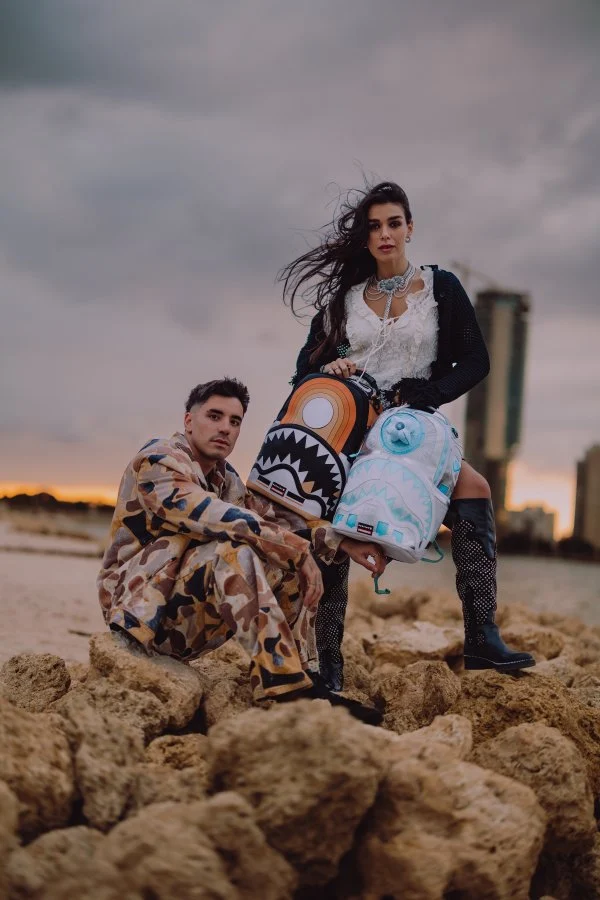
The limited Destiny 2 collection from Sprayground will feature two eye-catching backpacks that have become a staple among street style enthusiasts and young kids.
This latest collection celebrates Guardians, Ghosts, and lunar frontiers, all found in Destiny 2, with two amazing backpacks.
“Destiny has cultivated a passionate global community, and we wanted to craft something that truly resonates with the players,” said David BenDavid, Founder and Chief Creative Director of Sprayground. “These backpacks are more than just accessories – they’re a tribute to the game’s lore, visuals, and those who embrace the adventure.”
Source: Sprayground / Destiny 2
The first backpack is inspired by the Guardians’ floating companions, the Ghosts, which also guide the Lightbearers on their mission to protect the Last City and the solar system from the Witness, Fallen, Hive, Vex, Cabal, Taken, and various other threats.
Dubbed the Destiny Ghost Buddy Backpack ($120), it features a plush Ghost on the backpack along with other intricate detailing to help it truly stand out from other backpacks.
Source: Sprayground / Destiny 2
Next, the Destiny First Light Backpack ($90) draws inspiration from the First Light Lunar Installation, one of the first locations the Guardians explored in the Destiny franchise.
It incorporates the facility’s distinctive logo with 曙光 (shǔguāng), meaning “Dawn” or “First Light,” delivering fans another magnificent backpack that is a must-have.
Source: Sprayground / Destiny 2
How To Get One of The Destiny 2 Backpacks
Both backpacks are currently on sale via Spraygrounds’ website and select retailers, featuring staple features such as a spacious laptop compartment, a plush velour pouch for valuables, and Sprayground’s signature hidden pockets.
Hit the gallery below for more photos.
1. Sprayground x Destiny 2
Source:Destiny 2
Sprayground x Destiny 2 destiny 2,sprayground
2. Sprayground x Destiny 2
Source:Destiny 2
Sprayground x Destiny 2 destiny 2,sprayground
3. Sprayground x Destiny 2
Source:Destiny 2
Sprayground x Destiny 2 destiny 2,sprayground
4. Sprayground x Destiny 2
Source:Destiny 2
Sprayground x Destiny 2 destiny 2,sprayground
5. Sprayground x Destiny 2
Source:Destiny 2
Sprayground x Destiny 2 destiny 2,sprayground
6. Sprayground x Destiny 2
Source:Destiny 2
Sprayground x Destiny 2 destiny 2,sprayground
7. Sprayground x Destiny 2
Source:Destiny 2
Sprayground x Destiny 2 destiny 2,sprayground
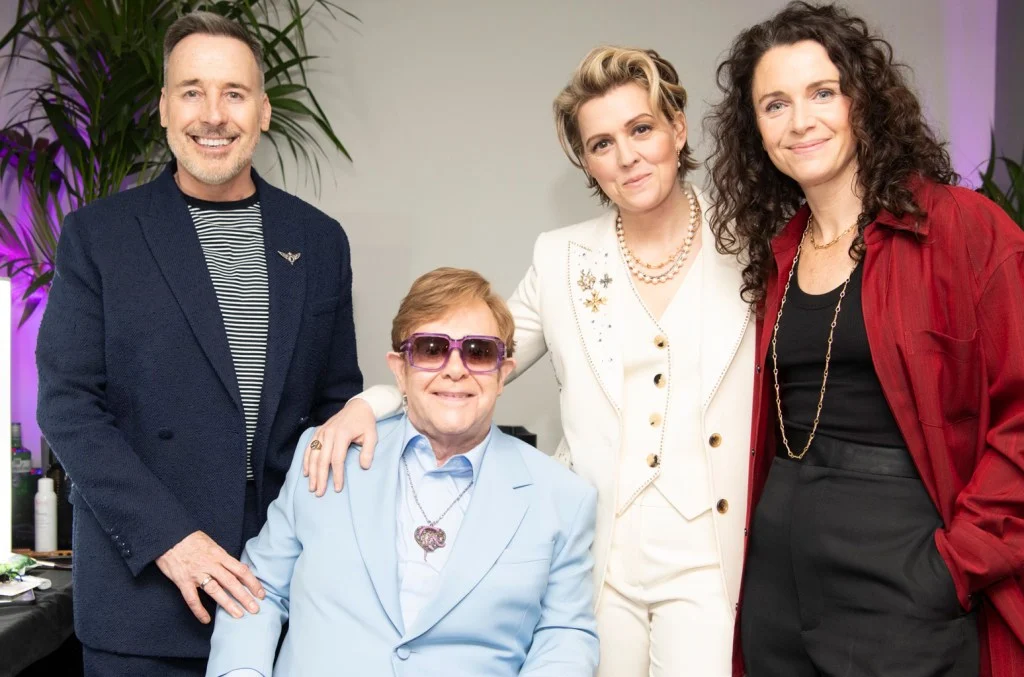
Elton John had an ulterior motive for making his latest album, Who Believes in Angels?, a collaboration with his good friend Brandi Carlile.
The icon wanted to help the nine-time Grammy winner expand her global footprint. “My ambition for her with this album was to break her internationally,” John told Billboard prior to the album’s release. “She’s a well-known artist in America, but in the rest of the world, she has a lot of work to do.”
Mission accomplished. The album, which came out April 4, debuted at No. 1 on the U.K. Official Albums chart, giving Carlile her first No. 1 on the tally and her first to reach the chart’s top 40.
“This is a major milestone and career highlight for Brandi,” says Phantom Management’s Catherine Carlile, Carlile’s manager and wife, who helped orchestrate the campaign. “This is her first ever No. 1 album, and to have achieved this honor with her absolute hero and friend Elton John makes this accomplishment even more profound.”
Trending on Billboard
In the U.S., the album opened at No. 9 on the Billboard 200, marking the 22nd top 10 for John and the fourth for Carlile.
The album — produced by Andrew Watt and featuring songs written by John, Carlile and Bernie Taupin — also tops both Billboard’s Top Rock Albums and Top Rock & Alternative Albums charts, and starts at No. 2 on Top Album Sales chart and Indie Store Album Sales chart, and No. 3 on Vinyl Albums chart.
Carlile began building her U.K. audience last July when she opened for Stevie Nicks at BTS Hyde Park before an audience of 60,000, then followed with her own headlining acoustic show at the 2,000-seat Drury Lane Theater.
Her extensive U.K. tour in June builds on those dates. “Brandi is a hugely successful touring artist in the U.S., but hasn’t toured in the U.K. for a long time, so we knew we needed to water that garden beyond those two appearances in London,” Catherine Carlile says. “We also knew that Brandi’s album with Elton would shine the spotlight on her globally, so we announced her U.K./[European] tour in February, which sold out instantly.”
The U.K. album campaign was orchestrated by Phantom in conjunction with John’s management team, John’s husband/manager David Furnish and Rachael Paley at Rocket Entertainment, as well as British publicity team DawBell and Universal U.K., and culminated in a live event at the London Palladium on March 26, which featured actor Dan Levy conducting a Q&A with John and Carlile, and the pair playing several songs with a full band. The evening aired on CBS in the U.S. on April 6, and will air on ITV in the U.K. on Saturday (April 19).
“The Palladium special was a total triumph and no small feat,” Catherine Carlile says. “Having partners like Fulwell Entertainment who know exactly how to capture the electricity of live music performances and deliver authentic and moving TV was a dream come true for us.”
The album’s two singles released in the U.K. — “Who Believes in Angels?” and “Swing for the Fences” — have reached a radio audience of more than 175 million, Catherine Carlile says, further building singer Carlile’s U.K. exposure.
Following this summer’s U.K. dates, which include a globally broadcast performance at the Glastonbury Festival, and playing in continental Europe, Carlile will “hopefully [play] other markets — Australia, New Zealand, Japan, South America, etc.,” Catherine Carlile says. “It’s such a gift for an artist of Brandi’s stature to have an opportunity to reach an undiscovered audience outside of the U.S. at this stage in her career. And it’s a challenge she fully embraces.”
Carlile is working on her next solo album, which Catherine Carlile says has been teed up perfectly by Who Believes in Angels?.
“After being uplifted and endorsed by one of the greatest artists of all time, we cannot wait to show the world who Brandi is as an artist, performer, and songwriter,” she says. “This is her moment to shine on what will probably be the most highly anticipated album of her career.”

Liza Minnelli is a legend, an icon and a superstar, but the one superlative she can’t quite claim is being an EGOT. She has won an Emmy, an Oscar and three Tonys in competition, but has yet to win a Grammy in competition. She may have another chance when the 68th Annual Grammy Awards are presented early next year.
Minnelli co-produced the cast album to the Off-Broadway hit DRAG: The Musical. The album will be released on April 25 via PEG Records/Warner. If it wins a Grammy for best musical theater album, Minnelli will become the 22nd EGOT (unless someone else gets there first).
Minnelli produced the album with co-creator Tomas Costanza, with Nicholas Kaiser as executive producer. (Minnelli is also a co-producer of the live show.)
Trending on Billboard
“From the moment I got involved with DRAG: The Musical, I knew it was something special — bold … brave … bursting with heart and music that is all about love,” Minnelli said in a statement. “The songs here will make you laugh and cry. This entire experience and adventure helps you find yourself. Producing this exquisite live album with Tomas is a joy, because he’s a genius surrounded by a brilliant cast and company, and because it captures that electric energy you only get in a theater full of love, laughter and lashes. This is a fabulous family show. It celebrates childhood innocence, adult tsuris and gorgeous glitter! Darling, this cast sings their faces off — and I couldn’t be prouder to help bring this art into the world.”
Minnelli has been nominated for Grammys for best traditional pop vocal album twice, for Gently (1997) and Liza’s at the Palace…! (2010). She received a Grammy Legend Award in 1990 (alongside Andrew Lloyd Webber, Smokey Robinson and Willie Nelson, when those awards were presented on a separate broadcast), and a Grammy Hall of Fame induction for the Cabaret soundtrack, but most awards historians don’t count honorary or special awards toward EGOT status. (Barbra Streisand, film and TV producer Frank Marshall and three late greats — James Earl Jones, Harry Belafonte and Quincy Jones — are also EGOTs only if you count honorary or special awards.)
If Minnelli wins a Grammy early next year, she’ll set a new record for the longest span of EGOT-qualifying wins of any EGOT winner (61 years). She won her first EGOT award, a Tony, in 1965 for her leading role in Flora the Red Menace. The current record holder for the longest span of EGOT-qualifying wins is held by Helen Hayes, with a 45-year span. Hayes won her first Oscar in 1932 and her first and only Grammy in 1977.
Minnelli is 79 and will still be 79 when the Grammys are dispensed early next year. Only one person has been that old or older upon clinching EGOT status. That’s John Gielgud (Minnelli’s co-star in the hit 1981 film Arthur), who was 87 when he achieved the feat.
Other people who were 70-plus when they finally became EGOTs (proving there’s always hope!), were Elton John (76), Helen Hayes (76), Mel Brooks (74), Tim Rice (73), Alan Menken (70) and Andrew Lloyd Webber (70).
Minnelli reached a career peak that few performers have ever reached in 1973 when she won both an Oscar for best actress for Cabaret and a Primetime Emmy for outstanding single program − variety and popular music for Liza With a ‘Z’. A Concert for Television. She won her second and third Tony Awards in 1978 for The Act and 2009 for Liza’s at The Palace…!, which won in the competitive category of best special theatrical event. (She also won a special, non-competitive Tony in 1974 for “adding luster to the Broadway season.”)
DRAG: The Musical, written by drag star Alaska Thunderfuck alongside Tomas Costanza and frequent collaborator Ashley Gordon, tells the tale of two rival drag bars coming to blows amid financial struggles. But underneath the glamorous costumes (courtesy of designer Marco Marco) is a story of acceptance, self-identity and the power of community.
The show debuted off-Broadway last October following two runs at Los Angeles’ The Bourbon Room. The show is playing at New World Stages in New York City until April 27.
Including two songs new to the production, “One of the Boys” and “The Showdown”, DRAG: The Musical LIVE (The Cast Recording) features a mix of drag and theater stars including Minnelli, Thunderfuck, Nick Adams, Adam Pascal, Beau Coddou, Dylan Patterson, Eddie Korbich, J. Elaine Marcos, Jan Sport, Jujubee, Lagoona Bloo, Kodiak Thompson, Luxx Noir London, Nicholas Kraft, Nick Laughlin, Peli Naomi Woods, Tamika Lawrence and Teddy Wilson Jr.
The album was engineered by Drew Levy, a two-time Tony-nominee for best sound design of a musical, and mixed by Davey Badiuk.
The show recently won a special recognition award from the GLAAD Media Awards and scored six Lucille Lortel Awards nominations, which tied Our Class and Three Houses for the most nods this year.
Such stars as Chappell Roan, Adam Lambert, Alex Newell, Bob the Drag Queen and Orville Peck have visited the show.
Minnelli is featured on two of the 18 tracks on the album – the opener, “Prologue / Welcome to the Fish Tank,” and the penultimate track, “Two Bitches Are Better Than One / Epilogue.” But that’s not enough for her to qualify for a Grammy as a performer. Her ticket to a Grammy nomination is as an album producer.
Here’s the Recording Academy’s rule for who is nominated in the category of best musical theater album. “For albums containing greater than 51% playing time of new recordings. Award to the principal vocalist(s), and the album producer(s) of 50% or more playing time of the album. The lyricist(s) and composer(s) of 50% or more of a score of a new recording are eligible for an Award if any previous recording of said score has not been nominated in this category.”
Here’s the complete track listing for DRAG: The Musical LIVE (The Cast Recording)
“Prologue / Welcome to the Fish Tank,” Liza Minnelli, Tamika Lawrence, Lagoona Bloo, Luxx Noir London, Nick Adams, Peli Naomi Woods, Nicholas Kraft, Teddy Wilson Jr.
“She’s All That,” Nick Adams, Tamika Lawrence, Lagoona Bloo, Luxx Noir London, Peli Naomi Woods, Nicholas Kraft, Teddy Wilson Jr.
“Cathouse Fever,” Jan Sport, Jujubee, Nick Laughlin, Peli Naomi Woods, Nicholas Kraft, Teddy Wilson Jr.
“Queen Kitty,” Jan Sport, Jujubee, Nick Laughlin, Alaska Thunderfuck, Peli Naomi Woods, Nicholas Kraft, Teddy Wilson Jr.
“Drag Is Expensive,” Nick Adams, Luxx Noir London, Lagoona Bloo, Tamika Lawrence, Adam Pascal
“Wigs,” Jan Sport, Jujubee, Nick Laughlin, Lagoona Bloo, Tamika Lawrence, Luxx Noir London, Alaska Thunderfuck, Nick Adams
“One of the Boys,” Tamika Lawrence
“Gay as Hell,” Eddie Korbich, Nicholas Kraft, Teddy Wilson Jr.
“Gloria Schmidt,” Lagoona Bloo, J. Elaine Marcos, Adam Pascal, Tamika Lawrence
“Rita LaRitz,” J. Elaine Marcos, Alaska Thunderfuck
“It’s a Drag,” Alaska Thunderfuck, Nick Adams, Eddie Korbich
“It’s So Pretty,” Nick Adams, Beau Coddou, Nicholas Kraft, Teddy Wilson Jr., Kodiak Thompson
“I’m Just Brendan,” Beau Coddou
“Straight Man,” Adam Pascal
“The Showdown,” Alaska Thunderfuck, Nick Adams
“Once Upon a Toilet,” Tamika Lawrence, Lagoona Bloo, Luxx Noir London, Nick Adams, Adam Pascal, Beau Coddou, Peli Naomi Woods, Nicholas Kraft, Teddy Wilson Jr.
“Two Bitches Are Better Than One / Epilogue,” Liza Minnelli, Alaska Thunderfuck, Nick Adams
“Real Queens / Brendan is His Name / Welcome to the Catfish,” Luxx Noir London, Jan Sport, Jujubee, Lagoona Bloo, Tamika Lawrence, Nick Laughlin, Dylan Patterson, Adam Pascal, Alaska Thunderfuck, Nick Adams, Peli Naomi Woods, Nicholas Kraft, Teddy Wilson Jr., Kodiak Thompson
All products and services featured are independently chosen by editors. However, Billboard may receive a commission on orders placed through its retail links, and the retailer may receive certain auditable data for accounting purposes.
The road to WrestleMania 41 leads to Las Vegas. WWE’s epic two-night Super Bowl-esque spectacle will have wrestling fans, celebrities and musicians flocking to Sin City to witness a jam-packed wrestling card and the resolution of many yearlong storylines. Will John Cena get his fairy-tale ending by defeating Cody Rhodes? Will The Rock and Travis Scott intervene? Can Jey Uso take down the Ring General, Gunther, for the World Heavyweight Championship belt?
Explore
Explore
See latest videos, charts and news
See latest videos, charts and news
As usual, the lineups for WrestleMania 41 are split between Night One and Night Two. Night One, currently features seven matches, headlined by a must-watch triple-threat match between Roman Reigns, Seth “Freaking” Rollins and CM Punk, a heated rivalry brooding for years now. For Night Two, six matches will be on the card with a much anticipated headliner between Undisputed WWE Champion Cody Rhodes and WWE legend John Cena, which will most likely be the last match of his career.
Trending on Billboard
With WrestleMania 41 kicking off this Saturday, April 19, and Sunday, April 20, here’s everything you need to know to tune in live on Peacock.
When and Where Is WrestleMania 41?
WrestleMania 41 will kick off on Saturday, April 19, and Sunday, April 20, beginning at 7 p.m. ET/4 p.m. PT each day. The event will be held at Allegiant Stadium in Las Vegas.
What’s the Match Card for WrestleMania 41?
Catch the full WrestleMania 41 match cards for Night One and Night Two below.
Night One match card (April 19, 7 p.m. ET, Peacock):
Triple-threat match: Seth Rollins vs. Roman Reigns vs CM Punk
World Heavyweight Championship: Gunther (c) vs. Jey Uso
WWE Women’s Championship: Tiffany Stratton (c) vs. Charlotte Flair
World Tag Team Championship: War Raiders (c) vs. The New Day
United States Championship: LA Knight (c) vs. Jacob Fatu
Rey Mysterio vs. El Grande Americano
Jade Cargill vs. Naomi
Night Two match card (April 20, 7 p.m. ET, Peacock):
Undisputed WWE Championship: Cody Rhodes (c) vs. John Cena
WWE Women’s World Championship (triple-threat): Iyo Sky (c) vs. Rhea Ripley vs. Bianca Belair
Women’s Tag Team Championship: Liv Morgan & Raquel Rodriguez (c) vs. Bayley & Lyra Valkyria
Intercontinental Championship (fatal four-way): Bron Breakker (c) vs. Dominik Mysterio vs. Penta vs. Finn Bálor
Sin City Street Fight: Damian Priest vs. Drew McIntyre
AJ Styles vs. Logan Paul
How to Watch WrestleMania 41?
WrestleMania 41 will be exclusively streaming on Peacock. Not a subscriber? You can get the NBCUniversal streaming service for just $7.99/month, which offers live sports, binge-worthy TV shows, exclusive movies and specials. For wrestling fans, the streaming services is home to every pay-per-view WWE event throughout its history. So if you want to relive the Attitude Era, now you can.
There’s also a Peacock Premium Plus plan ($13.99/month), which will give you access to ad-free viewing and download capabilities. There is no free trial for the streaming platform, but with the annual plan, you’ll get a year of Peacock for the price of 10 months. Sign up for Peacock below.

Eazin talks about the creative process behind his new song, “Shakespeare’s Bruises,” and more! Eazin: The music video for this song mainly highlights dancing with some small designs added, so mixing it with funky dance beats feel fresh, like a creative collision. The significant moment should be when I started learning street dance in university. […]
On April 11, Luis R Conriquez performed at the Feria del Caballo in Texcoco, in the State of Mexico — a city where the corrido singer has performed four or five times before, always drawing a big crowd. But this time, concert organizers gave him a warning: “They said that if I sang a corrido, they would cut off the sound,” Conriquez recalls.
Explore
See latest videos, charts and news
See latest videos, charts and news
The warning came as a result of new government ordinances in Mexico banning live performances of narcocorridos in several states. Conriquez, who’s known for his narcocorridos, has ignored similar orders in the past and paid fines as a result. But this time, he wasn’t just facing a fine—his entire concert was at risk of being canceled. That wasn’t a chance he was willing to take.
A few hours before the show, he posted on social media letting fans know that his set wouldn’t include narcocorridos. Apparently, not everyone in the crowd saw the post. An hour and forty minutes into his performance, fans started demanding he sing his most popular corridos. When Conriquez explained that he couldn’t, some fans booed and threw objects at the stage. Eventually, Conriquez said, “No corridos. What do we do? Should I just go home instead?” He walked off the stage.
Trending on Billboard
The next day, Conriquez addressed the situation again on his Instagram stories, saying, “Some people don’t get it. They think I make the rules, but the truth is, there won’t be corridos at shows anymore—not from any artist, folks.”
Since then, Conriquez has received support from fans and fellow artists. He’s now preparing to bring his Trakas tour to the U.S., kicking off at UBS Arena in New York on April 25, where he’ll be able to perform his full repertoire. But at his next concert in Mexico, it’s likely there won’t be corridos. Here’s what he told Billboard about the whole situation.
Why did you decide not to sing corridos at this particular show?
They said that if I sang a corrido, they’d cut off the sound. They said, “We’ll cut off the sound. It’s prohibited.” So, I said, “Okay.” That’s where my frustration came from. I wasn’t mad, honestly. I just wanted to give the crowd what they came to hear, but I had to stick to the rules.
Did you think about canceling the show?
No. I always planned to go ahead with it. I said, “I’ll post that I won’t sing corridos.” But even before showing up, I’d already told people I wouldn’t be singing corridos.
What happened during the show?
I’d been performing for an hour and forty minutes when people started asking for the songs I wasn’t allowed to sing. At that point, people are usually a bit more rowdy or have had a few drinks, so they think anything goes. It got to the point where I thought, “I better leave, or they’re gonna throw a chair at me or something.” So, I decided to leave, and that’s when things got crazy. Last year, something similar happened to me in Chihuahua. I had to pay a $45,000 fine — around 850,000 pesos — for singing one corrido. I didn’t sing corridos for the whole show, but at the very end, I sang one and paid the fine. Just for one song. But that was part of a state decree. They showed up with official paperwork for us to sign, saying we couldn’t sing corridos or anything like that.
You seem like a very chill person, and you didn’t react aggressively on stage while all of this was happening — even when people were throwing things. Did you ever think about fighting back or responding?
Exactly. I said, “If it’s no, it’s no. If it’s yes, it’s yes.” Honestly, I’m a pretty chill person. I try not to be someone who explodes. So, it wasn’t like, “Oh, I’m gonna lose it and go crazy.” I stuck to the rules, and I think I did the right thing. I feel like I did the right thing. I did what they told me to do.
Were you surprised by how aggressive the crowd was?
Of course. But I think it’s just because I didn’t sing what they came to hear. Before performing there, I’d done another show and posted [on social media] that I wouldn’t be able to sing corridos. Why? Because they’ve started cracking down on this stuff. It wasn’t my decision, obviously. Everyone who listens to me and artists like me—what do they want to hear? Corridos. But if it’s not allowed, we won’t cause problems by singing them. If they told me, “It’s a one-million-peso fine for singing corridos,” I probably would’ve paid it just to make my fans happy. But it wasn’t up to me this time, and I ended up on the losing side of things.
What’s happened since then?
Honestly, I’ve gotten a lot of support from the fans. People who’ve followed me for a long time understand the situation. It’s not even about me anymore. Artists like Alejandro Fernández, Edén Muñoz — even artists who aren’t in this genre — have reached out, saying, “Keep your head up, man. Hang in there.” Peso Pluma also sent me a message. Unfortunately, I might’ve been the first to go through this, but after this, maybe people will start understanding.
I’ve been performing in Texcoco for four or five years, and every time, people are excited to see Luis R Conriquez. But this time, this happened. Imagine what could happen in other places. At the end of the day, I’m not going to sacrifice my career or my fans—I’d rather perform than not perform. That’s the bottom line. If it comes down to damaging my career just to sing corridos, then obviously, I won’t sing corridos.
What do you think about corridos being banned? Do you think it’ll make a difference?
I don’t think so. Corridos have existed since before I was born. They’ve always been around. I grew up listening to corridos. I listened to artists and always thought, “I want to be another voice in regional Mexican music.” The artists who sing corridos are at the top globally. In a way, we represent Mexico. But before you were born, corridos were about Pancho Villa — not drug lords. I know, but they’re still corridos at the end of the day. There were corridos about crime even back then. If I have to, I can adapt and write songs that aren’t as explicit, but I’ll keep the same vibe and storytelling. People are free to listen to what they want. Like I said, if I have to adjust, I’ll adjust.
You mentioned you’d change the lyrics to your songs. What did you mean by that?
I meant I won’t release songs that are super explicit anymore. I might tweak the lyrics a bit on certain songs, but I’ll keep singing them.
Where does the tour go next?
Jalisco, Hermosillo, Sonora, Monterrey — and then the U.S. tour. Corridos aren’t banned everywhere. But who knows what’ll happen? I need to put together a setlist and share it so people know what I’ll sing. Then they can decide whether to buy tickets or not. We always try to please our fans, and we’ve been doing it for four or five years. But now, if we have to follow the rules, that’s what we’ll do. I hope people understand.
There’s no ban in the U.S. Will you sing corridos at your shows here?
Of course. We’ll keep singing what people want to hear. If I have to tweak lyrics or make other changes, I’ll do it. The goal is to keep singing and working—this is how we make a living, and it’s how the people around us make a living too.

Long before he got “1900” tattooed across his neck and teamed up with Kodak Black, 1900Rugrat’s life was filled with uncertainty. Hailing from Limestone Creek, Florida, a small town in Palm Beach County with a population just over 1,000 people, Rugrat was kicked out of his adoptive parents’ house as a teen and moved in with his friend Rickfrmdacreek’s family down the block.
Explore
Explore
See latest videos, charts and news
See latest videos, charts and news
Rugrat, born Miles Spiel, describes himself as a “bad a– kid” doing “stupid s–t,” which led to school suspensions and even legal trouble. He started rapping as an eighth grader after seeing a classmate rhyme while thinking he “could do better,” but Rugrat kept his raps lighthearted as the class clown using his Turtlebeach video game headset and a computer to record.
Then real life began to creep in. Rugrat couldn’t hold a job for more than four months while having stints at Walmart and Tijuana Flats. He became a massive Chief Keef fan, and the drill pioneer’s trap bangers are clearly an influence in Rugrat’s music today.
Trending on Billboard
Seeing rappers like YNW Melly, Kodak Black and Tay-K blow up when he was in high school provided inspiration that his music dreams could perhaps be within the realm of realistic — even if that seemed far-fetched at the time.
“It made me like, ‘I can do that s–t too.’ It ain’t impossible for somebody to blow up,” Rugrat tells Billboard while getting over a cold that sidelined him temporarily from touring with Bossman Dlow. “You don’t gotta be this completely iced-out motherf—–ing tatted up and rich as hell to blow up.”
He continues: “You could be a regular-a– dude and make some hard s–t and blow up. You could look regular and make some hard s–t. You don’t gotta have a million dollars invested in you.”
His luck changed last year when labels started to call after his TikTok freestyles were going viral. Rugrat’s raspy flow over Rocko’s hypnotic “U.O.E.N.O.” beat exploded on TikTok and “One Take Freestyle” hit streaming services days later in September with a DIY cover art featuring a photo of himself on a highrise apartment balcony. He maniacally confronts being a white rapper with the track’s memorable opening bar: “Cracker got an AR like he shootin’ schools up.”
The 22-year-old continued his ascension in October during a trip to NYC when he asked anyone tied to the music industry he ran into if they could get him in contact with Gape P of On The Radar Radio. Rugrat and five friends pulled up to OTR to perform his “One Take Freestyle,” which further expanded his breakout track’s exposure.
Rugrat ended up inking a joint venture with 300 Entertainment and Remain Solid, which is an imprint founded by his manager, Track. Co-signs have poured in from Kodak Black, who hopped on the “One Take Freestyle (Remix),” Justin Bieber and Lil Uzi Vert. Los Angeles Dodgers MVP Mookie Betts even uses “One Take” as his walk-up song when walking to home plate at Dodger Stadium.
These days, you’ll find Rugrat with plenty of ice on and his bushy eyebrows peering out from under his Chrome Hearts beanie. 1900 continued his momentum into 2025 with the arrival of his Porch 2 the Pent debut project in February and he’s got much more in store for later this year.
Check out the rest of our conversation with Rugrat touching on his Florida roots, why Chief Keef’s music inspires him, being locked up with one of the Island Boys and more.
Billboard: Who were some of your early rap inspirations that helped you get to this point?
When I was really young, I listened to a lot of Lil Wayne, Eminem. Just s–t my folks would play in the crib, like Gucci Mane, Waka Flocka [Flame], obviously Kodak [Black], but that was when I got to more of a teenager. It was Kodak, Chief Keef, when I was 12, 13. I really listen to a lot of Chief Keef. I listen to a lot of different rappers, but one rapper I keep listening to on a daily basis is Sosa (Chief Keef).
What stands out about Chief Keef? Take me back to when you first hit play on that Finally Rich.
I don’t know when it was. That’s when I wasn’t super on Sosa. I f–ked with the Finally Rich album, and I still do to this day. I wasn’t listening to him day-after-day until I was probably 14 or 15. I just really dove into his discography when I heard that Back From the Dead album, and I started listening to all his s–t. I’d go on YouTube and look up “Chief Keef unreleased” and listen to a bunch of his s–t.
I don’t know what it is. I couldn’t put a finger on it, but he’s versatile as hell. His s–t catchy as f–k and he’s funny, too. His punchlines [are] funny as hell if you dive into his music. He got a whole song called “You Already Cute.” He talking a girl, “You don’t need no fake hair, you already cute.” He said some s–t like, “I don’t need no girl making me food with no weave in because you might get hair all in my food. You don’t need that girl.”
How would you talk about growing up in Limestone Creek and Palm Beach?
I was just with my brothers most of the time outside. My folks ain’t want me in the crib when they was at work. I got kicked out of school a lot. So I gotta leave the crib early in the morning and I got in legal trouble with stupid s–t. When it came to when I got caught up with possession. It was robbery with snatching and burglary of an occupied vehicle just cause I ran off on somebody. That was no robbery or burglary and I pleaded guilty to it. I got petty theft and trespassing. Just little stupid s–t and I was back-to-back getting in trouble. My folks would kick me out the crib. They was tired of that s–t. It’s not like I’ma call DCL’s like, “My folks kicked me out.” I’m not tryna go to no damn group home.
I just moved in with my brother, [Rickfrmdacreek]. I know cuz since I was like six. That was my second family for real. When I got kicked out for real and ain’t let me back, they really became my family. My life was different than everybody else. Even my brother, my right hand man, we lived two different lives. If he ever need something, I’m right there. If I go broke today, he’s still gonna be right there. Same with his momma. I was always moving around. Not with one family moving around, I was house-to-house type s–t. That s–t was lame as hell. That s–t just made me disassociate with everything.
I like being by myself. S–t was normal, bruh, we just bada– kids doing stupid s–t. We got ourselves into bulls–t. I got into a bunch of legal trouble and problems with people and then nobody wanna do business with you. You kinda dirty your face. I was f—-d up. I ain’t have no money. I could’ve moved but I had to rap. That’s all I knew how to do. I got to rapping. I was working too, though. I had a one-bedroom apartment. I was 21 — this was like seven months ago. I’m on my feet, but I’m scraping by. I probably would’ve been scraping by right now.
I think I saw a picture of you working at Walmart.
Yeah, but that wasn’t the one I had when I blew up. I never kept a job for more than four months. I was always getting into it with somebody. They be trying to dog your a– around. Then I’m in here for no money and you tryna talk to me. I was at Tijuana Flats.
When did rapping become your thing? I saw some s–t back in the day you were recording using a Turtle Beach Xbox headset.
Yeah, so when I was in 8th grade, I had dropped a bunch of songs. I was a lil’ kid. It was a kid at my school rapping. I was like, “That s–t decent, but I know I could do better than that.” I started rapping. It was on some funny s–t. I was like the class clown. This was when I was more carefree and didn’t have much going on. This is before I got kicked out the crib. I was way happier. I’m making music and the funny s–t. I’m getting decent views too.
Then I started getting into legal trouble. I’m not even really tryna make [music] on my computer no more because technology changes. This s–t sound a–. If I really wanna do this s–t, I gotta figure it out. I got no money to go to the studio. I made a little bit of cheese, but when I went one time I wasn’t tryna make music on my computer.
I started taking the s–t more serious because I had a lot more going on in my life. A lot more to talk about. I started growing up. S–t wasn’t all just fun and games no more. I was going through s–t. I never found my flow like that. I was jumping style-to-style and now I can stay consistent and do another one. S–t been a long journey with music.
What did you think about the Florida rap scene when it started to take off around 2017 with a Kodak Black, YNW Melly, XXXTentacion?
That s–t was crazy. I was a freshman in high school and I remember I heard “Murder on My Mind” when it was just a SoundCloud song. That s–t had this one jit in my class going crazy. I’m listening to it like, “This s–t hard as f–k.” Then a month later, everybody singing that s–t in the school, and everybody know that b—h.
Did that inspire you?
Hell yeah, when you growing up and you seeing a jit that’s doing it. Somebody that’s young, that s–t make you feel like you can too. Even though he was older than I was, I see that the same way I see Tay-K and Duwap Kaine. When they had first blew up that was around the same time. That s–t really inspired me.
What was your experience as a white rapper trying to do it?
I used that s–t to my advantage. I peeped people talking about my skin color so I started talking about it. F–k it. That’s just what it is. At the end of the day, if a jit joke on you, you supposed to use that joke and make it 10 times better. If everybody in the room laugh about some s–t, use it and then you make everybody in the room laugh. Everybody called me “Cracka” growing up. I’m from Florida. I just started referring to myself a such on some funny s–t. Everybody thought that was funny so I put that s–t in my music.
How was signing to 300 Entertainment? [Rugrat’s signed to Remain Solid (founded by his manager, Track) and 300 Entertainment]
I had signed with 300 [Entertainment] and 100K. After talking with everybody from both teams, I knew that I’d be able to do business with them on a personal level. That was my most important thing. I knew I could get a check anywhere. You can get a good contract anywhere. It’s all about is the person you getting that contract with is they gon’ do right by you? People don’t be thinking about it. They just want that check. They not thinking about the long-term. Read contracts first, get a lawyer. I got a really good lawyer. I love my lawyer to death.
What’s the biggest purchase you made since signing?
Probably my car. A Jag.
Mookie Betts on the Dodgers got “One Take Freestyle” as his walk-up song.
Bruh, what the f–k?! I be mad because I don’t be knowing until somebody tell me. I be upset. Somebody just commented that they heard my s–t at Dodger Stadium. I gotta see a video or something, dog. That s–t still be making me cheese.
“One Take Freestyle,” talk about what that record meant to your career and getting Kodak [Black] on there.
I still bump that song and every time I listen to it, I be like, “That’s why I blew up. This b—h hard as f–k.” I barred that b—h up from start to finish. That b—h had so many bars and punch lines. If a b—h say that s–t a–, they lying. I don’t even listen to people when they say my s–t is a–. I don’t give no f–k. It’s like a Skrilla beat. I was rapping on Philly beats on the freestyles I was doing on TikTok. Then I was like, “Okay, now I gotta take one of these b–hes to the booth.” I gotta go to the booth tonight. I’m 100 behind on rent and I’ll make that back. I got a two-hour session and that b—h went on all platforms four days later. Labels was already hitting me before “One Take” blew up.
Then I’m in the meeting with a label under Sony. I get the “One Take” video emailed to me. The first edit of it was a– so it got re-edited. I told them to pull it up on the big screen in the studio and we dropped that b—h right then and there. I logged into YouTube and dropped that motherf—-r. That s–t started going and going. I’m out in NYC and meeting with every label. I’m asking everybody in here, “Who know, Gabe [P from On The Radar]?” One white girl and 300 [Entertainment] got me in touch with Gabe. He said they were all booked up and I’m like, “Please, bro! I’m not finna be able to come back to New York. Just let me do it.” He squeezed me in and I did “One Take [Freestyle].”
I went to On The Radar and first I did “Clean & Dirty.” I was like, “That s–t finna blow up.” I did that “One Take” and that s–t boosted that s–t even more. That s–t went so viral all over Twitter and Facebook. I don’t even have Twitter and Facebook. People like, “Who here from Facebook?” I’m like, “What the f–k?”
Then you got Kodak on the remix.
At first, I seen him vibing to it in the store. A lil video went viral of him vibing to that b—h. I really paid homage to him on the song when I said, “I’m already white hoe, I don’t need no white b—h.” Cus he had said on “Snap Shit:” “I’m already Black/ Don’t need no Black b—h.” All these years I’m like, “I’m finna rip it. I gotta rip it.” I finally did it on the one that went viral. He went and said, “I admit I said a lot of dumba– s–t when I was a youngin’/ I didn’t used to get down with brown b–hes but now I love her.” He went and referenced that s–t.
That’s why I be saying Kodak’s really hard. People just don’t be tuned in like that. It was surreal. I was in the studio with him and he was playing a bunch of unreleased [songs]. We talked about him hopping on the remix. He was with it. That b—h just went and the video was fun as hell. We were out there for 12 hours.
I saw Lil Uzi Vert showing you love, too.
That s–t has me turnt because all my brothers love [Lil] Uzi. Justin Bieber, bruh! That s–t’s wild. He way too fried. That’s what it is. They hating, bruh. His new little snippet he posted when he went live. He slid in that b—h. That s–t be crazy. Lil Baby’s son — that s–t was wild. I was at Lil Baby’s birthday party. I ain’t never seen no club that big. Had to walk a mile to get in there. Florida is small, congested and 1,000 people in that b—h.
What else do you have coming up for the rest of the year? Is there an album coming?
I don’t know if I’ma drop an album this year. I think I might, but I’m in single mode right now. I’m tryna crank singles out right now. I might do a tape with a producer. I wanna focus on singles and do a L.A. Leakers freestyle that’ll go viral. I blew up off freestyling on TikTok so I know it’s gon’ work. A lot of people don’t be remembering. People think it’s the “One Take” s–t, but I had the labels on me. I had 700,000 followers even before “One Take” was a thought. I had “No Makeup” and that “Demure.”
“One Take” was the big one. I’m tryna get one like 10 times bigger than “One Take.” I don’t even want another “One Take.” I want one 20 times bigger than “One Take.” My goal is to get a hard-a– single. Then somewhere down the line get an [Lil Uzi Vert] on like an Auto-Tune. My Auto-Tune flow is so gas, but my fans are not fans of that. Uzi’s fans are, so I know that s–t will go and bring a whole new audience. I want to be able to cater to both audiences. That’s more listeners.
That’s why my album had 13 rap songs, and six had Auto-Tune. I just wanted to show versatility. With my album, I’m doing straight rap. Then I’m finna shift off of that. I don’t think I’ma ever stop rapping ever. I wanna make a full tape of certain styles. On some underground wavy s–t. If you listened to “Molly Girl” or Sosa’s “Let Me Know,” I’ll make a whole album off of that. That’s down the line when I can tell them what’s in and what’s hard. I’m just tryna crank some s–t I know already works.
I saw a viral tweet saying they want Timothée Chalamet to play you in a movie.
That s–t funny as hell. He look like me for real.
When you were locked up, were you in there with one of the Island Boys?
Yeah, they weren’t in my program, but they were in the detention center in Palm Beach. No matter where you get locked up in Palm Beach, you going to the Palm Beach Detention Center. The one off 45th by the train tracks. It was one of the brothers. I never said a word to him. I got kicked off B1 a day or two later for getting into a fight. They put me in confinement and switched me to B2. Jit had little blonde curls and no tattoos or none of that.
What’s 1900Rugrat doing in five or 10 years from now?
Somewhere on an island. I just want to be isolated. Not from the world on some crazy s–t, but I like being in nature and s–t with my phone off. Counting money for real, like overly rich. Like, I got all my businesses running themselves for a week. I got everyone handling some s–t so I can kick back this week and smoke some good dope in Bora Bora and take a deep breath.
Track (Manager): Let me know when you doing that vacation, bro, because I need that one.

Over his 45-year career, Thurston Moore has always comfortably had his feet in two worlds: the song-centric music of Sonic Youth, the pioneering noise rock band he co-founded in 1980, and the experimental world born from his upbringing in New York’s No Wave scene in the late ’70s and early ‘80s.
Explore
See latest videos, charts and news
See latest videos, charts and news
“I really give equal value to composition … that I would give to improvisation,” Moore tells Billboard’s Behind the Setlist podcast from his home in London. “I mean, they really inform each other.”
Moore’s latest album, Flow Critical Lucidity, released in 2024, often splits the difference between keeping to traditional song structure and tossing the rulebook out the window. Moore was joined in the studio by musicians who have performed on his song-based solo efforts: Deb Googe, the bass player for My Bloody Valentine; drummer Jem Doulton and guitarist James Sedwards. Googe and Sedwards also appear on Moore’s 2020 album, By the Fire, 2017’s Rock N Roll Consciousness and 2014’s The Best Day — albums that harken back to Sonic Youth’s more accessible work and Moore’s 1995 solo debut, Psychic Hearts.
Trending on Billboard
But much of his work captures his love of experimental music that took root in the New York music scene in the late ‘70s and early ‘80s. Spirit Counsel, released in 2019, has three expansive tracks that run a total of 2.5 hours. The free-flowing Screen Time, released in 2021, was fittingly released on Southern Lord Records, the home of drone metal band Sunn O))).
This month, Moore premiered Guitar Explorations of Cloud Formations at the New Music Dublin festival in Dublin. He was joined by Googe, Doulton and guitarist Jennifer Chochinov, one half of the London-based duo Schande. A suite in nine pieces, Cloud Formations is “very lengthy, repetitive, immersive guitar, sort of drone pieces,” says Moore, “because I wanted to have that kind of elemental nature to them as opposed to being more song-centric.”
Recording and performing a variety of music creates some uncertainty, though, among promoters, retailers and fans. So, Moore is careful to draw bright lines between his different styles to eliminate confusion. Before his recent shows in New York City and Philadelphia, he asked the promoters to make clear that fans would see an experimental trio featuring percussionists Willie Winant and Tom Surgal, not the band that recorded Critical Flow Lucidity. When he performs songs from Critical Flow Lucidity, he wants fans to know they’re not going to see free-form guitar improvisation. And although he could release a torrent of music, Moore is careful to flood the market.
“I realize that there’s a bit of a responsibility,” he says. “I mean, I know people who I associate with who are musicians who release music every week on Bandcamp, and they’re just constantly recording, releasing. And in some ways, I hold myself back from doing that. I mean, I have gotten into this situation through the years where I want to do a tour and the promoters are like, ‘Well, you were just here playing noise improv in some basement in Paris. So we don’t feel like we can actually book you right now, because the audience is confused.’ Like, what are you going to do? And so that has been a bit of an issue. It’s like, are you going to do your band? Are you going to be playing proper quote-unquote songs, which there’s much a bigger audience for? Or are you going to come here and play with some electronic noise guy? And so I understand that. It’s difficult for the other people involved who are presenting your gig, particularly promoters, because they don’t know how to promote it, and so I’m a bit careful.”
His desire to push boundaries — and his seemingly never-ending supply of friendships with influential musicians — finds Moore collaborating with some prominent names. Last year, for example, Moore performed a free improvisation set with former Led Zeppelin bass player John Paul Jones at the Big Ears Festival in Knoxville, Tenn., and later in London (joined by drummer Steve Noble at one gig). The Big Ears performance was “extremely polarizing” for anybody who expected to hear a cross between Led Zeppelin and Sonic Youth.
“It was just pretty jarring. It was like creating this kind of sound world of improvised noise music. And the place was just jammed. Everybody wanted to see this. And then I think within 30 minutes, it was half full, and I think maybe people got the idea that we weren’t going to be playing any tunes. We were just into this other thing, which we really wanted to do. And we did it, and I really loved it. I have actually mixed down the session. I’d love to put it out some day.”
Three musicians Moore is unlikely to perform with are his Sonic Youth bandmates: Kim Gordon, Lee Renaldo and Steve Shelley. From Oasis to Pavement, many rock bands from the ‘90s have capitalized on nostalgia and the longevity of their brands by returning to the stage. While Moore doesn’t exactly rule out a Sonic Youth reunion, he says isn’t motivated by the payday and believes the band’s legacy stands firm without one. “We covered so much territory that I don’t feel like it was a story left on untold. I think it really had a nice trajectory, and it certainly doesn’t feel unfinished to me.”
Listen to the entire interview with Thurston Moore in the embedded Spotify player below, or go to Spotify, Apple Podcasts, iHeart, Amazon Music, Podbean or Everand.
Last year, I wrote an op-ed titled “Fighting Streaming Fraud at the Distributor Level.” In it, I discussed the complexity of streaming fraud, where it comes from and how it can be solved with all industry stakeholders working together. At Symphonic Distribution, we’ve worked to create resources for our clients, such as an analytics tool that shows fraudulent streams and best practices for streaming safely while utilizing KYC (know your customer) efforts to combat increases in fraud and championing the use of identity verification. All of these efforts, along with continued collaboration between members of the Music Fights Fraud Alliance (MFFA), have led to a reduction in instances of fraud.
In the months since my op-ed was released, streaming fraud has become an even more important topic of conversation at industry events and conferences and is being meaningfully addressed by distributors around the globe. Currently, most distributors have continued to be or are now involved in learning how to proactively deal with fraud; they’ve been more vocal, provided more data to each other, and most now have policies to prevent it as best they can. However, fraud has also become more sophisticated, and like a virus, it has mutated and evolved to better hide itself. For example, we’ve recently seen fraudsters begin to “sprinkle” fraudulent activity through bot playlists, use AI to impersonate artists and even attack legitimate streaming activity to weaponize fraud against others as sabotage; the latter even happened to me.
Trending on Billboard
Symphonic has had success in decreasing fraud and been outspoken about what can be done to combat it. I can say we’ve seen results, and that our work will continue, but we felt it important to be transparent about what could be done to continue to make progress in this area.
Distributors
As I’ve said before, distributors need to implement advanced KYC procedures. At an absolute minimum, there needs to be robust identification checks for all new labels and artists they bring under their umbrella. Fraudsters cannot commit fraud if they can’t upload their tracks, and many will balk when asked to provide their personal ID. Moreover, if they do provide their ID and commit fraud that is then traced to them, all accounts linked to that ID can be deleted at once.
Additionally, leveraging platforms such as Tipalti, Trolley and other fintech payment platforms is helpful for OFAC (Office of Foreign Assets Control) compliance and further helps identify the individual. As distributors, we all have a responsibility to ensure that who we’re dealing with is actually who they say they are and truly the rightsholder. This is a challenge, but the effort is worth it.
Here are a few additional actions distributors can take:
Implement and Enforce Strict Content Verification Processes
Before content is published, implementing rigorous verification procedures can prevent the distribution of infringing material. This includes verifying the authenticity of tracks and ensuring that proper licenses are in place. Sony Music’s recent removal of over 75,000 AI-generated deepfake recordings highlights the importance of proactive content management.
Educate Artists and Labels on Ethical Practices
Providing clear guidelines about artificial streaming and its consequences is crucial. Educating stakeholders on the risks associated with fraudulent services and emphasizing the importance of organic growth can deter participation in unethical practices. Resources like Symphonic’s best practices for streaming safely offer valuable insights.
Collaborate Across the Industry
Forming alliances and working collectively can strengthen the fight against fraud. Initiatives like the MFFA demonstrate the effectiveness of industry-wide collaboration in addressing streaming fraud.
DSPs
Similarly, digital service providers (DSPs) need to be more discerning about what content gets ingested into their platforms. With more than 200,000 tracks being added on many of them each day, DSPs must take a more active role in creating more friction in the process of uploading music to dissuade and discourage fraudsters.
What DSPs can do to help:
Strengthen User-Generated Content (UGC) Systems for Issue Resolution
UGC platforms have developed systems that help identify and resolve disputes among parties without the need for extensive legal action. Strengthening these systems can enhance conflict resolution and reduce litigation.
Meaningfully Address AI in Music
At a minimum, AI-generated songs should be clearly labeled. Action is already being taken here with groups like AI:OK working on developing an AI Trustmark, but DSPs should already be adopting more stringent AI guidance. At Symphonic, we ask our clients whether they have used “Some,” “All,” or “No” AI in their content during the upload process to improve identification. We are also exploring partnerships to enhance AI detection and verification.
The bigger question remains: What is AI-generated music worth? DSPs could provide more guidance in this area, and implementing clearer rules now could drive more rapid and structured change while legal frameworks evolve. We are not anti-AI, but we support the idea that fully AI-generated content should be valued less than AI-assisted human-created content.
Develop and Implement Stronger Regulations for Distributors
As a result of fraud, distribution needs to be taken more seriously than it currently is. There are too many distributors with overly open policies who do not approach the matter responsibly. Instead of adding more distributors, we should consider working with the many reputable companies that already exist. And by extension, DSPs shouldn’t work with new distributors unless they are addressing fraud at the point of ingestion.
Coming Together
With fraudsters finding new and unique ways to commit fraud, distributors, DSPs, and other entities in the industry have come together to fight them. Chiefly, the MFFA, formed in 2023, continues to expand and add new members and anti-fraud initiatives. Since its inception, the MFFA has grown to more than 20 members. In addition to Symphonic, it includes Tunecore, CD Baby, Empire, Spotify, SoundCloud, Meta and many more. Those who are a part of the MFFA are beginning to continuously share information with each other so that we all know what to look for and stay informed as an industry on how best to fight fraud. This data sharing practice has already helped Symphonic reduce fraud, and from what we’ve heard, it is also doing the same for our partners in the MFFA.
I’ve continued to have these conversations at conferences and other industry events, and the enthusiasm for coming together to fight fraud is apparent. With the appointment of Michael Lewan as executive director, the work of the MFFA is going to accelerate quickly, and more companies will soon be able to join to expand the work they’re doing.
At the end of the day, there will always be more we as an industry can do to combat fraud because, like all things, it will continue to evolve. We need to make it harder for bad actors and fairer for real artists. As we’ve done already, distributors need to enhance their KYC efforts — if you don’t know who your clients are or have a way of identifying them individually, don’t work with them. On the other side, DSPs need to be more cognizant of what’s being ingested on their platforms and build some walls to slow down the process and enable fraud identification. We’ll continue to have these conversations and fight for a fair, safe, and trusted environment for artists, songwriters, and consumers to listen and submit music to.
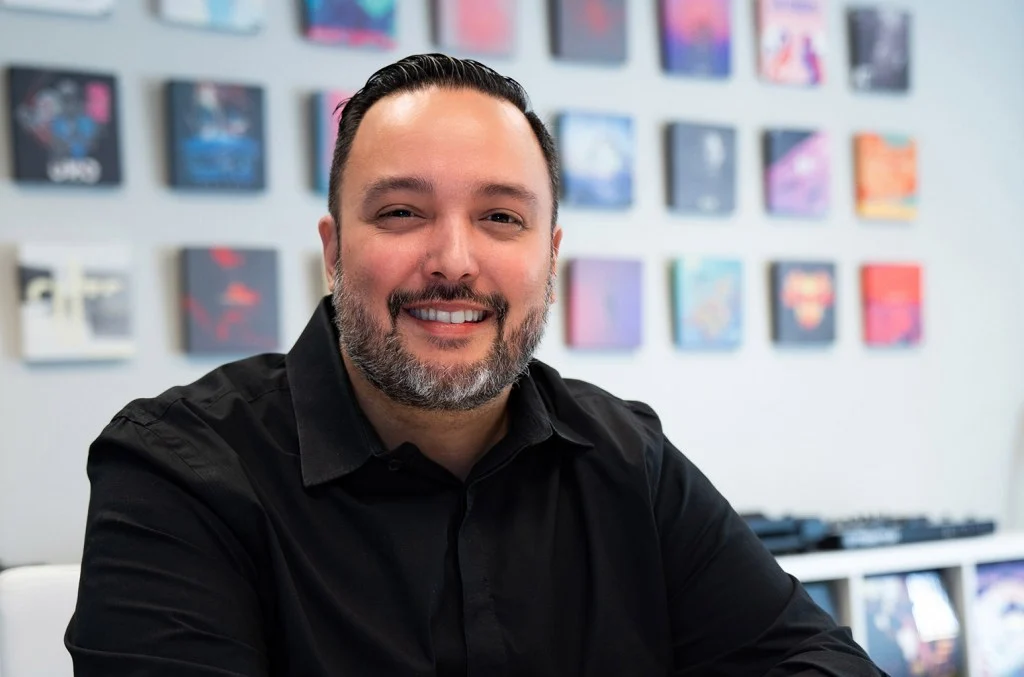
Jorge Brea is the Founder and CEO of Symphonic Distribution, a 100% independent company offering full-service distribution, marketing, royalty collection, and more for record labels, artists, managers, and distributors alike with footprints in Tampa, Brooklyn, Nashville, Bogotá, Mexico, South Africa, Canada, and Brazil. Jorge is an active member of the Music FIghts Fraud Alliance, was named to Billboard‘s 2024 International Power Players list, won the Music Biz 2024 #NEXTGEN_NOW One to Watch Bizzy Award, and in 2023 was on the Tampa Bay Business Journal’s 40 Under 40 list.