State Champ Radio
 Blog
Page: 61

Trending on Billboard
Warner Music Group (WMG) has reached a “landmark” licensing deal with Udio as part of a settlement to resolve the label’s lawsuit against the artificial intelligence music company.
The deal comes weeks after Universal Music Group signed a similar agreement with Udio, under which the AI firm said it would relaunch its platform next year as a more limited subscription service that pays for music rights and gives artists the right to opt out.
Related
Warner’s agreement will follow the same basic framework — with Udio paying a compensatory settlement to resolve Warner’s claims of past copyright infringement, and a licensing deal to allow the company to use the label’s music in the future.
“We’re unwaveringly committed to the protection of the rights of our artists and songwriters, and Udio has taken meaningful steps to ensure that the music on its service will be authorized and licensed,” WMG CEO Robert Kyncl said in a statement. “This collaboration aligns with our broader efforts to responsibly unlock AI’s potential — fueling new creative and commercial possibilities while continuing to deliver innovative experiences for fans.”
Andrew Sanchez, co-founder and CEO of Udio, said the Warner deal “marks a significant milestone in our mission to redefine how AI and the music industry evolve together.” The revamped Udio will let users make remixes, covers and new songs using the voices of artists that opt in, the companies said.
“This partnership is a crucial step towards realizing a future in which technology amplifies creativity and unlocks new opportunities for artists and songwriters,” Sanchez said, adding that it would “enable experiences where fans can create alongside their favorite artists” but in an environment where artists have “control.”
UMG, Sony Music and WMG teamed up last year to sue both Udio and Suno — the other leading AI music firm — for allegedly “trampling the rights of copyright owners” by exploiting vast numbers of songs to train its models. The cases are part of a trillion-dollar legal battle over whether AI firms can use copyrighted works like books, movies and songs to create platforms that spit out new ones.
Wednesday’s deal will not impact the separate case against Suno, which has pulled ahead of Udio as the market-leading AI music platform and has scored key wins like the success of AI-powered artists like Xania Monet. Suno announced on Wednesday that it had raised $250 million in a deal that values the company at $2.45 billion. A rep for Suno did not return a request for comment.
The Suno case will continue forward, as will Sony’s claims against Udio. But the deal certainly lends momentum for Udio to strike a deal with Sony, as the licensed AI music platform is not an exclusive partnership with either WMG or UMG. A rep for Sony did not immediately return a request for comment.
The planned Udio 2.0 will be substantially different than the current services offered by Udio and Suno, which allow users to generate entire songs based on a text prompt. The new service will be a “walled garden” in which users can experiment with AI and listen to the results, but they cannot download or share songs outside the service. It will also not feature the music or voice of any artists who opt out, a potentially large group of excluded songs in a world where artists are leery of AI.
In Wednesday’s announcement, Warner and Udio called those changes a “significant evolution” that was “shifting the company’s focus to a platform built in collaboration with artists and songwriters.” They said the “reimagined” service would only apply to choose to participate, and it would feature “expanded protections and other measures designed to safeguard the rights of artists and songwriters.”
Trending on Billboard
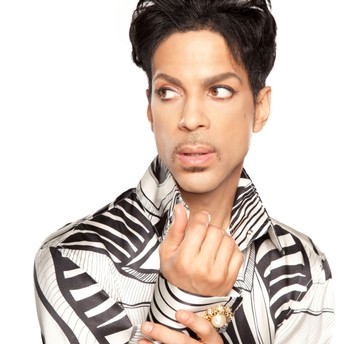
Robert Irwin is just three routines away from being the second member of his family to hoist the Len Goodman Mirrorball Trophy. The conservationist who has wowed the crowds every week on season 34 of Dancing With the Stars did it again on Tuesday night’s (Nov. 18) Prince-themed episode, when he and partner Witney Carson landed one perfect score and one near-perfect rating for their flawless routines.
Explore
See latest videos, charts and news
The couple danced a jive to Prince & the Revolution’s “Baby I’m a Star,” which kicked off with Irwin leaping off the judge’s table in perfect time to one of the late pop icon’s high-pitched squeals, then sliding on his knees toward Carson and doing a gravity-defying stand-up move from a prone, flat-on-the-floor position.
From there, the couple pulled off fancy footwork, spins and acrobatic moves that would have made the Rock and Roll Hall of Famer proud, including a tricky maneuver where Carson flipped Irwin over her back, earning them a perfect score of 30.
Their sensual routine to Prince and 3RDEYEGIRL’s “WOW” found the pair dressed in leather, sheer tops and iridescent purple for a stunning Viennese Waltz in which they swooned around the floor, their bodies moving in time as one. It ended with Irwin spinning Carson in circles as she hovered just inches above the floor before he let go and slid on his knees to meet her for a final, sensual embrace.
Irwin’s younger sister, Bindi Irwin, won season 21 of DWTS in 2015.
The night also featured the first drop-in from Zac Efron (The Iron Claw), who showed up to support younger brother Dylan Efron (The Traitors), who made it through to the finale with a tango to Prince’s “I Would Die 4 U” and a second dance to “Kiss,” which earned Efron and professional partner Daniella Karagach a 28 out of 30.
And, because that’s how these things go, someone had to have their dance card punched for the final time. Despite getting the third-highest score of the night for their cha cha to “1999” and a waltz to “Slow Love,” MomTok and Secret Lives of Mormon Wives star Whitney Leavitt and partner Mark Ballas were sent home in what the internet deemed a “shocking” elimination.
The three-hour, three-round season 34 finale (Nov. 25) will feature influencer Alix Earle with partner Val Chmerkovskiy, Efron and Karagach, Irwin and Carson, gymnast Jordan Chiles and Ezra Sosa and Parent Trap actress Elaine Hendrix with Alan Bersten; the show will air on ABC at 8 p.m. ET.
Watch Irwin’s Dancing With the Stars routine to Prince’s “WOW” and “Baby I’m a Star” below:
Trending on Billboard
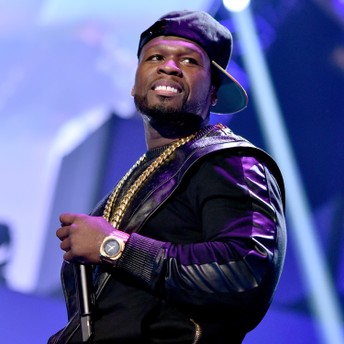
Vivica A. Fox joined Sherri on Tuesday (Nov. 18), where she opened about how she can’t forget about 50 Cent, her ex of 20-plus years.
Fox went viral earlier in November for her comments from a Women’s Expo advising others not to date 50 Centand rappers altogether, but she is now clarifying her stance.
“I didn’t say you couldn’t play with them,” she told host Sherri Shepherd. “You acted like I was on the picket line. Every time somebody ask me something, ‘Don’t date 50 Cent.’ That was not it. What happened is I said, ‘Vivica, if you could tell your 17-year-old self anything.’ That was me, like, I wish I knew not to go public so fast, not to have it out there, not to have the breakup that’s lasted 22 years.”
Explore
See latest videos, charts and news
Fox enjoyed that 50 had fun with his comedic response to her comments, which saw him post an AI-generated photo of himself as The Matrix‘s Morpheus holding out a red and blue pill.
“Either way I’m a have that a– in the matrix,” he wrote in a since-deleted post captured by Complex. “You know I love me some you, girl. But damn it’s been 22 years Vivica.”
Fox and 50 Cent dated in 2003 and broke up in the same year. They’ve been on-and-off publicly feuding in the decades since.
However, they’re on cordial terms these days, and Fox says she’ll always hold a “special place” for 50 and pointed to their excellent sex life. “You know you got that one that you always got that one that you always got a little special place for, but we are in a good place, and I’ll take the blue pill. Oh my goodness,” she revealed. “Remember the time!”
50 got wind of Fox’s comments on Tuesday and responded with an IG post resharing the Sherri clip. “What the fvck is going on here Shaniqua & Jane doe don’t act like that, and I had to pay them h–’s. LOL,” he wrote.
Watch the clip of Vivica A. Fox on Sherri below.

Trending on Billboard
Kelly Lee Owens has one of the most distinctive signature sounds in modern British electronic music, singular for the way she conjures shades of tranquillity and healing through surging buildups, layered organic samples (from laughter to a melting glacier) and wordless cooing. Her live shows make display of just how dynamic this mix can be, offering fans the space to not only hear and feel but tangibly connect with the music; to move together, unselfconsciously.
Explore
See latest videos, charts and news
When the Welsh producer hit the road last fall in support of her fourth studio album Dreamstate, she would see this manifesto come to life during one particularly transcendent moment in her set. As the chorus of “Melt!,” a track from her 2020 LP Inner Song, began to descend, Owens would routinely point at one bright-eyed audience member on the barrier and cry out: “Girls love techno!” The floor would erupt in response.
“People felt part of a special moment each time I did that,” she recalls, speaking to Billboard U.K. over Zoom from her grandparents’ home on the north Welsh coast, where she is recuperating from a busy festival season. “The idea of community is really important to me – I want to be able to live it out in the work that I do.”
Owens is preparing to release new EP KELLY (due Nov. 21) via DH2, a dance-focused Dirty Hit label imprint headed up by The 1975 drummer and producer George Daniel. The project – which sees Owens swap Dreamstate’s gauzy, multi-coloured synths for a mix of murky bass and ambient pieces that drift, flow and cascade – was first teased at Glastonbury Festival this past summer, where the San Remo stage played host to a DH2 takeover featuring Owens, Sampha, Daniel Avery and more.
The backdrop to Owens’ midnight set was a revolving door of star power. Daniel and his partner Charli xcx stood by the DJ’s side, while eagle-eyed fans spotted actors Jenna Ortega, Paul Mescal and Harris Dickinson make fleeting appearances on stage. At one point, Lewis Capaldi told Owens that he loved her music, she remembers, before adding that she sent Gracie Abrams a ‘Girls Love Techno’ t-shirt following that fateful night: “She’s super sweet!”
In May, Owens doubled down on her commitment to making her shows a safe, collaborative space for both artist and audience alike. In order to help protect the live ecosystem, she became a patron of the Music Venue Trust, and her ongoing advocacy has seen her commit to capping ticket prices and performing at smaller venues (including those off the beaten track, such as Bethesda’s Neuadd Ogwen), for an upcoming U.K. mini-tour, alongside using her platform to speak out on the issues that matter.
Owens self-described mission is to “not stay quiet when there’s a problem,” and push for better protections surrounding independent venues in the U.K. Here, she talks to Billboard U.K. about her work with the MVT, cherished Glastonbury memories, and the joy of her ongoing ‘Girls Love Techno’ campaign.
Take us back to the DH2 Takeover at Glastonbury, which gave impetus to this new EP. What was so special about that night?
It was wild. I was finishing the EP that week about 20 minutes from the festival site, and at the time, I knew I was working towards testing out these new demos at Glastonbury. As a DJ, it is always a privilege to get to test these things out and see the reactions of people.
When it got to the DH2 Takeover later on, I just couldn’t believe the energy. It felt like everything the label had been working towards had culminated in that moment; it couldn’t have been a better representation for what we wanted to do and achieve. The backstage was crazy, too. I was getting texts like, “Can you come and get Lorde?” I think Jenna Ortega was there, and obviously Charli [xcx] came from her set to support us. All of this just cemented what we understand and feel to be the family energy surrounding this project.
KELLY feels a little darker, more ambient in some moments. Why did you decide to explore that sonic direction?
My first album was self-titled because that was going to be the purest thing I’d ever made, without expectation: I was just creating freely, in its purest form. But I would say, as a woman in music, you can rise and get to a certain point and then people will knock you down. As an artist, people have certain expectations of you, so what I like to do is switch things up. Dreamstate was pop-facing, and when you’re sort of an ‘underground darling’, not everyone is going to like that.
But you don’t get to put me in any box, I’m just gonna f–king make whatever! I’m really quite angry at the moment, actually, so let me just go ahead and make some Prodigy-esque sounds that reflect how I feel, and sort of say, ‘F–k you.’ That’s why the project is called KELLY, because there’s still a question of, ‘Who the f–k is Kelly?’. I don’t think there’s one answer to that; I’m still exploring and trying to understand who I am as an artist.
Your ‘Girls Love Techno’ t-shirts have a rallying point in the scene. Why did you first decide to create them, and what do they signify for you personally?
I got a little bit tired of people creating merch for the sake of creating merch. I don’t necessarily feel it’s the most interesting thing to have my name on a t-shirt; however simple it sounds, “Girls Love Techno” is a statement. People often say, “Why are we still talking about women and girls liking techno, making music, being producers?” Well, I’m sorry, but we have to, because the needle hasn’t shifted as far as it needs to.
For me, it comes down to someone who gets to see the front and the back end of things, in terms of fees and payment. It is about people putting their money where their mouth is. As far as I’m concerned, for people who are performing at the same level as me, if they’re a guy, they’re likely to be paid more for the simple reason that they’re a man. I wanted to make a statement that allowed people to feel included in something.
How else do you see the phrase “Girls Love Techno” functioning as the EP campaign rolls on?
We headlined Venue MOT in south London with an all-femme lineup, and it just felt like such a beautiful, positive space for the night. We’re trying to reinforce this by touring small underground clubs, and making sure that the support acts feel safe. Also, recently, I did a Foundation FM show, and we had debbiesthuglife [London DJ Debbie Ijaduola] as the opener, following a competition I ran. I have to be the one to set an example of changing things in a small way. There are still issues surrounding live music and accessibility, but I am doing my part.
I hope it becomes a statement that creates an idea of inclusivity and makes people become aware of women’s experiences in this scene. You know, I look back to my early career and realise that I had to become more masculine in how I dressed and acted in order to be taken seriously. I have a curvaceous body, but when I first started out [as a DJ], I felt like I had to cover it up. It makes me sad to think about that time, as you can look however you want to look and still be a great producer. It’s just so obvious to say this, but unfortunately a lot of bias still exists in the music industry.
Small clubs form the route of your upcoming mini-tour. How do you see your work with the MVT linking to the survival of those spaces?
I’m someone who’s always been action-oriented. I think that’s due to where I come from: in Wales, you have to fight for what you believe, and you have to put yourself forward to create real, meaningful change.
The MVT works to find aid for venues to be genuinely protected in the sense of the law. Fundamentally, we can talk about the effects and the beauty of the community, but at the end of the day, there are certain people who only talk in a specific language, and so if that’s how they speak, then we meet them there.
I think that’s really empowering. It reminds me of coming into this industry over 10 years ago and learning the business first. I knew that, without understanding the business and the law of something, you can’t be protected. The work that the MVT does is so vital for our current times.
What kinds of structural reforms do you think could actually make a difference in this current, fractured climate for live music?
I think the venue levy is wonderful, but once again, why is it back on the artist to put the money back in? When you become a bigger artist, you should give back, so I do. But where are the booking agencies whose jobs rely on artists to tour? How are they reinvesting? Or ticket companies? None of these people have a job without us artists – it really, really riles me up.
This power imbalance is so disturbing and I’ve had enough of it. I call upon booking agencies, management companies, publishers, record labels and bigger corporations to reinvest in the future of artists. Otherwise, you’re not going to have future headliners in this country, except for perhaps people who – and this is another conversation – come from a wealthy background. The industry itself needs to show us that they care about the future of artistry.
How have your own experiences of touring informed your sense of community, and who gets to partake in the culture?
From ticket prices to my production, I have invested so much money and lost so much money over the past decade. Prices of my live show are actually going to rise because I can’t pay the people who are doing it without that – it’s something that naturally has to happen. But then when that does happen, you cut out a whole wave of people. Usually, it’s kids that suffer here, as they may not be able to afford to go to shows.
Once again, this comes back to the government and having people reinvest in the industry, so that a certain amount of tickets can be covered at reduced price. If everyone could agree to that, we would see a difference locally. Maybe that’s controversial, but I know that a £35 ticket wouldn’t have been accessible to me when I was 18. It’s about us helping each other with these burdens and strengthening the local community. Obviously we know these things are quite hard to implement, but I think we need to at least be having conversations.
So how do you stay optimistic about the future of live music in the U.K.?
Artists are resilient people. A lot of us have already been through a lot, and through that have created something beautiful. That’s what we do. We always have hope, and we have this way of transforming things and speaking the truth. There’s a strength there that can’t be broken somehow.
Trending on Billboard Billboard has unveiled its ultimate list of the best rock bands of all time, but while the staff carefully considered each group’s merits as musical pioneers and cultural changemakers, not everyone is bound to be rocking with our choices. Part of that discordance might be the fact that as a genre, rock […]

Trending on Billboard Warner Music Group and Stability AI have formed a strategic partnership to advance what they’re calling “responsible AI in music creation.” The companies say the alliance, announced Wednesday (Nov. 19), is designed to help build an ethical music ecosystem that supports artists and songwriters. The initiative will focus on building professional-grade tools […]

Trending on Billboard
Jill Scott, John Legend and Earth, Wind & Fire are among the stars who will be performing at the inaugural HBCU AWAREFEST. Billed as “the largest HBCU fundraiser ever,” the festival — a new joint partnership between Live Nation Urban and Student Freedom Initiative — will be staged at Atlanta’s State Farm Arena on March 26.
Explore
See latest videos, charts and news
In addition to the aforementioned acts, the lineup includes Common, GloRilla, Tems, Metro Boomin, Kirk Franklin and others. Chris Paul, Angel Reese, Atlanta Mayor Andre Dickens and entrepreneur-philanthropist Robert F. Smith are among the guest speakers who will be participating.
“At Student Freedom Initiative, we are incredibly excited about the coalition and movement that we are building to end the student loan debt crisis for our nation’s HBCU students,” said Keith Shoates, president and CEO of SFI, in a statement. “In addition to these amazing performers, we have enlisted AWAREFEST Ambassadors, showing the breadth of our ecosystem of mission-aligned partners. These individuals will help to spread the word and share the urgency of our mission to tackle the racial wealth gap through the lens of education.”
Shawn Gee, president of Live Nation Urban, commented, “Live Nation Urban is committed to Black excellence in music and culture, and today we are proud to stand with our partners at Student Freedom Initiative to build a national movement of allies, artists, activists and students to support the institutions that are the foundation of our culture.”
Serving as a nationwide call to action, HBCU AWAREFEST will also present workshops and panel discussions about the serious issue of student loan debt. Funds raised by Live Nation Urban and Student Freedom Initiative will benefit SFI’s Student Freedom Loan Agreement, described as “an affordable, income-contingent funding alternative to Parent PLUS Loans.”
Tickets for HBCU AWAREFEST are available for presale now, and then go on sale Nov. 21 (10 a.m. ET). For tickets and additional information, visit the event’s website.
Trending on Billboard
The BMI Country Awards celebrated the top songwriters and music publishers driving the past year’s 50 most-performed songs in the country music genre during a star-studded celebration held Nov. 18 at BMI’s Nashville office. The evening was led by BMI president/CEO Mike O’Neill and hosted by BMI’s chief revenue and creative officer Mike Steinberg, as well as BMI Nashville vice president of creative Clay Bradley, who called the evening “the greatest parking lot party in the world.”
Explore
See latest videos, charts and news
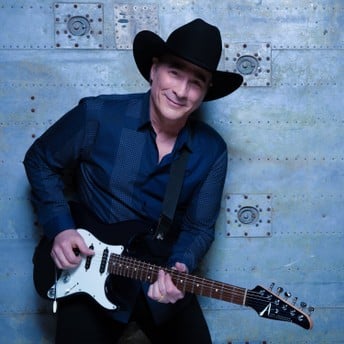
Clint Black was celebrated for more than three decades of crafting songs that have considerably impacted country music, when he was presented with the BMI Icon Award.
Black has been affiliated with BMI since 1993 and has earned 20 BMI Country Awards during his career. He’s also earned 13 No. 1 Billboard Hot Country Songs chart hits, among them “Summer’s Comin’,” “Walkin’ Away,” “A Good Run of Back Luck,” and “When My Ship Comes In.” Black has been a writer on the majority of his biggest hits, while also etching a multi-faceted career that has included roles as a musician, actor and producer. He’s earned five ACM Awards, four CMA Awards and a Grammy.
An illustrious lineup of artists took part to honor Black throughout the night with their renditions of his songs. Midland performed “A Better Man,” while Jamey Johnson performed “Untanglin’ My Mind.”
“Thank you for such an indelible mark that you’ve left on music,” Johnson told Black.
Jamey Johnson performs onstage at the 2025 BMI Country Awards at BMI on Nov. 18, 2025 in Nashville, Tennessee.
Erika Goldring/Getty Images for BMI
Riley Green performed a rendition of “Killin’ Time,” while Randy Houser and Wynonna earned a standing ovation for their performance of “A Bad Goodbye,” which Wynonna and Black originally released in 1993.
Beyond the performances, other artists and music executives feted Black through video segments, including acclaimed journalist/author Robert K. Oermann, Sony Music Publishing Nashville CEO Rusty Gaston, artists Tim McGraw, Luke Bryan, Darius Rucker, Bill Anderson, Luke Combs, late night television host Conan O’Brien and actors Billy Bob Thornton and Matthew McConaughey.
In a video tribute, Bryan said of Black’s 1989 Killin’ Time album, “It never left my stereo, my speakers… that album changed my life.”
Black attended the awards with his wife of 34 years, Lisa Hartman-Black, and their daughter Lily Pearl Black, who is following in her father’s footsteps as a singer-songwriter.
In accepting his BMI Icon Award, Black recalled how songwriting was a formative part of his childhood, and how his father showed him the liner notes on a Merle Haggard record. “He taught me how to read the liner notes. He’d say, ‘There’s the artist, there’s the songwriter, there’s the producer…’ He said, ‘It’s usually Billy Sherrill, if it’s good.’ From that point on, I wanted to be a songwriter. Being up here, standing up here, I can tell you, it’s the best job. I’m so grateful. To all of you who sang my songs to me tonight, it was a real treat and a real honor… I’m in such great company here tonight.”
Black also added, “You don’t do what we do without a long train of people behind you, pushing you up the hill. There have been a lot of people in my life who are as much responsible for this moment as I am…Seeing how many of my friends and fellow artists pitched in to make this special is truly humbling. It’s unexpected and that makes it twice as good.”
Charlie Handsome speaks onstage during the 2025 BMI Country Awards at BMI on Nov. 18, 2025 in Nashville, Tennessee.
Erika Goldring/Getty Images for BMI
The evening also celebrated 38 first-time award winners, among them Seth Ennis (for the Dylan Marlowe/Dylan Scott collab “Boys Back Home”), MacKenzie Carpenter (for Megan Moroney’s “I’m Not Pretty”), Thomas Eriksen (for Kane Brown’s “Miles On It”), Zach Top for his own hit “I Never Lie,” Tucker Wetmore for his hit “Wind Up Missin’ You,” Chase Matthew for his hit “Love You Again,” and Nevin Sastry for Shaboozey’s “A Bar Song (Tipsy).”
Charlie Handsome took home BMI country songwriter of the year honors, for his work in crafting hit songs including “I Had Some Help,” “Love Somebody,” “Guy for That,” “This Town’s Been Too Good to Us,” and “Pour Me a Drink.”
“This is probably the first time a rap/hip-hop producer won songwriter of the year in country,” Handsome said, drawing cheers from the crowd. He later added, “I started keeping this circle around me. If you stick with the best writers you know, and work with people who are better than you, you can win.” He also praised many of his musical and industry cohorts, including Post Malone, Morgan Wallen, ERNEST and HARDY.
The Wallen/Post Malone collaboration “I Had Some Help,” which spent six weeks at No. 1 on the Billboard Hot 100, was named song of the year. Co-writers on the song Ernest Keith Smith, Handsome, Hoskins, Wallen and Chandler Paul Walters were honored, as were the song’s publishers, Big Loud Mountain, Sony/ATV Songs LLC and Warner-Tamerlane Publishing Corp.
For a third consecutive year, Warner-Tamerlane was named BMI country publisher of the year. The company published 32 of the 50 most-performed songs of the year, among them Luke Bryan’s “Love You, Miss You, Mean It,” Zach Bryan’s “28,” “Tourniquet” and “Pink Skies,” the Ella Langley/Riley Green collaboration “You Look Like You Love Me,” Cody Johnson’s “Dirt Cheap,” Jelly Roll’s “Halfway to Hell,” “I Am Not Okay” and “Liar,” and Bailey Zimmerman’s “Holy Smokes.”
Randy Houser and Wynonna Judd perform onstage at the 2025 BMI Country Awards at BMI on Nov. 18, 2025 in Nashville, Tennessee.
Erika Goldring/Getty Images for BMI

Girlalala, a popular social media star, was shot and killed in a tragic incident over the weekend in Florida. Police arrested Girlalala’s boyfriend, and rapper JT gave funds to help with the funeral costs.
NBC Miami reports that Girlalala, a popular trans social media influencer, and her boyfriend, Shanoyd Whyte Jr., were reportedly arguing last Friday (November 14). Whyte reportedly flagged down authorities for help, and a firearm was found on the scene.
Girlalala’s legal name was Maurice Harrison. Whyte told detectives that his relationship with the influencer and hairstylist was contentious, leading to frequent arguments. According to the report, Harrison allegedly pulled Whyte’s hair, but it isn’t known why he decided to discharge his weapon.
As reported by TMZ, JT donated $5,000 to a GoFundMe created by the family of Harrison, who was a fan of the rapper.
Girlalala was 21.
—
Photo: @_girlalalala / Instagram

Trending on Billboard
Usher is suing music producer Bryan-Michael Cox and other organizers of a failed Atlanta restaurant project, claiming in a new lawsuit that they still owe him $700,000 and misused money he lent to buy the property.
In a case filed last week in Georgia court and obtained by Billboard, the Atlanta superstar says he lent more than $1.7 to Cox and others to help purchase a building for “Homage ATL,” a high-end restaurant and lounge in the city’s tony Buckhead neighborhood.
Related
When the deal didn’t go through, Usher’s lawyers say he demanded his money back, but the Homage organizers only returned $1 million – because the rest had allegedly been used elsewhere without permission.
“Plaintiff loaned [the money] for the sole purpose of purchasing the Buckhead property,” Usher’s attorneys write. “The defendant investor group failed to purchase the Buckhead property and, instead, diverted the Raymond loan balance for [other] purposes.”
Cox is a well-known R&B producer who’s produced hits for Mary J. Blige, Mariah Carey and Usher himself. The other defendants are alleged project partners Keith Thomas and Charles Hughes, as well as attorney Alcide Honoré and several companies allegedly tied to the project.
In a statement on Instagram, Cox seemed to pin the blame for the dispute on others: “My legal team has … advised me of a lawsuit involving a company where I am only a passive minority shareholder. I was not a participant in that business transaction and have no involvement in the ongoing legal process. While I’m unable to share more details right now, I want to make one thing absolutely clear: my 27-year friendship with @usher remains fully intact.”
But Usher’s lawyers don’t seem to be in a friendly mood. They claim Cox and the rest of the Homage organizers were “unjustly enriched” by using the remaining loan funds for other reasons, “which was to plaintiff’s detriment, damage, and expense.”
Related
Usher’s case claims that Cox, Hughes and Thomas approached him last year about the project, which was “intended to offer the public a unique dining lounge experience.” Though he says they wanted the locally-raised superstar to sign onto the project as a full-fledged partner, Usher says he “declined to become an investor” and instead opted merely to loan the group money to buy the restaurant’s location for more than $6 million.
As the “days and months passed” in early 2025, the two sides continued to negotiate a potential investment by Usher, but no deal was ever reached and the Buckhead property was never purchased. Eventually, the star says he demanded his money back – but that Honoré effectively told him that some of the funds had been used elsewhere.
“Honoré all but admitted that the Raymond loan balance was disbursed when he stated that returning that balance was ‘not that easy’ because plaintiff’s funds had been deployed for ‘other purposes’,” Usher’s attorneys write. “Honoré stated [that Usher] would be repaid once the Buckhead property was purchased and the property was refinanced, indicating that he apparently no longer had possession, custody, or control over the funds.”
Several of the lawsuit’s claims are aimed solely at Honoré, including breach of bailment – meaning he failed to return Usher’s property – as well as various other forms of wrongdoing, including negligence and breach of fiduciary duty. He did not return a request for comment. The case accuses the rest of the investors of breach of contract, unjust enrichment and keeping money that wasn’t theirs. Thomas and Hughes could not immediately be reached for comment.